-
Question 1
Incorrect
-
When a child has mumps, how long should he or she be off from school?
Your Answer: 4 days from onset of rash
Correct Answer: 5 days from onset of swelling
Explanation:To avoid the spread of infection, infected patients should be isolated. Patients should avoid going to school, childcare, or job for five days after the swelling has occurred.
-
This question is part of the following fields:
- Microbiology
- Pathogens
-
-
Question 2
Incorrect
-
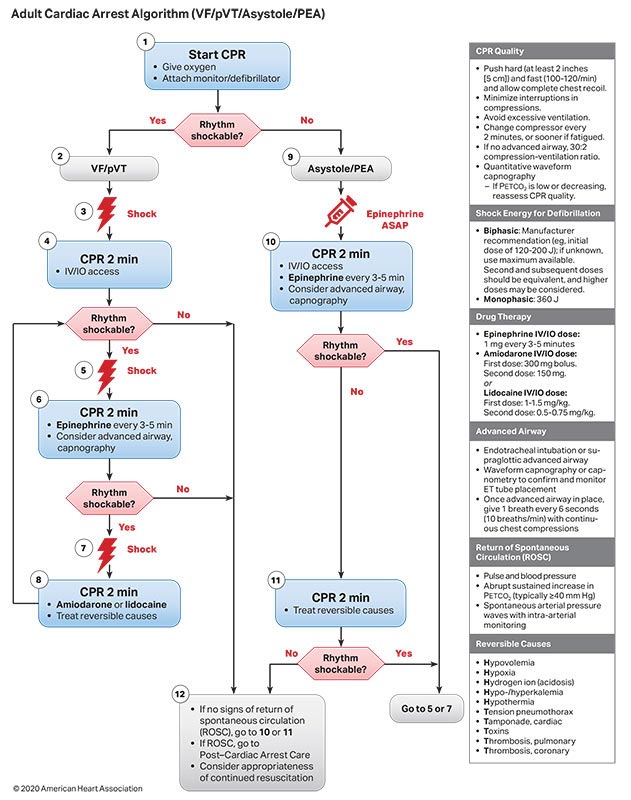
Which of the following best describes the correct administration of adrenaline for a shockable rhythm in adult advanced life support?
Your Answer: Give 1 mg of adrenaline as soon as intravenous access is achieved and every 3 - 5 minutes thereafter
Correct Answer: Give 1 mg of adrenaline after the second shock and every 3 - 5 minutes thereafter
Explanation:Give adrenaline 1 mg IV (IO) (10 mL of 1:10,000 solution) after the 2nd shock for adult patients in cardiac arrest with a shockable rhythm. Repeat adrenaline 1 mg IV (IO) every 3-5 minutes whilst ALS continues.
-
This question is part of the following fields:
- Cardiovascular
- Pharmacology
-
-
Question 3
Incorrect
-
In which part of the gastrointestinal tract is Meckel's diverticulum commonly located?
Your Answer: Caecum
Correct Answer: Ileum
Explanation:Meckel’s diverticulum is the most prevalent congenital anomaly of the gastrointestinal tract, affecting approximately 2% of the general population. Meckel’s diverticulum are designated true diverticula because their walls contain all the layers found in normal small intestine. Their location varies among individual patients, but they are usually found in the ileum within 100 cm of the ileocecal valve.
Approximately 60% of Meckel’s diverticulum contain heterotopic mucosa, of which over 60% consist of gastric mucosa. Pancreatic acini are the next most common; others include Brunner’s glands, pancreatic islets, colonic mucosa, endometriosis, and hepatobiliary tissues.
A useful, although crude, mnemonic describing Meckel’s diverticulum is the “rule of twos”: 2% prevalence, 2:1 male predominance, location 2 feet proximal to the ileocecal valve in adults, and half of those who are symptomatic are under 2 years of age.
-
This question is part of the following fields:
- Abdomen And Pelvis
- Anatomy
-
-
Question 4
Correct
-
Eosinophils comprise what percentage of circulating white cells:
Your Answer: 1 - 3%
Explanation:Eosinophils comprise 1 – 3% of circulating white cells. Eosinophils are similar to neutrophils, except that the cytoplasmic granules are coarser and more deeply red staining, and there are rarely more than three nuclear lobes. They are less motile, but longer lived. They enter inflammatory exudates and have a special role in allergic responses, defence against parasites and removal of fibrin formed during inflammation. Thus they play a role in local immunity and tissue repair.
-
This question is part of the following fields:
- Immune Responses
- Pathology
-
-
Question 5
Incorrect
-
You've been summoned to your Emergency Department resuscitation area to see a patient. You consider giving him an atropine shot because he is severely bradycardic.
Which of the following statements about the use of atropine is correct?Your Answer: It is recommended in the treatment of haemodynamically stable bradycardias
Correct Answer: It blocks the effects of the vagus nerve on both the SA and AV nodes
Explanation:At muscarinic receptors, atropine blocks the action of the parasympathetic neurotransmitter acetylcholine. As a result, it inhibits the vagus nerve’s effects on both the SA and AV nodes, increasing sinus automaticity and facilitating AV node conduction.
At muscarinic receptors, atropine blocks the action of the parasympathetic neurotransmitter acetylcholine. As a result, it inhibits the vagus nerve’s effects on both the SA and AV nodes, increasing sinus automaticity and facilitating AV node conduction.
The most common cause of asystole during cardiac arrest is primary myocardial pathology, not excessive vagal tone, and there is no evidence that atropine is helpful in the treatment of asystole or PEA. As a result, it is no longer included in the ALS algorithm’s non-shockable section. Atropine is most commonly used in the peri-arrest period. It is used to treat bradycardia (sinus, atrial, or nodal) or AV block when the patient’s haemodynamic condition is compromised by the bradycardia.
If any of the following adverse features are present, the ALS bradycardia algorithm recommends a dose of 500 mcg IV:
Shock
Syncope
Myocardial ischaemia
Heart failureAtropine is also used for the following purposes:
Topically as a cycloplegic and mydriatic to the eyes
To cut down on secretions (e.g. in anaesthesia)
Organophosphate poisoning is treated with
Atropine’s side effects are dose-dependent and include:
Mouth is parched
Vomiting and nausea
Vision is hazy
Retention of urine
Tachyarrhythmias
It can also cause severe confusion and hallucinations in patients, especially the elderly. -
This question is part of the following fields:
- Cardiovascular Pharmacology
- Pharmacology
-
-
Question 6
Incorrect
-
Regarding the factor V Leiden gene mutation, which of the following best describes the clinical effect:
Your Answer: It results in deficiency of protein C.
Correct Answer: It results in increased levels of activated factor V.
Explanation:Factor V Leiden gene mutation is the most common inherited cause of an increased risk of venous thrombosis. Activated protein C normally breaks down activated factor V and so should slow the clotting reaction and prolong the APTT, but a mutation in the factor V gene makes factor V less susceptible to cleavage by activated protein C, resulting in increased levels of activated factor V.Heterozygotes for factor V Leiden are at an approximately five- to eight- fold increased risk of venous thrombosis compared to the general population (but only 10% of carriers will develop thrombosis in their lifetime). Homozygotes have a 30 – 140-fold increased risk. The incidence of factor V Leiden in patients with venous thrombosis is approximately 20 – 40%. It does not increase the risk of arterial thrombosis.
-
This question is part of the following fields:
- Haematology
- Pathology
-
-
Question 7
Correct
-
Which of the following is NOT a contraindication to the use of diazepam:
Your Answer: Acute alcohol withdrawal
Explanation:Benzodiazepines are used to treat symptoms in patients with acute alcohol withdrawal syndrome.
Benzodiazepines are contraindicated in:
Respiratory depression
Marked neuromuscular respiratory weakness, such as unstable myasthenia gravis
Obstructive sleep apnoea syndrome (symptoms may be aggravated)
Severe hepatic impairment (the elimination half-life of diazepam may be prolonged; increased risk of coma)
Phobic or obsessional states, chronic psychosis or hyperkinesis (paradoxical reactions may occur). -
This question is part of the following fields:
- Anaesthesia
- Pharmacology
-
-
Question 8
Incorrect
-
Which of the following pathogens is most commonly implicated in croup:
Your Answer: Bordetella pertussis
Correct Answer: Parainfluenza
Explanation:Parainfluenza virus is the most commonly implicated infectious agent in croup.
-
This question is part of the following fields:
- Microbiology
- Pathogens
-
-
Question 9
Incorrect
-
A 55-year-old male diabetic patient presents to the Emergency Room complaining of severe chest pain. His medical record shows that he had coronary angioplasty one week ago, during which he was administered abciximab.
Which of the following haematological diseases has a similar mechanism of action to this drug?Your Answer: Haemophilia A
Correct Answer: Glanzmann’s thrombasthenia
Explanation:Abciximab is glycoprotein IIb/IIIa receptor antagonist that decreases aggregation of platelets by prevent their cross-linking. In Glanzmann’s thrombasthenia there are low levels of these same receptors leading to decreased bridging of platelets as fibrinogen cannot attach. There is increased bleeding time both in this disease and when there is use of abciximab.
-
This question is part of the following fields:
- Cardiovascular Pharmacology
- Pharmacology
-
-
Question 10
Incorrect
-
A 39-year-old woman is feeling unwell one week after a parathyroid surgery.
Which of the following stimulates release of parathyroid hormone (PTH)?Your Answer: Increased plasma calcium concentration
Correct Answer: Increased plasma phosphate concentration
Explanation:PTH is synthesised and released from the chief cells of the four parathyroid glands located behind the thyroid gland.
It is a polypeptide containing 84 amino acids and it controls free calcium in the body.The following stimuli causes release of PTH:
Increased plasma phosphate concentration
Decreased plasma calcium concentrationPTH release is inhibited by:
Normal or increased plasma calcium concentration
HypomagnesaemiaThe main actions of PTH are:
Increases plasma calcium concentration
Decreases plasma phosphate concentration
Increases osteoclastic activity (increasing calcium and phosphate resorption from bone)
Increases renal tubular reabsorption of calcium
Decreases renal phosphate reabsorption
Increases renal conversion of 25-hydroxycholecalciferol to 1,25-dihydroxycholecalciferol (via stimulation of 1-alpha hydroxylase)
Increases calcium and phosphate absorption in the small intestine (indirectly via increased 1,25-dihydroxycholecalciferol) -
This question is part of the following fields:
- Endocrine Physiology
- Physiology
-
-
Question 11
Incorrect
-
Regarding the glomerular filtration barrier, which of the following statements is CORRECT:
Your Answer: Molecules with molecular weight of 100 kDa or less are filtered freely.
Correct Answer: The main factor determining whether a substance is filtered or not is molecular weight.
Explanation:Molecular weight is the main factor in determining whether a substance is filtered or not – molecules < 7 kDa in molecular weight are filtered freely e.g. glucose, amino acids, urea, ions but larger molecules are increasingly restricted up to 70 kDa, above which filtration is insignificant. Negatively charged molecules are further restricted, as they are repelled by negative charges, particularly in the basement membrane. Albumin has a molecular weight of 69 kDa and is negatively charged, thus only very small amounts are filtered (and all of the filtered albumin is reabsorbed in the proximal tubule), whereas small molecules such as ions, glucose, amino acids and urea pass the filter without hindrance. This means that ultrafiltrate is virtually protein free, but otherwise has an identical composition of that of plasma. The epithelial lining of the Bowman's capsule consists of a single layer of cells called podocytes. The glomerular capillary endothelium is perforated by pores (fenestrations) which allow plasma components with a molecular weight of < 70 kDa to pass freely.
-
This question is part of the following fields:
- Physiology
- Renal
-
-
Question 12
Incorrect
-
A 58-year-old woman presents with symptoms of increase in weight, proximal muscular weakening and withering, easy bruising, and acne. You notice that she has a full, plethoric aspect to her face, as well as significant supraclavicular fat pads, when you examine her. She has previously been diagnosed with Cushing's syndrome.
Cushing's syndrome is most commonly caused by which of the following?Your Answer: Pituitary adenoma
Correct Answer: Iatrogenic administration of corticosteroids
Explanation:Cushing’s syndrome is a group of symptoms and signs brought on by long-term exposure to high amounts of endogenous or exogenous glucocorticoids. Cushing’s syndrome affects about 10-15 persons per million, and it is more common in those who have had a history of obesity, hypertension, or diabetes.
Iatrogenic corticosteroid injection is the most prevalent cause of Cushing’s syndrome. Cushing’s illness is the second most prevalent cause of Cushing’s syndrome. Cushing’s disease is distinct from Cushing’s syndrome in that it refers to a single cause of the illness, a pituitary adenoma that secretes high quantities of ACTH, which raises cortisol levels.
Cushing’s syndrome has several endogenous sources, including:
Cushing’s disease is caused by a pituitary adenoma.
Adrenal adenoma Ectopic corticotropin syndrome, e.g. small cell cancer of the lung
Adrenal carcinoma is a cancer of the adrenal gland.
Hyperplasia of the adrenal glands -
This question is part of the following fields:
- Endocrine Physiology
- Physiology
-
-
Question 13
Incorrect
-
Funnel plots are typically used to display:
Your Answer: The median and interquartile range
Correct Answer: The existence of publication bias in meta-analysis
Explanation:Funnel plots are used to demonstrate the existence of publication bias in meta-analysis. Funnel plots are scatter plots of treatment effects estimated from individual studies on the x axis and some measure of study size on the y axis. Each point on the graph represents one of the studies. A symmetrical inverted funnel shape indicates an absence of publication bias. If there is publication bias, there will be asymmetry of the open wide end due to the absence of small negative results.
-
This question is part of the following fields:
- Evidence Based Medicine
- Study Methodology
-
-
Question 14
Correct
-
Which of these immunoglobulin molecules can cross the placenta?
Your Answer: IgG
Explanation:An important mechanism that provides protection to the foetus is placental transfer of maternal IgG antibodies while his/her humoral response is inefficient. The only antibody class that significantly crosses the human placenta is IgG.
-
This question is part of the following fields:
- Immune Responses
- Pathology
-
-
Question 15
Incorrect
-
Regarding the flexor digitorum profundus muscle, which of the following is true?
Your Answer: The entire muscle is innervated by the ulnar nerve
Correct Answer: The medial aspect of the muscle is innervated by the ulnar nerve
Explanation:Flexor digitorum profundus is a fusiform muscle located deep within the anterior (flexor) compartment of the forearm. Along with the flexor pollicis longus and pronator quadratus muscles, it comprises the deep flexor compartment of the forearm.
Flexor digitorum profundus has a dual innervation:
(1) The medial part of the muscle, that inserts to the fourth and fifth digits, is innervated by the ulnar nerve (C8-T1);
(2) The lateral part, that inserts to the second and third digits, is innervated by the median nerve, via anterior interosseous branch (C8-T1).
-
This question is part of the following fields:
- Anatomy
- Upper Limb
-
-
Question 16
Incorrect
-
A patient is currently taking is glyceryl trinitrate among other chronic medications. Which of the following side effects is he LEAST likely to develop?
Your Answer: Asthenia
Correct Answer: Syncope
Explanation:Nitrates are used in the treatment of angina pectoris and the prevention of myocardial ischaemia. Commonly used examples of nitrates are glyceryl trinitrate and isosorbide dinitrate. Unwanted effects, however, are common and can limit therapy, particularly when angina is severe or when patients are unusually sensitive to the effects of nitrates.
The following are common or very common side effects of nitrates:
- Arrhythmias
- Asthenia
- Cerebral ischaemia
- Dizziness
- Drowsiness
- Flushing
- Headache
- Hypotension
- Nausea and vomiting
- Diarrhoea, syncope and cyanosis can occur, but these are rare side effects.
Dry eyes, bradycardia and metabolic acidosis have not been reported.
-
This question is part of the following fields:
- Cardiovascular Pharmacology
- Pharmacology
-
-
Question 17
Correct
-
A 25 year old man has sustained a fracture to the surgical neck of the humerus after falling from his bike. Examination suggests an axillary nerve injury. The clinical features expected to be seen in this patient are:
Your Answer: Weakness of shoulder abduction
Explanation:Axillary nerve injury results in:
1. weakness of arm abduction (paralysis of deltoid),
2. weakness of lateral rotation of the arm (paralysis of teres minor)
3. loss of sensation over the regimental badge area. -
This question is part of the following fields:
- Anatomy
- Upper Limb
-
-
Question 18
Correct
-
Herpes simplex virus is transmitted most commonly through which of the following routes:
Your Answer: Direct contact spread
Explanation:Herpes simplex virus is the most common cause of infective encephalitis and has a predilection for the temporal lobes. Herpes simplex is transmitted through direct contact. It invades skin locally producing skin vesicles by its cytolytic activity.
-
This question is part of the following fields:
- Microbiology
- Pathogens
-
-
Question 19
Incorrect
-
All of the following typically occurs as part of normal inspiration except:
Your Answer: Flattening of the diaphragm
Correct Answer: Contraction of the internal intercostal muscles
Explanation:Passive inspiration is a result of contraction of the diaphragm (depressing the diaphragm) and the external intercostal muscles (elevating the ribs).
In inspiration, several movements occur. These are:
1. elevation of the sternal ends of the ribs (‘pump handle’ movement),
2. elevation of the lateral shafts of the ribs (‘bucket handle’ movement)
3. depression of the diaphragm.
These result in expansion of the thorax in an anteroposterior, transverse and vertical direction respectively. There is an increased intrathoracic volume and decreased intrathoracic pressure and air is drawn into the lungs. -
This question is part of the following fields:
- Anatomy
- Thorax
-
-
Question 20
Correct
-
Which of the following intravenous induction drugs results in the highest drop in blood pressure:
Your Answer: Propofol
Explanation:Propofol’s most frequent side effect is hypotension, which affects 17% of paediatric patients and 26% of adults. This is attributable to systemic vasodilation as well as a decrease in preload and afterload. Propofol has a little negative inotropic impact as well. The drop in blood pressure is dosage-dependent and is more noticeable in the elderly, thus this should be expected.
-
This question is part of the following fields:
- Anaesthesia
- Pharmacology
-
SESSION STATS - PERFORMANCE PER SPECIALTY
