-
Question 1
Incorrect
-
A 19-year-old female patient with secondary amenorrhea visits your office. A urine pregnancy test is negative. As part of your work-up, you order a pelvic ultrasound, which reveals a fluid filled, thin walled cyst measuring 1.8 x 1.3 x 1 cm. She doesn't complain of pain or tenderness.
What is the most appropriate next step?Your Answer: Oral contraceptive pills
Correct Answer: Do nothing
Explanation:An ovarian cyst is a sac filled with liquid or semiliquid material that arises in an ovary. Although the discovery of an ovarian cyst causes considerable anxiety in women owing to fears of malignancy, the vast majority of these lesions are benign.
Many patients with simple ovarian cysts based on ultrasonographic findings do not require treatment.
In a postmenopausal patient, a persistent simple cyst smaller than 10cm in dimension in the presence of a normal CA125 value may be monitored with serial ultrasonographic examinations.However, meta-analyses have since shown that there is no difference between OCP use and placebo in terms of treatment outcomes in ovarian cysts and that these masses should be monitored expectantly for several menstrual cycles.
If a cystic mass does not resolve after this timeframe, it is unlikely to be a functional cyst, and further workup may be indicated.
Other methods of management maybe revisited if cyst increases in size or becomes complex upon follow up.
-
This question is part of the following fields:
- Gynaecology
-
-
Question 2
Incorrect
-
Which of the following contraceptives primary mode of action is inhibition of ovulation?
Your Answer: Femulen®
Correct Answer: Cerazette®
Explanation:Desogestrel only POPs work mainly by inhibiting ovulation. Cerazette Is the only brand in this list which belongs to this group.
Types of Progesterone Only Pills
1. Traditional (e.g. Femulen®, Micronor®, Norgeston®)
Main mode of action: thickening cervical mucus preventing sperm entry at neck of womb and may also cause anovulation but this effect variable and unreliable
2. Desogestrel (e.g. Cerazette®)
Main mode of action: inhibition of ovulation and also cause thickening of cervical mucus
-
This question is part of the following fields:
- Clinical Management
-
-
Question 3
Incorrect
-
During a speculum examination, a lady was found to have a firm, 12mm ulcerated, indurated lesion on her cervix. She was otherwise asymptomatic. Most likely cause would be?
Your Answer: Herpes Simplex Type 1
Correct Answer: Treponema pallidum
Explanation:This lady is most likely suffering from primary syphilis. Since the chancre is asymptomatic, it is often only found on deep examination of the vulvo-vaginal mucosa. The chief organism causing syphilis is Treponema Pallidum which is a spirochete and one of the most widely distributed sexually transmitted infections.
-
This question is part of the following fields:
- Microbiology
-
-
Question 4
Incorrect
-
A 23 year old female patient with DVT on anticoagulant came to your clinic for advice. She is on combined OCPs.
What would you advice her?Your Answer: Continuous combined oral contraceptive pills
Correct Answer: Progesterone only pill
Explanation:Women with medical conditions associated with increased risk for thrombosis generally should not use oestrogen-containing contraceptives.
The majority of evidence identified does not suggest an increase in odds for venous or arterial events with use of most POCs. Limited evidence suggested increased odds of VTE with use of injectables (three studies) and use of POCs for therapeutic indications (two studies, one with POCs unspecified and the other with POPs).
Discontinuing anticoagulants increases her risk of recurrent DVT.
-
This question is part of the following fields:
- Gynaecology
-
-
Question 5
Incorrect
-
Question 6
Correct
-
A patient who is 36 weeks pregnant comes to see you as she has developed tingling to the right lateral thigh over the past 3 weeks. On examination there are no skin changes and no muscle weakness. What is the likely diagnosis?
Your Answer: Meralgia Paraesthetica
Explanation:Raised pressure with the pelvis can cause a number of nerve entrapment syndromes. This is entrapment of the lateral cutaneous nerve of the thigh (or lateral femoral cutaneous nerve) also known as Meralgia Paraesthetica. Pregnancy is a risk factor. Shingles can effect this nerve but the rash would usually present itself within 14days.
-
This question is part of the following fields:
- Anatomy
-
-
Question 7
Incorrect
-
Looking at the picture below what is the diagnosis:
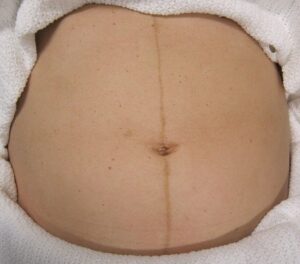
Your Answer: Striae gravidarum
Correct Answer: Linea Nigra
Explanation:This is Linea Nigra. It occurs in 3/4 of pregnancies and is due to increased melanocyte-stimulating hormone production by the placenta. This also causes melasma and darkening of the nipples.
-
This question is part of the following fields:
- Clinical Management
-
-
Question 8
Correct
-
At what angle is the plane of the pelvic inlet to the anatomical horizontal plane?
Your Answer: 60
Explanation:The female pelvic inlet tilts at an inclination that is about 60 degrees from the anatomical horizontal plane. This tilt is maintained by muscles and fascia. The pelvic outlet slopes at an angle of 15 degrees.
-
This question is part of the following fields:
- Anatomy
-
-
Question 9
Incorrect
-
Which of the following tests is used to detect antibodies or complement bound to red blood cell antigens in vivo?
Your Answer: Mantoux
Correct Answer: Direct Coombs
Explanation:When the red cells are coated with immune IgG antibody, the cells do not agglutinate but when anti-IgG antiserum is added to these sensitized cells visible agglutination occurs. This is known as a positive direct coombs test.
-
This question is part of the following fields:
- Physiology
-
-
Question 10
Incorrect
-
What is the Gold standard investigation to diagnose abnormal uterine bleeding?
Your Answer: Transabdominal ultrasound
Correct Answer: Hysteroscopy along with dilatation and curettage
Explanation:During the last decade hysteroscopy has become the tool of choice for the evaluation of the endometrial cavity, including for assessment of abnormal uterine bleeding (AUB). Many clinicians would consider that, in most patients, the combination of transvaginal sonography and out-patient endometrial biopsy with diagnostic hysteroscopy could replace the need for dilation and curettage. Hysteroscopy was reported to have sensitivity, specificity, negative predictive value and positive predictive value of 94.2, 88.8, 96.3 and 83.1% respectively, in predicting normal or abnormal endometrial histopathology.
The highest accuracy of hysteroscopy was in diagnosing endometrial polyps, whereas the worst result was in estimating hyperplasia. Therefore, since the incidence of focal lesions in patients with AUB is high, it seems that the most beneficial approach is to proceed with hysteroscopy complemented by endometrial biopsy early in the assessment of AUB.
Transabdominal and transvaginal ultrasounds can be used but are inferior to hysteroscopy.
Coagulation profile can only diagnose possible coagulopathies and pregnancy test can only diagnose pregnancy. All other causes can not be identified with these laboratory investigations.
-
This question is part of the following fields:
- Gynaecology
-
-
Question 11
Incorrect
-
Mifepristone when used for management of abortion works via what mechanism?
Your Answer: G-protein receptor agonist
Correct Answer: Anti-progestogen
Explanation:Mifepristone is a prostaglandin antagonist. It acts as a competitive inhibitor of the receptor.
-
This question is part of the following fields:
- Clinical Management
-
-
Question 12
Correct
-
A 26-year-old pregnant woman in her third trimester, was admitted with headache, abdominal pain and visual disturbances. Shortly after, she had a fit. What is the most appropriate management?
Your Answer: 4g MgSO4 in 100ml 0.9% Normal saline in 5 min.
Explanation:The woman is most probably suffering from eclampsia.
Magnesium sulphate (MgSO4) is the agent most commonly used for treatment of eclampsia and prophylaxis of eclampsia in patients with severe pre-eclampsia. It is usually given by either intramuscular or intravenous routes. The intramuscular regimen is most commonly a 4 g intravenous loading dose, immediately followed by 10 g intramuscularly and then by 5 g intramuscularly every 4 hours. The intravenous regimen is given as a 4 g dose, followed by a maintenance infusion of 1 to 2 g/h by controlled infusion pump. -
This question is part of the following fields:
- Obstetrics
-
-
Question 13
Incorrect
-
Tamoxifen is associated with an increased risk of which of the following?
Your Answer: Induced lactation
Correct Answer: Endometrial cancer
Explanation:Tamoxifen is a SERM that is effective in treating hormone-responsive breast cancer, it acts as an antagonist to prevent receptor activation by endogenous oestrogen. As agonist of the endometrial receptors it promotes endometrial hyperplasia and hence increases the risk of endometrial cancer.
-
This question is part of the following fields:
- Pharmacology
-
-
Question 14
Incorrect
-
Regarding molding of the fetal head, which one is true?
Your Answer: Increases the difficulty of delivery
Correct Answer: Does NOT have time to occur in breech delivery
Explanation:Molding allows the skull bones of the fetal head some mobility during the normal delivery of foetus as the skull changes its shape to accommodate passage through the mothers pelvis. However this does not occur in breach delivery where the skull is in circular shape. Babies born breech typically have craniofacial and limb deformations resulting from their in utero position. These babies characteristically have a long, narrow head, (“dolichocephaly” or “type 1”), with a prominent occipital shelf, redundant skin over the neck, overlapping lambdoidal sutures, and an indentation below their ears (from shoulder compression).
-
This question is part of the following fields:
- Anatomy
-
-
Question 15
Incorrect
-
The fetal head may undergo changes in shape during normal delivery. The most common aetiology listed is:
Your Answer: Cephalohematoma
Correct Answer: Molding
Explanation:With the help of molding, the fetal head changes its shape as the skull bones overlap. This helps in smooth delivery of the foetus through the birth canal.
-
This question is part of the following fields:
- Obstetrics
-
-
Question 16
Incorrect
-
Which of the following describes the change from cervical columnar epithelium to stratified squamous epithelium?
Your Answer: Atrophy
Correct Answer: Metaplasia
Explanation:Cells adapt to external stressors in a variety of ways. A cell can either undergo hypertrophy or hyperplasia to overcome the stress, or atrophy if unable to overcome the stress. Metaplasia occurs when fully differentiated cell lines transform into another fully differentiated cell type to adapt to a new external environment. The replacement of columnar epithelium of the cervix to a stratified squamous epithelium occurs in the squamocolumnar transformation zone in response to the exposure of an everted ectocervix to the acidic pH of the vagina at puberty and first pregnancy. Carcinoma in situ is thought to involve the immature metaplastic cells in this region.
-
This question is part of the following fields:
- Pathology
-
-
Question 17
Incorrect
-
A 19-year-old university student presents to the emergency department.
She complains of a fever and purulent vaginal discharge.
She add that's four days ago, she underwent a suction curettage for an unwanted pregnancy which occurred after a university party.
On examination, she has a temperature of 38.4°C.
Which organism is the most probable cause of her presentation?Your Answer: Chlamydia trachoma alone.
Correct Answer: Mixed infection with Chlamydia trachoma and vaginal pathogens.
Explanation:The most probable cause of her presentation is a mixed infection with Chlamydia trachoma and vaginal pathogens.
Her most likely diagnosis is pelvic inflammatory disease (PID) as suggested by a purulent vaginal discharge alongside a fever which indicates a systemic infection.
The most common causative organisms in PID after sexual activity are chlamydia and gonorrhoea, of which chlamydia has a much higher prevalence.
Chlamydia has also been shown to be present in about 15% of subjects who underwent pregnancy termination with no constant sexual partner.
PID occurring after a gynaecologic surgical procedure is most commonly a result of mycoplasma or vaginal pathogens.
-
This question is part of the following fields:
- Gynaecology
-
-
Question 18
Incorrect
-
Which of the following statements regarding hormone replacement therapy in postmenopausal women at the age of 55 is incorrect?
Your Answer: It is not recommended for treating postmenopausal women presenting with osteoporosis who are older than 60 to 65 years and where the management of osteoporosis is the only concern
Correct Answer: Combination with Alendronate is usually encouraged
Explanation:Taking hormone replacement therapy for more than 5 years can increase the risk of developing breast cancer. HRT is not recommended as treatment for osteoporosis alone in postmenopausal women older than 60. Raloxifene reduces risk of vertebral fracture in post menopausal women.
-
This question is part of the following fields:
- Gynaecology
-
-
Question 19
Correct
-
A 39-year-woman visits a gynaecological clinic for fertility advice. She is unable to conceive for the last 2 years. Pelvic ultrasound shows 3-4 follicles in both ovaries. An endocrinological profile is ordered showing low oestrogen, elevated FSH, and LH.
What is the most suitable advice for her?Your Answer: In-vitro fertilization
Explanation:Premature menopause has been diagnosed biochemically in this patient. Menopause is considered premature when it happens without warning in a woman under the age of 40.
Follicular development is common in ultrasonography investigations of women with primary ovarian failure, but ovulation is rare. So this woman isn’t ovulating.Exogenous oestrogen treatment in physiologic amounts does not appear to improve the rate of spontaneous ovulation.
Women with primary ovarian failure from any cause may be candidates for donor oocyte in vitro fertilisation (IVF).Oestrogens, clomiphene citrate, and danazol are examples of treatment approaches that have been shown to be ineffective in patients with premature ovarian failure.
-
This question is part of the following fields:
- Gynaecology
-
-
Question 20
Correct
-
DHEA is synthesized from which molecule?
Your Answer: Cholesterol
Explanation:Dehydroepiandrosterone is an androgen precursor produced primarily by the adrenal glands in women. The steroid hormone is produced from cholesterol at birth by the fetal adrenal glands, after which its output reduces. DHEA production picks up again from the age of 5-7 years and peaks between the ages of 20-30.
-
This question is part of the following fields:
- Endocrinology
-
-
Question 21
Incorrect
-
You see a patient who is 32 weeks pregnant. She complains of tingling to the right buttock and shooting pain down the leg. You suspect Piriformis syndrome. Regarding Piriformis which of the following statements are true?
Your Answer: Nerve supply is via S2 to S4
Correct Answer: Insertion is onto the greater trochanter
Explanation:Nerve Supply: L5 to S2 via Nerve to Piriformis
Origin: Sacrum
Insertion: Greater trochanter
Action: External rotation of hip
Blood Supply: Superior and Inferior gluteal arteries and lateral sacral arteries -
This question is part of the following fields:
- Anatomy
-
-
Question 22
Incorrect
-
An HIV positive woman who is 18 weeks pregnant complains of frothy yellow vaginal discharge and vaginal soreness. A wet mount and microscopy confirms a Trichomonas vaginalis infection. Which of the following is the most appropriate treatment regime?
Your Answer: Metronidazole 400mg BD 5 days
Correct Answer: Metronidazole 500mg BD 7 days
Explanation:Trichomoniasis is considered a sexually transmitted infection found both in men and women caused by the flagellate protozoan Trichomonas vaginalis. The organism is mainly found in the vagina and the urethra. Though many infected women can be asymptomatic, they can also present with yellow frothy vaginal discharge, itching and vaginitis, dysuria or an offensive odour. For the diagnosis of t. vaginalis in women, a swab is taken from the posterior fornix during speculum examination and the flagellates are detected under light-field microscopy. The recommended treatment for t. vaginalis for a HIV positive woman who is pregnant is 500mg of metronidazole twice daily for 7 days. High dose metronidazole as a 2g single dose tablet is not advised during pregnancy. All sexual partners should also be treated, and screening for other STIs should be carried out.
-
This question is part of the following fields:
- Clinical Management
-
-
Question 23
Incorrect
-
A 32 year old patient with a 28 day menstrual cycle is offered a Hysterosalpingogram (HSG) at an infertility clinic.
At which point in her cycle should the HSG be performed?Your Answer: Days 1-5
Correct Answer: Days 6-12
Explanation:Hysterosalpingography is a radiological test used to investigate infertility especially in patients with no history suggesting tubal blockages such as pelvic surgery or PID, in which case a laparoscopy and dye is better suited. For the procedure, a contrast dye is inserted through the cervix, flows through the uterus and the fallopian tubes and should spill into the peritoneum. Fluoroscopy provides dynamic images of these structures to determine if there are any abnormalities or blockages. HSG is best performed on day 6-12 in the cycle, after the cessation of menses, and before ovulation, to avoid X Ray exposure in case of an unknown early pregnancy.
-
This question is part of the following fields:
- Biophysics
-
-
Question 24
Incorrect
-
Which HPV subtypes are chiefly associated with causing cancer?
Your Answer: 12 and 16
Correct Answer: 16 and 18
Explanation:HPV 16 and 18 are responsible for 70% of cases of HPV related cancers. They are considered the most important high risk genotypes of HPV. As well as cervical cancer they are associated with cancers of the oropharynx and anogenital region.
There are over 100 genotypes of HPV including several other high risk HPV types. Gardasil® is a quadrivalent vaccine against HPV Types 6, 11, 16, and 18
HPV genotypes 6 and 11 are low risk and cause anogenital warts.
Typically 70% of HPV infections are cleared within 1 year and 90% are cleared within 2 years
-
This question is part of the following fields:
- Microbiology
-
-
Question 25
Incorrect
-
A 30-year-old female patient visits you for a cervical cancer screening. You inform her that while Pap smears are no longer performed, Cervical Screening tests are done five times a year.
She has a cervical screening test, which reveals that she has non-16/18 HPV and low-grade cytology alterations.
What's would you do next?Your Answer: Colposcopy
Correct Answer: Repeat cervical screening test in 12 months
Explanation:An LSIL Pap test shows mild cellular changes. The risk of a high-grade cervical precancer or cancer after an LSIL Pap test is as high as 19 percent.
As with an ASC-US Pap test, an LSIL Pap test is evaluated differently depending upon age. For women ages 25 or older, follow-up depends upon the results of human papillomavirus (HPV) testing:
– Women who test positive for HPV or who have not been tested for HPV should have colposcopy.
– Women who test negative for HPV can be followed up with a Pap test and HPV test in one year.Referral to an oncologist is not necessary since there is no established diagnosis of malignancy. All other options are unacceptable.
-
This question is part of the following fields:
- Gynaecology
-
-
Question 26
Correct
-
Which immunoglobulin is the first to be synthesised by the neonate?
Your Answer: IgM
Explanation:Fetal production of immunoglobulin begins early on at about 10 weeks gestation with the production of IgM antibodies. Maternal IgG, which is a key component of fetal immunity is passed on to the foetus through the placenta from 12 weeks of gestation. Secretory IgA is not produced until after birth, through breast milk.
-
This question is part of the following fields:
- Immunology
-
-
Question 27
Correct
-
During the filling phase of micturition. At what bladder volume is the first urge to void felt?
Your Answer: 150ml
Explanation:Micturition is defined as a process of expelling urine from the body. It is caused by the reflex contraction of detrusor muscle. Urinary bladder is a hollow muscular organ which can store 400-600ml of urine until it is expelled from the body. The first urge to urinate is felt when the bladder is filled with around 150ml of urine. The reflex action is initiated when the stretch receptors located in the bladder wall are stimulated. The afferent fibres pass to the pelvic splanchnic nerves to the 2nd, 3rd, and 4th sacral segments and some pass through the hypogastric plexus to the first and second lumbar segments of the spinal cord. Efferent pathways from the 2nd, 3rd, and 4th sacral segments leave the cords and through the splanchnic nerves and inferior hypogastric plexus supplies the smooth muscle of the bladder i.e. detrusor muscle. Detrusor muscle contracts and the sphincters are relaxed.
-
This question is part of the following fields:
- Anatomy
-
-
Question 28
Incorrect
-
Where is fetal DHEA produced?
Your Answer: Hypothalamus
Correct Answer: Adrenals
Explanation:Dehydroepiandrosterone (DHEA) is a steroid hormone synthesised from cholesterol (via Pregnenolone) by the adrenal glands. The foetus manufactures DHEA, which stimulates the placenta to form oestrogen, thus keeping a pregnancy going. Production of DHEA stops at birth, then begins again around age seven and peaks when a person is in their mid-20s
-
This question is part of the following fields:
- Endocrinology
-
-
Question 29
Incorrect
-
You are called to review a baby with cyanosis when feeding immediately after birth. Subsequent investigation and imaging reveals choanal atresia. Upon questioning the mother reveals she had been getting repeat prescriptions from her GP in Poland without her UK GPs' or your knowledge. Which of the following medication was most likely to cause this?
Your Answer: Sertraline
Correct Answer: Carbimazole
Explanation:This is one of the defects attributable to Carbimazole use.
-
This question is part of the following fields:
- Pharmacology
-
-
Question 30
Incorrect
-
An 26 year old patient currently 9 weeks pregnant. This is her 1st pregnancy. She has been suffering with nausea and vomiting that has failed to respond to conservative measures including ginger, dietary changes and acupuncture. She wants to start medical therapy. Which of the following is 1st line drug treatment according to NICE guidance?
Your Answer: Haloperidol
Correct Answer: Promethazine
Explanation:Promethazine or Cyclizine are 1st choice options for management of nausea and vomiting in pregnancy according to NICE. Prochlorperazine is also appropriate 1st line.
-
This question is part of the following fields:
- Pharmacology
-
-
Question 31
Correct
-
A 36-year-old woman presents to your clinic with cyclical mastalgia. Physical examination reveals that her breasts are normal. She has a family history of her mom who developed breast cancer at the age of 45 years and subsequently died from metastases. She states that her patient's maternal grandmother also had breast cancer before the age of 50.
The patient is on the oral contraceptive pill (OCP) and no other medications. She is generally healthy overall. Recent mammography results are also normal. An ultrasound of the breasts shows an uncomplicated cyst with no concerning features in the right breast.
Apart from advice about the use of simple analgesics and evening primrose oil for her mastalgia, which one of the following is the most appropriate management in the patient's follow-up regimen?Your Answer: Remain on the OCP, six-monthly clinical review, yearly mammography and ultrasound.
Explanation:This is a case of a woman who presented with cyclical breast pain that is on an OCP and with a family history of breast cancer. Those with a family history of breast cancer in more than one blood relative (parent, sibling, grandparent) have a significantly higher chance of developing breast cancer than women with no family history. Regular six-monthly clinical review and yearly mammographic screening, with or without ultrasound screening, should start at least five years before the age of the diagnosis in the blood relatives.
The consensus now is that any additional risk of breast cancer from the oestrogen in the oral contraceptive pill (OCP) is less than the risk of unwanted pregnancy when using alternative, and perhaps less effective, contraception. Thus, the patient would not be advised to stop the OCP.
With two blood relatives that developed breast cancer before the age of 50, this patient is in a high-risk group of developing breast cancer. Even so, 50% of such high-risk women will not develop a breast cancer in their lifetime. There are specialised familial cancer screening clinics are available for high-risk women where genetic testing can be discussed further. Women at high risk may electively have a bilateral subcutaneous mastectomy performed prophylactically which will bring the risk of breast cancer development to an irreducible minimum.
-
This question is part of the following fields:
- Gynaecology
-
-
Question 32
Incorrect
-
A 30-year-old G2P1 woman presented to the maternity unit, in labour at 38 weeks gestation. During her previous pregnancy she delivered a healthy baby through caesarean section. The current pregnancy had been uneventful without any remarkable problems in antenatal visits except for the first trimester nausea and vomiting.
On arrival, she had a cervical dilation of 4 cm and the fetal head was at -1 station. After 5 hours, the cervical length and fetal head station are still the same despite regular uterine contractions. Suddenly, there is a sudden gush of blood, which is approximately 1000 ml and the fetal heart rate have dropped to 80 bpm on CTG.
Which of the following could be the most likely cause for this presentation?Your Answer: Placenta previa
Correct Answer: Ruptured uterus
Explanation:Due to the previous history of caesarean section, uterine rupture would be the most likely cause of bleeding in this patient who is at a prolonged active phase of first stage of labour.
Maternal manifestations of uterine rupture are highly variable but some of its common features includes:
– Constant abdominal pain, where the pain may not be present in sufficient amount, character, or location suggestive of uterine rupture and may be masked partially or completely by use of regional analgesia.
– Signs of intra abdominal hemorrhage is a strong indication. Although hemorrhage is common feature, but signs and symptoms of intra-abdominal bleeding in cases of uterine rupture especially in those cases not associated with prior surgery may be subtle.
– Vaginal bleeding is not considered as a cardinal symptom as it may be modest, despite major intra-abdominal hemorrhage.
– Maternal tachycardia and hypotension
– Cessation of uterine contractions
– Loss of station of the fetal presenting part
– Uterine tenderness
As seen in this case, fetal bradycardia is the most common and characteristic clinical manifestation of uterine rupture, preceded by variable or late decelerations, but there is no other fetal heart rate pattern pathognomonic of rupture. Furthermore, fetal heart rate changes alone have a low sensitivity and specificity for diagnosing a case as uterine rupture.
Pain and persistent vaginal bleeding despite the use of uterotonic agents are characteristic for postpartum uterine rupture. If the rupture extends into the bladder hematuria may also occur.
A definite diagnosis of uterine rupture can be made only after laparotomy. Immediate cesarean section should be performed to save both the mother and the baby in cases where uterine rupture is suspected. -
This question is part of the following fields:
- Obstetrics
-
-
Question 33
Incorrect
-
A 28-year-old, 10-weeks pregnant woman comes to you complaining of right iliac fossa pain, which is more when she tries to stand up or cough. She also had a history of appendectomy, done 12 years ago.
Physical examination reveals mild tenderness in right iliac fossa, without any rebound tenderness or guarding.
Among the following options which will be the most likely diagnosis?Your Answer: Unruptured ectopic pregnancy
Correct Answer: Round ligament pain
Explanation:The given case can be diagnosed as round ligament pain, which is common during pregnancy. This happens as a result to the stretching of round ligament in pelvis to occupy the growing uterus. The round ligament pain usually gets worse with movements or straining and will be relieved by rest or warm application.
As the abdominal examination of patient is unremarkable, conditions like ovarian cyst rupture, ectopic pregnancy and intestinal obstruction are a very unlikely to be the diagnosis.
-
This question is part of the following fields:
- Obstetrics
-
-
Question 34
Correct
-
Menstrual irregularities and hirsutism affect a 15-year-old girl. All of the syndromes listed below have been linked to obesity in children.
Select the syndrome with which the other clinical symptoms in this patient are most likely to be linked.Your Answer: Polycystic ovary syndrome
Explanation:Polycystic ovary syndrome (PCOS) is a condition in which the ovaries produce an abnormal amount of androgens, male sex hormones that are usually present in women in small amounts. The name polycystic ovary syndrome describes the numerous small cysts (fluid-filled sacs) that form in the ovaries. However, some women with this disorder do not have cysts, while some women without the disorder do develop cysts.
The symptoms of PCOS may include:
– Missed periods, irregular periods, or very light periods
– Ovaries that are large or have many cysts
– Excess body hair, including the chest, stomach, and back (hirsutism)
– Weight gain, especially around the belly (abdomen)
– Acne or oily skin
– Male-pattern baldness or thinning hair
– Infertility
– Small pieces of excess skin on the neck or armpits (skin tags)
– Dark or thick skin patches on the back of the neck, in the armpits, and under the breastsThe so-called Laurence-Moon-Biedl syndrome is a fairly rare condition characterized by six cardinal signs, namely obesity, atypical retinitis pigmentosa, mental deficiency, genital dystrophy, polydactylism and familial occurrence.
Froehlich syndrome is characterized by increased or excessive eating that leads to obesity, small testes, and a delay in the onset of puberty. It is also common for children with Froehlich syndrome to experience the delay in physical growth and the development of secondary sexual characteristics.
Cushing’s syndrome is a disorder that occurs when your body makes too much of the hormone cortisol over a long period of time. Cortisol is sometimes called the “stress hormone” because it helps your body respond to stress. Cortisol also helps. maintain blood pressure. regulate blood glucose, also called blood sugar.
Pseudohypoparathyroidism is characterized by short stature, a round face, short neck, and shortened bones in the hands and feet. Intelligence usually ranges from low normal to mentally retarded. Headaches, weakness, tiring easily, lethargy, cataracts and blurred vision or hypersensitivity to light may also be present.
This patient’s condition can only be explained by PCOS. -
This question is part of the following fields:
- Gynaecology
-
-
Question 35
Incorrect
-
Question 36
Correct
-
The second stage of labour involves:
Your Answer: Expulsion of the foetus
Explanation:First stage: The latent phase is generally defined as beginning at the point at which the woman perceives regular uterine contractions. A definition of active labour is having contractions more frequent than every 5 minutes, in addition to either a cervical dilation of 3 cm or more or a cervical effacement of 80% or more.
Second stage: fetal expulsion begins when the cervix is fully dilated, and ends when the baby is born.
Third stage: placenta delivery – The period from just after the foetus is expelled until just after the placenta is expelled is called the third stage of labour or the involution stage.
-
This question is part of the following fields:
- Physiology
-
-
Question 37
Incorrect
-
A 22-year-old nulliparous otherwise healthy woman presents with lower abdominal pain at 16 weeks of gestation. Her body temperature is 37.8 degrees Celsius. She appears to be in good health and is eating properly. Her uterus had been discovered to be retroverted but of normal size at her prior antenatal check at 11 weeks of pregnancy. Which of the following diagnoses is the most likely?
Your Answer: Complication of a corpus luteum cyst.
Correct Answer: Urinary tract infection.
Explanation:Lower abdominal pain can be caused by any of the conditions listed in the answers.
A urinary tract infection is the most likely cause.
Unless it was an abdominal ectopic or an interstitial pregnancy, an ectopic pregnancy.
will almost definitely have shown up before the 15th week of pregnancy.
A retroverted gravid uterus may impinge at 15 weeks of pregnancy, however, this is unlikely to be linked to a temperature of 37.8°C.
It’s also possible that it’s the source of acute urine retention.
Complications of the corpus luteum cyst normally manifest themselves considerably earlier in pregnancy, and severe appendicitis is far less likely to be the source of discomfort than a urinary tract infection. -
This question is part of the following fields:
- Obstetrics
-
-
Question 38
Incorrect
-
A 50-year-old female presents with a complaint of bloating and abdominal distension. History reveals she underwent hysterectomy 3 months ago. Which investigation should be carried out in this case?
Your Answer: Exploratory Laparoscopy
Correct Answer: Plain X-ray abdomen
Explanation:A complication of bilateral salpingo-oophorectomy and hysterectomy is the formation of adhesions in the GIT that can cause intestinal obstruction. Abdominal X-ray is sufficient to visualize any obstruction in the GIT.
-
This question is part of the following fields:
- Gynaecology
-
-
Question 39
Correct
-
A 53-year-old lady had mild vaginal bleeding for the previous 18 hours following sexual engagement. It's been a year since she had her last menstrual cycle. Her previous cervical screening test was 12 months ago, and everything came back normal. For the past year, she had not engaged in any sexual activity. She wasn't on any hormone replacement treatment at the time.
Which of the following is the most likely cause of her symptoms?Your Answer: Atrophic vaginitis
Explanation:Postmenopausal haemorrhage has started in this patient. Menopause is defined as the permanent cessation of menstruation and fertility that occurs 12 months after the previous menstrual period.
Atrophic vaginitis caused by oestrogen insufficiency is the most likely reason for this woman’s postmenopausal haemorrhage. It can also induce vaginal dryness and soreness during sexual intercourse.
Endometrial hyperplasia is unlikely to develop without hormone replacement therapy or oestrogen stimulation of the endometrium.
Similarly, endometrial cancer is a less likely cause of this patient’s post-menopausal bleeding.
A year ago, this woman received a normal cervical screening test. Cervical cancer is extremely unlikely to occur. After 12 months of no oestrogen, it’s also unlikely that you’ll have any irregular periods.
-
This question is part of the following fields:
- Gynaecology
-
-
Question 40
Incorrect
-
High levels of alpha feto protein are found in all, EXCEPT?
Your Answer: Intrauterine fetal distress
Correct Answer: Trisomy 21
Explanation:Pregnant maternal serum AFP levels elevated: Neural tube defects (e.g., spina bifida, anencephaly); Omphalocele; Gastroschisis.
Pregnant maternal serum AFP low levels: Down syndrome
-
This question is part of the following fields:
- Endocrinology
-
-
Question 41
Incorrect
-
Question 42
Incorrect
-
Management of a patient with threatened abortion includes all of the following, EXCEPT:
Your Answer: Abstinence
Correct Answer: Dilatation and curettage
Explanation:Patients with a threatened abortion should be managed expectantly until their symptoms resolve. Patients should be monitored for progression to an inevitable, incomplete, or complete abortion. Analgesia will help relieve pain from cramping. Bed rest has not been shown to improve outcomes but commonly is recommended. Physical activity precautions and abstinence from sexual intercourse are also commonly advised. Repeat pelvic ultrasound weekly until a viable pregnancy is confirmed or excluded. A miscarriage cannot be avoided or prevented, and the patients should be educated as such. Intercourse and tampons should be avoided to decrease the chance of infection. A warning should be given to the patient to return to the emergency department if there is heavy bleeding or if the patient is experiencing light-headedness or dizziness. Heavy bleeding is defined as more than one pad per hour for six hours. The patient should also be given instructions to return if they experience increased pain or fever. All patients with vaginal bleeding who are Rh-negative should be treated with Rhogam. Because the total fetal blood volume in less than 4.2 mL at 12 weeks, the likelihood of fetal blood mixture is small in the first trimester. A smaller RhoGAM dose can be considered in the first trimester. A dose of 50 micrograms to 150 micrograms has been recommended. A full dose can also be used. Rhogam should ideally be administered before discharge. However, it can also be administered by the patient’s obstetrician within 72 hours if the vaginal bleeding has been present for several days or weeks.
-
This question is part of the following fields:
- Obstetrics
-
-
Question 43
Incorrect
-
A baby with shoulder dystocia suffers a brachial plexus injury. The mother asks you if this will be permanent. What percentage of babies will have permanent neurological dysfunction as a result of brachial plexus injury secondary to shoulder dystocia?
Your Answer: 15%
Correct Answer:
Explanation:of cases there is no permanent neurological disability. Shoulder dystocia is the most common cause of Erb’s palsy (Erb-Duchenne palsy) where there is injury to C5 and C6 of the brachial plexus (C5 to T1)
-
This question is part of the following fields:
- Clinical Management
-
-
Question 44
Correct
-
Which organism is the most common cause of puerperal sepsis?
Your Answer: Group A Streptococcus
Explanation:Puerperal sepsis is defined as sepsis occurring after birth until 6 weeks postnatal. The most common cause of puerperal sepsis is Group A streptococcus. Until 1937, puerperal sepsis was the major cause of maternal mortality. The discovery of sulphonamides in 1935 and the simultaneous reduction in the virulence of the haemolytic streptococcus resulted in a dramatic fall in maternal mortality.
-
This question is part of the following fields:
- Clinical Management
-
-
Question 45
Incorrect
-
According to NICE guidance what should be used for wound cleansing for the first 48 hours postoperatively?
Your Answer: Chlorhexidine solution
Correct Answer: Sterile saline
Explanation:NICE guidelines (CG74) advise the following regarding postoperative wound management Use sterile saline for wound cleansing up to 48 hours after surgery. Advise patients that they may shower safely 48 hours after surgery. Use tap water for wound cleansing after 48 hours if the surgical wound has separated or has been surgically opened to drain pus. Do not use topical antimicrobial agents for surgical wounds that are healing by primary intention to reduce the risk of surgical site infection
-
This question is part of the following fields:
- Microbiology
-
-
Question 46
Incorrect
-
A 22-year-old female in her 18th week of pregnancy presented with right iliac fossa pain while getting up from a chair and has been coughing and sneezing.
On examination, there is no palpable mass or rebound tenderness.
What will be the most likely cause for patient's complaint?Your Answer: Acute appendicitis
Correct Answer: Round ligament strain
Explanation:Patient’s symptoms and signs are suggestive of round ligament strain, which is a normal finding during pregnancy, especially in the 2nd trimester, and it does not require any medical intervention.
Round ligament is a rope-like fibromuscular band which extends from the anterolateral aspect of uterus anteriorly between the layers of the broad ligament, and passing through the deep inguinal ring into the inguinal canal.
A sharp, sudden spasm in the right iliac fossa which lasts for a few seconds which is usually triggered by sneezing, coughing, laughing and rolling over in bed are the common presentations of a round ligament pain.Ectopic pregnancy and rupture of ectopic pregnancy are two unlikely diagnosis in this patient as she is in the second trimester of her pregnancy, whereas both the mentioned conditions occur during the first trimester.
Although appendicitis presents with pain in right iliac fossa, the pain is not causes by coughing or sneezing. Also, there will be other symptoms like tenderness and rebound tenderness in right iliac fossa in case of appendicitis.
-
This question is part of the following fields:
- Obstetrics
-
-
Question 47
Correct
-
During the filling phase of micturition. At what bladder volume is the first urge to void felt?
Your Answer: 150ml
Explanation:The normal functional bladder capacity is around 400-600ml. First urge to void is typically felt when the bladder is approximately 150ml full.
-
This question is part of the following fields:
- Anatomy
-
-
Question 48
Incorrect
-
As part of your patient's infertility evaluation, you recommended a postcoital test.
As part of postcoital testing, she and her partner should have sexual intercourse on which day of her menstrual cycle?Your Answer: Day 26
Correct Answer: Day 14
Explanation:Post coital literally means “after intercourse” which is when this fertility test is conducted. The patient has intercourse at home usually between cycle days 12 and 15 (or a day around the LH surge as measured by urinary ovulation predictor kits). Afterwards, the female comes to the office and a sample of the cervical mucus is taken for microscopic examination.
The post coital fertility test (PCT) allows for evaluation of sperm in the cervical mucus and to determine the consistency of the mucus. Sperm must swim through the cervical mucus from the vagina, through the cervix, and into the uterus. Normal sperm will be active and swim in approximate straight lines through the mucus. If the mucus is too thick, sperm impedance can be observed.
-
This question is part of the following fields:
- Gynaecology
-
-
Question 49
Correct
-
You review a patient in the fertility clinic. The ultrasound and biochemical profile are consistent with PCOS. She has been trying to conceive for 2 years. Her BMI is 26 kg/m2. She is a non-smoker. You plan to initiate Clomiphene. According to NICE guidance how long should treatment continue for (assuming patient remains non-pregnant)?
Your Answer: 6 months
Explanation:Treatment with Clomiphene should not exceed 6 months.
-
This question is part of the following fields:
- Clinical Management
-
-
Question 50
Incorrect
-
A 25-year-old woman at 39 weeks of gestation complaints of intermittent watery vaginal discharge, which has started last night after she had sex with her husband.
Speculum examination shows, pooling of straw-colored fluid in the posterior vaginal fornix. The cervical os is closed and there is leaking of liquor from cervical os when she is asked to cough or strain.
Which among the following best explains these clinical findings?Your Answer:
Correct Answer: Premature rupture of membranes (PROM)
Explanation:Presentation in the given case is classic for premature rupture of membranes (PROM) which was probably caused due to trauma during intercourse.
Premature rupture of membrane (PROM) is defined as the rupture of embryonic membranes before the onset of labor, regardless of the age of pregnancy. If occured before 37 weeks of gestation, it is termed as preterm PROM (PPROM.)A sudden gush of watery fluid per vagina is the classic presentation of rupture of the membranes (ROM), regardless of gestational age, however nowadays many women presents with continuous or intermittent leakage of fluid or a sensation of wetness within the vagina or on the perineum. Presence of liquor flowing from the cervical os or its pooling in the posterior vaginal fornix are considered as the pathognomonic symptom of ROM. Assessment of fetal well-being, the position of the fetus, placental location, estimated fetal weight and presence of any anomalies in PROM and PPROM are done with ultrasonographic studies.
Retained semen will not result in the findings mentioned in this clinical scenario as it have a different appearance.
Infections will not be a cause for this presentation as it will be associated with characteristic features like purulent cervical discharge, malodorous vaginal discharge, etc. Pooling of clear fluid in the posterior fornix is pathognomonic for ROM.
Urine leakage is common during the pregnancy, but it is not similar to the clinical scenario mentioned above.
Absence of findings like cervical dilation and bulging membranes on speculum exam makes cervical insufficiency an unlikely diagnosis in this case.
-
This question is part of the following fields:
- Obstetrics
-
SESSION STATS - PERFORMANCE PER SPECIALTY
