-
Question 1
Incorrect
-
A patient is seen in the gynaecology outpatient clinic and is noted to have large volume genital warts perianally and near the urethral meatus. You discuss treatment options and the patient opts for LASER therapy. Which of the following is the most appropriate type of LASER to use?
Your Answer: Diode
Correct Answer: CO2
Explanation:Vulval intraepithelial neoplasia is a premalignant condition which is associated with HPV or lichen sclerosis. Biopsy is essential for diagnosis. Treatment depends of the patients choice and include surgical excision of the area or laser therapy with CO2. Other treatment modalities include immunomodulating creams.
-
This question is part of the following fields:
- Biophysics
-
-
Question 2
Correct
-
A 32 year old woman who is 14 weeks pregnant presents to the clinic with yellow, frothy vaginal discharge and vaginal soreness. Trichomoniasis is confirmed after microscopy on a wet smear. Which of the following is the most appropriate treatment?
Your Answer: Metronidazole 400mg TDS 7 days
Explanation:Trichomoniasis is considered a sexually transmitted infection found both in men and women caused by the flagellate protozoan Trichomonas vaginalis. The organism is mainly found in the vagina and the urethra. Though many infected women can be asymptomatic, they can also present with yellow frothy vaginal discharge, itching and vaginitis, dysuria or an offensive odour.
For the diagnosis of t. vaginalis in women, a swab is taken from the posterior fornix during speculum examination and the flagellates are detected under light-field microscopy.
The recommended treatment for t. vaginalis during pregnancy and breastfeeding is 400-500mg of metronidazole twice daily for 5 -7 days. High dose metronidazole as a 2g single dose tablet is not advised during pregnancy. All sexual partners should also be treated, and screening for other STIs should be carried out.
-
This question is part of the following fields:
- Clinical Management
-
-
Question 3
Correct
-
Galactorrhoea (non-gestational lactation) may result from all of the following EXCEPT:
Your Answer: Intrapartum haemorrhage
Explanation:Pituitary tumours, the most common pathologic cause of galactorrhoea can result in hyperprolactinemia by producing prolactin or blocking the passage of dopamine from the hypothalamus to the pituitary gland. Approximately 30 percent of patients with chronic renal failure have elevated prolactin levels, possibly because of decreased renal clearance of prolactin. Primary hypothyroidism is a rare cause of galactorrhoea in children and adults. In patients with primary hypothyroidism, there is increased production of thyrotropin-releasing hormone, which may stimulate prolactin release. Nonpituitary malignancies, such as bronchogenic carcinoma, renal adenocarcinoma and Hodgkin’s and T-cell lymphomas, may also release prolactin.
-
This question is part of the following fields:
- Obstetrics
-
-
Question 4
Correct
-
Which Immunoglobulin (or antibody) is secreted in large amounts in breast milk?
Your Answer: IgA
Explanation:The major constituents of breast milk are lactose, protein, fat and water. However, the composition of breast milk is not constant; early lactation differs from late lactation, one feed differs from the next, and the composition can even change
during a feed. Artificial infant formulas cannot therefore be identical to breast milk. In addition to IgA, breast milk contains small amounts of IgM and IgG and other factors such as lactoferrin, macrophages, complement and lysozymes -
This question is part of the following fields:
- Immunology
-
-
Question 5
Correct
-
You are reviewing a patient who is complaining of pain and numbness to the right anterior aspect of her labia following abdominal hysterectomy. You suspect ilioinguinal nerve injury. What spinal segment is the ilioinguinal nerve derived from?
Your Answer: L1
Explanation:Ilioinguinal nerve injury is one of the most common nerve injuries associated with pelvic surgery.
-
This question is part of the following fields:
- Anatomy
-
-
Question 6
Incorrect
-
What is the incidence of hyperthyroidism in complete molar pregnancy?
Your Answer: 30%
Correct Answer: 3%
Explanation:As B-HCG and TSH have similar structures, increased B-HCG can lead to hyperthyroidism, however there is only a 3% chance of this happening.
-
This question is part of the following fields:
- Clinical Management
-
-
Question 7
Incorrect
-
Question 8
Correct
-
An ultrasound in the 1st trimester of pregnancy is done for?
Your Answer: Dating of the pregnancy
Explanation:Early ultrasound improves the early detection of multiple pregnancies and improved gestational dating may result in fewer inductions for post maturity.
-
This question is part of the following fields:
- Obstetrics
-
-
Question 9
Correct
-
Due to her inability to conceive, a 28-year-old nulligravid lady comes to the office with her husband. The patient and her spouse had been having intercourse every other day since they stopped using barrier contraception a year ago. Every 28 days, the patient experiences a 5-day period with two days of high flow. She has transient pelvic pain 14 days after her menstruation begins, but intercourse is painless.
The patient was admitted to the hospital in her late teens for a pelvic infection, and she had discomfort with intercourse, discharge, and fever during her stay. She hasn't had any previous medical or surgical procedures. Her younger sibling suffers from polycystic ovarian syndrome. The patient's husband is 32 years old, has no children, and a normal semen analysis. The patient has a blood pressure of 130/80 mm Hg and a pulse rate of 86 beats per minute. There are no anomalies on physical examination.
Which of the following is the most appropriate next step in this patient's care?Your Answer: Hysterosalpingogram
Explanation:Primary infertility is defined as the inability to conceive after a year of unprotected, timed sexual intercourse in a nulliparous patient under the age of 35. (After 35 years of age, infertility testing can begin after 6 months.) Because the patient’s partner’s sperm analysis is normal, female factor infertility is the most likely explanation. This patient’s adolescent hospitalizations are likely due to pelvic inflammatory disease (PID), a common cause of infertility caused by tubal scarring and blockage.
A hysterosalpingogram, which includes infusing radiocontrast into the cervix under fluoroscopy, is the first-line imaging technique for determining fallopian tube patency. A hysterosalpingogram is a non-invasive procedure that can detect uterine cavity irregularities (e.g., bicornuate uterus).
Peritoneal adhesions and endometriosis can be seen and treated directly using laparoscopy.
PID-related scarring inside the fallopian tubes can be assessed by laparoscopy with chromotubation; however, it is invasive, expensive, and not utilized first-line.
Ovulation is detected using a mid-cycle LH level. The LH surge can be detected in urine and serum 36 hours before ovulation. Regular menstrual periods are characterized by mittelschmerz (mid-cycle pelvic pain), which indicates ovulation. As a result, an LH level would be useless.
Ovarian reserve begins to deteriorate around the age of 35, and serum FSH levels rise in women who are losing their ability to ovulate. Because this patient is much younger and has regular periods, a drop in ovum quantity is unlikely to be the reason for infertility.
Increased serum androgen levels can prevent ovulation by inhibiting the release of GnRH and FSH through feedback inhibition. The patient has regular cycles and no hyperandrogenic symptoms, despite her sister having polycystic ovarian syndrome (e.g., hirsutism, irregular menses).
In a nulliparous patient under the age of 35, primary infertility is defined as the inability to conceive after a year of unprotected sexual intercourse. A hysterosalpingogram is used to determine the cause of infertility, such as tubal blockage caused by a previous pelvic infection.
-
This question is part of the following fields:
- Gynaecology
-
-
Question 10
Incorrect
-
48 hours after having unprotected intercourse, a 16-year-old female requested a pregnancy test from her GP. What advice can you give her regarding the reliability of pregnancy testing at this time?
Your Answer: Even if conception has already occurred, beta hCG is likely to be normal
Correct Answer:
Explanation:Even if conception has already occurred, beta hCG is likely to be normal. Beta hCG is made by syncytiotrophoblast cells following conception. It then activates the corpus luteum to continuously produce progesterone for implantation to happen. In week 10/40, levels of HCG peak and the placenta can produce adequate progesterone by itself. As a general rule, a beta HCG concentration >25 U/I or a doubling of levels of HCG within two days is required to diagnose pregnancy. A urine pregnancy test would only likely prove positive around 8 days to 2 weeks following conception.
-
This question is part of the following fields:
- Gynaecology
-
-
Question 11
Correct
-
A 26-year-old woman developed nausea and vomiting since 5th week of gestation, her symptoms started getting worsening over the last two weeks.
On examination, she presents with signs of moderate degree of dehydration, along with a weight loss of approximately 10%.
Urine dipstick examination is negative for both leukocytes and nitrites but is positive for ketones. Serum ketone level is elevated and other electrolytes including blood glucose levels are within normal range.
Which of the below mentioned treatment options is not appropriate in this situation?Your Answer: Encourage oral intake and discharge home
Explanation:Patient mentioned in the case has developed severe nausea and vomiting at the initial weeks of pregnancy. If the following clinical features are present, it confirms the diagnosis of hyperemesis gravidarum:
– Weight loss of more than 5% of pre-pregnancy weight
– Moderate to severe dehydration.
– Ketosis
– Electrolyte abnormalities.Management of hyperemesis gravidarum include:
– Temporary suspension of oral intake, followed by gradual resumption.
– Intravenous fluid resuscitation, beginning with 2 L of Ringer’s lactate infused over 3 hours to maintain a urine output of more than 100 mL/h.
– Use of Antiemetics like metoclopramide, if needed.
– Oral administration of Vitamin B6.
– Replacement of electrolytes if required in the case.Encouraging oral intake and sending this patient home without any intravenous hydration, is not considered the correct treatment option in this case.
-
This question is part of the following fields:
- Obstetrics
-
-
Question 12
Correct
-
Which group of beta haemolytic streptococci is associated with chorioamnionitis?
Your Answer: B
Explanation:Chorioamnionitis is a complication of pregnancy caused by bacterial infection of the fetal amnion and chorion membranes. Group B Streptococcus is associated with chorioamnionitis
-
This question is part of the following fields:
- Microbiology
-
-
Question 13
Correct
-
According to the RCOG Green-top guideline published in 2013 at what stage of gestation should pregnant patients with PCOS be offered screening for gestational diabetes
Your Answer: 24-28 weeks gestation
Explanation:Screening for gestational diabetes should be offered and performed between 24-28 weeks. It should be noted PCOS alone does not make screening essential. It is advised for PCOS patients who are overweight or if not overweight but has other risk factors (age >40, personal history of gestational diabetes or family history of type II diabetes). Screening is via a 2-hour post 75 g oral glucose tolerance test.
-
This question is part of the following fields:
- Clinical Management
-
-
Question 14
Correct
-
Multiple Gestation is frequently associated with all of the following EXCEPT:
Your Answer: Post-maturity
Explanation:Multiple pregnancy is considered a high risk for obstetric complications such as spontaneous abortion, hypertensive disorders, placenta previa, and fetal malformations. Specifically, the incidence of hypertensive disorders, a common source of maternal morbidity, is 15% to 35% in twin pregnancies, which is two to five times higher than in singleton pregnancies. Additionally, the aetiology of preterm birth is not completely understood, but the association between multiple pregnancy and preterm birth is well known. A secondary analysis of the WHO Global Survey dataset indicated that 35.2% of multiple births were preterm (< 37 weeks gestation); of all multiple births, 6.1% of births were before 32 weeks gestation, 5.8% were during weeks 32 and 33, and 23.2% were during weeks 34 through 37
-
This question is part of the following fields:
- Obstetrics
-
-
Question 15
Correct
-
The chance of multiple pregnancy increases:
Your Answer: With advancing maternal age
Explanation:Dizygotic twin pregnancies are known to increase with age of the mother. Naturally conceived twins are thought to occur in a 0.3% rate in women under 25 years, 1.4% between 25 and 34, 3% between 34 and 39, and 4.1% in women in their 40s or over. We also know that at least 50% of all twin pregnancies are conceived through ART and that this proportion is probably higher for women in their 40s.
-
This question is part of the following fields:
- Obstetrics
-
-
Question 16
Incorrect
-
A 24 year old, 16 week pregnant patient presents with vaginal discharge. There is heavy growth of N. gonorrhoea as shown on swabs taken. Which treatment course is most advisable?
Your Answer: Ceftriaxone 1g intramuscularly as a single dose with azithromycin 2 g oral as a single dose
Correct Answer: Ceftriaxone 1 mg intramuscularly as a single dose with azithromycin 2g oral as a single dose
Explanation:Gonorrhoea is a diplococcus bacteria known to infect the female genital tract. The bacteria is sexually transmitted and can cause an ascending infection in the uterus and fallopian tubes. According to the BASHH guidelines (British Association for Sexual Health and HIV), indication for therapy include confirmation of intracellular diplococci on microscopy or a confirmed positive NAAT. Treatment of gonorrhoea in pregnancy is as follows: Ceftriaxone 1g intramuscularly as a single dose with azithromycin 2g oral as a single dose. Pregnant individuals are not to be treated with quinolones or tetracyclines.
-
This question is part of the following fields:
- Clinical Management
-
-
Question 17
Incorrect
-
Adult Polycystic Kidney Disease (PKD) typically follows which pattern of inheritance
Your Answer: Autosomal Recessive
Correct Answer: Autosomal Dominant
Explanation:Polycystic kidney disease (PKD) can either be autosomal dominant or recessive. The autosomal dominant variant is more common in adult PKD however, the recessive pattern is more common in infantile PKD.
-
This question is part of the following fields:
- Endocrinology
-
-
Question 18
Incorrect
-
What is the Gold standard investigation to diagnose abnormal uterine bleeding?
Your Answer: Transvaginal ultrasound
Correct Answer: Hysteroscopy along with dilatation and curettage
Explanation:During the last decade hysteroscopy has become the tool of choice for the evaluation of the endometrial cavity, including for assessment of abnormal uterine bleeding (AUB). Many clinicians would consider that, in most patients, the combination of transvaginal sonography and out-patient endometrial biopsy with diagnostic hysteroscopy could replace the need for dilation and curettage. Hysteroscopy was reported to have sensitivity, specificity, negative predictive value and positive predictive value of 94.2, 88.8, 96.3 and 83.1% respectively, in predicting normal or abnormal endometrial histopathology.
The highest accuracy of hysteroscopy was in diagnosing endometrial polyps, whereas the worst result was in estimating hyperplasia. Therefore, since the incidence of focal lesions in patients with AUB is high, it seems that the most beneficial approach is to proceed with hysteroscopy complemented by endometrial biopsy early in the assessment of AUB.
Transabdominal and transvaginal ultrasounds can be used but are inferior to hysteroscopy.
Coagulation profile can only diagnose possible coagulopathies and pregnancy test can only diagnose pregnancy. All other causes can not be identified with these laboratory investigations.
-
This question is part of the following fields:
- Gynaecology
-
-
Question 19
Correct
-
Herpes Simplex is which type of virus
Your Answer: double stranded DNA
Explanation:Herpes simplex is a double stranded DNA virus. There are two viral types, HSV-1 and HSV-2. The majority of orolabial infections are caused by HSV-1. These infections are usually acquired during childhood through direct physical contact such as kissing. Genital herpes is a sexually transmitted infection and is most commonly caused by HSV-2.
-
This question is part of the following fields:
- Microbiology
-
-
Question 20
Incorrect
-
All of the following organs are involved in oestrogen production except:
Your Answer: Testes
Correct Answer: Anterior pituitary
Explanation:Oestrogen can be produced by variety of organs including the corpus leuteum, placenta, adrenal glands and testes. However it is not produced by the anterior pituitary. The anterior pituitary produces LH and FSH which in turn causes oestrogen secretion.
-
This question is part of the following fields:
- Endocrinology
-
-
Question 21
Correct
-
You see a 23 year old women in clinic complaining of vaginal discharge. The lab phone to tell you microscopy and staining shows a gram negative diplococcus. Which organism is most likely to be responsible?
Your Answer: Neisseria gonorrhoeae
Explanation:The most common gram negative diplococci include Neisseria, haemophilus and Moraxella.
-
This question is part of the following fields:
- Microbiology
-
-
Question 22
Incorrect
-
What is the failure rate of tubal sterilization?
Your Answer: 1 in 5000
Correct Answer:
Explanation:Tubal sterilization is a safe and effective surgical procedure that permanently prevents pregnancy. However, pregnancy can occur in 1 in 200 cases, according to international sources. In the 1st year after tubal sterilization, the estimated failure rate is 0.1-0.8% respectively.
-
This question is part of the following fields:
- Gynaecology
-
-
Question 23
Correct
-
The β-hCG curve in maternal serum in a normal pregnancy peaks at:
Your Answer: 10 weeks of pregnancy
Explanation:During the first 8 weeks of pregnancy, concentrations of hCG in the blood and urine usually double every 24 hours. Levels of the hormone typically peak at around 10 weeks, decline until 16 weeks, then remain constant.
-
This question is part of the following fields:
- Physiology
-
-
Question 24
Incorrect
-
Delayed puberty in girls is defined as?
Your Answer: Primary amenorrhoea at age 16
Correct Answer: Absence of breast development in girls beyond 13 years old
Explanation:Breast development occurs from the age of 9-13 at the onset of puberty. Delayed puberty is defined as the absence of breast development after the age of 13.
-
This question is part of the following fields:
- Endocrinology
-
-
Question 25
Correct
-
A 49-year-old lady presents with amenorrhea of 11-months’ duration. Her periods were previously normal and regular. She is planned for an assessment of her FSH (follicle-stimulating hormone) and oestradiol (E2) levels.
Assuming she has attained menopause, which pattern would most likely be found?Your Answer: High FSH and low E2.
Explanation:High FSH and low E2 levels would be expected in menopause. FSH levels would be raised as her body attempts to stimulate ovarian activity and E2 would be low due to reduced ovarian function. The other options would be possible if she was younger, and if occurring with amenorrhea, would warrant further hormonal tests.
It is often challenging to interpret hormone test results close to the time of menopause, especially if the woman is still experiencing irregular menstruation, as remaining ovarian follicles might still produce oestrogen, causing both bleeding and FSH suppression. Elevation of FSH then can be seen again once the oestrogen level drops. Hence, the results would be influenced by the timing of blood sample collection. Once amenorrhea occurs more consistently, it would be easier to interpret the results.
-
This question is part of the following fields:
- Gynaecology
-
-
Question 26
Correct
-
According to NICE guidance what should be used for wound cleansing for the first 48 hours postoperatively?
Your Answer: Sterile saline
Explanation:NICE guidelines (CG74) advise the following regarding postoperative wound management Use sterile saline for wound cleansing up to 48 hours after surgery. Advise patients that they may shower safely 48 hours after surgery. Use tap water for wound cleansing after 48 hours if the surgical wound has separated or has been surgically opened to drain pus. Do not use topical antimicrobial agents for surgical wounds that are healing by primary intention to reduce the risk of surgical site infection
-
This question is part of the following fields:
- Microbiology
-
-
Question 27
Correct
-
A 48-year-old woman presented to you with a breast mass. On examination, it is hard, irregular and ill defined. The surface of the breast is slightly bruised however, there is no discharge. The most probable diagnosis is?
Your Answer: Fat necrosis
Explanation:Fat necrosis is often a result of a trauma or surgery. In fat necrosis the enzyme lipase releases fatty acids from triglycerides. The fatty acids combine with calcium to form soaps. These soaps appear as white chalky deposits which are firm lumps with no associated discharge. The given case has a bruise which indicates prior trauma.
-
This question is part of the following fields:
- Gynaecology
-
-
Question 28
Incorrect
-
At ovulation the surge in LH causes rupture of the mature oocyte via action on what?
Your Answer: Theca interna
Correct Answer: Theca externa
Explanation:The luteinizing hormone (LH) surge during ovulation causes: Increases cAMP resulting in increased progesterone and PGF2 production PGF2 causes contraction of theca externa smooth muscle cells resulting in rupture of the mature oocyte
-
This question is part of the following fields:
- Endocrinology
-
-
Question 29
Correct
-
A 29 year old female presented at her 38th week of gestation to the ER with severe hypertension (210/100) and proteinuria (+++). Soon after admission, she developed generalized tonic clonic fits. What is the first line of management in this case?
Your Answer: Magnesium sulphate IV
Explanation:Magnesium Sulphate is the drug of choice in eclamptic patients. A loading dose of 4g magnesium sulphate in 100mL 0.9% saline IVI over 5min followed by maintenance IVI of 1g/h for 24h. Signs of toxicity include respiratory depression and jerky tendon reflexes. In recurrent fits additional 2g can be given. Magnesium should be stopped when the respiratory rate is <14/min, absent tendon reflexes, or urine output is <20mL/h.
-
This question is part of the following fields:
- Obstetrics
-
-
Question 30
Correct
-
A 22 year old woman had a C-section two hours ago. However, she has not urinated since then and claims she had no urinary complaints before the operation. Upon inspection she appears unwell and her abdomen is distended and tender suprapubically and in the left flank. Auscultation reveals no bowel sounds. Further examination reveals the following: Temp=37.5C, BP=94/73mmHg, Pulse=116bpm, Sat=97%. What's the most likely complication?
Your Answer: Urinary tract injury
Explanation:Urologic injury is the most common injury at the time of either obstetric or gynaecologic surgery, with the bladder being the most frequent organ damaged. Risk factors for bladder injury during caesarean section include previous caesarean delivery, adhesions, emergency caesarean delivery, and caesarean section performed during the second stage of labour.
-
This question is part of the following fields:
- Obstetrics
-
-
Question 31
Incorrect
-
Which of the following statements regarding management of obstetric anal sphincter injuries (OASIS) is true?
Your Answer: Women should be advised they have a 95% chance they will be asymptomatic in 12 months
Correct Answer: Broad-spectrum antibiotics should be given routinely following OASIS
Explanation:After perineal repair, lactulose and a bulking agent should ideally be given for 5-10 days as well as broad spectrum antibiotics should be given that will cover all possible anaerobic bacteria. At 6-12 months a full evaluation should be done regarding the progress of healing. 60 to 80% of women are asymptomatic 12 months post delivery and external anal sphincter repair.
-
This question is part of the following fields:
- Clinical Management
-
-
Question 32
Correct
-
In the foetus, the most well oxygenated blood flows into which part of the heart:
Your Answer: Right atrium
Explanation:The placenta accepts the blue, unoxygenated blood from the foetus through blood vessels that leave the foetus through the umbilical cord (umbilical arteries, there are two of them). When blood goes through the placenta it picks up oxygen and becomes red. The red blood then returns to the foetus via the third vessel in the umbilical cord, the umbilical vein. The red blood that enters the foetus passes through the fetal liver and enters the right side of the heart.
-
This question is part of the following fields:
- Physiology
-
-
Question 33
Correct
-
All of the following are considered complications of gestational trophoblastic disease, except:
Your Answer: Infertility
Explanation:Gestational trophoblastic disease (GTD) is a group of tumours defined by abnormal trophoblastic proliferation. Trophoblast cells produce human chorionic gonadotropin (hCG).
GTD is divided into hydatidiform moles (contain villi) and other trophoblastic neoplasms (lack villi). The non-molar or malignant forms of GTD are called gestational trophoblastic neoplasia (GTN).
Hydatidiform mole (HM) is associated with abnormal gametogenesis and/or fertilization. Risk factors include extremes of age, ethnicity, and a prior history of an HM which suggests a genetic basis for its aetiology.GTD is best managed by an interprofessional team that includes nurses and pharmacists. Patients with molar pregnancies must be monitored for associated complications including hyperthyroidism, pre-eclampsia, and ovarian theca lutein cysts. Molar pregnancy induced hyperthyroidism should resolve with the evacuation of the uterus, but patients may require beta-adrenergic blocking agents before anaesthesia to reverse effects of thyroid storm. Pre-eclampsia also resolves quickly after the evacuation of the uterus. Theca lutein cysts will regress spontaneously with falling beta-HCG levels. However, patients must be counselled on signs and symptoms of ovarian torsion and ruptured ovarian cysts.
A single uterine evacuation has no significant effect on future fertility, and pregnancy outcomes in subsequent pregnancies are comparable to that of the general population, despite a slight increased risk of developing molar pregnancy again.
-
This question is part of the following fields:
- Obstetrics
-
-
Question 34
Correct
-
Regarding the female breast how many lobes does the typical breast contain?
Your Answer: 15-20
Explanation:The basic components of the mammary gland are the alveoli. These are lined with milk-secreting cuboidal cells surrounded by myoepithelial cells. The alveoli join to form groups known as lobules. The lobules form lobes. Each lobe has a lactiferous duct that drains into openings in the nipple. Each breast typically contains 15-20 lobes.
-
This question is part of the following fields:
- Anatomy
-
-
Question 35
Correct
-
Question 36
Correct
-
A 28-year-old primigravid woman at 18 weeks of gestation comes to office for a routine prenatal visit and anatomy ultrasound. Patient feels well generally and has no concerns, also has no chronic medical conditions, and her only daily medication is a prenatal vitamin. She is accompanied by her mother as her husband was unable to get off work.
Ultrasound shows a cephalic singleton fetus measuring at <10th percentile consistent with severe growth restriction. There are bilateral choroid plexus cysts, clenched fists, and a large ventricular septal defect. Amniotic fluid level is normal with a posterior and fundal placenta.
Which of the following statements is the most appropriate initial response by the physician?Your Answer: There are some things about your ultrasound that I need to discuss with you; is it okay to do that now?
Explanation:SPIKES protocol for delivering serious news to patients includes:
– Set the stage includes arranging for a private, comfortable setting space, introduce patient/family & team members, maintain eye contact & sit at the same level and schedule appropriate time interval & minimize space for interruptions.
– Perception: Use open-ended questions to assess the patient’s/family’s perception of the medical situation.
– Invitation: should ask patient/family how much information they would like to know and remain cognizant of their cultural, educational & religious issues.
– Knowledge:
Warn the patient/family that serious news is coming, Speak in simple & straightforward terms, stop & check whether they are understanding.
– Empathy: Express understanding & give support when responding to emotions
– Summary & strategy: Summarize & create follow-through plan, including end-of-life discussions if applicable.The ultrasound findings of severe growth restriction, bilateral choroid plexus cysts, clenched fists, and a large ventricular septal defect are consistent with trisomy 18, the second most common autosomal trisomy, which results in fetal loss or neonatal death in the majority of cases. In this case, the physician is to deliver a very serious news to the patient who is presenting for a routine visit, believing her pregnancy was normal. When serious news is unexpected, it is especially important to prepare the patient and determine how the patient would like to receive the results.
The physician is supposed to provide a comfortable setting and must ask patient’s permission to share the results. This allows the patient to respond with her preference and avoids making assumptions about whom, if anyone, she would like to be present with. For example, some patients may prefer to defer discussion of the results until a major support person (eg, husband, mother) is present. In addition to establish patient’s preferred setting, physician should determine how much information the patient would like to receive. Some patients will prefer a detailed medical information about diagnosis and prognosis, whereas others may prefer to have time to process the news emotionally and receive further information later. The SPIKES protocol (Setting the stage, Perception, Invitation, Knowledge, Empathy, and Summary/strategy) is a six-step model that can guide physicians in delivering serious news to patients.These statements do not allow the patient to choose how she receives the results and assume that she does not want her mother present.
This statement fails to prepare the patient for serious news and prematurely jumps to sharing results using technical, medical terminology that may be difficult for the patient to comprehend. This approach could also be upsetting to a patient undergoing a routine ultrasound who is not expecting anything abnormal.
This statement inappropriately determines when and with whom the patient should receive the results. Instead the patient should be asked how she prefers to receive the results.
While delivering unexpected, serious news, physicians should prepare the patient and determine how the patient prefers to receive the information.
-
This question is part of the following fields:
- Obstetrics
-
-
Question 37
Incorrect
-
The most common cause of perinatal death in mono-amniotic twin is:
Your Answer: Twin-twin transfusion syndrome
Correct Answer: Cord entrapment
Explanation:Cord entanglement, a condition unique to MoMo pregnancies, occurs in 42 to 80% of the cases and it has been traditionally related to high perinatal mortality. Umbilical cord entanglement is present in all monoamniotic twins when it is systematically evaluated by ultrasound and colour Doppler. Perinatal mortality in monoamniotic twins is mainly a consequence of conjoined twins, twin reversed arterial perfusion (TRAP), discordant anomaly and spontaneous miscarriage before 20 weeks’ gestation. Expectantly managed monoamniotic twins after 20 weeks have a very good prognosis despite the finding of cord entanglement. The practice of elective very preterm delivery or other interventions to prevent cord accidents in monoamniotic twins should be re-evaluated.
-
This question is part of the following fields:
- Obstetrics
-
-
Question 38
Correct
-
Regarding placental anatomy:
Your Answer: Fetal blood vessels develop in the mesenchymal core of the chorionic villi
Explanation:The chorionic plate represents the fetal surface of the placenta, which in turn is covered by the amnion. The amnion is composed of a single layered epithelium and the amnionic mesenchyme, an avascular connective tissue. The amnionic mesenchyme is only weakly attached to the chorionic mesenchyme and can easily be removed from the delivered placenta. The chorionic mesenchyme contains the chorionic vessels that are continuous with the vessels of the umbilical cord. Within the mesoderm of secondary villi, haematopoietic progenitor cells develop and start to differentiate. At about day 20 post-conception, first placental blood cells and endothelial cells develop independent of the vascular system of the embryo proper.13 14 The development of first placental vessels transforms the respective villi into tertiary villi.
-
This question is part of the following fields:
- Endocrinology
-
-
Question 39
Correct
-
A 43-year-old multigravida woman (gravida 4, para 3) presents with severe varicose veins in her legs and vulva.
She is 28 weeks pregnant and reports that she feels quite uncomfortable due to the varicose veins.
She has never had a similar problem in her previous pregnancies.
What is the best method to provide symptomatic relief to this woman?
Your Answer: Surgical ligation and stripping of the affected veins.
Explanation:The best method to provide symptomatic relief to this woman is to use pressure stockings and a vulval pad (correct answer). This will provide relief without causing any adverse effects.
In order to prevent ulceration, care is required to avoid trauma.
Since the patient is pregnant, surgical ligation or injecting of sclerosing solutions cannot be considered and are contraindicated.
Development of varices is often exacerbated in subsequent pregnancies; and therefore surgery should be eschewed until child-bearing is complete,
Bed rest in hospital would reduce the symptoms of the varicose veins; however this should be avoided as it can increase the risk of developing deep vein thrombosis.
Anticoagulant therapy has not been shown to be beneficial for treatment of varicosities that only affect the superficial venous system and should therefore not be used.
-
This question is part of the following fields:
- Obstetrics
-
-
Question 40
Correct
-
Among the statements given below which one is correct regarding shoulder dystocia?
Your Answer: Erb palsy is common fetal injury
Explanation:Shoulder dystocia occurs when the bisacromial diameter, which is the breadth of the shoulders, exceed the diameter of pelvic inlet. This typically results in a bony impaction of the anterior shoulder against the maternal symphysis pubis, instead of an arrest at the pelvic inlet. Brachial plexus palsies including Erb’s palsy is the most common foetal injury associated with shoulder dystocia.
It is not hyper-extension but the hyper-flexion of maternal legs tightly on her abdomen, called as McRoberts manoeuvre, which facilitates delivery during shoulder dystocia. This technique is effective as it increases the mobility of sacroiliac joint during pregnancy, which allows the rotation of pelvis and thereby facilitating the release of fetal shoulder.
If this manoeuvre does not succeed, another technique called suprapubic pressure is done where an assistant applies pressure on the lower abdomen and gently pulls the delivered head. This technique is useful in about 42% of cases with shoulder dystocia.Maternal diabetes mellitus and foetal macrosomia both are a risk factor for shoulder dystocia.
Administration of epidural anaesthesia during labour increases the possibility of shoulder dystocia.
Risk of shoulder dystocia may increase with Oxytocin augmentation also.
-
This question is part of the following fields:
- Obstetrics
-
-
Question 41
Correct
-
Besides infertility, the most common symptoms of a luteal phase defect is:
Your Answer: Early abortion
Explanation:Luteal phase defect is an ovulatory disorder of considerable clinical importance that is implicated in infertility and recurrent spontaneous abortion.
-
This question is part of the following fields:
- Physiology
-
-
Question 42
Correct
-
A 33-year-old woman presented to the medical clinic with a history of type 2 diabetes mellitus. She plans to conceive in the next few months and asks for advice. Her fasting blood sugar is 10.5 mmol/L and her HbA1c is 9%.
Which of the following is considered the best advice to give to the patient?Your Answer: Achieve HbA1c value less than 7% before she gets pregnant
Explanation:Women with diabetes have increased risk for adverse maternal and neonatal outcomes and similar risks are present for either type 1 or type 2 diabetes. Both forms of diabetes require similar intensity of diabetes care. Preconception planning is very important to avoid unintended pregnancies, and to minimize risk of congenital defects. Haemoglobin A1c goal at conception is <6.5% and during pregnancy is <6.0%.
-
This question is part of the following fields:
- Obstetrics
-
-
Question 43
Correct
-
A patient is seen in clinic 6 weeks postpartum. The pregnancy was complicated by intrapartum haemorrhage requiring fluid resuscitation and a 2 unit blood transfusion. Mum reports feeling very tired, struggling to lose baby weight and needing to bottle feed due to very low volume lactation. What is the suspected diagnosis?
Your Answer: Sheehan's Syndrome
Explanation:Sheehan syndrome is the pregnancy related infarction of the pituitary gland. During pregnancy the gland doubles in size but the blood supply does not increase significantly and during delivery due to the loss of blood it principates infarction. This results in fatigue, poor lactation and loss of pubic hair.
-
This question is part of the following fields:
- Pathology
-
-
Question 44
Correct
-
A 25-year-old high school teacher arrives for a prescription for a combination oral contraceptive tablet. She is new to your clinic, having recently relocated for a new position at a junior college. She does not smoke or consume alcoholic beverages. Sumatriptan 20mg intranasal spray has helped her with recurring headaches with aura in the past.
What are your plans for the future?Your Answer: Offer progestogen-only contraceptive options
Explanation:The combination oral contraceptive pill is an unequivocal contraindication for this patient (migraine with aura). Progestogen-only contraception, such as etonogestrel implant, levonorgestrel intrauterine device, and depot medroxyprogesterone, should be offered to her.
There is no need for a neurologist’s assessment or a brain MRI because her migraines are managed with sumatriptan nasal spray. -
This question is part of the following fields:
- Gynaecology
-
-
Question 45
Correct
-
Looking at the picture below what is the diagnosis:
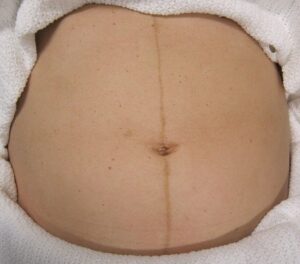
Your Answer: Linea Nigra
Explanation:This is Linea Nigra. It occurs in 3/4 of pregnancies and is due to increased melanocyte-stimulating hormone production by the placenta. This also causes melasma and darkening of the nipples.
-
This question is part of the following fields:
- Clinical Management
-
-
Question 46
Incorrect
-
What kind of epithelium lines the endocervix?
Your Answer: Cuboidal
Correct Answer: Columnar
Explanation:Its important to note the endo and ectocervix have 2 epithelial types. Where columnar and squamous epithelia meet is the transformation zone (or squamous-columnar junction, SCJ). This is relevant as it is the primary site for dysplasia and is where smears are taken from.
-
This question is part of the following fields:
- Pathology
-
-
Question 47
Correct
-
A 21-year-old woman has been stable on medicating with lamotrigine after developing epilepsy 2 years ago. She is planning to conceive but is concerned about what her medications may do to her baby.
Which of the following is considered to reduce the incidence of neural tube defects?Your Answer: High dose folic acid for one month before conception and during first trimester
Explanation:CDC urges all women of reproductive age to take 400 micrograms (mcg) of folic acid each day, in addition to consuming food with folate from a varied diet, to help prevent some major birth defects of the baby’s brain (anencephaly) and spine (spina bifida).
The use of lamotrigine during pregnancy has not been associated with an increased risk of neural tube defects; however, the recommendation regarding higher doses of folic acid supplementation is often, but not always, broadened to include women taking any anticonvulsant, including lamotrigine.
-
This question is part of the following fields:
- Obstetrics
-
-
Question 48
Correct
-
Presence of which one of the following features at term makes spontaneous delivery incompatible?
Your Answer: Mentum posterior
Explanation:When face presentation is diagnosed, around 60% of cases are in the mentum anterior position, 25% are mentum posterior and 15% are mentum transverse; most malpositions rotate spontaneously into mentum anterior. A vaginal birth at term is possible only if the foetus is in the mentum anterior position.
-
This question is part of the following fields:
- Anatomy
-
-
Question 49
Incorrect
-
A 73-year-old woman presents with a complaint of blood-stained vaginal discharge.
On speculum examination, her ectocervix and vagina show signs of atrophy.
No evidence of malignant cells is seen on cervical cytology, although no endocervical cells were visualised.
Choose the most suitable next step for management of this patient.
Your Answer: Ultrasound assessment of endometrial thickness.
Correct Answer: Hysteroscopy and dilatation and curettage
Explanation:Diagnostic hysteroscopy with dilatation and curettage (D&C) is the most suitable step for immediate management of this patient (correct answer). This would aid in determining if an endometrial lesion exists and enable histologic examination of any endometrium that may be present.
Assessment of endometrial thickness via ultrasound examination is commonly used to decide if a patient requires D&C. In postmenopausal women, an endometrial thickness of more than 4mm indicates need for D&C.However, this method is more beneficial in younger postmenopausal women. In women who are 70 years or older, postmenopausal bleeding should be considered to be due to a malignancy until confirmed otherwise.
In this patient, a vaginal swab for culture or a colposcopy would not be appropriate.
Similarly, laparoscopy is not indicated unless the bleeding continued despite a normal hysteroscopy and D&C.
If the endometrial thickness is less than 4mm, a malignancy is less likely to be present; however, the risk cannot be completely excluded.
-
This question is part of the following fields:
- Gynaecology
-
-
Question 50
Correct
-
Macrophages are derived from what type of white blood cell?
Your Answer: Monocytes
Explanation:Macrophages are derived from monocytes. When monocytes come across a pathogen they differentiate into macrophages for phagocytosis to occur.
-
This question is part of the following fields:
- Immunology
-
-
Question 51
Correct
-
Aromatase is key to Oestradiol production in the ovaries. Which of the following statements is true?
Your Answer: FSH induces the granulosa cells to make aromatase
Explanation:The two main cell types of the ovaries:
1. The theca cells produce androgen in the form of androstenedione. The theca cells are not able to convert androgen to oestradiol themselves. The produced androgen is therefore taken up by granulosa cells.
2. The neighbouring granulosa cells then convert the androgen into oestradiol under the enzymatic action of aromatase FSH induces the granulosa cells to produce aromatase for this purpose -
This question is part of the following fields:
- Endocrinology
-
-
Question 52
Correct
-
All the following hormones are products of placental synthesis, EXCEPT:
Your Answer: Prolactin
Explanation:The metabolic adaptations of pregnancy are orchestrated by hormones produced by the placenta and maternal pituitary gland, which undergo dramatic changes during gestation. After involution of ovarian sex steroid production by wk 6, placental oestrogen and progesterone production increases exponentially to term. Concurrently, there are progressive increases in prolactin (PRL), produced by the maternal pituitary gland and decidua, and human chorionic somatomammotropin (CSH, also called human placental lactogen), which has structural similarities to GH and PRL.
-
This question is part of the following fields:
- Endocrinology
-
-
Question 53
Correct
-
As a locum GP at a rural hospital, you are serving female patients at the OBGYN department. You have become an expert in diagnosing endometriosis early.
Which would you say is the most common symptom of endometriosis?Your Answer: Dysmenorrhoea
Explanation:The following are the most common symptoms for endometriosis, but each woman may experience symptoms differently or some may not exhibit any symptoms at all. Symptoms of endometriosis may include:
Pain, especially excessive menstrual cramps that may be felt in the abdomen or lower back
Pain during intercourse
Abnormal or heavy menstrual flow
Infertility
Painful urination during menstrual periods
Painful bowel movements during menstrual periods
Other gastrointestinal problems, such as diarrhoea, constipation and/or nauseaAll options can be symptoms of endometriosis but the commonest one is dysmenorrhea.
-
This question is part of the following fields:
- Gynaecology
-
-
Question 54
Correct
-
APGAR's score includes all the following, EXCEPT:
Your Answer: Blood pH
Explanation:Elements of the Apgar score include colour, heart rate, reflexes, muscle tone, and respiration. Apgar scoring is designed to assess for signs of hemodynamic compromise such as cyanosis, hypoperfusion, bradycardia, hypotonia, respiratory depression or apnoea. Each element is scored 0 (zero), 1, or 2. The score is recorded at 1 minute and 5 minutes in all infants with expanded recording at 5-minute intervals for infants who score 7 or less at 5 minutes, and in those requiring resuscitation as a method for monitoring response. Scores of 7 to 10 are considered reassuring.
-
This question is part of the following fields:
- Obstetrics
-
-
Question 55
Correct
-
A midwife is concerned regarding CTG changes and suggests a fetal blood sample (FBS). At what dilatation would you NOT perform FBS?
Your Answer: Less than 3cm
Explanation:Fetal Blood Sampling (FBS) should only be performed when the cervix is >3cm dilated.
Indications for FBS:
1. Pathological CTG in labour
2. Suspected acidosis in labourContraindications to FBS
– Maternal infection e.g. HIV, HSV and Hepatitis
– Known fetal coagulopathy
– Prematurity (< 34 weeks gestation)
– Acute fetal compromiseInterpretation of FBS results:
pH >7.25 = Normal -Repeat in 1 hour if CTG remains abnormal
7.21 to 7.24 = Borderline – Repeat in 30 minutes
<7.20 = Abnormal - Consider delivery -
This question is part of the following fields:
- Data Interpretation
-
-
Question 56
Correct
-
Regarding female urinary tract infections, which organism is the most common causative agent?
Your Answer: Escherichia Coli
Explanation:The most common causative agent found in female urinary tract infections is Escherichia Coli. E. Coli is a bacteria found in the environment and the human gastrointestinal system. Other common causes of UTI include Klebsiella sp, Proteus sp and various Enterococci.
-
This question is part of the following fields:
- Microbiology
-
-
Question 57
Correct
-
All of the following statements is considered incorrect regarding the management of deep vein thrombosis in pregnancy, except:
Your Answer: Warfarin therapy is contraindicated throughout pregnancy but safe during breast feeding
Explanation:Anticoagulant therapy is the standard treatment for deep vein thrombosis (DVT) but is mostly used in non-pregnant patients. In pregnancy, unfractionated heparin (UFH) and low molecular weight heparin (LMWH) are commonly used. Warfarin therapy is generally avoided in pregnancy because of its fetal toxicity.
Warfarin is contraindicated during pregnancy, but is safe to use postpartum and is compatible with breastfeeding. Low-molecular-weight heparin has largely replaced unfractionated heparin for prophylaxis and treatment in pregnancy.
-
This question is part of the following fields:
- Obstetrics
-
-
Question 58
Incorrect
-
What is the maximum normal diameter of the yolk sac on transvaginal ultrasound?
Your Answer: 3mm
Correct Answer: 6mm
Explanation:The yolk sac increases in size up until the 10th week reaching a maximum diameter of 6mm in normal pregnancy. After the 10th week the yolk sac will gradually disappear. It is usually sonographically undetectable by 20 weeks. A yolk sac greater than 6mm diameter is suspicious of failed pregnancy.
-
This question is part of the following fields:
- Biophysics
-
-
Question 59
Incorrect
-
Among the following which will not be elevated in the third trimester of pregnancy?
Your Answer: Serum alkaline phosphatase
Correct Answer: Serum free T4
Explanation:Normally, there will be a slight raise in prolactin level throughout pregnancy even despite estrogen stimulating and progesterone inhibiting prolactin secretion.
Serum alkaline phosphatase levels will be increased in pregnancy due to placental ALP.
During the first trimester of pregnancy there is a physiological mechanism by hCG causing cross-stimulation of the TSH receptors and as a result of this the concentration of thyroid stimulating hormone (TSH) normally decreases. During second trimester TSH concentration will again return back to its pre-pregnancy levels and then rises slightly by the third trimester. However, most of the changes still occur within the normal non-pregnant range, and the serum free T3 and T4 concentrations remain unchanged throughout pregnancy. But the total concentrations, which include both free and protein-bound fractions, elevates significantly due to an increase in the circulating binding globulins.
Iron binding capacity reflects transferrin, a protein used for iron transportation, which is a globulin found in the beta band on electrophoresis. To counteract the reduction of plasma iron during pregnancy both transferrin and iron binding capacity are elevated during this period.
When compared to the non-pregnant level, cortisol levels are been elevated up to three times than normal.
-
This question is part of the following fields:
- Obstetrics
-
-
Question 60
Correct
-
A 28-year-old woman presented to the emergency department after developing a fever, lower abdominal pain, and uterine tenderness following a vaginal delivery. Upon observation, it was noted that she remains alert, and her blood pressure and urine output are good.
A cervical smear was ordered and results revealed the presence of large, Gram-positive rods suggestive of Clostridia.
Which of the following is to be considered before proceeding with hysterectomy?Your Answer: Gas gangrene
Explanation:Gas gangrene is synonymous with myonecrosis and is a highly lethal infection of deep soft tissue, caused by Clostridium species, with Clostridium perfringens being the most common. This organism has also had increased incidence as the cause of deep tissue infections associated with childbirth and infections after gynaecologic procedures including septic abortions, which can cause gas gangrene of the uterus.
Health care workers should suspect gas gangrene if anaerobic gram-positive bacilli are present in a wound with necrosis of soft tissue and muscle. The organisms produce a gas identifiable on x-ray or CT scans.
Patients with gas gangrene (myonecrosis) present with signs of infection such as fever, chills, pain, and less superficial inflammation at the site of infection than one would expect given the deep penetrating nature of these infections. The condition of the patient can rapidly progress to sepsis and death if not treated aggressively. The wound discharge is often dishwater looking with a musty order. -
This question is part of the following fields:
- Obstetrics
-
-
Question 61
Correct
-
A patient is on the ward with a mechanical mitral valve. There is no history of VTE. What is the target INR?
Your Answer: 2.5 - 3.5
Explanation:With the use of warfarin, strict control of the INR is compulsory. After mitral valve replacement the INR should ideally be kept between 2.5-3.5. If the Ball and Cage or the Tilting Disc is used as a prosthetic valve then the target INR is 3.5, for bi-leaflets the target INR is 3.0 and for biological valves the target INR is 2.5.
-
This question is part of the following fields:
- Pharmacology
-
-
Question 62
Correct
-
You are asked to review the early pregnancy ultrasound scan of a 27 year old lady. The transvaginal ultrasound results show a gestational sac of 26mm with no fetal pole and no fetal heartbeat. Which of the following is the most likely diagnosis?
Your Answer: Miscarriage
Explanation:Ultrasound findings in early pregnancy can help determine the viability of an intrauterine pregnancy. In the absence of a fetal heartbeat and no visible fetal pole, the mean gestational sac diameter should be measured. A sac diameter of less than 25mm on a transvaginal ultrasound scan is likely an indication of a miscarriage. In the presence of a fetal heartbeat, the crown-rump length should be less than 7mm according to NICE guidelines. Further scans are indicated 14 days later to confirm the diagnosis. The diagnosis of ‘pregnancy of uncertain viability’ is given in situations where there is inadequate ultrasound evidence to diagnose a miscarriage, such as a developing sac but no visualisation of a foetus with a heartbeat.
Ultrasound findings for partial molar pregnancy are an enlarged placenta with multiple diffuse anechogenic patches, while findings in a complete molar pregnancy include an enlarged uterus with multiple small anechogenic spaces (snowstorm appearance), or the bunch of grapes sign representing hydropic trophoblastic villi. -
This question is part of the following fields:
- Data Interpretation
-
-
Question 63
Correct
-
A 55 year old patient with a who has tried unsuccessful conservative measures for her overactive bladder, would like to consider Oxybutynin. She wants to know how common dry mouth is as a side effect, as her sister suffered from it on while on the same drug.
Your Answer: approximately 1 in 10 patients
Explanation:Urinary incontinence can be divided into two main aetiologies, stress incontinence, or overactive bladder. Conservative management include lifestyle interventions, controlling fluid intake, or bladder exercises. If conservative management is no longer efficient, then medications may be indicated. Oxybutynin is an anticholinergic drug used in the treatment of urinary incontinence. As with other anticholinergic drugs, side effects include dry mouth, dry eyes, blurry vision and constipation. About 1 in 10 patients taking Oxybutynin will experience some of these side effects.
-
This question is part of the following fields:
- Clinical Management
-
-
Question 64
Incorrect
-
A 22-year-old woman who is 28 weeks pregnant presented to the emergency department due to premature uterine contractions. Upon interview, it was noted the she has history of untreated mitral valve stenosis. Tocolysis was then planned after a necessary evaluation was performed and revealed that there is absence of contraindications.
Which of the following would be considered the drug of choice for tocolysis?Your Answer: Magnesium sulphate
Correct Answer: Oxytocin antagonists
Explanation:Tocolysis is an obstetrical procedure to prolong gestation in patients, some of which are experiencing preterm labour. This is achieved through various medications that work to inhibit contractions of uterine smooth muscle.
There is no definitive first-line tocolytic agent by the American College of Obstetrics and Gynecology (ACOG) but nifedipine is most commonly used. However, in severe aortic stenosis, nifedipine can cause ventricular collapse and dysfunction.
The therapeutic target in the treatment of preterm labour is currently the pharmacological inhibition of uterine contractions with the use of various tocolytic agents. Tocolytic agents are used to maintain pregnancy for 24–48 hours to allow corticosteroids administration to act and to permit the transfer of the mother to a centre with a neonatal intensive care unit.
Oxytocin inhibitors work by competitively acting at the oxytocin receptor site. Oxytocin acts to increase the intracellular levels of inositol triphosphate. The medications currently in this class are atosiban and retosiban. Maternal nor fetal side effects have not been described for this tocolytic.
-
This question is part of the following fields:
- Obstetrics
-
-
Question 65
Correct
-
A 23-year-old woman, G1PO comes to your clinic at 12 week of pregnancy. She is complaining of mild vaginal bleeding for the past 12 hours, along with bouts of mild cramping lower abdominal pain.
On vaginal examination, the cervical os is closed with mild discharge containing blood clots and an ultrasonography confirms the presence of a live fetus with normal heart rate.
Which among of the following is the most likely diagnosis?Your Answer: Threatened abortion
Explanation:Uterine bleeding in the presence of a closed cervix along with sonographic visualization of an intrauterine pregnancy with detectable fetal cardiac activity are diagnostic of threatened abortion.
Abortion does not always follow a uterine bleeding in early pregnancy, sometimes not even after repeated episodes or large amounts of bleeding, that is why the term “threatened” is used in this case. In about 90 to 96% cases, the pregnancy continues after vaginal bleeding if occured in the presence of a closed os and a detectable fetal heart rate. Also as the gestational age advances its less likely the condition will end in miscarriage.
In cases of inevitable abortion, there will be dilatation of cervix along with progressive uterine bleeding and painful uterine contractions. The gestational tissue can be either felt or seen through the cervical os and the passage of this tissue occurs within a short time.
In case were the membranes have ruptured, partly expelling the products of conception with a significant amounts of placental tissue left in the uterus is called as incomplete abortion. During the late first and early second trimesters this will be the most common presentation of an abortion. Examination findings of this includes an open cervical os with gestational tissues observed in the cervix and a uterine size smaller than expected for gestational age and a partially contracted uterus. The amount of bleeding will vary but can be severe enough to cause hypovolemic shock, with painful contractions and an ultrasound revealing tissues in the uterus.
An in utero death of the embryo or fetus prior to 20 weeks of gestation is called as a missed abortion. In this case the women may notice that the symptoms associated with early pregnancy like nausea, breast tenderness, etc have disappeared and they don’t ‘feel pregnant’ anymore. Vaginal bleeding may occur but the cervix remains closed and the ultrasound done reveals an intrauterine gestational sac with or without an embryonic/fetal pole, but no embryonic/fetal cardiac activity will be noticed.
In case of complete abortion, miscarriage occurs before the 12th week and the entire contents of conception will be expelled out of uterus. If this case, the physical examination will show a small and well contracted uterus with an open or closed cervix. There is scant vaginal bleeding with only mild cramping and ultrasound will reveal an empty uterus without any extra-uterine pregnancy.
-
This question is part of the following fields:
- Obstetrics
-
-
Question 66
Correct
-
Which one of the following statements regarding fetal blood pH is correct?
Your Answer: Can be measured during labour
Explanation:A sample for fetal blood pH can be taken during the labour. The mother should be lying in a left lateral position.
-
This question is part of the following fields:
- Physiology
-
-
Question 67
Correct
-
A 35-year-old woman presents to your gynaecologic clinic with complaints of abdominal bloating, headaches, insomnia, mood swings, and reduced sexual desire. These symptoms usually get worse a few days before the onset of menstruation and get better with menstruation.
The most appropriate treatment strategy for such a patient is?Your Answer: Sertraline
Explanation:Premenstrual dysphoric disorder (PMDD) is a more serious form of premenstrual syndrome (PMS). PMS causes bloating, headaches, and breast tenderness a week or two before your period.
With PMDD, you might have PMS symptoms along with extreme irritability, anxiety, or depression. These symptoms improve within a few days after your period starts, but they can be severe enough to interfere with your life.
PMDD symptoms appear a week or two before menstruation and go away within a few days after your period starts. In addition to PMS symptoms, you may have:
Anger or irritability.
Anxiety and panic attacks.
Depression and suicidal thoughts.
Difficulty concentrating.
Fatigue and low energy.
Food cravings or binge eating.
Headaches.
Insomnia.
Mood swings.The following treatments have been shown to relieve symptoms:
Sertraline, escitalopram, paroxetine, and fluoxetine are SSRIs (selective serotonin reuptake inhibitors). SSRIs are the first-line treatment and are extremely effective.
The second line of defence is alprazolam (a short course recommended due to its addictive potential).
The use of temazepam has little advantage because it only aids with sleep and is relatively short-acting.
Lifestyle modifications-weight loss, exercise, quitting smoking, and relaxation therapies for less severe PMS.
Danazol-suppresses the ovulation and helps with mastalgias associated with PMS. -
This question is part of the following fields:
- Gynaecology
-
-
Question 68
Correct
-
If the presenting part of the foetus is the large fontanel, this presentation is known as?
Your Answer: Sinciput
Explanation:Sinciput means the head is neither flexed nor extended. It is the area between forehead and crown and in this case the anterior fontanel is the presenting part.
-
This question is part of the following fields:
- Anatomy
-
-
Question 69
Correct
-
Question 70
Correct
-
What kind of biochemical changes occur during the follicular phase of menstrual cycle?
Your Answer: Endometrial gland proliferation
Explanation:During follicular phase, there is an increase in gonadotrophin hormones and a proliferation of the endometrium occurs. The duration of the cycle depends upon the overall length of the menstrual cycle. The progesterone levels are increased in the luteal phase and not in follicular phase.
-
This question is part of the following fields:
- Physiology
-
-
Question 71
Correct
-
You receive a swab result from a patient who had complained of odorous vaginal discharge. It confirms bacterial vaginosis (BV). Which pathogen is most commonly associated with BV?
Your Answer: Gardnerella vaginalis
Explanation:BV typically presents as an increase in vaginal discharge and vaginal malodour caused by a change in vaginal bacterial flora. PV discharge due to BV is typically grey fluid that adheres to the vaginal mucosa. BV is a polymicrobial infection. Gardnerella is the most commonly associated pathogen. Other associated bacteria include Lactobacillus species, Prevotella, Mobiluncus, Bacteroides, Peptostreptococcus, Fusobacterium, Veillonella, Eubacterium species, Mycoplasma hominis, Urea plasma urealyticum and Streptococcus viridans.
-
This question is part of the following fields:
- Clinical Management
-
-
Question 72
Correct
-
A 44-year-old lady came to the clinic with a five-year history of urine incontinence. With a BMI of 34, she is fat. Her last child, weighing 4.2 kg, was born six years ago.
She has been using various over-the-counter medicines to treat constipation and gastric reflux for the past three years. She is a non-smoker with normal blood pressure.
Which of the following is not a risk factor for female urinary incontinence development?Your Answer: Gastro-oesophageal reflux disease
Explanation:Stress UI (SUI) is more common among puerperal women, followed by mixed UI (MUI) and urge UI (UUI). Generally, episodes of urine leakage are infrequent and the amount of urine leakage is small.
Maternal age greater than 35 years, UI during pregnancy, elevated body mass index (BMI), multiparity, and normal birth are considered risk factors for postpartum UI. A 10-year cohort study developed with the goal of assessing the effect of the first normal birth on urinary symptoms showed that it was associated with an increase in SUI, in addition to UUI, regardless of maternal age or number of births.
Other factors such as: colour or race, episiotomy, perineal tears, newborn’s head circumference, newborn’s weight, gestational age at birth, smoking, and constipation require further studies in order to prove their association with postpartum UI.
-
This question is part of the following fields:
- Gynaecology
-
-
Question 73
Correct
-
A 21-year-old woman, 9 weeks of gestation, has been admitted due to intractable vomiting with concurrent ketonuria. Past medical is unremarkable except for an appendectomy at the age of 12 years. Which of the following is the next best step in this investigation?
Your Answer: Serum electrolytes, urea and creatinine.
Explanation:The finding of ketonuria in this patient indicates profound dehydration and electrolyte loss. Immediate investigation with baseline serum electrolytes, urea, and creatinine is recommended for aid In intravenous resuscitation and rehydration.
All other assessments listed are appropriate, however, baseline electrolyte concentration is important before initiating intravenous resuscitation.
Other causes that can lead to vomiting in early pregnancy include normal pregnancy, multiple pregnancies, molar pregnancies, or urinary tract infection. Urine culture is necessary to exclude urinary tract infection, pelvic ultrasound to confirm singleton or multiple pregnancy and rule out a molar pregnancy.
An erect abdominal Xray may help to rule out an organic intestinal obstruction in this patient. Her history of an appendectomy predisposes this patient to adhesions leading to small bowel obstruction. However, it is not the immediate assessment in this case.
Before the advent of ultrasound, a quantitative hCG analysis was indicated to assess the presence of molar pregnancy. However, ultrasound is now preferred to confirm this diagnosis.
-
This question is part of the following fields:
- Obstetrics
-
-
Question 74
Correct
-
Which of the following arteries branches directly from the aorta?
Your Answer: Ovarian
Explanation:The ovarian artery takes its origin directly from the aorta. While the uterine and the vaginal arteries are all branches of the internal iliac artery.
-
This question is part of the following fields:
- Anatomy
-
-
Question 75
Incorrect
-
A 56 year old lady presents with a vulval itch and discolouration. A biopsy conforms Lichen Sclerosis (LS). What is the risk of developing squamous cell carcinoma compared to patients with a normal vulval biopsy?
Your Answer: <5%
Correct Answer:
Explanation:Lichen Sclerosis is a destructive inflammatory condition that effects the anogenital region of women. It effects around 1 in 300 women. It destroys the subdermal layers of the skin resulting in hyalinization of the skin leading to parchment paper appearance of the skin. It is associated with vulval cancer and it is estimated that the risk of developing vulval cancer after lichen sclerosis is around 3-5%.
-
This question is part of the following fields:
- Clinical Management
-
-
Question 76
Correct
-
A 75 year old woman has a lesion biopsied from the cervix that is histologically confirmed as endometrial carcinoma. Further staging investigations shows no spread to the serosa or adnexa, no spread to the para-aortic, pelvic or inguinal lymph nodes and no evidence of distant metastasis. What FIGO stage is this?
Your Answer: 2
Explanation:It is stage 2 of the disease.
Staging:
1 Confined to uterus
1A < 50% myometrial invasion
1B > 50% myometrial invasion
2 Cervical stromal invasion but not beyond uterus
3 Extension beyond the uterus
3A Tumour invades the serosa or adnexa
3B Vaginal and/or parametrial invasion
3C1 Pelvic nodal involvement
3C2 Para aortic nodal involvement
4 Distant Metastasis
4A Tumour invasion of the bladder and/or bowel mucosa
4B Distant metastases including abdominal metastases and/or inguinal lymph nodes -
This question is part of the following fields:
- Clinical Management
-
-
Question 77
Correct
-
Pelvic ligaments can change at term resulting in?
Your Answer: Enlargement of the pelvic cavity
Explanation:The pelvis is supported by a variety of ligaments. At term, these ligaments allow for variation in its structure such that the overall size of the pelvic cavity is increased in order to accommodate the upcoming foetus into the cavity.
-
This question is part of the following fields:
- Anatomy
-
-
Question 78
Incorrect
-
A 33-year -old G2Pl woman who is at 10 weeks gestation presented to the medical clinic for antenatal visit. It was revealed that she has a twin pregnancy. She was known to have had a complicated previous pregnancy with placental abruption at 34 weeks.
Which of the following is considered the next step in best managing the patient in addition to routine antenatal care?Your Answer: Hospital admission after 34 weeks
Correct Answer: Increased iron and folic acid supplementation
Explanation:Twin pregnancies are at risk for iron deficiency due to significant maternal, fetal, and placental demands. Recommendations regarding the optimal iron dose in twin pregnancies are based on clinical expert opinions, advocating doubling the dose of iron from 30 mg of elemental iron to 60 mg routinely during the second and third trimester, regardless of maternal iron stores.
If pregnant with twins, patient should take the same prenatal vitamins she would take for any pregnancy, but a recommendation of extra folic acid and iron will be made. The additional folic acid and extra iron will help ward off iron-deficiency anaemia, which is more common when patient is pregnant with multiples.
-
This question is part of the following fields:
- Obstetrics
-
-
Question 79
Correct
-
A 26-year-old woman had a history of dilation and curettage for septic abortion. Currently, she has developed amenorrhea for 6 months already. It was also noted that she smokes 10 cigarettes and drinks 2 standard alcoholic drinks every day. She was tested for beta-hCG but it was not detectable.
Which of the following is considered the most appropriate next step to establish a diagnosis?Your Answer: Transvaginal ultrasound
Explanation:Asherman syndrome (intrauterine adhesions or intrauterine synechiae) occurs when scar tissue forms inside the uterus and/or the cervix. These adhesions occur after surgery of the uterus or after a dilatation and curettage.
Patients with Asherman syndrome may have light or absent menstrual periods (amenorrhea). Some have normal periods based on the surface area of the cavity that is affected. Others have no periods but have severe dysmenorrhea (pain with menstruation).
Although two-dimensional sonography may suggest adhesive disease, Asherman syndrome is more often evaluated initially with saline sonography or hysterosalpingography to demonstrate the adhesions.
-
This question is part of the following fields:
- Obstetrics
-
-
Question 80
Correct
-
Ootidogenesis refers to which process during Oogenesis?
Your Answer: 1st and 2nd Meiotic Divisions
Explanation:During the early fetal life, oogonia proliferate by mitosis. They enlarge to form primary oocyte before birth. No primary oocyte is form after birth. The primary oocyte is dormant is the ovarian follicles until puberty. As the follicle matures, the primary oocyte completes its first meiotic division and gives rise to secondary oocyte. During ovulation the secondary oocytes starts the second meiotic division but is only completed if a sperm penetrates it. This 1st and 2nd meiotic division is known as ootidogenesis.
-
This question is part of the following fields:
- Embryology
-
-
Question 81
Incorrect
-
At what stage of gestation does maternal immunoglobulin G transfer to the foetus start?
Your Answer: 6 weeks
Correct Answer: 12 weeks
Explanation:Transportation of the maternal IgG through the placenta starts around the 12 week of gestation.
-
This question is part of the following fields:
- Immunology
-
-
Question 82
Correct
-
A 36-year-old woman arrived at the clinic complaining of stomach discomfort and vaginal bleeding. A pregnancy test in the urine came back positive. An ultrasonography of the right fallopian tube revealed a gestational sac.
Which of the following is NOT a risk factor for the ailment you've just read about?Your Answer: Type 2 Diabetes Mellitus
Explanation:An ectopic pregnancy is definitely present in this patient. An extrauterine pregnancy is referred to as an ectopic pregnancy. The fallopian tube accounts for 96% of ectopic pregnancies, but other sites include the cervical, interstitial (also called cornual; a pregnancy located in the proximal segment of the fallopian tube that is embedded within the muscular wall of the uterus), hysterotomy (caesarean) scar, intramural, ovarian, or abdominal. Furthermore, multiple gestations may be heterotopic in rare situations (including both a uterine and extrauterine pregnancy). Diabetes mellitus is not considered a risk factor for the development of an ectopic pregnancy.
Risk factors for ectopic pregnancy are summarized below:
High Risk: (Risk factors & Odds ratio)
Previous ectopic pregnancy 2.7 to 8.3
Previous tubal surgery 2.1 to 21
Tubal pathology 3.5 to 25
Sterilization 5.2 to 19
IUD – Past use 1.7 – Current use 4.2 to 16.4
Levonorgestrel IUD 4.9
In vitro fertilization in current pregnancy 4.0 to 9.3Moderate:
Current use of oestrogen/progestin oral contraceptives 1.7 to 4.5
Previous sexually transmitted infections (gonorrhoea, chlamydia) 2.8 to 3.7
Previous pelvic inflammatory disease 2.5 to 3.4
In utero diethylstilbesterol (DES) exposure 3.7
Smoking – Past smoker 1.5 to 2.5 – Current smoker 1.7 to 3.9
Previous pelvic/abdominal surgery 4.0
Previous spontaneous abortion 3.0Low:
Previous medically induced abortion 2.8
Infertility 2.1 to 2.7
Age ≥40 years 2.9
Vaginal douching 1.1 to 3.1
Age at first intercourse <18 years 1.6
Previous appendectomy 1.6 -
This question is part of the following fields:
- Gynaecology
-
-
Question 83
Correct
-
A young couple, both 26 years of age, presents to you with 11 months’ duration of infertility. On investigation, she is found to be ovulating, and her hysterosalpingogram is normal. On semen analysis, the following results were found:
Semen volume 5mL (2-6 mL)
Sperm count 1 million/mL * (>20 million)
Motility 15% (>40%)
Abnormal forms 95% (<60%)
A second specimen three months later confirms the above results.
Which would be the most suitable next step in management?
Your Answer: Carry out in vitro fertilisation (IVF) using intracytoplasmic sperm injection (ICSI).
Explanation:Achieving spontaneous pregnancy is rare in cases where a couple have been infertile with abnormal semen analysis (count <5million/mL and reduced motility), hence there is generally an indication for treatment. FSH injection usually would not be expected to improve the semen specimen. Rate of pregnancy would be much lower if at the time of intrauterine insemination, the total motile count is less 5 million. In this case, his count is 1 million. Pregnancy is likely to be achieved with donor sperm but as it would not contain the husband’s genetic material, it would be only considered later on once all other methods involving his own sperm have failed. Out of all the options, IVF would most likely result in a pregnancy, in which it allows the husband’s sperm to spontaneously fertilise the oocyte. Rate of pregnancy would roughly be 2% per treatment cycle. This rate would increase to roughly 20% if ISCI is also used.
-
This question is part of the following fields:
- Gynaecology
-
-
Question 84
Correct
-
A 24-year-old woman comes to your office at 38 weeks of gestation with a urinary dipstick result positive for leukocyte and nitrite. She is otherwise asymptomatic so you send her urine for culture and sensitivity test.
From the options below mentioned, which is the next best management for her?Your Answer: Prescribe her with Oral Cephalexin
Explanation:There is an association between 20 to 30% increase in the risk for developing pyelonephritis during later pregnancy and untreated cases of bacteriuria in pregnancy. This is due to the physiological changes occurring to urinary tract during pregnancy, it is also found that untreated bacteriuria can be associated with even preterm birth and low birth weight. Risk of symptomatic urinary tract infection (UTI) during pregnancy can be reduced by antibiotic treatment of asymptomatic bacteriuria
The most common pathogen associated with asymptomatic bacteriuria is Escherichia coli, which accounts to more than 80% of isolates and the second most frequently cultured uropathogen is Staphylococcus saprophyticus. Other Gram-positive cocci, like group B streptococci, are less common. Gram-negative bacteria such as Klebsiella, Proteus or other Enterobacteriaceae are the other organisms involved in asymptomatic bacteriuria.
Although the context patient is asymptomatic, her urine dipstick shows positive nitrite and leukocyte, suggestive of urinary tract infection, so oral antibiotics like cephalexin or nitrofurantoin are advisable. Normally a five day course of oral antibiotic will be sufficient for the treatment of uncomplicated UTI or asymptomatic bacteraemia in pregnant women. As the patient is currently at her 38 weeks of gestation nitrofurantoin is contraindicated so it is best to prescribe her with Oral Cephalexin. This is because nitrofurantoin is associated with an increased risk of neonatal jaundice and haemolytic anaemia, so should not be used close to delivery, that is after 37 weeks of gestation or sooner if early delivery is planned.
Acute pyelonephritis should be treated with Intravenous antibiotic treatment, guided by urine culture and sensitivity reports as soon a available. A course of minimum of 10-14 days with IV + oral antibiotics is recommended as treatment for pyelonephritis, along with an increased fluid intake as intravenous fluids in clinically dehydrated patients. Even though urinary alkalisers are safe in pregnancy, prescription of urinary alkalisers alone is not recommended due to its low effectiveness compared to antibiotics, also as it can result in a loss of treatment efficacy urinary alkalisers should never be used in combination with nitrofurantoin.
At any stage of pregnancy, if Streptococcus agalactiae, a group B streptococcus [GBS], is detected in urine the intrapartum prophylaxis for GBS is usually indicated.
-
This question is part of the following fields:
- Obstetrics
-
-
Question 85
Correct
-
A 42-year-old woman presents to the gynaecology clinic with an irregular menstrual bleed. She is a known to the case of multiple uterine fibroids. Her past surgical history is significant for tubal ligation and dilation and curettage without any definite diagnosis or any improvement in her symptoms.
Examination reveals an enlarged uterus of about 12-week gravid size.
A complete blood picture shows anaemia (Hb 80g/L).
What should be the next step in the management of such a patient?Your Answer: Total abdominal hysterectomy
Explanation:Fibroids (uterine leiomyomas) are benign uterine tumours. Asymptomatic uterine leiomyomas merely require follow-up without any specific intervention because histological confirmation of the clinical diagnosis is not required in most cases.
Symptoms and consequences necessitate treatment. The definitive therapy is hysterectomy. Other options include various types of myomectomy, endometrial ablation, uterine artery embolization, and myolysis.
The following situations call for a hysterectomy:Women suffering from an acute haemorrhage who have failed to react to various treatments
Women who are finished having children who are at risk for other disorders (cervical intraepithelial neoplasia, endometriosis, adenomyosis, endometrial hyperplasia, or greater risk of uterine or ovarian cancer) that a hysterectomy might eliminate or reduce.Women who have had previous attempts at minimally invasive therapy for leiomyomas failed.
Women who have finished having children and have severe symptoms, many leiomyomas, and a desire for a permanent cure.If a hysterectomy is planned, total abdominal hysterectomy is the procedure of choice.
A course of gonadotropin-releasing hormone (GnRH) agonists followed by myomectomy is the therapy of choice for women who want to keep their capacity to bear children.Total abdominal hysterectomy is the best option for this woman who does not want to have further children, has had her tubes tied, and is experiencing painful symptoms and anaemia.
Hysterectomy is superior to endometrial ablation.Amenorrhea is achieved after endometrial ablation, however, leiomyomas remain untreated.
Women who have previously failed minimally invasive treatment for leiomyomas
Women who have finished having children and have severe symptoms, many leiomyomas, and a strong desire for a cure.
If a hysterectomy is planned, total abdominal hysterectomy is the preferred technique.
A course of gonadotropin-releasing hormone (GnRH) agonists followed by myomectomy is the therapy of choice for women who want to maintain their capacity to bear children.
Total abdominal hysterectomy is the best option for this woman who does not want to have any more children and has had her tubal ligation removed. She also has troublesome symptoms and anaemia.
Hysterectomy is better than endometrial ablation.Amenorrhea can be accomplished with endometrial ablation, however, leiomyomas are not.
Myomectomy is not recommended unless you want to increase your fertility. There is a chance of recurrence, which would demand additional procedures. It will also be difficult to remove all of the leiomyomas if the uterus is enlarged with several leiomyomas. Remaining leiomyomas might grow and cause symptoms again over time.
Hormonal therapies such as combination contraceptive tablets, progesterone-only approaches, danazol, and others have been used with anecdotal results on symptoms like menorrhagia. Some have dubious efficacy, while others with confirmed efficacy have unfavourable side effects, restricting their use.
In leiomyomas-related menorrhagia, NSAIDs have not been widely researched. Although NSAIDs do not appear to diminish blood loss in women with leiomyomas, they do lower painful menses and may be effective for this. -
This question is part of the following fields:
- Gynaecology
-
-
Question 86
Correct
-
A 32-year-old woman who is multigravida and with breech presentation presented to the emergency department for vaginal delivery. Upon spontaneous rupture of the membranes, bradycardia and variable deceleration was noted on the fetal heart rate monitoring.
Vaginal examination was performed and revealed cord prolapse that is still pulsating.
Which of the following is considered the most appropriate next step in managing the patient?Your Answer: Arrange for emergency caesarean delivery
Explanation:Umbilical cord prolapse (UCP) occurs when the umbilical cord exits the cervical opening before the fetal presenting part. It is a rare obstetric emergency that carries a high rate of potential fetal morbidity and mortality. Resultant compression of the cord by the descending foetus during delivery leads to fetal hypoxia and bradycardia, which can result in fetal death or permanent disability.
Certain features of pregnancy increase the risk for the development of umbilical cord prolapse by preventing appropriate engagement of the presenting part with the pelvis. These include fetal malpresentation, multiple gestations, polyhydramnios, preterm rupture of membranes, intrauterine growth restriction, preterm delivery, and fetal and cord abnormalities.
The occurrence of fetal bradycardia in the setting of ruptured membranes should prompt immediate evaluation for potential cord prolapse.
In overt prolapse, the cord is palpable as a pulsating structure in the vaginal vault. In occult prolapse, the cord is not visible or palpable ahead of the fetal presenting part. The definitive management of umbilical cord prolapse is expedient delivery; this is usually by caesarean section.
-
This question is part of the following fields:
- Obstetrics
-
-
Question 87
Incorrect
-
Which is the most useful tumour marker for monitoring of ovarian cancer patients?
Your Answer: CA 125
Correct Answer:
Explanation:CA-125 has found application as a tumour marker or biomarker that may be elevated in the blood of some patients with specific types of cancers, or other conditions that are benign. Increased level of CA125 appears in fifty percent of stage 1 ovarian cancer patients and more than 90% with stages 2-4 ovarian cancer. CA-125 is therefore a useful tool for detecting ovarian cancer after the onset of symptoms as well as monitoring response to treatment and for predicting a patient’s prognosis after treatment.
-
This question is part of the following fields:
- Gynaecology
-
-
Question 88
Correct
-
You review a patient in the fertility clinic. The ultrasound and biochemical profile are consistent with PCOS. She has been trying to conceive for 2 years. Her BMI is 26 kg/m2. She is a non-smoker. You plan to initiate Clomiphene. According to NICE guidance how long should treatment continue for (assuming patient remains non-pregnant)?
Your Answer: 6 months
Explanation:Treatment with Clomiphene should not exceed 6 months.
-
This question is part of the following fields:
- Clinical Management
-
-
Question 89
Incorrect
-
A 28-year-old woman who is at the 18th week of gestation presented to the medical clinic due to a vaginal discharge. Upon history taking, it was revealed that she had a history of preterm labour at 24 weeks of gestation during her last pregnancy. Upon examination, the presence of a clear fluid coming out of the vagina was noted.
Which of the following is considered to be the best in predicting pre-term labour?Your Answer: Fibronectin test
Correct Answer: Cervical length of 15mm
Explanation:Preterm birth is the leading cause of neonatal morbidity and mortality not attributable to congenital anomalies or aneuploidy. It has been shown that a shortened cervix is a powerful indicator of preterm births in women with singleton and twin gestations – the shorter the cervical length, the higher the risk of spontaneous preterm birth. Ultrasound measurements of the cervix are a more accurate way of determining cervical length (CL) than using a digital method.
25 mm has been chosen as the ‘cut off’ at above which a cervix can be regarded as normal, and below which can be called short. A cervix that is less than 25 mm may be indicative of preterm birth.
-
This question is part of the following fields:
- Obstetrics
-
-
Question 90
Correct
-
A 37-year-old woman has been taking Microgynon (oral contraceptive pill [OCP]).
When she presents for a repeat prescription, her BP is 160/100 mmHg.
She mentions that she would like to stop the OCP in six months so that she can conceive.
What is the most suitable advice for this woman?Your Answer: Cease the OCP, use condoms for contraception, and reassess the BP in three months.
Explanation:The woman’s blood pressure was elevated at her visit; therefore she should be advised to immediately cease the oral contraceptive pill (OCP) so that the hypertension can resolve without the need for any hypotensive treatment. The blood pressure can then be reassessed in three months. Alternative, non-hormonal birth control methods such as condoms should be used instead.
If her high blood pressure does not resolve, any medication that would be commenced to reduce her blood pressure should be one that is safe to continue when she becomes pregnant.
It is inappropriate to continue the OCP even at a lower dosage or in combination with a hypotensive agent.
Methyldopa has been evaluated and used for treatment of hypertension during pregnancy. There is no clinical evidence to suggest that it causes harm to the foetus or neonate.
Angiotensin converting enzyme (ACE) inhibitors are not approved for use in pregnancy as they have been associated with fetal death in utero. Other antihypertensive agents such as beta-blockers and diuretics are also problematic in pregnancy and should be avoided.
-
This question is part of the following fields:
- Gynaecology
-
-
Question 91
Incorrect
-
Regarding lymph drainage of the ovary where does the majority of lymph drain to?
Your Answer: internal iliac lymph nodes
Correct Answer: para-aortic nodes
Explanation:Majority of the lymph from the ovaries drain into the para-aortic lymph nodes.
-
This question is part of the following fields:
- Anatomy
-
-
Question 92
Correct
-
A 31-year-old woman at her 18th week of pregnancy presented to the emergency department with complaints of fishy, thin, white homogeneous vaginal discharge accompanied with an offensive odour. The presence of clue cells was noted during a microscopic test on the discharge.
All of the following statements are considered false regarding her condition, except:Your Answer: Relapse rate > 50 percent within 3 months
Explanation:Bacterial vaginosis (BV) affects women of reproductive age and can either be symptomatic or asymptomatic. Bacterial vaginosis is a condition caused by an overgrowth of normal vaginal flora. Most commonly, this presents clinically with increased vaginal discharge that has a fish-like odour. The discharge itself is typically thin and either grey or white.
Although bacterial vaginosis is not considered a sexually transmitted infection, women have an increased risk of acquiring other sexually transmitted infections (STI), and pregnant women have an increased risk of early delivery.
Though effective treatment options do exist, metronidazole or clindamycin, these methods have proven not to be effective long term.
BV recurrence rates are high, approximately 80% three months after effective treatment.
-
This question is part of the following fields:
- Obstetrics
-
-
Question 93
Incorrect
-
You are asked to review a patient. They have attended for a scan at 13 weeks following a positive pregnancy test. The patient has had 2 previous pregnancies for which she opted for termination on both occasions. The scan shows a large irregular haemorrhagic mass that appears to be invading into the myometrium. What is the likely diagnosis?
Your Answer: Placenta Accreta
Correct Answer: Choriocarcinoma
Explanation:Choriocarcinoma may arise as a complication of gestation or as spontaneous germ cell tumours. As this scenario depicts that the women has previous abortion points to the fact that these may have been molar pregnancies. As choriocarcinoma can arise from a molar pregnancy it can be differentiated from it by the presence of invasion into the uterus and metastasis to the lungs primarily.
-
This question is part of the following fields:
- Clinical Management
-
-
Question 94
Correct
-
In her first pregnancy, a 27-year-old lady suffered a fever and malaise around 10 weeks of pregnancy. She had come into touch with a youngster who had been diagnosed with rubella two weeks prior. Which of the following would be the best next step in your management career?
Your Answer: Serial blood samples for rubella antibody assessment.
Explanation:If the patient already has immunity (IgG positive) and if maternal rubella infection is the cause of the current symptoms (initial lgG and IgM negative, but IgM positive on a second sample 2-3 weeks later), amniocentesis may be required to confirm fetal infection.
Ultrasound may reveal growth limitation in late pregnancy, but a fetal congenital defect is rare when the infection begins at 10 weeks of pregnancy, and ultrasound testing at 12 weeks of pregnancy is unlikely to detect abnormalities, while it may discover one from 18-20 weeks. Given the well-known deleterious fetal effects of rubella infection in early pregnancy, gamma-globulin is unlikely to be beneficial at this point in the infective process, and pregnancy termination would certainly be considered by some individuals.
On the basis of prenatal rubella infection, this would not be recommended unless the infection was shown to have occurred. -
This question is part of the following fields:
- Obstetrics
-
-
Question 95
Correct
-
An 18 year old girl presented with dysmenorrhea and irregular cycles. The most appropriate management in this case would be?
Your Answer: Combined pill
Explanation:Combined oral contraceptive pills have an anti ovulatory function and also reduce the pain of menstruation.
-
This question is part of the following fields:
- Gynaecology
-
-
Question 96
Incorrect
-
A 27-year-old primigravida female presents to the emergency department at full term.
6 hours ago, she spontaneously began labour. The membranes ruptured two hours ago and the liquor was stained with meconium.
On cardiotocography (CTG) was conducted and it showed some intermittent late decelerations, from 140 to 110 beats/min.
On vaginal examination, her cervix id 5 cm dilated. The foetus is in cephalic presentation, in the left occipitotransverse (LOT) position, with the bony head at the level of the ischial spines (IS).
Due to the deceleration pattern, a fetal scalp pH estimation was performed and the pH was measured at 7.32.
An hour later, the CTG showed the following pattern over a period of 30 minutes:
Baseline 140/min
Baseline variability 1/min
Accelerations None evident
Decelerations Two decelerations were evident, with the heart rate falling to 80/min, and with each lasting 4 minutes
Another vaginal examination is conducted and her cervix is now 8cm dilated, but otherwise unchanged from one hour previously.
What would be the next best line management?Your Answer: Allow labour to proceed with continuous CTG evaluation.
Correct Answer: Immediate delivery by Caesarean section.
Explanation:The next best line of management is immediate delivery via Caesarean section ( C section).
This is because of the change in cardiotocography (CTG). The pattern became much more severe with a virtual lack of short-term variability and prolonged decelerations. These changes indicate the necessity for an immediate C section as the cervix is not fully dilated.
As immediate delivery is indicated, another pH assessment is unnecessary as it would delay delivery and increase the likelihood of fetal hypoxia.
Delivery by ventose, in a primigravida where the cervix is only 8cm dilated is not indicated as it would allow the labour to proceed or augmenting with Syntocinon.
-
This question is part of the following fields:
- Obstetrics
-
-
Question 97
Correct
-
A 33-year-old nulliparous pregnant female at the 21st week of pregnancy came to the gynaecological clinic for evaluation of vulval ulcer. A swab was taken revealing the herpes simplex type 2 virus. There is no prior history of such lesions and her partners of the last decade had no history of the infection. She's anxious about how she got the condition and the potential consequences for her and her unborn kid. Which of the following suggestions is the most appropriate?
Your Answer: The primary infection is commonly asymptomatic.
Explanation:Despite the fact that this question includes many true-false options, the knowledge examined is particularly essential in the treatment of women who have genital herpes.
It answers many of the questions that such women have regarding the disease, how it spreads, how it may be controlled, and how it affects an unborn or recently born child.
All of these issues must be addressed in a counselling question.
Currently, the most prevalent type of genital herpes is type 1, while in the past, type 2 was more common, as confirmed by serology testing.
Type 2 illness is nearly always contracted through sexual contact, but it can go undetected for years.
Acyclovir can be taken during pregnancy, and there are particular reasons for its usage.
Neonatal herpes is most usually diagnosed when the newborn has no cutaneous lesions, and past genital herpes in the mother is protective against neonatal infection, although not always.
Where the genital infection is the initial sign of the disease rather than a relapse of earlier disease, neonatal herpes is far more frequent.
Many patients and doctors are unaware that, while the original infection might be deadly, it is usually asymptomatic.
This explains how the illness spreads between sexual partners when neither has had any previous symptoms of the disease. -
This question is part of the following fields:
- Obstetrics
-
-
Question 98
Correct
-
The femoral triangle is bounded superiorly by which of the following structures?
Your Answer: Inguinal ligament
Explanation:The femoral triangle is bounded superiorly by the inguinal ligament which forms the base of the triangle, medially by the lateral border of the adductor longus and laterally by the sartorius muscle.
-
This question is part of the following fields:
- Anatomy
-
-
Question 99
Correct
-
Among the following presentations during pregnancy, which is not associated with maternal vitamin D deficiency?
Your Answer: Large for gestational age
Explanation:Retarded skeletal growth resulting in small for gestational age babies are the usual outcomes of an untreated vitamin D deficiency in pregnancy.
Symptoms associated with maternal vitamin D deficiency during pregnancy are:
– Hypocalcemia in newborn.
– Development of Rickets later in life.
– Defective tooth enamel.
– Small for gestational age due to its effect on skeletal growth
– Fetal convulsions or seizures due to hypocalcemia. -
This question is part of the following fields:
- Obstetrics
-
-
Question 100
Correct
-
Among the following conditions which is not a contraindication to tocolysis?
Your Answer: Maternal hypothyroidism
Explanation:Maternal hypothyroidism which is usually treated with thyroxine is not a contraindication for suppression of labour.
Suppression of labour known as tocolysis is contraindicated in situations like suspected foetal compromise, which is diagnosed by cardiotocograph warranting delivery, in cases of placental abruption, in chorioamnionitis, in severe pre-eclampsia, cases were gestational age is more than 34 weeks, in cases of foetal death in utero and in cases where palliative care is planned due to foetal malformations. -
This question is part of the following fields:
- Obstetrics
-
-
Question 101
Incorrect
-
A 24 year old patient decides to take a Chlamydia screening test whilst in the GP surgery. He is asymptomatic. The results are positive for chlamydia infection. His partner attends for testing and wants to know the risk of contracting Chlamydia. What is the risk of chlamydia infection following intercourse with an asymptomatic chlamydia positive partner?
Your Answer: >90%
Correct Answer: 65%
Explanation:The chances of transmitting chlamydia from an asymptomatic partner through sexual intercourse is 65%.
-
This question is part of the following fields:
- Clinical Management
-
-
Question 102
Correct
-
Anna, a 39-year-old medical receptionist presents to your gynaecologic clinic for a refill of her Microgynin 30 (combined oral contraceptive pill). Her history is significant for smoking around 1 pack per day. Her BMI is 37.
What should be the next management step?Your Answer: Offer her progestogen-only contraceptive options
Explanation:This patient is above 35 and smokes more than 15 cigarettes per day, which is an absolute contraindication to using a combined oral contraceptive pill. A BMI of greater than 35 is a relative contraindication to the usage of the combined oral contraceptive pill.
Progestogen-only contraception, such as etonogestrel implant, levonorgestrel intrauterine device, and depot medroxyprogesterone, should be offered to her.
Without initially attempting lifestyle changes, a referral for weight loss surgery is not required. Also, nicotine replacement therapy may aid in quitting smoking, but it may take time. -
This question is part of the following fields:
- Gynaecology
-
-
Question 103
Incorrect
-
A 46-year-old woman presents to your clinic with a complaint of irregular heavy menstruation. She had normal menstrual pattern 6 months back. Physical examination revealed no abnormality with a negative cervical smear. Laboratory investigation reveals a haemoglobin of 105g/L (Normal 115-165g/L). The most common cause of such menorrhagia is?
Your Answer: Endometrial polyps.
Correct Answer: Anovulatory cycles.
Explanation:Menorrhagia in a 45-year-old woman is most likely caused by an ovulation issue, most likely anovulatory cycles, particularly if the periods have grown irregular.
Endometrial carcinoma is a rare cause of menorrhagia that usually occurs after menopause.
Menorrhagia can be caused by fibroids, endometrial polyps, and adenomyosis, although the cycles are normally regular, and a dramatic change from normal cycles six months prior would be exceptional.
If fibroids or adenomyosis are the source of the menorrhagia, the uterus is usually enlarged. -
This question is part of the following fields:
- Gynaecology
-
-
Question 104
Correct
-
Regarding the ECG, what does the P wave represent?
Your Answer: Atrial depolarisation
Explanation:In an ECG the P wave represents atrial depolarization. The QRS complex represents the ventricular depolarization, T waves represent ventricular repolarization and the U wave represents repolarization of the interventricular septum.
-
This question is part of the following fields:
- Biophysics
-
-
Question 105
Correct
-
A young woman complained of itching and discharge from her vaginal area. There is red vulva and yellowish discharge on inspection.
What is the best course of action?Your Answer: Clotrimazole
Explanation:This patient has got thrush or a fungal infection in the vaginal area. Candida infection is most likely based on the white discharge and itching. A vaginal clotrimazole antifungal treatment is required.
-
This question is part of the following fields:
- Gynaecology
-
-
Question 106
Incorrect
-
Screening for Group B Streptococcus (GBS) at around 36 weeks of gestation now is common practice as up to 20% of women carry the organism in the vagina.
If a pregnant woman is found to have GBS at this stage, which treatment would be most appropriate?
Your Answer: A one week course of oral penicillin given antenatally about one week before term.
Correct Answer: Parenteral penicillin given six-hourly in labour.
Explanation:Up to 20% of women have been found to have Group B streptococcus (GBS). GBS is considered a normal flora of the gastrointestinal tract. GBS infection is generally asymptomatic although some women might end up having a UTI. Infants born to mothers who are colonised with GBS during labour are at a higher risk of developing early-onset GBS infection. If a pregnant woman develops a UTI due to GBS, it is suggestive of significant GBS colonisation. IV penicillin would be the drug of choice and is to be administered to the mother during labour which would provide sufficient protection for the foetus and would be effective enough. If penicillin is unavailable, ampicillin is a reasonable alternative. If a patient has penicillin allergy, vancomycin can be used. If not for penicillin, roughly 50% of babies delivered vaginally to women who are GBS positive would be colonised with the organism and out of this percentage, 1-2% can go on to develop a severe infection such as septicaemia and meningitis which could often be fatal.
IM penicillin can be administered to the newborn immediately post-delivery would be an effective prophylaxis in most cases but one should not wait until signs of infection are present to give the injection. Many newborns would still have an immature immune system which could cause some to die. Hence, it is more suitable to treat all women who tested positive during labour and the newborn as well if any signs of infection do appear. The majority of babies don’t need antibiotic treatment if their mother has been treated.
-
This question is part of the following fields:
- Obstetrics
-
-
Question 107
Correct
-
A 22-year-old pregnant woman attends clinic for a fetal scan at 31 weeks. She complains of difficulty breathing and a distended belly. U/S scan was done showing polyhydramnios and an absent gastric bubble. What is the most likely diagnosis?
Your Answer: Oesophageal atresia
Explanation:Oesophageal atresia of the foetus interrupts the normal circulation of the amniotic fluid. This causes polyhydramnios and subsequent distension of the uterus impacting proper expansion of the lungs. This would explain the difficulty breathing.
-
This question is part of the following fields:
- Obstetrics
-
-
Question 108
Incorrect
-
A 34-year-old woman presents to your clinic with a chief complaint of vague stomach pain. A unilocular cyst (3.8 x 4.3 x 3.0 cm) was discovered in the left ovary during a trans-abdominal ultrasound.
What is the best management strategy?Your Answer: Repeat ultrasound within 3-4 months
Correct Answer: Reassurance, no further action required
Explanation:In premenopausal women, watchful waiting usually involves monitoring for symptoms (pelvic pain or pressure) and repeating the pelvic ultrasound after six to eight weeks. If the ovarian cyst does not enlarge or if it resolves during the period of watchful waiting, it does not usually require surgical removal. Some premenopausal women will be advised to take a birth control pill during this time to help prevent new ovarian cysts from developing.
If a cyst decreases in size or does not change, the ultrasound is often repeated at regular intervals until your healthcare provider is certain that the cyst is not growing. If the cyst resolves, no further testing or follow-up is required.
Surgery may be recommended in the following situations:
– A cyst is causing persistent pain or pressure, or may rupture or twist.
– A cyst appears on ultrasound to be caused by endometriosis and is removed for fertility reasons.
– Large cysts (>5 to 10 cm) are more likely to require surgical removal compared to smaller cysts. However, a large size does not predict whether a cyst is cancerous.
– If the cyst appears suspicious for cancer. If you have risk factors for ovarian cancer or the cyst looks potentially cancerous on imaging studies, your healthcare provider may recommend surgery.
– If the suspicion for ovarian cancer is low but the cyst does not resolve after several ultrasounds, you may choose to have it removed after a discussion with your healthcare provider. However, surgical removal is not usually necessary in this case. -
This question is part of the following fields:
- Gynaecology
-
-
Question 109
Incorrect
-
A 27-year-old G2P1 visits the gynaecologist with complaints of increased hair growth on her face, breast, and belly, but hair loss in the temporal regions of her head. She has also struggled with acne.
On physical examination, the patient's face, chest, and belly are covered in coarse, dark hair. Her clitoris is swollen on pelvic examination. Her left adnexal mass is 7 cm in diameter.
What is the most likely ovarian tumour to be associated with this clinical picture?Your Answer: Granulosa tumour
Correct Answer: Sertoli-Leydig cell tumour
Explanation:Sertoli-Leydig cell tumours constitute less than 0.5 percent of ovarian neoplasms. They may behave in a benign or malignant fashion, which correlates with the degree of differentiation in an individual case. Approximately 75 percent occur in women under the age of 40 years (mean age at diagnosis is 25), but they occur in all age groups. The neoplasms are characterized by the presence of testicular structures that produce androgens. This can result in virilization, although not all of these neoplasms are functionally active.
Pure Sertoli cell tumours are usually estrogenic and may also secrete renin, leading to refractory hypertension and hypokalaemia. In addition, these tumours may be associated with Peutz-Jeghers syndrome.
Pure Leydig cell tumours are androgen secreting; only a few cases have been reported. Virtually all of these rare tumours are unilateral and confined to the ovary at diagnosis.
Granulosa cell tumours typically present as large masses; the mean diameter is 12 cm. Women may present with an asymptomatic mass noted on abdominal or pelvic examination. Granulosa cell tumours often produce oestrogen and/or progesterone; consequently, symptoms related to hyperestrogenism are common at diagnosis.
Krukenberg tumour, also known as carcinoma mucocellulare, refers to the signet ring subtype of metastatic tumour to the ovary. The stomach followed by colon are the two most common primary tumours to result in ovarian metastases, pursued by the breast, lung, and contralateral ovary.
A rare tumour that is made up of more than one type of cell found in the gonads (testicles and ovaries), including germ cells, stromal cells, and granulosa cells. Gonadoblastomas are usually benign (not cancer), but they may sometimes become malignant (cancer) if not treated.
-
This question is part of the following fields:
- Gynaecology
-
-
Question 110
Correct
-
All of the following are features of the female bony pelvis, except?
Your Answer: It is funnel shaped
Explanation:The female bony pelvis is larger, broader and more of a funnel shape. The inlet is larger and oval in shape and the sides of the female pelvis are wider apart.
-
This question is part of the following fields:
- Anatomy
-
-
Question 111
Correct
-
All of the following are characteristic features of normal labour, except:
Your Answer: Moderate bleeding
Explanation:Normal labour is characterized by spontaneous onset, rhythmical uterine contractions along with vertex presentation. Cervical dilatation starts from the 1st stage of labour and intensity of the uterine contractions increases with passing time. Bleeding occurs after the child is expelled and the average loss is about 250-500 ml in a normal vaginal delivery.
-
This question is part of the following fields:
- Obstetrics
-
-
Question 112
Correct
-
Placental production of hPL, hCG, Oestrogen and Progesterone are examples of which type of mechanism
Your Answer: Endocrine
Explanation:Hormones that are secreted into the circulation at one site but have effects on distal target organs are endocrine as is the case with the hormones above. Autocrine and Intracrine messengers act within the same cell. Exocrine glands secrete their products into ducts. Apocrine is a histological term used to describe some types of exocrine gland.
-
This question is part of the following fields:
- Endocrinology
-
-
Question 113
Correct
-
Regarding ovarian cancer, which factors are thought to lower the risk?
Your Answer: Taking statins
Explanation:Ovarian cancer is a gynaecological cancer that commonly affects women over 40 years. Risk factors for ovarian cancer include: infertility, a family history of ovarian, breast or colorectal cancer. There are some protective factors, which include: high parity and breastfeeding, early age at menarche and late age at menopause, and combined oral contraceptives, and statins.
-
This question is part of the following fields:
- Epidemiology
-
-
Question 114
Correct
-
From which germ cell layer does the GI tract initially develop?
Your Answer: Endoderm
Explanation:GI Tract initially forms via gastrulation from the endoderm of the trilaminar embryo around week 3. It extends from the buccopharyngeal membrane to the cloacal membrane. Later in development there are contributions from all three germ cell layers.
-
This question is part of the following fields:
- Embryology
-
-
Question 115
Correct
-
The femoral triangle is bounded superiorly by which of the following structures?
Your Answer: Inguinal ligament
Explanation:Boundaries of the Femoral Triangle:
Superior: Inguinal ligament
Medial: Medial border of the adductor longus
Lateral: Medial border of the sartorius
Floor: Pectineus, Adductor longus and Iliopsoas muscles
Roof: Fascia Lata -
This question is part of the following fields:
- Anatomy
-
-
Question 116
Correct
-
You see a patient in antenatal clinic who is concerned that she has never had chicken pox and may catch it during pregnancy. You check her Varicella status and she is non-immune. She asks you about vaccination. What type of vaccine is the varicella vaccine?
Your Answer: Attenuated
Explanation:Varicella is a live vaccine. The recent RCOG green top guidelines suggest vaccine can be considered postpartum or pre pregnancy but NOT whilst pregnant. In the non-immune pregnant woman they should be advised to avoid contact with people with chickenpox or shingles and to contact a healthcare professional promptly if exposed. If they have a significant exposure VZIG should be offered as soon as possible.
-
This question is part of the following fields:
- Immunology
-
-
Question 117
Correct
-
Human Chorionic Gonadotrophin (HCG) is structurally similar to which of the following hormones?
Your Answer: Thyroid Stimulating Hormone (TSH)
Explanation:TSH, FSH, LH and HCG are all similar glycoproteins. These hormones consist of a common α-subunit and specific β-subunit. All are glycosylated, which determines their bioactivity and half-life.
-
This question is part of the following fields:
- Endocrinology
-
-
Question 118
Correct
-
Which of the following statements regarding the vaginal artery is typically TRUE?
Your Answer: It arises from the Internal iliac artery
Explanation:The vaginal artery is the homolog to the inferior vesical artery in males. In most of the cases it arises from the internal iliac artery.
-
This question is part of the following fields:
- Anatomy
-
-
Question 119
Correct
-
Question 120
Correct
-
In the earliest phase of wound healing platelets are held together by what?
Your Answer: Fibrin
Explanation:The 1st stage of wound healing is haemostasis. Even in incised wounds a small haematoma forms. Here the clotting cascade is activated by tissue factor and endothelial cells resulting in activation of platelets. This results in platelet aggregation and the laying down of a fibrin mesh that is cross linked and holds the platelets in place.
Wound healing is typically divided into phases:
1. Haemostasis Phase
2. Inflammatory phase
3. Proliferation phase
4. Remodelling phase -
This question is part of the following fields:
- Physiology
-
-
Question 121
Correct
-
A 24-year-old primigravid woman comes to the office to establish prenatal care at 14 weeks gestation. Patient has had no vaginal bleeding or cramping, no chronic medical conditions, and her only medication is a daily dose of prenatal vitamin. Patient follows a vegan diet and drinks 2 cups of coffee in the morning, also she is an avid runner who runs 5 miles most days. Patient does not use tobacco, alcohol or any other illicit drugs.
On physical examination her vital signs are normal, with a pre-pregnancy BMI of 22 kg/m2.
Transvaginal ultrasound shows a single intrauterine gestation with a heart rate of 155/min.
Among the following possible lifestyle modifications needed during pregnancy, which is the most appropriate recommendation for this patient?Your Answer: Increase caloric intake by about 350 kcal/day
Explanation:Nutrition in pregnancy
Weight gain must be:
– In patients <18.5 kg/m2, there should be an increase of 12.7 - 18 kg (28-40 lb)
– In patients 18.5 – 24.9 kg/m2 there should be an increase of 11.4 – 15.9 kg (25-35 lb)
– In patients 25 – 29.9 kg/m2 there should be an increase of 6.8 – 11.4 kg (15-25 lb)
– In patients ≥30 kg/m2 there should be an increase of 5 – 9 kg (11-20 lb)Supplementation required:
– Intake of daily prenatal vitamin
– Additional specific supplements as indicated
– Avoidance of harmful substances like drugs, alcohol, etc
– Substance abuse counseling
– Avoidance of fish with high mercury levels
– Moderating caffeine intakeFood safety:
– Avoid undercooked meat, fish & eggs
– Clean raw fruits & vegetables before consuming
– Avoid unpasteurized dairy productsNutrition in pregnancy is addressed at the initial prenatal visit based on pre-pregnancy BMI. Appropriate weight gain for a women with a normal pre-pregnancy BMI of 18.5 – 24.9 kg/m2 should be 11.4 – 15.9 kg (25-35 lb) during pregnancy. This weight gain is equivalent to the increasing caloric intake of 350 kcal/day during the second and 450 kcal/day during the third trimesters. Patients following any specific diets like veganism can continue their usual diet throughout pregnancy as long as it contains a well-balanced quantity of protein, carbohydrates and fats.
Vitamin and mineral supplementation during pregnancy is a single, daily prenatal vitamin recommended for majority of pregnant women as it helps to fulfill most of the daily vitamin and mineral supplementation requirements. In case of patients with vitamin or mineral deficiencies like iron, calcium, etc, a specific supplementation of the deficit vitamin/mineral only is required rather than multiple prenatal vitamins to avoid consuming harmful amounts of other vitamins like vitamin A. Vegans, who are at risk for some vitamin and mineral deficiencies like vitamin B12, calcium, iron, etc, secondary to lack of meat consumption, may require supplementation.
Pregnant women are counselled on avoidance of harmful substances like alcohol, drugs, etc and substances like fish with high mercury levels. Although high caffeine intake during pregnancy can be harmful, a moderate intake ie, 1 or 2 cups of coffee a day is thought to be safe.
Safe handling of food is important because some food products are found to result in congenital infection and intrauterine fetal demise. Patients are also counselled to avoid undercooked meat, fish, and eggs; to thoroughly clean raw fruits and vegetables and to avoid consumption of unpasteurized dairy products.
By maintaining a proper maternal nutrition during pregnancy, patients are provide appropriate nutrition to the fetal and thereby reducing the risk of pregnancy related complications like low birth weight, preterm delivery, etc.
Pregnant patients are counseled to avoid exercises like contact sports, downhill skiing, etc which increases the risk of abdominal trauma resulting in increased risk of placental abruption. But those patients with an uncomplicated pregnancy, who are already accustomed with long-duration, high-intensity exercise like running 5 miles/day, as in the given case, can continue with their regimen if tolerated.
Proper nutrition in pregnancy includes appropriate weight gain, supplementation of vitamins and minerals, avoidance of any harmful substances, and safe handling of food. Patients with a normal pre-pregnancy BMI should gain around 11.4-15.9 kg (25-35 lb) during pregnancy by increasing their caloric intake by 350 kcal/day in the second and 450 kcal/day in the third trimesters.
-
This question is part of the following fields:
- Obstetrics
-
-
Question 122
Correct
-
All the following are possible causes of polyhydramnios, EXCEPT:
Your Answer: IUGR
Explanation:An underlying disease is only found in 17 % of cases in mild polyhydramnios. In contrast, an underlying disease is detected in 91 % of cases in moderate to severe polyhydramnios. The literature lists the following potential aetiologies: fetal malformations and genetic anomalies (8–45 %), maternal diabetes mellitus (5–26 %), multiple pregnancies (8–10 %), fetal anaemia (1–11 %), other causes, e.g. viral infections, Bartter syndrome, neuromuscular disorders, maternal hypercalcemia. Viral infections which can lead to polyhydramnios include parvovirus B19, rubella, and cytomegalovirus. Other infections, e.g. toxoplasmosis and syphilis, can also cause polyhydramnios.
-
This question is part of the following fields:
- Physiology
-
-
Question 123
Incorrect
-
A 53 year old female presents with hot flushes and night sweats. Her last menstrual period was last year. She had MI recently. Choose the most appropriate management for this patient.
Your Answer: Raloxifene
Correct Answer: Clonidine
Explanation:With a history of MI, oestrogen and COCP should be avoided. Evening primrose is also not suitable for post-menopausal symptoms. Raloxifene is a SERM – these make hot flushes worse. Clonidine will help improve the hot flushes and the vasomotor symptoms.
-
This question is part of the following fields:
- Gynaecology
-
-
Question 124
Correct
-
The risk of postpartum uterine atony is associated with:
Your Answer: Twin pregnancy
Explanation:Multiple studies have identified several risk factors for uterine atony such as polyhydramnios, fetal macrosomia, twin pregnancies, use of uterine inhibitors, history of uterine atony, multiparity, or prolonged labour.
-
This question is part of the following fields:
- Obstetrics
-
-
Question 125
Correct
-
A woman comes to your office two weeks after undergoing a total vaginal hysterectomy with anterior colporrhaphy and the Burch surgery for uterine prolapse and stress urine incontinence.
Throughout the day, she complains of a continual loss of urine. She denies having any dysuria or urgency. Which of the following is the most likely cause of the problem?Your Answer: Vesicovaginal fistula
Explanation:Vesicovaginal fistula (VVF) is a subtype of female urogenital fistula (UGF). VVF is an abnormal fistulous tract extending between the bladder and the vagina that allows the continuous involuntary discharge of urine into the vaginal vault. The uncontrolled leakage of urine into the vagina is the hallmark symptom of patients with UGFs. Patients may complain of urinary incontinence or an increase in vaginal discharge following pelvic surgery or pelvic radiotherapy with or without antecedent surgery. The drainage may be continuous; however, in the presence of a very small UGF, it may be intermittent. Increased postoperative abdominal, pelvic, or flank pain; prolonged ileus; and fever should alert the physician to possible urinoma or urine ascites and mandates expeditious evaluation. Recurrent cystitis or pyelonephritis, abnormal urinary stream, and haematuria also should initiate a workup for UGF.
Urinary trace infection presents with dysuria and urgency.
Detrusor instability causes urge incontinence.
Neurogenic bladder from diabetic neuropathy would also have urgency. -
This question is part of the following fields:
- Gynaecology
-
-
Question 126
Correct
-
The inferior 1/3 of the rectum is principally supplied by which artery?
Your Answer: Middle rectal artery
Explanation:Remember the inferior rectal artery supplies the anus. The middle rectal artery is the principle supply to the lower 1/3 rectum. The rectal arteries do form an anastomosis.
-
This question is part of the following fields:
- Anatomy
-
-
Question 127
Incorrect
-
Which of the following is indicated for the treatment of chlamydial urethritis in pregnancy?
Your Answer: Doxycycline 100 mg for seven days
Correct Answer: Azithromycin 1gram as single dose
Explanation:The best treatment option for chlamydial urethritis in pregnancy is Azithromycin 1g as a single dose orally. This is the preferred option as the drug is coming under category B1 in pregnancy.
Tetracycline antibiotics, including doxycycline, should never be used in pregnant or breastfeeding women.
Erythromycin Estolate is contraindicated in pregnancy due to its increased risk for hepatotoxicity. Ciprofloxacin is not commonly used for treating chlamydial urethritis and its use is not safe during pregnancy.
-
This question is part of the following fields:
- Obstetrics
-
-
Question 128
Correct
-
Lidocaine works by blocking which of the following ion channels?
Your Answer: fast voltage gated sodium channels
Explanation:It blocks the voltage gated sodium channels and reduce the influx of sodium ions preventing depolarization of the membrane and blocking the conduction of the action potential. The affinity of the receptor site in the sodium channels depends on whether it is resting, open or inactive.
-
This question is part of the following fields:
- Pharmacology
-
-
Question 129
Incorrect
-
A 30-year-old woman who is at 38 weeks gestation presented to the emergency department due to complaints of not feeling fetal movements since yesterday. Upon investigations, fetal demise was confirmed. Induced delivery was done and she gave birth to a dead foetus.
Which of the following is least likely to reveal the cause of the fetal death?Your Answer: Indirect Coomb's test of the mother
Correct Answer: Chromosomal analysis of the mother
Explanation:Stillbirth has many causes: intrapartum complications, hypertension, diabetes, infection, congenital and genetic abnormalities, placental dysfunction, and pregnancy continuing beyond forty weeks.
In 5% of normal-appearing stillborns, a chromosomal abnormality will be detectable. With an autopsy and a chromosomal study, up to 35% of stillborns are found to have a major structural pathology, and 8% have abnormal chromosomes. After a complete evaluation, term stillbirth remains unexplained about 30% of the time. The chance of finding a cause is impacted by the age of the foetus, the experience of the caregiver, and the thoroughness of the exam. Chromosome testing for aneuploidy should be offered for all stillbirths to confirm or to seek a cause of the stillbirth. Genetic amniocentesis or chorionic villus sampling before delivery offers the highest yield.
-
This question is part of the following fields:
- Obstetrics
-
-
Question 130
Correct
-
The following are true for dizygotic twins EXCEPT:
Your Answer: Both twins are identical & of the same sex
Explanation:Dizygotic means two (di) fertilized eggs (zygotes). Dizygotic twins occur when two eggs are fertilized by two separate sperm. Dizygotic twins are also known as fraternal or non-identical twins. They are the most common type of twins.
Unlike monozygotic twins (also known as identical twins), dizygotic twins do not share the same genes. Monozygotic twins share 100 percent of each other genes. Dizygotic twins share only 50 percent. This is the same genetic similarity found between siblings conceived and born at different times.
-
This question is part of the following fields:
- Genetics
-
-
Question 131
Correct
-
A pregnant female who is a known diabetic presents to the clinic for a consultation and enquires about the harmful effects of vitamin deficiencies. A deficiency of which vitamin can lead to teratogenic effects in the child?
Your Answer: Folic acid
Explanation:Pregnant women need to get enough folic acid. The vitamin is important to the growth of the foetus’s spinal cord and brain. Folic acid deficiency can cause severe birth defects known as neural tube defects. The Recommended Dietary Allowance (RDA) for folate during pregnancy is 600 micrograms (µg)/day.
-
This question is part of the following fields:
- Obstetrics
-
-
Question 132
Correct
-
The ovarian artery is a branch of the:
Your Answer: Aorta
Explanation:The ovarian artery is an artery that supplies oxygenated blood to the ovary in females. It arises from the abdominal aorta below the renal artery. It can be found in the suspensory ligament of the ovary, anterior to the ovarian vein and ureter.
-
This question is part of the following fields:
- Anatomy
-
-
Question 133
Incorrect
-
A 46 year old women with a BMI of 34 is seen in clinic following hysteroscopy and biopsy for irregular menstrual bleeding. Histology shows atypical hyperplasia. Which of the following is the most appropriate 1st line management?
Your Answer: Endometrial ablation
Correct Answer: Laparoscopic hysterectomy
Explanation:There is an increase risk of developing carcinoma of the uterus, if the endometrium shows hyperplasia with atypia. The standard surgery is total hysterectomy with bilateral salpingectomy which can be performed abdominally or laparoscopically If the disease is grade 1-2 and less than 1B i.e. less than 50% invasion of the uterine body.
-
This question is part of the following fields:
- Clinical Management
-
-
Question 134
Correct
-
Endometrial ablation is a medical technique that removes or destroys the endometrial lining in women who have severe monthly flow.
Endometrial ablation is not contraindicated by which of the following?Your Answer: Completed family
Explanation:Endometrial ablation is primarily intended to treat premenopausal women with heavy menstrual bleeding (HMB) who do not desire future fertility. Women who choose endometrial ablation often have failed or declined medical management.
Absolute contraindications to endometrial ablation include pregnancy, known or suspected endometrial hyperplasia or cancer, desire for future fertility, active pelvic infection, IUD currently in situ, and being post-menopausal. In general, endometrial ablation should be avoided in patients with congenital uterine anomalies, severe myometrial thinning, and uterine cavity lengths that exceed the capacity of the ablative technique (usually greater than 10-12 cm).
-
This question is part of the following fields:
- Gynaecology
-
-
Question 135
Correct
-
Lactogenesis at term is stimulated by which hormone?
Your Answer: Prolactin
Explanation:Prolactin is the hormone that is responsible for the production of milk (Lactogenesis). Oxytocin is responsible for the let down reflex during suckling.
-
This question is part of the following fields:
- Clinical Management
-
-
Question 136
Correct
-
A 30 year old woman with a history of two previous C section deliveries, is rushed to the hospital for an emergency c-section at 36 weeks gestation due to antenatal haemorrhage. Upon examination of the uterus, the placenta has invaded the myometrium but the serosa is spared. Which of the following identifies this condition?
Your Answer: Placenta Increta
Explanation:Abnormal placental adherence to the uterus, generally termed Placenta Accreta, is divided into 3 conditions.
– Placenta accreta: refers to the invasion of the chorionic villi beyond the decidual surface of the myometrium.
– Placenta increta: the villi invade deep into the myometrium but spare the serosa;
– Placenta percreta: the chorionic villi invade through the myometrium, penetrate the uterine serosa, and may invade surrounding pelvic structures.These conditions can predispose patients to obstetric bleeding in the third trimester, often requiring emergency intervention.
Risk factors in the development of an abnormal placental adherence include previous c-sections. Placenta Previa, is also a cause of antepartum haemorrhage and serves as a risk factor in the development of abnormal placental adherence.
-
This question is part of the following fields:
- Clinical Management
-
-
Question 137
Correct
-
All of the following features are associated with congenital uterine malformations except:
Your Answer: Pregnancy induced hypertension
Explanation:Congenital uterine abnormalities are associated with an increased risk of spontaneous abortions, preterm delivery of the foetus, fetal growth retardation and malpresentation.
-
This question is part of the following fields:
- Embryology
-
-
Question 138
Correct
-
All of the following factors increase the risk of endometrial cancer except which one?
Your Answer: High Coffee Consumption
Explanation:The risk factors for uterine carcinoma include obesity, diabetes, Nulliparity, late menopause, unopposed oestrogen therapy, tamoxifen therapy, HRT and a family history of ovarian or uterine carcinoma.
-
This question is part of the following fields:
- Epidemiology
-
-
Question 139
Incorrect
-
You are asked to see a 26 year old patient following her first visit to antenatal clinic. She is 9 weeks pregnant and bloods have shown her to be non-immune to Rubella. She is concerned about congenital rubella syndrome (CRS). What is the most appropriate advice to give?
Your Answer: Advise vaccination after birth and when breast feeding has ceased
Correct Answer: Advise vaccination after birth regardless of breast feeding status
Explanation:Congenital rubella infection that occurs after 16 weeks gestation does not typically cause fetal abnormalities. This however plays no part in vaccination advice. Rubella vaccine is live and should not be given during pregnancy. The mother should be offered vaccination after giving birth. It is safe for the vaccine (typically given as combined MMR) to be administered if the mother is breastfeeding.
-
This question is part of the following fields:
- Microbiology
-
-
Question 140
Incorrect
-
A 32 year old women who is 25 weeks pregnant presents with vaginal bleeding and cramping lower abdominal pain. On examination the cervix is closed. Fetal cardiac activity is noted on ultrasound. What is the likely diagnosis?
Your Answer: Threatened Miscarriage
Correct Answer: Antepartum Haemorrhage
Explanation:Antepartum haemorrhage is any bleeding that occurs from the female genital tract during the antenatal period after the 24+0 week of pregnancy and prior to the birth of the baby. The most common causes are placenta previa and placental abruption.
-
This question is part of the following fields:
- Clinical Management
-
-
Question 141
Correct
-
A 21-year-old lady comes to your office complaining of unpredictable vaginal bleeding for the past four months since starting to take combined oral contraceptive tablets (Microgynon 30). She engages in sexual activity and uses condoms to prevent sexually transmitted illnesses.
Which of the following suggestions is the most appropriate?Your Answer: She should switch to a new combined pill with ethinylestradiole 50mcg
Explanation:Evidence is not yet of sufficient quality for there to be evidence-based guidelines or recommendations. Having excluded other causes:
Reassure patients that breakthrough bleeding is a common side-effect of CHC and usually resolves after three cycles of use.
Advise women who smoke that stopping smoking may improve cycle control.
If bleeding persists after three cycles, consider changing formulation:
Increase dose of oestrogen, particularly if on a 20-microgram ethinylestradiol (EE) preparationAll other options are not acceptable.
-
This question is part of the following fields:
- Gynaecology
-
-
Question 142
Incorrect
-
The juxtaglomerular apparatus (JGA) lies within which part of the kidney?
Your Answer: Renal Medulla
Correct Answer: Renal Cortex
Explanation:The substructures of the nephrons are mainly located within the cortex. The JGA sits next to the glomerulus in the cortex (click on the magnifying glass of the image to see the arrangement). They play an important role in blood pressure homeostasis as the juxtaglomerular cells produce renin. The descending and ascending limbs of the loop of Henle and collecting ducts have sections within both the cortex and medulla
-
This question is part of the following fields:
- Anatomy
-
-
Question 143
Correct
-
During the filling phase of micturition. At what bladder volume is the first urge to void felt?
Your Answer: 150ml
Explanation:Micturition is defined as a process of expelling urine from the body. It is caused by the reflex contraction of detrusor muscle. Urinary bladder is a hollow muscular organ which can store 400-600ml of urine until it is expelled from the body. The first urge to urinate is felt when the bladder is filled with around 150ml of urine. The reflex action is initiated when the stretch receptors located in the bladder wall are stimulated. The afferent fibres pass to the pelvic splanchnic nerves to the 2nd, 3rd, and 4th sacral segments and some pass through the hypogastric plexus to the first and second lumbar segments of the spinal cord. Efferent pathways from the 2nd, 3rd, and 4th sacral segments leave the cords and through the splanchnic nerves and inferior hypogastric plexus supplies the smooth muscle of the bladder i.e. detrusor muscle. Detrusor muscle contracts and the sphincters are relaxed.
-
This question is part of the following fields:
- Anatomy
-
-
Question 144
Correct
-
During normal pregnancy, the renal glomerular filtrate rate (GFR) can increase as much as:
Your Answer: 50%
Explanation:Pregnancy involves remarkable orchestration of physiologic changes. The kidneys are central players in the evolving hormonal milieu of pregnancy, responding and contributing to the changes in the environment for the pregnant woman and foetus. The functional impact of pregnancy on kidney physiology is widespread, involving practically all aspects of kidney function. The glomerular filtration rate increases 50% with subsequent decrease in serum creatinine, urea, and uric acid values.
-
This question is part of the following fields:
- Physiology
-
-
Question 145
Incorrect
-
A women has undergone genetic testing due to her family history and has the BRCA 2 gene. What would you advise her lifetime risk of breast cancer is?
Your Answer: 30%
Correct Answer: 45%
Explanation:The life time risk of breast cancer in BRCA 2 gene is 45% and of ovarian cancer is 15%.
-
This question is part of the following fields:
- Genetics
-
-
Question 146
Correct
-
Question 147
Incorrect
-
A patient attends the maternity unit as her waters have broken but she hasn't had contractions. She is 39+6 weeks gestation. Speculum examination confirms prelabour rupture of membranes. What is the likelihood of spontaneous labour starting within 24 hours?
Your Answer: 90%
Correct Answer: 60%
Explanation:In pregnancy, term refers to the gestational period from 37 0 to 41 6 weeks. Preterm births occur between 24 0 and 36 6 weeks. 60% of the women will go into labour with in 24 hours in PPROM. After 24 hours have past without any contraction and the gestation age is more than 34 week than prostaglandins can be used to augment labour.
-
This question is part of the following fields:
- Clinical Management
-
-
Question 148
Incorrect
-
A 30 year old female with a history of two first trimester miscarriages presented at 9 weeks of gestation with per vaginal bleeding. Which of the following is the most appropriate management?
Your Answer: Trans-vaginal sonography (TVS)
Correct Answer: Aspirin
Explanation:Antiphospholipid syndrome is the most important treatable cause of recurrent miscarriage. The mechanisms by which antiphospholipid antibodies cause pregnancy morbidity include inhibition of trophoblastic function and differentiation, activation of complement pathways at the maternal–fetal interface, resulting in a local inflammatory response and, in later pregnancy, thrombosis of the uteroplacental vasculature. This patient should be offered referral to a specialist clinic as she has had recurrent miscarriages. Low dose aspirin is one of the treatment options to prevent further miscarriage for patients with antiphospholipid syndrome.
-
This question is part of the following fields:
- Obstetrics
-
-
Question 149
Correct
-
Where is fetal DHEA produced?
Your Answer: Adrenals
Explanation:Dehydroepiandrosterone (DHEA) is a steroid hormone synthesised from cholesterol (via Pregnenolone) by the adrenal glands. The foetus manufactures DHEA, which stimulates the placenta to form oestrogen, thus keeping a pregnancy going. Production of DHEA stops at birth, then begins again around age seven and peaks when a person is in their mid-20s
-
This question is part of the following fields:
- Endocrinology
-
-
Question 150
Correct
-
Which of the following muscles is NOT a constituent of the pelvic floor (diaphragm)?
Your Answer: Piriformis
Explanation:The pelvic floor or diaphragm is composed of Coccygeus and Levator Ani. Levitator Ani is composed of 3 muscles: puborectalis, pubococcygeus and iliococcygeal. Although Piriformis assists in closing the posterior pelvic outlet it is not considered a component of the pelvic floor
-
This question is part of the following fields:
- Anatomy
-
SESSION STATS - PERFORMANCE PER SPECIALTY
