-
Question 1
Correct
-
All of the following statements are correct regarding the management of acute asthma in adults except:
Your Answer: Intravenous aminophylline has been shown to result in significant additional bronchodilation compared to standard care.
Explanation:There usually isn’t any additional bronchodilation with intravenous (IV) aminophylline compared to standard care with inhaled bronchodilators and steroids. IV aminophylline may cause side effects such as arrhythmias and vomiting. However, some additional benefit may be gained in patients with near-fatal asthma or life-threatening asthma with a poor response to initial therapy (5 mg/kg loading dose over 20 minutes unless on maintenance oral therapy, then continuous infusion of 0.5 – 0.7 mg/kg/hr).
-
This question is part of the following fields:
- Pharmacology
- Respiratory
-
-
Question 2
Incorrect
-
A 26-year-old female cuts her hand on a knife while preparing dinner but the bleeding stops within a few minutes.
Which one of the following cells will be among the first to be present at the wound site to be involved in haemostasis?Your Answer: Macrophages
Correct Answer: Platelets
Explanation:Platelets are the first cells to be attracted to the wound site due to the release of the Von Willebrand factor from the damaged endothelium. Platelets, in turn, release cytokines such as platelet-derived growth factor, which will attract other inflammatory cells to the wound site.
-
This question is part of the following fields:
- General Pathology
- Pathology
-
-
Question 3
Correct
-
You note that the prostate of a 60-year-old patient is enlarged during the examination. You suspect BPH. Anatomically, the prostate has four main lobes. Which of the lobes is affected by benign prostatic hypertrophy?
Your Answer: Median lobe
Explanation:Benign prostatic hyperplasia (BPH), also known as benign prostatic hypertrophy, is characterized by an enlarged prostate gland.
The prostate is divided into four major lobes. The median lobe is the most commonly affected by benign prostatic enlargement, resulting in urethral obstruction and urine symptoms.
-
This question is part of the following fields:
- Abdomen
- Anatomy
-
-
Question 4
Incorrect
-
A 42-year-old patient with worsening epigastric pain has been referred to you by a GP. The patient has been taking omeprazole for a month, but her symptoms are getting worse.
Which of the following is NOT a well-known side effect of proton pump inhibitor treatment?Your Answer: Diarrhoea
Correct Answer: Pelvic fracture
Explanation:Proton pump inhibitors (PPIs) have a variety of side effects, including:
Vomiting and nausea
Pain in the abdomen
Flatulence
Diarrhoea
Constipation
HeadachePPIs have been linked to a significant increase in the risk of focal tachyarrhythmias (link is external).
Low serum magnesium and sodium levels have been linked to long-term use of PPIs, according to the US Food and Drug Administration (link is external).Long-term PPI use has also been linked to an increased risk of fracture, according to epidemiological evidence (link is external). Observational studies have discovered a slight link between hip, wrist, and spine fractures. However, there is no link between the two and an increased risk of pelvic fracture. For this reason, the MHRA recommends that patients at risk of osteoporosis who take PPIs maintain an adequate calcium and vitamin D intake.
-
This question is part of the following fields:
- Gastrointestinal Pharmacology
- Pharmacology
-
-
Question 5
Incorrect
-
Which of the following is NOT an effect of gastrin:
Your Answer: Stimulation of pepsinogen release from chief cells
Correct Answer: Stimulation of insulin release
Explanation:Gastrin acts to:
Stimulate acid secretion from parietal cells (both directly and indirectly by stimulating release of histamine from ECL cells)
Stimulate pepsinogen secretion from chief cells
Increase gastric motility
Stimulate growth of gastric mucosa -
This question is part of the following fields:
- Gastrointestinal
- Physiology
-
-
Question 6
Correct
-
Which of the following nerves is most likely associated with an anterior shoulder dislocation?
Your Answer: Axillary nerve
Explanation:In an anterior dislocation, the arm is an abducted and externally rotated position. In the externally rotated position, the posterosuperior aspect of the humeral head abuts and drives through the anteroinferior aspect of the glenoid rim. This can damage the humeral head, glenoid labrum, or both. An associated humeral head compression fracture is described as a Hill Sach’s lesion. If large enough, it can lead to locked dislocations that may require open reduction. The glenoid labrum is a fibrocartilaginous structure that rings the circumference of the glenoid fossa. Bankart lesions are injuries to the anteroinferior glenoid labrum complex and the most common capsulolabral injury. A bony Bankart lesion refers to an associated fracture of the glenoid rim. These capsulolabral lesions are risk factors for recurrent dislocation.
Axillary nerve injury is identified in about 42% of acute anterior shoulder dislocations. Nerve transection is rare, and traction injuries are more common. Arterial injury has also been described. The subclavian artery becomes the axillary artery after passing the first rib. The distal portion of the axillary artery is anatomically fixed and, therefore, susceptible to injury in anterior dislocations. Ischemic injury, including pseudoaneurysm and arterial laceration, is rare but carries marked morbidity if not quickly identified.
-
This question is part of the following fields:
- Anatomy
- Upper Limb
-
-
Question 7
Incorrect
-
Regarding iron handling, which of the following statements is CORRECT:
Your Answer: Ascorbic acid inhibits the reduction of ferric (Fe 3+ ) to ferrous (Fe 2+ ) iron.
Correct Answer: Iron is taken across the enterocyte apical membrane by the divalent metal transporter (DMT1).
Explanation:Dietary iron may be in the form of haem or non-haem iron. Haem iron is degraded after absorption through the cell surface to release Fe2+. Most non-haem iron is in the form Fe3+, which is reduced at the luminal surface to the more soluble Fe2+, facilitated by hydrochloric acid in gastric secretions (and enhanced by ascorbic acid). Fe2+is taken across the enterocyte apical membrane by the divalent metal transporter (DMT1). In the enterocyte, Fe2+is then either stored in enterocyte epithelial cells as ferritin, or released into portal plasma via the molecule ferroportin at the basolateral membrane.
-
This question is part of the following fields:
- Haematology
- Pathology
-
-
Question 8
Incorrect
-
Question 9
Correct
-
A 28-year-old female arrives after taking an unknown chemical in excess. She is tired and her speech is slurred. The following are her observations and results:HR 118,BP 92/58,SaO2 96%
HR 118, 11/15 The following are the results of his arterial blood gas (ABG):
pH: 7.24pO 2 : 9.4kPa PCO2 : 3.3kPa HCO 3 -: 22 mmol/lNa + : 143 mmol/lCl – : 99 mmol/lLactate: 5 IU/l
Which of the following statements about this patient is TRUE?Your Answer: Her anion gap is elevated
Explanation:The interpretation of arterial blood gas (ABG) aids in the measurement of a patient’s pulmonary gas exchange and acid-base balance.
The normal values on an ABG vary a little depending on the analyser, but they are roughly as follows:
Variable
Range
pH
7.35 – 7.45
PaO2
10 – 14 kPa
PaCO2
4.5 – 6 kPa
HCO3-
22 – 26 mmol/l
Base excess
-2 – 2 mmol/lThe patient’s history indicates that she has taken an overdose in this case. Because her GCS is 11/15 and she can communicate with slurred speech, she is clearly managing her own airway, there is no current justification for intubation.
The following are the relevant ABG findings:
Hypoxia (mild)
pH has been lowered (acidaemia)
PCO2 levels are low.
bicarbonate in its natural state
Lactate levels have increasedThe anion gap represents the concentration of all the unmeasured anions in the plasma. It is the difference between the primary measured cations and the primary measured anions in the serum. It can be calculated using the following formula:
Anion gap = [Na+] – [Cl-] – [HCO3-]The reference range varies depending on the technique of measurement, but it is usually between 8 and 16 mmol/L.
The following formula can be used to compute her anion gap:
Anion gap = [143] – [99] – [22]
Anion gap = 22As a result, it is clear that she has a metabolic acidosis with an increased anion gap.
The following are some of the causes of type A and type B lactic acidosis:
Type A lactic acidosis
Type B lactic acidosis
Shock (including septic shock)
Left ventricular failure
Severe anaemia
Asphyxia
Cardiac arrest
CO poisoning
Respiratory failure
Severe asthma and COPD
Regional hypoperfusion
Renal failure
Liver failure
Sepsis (non-hypoxic sepsis)
Thiamine deficiency
Alcoholic ketoacidosis
Diabetic ketoacidosis
Cyanide poisoning
Methanol poisoning
Biguanide poisoning -
This question is part of the following fields:
- Physiology
- Renal Physiology
-
-
Question 10
Incorrect
-
A somatostatinoma is diagnosed in a 74-year-old patient who has recently developed diabetes mellitus, recurrent episodes of gallstones, and Steatorrhoea. She also has a tumour in the head of her pancreas.
Which of the following is the most likely effect of this tumour?Your Answer: Increase secretin levels
Correct Answer: Inhibit gastric acid secretion
Explanation:Somatostatin-producing cells present in the pyloric antrum, duodenum, and pancreatic islets are known as D-cells or delta-cells. Somatostatin inhibits gastric acid secretion by acting directly on acid-producing parietal cells in the stomach via a G-protein coupled receptor.
Somatostatin affects hormones in the following ways:
Inhibits the anterior pituitary’s secretion of growth hormone.
Inhibits the anterior pituitary’s secretion of thyroid-stimulating hormone.The secretion of various gastrointestinal hormones is inhibited (including gastrin, CCK, secretin, motilin, VIP and GIP)
Reduces the rate at which the stomach empties.
Inhibits the release of insulin and glucagon from the pancreas.The pancreas’ exocrine secretory activity is inhibited.
Somatostatin can also slow the digestive process by suppressing the production of hormones such gastrin, secretin, and histamine, which reduces gastric acid secretion.A somatostatinoma is a cancerous tumour of the endocrine pancreas’ D-cells, which make somatostatin. Somatostatin inhibits pancreatic and gastrointestinal hormones when levels are high. The following clinical characteristics are related with somatostatinomas:
Insulin secretion blockage causes diabetes mellitus.
Gallstones by inhibition of CCK and secretin Steatorrhoea via inhibition of CCK and secretinHypochlorhydria is caused by the suppression of gastrin, a hormone that increases gastric acid output regularly.
-
This question is part of the following fields:
- Gastrointestinal Physiology
- Physiology
-
-
Question 11
Incorrect
-
A 29-year-old male presents with a 3-day history of bloody diarrhoea and abdominal pain.
All the following are causes of infectious bloody diarrhoea EXCEPT?
Your Answer: Campylobacter jejuni
Correct Answer: Enterotoxigenic Escherichia coli
Explanation:Infective causes of bloody diarrhoea include:
Salmonella spp
Campylobacter spp
Schistosomiasis
Entamoeba histolytica (Amoebiasis )
Shigella spp
Clostridium difficile
Yersinia spp
Enteroinvasive Escherichia coliEnterotoxigenic Escherichia coli is non-invasive and does not cause inflammation of the gut and bloody diarrhoea. It presents with copious watery diarrhoea and usually are not associated with abdominal cramping.
-
This question is part of the following fields:
- Microbiology
- Specific Pathogen Groups
-
-
Question 12
Correct
-
Which of the following increases the tendency for oedema to occur?
Your Answer: Increased venous pressure
Explanation:When more fluid is filtered out of the capillaries than can be returned to the circulation by the lymphatics, oedema occurs. Changes that increase capillary hydrostatic pressure or decrease plasma oncotic pressure will increase filtration.
Arteriolar constriction reduces hydrostatic capillary pressure and transiently increase absorption of fluid.
Dehydration increases plasma protein concentration and therefore increases plasma oncotic pressure and absorption. Capillary hydrostatic pressure and filtration are increased when there is increased venous pressure. -
This question is part of the following fields:
- Cardiovascular
- Physiology
-
-
Question 13
Correct
-
A 32-year-old man is dehydrated as he presents with severe vomiting and diarrhoea. He urgently requires resuscitation with intravenous fluid administration. He is also administered metoclopramide.
Which of the following is the true mechanism of action of metoclopramide?Your Answer: Dopamine receptor antagonism
Explanation:Metoclopramide is used to treat nausea and vomiting. It works by blocking the central and peripheral D2 (dopamine 2) receptors in the medullary chemoreceptor trigger zone in the vomiting centre (area postrema). It decreases the sensitivity of the visceral sensory nerves that transmit from the GI system to the vomiting centre. Blockade of inhibitory dopamine receptors in the GI tract may allow stimulatory actions of ACh at muscarinic synapses to predominate.
At high doses, metoclopramide also blocks type-2 serotonin receptors though the effect is much weaker.
-
This question is part of the following fields:
- CNS Pharmacology
- Pharmacology
-
-
Question 14
Incorrect
-
The QRS duration of a broad-complex tachyarrhythmia is:
Your Answer: Greater than 0.2 s
Correct Answer: Greater than or equal to 0.12 s
Explanation:It’s a broad-complex tachycardia if the QRS duration is 0.12 seconds or more. It’s a narrow-complex tachycardia if the QRS complex is shorter than 0.12 seconds. The QRS duration should be examined if the patient with tachyarrhythmia is stable.
-
This question is part of the following fields:
- Cardiovascular
- Pharmacology
-
-
Question 15
Incorrect
-
You are calculating the anion gap on a patient with an acid-base disturbance and you find the anion gap to be low. Which of the following is the most likely cause for the low anion gap:
Your Answer: Hyperparathyroidism
Correct Answer: Hypoalbuminaemia
Explanation:A low anion gap is frequently caused by hypoalbuminemia. Albumin is a negatively charged protein and its loss from the serum results in the retention of other negatively charged ions such as chloride and bicarbonate. As bicarbonate and chloride anions are used to calculate the anion gap, there is a subsequent decrease in the gap. The anion gap is sometimes reduced in multiple myeloma, where there is an increase in plasma IgG (paraproteinaemia).
-
This question is part of the following fields:
- Physiology
- Renal
-
-
Question 16
Incorrect
-
You are taking care of a 55-year-old male patient who is a weightlifter. He is suspected of having a direct inguinal hernia. Where would this hernia appear?
Your Answer: Lateral to the inferior epigastric artery
Correct Answer: Medial to the inferior epigastric artery
Explanation:A direct inguinal hernia is a form of groin hernia that occurs when abdominal viscera protrude through a weakness in the posterior wall of the inguinal canal, notably through Hesselbach’s triangle, medial to the inferior epigastric veins.
-
This question is part of the following fields:
- Abdomen
- Anatomy
-
-
Question 17
Correct
-
A patient with abdominal pain, vomiting and bloody diarrhoea develops a low platelet count and deranged renal function. A diagnosis of haemolytic uraemic syndrome is made.
Which of the following organisms is a recognised cause of haemolytic uraemic syndrome? Select ONE answer only.Your Answer: Escherichia coli
Explanation:E.Colistrain 0157 causes enterohaemorrhagic diarrhoea and can be followed by haemolytic uraemic syndrome (renal failure, haemolytic anaemia and thrombocytopenia).
-
This question is part of the following fields:
- Microbiology
- Specific Pathogen Groups
-
-
Question 18
Correct
-
You are prescribing ipratropium bromide for a patient who has presented with an exacerbation of her COPD. What is the mechanism of action of ipratropium bromide:
Your Answer: Muscarinic antagonist
Explanation:Ipratropium bromide is an antimuscarinic drug used in the management of acute asthma and COPD. It can provide short-term relief in chronic asthma, but short-acting β2agonists act more quickly and are preferred.
The BTS guidelines recommend that nebulised ipratropium bromide (0.5 mg 4-6 hourly) can be added to β2agonist treatment for patients with acute severe or life-threatening asthma or those with a poor initial response to β2 agonist therapy.
The aerosol inhalation of ipratropium can be used for short-term relief in mild chronic obstructive pulmonary disease in patients who are not already using a long-acting antimuscarinic drug (e.g. tiotropium).Its maximum effect occurs 30-60 minutes after use; its duration of action is 3-6 hours, and bronchodilation can usually be maintained with treatment three times per day.
The commonest side effect of ipratropium bromide is dry mouth. It can also trigger acute closed-angle glaucoma in susceptible patients. Tremor is commonly seen with β2agonists but not with antimuscarinics. Ipratropium bromide should be used with caution in: Men with prostatic hyperplasia and bladder-outflow obstruction (worsened urinary retention has been reported in elderly men), People with chronic kidney disease (CKD) stages 3 and above (because of the risk of drug toxicity), People with angle-closure glaucoma (nebulised mist of antimuscarinic drugs can precipitate or worsen acute angle-closure glaucoma) -
This question is part of the following fields:
- Pharmacology
- Respiratory
-
-
Question 19
Correct
-
A 37-year-old man presents with breathlessness on exertion and dry cough, fever for the past 2 days and bilateral pleuritic chest pain.
He had been diagnosed with HIV and commenced on HAART but due to side effects, his compliance has been poor over the last few months.
On examination you note scattered crackles and wheeze bilaterally, cervical and inguinal lymphadenopathy, and oral thrush. At rest his oxygen saturation is 97% but this drops to 87% on walking. There is perihilar fluffy shadowing seen on his chest X-ray.
Which of these organisms is the most likely causative organism?
Your Answer: Pneumocystis jirovecii
Explanation:All of the organisms listed above can cause pneumonia in immunocompromised individuals but the most likely cause in this patient is Pneumocystis jirovecii.
It is a leading AIDS-defining infection in HIV-infected individuals and causes opportunistic infection in immunocompromised individuals. HIV patients with a CD4 count less than 200 cells/mm3 are more prone.
The clinical features of pneumonia caused by Pneumocystis jirovecii are:
Fever, chest pain, cough (usually non-productive), exertional dyspnoea, tachypnoea, crackles and wheeze.
Desaturation on exertion is a very sensitive sign of Pneumocystis jirovecii pneumonia.Chest X-ray can show perihilar fluffy shadowing (as is seen in this case) but can also be normal.
-
This question is part of the following fields:
- Microbiology
- Specific Pathogen Groups
-
-
Question 20
Incorrect
-
Which of the following is considered the best source of information if a research on the national hospital MRSA rates is being done?
Your Answer: National Census data
Correct Answer: Hospital Episode Statistics
Explanation:Hospital Episode Statistics (HES) is a data warehouse containing details of all admissions, outpatient appointments and A and E attendances at NHS hospitals in England.
Each HES record contains a wide range of information about an individual patient admitted to an NHS hospital, including:
– clinical information about diagnoses and operations
– patient information, such as age group, gender and ethnicity
– administrative information, such as dates and methods of admission and discharge
– geographical information such as where patients are treated and the area where they liveSome benefits of HES include:
– monitor trends and patterns in NHS hospital activity
– assess effective delivery of care
– support local service planning
– reveal health trends over time
– determine fair access to health care -
This question is part of the following fields:
- Evidence Based Medicine
-
-
Question 21
Correct
-
A 55-year-old woman with a known history of bronchiectasis has lung function testing carried out and is found to have significant airways obstruction.
Which of the following lung volumes or capacities is LEAST likely to be decreased in this case? Select ONE answer only.Your Answer: Functional residual capacity
Explanation:Obstructive lung disorders are characterised by airway obstruction. Many obstructive diseases of the lung result from narrowing of the smaller bronchi and larger bronchioles, often because of excessive contraction of the smooth muscle itself.
In obstructive lung disease, FEV1is reduced to <80% of normal and FVC is usually reduced but to a lesser extent than FEV1. The FEV1/FVC ratio is reduced to <0.7.
Types of obstructive lung disorders include:
Chronic obstructive pulmonary disease (COPD)
Asthma
Bronchiectasis
The following table outlines the effects of obstructive lung disease on the various lung volumes and capacities:
Increased by obstructive lung disease
Decreased in obstructive lung disease
Total lung capacity (TLC)
Residual volume (RV)
Functional residual capacity (FRC) Residual volume/total lung capacity (RV/TLC) ratio
Vital capacity (VC)
Inspiratory capacity (IC)
Inspiratory reserve volume (IRV) Expiratory reserve volume (ERV)
According to the latestNICE guidelines(link is external), airflow obstruction is defined as follows:
Mild airflow obstruction = an FEV1of >80% in the presence of symptoms
Moderate airflow obstruction = FEV1of 50-79%
Severe airflow obstruction = FEV1of 30-49%
Very severe airflow obstruction = FEV1<30%. -
This question is part of the following fields:
- Physiology
- Respiratory Physiology
-
-
Question 22
Correct
-
Which of the following cell types in the stomach secretes histamine?
Your Answer: Enterochromaffin-like cells
Explanation:The parietal cells operate in close association with another type of cell called enterochromaffin-like cells (ECL cells), the primary function of which is to secrete histamine. The ECL cells lie in the deep recesses of the oxyntic glands and therefore release histamine indirect contact with the parietal cells of the glands.
-
This question is part of the following fields:
- Gastrointestinal
- Physiology
-
-
Question 23
Correct
-
A 22-year-old woman is brought in by ambulance from her GP surgery with suspected meningitis. She has been given a dose of benzylpenicillin already.
What is the mechanism of action of benzylpenicillin? Select ONE answer only.Your Answer: Inhibition of cell wall synthesis
Explanation:Penicillins and the other ß-lactam antibiotics are bactericidal. They produce their antimicrobial action by preventing cross-linkage between the linear peptidoglycan polymer chains that make up the bacterial cell wall. They, therefore, inhibit cell wall synthesis.
An overview of the different mechanisms of action of the various types of antimicrobial agents is shown below:
Mechanism of action
Examples
Inhibition of cell wall synthesis
Penicillins
Cephalosporins
Vancomycin
Disruption of cell membrane function
Polymyxins
Nystatin
Amphotericin B
Inhibition of protein synthesis
Macrolides
Aminoglycosides
Tetracyclines
Chloramphenicol
Inhibition of nucleic acid synthesis
Quinolones
Trimethoprim
5-nitroimidazoles
Rifampicin
Anti-metabolic activity
Sulfonamides
Isoniazid -
This question is part of the following fields:
- Infections
- Pharmacology
-
-
Question 24
Correct
-
Which of the following best describes the correct administration of adrenaline for a shockable rhythm in adult advanced life support?
Your Answer: Give 1 mg of adrenaline after the second shock and every 3 - 5 minutes thereafter
Explanation:Give adrenaline 1 mg IV (IO) (10 mL of 1:10,000 solution) after the 2nd shock for adult patients in cardiac arrest with a shockable rhythm. Repeat adrenaline 1 mg IV (IO) every 3-5 minutes whilst ALS continues.
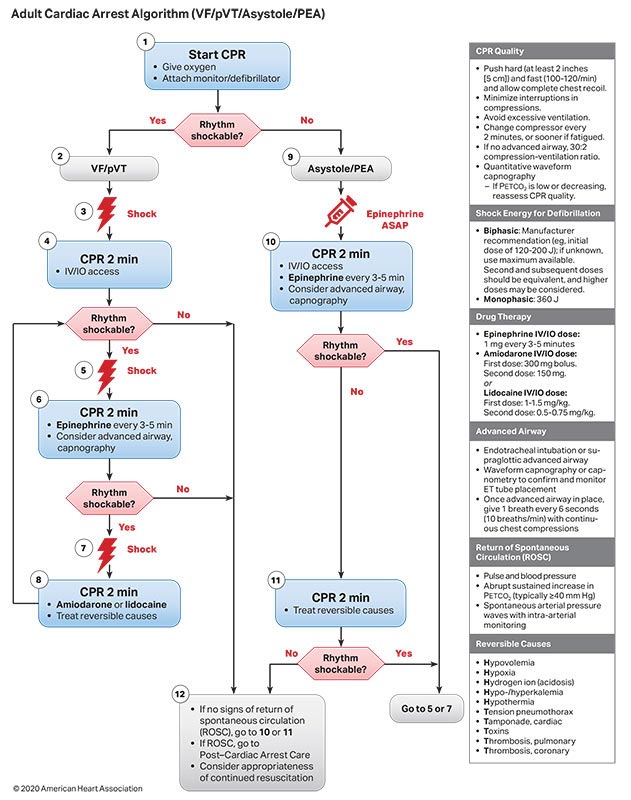
-
This question is part of the following fields:
- Cardiovascular
- Pharmacology
-
-
Question 25
Correct
-
A 45-year-old woman presents with persistent palpitations for the past two days. She has a good haemodynamic balance. An ECG is performed, which reveals that she has atrial flutter. The patient is examined by a cardiology registrar, who recommends using a 'rate control' strategy while she waits for cardioversion.
Which of the drugs listed below is the best fit for this strategy?Your Answer: Bisoprolol
Explanation:In atrial flutter, ventricular rate control is usually used as a stopgap measure until sinus rhythm can be restored. A beta-blocker (such as bisoprolol), diltiazem, or verapamil can be used to lower the heart rate.
Electrical cardioversion, pharmacological cardioversion, or catheter ablation can all be used to restore sinus rhythm. Cardioversion should not be attempted until the patient has been fully anticoagulated for at least three weeks if the duration of atrial flutter is unknown or has lasted for more than 48 hours. Emergency electrical cardioversion is the treatment of choice when there is an acute presentation with haemodynamic compromise. For the treatment of recurrent atrial flutter, catheter ablation is preferred.
-
This question is part of the following fields:
- Cardiovascular Pharmacology
- Pharmacology
-
-
Question 26
Correct
-
A 12-year old boy is taken to the emergency room after accidentally falling off the monkey bars. Witnesses of the accident reported that, when the patient fell, he hit his right hand on a bar and a loud thump was heard. On examination, the hand is oedematous, tender and erythematous. On ultrasound, a rupture of the flexor carpi ulnaris is noted.
Which of the following statements is true regarding the flexor carpi ulnaris?Your Answer: It acts to adduct the hand at the wrist joint
Explanation:Flexor carpi ulnaris is a fusiform muscle located in the anterior compartment of the forearm. It belongs to the superficial flexors of the forearm, along with pronator teres, palmaris longus, flexor digitorum superficialis and flexor carpi radialis. Flexor carpi ulnaris is the most medial of the superficial flexors.
Innervation of the flexor carpi ulnaris muscle is from the brachial plexus via the ulnar nerve (C7-T1).
Flexor carpi ulnaris receives its arterial blood supply via three different routes. Proximally, a branch of the posterior ulnar recurrent artery supplies the muscle as it passes between the humeral and ulnar heads. Branches of the ulnar artery supply the middle and distal parts of the muscle, with an accessory supply also present distally via the inferior ulnar collateral artery.
Due to its position and direction in the forearm, flexor carpi ulnaris can move the hand sideways as well as flexing it. Contracting with flexor carpi radialis and palmaris longus, flexor carpi ulnaris produces flexion of the hand at the wrist joint. However, when it contracts alongside the extensor carpi ulnaris muscle in the posterior compartment, their counteracting forces produce adduction of the hand at the wrist, otherwise known as ulnar deviation or ulnar flexion
-
This question is part of the following fields:
- Anatomy
- Upper Limb
-
-
Question 27
Correct
-
A 35 year old man presents with a deep laceration to the proximal part of the forearm. On further assessment, the patient is unable to flex the metacarpophalangeal joints and interphalangeal joints of the index, middle finger and the thumb.
The ring and little fingers are intact but there is weakness at the proximal interphalangeal joint.
There is also loss of sensation over the lateral palm and the palmar surface of the lateral three and a half fingers.
Which of these nerve(s) has most likely been affected?
Your Answer: Median nerve
Explanation:A median nerve injury affecting the extrinsic and intrinsic muscles of the hand will present with:
Loss of sensation to the lateral palm and the lateral three and a half fingers.
Weakness of flexion at the metacarpophalangeal joints of the index and middle finger. This is because of paralysis of the lateral two lumbricals.
Weakness of flexion of the proximal interphalangeal joints of all four fingers due to paralysis of the flexor digitorum superficialis
Weakness of flexion at the distal interphalangeal joints of the index and middle finger following paralysis of the lateral half of the flexor digitorum profundus.
Weakness of thumb flexion, abduction and opposition due to paralysis of the flexor pollicis longus and thenar muscles -
This question is part of the following fields:
- Anatomy
- Upper Limb
-
-
Question 28
Correct
-
A 54-year-old man with a long history of poorly controlled hypertension complains of a headache and vision blurring today. In triage, his blood pressure is 210/192 mmHg. A CT head scan is scheduled to rule out the possibility of an intracranial haemorrhage. You make the diagnosis of hypertensive encephalopathy and rush the patient to reus to begin blood pressure-lowering treatment. He has a history of brittle asthma, for which he has been admitted to the hospital twice in the last year.
Which of the following is the patient's preferred drug treatment?Your Answer: 25% of the mean arterial pressure over the first hour
Explanation:End-organ damage (e.g. encephalopathy, intracranial haemorrhage, acute myocardial infarction or ischaemia, dissection, pulmonary oedema, nephropathy, eclampsia, papilledema, and/or angiopathic haemolytic anaemia) characterises a hypertensive emergency (also known as ‘accelerated hypertension’ or malignant hypertension’ It’s a life-threatening condition that necessitates rapid blood pressure reduction to avoid end-organ damage and a negative outcome.
Hypertensive encephalopathy is a syndrome that includes headaches, seizures, visual changes, and other neurologic symptoms in people who have high blood pressure. It is reversible if treated quickly, but it can progress to coma and death if not treated properly.
Any patient with suspected hypertensive encephalopathy should have an urgent CT scan to rule out an intracranial haemorrhage, as rapid blood pressure reduction could be dangerous in these circumstances.
The drug of choice is labetalol, which reduces blood pressure steadily and consistently without compromising cerebral blood flow.
An initial reduction of approximately 25% in mean arterial pressure (MAP) over an hour should be aimed for, followed by a further controlled MAP reduction over the next 24 hours. In patients who are unable to take beta-blockers, nicardipine can be used as a substitute. -
This question is part of the following fields:
- Cardiovascular Pharmacology
- Pharmacology
-
-
Question 29
Incorrect
-
Given a patient with dislocation of the patella, which muscle is the most important to address during rehabilitation to prevent recurrent dislocation?
Your Answer: Gracilis
Correct Answer: Vastus medialis
Explanation:Patellar dislocation is a disabling musculoskeletal disorder which predominantly affects younger people who are engaged in multidirectional physically active pursuits. Conservative (non-operative) treatment is the treatment of choice for FTPD (first time patellar dislocation). Quadriceps strengthening exercises are considered one of the principal management aims for people following FTPD. A United Kingdom (UK) survey of physiotherapy practice has shown that quadriceps strengthening and specific-vastus medialis obliquus (VMO) or distal vastus medialis (VM) muscle strengthening or recruitment exercises were two of the most frequently used interventions for this population. Specific VM exercises are favoured in some quarters based on the assumption that the VM has an important role in preventing excessive lateral patellar translation.
-
This question is part of the following fields:
- Anatomy
- Lower Limb
-
-
Question 30
Correct
-
A suicidal patient had lacerated his wrist, which resulted in an ulnar nerve injury. Which of the following will confirm the presence of an ulnar nerve injury?
Your Answer: Claw hand appearance
Explanation:An ulnar injury may result in abnormal sensations in the little finger and ring finger, usually on the palm side, weakness, and loss of coordination of the fingers.
A claw like deformity of the hand and wrist is present. Pain, numbness, decreased sensation, tingling, or burning sensation in the areas controlled by the nerve are also possible.
-
This question is part of the following fields:
- Anatomy
- Upper Limb
-
-
Question 31
Correct
-
A 72 year old man is brought to ED by ambulance with sudden onset chest pain, palpitations and shortness of breath. His HR is 160 bpm and BP 90/65. ECG demonstrates new-onset fast atrial fibrillation. Which of the following is the first-line treatment option in this case:
Your Answer: Synchronised DC cardioversion
Explanation:All patients with adverse features suggesting life-threatening haemodynamic instability (shock, syncope, heart failure, myocardial ischaemia) caused by new onset atrial fibrillation should undergo emergency electrical cardioversion with synchronised DC shock without delaying to achieve anticoagulation.
-
This question is part of the following fields:
- Cardiovascular
- Pharmacology
-
-
Question 32
Incorrect
-
Regarding hypertensive crises, which of the following statements is CORRECT:
Your Answer: A hypertensive emergency is defined as a blood pressure ≥ 200/110 mmHg.
Correct Answer: In a hypertensive emergency, blood pressure should be reduced by 20 - 25% within 2 hours.
Explanation:A hypertensive emergency is defined as severe hypertension (blood pressure ≥ 180/110 mmHg) with acute damage to the target organs. Prompt treatment with intravenous antihypertensive therapy is generally required; over the first few minutes or within 2 hours, blood pressure should be reduced by 20 – 25%. Severe hypertension without acute target organ damage is defined as hypertensive urgency.; blood pressure should be reduced gradually over 24 – 48 hours with oral antihypertensive therapy. If blood pressure is reduced too quickly in the management of hypertensive crises, there is a risk of reduced organ perfusion leading to cerebral infarction, blindness, deterioration in renal function, and myocardial ischaemia.
-
This question is part of the following fields:
- Cardiovascular
- Pharmacology
-
-
Question 33
Correct
-
The most common site of ectopic pregnancy is?
Your Answer: Ampulla of Fallopian tube
Explanation:Nearly 95% of ectopic pregnancies are implanted in the various segments of the fallopian tube and give rise to fimbrial, ampullary, isthmic, or interstitial tubal pregnancies. The ampulla is the most frequent site, followed by the isthmus. The remaining 5% of non tubal ectopic pregnancies implant in the ovary, peritoneal cavity, cervix, or prior caesarean scar.
-
This question is part of the following fields:
- Abdomen And Pelvis
- Anatomy
-
-
Question 34
Correct
-
The most important nerves for inversion of the foot are:
Your Answer: Tibial and deep fibular nerve
Explanation:Inversion of the foot is achieved by the tibialis anterior which is innervated by the deep fibular nerves, and the tibialis posterior muscles which is innervated by the tibial nerve respectively.
-
This question is part of the following fields:
- Anatomy
- Lower Limb
-
-
Question 35
Incorrect
-
A 45-old woman is on several medications and being treated for epilepsy and bipolar disorder. In the ward rounds, you are asked to examine her in detail and discover she has a noticeable tremor. You believe that one of her medications may be responsible for this new onset tremor.
Which of the following medications is least likely to be responsible for this tremor?Your Answer: Sodium valproate
Correct Answer: Carbamazepine
Explanation:The only medication that does not commonly cause tremors is carbamazepine.
The other drugs present with the following types of tremors as a side effect to their usage:
1. Sodium valproate – Postural tremor is most common, but a resting tremor can also occur. Approximately 25% of patients taking sodium valproate are found to develop a tremor within 12 months of starting therapy.
2. Lithium – fine hand tremor is very commonly seen and reported in as many as 50% of patients during the first week of therapy. The tremor tends to reduce with time and is only present in around 5% of patients taking the medication two years or longer.
3. Atypical antipsychotics, such as olanzapine and quetiapine – tremor and limb shakiness. -
This question is part of the following fields:
- CNS Pharmacology
- Pharmacology
-
-
Question 36
Correct
-
A 56-year-old man presents with pneumonia 8 days after being admitted for an open fracture of his tibia and fibula. Upon history taking and observation, it was established that he has no known drug allergies, has coarse left basal crackles and evidence of consolidation in the left lower lobe based on his chest X-ray.
Which of the following antibacterial agents would be the most appropriate to prescribe according to the latest NICE guidelines?Your Answer: Ciprofloxacin
Explanation:The current NICE guidelines for hospital-acquired pneumonia are as follow:
– First-choice oral antibiotic if non‑severe symptoms or signs, and not at higher risk of resistance (guided by microbiological results when available): co-amoxiclav– Alternative oral antibiotics if non‑severe symptoms or signs, and not at higher risk of resistance, for penicillin allergy or if co‑amoxiclav unsuitable (based on specialist microbiological advice and local resistance data): doxycycline, cefalexin, co-trimoxazole, levofloxacin
– First-choice intravenous antibiotics if severe symptoms or signs (for example, symptoms or signs of sepsis) or at higher risk of resistance (based on specialist microbiological advice and local resistance data): piperacillin with tazobactam, ceftazidime, ceftriaxone, cefuroxime, meropenem, ceftazidime with avibactam, levofloxacin
– Antibiotics to be added if suspected or confirmed methicillin-resistant Staphylococcus aureus infection (dual therapy with a first-choice intravenous antibiotic): vancomycin, teicoplanin, linezolid
-
This question is part of the following fields:
- Microbiology
- Principles Of Microbiology
-
-
Question 37
Incorrect
-
All of the statements regarding vascular tone are correct except:
Your Answer: L-type Ca 2+ channel blockers are clinically effective vasodilators.
Correct Answer: Most endogenous vasodilators act by decreasing levels of cAMP or cGMP.
Explanation:Most vasoconstrictors bind to G-protein coupled receptors. These mediate elevation in intracellular [Ca2+] which leads to vascular smooth muscle contraction. Important vasoconstrictors include noradrenaline, endothelin-1 and angiotensin II.
Increased intracellular Ca2+ is as a result of the release of Ca2+from the sarcoplasmic reticulum and depolarisation and entry of Ca2+via L-type voltage-gated Ca2+channels. Most types of vascular smooth muscle do not generate action potentials – instead, the depolarisation is graded, which allows graded entry of Ca2+.
sequestration by the sarcoplasmic reticulum Ca2+ATPase, removal from the cell by a plasma membrane Ca2+ATPase and Na+/Ca2+exchange decreases intracellular Ca2+, resulting in vasodilation. Relaxation is a result of most endogenous vasodilators when there is an increase in cyclic guanosine monophosphate (cGMP) like nitric oxide) or cyclic adenosine monophosphate (cAMP) like prostacyclin and beta-adrenergic receptor agonists. These activate protein kinases causing substrate level phosphorylation.
Clinically effective vasodilators are L-type Ca2+channel blocker drugs. -
This question is part of the following fields:
- Cardiovascular
- Physiology
-
-
Question 38
Correct
-
Question 39
Correct
-
A 38-year-old taxi driver sustained blunt force trauma to his anterior chest from the steering wheel of his car after falling asleep while driving headlong into an oncoming HGV lorry. Bruising around his sternum was observed, which appears to be the central point of impact.
Which of the following structures is most likely injured by the blunt force trauma?Your Answer: Right ventricle
Explanation:In its typical anatomical orientation, the heart has 5 surfaces formed by different internal divisions of the heart:
Anterior (or sternocostal) – Right ventricle
Posterior (or base) – Left atrium
Inferior (or diaphragmatic) – Left and right ventricles
Right pulmonary – Right atrium
Left pulmonary – Left ventricle -
This question is part of the following fields:
- Anatomy
- Thorax
-
-
Question 40
Correct
-
Which of the following movements is controlled by the pectoralis major muscle?
Your Answer: Flexion, adduction and medial rotation of the humerus
Explanation:The pectoralis major is a muscle that runs across the top of the chest and connects to a ridge on the back of the humerus (the bone of the upper arm).
Adduction, or lowering, of the arm (opposed to the deltoideus muscle) and rotation of the arm forward around the axis of the body are two of its main functions.
-
This question is part of the following fields:
- Anatomy
- Upper Limb
-
-
Question 41
Incorrect
-
Question 42
Correct
-
Regarding benzylpenicillin, which of the following statements is CORRECT:
Your Answer: If meningococcal disease is suspected, benzylpenicillin should be given before transfer to hospital.
Explanation:Benzylpenicillin (although inactivated by bacterial beta-lactamases) is effective for many streptococcal (including pneumococcal), gonococcal, and meningococcal infections and also for anthrax, diphtheria, gas gangrene, leptospirosis, and treatment of Lyme disease. If meningococcal disease (meningitis with non-blanching rash or meningococcal septicaemia) is suspected, benzylpenicillin should be given before transfer to hospital, so long as this does not delay the transfer; benzylpenicillin is no longer the drug of first choice for pneumococcal meningitis. Although benzylpenicillin is effective in the treatment of tetanus, metronidazole is preferred. Benzylpenicillin is inactivated by gastric acid and absorption from the gastrointestinal tract is poor and therefore it must be given by injection.
-
This question is part of the following fields:
- Infections
- Pharmacology
-
-
Question 43
Incorrect
-
Vitamin D is a group of secosteroids that play a role in calcium and phosphate control. Vitamin D's hormonally active metabolite is 1,25-dihydroxycholecalciferol.
Which of the following actions of 1,25-dihydroxycholecalciferol is a direct action?Your Answer: Increases osteoblastic activity
Correct Answer: Increases renal phosphate reabsorption
Explanation:The hormone-active metabolite of vitamin D is 1,25-dihydroxycholecalciferol (commonly known as calcitriol). Its activities raise calcium and phosphate levels in the bloodstream.
The following are the primary effects of 1,25-dihydroxycholecalciferol:
Calcium and phosphate absorption in the small intestine is increased.
Calcium reabsorption in the kidneys is increased.
Increases phosphate reabsorption in the kidneys.
Increases the action of osteoclastic bacteria (increasing calcium and phosphate resorption from bone)
Inhibits the action of 1-alpha-hydroxylase in the kidneys (negative feedback)
Thyroid hormone (parathyroid hormone) Calcium reabsorption in the tubules of the kidneys is increased, but renal phosphate reabsorption is decreased. -
This question is part of the following fields:
- Endocrine Physiology
- Physiology
-
-
Question 44
Correct
-
Question 45
Correct
-
A 23-year-old student presents to the emergency department with a terrible headache, photophobia, and a fever. On her lower limbs, you see a non-blanching purpuric rash. In the department, a lumbar puncture is conducted. What do you think you'll notice on Gram stain:
Your Answer: Gram negative diplococci
Explanation:Bacterial meningitis and septicaemia are most commonly caused by meningococcal bacteria. The Gram-negative diplococci Neisseria Meningitidis causes meningitis. Gram stain and culture of CSF identify the etiologic organism, N meningitidis. In bacterial meningitis, Gram stain is positive in 70-90% of untreated cases, and culture results are positive in as many as 80% of cases.
-
This question is part of the following fields:
- Infections
- Microbiology
-
-
Question 46
Incorrect
-
You examine a patient's blood tests and discover that her electrolyte levels are abnormal.
Which of the following is the major extracellular cation?Your Answer: Potassium
Correct Answer: Sodium
Explanation:Electrolytes are compounds that may conduct an electrical current and dissociate in solution. Extracellular and intracellular fluids contain these chemicals. The predominant cation in extracellular fluid is sodium, whereas the major anion is chloride. Potassium is the most abundant cation in the intracellular fluid, while phosphate is the most abundant anion. These electrolytes are necessary for homeostasis to be maintained.
-
This question is part of the following fields:
- Basic Cellular Physiology
- Physiology
-
-
Question 47
Incorrect
-
A patient complains of stomach ache. You see a midline scar in the epigastric area when you examine the abdomen. Upon further interrogation, the patient reveals that she had a subtotal gastrectomy for recurring stomach ulcers several years ago. The stomach mucosa secretes a variety of vital compounds, and her ability to secrete some of these molecules has been harmed as a result of his surgery.
The stomach mucous neck cells secrete which of the following substances?
Your Answer: Hydrochloric acid
Correct Answer: Bicarbonate
Explanation:Foveolar cells, also known as gastric mucous-neck cells, are cells that line the stomach mucosa and are found in the necks of the gastric pits. Mucus and bicarbonate are produced by these cells, which prevent the stomach from digesting itself. At pH 4, the mucous allows the acid to penetrate the lining, while below pH 4, the acid is unable to do so. Viscous fingering is the term for this procedure.
The table below summarizes the many cell types found in the stomach, as well as the substances secreted by each cell type and the function of the secretion:
Cell type/ Substance secreted/ Function of secretion
Parietal cells/ Hydrochloric acid/ Kills microbes and activates pepsinogen
Parietal cells/ Intrinsic factor/Binds to vitamin B12 and facilitates its absorption
Chief cells/ Pepsinogen/ Protein digestion
Chief cells/ Gastric lipase/ Fat digestion
G-cells/ Gastrin/ Stimulates gastric acid secretion
Enterochromaffin-like cells (ECL cells) /Histamine/ Stimulates gastric acid secretion
Mucous-neck cells/ Mucous and bicarbonate/ Protects stomach epithelium from acid
D-cells/ Somatostatin/ Inhibits gastric acid secretion -
This question is part of the following fields:
- Gastrointestinal Physiology
- Physiology
-
-
Question 48
Correct
-
Regarding acute lymphoblastic leukaemia (ALL), which of the following statements is CORRECT:
Your Answer: ALL is the most common malignancy of childhood.
Explanation:Acute lymphoblastic leukaemia (ALL) is caused by an accumulation of lymphoblasts in the bone marrow and is the most common malignancy of childhood. The incidence of ALL is highest at 3 – 7 years, with 75% of cases occurring before the age of 6. 85% of cases are of B-cell lineage. Haematological investigations reveal a normochromic normocytic anaemia with thrombocytopenia in most cases. The total white cell count may be decreased, normal or increased. The blood film typically shows a variable number of blast cells. The bone marrow is hypercellular with >20% blast cells.
-
This question is part of the following fields:
- Haematology
- Pathology
-
-
Question 49
Incorrect
-
An X-ray of a 24-year-old female hockey player who arrives at the hospital with a left foot injury reveals an avulsion fracture of the fifth metatarsal tuberosity. Which of the following muscles is most likely responsible for the movement of the fractured fragment?
Your Answer: Fibularis tertius
Correct Answer: Fibularis brevis
Explanation:An avulsion fracture of the base of the fifth metatarsal happens when the ankle is twisted inwards.
When the ankle is twisted inwards a muscle called the fibularis brevis contracts to stop the movement and protect the ligaments of the ankle.
The base of the fifth metatarsal is where this muscle is attached. The group of lateral leg muscles that function to plantarflex the foot includes the fibularis brevis and the fibularis longus.
-
This question is part of the following fields:
- Anatomy
- Lower Limb
-
-
Question 50
Incorrect
-
A 62-year-old woman has reduced urine output, nausea, and confusion. Renal function tests and other investigations done leads to a diagnosis of acute kidney injury (AKI). Which one of these is consistent with a diagnosis of AKI?
Your Answer: A 25% increase in serum creatinine within the preceding seven days
Correct Answer: A rise in serum creatinine of 26 μmol/L within 48 hours
Explanation:AKI is diagnosed based on an acutely rising serum creatinine and/or reduction in urine output.
-
AKI can often be non-oliguric.
AKI is present if any one or more of the following criteria is met:
-
A rise in serum creatinine of ≥26 micromol/L (≥0.3 mg/dL) within 48 hours
-
A rise in serum creatinine to ≥1.5 times baseline, which is known or presumed to have occurred within the past 7 days (in practice you can use the lowest value from the past 3 months as the baseline for the patient)
-
Urine volume <0.5 ml/kg/hour for at least 6 hours.
-
-
This question is part of the following fields:
- General Pathology
- Pathology
-
SESSION STATS - PERFORMANCE PER SPECIALTY
