-
Question 1
Correct
-
Which of the following Oestrogens (Oestrogens) becomes the predominant circulating oestrogen during pregnancy?
Your Answer: Estriol
Explanation:Oestradiol is the predominant form of oestrogen during the reproductive life of a female. The estrogenic potency of oestradiol is 12 times more than estrone and 80 times that of estriol.
-
This question is part of the following fields:
- Endocrinology
-
-
Question 2
Incorrect
-
When deciding on entry method for laparoscopy a patients build is important. Which of the following entry methods is inappropriately matched to the patient?
Your Answer: Palmers point entry in a very thin patient (BMI 17.5)
Correct Answer: Varess needle entry in a very thin patient (BMI 16)
Explanation:In patients with normal BMI there is no preferential entry method. The Varess technique is not appropriate for morbidly obese or very thin patients for the reasons set out below: Morbid Obesity (BMI>40): Hasson technique or entry at Palmers point Reason: difficult penetration with Varess needle Very Thin Patients: Hasson technique or insertion at Palmers point Reason: higher risk of vascular injury
-
This question is part of the following fields:
- Clinical Management
-
-
Question 3
Correct
-
Question 4
Incorrect
-
A 34-year-old woman presents with pelvic pain and complains of dysmenorrhea and menorrhagia. She has been using an IUCD for one year now and wants to know the cause of her current condition. What is the most likely cause?
Your Answer: Endometriosis
Correct Answer: PID
Explanation:IUCD is a risk factor for PID and PID has the clinical picture already described. However, fibroids should also be excluded since they may present in the same way.
-
This question is part of the following fields:
- Gynaecology
-
-
Question 5
Correct
-
Question 6
Correct
-
The femoral triangle is bounded medially by which of the following structures?
Your Answer: Adductor longus
Explanation:The femoral triangle is bounded superiorly by the inguinal ligament which forms the base of the triangle, medially by the lateral border of the adductor longus and laterally by the sartorius muscle.
-
This question is part of the following fields:
- Anatomy
-
-
Question 7
Correct
-
A 24-year-old primigravid woman comes to the office to establish prenatal care at 14 weeks gestation. Patient has had no vaginal bleeding or cramping, no chronic medical conditions, and her only medication is a daily dose of prenatal vitamin. Patient follows a vegan diet and drinks 2 cups of coffee in the morning, also she is an avid runner who runs 5 miles most days. Patient does not use tobacco, alcohol or any other illicit drugs.
On physical examination her vital signs are normal, with a pre-pregnancy BMI of 22 kg/m2.
Transvaginal ultrasound shows a single intrauterine gestation with a heart rate of 155/min.
Among the following possible lifestyle modifications needed during pregnancy, which is the most appropriate recommendation for this patient?Your Answer: Increase caloric intake by about 350 kcal/day
Explanation:Nutrition in pregnancy
Weight gain must be:
– In patients <18.5 kg/m2, there should be an increase of 12.7 - 18 kg (28-40 lb)
– In patients 18.5 – 24.9 kg/m2 there should be an increase of 11.4 – 15.9 kg (25-35 lb)
– In patients 25 – 29.9 kg/m2 there should be an increase of 6.8 – 11.4 kg (15-25 lb)
– In patients ≥30 kg/m2 there should be an increase of 5 – 9 kg (11-20 lb)Supplementation required:
– Intake of daily prenatal vitamin
– Additional specific supplements as indicated
– Avoidance of harmful substances like drugs, alcohol, etc
– Substance abuse counseling
– Avoidance of fish with high mercury levels
– Moderating caffeine intakeFood safety:
– Avoid undercooked meat, fish & eggs
– Clean raw fruits & vegetables before consuming
– Avoid unpasteurized dairy productsNutrition in pregnancy is addressed at the initial prenatal visit based on pre-pregnancy BMI. Appropriate weight gain for a women with a normal pre-pregnancy BMI of 18.5 – 24.9 kg/m2 should be 11.4 – 15.9 kg (25-35 lb) during pregnancy. This weight gain is equivalent to the increasing caloric intake of 350 kcal/day during the second and 450 kcal/day during the third trimesters. Patients following any specific diets like veganism can continue their usual diet throughout pregnancy as long as it contains a well-balanced quantity of protein, carbohydrates and fats.
Vitamin and mineral supplementation during pregnancy is a single, daily prenatal vitamin recommended for majority of pregnant women as it helps to fulfill most of the daily vitamin and mineral supplementation requirements. In case of patients with vitamin or mineral deficiencies like iron, calcium, etc, a specific supplementation of the deficit vitamin/mineral only is required rather than multiple prenatal vitamins to avoid consuming harmful amounts of other vitamins like vitamin A. Vegans, who are at risk for some vitamin and mineral deficiencies like vitamin B12, calcium, iron, etc, secondary to lack of meat consumption, may require supplementation.
Pregnant women are counselled on avoidance of harmful substances like alcohol, drugs, etc and substances like fish with high mercury levels. Although high caffeine intake during pregnancy can be harmful, a moderate intake ie, 1 or 2 cups of coffee a day is thought to be safe.
Safe handling of food is important because some food products are found to result in congenital infection and intrauterine fetal demise. Patients are also counselled to avoid undercooked meat, fish, and eggs; to thoroughly clean raw fruits and vegetables and to avoid consumption of unpasteurized dairy products.
By maintaining a proper maternal nutrition during pregnancy, patients are provide appropriate nutrition to the fetal and thereby reducing the risk of pregnancy related complications like low birth weight, preterm delivery, etc.
Pregnant patients are counseled to avoid exercises like contact sports, downhill skiing, etc which increases the risk of abdominal trauma resulting in increased risk of placental abruption. But those patients with an uncomplicated pregnancy, who are already accustomed with long-duration, high-intensity exercise like running 5 miles/day, as in the given case, can continue with their regimen if tolerated.
Proper nutrition in pregnancy includes appropriate weight gain, supplementation of vitamins and minerals, avoidance of any harmful substances, and safe handling of food. Patients with a normal pre-pregnancy BMI should gain around 11.4-15.9 kg (25-35 lb) during pregnancy by increasing their caloric intake by 350 kcal/day in the second and 450 kcal/day in the third trimesters.
-
This question is part of the following fields:
- Obstetrics
-
-
Question 8
Incorrect
-
A 30 year old women comes to see you and advises she has felt a little unwell with diarrhoea and flu like symptoms. She is 28 weeks pregnant. Upon questioning she discloses she ate a soft cheese and deli meats platter 5 days earlier. A blood culture confirms listeria infection. What is the appropriate treatment (she has no known drug allergies)?
Your Answer: Gentamicin
Correct Answer: Amoxicillin
Explanation:The diagnosis of listeria depends on clinical suspicion and isolation of the organism from blood, vaginal swabs or the placenta. Meconium staining of the amniotic fluid in a preterm foetus may increase clinical suspicion for listeriosis. For women with listeriosis during pregnancy, intravenous antibiotic treatment (ampicillin 2 g given every 6 hours) is indicated.
-
This question is part of the following fields:
- Microbiology
-
-
Question 9
Correct
-
A 18-year-old girl arrives at the ER with severe abdominal pain. When it started, she was in the school band. She says the pain began 30 minutes ago in the left lower region and didn't radiate. On a scale of 1 to 10, the discomfort is a 7 and is not accompanied by nausea, vomiting, or diarrhoea. Menarche began at the age of thirteen. Her menses were erratic at first, but she has had regular periods for the past six months.
Her vital signs are stable, and she has no fever. She uses combination oral contraceptives and is sexually active. She denies taking any other drugs. A flat abdomen with regular peristalsis is revealed on physical examination. Pelvic examination indicates a regular vagina with a normal-appearing cervix. There is no mucopurulent cervical discharge. Bimanual examination is remarkable with a tender 5-cm mass in the left adnexa.
A pregnancy test result is negative. A pelvic sonogram exhibits a normal intrauterine pregnancy and a 5 X 6 cm complex mass of the left ovary, with focal areas of calcification.
Which of the following is the most likely diagnosis?Your Answer: Cystic teratoma
Explanation:Mature cystic teratomas of the ovary are often discovered as incidental findings on physical examination, during radiographic studies, or during abdominal surgery performed for other indications.
Most mature cystic teratomas can be diagnosed at ultrasonography (US) but may have a variety of appearances, characterized by echogenic sebaceous material and calcification.
Follicular cysts are simple fluid-filled cysts and never have calcifications.
Mucinous cystadenoma usually develop in the third to fifth decades of life and typically cause vague symptoms, such as increasing abdominal girth, abdominal or pelvic pain, emesis, fatigue, indigestion, constipation, and urinary incontinence However, calcifications are not usually seen.
Brenner tumour is also a benign epithelial ovarian tumour but it is solid, occurring most often in women over 50 years of age.
Serous cystadenoma also does not show calcifications.
-
This question is part of the following fields:
- Gynaecology
-
-
Question 10
Correct
-
According to the RCOG Green-top guideline published in 2013 at what stage of gestation should pregnant patients with PCOS be offered screening for gestational diabetes
Your Answer: 24-28 weeks gestation
Explanation:Screening for gestational diabetes should be offered and performed between 24-28 weeks. It should be noted PCOS alone does not make screening essential. It is advised for PCOS patients who are overweight or if not overweight but has other risk factors (age >40, personal history of gestational diabetes or family history of type II diabetes). Screening is via a 2-hour post 75 g oral glucose tolerance test.
-
This question is part of the following fields:
- Clinical Management
-
-
Question 11
Incorrect
-
A 30-year-old primigravida woman presented to the clinic for her first antenatal check-up. Upon interview, it was noted that she was taking folic acid along with some other nutritional supplements as medication.
All of the following are considered correct regarding neural tube defects and folate before and during pregnancy, except:Your Answer: Folate intake should be increased at least one month before and three months after conception
Correct Answer: Prevalence of neural tube defects among non-indigenous population is almost double than that in Aboriginal and Torres Strait Islander babies
Explanation:Neural tube defects (NTDs) are common complex congenital malformations resulting from failure of the neural tube closure during embryogenesis. It is established that folic acid supplementation decreases the prevalence of NTDs, which has led to national public health policies regarding folic acid.
Neural tube defects (NTD) were 43% more common in Indigenous than in non-Indigenous infants in Western Australia in the 1980s, and there has been a fall in NTD overall in Western Australia since promotion of folate and voluntary fortification of food has occurred.
Women should take 5 mg/d of folic acid for the 2 months before conception and during the first trimester.
Women planning pregnancy might be exposed to medications with known antifolate activities affecting different parts of the folic acid metabolic cascade. A relatively large number of epidemiologic studies have shown an increased risk of NTDs among babies exposed in early gestation to antiepileptic drugs (carbamazepine, valproate, barbiturates), sulphonamides, or methotrexate. Hence, whenever women use these medications, or have used them near conception, they should take 5 mg/d of folic acid until the end of the first trimester of pregnancy.
-
This question is part of the following fields:
- Obstetrics
-
-
Question 12
Correct
-
Premature menopause is defined as cessation of menses before the age of:
Your Answer: 40
Explanation:Premature menopause occurs if menopause happens before the age of 40. It effects 1% of women under the age of 40 and 0.1% under 30.
-
This question is part of the following fields:
- Clinical Management
-
-
Question 13
Incorrect
-
Oligohydramnios is defined as an amniotic fluid index of?
Your Answer: < 8 cm
Correct Answer:
Explanation:AFI involves measuring the depth of amniotic fluid pockets in all 4 quadrants.
Oligohydramnios AFI< 5cm or deepest amniotic fluid pocket < 2cm
Polyhydramnios AFI > 25cm or deepest amniotic fluid pocket > 8cm -
This question is part of the following fields:
- Biophysics
-
-
Question 14
Correct
-
A pregnant female who is a known diabetic presents to the clinic for a consultation and enquires about the harmful effects of vitamin deficiencies. A deficiency of which vitamin can lead to teratogenic effects in the child?
Your Answer: Folic acid
Explanation:Pregnant women need to get enough folic acid. The vitamin is important to the growth of the foetus’s spinal cord and brain. Folic acid deficiency can cause severe birth defects known as neural tube defects. The Recommended Dietary Allowance (RDA) for folate during pregnancy is 600 micrograms (µg)/day.
-
This question is part of the following fields:
- Obstetrics
-
-
Question 15
Incorrect
-
You see a patient who gave birth earlier in the day. She was taken off warfarin during pregnancy and is currently on LMWH. She intends to breastfeed for the first 6-8 weeks and wants advice regarding restarting warfarin. Which of the following is appropriate?
Your Answer: Recommence warfarin immediately
Correct Answer: Recommence warfarin in 5-7 days
Explanation:The use of anticoagulants during pregnancy is a complicated issue because warfarin is teratogenic if used in the first trimester, and is linked with fetal intracranial haemorrhage in the third trimester (mainly at doses 5 mg daily). Low molecular weight heparin may be insufficient at preventing thrombosis in women with mechanical prosthetic heart valves, where the risk of valve thrombus is 10 per cent. Anticoagulation is essential in patients with congenital heart disease who have pulmonary hypertension, or artificial valve replacements, and in those in or at risk of atrial fibrillation. The options are either to continue warfarin for the pregnancy, or replace it with heparin between 6 and 12 weeks gestation to avoid the teratogenic risk. Warfarin should be started a week after delivery.
-
This question is part of the following fields:
- Pharmacology
-
-
Question 16
Correct
-
Which of the following is true about the origin of the ovarian artery?
Your Answer: It arises from the Abdominal Aorta
Explanation:The ovarian arteries are considered the main blood supply for the ovaries. The ovarian arteries usually arise from the lateral aspect of the abdominal artery, though in some instances they may arise from the renal or iliac arteries.
-
This question is part of the following fields:
- Anatomy
-
-
Question 17
Correct
-
A 39 years old female patient comes to your office seeking contraceptive advice. She is a cigarette smoker. W
hat would you advice her?Your Answer: Progesterone only pills
Explanation:Absolute contraindications to OCs include breast cancer, history of deep venous thrombosis or pulmonary embolism, active liver disease, use of rifampicin, familial hyperlipidaemia, previous arterial thrombosis, and pregnancy, while relative contraindications include smoking, age over 35, hypertension, breastfeeding, and irregular spontaneous menstruation.
Progestin only pills are the safest and most effective contraceptive methods than the rest of the options.
-
This question is part of the following fields:
- Gynaecology
-
-
Question 18
Correct
-
A 50-year-old menopausal woman complained of regular hot flushes that interfered with her sleep and job. She had a ten-year history of oestrogen-dependent breast cancer.
What is the most effective treatment for her symptoms?Your Answer: Paroxetine
Explanation:Paroxetine is an SSRI used for hot flushes in women with contraindication for hormonal therapy.
Hormonal or other pharmacotherapy is usually needed for women with bothersome hot flashes. For most women with moderate to very severe hot flashes and no contraindications, we suggest MHT. Women with an intact uterus need both oestrogen and a progestin, while those who have undergone hysterectomy can receive oestrogen only. For women interested in MHT, the first step is to determine the potential risks for the specific individual.
The majority of perimenopausal and recently menopausal women are good candidates for short-term hormone therapy for symptom relief. However, for women with a history of breast cancer, coronary heart disease (CHD), a previous venous thromboembolic event (VTE) or stroke, or those at moderate or high risk for these complications, alternatives to hormone therapy should be suggested. For women with moderate to severe hot flashes who are not candidates for hormone therapy based upon their breast cancer, CHD, or VTE risk and for those who choose not to take MHT, we suggest nonhormonal agents. The agents most commonly used include SSRIs, serotonin-norepinephrine reuptake inhibitors (SNRIs), antiepileptics, and centrally acting drugs.
Black Cohosh is found to be no more significant than placebo.
Long-term use of mefenamic acid is controversial and not recommended. -
This question is part of the following fields:
- Gynaecology
-
-
Question 19
Correct
-
Which of the following has been shown to improve pruritus and liver function in patients with obstetric cholestasis?
Your Answer: Ursodeoxycholic acid
Explanation:Intrahepatic cholestasis characterized by reversible cholestasis typically occurring in the second or third trimester of pregnancy, elevated serum aminotransferases and bile acid level and resolution of symptoms by 2 to 3 weeks after delivery. Ursodeoxycholic acid has shown to reduce the symptoms of this condition.
-
This question is part of the following fields:
- Clinical Management
-
-
Question 20
Correct
-
A 27-year-old woman presents for difficulty and pain in attempting sexual intercourse. She states that she never had such symptoms prior. The pain is not felt at the time of penetration, but appears to hurt deeper in the vagina.
She was recently pregnant with her first child and delivery was three months ago. She did not have an episiotomy or sustain any vaginal lacerations during delivery. She denies any vaginal bleeding since her lochia had stopped two months ago. She is still breastfeeding her child.
Which of the following is the most likely cause of her dyspareunia?Your Answer: Atrophic vaginal epithelium.
Explanation:This is a patient that recently gave birth and is still breastfeeding presenting with dyspareunia. The most likely cause would be a thin atrophic vaginal epithelium. This is very common presentation and is due to the low oestrogen levels due to the prolactin elevation from breastfeeding.
An unrecognised and unsutured vaginal tear should have healed by this time and should not be causing issues.
Endometriosis tends to resolve during a pregnancy, but if this was the issue, it would have caused dyspareunia prior to pregnancy.
Vaginal infective causes of dyspareunia, such as monilial or trichomonal infections, are rare in amenorrhoeic women.
-
This question is part of the following fields:
- Obstetrics
-
-
Question 21
Correct
-
After a vaginal delivery, a patient suffers a perineal tear. On examination the laceration involves the external anal sphincter and has partially torn the internal anal sphincter. Which of the following classifies this tear?
Your Answer: 3c
Explanation:During childbearing the vagina and perineum are prone to lacerations that may involve the skin or can extend into the anal sphincter complex. It is important to be able to identify obstetric and anal sphincter injuries to provide adequate care and prevent complications. In the classification of obstetric tears according to RCOG guidelines:
First degree tear: injury to the perineal skin and/or the vaginal mucosa
Second degree tears: Injury to perineum involving perineal muscles but not the anal sphincter.
Third-degree tear: Injury to perineum involving the anal sphincter complex:
Grade 3a tear: Less than 50% of external anal sphincter (EAS) thickness torn.
Grade 3b tear: More than 50% of EAS thickness torn.
Grade 3c tear: Both EAS and internal anal sphincter (IAS) torn.
Fourth-degree tear: Injury to perineum involving the anal sphincter complex (EAS and IAS)
and anorectal mucosa. -
This question is part of the following fields:
- Anatomy
-
-
Question 22
Correct
-
A 22-year-old primigravid woman present to the emergency department.
She is at 40 weeks gestation and complains of a 24-hour history of no fetal movements.
On auscultation, fetal heart beats are clearly audible with a measurement of 140/min.
On diagnostic testing, the cardiotocograph (CTG) is normal and reactive.
On physical examination, her cervix is 2cm dilated and fully effaced.
She is reassured and allowed to return home.
24 hours later, she calls to complain she has still felt no fetal movements, adding up to a 48 hour history.
What is the best next step in management?Your Answer: Admit for induction of labour.
Explanation:Labour induction is indicated as no fetal movements have been felt for 24 hours, with a normal cardiotocograph (CTG) and the pregnancy is at near/full term with a favourable cervix.
Amniotic fluid volume assessment would have been indicated 24 hours earlier as, if it was low, induction would have been indicated then, despite a normal CTG.
Ultrasound examination of the foetus is not indicated as it is necessary to expedite delivery.
Carrying out another CTG, with or without oxytocin challenge, is not indicated, although MG monitoring during induced labour would be mandatory.
Delivery immediately by Caesarean section is not indicated unless the lack of fetal movements is due to fetal hypoxia. This can result in fetal distress during labour, necessitating an emergency Caesarean section if the cervix is not fully dilated.
-
This question is part of the following fields:
- Obstetrics
-
-
Question 23
Incorrect
-
What is the definition of hypertension in pregnancy?
Your Answer: A blood pressure above 140/90 mmHg
Correct Answer:
Explanation:The NICE guidelines on Hypertension in pregnancy define blood pressure in pregnancy as follows:
Mild hypertension: DBP=90-99 mmHg, SBP=140-149 mmHg. Moderate hypertension: DBP=100-109 mmHg, SBP=150-159 mmHg.
Severe hypertension: DBP=110 mmHg or greater, SBP=160 mmHg or greater. -
This question is part of the following fields:
- Obstetrics
-
-
Question 24
Incorrect
-
A 38-year-old lady appears with a 7-month history of secondary amenorrhea. She has a BMI of 24. Her FSH level is 55 U/L (2-8 U/L in luteal phase; >25 U/L in menopause), LH is 54 U/L, and oestradiol is low, according to laboratory tests. The level of serum prolactin is likewise normal. Her urine pregnancy test came out negative.
Each ovary had 3-4 cysts on ultrasonography. She hopes to get pregnant in the near future.
Which of the following would be the best treatment option for her condition?Your Answer: Combined oral contraceptives (COCs)
Correct Answer: Menopausal hormone replacement therapy (HRT)
Explanation:Ovarian insufficiency is a failure of the ovary to function adequately in a woman younger than 40 years, in its role either as an endocrine organ or as a reproductive organ. In women aged 40 years or older, the expected physiologic decline of ovarian function that takes place with aging is termed perimenopause or the menopausal transition.
Medical treatment of patients with primary ovarian insufficiency should address the following aspects:Ovarian hormone replacement
Restoration of fertility
Psychological well-being of the patientIt is not appropriate to give this patient contraceptive pills since she desires pregnancy.
There is no evidence that Danazol or Metformin would improve ovarian follicle function.
-
This question is part of the following fields:
- Gynaecology
-
-
Question 25
Incorrect
-
Question 26
Correct
-
A 25-year old woman presented to the medical clinic for her first prenatal check-up. Upon interview, the patient revealed that she has been smoking one pack of cigarettes per day for the past five years.
All of the following are considered correct regarding the disadvantages of smoking during pregnancy, except:Your Answer: Increased risk of developing small teeth with faulty enamel
Explanation:Small teeth with faulty enamel is more associated with fetal alcohol syndrome (FAS).
In FAS, the most common orofacial changes are small eyelid fissures , flat facies, maxillary hypoplasia, short nose, long and hypoplastic nasal filter, and thin upper lip. The unique facial appearance of FAS patients is the result of changes in 4 areas: short palpebral fissures, flat nasal bridge with an upturned nasal tip, hypoplastic philtrum with a thin upper vermillion border, and a flat midface. Other facial anomalies include micrognathia, occasional cleft lip and/or palate and small teeth with defective enamel.
-
This question is part of the following fields:
- Obstetrics
-
-
Question 27
Incorrect
-
Regarding CTG (cardiotocography) analysis what is the normal range for variability?
Your Answer: None of the above
Correct Answer: 5-25 bpm
Explanation:Fetal hypoxia may cause absent, increased or decreased variability. Other causes of decreased variability include: normal fetal sleep-wake pattern, prematurity and following maternal administration of certain drugs including opioids.
Variability Range:
Normal – 5 bpm – 25bpm
Increased – >25 bpm
Decreased – <5 bpm
Absent – <2 bpm -
This question is part of the following fields:
- Data Interpretation
-
-
Question 28
Correct
-
A 32-year-old woman at 33 weeks of gestation presents with vaginal bleeding.
A pelvic ultrasound was done, which confirms the diagnosis of placenta praevia and you are planning a cesarean section as it is the most appropriate mode of delivery.
Which among the following is considered a possible outcome of cesarean section delivery?Your Answer: Increase risk of adhesions
Explanation:Obstetric complications during or following a cesarean section delivery include:
-Increased risk of maternal mortality.
-Increased need for cesarean sections in the subsequent pregnancies.
-Increased risk for damage to adjacent visceral organs especially bowels and bladder.
-Increased risk of infections.Increased risk for formation of adhesions is a complication after cesarean section and this is the correct response for the given question.
-
This question is part of the following fields:
- Obstetrics
-
-
Question 29
Correct
-
Where is fetal DHEA produced?
Your Answer: Adrenals
Explanation:DHEA is formed in the mother’s adrenal gland as well as the fetal adrenal glands. These weak androgens are transported by the blood to the placenta and are converted into oestradiol, estrone and estriol in the trophoblast.
-
This question is part of the following fields:
- Endocrinology
-
-
Question 30
Correct
-
Regarding the ECG, what does the P wave represent?
Your Answer: Atrial depolarisation
Explanation:P wave = Atrial depolarisation
QRS complex = Ventricular depolarisation
T wave = Ventricular repolarisation
U wave = repolarisation of the interventricular septum -
This question is part of the following fields:
- Biophysics
-
-
Question 31
Correct
-
A 24 year old woman presents to the clinic with foul smelling vaginal discharge. Which facultative anaerobic bacteria is most likely to be the cause?
Your Answer: Gardnerella vaginalis
Explanation:Bacterial vaginosis is a common infection of the vagina caused by the overgrowth of atypical bacteria, most commonly Gardnerella vaginalis, a gram indeterminate bacteria, which is also a facultative anaerobe. Patients often complain of foul-smelling fishy discharge and dysuria. In diagnosing BV, a swab is taken for microscopy, often revealing clue cells. Of the other organisms listed in the options, Neisseria is an obligate anaerobe, while Chlamydia trachomatis is an obligate intracellular aerobe. Treponema Pallidum is an aerophilic bacteria and Mycoplasma hominis is a pleomorphic parasitic bacterium.
-
This question is part of the following fields:
- Microbiology
-
-
Question 32
Correct
-
A 45 year old women has a transvaginal ultrasound that is reported as showing a partially echogenic mass with posterior sound attenuation owing to sebaceous material and hair within the cyst cavity. What is the likely diagnosis?
Your Answer: Mature teratoma
Explanation:Dermoid cysts and teratomas contain elements from multiple germ cell layers. They are often considered the same entity (even in medical texts) however a dermoid is composed only of dermal and epidermal elements. A teratoma has mesodermal and endodermal elements Mature teratomas are composed of well-differentiated derivations from at least 2/3 germ cell layers (i.e. ectoderm, mesoderm, and endoderm). They contain developmentally mature skin complete with hair follicles, sweat glands, sometimes hair, and sometimes sebum, blood, fat, bone, nails, teeth, eyes, cartilage, and thyroid tissue.
-
This question is part of the following fields:
- Data Interpretation
-
-
Question 33
Incorrect
-
A 25-year-old female, expecting twins, complains of decreased fetal movements in her 40th week of gestation. An hour ago, she experienced constant abdominal pain for an hour and passed blood in her urine. What is the next best investigation in this case?
Your Answer: Ultrasounds can
Correct Answer: Cardiotocograph
Explanation:Cardiotocography (CTG) helps to record the heartbeat of the foetus in parallel to measuring the contractions of the mother’s uterus, this is the most appropriate tool to assess this patient’s condition.
-
This question is part of the following fields:
- Gynaecology
-
-
Question 34
Incorrect
-
A 29 year old woman is in her 32nd week of gestation and is diagnosed with placental abruption. This is her 3rd pregnancy and despite all effective measures taken, bleeding is still present. What is the most likely cause?
Your Answer: Villamentous insertion of placenta
Correct Answer: Clotting factor problem
Explanation:Clotting factor problem. Some of the more common disorders of coagulation that occur during pregnancy are von Willebrand disease, common factor deficiencies, platelet disorders and as a result of anticoagulants.
-
This question is part of the following fields:
- Obstetrics
-
-
Question 35
Correct
-
A 75 year old woman has a lesion biopsied from the cervix that is histologically confirmed as endometrial carcinoma. Further staging investigations shows no spread to the serosa or adnexa, no spread to the para-aortic, pelvic or inguinal lymph nodes and no evidence of distant metastasis. What FIGO stage is this?
Your Answer: 2
Explanation:It is stage 2 of the disease.
Staging:
1 Confined to uterus
1A < 50% myometrial invasion
1B > 50% myometrial invasion
2 Cervical stromal invasion but not beyond uterus
3 Extension beyond the uterus
3A Tumour invades the serosa or adnexa
3B Vaginal and/or parametrial invasion
3C1 Pelvic nodal involvement
3C2 Para aortic nodal involvement
4 Distant Metastasis
4A Tumour invasion of the bladder and/or bowel mucosa
4B Distant metastases including abdominal metastases and/or inguinal lymph nodes -
This question is part of the following fields:
- Clinical Management
-
-
Question 36
Correct
-
Question 37
Incorrect
-
A 25-year-old woman comes to your clinic for advice as she is 20 weeks pregnant and was found to have thyrotoxicosis with mild enlargement of the thyroid gland.
What other investigation will you consider to be done in this patient?Your Answer: Anti-thyroid antibodies
Correct Answer: Ultrasound thyroid gland
Explanation:A 20 weeks pregnant patient has developed goitre along with thyrotoxicosis, where the diagnosis of thyrotoxicosis has already been established.
Ultrasound of the thyroid and a radioisotope scan to differentiate between “hot” and “cold” nodules are the confirming investigations for goitre. A nodule composed of cells that do not make thyroid hormone and the nodule which produces too much thyroid hormone are respectively called as cold and “hot” nodules.Due to the risk of fetal uptake of the isotope which leads to the damage of fetal thyroid, radioisotope or radionuclide Technetium uptake scan is contraindicated in pregnancy.
Fine needle aspiration cytology is required to establish a histopathological diagnosis in case of all cold nodules.
So ultrasound of the thyroid gland is the mandatory investigation to be done in this case as it will show diffuse enlargement, characteristic of the autoimmune disease, or multinodularity, which is suggestive of autonomous multinodular goitre.
-
This question is part of the following fields:
- Obstetrics
-
-
Question 38
Correct
-
A 30 year old patient attends for non-invasive pre-natal screening for Down's syndrome. You advise her that the result will take the form of a risk score and higher risk results will be offered CVS or amniocentesis. What is the cut-off figure between low and high risk?
Your Answer: 1 in 150
Explanation:1 in 150 is the cut off. Where pre-natal screening shows a risk of 1 in 150 or greater invasive testing is typically offered.
-
This question is part of the following fields:
- Clinical Management
-
-
Question 39
Correct
-
The midwife asks for your advice about a 33 year old woman who she has just seen at her booking appointment. The patient had an uncomplicated pregnancy 10 years ago. This is her second pregnancy. There is no significant personal or family history. On examination the patients blood pressure is 120/75, BMI 32.5kg/m2. The midwife asks your advice on testing for gestational diabetes. What would you advise?
Your Answer: OGTT at 24-28 weeks
Explanation:Gestational diabetes (GDM) occurs in 2–9 per cent of all pregnancies. Screening for diabetes in pregnancy can be justify ed to diagnose previously unrecognized cases of pre-existing diabetes and to identify a group of women who are at risk of developing NIDDM later in life. No single screening test has been shown to be perfect in terms of high sensitivity and specific city for gestational diabetes. Urinary glucose is unreliable, and most screening tests now rely on blood glucose estimation, with an oral glucose tolerance test commonly used. The aim of glucose control is to keep fasting levels between 3.5 and 5.5 mmol/L and postprandial levels 7.1 mmol/L, with insulin treatment usually indicated outside these ranges.
-
This question is part of the following fields:
- Clinical Management
-
-
Question 40
Correct
-
You are reviewing a patient who is complaining of pain and numbness to the right anterior aspect of her labia following abdominal hysterectomy. You suspect ilioinguinal nerve injury. What spinal segment is the ilioinguinal nerve derived from?
Your Answer: L1
Explanation:Ilioinguinal nerve injury is one of the most common nerve injuries associated with pelvic surgery.
-
This question is part of the following fields:
- Anatomy
-
-
Question 41
Correct
-
A 28-year-old presented with vaginal bleeding after a 6-week duration of amenorrhea. The bleeding was described to be heavier than ever compared with her previous periods. Upon interview, it was noted that her menstrual cycles was ranging from 4 to 6 weeks.
A urine pregnancy test was performed and the result was positive. Upon vaginal examination, it was noted that her cervical os is closed. An endovaginal ultrasound was performed and the results showed an endometrial thickness of 12mm and an empty uterus. There was also clear adnexa, and no fluid in the pouch of Douglas was seen. A cyst in the corpus luteum of the left ovary was also noted.
Which of the following is most likely the diagnosis of the patient?Your Answer: Complete abortion
Explanation:Complete abortion is defined as a ‘complete’ passage of all conception products.
The first day of the last menstrual period and findings on any prior ultrasounds should be determined to establish the gestational age and location of the pregnancy. An abdominal exam should be performed to assess for peritoneal signs that might indicate a ruptured ectopic pregnancy or extra-uterine extension of a septic abortion. Lastly, a pelvic exam is central to the evaluation of suspected miscarriage. It should include both speculum-facilitated visualization of the cervix and a bimanual examination to assess for cervical motion tenderness that may indicate a septic abortion or an adnexal mass that may herald ectopic pregnancy.
Early pregnancy loss takes many different forms. In missed abortion, there is asymptomatic or ‘missed’ death of the embryo or foetus without sufficient uterine contractions to push out the products of conception. In contrast, threatened abortion is characterized by symptomatic, ‘threatened’ expulsion of the products of conception, yet the cervical os remains closed, and the embryo or foetus remains viable.
Although there is a lack of consensus, complete abortion is often defined as the absence of a gestational sac on ultrasound with an endometrial stripe thickness of less than 30 mm.
-
This question is part of the following fields:
- Obstetrics
-
-
Question 42
Correct
-
During the filling phase of micturition. At what bladder volume is the first urge to void felt?
Your Answer: 150ml
Explanation:Micturition is defined as a process of expelling urine from the body. It is caused by the reflex contraction of detrusor muscle. Urinary bladder is a hollow muscular organ which can store 400-600ml of urine until it is expelled from the body. The first urge to urinate is felt when the bladder is filled with around 150ml of urine. The reflex action is initiated when the stretch receptors located in the bladder wall are stimulated. The afferent fibres pass to the pelvic splanchnic nerves to the 2nd, 3rd, and 4th sacral segments and some pass through the hypogastric plexus to the first and second lumbar segments of the spinal cord. Efferent pathways from the 2nd, 3rd, and 4th sacral segments leave the cords and through the splanchnic nerves and inferior hypogastric plexus supplies the smooth muscle of the bladder i.e. detrusor muscle. Detrusor muscle contracts and the sphincters are relaxed.
-
This question is part of the following fields:
- Anatomy
-
-
Question 43
Incorrect
-
In the absence of any gross pelvic abnormality, cephalopelvic disproportion can be correctly diagnosed by?
Your Answer: X-ray pelvimetry
Correct Answer: Trial of labour
Explanation:Cephalo-pelvic disproportion exists when the capacity of the pelvis is inadequate to allow the foetus to negotiate the birth canal. This may be due to a small pelvis, a nongynecoid pelvic formation, a large foetus, an unfavourable orientation of the foetus, or a combination of these factors. Diagnosis of CPD may be made when there is failure to progress, but not all cases of prolonged labour are the result of CPD. Use of ultrasound to measure the size of the foetus in the womb is controversial, as these methods are often inaccurate and may lead to unnecessary caesarean section; a trial of labour is often recommended even if size of the foetus is estimated to be large.
-
This question is part of the following fields:
- Physiology
-
-
Question 44
Incorrect
-
Which is an absolute contraindication to contraceptive pills containing only progesterone?
Your Answer: History of liver disease
Correct Answer: Rifampicin
Explanation:Progestogen-only methods are contraindicated in suspected pregnancy, breast cancer and undiagnosed vaginal bleeding. Giving DMPA to a woman with a severe bleeding disorder may result in a large haematoma at the injection site.
Women who want to become pregnant within 18 months or who are afraid of injections should be discouraged from using DMPA. Progestogen-only methods are unsuitable for women unwilling to accept menstrual changes.
Relative contraindications are active viral hepatitis and severe chronic liver disease. For all progestogen-only methods, with the possible exception of DMPA, drug interactions are likely with many anticonvulsants, rifampicin, spironolactone and griseofulvin. This may result in lowered efficacy.
Migraine, malabsorption syndrome, smoking and history of liver disease have not been identified as contraindications to mini pills.
-
This question is part of the following fields:
- Gynaecology
-
-
Question 45
Incorrect
-
What is the typical volume increase of a non-pregnant uterus to term uterus?
Your Answer: 10ml to 1000ml
Correct Answer: 10ml to 5000ml
Explanation:Uterine blood flow increases 40-fold to approximately 700 mL/min at term. The uterus is 50–60 g with a volume of approximately 10ml prior to pregnancy and 1000 – 1200 g with a volume of 5000ml by term.
-
This question is part of the following fields:
- Physiology
-
-
Question 46
Correct
-
During normal pregnancy, the renal glomerular filtrate rate (GFR) can increase as much as:
Your Answer: 50%
Explanation:Pregnancy involves remarkable orchestration of physiologic changes. The kidneys are central players in the evolving hormonal milieu of pregnancy, responding and contributing to the changes in the environment for the pregnant woman and foetus. The functional impact of pregnancy on kidney physiology is widespread, involving practically all aspects of kidney function. The glomerular filtration rate increases 50% with subsequent decrease in serum creatinine, urea, and uric acid values.
-
This question is part of the following fields:
- Physiology
-
-
Question 47
Correct
-
A 22-year-old G2P2 who is on her 7th day postpartum called her physician due to her concern of bleeding from the vagina. Upon interview, she described the bleeding to be light pink to bright red and compared with the first few days post-delivery, the bleeding was less heavy. There was also no fever or cramping pain reported by the patient.
Upon examination, it was observed that she is afebrile and her uterus is appropriately sized and non-tender. There was also the presence of about 10cc old, dark blood in her vagina and her cervix was closed.
Which of the following is considered the most appropriate treatment for the patient?Your Answer: Reassurance
Explanation:The postpartum period begins soon after the baby’s delivery and usually lasts six to eight weeks and ends when the mother’s body has nearly returned to its pre-pregnant state.
Bloody vaginal discharge (lochia rubra) is heavy for the first 3-4 days, and slowly it becomes watery in consistency and colour changes to pinkish-brown (lochia serosa). After the next 10-12 days, it changes to yellowish-white (lochia alba). Advise women to seek medical attention if heavy vaginal bleeding persists (soaking a pad or more in less than an hour). Women with heavy, persistent postpartum bleeding should be evaluated for complications such as retained placenta, uterine atony, rarely invasive placenta, or coagulation disorders. Endometritis may also occur, presenting as fever with no source, maybe accompanied by uterine tenderness and vaginal discharge. This usually requires intravenous antibiotics. This also should be explained and advise the mother to seek immediate medical attention.
-
This question is part of the following fields:
- Obstetrics
-
-
Question 48
Correct
-
A 23-year-old woman, G1PO comes to your clinic at 12 week of pregnancy. She is complaining of mild vaginal bleeding for the past 12 hours, along with bouts of mild cramping lower abdominal pain.
On vaginal examination, the cervical os is closed with mild discharge containing blood clots and an ultrasonography confirms the presence of a live fetus with normal heart rate.
Which among of the following is the most likely diagnosis?Your Answer: Threatened abortion
Explanation:Uterine bleeding in the presence of a closed cervix along with sonographic visualization of an intrauterine pregnancy with detectable fetal cardiac activity are diagnostic of threatened abortion.
Abortion does not always follow a uterine bleeding in early pregnancy, sometimes not even after repeated episodes or large amounts of bleeding, that is why the term “threatened” is used in this case. In about 90 to 96% cases, the pregnancy continues after vaginal bleeding if occured in the presence of a closed os and a detectable fetal heart rate. Also as the gestational age advances its less likely the condition will end in miscarriage.
In cases of inevitable abortion, there will be dilatation of cervix along with progressive uterine bleeding and painful uterine contractions. The gestational tissue can be either felt or seen through the cervical os and the passage of this tissue occurs within a short time.
In case were the membranes have ruptured, partly expelling the products of conception with a significant amounts of placental tissue left in the uterus is called as incomplete abortion. During the late first and early second trimesters this will be the most common presentation of an abortion. Examination findings of this includes an open cervical os with gestational tissues observed in the cervix and a uterine size smaller than expected for gestational age and a partially contracted uterus. The amount of bleeding will vary but can be severe enough to cause hypovolemic shock, with painful contractions and an ultrasound revealing tissues in the uterus.
An in utero death of the embryo or fetus prior to 20 weeks of gestation is called as a missed abortion. In this case the women may notice that the symptoms associated with early pregnancy like nausea, breast tenderness, etc have disappeared and they don’t ‘feel pregnant’ anymore. Vaginal bleeding may occur but the cervix remains closed and the ultrasound done reveals an intrauterine gestational sac with or without an embryonic/fetal pole, but no embryonic/fetal cardiac activity will be noticed.
In case of complete abortion, miscarriage occurs before the 12th week and the entire contents of conception will be expelled out of uterus. If this case, the physical examination will show a small and well contracted uterus with an open or closed cervix. There is scant vaginal bleeding with only mild cramping and ultrasound will reveal an empty uterus without any extra-uterine pregnancy.
-
This question is part of the following fields:
- Obstetrics
-
-
Question 49
Incorrect
-
A 27-year-old female reports to the emergency department due to severe right lower quadrant pain. Complaints started yesterday, as the patient noticed intermittent right lower abdominal pain associated with increased activity. She rested for remainder of the day, but the pain still continued to increase. An hour ago, the pain suddenly became constant and severe, associated with nausea and vomiting. The patient does not complaint of any radiation of pain.
On examination patient's temperature is noted to be 37.2 C (99 F), blood pressure is 130/80 mm Hg, and pulse rate is 98/min. On palpation of the right lower quadrant there is tenderness without rebounding or guarding. Urine pregnancy test conducted came to be negative.
Considering the following additional informations, which would be most appropriate in establishing the diagnosis of this patient?Your Answer: Associated urinary symptoms
Correct Answer: History of ovarian cysts
Explanation:Common Risk factors for Ovarian torsion are presence of an ovarian mass, women who are in their reproductive age and history of infertility treatment with ovulation induction.
Common clinical presentations include sudden onset of unilateral pelvic pain along with nausea & vomiting and presence of a palpable adnexal mass. An adnexal mass with absent Doppler flow to ovary can be noted in ultrasound.
Laparoscopy with detorsion, ovarian cystectomy and oophorectomy if necrosis or malignancy is found are the common treatment options.Acute lower abdominal pain in a nonpregnant women can have various causes including pathologies of the gastrointestinal, gynecologic, or urologic systems due to the close proximity of these structures. All of these cases have classic presentations which help to characterize the disease process and thereby to differentiate the diagnosis.
In the given case, patient presents with right lower quadrant pain which is classic for ovarian torsion, occurring due to rotation of the ovary around the infundibulopelvic ligament, causing ovarian vessel occlusion. Although ovarian torsion can occur in any women in their reproductive-age, is seen more commonly in those with a history of ovarian cysts (eg, hemorrhagic cyst) or masses (eg, mature cystic teratoma) because of the greater size and density of the ovary which makes it prone to rotation and subsequent torsion. Patients will initially have intermittent pain associated with activity, as in this patient, due to partial ovarian torsion, this initial pain resolves when the adnexa spontaneously untwists and blood flow returns. When this progresses to complete ovarian torsion, patients typically develop sudden-onset, severe, nonradiating pain due to persistent ischemia, which is often associated with nausea and vomiting.
Ovarian torsion can be clinically diagnosed, but a Doppler ultrasound is performed to evaluate ovarian blood flow and also to confirm the diagnosis. Surgical detorsion to prevent ovarian necrosis and cystectomy/oophorectomy are the usual treatment options.
Any association of urinary symptoms will help to establish a urologic cause of acute right lower quadrant pain like pyelonephritis, nephrolithiasis, etc. However, patients with urologic conditions typically presents with suprapubic or flank pain which radiates to the right lower quadrant, making this diagnosis less likely in the given case.
A family history of malignancy usually does not aid in the diagnosis of acute lower abdominal pain. Although some ovarian cancers are inherited, patients with ovarian cancer typically have a chronic, indolent course with associated weight loss, early satiety, and abdominal distension.
Having multiple sexual partners is considered a risk factor for sexually transmitted infections and pelvic inflammatory disease, which can be a cause for lower abdominal pain. However, patients will typically have fever, constant and diffused pelvic pain along with rebound and guarding.
Recent sick contacts are a risk factor for gastroenteritis, which can present with nausea, vomiting and abdominal pain. However, in this case patient will typically have diffuse, cramping abdominal pain which will worsen gradually; along with persistent vomiting and diarrhea.
Ovarian torsion typically causes intermittent lower abdominal pain followed by sudden-onset of severe, nonradiating unilateral pain with associated nausea and vomiting. Ovarian torsion can occur in women in their reproductive-age, particularly those with a history of ovarian cysts.
-
This question is part of the following fields:
- Obstetrics
-
-
Question 50
Correct
-
The roof of the femoral triangle is formed by which structure?
Your Answer: Fascia lata
Explanation:Boundaries of the Femoral Triangle: Superior: Inguinal ligament Medial: Medial border of the adductor longus Lateral: Medial border of the sartorius Floor: Pectineus, Adductor longus and Iliopsoas muscles Roof: Fascia Lata (cribriform fascia at the saphenous opening) Trasversalis fascia forms part of the roof of the inguinal canal
-
This question is part of the following fields:
- Anatomy
-
-
Question 51
Correct
-
A 37-year-old woman is planning to conceive this year. Upon history-taking and interview, it was noted that she was a regular alcohol drinker and has been using contraceptive pills for the past 3 years.
Which of the following is considered to be the most appropriate advice for the patient?Your Answer: Stop alcohol now
Explanation:Alcohol exposure during pregnancy results in impaired growth, stillbirth, and fetal alcohol spectrum disorder. Fetal alcohol deficits are lifelong issues with no current treatment or established diagnostic or therapeutic tools to prevent and/or ameliorate some of these adverse outcomes.
Alcohol readily crosses the placenta with fetal blood alcohol levels approaching maternal levels within 2 hours of maternal intake. As there is known safe level of alcohol consumption during pregnancy, and alcohol is a known teratogen that can impact fetal growth and development during all stages of pregnancy, the current recommendation from the American College of Obstetricians and Gynaecologists, Centre for Disease Control (CDC), Surgeon General, and medical societies from other countries including the Society of Obstetricians and Gynaecologists of Canada all recommend complete abstinence during pregnancy.
-
This question is part of the following fields:
- Obstetrics
-
-
Question 52
Correct
-
A 27-year-old woman presented to the medical clinic due to infertility. Upon interview, it was noted that she has been having unprotected intercourse with her husband regularly for the past year but has not become pregnant. She mentioned that her last menstrual period was 3 weeks ago. Her menses occur every 28 to 30 days and they last 4 to 5 days. A day before her menses, she has episodes of severe lower abdominal pain that is only partially relieved by ibuprofen.
Further history taking was done and revealed that she was treated for gonococcal cervicitis at age 19. The patient also takes a prenatal vitamin every day and does not use tobacco, alcohol, or illicit drugs. Her 31-year-old husband recently had semen analysis and his results were normal.
Further examination was done and the following are her results:
Blood pressure is 126/70mmHg
Pulse is 85/min
BMI is 31 kg/m2
Upon further examination and observation, it was revealed that she has a small uterus with a cervix that appears laterally displaced and there is accompanying pain upon cervical manipulation.
Which of the following is most likely considered the cause of the patient’s infertility?Your Answer: Endometriosis
Explanation:Endometriosis is a chronic gynaecologic disease characterized by the development and presence of histological elements like endometrial glands and stroma in anatomical positions and organs outside of the uterine cavity. The main clinical manifestations of the disease are chronic pelvic pain and impaired fertility. The localization of endometriosis lesions can vary, with the most commonly involved focus of the disease the ovaries followed by the posterior broad ligament, the anterior cul-de-sac, the posterior cul-de-sac, and the uterosacral ligament.
The clinical presentation of the disease differs in women and may be unexpected not only in the presentation but also in the duration. Clinicians usually suspect and are more likely to diagnose the disease in females presenting with the typical symptomatology such as dyspareunia, namely painful sexual intercourse, pelvic pain during menstruation (dysmenorrhea), pain in the urination (dysuria), defecation (dyschezia), and/or infertility. The pain is usually characterized as chronic, cyclic, and progressive (exacerbating over time). Furthermore, some women suffering from endometriosis experience hyperalgesia, a phenomenon, when even with the application of a nonpainful stimulus, an intolerable painful reaction is released. This condition indicates neuropathic pain.
Tenderness on vaginal examination, palpable nodules in the posterior fornix, adnexal masses, and immobility of the uterus are diagnostically indicating findings of endometriosis.
-
This question is part of the following fields:
- Obstetrics
-
-
Question 53
Incorrect
-
A 30-year-old woman who is at 38 weeks gestation presented to the emergency department due to complaints of not feeling fetal movements since yesterday. Upon investigations, fetal demise was confirmed. Induced delivery was done and she gave birth to a dead foetus.
Which of the following is least likely to reveal the cause of the fetal death?Your Answer: Autopsy of the foetus
Correct Answer: Chromosomal analysis of the mother
Explanation:Stillbirth has many causes: intrapartum complications, hypertension, diabetes, infection, congenital and genetic abnormalities, placental dysfunction, and pregnancy continuing beyond forty weeks.
In 5% of normal-appearing stillborns, a chromosomal abnormality will be detectable. With an autopsy and a chromosomal study, up to 35% of stillborns are found to have a major structural pathology, and 8% have abnormal chromosomes. After a complete evaluation, term stillbirth remains unexplained about 30% of the time. The chance of finding a cause is impacted by the age of the foetus, the experience of the caregiver, and the thoroughness of the exam. Chromosome testing for aneuploidy should be offered for all stillbirths to confirm or to seek a cause of the stillbirth. Genetic amniocentesis or chorionic villus sampling before delivery offers the highest yield.
-
This question is part of the following fields:
- Obstetrics
-
-
Question 54
Incorrect
-
What percentage of infants will have permanent neurological dysfunction as a result of brachial plexus injury secondary to shoulder dystocia?
Your Answer: <10%
Correct Answer:
Explanation:Shoulder dystocia occurs when the anterior or posterior fetal shoulder impacts on the maternal symphysis or sacrum and may require additional manevours to release the shoulders after gentle downward traction has failed. The most common injury that can occur, is to the brachial plexus due to lateral flexion of the head during traction. This may cause a neurological disability, Erb’s Palsy ( injury to C5 and C6 of the brachial plexus) in which there is a less than 10% chance that this injury would be permanent.
-
This question is part of the following fields:
- Clinical Management
-
-
Question 55
Correct
-
Which of the following terms best describes the pelvic type of small posterior sagittal diameter, convergent sidewalls, prominent ischial spines, and narrow pubic arch?
Your Answer: Android
Explanation:There are four types pelvic shapes:
1) Android pelvis: it has a larger inlet and smaller outlet along with small posterior sagittal diameter, prominent ischial spines and has a two finger arch.
2) Gynecoid pelvis: it has a transverse or nearly a circular ellipse and it is the most favourable for delivery.
3) Anthropoid pelvis: the brim is an anteroposterior ellipse.
4) Platypelloid pelvis: in this type the pelvic brim is kidney shape -
This question is part of the following fields:
- Anatomy
-
-
Question 56
Correct
-
You see a patient who is 32 weeks pregnant. She complains of tingling to the right buttock and shooting pain down the leg. You suspect Piriformis syndrome. Regarding Piriformis which of the following statements are true?
Your Answer: Insertion is onto the greater trochanter
Explanation:The proximal attachment of the piriformis muscles is from the anterior surface of sacrum and it attaches distally to the superior border of the greater trochanter of the femur. It is innervated by the anterior rami of S1 and S2.
-
This question is part of the following fields:
- Anatomy
-
-
Question 57
Correct
-
A 26-year-old woman came in with a two-year history of amenorrhea and excessive facial hair growth. She had previously given birth to two children. FSH, LH, Prolactin, and oestrogen levels in the blood are all normal. The amount of testosterone in the blood is somewhat higher.
More than 12 tiny cysts can be seen on a transvaginal pelvic ultrasonography.
Which of the following is the most likely diagnosis?Your Answer: Polycystic ovarian syndrome
Explanation:This patient has experienced polycystic ovarian syndrome-like symptoms.
At least two out of three of the following criteria must be met to diagnose polycystic ovarian syndrome:
1- Hyperandrogenism suggesting an excess of androgens e.g. excess hair growth, acne etc.
2- Menstrual irregularities e.g. dysmenorrhea, oligomenorrhea, and amenorrhea.
3-The ovaries are polycystic if one ovary has 12 or more follicles or if the size of one or both ovaries has risen.Low FSH, LH, and pituitary hormones are typically associated with hypothalamic dysfunction, however this is not the case here.
Similarly, with premature ovarian failure, FSH/LH levels rise while oestrogen levels decrease.All of the other choices are incorrect.
-
This question is part of the following fields:
- Gynaecology
-
-
Question 58
Correct
-
The UK childhood vaccination schedule includes vaccination against HPV for girls aged 12 to 13. What HPV subtypes are vaccinated against with the vaccine Gardasil®?
Your Answer: 6, 11, 16, and 18
Explanation:HPV Gardasil® is a quadrivalent vaccine against HPV Types 6, 11, 16, and 18. HPV types16 and 18 are responsible for 70% of cases of HPV related cancers. They are considered the most important high risk genotypes of HPV.
-
This question is part of the following fields:
- Microbiology
-
-
Question 59
Correct
-
A sure sign of pregnancy is:
Your Answer: Auscultation of fetal heart
Explanation:Classifications of Pregnancy Signs:
Presumptive signs — possibility of pregnancy
Probable signs — most likelihood of indicating pregnancy
Positive signs — confirmation of pregnancy
Auscultation of fetal heart is the only positive sign amongst the rest of the answers. -
This question is part of the following fields:
- Physiology
-
-
Question 60
Correct
-
You are asked to assess a patients perineal tear following labour by vaginal delivery. You note a laceration that extends through the vaginal mucosa into the perineal muscle and fascia. The external anal sphincter appears to be in tact. How would you classify this tear?
Your Answer: 2nd
Explanation:If the external anal sphincter is in tact then this is a 1st or 2nd degree tear. As the perineal muscles are involved this is 2nd degree tear.
-
This question is part of the following fields:
- Anatomy
-
-
Question 61
Correct
-
A 24-year-old woman comes to your office at 38 weeks of gestation with a urinary dipstick result positive for leukocyte and nitrite. She is otherwise asymptomatic so you send her urine for culture and sensitivity test.
From the options below mentioned, which is the next best management for her?Your Answer: Prescribe her with Oral Cephalexin
Explanation:There is an association between 20 to 30% increase in the risk for developing pyelonephritis during later pregnancy and untreated cases of bacteriuria in pregnancy. This is due to the physiological changes occurring to urinary tract during pregnancy, it is also found that untreated bacteriuria can be associated with even preterm birth and low birth weight. Risk of symptomatic urinary tract infection (UTI) during pregnancy can be reduced by antibiotic treatment of asymptomatic bacteriuria
The most common pathogen associated with asymptomatic bacteriuria is Escherichia coli, which accounts to more than 80% of isolates and the second most frequently cultured uropathogen is Staphylococcus saprophyticus. Other Gram-positive cocci, like group B streptococci, are less common. Gram-negative bacteria such as Klebsiella, Proteus or other Enterobacteriaceae are the other organisms involved in asymptomatic bacteriuria.
Although the context patient is asymptomatic, her urine dipstick shows positive nitrite and leukocyte, suggestive of urinary tract infection, so oral antibiotics like cephalexin or nitrofurantoin are advisable. Normally a five day course of oral antibiotic will be sufficient for the treatment of uncomplicated UTI or asymptomatic bacteraemia in pregnant women. As the patient is currently at her 38 weeks of gestation nitrofurantoin is contraindicated so it is best to prescribe her with Oral Cephalexin. This is because nitrofurantoin is associated with an increased risk of neonatal jaundice and haemolytic anaemia, so should not be used close to delivery, that is after 37 weeks of gestation or sooner if early delivery is planned.
Acute pyelonephritis should be treated with Intravenous antibiotic treatment, guided by urine culture and sensitivity reports as soon a available. A course of minimum of 10-14 days with IV + oral antibiotics is recommended as treatment for pyelonephritis, along with an increased fluid intake as intravenous fluids in clinically dehydrated patients. Even though urinary alkalisers are safe in pregnancy, prescription of urinary alkalisers alone is not recommended due to its low effectiveness compared to antibiotics, also as it can result in a loss of treatment efficacy urinary alkalisers should never be used in combination with nitrofurantoin.
At any stage of pregnancy, if Streptococcus agalactiae, a group B streptococcus [GBS], is detected in urine the intrapartum prophylaxis for GBS is usually indicated.
-
This question is part of the following fields:
- Obstetrics
-
-
Question 62
Incorrect
-
Three days after a lower uterine Caesarean section delivery (LSCS) for fetal distress, a 24-year-old woman develops fever with a temperature of 37.9°C. Intraoperative notes show that she was administered one dose of prophylactic antibiotics. She had been afebrile during the post-partum period until today.
Which is the least likely cause of her fever?
Your Answer: An abdominal wound infection.
Correct Answer: A deep venous thrombosis (DVT).
Explanation:This question is about the differential diagnoses that should be considered if a patient presents with postpartum fever. The work-up for such patients would usually involve vaginal swabs, midstream urine culture and sensitivity and an ultrasound scan of the wound to look for any presence of a haematoma. LSCS is a major surgery and one common cause of puerperal fever would be surgical site infection. It is not surprising that women who deliver via LSCS are at higher risk of developing post-partum fever compared to those who deliver vaginally. Other common causes include endometritis and UTI. Ultrasound examination of the pelvic deep venous system and the legs would also be done to look for any thrombosis. Deep vein thrombosis can occur due to immobility, however it is unlikely to present with fever.
-
This question is part of the following fields:
- Obstetrics
-
-
Question 63
Incorrect
-
A 26 year old patient attends the maternity unit as her waters have broken but she hasn't had contractions. She is at 39+5 weeks gestation. Speculum examination confirms prelabour rupture of membranes (PROM). What is the risk of serious neonatal infection with PROM?
Your Answer: 10 in 100
Correct Answer: 1 in 100
Explanation:In pregnancy, term refers to the gestational period from 37 to 41+6 weeks. Preterm births occur between 24 and 36+6 weeks. Only 1% of women who go into PROM have risk of having serious neonatal infections.
Management of PROM:
60% of patients with PROM will go into labour within 24 hrs
Induction is appropriate if >34 weeks gestation and more than 24 hours post rupture when labour hasn’t started.
If < 34 weeks, induction of labour should not be carried out unless there are additional obstetric indications e.g. infection -
This question is part of the following fields:
- Clinical Management
-
-
Question 64
Correct
-
A 42-year-old woman presents to the gynaecology clinic with an irregular menstrual bleed. She is a known to the case of multiple uterine fibroids. Her past surgical history is significant for tubal ligation and dilation and curettage without any definite diagnosis or any improvement in her symptoms.
Examination reveals an enlarged uterus of about 12-week gravid size.
A complete blood picture shows anaemia (Hb 80g/L).
What should be the next step in the management of such a patient?Your Answer: Total abdominal hysterectomy
Explanation:Fibroids (uterine leiomyomas) are benign uterine tumours. Asymptomatic uterine leiomyomas merely require follow-up without any specific intervention because histological confirmation of the clinical diagnosis is not required in most cases.
Symptoms and consequences necessitate treatment. The definitive therapy is hysterectomy. Other options include various types of myomectomy, endometrial ablation, uterine artery embolization, and myolysis.
The following situations call for a hysterectomy:Women suffering from an acute haemorrhage who have failed to react to various treatments
Women who are finished having children who are at risk for other disorders (cervical intraepithelial neoplasia, endometriosis, adenomyosis, endometrial hyperplasia, or greater risk of uterine or ovarian cancer) that a hysterectomy might eliminate or reduce.Women who have had previous attempts at minimally invasive therapy for leiomyomas failed.
Women who have finished having children and have severe symptoms, many leiomyomas, and a desire for a permanent cure.If a hysterectomy is planned, total abdominal hysterectomy is the procedure of choice.
A course of gonadotropin-releasing hormone (GnRH) agonists followed by myomectomy is the therapy of choice for women who want to keep their capacity to bear children.Total abdominal hysterectomy is the best option for this woman who does not want to have further children, has had her tubes tied, and is experiencing painful symptoms and anaemia.
Hysterectomy is superior to endometrial ablation.Amenorrhea is achieved after endometrial ablation, however, leiomyomas remain untreated.
Women who have previously failed minimally invasive treatment for leiomyomas
Women who have finished having children and have severe symptoms, many leiomyomas, and a strong desire for a cure.
If a hysterectomy is planned, total abdominal hysterectomy is the preferred technique.
A course of gonadotropin-releasing hormone (GnRH) agonists followed by myomectomy is the therapy of choice for women who want to maintain their capacity to bear children.
Total abdominal hysterectomy is the best option for this woman who does not want to have any more children and has had her tubal ligation removed. She also has troublesome symptoms and anaemia.
Hysterectomy is better than endometrial ablation.Amenorrhea can be accomplished with endometrial ablation, however, leiomyomas are not.
Myomectomy is not recommended unless you want to increase your fertility. There is a chance of recurrence, which would demand additional procedures. It will also be difficult to remove all of the leiomyomas if the uterus is enlarged with several leiomyomas. Remaining leiomyomas might grow and cause symptoms again over time.
Hormonal therapies such as combination contraceptive tablets, progesterone-only approaches, danazol, and others have been used with anecdotal results on symptoms like menorrhagia. Some have dubious efficacy, while others with confirmed efficacy have unfavourable side effects, restricting their use.
In leiomyomas-related menorrhagia, NSAIDs have not been widely researched. Although NSAIDs do not appear to diminish blood loss in women with leiomyomas, they do lower painful menses and may be effective for this. -
This question is part of the following fields:
- Gynaecology
-
-
Question 65
Incorrect
-
A 30-year-old woman has a vaginal discharge with pH <4.5 and a very foul smell. What is the single most likely diagnosis?
Your Answer: Bacterial vaginosis
Correct Answer: Trichomoniasis
Explanation:Trichomoniasis is a common sexually transmitted infection caused by a parasite. In women, trichomoniasis can cause a foul-smelling vaginal discharge which might be white, grey, yellow or green, genital itching and painful urination.
-
This question is part of the following fields:
- Gynaecology
-
-
Question 66
Correct
-
Which of the following is contained within the deep perineal pouch?
Your Answer: Proximal portion of urethra
Explanation:The deep perineal pouch contains the external urethral sphincter, proximal urethra in females and membranous urethra in males, deep transverse perineal muscles and the glands of cowper.
-
This question is part of the following fields:
- Anatomy
-
-
Question 67
Correct
-
Bishop scoring is used for:
Your Answer: The success rate of induction of the labour
Explanation:The Bishop score is a system used by medical professionals to decide how likely it is that you will go into labour soon. They use it to determine whether they should recommend induction, and how likely it is that an induction will result in a vaginal birth.
-
This question is part of the following fields:
- Obstetrics
-
-
Question 68
Correct
-
You diagnose Erb-Duchenne palsy in a baby born with shoulder dystocia who suffered a brachial plexus injury. Which of the following nerve roots are likely to be affected?
Your Answer: C5 and C6
Explanation:Shoulder dystocia occurs when the fetal shoulder impacts on the maternal symphysis or sacrum during vaginal delivery. About 10% of babies with shoulder dystocia will suffer a brachial plexus injury, the most common one being Erb-Duchenne palsy. In Erb’s palsy, the upper nerve roots C5 and C6 are damaged due to excessive widening of the angle between the head and the shoulder. This causing temporary paralysis in the affected arm whereby the infant will present with its hand hanging limp by his side, internal rotation of the forearm, plus wrist and finger flexion. This sign is called the ‘waiter’s tip hand’. The palsy usually resolves spontaneously in a large proportion of cases.
-
This question is part of the following fields:
- Clinical Management
-
-
Question 69
Correct
-
A 27-year-old woman presented to the medical clinic for antenatal advice because she plans to get pregnant soon. However, she is worried about how she should change her diet once she becomes pregnant already.
Which of the following is considered the best to give to the patient in addition to giving folic acid?Your Answer: Iodine
Explanation:There is evidence that folic acid, iodine and vitamin D are important for reproductive outcomes. Folic acid and iodine supplementation is recommended for women planning to conceive and in pregnancy.
The recommended dose of folic acid for women without special considerations planning to conceive is 400-500 mcg. The recommended dose of folic acid for women with special considerations is 2-5 mg per day.
Women planning a pregnancy, including those with thyroid disease, should take iodine supplements in the dose of 150 mcg per day prior to and during pregnancy.
-
This question is part of the following fields:
- Obstetrics
-
-
Question 70
Correct
-
You see a 23 year old women in clinic complaining of vaginal discharge. The lab phone to tell you microscopy and staining shows a gram negative diplococcus. Which organism is most likely to be responsible?
Your Answer: Neisseria gonorrhoeae
Explanation:The most common gram negative diplococci include Neisseria, haemophilus and Moraxella.
-
This question is part of the following fields:
- Microbiology
-
-
Question 71
Incorrect
-
Which one of the following statements regarding oestrogen is correct?
Your Answer: Can not be detected in the blood of postmenopausal women
Correct Answer: It is produced in the corpus luteum
Explanation:Oestrogen is secreted by the corpus luteum and is responsible for the proliferation of the endometrium to prepare it for the implantation of the zygote.
-
This question is part of the following fields:
- Physiology
-
-
Question 72
Incorrect
-
A 26-year-old pregnant woman in her third trimester, was admitted with headache, abdominal pain and visual disturbances. Shortly after, she had a fit. What is the most appropriate management?
Your Answer: 4mg MgSO4 IV as a bolus
Correct Answer: 4g MgSO4 in 100ml 0.9% Normal saline in 5 min.
Explanation:The woman is most probably suffering from eclampsia.
Magnesium sulphate (MgSO4) is the agent most commonly used for treatment of eclampsia and prophylaxis of eclampsia in patients with severe pre-eclampsia. It is usually given by either intramuscular or intravenous routes. The intramuscular regimen is most commonly a 4 g intravenous loading dose, immediately followed by 10 g intramuscularly and then by 5 g intramuscularly every 4 hours. The intravenous regimen is given as a 4 g dose, followed by a maintenance infusion of 1 to 2 g/h by controlled infusion pump. -
This question is part of the following fields:
- Obstetrics
-
-
Question 73
Correct
-
Which period during pregnancy has the highest risk of maternal-fetal Toxoplasma Gondii transmission?
Your Answer: 26-40 weeks
Explanation:Toxoplasma Gondii is an intracellular parasite which is excreted in cat faeces and then transferred to humans through secondary hosts. During pregnancy, it can be transmitted to the neonate. The risk of transplacental transmission from mother to foetus is greater in later pregnancy i.e. 26-40 weeks but during this time period it is less dangerous as compare to the transmission during 0-10 weeks of gestation. It may lead to abortion, microcephaly, hydrocephalus, cerebral calcifications, cerebral palsy and seizures.
-
This question is part of the following fields:
- Microbiology
-
-
Question 74
Correct
-
Question 75
Correct
-
A 25-year-old lady is somewhat jaundiced, has black urine, and has pruritus of her abdomen skin at 30 weeks of pregnancy in her first pregnancy. Her blood pressure is 130/80 mmHg, her fundal height is 29 cm above the pubic symphysis, and her liquid volume is a little lower than expected. Laboratory investigations reveal:
Serum bilirubin (unconjugated): 5 mmol/L (0-10)
Serum bilirubin (conjugated): 12 mmol/L (0-5)
Serum alkaline phosphatase (ALP): 450U/L (30--350)
Serum alanine aminotransferase (ALT) 45U/L (<55)
Serum bile acids: 100 mmol/L (1-26)
The most likely cause for her presentation is?Your Answer: Obstetric cholestasis.
Explanation:The correct answer is Obstetric Cholestasis.
The characteristics (elevated bile acids, conjugated bilirubin, and alkaline phosphatase (ALP) levels) are typical with obstetric cholestasis, which affects roughly 3-4 percent of pregnant women in Australia. Obstetric cholestasis is diagnosed when otherwise unexplained pruritus occurs in pregnancy and abnormal liver function tests (LFTs) and/or raised bile acids occur in the pregnant woman and both resolve after delivery. Pruritus that involves the palms and soles of the feet is particularly suggestive.
Liver function tests and bile acid levels measurements are used to validate this diagnosis.
All of the other diagnoses are theoretically possible, but unlikely.
On liver function tests, hepatitis A and acute fatty liver of pregnancy (which is frequently associated with severe vomiting in late pregnancy) usually show substantially worse hepatocellular damage.
Pre-eclampsia is connected with hypertension and proteinuria (along with changes in renal function and, in certain cases, thrombocytopenia), while cholelithiasis is associated with obstructive jaundice and pale stools due to a stone in the CBD. -
This question is part of the following fields:
- Obstetrics
-
-
Question 76
Correct
-
A 22-year-old female in her 18th week of pregnancy presented with right iliac fossa pain while getting up from a chair and has been coughing and sneezing.
On examination, there is no palpable mass or rebound tenderness.
What will be the most likely cause for patient's complaint?Your Answer: Round ligament strain
Explanation:Patient’s symptoms and signs are suggestive of round ligament strain, which is a normal finding during pregnancy, especially in the 2nd trimester, and it does not require any medical intervention.
Round ligament is a rope-like fibromuscular band which extends from the anterolateral aspect of uterus anteriorly between the layers of the broad ligament, and passing through the deep inguinal ring into the inguinal canal.
A sharp, sudden spasm in the right iliac fossa which lasts for a few seconds which is usually triggered by sneezing, coughing, laughing and rolling over in bed are the common presentations of a round ligament pain.Ectopic pregnancy and rupture of ectopic pregnancy are two unlikely diagnosis in this patient as she is in the second trimester of her pregnancy, whereas both the mentioned conditions occur during the first trimester.
Although appendicitis presents with pain in right iliac fossa, the pain is not causes by coughing or sneezing. Also, there will be other symptoms like tenderness and rebound tenderness in right iliac fossa in case of appendicitis.
-
This question is part of the following fields:
- Obstetrics
-
-
Question 77
Correct
-
A 22-year-old Asian woman with a background history of primary pulmonary hypertension attends your clinic. She is planning for a pregnancy in the next few months and feels well generally.
What would be your advice?Your Answer: Pregnancy is contraindicated in her condition
Explanation:From the options given, option A is correct as primary pulmonary hypertension is considered a contraindication to pregnancy.
The patient should be educated about the possible risks and increased maternal mortality in such cases. This restriction is due to the fact that symptoms of Pulmonary hypertension gets worse during pregnancy which results in high maternal mortality.
Termination of pregnancy may be advisable in these circumstances mostly to preserve the life of the mother.
Sudden death secondary to hypotension is also a commonly dreaded complication among patients with pulmonary hypertension during pregnancy. -
This question is part of the following fields:
- Obstetrics
-
-
Question 78
Correct
-
From which of the following spinal segments do both the internal and external anal sphincters receive their innervation?
Your Answer: S4
Explanation:The anal sphincters are responsible for closing the anal canal to the passage of faeces and flatus. The smooth muscle of the involuntary internal sphincter sustains contraction to prevent the leakage of faeces between bowel movements and is innervated by the pelvic splanchnic nerves, which are a branch of the spinal segment 4. The external sphincter is made up of skeletal muscle and can therefore contract and relax voluntarily. Its innervation comes from the inferior rectal branch of the pudendal nerve, and the perineal branch of S4 nerve roots.
-
This question is part of the following fields:
- Anatomy
-
-
Question 79
Incorrect
-
A 48-year-old woman presented to you with a breast mass. On examination, it is hard, irregular and ill defined. The surface of the breast is slightly bruised however, there is no discharge. The most probable diagnosis is?
Your Answer: Ca breast
Correct Answer: Fat necrosis
Explanation:Fat necrosis is often a result of a trauma or surgery. In fat necrosis the enzyme lipase releases fatty acids from triglycerides. The fatty acids combine with calcium to form soaps. These soaps appear as white chalky deposits which are firm lumps with no associated discharge. The given case has a bruise which indicates prior trauma.
-
This question is part of the following fields:
- Gynaecology
-
-
Question 80
Correct
-
Which hormone is responsible for contraction of myoepithelial cells in lactation?
Your Answer: Oxytocin
Explanation:Oxytocin is responsible for the let down mechanism that occurs during breast feeding in which the myothelial cells contract and push the milk into the ductules.
-
This question is part of the following fields:
- Clinical Management
-
-
Question 81
Incorrect
-
Question 82
Correct
-
A 32 year old patient has a transvaginal ultrasound scan that shows a mass in the left ovary. It is anechoic, thin walled, is without internal structures and measures 36mm in diameter. What is the likely diagnosis?
Your Answer: Functional cyst
Explanation:The diagnosis of functional ovarian cyst is made when the cyst measures more than 3 cm and rarely grows more than 10 cm. It appears as a simple anechoic unilocular cyst on USS. It is usually asymptomatic. If it is symptomatic then laparoscopic cystectomy should be performed.
-
This question is part of the following fields:
- Data Interpretation
-
-
Question 83
Correct
-
Katherine, 28 years old at her 37 weeks of pregnancy, presents at your office with soreness down below.
Physical exam is highly suggestive of genital herpes, and patient says she never had such lesions before and this is the first time she is experiencing such a problem. Laboratory investigations like PCR and culture results confirm the diagnosis of primary herpes simplex infection.
Which of the following would be the most appropriate next step in management of the case?Your Answer: Prophylactic antiviral therapy
Explanation:If a pregnant woman develops primary herpes simplex infection after 30 weeks gestation, her risk for transmission of herpes simplex virus to the neonate leading to neonatal infection increases significantly.
Below mentioned are the most common risk factors resulting in intrapartum herpes simplex infection of the baby:
– Premature labor
– Premature rupture of membrane
-Primary herpes simplex infection near the time of delivery
– Multiple lesions in the genital area
The most appropriate management for such case includes:
– Checking for herpes simplex infection with PCR testing (cervical swab)
– Prophylactic antiviral therapy of the mother from 36th week until delivery
– Cesarean section deliveryIn the case above mentioned, it is better to start antiviral therapy immediately and consider cesarean section to minimize the risk of vertical transmission of infection to the neonate.
-
This question is part of the following fields:
- Obstetrics
-
-
Question 84
Incorrect
-
Question 85
Correct
-
A 24 year old who is 32 weeks pregnant presents with a rash to the abdomen. Looking at the picture below what is the diagnosis?
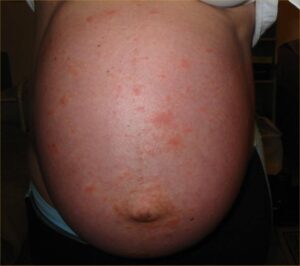
Your Answer: Polymorphic Eruption of Pregnancy
Explanation:This is Polymorphic Eruption of Pregnancy (PEP) also known as Pruritic Urticarial Papules and Plaques of Pregnancy (PUPPP). Papules and plaques form on the abdomen (commonly within striae). It is most common in women during their first pregnancy and typically occurs in the 3rd trimester.
-
This question is part of the following fields:
- Clinical Management
-
-
Question 86
Correct
-
Several mechanisms have been proposed as to what causes closure of the Ductus Arteriosus (DA) at Parturition. Which of the following is the most important in maintaining the patency of the DA during pregnancy?
Your Answer: PGE2
Explanation:Prostaglandin E1 and E2 help maintain the patency of the DA during pregnancy. PGE2 is by far the most potent and important. It is produced in large quantities by the placenta and the DA itself.
-
This question is part of the following fields:
- Embryology
-
-
Question 87
Incorrect
-
Which of the following is a pro-thrombotic agent?
Your Answer: Plasmin
Correct Answer: Thromboplastin
Explanation:Protein C, protein S, plasminogen and anti thrombin III are all anti thrombotic agents. Thromboplastin is a pro-thrombotic.
-
This question is part of the following fields:
- Clinical Management
-
-
Question 88
Correct
-
Which of the following statements is true regarding renal blood flow in pregnancy?
Your Answer: Increases by approximately 50%
Explanation:Glomerular filtration rate (GFR) rises immediately after conception and increases by about 50 per cent overall, reaching its maximum at the end of the first trimester. GFR then falls by about 20 per cent in the third trimester, returning to pre-pregnancy levels within 12 weeks of delivery.
-
This question is part of the following fields:
- Physiology
-
-
Question 89
Correct
-
In normal pregnancy, levels of all of the following hormones increases, EXCEPT:
Your Answer: FSH
Explanation:Hormones that increase during pregnancy and their roles:
- Human Chorionic Gonadotropin (hCG): Peaks between the eighth to tenth weeks of gestation and supports the corpus luteum to maintain progesterone production.
- Progesterone: Initially produced by the corpus luteum and later by the placenta, it rises steadily throughout pregnancy, suppressing the maternal immune response to fetal antigens and preparing the endometrium for implantation.
- Estrogen: Produced by the placenta from fetal and maternal precursors, estrogen levels increase to promote uterine growth and blood flow.
- Human Placental Lactogen (hPL): Rises significantly during pregnancy, influencing maternal metabolism by increasing insulin resistance and promoting lipolysis.
- Relaxin: Increases early in pregnancy to relax the uterine muscles, inhibit contractions, and prepare the cervix and pelvis for childbirth.
- Prolactin: Levels increase to prepare the breasts for lactation.
- Corticotropin-Releasing Hormone (CRH): Increases towards the end of pregnancy and is involved in the timing of labor.
- Adrenocorticotropic Hormone (ACTH): Levels increase, contributing to elevated cortisol levels during pregnancy.
- Total Thyroxine (T4): Levels increase due to elevated thyroid-binding globulin (TBG) production stimulated by increased estrogen levels, meeting the increased metabolic demands of pregnancy.
- Parathyroid Hormone (PTH): Levels increase to regulate calcium metabolism, ensuring adequate calcium for fetal bone development.
- Cortisol: Levels increase due to higher production by the adrenal glands and increased binding to cortisol-binding globulin (CBG), supporting glucose metabolism, managing stress, and aiding fetal development, particularly lung maturation.
During pregnancy, some hormones either remain stable or do not increase significantly. These include:
- Follicle-Stimulating Hormone (FSH): Levels decrease due to the negative feedback from high levels of estrogen and progesterone.
- Luteinizing Hormone (LH): Levels also decrease due to negative feedback from elevated estrogen and progesterone.
- Growth Hormone (GH): Although a variant of growth hormone (hGH-V) is produced by the placenta and increases, the maternal pituitary GH levels may not significantly increase.
- Melatonin: Generally remains stable during pregnancy, though some studies suggest there may be slight fluctuations.
- Insulin: While insulin resistance increases due to hPL and other factors, the actual levels of insulin may not increase proportionally; instead, pancreatic beta-cell function adapts to meet the increased demand.
-
This question is part of the following fields:
- Endocrinology
-
-
Question 90
Correct
-
What is the typical weight of a non-pregnant premenopausal uterus?
Your Answer: 40g
Explanation:Uterine blood flow increases 40-fold to approximately 700 mL/min at term, with 80 per cent of the blood. The uterus is 50–60 g prior to pregnancy and 1000 g by term. The volume increases from 10 ml to 5000ml approx. It is around 40g at menopause.
-
This question is part of the following fields:
- Physiology
-
-
Question 91
Incorrect
-
Among the statements given below which one is correct regarding shoulder dystocia?
Your Answer: Most cases can be resolved by hyper-extension of the mother thighs
Correct Answer: Erb palsy is common fetal injury
Explanation:Shoulder dystocia occurs when the bisacromial diameter, which is the breadth of the shoulders, exceed the diameter of pelvic inlet. This typically results in a bony impaction of the anterior shoulder against the maternal symphysis pubis, instead of an arrest at the pelvic inlet. Brachial plexus palsies including Erb’s palsy is the most common foetal injury associated with shoulder dystocia.
It is not hyper-extension but the hyper-flexion of maternal legs tightly on her abdomen, called as McRoberts manoeuvre, which facilitates delivery during shoulder dystocia. This technique is effective as it increases the mobility of sacroiliac joint during pregnancy, which allows the rotation of pelvis and thereby facilitating the release of fetal shoulder.
If this manoeuvre does not succeed, another technique called suprapubic pressure is done where an assistant applies pressure on the lower abdomen and gently pulls the delivered head. This technique is useful in about 42% of cases with shoulder dystocia.Maternal diabetes mellitus and foetal macrosomia both are a risk factor for shoulder dystocia.
Administration of epidural anaesthesia during labour increases the possibility of shoulder dystocia.
Risk of shoulder dystocia may increase with Oxytocin augmentation also.
-
This question is part of the following fields:
- Obstetrics
-
-
Question 92
Correct
-
Which one of the following statements is true regarding androgen insensitivity syndrome?
Your Answer: They have no uterus
Explanation:Androgen insensitivity syndrome means that patients are phenotypically males but they are resistant or insensitive to male androgen hormones. They do not have a uterus. Due to insensitivity to androgens these patients often have female traits but their genetic makeup is of male, 46XY.
-
This question is part of the following fields:
- Embryology
-
-
Question 93
Incorrect
-
What is the average volume of blood loss during the menstrual cycle?
Your Answer: 80-85ml
Correct Answer: 35-40ml
Explanation:Normal menstrual blood loss is about 40-45 ml. More than 80 ml per period is defined as heavy menstrual bleeding.
-
This question is part of the following fields:
- Clinical Management
-
-
Question 94
Incorrect
-
A 29-year-old lady taking oral contraceptives came to your clinic with her boyfriend. She got severe diarrhoea and vomiting after eating a hamburger at a local eatery while on the road. She has taken her pills as prescribed.
What is your contraception advice?Your Answer: Use barrier method until diarrhoea settles
Correct Answer: Use condoms for 7 days and continue usual pills
Explanation:The CDC recommends that:
If diarrhoea occurs within 24 hours of taking oral birth control or continues for 24 to 48 hours after taking a pill, an additional dose is not needed.
If diarrhoea lasts more than 48 hours Use backup birth control, such as condoms, or avoid sexual intercourse until pills have been taken for seven diarrhoea-free days.All other options are incorrect.
-
This question is part of the following fields:
- Gynaecology
-
-
Question 95
Correct
-
A 22-year-old pregnant woman attends clinic for a fetal scan at 31 weeks. She complains of difficulty breathing and a distended belly. U/S scan was done showing polyhydramnios and an absent gastric bubble. What is the most likely diagnosis?
Your Answer: Oesophageal atresia
Explanation:Oesophageal atresia of the foetus interrupts the normal circulation of the amniotic fluid. This causes polyhydramnios and subsequent distension of the uterus impacting proper expansion of the lungs. This would explain the difficulty breathing.
-
This question is part of the following fields:
- Obstetrics
-
-
Question 96
Incorrect
-
Question 97
Correct
-
A 28 year old patient is treated for hydatidiform mole with methotrexate. What is the mechanism of action of methotrexate?
Your Answer: Inhibits dihydrofolate reductase
Explanation:Methotrexate is a folic acid antagonist. It inhibits dihydrofolate reductase (DHFR). DHFR catalyses the conversion of dihydrofolate to the active tetrahydrofolate which is required for DNA synthesis. It is either administered as a single intramuscular injection or multiple fixed doses.
-
This question is part of the following fields:
- Clinical Management
-
-
Question 98
Incorrect
-
A 32-year-old woman gave birth to a baby of normal weight through vaginal delivery, which was complicated by a small perianal tear that was taken care of without stitching. On the fifth day of postpartum patient presents with heavy bright red vaginal bleeding and mentions that lochia was in scant amounts compared to her previous pregnancy.
On examination, her temperature was 38.8°C and uterus is mildly tender to palpation.
Which one of the following would most likely be her diagnosis?Your Answer: Endometritis
Correct Answer: Retained products of conception
Explanation:Secondary postpartum hemorrhage of bright red character accompanied with fever, between 24 hours to 12 weeks of postpartum is suggestive of retained products of conception (RPOC).
The basal portion of the decidua may remain after separation of placenta in many cases. This decidua will then divides into two layers, the superficial layer which will be shed spontaneously and the deep layer which will regenerates and covers the entire endometrial cavity with in 16 days of postpartum.
Normal shedding of blood and decidua is referred to as lochia rubra, which is red / reddish brown in colour and it lasts for few days following delivery. This vaginal discharge gradually becomes watery and pinkish brown in colour, lasting for 2 to 3 weeks and is called as lochia serosa. Ultimately, this discharge becomes yellowish-white called as lochia alba.Scanty lochia in the first few days after delivery is suggestive of the placental site not undergoing involution, which occurs mostly due to RPOC. Later these retained products will undergo necrosis resulting in fibrin deposition which will eventually form a placental polyp. Detachment of this scar of polyp will result in brisk hemorrhage and the remaining necrotic products will get infected resulting in uterine infection which will present with fever, lower abdominal pain and uterine tenderness.
Endometritis can lead to fever, offensive lochia and abdominal pain with tenderness. It is the most common cause of postpartum fever, but occurs within the first 5 days of postpartum with the peak incidence between days 2 and 3. Though vaginal bleeding is a presenting feature, bright red bleeding is unlikely of endometritis.
Another cause of postpartum fever is genital lacerations which have a peak incidence of wound infection between 4th and 5th days. Although fever as a temporal symptom favours wound infection, this diagnosis is less likely in the given case as wound infection will not affect the normal course of lochia, also it does not present as heavy bright red bleeding. Moreover, there are no symptoms like erythema, tenderness or discharge in history suggestive of wound infection.
Another cause of bleeding and fever can be cervical tear but this tends to present as primary postpartum hemorrhage rather than secondary, which occurs after 24 hours of postpartum. An overlooked and infected minor cervical laceration can cause fever but ii will not result in bright red bleeding, also genital tract lacerations do not affect lochia.
It is very unlikely for uterine rupture to occur 24 hours after delivery.
-
This question is part of the following fields:
- Obstetrics
-
-
Question 99
Correct
-
Question 100
Incorrect
-
A 35-year-old lady complained of pelvic pain for three months. A tumour in her right iliac fossa was discovered during an examination. An ovarian cyst measuring 8 cm x 12 cm is visible on ultrasonography.
What is the next management step?Your Answer: Laparotomy with excision of the cyst
Correct Answer: Refer to a gynaecologist
Explanation:Many patients with simple ovarian cysts based on ultrasonographic findings do not require treatment.
In a postmenopausal patient, a persistent simple cyst smaller than 10cm in dimension in the presence of a normal CA125 value may be monitored with serial ultrasonographic examinations.Premenopausal women with asymptomatic simple cysts smaller than 8cm on sonograms in whom the CA125 value is within the reference range may be monitored, with a repeat ultrasonographic examination in 8-12 weeks.
Persistent simple ovarian cysts larger than 5-10 cm, especially if symptomatic, and complex ovarian cysts should be considered for surgical removal.
For this patient, a premenopausal woman, with an ovarian cyst size 8 cm x 12cm. Surgical management is indicated, hence referral to gynaecologist is appropriate.
Laparotomy or laparoscopic excision of cyst should be considered and performed by the gynaecologist not general practitioner.
-
This question is part of the following fields:
- Gynaecology
-
SESSION STATS - PERFORMANCE PER SPECIALTY
