-
Question 1
Correct
-
Among the below mentioned conditions which is not a contraindication to tocolysis?
Your Answer: Maternal hypothyroidism
Explanation:Contraindications to tocolysis in preterm labor are as follows:
– Gestational age > 34 weeks or <24 weeks
– Labor is too advanced with an advanced cervical dilation of >4 cm
– Abnormal CTG suggesting a non-reassuring fetal status
– Lethal fetal anomalies
– Intrauterine fetal demise
– Suspected fetal compromise
– Significant antepartum hemorrhage, such as placental abruption/ active vaginal bleeding with hemodynamic instability
– Any suspected intrauterine infections like chorioamnionitis
– Maternal hypotension
– Pregnancy-induced hypertension/ eclampsia/ pre-eclampsia
– Placenta previa
– Placental insufficiency
– Intrauterine growth retardation
– Maternal allergy to specific tocolytic agents or cases where tocolytics are contraindicated due to specific comorbidities like in case of cardiac disease, were beta agonists cannot be administered.As there are nonpulmonary morbidities associated with preterm birth, fetal pulmonary maturity, known or suspected, is not an absolute contraindication for tocolysis. These fetuses could potentially benefit from prolongation of pregnancy and from the nonpulmonary benefits of glucocorticoid therapy.
When cervical dilation is greater than 3 cm inhibition of preterm labor is less likely to be successful. In such cases Tocolysis can be considered when the goal is to administer antenatal corticosteroids or to safely transport the mother to a tertiary care center.
Maternal hypothyroidism which is usually treated with thyroxine is not a contraindication to suppression of labor.
-
This question is part of the following fields:
- Obstetrics
-
-
Question 2
Incorrect
-
Which group of beta haemolytic streptococci is associated with chorioamnionitis?
Your Answer: F
Correct Answer: B
Explanation:Chorioamnionitis occurs due to prolong rupture of the fetal membranes. It is most commonly caused by B streptococcus.
-
This question is part of the following fields:
- Microbiology
-
-
Question 3
Incorrect
-
Intrapartum antibiotics prophylaxis is required in which of the following conditions?
Your Answer: None of the listed answers
Correct Answer: A previous infant with Group B streptococcus disease regardless of present culture
Explanation:Group B Streptococcus (GBS) or Streptococcus agalactiae is a Gram-positive bacteria which colonizes the gastrointestinal and genitourinary tract. In the United States of America, GBS is known to be the most common infectious cause of morbidity and mortality in neonates. GBS is known to cause both early onset and late onset infections in neonates, but current interventions are only effective in the prevention of early-onset disease.
The main risk factor for early-onset GBS infection is colonization of the maternal genital tract with Group B Streptococcus during labour. GBS is a normal flora of the gastrointestinal (GI) tract, which is thought to be the main source for maternal colonization.
The principal route of neonatal early onset GBS infection is vertical transmission from colonized mothers during passage through the vagina during labour and delivery.
Intravenous penicillin G is the treatment of choice for intrapartum antibiotic prophylaxis against Group B Streptococcus.
-
This question is part of the following fields:
- Obstetrics
-
-
Question 4
Incorrect
-
Pelvic ligaments can change at term resulting in?
Your Answer: Degeneration of pelvic ground substance
Correct Answer: Enlargement of the pelvic cavity
Explanation:The pelvis is supported by a variety of ligaments. At term, these ligaments allow for variation in its structure such that the overall size of the pelvic cavity is increased in order to accommodate the upcoming foetus into the cavity.
-
This question is part of the following fields:
- Anatomy
-
-
Question 5
Incorrect
-
Sensory supply to the clitoris is via branches of which nerve?
Your Answer: Ilioinguinal
Correct Answer: Pudendal nerve
Explanation:The Pudendal nerve divides into inferior rectal, perineal and dorsal nerve of the clitoris (or penis in males). The dorsal nerve of clitoris supplies sensory innervation to the clitoris. The perineal branch supplies sensory innervation to the skin of the labia majora and minora and the vestibule.
-
This question is part of the following fields:
- Anatomy
-
-
Question 6
Correct
-
A 44-year-old woman underwent a cervical screening test at your clinic a week ago revealing Invasive squamous cell carcinoma.
What is the best course of action for her management?Your Answer: Refer to a gynaecologist at tertiary hospital
Explanation:If a cervical screening test reveals invasive squamous cell carcinoma or adenocarcinoma, refer the patient to a gynaecologist at a tertiary hospital right once for further treatment.
Colposcopy at a GP practice is not appropriate in these situations. When it comes to the prospect of cancer, reassurance isn’t enough. -
This question is part of the following fields:
- Gynaecology
-
-
Question 7
Incorrect
-
A biophysical profile includes all of the following assessment parameters EXCEPT:
Your Answer: Fetal breathing movements
Correct Answer: Fetal weight
Explanation:The biophysical profile is a composite test that collects 5 indicators of fetal well-being, including fetal heart rate reactivity, breathing movements, gross body movements, muscular tone, and quantitative estimation of amniotic fluid volume. The assessment of fetal heart rate is accomplished by performing a nonstress test, whereas the latter 4 variables are observed using real-time ultra-sonography.
-
This question is part of the following fields:
- Biophysics
-
-
Question 8
Incorrect
-
A 30-year-old pregnant woman presents to the emergency department.
She is at 38 weeks gestation and has gone into labour.
On examination, her cervix is 7cm dilated.
Which of the following would be indicative of obstructed labour and the need for delivery by Caesarean section?Your Answer: Caput and moulding of the fetal head.
Correct Answer: A brow presentation in a nulliparous woman.
Explanation:A brow presentation in a nulliparous woman is associated with high risk of obstructed labour and the need for delivery by Caesarean section.
Brow presentation occurs when the presenting part of the fetal head is the part between the orbital ridge and anterior fontanelle.
In multiparous women, the indications differ as vaginal manipulation or spontaneous flexion to a vertex presentation or extension to a face presentation can occur after full cervical dilatation.
Early fetal heart decelerations are indicative of a mild abnormality on cardiotocograph (CTG). It does not indicate obstructive labour or need for delivery by Caesarean section.
The slow descent of the fetal head can be controlled subsequently by good uterine contractions and allow for vaginal birth.
Prolonged labour can cause maternal fever, but that in isolation is not an indication for Caesarean section.
Caput and head moulding are associated with a ‘tight fit’ of the fetal head in the pelvis, but does not contraindicate vaginal birth.
-
This question is part of the following fields:
- Obstetrics
-
-
Question 9
Incorrect
-
The roof of the femoral triangle is formed by which structure?
Your Answer: Adductor longus
Correct Answer: Fascia lata
Explanation:Boundaries of the Femoral Triangle: Superior: Inguinal ligament Medial: Medial border of the adductor longus Lateral: Medial border of the sartorius Floor: Pectineus, Adductor longus and Iliopsoas muscles Roof: Fascia Lata (cribriform fascia at the saphenous opening) Trasversalis fascia forms part of the roof of the inguinal canal
-
This question is part of the following fields:
- Anatomy
-
-
Question 10
Incorrect
-
An 18 year old and has yet to begin her period. She stands at 4'10. She shows no signs of breast development. She has no pubic hair on pelvic examination. The patient has a cervix and uterus, according to digital inspection. The ovaries cannot be felt. Serum FSH and LH levels are drawn as part of the workup, and both are elevated. Which of the following is the most likely cause of this patient's delayed puberty and sexual infantilism?
Your Answer: Kallmann syndrome
Correct Answer: Gonadal dysgenesis
Explanation:In girls, delayed puberty and primary amenorrhea may be subdivided according to associated changes in stature. If the affected girl is short, the likely causes are gonadal dysgenesis (Turner syndrome) or hypopituitarism (with both gonadotropin and growth hormone deficiency). Gonadal dysgenesis results from the absence of a sex chromosome or other abnormality of a sex chromosome. In affected girls the gonads are streaks of fibrous tissue and contain no follicles, and these girls may have a variety of congenital anomalies, including a webbed neck, a shieldlike chest, or a small jaw.
Kallmann syndrome presents with amenorrhea, infantile sexual development, low gonadotropins, normal female karyotype, and anosmia (the inability to perceive odours).
In Müllerian agenesis, the Müllerian ducts either fail to develop or regress early in fetal life. These patients have normal ovarian development and normal secondary sexual characteristics. They present with a blind vaginal pouch and no upper vagina, cervix, or uterus, and primary amenorrhea.
The McCune-Albright syndrome rather presents with precocious puberty.
-
This question is part of the following fields:
- Gynaecology
-
-
Question 11
Incorrect
-
At ovulation the surge in LH causes rupture of the mature oocyte via action on what?
Your Answer: Granulosa externa
Correct Answer: Theca externa
Explanation:The luteinizing hormone (LH) surge during ovulation causes: Increases cAMP resulting in increased progesterone and PGF2 production PGF2 causes contraction of theca externa smooth muscle cells resulting in rupture of the mature oocyte
-
This question is part of the following fields:
- Endocrinology
-
-
Question 12
Incorrect
-
A 30-year-old female patient visits you for a cervical cancer screening. You inform her that while Pap smears are no longer performed, Cervical Screening tests are done five times a year.
She has a cervical screening test, which reveals that she has non-16/18 HPV and low-grade cytology alterations.
What's would you do next?Your Answer: Repeat cervical screening test in 5 years
Correct Answer: Repeat cervical screening test in 12 months
Explanation:An LSIL Pap test shows mild cellular changes. The risk of a high-grade cervical precancer or cancer after an LSIL Pap test is as high as 19 percent.
As with an ASC-US Pap test, an LSIL Pap test is evaluated differently depending upon age. For women ages 25 or older, follow-up depends upon the results of human papillomavirus (HPV) testing:
– Women who test positive for HPV or who have not been tested for HPV should have colposcopy.
– Women who test negative for HPV can be followed up with a Pap test and HPV test in one year.Referral to an oncologist is not necessary since there is no established diagnosis of malignancy. All other options are unacceptable.
-
This question is part of the following fields:
- Gynaecology
-
-
Question 13
Incorrect
-
A patient undergoes surgery for a vaginal vault prolapse. After surgery she complains of numbness and groin pain. You assess her and find the numb area is the anterior aspect of the labia. Which nerve has likely been damaged during surgery?
Your Answer: Genitofemoral
Correct Answer: Ilioinguinal
Explanation:This describes the sensory area supplied by the ilioinguinal nerve. This is a potential complication with pelvic surgery.
-
This question is part of the following fields:
- Anatomy
-
-
Question 14
Incorrect
-
During pregnancy, which among these is NOT counted as physiological change?
Your Answer: ESR up by 4 folds
Correct Answer: Tidal volume 500ml.
Explanation:There is a significant increase in oxygen demand during pregnancy due to a 15% increase in the metabolic rate and a 20% increased consumption of oxygen. There is a 40–50% increase in minute ventilation, mostly due to an increase in tidal volume, rather than in the respiratory rate. In a healthy, young human adult, tidal volume is approximately 500 mL per inspiration
-
This question is part of the following fields:
- Obstetrics
-
-
Question 15
Incorrect
-
A women in her 21-weeks of pregnancy, complaints of palpitations, sweating of palms, and increased nervousness.
Along with TSH what other investigations should be done for this patient?Your Answer: FSH
Correct Answer: Free T4
Explanation:Patient mentioned in the case has developed thyrotoxicosis during pregnancy. TSH level should be tested, and if the result shows any suppressed or elevated TSH level, then it is mandatory to check for free T4 level.
-
This question is part of the following fields:
- Obstetrics
-
-
Question 16
Incorrect
-
In which of the following situations are mini-pills unsafe to use?
Your Answer: Endometriosis
Correct Answer: Ovarian cysts
Explanation:Progestin only pills increase the risk of developing follicular cysts. Sonographic studies have observed that follicular cysts are more common in POP users than women not using hormones. The follicular changes tend to increase and regress over time. No intervention is required in asymptomatic women, other than reassurance. POP users who have persistent concerns about ovarian follicular changes should be offered another method of contraception.
All other options are not contraindications to the use of mini-pills.
-
This question is part of the following fields:
- Gynaecology
-
-
Question 17
Incorrect
-
All the following are possible causes of polyhydramnios, EXCEPT:
Your Answer: Diabetes
Correct Answer: IUGR
Explanation:An underlying disease is only found in 17 % of cases in mild polyhydramnios. In contrast, an underlying disease is detected in 91 % of cases in moderate to severe polyhydramnios. The literature lists the following potential aetiologies: fetal malformations and genetic anomalies (8–45 %), maternal diabetes mellitus (5–26 %), multiple pregnancies (8–10 %), fetal anaemia (1–11 %), other causes, e.g. viral infections, Bartter syndrome, neuromuscular disorders, maternal hypercalcemia. Viral infections which can lead to polyhydramnios include parvovirus B19, rubella, and cytomegalovirus. Other infections, e.g. toxoplasmosis and syphilis, can also cause polyhydramnios.
-
This question is part of the following fields:
- Physiology
-
-
Question 18
Incorrect
-
At what gestational age does the luteo-placental shift occur?
Your Answer: 24-28 weeks
Correct Answer: 6-8 weeks
Explanation:Luteo-placental shifts occurs around 6-8 week when the placenta takes over from the corpus luteum as the main producer of oestrogen and progesterone.
-
This question is part of the following fields:
- Clinical Management
-
-
Question 19
Correct
-
Question 20
Incorrect
-
Which is the most useful tumour marker for monitoring of ovarian cancer patients?
Your Answer: CA 15-3
Correct Answer:
Explanation:CA-125 has found application as a tumour marker or biomarker that may be elevated in the blood of some patients with specific types of cancers, or other conditions that are benign. Increased level of CA125 appears in fifty percent of stage 1 ovarian cancer patients and more than 90% with stages 2-4 ovarian cancer. CA-125 is therefore a useful tool for detecting ovarian cancer after the onset of symptoms as well as monitoring response to treatment and for predicting a patient’s prognosis after treatment.
-
This question is part of the following fields:
- Gynaecology
-
-
Question 21
Correct
-
Premature menopause is defined as cessation of menses before the age of:
Your Answer: 40
Explanation:Premature menopause occurs if menopause happens before the age of 40. It effects 1% of women under the age of 40 and 0.1% under 30.
-
This question is part of the following fields:
- Clinical Management
-
-
Question 22
Incorrect
-
A 30 year old primigravida with diabetes suffered a post partum haemorrhage following a vaginal delivery. Her uterus was well contracted during labour. Her baby's weight is 4.4 kg. Which of the following is the most likely cause for her post partum haemorrhage?
Your Answer: Retained POC
Correct Answer: Cervical/vaginal trauma
Explanation:A well contracted uterus excludes an atonic uterus. Delivery of large baby by a primigravida can cause cervical +/- vaginal tears which can lead to PPH.
-
This question is part of the following fields:
- Obstetrics
-
-
Question 23
Incorrect
-
You review a 58 year old patient in clinic. She asks what the results of her recent DEXA scan are. You note her hip BMD hip T-score is -1.4. You note she has a history of olecranon fracture 4 years ago. What is her classification according to WHO criteria?
Your Answer: Normal bone density
Correct Answer: Osteopenia
Explanation:Her T-score puts her in the osteopenic range. The presence of fragility fractures is more important in the osteoporotic patient. Olecranon fracture is not a typical fragility fracture.
-
This question is part of the following fields:
- Endocrinology
-
-
Question 24
Incorrect
-
The roof of the femoral triangle is formed by which structure?
Your Answer: Sartorius
Correct Answer: Fascia lata
Explanation:The femoral triangle is bounded:
– Superiorly by the inguinal ligament that forms the base of the femoral triangle.
– Medially by the lateral border of the adductor longus.
– Laterally by the sartorius; the apex of the femoral triangle is formed where the borders of the sartorius and the adductor muscles meet.
– The floor of the femoral triangle is formed by the iliopsoas laterally and the pectineus muscle medially.
– The roof of the femoral triangle is formed by the fascia lata and cribriform
fascia, subcutaneous tissue, and skin. -
This question is part of the following fields:
- Anatomy
-
-
Question 25
Incorrect
-
Hyperemesis gravidarum occurs in what percentage of pregnancies?
Your Answer: 15%
Correct Answer: 1.50%
Explanation:Hyperemesis Gravidarum effects around 0.3-2% of Pregnancies. It causes imbalances of fluid and electrolytes, disturbs nutritional intake and metabolism, causes physical and psychological debilitation and is associated with adverse pregnancy outcome, including an increased risk of preterm birth
and low birthweight babies. The aetiology is unknown however various potential mechanisms have been proposed including an association with high levels of serum human chorionic gonadotrophin (hCG), oestrogen and thyroxine. -
This question is part of the following fields:
- Clinical Management
-
-
Question 26
Incorrect
-
A 24 year old patient in A&E is 34 weeks pregnant and her blood pressure is 147/96. Dipstick shows protein 2+. You send for a protein:creatinine ratio and this shows a ratio of 36 mg/mmol. What is the appropriate course of action?
Your Answer: Discharge with plans for BP monitoring four times daily
Correct Answer: Admit for observation
Explanation:The patient could be suffering from pre-eclampsia. A BP of 140/100 with proteinuria should be admitted immediately for observation and if the symptoms do not improve then managed immediately. According to the NICE guidelines BP should be monitored 4 times daily. A BP of 140/90 to 149/99 mmHg is classed as mild hypertension. Without proteinuria this can be monitored once weekly and the patient can be discharged.
-
This question is part of the following fields:
- Clinical Management
-
-
Question 27
Correct
-
Which of the following inhibit Glucagon?
Your Answer: Uraemia
Explanation:Glucagon release is inhibited by increased blood glucose, ketones, free fatty
acids, insulin, raised urea levels and somatostatin. Glucagon is produced by alpha cells of the pancreas and increases the plasma glucose level by stimulating glycogenolysis and gluconeogenesis. -
This question is part of the following fields:
- Endocrinology
-
-
Question 28
Incorrect
-
Breast feeding stimulates the hypothalamus to produce which of the following hormones?
Your Answer: PGE2
Correct Answer: Oxytocin
Explanation:Breast feeding facilitates the production of Oxytocin by the hypothalamus which is stored and secreted by the posterior pituitary.
Ergometrine is an ergoline derivative that can be used to increase uterine tone.
Atosiban is an antagonist of Oxytocin receptors
ADH is another posterior pituitary hormone.
Prostaglandin E2 plays an important role in cervical ripening. -
This question is part of the following fields:
- Clinical Management
-
-
Question 29
Correct
-
Which of the following microorganisms is considered the most frequently associated with septic shock in obstetrics and gynecology?
Your Answer: Escherichia coli
Explanation:Organisms frequently associated with obstetric sepsis include: beta haemolytic streptococci, Gram-negative rods such as Escherichia coli, Streptococcus pneumoniae and influenza A and B.
E. coli is the most common sepsis pathogen in pregnancy.
-
This question is part of the following fields:
- Obstetrics
-
-
Question 30
Incorrect
-
All the following hormones are products of placental synthesis, EXCEPT:
Your Answer: Estriol
Correct Answer: Prolactin
Explanation:The metabolic adaptations of pregnancy are orchestrated by hormones produced by the placenta and maternal pituitary gland, which undergo dramatic changes during gestation. After involution of ovarian sex steroid production by wk 6, placental oestrogen and progesterone production increases exponentially to term. Concurrently, there are progressive increases in prolactin (PRL), produced by the maternal pituitary gland and decidua, and human chorionic somatomammotropin (CSH, also called human placental lactogen), which has structural similarities to GH and PRL.
-
This question is part of the following fields:
- Endocrinology
-
-
Question 31
Incorrect
-
A 41-year-old G2P1 woman who is at 30 weeks gestational age presented to the medical clinic for a routine OB visit. Upon history taking, it was noted that her first pregnancy was uncomplicated and was delivered 10 years ago. At 40 weeks then, she had a normal vaginal delivery and the baby weighed 3.17kg.
In her current pregnancy, she has no complications and no significant medical history. She is a non-smoker and has gained about 11.3 kg to date. She also declined any testing for Down syndrome even if she is of advanced maternal age.
Upon further examination and observation, the following are her results:
Blood pressure range has been 100 to 120/60 to 70
Fundal height measures only 25 cm
Which of the following is most likely the reason for the patient’s decreased fundal height?Your Answer: Large ovarian mass
Correct Answer: Fetal growth restriction
Explanation:A fundal height measurement is typically done to determine if a baby is small for its gestational age. The measurement is generally defined as the distance in centimetres from the pubic bone to the top of the uterus. The expectation is that after week 24 of pregnancy the fundal height for a normally growing baby will match the number of weeks of pregnancy — plus or minus 2 centimetres.
A fundal height that measures smaller or larger than expected — or increases more or less quickly than expected — could indicate:
– Slow fetal growth (intrauterine growth restriction)
– A multiple pregnancy
– A significantly larger than average baby (fetal macrosomia)
– Too little amniotic fluid (oligohydramnios)
– Too much amniotic fluid (polyhydramnios). -
This question is part of the following fields:
- Obstetrics
-
-
Question 32
Incorrect
-
Question 33
Incorrect
-
Which of the following factors as shown to decrease ovarian cancer risk?
Your Answer: High Coffee consumption
Correct Answer: Taking statins
Explanation:Factors shown to decrease risk of ovarian cancer are:
– Oral contraceptive use
– Higher Parity
– Breast feeding
– Hysterectomy
– Tubal Ligation
– Statins
– SLE -
This question is part of the following fields:
- Epidemiology
-
-
Question 34
Incorrect
-
Due to her inability to conceive, a 28-year-old nulligravid lady comes to the office with her husband. The patient and her spouse had been having intercourse every other day since they stopped using barrier contraception a year ago. Every 28 days, the patient experiences a 5-day period with two days of high flow. She has transient pelvic pain 14 days after her menstruation begins, but intercourse is painless.
The patient was admitted to the hospital in her late teens for a pelvic infection, and she had discomfort with intercourse, discharge, and fever during her stay. She hasn't had any previous medical or surgical procedures. Her younger sibling suffers from polycystic ovarian syndrome. The patient's husband is 32 years old, has no children, and a normal semen analysis. The patient has a blood pressure of 130/80 mm Hg and a pulse rate of 86 beats per minute. There are no anomalies on physical examination.
Which of the following is the most appropriate next step in this patient's care?Your Answer: Serum testosterone level
Correct Answer: Hysterosalpingogram
Explanation:Primary infertility is defined as the inability to conceive after a year of unprotected, timed sexual intercourse in a nulliparous patient under the age of 35. (After 35 years of age, infertility testing can begin after 6 months.) Because the patient’s partner’s sperm analysis is normal, female factor infertility is the most likely explanation. This patient’s adolescent hospitalizations are likely due to pelvic inflammatory disease (PID), a common cause of infertility caused by tubal scarring and blockage.
A hysterosalpingogram, which includes infusing radiocontrast into the cervix under fluoroscopy, is the first-line imaging technique for determining fallopian tube patency. A hysterosalpingogram is a non-invasive procedure that can detect uterine cavity irregularities (e.g., bicornuate uterus).
Peritoneal adhesions and endometriosis can be seen and treated directly using laparoscopy.
PID-related scarring inside the fallopian tubes can be assessed by laparoscopy with chromotubation; however, it is invasive, expensive, and not utilized first-line.
Ovulation is detected using a mid-cycle LH level. The LH surge can be detected in urine and serum 36 hours before ovulation. Regular menstrual periods are characterized by mittelschmerz (mid-cycle pelvic pain), which indicates ovulation. As a result, an LH level would be useless.
Ovarian reserve begins to deteriorate around the age of 35, and serum FSH levels rise in women who are losing their ability to ovulate. Because this patient is much younger and has regular periods, a drop in ovum quantity is unlikely to be the reason for infertility.
Increased serum androgen levels can prevent ovulation by inhibiting the release of GnRH and FSH through feedback inhibition. The patient has regular cycles and no hyperandrogenic symptoms, despite her sister having polycystic ovarian syndrome (e.g., hirsutism, irregular menses).
In a nulliparous patient under the age of 35, primary infertility is defined as the inability to conceive after a year of unprotected sexual intercourse. A hysterosalpingogram is used to determine the cause of infertility, such as tubal blockage caused by a previous pelvic infection.
-
This question is part of the following fields:
- Gynaecology
-
-
Question 35
Incorrect
-
Oxytocin binds to what receptor type?
Your Answer: GABA B receptors
Correct Answer: G-protein-coupled receptors
Explanation:Oxytocin binds to the G protein coupled receptors that triggers the IP3 mechanism leading to an elevated intracellular calcium ion.
-
This question is part of the following fields:
- Clinical Management
-
-
Question 36
Incorrect
-
All of the following statements is considered incorrect regarding the management of deep vein thrombosis in pregnancy, except:
Your Answer: Low-molecular-weight heparins are contraindicated in the first trimester of pregnancy
Correct Answer: Warfarin therapy is contraindicated throughout pregnancy but safe during breast feeding
Explanation:Anticoagulant therapy is the standard treatment for deep vein thrombosis (DVT) but is mostly used in non-pregnant patients. In pregnancy, unfractionated heparin (UFH) and low molecular weight heparin (LMWH) are commonly used. Warfarin therapy is generally avoided in pregnancy because of its fetal toxicity.
Warfarin is contraindicated during pregnancy, but is safe to use postpartum and is compatible with breastfeeding. Low-molecular-weight heparin has largely replaced unfractionated heparin for prophylaxis and treatment in pregnancy.
-
This question is part of the following fields:
- Obstetrics
-
-
Question 37
Incorrect
-
You are reviewing a patient who is complaining of pain and numbness to the right anterior aspect of her labia following abdominal hysterectomy. You suspect ilioinguinal nerve injury. What spinal segment is the ilioinguinal nerve derived from?
Your Answer: L1-L3
Correct Answer: L1
Explanation:Ilioinguinal nerve injury is one of the most common nerve injuries associated with pelvic surgery.
-
This question is part of the following fields:
- Anatomy
-
-
Question 38
Incorrect
-
When consenting someone for laparoscopy you discuss the risk of vascular injury. The incidence of vascular injury during laparoscopy according to the BSGE guidelines is?
Your Answer: 4/1000
Correct Answer: 0.2/1000
Explanation:Major vessel injury is the most important potential complication when undertaking laparoscopy. It’s incidence is 0.2/1000. Bowel Injury is more common at 0.4/1000
-
This question is part of the following fields:
- Clinical Management
-
-
Question 39
Correct
-
Regarding molding of the fetal head, which one is true?
Your Answer: Does NOT have time to occur in breech delivery
Explanation:Molding allows the skull bones of the fetal head some mobility during the normal delivery of foetus as the skull changes its shape to accommodate passage through the mothers pelvis. However this does not occur in breach delivery where the skull is in circular shape. Babies born breech typically have craniofacial and limb deformations resulting from their in utero position. These babies characteristically have a long, narrow head, (“dolichocephaly” or “type 1”), with a prominent occipital shelf, redundant skin over the neck, overlapping lambdoidal sutures, and an indentation below their ears (from shoulder compression).
-
This question is part of the following fields:
- Anatomy
-
-
Question 40
Incorrect
-
Looking at the picture below what is the diagnosis:
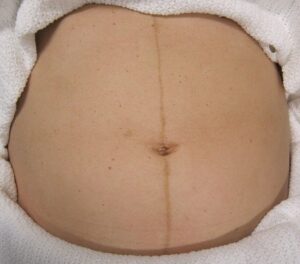
Your Answer: Striae gravidarum
Correct Answer: Linea Nigra
Explanation:This is Linea Nigra. It occurs in 3/4 of pregnancies and is due to increased melanocyte-stimulating hormone production by the placenta. This also causes melasma and darkening of the nipples.
-
This question is part of the following fields:
- Clinical Management
-
-
Question 41
Incorrect
-
What is the most common cause of sepsis in the puerperium?
Your Answer: Pneumonia
Correct Answer: Endometritis
Explanation:Significant puerperal pyrexia is defined as a temperature of 38ºC or higher on any two of the first 10 days postpartum, exclusive of the first 24 hours. A mixed flora normally colonizes the vagina with low virulence. Puerperal infection is usually polymicrobial and involves contaminants from the bowel that colonize the perineum and lower genital tract. Following delivery, natural barriers to infection are temporarily removed and therefore organisms with a pathogenic potential can ascend from the lower genital tract into the uterine cavity. Placental separation exposes a large raw area equivalent to an open wound, and retained products of conception and blood clots within the uterus can provide an excellent culture medium for infection.
-
This question is part of the following fields:
- Clinical Management
-
-
Question 42
Correct
-
Where is fetal DHEA produced?
Your Answer: Adrenals
Explanation:Dehydroepiandrosterone (DHEA) is a steroid hormone synthesised from cholesterol (via Pregnenolone) by the adrenal glands. The foetus manufactures DHEA, which stimulates the placenta to form oestrogen, thus keeping a pregnancy going. Production of DHEA stops at birth, then begins again around age seven and peaks when a person is in their mid-20s
-
This question is part of the following fields:
- Endocrinology
-
-
Question 43
Incorrect
-
A 30-year-old woman is already in her second pregnancy and is 22 weeks pregnant. She presented to the medical clinic for evaluation of a vulval ulcer. A swab was taken and revealed a diagnosis of herpes simplex type II (HSV-2) infection. She was surprised about this diagnosis since neither she nor her husband has ever had this infection before. She insisted on knowing the source of the infection and was very concerned about her baby’s well-being and she asked how her condition may affect the baby.
Which of the following statements is considered true regarding her situation?Your Answer: Unless she has had a new sexual partner recently, this problem could not have been acquired sexually
Correct Answer: The primary infection is commonly asymptomatic
Explanation:Genital herpes can be asymptomatic or have mild symptoms that go unrecognized. When symptoms occur, genital herpes is characterised by one or more genital or anal blisters or ulcers. Additionally, symptoms of a new infection often include fever, body aches and swollen lymph nodes.
HSV-2 is mainly transmitted during sex through contact with genital or anal surfaces, skin, sores or fluids of someone infected with the virus. HSV-2 can be transmitted even if the skin looks normal and is often transmitted in the absence of symptoms.
In rare circumstances, herpes (HSV-1 and HSV-2) can be transmitted from mother to child during delivery, causing neonatal herpes. Neonatal herpes can occur when an infant is exposed to HSV during delivery. Neonatal herpes is rare, occurring in an estimated 10 out of every 100 000 births globally. However, it is a serious condition that can lead to lasting neurologic disability or death. The risk for neonatal herpes is greatest when a mother acquires HSV for the first time in late pregnancy.
-
This question is part of the following fields:
- Obstetrics
-
-
Question 44
Incorrect
-
A 47 year old women has a transvaginal ultrasound that shows a partially echogenic mass with posterior sound attenuation owing to sebaceous material and hair within the cyst cavity. What is the likely diagnosis?
Your Answer: Endometrioma
Correct Answer: Mature teratoma
Explanation:These are the most common ovarian tumours in young women. The most common form is the mature dermoid cyst (cystic teratoma). It can consist of a combination of all the type of tissues (mesenchymal, stromal and epithelial). Any mature tissue type can be present such as muscle, cartilage, bone, teeth and often hair. Treatment is cystectomy.
-
This question is part of the following fields:
- Data Interpretation
-
-
Question 45
Incorrect
-
A patient undergoes medical abortion at 9 weeks gestation. What is the advice regarding Rhesus Anti-D Immunoglobulin?
Your Answer: Not required
Correct Answer: All RhD-negative women who are not alloimmunized should receive Anti-D IgG
Explanation:All non-sensitised RhD negative women should receive Anti-D IgG within 72 hours following abortion
-
This question is part of the following fields:
- Clinical Management
-
-
Question 46
Correct
-
All of the following factors are associated with an unstable lie of the foetus except?
Your Answer: Cervical fibroids
Explanation:Unstable lie means that the foetus is still changing its position even at 36 weeks of gestation. A number of factors are responsible for this positioning such as multi gravida, placenta previa, prematurity and fibroids present in the fundus. Cervical fibroids have little association with unstable lie of the foetus.
-
This question is part of the following fields:
- Obstetrics
-
-
Question 47
Incorrect
-
Which of the following has been shown to improve pruritus and liver function in patients with obstetric cholestasis?
Your Answer: Cholestyramine
Correct Answer: Ursodeoxycholic acid
Explanation:Intrahepatic cholestasis characterized by reversible cholestasis typically occurring in the second or third trimester of pregnancy, elevated serum aminotransferases and bile acid level and resolution of symptoms by 2 to 3 weeks after delivery. Ursodeoxycholic acid has shown to reduce the symptoms of this condition.
-
This question is part of the following fields:
- Clinical Management
-
-
Question 48
Incorrect
-
A patient who has been seen in fertility clinic phones regarding the timing of her progesterone blood test. She has regular 35 day menstrual cycles. When testing for ovulation what day of her cycle should she have the test on?
Your Answer: 7
Correct Answer: 28
Explanation:When testing for ovulation the best test is to check the progesterone level. The mid luteal progesterone levels should be checked 7 days prior to the next period. That will be the 28th day in a 35 day cycle.
-
This question is part of the following fields:
- Data Interpretation
-
-
Question 49
Correct
-
In pregnancy, the following lung function value remains unchanged:
Your Answer: FEV1
Explanation:The biochemical and mechanical effects of progesterone and the enlarging uterus are responsible for some changes in lung function during pregnancy.
Progesterone increases the sensitivity of the respiratory centre to arterial carbon dioxide while also causing hyperaemia in the airway leading to nasal obstruction. As a result, minute ventilation and tidal volume increase by 50% to allow greater arterial oxygen saturation.
The enlarging uterus displaces the diaphragm upwards, and also limits the movement of the thoracic cage, thereby decreasing the functional residual capacity (FRC) and the expiratory reserve volume (ERV) by 20%.
Functional Expiratory Volume in 1 second (FEV1) and Forced Vital Capacity (FVC) remain unchanged in pregnancy.
-
This question is part of the following fields:
- Physiology
-
-
Question 50
Incorrect
-
A 28-year-old female presented with acute migraine accompanied with headache and vomiting. She was noted to be at 33 weeks of gestation.
Which of the following is considered the safest treatment for the patient?Your Answer: Dihydroergotamine
Correct Answer: Paracetamol and metoclopramide
Explanation:The occurrence of migraine in women is influenced by hormonal changes throughout the lifecycle. A beneficial effect of pregnancy on migraine, mainly during the last 2 trimesters, has been observed in 55 to 90% of women who are pregnant, irrespective of the type of migraine.
For treatment of acute migraine attacks, 1000 mg of paracetamol (acetaminophen) preferably as a suppository is considered the first choice drug treatment. The risks associated with use of aspirin (acetylsalicylic acid) and ibuprofen are considered to be small when the agents are taken episodically and if they are avoided during the last trimester of pregnancy.
Paracetamol 500 mg alone or in combination with metoclopramide 10 mg are recommended as first choice symptomatic treatment of a moderate-to-severe primary headache during pregnancy.
-
This question is part of the following fields:
- Obstetrics
-
-
Question 51
Incorrect
-
Which of the following is suggestive of ovulation:
Your Answer: Oligomenorrhoea
Correct Answer: Regular cycle with dysmenorrhea
Explanation:Ovulation in the menstrual cycle usually occurs over 4 days. There is an increase in basal body temperature at the time of ovulation due to the effect of progesterone.
A high Day 21 progesterone level indicates ovulation and the release of an egg.
Dysmenorrhea is described as painful menstruation. The symptoms start at the time of ovulation and persist till menstruation.
-
This question is part of the following fields:
- Physiology
-
-
Question 52
Incorrect
-
With regard to the cell cycle. In what phase do chromatids get cleaved into chromosomes and pulled apart?
Your Answer: S Phase
Correct Answer: Anaphase
Explanation:Mitosis is the process during which cell division occurs. It is divided into 4 stages:
– The first stage is the prophase during which the chromosomes condense, mitotic spindles form and the chromosomes pair which each other.
– The second stage is the metaphase during which the chromatids align at the equatorial plane.
– The third stage is the anaphase during which the chromatids are separated into 2 daughter chromosomes.
– The fourth phase is the telophase during which the chromatids decondense and a new nuclear envelop forms around the each of the daughter chromosomes. Cytokinesis is the process during which the cell cytoplasm divides. -
This question is part of the following fields:
- Biochemistry
-
-
Question 53
Incorrect
-
Hysterosalpingogram (HSG) is contraindicated in the following EXCEPT:
Your Answer: Suspicious pregnancy
Correct Answer: Congenital malformations of the uterus
Explanation:Anomalies of the cervico-uterus are widely diagnosed by HSG. The diagnostic value of HSG in the detection of anomalies varies, depending on the type of malformation.
-
This question is part of the following fields:
- Obstetrics
-
-
Question 54
Incorrect
-
Which of the following does not cause an increased risk of cervical cancer?
Your Answer: Early onset of first sexual intercourse
Correct Answer: Alcohol
Explanation:Consuming alcohol and risk of cervical cancer are not associated. Not even drinking often and in large amounts are risk factors for developing cervical cancer.
So drinking alcohol and risk of cervical cancer aren’t associated. Based on their analyses of the scientific research evidence, that is the conclusion of, among many others, the:
American Cancer Society.
Centres for Disease Control and Prevention (CDC).
National Cancer Institute.
UK’s National Health Service.
Canadian Cancer Society.
Cancer Council Australia.
World Health Organization (WHO).All other options can increase the risk of acquiring cervical cancer.
-
This question is part of the following fields:
- Gynaecology
-
-
Question 55
Incorrect
-
A 22 year old woman miscarries at 6 weeks gestation. At checkup, she shows no obvious signs of complication. What would you advise regarding further pregnancy testing?
Your Answer: No further testing required
Correct Answer: Urine pregnancy test in 3 weeks
Explanation:In the management of a miscarriage, after the completion of 7-14 days of expectant management, the woman is advised to take a pregnancy test after 3 weeks. In case of a positive result she is to return for further care.
-
This question is part of the following fields:
- Biochemistry
-
-
Question 56
Correct
-
A 30-year-old woman with a 10-year history of schizophrenia, accompanied by her husband, presents to your hospital with amenorrhea lasting two months. She is currently taking clozapine with appropriate control of her symptoms.
Which of the following is the most crucial step in management?Your Answer: Urine pregnancy test
Explanation:Pregnancy is the most common cause of secondary amenorrhea worldwide. As a result, the first thing to check in every woman of reproductive age who has amenorrhea is a urine pregnancy test.
Once pregnancy has been ruled out, an ultrasound or measuring FSH and LH may be done to assess the condition (if required).
FBC is used to track clozapine side effects such as neutropenia and agranulocytosis. It is not recommended for the assessment of amenorrhea. -
This question is part of the following fields:
- Gynaecology
-
-
Question 57
Correct
-
You receive a swab result from a patient who had complained of odorous vaginal discharge. It confirms bacterial vaginosis (BV). Which pathogen is most commonly associated with BV?
Your Answer: Gardnerella vaginalis
Explanation:Bacterial vaginosis is characterised by a foul smelling vaginal discharge without inflammation. The most common spp to cause this is gardnerella vaginalis. Other spp include mycoplasma hominis and bacteroides. It occurs due to growth and increase in anaerobic spp with simultaneous reduction in lactobacilli in vaginal flora causing an increase in vaginal pH. It is the most common cause of abnormal vaginal discharge in women of childbearing age.
-
This question is part of the following fields:
- Clinical Management
-
-
Question 58
Incorrect
-
Which one of the following statements regarding Turner's syndrome is true?
Your Answer: Genetically is 46 XO
Correct Answer: Usually presents with primary amenorrhea
Explanation:Turner syndrome patients present with primary amenorrhea, have non functional or streak ovaries and cant conceive. They are 45X genetically.
-
This question is part of the following fields:
- Embryology
-
-
Question 59
Incorrect
-
Fetal immunoglobulin production begins at what gestation?
Your Answer: Week 32
Correct Answer: Week 10
Explanation:Fetal production of immunoglobulin begins early on, at about 10 weeks gestation with the production of IgM antibodies. Maternal IgG, which is a key component of fetal immunity, is passed on to the foetus through the placenta from 12 weeks of gestation. Secretory IgA is not produced until after birth.
-
This question is part of the following fields:
- Immunology
-
-
Question 60
Incorrect
-
The COCP (Combined Oral Contraceptive Pill) causes all of the following biochemical effects EXCEPT?
Your Answer: Reduction in adrenal androgen secretion
Correct Answer: Elevate FSH
Explanation:COCP’s act both centrally and peripherally. They inhibit ovulation. Both oestrogen and progestogen supress the release of FSH and LH hence preventing ovulation. Peripherally it acts by making the endometrium atrophic and hostile towards implantation. It also alters the cervical mucus and prevents the sperm from ascending the uterine cavity.
-
This question is part of the following fields:
- Clinical Management
-
-
Question 61
Incorrect
-
A 24-year-old gravida 3 para 1 is admitted to the hospital at 29 weeks gestation with a high fever, flank pain, and an abnormal urinalysis. You order blood and urine cultures, a CBC, electrolyte levels, and a serum creatinine level. You also start her on intravenous fluids and intravenous cefazolin. After 24 hours of antibiotic treatment she is clinically improved but continues to have fever spikes. What would be the most appropriate management at this time?
Your Answer: Change her antibiotics, as her infection is likely due to a resistant organism
Correct Answer: Continue current management
Explanation:Pyelonephritis is the most common serious medical problem that complicates pregnancy. Infection is more common after midpregnancy, and is usually caused by bacteria ascending from the lower tract. Escheria coli is the offending bacteria in approximately 75% of cases. About 15% of women with acute pyelonephritis are bacteraemia- A common finding is thermoregulatory instability, with very high spiking fevers sometimes followed by hypothermia- Almost 95% of women will be afebrile by 72 hours. However, it is common to see continued fever spikes up until that time- Thus, further evaluation is not indicated unless clinical improvement at 48-71 hours is lacking. If this is the case, the patient should be evaluated for urinary tract obstruction, urinary calculi and an intrarenal or perinephric abscess. Ultrasonography, plain radiography, and modified intravenous pyelography are all acceptable methods, depending on the clinical setting.
-
This question is part of the following fields:
- Obstetrics
-
-
Question 62
Incorrect
-
The fetal head may undergo changes in shape during normal delivery. The most common aetiology listed is:
Your Answer: Subdural hematoma
Correct Answer: Molding
Explanation:With the help of molding, the fetal head changes its shape as the skull bones overlap. This helps in smooth delivery of the foetus through the birth canal.
-
This question is part of the following fields:
- Obstetrics
-
-
Question 63
Incorrect
-
Which of the following arteries branches directly from the aorta?
Your Answer: Uterine
Correct Answer: Ovarian
Explanation:The ovarian artery takes its origin directly from the aorta. While the uterine and the vaginal arteries are all branches of the internal iliac artery.
-
This question is part of the following fields:
- Anatomy
-
-
Question 64
Incorrect
-
Regarding the biophysical profile:
Your Answer: Never includes a non-stress test
Correct Answer: Includes fetal movement, fetal tone, fetal breathing, fetal heart rate & amniotic fluid
Explanation:The biophysical profile is a composite test that collects 5 indicators of fetal well-being, including fetal heart rate reactivity, breathing movements, gross body movements, muscular tone, and quantitative estimation of amniotic fluid volume. The assessment of fetal heart rate is accomplished by performing a non-stress test, whereas the latter 4 variables are observed using real-time ultra-sonography.
-
This question is part of the following fields:
- Biophysics
-
-
Question 65
Incorrect
-
A patient is on the ward with a mechanical mitral valve. There is no history of VTE. What is the target INR?
Your Answer: 3.0 - 4.0
Correct Answer: 2.5 - 3.5
Explanation:With the use of warfarin, strict control of the INR is compulsory. After mitral valve replacement the INR should ideally be kept between 2.5-3.5. If the Ball and Cage or the Tilting Disc is used as a prosthetic valve then the target INR is 3.5, for bi-leaflets the target INR is 3.0 and for biological valves the target INR is 2.5.
-
This question is part of the following fields:
- Pharmacology
-
-
Question 66
Correct
-
Question 67
Incorrect
-
What form is 99% of body calcium found in?
Your Answer: Calcium Bicarbonate
Correct Answer: Calcium Phosphate
Explanation:Calcium phosphate salts are the most abundant form of calcium in the body, making up 99%. The majority of these salts are stored in the skeleton in different forms, mostly, hydroxyapatite, a lattice-like crystal composed of calcium, phosphates and hydroxide. The remaining calcium can be found in the extracellular fluid, tissues and skeletal muscle.
-
This question is part of the following fields:
- Physiology
-
-
Question 68
Incorrect
-
A 25-year-old primigravida presents to your office for a routine OB visit at 34 weeks of gestational age. She voices concern as she has noticed an increasing number of spidery veins appearing on her face, upper chest and arms and is upset with the unsightly appearance of these veins. She wants to know what you recommend to get rid of them.
Which of the following is the best advice you can give to this patient?Your Answer: Recommend that she wear an abdominal support
Correct Answer: Tell her that the appearance of these blood vessels is a normal occurrence with pregnancy
Explanation:Vascular spiders or angiomas, are of no clinical significance during pregnancy as these are common findings and are form as a result of hyperestrogenemia associated with normal pregnancies. These angiomas, as they will resolve spontaneously after delivery, does not require any additional workup or treatment.
Reassurance to the patient is all that is required in this case. -
This question is part of the following fields:
- Obstetrics
-
-
Question 69
Incorrect
-
A newborn male infant, born to a 30-year-old gravida 3 para 0 aborta 2 woman, who did not receive any prenatal care, is evaluated in the neonatal intensive care unit for growth restriction. The mother who presented for labor at approximately 38 weeks of gestation, had a forceps-assisted vaginal delivery due to fetal heart rate abnormalities.
The newborn's Apgar scores were 6 and 8 at 1 and 5 minutes, respectively and his weight was 2.5 kg. Physical examination shows microcephaly, a wide anterior fontanelle, cleft palate and hypoplasia of the distal phalanges.
A history of which of the following will be obtained on further evaluation of the mother?Your Answer: Cocaine use
Correct Answer: Phenytoin use
Explanation:This infant will most likely be diagnosed as having fetal hydantoin syndrome, which occurs due to an in utero exposure to antiepileptic drugs like phenytoin, carbamazepine, valproate etc.
Multiple antiepileptics, due to their ability to cross placenta, have teratogenic effects which will result in low folate and high oxidative metabolite levels in the fetus. This likely combined effect results deformities like cleft lip and palate, wide anterior fontanelle, distal phalangeal hypoplasia and cardiac anomalies like pulmonary stenosis, aortic stenosis etc in the fetus. There will be developmental delay and poor cognitive outcomes as a result of neural tube defects and microcephaly associated with this. Therefore, prior to conception, those patients who require antiepileptics for seizure control during pregnancy should titrate it to the lowest dose and must started on high-dose (4 mg) folic acid supplementation to minimize the risk of such congenital malformations.
Fetal alcohol syndrome commonly presents with microcephaly and midfacial hypoplasia, but is not association with cleft lip or palate.
Cocaine use during pregnancy can be associated with preterm delivery, abruptio placentae and fetal growth restriction; but there is no evidence to prove its association with congenital defects.
Fetal renal failure with associated oligohydramnios that results in pulmonary hypoplasia, growth restriction, and limb defects are the complications associated with the use of lisinopril and other angiotensin-converting enzyme inhibitors during pregnancy; but it does not cause cleft lip or palate.
Most infants with congenital syphilis are asymptomatic at birth and those with symptoms typically have rhinitis or “snuffles, hepatomegaly and a maculopapular rash none of which are seen in this patient.
Fetal hydantoin syndrome results from the in-utero exposure to antiepileptic drugs like phenytoin, carbamazepine etc and is usually presented with microcephaly, a wide anterior fontanelle, cleft lip and palate, and distal phalangeal hypoplasia.
-
This question is part of the following fields:
- Obstetrics
-
-
Question 70
Incorrect
-
A 29-year-old lady taking oral contraceptives came to your clinic with her boyfriend. She got severe diarrhoea and vomiting after eating a hamburger at a local eatery while on the road. She has taken her pills as prescribed.
What is your contraception advice?Your Answer: Avoid sexual activity for 3 weeks
Correct Answer: Use condoms for 7 days and continue usual pills
Explanation:The CDC recommends that:
If diarrhoea occurs within 24 hours of taking oral birth control or continues for 24 to 48 hours after taking a pill, an additional dose is not needed.
If diarrhoea lasts more than 48 hours Use backup birth control, such as condoms, or avoid sexual intercourse until pills have been taken for seven diarrhoea-free days.All other options are incorrect.
-
This question is part of the following fields:
- Gynaecology
-
-
Question 71
Incorrect
-
A 26-year-old woman presents with vulvar soreness and oedema. For the past three days, she has been suffering from dyspareunia and difficulty walking. She claims she has never had any sexually transmitted illnesses before. Her companion has no symptoms. She is afebrile and in good health.
On pelvic examination, a red, heated swelling measuring 4cm in diameter is discovered in the posterior end of the right labia majora. A speculum examination reveals normal-looking mucosa with no obvious discharge. There is no lymphadenopathy in the region.
Which of the following is the best initial treatment option?Your Answer: Gland excision
Correct Answer: Word catheter
Explanation:The patient is suffering from Bartholin cyst abscess.
Insertion of an inflatable balloon is a non-surgical procedure that can be performed as an outpatient using a local anaesthetic (LA) injection to numb the area. It involves making a passage from the cyst or abscess through which the pus can drain over 4 weeks. After the LA injection, a small skin cut is made into the cyst or abscess, which allows drainage. A fluid/ pus swab sample may be taken to check for an infection at this stage. A cotton bud is used to break the pockets of abscess/ cyst fluid. A flexible tube (called a Word catheter) with a small, specially designed balloon at its tip is then inserted into the cyst or abscess to create a passage. The balloon is inflated with 3–4mls of sterile fluid to keep the catheter in place. Rarely, a stitch may be used to partly close the cut and hold the balloon in position. It is then left in place for up to 4 weeks; new skin to forms around the passage and the wound heals.Marsupialization can be done for drainage but is inferior or word catheter because of the technical challenges and complications. Hot compressions and analgesics alone do not suffice in the presence of an abscess. Antibiotics are given after drainage but are not effective alone when there is a large collection of pus.
-
This question is part of the following fields:
- Gynaecology
-
-
Question 72
Incorrect
-
At what week in pregnancy is testing for gestational diabetes (GD) advised
Your Answer: At booking appointment regardless of past history
Correct Answer: As soon as possible after booking if past history of GD
Explanation:Testing for GD should use the 2 hour 75g oral glucose tolerance test (OGTT) to test for GD in women. Testing women who have had GD in a previous pregnancy: early self monitoring of blood glucose OR a 75 g 2 hour OGTT as soon as possible after booking (whether in the first or second trimester) and a further 75 g 2hour OGTT at 24-28 weeks if the results of the first OGTT are normal. Testing women with risk factors for GD: 75g 2 hour OGTT at 24-28 weeks
-
This question is part of the following fields:
- Clinical Management
-
-
Question 73
Incorrect
-
What epithelium cell type lines the ureters?
Your Answer: Cuboidal
Correct Answer: Transitional
Explanation:Uterus is lines by a single layer of columnar epithelium. The endometrium goes through changes during the menstrual cycles.
-
This question is part of the following fields:
- Pathology
-
-
Question 74
Incorrect
-
If a hyalinised mass is formed from an involuted corpus leuteum, it is known as:
Your Answer: Corpus delicti
Correct Answer: Corpus albicans
Explanation:Corpus albicans is the regressed form of the corpus leuteum. It is formed when the corpus leuteum is engulfed by macrophages and a scar or fibrous tissue is formed, called the corpus albicans.
-
This question is part of the following fields:
- Physiology
-
-
Question 75
Incorrect
-
Regarding ovarian cancer, which factors are thought to lower the risk?
Your Answer:
Correct Answer: Taking statins
Explanation:Ovarian cancer is a gynaecological cancer that commonly affects women over 40 years. Risk factors for ovarian cancer include: infertility, a family history of ovarian, breast or colorectal cancer. There are some protective factors, which include: high parity and breastfeeding, early age at menarche and late age at menopause, and combined oral contraceptives, and statins.
-
This question is part of the following fields:
- Epidemiology
-
-
Question 76
Incorrect
-
Question 77
Incorrect
-
Regarding the female breast how many lobes does the typical breast contain?
Your Answer:
Correct Answer: 15-20
Explanation:The basic components of the mammary gland are the alveoli. These are lined with milk-secreting cuboidal cells surrounded by myoepithelial cells. The alveoli join to form groups known as lobules. The lobules form lobes. Each lobe has a lactiferous duct that drains into openings in the nipple. Each breast typically contains 15-20 lobes.
-
This question is part of the following fields:
- Anatomy
-
-
Question 78
Incorrect
-
The uterine vein drains where?
Your Answer:
Correct Answer: Internal iliac vein
Explanation:The venous drainage of the uterus is via the uterine veins which form a plexus passing below the artery within the base of the broad ligament communicating with the rectal and the vesical venous plexus before draining into the internal iliac veins.
-
This question is part of the following fields:
- Anatomy
-
-
Question 79
Incorrect
-
The best confirmatory test for Turner's syndrome is done by:
Your Answer:
Correct Answer: Chromosomal analysis (Karyotyping)
Explanation:Standard karyotyping is the best confirmatory test for the diagnosis of Turner syndrome among patients who have some doubtful clinical presentations. It is done on peripheral blood mononuclear cells.
-
This question is part of the following fields:
- Embryology
-
-
Question 80
Incorrect
-
Which of the following best describes Clomiphene?
Your Answer:
Correct Answer: Selective Oestrogen Receptor Modulator
Explanation:Clomiphene is a non-steroidal compound with tissue selective actions. It is used to induce ovulation in women who wish to become pregnant. It is a selective oestrogen receptor modulators.
-
This question is part of the following fields:
- Pharmacology
-
-
Question 81
Incorrect
-
Lidiya is a 30-year-old hospital nurse in her nine weeks of pregnancy. She has no history of chickenpox, but by regularly attending the facial sores of an elderly patient with herpes zoster ophthalmicus she has been significantly exposed to shingles.
What would you advise her as preventive management?Your Answer:
Correct Answer: If she had chicken pox immunization in the past, she needs to have her Varicella-Zoster IgG antibodies checked to assure immunity
Explanation:Patient in the given case is nine weeks pregnant, and she has been exposed to a herpes zoster rash because she is working as a hospital nurse and has no prior history of chickenpox.
The most appropriate next step in this case would be checking for Varicella-Zoster IgG antibodies which assures immunity to varicella infections. If VZV IgG is present no further action is needed, but if VZV IgG antibodies are absent, then she will need Varicella Zoster Immunoglobulins within ten days from the exposure to shingles. -
This question is part of the following fields:
- Obstetrics
-
-
Question 82
Incorrect
-
Which of the following is the primary stimulator of uterine involution following child birth?
Your Answer:
Correct Answer: Oxytocin
Explanation:Oxytocin stimulates the myoepithelial cells in the breast causing the milk production. It also helps augment contractions in labour and cause uterine involution after childbirth.
-
This question is part of the following fields:
- Endocrinology
-
-
Question 83
Incorrect
-
During wound healing the clotting cascade is activated. Which of the following activates the extrinsic pathway?
Your Answer:
Correct Answer: Tissue Factor
Explanation:The extrinsic pathway is activated by the tissue factor, which converts factor VII to VIIa which later on converts factors X and II to their activated form finally leading to the conversion of fibrinogen to fibrin fibres.
-
This question is part of the following fields:
- Physiology
-
-
Question 84
Incorrect
-
Oligohydramnios is defined as an amniotic fluid index of?
Your Answer:
Correct Answer:
Explanation:AFI involves measuring the depth of amniotic fluid pockets in all 4 quadrants.
Oligohydramnios AFI< 5cm or deepest amniotic fluid pocket < 2cm
Polyhydramnios AFI > 25cm or deepest amniotic fluid pocket > 8cm -
This question is part of the following fields:
- Biophysics
-
-
Question 85
Incorrect
-
Regarding the uterine artery which of the following statements are FALSE?
Your Answer:
Correct Answer: It crosses the Ureter posteriorly
Explanation:The Uterine artery typically arises from the anterior branch of the internal iliac artery. It crosses the ureter ANTERIORLY. It is the primary source of arterial supply to the uterus and its branches anastomose with branches of the ovarian and vaginal arteries.
-
This question is part of the following fields:
- Anatomy
-
-
Question 86
Incorrect
-
A 28 year old patient has a diagnosis of PCOS. She has been trying to conceive for 2 years. Her BMI is 26 kg/m2 and she is a non-smoker. She has been taking Clomiphene and metformin for the past 6 months. What is the next most appropriate treatment?
Your Answer:
Correct Answer: Gonadotrophins
Explanation:Management of PCOS includes OCP, cyclical oral progesterone, metformin, clomiphene (which is more effective in inducing ovulation than metformin) and life-style changes. In women who are tolerant to these therapies Gonadotrophins should be trialled. However lifestyle changes should be able to improve the condition significantly. Clomiphene shouldn’t be continued for more than 6 months.
-
This question is part of the following fields:
- Clinical Management
-
-
Question 87
Incorrect
-
You're assessing a 34-year-old lady who suffers from chronic pelvic pain. She experiences cyclic pain, mostly throughout her premenstrual and menstrual periods. She has been trying for 15 months to conceive without luck. Her pelvic check-up comes out normal.
Which of the following tests would be most useful in diagnosing the source of her pain and planning preoperative disease staging?Your Answer:
Correct Answer: MRI
Explanation:Endometriosis is a chronic gynaecological condition affecting women of reproductive age and may cause pelvic pain and infertility. It is characterized by the growth of functional ectopic endometrial glands and stroma outside the uterus and includes three different manifestations: ovarian endometriomas, peritoneal implants, deep pelvic endometriosis. The primary locations are in the pelvis; extra pelvic endometriosis may rarely occur.
Diagnosis requires a combination of clinical history, invasive and non-invasive techniques. The definitive diagnosis is based on laparoscopy with histological confirmation. Diagnostic imaging is necessary for treatment planning. MRI is as a second-line technique after ultrasound. The MRI appearance of endometriotic lesions is variable and depends on the quantity and age of haemorrhage, the amount of endometrial cells, stroma, smooth muscle proliferation and fibrosis. The purpose of surgery is to achieve complete resection of all endometriotic lesions in the same operation.
Owing to the possibility to perform a complete assessment of all pelvic compartments at one time, MRI represents the best imaging technique for preoperative staging of endometriosis, in order to choose the more appropriate surgical approach and to plan a multidisciplinary team work.
Though ESR maybe elevated due to the presence of inflammation, it is not specific for endometriosis and has no role in preoperative staging. The same holds true for any possible CBC finding.
Transvaginal ultrasound is preferred for diagnosis but doesn’t aid in preoperative staging of endometriosis.
CA125 values are elevated in severe infiltrative endometriosis but unchanged in mild disease. Relaying on CA125 cause a high rate of false negatives.
-
This question is part of the following fields:
- Gynaecology
-
-
Question 88
Incorrect
-
A 10 day old infant present with signs of disseminated Herpes Simplex Virus (HSV) infection. Her mother had her first episode of HSV three weeks prior to delivery. The infant was treated with antivirals upon clinical suspicion. What is the case fatality rate of infants who develop disseminated HSV despite treatment?
Your Answer:
Correct Answer: 30%
Explanation:Congenital Herpes Simplex Virus infection may cause high levels of morbidity and mortality in neonates. Risk of infection with HSV 1 and 2 is highest within 6 weeks of delivery and is transferred to the neonate via maternal secretions at birth. Affected babies can present as skin manifestations, CNS infection, or disseminated infection, which carries an 85% risk of mortality if left untreated. Treatment with high dose antivirals such as acyclovir can help decrease the case mortality rate to 30% in cases of disseminated infection.
-
This question is part of the following fields:
- Microbiology
-
-
Question 89
Incorrect
-
A 48-year-old woman presents to the clinic complaining of a one week history of light vaginal bleeding.
Her past medical history reveals she had a lumpectomy, postoperative radiotherapy, adjuvant chemotherapy and tamoxifen therapy 3 years ago as treatment for an oestrogen receptor-positive breast malignancy.
She was prescribed tamoxifen in a dose of 10mg per day to take for the next five years.
Since she completed her chemotherapy three years ago, she has no menstrual periods.
What is the most probable cause of her current bleeding?Your Answer:
Correct Answer: Endometrial polyp formation due to the tamoxifen.
Explanation:The most likely cause of her bleeding is an endometrial polyp formation due to the tamoxifen.
Tamoxifen is often prescribed to decrease risk of breast cancer recurrence in premenopausal women with oestrogen receptor-positive cancers.
As with any medication, it has known side effects, which include endometrial polyp formation, subendometrial oedema and, rarely, endometrial carcinoma.
A polyp or carcinoma can cause uterine bleeding, but a polyp is more likely to occur.
Routine endometrial thickness screening is not recommended in all women taking tamoxifen. However, in cases of abnormal bleeding, ultrasound assessment of endometrial thickness, hysteroscopy and curettage are indicated to assess the endometrium in more detail.
Tamoxifen is not associated with endometrial atrophy.
Endometrial metastasis from a breast cancer is rare, and tamoxifen would not usually induce follicular development in a woman who has had chemotherapy and resultant amenorrhoea.
-
This question is part of the following fields:
- Gynaecology
-
-
Question 90
Incorrect
-
What is the half life of Oxytocin?
Your Answer:
Correct Answer: 5 minutes
Explanation:The half-life of Oxytocin is approximately 5 minutes
The half-life of Misoprostol is approximately 20-40 minutes
The half-life of Ergometrine is approximately 30-120 minutes -
This question is part of the following fields:
- Clinical Management
-
-
Question 91
Incorrect
-
Regarding Turner syndrome which of the following statements is true?
Your Answer:
Correct Answer: Only 1% of affected foetuses will survive to term
Explanation:The incidence of 45,XO turner syndrome is around 1 in 8000 live births. Approximately 1% of monosomy X female embryos survive. Phenotypically they are females and 90% do not develop secondary sexual characteristics and hormone replacement is required.
-
This question is part of the following fields:
- Genetics
-
-
Question 92
Incorrect
-
Ulipristal is thought to prevent pregnancy by what primary mechanism?
Your Answer:
Correct Answer: Inhibition of ovulation
Explanation:Ulipristal is a progesterone receptor modulator that is used up to 120 hours following unprotected intercourse. It inhibits ovulation. The dose is 30 mg.
-
This question is part of the following fields:
- Clinical Management
-
-
Question 93
Incorrect
-
To avoid potential haemolysis, Anti D immunoglobulin should be administered to which of the following?
Your Answer:
Correct Answer: Rhesus negative mother, non-sensitised, fetal cord blood Rh positive
Explanation:The Rhesus status of a mother is important in pregnancy and even abortion. The exposure of an Rh-negative mother exposed to Rh antigens from a positive foetus, will influence the development of anti-Rh antibodies. This may cause problems in subsequent pregnancies leading to haemolysis in the newborn. Rh Anti RhD- globulin is therefore given to non-sensitised Rh-negative mothers who give birth to Rh-positive children to prevent the formation of anti-Rh antibodies. Anti RhD globulin is not useful for already sensitized, or RhD positive mothers; its administration could result in maternal blood being bound and taken out of circulation.
-
This question is part of the following fields:
- Immunology
-
-
Question 94
Incorrect
-
A 22 year old woman is being followed up 6 weeks after a surgical procedure to evacuate the uterus following a miscarriage. The histology has shown changes consistent with a hydatidiform mole. What is the single most appropriate investigation in this case?
Your Answer:
Correct Answer: Serum B-HCG
Explanation:The most appropriate test for a hydatiform mole is serum beta hCG levels, which are consistently raised in these patients. The levels return to normal when the pregnancy is terminated.
-
This question is part of the following fields:
- Gynaecology
-
-
Question 95
Incorrect
-
A 19-year-old girl, with menarche at age 12, presents with a 2-year duration of severe dysmenorrhea. Analgesia with paracetamol, panadeine as well as indomethacin did not provide much relief. The girl is very concerned that the underlying cause could be something sinister.
What is the most likely cause of her dysmenorrhea?
Your Answer:
Correct Answer: Endometrial prostaglandin release.
Explanation:It is less common for a girl of this age to develop fibroids, endometriosis and endometrial polyps, although these are all causes of severe dysmenorrhea. Chronic pelvic infection can be due to sexually transmitted disease but the history does not mention any previous episodes of pelvic pain or symptoms of infection such as fever. In this case, it is most likely that she has primary dysmenorrhea. Primary dysmenorrhea, in which no pathological cause can be identified, is believed to be due to the prostaglandins released by the secretory endometrium. If secondary dysmenorrhea is suspected, then endometriosis would be the most prominent cause.
While hysteroscopic and laparoscopic examinations are commonly done in adult women to rule out organic causes such as those mentioned earlier, in younger girls, they are usually only carried out if pain management with, for example, NSAIDs and the use of COCPs, have failed to either provide symptom relief or reduction.
-
This question is part of the following fields:
- Gynaecology
-
-
Question 96
Incorrect
-
A 18-year-old girl arrives at the ER with severe abdominal pain. When it started, she was in the school band. She says the pain began 30 minutes ago in the left lower region and didn't radiate. On a scale of 1 to 10, the discomfort is a 7 and is not accompanied by nausea, vomiting, or diarrhoea. Menarche began at the age of thirteen. Her menses were erratic at first, but she has had regular periods for the past six months.
Her vital signs are stable, and she has no fever. She uses combination oral contraceptives and is sexually active. She denies taking any other drugs. A flat abdomen with regular peristalsis is revealed on physical examination. Pelvic examination indicates a regular vagina with a normal-appearing cervix. There is no mucopurulent cervical discharge. Bimanual examination is remarkable with a tender 5-cm mass in the left adnexa.
A pregnancy test result is negative. A pelvic sonogram exhibits a normal intrauterine pregnancy and a 5 X 6 cm complex mass of the left ovary, with focal areas of calcification.
Which of the following is the most likely diagnosis?Your Answer:
Correct Answer: Cystic teratoma
Explanation:Mature cystic teratomas of the ovary are often discovered as incidental findings on physical examination, during radiographic studies, or during abdominal surgery performed for other indications.
Most mature cystic teratomas can be diagnosed at ultrasonography (US) but may have a variety of appearances, characterized by echogenic sebaceous material and calcification.
Follicular cysts are simple fluid-filled cysts and never have calcifications.
Mucinous cystadenoma usually develop in the third to fifth decades of life and typically cause vague symptoms, such as increasing abdominal girth, abdominal or pelvic pain, emesis, fatigue, indigestion, constipation, and urinary incontinence However, calcifications are not usually seen.
Brenner tumour is also a benign epithelial ovarian tumour but it is solid, occurring most often in women over 50 years of age.
Serous cystadenoma also does not show calcifications.
-
This question is part of the following fields:
- Gynaecology
-
-
Question 97
Incorrect
-
Which of the following muscles is NOT a constituent of the pelvic floor (diaphragm)?
Your Answer:
Correct Answer: Piriformis
Explanation:The pelvic floor or diaphragm is composed of Coccygeus and Levator Ani. Levitator Ani is composed of 3 muscles: puborectalis, pubococcygeus and iliococcygeal. Although Piriformis assists in closing the posterior pelvic outlet it is not considered a component of the pelvic floor
-
This question is part of the following fields:
- Anatomy
-
-
Question 98
Incorrect
-
A 50-year-old female presents with a complaint of bloating and abdominal distension. History reveals she underwent hysterectomy 3 months ago. Which investigation should be carried out in this case?
Your Answer:
Correct Answer: Plain X-ray abdomen
Explanation:A complication of bilateral salpingo-oophorectomy and hysterectomy is the formation of adhesions in the GIT that can cause intestinal obstruction. Abdominal X-ray is sufficient to visualize any obstruction in the GIT.
-
This question is part of the following fields:
- Gynaecology
-
-
Question 99
Incorrect
-
A 26 year old primigravida woman attends A&E due to worsening vomiting. She is currently 10 weeks pregnant. For the past 4 weeks she has had morning sickness but for the last 4 days she has been unable to tolerate any oral fluids without vomiting and thinks she has lost weight. On questioning she has no significant past medical history prior to this pregnancy. She is currently taking the following medication:
Your Answer:
Correct Answer: Hyperemesis gravidarum
Explanation:This patient has severe nausea and vomiting with ketosis and evidence of dehydration (low BP and tachycardia) in the early part of pregnancy. There is no history of diabetes and the blood glucose doesn’t indicate hyperglycaemia. This is consistent with hyperemesis gravidarum (HG)
-
This question is part of the following fields:
- Clinical Management
-
-
Question 100
Incorrect
-
Which of the following can be considered as a major contraindication for the use of medroxyprogesterone acetate (Provera)?
Your Answer:
Correct Answer: History of breast cancer
Explanation:Contraindications of PROVERA (medroxyprogesterone acetate) include: undiagnosed abnormal genital bleeding, known, suspected, or history of breast cancer, known or suspected oestrogen- or progesterone-dependent neoplasia, active DVT, pulmonary embolism, or a history of these conditions, active arterial thromboembolic disease (for example, stroke and MI), or a history of these conditions, known anaphylactic reaction or angioedema, known liver impairment or disease, known or suspected pregnancy.
-
This question is part of the following fields:
- Gynaecology
-
SESSION STATS - PERFORMANCE PER SPECIALTY
