-
Question 1
Correct
-
Which of the following best describes the correct administration of adrenaline for a shockable rhythm in adult advanced life support?
Your Answer: Give 1 mg of adrenaline after the second shock and every 3 - 5 minutes thereafter
Explanation:Give adrenaline 1 mg IV (IO) (10 mL of 1:10,000 solution) after the 2nd shock for adult patients in cardiac arrest with a shockable rhythm. Repeat adrenaline 1 mg IV (IO) every 3-5 minutes whilst ALS continues.
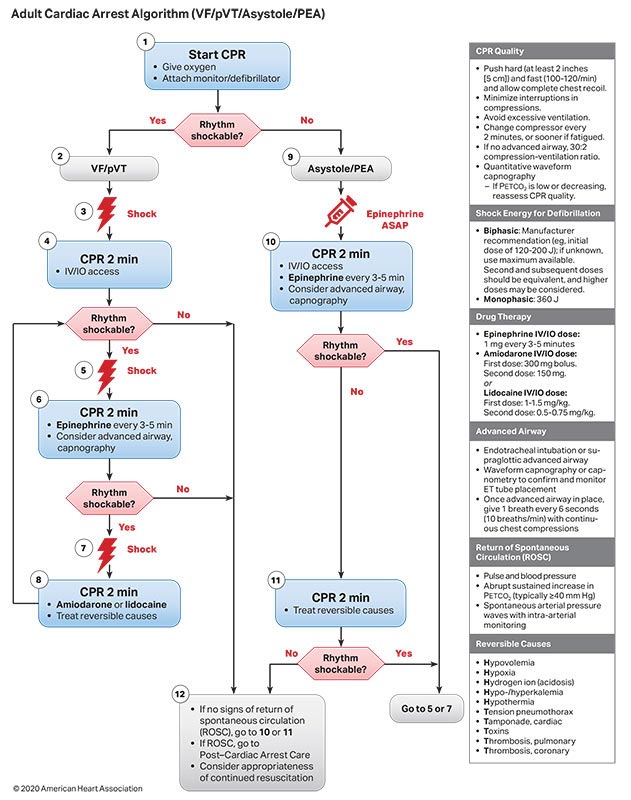
-
This question is part of the following fields:
- Cardiovascular
- Pharmacology
-
-
Question 2
Incorrect
-
Regarding loop diuretics, which of the following statements is INCORRECT:
Your Answer: Lower initial doses of diuretics should be used in the elderly because they are particularly susceptible to the side effects.
Correct Answer: The risk of hypokalaemia is greater with loop diuretics than with an equipotent dose of a thiazide diuretic.
Explanation:Hypokalaemia can occur with both thiazide and loop diuretics. The risk of hypokalaemia depends on the duration of action as well as the potency and is thus greater with thiazides than with an equipotent dose of a loop diuretic. Hypokalaemia is dangerous in severe cardiovascular disease and in patients also being treated with cardiac glycosides. Often the use of potassium-sparing diuretics avoids the need to take potassium supplements. In hepatic failure, hypokalaemia caused by diuretics can precipitate encephalopathy, particularly in alcoholic cirrhosis.
-
This question is part of the following fields:
- Cardiovascular
- Pharmacology
-
-
Question 3
Correct
-
A 72 year old man is brought to ED by ambulance with sudden onset chest pain, palpitations and shortness of breath. His HR is 160 bpm and BP 90/65. ECG demonstrates new-onset fast atrial fibrillation. Which of the following is the first-line treatment option in this case:
Your Answer: Synchronised DC cardioversion
Explanation:All patients with adverse features suggesting life-threatening haemodynamic instability (shock, syncope, heart failure, myocardial ischaemia) caused by new onset atrial fibrillation should undergo emergency electrical cardioversion with synchronised DC shock without delaying to achieve anticoagulation.
-
This question is part of the following fields:
- Cardiovascular
- Pharmacology
-
-
Question 4
Incorrect
-
Which of the following is NOT a typical side effect of digoxin:
Your Answer: Yellow vision
Correct Answer: Hypokalaemia
Explanation:Digoxin does not cause hypokalaemia, but hypokalaemia does potentiate digoxin toxicity. The adverse effects of digoxin are frequently due to its narrow therapeutic window and include:
Cardiac adverse effects – Sinoatrial and atrioventricular block, Premature ventricular contractions, PR prolongation and ST-segment depression
Nausea, vomiting and diarrhoea
Blurred or yellow vision
CNS effects – weakness, dizziness, confusion, apathy, malaise, headache, depression, psychosis
Thrombocytopenia and agranulocytosis (rare)
Gynaecomastia in men in prolonged administration -
This question is part of the following fields:
- Cardiovascular
- Pharmacology
-
-
Question 5
Incorrect
-
In the ventricular myocyte action potential, depolarisation occurs through the opening of:
Your Answer: Ligand-gated Na + channels
Correct Answer: Voltage-gated Na + channels
Explanation:An action potential (AP) is initiated when the myocyte is depolarised to a threshold potential of about -65 mV, as a result of transmission from an adjacent myocyte via gap junctions. Fast voltage-gated Na+channels are activated and a Na+influx depolarises the membrane rapidly to about +30 mV. This initial depolarisation is similar to that in nerve and skeletal muscle, and assists the transmission to the next myocyte.
-
This question is part of the following fields:
- Cardiovascular
- Physiology
-
-
Question 6
Correct
-
Which of the following is the primary indication for loop diuretics?
Your Answer: Acute pulmonary oedema
Explanation:Loop diuretics have long been the cornerstone of pulmonary oedema treatment, with furosemide being the most commonly used of these drugs. Premedication with drugs that decrease preload (e.g., nitro-glycerine [NTG]) and afterload (e.g., angiotensin-converting enzyme [ACE] inhibitors) before the administration of loop diuretics can prevent adverse hemodynamic changes.
-
This question is part of the following fields:
- Cardiovascular
- Pharmacology
-
-
Question 7
Incorrect
-
Which of the following best describes digoxin:
Your Answer: A positive inotrope and positive chronotrope
Correct Answer: A positive inotrope and negative chronotrope
Explanation:Digoxin is a cardiac glycoside used in the treatment of atrial fibrillation and flutter, and congestive cardiac failure. It acts by inhibiting the membrane Na/K ATPase in cardiac myocytes. This raises intracellular sodium concentration and increases intracellular calcium availability indirectly via Na/Ca exchange. The increase in intracellular calcium levels causes an increases the force of myocardial contraction (positive inotrope), and slows the heart rate (negative chronotrope).
-
This question is part of the following fields:
- Cardiovascular
- Pharmacology
-
-
Question 8
Incorrect
-
Continuous capillaries are typically found where in the body:
Your Answer: Renal glomeruli
Correct Answer: Blood-brain barrier
Explanation:Continuous capillaries, found in the skin, lungs, muscles and CNS, are the most selective with low permeability, as junctions between the endothelial cells are very tight, restricting the flow of molecules with MW > 10,000.
-
This question is part of the following fields:
- Cardiovascular
- Physiology
-
-
Question 9
Correct
-
Which of the following best characterizes the correct administration of amiodarone for a shockable rhythm in adults on advanced life support:
Your Answer: Give 300 mg IV amiodarone after 3 shocks
Explanation:After three shocks, 300 mg IV amiodarone should be administered. After five defibrillation attempts, a further dose of 150 mg IV amiodarone may be considered. If amiodarone is not available, lidocaine may be used as a substitute, but it should not be given if amiodarone has previously been administered.
-
This question is part of the following fields:
- Cardiovascular
- Pharmacology
-
-
Question 10
Incorrect
-
Regarding cardiac excitation-contraction coupling, which of the following statements is CORRECT:
Your Answer: In relaxation, most Ca 2+ is actively pumped out of the myocyte.
Correct Answer: The Treppe effect refers to an increase in contractility secondary to an increase in heart rate.
Explanation:Although Ca2+entry during the action potential (AP) is essential for contraction, it only accounts for about 25% of the rise in intracellular Ca2+. The rest is released from Ca2+stores in the sarcoplasmic reticulum (SR). In relaxation, about 80% of Ca2+is rapidly pumped back into the SR (sequestered) by Ca2+ATPase pumps. The Ca2+that entered the cell during the AP is transported out of the cell primarily by the Na+/Ca2+exchanger in the membrane. When more action potentials occur per unit time, more Ca2+enters the cell during the AP plateau, more Ca2+is stored in the SR, more Ca2+is released from the SR and thus more Ca2+is left inside the cell and greater tension is produced during contraction. Increased heart rate increases the force of contraction in a stepwise fashion as intracellular [Ca2+] increases cumulatively over several beats; this is the Treppe effect. Cardiac glycosides such as digoxin have a positive inotropic effect.
-
This question is part of the following fields:
- Cardiovascular
- Physiology
-
-
Question 11
Correct
-
Adenosine has a half-life of approximately:
Your Answer: 8 - 10 seconds
Explanation:Adenosine stimulates A1-adenosine receptors and opens acetylcholine sensitive K+ channels, increasing K+ efflux. This hyperpolarises the cell membrane in the atrioventricular node and, by inhibiting the calcium channels, slows conduction in the AVN. As it has a very short duration of action (half-life only about 8 – 10 seconds), most side effects are short lived.
-
This question is part of the following fields:
- Cardiovascular
- Pharmacology
-
-
Question 12
Incorrect
-
Regarding calcium channel blockers, which of the following statements is CORRECT:
Your Answer: Verapamil is the calcium channel blocker of choice post-myocardial infarction in patients with heart failure.
Correct Answer: Calcium channel blockers inhibit L-type voltage-sensitive calcium channels in arterial smooth muscle causing vasodilation.
Explanation:Calcium channel blockers inhibit L-type voltage-sensitive calcium channels in arterial smooth muscle, causing relaxation and vasodilation (reduction in peripheral vascular resistance). They also block calcium channels within the myocardium and conducting tissues of the heart which produces a negative inotropic effect by reducing calcium influx during the plateau phase of the action potential.
They have a variety of uses, including:
Hypertension
Angina
Atrial fibrillation
Migraine
Calcium channel blockers have been found to be moderately useful in the prevention of migraines. The best evidence is for this is with verapamil. This may be due to the prevention of the arteriolar constriction that is associated with migraine. They are commonly used for this elsewhere in the world but are not currently licensed for this use in the UK.
The following are common side effects of all calcium-channel blockers:
Abdominal pain
Dizziness
Drowsiness
Flushing
Headache
Nausea and vomiting
Palpitations
Peripheral oedema
Skin reactions
Tachycardia
Verapamil is highly negatively inotropic and reduces cardiac output, slows the heart rate and may impair atrioventricular conduction. It may precipitate heart failure, exacerbate conduction disorders, and cause hypotension at high doses and should not be used with beta-blockers. Nifedipine has less myocardial effects than verapamil and has no antiarrhythmic properties but has more influence on the vessels. Nimodipine is used solely for the prevention and treatment of vascular spasm following aneurysmal subarachnoid haemorrhage. -
This question is part of the following fields:
- Cardiovascular
- Pharmacology
-
-
Question 13
Incorrect
-
What is the main mechanism of action of flecainide:
Your Answer: Opens Na+ channels
Correct Answer: Blocks Na+ channels
Explanation:Flecainide inhibits the transmembrane influx of extracellular Na+ ions via fast channels on cardiac tissues resulting in a decrease in rate of depolarisation of the action potential, prolonging the PR and QRS intervals. At high concentrations, it exerts inhibitory effects on slow Ca2+ channels, accompanied by moderate negative inotropic effect.
-
This question is part of the following fields:
- Cardiovascular
- Pharmacology
-
-
Question 14
Incorrect
-
Which of the following conditions require IV Lidocaine administration?
Your Answer: Chemical cardioversion of atrial fibrillation
Correct Answer: Refractory ventricular fibrillation in cardiac arrest
Explanation:IV Lidocaine is indicated in Ventricular Arrhythmias or Pulseless Ventricular Tachycardia (after defibrillation, attempted CPR, and vasopressor administration)
-
This question is part of the following fields:
- Cardiovascular
- Pharmacology
-
-
Question 15
Correct
-
Regarding hypertensive crises, which of the following statements is CORRECT:
Your Answer: In a hypertensive emergency, blood pressure should be reduced by 20 - 25% within 2 hours.
Explanation:A hypertensive emergency is defined as severe hypertension (blood pressure ≥ 180/110 mmHg) with acute damage to the target organs. Prompt treatment with intravenous antihypertensive therapy is generally required; over the first few minutes or within 2 hours, blood pressure should be reduced by 20 – 25%. Severe hypertension without acute target organ damage is defined as hypertensive urgency.; blood pressure should be reduced gradually over 24 – 48 hours with oral antihypertensive therapy. If blood pressure is reduced too quickly in the management of hypertensive crises, there is a risk of reduced organ perfusion leading to cerebral infarction, blindness, deterioration in renal function, and myocardial ischaemia.
-
This question is part of the following fields:
- Cardiovascular
- Pharmacology
-
-
Question 16
Correct
-
Captopril should not be used if you have any of the following conditions:
Your Answer: Renal artery stenosis
Explanation:Contraindications indications of Captopril include:
– Bilateral renal artery stenosis
– Hypersensitivity to ACE inhibitors
– Anuria
– History of ACEI-induced angioedema
– Hereditary or idiopathic angioedema
– Co-administration of Neprilysin inhibitors (e.g., sacubitril) with ACE inhibitors may increase angioedema risk; do not administer ACE inhibitors within 36 hours of switching to or from sacubitril/valsartan.
If ACE inhibitors are used, they should be initiated only under specialist supervision and renal function should be monitored regularly. ACE inhibitors should also be used with particular caution in patients who may have undiagnosed and clinically silent renovascular disease. This includes patients with peripheral vascular disease or those with severe generalised atherosclerosis. -
This question is part of the following fields:
- Cardiovascular
- Pharmacology
-
-
Question 17
Incorrect
-
Regarding fibrinolytics, which of the following statements is INCORRECT:
Your Answer: Further embolism may occur either due to clots that break away from the original thrombus or to cholesterol crystal emboli.
Correct Answer: Fibrinolytic drugs act as thrombolytics by directly degrading the fibrin mesh and so breaking up thrombi.
Explanation:Fibrinolytic drugs act as thrombolytics by activating plasminogen to form plasmin, which degrades fibrin and so breaks up thrombi.
-
This question is part of the following fields:
- Cardiovascular
- Pharmacology
-
-
Question 18
Incorrect
-
What is the effect of a positive inotrope on the Starling curve:
Your Answer: Causes a leftward shift along the curve
Correct Answer: Shifts the curve upwards
Explanation:Contractility (inotropy) is the intrinsic ability of cardiac muscle to develop force at a given muscle length. It is determined by the intracellular [Ca2+] and can be estimated by the ejection fraction. Increases in contractility cause an increase in stroke volume/cardiac output for any level of right atrial pressure or end-diastolic volume, and hence shift the Starling curve upwards. Decreases in contractility cause a decrease in stroke volume/cardiac output for any level of right atrial pressure or end-diastolic volume and hence shift the Starling curve downwards.
-
This question is part of the following fields:
- Cardiovascular
- Physiology
-
-
Question 19
Correct
-
Fenestrated capillaries are typically found where in the body:
Your Answer: Renal glomeruli
Explanation:Fenestrated capillaries, found in renal glomeruli, endocrine glands and intestinal villi, are more permeable than continuous capillaries with less tight junctions, and the endothelial cells are also punctured by pores which allow large amounts of fluids or metabolites to pass.
-
This question is part of the following fields:
- Cardiovascular
- Physiology
-
-
Question 20
Correct
-
In the treatment of bradyarrhythmias with adverse characteristics or risk of asystole, what is the initial suggested dose of atropine?
Your Answer: 500 micrograms
Explanation:Atropine 500 mcg IV bolus should be administered if there are any adverse features or risk of asystole. If the reaction is not adequate, repeat the steps every 3 to 5 minutes up to a maximum dose of 3 mg. In the case of acute myocardial ischemia or myocardial infarction, atropine should be taken with caution since the increased heart rate may aggravate the ischemia or increase the size of the infarct.
-
This question is part of the following fields:
- Cardiovascular
- Pharmacology
-
-
Question 21
Correct
-
What is the direct mechanism of action of digoxin as a positive inotrope:
Your Answer: Inhibition of Na+/K+ ATPase pump
Explanation:Digoxin directly inhibits membrane Na+/K+ ATPase, which is responsible for Na+/K+ exchange across the myocyte cell membrane. This increases intracellular Na+ and produces a secondary increase in intracellular Ca2+ that increases the force of myocardial contraction. The increase in intracellular Ca2+ occurs because the decreased Na+ gradient across the membrane reduces the extrusion of Ca2+ by the Na+/Ca2+ exchanger that normally occurs during diastole. Digoxin and K+ ions compete for the receptor on the outside of the muscle cell membrane, and so the effects of digoxin may be dangerously increased in hypokalaemia.
-
This question is part of the following fields:
- Cardiovascular
- Pharmacology
-
-
Question 22
Correct
-
Mannitol is primarily indicated for which of the following:
Your Answer: Cerebral oedema
Explanation:Mannitol is an osmotic diuretic that can be used to treat cerebral oedema and raised intraocular pressure. Mannitol is a low molecular weight compound and is, therefore, freely filtered at the glomerulus and is not reabsorbed. It, therefore, increases the osmolality of the glomerular filtrate and tubular fluid, increasing urinary volume by an osmotic effect. It also does not cross the blood-brain-barrier (BBB).
-
This question is part of the following fields:
- Cardiovascular
- Pharmacology
-
-
Question 23
Correct
-
Which of the following is most true of the sinoatrial node:
Your Answer: Frequency of depolarisation is increased by sympathetic stimulation.
Explanation:Cardiac myocyte contraction is not dependent on an external nerve supply but instead the heart generates its own rhythm, demonstrating inherent rhythmicity. The heartbeat is initiated by spontaneous depolarisation of the sinoatrial node (SAN), a region of specialised myocytes in the right atrium close to the coronary sinus, at a rate of 100-110 beats/min. This intrinsic rhythm is primarily influenced by autonomic nerves, with vagal influences being dominant over sympathetic influences at rest. This vagal tone reduces the resting heart rate down to 60-80 beats/min. To increase heart rate, the autonomic nervous system increases sympathetic outflow to the SAN, with concurrent inhibition of vagal tone. These changes mean the pacemaker potential more rapidly reaches the threshold for action potential generation.
-
This question is part of the following fields:
- Cardiovascular
- Physiology
-
-
Question 24
Correct
-
Intracellular [Ca2+] rise in cardiac excitation-contraction coupling is mainly as a result of:
Your Answer: Ca 2+ release from sarcoplasmic reticulum
Explanation:Although Ca2+entry during the action potential (AP) is essential for contraction, it only accounts for about 25% of the rise in intracellular Ca2+. The rest is released from Ca2+stores in the sarcoplasmic reticulum (SR). APs travel down invaginations of the sarcolemma called T-tubules, which are close to, but do not touch, the terminal cisternae of the SR. During the AP plateau, Ca2+enters the cell and activates Ca2+sensitive Ca2+release channels in the sarcoplasmic reticulum allowing stored Ca2+to flood into the cytosol; this is called Ca2+-induced Ca2+release. The amount of Ca2+released is dependent on how much is stored, and on the size of the initial Ca2+influx during the AP.
-
This question is part of the following fields:
- Cardiovascular
- Physiology
-
-
Question 25
Incorrect
-
In ventricular myocytes, the plateau phase of the action potential comes about through which of the following:
Your Answer: Closing of voltage-gated Na + channels
Correct Answer: Opening of voltage-gated Ca 2+ channels
Explanation:After the intial upstroke of the action potential, Na+channels and currents rapidly inactivate, but in cardiac myocytes, the initial depolarisation activates voltage-gated Ca2+channels (slow L-type channels, threshold approximately – 45 mV) through which Ca2+floods into the cell. The resulting influx of Ca2+prevents the cell from repolarising and causes a plateau phase, that is maintained for about 250 ms until the L-type channels inactivate. The cardiac AP is thus much longer than that in nerve or skeletal muscle.
-
This question is part of the following fields:
- Cardiovascular
- Physiology
-
-
Question 26
Incorrect
-
What is the mechanism of action of captopril:
Your Answer: Inhibition of the conversion of angiotensinogen to angiotensin
Correct Answer: Inhibition of the conversion of angiotensin I to angiotensin II
Explanation:Angiotensin-converting enzyme inhibitors (ACE inhibitors) e.g. captopril inhibit the conversion of angiotensin I to angiotensin II, and thus have a vasodilatory effect, lowering both arterial and venous resistance. The cardiac output increases and, because the renovascular resistance falls, there is an increase in renal blood flow. This latter effect, together with reduced aldosterone release, increases Na+ and H2O excretion, contracting the blood volume and reducing venous return to the heart.
-
This question is part of the following fields:
- Cardiovascular
- Pharmacology
-
-
Question 27
Correct
-
The mechanism of action of abciximab is by:
Your Answer: Blocking the binding of fibrinogen to GPIIb/IIIa receptor sites
Explanation:Abciximab is a glycoprotein IIb/IIIa inhibitors and prevents platelet aggregation by blocking the binding of fibrinogen to receptors on platelets.
-
This question is part of the following fields:
- Cardiovascular
- Pharmacology
-
-
Question 28
Correct
-
An elderly patient presents to ED following a fall after feeling light headed when standing up. You are reviewing his medication and note that he is taking a high dose of furosemide. Loop diuretics act primarily at which of the following sites in the nephron:
Your Answer: Thick ascending limb
Explanation:Loop diuretics inhibit the Na+/K+/2Cl- symporter on the luminal membrane in the thick ascending limb of the loop of Henle, thus preventing reabsorption of NaCl and water. These agents reduce reabsorption of Cl- and Na+ and increase Ca2+ excretion and loss of K+ and Mg2+.
-
This question is part of the following fields:
- Cardiovascular
- Pharmacology
-
-
Question 29
Incorrect
-
A patient who was put on low molecular weight heparin for suspected DVT and was scheduled for an ultrasound after the weekend, arrives at the emergency department with significant hematemesis. Which of the following medications can be used as a heparin reversal agent:
Your Answer: Dried prothrombin complex
Correct Answer: Protamine sulfate
Explanation:The management of bleeding in a patient receiving heparin depends upon the location and severity of bleeding, the underlying thromboembolic risk, and the current aPTT (for heparin) or anti-factor Xa activity (for LMW heparin). As an example, a patient with minor skin bleeding in the setting of a mechanical heart valve (high thromboembolic risk) and a therapeutic aPTT may continue heparin therapy, whereas a patient with major intracerebral bleeding in the setting of venous thromboembolism several months prior who is receiving heparin bridging perioperatively may require immediate heparin discontinuation and reversal with protamine sulphate. If haemorrhage occurs it is usually sufficient to withdraw unfractionated or low molecular weight heparin, but if rapid reversal of the effects of the heparin is required, protamine sulphate is a specific antidote (but only partially reverses the effects of low molecular weight heparins). Clinician judgment and early involvement of the appropriate consulting specialists is advised.
-
This question is part of the following fields:
- Cardiovascular
- Pharmacology
-
-
Question 30
Incorrect
-
On which of the following is preload primarily dependent?
Your Answer: Ventricular compliance
Correct Answer: End-diastolic volume
Explanation:Preload refers to the initial stretching of the cardiac myocytes before contraction. It is therefore related to muscle sarcomere length. The sarcomere length cannot be determined in the intact heart, and so, other indices of preload are used, like ventricular end-diastolic volume or pressure. The end-diastolic pressure and volume of the ventricles increase when venous return to the heart is increased, and this stretches the sarcomeres, which increase their preload.
-
This question is part of the following fields:
- Cardiovascular
- Physiology
-
SESSION STATS - PERFORMANCE PER SPECIALTY
