-
Question 1
Correct
-
A 27-year-old man presents with a laceration of his forearm that severed the nerve that innervates flexor carpi radialis.
Which of the following nerves has been damaged in this case? Select ONE answer only.Your Answer: The median nerve
Explanation:Flexor carpi radialis is innervated by the median nerve.
-
This question is part of the following fields:
- Anatomy
- Upper Limb
-
-
Question 2
Incorrect
-
All of the following statements are incorrect about insulin except:
Your Answer: Insulin release is stimulated initially during eating by the sympathetic nervous system.
Correct Answer: Proinsulin is cleaved into insulin and C peptide.
Explanation:Proinsulin is synthesised as a single-chain peptide. A connecting peptide (C peptide) within storage granules is removed by proteases to yield insulin.
Insulin:
1. is a polypeptide hormone consisting of two short chains (A and B) linked by disulphide bonds.
2. is produced by beta cells, located centrally within the islets of Langerhans, in the endocrine tissues of the pancreas.
3. release is stimulated initially during eating by the parasympathetic nervous system and gut hormones such as secretin. However, most output is driven by the rise in plasma glucose concentration that occurs after a meal.
4. effects are mediated by the receptor tyrosine kinase. -
This question is part of the following fields:
- Endocrine
- Physiology
-
-
Question 3
Correct
-
After returning from Thailand two days ago, a 61-year-old man presents to the department with severe diarrhoea and vomiting. He has a history of hypertension and takes an ACE inhibitor to treat it.
Which of the following statements about angiotensin-converting enzyme inhibitors is correct?Your Answer: They have been shown to reduce mortality in heart failure
Explanation:Angiotensin-converting enzyme (ACE) inhibitors prevent angiotensin I from being converted to angiotensin II. Angiotensin II has a variety of effects:
Sympathetic activity has increased.
Vasoconstriction in the arteries
Secretion of Vasopressin
Secretion of aldosteroneThe increase in systemic blood pressure is caused by arteriolar vasoconstriction. Vasopressin stimulates water reabsorption in the kidneys as well as the thirst sensation. In the distal convoluted tubules and collecting ducts, aldosterone causes the reabsorption of sodium and water from the urine in exchange for potassium secretion. As a result, ACE inhibitors lower systemic blood pressure while also causing hyperkalaemia.
Angiotensin-converting enzyme inhibitors (ACE inhibitors) are used in a variety of clinical settings, including heart failure. According to a meta-analysis, ACE inhibitors reduce death, MI, and overall admission in patients with heart failure by 28%.
ACE inhibitors are also used in the following clinical settings:
Hypertension
Chronic kidney disease
Diabetic nephropathy
Following a myocardial infarctionIn the presence of renal artery stenosis, ACE inhibitors are contraindicated because they can cause or exacerbate renal failure.
The most common side effect of ACE inhibitors is a dry cough caused by increased bradykinin production. There is, however, no known link to fibrosis of the lungs. -
This question is part of the following fields:
- Cardiovascular Pharmacology
- Pharmacology
-
-
Question 4
Correct
-
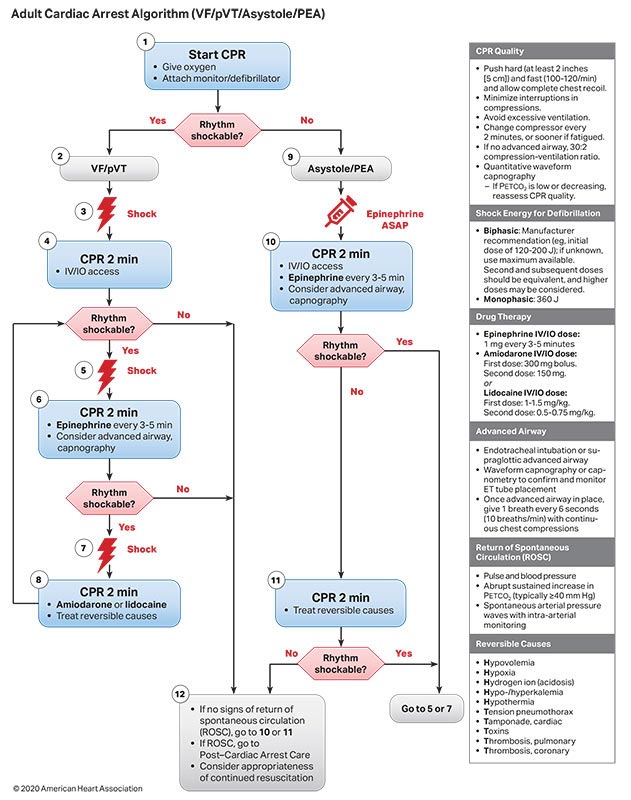
Which of the following best describes the correct administration of adrenaline for a shockable rhythm in adult advanced life support?
Your Answer: Give 1 mg of adrenaline after the second shock and every 3 - 5 minutes thereafter
Explanation:Give adrenaline 1 mg IV (IO) (10 mL of 1:10,000 solution) after the 2nd shock for adult patients in cardiac arrest with a shockable rhythm. Repeat adrenaline 1 mg IV (IO) every 3-5 minutes whilst ALS continues.
-
This question is part of the following fields:
- Cardiovascular
- Pharmacology
-
-
Question 5
Correct
-
A 30-year-old patient has a mild exacerbation of his asthma. His steroid inhaler ran out a couple of weeks ago, and he has not replaced it.
Which of these statements describes the mechanism of action of corticosteroids in asthma?
Your Answer: Reduction of bronchial inflammation
Explanation:Inhaled corticosteroids suppresses airway inflammation seen in asthma by downregulating pro-inflammatory proteins.
They also appear to reverse components of asthma-induced structural changes (airway remodelling), including increased vascularity of the bronchial wall.
Corticosteroids reduces the number of inflammatory cells (eosinophils, T lymphocytes, mast cells, and dendritic cells) in the airways. -
This question is part of the following fields:
- Pharmacology
- Respiratory Pharmacology
-
-
Question 6
Incorrect
-
All of the following statements are considered true regarding nominal variables, except:
Your Answer: They can be analyzed using the chi-squared test
Correct Answer: The central tendency of a nominal variable is given by its median
Explanation:A nominal variable is a type of variable that is used to name, label or categorize particular attributes that are being measured. It takes qualitative values representing different categories, and there is no intrinsic ordering of these categories.
A nominal variable is one of the 2 types of categorical variables and is the simplest among all the measurement variables. Some examples of nominal variables include gender, name, phone, etc.A nominal variable is qualitative, which means numbers are used here only to categorize or identify objects. They can also take quantitative values. However, these quantitative values do not have numeric properties. That is, arithmetic operations cannot be performed on them. If the variable is nominal, the mode is the only measure of central tendency to use.
-
This question is part of the following fields:
- Evidence Based Medicine
-
-
Question 7
Correct
-
A 20-year-old boy took almost 25 tablets of paracetamol almost 4 hours ago. The boy is healthy and has no known comorbid or drug history.
Out of the following metabolic pathways, which one is primarily responsible for the toxic effects of paracetamol?Your Answer: N-hydroxylation
Explanation:Paracetamol is predominantly metabolized in the liver by three main metabolic pathways:
1. Glucuronidation (45-55%)
2. Sulphate conjugation (30-35%)
3. N-hydroxylation via the hepatic cytochrome P450 enzyme system (10-15%)Cytochrome P450 enzymes catalyse the oxidation of acetaminophen to the reactive metabolite N-acetyl-p-benzoquinoneimine (NAPQI). NAPQI primarily contributes to the toxic effects of acetaminophen. NAPQI is an intermediate metabolite that is further metabolized by fast conjugation with glutathione. The conjugated metabolite is then excreted in the urine as mercapturic acid. High doses of acetaminophen (overdoses) can lead to hepatic necrosis due to depleting glutathione and high binding levels of reactive metabolite (NAPQI) to important parts of liver cells.
-
This question is part of the following fields:
- CNS Pharmacology
- Pharmacology
-
-
Question 8
Correct
-
When a child has chickenpox, how long should he or she be off from school?
Your Answer: Until all vesicles have crusted over
Explanation:To avoid the spread of infection, infected patients should be isolated. All lesions should be crusted over before children return to nursery or school, even if the standard exclusion time is 5 days.
-
This question is part of the following fields:
- Microbiology
- Pathogens
-
-
Question 9
Incorrect
-
Which of the following ions normally has the highest concentration in intracellular fluid:
Your Answer: Cl -
Correct Answer: K +
Explanation:Potassium (K+) is the principal intracellular ion; approximately 4 mmol/L is extracellular (3%) and 140 mmol/L intracellular (97%).
-
This question is part of the following fields:
- Basic Cellular
- Physiology
-
-
Question 10
Correct
-
Question 11
Incorrect
-
A 36-year-old woman is 22-weeks pregnant and is investigated for a possible thyroid disorder. When her total thyroid hormone levels does not correlate with her thyrometabolic status, her thyroid-binding globulin levels are checked.
What percentage of circulating thyroid hormones is bound to thyroid-binding globulin?Your Answer: 40%
Correct Answer: 70%
Explanation:Only a very small fraction of the thyroid hormones circulating in the blood are free. The majority is bound to transport proteins. Only the free thyroid hormones are biologically active, and measurement of total thyroid hormone levels can be misleading.
The relative percentages of bound and unbound thyroid hormones are:
Bound to thyroid-binding globulin -70%
Bound to albumin -15-20%
Bound to transthyretin -10-15%
Free T3 -0.3%
Free T4 -0.03% -
This question is part of the following fields:
- Endocrine Physiology
- Physiology
-
-
Question 12
Incorrect
-
The ventilation over perfusion ratio is highest at the apex of the lung. What is the approximate V/Q ratio at this area?
Your Answer: 1.2
Correct Answer: 3.3
Explanation:The ventilation/perfusion ratio (V/Q ratio) is a ratio used to assess the efficiency and adequacy of the matching ventilation and perfusion. The ideal V/Q ratio is 1.
Any mismatch between ventilation and perfusion will be evident in the V/Q ratio. If perfusion is normal but ventilation is reduced, the V/Q ratio will be less than 1, whereas if ventilation is normal, but perfusion is reduced, the V/Q ratio will be greater than 1.
If the alveoli were ventilated but not perfused at all, then the V/Q ratio would be infinity. The V/Q ratio is also affected by location. The various areas of the lungs have a different V/Q ratio since ventilation and perfusion increase from the apex to the base of the lungs. The apex of the lungs has a V/Q ratio of approximately 3.3.
-
This question is part of the following fields:
- Physiology
- Respiratory Physiology
-
-
Question 13
Incorrect
-
A 27-year-old man has been diagnosed with testicular cancer and has spread to the regional lymph nodes.
The lymph from the testes will drain to which of the following nodes?Your Answer: Superficial inguinal lymph nodes
Correct Answer: Para-aortic lymph nodes
Explanation:Testes are retroperitoneal organs and its lymphatic drainage is to the lumbar and para-aortic nodes along the lumbar vertebrae.
The scrotum is the one which drains into the nearby superficial inguinal nodes.
The glans penis and clitoris drains into the deep inguinal lymph nodes.
-
This question is part of the following fields:
- Abdomen And Pelvis
- Anatomy
-
-
Question 14
Incorrect
-
Capillaries are designed with a small diffusion distance for nutrition and gaseous exchange with the tissues they serve. Capillaries come in a variety of shapes and sizes, each with its own function in transcapillary exchange.
Which of the following types of capillaries is the least permeable in the human body?
Your Answer: Closed capillaries
Correct Answer: Continuous capillaries
Explanation:Capillaries are designed with a small diffusion distance for nutrition and gaseous exchange with the tissues they serve. Because oxygen and carbon dioxide are both highly soluble in lipids (lipophilic), they can easily diffuse along a concentration gradient across the endothelial lipid bilayer membrane. In contrast, glucose, electrolytes, and other polar, charged molecules are lipid-insoluble (hydrophilic). These chemicals are unable to pass through the lipid bilayer membrane directly and must instead travel through gaps between endothelial cells.
Capillaries are divided into three types: continuous, fenestrated, and sinusoidal. Each of these capillary types contains different sized gaps between the endothelial cells that operate as a filter, limiting which molecules and structures can pass through.The permeability of capillaries is affected by the wall continuity, which varies depending on the capillary type.
Skeletal muscle, myocardium, skin, lungs, and connective tissue all have continuous capillaries. These capillaries are the least permeable. They have a basement membrane and a continuous layer of endothelium. The presence of intercellular spaces allows water and hydrophilic molecules to pass across. Tight connections between the cells and the glycocalyx inhibit passage via these gaps, making diffusion 1000-10,000 times slower than for lipophilic compounds. The diffusion of molecules larger than 10,000 Da, such as plasma proteins, is likewise prevented by this narrow pore system. These big substances can pass through the capillary wall, but only very slowly, because endothelial cells have enormous holes.The kidneys, gut, and exocrine and endocrine glands all have fenestrated capillaries. These are specialized capillaries that allow fluid to be filtered quickly. Water, nutrients, and hormones can pass via windows or fenestrae in their endothelium, which are connected by a thin porous membrane. They are ten times more permeable than continuous capillaries due to the presence of these fenestrae. Fenestrated capillaries have a healthy basement membrane.
The spleen, liver, and bone marrow all have sinusoidal capillaries, also known as discontinuous capillaries. Their endothelium has huge gaps of >100 nm, and their basement membrane is inadequate. They are highly permeable as a result, allowing red blood cells to travel freely. -
This question is part of the following fields:
- Cardiovascular Physiology
- Physiology
-
-
Question 15
Incorrect
-
Which of the following is NOT a common side effect of diazepam:
Your Answer: Muscle weakness
Correct Answer: Bradycardia
Explanation:Adverse effects include:
Drowsiness and lightheadedness
Confusion and ataxia (especially in the elderly), amnesia, muscle weakness
Headache, vertigo, tremor, dysarthria, hypotension, decreased libido, erectile dysfunction, gynaecomastia, urinary retention
Paradoxical effects such as talkativeness, excitement, irritability, aggression, anti-social behaviour, and suicidal ideation
Withdrawal symptoms, for example anxiety, depression, anorexia, impaired concentration, insomnia, abdominal cramps, palpitations, tremor, tinnitus and perceptual disturbances
Tolerance and dependence (people who use benzodiazepines longer term can develop tolerance and eventual dependence) -
This question is part of the following fields:
- Anaesthesia
- Pharmacology
-
-
Question 16
Correct
-
You are asked to review the blood results on a 56-year-old man who appears to be acutely unwell. His results show that he is neutropenic.
Which ONE of the following is NOT a recognized cause of a neutropenia?Your Answer: Hyposplenism
Explanation:Neutropenia is defined as a total neutrophil count of < 2.0 x 10⁹/l.
It can be caused by:
Viral infections
Collagen disease e.g. SLE and RA
Chemotherapy and radiotherapy
Hypersplenism
Marrow infiltration
Vitamin and folate deficiency
Drug reactions
Drugs that cause neutropenia include flecainide, phenytoin, carbimazole, indomethacin and co-trimoxazole. -
This question is part of the following fields:
- Haematology
- Pathology
-
-
Question 17
Incorrect
-
An analytical study is conducted to compare the risk of stroke between Ticagrelor therapy and Warfarin therapy among patients with atrial fibrillation. The following is obtained from the study:
No. of patients who took Ticagrelor: 300
No. of patients who took Ticagrelor and suffered a stroke: 30
No. of patients who took Warfarin: 500
No. of patients who took Warfarin and suffered a stroke: 20
Compute for the risk ratio of a stroke.Your Answer: 0.4
Correct Answer: 2.5
Explanation:Relative risk (RR) is a ratio of the probability of an event occurring in the exposed group versus the probability of the event occurring in the non-exposed group.
RR can be computed as the absolute risk of events in the treatment group (ART), divided by the absolute risk of events in the control group (ARC).
RR = ART/ARC
RR = (30/300) / (20/500)
RR = 2.5Recall that:
If RR < 1, then the intervention reduces the risk of the outcome.
If RR = 1, then the treatment has no effect on the outcome.
If RR > 1, then the intervention increases the risk of the outcome. -
This question is part of the following fields:
- Evidence Based Medicine
-
-
Question 18
Correct
-
The pelvic bone is formed by which of the following:
Your Answer: Ilium, ischium and pubis
Explanation:Each pelvic bone is formed by three elements: the ilium (superiorly), the pubis (anteroinferiorly) and the ischium (posteroinferiorly).
-
This question is part of the following fields:
- Abdomen
- Anatomy
-
-
Question 19
Correct
-
Where on the body is the radial artery pulsation best palpated?
Your Answer: At the wrist just lateral to the flexor carpi radialis tendon
Explanation:The radial artery lies lateral to the large tendon of the flexor carpi radialis muscle and anterior to the pronator quadratus at the distal end of the radius. The flexor carpi radialis muscle is used as a landmark in locating the pulse.
-
This question is part of the following fields:
- Anatomy
- Upper Limb
-
-
Question 20
Correct
-
A patient is sent in by her GP with suspected ectopic pregnancy. Tubal ectopic pregnancies occur most commonly in which part of the uterine tube:
Your Answer: Ampulla
Explanation:Ectopic pregnancy most commonly occurs in the ampulla (70% of cases).
-
This question is part of the following fields:
- Abdomen
- Anatomy
-
-
Question 21
Incorrect
-
A 60-year-old female has a past medical history of diverticular disease. She now presents in the clinic with crampy abdominal pain. The nurse at the triage suggests prescribing hyoscine butyl bromide to help relieve the abdominal pain. However, after administering this treatment, the patient develops a side-effect to the medication.
What side-effect of using hyoscine butyl bromide is she MOST likely to develop out of the following?Your Answer: Diarrhoea
Correct Answer: Dry mouth
Explanation:Hyoscine butylbromide is an antispasmodic drug that blocks muscarinic receptors and reduces intestinal motility. It is used for gastrointestinal and genitourinary smooth muscle spasms and symptomatic relief of IBS.
It has the following side-effects:
1. Constipation
2. Dizziness
3. Drowsiness
4. Dry mouth
5. Dyspepsia
6. Flushing
7. Headache
8. Nausea and vomiting
9. Palpitations
10. Skin reactions
11. Tachycardia
12. Urinary disorders
13. Disorders of vision -
This question is part of the following fields:
- Gastrointestinal Pharmacology
- Pharmacology
-
-
Question 22
Correct
-
You proceed to administer lorazepam intravenously to a 21-year-old patient with status epilepticus. Which of the following best describes lorazepam's action?
Your Answer: Potentiates effect of GABA
Explanation:Lorazepam is a type of benzodiazepine.
Benzodiazepines are gamma-aminobutyric acid (GABA) receptor agonists with sedative, hypnotic, anxiolytic, anticonvulsant, and muscle relaxant characteristics that promote inhibitory synaptic transmission across the central nervous system.
-
This question is part of the following fields:
- Central Nervous System
- Pharmacology
-
-
Question 23
Correct
-
In the resus area of your Emergency Department, you are called to a VF cardiac arrest.
During an adult VF arrest, which of the following points should be treated with adrenaline?Your Answer: After the 3 rd shock, once chest compressions have been resumed
Explanation:In non-shockable (PEA/asystole) cardiac arrests, adrenaline should be given as soon as circulatory access is gained. The dose is 1 mg via IV or IO (10 mL of 1:10,000 or 1 mL of 1:1000).
Once chest compressions have been resumed after the third shock in a shockable (Vf/pVT) cardiac arrest, adrenaline should be administered. The dosage is one milligram (10 mL of 1:10,000 or 1 mL of 1:1000)
It should be given every 3-5 minutes after that (i.e. alternate loops) and without interrupting chest compressions.
Systemic vasoconstriction is caused by the alpha-adrenergic effects of adrenaline, which raises coronary and cerebral perfusion pressures.Adrenaline’s beta-adrenergic effects are inotropic (increased myocardial contractility) and chronotropic (increased heart rate), and they can increase coronary and cerebral blood flow. However, concomitant increases in myocardial oxygen consumption and ectopic ventricular arrhythmias (especially in the absence of acidaemia), transient hypoxemia due to pulmonary arteriovenous shunting, impaired microcirculation, and increased post-cardiac arrest myocardial dysfunction may offset these benefits.
Although there is no evidence of long-term benefit from its use in cardiac arrest, the improved short-term survival reported in some studies justifies its use.
-
This question is part of the following fields:
- Cardiovascular Pharmacology
- Pharmacology
-
-
Question 24
Incorrect
-
Regarding the lung roots, which of the following statements is CORRECT:
Your Answer: Each lung root contains two pulmonary arteries and a pulmonary vein.
Correct Answer: Generally the pulmonary arteries lie superior to the pulmonary veins in the lung root.
Explanation:Each lung root contains a pulmonary artery, two pulmonary veins, a main bronchus, bronchial vessels, nerves and lymphatics. Generally the pulmonary artery is superior in the lung root, the pulmonary veins are inferior and the bronchi are somewhat posterior in position. The vagus nerves pass posterior to the lung roots while the phrenic nerves pass anterior to them.
-
This question is part of the following fields:
- Anatomy
- Thorax
-
-
Question 25
Correct
-
Regarding the abductor digiti minimi, which of the following statements is false?
Your Answer: It assists with flexion of the fifth finger at the middle phalanx
Explanation:Abductor digiti minimi is a short intrinsic muscle of the hand. It belongs to the group of muscles collectively called hypothenar muscles due to their acting on the 5th finger. Besides abductor digiti minimi, other hypothenar muscles include flexor digiti minimi brevis and opponens digiti minimi.
The main function of abductor digiti minimi involves abduction of the 5th finger, as well as flexion of its proximal phalanx. Along with other hypothenar muscles, this muscle forms the hypothenar eminence on the medial side of the palm.
Like other hypothenar muscles, abductor digiti minimi receives nervous supply from the deep branch of the ulnar nerve, derived from root values C8 and T1.
Abductor digiti minimi receives arterial blood supply from the palmar branch of ulnar artery, palmar digital artery, as well as branches of the ulnar side of the superficial palmar arch. The venous blood from the muscle is drained via the venous networks of the palm into the deep veins of the arm (vv. ulnares).
-
This question is part of the following fields:
- Anatomy
- Upper Limb
-
-
Question 26
Correct
-
Which of the following is NOT a side effect of phenytoin:
Your Answer: Ototoxicity
Explanation:Adverse effects of phenytoin include:
Nausea and vomiting
Drowsiness, lethargy, and loss of concentration
Headache, dizziness, tremor, nystagmus and ataxia
Gum enlargement or overgrowth
Coarsening of facial features, acne and hirsutism
Skin rashes
Blood disorders -
This question is part of the following fields:
- Central Nervous System
- Pharmacology
-
-
Question 27
Correct
-
A 58-year-old male has cellulitis of his left leg. Because he is allergic to penicillin, you start him on erythromycin.
What is erythromycin's mechanism of action?Your Answer: Inhibition of protein synthesis
Explanation:Bacteriostatic antibiotics include erythromycin and other macrolide antibiotics. They work by attaching to the bacterial ribosome’s 50S subunit, preventing translocation and thereby protein synthesis. Macrolide antibiotics are actively concentrated inside leukocytes and delivered to the infection site as a result.
-
This question is part of the following fields:
- Infections
- Pharmacology
-
-
Question 28
Incorrect
-
Hartmann's solution contains how much sodium:
Your Answer: 126 mmol/L
Correct Answer: 131 mmol/L
Explanation:Hartmann’s solution (compound sodium lactate) contains: Na+131 mmol/L, K+5 mmol/L, HCO3-29 mmol/L (as lactate), Cl-111 mmol/L, Ca2+2 mmol/L. It can be used instead of isotonic sodium chloride solution during or after surgery, or in the initial management of the injured or wounded; it may reduce the risk of hyperchloraemic acidosis.
-
This question is part of the following fields:
- Fluids And Electrolytes
- Pharmacology
-
-
Question 29
Correct
-
Which of the following is most likely to cause a homonymous hemianopia:
Your Answer: Posterior cerebral artery stroke
Explanation:A posterior cerebral stroke will most likely result in a contralateral homonymous hemianopia with macular sparing.
-
This question is part of the following fields:
- Anatomy
- Central Nervous System
-
-
Question 30
Incorrect
-
Regarding cortical areas, which one is found in the posterior part of the inferior frontal gyrus?
Your Answer: Wernicke’s area
Correct Answer: Broca’s area
Explanation:Broca’s area is involved in the expressive aspects of spoken and written language (production of sentences constrained by the rules of grammar and syntax). It corresponds to the opercular and triangular parts of the inferior frontal gyrus (BA 44 and 45). These areas are defined by two rami (branches) of the lateral sulcus (one ascending, one horizontal) which ‘slice into’ the inferior frontal gyrus. In keeping with its role in speech and language, Broca’s area is immediately anterior to the motor and premotor representations of the face, tongue and larynx. A homologous area in the opposite hemisphere is involved in non-verbal communication such as facial expression, gesticulation and modulation of the rate, rhythm and intonation of speech.
-
This question is part of the following fields:
- Anatomy
- Central Nervous System
-
-
Question 31
Correct
-
A 19-year-old woman presents with dysuria and vaginal discharge. A swab was taken for culture. Culture results showed the presence of Neisseria gonorrhoeae infection. Treatment of azithromycin and doxycycline was started.
Which of the following statements is considered correct regarding Neisseria gonorrhoeae?Your Answer: Throat swabs can be used for diagnosis
Explanation:Neisseria gonorrhoeae is a Gram-negative diplococcus that causes gonorrhoea. Gonorrhoea is an acute pyogenic infection of nonciliated columnar and transitional epithelium; infection can be established at any site where these cells are found. Gonococcal infections are primarily acquired by sexual contact and occur primarily in the urethra, endocervix, anal canal, pharynx, and conjunctiva.
In men, acute urethritis, usually resulting in purulent discharge and dysuria (painful urination), is the most common manifestation. The endocervix is the most common site of infection in women. Symptoms of infection, when present, include dysuria, cervical discharge, and lower abdominal pain. Some cases in women may be asymptomatic leading to complications such as pelvic inflammatory disease. Blood-borne dissemination occurs in less than 1% of all infections, resulting in purulent arthritis and rarely septicaemia. Fever and a rash on the extremities can also be present. Other conditions associated with N. gonorrhoeae include anorectal and oropharyngeal infections. Infections in these sites are more common in men who have sex with men but can also occur in women.
Pharyngitis is the chief complaint in symptomatic oropharyngeal infections, whereas discharge, rectal pain, or bloody stools may be seen in rectal gonorrhoea. Approximately 30% to 60% of women with genital gonorrhoea have concurrent rectal infection. Newborns can acquire ophthalmia neonatorum, a gonococcal eye infection, during vaginal delivery through an infected birth canal.
Specimens collected for the recovery of N. gonorrhoeae may come from genital sources or from other sites, such as the rectum, pharynx, and joint
fluid. According to the 2010 STD Treatment guidelines, cephalosporins (e.g., ceftriaxone, cefixime) are currently recommended treatments. -
This question is part of the following fields:
- Microbiology
- Specific Pathogen Groups
-
-
Question 32
Incorrect
-
Which of the following is NOT a characteristic of megaloblastic anaemia?
Your Answer: Hypercellular bone marrow
Correct Answer: Raised reticulocyte count
Explanation:The LDH level is usually markedly increased in severe megaloblastic anaemia. Reticulocyte counts are inappropriately low, representing a lack of production of RBCs due to massive intramedullary haemolysis. These findings are characteristics of ineffective haematopoiesis that occurs in megaloblastic anaemia as well as in other disorders such as thalassemia major.
The common feature in megaloblastosis is a defect in DNA synthesis in rapidly dividing cells. To a lesser extent, RNA and protein synthesis are impaired. Unbalanced cell growth and impaired cell division occur since nuclear maturation is arrested. More mature RBC precursors are destroyed in the bone marrow prior to entering the bloodstream (intramedullary haemolysis). -
This question is part of the following fields:
- Haematology
- Pathology
-
-
Question 33
Incorrect
-
What type of visual field defect are you most likely to see in a lesion of the parietal optic radiation:
Your Answer: Bitemporal hemianopia
Correct Answer: Contralateral homonymous inferior quadrantanopia
Explanation:A lesion of the parietal optic radiation will result in a contralateral homonymous inferior quadrantanopia.
A lesion of the temporal optic radiation will result in a contralateral homonymous superior quadrantanopia. -
This question is part of the following fields:
- Anatomy
- Central Nervous System
-
-
Question 34
Incorrect
-
The patients listed below have had wounds or injuries and were treated as described in a local walk-in clinic.
Which of the following patients has had adequate tetanus protection?Your Answer: 28-year-old man from Poland, cuts leg whilst working in garden, wound heavily contaminated with soil, uncertain of vaccination history – receives vaccination
Correct Answer: 80-year-old diabetic, a rusty nail went through his shoe and into his foot when walking in the woods, uncertain of vaccination history - receives vaccination and immunoglobulin
Explanation:25-year-old receives immunoglobulin and vaccination after cutting her hand on a drinking glass and not knowing her vaccination history.
Because this is not a tetanus-prone wound, immunoglobulin is not recommended. Because you can’t be sure about her vaccination history, now is the best time to start a tetanus vaccination course to ensure coverage later in life. The first vaccination should be administered at the time of presentation; the patient’s own GP should then review the patient’s vaccination history and schedule the rest of the course as needed.
8-year-old whose hand was cut with a kitchen knife, received her first round of vaccinations as a baby and a booster at the age of four – receives vaccination:
The tetanus vaccinations for this child are up to date, and the next booster should not be given too soon. Immunoglobulin is not required because this is not a tetanus-prone wound.80-year-old diabetic, a rusty nail went through his shoe and into his foot while walking in the woods, and he was uncertain of his vaccination history – he received vaccination and immunoglobulin:
A tetanus vaccination course may not have been completed by an 80-year-old UK resident (the vaccination was introduced in 1961). The vaccination should be given at a walk-in clinic, and the patient’s own GP should be contacted to confirm vaccination history and to schedule the rest of the course as needed. Because this is a tetanus-prone wound (puncture wound and potential soil contact), immunoglobulin would be recommended in a patient with incomplete tetanus vaccinations.A 28-year-old Polish man cuts his leg while working in the garden, the wound is heavily contaminated with soil, and his vaccination history is unknown – he receives vaccination:
In a patient with an unknown vaccination history, this is a tetanus-prone wound. In this case, the best course of action would be to administer both the vaccination and immunoglobulin at the walk-in clinic, then contact the patient’s own GP to check his or her vaccination history and schedule the rest of the course as needed.30-year-old with a large amount of devitalized tissue in the torso from an electrical burn – has had all vaccinations, so no need for vaccination or immunoglobulin:
Because this is a high-risk tetanus wound (with a lot of devitalized tissue), even if the patient has had a full course of vaccinations in the past, immunoglobulin is recommended. There is no need for any additional vaccinations. -
This question is part of the following fields:
- Immunological Products & Vaccines
- Pharmacology
-
-
Question 35
Correct
-
A 65-year-old man comes for a visit at the clinic with complaints of abdominal pain. On inquiring about drug history, you find out that he has been taking around 8-10 paracetamol to help relieve the pain.
Out of the following, which one is believed to be the main mechanism of action for paracetamol?Your Answer: Selective inhibition of COX-3 receptors
Explanation:The FDA categorizes Paracetamol as an NSAID (nonsteroidal anti-inflammatory drug) as it is believed to selectively inhibit cyclo-oxygenase 3 (COX-3) receptors in the brain and spinal cord.
COX-3 is a unique variant of the more known COX-1 and COX-2. It is responsible for the production of prostaglandins in central areas, which sensitizes free nerve endings to the chemical mediators of pain. Therefore, by selectively inhibiting COX-3, paracetamol effectively reduces pain sensation by increasing the pain threshold.
Acetaminophen does not inhibit cyclooxygenase in peripheral tissues and, therefore, has no peripheral anti-inflammatory effects.
The antipyretic actions of acetaminophen are likely attributed to direct action on heat-regulating centres in the brain, resulting in peripheral vasodilation, sweating, and loss of body heat. -
This question is part of the following fields:
- CNS Pharmacology
- Pharmacology
-
-
Question 36
Correct
-
A 34-year-old woman was diagnosed with multiple sclerosis two years ago. Her symptoms have been steadily deteriorating, with no intervals of remission in sight.
Which of the following aspects of nerve conduction is disrupted by multiple sclerosis?
Your Answer: Saltatory conduction
Explanation:Local currents propagate action potentials down the axons of neurons. This local current flow following depolarisation results in the depolarisation of the neighbouring axonal membrane, and when this region approaches the threshold, more action potentials are generated and so forth. Due to the refractory period, portions of the membrane that have recently depolarized will not depolarize again, resulting in the action potential only being able to go in one direction.
The square root of axonal diameter determines the velocity of the action potential; the axons with the biggest diameter have the quickest conduction velocities. When a neuron is myelinated, the speed of the action potential rises as well.
The myelin sheath is an insulating coating that surrounds certain neural axons. By increasing membrane resistance and decreasing membrane capacitance, the myelin sheath improves conduction. This enables faster electrical signal transmission via a neuron, making them more energy-efficient than non-myelinated neuronal axons.
Electrical impulses are quickly transmitted from one node to the next, causing depolarization of the membrane above the threshold and triggering another action potential, which is then transmitted to the next node. An action potential is rapidly conducted down a neuron in this manner. Saltatory conduction is the term for this.
Multiple sclerosis is an example of a clinical disorder in which the myelin sheath is affected. It is an immune-mediated disorder in which certain nerve cells in the brain and spinal cord become demyelinated. The ability of some areas of the nervous system to properly transmit action potentials is disrupted by demyelination, resulting in a variety of neurological symptoms and indications. -
This question is part of the following fields:
- Basic Cellular Physiology
- Physiology
-
-
Question 37
Incorrect
-
The renin-angiotensin-aldosterone system (RAAS) controls blood pressure and fluid balance.
Which of the following sites produces the most angiotensinogen?Your Answer: The lungs
Correct Answer: The liver
Explanation:Angiotensinogen is an alpha-2-globulin generated predominantly by the liver and released into the blood. Renin, which cleaves the peptide link between the leucine and valine residues on angiotensinogen, converts it to angiotensin I.
Angiotensinogen levels in the blood are raised by:
Corticosteroid levels have risen.
Thyroid hormone levels have risen.
Oestrogen levels have risen.
Angiotensin II levels have risen. -
This question is part of the following fields:
- Physiology
- Renal Physiology
-
-
Question 38
Correct
-
A 20-year-old male who is a known patient of sickle cell disease presents to the Emergency Room with a sustained erection that is extremely painful.
Out of the following clinical syndromes, which one does this patient most likely have?Your Answer: Priapism
Explanation:Sickling of red blood cells can lead to several different clinical syndromes. If the sickling occurs in the corpora cavernosa, it can lead to a sustained, painful erection of the penis, referred to as priapism. One of the complications is long-term impotence. It is important to seek a urological opinion immediately in this case, but in the interim, treat with perineal ice packs and walk up and down the stairs.
-
This question is part of the following fields:
- Haematology
- Pathology
-
-
Question 39
Correct
-
Which one of these infectious diseases typically has an incubation period of between 1 and 3 weeks?
Your Answer: Chickenpox
Explanation:The incubation period for Chickenpox is 7-23 days (usually around 2 weeks).
Incubation period of botulism is 18-36 hours
Incubation period of Meningococcaemia is 1-7 days.
Incubation period of Gonorrhoea is 3-5 days.
Incubation period of Hepatitis A is 3-5 weeks.
Other infectious with an incubation period of between 1 and 3 weeks are:
Whooping cough (7-10 days)
Brucellosis (7-21 days)
Leptospirosis (7-12 days)
Malaria (7-40 days depending on strain)
Typhoid (8-21 days)
Measles (10-18 days)
Mumps (14-18 days)
Rubella (14-21 days) -
This question is part of the following fields:
- Microbiology
- Specific Pathogen Groups
-
-
Question 40
Incorrect
-
Which nerve supplies the muscle flexor hallucis longus?
Your Answer: Deep peroneal nerve
Correct Answer: Tibial nerve
Explanation:Flexor hallucis longus is innervated by the tibial nerve, composed of spinal roots L4, L5, S1, S2, and S3.
-
This question is part of the following fields:
- Anatomy
- Lower Limb
-
-
Question 41
Incorrect
-
Regarding box and whisker plots, which of the following statements is true?
Your Answer: They are used to display qualitative variables
Correct Answer: 25% of the values lie below the lower quartile
Explanation:A box and whisker plot is defined as a graphical method of displaying variation in a set of data. In most cases, a histogram analysis provides a sufficient display, but a box and whisker plot can provide additional detail while allowing multiple sets of data to be displayed in the same graph.
The procedure to develop a box and whisker plot comes from the five statistics below:
(1) Minimum value: The smallest value in the data set
(2) Second quartile: The value below which the lower 25% of the data are contained
(3) Median value: The middle number in a range of numbers
(4) Third quartile: The value above which the upper 25% of the data are contained
(5) Maximum value: The largest value in the data set
-
This question is part of the following fields:
- Evidence Based Medicine
-
-
Question 42
Correct
-
A thyroid function test is done for a 55-year-old woman with non-specific symptoms, the results are shown below:
TSH = 5.2
Free T4 is normal
Free T3 is normal
The most likely diagnosis in this patient is?
Your Answer: Subclinical hypothyroidism
Explanation:Hypothyroidism is diagnosed using the results of thyroid function tests (TFTs).
In the early stages of the disease, the earliest biochemical change noticed is a rise in thyroid-stimulating hormone (TSH) levels. Free triiodothyronine (T3) and thyroxine (T4) levels are usually normal.
In primary hypothyroidism, the serum TSH level is usually greater than 10 mU/L, and free T4 levels are below the reference range.
Subclinical hypothyroidism is diagnosed when the serum TSH level is above the reference range, and the free T4 levels are within the reference range. The test should, however, be repeated after 3-6 months to exclude transient causes of raised TSH.
In summary, how to interpret TFTs in cases of suspected hypothyroidism is shown below:
Subclinical hypothyroidism
TSH is raised
Free T4 is normal
Free T3 is normalPrimary hypothyroidism
TSH is raised
Free T4 is lowered
Free T3 is lowered or normalSecondary hypothyroidism
TSH is lowered or normal
Free T4 is lowered
Free T3 is lowered or normal -
This question is part of the following fields:
- Endocrine Physiology
- Physiology
-
-
Question 43
Correct
-
All of the following statements regarding metronidazole are correct except:
Your Answer: Metronidazole reduces the anticoagulant effect of warfarin.
Explanation:The anticoagulant effect of warfarin is enhanced by metronidazole. If use of both cannot be avoided, one must consider appropriately reducing the warfarin dosage. With alcohol, metronidazole can cause a disulfiram-like reaction, with symptoms like flushing, headaches, dizziness, tachypnoea and tachycardia, nausea and vomiting. The common side effects of metronidazole include a metallic taste and gastrointestinal irritation, in particular nausea and vomiting. These side effects are more common at higher doses. This drug has high activity against anaerobic bacteria and protozoa, and is well absorbed orally. For severe infections, the intravenous route is normally reserved.
-
This question is part of the following fields:
- Infections
- Pharmacology
-
-
Question 44
Correct
-
Atrial natriuretic peptide (ANP) is primarily produced in response to:
Your Answer: An increase in intravascular fluid volume
Explanation:Atrial natriuretic peptide (ANP) is released from cardiac atrial muscle cells in response to atrial stretch caused by an increase in intravascular fluid volume and is also produced in collecting duct cells.
Atrial natriuretic peptide acts to inhibit sodium reabsorption in the distal nephron. -
This question is part of the following fields:
- Physiology
- Renal
-
-
Question 45
Correct
-
Typically, granulomatous inflammation is associated with one of the following infections:
Your Answer: Tuberculosis
Explanation:Granulomatous inflammation is typically seen when an infective agent with a digestion-resistance capsule (e.g. Mycobacterium tuberculosis) or a piece of inert foreign material (such as suture or glass) is introduced into the tissue. A transient acute inflammatory response occurs and when this is ineffective in eradicating the stimulus, chronic inflammation occurs.
Tuberculosis is the prototype of the granulomatous diseases, but sarcoidosis, cat-scratch disease, lymphogranuloma inguinale, leprosy, brucellosis, syphilis, some mycotic infections, berylliosis, reactions of irritant lipids, and some autoimmune diseases are also included
-
This question is part of the following fields:
- Inflammatory Responses
- Pathology
-
-
Question 46
Incorrect
-
A 55 year old man presents to ED complaining of leg weakness. Your colleague has examined the patient and suspects femoral nerve palsy. Which of the following clinical features would you LEAST expect to see on examination of this patient:
Your Answer: Loss of sensation over medial leg and foot
Correct Answer: Weakness of hip extension
Explanation:Damage to the femoral nerve results in weakness of hip flexion and knee extension and loss of sensation over the anterior thigh and the anteromedial knee, medial leg and medial foot.
-
This question is part of the following fields:
- Anatomy
- Lower Limb
-
-
Question 47
Incorrect
-
Antispasmodic drugs are primarily indicated in which of the following conditions:
Your Answer: Inflammatory bowel disease
Correct Answer: Irritable bowel syndrome
Explanation:Antispasmodics, such as antimuscarinics, may be used in the management of irritable bowel syndrome. Other antispasmodics used include direct-acting smooth muscle relaxants such as mebeverine, alverine, and peppermint oil. Antispasmodics are contraindicated in bowel obstruction and severe inflammatory bowel disease. Antispasmodics are occasionally of value in treating abdominal cramp associated with diarrhoea but they should not be used for primary treatment. Antispasmodics should be avoided in young children with gastroenteritis because they are rarely effective and have troublesome side effects. Antimuscarinics are contraindicated in urinary retention.
-
This question is part of the following fields:
- Gastrointestinal
- Pharmacology
-
-
Question 48
Incorrect
-
Which anatomical structure is divided following an emergency department anterolateral thoracotomy?
Your Answer: Diaphragm
Correct Answer: Latissimus dorsi
Explanation:Thoracotomy describes an incision made in the chest wall to access the contents of the thoracic cavity. Thoracotomies typically can be divided into two categories; anterolateral thoracotomies and posterolateral thoracotomies. These can be further subdivided into supra-mammary and infra-mammary and, of course, further divided into the right or left chest. Each type of incision has its utility given certain circumstances.
A scalpel is used to sharply divide the skin along the inframammary crease overlying the fifth rib. Electrocautery is then used to divide the pectoralis major muscle and serratus anterior muscle. Visualization of the proper operative field can be achieved with the division and retraction of the latissimus dorsi. Either the fourth or fifth intercostal space is then entered after the division of intercostal muscles above the rib to ensure the preservation of the neurovascular bundle. Once the patient is properly secured to the operating table, the ipsilateral arm is raised and positioned anteriorly and cephalad to rest above the head. The incision is started along the inframammary crease and extended posterolaterally below the tip of the scapula. It is then extended superiorly between the spine and the edge of the scapula, a short distance. The trapezius muscle and the subcutaneous tissues are divided with electrocautery. The serratus anterior and latissimus dorsi muscles are identified and can be retracted. The intercostal muscles are then divided along the superior border of the ribs, and the thoracic cavity is accessed.
-
This question is part of the following fields:
- Anatomy
- Thorax
-
-
Question 49
Correct
-
Which of the following statements is correct with regards to heparin-induced thrombocytopaenia (HIT)?
Your Answer: HIT typically develops 5-10 days after starting heparin.
Explanation:Heparin-induced thrombocytopenia (HIT) is a prothrombotic disorder caused by antibodies that recognize complexes of platelet factor 4 (PF4) and heparin. HIT is frequently considered in the differential diagnosis of thrombocytopenia occurring in patients on heparin therapy. HIT is a challenging diagnosis because of routine heparin use in hospitalized patients, the common occurrence of thrombocytopenia. The process of heparin dependent IgG antibodies binding to heparin/platelet factor 4 complexes activates platelets and produces a hypercoagulable state. This syndrome typically develops 5-10 days (range 4-15 days) after heparin is commenced. It can occur with unfractionated heparin, low molecular weight heparin, or, rarely, fondaparinux. The diagnosis of HIT requires the combination of a compatible clinical picture and laboratory confirmation of the presence of heparin dependent platelet activating HIT antibodies. Discontinuation of heparin alone or initiation of a vitamin K antagonist alone like warfarin, is not sufficient to stop the development of thrombosis in patients with acute HIT. If there is moderate clinical suspicion for HIT, all sources of heparin must be discontinued and there must be consideration of anticoagulant treatment with a non-heparin drug.
-
This question is part of the following fields:
- Cardiovascular
- Pharmacology
-
-
Question 50
Correct
-
Bile acids are essential for the digestion and absorption of which of the following:
Your Answer: Lipids and fat-soluble vitamins
Explanation:Bile acids are synthesised from cholesterol by hepatocyte and excreted into bile. Bile acids are essential for lipid digestion and absorption. Of the bile acids excreted into the intestine, about 95% are reabsorbed into the portal circulation by active transport mechanisms in the distal ileum and recycled by the liver. Many of the bile salts are reabsorbed unaltered, some are converted by intestinal bacteria into secondary bile acids (deoxycholic acid and lithocholic acid) and then reabsorbed and a small proportion escapes reabsorption and is excreted in the faeces.
-
This question is part of the following fields:
- Gastrointestinal
- Physiology
-
SESSION STATS - PERFORMANCE PER SPECIALTY
