-
Question 1
Incorrect
-
The QRS duration of a broad-complex tachyarrhythmia is:
Your Answer: Greater than 0.12 s
Correct Answer: Greater than or equal to 0.12 s
Explanation:It’s a broad-complex tachycardia if the QRS duration is 0.12 seconds or more. It’s a narrow-complex tachycardia if the QRS complex is shorter than 0.12 seconds. The QRS duration should be examined if the patient with tachyarrhythmia is stable.
-
This question is part of the following fields:
- Cardiovascular
- Pharmacology
-
-
Question 2
Correct
-
Question 3
Correct
-
What is the mechanism of action of captopril:
Your Answer: Angiotensin-converting enzyme inhibitor
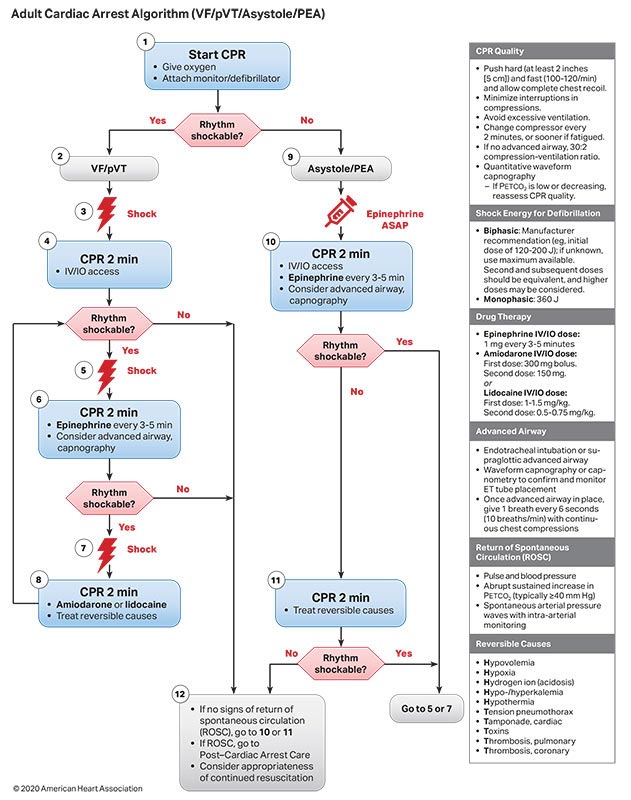
Explanation:Captopril is an angiotensin-converting enzyme (ACE) inhibitor, which inhibits the conversion of angiotensin I to angiotensin II.
-
This question is part of the following fields:
- Cardiovascular
- Pharmacology
-
-
Question 4
Correct
-
A 72 year old man is brought to ED by ambulance with sudden onset chest pain, palpitations and shortness of breath. His HR is 160 bpm and BP 90/65. ECG demonstrates new-onset fast atrial fibrillation. Which of the following is the first-line treatment option in this case:
Your Answer: Synchronised DC cardioversion
Explanation:All patients with adverse features suggesting life-threatening haemodynamic instability (shock, syncope, heart failure, myocardial ischaemia) caused by new onset atrial fibrillation should undergo emergency electrical cardioversion with synchronised DC shock without delaying to achieve anticoagulation.
-
This question is part of the following fields:
- Cardiovascular
- Pharmacology
-
-
Question 5
Incorrect
-
A 60-year-old patient had a sudden onset of palpitations and shortness of breath. He had a history of poorly controlled hypertension and ischemic heart disease. His ECG also shows atrial fibrillation. Based on the patient’s condition, which pharmacologic cardioversion would be best to use?
Your Answer: Adenosine
Correct Answer: Amiodarone
Explanation:Chemical cardioversion, or pharmacologic cardioversion, is the treatment of abnormal heart rhythms using drugs.
Flecainide and propafenone are examples of drugs used as chemical cardioverters.
However, given the situation of the patient, these drugs are contraindicated for his ischaemic heart disease. Amiodarone is also an antiarrhythmic drug and is the best choice for this situation.
-
This question is part of the following fields:
- Cardiovascular
- Pharmacology
-
-
Question 6
Correct
-
Nitric oxide release from endothelium is stimulated by all of the following EXCEPT for:
Your Answer: Noradrenaline
Explanation:Nitric oxide (NO) production by the endothelium is increased by factors that elevate intracellular Ca2+, including local mediators such as bradykinin, histamine and serotonin, and some neurotransmitters (e.g. substance P). Increased flow (shear stress) also stimulates NO production and additionally activates prostacyclin synthesis. The basal production of NO continuously modulates vascular resistance; increased production of nitric oxide acts to cause vasodilation. Nitric oxide also inhibits platelet activation and thrombosis.
-
This question is part of the following fields:
- Cardiovascular
- Physiology
-
-
Question 7
Incorrect
-
In the treatment of bradyarrhythmias with adverse characteristics or risk of asystole, what is the initial suggested dose of atropine?
Your Answer:
Correct Answer: 500 micrograms
Explanation:Atropine 500 mcg IV bolus should be administered if there are any adverse features or risk of asystole. If the reaction is not adequate, repeat the steps every 3 to 5 minutes up to a maximum dose of 3 mg. In the case of acute myocardial ischemia or myocardial infarction, atropine should be taken with caution since the increased heart rate may aggravate the ischemia or increase the size of the infarct.
-
This question is part of the following fields:
- Cardiovascular
- Pharmacology
-
-
Question 8
Incorrect
-
Which of the following is NOT a common side effect of amiodarone:
Your Answer:
Correct Answer: Blue/green teeth discolouration
Explanation:Common side effects of amiodarone include: Bradycardia, Nausea and vomiting, Thyroid disorders – hypothyroidism and hyperthyroidism, Persistent slate grey skin discoloration, Photosensitivity, Pulmonary toxicity (including pneumonitis and fibrosis), Hepatotoxicity, Corneal microdeposits (sometimes with night glare), Peripheral neuropathy and Sleep disorders.
-
This question is part of the following fields:
- Cardiovascular
- Pharmacology
-
-
Question 9
Incorrect
-
Regarding the heart sounds in the cardiac cycle, which of the following statements is INCORRECT:
Your Answer:
Correct Answer: The third heart sound is caused by filling of an abnormally stiff ventricle in atrial systole.
Explanation:Heart Sound – Phase of Cardiac Cycle – Mechanical Event:
First heart sound – Start of systole – Caused by closure of the atrioventricular (mitral & tricuspid) valves
Second heart sound – End of systole – Caused by closure of the semilunar (aortic and pulmonary) valves
Third heart sound – Early diastole – Caused by rapid flow of blood from the atria into the ventricles during the ventricular filling phase
Fourth heart sound – Late diastole – Caused by filling of an abnormally stiff ventricle in atrial systole -
This question is part of the following fields:
- Cardiovascular
- Physiology
-
-
Question 10
Incorrect
-
Myocardial contractility is best correlated with the intracellular concentration of:
Your Answer:
Correct Answer: Ca2+
Explanation:Contractility of myocardial cells depends on the intracellular [Ca2+], which is regulated by Ca2+entry across the cell membrane during the plateau of the action potential and by Ca2+uptake into and release from the sarcoplasmic reticulum (SR).
-
This question is part of the following fields:
- Cardiovascular
- Physiology
-
-
Question 11
Incorrect
-
In the ventricular myocyte action potential, depolarisation occurs through the opening of:
Your Answer:
Correct Answer: Voltage-gated Na + channels
Explanation:An action potential (AP) is initiated when the myocyte is depolarised to a threshold potential of about -65 mV, as a result of transmission from an adjacent myocyte via gap junctions. Fast voltage-gated Na+channels are activated and a Na+influx depolarises the membrane rapidly to about +30 mV. This initial depolarisation is similar to that in nerve and skeletal muscle, and assists the transmission to the next myocyte.
-
This question is part of the following fields:
- Cardiovascular
- Physiology
-
-
Question 12
Incorrect
-
Which of the following best describes digoxin:
Your Answer:
Correct Answer: A positive inotrope and negative chronotrope
Explanation:Digoxin is a cardiac glycoside used in the treatment of atrial fibrillation and flutter, and congestive cardiac failure. It acts by inhibiting the membrane Na/K ATPase in cardiac myocytes. This raises intracellular sodium concentration and increases intracellular calcium availability indirectly via Na/Ca exchange. The increase in intracellular calcium levels causes an increases the force of myocardial contraction (positive inotrope), and slows the heart rate (negative chronotrope).
-
This question is part of the following fields:
- Cardiovascular
- Pharmacology
-
-
Question 13
Incorrect
-
Which of the following is NOT a pharmacological effect of beta-blockers:
Your Answer:
Correct Answer: Reduced AV conduction time
Explanation:Effects of beta-blockers:
Cardiovascular system:
Reduce blood pressure
Reduce heart rate, contractility and cardiac output
Increase AV conduction time, refractoriness and suppress automaticityEye:
Reduce intraocular pressureRespiratory system:
Cause bronchoconstriction -
This question is part of the following fields:
- Cardiovascular
- Pharmacology
-
-
Question 14
Incorrect
-
Which of the following does NOT predispose to digoxin toxicity in a patient taking digoxin:
Your Answer:
Correct Answer: Hyponatraemia
Explanation:Hypoxia, hypercalcaemia, hypokalaemia and hypomagnesaemia predispose to digoxin toxicity. Care should also be taken in the elderly who are particularly susceptible to digoxin toxicity. Hypokalaemia may be precipitated by use of diuretics. Although hyponatremia can result in the development of other pathological disturbances, it does not potentiate digoxin toxicity.
-
This question is part of the following fields:
- Cardiovascular
- Pharmacology
-
-
Question 15
Incorrect
-
What is the recommended dosing regime for amiodarone in the treatment of a stable regular broad-complex tachycardia:
Your Answer:
Correct Answer: 300 mg IV over 10 - 60 minutes, followed by an IV infusion of 900 mg over the next 24 hours
Explanation:A ventricular tachycardia (or broad-complex tachycardia of uncertain origin) should be treated with amiodarone 300 mg IV over 10 – 60 min, followed by an infusion of 900 mg over the next 24 hours.
-
This question is part of the following fields:
- Cardiovascular
- Pharmacology
-
-
Question 16
Incorrect
-
Which of the following is the primary indication for loop diuretics?
Your Answer:
Correct Answer: Acute pulmonary oedema
Explanation:Loop diuretics have long been the cornerstone of pulmonary oedema treatment, with furosemide being the most commonly used of these drugs. Premedication with drugs that decrease preload (e.g., nitro-glycerine [NTG]) and afterload (e.g., angiotensin-converting enzyme [ACE] inhibitors) before the administration of loop diuretics can prevent adverse hemodynamic changes.
-
This question is part of the following fields:
- Cardiovascular
- Pharmacology
-
-
Question 17
Incorrect
-
All of the following are indications for beta-blockers EXCEPT for:
Your Answer:
Correct Answer: Prinzmetal's angina
Explanation:Beta-blockers are contraindicated in Prinzmetal’s angina.Beta-blockers may be indicated in:HypertensionPheochromocytoma (only with an alpha-blocker)AnginaSecondary prevention after ACSArrhythmias including atrial fibrillationHeart failureThyrotoxicosisAnxietyProphylaxis of migraineEssential tremorGlaucoma
-
This question is part of the following fields:
- Cardiovascular
- Pharmacology
-
-
Question 18
Incorrect
-
Cardiac myocytes are connected to each other by which of the following:
Your Answer:
Correct Answer: Intercalated discs
Explanation:Adjacent cardiac myocytes are connected to each other by intercalated discs. The intercalated discs provide both a structural attachment by ‘glueing’ cells together at desmosomes and an electrical contact made up of proteins called connexons, called a gap junction, which essentially creates a low-resistance pathway between cells.
-
This question is part of the following fields:
- Cardiovascular
- Physiology
-
-
Question 19
Incorrect
-
What is the primary mode of action of Enoxaparin?
Your Answer:
Correct Answer: Inhibits factor Xa
Explanation:Heparin acts as an anticoagulant by enhancing the inhibition rate of clotting proteases by antithrombin III impairing normal haemostasis and inhibition of factor Xa. Low molecular weight heparins have a small effect on the activated partial thromboplastin time and strongly inhibit factor Xa. Enoxaparin is derived from porcine heparin that undergoes benzylation followed by alkaline depolymerization.
-
This question is part of the following fields:
- Cardiovascular
- Pharmacology
-
-
Question 20
Incorrect
-
Regarding postural hypotension, which of the following statements is INCORRECT:
Your Answer:
Correct Answer: Postural hypotension usually causes a reflex bradycardia.
Explanation:On standing from a prone position, gravity causes blood to pool in veins in the legs. Central venous pressure (CVP) falls, causing a fall in stroke volume and cardiac output (due to Starling’s law) and thus a fall in blood pressure. Normally this fall in BP is rapidly corrected by the baroreceptor reflex which causes venoconstriction (partially restoring CVP), and an increase in heart rate and contractility, so restoring cardiac output and blood pressure. Impaired autonomic nervous activity in the elderly accounts for the greater likelihood of postural hypotension. Any symptoms of dizziness, blurred vision or syncope is due to a transient fall in cerebral perfusion that occurs before cardiac output and mean arterial pressure (MAP) can be corrected.
-
This question is part of the following fields:
- Cardiovascular
- Physiology
-
-
Question 21
Incorrect
-
A 40-year-old man who has a history of asthma arrives at the emergency department complaining of palpitations that have been going on for 5 days. Which of the following beta-blockers is the safest for an asthmatic patient?
Your Answer:
Correct Answer: Atenolol
Explanation:Atenolol is a beta blocker, which is a type of medication that works by preventing certain natural substances in the body, such as epinephrine, from acting on the heart and blood vessels.
This effect reduces heart rate, blood pressure, and cardiac strain. Atenolol, bisoprolol fumarate, metoprolol tartrate, nebivolol, and (to a lesser extent) acebutolol have a lower action on beta2 (bronchial) receptors and are thus cardio selective but not cardiac specific.
They have a lower effect on airway resistance, although they are not without this adverse effect.
-
This question is part of the following fields:
- Cardiovascular
- Pharmacology
-
-
Question 22
Incorrect
-
Which of the following best describes the correct administration of adrenaline for a shockable rhythm in adult advanced life support?
Your Answer:
Correct Answer: Give 1 mg of adrenaline after the second shock and every 3 - 5 minutes thereafter
Explanation:Give adrenaline 1 mg IV (IO) (10 mL of 1:10,000 solution) after the 2nd shock for adult patients in cardiac arrest with a shockable rhythm. Repeat adrenaline 1 mg IV (IO) every 3-5 minutes whilst ALS continues.
-
This question is part of the following fields:
- Cardiovascular
- Pharmacology
-
-
Question 23
Incorrect
-
ACE inhibitors are indicated for all of the following EXCEPT for:
Your Answer:
Correct Answer: Angina
Explanation:ACE inhibitors have many uses and are generally well tolerated. They are indicated for:
- Heart failure
- Hypertension
- Diabetic nephropathy
- Secondary prevention of cardiovascular events
-
This question is part of the following fields:
- Cardiovascular
- Pharmacology
-
-
Question 24
Incorrect
-
By which of the following is mean arterial pressure (MAP) primarily determined?
Your Answer:
Correct Answer: Total peripheral resistance and cardiac output
Explanation:Mean arterial pressure (MAP) = Cardiac output (CO) x Total peripheral resistance (TPR).
Cardiac output is dependent on the central venous pressure (CVP). CVP, in turn, is highly dependent on the blood volume.
Any alterations of any of these variables will likely change MAP. -
This question is part of the following fields:
- Cardiovascular
- Physiology
-
-
Question 25
Incorrect
-
Which of the following is most true of the sinoatrial node:
Your Answer:
Correct Answer: Frequency of depolarisation is increased by sympathetic stimulation.
Explanation:Cardiac myocyte contraction is not dependent on an external nerve supply but instead the heart generates its own rhythm, demonstrating inherent rhythmicity. The heartbeat is initiated by spontaneous depolarisation of the sinoatrial node (SAN), a region of specialised myocytes in the right atrium close to the coronary sinus, at a rate of 100-110 beats/min. This intrinsic rhythm is primarily influenced by autonomic nerves, with vagal influences being dominant over sympathetic influences at rest. This vagal tone reduces the resting heart rate down to 60-80 beats/min. To increase heart rate, the autonomic nervous system increases sympathetic outflow to the SAN, with concurrent inhibition of vagal tone. These changes mean the pacemaker potential more rapidly reaches the threshold for action potential generation.
-
This question is part of the following fields:
- Cardiovascular
- Physiology
-
-
Question 26
Incorrect
-
A patient who was put on low molecular weight heparin for suspected DVT and was scheduled for an ultrasound after the weekend, arrives at the emergency department with significant hematemesis. Which of the following medications can be used as a heparin reversal agent:
Your Answer:
Correct Answer: Protamine sulfate
Explanation:The management of bleeding in a patient receiving heparin depends upon the location and severity of bleeding, the underlying thromboembolic risk, and the current aPTT (for heparin) or anti-factor Xa activity (for LMW heparin). As an example, a patient with minor skin bleeding in the setting of a mechanical heart valve (high thromboembolic risk) and a therapeutic aPTT may continue heparin therapy, whereas a patient with major intracerebral bleeding in the setting of venous thromboembolism several months prior who is receiving heparin bridging perioperatively may require immediate heparin discontinuation and reversal with protamine sulphate. If haemorrhage occurs it is usually sufficient to withdraw unfractionated or low molecular weight heparin, but if rapid reversal of the effects of the heparin is required, protamine sulphate is a specific antidote (but only partially reverses the effects of low molecular weight heparins). Clinician judgment and early involvement of the appropriate consulting specialists is advised.
-
This question is part of the following fields:
- Cardiovascular
- Pharmacology
-
-
Question 27
Incorrect
-
Regarding the cardiac cycle, which of the following statements is INCORRECT:
Your Answer:
Correct Answer: The second heart sound occurs in late diastole caused by closure of the atrioventricular valves.
Explanation:Diastole is usually twice the length of systole at rest, but decreases with increased heart rate. During systole, contraction of the ventricles compresses the coronary arteries and suppresses blood flow. This is particularly evident in the left ventricle, where during systole the ventricular pressure is the same as or greater than that in the arteries and as a result more than 85% of left ventricular perfusion occurs during diastole. This becomes a problem if the heart rate is increased as the diastolic interval is shorter and can result in ischaemia. The second heart sound, caused by closure of the semilunar valves, marks the end of systole.
-
This question is part of the following fields:
- Cardiovascular
- Physiology
-
-
Question 28
Incorrect
-
A patient has a cardiac output of 4.8 L/min and a heart rate of 80 bpm, therefore their stroke volume is:
Your Answer:
Correct Answer: 60 mL
Explanation:Cardiac output (CO) = Stroke volume (SV) x Heart rate (HR).
Therefore SV = CO/HR
= 4.8/80
= 0.06 L = 60 mL. -
This question is part of the following fields:
- Cardiovascular
- Physiology
-
-
Question 29
Incorrect
-
Which of the following drug classes may cause bronchoconstriction:
Your Answer:
Correct Answer: Beta-blockers
Explanation:Beta-blockers, including those considered to be cardioselective, should usually be avoided in patients with a history of asthma, bronchospasm or a history of obstructive airways disease. However, when there is no alternative, a cardioselective beta-blocker can be given to these patients with caution and under specialist supervision. In such cases the risk of inducing bronchospasm should be appreciated and appropriate precautions taken.
-
This question is part of the following fields:
- Cardiovascular
- Pharmacology
-
-
Question 30
Incorrect
-
Regarding calcium channel blockers, which of the following statements is CORRECT:
Your Answer:
Correct Answer: Calcium channel blockers inhibit L-type voltage-sensitive calcium channels in arterial smooth muscle causing vasodilation.
Explanation:Calcium channel blockers inhibit L-type voltage-sensitive calcium channels in arterial smooth muscle, causing relaxation and vasodilation (reduction in peripheral vascular resistance). They also block calcium channels within the myocardium and conducting tissues of the heart which produces a negative inotropic effect by reducing calcium influx during the plateau phase of the action potential.
They have a variety of uses, including:
Hypertension
Angina
Atrial fibrillation
Migraine
Calcium channel blockers have been found to be moderately useful in the prevention of migraines. The best evidence is for this is with verapamil. This may be due to the prevention of the arteriolar constriction that is associated with migraine. They are commonly used for this elsewhere in the world but are not currently licensed for this use in the UK.
The following are common side effects of all calcium-channel blockers:
Abdominal pain
Dizziness
Drowsiness
Flushing
Headache
Nausea and vomiting
Palpitations
Peripheral oedema
Skin reactions
Tachycardia
Verapamil is highly negatively inotropic and reduces cardiac output, slows the heart rate and may impair atrioventricular conduction. It may precipitate heart failure, exacerbate conduction disorders, and cause hypotension at high doses and should not be used with beta-blockers. Nifedipine has less myocardial effects than verapamil and has no antiarrhythmic properties but has more influence on the vessels. Nimodipine is used solely for the prevention and treatment of vascular spasm following aneurysmal subarachnoid haemorrhage. -
This question is part of the following fields:
- Cardiovascular
- Pharmacology
-
SESSION STATS - PERFORMANCE PER SPECIALTY
