-
Question 1
Incorrect
-
Which of the following statements is correct regarding the lymphatic system?
Your Answer: The lymphatic system is also important for absorption and transport of carbohydrate.
Correct Answer: Lymphatic vessels contain both smooth muscle and unidirectional valves.
Explanation:Fluid filtration out of the capillaries is usually slightly greater than fluid absorption into the capillaries. About 8 L of fluid per day is filtered by the microcirculation and returns to the circulation by the lymphatic system. Lymphatic capillaries drain into collecting lymphatics, then into larger lymphatic vessels. Both of these containing smooth muscle and unidirectional valves. From this point, lymph is propelled by smooth muscle constriction and vessel compression by body movements into afferent lymphatics. It then goes to the lymph nodes where phagocytes remove bacteria and foreign materials. It is here that most fluid is reabsorbed by capillaries, and the remainder returns to the subclavian veins via efferent lymphatics and the thoracic duct. The lymphatic system has a major role to play in the body’s immune defence and also has a very important role in the absorption and transportation of fats.
-
This question is part of the following fields:
- Cardiovascular
- Physiology
-
-
Question 2
Correct
-
Which of the following is NOT a typical electrolyte disturbance caused by furosemide:
Your Answer: Hypercalcaemia
Explanation:Adverse effects of loop diuretics include:
Mild gastrointestinal disturbances, pancreatitis and hepatic encephalopathy
Hyperglycaemia
Acute urinary retention
Water and electrolyte imbalance
Hyponatraemia, hypocalcaemia, hypokalaemia, hypomagnesaemia, hypochloraemiaHypotension, hypovolaemia, dehydration, and venous thromboembolism
Metabolic alkalosis
Hyperuricaemia
Blood disorders (bone marrow suppression, thrombocytopenia, and leucopenia)
Visual disturbance, tinnitus and deafness
Hypersensitivity reactions -
This question is part of the following fields:
- Cardiovascular
- Pharmacology
-
-
Question 3
Correct
-
A patient has a cardiac output of 4.8 L/min and a heart rate of 80 bpm, therefore their stroke volume is:
Your Answer: 60 mL
Explanation:Cardiac output (CO) = Stroke volume (SV) x Heart rate (HR).
Therefore SV = CO/HR
= 4.8/80
= 0.06 L = 60 mL. -
This question is part of the following fields:
- Cardiovascular
- Physiology
-
-
Question 4
Correct
-
In adult basic life support, chest compressions should be performed at which of the following rates:
Your Answer: 100 - 120 per minute
Explanation:Chest compressions should be performed at a rate of 100 – 120 per minute.
-
This question is part of the following fields:
- Cardiovascular
- Pharmacology
-
-
Question 5
Incorrect
-
What is the direct mechanism of action of digoxin as a positive inotrope:
Your Answer: Inhibition of Na+/Ca2+ exchanger
Correct Answer: Inhibition of Na+/K+ ATPase pump
Explanation:Digoxin directly inhibits membrane Na+/K+ ATPase, which is responsible for Na+/K+ exchange across the myocyte cell membrane. This increases intracellular Na+ and produces a secondary increase in intracellular Ca2+ that increases the force of myocardial contraction. The increase in intracellular Ca2+ occurs because the decreased Na+ gradient across the membrane reduces the extrusion of Ca2+ by the Na+/Ca2+ exchanger that normally occurs during diastole. Digoxin and K+ ions compete for the receptor on the outside of the muscle cell membrane, and so the effects of digoxin may be dangerously increased in hypokalaemia.
-
This question is part of the following fields:
- Cardiovascular
- Pharmacology
-
-
Question 6
Incorrect
-
Which of the following best characterizes the correct administration of amiodarone for a shockable rhythm in adults on advanced life support:
Your Answer: Give 300 mg IV amiodarone after the first shock
Correct Answer: Give 300 mg IV amiodarone after 3 shocks
Explanation:After three shocks, 300 mg IV amiodarone should be administered. After five defibrillation attempts, a further dose of 150 mg IV amiodarone may be considered. If amiodarone is not available, lidocaine may be used as a substitute, but it should not be given if amiodarone has previously been administered.
-
This question is part of the following fields:
- Cardiovascular
- Pharmacology
-
-
Question 7
Correct
-
The mechanism of action of abciximab is by:
Your Answer: Blocking the binding of fibrinogen to GPIIb/IIIa receptor sites
Explanation:Abciximab is a glycoprotein IIb/IIIa inhibitors and prevents platelet aggregation by blocking the binding of fibrinogen to receptors on platelets.
-
This question is part of the following fields:
- Cardiovascular
- Pharmacology
-
-
Question 8
Incorrect
-
Regarding alteplase, which of the following statements is INCORRECT:
Your Answer: Alteplase has a half-life of about 3 - 4 minutes.
Correct Answer: Alteplase is commonly associated with hypotensive effects.
Explanation:Alteplase is a recombinant tissue-type plasminogen activator (tPA), a naturally occurring fibrin-specific enzyme that has selectivity for activation of fibrin-bound plasminogen. It has a short half-life of 3 – 4 minutes and must be given by continuous intravenous infusion but is not associated with antigenic or hypotensive effects, and can be used in patients when recent streptococcal infections or recent use of streptokinase contraindicates the use of streptokinase.
-
This question is part of the following fields:
- Cardiovascular
- Pharmacology
-
-
Question 9
Incorrect
-
Mannitol is primarily indicated for which of the following:
Your Answer: Ascites secondary to liver cirrhosis
Correct Answer: Cerebral oedema
Explanation:Mannitol is an osmotic diuretic that can be used to treat cerebral oedema and raised intraocular pressure. Mannitol is a low molecular weight compound and is, therefore, freely filtered at the glomerulus and is not reabsorbed. It, therefore, increases the osmolality of the glomerular filtrate and tubular fluid, increasing urinary volume by an osmotic effect. It also does not cross the blood-brain-barrier (BBB).
-
This question is part of the following fields:
- Cardiovascular
- Pharmacology
-
-
Question 10
Incorrect
-
Which of the following best describes the correct administration of adrenaline for a shockable rhythm in adult advanced life support?
Your Answer: Give 0.5 mg of adrenaline as soon as intravenous access is achieved and every 3 - 5 minutes thereafter
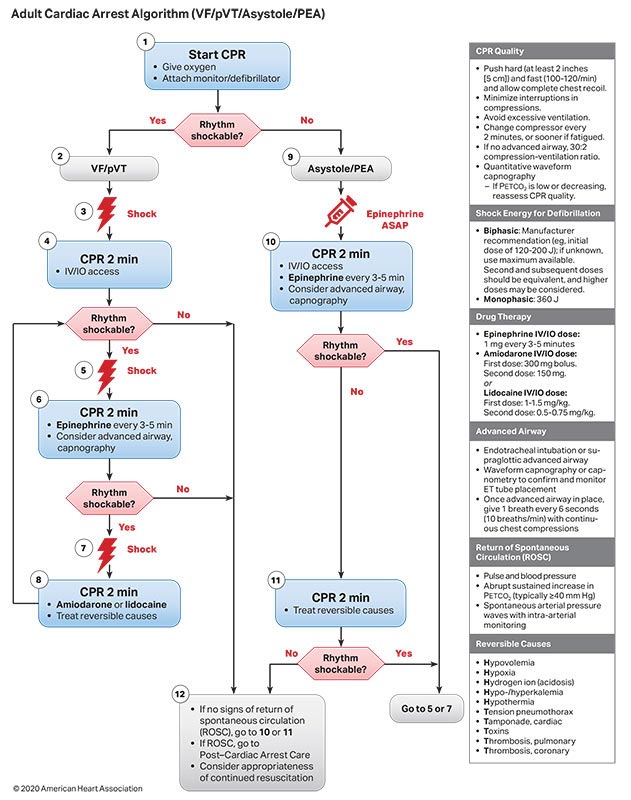
Correct Answer: Give 1 mg of adrenaline after the second shock and every 3 - 5 minutes thereafter
Explanation:Give adrenaline 1 mg IV (IO) (10 mL of 1:10,000 solution) after the 2nd shock for adult patients in cardiac arrest with a shockable rhythm. Repeat adrenaline 1 mg IV (IO) every 3-5 minutes whilst ALS continues.
-
This question is part of the following fields:
- Cardiovascular
- Pharmacology
-
-
Question 11
Incorrect
-
Captopril should not be used if you have any of the following conditions:
Your Answer: Prostatic hypertrophy
Correct Answer: Renal artery stenosis
Explanation:Contraindications indications of Captopril include:
– Bilateral renal artery stenosis
– Hypersensitivity to ACE inhibitors
– Anuria
– History of ACEI-induced angioedema
– Hereditary or idiopathic angioedema
– Co-administration of Neprilysin inhibitors (e.g., sacubitril) with ACE inhibitors may increase angioedema risk; do not administer ACE inhibitors within 36 hours of switching to or from sacubitril/valsartan.
If ACE inhibitors are used, they should be initiated only under specialist supervision and renal function should be monitored regularly. ACE inhibitors should also be used with particular caution in patients who may have undiagnosed and clinically silent renovascular disease. This includes patients with peripheral vascular disease or those with severe generalised atherosclerosis. -
This question is part of the following fields:
- Cardiovascular
- Pharmacology
-
-
Question 12
Incorrect
-
Which of the following is NOT an adverse effect associated with warfarin therapy:
Your Answer: Calciphylaxis
Correct Answer: Neutropenia
Explanation:Adverse effects of warfarin:
The most common adverse effect of warfarin is bleedingOther common adverse effects of warfarin include nausea, vomiting, diarrhoea, jaundice, hepatic dysfunction, pancreatitis, pyrexia, alopecia, purpura, and rash
Skin necrosis is a rare but serious adverse effect of warfarin; treatment with warfarin should be stopped if warfarin related skin necrosis is suspected
Calciphylaxis is a rare, but a very serious condition that causes vascular calcification and cutaneous necrosis
-
This question is part of the following fields:
- Cardiovascular
- Pharmacology
-
-
Question 13
Incorrect
-
Which of the following causes the first heart sound?
Your Answer: Opening of the atrioventricular valves
Correct Answer: Closing of the atrioventricular valves
Explanation:The heart sounds are as a result of the various parts of the cardiac cycle.
Heart Sound – Phase of Cardiac Cycle – Mechanical Event:
1st heart sound – Systole starts – there is closure of the atrioventricular (mitral & tricuspid) valves
2nd heart sound – Systole ends – there is closure of the semilunar (aortic and pulmonary) valves
3rd heart sound – Early diastole – this is caused by rapid flow of blood from the atria into the ventricles during the ventricular filling phase
4th heart sound – Late diastole – this is caused by filling of an abnormally stiff ventricle in atrial systole -
This question is part of the following fields:
- Cardiovascular
- Physiology
-
-
Question 14
Incorrect
-
Digoxin is contraindicated in all of the following EXCEPT for:
Your Answer: Wolff-Parkinson-White syndrome
Correct Answer: Asthma
Explanation:Digoxin is contraindicated in:Supraventricular arrhythmias associated with accessory conduction pathways e.g. Wolff-Parkinson-White syndromeVentricular tachycardia or fibrillationHeart conduction problems e.g. second degree or intermittent complete heart blockHypertrophic cardiomyopathy (unless concomitant atrial fibrillation and heart failure but should be used with caution)
-
This question is part of the following fields:
- Cardiovascular
- Pharmacology
-
-
Question 15
Incorrect
-
Oedema can occur as a result of any of the following WITH THE EXCEPTION OF:
Your Answer: Lymphatic obstruction
Correct Answer: Increased interstitial hydrostatic pressure
Explanation:Oedema is defined as a palpable swelling produced by the expansion of the interstitial fluid volume. A variety of clinical conditions are associated with the development of oedema, including heart failure, cirrhosis, and nephrotic syndrome. The development of oedema requires an alteration in capillary dynamics in a direction that favours an increase in net filtration and also inadequate removal of the additional filtered fluid by lymphatic drainage. Oedema may form in response to an elevation in capillary hydraulic pressure (which increases the delta hydraulic pressure) or increased capillary permeability, or it can be due to disruption of the endothelial glycocalyx, decreased interstitial compliance, a lower plasma oncotic pressure (which reduces the delta oncotic pressure), or a combination of these changes. Oedema can also be induced by lymphatic obstruction since the fluid that is normally filtered is not returned to the systemic circulation.
-
This question is part of the following fields:
- Cardiovascular
- Physiology
-
-
Question 16
Correct
-
Which of the following is NOT a common side effect of amiodarone:
Your Answer: Blue/green teeth discolouration
Explanation:Common side effects of amiodarone include: Bradycardia, Nausea and vomiting, Thyroid disorders – hypothyroidism and hyperthyroidism, Persistent slate grey skin discoloration, Photosensitivity, Pulmonary toxicity (including pneumonitis and fibrosis), Hepatotoxicity, Corneal microdeposits (sometimes with night glare), Peripheral neuropathy and Sleep disorders.
-
This question is part of the following fields:
- Cardiovascular
- Pharmacology
-
-
Question 17
Correct
-
The Frank-Starling curve is shifted downhill in heart failure due to which of the following?
Your Answer: Decrease in contractility
Explanation:The Frank–Starling mechanism states that the left ventricle can increase its force of contraction and hence stroke volume in response to increases in venous return and thus preload.
Changes in afterload or inotropy cause the Frank–Starling curve to rise or fall. In heart failure, the Frank–Starling curve is shifted downward (flattened), requiring higher venous return and filling pressure to enhance contractility and stroke volume.
-
This question is part of the following fields:
- Cardiovascular
- Physiology
-
-
Question 18
Incorrect
-
All of the following are indications for beta-blockers EXCEPT for:
Your Answer: Thyrotoxicosis
Correct Answer: Prinzmetal's angina
Explanation:Beta-blockers are contraindicated in Prinzmetal’s angina.Beta-blockers may be indicated in:HypertensionPheochromocytoma (only with an alpha-blocker)AnginaSecondary prevention after ACSArrhythmias including atrial fibrillationHeart failureThyrotoxicosisAnxietyProphylaxis of migraineEssential tremorGlaucoma
-
This question is part of the following fields:
- Cardiovascular
- Pharmacology
-
-
Question 19
Incorrect
-
What is nimodipine used predominantly in the treatment of?
Your Answer: Hypertensive emergencies
Correct Answer: Prevention and treatment of vascular spasm following subarachnoid haemorrhage
Explanation:Nimodipine is a smooth muscle relaxant that is related to nifedipine, but the effects preferentially act on cerebral arteries. It is exclusively used for the prevention and treatment of vascular spasm after an aneurysmal subarachnoid haemorrhage.
-
This question is part of the following fields:
- Cardiovascular
- Pharmacology
-
-
Question 20
Incorrect
-
All of the following statement are correct regarding endothelium derived nitric oxide except:
Your Answer: Increased blood flow stimulates NO production.
Correct Answer: Nitric oxide production is inhibited by local mediators such as bradykinin, histamine and serotonin.
Explanation:Factors that elevate intracellular Ca2+ increase nitric oxide (NO) production by the endothelium included local mediators such as histamine and serotonin, bradykinin, and some neurotransmitters like substance P. NO production is also stimulated by increased flow (shear stress) and additionally activates prostacyclin synthesis. As a result of basal production of NO, there is continuous modulation of vascular resistance and as a result, there is increased production of nitric oxide acts which causes vasodilation. Platelet activation and thrombosis are inhibited by nitric oxide.
-
This question is part of the following fields:
- Cardiovascular
- Physiology
-
-
Question 21
Correct
-
All of the following are indications for beta-blockers EXCEPT for:
Your Answer: Raynaud's disease
Explanation:Beta-blockers are contraindicated in Raynaud’s syndrome.
Beta-blockers may be indicated in:
Hypertension
Pheochromocytoma (only with an alpha-blocker)
Angina
Secondary prevention after ACS
Arrhythmias including atrial fibrillation
Heart failure
Thyrotoxicosis
Anxiety
Prophylaxis of migraine
Essential tremor
Glaucoma -
This question is part of the following fields:
- Cardiovascular
- Pharmacology
-
-
Question 22
Incorrect
-
When an elderly dehydrated patient is moved from a supine to a standing position, her heart rate increases. Which of the following accounts for the increase in heart rate upon standing:
Your Answer: Decreased total peripheral resistance
Correct Answer: Decreased venous return
Explanation:On standing from a prone position, gravity causes blood to pool in veins in the legs. Central venous pressure (CVP) falls, causing a fall in stroke volume and cardiac output (due to Starling’s law) and thus a fall in blood pressure. Normally this fall in BP is rapidly corrected by the baroreceptor reflex which causes venoconstriction (partially restoring CVP), and an increase in heart rate and contractility, so restoring cardiac output and blood pressure. Impaired autonomic nervous activity in the elderly accounts for the greater likelihood of postural hypotension. Any symptoms of dizziness, blurred vision or syncope is due to a transient fall in cerebral perfusion that occurs before cardiac output and mean arterial pressure (MAP) can be corrected.
-
This question is part of the following fields:
- Cardiovascular
- Physiology
-
-
Question 23
Incorrect
-
You are teaching a group of medical students about cardiovascular examination. You are discussing heart sounds and the cardiac cycle. Which of the following stages of the cardiac cycle occurs immediately after the aortic valve closes:
Your Answer: Ventricular ejection
Correct Answer: Isovolumetric relaxation
Explanation:Immediately after the closure of the semilunar valves, the ventricles rapidly relax and ventricular pressure decreases rapidly but the AV valves remain closed as initially the ventricular pressure is still greater than atrial pressure. This is isovolumetric relaxation. Atrial pressure continues to rise because of venous return, with the v wave of the JVP waveform peaking during this phase. Rapid flow of blood from the atria into the ventricles during the ventricular filling phase causes thethird heart sound, which is normal in children but, in adults, is associated with disease such as ventricular dilation.
-
This question is part of the following fields:
- Cardiovascular
- Physiology
-
-
Question 24
Correct
-
In the ventricular myocyte action potential, depolarisation occurs through the opening of:
Your Answer: Voltage-gated Na + channels
Explanation:An action potential (AP) is initiated when the myocyte is depolarised to a threshold potential of about -65 mV, as a result of transmission from an adjacent myocyte via gap junctions. Fast voltage-gated Na+channels are activated and a Na+influx depolarises the membrane rapidly to about +30 mV. This initial depolarisation is similar to that in nerve and skeletal muscle, and assists the transmission to the next myocyte.
-
This question is part of the following fields:
- Cardiovascular
- Physiology
-
-
Question 25
Correct
-
Which of the following does NOT predispose to digoxin toxicity in a patient taking digoxin:
Your Answer: Hyponatraemia
Explanation:Hypoxia, hypercalcaemia, hypokalaemia and hypomagnesaemia predispose to digoxin toxicity. Care should also be taken in the elderly who are particularly susceptible to digoxin toxicity. Hypokalaemia may be precipitated by use of diuretics. Although hyponatremia can result in the development of other pathological disturbances, it does not potentiate digoxin toxicity.
-
This question is part of the following fields:
- Cardiovascular
- Pharmacology
-
-
Question 26
Incorrect
-
Which of the following is NOT a benefit of low molecular weight heparin (LMWH) over unfractionated heparin therapy:
Your Answer: It has a lower associated risk of heparin-induced thrombocytopenia.
Correct Answer: Its effects can be rapidly and completely reversed with protamine sulfate.
Explanation:Advantages of LMWHGreater ability to inhibit factor Xa directly, interacting less with platelets and so may have a lesser tendency to cause bleedingGreater bioavailability and longer half-life in plasma making once daily subcutaneous administration possibleMore predictable dose response avoiding the need for routine anticoagulant monitoringLower associated risk of heparin-induced thrombocytopenia or of osteoporosis
-
This question is part of the following fields:
- Cardiovascular
- Pharmacology
-
-
Question 27
Incorrect
-
Which of the following drug classes may cause bronchoconstriction:
Your Answer: Beta-agonists
Correct Answer: Beta-blockers
Explanation:Beta-blockers, including those considered to be cardioselective, should usually be avoided in patients with a history of asthma, bronchospasm or a history of obstructive airways disease. However, when there is no alternative, a cardioselective beta-blocker can be given to these patients with caution and under specialist supervision. In such cases the risk of inducing bronchospasm should be appreciated and appropriate precautions taken.
-
This question is part of the following fields:
- Cardiovascular
- Pharmacology
-
-
Question 28
Incorrect
-
Which of the following is NOT a pharmacological effect of beta-blockers:
Your Answer: Reduced cardiac contractility
Correct Answer: Reduced AV conduction time
Explanation:Effects of beta-blockers:
Cardiovascular system:
Reduce blood pressure
Reduce heart rate, contractility and cardiac output
Increase AV conduction time, refractoriness and suppress automaticityEye:
Reduce intraocular pressureRespiratory system:
Cause bronchoconstriction -
This question is part of the following fields:
- Cardiovascular
- Pharmacology
-
-
Question 29
Incorrect
-
What is the mechanism of action of captopril:
Your Answer: Acetylcholinesterase inhibitor
Correct Answer: Angiotensin-converting enzyme inhibitor
Explanation:Captopril is an angiotensin-converting enzyme (ACE) inhibitor, which inhibits the conversion of angiotensin I to angiotensin II.
-
This question is part of the following fields:
- Cardiovascular
- Pharmacology
-
-
Question 30
Correct
-
Regarding calcium channel blockers, which of the following statements is CORRECT:
Your Answer: Calcium channel blockers inhibit L-type voltage-sensitive calcium channels in arterial smooth muscle causing vasodilation.
Explanation:Calcium channel blockers inhibit L-type voltage-sensitive calcium channels in arterial smooth muscle, causing relaxation and vasodilation (reduction in peripheral vascular resistance). They also block calcium channels within the myocardium and conducting tissues of the heart which produces a negative inotropic effect by reducing calcium influx during the plateau phase of the action potential.
They have a variety of uses, including:
Hypertension
Angina
Atrial fibrillation
Migraine
Calcium channel blockers have been found to be moderately useful in the prevention of migraines. The best evidence is for this is with verapamil. This may be due to the prevention of the arteriolar constriction that is associated with migraine. They are commonly used for this elsewhere in the world but are not currently licensed for this use in the UK.
The following are common side effects of all calcium-channel blockers:
Abdominal pain
Dizziness
Drowsiness
Flushing
Headache
Nausea and vomiting
Palpitations
Peripheral oedema
Skin reactions
Tachycardia
Verapamil is highly negatively inotropic and reduces cardiac output, slows the heart rate and may impair atrioventricular conduction. It may precipitate heart failure, exacerbate conduction disorders, and cause hypotension at high doses and should not be used with beta-blockers. Nifedipine has less myocardial effects than verapamil and has no antiarrhythmic properties but has more influence on the vessels. Nimodipine is used solely for the prevention and treatment of vascular spasm following aneurysmal subarachnoid haemorrhage. -
This question is part of the following fields:
- Cardiovascular
- Pharmacology
-
SESSION STATS - PERFORMANCE PER SPECIALTY
