-
Question 1
Incorrect
-
Which of the following laboratory findings are indicative of von Willebrand disease (VWD):
Your Answer: Low factor VII level
Correct Answer: Prolonged APTT
Explanation:Laboratory results often show that:
PFA-100 test results are abnormal.
Low levels of factor VIII (if a factor VIII/VWF binding assay is conducted)
APTT is Prolonged (or normal)
PT is normal
VWF values are low.
Defective Platelet aggregation
The platelet count is normal. -
This question is part of the following fields:
- Haematology
- Pathology
-
-
Question 2
Incorrect
-
A patient sustains an injury to the proximal median nerve after falling through a glass door. Which of the following muscles would you not expect to be affected:
Your Answer: Flexor digitorum profundus
Correct Answer: Flexor carpi ulnaris
Explanation:All of the muscles in the anterior forearm are innervated by the median nerve, except for the flexor carpi ulnaris and the medial half of the flexor digitorum profundus which are innervated by the ulnar nerve.
-
This question is part of the following fields:
- Anatomy
- Upper Limb
-
-
Question 3
Incorrect
-
Following a phone call from the microbiology consultant, you evaluate a patient who has been diagnosed with urinary sepsis. Following the results of the blood cultures, he recommends that you add gentamicin to the patient's antibiotic treatment.
Gentamicin produces its pharmacological effect by binding to which of the following?Your Answer:
Correct Answer: The 30S subunit of the bacterial ribosome
Explanation:Antibiotics with aminoglycosides, such as gentamicin, bind to the 30S subunit of the bacterial ribosome and prevent aminoacyl-tRNA from binding, preventing protein synthesis.
They also cause mRNA misreading, resulting in the production of non-functional proteins. This last mechanism is unique to aminoglycosides, and it may explain why they are bactericidal rather than bacteriostatic, as other protein synthesis inhibitors are.
Patients with myasthenia gravis should avoid aminoglycosides since they can disrupt neuromuscular transmission. They cross the placenta and are linked to poisoning of the 8th cranial nerve in the foetus, as well as permanent bilateral deafness.
It is possible that they will cause deafness, although this is not a contraindication. In individuals with renal impairment, serum aminoglycoside concentrations should be closely monitored, but this is still not considered a contraindication.
-
This question is part of the following fields:
- Infections
- Pharmacology
-
-
Question 4
Incorrect
-
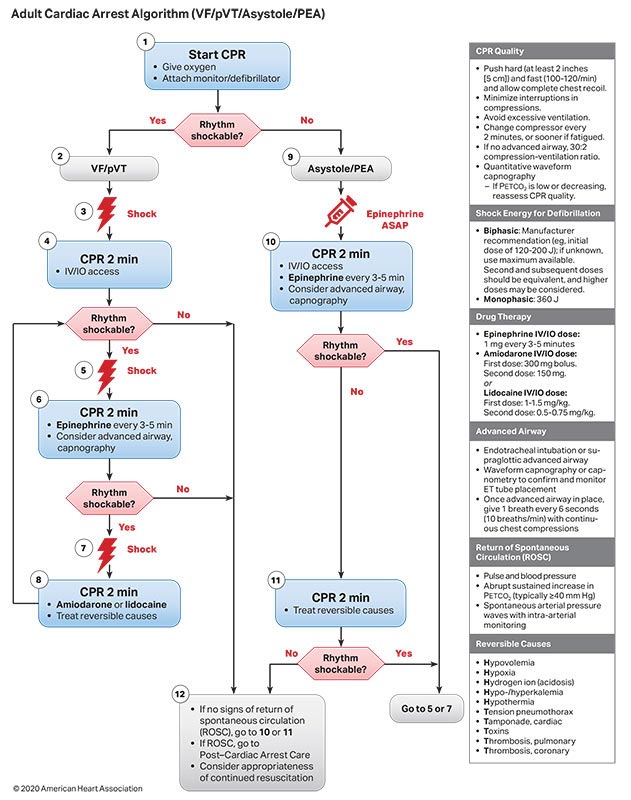
Which of the following best describes the correct administration of adrenaline for a shockable rhythm in adult advanced life support?
Your Answer:
Correct Answer: Give 1 mg of adrenaline after the second shock and every 3 - 5 minutes thereafter
Explanation:Give adrenaline 1 mg IV (IO) (10 mL of 1:10,000 solution) after the 2nd shock for adult patients in cardiac arrest with a shockable rhythm. Repeat adrenaline 1 mg IV (IO) every 3-5 minutes whilst ALS continues.
-
This question is part of the following fields:
- Cardiovascular
- Pharmacology
-
-
Question 5
Incorrect
-
A 36-year-old man who works in a farm presents with a deep laceration over the palm of his hand. A median nerve block was performed at his wrist to facilitate wound exploration and closure.
Which of the following statements regarding median nerve blocks at the wrist is considered correct?Your Answer:
Correct Answer: The needle should be inserted approximately 2.5 cm proximal to flexor retinaculum
Explanation:A median nerve block is a simple, safe, and effective method of obtaining anaesthesia to the palmar aspect of the thumb, index finger, middle finger, radial portion of the palm and ring finger. The median nerve lies deep to the flexor retinaculum and about one centimetre under the skin of the volar wrist.
The palmaris longus tendon lies superficial to the retinaculum and is absent in up to 20% of patients.
The median nerve is located slightly lateral (radial) to the palmaris longus tendon and medial (ulnar) to the flexor carpi radialis tendon.The procedure is as follows:
– Check sensation and motor function of the median nerve. Wear gloves and use appropriate barrier precautions.
– Locate the flexor carpi radialis and palmaris longus tendons, which become prominent when the patient flexes the wrist against resistance. The palmaris longus tendon is usually the more prominent of the two tendons.
– Needle-entry site: The needle will be inserted adjacent to the radial (lateral) border of the palmaris longus tendon just proximal to the proximal wrist crease. If the palmaris longus tendon is absent, the needle-entry site is about 1 cm ulnar to the flexor carpi radialis tendon.
– Cleanse the site with antiseptic solution. Place a skin wheal of anaesthetic, if one is being used, at the needle-entry site.
– Insert the needle perpendicularly through the skin and advance it slowly until a slight pop is felt as the needle penetrates the flexor retinaculum. When paraesthesia in the distribution of the median nerve confirms proper needle placement, withdraw the needle 1 to 2 mm.
– Aspirate to exclude intravascular placement and then slowly (i.e., over 30 to 60 seconds) inject about 3 mL of anaesthetic. If the patient does not feel paraesthesia, redirect the needle in an ulnar direction, under the palmaris longus tendon. If paraesthesia is still not felt, slowly inject 3 to 5 mL of anaesthetic in the proximity of the nerve 1 cm deep to the tendon.
– Allow about 5 to 10 minutes for the anaesthetic to take effect. -
This question is part of the following fields:
- Anatomy
- Upper Limb
-
-
Question 6
Incorrect
-
A 52-year-old woman visits her local pharmacy to get medication to help with mild dyspepsia symptoms. The pharmacist on duty suggests she uses an over-the-counter antacid. She purchases an antacid that contains magnesium carbonate, which relieves her symptoms, but she unfortunately also develops a side effect.
Out of the following, which side effect is she MOST likely to develop after using the antacid?Your Answer:
Correct Answer: Diarrhoea
Explanation:Magnesium carbonate is an over the counter antacid commonly used to relieve symptoms in ulcer dyspepsia and non-erosive gastro-oesophageal reflux.
Antacids containing magnesium also tend to work as a laxative, while the antacids with aluminium may cause constipation. There is no significant increased risk of anaphylaxis, hepatotoxicity or renal impairment.
-
This question is part of the following fields:
- Gastrointestinal Pharmacology
- Pharmacology
-
-
Question 7
Incorrect
-
Which of the following is NOT a typical cerebellar sign:
Your Answer:
Correct Answer: Hypertonia
Explanation:Hypotonia means decreased muscle tone. It can be a condition on its own, called benign congenital hypotonia, or it can be indicative of another problem where there is progressive loss of muscle tone, such as muscular dystrophy or cerebral palsy. It is usually detected during infancy. Hypotonia is characteristic of cerebellar dysfunction.
-
This question is part of the following fields:
- Anatomy
- Central Nervous System
-
-
Question 8
Incorrect
-
What is the most common application of Nitrates?
Your Answer:
Correct Answer: Angina
Explanation:In patients with exertional stable angina, nitrates improve exercise tolerance, time to onset of angina, and ST-segment depression during exercise testing. In combination with beta-blockers or calcium channel blockers, nitrates produce greater anti-anginal and anti-ischemic effects.
While they act as vasodilators, coronary vasodilators, and modest arteriolar dilators, the primary anti ischemic effect of nitrates is to decrease myocardial oxygen demand by producing systemic vasodilation more than coronary vasodilation. This systemic vasodilation reduces left ventricular systolic wall stress. -
This question is part of the following fields:
- Cardiovascular
- Pharmacology
-
-
Question 9
Incorrect
-
You assess a patient that has suffered a nerve injury that has paralysed her left latissimus dorsi muscle.
Latissimus dorsi receives its innervation from which of the following nerves? Select ONE answer only.Your Answer:
Correct Answer: Thoracodorsal nerve
Explanation:Latissimus dorsi originates from the lower part of the back, where it covers a wide area. It lies underneath the inferior fibres of trapezius superiorly, and trapezius is the most superficial back muscle.
Superficial muscles of the back showing latissimus dorsi (from Gray’s Anatomy)
Latissimus dorsi has a broad origin, arising from the spinous processes of T6-T12, the thoracolumbar fascia, the iliac crest and the inferior 3 or 4 ribs. The fibres converge into a tendon that inserts into the intertubercular groove of the humerus.
Latissimus dorsi is innervated by the thoracodorsal nerve.
Latissimus dorsi acts to extend, adduct and medially rotate the humerus. It, therefore, raises the body towards the arm during climbing. -
This question is part of the following fields:
- Anatomy
- Upper Limb
-
-
Question 10
Incorrect
-
You are asked to review the blood results on a 56-year-old man who appears to be acutely unwell. His results show that he is neutropenic.
Which ONE of the following is NOT a recognized cause of a neutropenia?Your Answer:
Correct Answer: Hyposplenism
Explanation:Neutropenia is defined as a total neutrophil count of < 2.0 x 10⁹/l.
It can be caused by:
Viral infections
Collagen disease e.g. SLE and RA
Chemotherapy and radiotherapy
Hypersplenism
Marrow infiltration
Vitamin and folate deficiency
Drug reactions
Drugs that cause neutropenia include flecainide, phenytoin, carbimazole, indomethacin and co-trimoxazole. -
This question is part of the following fields:
- Haematology
- Pathology
-
-
Question 11
Incorrect
-
Regarding Clostridium tetani, which of the following statements is CORRECT:
Your Answer:
Correct Answer: Infection is predominantly derived from animal faeces and soil.
Explanation:Clostridium tetaniis a Gram positive, rod shaped, obligate anaerobic bacterium.
The incubation period is quoted as anywhere between 4-21 days and can occur after several months but symptoms usually occur within the first 7 days after exposure.
Approximately 80% of patients develop generalised tetanus. The commonest presenting feature of generalised tetanus is trismus (lockjaw), occurring in approximately 75% of affected individuals. Other clinical features include:
Facial spasms (risus sardonicus)
Opisthotonus (characteristic body shape during spasms)
Neck stiffness
Dysphagia
Calf and pectoral muscle rigidity
Fever
Hypertension
Tachycardia
Spasms can occur frequently and last for several minutes, they can continue to occur for up to 4 weeks. Current mortality rates are between 10 and 15%.
Tetanic spasms are caused by the exotoxin tetanospasmin. The effects of tetanolysin are not fully understood but it is not believed to have clinical significance.
Localised tetanus is a rare form of the disease, occurring in around 1% of affected individuals. Patients have persistent contraction of muscles in the same anatomic area as the injury. It may precede generalised tetanus. -
This question is part of the following fields:
- Microbiology
- Pathogens
-
-
Question 12
Incorrect
-
A newborn baby is born by vaginal delivery to a mother who has a Chlamydia infection and who is started on treatment after the delivery. The neonate subsequently develops an infection also.
Which one of these is the most common neonatal manifestation of Chlamydia trachomatis infection?Your Answer:
Correct Answer: Conjunctivitis
Explanation:Conjunctivitis is the most common neonatal manifestation of Chlamydia trachomatis infection. The second commonest neonatal manifestation is pneumonia
Ophthalmia neonatorum refers to any conjunctivitis in the newborn period, irrespective of causative organism. Presently, chlamydia is the single most common cause, accounting for up to 40% of cases. Ophthalmia neonatorum caused by chlamydia typically presents 5 to 14 days after birth with unilateral or bilateral watery discharge that progressively becomes more copious and purulent. There is no associated risk of ulceration and perforation, and the eyes are less inflamed.
-
This question is part of the following fields:
- Microbiology
- Specific Pathogen Groups
-
-
Question 13
Incorrect
-
A 59-year-old man presents to the emergency room with chest pain. The cardiology team recently discharged him. He underwent a procedure and was given several medications, including abciximab, during his stay. Which of the following statements about abciximab is correct?
Your Answer:
Correct Answer: It is a glycoprotein IIa/IIIb receptor antagonist
Explanation:Abciximab (ReoPro) is a glycoprotein IIb/IIIa receptor antagonist that is a chimeric monoclonal antibody. It is primarily used during and after coronary artery procedures such as angioplasty to inhibit platelet aggregation.
It’s approved for use as a supplement to heparin and aspirin in high-risk patients undergoing percutaneous transluminal coronary intervention to prevent ischaemic complications. Only one dose of abciximab should be given (to avoid additional risk of thrombocytopenia).
Before using, it is recommended that baseline prothrombin time, activated clotting time, activated partial thromboplastin time, platelet count, haemoglobin, and haematocrit be measured. 12 and 24 hours after starting treatment, haemoglobin and haematocrit should be measured again, as should platelet count 2-4 hours and 24 hours after starting treatment.
When used for high-risk patients undergoing angioplasty, the EPIC trial(link is external)found that abciximab reduced the risk of death, myocardial infarction, repeat angioplasty, bypass surgery, and balloon pump insertion.The use of abciximab is contraindicated in the following situations:
Internal bleeding is present.
Within the last two months, you’ve had major surgery, intracranial surgery, or trauma.
Stroke in the previous two years
Intracranial tumour
Aneurysm or arteriovenous malformation
Haemorrhagic diathesis is a type of haemorrhagic diathesis.
Vasculitis
Retinopathy caused by hypertensionThe following are some of the most common abciximab side effects:
Manifestations of bleeding
Bradycardia
Back ache
Pain in the chest
Vomiting and nausea
Pain at the puncture site
Thrombocytopenia -
This question is part of the following fields:
- Cardiovascular Pharmacology
- Pharmacology
-
-
Question 14
Incorrect
-
When a child has mumps, how long should he or she be off from school?
Your Answer:
Correct Answer: 5 days from onset of swelling
Explanation:To avoid the spread of infection, infected patients should be isolated. Patients should avoid going to school, childcare, or job for five days after the swelling has occurred.
-
This question is part of the following fields:
- Microbiology
- Pathogens
-
-
Question 15
Incorrect
-
A patient complains of stomach ache. You see a midline scar in the epigastric area when you examine the abdomen. Upon further interrogation, the patient reveals that she had a subtotal gastrectomy for recurring stomach ulcers several years ago. The stomach mucosa secretes a variety of vital compounds, and her ability to secrete some of these molecules has been harmed as a result of his surgery.
The stomach D-cells secrete which of the following substances?
Your Answer:
Correct Answer: Somatostatin
Explanation:Somatostatin-producing cells present in the pyloric antrum, duodenum, and pancreatic islets are known as D-cells or delta-cells. Somatostatin inhibits gastric acid secretion by acting directly on acid-producing parietal cells in the stomach via a G-protein coupled receptor. By suppressing the release of other hormones such as gastrin, secretin, and histamine, somatostatin can indirectly reduce stomach acid output, slowing the digesting process.
The table below summarizes the many cell types found in the stomach, as well as the substances secreted by each cell type and the function of the secretion:Cell type/ Substance secreted/ Function of secretion
Parietal cells/ Hydrochloric acid/ Kills microbes and activates pepsinogen
Parietal cells/ Intrinsic factor/Binds to vitamin B12 and facilitates its absorption
Chief cells/ Pepsinogen/ Protein digestion
Chief cells/ Gastric lipase/ Fat digestion
G-cells/ Gastrin/ Stimulates gastric acid secretion
Enterochromaffin-like cells (ECL cells) /Histamine/ Stimulates gastric acid secretion
Mucous-neck cells/ Mucous and bicarbonate/ Protects stomach epithelium from acid
D-cells/ Somatostatin/ Inhibits gastric acid secretion -
This question is part of the following fields:
- Gastrointestinal Physiology
- Physiology
-
-
Question 16
Incorrect
-
Which of the following is NOT mainly characterised by intravascular haemolysis:
Your Answer:
Correct Answer: Beta-Thalassaemia
Explanation:Causes of intravascular haemolysis:
Haemolytic transfusion reactions
G6PD deficiency
Red cell fragmentation syndromes
Some severe autoimmune haemolytic anaemias
Some drug-and infection-induced haemolytic anaemias
Paroxysmal nocturnal haemoglobinuria -
This question is part of the following fields:
- Haematology
- Pathology
-
-
Question 17
Incorrect
-
Regarding iron handling, which of the following statements is CORRECT:
Your Answer:
Correct Answer: Iron is taken across the enterocyte apical membrane by the divalent metal transporter (DMT1).
Explanation:Dietary iron may be in the form of haem or non-haem iron. Haem iron is degraded after absorption through the cell surface to release Fe2+. Most non-haem iron is in the form Fe3+, which is reduced at the luminal surface to the more soluble Fe2+, facilitated by hydrochloric acid in gastric secretions (and enhanced by ascorbic acid). Fe2+is taken across the enterocyte apical membrane by the divalent metal transporter (DMT1). In the enterocyte, Fe2+is then either stored in enterocyte epithelial cells as ferritin, or released into portal plasma via the molecule ferroportin at the basolateral membrane.
-
This question is part of the following fields:
- Haematology
- Pathology
-
-
Question 18
Incorrect
-
The renal team is currently prescribing erythropoietin to a patient with chronic kidney disease.
Which of the following statements about erythropoietin is correct?Your Answer:
Correct Answer: It protects red blood cell progenitors from apoptosis
Explanation:Erythropoietin is a glycoprotein hormone that regulates the formation of red blood cells (red cell production). It is mostly produced by interstitial fibroblasts in the kidney, which are located near the PCT. It is also produced in the liver’s perisinusoidal cells, however this is more common during the foetal and perinatal periods.
The kidneys produce and secrete erythropoietin in response to hypoxia. On red blood cells, erythropoietin has two main effects:
– It encourages stem cells in the bone marrow to produce more red blood cells.
– It protects red blood cell progenitors and precursors from apoptosis by targeting them in the bone marrow.
As a result of the increased red cell mass, the oxygen-carrying capacity and oxygen delivery increase. -
This question is part of the following fields:
- Physiology
- Renal Physiology
-
-
Question 19
Incorrect
-
A 30-year-old man presents with diarrhoea, fever, vomiting, and abdominal cramps. A stool culture was ordered and showed growth of Salmonella spp.
Among the following serotypes of Salmonella spp., which is considered to be the most common cause of salmonella gastroenteritis?Your Answer:
Correct Answer: Serotype D
Explanation:A common cause of gastroenteritis, Salmonella enteritidis, and Salmonella typhi, which causes enteric fever, are both group D. Therefore, serotype D Salmonella species are most commonly associated with gastroenteritis.
-
This question is part of the following fields:
- Microbiology
- Specific Pathogen Groups
-
-
Question 20
Incorrect
-
Which of the following clinical features would you least expect to see in a lesion of the frontal lobe:
Your Answer:
Correct Answer: Contralateral homonymous hemianopia with macular sparing
Explanation:Contralateral homonymous hemianopia with macular sparing results from damage to the primary visual cortex of the occipital lobe. Incontinence may occur due to damage of the cortical micturition centre in the prefrontal cortex. Primitive reflexes and inability to problem solve may occur due to damage to the prefrontal cortex. Motor weakness of the contralateral limb with UMN signs may occur due to damage of the primary motor cortex.
-
This question is part of the following fields:
- Anatomy
- Central Nervous System
-
-
Question 21
Incorrect
-
For the treatment of his atrial fibrillation, a 67-year-old man is about to begin taking warfarin. He also takes a number of other medications.
Which of the following medications will prevent warfarin from working?Your Answer:
Correct Answer: Phenytoin
Explanation:Many medications, including warfarin, require cytochrome P450 enzymes for their metabolism. When co-prescribing cytochrome p450 enzyme inducers and inhibitors with warfarin, it’s critical to be cautious.
Inhibitors of the cytochrome p450 enzyme inhibit the effects of warfarin, resulting in a lower INR. To remember the most commonly encountered cytochrome p450 enzyme inducers, use the mnemonic PC BRASS:
P– Phenytoin
C– Carbamazepine
B– Barbiturates
R– Rifampicin
A– Alcohol (chronic ingestion)
S– Sulphonylureas
S– Smoking -
This question is part of the following fields:
- Cardiovascular Pharmacology
- Pharmacology
-
-
Question 22
Incorrect
-
A 27-year-old man has been diagnosed with testicular cancer and has spread to the regional lymph nodes.
The lymph from the testes will drain to which of the following nodes?Your Answer:
Correct Answer: Para-aortic lymph nodes
Explanation:Testes are retroperitoneal organs and its lymphatic drainage is to the lumbar and para-aortic nodes along the lumbar vertebrae.
The scrotum is the one which drains into the nearby superficial inguinal nodes.
The glans penis and clitoris drains into the deep inguinal lymph nodes.
-
This question is part of the following fields:
- Abdomen And Pelvis
- Anatomy
-
-
Question 23
Incorrect
-
Needle thoracentesis in a patient with a tension pneumothorax is performed at which anatomical landmark?
Your Answer:
Correct Answer: 4th or 5th intercostal space mid-axillary line
Explanation:Tension pneumothorax is a fatal disease causing acute and severe compromise of patients’ ventilation and circulation, in which case immediate decompression is necessary for better prognosis [6]. A previous study has shown that the incidence of tension pneumothorax varies from 0.2% to 1.7% in patients with prehospital trauma. Several trauma guidelines recommend needle thoracostomy as a life-saving intervention, with placement in the second intercostal space at the midclavicular line (second ICS-MCL), the fourth intercostal space at the anterior axillary line (fourth ICS-AAL), or the fifth intercostal space at the midaxillary line (fifth ICS-MAL) for tension pneumothorax in a prehospital environment.
In 2018, according to newly issued the Advanced Trauma Life Support (ATLS) guidelines, the fifth ICS-MAL was suggested as the preferred place, and an 8 cm needle rather than the common 5 cm needle was proved to increase success rate of adults’ decompression.
-
This question is part of the following fields:
- Anatomy
- Thorax
-
-
Question 24
Incorrect
-
Regarding bronchiolitis, which of the following statements is CORRECT:
Your Answer:
Correct Answer: Chest x-ray may show hyperinflation and increased peribronchial markings.
Explanation:Acute bronchiolitis is caused most commonly by respiratory syncytial virus, occurring mostly in children aged 6 months to 2 years. Children with bronchiolitis are febrile and tachypnoeic with a dry cough and difficulty feeding. Examination may reveal chest hyperinflation, respiratory distress, wheezing and fine end-inspiratory crepitations. Chest x-ray may show hyperinflation and increased peribronchial markings (although CXR should only performed if there is diagnostic uncertainty or an atypical course). Treatment is usually supportive, aerosolized ribavirin is reserved for severely ill or immunocompromised patients.
-
This question is part of the following fields:
- Microbiology
- Pathogens
-
-
Question 25
Incorrect
-
Damage to this nerve affects the flexor digitorum longus.
Your Answer:
Correct Answer: Tibial nerve
Explanation:Like all muscles in the deep posterior compartment of the leg, flexor digitorum longus muscle is innervated by branches of the tibial nerve (root value L5, S1 and S2) which is a branch of sciatic nerve.
-
This question is part of the following fields:
- Anatomy
- Lower Limb
-
-
Question 26
Incorrect
-
Bile acids are essential for the digestion and absorption of which of the following:
Your Answer:
Correct Answer: Lipids and fat-soluble vitamins
Explanation:Bile acids are synthesised from cholesterol by hepatocyte and excreted into bile. Bile acids are essential for lipid digestion and absorption. Of the bile acids excreted into the intestine, about 95% are reabsorbed into the portal circulation by active transport mechanisms in the distal ileum and recycled by the liver. Many of the bile salts are reabsorbed unaltered, some are converted by intestinal bacteria into secondary bile acids (deoxycholic acid and lithocholic acid) and then reabsorbed and a small proportion escapes reabsorption and is excreted in the faeces.
-
This question is part of the following fields:
- Gastrointestinal
- Physiology
-
-
Question 27
Incorrect
-
Which of the following is NOT a function of antibodies:
Your Answer:
Correct Answer: Act as antigen receptors on T lymphocytes
Explanation:Antibodies:
Neutralise toxins and prevent attachment of pathogens
Target, opsonise or agglutinate (clump together) antigens for phagocytosis
Activate the complement cascade (leading to lysis or opsonisation of the pathogen)
Act as antigen receptors on B lymphocytes
Activate antibody-dependent cell-mediated cytotoxicity by natural killer (NK) cells or T cytotoxic cells
Provide mucosal immunity (IgA-mediated)
Stimulate degranulation of mast cells (IgE and IgG mediated)
Provide passive immunity to the newborn (through transplacental passage of IgG and secretion of IgA in breast milk) -
This question is part of the following fields:
- Immune Responses
- Pathology
-
-
Question 28
Incorrect
-
Which of the following statements about propofol is TRUE:
Your Answer:
Correct Answer: Propofol has some antiemetic action.
Explanation:Propofol has some antiemetic properties. It’s for this reason that it’s used to treat postoperative nausea and vomiting. Propofol is mostly processed in the liver, with the kidneys excreting just around 1% of it unaltered. Propofol, unlike thiopental, does not produce tissue necrosis when it is extravasated. Propofol lowers intracranial pressure via lowering brain metabolic rate and cerebral blood flow. Propofol is thought to be safe for people with bronchial asthma and chronic obstructive pulmonary disease.
-
This question is part of the following fields:
- Anaesthesia
- Pharmacology
-
-
Question 29
Incorrect
-
Angiotensin II is part of the RAAS system. One of its effects is the constriction of efferent arterioles. Which of the following best describes the effect of angiotensin II- mediated constriction of efferent arterioles?
Your Answer:
Correct Answer: Decreased renal plasma flow, increased filtration fraction, increased GFR
Explanation:The Renin-Angiotensin-Aldosterone System (RAAS) is a hormone system composed of renin, angiotensin, and aldosterone. Those hormones are essential for the regulation of blood pressure and fluid balance.
Cases of hypotension, sympathetic stimulation, or hyponatremia can activate the Renin-angiotensin-aldosterone system (RAAS). The following process will then increase the blood volume and blood pressure as a response.
When renin is released it will convert the circulating angiotensinogen to angiotensin I. The ACE or angiotensin-converting enzyme will then catalyst its conversion to angiotensin II, which is a potent vasoconstrictor. Angiotensin II can constrict the vascular smooth muscles and the efferent arteriole of the glomerulus.
The efferent arteriole is a blood vessel that delivers blood away from the capillaries of the kidney. The angiotensin II-mediated constriction of efferent arterioles increases GFR, reduces renal blood flow and peritubular capillary hydrostatic pressure, and increases peritubular colloid osmotic pressure, as a response to its action of increasing the filtration fraction.
-
This question is part of the following fields:
- Physiology
- Renal Physiology
-
-
Question 30
Incorrect
-
Which of the following statements is correct with regards to Horner's syndrome?
Your Answer:
Correct Answer: Miosis occurs due to paralysis of the dilator pupillae muscle.
Explanation:The characteristics of Horner’s syndrome are pupil constriction, partial ptosis and anhidrosis.
-
This question is part of the following fields:
- Anatomy
- Head And Neck
-
SESSION STATS - PERFORMANCE PER SPECIALTY
