-
Question 1
Correct
-
A patient at 15 weeks gestation undergoes an abortion. She has no known drug allergies. Which of the following is the most appropriate regarding antibiotic prophylaxis?
Your Answer: Stat Azithromycin 1g and metronidazole 800 mg orally at time of abortion
Explanation:First trimester abortions are performed using mifepristone 600 mg followed by insertion of 1 mg gemeprost vaginal pessary. The patients stays in the hospital for about 4-6 hours. At the time of abortion azithromycin 1 g and metronidazole 800 mg should be given to cover the gram positive and negative bacteria.
-
This question is part of the following fields:
- Clinical Management
-
-
Question 2
Correct
-
A 37-year-old woman visits a gynaecological clinic for a check-up. A cervical screening test is performed by the doctor. HPV Type Non-16/18 is detected in her cervical cytology. Squamous cells and other abnormalities were found to be absent in the reflex liquid-based cytology.
Which of the following is the most appropriate next step in this patient's care?Your Answer: Repeat Cervical screening test in 12 months
Explanation:A cervical screening test was performed on this patient, and the result revealed the presence of the Human Papilloma Virus Type non-16/18. Reflex liquid base cytology was conducted, but no further abnormalities were seen. In this case, the patient should be offered a 12-month repeat cervical screening cytology. If the patient’s repeated cervical screening cytology after 12 months revealed LSIL, she should be referred for a colposcopy.
If HPV is discovered at 12 months, regardless of the LBC result, some women may be at higher risk of having high-grade abnormalities and should be referred to colposcopy. These include:
– women 2 or more years overdue for screening at the time of the initial screen
– women who identify as being of Aboriginal or Torres Strait Islander
– women aged 50 years or older.Summary of recommended actions based on the level of risk
Intermediate danger:
– HPV non-16/18 positive, intermediate risk (with negative or low-grade cytology)
If feasible, repeat the HPV test after 12 months.
A three-to-six-month delay would be acceptable. Delays of longer than six months are discouraged.
Follow up HPV test – HPV non 16/18 (possible high grade cytology or high-grade squamous lesion (HSIL) – Treated as Higher risk.High-risk:
HPV non-16/18 positive on follow-up HPV test (with negative or low-grade cytology)
Refer to an expert right away for further investigation.If your patient is: 2 years or more past due for screening at the time of the initial screening, and identifies as Aboriginal or Torres Strait Islander aged 50 or older, they may be at higher risk and should be referred to a professional at once for additional evaluation.
HPV 16/18 positive with any of the following non–16/18 positive: a glandular anomaly in high-grade cytology high-grade squamous lesion (HSIL) cancer. Refer to an expert right away for further investigation.
Currently, several colposcopy facilities are experiencing strong demand and extended wait times. If you are concerned that your patient will be delayed, you should call the specialist or clinic to which your patient has been referred.
On the Cure Test Pathway, wherever possible, continue testing as planned. A woman who has been treated for HSIL (CIN2/3) should have a 12-month follow-up co-test and annual tests after that. She can resume standard 5-yearly screening after receiving two consecutive negative co-tests. -
This question is part of the following fields:
- Gynaecology
-
-
Question 3
Incorrect
-
Regarding ovarian cancer, which factors are thought to lower the risk?
Your Answer: High Coffee consumption
Correct Answer: Taking statins
Explanation:Ovarian cancer is a gynaecological cancer that commonly affects women over 40 years. Risk factors for ovarian cancer include: infertility, a family history of ovarian, breast or colorectal cancer. There are some protective factors, which include: high parity and breastfeeding, early age at menarche and late age at menopause, and combined oral contraceptives, and statins.
-
This question is part of the following fields:
- Epidemiology
-
-
Question 4
Correct
-
You see a patient who is 32 weeks pregnant. She complains of tingling to the right buttock and shooting pain down the leg. You suspect Piriformis syndrome. Regarding Piriformis which of the following statements are true?
Your Answer: Insertion is onto the greater trochanter
Explanation:Nerve Supply: L5 to S2 via Nerve to Piriformis
Origin: Sacrum
Insertion: Greater trochanter
Action: External rotation of hip
Blood Supply: Superior and Inferior gluteal arteries and lateral sacral arteries -
This question is part of the following fields:
- Anatomy
-
-
Question 5
Correct
-
What kind of biochemical changes occur during the follicular phase of menstrual cycle?
Your Answer: Endometrial gland proliferation
Explanation:During follicular phase, there is an increase in gonadotrophin hormones and a proliferation of the endometrium occurs. The duration of the cycle depends upon the overall length of the menstrual cycle. The progesterone levels are increased in the luteal phase and not in follicular phase.
-
This question is part of the following fields:
- Physiology
-
-
Question 6
Correct
-
Which of the following is the most appropriate for diagnosis of Bacterial Vaginosis (BV)?
Your Answer: Amsel's criteria
Explanation:Diagnosis can be made using the Amsel’s criteria:
1. Presence of clue cells on microscopic examination (these cells are epithelial cells covered with the bacteria).
2. Creamy greyish discharge.
3. Vaginal pH of more than 4.5.
5. Positive whiff test – release of fishy odour on addition of alkali solution. Other criteria include the nugent score and the Hay/Ison criteria. The Nugent score estimates the relative proportions of bacterial morphotypes to give a score between 0 and 10 (<4 = normal, 4-6 = intermediate, >6 = BV)
The Hay/Ison criteria
Grade 1 (Normal): Lactobacillus morphotypes predominate
Grade 2 (Intermediate): Mixed flora with some Lactobacilli present, but Gardnerella or Mobiluncus morphotypes also present
Grade 3 (BV): Predominantly Gardnerella and/or Mobiluncus morphotypes. Few or absent Lactobacilli. -
This question is part of the following fields:
- Clinical Management
-
-
Question 7
Correct
-
You see a patient in fertility clinic who you suspect has Klinefelters. What is the likely karyotype?
Your Answer: 47XXY
Explanation:Klinefelter syndrome occurs in 1:1000 individuals. They are phenotypically male and genotypically they have 47,XXY chromosomes. These individuals have small testes, are tall with disproportionate long lower limbs.40% will also have gynecomastia.
-
This question is part of the following fields:
- Genetics
-
-
Question 8
Correct
-
A 27-year-old woman presents to the clinic.
She explains she has had 2 episodes of postcoital bleeding.
Her previous medical history reveals she is currently taking the oral contraceptive pill (OCP) and has never had an abnormal pap smear, including one that was performed a year ago.
What is the most probable cause of her postcoital bleeding?Your Answer: A cervical ectropion
Explanation:The most likely cause of her postcoital bleeding is cervical ectropion as suggested by her postcoital bleeding, normal pap smears and use of oral contraceptive pills.
Cervical ectropion is a benign condition that occurs as a result of overexposure to oestrogen. Here, glandular cells (the columnar epithelium) lining the endocervix, begin to grow on the ectocervix, leading to exposure of the columnar cells to the vaginal environment.
These columnar cells are prone to trauma and bleeding during coitus.
-
This question is part of the following fields:
- Gynaecology
-
-
Question 9
Incorrect
-
According to the WHO, maternal mortality ratio is defined as which of the following?
Your Answer: Maternal deaths per 10,000 live births & stillbirths
Correct Answer: Maternal deaths per 100,000 live births
Explanation:The World Health Organisation defines the maternal mortality ratio as the number of maternal deaths during a given period per 100,000 live births during the same period. This measure indicates the risk of death in a single pregnancy.
-
This question is part of the following fields:
- Epidemiology
-
-
Question 10
Correct
-
All the following are possible causes of polyhydramnios, EXCEPT:
Your Answer: IUGR
Explanation:An underlying disease is only found in 17 % of cases in mild polyhydramnios. In contrast, an underlying disease is detected in 91 % of cases in moderate to severe polyhydramnios. The literature lists the following potential aetiologies: fetal malformations and genetic anomalies (8–45 %), maternal diabetes mellitus (5–26 %), multiple pregnancies (8–10 %), fetal anaemia (1–11 %), other causes, e.g. viral infections, Bartter syndrome, neuromuscular disorders, maternal hypercalcemia. Viral infections which can lead to polyhydramnios include parvovirus B19, rubella, and cytomegalovirus. Other infections, e.g. toxoplasmosis and syphilis, can also cause polyhydramnios.
-
This question is part of the following fields:
- Physiology
-
-
Question 11
Correct
-
The juxtaglomerular apparatus (JGA) lies within which part of the kidney?
Your Answer: Renal Cortex
Explanation:The juxtaglomerular apparatus is the main site for the production of renin. It plays an important role in the regulation of the blood pressure. These structures are mainly located in the cortex of the kidneys.
-
This question is part of the following fields:
- Anatomy
-
-
Question 12
Correct
-
A 23 year old patient presents to the emergency department with sudden onset of severe lower abdominal and pelvic pain. History reveals she normally has regular 28 day cycles but she missed her last period. Past medical history reveals 2 termination of pregnancy procedures in the past 3 years. The most recent one 6 months ago. She smokes 5 cigarettes per day.
Your Answer: Ectopic pregnancy
Explanation:This patient is most likely to have a ruptured ectopic pregnancy. The history of multiple TOPs suggests her contraceptive methods are not reliable and her missed period is suggestive she may currently be pregnant. There is no temperature or vaginal discharge to suggest PID though this is of course possible as is appendicitis. The last termination was 6 months ago so endometritis is unlikely.
-
This question is part of the following fields:
- Clinical Management
-
-
Question 13
Correct
-
Placental production of hPL, hCG, Oestrogen and Progesterone are examples of which type of mechanism
Your Answer: Endocrine
Explanation:Hormones that are secreted into the circulation at one site but have effects on distal target organs are endocrine as is the case with the hormones above. Autocrine and Intracrine messengers act within the same cell. Exocrine glands secrete their products into ducts. Apocrine is a histological term used to describe some types of exocrine gland.
-
This question is part of the following fields:
- Endocrinology
-
-
Question 14
Correct
-
You are called to see a 24 year old patient in A&E. She is 34 weeks gestation and her blood pressure is 149/98. Automated reagent strip testing shows protein 1+. What is the appropriate course of action regarding the urine result?
Your Answer: Send urine for protein:creatinine ratio
Explanation:For a diagnosis of Preeclampsia to be established, hypertension of at least 140/90 mmHg recorded on at least two separate occasions and at least 4 hours apart and in the presence of at least 300 mg protein in a 24 hour collection of urine, arising de novo after the 20th week of pregnancy in a previously normotensive woman and resolving completely by the sixth postpartum week should be present.
-
This question is part of the following fields:
- Clinical Management
-
-
Question 15
Correct
-
Question 16
Correct
-
Which HPV subtypes are chiefly associated with causing cancer?
Your Answer: 16 and 18
Explanation:HPV 16 and 18 are responsible for 70% of cases of HPV related cancers. They are considered the most important high risk genotypes of HPV. As well as cervical cancer they are associated with cancers of the oropharynx and anogenital region.
There are over 100 genotypes of HPV including several other high risk HPV types. Gardasil® is a quadrivalent vaccine against HPV Types 6, 11, 16, and 18
HPV genotypes 6 and 11 are low risk and cause anogenital warts.
Typically 70% of HPV infections are cleared within 1 year and 90% are cleared within 2 years
-
This question is part of the following fields:
- Microbiology
-
-
Question 17
Correct
-
A 53-year-old lady had mild vaginal bleeding for the previous 18 hours following sexual engagement. It's been a year since she had her last menstrual cycle. Her previous cervical screening test was 12 months ago, and everything came back normal. For the past year, she had not engaged in any sexual activity. She wasn't on any hormone replacement treatment at the time.
Which of the following is the most likely cause of her symptoms?Your Answer: Atrophic vaginitis
Explanation:Postmenopausal haemorrhage has started in this patient. Menopause is defined as the permanent cessation of menstruation and fertility that occurs 12 months after the previous menstrual period.
Atrophic vaginitis caused by oestrogen insufficiency is the most likely reason for this woman’s postmenopausal haemorrhage. It can also induce vaginal dryness and soreness during sexual intercourse.
Endometrial hyperplasia is unlikely to develop without hormone replacement therapy or oestrogen stimulation of the endometrium.
Similarly, endometrial cancer is a less likely cause of this patient’s post-menopausal bleeding.
A year ago, this woman received a normal cervical screening test. Cervical cancer is extremely unlikely to occur. After 12 months of no oestrogen, it’s also unlikely that you’ll have any irregular periods.
-
This question is part of the following fields:
- Gynaecology
-
-
Question 18
Incorrect
-
Pregnant patients are at higher risk of thromboembolism due to a hypercoagulable state. Which of the following clotting factors reduces during pregnancy?
Your Answer: Fibrinogen
Correct Answer: Factor XI
Explanation:Pregnancy is a hypercoagulable state, which means that risk of thromboembolism is increased. The main reason is an increase in clotting factors II, factor VII, fibrinogen, factor X and factor XII, whereas factors XI and factor XIII are reduced. Naturally occurring anticoagulants i.e. protein C and protein S are both decreased thus increasing the risk of thrombus formation.
-
This question is part of the following fields:
- Clinical Management
-
-
Question 19
Correct
-
You review a 28 year old patient in the fertility clinic. She has a diagnosis of PCOS. She has been trying to conceive for 2 years. Her BMI is 26 kg/m2. She is a non-smoker. She has been taking Clomiphene and metformin for the past 6 months. What is the next most appropriate treatment?
Your Answer: Gonadotrophins
Explanation:Clomiphene shouldn’t be continued for more than 6 months. The second line options are Gonadotrophins or ovarian drilling.
-
This question is part of the following fields:
- Clinical Management
-
-
Question 20
Correct
-
A 48-year-old woman presents to the clinic complaining of a one week history of light vaginal bleeding.
Her past medical history reveals she had a lumpectomy, postoperative radiotherapy, adjuvant chemotherapy and tamoxifen therapy 3 years ago as treatment for an oestrogen receptor-positive breast malignancy.
She was prescribed tamoxifen in a dose of 10mg per day to take for the next five years.
Since she completed her chemotherapy three years ago, she has no menstrual periods.
What is the most probable cause of her current bleeding?Your Answer: Endometrial polyp formation due to the tamoxifen.
Explanation:The most likely cause of her bleeding is an endometrial polyp formation due to the tamoxifen.
Tamoxifen is often prescribed to decrease risk of breast cancer recurrence in premenopausal women with oestrogen receptor-positive cancers.
As with any medication, it has known side effects, which include endometrial polyp formation, subendometrial oedema and, rarely, endometrial carcinoma.
A polyp or carcinoma can cause uterine bleeding, but a polyp is more likely to occur.
Routine endometrial thickness screening is not recommended in all women taking tamoxifen. However, in cases of abnormal bleeding, ultrasound assessment of endometrial thickness, hysteroscopy and curettage are indicated to assess the endometrium in more detail.
Tamoxifen is not associated with endometrial atrophy.
Endometrial metastasis from a breast cancer is rare, and tamoxifen would not usually induce follicular development in a woman who has had chemotherapy and resultant amenorrhoea.
-
This question is part of the following fields:
- Gynaecology
-
-
Question 21
Incorrect
-
A 30-year-old woman who is at 38 weeks gestation presented to the emergency department due to complaints of not feeling fetal movements since yesterday. Upon investigations, fetal demise was confirmed. Induced delivery was done and she gave birth to a dead foetus.
Which of the following is least likely to reveal the cause of the fetal death?Your Answer: Kleihauer-Betki test
Correct Answer: Chromosomal analysis of the mother
Explanation:Stillbirth has many causes: intrapartum complications, hypertension, diabetes, infection, congenital and genetic abnormalities, placental dysfunction, and pregnancy continuing beyond forty weeks.
In 5% of normal-appearing stillborns, a chromosomal abnormality will be detectable. With an autopsy and a chromosomal study, up to 35% of stillborns are found to have a major structural pathology, and 8% have abnormal chromosomes. After a complete evaluation, term stillbirth remains unexplained about 30% of the time. The chance of finding a cause is impacted by the age of the foetus, the experience of the caregiver, and the thoroughness of the exam. Chromosome testing for aneuploidy should be offered for all stillbirths to confirm or to seek a cause of the stillbirth. Genetic amniocentesis or chorionic villus sampling before delivery offers the highest yield.
-
This question is part of the following fields:
- Obstetrics
-
-
Question 22
Correct
-
Which of the following drugs is most appropriate to use to stimulate lactation?
Your Answer: Domperidone
Explanation:Domperidone and metoclopramide are D2 dopamine receptor antagonists. They are primarily used to promote gastric motility. They are also known as galactagogues and they promote the production of milk. Cabergoline and bromocriptine are prolactin inhibitors and they reduce milk production.
-
This question is part of the following fields:
- Endocrinology
-
-
Question 23
Correct
-
The juxtaglomerular apparatus (JGA) lies within which part of the kidney?
Your Answer: Renal Cortex
Explanation:The substructures of the nephrons are mainly located within the cortex. The JGA sits next to the glomerulus in the cortex (click on the magnifying glass of the image to see the arrangement). They play an important role in blood pressure homeostasis as the juxtaglomerular cells produce renin. The descending and ascending limbs of the loop of Henle and collecting ducts have sections within both the cortex and medulla
-
This question is part of the following fields:
- Anatomy
-
-
Question 24
Incorrect
-
A 25 year-old lady presented with complaints of generalised pruritis during the 3rd trimester of her pregnancy. She was diagnosed as a case of intrahepatic cholestasis of pregnancy. Which one of the following factors carries the greatest risk to the foetus in this disease?
Your Answer: Fetal hepatic dysfunction
Correct Answer: Perinatal mortality
Explanation:Intrahepatic cholestasis of pregnancy can affect both mother and foetus, however it is more harmful for the foetus. Amongst foetuses, there is an increased risk of perinatal mortality, meconium aspiration, premature delivery and post partum haemorrhage. Exact cause of fetal death cannot be predicted accurately but it is not related to intra uterine growth retardation or placental insufficiency. The liver can be affected in the mother leading to generalized pruritis but no evidence of fetal hepatic dysfunction has been found.
-
This question is part of the following fields:
- Obstetrics
-
-
Question 25
Correct
-
All of the following features are associated with congenital uterine malformations except:
Your Answer: Pregnancy induced hypertension
Explanation:Congenital uterine abnormalities are associated with an increased risk of spontaneous abortions, preterm delivery of the foetus, fetal growth retardation and malpresentation.
-
This question is part of the following fields:
- Embryology
-
-
Question 26
Correct
-
Immediate delivery of the foetus is recommended at which fetal scalp pH?
Your Answer: 7.18
Explanation:A pH value below than 7.18 indicates acidosis which can result in hypoxic brain injury. In order to prevent brain injury, immediate delivery of the foetus should be planned. The normal range for a term baby is pH: 7.18 – 7.38, preterm pH: 7.14 – 7.4.
-
This question is part of the following fields:
- Physiology
-
-
Question 27
Incorrect
-
A 32-year-old white female comes to your office complaining of dysuria. She denies fever, back pain, and urinary frequency. She appears to be well otherwise and has a normal abdominal examination. A clean-catch urinalysis shows 15-20 WBC/hpf and a dipstick test for leukocyte esterase is positive. You send a urine sample for culture and start the patient on nitrofurantoin (Macrodantin), as she is allergic to sulpha.
Three days later, the patient returns with persistent dysuria despite taking the medication as prescribed. Her urine culture has returned with no growth. A pelvic examination is normal and the rest of the physical examination is unchanged. A wet prep is normal and tests for sexually transmitted diseases are pending. Which one of the following antibiotics is most appropriate for this patient now?Your Answer: Cephalexin (Keflex)
Correct Answer: Doxycycline
Explanation:Urethral syndrome is characterized by dysuria and pyuria in the presence of a negative culture for uropathogens. Frequency and urgency are often absent. The infecting organism is typically Chlamydia trachomatis although other organisms such as Urea plasma urealyticum and Mycoplasma species may be involve- Effective medication choices include doxycycline, ofloxacin, levofloxacin, and macrolides such as erythromycin and azithromycin.
-Amoxicillin
lavulanate and cephalexin are incorrect. These would cover gram-positive bacteria but it would not cover gram-negative bacteria nor bacteria without a cell wall, which are the most common causes of this condition.
– Metronidazole is best for treating anaerobic infections and protozoa such as trichomonas vaginalis, it would not be the best for treating this condition, given the most likely causes.
-Pyridium is a phenazopyridine often used to alleviate the pain, irritation, discomfort, or urgency caused by urinary tract infections. While it would be beneficial for symptomatic relief, it is unlikely to completely resolve this patient’s condition, given her recent history. -
This question is part of the following fields:
- Gynaecology
-
-
Question 28
Correct
-
Which of the following is the most common cause of maternal mortality?
Your Answer: Cardiac disease
Explanation:The most common cause of maternal mortality is Cardiovascular deaths due to post partum bleeding followed by hypertensive disorders of pregnancy, sepsis and complications of labour.
-
This question is part of the following fields:
- Epidemiology
-
-
Question 29
Correct
-
A 33 year old pregnant lady was brought into the emergency department with per vaginal bleeding. She has been having labour pains for the last 2 hours. O/E: her cervix was 2cm dilated. Which stage of labour is she in now?
Your Answer: First stage
Explanation:There are 3 stages of labour. The 1st stage of labour starts from labour contractions till the time the cervix is fully dilated. Stage 2 is from complete cervical dilatation until the baby is born. The 3rd stage is from the birth of the baby, until the time the placenta is expelled.
-
This question is part of the following fields:
- Gynaecology
-
-
Question 30
Correct
-
Question 31
Correct
-
Which of the following statements regarding hormone replacement therapy in postmenopausal women at the age of 55 is incorrect?
Your Answer: Combination with Alendronate is usually encouraged
Explanation:Taking hormone replacement therapy for more than 5 years can increase the risk of developing breast cancer. HRT is not recommended as treatment for osteoporosis alone in postmenopausal women older than 60. Raloxifene reduces risk of vertebral fracture in post menopausal women.
-
This question is part of the following fields:
- Gynaecology
-
-
Question 32
Correct
-
The joint between the two pubic bones is called the:
Your Answer: Pubis symphysis
Explanation:The pubic symphysis or symphysis pubis is the midline cartilaginous joint (secondary cartilaginous) uniting the superior rami of the left and right pubic bones. It is located anterior to the urinary bladder and superior to it.
-
This question is part of the following fields:
- Anatomy
-
-
Question 33
Correct
-
Which of the following regarding the use of tocolytics is true?
Your Answer: Use of a tocolytic drug is not associated with a clear reduction in perinatal or neonatal mortality, or neonatal morbidity
Explanation:Tocolytics are used to suppress contractions. The Canadian preterm labour trial which remains a very influential tocolytic trial to date concluded that tocolytics such as a beta agonist have no significant benefit on perinatal mortality or morbidity or prolong pregnancy to term however it did reduce the number of women delivering within 2 days by 40%. This 48 hour window is the only reason for the use of tocolytics.
Choice of tocolytic (NICE)
1st line: Nifedipine
2nd line: Oxytocin receptor antagonists e.g. atosiban -
This question is part of the following fields:
- Clinical Management
-
-
Question 34
Correct
-
HPV genotypes 6 and 11 are associated with which of the following?
Your Answer: Low grade squamous intraepithelial lesions of the cervix (LSIL)
Explanation:HPV types 6 and 11 are associated with low risk, low grade squamous intraepithelial lesion. While types 16,18,31 and 33 are associated with high risk, high grade neoplasia.
-
This question is part of the following fields:
- Microbiology
-
-
Question 35
Correct
-
A mother typically becomes aware of fetal movements at what gestation?
Your Answer: 18-20 weeks
Explanation:Foetal movements often become apparent at about 18-20 weeks gestation. This phenomenon is also called quickening. The Foetal movements continue to increase in frequency and force until 32 weeks where they plateau. Foetal movements can be used to monitor the wellbeing of the foetus, alerting the mother and healthcare providers to a problem.
-
This question is part of the following fields:
- Clinical Management
-
-
Question 36
Correct
-
Regarding the uterine artery which of the following statements are FALSE?
Your Answer: It crosses the Ureter posteriorly
Explanation:The Uterine artery typically arises from the anterior branch of the internal iliac artery. It crosses the ureter ANTERIORLY. It is the primary source of arterial supply to the uterus and its branches anastomose with branches of the ovarian and vaginal arteries.
-
This question is part of the following fields:
- Anatomy
-
-
Question 37
Correct
-
Regarding the female breast how many lobes does the typical breast contain?
Your Answer: 15-20
Explanation:The basic components of the mammary gland are the alveoli. These are lined with milk-secreting cuboidal cells surrounded by myoepithelial cells. The alveoli join to form groups known as lobules. The lobules form lobes. Each lobe has a lactiferous duct that drains into openings in the nipple. Each breast typically contains 15-20 lobes.
-
This question is part of the following fields:
- Anatomy
-
-
Question 38
Incorrect
-
Regarding Turner syndrome which of the following statements is true?
Your Answer: Turners is thought to affect 0.1% of all conceptuses
Correct Answer: Only 1% of affected foetuses will survive to term
Explanation:The incidence of 45,XO turner syndrome is around 1 in 8000 live births. Approximately 1% of monosomy X female embryos survive. Phenotypically they are females and 90% do not develop secondary sexual characteristics and hormone replacement is required.
-
This question is part of the following fields:
- Genetics
-
-
Question 39
Correct
-
An 26 year old patient currently 9 weeks pregnant. This is her 1st pregnancy. She has been suffering with nausea and vomiting that has failed to respond to conservative measures including ginger, dietary changes and acupuncture. She wants to start medical therapy. Which of the following is 1st line drug treatment according to NICE guidance?
Your Answer: Promethazine
Explanation:Promethazine or Cyclizine are 1st choice options for management of nausea and vomiting in pregnancy according to NICE. Prochlorperazine is also appropriate 1st line.
-
This question is part of the following fields:
- Pharmacology
-
-
Question 40
Correct
-
A 28-year-old woman had a C-section due to pre-eclampsia. She now complains of right upper quadrant pain unrelated to the surgical wound. Which of the following investigations should be done immediately?
Your Answer: LFT
Explanation:There is a high risk of developing HELLP syndrome in pre-eclamptic patients. Considering that she is complaining of right upper quadrant pain, a LFT should be done immediately.
-
This question is part of the following fields:
- Obstetrics
-
-
Question 41
Correct
-
A 33-year-old woman presented to the medical clinic with a history of type 2 diabetes mellitus. She plans to conceive in the next few months and asks for advice. Her fasting blood sugar is 10.5 mmol/L and her HbA1c is 9%.
Which of the following is considered the best advice to give to the patient?Your Answer: Achieve HbA1c value less than 7% before she gets pregnant
Explanation:Women with diabetes have increased risk for adverse maternal and neonatal outcomes and similar risks are present for either type 1 or type 2 diabetes. Both forms of diabetes require similar intensity of diabetes care. Preconception planning is very important to avoid unintended pregnancies, and to minimize risk of congenital defects. Haemoglobin A1c goal at conception is <6.5% and during pregnancy is <6.0%.
-
This question is part of the following fields:
- Obstetrics
-
-
Question 42
Correct
-
A 36-year-old woman presents to the gynaecology clinic with a complaint of headache, irritability, abdominal bloating, anxiety, and breast tenderness around 4 to 5 days before menstruation for the last 8 months. There's also a limitation on daily activities and she has to take a week off from work. The patient's symptoms are relieved completely with the onset of menstruation.
Which of the following suggests an appropriate diagnosis?Your Answer: Premenstrual syndrome
Explanation:This patient meets the diagnostic criteria for premenstrual syndrome.
Affective and somatic symptoms over the five days before menses in each of the three previous menstrual cycles are diagnostic criteria for premenstrual syndrome.
Affective symptoms include:
– Depression.
– Anger outbursts.
– Irritability.
– Anxiety.
– Confusion.
– social withdrawal.
Somatic symptoms include:
– breast tenderness
– abdominal bloating
– headache and swelling of extremities.
Symptoms normally disappear within four days of menstruation and are present even when no medical therapy, drugs, or alcohol are used.Premenstrual dysphoric disorder is a severe form of premenstrual syndrome marked by intense melancholy, emotional lability with frequent crying, loss of interest in daily activities, reduced focus, exhaustion, sleeplessness, and a sense of being overwhelmed or out of control.
Symptoms must have been present for the majority of the previous 12 months, interfering with daily activities.The diagnoses of generalised anxiety disorder and depression alone are doubtful.
-
This question is part of the following fields:
- Gynaecology
-
-
Question 43
Incorrect
-
Question 44
Correct
-
The vulva is mainly supplied by which one of the following vessels?
Your Answer: Pudendal artery
Explanation:Vulva is defined by the area which is located outside the female vagina and comprises of the labia majora, labia minora, clitoris, mons pubis and Bartholin glands. It is supplied by the vestibula branch of pudental artery.
Inferior hemorrhoidal artery supplies the lower part of the rectum.
Femoral artery is the continuation of external iliac artery and supplies most of the leg. -
This question is part of the following fields:
- Anatomy
-
-
Question 45
Incorrect
-
In early pregnancy at what gestation does the Gestational sac become visible on transvaginal ultrasound?
Your Answer: 5 weeks + 3 days
Correct Answer: 4 weeks + 3 days
Explanation:The gestational sac is typically visible from 31 days gestation by transvaginal ultrasound and a week later (38 days) on transabdominal ultrasound.
-
This question is part of the following fields:
- Biophysics
-
-
Question 46
Correct
-
A 35-year-old female went to a contraception clinic because she does not want to conceive for the next 2 years. She also has a history of heavy menstrual bleeding and pelvic pain. Imaging revealed fibroids. What is the best method of contraception for the patient in this case?
Your Answer: IUS
Explanation:IUS or Intra Uterine System/Device releases progestin. The progestin thickens the cervix, preventing the sperm from penetrating the cervix, and it also causes the uterine lining to become thinner, preventing any implantation. IUS may also prevent excessive bleeding and can help women with fibroids.
-
This question is part of the following fields:
- Gynaecology
-
-
Question 47
Correct
-
How many days after fertilisation does the blastocyst form?
Your Answer: 5 days
Explanation:Shortly after the Morula enters into the uterus, approximately on the 4th day after fertilization a fluid filled cystic cavity appears in the morula and transforms the morula into a blastocyst.
-
This question is part of the following fields:
- Embryology
-
-
Question 48
Correct
-
Which of the following factors is fetal nutrition dependant on?
Your Answer: All of the options given
Explanation:Fetal nutrition is dependant upon multiple factors such as maternal nutritional state, quality of maternal diet, malnutrition, anorexia nervosa, metabolic rate of the mother or whether they suffer from malabsorption syndrome or other related conditions.
-
This question is part of the following fields:
- Physiology
-
-
Question 49
Correct
-
Which two nerves provide the primary cutaneous sensory innervation to the labia majora?
Your Answer: Ilioinguinal and pudendal
Explanation:The Pudendal provides cutaneous innervation to the posterior external genitalia via one of its terminal branches called the perineal nerve (this further branches into the posterior labial nerves or posterior scrotal nerve in men). The ilioinguinal nerve provides anterior sensation via the anterior labial nerves (anterior scrotal nerve in men). The genital branch of the genitofemoral nerve contributes some fibres to the skin of the mons pubis and labia majora in females. The posterior cutaneous nerve of thigh sometimes overlaps sensory areas.
-
This question is part of the following fields:
- Anatomy
-
-
Question 50
Correct
-
Question 51
Incorrect
-
What is the definition of hypertension in pregnancy?
Your Answer: A blood pressure above 140/90 mmHg
Correct Answer:
Explanation:The NICE guidelines on Hypertension in pregnancy define blood pressure in pregnancy as follows:
Mild hypertension: DBP=90-99 mmHg, SBP=140-149 mmHg. Moderate hypertension: DBP=100-109 mmHg, SBP=150-159 mmHg.
Severe hypertension: DBP=110 mmHg or greater, SBP=160 mmHg or greater. -
This question is part of the following fields:
- Obstetrics
-
-
Question 52
Correct
-
Engagement of the foetus can be defined as:
Your Answer: When the greatest biparietal diameter of the fetal head passes the pelvic inlet
Explanation:Engagement means when the fetal head enters the pelvic brim/inlet and it usually takes place 2 weeks before the estimated delivery date i.e. at 38 weeks of pregnancy.
-
This question is part of the following fields:
- Obstetrics
-
-
Question 53
Correct
-
Which of the following is known to increase the risk of endometrial cancer?
Your Answer: PCOS
Explanation:The risk factors of endometrial cancer include obesity, diabetes, late menopause, unopposed oestrogen therapy, tamoxifen therapy, HRT and a family history of colorectal and ovarian carcinoma.
-
This question is part of the following fields:
- Epidemiology
-
-
Question 54
Correct
-
Renal cell carcinoma is associated with which type of metastasis?
Your Answer: Haematogenous
Explanation:Most carcinomas spread primarily via lymphatic invasion. Renal cell is the exception spreading via the bloodstream.
-
This question is part of the following fields:
- Clinical Management
-
-
Question 55
Correct
-
Which of the following statements regarding management of obstetric anal sphincter injuries (OASIS) is true?
Your Answer: Broad-spectrum antibiotics should be given routinely following OASIS
Explanation:After perineal repair, lactulose and a bulking agent should ideally be given for 5-10 days as well as broad spectrum antibiotics should be given that will cover all possible anaerobic bacteria. At 6-12 months a full evaluation should be done regarding the progress of healing. 60 to 80% of women are asymptomatic 12 months post delivery and external anal sphincter repair.
-
This question is part of the following fields:
- Clinical Management
-
-
Question 56
Correct
-
You are called to review a baby with cyanosis when feeding immediately after birth. Subsequent investigation and imaging reveals choanal atresia. Upon questioning the mother reveals she had been getting repeat prescriptions from her GP in Poland without her UK GPs' or your knowledge. Which of the following medication was most likely to cause this?
Your Answer: Carbimazole
Explanation:This is one of the defects attributable to Carbimazole use.
-
This question is part of the following fields:
- Pharmacology
-
-
Question 57
Incorrect
-
From which of the following spinal segments do both the internal and external anal sphincters receive their innervation?
Your Answer: S2
Correct Answer: S4
Explanation:The anal sphincters are responsible for closing the anal canal to the passage of faeces and flatus. The smooth muscle of the involuntary internal sphincter sustains contraction to prevent the leakage of faeces between bowel movements and is innervated by the pelvic splanchnic nerves, which are a branch of the spinal segment 4. The external sphincter is made up of skeletal muscle and can therefore contract and relax voluntarily. Its innervation comes from the inferior rectal branch of the pudendal nerve, and the perineal branch of S4 nerve roots.
-
This question is part of the following fields:
- Anatomy
-
-
Question 58
Correct
-
In her first pregnancy, a 27-year-old lady suffered a fever and malaise around 10 weeks of pregnancy. She had come into touch with a youngster who had been diagnosed with rubella two weeks prior. Which of the following would be the best next step in your management career?
Your Answer: Serial blood samples for rubella antibody assessment.
Explanation:If the patient already has immunity (IgG positive) and if maternal rubella infection is the cause of the current symptoms (initial lgG and IgM negative, but IgM positive on a second sample 2-3 weeks later), amniocentesis may be required to confirm fetal infection.
Ultrasound may reveal growth limitation in late pregnancy, but a fetal congenital defect is rare when the infection begins at 10 weeks of pregnancy, and ultrasound testing at 12 weeks of pregnancy is unlikely to detect abnormalities, while it may discover one from 18-20 weeks. Given the well-known deleterious fetal effects of rubella infection in early pregnancy, gamma-globulin is unlikely to be beneficial at this point in the infective process, and pregnancy termination would certainly be considered by some individuals.
On the basis of prenatal rubella infection, this would not be recommended unless the infection was shown to have occurred. -
This question is part of the following fields:
- Obstetrics
-
-
Question 59
Correct
-
Where is Glucagon produced?
Your Answer: Islet alpha cells
Explanation:The alpha cells in the islets of Langerhans are responsible for the production and secretion of glucagon. The B cells secrete insulin, the D cells secrete somatostatin, and the F cells secrete pancreatic polypeptide. The B cells, which are the most common and account for 60–75% of the cells in the islets, are generally located in the centre of each islet.
-
This question is part of the following fields:
- Endocrinology
-
-
Question 60
Correct
-
An 80 year old female patient comes to the hospital with stress urinary incontinence. Pelvic organ prolapse is not apparent on physical exam.
What is the most appropriate next step in management?Your Answer: Pelvic floor muscle exercise
Explanation:Stress incontinence is characterized by the involuntary loss of urine with increases in intra-abdominal pressure. It is the most common type of incontinence in younger women, but also occurs in older women. Key risk factors include childbirth, medications that relax the urethral sphincter, obesity, lung disease (from chronic cough), and prior pelvic surgeries. Numerous treatments are available, although few studies compare one treatment with another.
Pelvic floor muscle exercises are the mainstay of behavioural therapy for stress incontinence. Up to 38 percent of patients with stress incontinence alone who follow a pelvic floor muscle exercise regimen for at least three months experience a cure.
Routine urodynamic tests are not recommended for urinary incontinence. Surgery is reserved for refractory incontinence.
-
This question is part of the following fields:
- Gynaecology
-
-
Question 61
Correct
-
A 19-year-old G1 woman at 8 weeks gestation presented to the medical clinic due to complaints of nausea and vomiting over the past week and has been occurring on a daily basis. Nausea and emesis are known to be a common symptom in early pregnancy.
Which of the following is considered an indicator of a more serious diagnosis of hyperemesis gravidarum?Your Answer: Hypokalaemia
Explanation:In severe cases of hyperemesis, complications include vitamin deficiency, dehydration, and malnutrition, if not treated appropriately. Wernicke encephalopathy, caused by vitamin-B1 deficiency, can lead to death and permanent disability if left untreated. Additionally, there have been case reports of injuries secondary to forceful and frequent vomiting, including oesophageal rupture and pneumothorax.
Electrolyte abnormalities such as hypokalaemia can also cause significant morbidity and mortality. Additionally, patients with hyperemesis may have higher rates of depression and anxiety during pregnancy.
-
This question is part of the following fields:
- Obstetrics
-
-
Question 62
Correct
-
A 24-year-old on combined oral contraceptive pills for the last 3 years. She complains of migraine two to three times a month for the last 6 months.
What should be best appropriate advice to her?Your Answer: Stop combined oral contraceptive pills and prescribe progestogen only pills
Explanation:While on combination oral contraceptive tablets, this patient had a migraine. After a conversation about adverse effects, stop the combo medications and prescribe her progestogen-only pills.
The following are reasons why progestogen-only pills should be your first choice:
1-Age of 45 or more years
2-Smokers who are 45 years old or older
3-Oestrogen contraindications
4-Melitus Diabetes
5-A headache (combined oral contraceptive pills have absolute contraindication)
6-Hypertension under control
7-Lactation
8-Chloasma.Pregnancy, undetected genital tract bleeding, and concurrent use of enzyme-inducing medications are all contraindications to using progestogen-only pills.
-
This question is part of the following fields:
- Gynaecology
-
-
Question 63
Correct
-
A 52-year-old lady comes to your office with vaginal bleeding 7 hours after sexual intercourse. She hasn't had a menstrual period in over a year. A year ago, she had a normal pap smear. She has no other symptoms and appears to be in good condition.
Which of the following is the most likely underlying cause of this woman's postcoital bleeding?Your Answer: Vaginal atrophy
Explanation:Vaginal atrophy (thinning of vaginal tissue): Oestrogen helps to keep this tissue healthy. After menopause, low oestrogen levels can cause your vaginal walls to become thin, dry, and inflamed. That often leads to bleeding after sex.
Vaginal atrophy is the most common cause of post menopausal vaginal bleeding.
With a normal pap smear a year ago, this patient is unlikely to develop cervical cancer.
Cervical ectropions are not common in post-menopausal women.
Endometrial cancer and cervical polyps are possible causes of postcoital bleeding, however, they are not as common as vaginal atrophy.
-
This question is part of the following fields:
- Gynaecology
-
-
Question 64
Incorrect
-
Which of the following is an acute complication of radiotherapy?
Your Answer: Lymphoedema
Correct Answer: Moist skin desquamation
Explanation:Tissues with actively dividing cells, such as bone marrow and gastrointestinal mucosa, are particularly sensitive to ionising radiation. Lymphocyte depletion is the most sensitive marker of bone marrow injury, and after exposure to
a fatal dose, marrow aplasia is a common cause of death. The gonads are highly radiosensitive and radiation may result in temporary or permanent sterility. Stochastic (chance) effects occur with increasing probability
as the dose of radiation increases. Carcinogenesis represents a stochastic effect. With acute exposures, leukaemias may arise after an interval of around 2–5 years and solid tumours after an interval of about 10–20 years. Moist skin desquamation can be an acute reaction to both radio and chemotherapy whereas fibrosis and lymphoedema are late complications. -
This question is part of the following fields:
- Biophysics
-
-
Question 65
Correct
-
A 25-year-old woman at her 26 weeks of gestation visits your office after she has noticed intermittent leakage of watery liquor per vagina for the past eight hours, especially after straining, coughing or sneezing.
Speculum vaginal exam reveals clear fluid in the posterior vaginal fornix, with flow of liquid through the cervical os. Further evaluation establishes preterm premature rupture of the membranes (PPROM) as the diagnosis. No uterine contraction is felt and there is a tertiary hospital 50 km away.
Which of the following is the most appropriate next step in management of this patient?Your Answer: Administration of corticosteroids
Explanation:The case above gives a classic presentation of preterm premature rupture of membranes(PPROM). In term or near term women rupture of membrane harbingers labor, so if ROM does not end up in established labor in 4 hours, is called as premature ROM (PROM). In other words, PROM is defined as ROM before the onset of labor and if it occurs before 37 weeks, the preferred term is PPROM. In both these scenarios treatment approach will be different.
A sudden gush of watery fluid per vagina, continuous or intermittent leakage of fluid, a sensation of wetness within the vagina or perineum are the classic presentation of rupture of the membranes(ROM), regardless of the gestational age. Pathognomonic symptoms symptoms of ROM are presence of liquor flowing from the cervical os or pooling in the posterior vaginal fornix.
PPROM is associated with many risk factors and some of them are as follows:
– Preterm labor
– Cord prolapse
– Placental abruption
– Chorioamnionitis
– Fetal pulmonary hypoplasia and other features of prematurity
– Limb positioning defects
– Perinatal mortality
Once the diagnosis is confirmed the following measures should be considered in the management plan:
a) Maternal corticosteroids
Adverse perinatal outcomes like respiratory distress syndrome, intraventricular hemorrhage, and necrotizing enterocolitis can be effectively reduced using corticosteroids. The duration of using neonatal respiratory support, in case of respiratory distress, can be significantly reduced by the administration of corticosteroids. If preterm labor is a concern in cases were gestational age is between 23•0d and 34•6d weeks or if preterm birth is planned or expected within the next 7 days corticosteroids are indicated.
Recommended regimens to the woman are IM betamethasone in two doses of 11.4 mg, given 24 hours apart and if betamethasone is unavailable, IM dexamethasone given 24 hours apart in two doses of 12 mg.
A single repeat dose of corticosteroid given seven days or more after the first dose is suggestive in cases were the gestational age is less than 32• 6d, if the woman is still considered to be at risk of preterm labor, up to 3 repeated doses can be considered.
Another option is Tocolysis using nifedipine and is indicated if the woman is in labor. This helps in cessation of labor for at least 48 hours, providing a window for corticosteroid to establish its effects. Tocolysis is not indicated in cases with absence of uterine contractions suggestive of labor.
It is appropriate to transfer this woman to a tertiary hospital after administering the first doses of corticosteroid and antibiotics. This ensures optimal neonatal care in case of premature delivery.
As the patient needs investigations and fetal monitoring along with close observation for development of any signs of infection and preterm labor, it is not appropriate to discharge this patient on oral antibiotics
Admitting to a primary care center without neonatal ICU (NICU) does no good to the outcome of this patient. -
This question is part of the following fields:
- Obstetrics
-
-
Question 66
Correct
-
Which structure reinforces the inguinal canal anterolaterally?
Your Answer: Internal oblique
Explanation:The anatomy of the inguinal canal is of surgical importance. In the male, the inguinal canal carries the spermatic cord, ilioinguinal nerve and important blood vessels, while in females the inguinal canal holds the round ligament, ilioinguinal nerve and blood vessels. The floor of the inguinal canal is made of the inguinal ligament (a thickened portion of the inguinal ligament), while the posterior wall is made of the transversalis muscle. The anterior wall is made of the external oblique aponeurosis, and the roof is made up of fibres of the internal oblique, transversus abdominis and its aponeurosis, and the conjoint tendon. This means that the anterolateral support structure of the inguinal canal would be the fibres of the internal oblique.
-
This question is part of the following fields:
- Anatomy
-
-
Question 67
Correct
-
A 31 year old is being seen in EPU and you are asked to review her ultrasound. There is a solid collection of echoes with numerous small (3-10 mm) anechoic spaces. What is the likely diagnosis?
Your Answer: Molar Pregnancy
Explanation:This is typical appearance of molar pregnancy. This used to be referred to as ‘snowstorm sign’ as with older poorer resolution ultrasound the anechoic species looked like a snowstorm.
-
This question is part of the following fields:
- Data Interpretation
-
-
Question 68
Incorrect
-
All are true about monozygotic pregnancy, EXCEPT:
Your Answer: Pregnancy induced hypertension is common
Correct Answer: The 1st commonly presents as breech
Explanation:The 1st commonly presents as cephalic. Monozygotic (MZ) twins originate when a single egg is fertilized to form one zygote, which then divides into two embryos. Although they share the same genotype they are not phenotypically identical.
-
This question is part of the following fields:
- Genetics
-
-
Question 69
Correct
-
A 35-year-old woman from the countryside of Victoria comes to the hospital at 37 weeks of gestation after noticing a sudden gush of clear fluid from her vagina.
Speculum examination shows pooling of liquor in the posterior fornix and patient developed fever, tachycardia and chills 12 hours after this episode.
Apart from giving antibiotics, what will be your strategy in management of this case?Your Answer: Induce labour now
Explanation:Above mentioned patient presented with symptoms of premature rupture of membranes (PROM) which refers to membrane rupture before the onset of uterine contractions.
A sudden gush of clear or pale yellow fluid from the vagina is the classic clinical presentation of premature rupture of membranes. Along with this the patient also developed signs of infection like fever, tachycardia and sweating which is suggestive of chorioamnionitis.
Vaginal examination is never performed in patients with premature rupture of membrane, instead a speculum examination is the usually preferred method which will show fluid in the posterior fornix.
The following are the steps in management of premature rupture of membrane:
– Admitting the patient to hospital.
– Take a vaginal
ervical smears.
– Measure and monitor both white cell count and C- reactive protein levels.
– Continue pregnancy if there is no evidence of infection or fetal distress.
– In presence of any signs of infection or if CTG showing fetal distress it is advisable to induce labour.
– Corticosteroids must be administered if delivery is prior to 34 weeks of gestation.
– Give antibiotics as prevention and for treatment of infection. -
This question is part of the following fields:
- Obstetrics
-
-
Question 70
Correct
-
A 27 year old patient is maintained on warfarin during pregnancy due to a mechanical mitral valve. She has read about warfarin embryopathy. Which of the following is a typical feature?
Your Answer: Stippled epiphyses
Explanation:Warfarin is teratogenic if it is used in the first trimester. It causes bone defects and haemorrhages in the developing foetus. It causes the formation of multiple ossification centres in the long bones. Resulting in stippled epiphyses and hence deform long bones.
-
This question is part of the following fields:
- Pharmacology
-
-
Question 71
Correct
-
A 26 year old lady comes to see you in the antenatal clinic. She is 8 weeks pregnant and is concerned as she has a new cat and her friend told her she shouldn't be changing cat litter when pregnant. You send bloods which show high IgM for toxoplasmosis gondii. Which of the following is an appropriate treatment option?
Your Answer: Spiramycin
Explanation:Toxoplasma gondii is a protozoan parasite found in cat faeces, soil or uncooked meat. Infection occurs by ingestion of the parasite from undercooked meat or from unwashed hands. Spiramycin treatment can be used in pregnancy (a 3-week course of 2–3 g per day). This reduces the incidence of transplacental infection but has not been shown to definitively reduce the incidence of clinical congenital disease. If toxoplasmosis is found to be the cause of abnormalities detected on ultrasound scan of the foetus, then termination of pregnancy can be offered.
-
This question is part of the following fields:
- Microbiology
-
-
Question 72
Correct
-
A 33 year old lady in her first trimester of pregnancy presented with loss of weight, abdominal pain and frequent episodes of vomiting. Her vital signs are normal. She has been given a cyclizine injection but without any significant improvement. The next step would be?
Your Answer: IV steroids
Explanation:In hyperemesis gravidarum, IV corticosteroids can be given to reduce vomiting, if the patient is not responding to standard anti emetics.
-
This question is part of the following fields:
- Gynaecology
-
-
Question 73
Correct
-
A 45 year old women has a transvaginal ultrasound that is reported as showing a partially echogenic mass with posterior sound attenuation owing to sebaceous material and hair within the cyst cavity. What is the likely diagnosis?
Your Answer: Mature teratoma
Explanation:Dermoid cysts and teratomas contain elements from multiple germ cell layers. They are often considered the same entity (even in medical texts) however a dermoid is composed only of dermal and epidermal elements. A teratoma has mesodermal and endodermal elements Mature teratomas are composed of well-differentiated derivations from at least 2/3 germ cell layers (i.e. ectoderm, mesoderm, and endoderm). They contain developmentally mature skin complete with hair follicles, sweat glands, sometimes hair, and sometimes sebum, blood, fat, bone, nails, teeth, eyes, cartilage, and thyroid tissue.
-
This question is part of the following fields:
- Data Interpretation
-
-
Question 74
Correct
-
You are asked to speak to a 27 year old patient who is pregnant for the first time. She is concerned as her friend recently gave birth and the baby was found to have profound hearing loss. Her friend was told this was due to an infection whilst she was pregnant. What is the most common infective cause of congenital hearing loss?
Your Answer: Cytomegalovirus
Explanation:CMV is the most common congenital infection causing sensorineural deafness.
10-15% of infected infants will be symptomatic at birth. A further 10-15% who are asymptomatic at birth will develop symptoms later in life. Transmission can also be via breastmilk and the incubation period for CMV is 3-12 weeks. Diagnosis of fetal CMV infection is via amniocentesis however this should not be performed for at least 6 weeks after maternal infection and not until the 21st week of gestation -
This question is part of the following fields:
- Microbiology
-
-
Question 75
Incorrect
-
A 23-year-old woman complains of a tender lump that is smooth and mobile in her left breast measuring 1-2 cm. What is the most likely diagnosis?
Your Answer: Breast cyst
Correct Answer:
Explanation:Fibroadenoma usually occurs in younger women. These non-tender masses can be removed for aesthetic purposes. Breast cysts are common shifting masses inside the breast tissue more common in women over the age of 35.
-
This question is part of the following fields:
- Gynaecology
-
-
Question 76
Correct
-
Which of the following cell types act as professional antigen presenter cells (APCs)
Your Answer: Macrophages
Explanation:Macrophages are the antigen presenting cells, they phagocytose the pathogen and after breaking them down present their protein structure to the B and T cells for a specific immune reaction to take place.
-
This question is part of the following fields:
- Immunology
-
-
Question 77
Correct
-
Regarding lymph drainage of the breast where does the majority of lymph drain to?
Your Answer: Axillary nodes
Explanation:Lymphatic drainage of the breast.
The lateral two thirds of the breast drains into the axillary lymph nodes. This constitute about 75% of the lymphatic drainage of the breast. The medial third of the breast drains into the parasternal lymph nodes and these communicate with the ipsilateral lymph nodes from the opposite breast. The superior part of the breast drains into the infraclavicular lymph nodes and inferior part drains into the diaphragmatic lymph nodes. -
This question is part of the following fields:
- Anatomy
-
-
Question 78
Correct
-
A patient is about to undergo a pudendal nerve block after vaginal delivery to repair an episiotomy. Which spinal segments form the pudendal nerve?
Your Answer: S2, S3 and S4
Explanation:The pudendal nerve provides sensory innervation to regions of the anus, the perineum, the labia and the clitoris in women. The nerve is formed from the ventral rami of the S2-S4 sacral spinal nerves. The nerve is paired, each innervating the left and the right side of the body. Pudendal nerve blocks are indicated for analgesia of the second stage of labour, repair of an episiotomy or perineal laceration, and for minor surgeries of the lower vagina and perineum.
-
This question is part of the following fields:
- Anatomy
-
-
Question 79
Correct
-
A patient is seen in clinic 6 weeks postpartum. The pregnancy was complicated by intrapartum haemorrhage requiring fluid resuscitation and a 2 unit blood transfusion. Mum reports feeling very tired, struggling to lose baby weight and needing to bottle feed due to very low volume lactation. What is the suspected diagnosis?
Your Answer: Sheehan's Syndrome
Explanation:Sheehan syndrome is the pregnancy related infarction of the pituitary gland. During pregnancy the gland doubles in size but the blood supply does not increase significantly and during delivery due to the loss of blood it principates infarction. This results in fatigue, poor lactation and loss of pubic hair.
-
This question is part of the following fields:
- Pathology
-
-
Question 80
Correct
-
A 33-year-old female presents with 3 months of irregular vaginal bleeding. Prior to this her menstrual periods were normal.
Which one of the following is the most appropriate initial laboratory test for this patient?Your Answer: hCG
Explanation:In women of childbearing age, the most likely cause of abnormal vaginal bleeding is pregnancy; thus, the most appropriate initial test would be an hCG level. Once pregnancy has been excluded, patient history would guide further testing. Iatrogenic causes, usually resulting from certain medicines or supplements, are the next most common cause in this age group, followed by systemic disorders. Haemoglobin and haematocrit would be appropriate only if the patient seemed acutely anaemic due to the abnormal bleeding.
-
This question is part of the following fields:
- Gynaecology
-
-
Question 81
Correct
-
Question 82
Incorrect
-
A patients MSU comes back showing heavy growth of E.coli that is resistant to trimethoprim, amoxicillin and nitrofurantoin. You decide to prescribe a course of Cephalexin. What is the mechanism of action of Cephalexin?
Your Answer: Dihydrofolate Reductase Inhibitor
Correct Answer: inhibit peptidoglycan cross-links in bacterial cell wall
Explanation:Cephalosporins are beta lactum drugs, like penicillin. They act by inhibiting the cross linkage of the peptidoglycan wall in bacteria.
-
This question is part of the following fields:
- Clinical Management
-
-
Question 83
Correct
-
You are attending the labour of a patient who has had a prolonged 1st stage of labour. You note the fetal head start to retract after being tightly applied to the vulva (turtle-neck sign). What is the next most appropriate management step?
Your Answer: McRoberts' manoeuvre
Explanation:Call for help.
• Ensure personnel are available to ‘scribe’.
Document the time the head delivered, which shoulder is anterior (this is the arm most vulnerable to injury) and the times at which each manoeuvre is employed.
• Drop the level of the delivery bed as low as it will go, and flatten the back of the bed so the woman is completely flat. Remove the foot of the bed to allow access.
• Assess for and perform an episiotomy, if needed.
• Using one assistant on each of the mother’s legs, flex and abduct the legs at the hip (thighs to abdomen, known as McRoberts manoeuvre). This flattens the lumbosacral spine and will facilitate delivery is around 90 per cent of cases.
• If this fails, suprapubic pressure should be
applied by another assistant. This should be
applied over the posterior aspect of the anterior fetal shoulder and will act to push the shoulders together. It can be used in a constant and then rocking motion.
• If both these fail, then internal manoeuvres are necessary. The order of these will depend on the skill and experience of the person conducting the delivery and the individual case. These manoeuvres have been named after famous obstetricians, but it is the process rather than the name that is important:
• An attempt can be made to rotate the baby, so that the shoulders enter the diagonal to allow delivery. The first procedure is usually to insert a hand behind the anterior shoulder, and push it towards the chest (Rubin II). This will adduct the shoulders then push them into the diagonal. This can be combined with pressure on the
anterior aspect of the posterior shoulder
to aid rotation (Woods’ screw). If this fails,
an attempt can be made to rotate the baby
in the opposite direction (reverse Woods’
screw). Delivery of the posterior arm can be
attempted passing a hand into the vagina, in
front of the posterior shoulder and deliver
the posterior arm by swinging it in front of
the fetal chest.
If these all fail, the patient can be moved on to all fours as this increases the anterior–posterior diameter of the inlet. In this position, the posterior arm can be delivered.
After this, manoeuvres of last resort include a symphysiotomy, in which the maternal symphysis is divided, Zavanelli’s, in which the head is reduced back into the vagina and a Caesarean section performed and intentional fracture of the fetal
clavicle. -
This question is part of the following fields:
- Clinical Management
-
-
Question 84
Correct
-
All of the following complications can be found in a pregnant patient with a bicornuate uterus, except?
Your Answer: Polyhydramnios
Explanation:Women with a bicornuate uterus are at increased risk of recurrent abortions, premature birth, fetal malpositioning, placenta previa and retained products of placenta leading to post partum haemorrhage.
-
This question is part of the following fields:
- Embryology
-
-
Question 85
Incorrect
-
A 24 year old, 16 week pregnant patient presents with vaginal discharge. There is heavy growth of N. gonorrhoea as shown on swabs taken. Which treatment course is most advisable?
Your Answer: Ceftriaxone 1g intramuscularly as a single dose with azithromycin 2 g oral as a single dose
Correct Answer: Ceftriaxone 1 mg intramuscularly as a single dose with azithromycin 2g oral as a single dose
Explanation:Gonorrhoea is a diplococcus bacteria known to infect the female genital tract. The bacteria is sexually transmitted and can cause an ascending infection in the uterus and fallopian tubes. According to the BASHH guidelines (British Association for Sexual Health and HIV), indication for therapy include confirmation of intracellular diplococci on microscopy or a confirmed positive NAAT. Treatment of gonorrhoea in pregnancy is as follows: Ceftriaxone 1g intramuscularly as a single dose with azithromycin 2g oral as a single dose. Pregnant individuals are not to be treated with quinolones or tetracyclines.
-
This question is part of the following fields:
- Clinical Management
-
-
Question 86
Correct
-
The femoral triangle is bounded superiorly by which of the following structures?
Your Answer: Inguinal ligament
Explanation:The femoral triangle is bounded superiorly by the inguinal ligament which forms the base of the triangle, medially by the lateral border of the adductor longus and laterally by the sartorius muscle.
-
This question is part of the following fields:
- Anatomy
-
-
Question 87
Correct
-
A couple in their mid-twenties has chosen the 'Rhythm Strategy' calculation as their contraception method, refraining from sexual activity when a pregnancy might otherwise be possible. They want to avoid having a child for the next two years. For the past twelve months, the lady has kept track of her cycles, which have ranged from 26 to 29 days in duration. Which of the following abstinence durations is the most appropriate?
Your Answer: From day 6 to day 17,
Explanation:To provide suitable advice to this couple, the candidate must be aware of the following facts:
Because the luteal phase is 14 days long, regardless of the follicular phase length, ovulation happens 14 days before the period.
As a result, ovulation in this lady might have occurred as early as day 12 or as late as day 15 of her cycle.
In the presence of adequate and normal cervical mucus, sperm survival has been demonstrated to be far longer than previously thought, with intercourse occurring up to 6 days before the known period of ovulation, resulting in pregnancy.
Intercourse should be stopped six days before the earliest ovulation in this woman (i.e. on day six).
– It is generally accepted that the ovulated egg can be fertilised for approximately 24-36 hours.
Intercourse should not be restarted for at least two days after the most recent ovulation.
This would be day 17 for this woman.
Between days 6 and 17 of the cycle, abstinence is required. -
This question is part of the following fields:
- Gynaecology
-
-
Question 88
Correct
-
You're looking after a 24-year-old woman who is experiencing pelvic pain. She has one-sided pain that is widespread and mild, but can be intense at times. Menstruation has been regular. She denies having fever.
With the exception of a smooth movable adnexal mass on the right side, her pelvic examination seems normal.
Which of the following is the most likely reason for your discomfort?Your Answer: Ovarian cyst
Explanation:An ovarian cyst is a sac filled with liquid or semiliquid material that arises in an ovary. Although the discovery of an ovarian cyst causes considerable anxiety in women owing to fears of malignancy, the vast majority of these lesions are benign. Most patients with ovarian cysts are asymptomatic, with the cysts being discovered incidentally during ultrasonography or routine pelvic examination. Some cysts, however, may be associated with a range of symptoms, sometimes severe, including the following:
Pain or discomfort in the lower abdomen
Severe pain from torsion (twisting) or rupture – Cyst rupture is characterized by sudden, sharp, unilateral pelvic pain; this can be associated with trauma, exercise, or coitus. Cyst rupture can lead to peritoneal signs, abdominal distention, and bleeding (which is usually self-limited)
Discomfort with intercourse, particularly deep penetration
Changes in bowel movements such as constipation
Pelvic pressure causing tenesmus or urinary frequency
Menstrual irregularities
Precocious puberty and early menarche in young children
Abdominal fullness and bloating
Indigestion, heartburn, or early satiety
Endometriomas – These are associated with endometriosis, which causes a classic triad of painful and heavy periods and dyspareunia
Tachycardia and hypotension – These may result from haemorrhage caused by cyst rupture
Hyperpyrexia – This may result from some complications of ovarian cysts, such as ovarian torsion
Adnexal or cervical motion tendernessUnderlying malignancy may be associated with early satiety, weight loss
achexia, lymphadenopathy, or shortness of breath related to ascites or pleural effusionThe absence of fever or vaginal discharge rules out PID
The absence of pain on the right lower quadrant, fever, nausea and vomiting rule out appendicitis.
The patient has regular menses, no vaginal bleeding no signs of shock that rules out ectopic pregnancy.
her symptoms are also not consistent with the presentation of leiomyoma. Leiomyoma presents with enlarged uterus, pelvic pressure. It early causes pain when it is complicated with red degeneration which usually occurs in pregnancy.
-
This question is part of the following fields:
- Gynaecology
-
-
Question 89
Correct
-
Which one of the following aetiological factors causes a reduction in the risk of fibroids?
Your Answer: Pregnancy
Explanation:Risk of fibroids is more common among African ethnicity and is also related to obesity and early puberty. The role of combined oral contraceptive pills is still debatable and its results are conflicting, whereas the risk of fibroids decreases with the increase in number of pregnancies. i.e. multiparous women have a lower risk of fibroids.
-
This question is part of the following fields:
- Clinical Management
-
-
Question 90
Incorrect
-
The lower part of the rectum is supplied by the middle rectal artery. What is the middle rectal artery a branch of?
Your Answer: External iliac artery
Correct Answer: Internal iliac artery
Explanation:The middle rectal artery arises from the anterior division of the internal iliac artery.
-
This question is part of the following fields:
- Anatomy
-
-
Question 91
Correct
-
A patient comes to your office with her last menstrual period 4 weeks ago. She thinks that she may be pregnant because she has not had her period yet, but denies any symptoms such as nausea, fatigue, urinary frequency, or breast tenderness.
As she has a history of previous ectopic pregnancy, she is very anxious to find out and wants to be sure to get early prenatal care.
Among the following actions which is most appropriate at this time?Your Answer: Order a serum quantitative pregnancy test.
Explanation:Nausea, fatigue, breast tenderness, and increased frequency of urination are the most common symptoms of pregnancy, but their presence is not considered definitive as they are nonspecific symptoms which are not consistently found in early pregnancy, also these symptoms can occur even prior to menstruation.
In pregnancy a physical examination will reveal an enlarged uterus which is more boggy and soft, but these findings are not apparent until after 6th week of gestation. In addition, other conditions like adenomyosis, fibroids, or previous pregnancies can also result in an enlarged uterus which is palpable on physical examination.
An abdominal ultrasound will not demonstrate a gestational sac until a gestational age of 5 to 6 weeks, nor will it detect an ectopic pregnancy soon after a missed menstrual period, therefore it is not indicated in this patient.
A Doppler instrument will detect fetal cardiac action usually after 10 weeks of gestation.
A sensitive serum quantitative pregnancy test can detect placental HCG levels by 8 to 9 days post-ovulation and is considered as the most appropriate next step in evaluation of this patient.
-
This question is part of the following fields:
- Obstetrics
-
-
Question 92
Incorrect
-
A 52-year-old female patient on HRT for the past two years wonders how often she should have breast cancer screenings.
Which of the following responses is the most appropriate?Your Answer: Breast cancer screening every 6 months
Correct Answer: Mammogram every two years until the age of 70
Explanation:Some confusion regarding breast cancer screening arose in 2009 when the U.S. Preventive Services Task Force (USPSTF) issued new mammogram guidelines. The task force recommended that screening mammograms be conducted every two years, beginning at age 50, for women with an average risk of breast cancer. For women aged 40 to 49, the decision of whether to have annual mammograms should be based on a patient’s consideration of risks vs. benefits, according to the task force.
There is no evidence that frequent screening for women on HRT helps with early detection of malignancy.
-
This question is part of the following fields:
- Gynaecology
-
-
Question 93
Correct
-
A woman presents with pain and oedema of one leg, 3 days after an obstructed labour. Upon examination the leg is cold and pale. What is the most likely diagnosis?
Your Answer: Embolus
Explanation:Venous thromboembolism (VTE) during pregnancy and the postpartum window occurs at a 6-10-fold higher rate compared with age-matched peers and is a major cause of morbidity and mortality. Hypercoagulability persists for 6-8 weeks after delivery with the highest risk of PE being during the postpartum period. The lack of randomized trials in pregnant women leads to variability in practice, which are largely based on expert consensus or extrapolation from non-pregnant cohorts. The standard treatment of VTE in pregnancy is anticoagulation with low molecular weight heparin (LMWH), which like unfractionated heparin does not cross the placenta and is not teratogenic.
-
This question is part of the following fields:
- Gynaecology
-
-
Question 94
Correct
-
During difficult labour, mediolateral episiotomy is favoured to midline episiotomy because?
Your Answer: Less extension of the incision
Explanation:Mediolateral episiotomy is favoured to midline episiotomy because there is less extension of the incision and decreased chances of injury to the anal sphincter and rectum.
-
This question is part of the following fields:
- Obstetrics
-
-
Question 95
Incorrect
-
Endometriosis is an example of which of the following?
Your Answer: Pathological metaplasia
Correct Answer: Pathological hyperplasia
Explanation:Endometriosis is a condition in which the endometrial tissue lies outside the endometrial cavity. There are 4 theories which explain this. First is pathological hyperplasia resulting in menstrual regurgitation and implantation, second is the coelomic epithelium transformation, third is immunogical factors and the fourth is via the lymphatic or vascular spread.
-
This question is part of the following fields:
- Clinical Management
-
-
Question 96
Correct
-
The typical female breast contains how many lobes?
Your Answer: 15-20
Explanation:The female breast is made of about 15 to 20 individual lobes. The lobules each consists of alveoli which drain into a single lactiferous duct. The ductal system leads to lactiferous sinuses and collecting ducts which expel milk from openings in the nipple.
-
This question is part of the following fields:
- Anatomy
-
-
Question 97
Correct
-
Which of the following factors as shown to decrease ovarian cancer risk?
Your Answer: Taking statins
Explanation:Factors shown to decrease risk of ovarian cancer are:
– Oral contraceptive use
– Higher Parity
– Breast feeding
– Hysterectomy
– Tubal Ligation
– Statins
– SLE -
This question is part of the following fields:
- Epidemiology
-
-
Question 98
Correct
-
Which of the following terms best describes the pelvic type of small posterior sagittal diameter, convergent sidewalls, prominent ischial spines, and narrow pubic arch?
Your Answer: Android
Explanation:There are four types pelvic shapes:
1) Android pelvis: it has a larger inlet and smaller outlet along with small posterior sagittal diameter, prominent ischial spines and has a two finger arch.
2) Gynecoid pelvis: it has a transverse or nearly a circular ellipse and it is the most favourable for delivery.
3) Anthropoid pelvis: the brim is an anteroposterior ellipse.
4) Platypelloid pelvis: in this type the pelvic brim is kidney shape -
This question is part of the following fields:
- Anatomy
-
-
Question 99
Correct
-
A 30-year-old primigravida woman presented to the clinic for her first antenatal check-up. Upon interview, it was noted that she was taking folic acid along with some other nutritional supplements as medication.
All of the following are considered correct regarding neural tube defects and folate before and during pregnancy, except:Your Answer: Prevalence of neural tube defects among non-indigenous population is almost double than that in Aboriginal and Torres Strait Islander babies
Explanation:Neural tube defects (NTDs) are common complex congenital malformations resulting from failure of the neural tube closure during embryogenesis. It is established that folic acid supplementation decreases the prevalence of NTDs, which has led to national public health policies regarding folic acid.
Neural tube defects (NTD) were 43% more common in Indigenous than in non-Indigenous infants in Western Australia in the 1980s, and there has been a fall in NTD overall in Western Australia since promotion of folate and voluntary fortification of food has occurred.
Women should take 5 mg/d of folic acid for the 2 months before conception and during the first trimester.
Women planning pregnancy might be exposed to medications with known antifolate activities affecting different parts of the folic acid metabolic cascade. A relatively large number of epidemiologic studies have shown an increased risk of NTDs among babies exposed in early gestation to antiepileptic drugs (carbamazepine, valproate, barbiturates), sulphonamides, or methotrexate. Hence, whenever women use these medications, or have used them near conception, they should take 5 mg/d of folic acid until the end of the first trimester of pregnancy.
-
This question is part of the following fields:
- Obstetrics
-
-
Question 100
Correct
-
A 26-year-old woman had a history of dilation and curettage for septic abortion. Currently, she has developed amenorrhea for 6 months already. It was also noted that she smokes 10 cigarettes and drinks 2 standard alcoholic drinks every day. She was tested for beta-hCG but it was not detectable.
Which of the following is considered the most appropriate next step to establish a diagnosis?Your Answer: Transvaginal ultrasound
Explanation:Asherman syndrome (intrauterine adhesions or intrauterine synechiae) occurs when scar tissue forms inside the uterus and/or the cervix. These adhesions occur after surgery of the uterus or after a dilatation and curettage.
Patients with Asherman syndrome may have light or absent menstrual periods (amenorrhea). Some have normal periods based on the surface area of the cavity that is affected. Others have no periods but have severe dysmenorrhea (pain with menstruation).
Although two-dimensional sonography may suggest adhesive disease, Asherman syndrome is more often evaluated initially with saline sonography or hysterosalpingography to demonstrate the adhesions.
-
This question is part of the following fields:
- Obstetrics
-
-
Question 101
Correct
-
A 32-year-old lady is two weeks postpartum and in good health. She has painful defecation that is accompanied by some new blood on the toilet paper. Which of the following diagnoses is the most likely?
Your Answer: Acute anal fissure.
Explanation:The history of acutely painful defecation associated with spotting of bright blood is very suggestive of an acute anal fissure. Typically, the patient reports severe pain during a bowel movement, with the pain lasting several minutes to hours afterward. The pain recurs with every bowel movement, and the patient commonly becomes afraid or unwilling to have a bowel movement, leading to a cycle of worsening constipation, harder stools, and more anal pain. Approximately 70% of patients note bright-red blood on the toilet paper or stool. Occasionally, a few drops may fall in the toilet bowl, but significant bleeding does not usually occur with an anal fissure.. After gently spreading the buttocks, a close check of the anal verge can typically confirm the diagnosis.
Rectal inspection is excruciatingly painful and opposed by sphincter spasm; however, if the fissure can be seen, it is not necessary to make the diagnosis at first.A perianal abscess, which presents as a sore indurated area lateral to the anus, or local trauma linked with anal intercourse or a foreign body, are two more painful anorectal disorders to rule out.
Anal fistulae do not appear in this way, but rather with perianal discharge, and the diagnosis is based on determining the external orifice of the fistula.
Although first-degree haemorrhoids bleed, they do not cause defecation to be unpleasant.
Although carcinoma of the anus or rectum can cause painful defecation, it would be exceptional in this situation.
-
This question is part of the following fields:
- Obstetrics
-
-
Question 102
Correct
-
Rubella belongs to which of the following family of viruses?
Your Answer: Togaviruses
Explanation:The Rubella virus, also known as German measles, is found in the Togavirus family and is a single-stranded RNA virus. The virus, which is acquired through contact with respiratory secretions, primarily replicates in the nasopharynx and lymph nodes, and produces a mild and self-limiting illness. Congenital infection, however, is associated with several anomalies including sensorineural deafness, cataracts and cardiac abnormalities.
-
This question is part of the following fields:
- Microbiology
-
-
Question 103
Correct
-
A patient who has been seen in fertility clinic phones regarding the timing of her progesterone blood test. She has regular 35 day menstrual cycles. When testing for ovulation what day of her cycle should she have the test on?
Your Answer: 28
Explanation:The mid-luteal progesterone sample should be taken 7 days before the expected period i.e. day 21 in a 28-day cycle or day 28 of a 35 day cycle
-
This question is part of the following fields:
- Data Interpretation
-
-
Question 104
Correct
-
Regarding the structure of the detrusor muscle. Which of the following is true?
Your Answer: The detrusor is divided into 3 layers consisting of inner and outer layers of longitudinal smooth muscle with a middle circular smooth muscle layer
Explanation:The urinary bladder is composed of the transitional epithelium, followed by the lamina propria made up of the fibroelastic connective tissue. The muscularis layer covers the lamina propria which is made up of three poorly defined layers of smooth muscles; the inner longitudinal, middle circular and the outer longitudinal layer. The bladder is covered on the superior surface and the lateral surface by the peritoneum.
-
This question is part of the following fields:
- Anatomy
-
-
Question 105
Correct
-
Several mechanisms have been proposed as to what causes closure of the Ductus Arteriosus (DA) at Parturition. Which of the following is the most important in maintaining the patency of the DA during pregnancy?
Your Answer: PGE2
Explanation:Prostaglandin E1 and E2 help maintain the patency of the DA during pregnancy. PGE2 is by far the most potent and important. It is produced in large quantities by the placenta and the DA itself.
-
This question is part of the following fields:
- Embryology
-
-
Question 106
Correct
-
All of the following statements are true regarding Turner's syndrome except?
Your Answer: The streak ovaries should be removed surgically due to 25% tendency to be malignant
Explanation:Girls with Turner’s syndrome (45,X) are not at risk for malignancy. Patients with feminizing testicular syndrome with XY chromosome composition and patients with mixed gonadal dysgenesis are at risk for malignancy, and bilateral gonadectomy is performed.
-
This question is part of the following fields:
- Embryology
-
-
Question 107
Correct
-
Lowered haemoglobin during normal pregnancy is a physiological finding which is mainly due to:
Your Answer: Increased plasma volume
Explanation:During pregnancy, anaemia increases more than fourfold from the first to third trimester. It is a well established fact that there is a physiological drop in haemoglobin (Hb) in the mid trimester. This physiological drop is attributed to increase of plasma volume and hence decrease of blood viscosity lead to better circulation in placenta.
-
This question is part of the following fields:
- Physiology
-
-
Question 108
Correct
-
Regarding electronic fetal monitoring, which one of the following statements is true?
Your Answer: Has low specificity but high sensitivity
Explanation:There are different ways of monitoring fetal heart rate during pregnancy. It can be done by just auscultation or by electronic fetal heart rate monitoring which is done with the help of an ultrasound machine and has a low specificity but high sensitivity.
-
This question is part of the following fields:
- Physiology
-
-
Question 109
Correct
-
A 28-year-old woman who recently got married presents to your clinic.
She has a history of extremely irregular menstrual cycles with the duration varying between four and ten weeks.
She had attended her routine review appointment one week prior to her current presentation.
At that time she had stated that her last period had occurred six weeks previously.
You had recommended the following tests for which the results are as shown below:
Serum follicle-stimulating hormone (FSH): 3 IU/L (<13)
Serum luteinising hormone (LH): *850 IU/L (4-10 in follicular phase, 20-100 at mid-cycle)
Serum prolactin (PRL): 475 mU/L (50-500)
Which one of the following is the most probable reason for her amenorrhoea?Your Answer: Early pregnancy.
Explanation:All of the options provided could cause amenorrhoea and therefore need to be evaluated.
The luteinising hormone (LH) level reported here is exceedingly elevated. A patient with polycystic ovarian syndrome (PCOS) is unlikely to have such a raised level, but it could be because of a LH-producing adenoma. Such tumours are, however, extremely rare.
Early pregnancy (correct answer) is the most likely cause of this woman’s elevated LH level. This would be due to the presence of beta human chorionic gonadotropin (hCG) hormone that is produced during pregnancy.
LH and beta-HCG both have similar beta-subunits and cross-reactions are commonly noted in LH assays.
The serum prolactin (PRL) level is at the upper end of the normal range and this correlates to the levels observed in the early stages of pregnancy.
The follicle-stimulating hormone (FSH) levels remain low during early pregnancy.
If her amenorrhea had been caused by stress from her recent marriage, the LH level would have been normal or low.
If the cause was premature ovarian failure, the FSH level would have been significantly higher.
-
This question is part of the following fields:
- Gynaecology
-
-
Question 110
Incorrect
-
A couple has decided to practice the daily basal body temperature assessment (BBT) as a means of contraception. Over the past year, her cycles varied in length from 24 to 30 days with menses lasting 4 days. They do not have sexual intercourse when she is on her period.
Which regimen would be the most suitable to minimise the chances of getting pregnant?Your Answer: No intercourse in the follicular phase of the cycle, commence intercourse two days after temperature elevation of 0.1°C and continue thereafter.
Correct Answer: No intercourse in the follicular phase of the cycle, commence intercourse two days after temperature elevation of 0.3°C and continue thereafter.
Explanation:The best regimen would be to have no intercourse in the follicular phase of the cycle and then commence it two days after a temperature rise of 0.3C and continue then onwards. When deciding the best contraceptive method, one has to consider two factors-the duration of survival of sperm in the uterus and body temperature in relation to ovulation. For this case, since her cycle length varies from 24 to 30 days, the earliest time in which ovulation would occur would be 14 days before her shortest cycle i.e. day 10. Intercourse has to be avoided from day 4 of her cycle just in case the current cycle is short because sperm can survive up to 6 days in the uterus. Day 4 would be the day her menses would end and as this couple avoids intercourse during her menstruation, there would be no intercourse during the follicular phase of her cycle.
During ovulation, her serum progesterone levels would start to increase, causing a 0.3°C to 0.4°C increase in her body temperature within 2-3 days of ovulating. This elevation in temperature would remain until close to when her period starts. The ovum can only be fertilised for roughly 24 hours after ovulation has taken place. Resuming sexual intercourse once her temperature has risen for 2 days would suggest that ovulation had already taken place 3-4 days earlier and so it is unlikely for pregnancy to occur.
Options that include intercourse during any part of her follicular phase is not correct. Hence, the only option that satisfies the above criteria would be intercourse avoidance during her follicular phase and to resume 2 days following a rise of 0.03°C in body temperature.
-
This question is part of the following fields:
- Gynaecology
-
-
Question 111
Correct
-
Chief role of the mid-cycle LH surge is:
Your Answer: All are correct
Explanation:LH surge occurs around ovulation and it is this LH surge which results in completion of the 1st meiotic division and ovulation occurs. It enhances the production of androgens and also luteinizes the granulosa cells.
-
This question is part of the following fields:
- Physiology
-
-
Question 112
Correct
-
What percentage of pregnancies will be uncomplicated following a single episode of reduced fetal movements?
Your Answer: 70%
Explanation:Reduced fetal movements can be the first indication of possible fetal abnormalities. Movements are first perceived by the mother from about 18-20 weeks gestation, increase in size and frequency until 32 weeks gestation when they plateau at about 31 movements per hour. Investigations for reduced fetal heart rate include auscultation of the fetal heart rate using a handheld doppler device, and a cardiotocograph or ultrasound if the foetus is above 28 weeks gestation. About 70% of women who experience one episode of reduced fetal movement have uncomplicated pregnancies. They are advised to report to a maternal unit if another episode occurs.
-
This question is part of the following fields:
- Clinical Management
-
-
Question 113
Correct
-
Regarding oogenesis & ovulation:
Your Answer: The 1st meiotic division is arrested in the diplotene stage until just before ovulation
Explanation:The oocyte (eggs, ova, ovum) is arrested at an early stage of the first meiosis (first meiotic) division as a primary oocyte (primordial follicle) within the ovary. Following puberty, during each menstrual cycle, pituitary gonadotrophin stimulates completion of meiosis 1 the day before ovulation.
-
This question is part of the following fields:
- Cell Biology
-
-
Question 114
Correct
-
Syphilis is caused by which one of the following organisms?
Your Answer: Treponema Pallidum
Explanation:Syphilis is a sexually transmitted disease which is caused by spirochete called treponema pallidum. It can be divided into three stages. i.e. primary, secondary and tertiary syphilis.
– Primary syphilis is characterized by chancre formation at the site of sexual contact.
– Secondary syphilis ranges from maculopapular lesions to scaly lesions, inguinal lymphadenopathy, condylomata lata and split papules at the corner of mouth.
– Tertiary syphilis is the late stage of syphilis which is characterized by gummas formation and general paresis along with signs and symptoms of visceral involvement. -
This question is part of the following fields:
- Clinical Management
-
-
Question 115
Correct
-
If both parents have beta-thalassaemia minor, what is the chance of their male offspring having beta thalassemia major?
Your Answer: 25%
Explanation:This is not an X-linked condition so the sex of the child makes no difference to the inheritance. Any child will have a 1 in 4 chance of having beta thalassaemia major.
-
This question is part of the following fields:
- Genetics
-
-
Question 116
Correct
-
A patient who is 36 weeks pregnant comes to see you as she has developed tingling to the right lateral thigh over the past 3 weeks. On examination there are no skin changes and no muscle weakness. What is the likely diagnosis?
Your Answer: Meralgia Paraesthetica
Explanation:Raised pressure with the pelvis can cause a number of nerve entrapment syndromes. This is entrapment of the lateral cutaneous nerve of the thigh (or lateral femoral cutaneous nerve) also known as Meralgia Paraesthetica. Pregnancy is a risk factor. Shingles can effect this nerve but the rash would usually present itself within 14days.
-
This question is part of the following fields:
- Anatomy
-
-
Question 117
Correct
-
A 24 year old who is 32 weeks pregnant presents with a rash to the abdomen. Looking at the picture below what is the diagnosis?
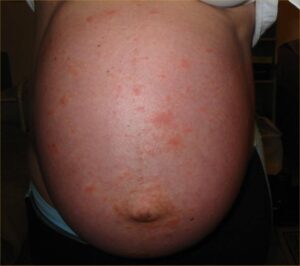
Your Answer: Polymorphic Eruption of Pregnancy
Explanation:This is Polymorphic Eruption of Pregnancy (PEP) also known as Pruritic Urticarial Papules and Plaques of Pregnancy (PUPPP). Papules and plaques form on the abdomen (commonly within striae). It is most common in women during their first pregnancy and typically occurs in the 3rd trimester.
-
This question is part of the following fields:
- Clinical Management
-
-
Question 118
Correct
-
Which spinal segment is the lumbar plexus derived from?
Your Answer: T12-L4
Explanation:The lumbar plexus is formed via contributions from the T12-L4 spinal cord segment. The plexus is responsible for the motor and sensory innervation of portions of the lower extremities and some parts of the lower abdomen and pelvis. Nerves arising from the plexus include the Iliohypogastric, ilioinguinal, genitofemoral, lateral femoral cutaneous, femoral nerve, obturator, and nerve to the lumbosacral trunk.
-
This question is part of the following fields:
- Anatomy
-
-
Question 119
Correct
-
Question 120
Incorrect
-
What is the most common causative organism in Fitzhugh Curtis syndrome and ophthalmic neonatorum?
Your Answer: Neisseria gonorrhoeae
Correct Answer: Chlamydia trachomatis
Explanation:A rare complication of pelvic inflammatory disease is Fitz Hugh Curtis syndrome which is perihepatitis leading to the formation of adhesions between the liver and the peritoneal surface. It is most commonly caused by chlamydia and gonorrhoea. Ophthalmia neonatorum is conjunctivitis which is also caused by these pathogens.
-
This question is part of the following fields:
- Clinical Management
-
-
Question 121
Correct
-
Among the following presentations during pregnancy, which is not associated with maternal vitamin D deficiency?
Your Answer: Large for gestational age
Explanation:Retarded skeletal growth resulting in small for gestational age babies are the usual outcomes of an untreated vitamin D deficiency in pregnancy.
Symptoms associated with maternal vitamin D deficiency during pregnancy are:
– Hypocalcemia in newborn.
– Development of Rickets later in life.
– Defective tooth enamel.
– Small for gestational age due to its effect on skeletal growth
– Fetal convulsions or seizures due to hypocalcemia. -
This question is part of the following fields:
- Obstetrics
-
-
Question 122
Correct
-
You receive a swab result from a patient who had complained of odorous vaginal discharge. It confirms bacterial vaginosis (BV). Which pathogen is most commonly associated with BV?
Your Answer: Gardnerella vaginalis
Explanation:BV typically presents as an increase in vaginal discharge and vaginal malodour caused by a change in vaginal bacterial flora. PV discharge due to BV is typically grey fluid that adheres to the vaginal mucosa. BV is a polymicrobial infection. Gardnerella is the most commonly associated pathogen. Other associated bacteria include Lactobacillus species, Prevotella, Mobiluncus, Bacteroides, Peptostreptococcus, Fusobacterium, Veillonella, Eubacterium species, Mycoplasma hominis, Urea plasma urealyticum and Streptococcus viridans.
-
This question is part of the following fields:
- Clinical Management
-
-
Question 123
Correct
-
You are reviewing a patient with a scan suggestive of partial molar pregnancy. What is the typical genotype of a partial molar pregnancy?
Your Answer: 69 XXY
Explanation:The partial mole is produced when an egg is fertilized by two sperm producing genotype 69 XXY (triploid). It can also occur when one sperm reduplicates itself yielding the genotypes 92 XXXY (tetraploid) though this is less common The genotype of a complete mole is typically 46 XX (diploid) but can also be 46 XY (diploid)
-
This question is part of the following fields:
- Clinical Management
-
-
Question 124
Correct
-
A 39 years old female patient comes to your office seeking contraceptive advice. She is a cigarette smoker. W
hat would you advice her?Your Answer: Progesterone only pills
Explanation:Absolute contraindications to OCs include breast cancer, history of deep venous thrombosis or pulmonary embolism, active liver disease, use of rifampicin, familial hyperlipidaemia, previous arterial thrombosis, and pregnancy, while relative contraindications include smoking, age over 35, hypertension, breastfeeding, and irregular spontaneous menstruation.
Progestin only pills are the safest and most effective contraceptive methods than the rest of the options.
-
This question is part of the following fields:
- Gynaecology
-
-
Question 125
Correct
-
At ovulation the surge in LH causes rupture of the mature oocyte via action on what?
Your Answer: Theca externa
Explanation:The luteinizing hormone (LH) surge during ovulation causes: Increases cAMP resulting in increased progesterone and PGF2 production PGF2 causes contraction of theca externa smooth muscle cells resulting in rupture of the mature oocyte
-
This question is part of the following fields:
- Endocrinology
-
-
Question 126
Correct
-
A 42 year old smoker attends clinic due to vulval soreness and shows you a number of vulval lumps. Biopsy is taken and reported as showing
Your Answer: Vulval intraepithelial neoplasia (VIN)
Explanation:This is VIN. Smoking is a risk factor. It is also more common in immunocompromised patients.
-
This question is part of the following fields:
- Clinical Management
-
-
Question 127
Incorrect
-
What is the average anteroposterior distance of the female pelvic outlet?
Your Answer: 11.5 cm
Correct Answer: 13 cm
Explanation:The pelvic outlet is bounded in front by the lower margin of the symphysis pubis, on each side by the descending ramus of the pubic bone, the ischial tuberosity and the sacrotuberous ligament, and posteriorly by the last piece of the sacrum. The AP diameter of the pelvic outlet is 13.5 cm and the transverse diameter is 11 cm.
-
This question is part of the following fields:
- Anatomy
-
-
Question 128
Incorrect
-
What type of drug is clavulanic acid?
Your Answer: Folate antagonist
Correct Answer: Beta-lactamase inhibitor
Explanation:Clavulanic acid is a beta-lactamase inhibitor that is most often combined with a penicillin to form Augmentin or Co-amoxiclav for greater antibiotic efficacy. The drug works by irreversibly binding to enzymes present in bacteria which posses the Beta-lactamase enzyme. This enzyme is responsible for inactivating Beta-Lactam antibiotics such as penicillin.
-
This question is part of the following fields:
- Clinical Management
-
-
Question 129
Incorrect
-
A 62-year-old woman complains of urinary incontinence for the past 12 months after having four pregnancies before the age of 30. She has to wear a 'pad' inside her pants all of the time because of this condition. She isn't on any hormone replacement therapy at the moment. Which of the following signs indicates that the incontinence is most likely true stress incontinence?
Your Answer: When she gets the feeling she has to void, she has to do so quickly or she wets herself.
Correct Answer: Only small quantities of urine ore lost each time she is incontinent.
Explanation:Only little volumes of urine are lost when her intra-abdominal pressure is elevated during coughing, laughing, jumping, and straining, which is the only symptom associated with real stress incontinence.
The other reactions are significantly more compatible with a detrusor instability diagnosis (also called urge incontinence).
If she had incontinence throughout pregnancy, it would have been stress in nature, which is what her current incontinence is. -
This question is part of the following fields:
- Gynaecology
-
-
Question 130
Correct
-
What is the definition of puberty in girls?
Your Answer: Becoming capable of sexual reproduction
Explanation:Puberty is the process of reproductive and sexual development and the maturation which changes a child into an adult.
-
This question is part of the following fields:
- Endocrinology
-
-
Question 131
Correct
-
Question 132
Correct
-
A 47-year-old woman is concerned about the use of hormone replacement therapy(HRT) after her menopause. She's still having normal menstrual cycles and hasn't experienced any hot flashes or other issues. She is especially concerned about Alzheimer's disease (AD), as her mother was diagnosed with the condition at the age of 75 and is now confined to a nursing facility. Which of the following is the best piece of advice about using HRT and the risk of Alzheimer's disease?
Your Answer: HRT given from the time of menopause at the age of approximately 50 years, reduces the decline of cognitive function, often seen as an early manifestation of AD.
Explanation:Although there have been some mixed results regarding the use of hormone replacement therapy (HRT) and the prevalence of Alzheimer’s disease (AD), there is little question that HRT started during menopause lowers cognitive decline, which is a common early symptom of AD.
This is in contrast to the effect shown when HRT is started at the age of 60-65, when the risk of Alzheimer’s disease rises.
There are no statistics on the effect of HRT on the incidence of Alzheimer’s disease when it is started before menopause, but it is apparent that it does not slow the progression of the disease or make advanced dementia less severe. -
This question is part of the following fields:
- Gynaecology
-
-
Question 133
Correct
-
Question 134
Correct
-
The maternal blood volume in normal pregnancy:
Your Answer: Increases up to 40%
Explanation:Changes in the cardiovascular system in pregnancy are profound and begin early in pregnancy, such that by eight weeks’ gestation, the cardiac output has already increased by 20%. The primary event is probably peripheral vasodilatation. This is mediated by endothelium-dependent factors, including nitric oxide synthesis, upregulated by oestradiol and possibly vasodilatory prostaglandins (PGI2). Peripheral vasodilation leads to a 25–30% fall in systemic vascular resistance, and to compensate for this, cardiac output increases by around 40% during pregnancy.
-
This question is part of the following fields:
- Physiology
-
-
Question 135
Correct
-
A 32 year old mother is in her first trimester of pregnancy with her second child. She is worried about infections in this pregnancy as her daughter was born with a 'blueberry muffin rash' and was soon found to have sensorineural deafness due to an infection. Which of the following infections is most likely?
Your Answer: Rubella
Explanation:Congenital infections can be the cause of various congenital abnormalities. Infection with the Rubella virus, part of the TORCH infections (toxoplasmosis, other organisms, rubella, cytomegalovirus, and herpes simplex), can lead to cardiac abnormalities, ophthalmic defects, sensorineural deafness and neurodevelopmental delays. At birth congenital rubella syndrome presents with a petechial rash characteristically dubbed a blueberry muffin rash, and hepatosplenomegaly with jaundice. Immunization of the mother against measles is an effective way of reducing the occurrence of congenital rubella syndrome.
-
This question is part of the following fields:
- Microbiology
-
-
Question 136
Correct
-
Immediate therapy for infants with suspected meconium should routinely include:
Your Answer: Clearing of the airway
Explanation:Immediate treatment for infants with suspected meconium aspiration syndrome is to clear/suction the airway. Intubation and tracheal toileting have remained a matter of debate till the most recent times. All neonates at risk of MAS who show respiratory distress should be admitted to a neonatal intensive care unit and monitored closely. The treatment is mainly supportive and aims to correct hypoxemia and acidosis with the maintenance of optimal temperature and blood pressure.
-
This question is part of the following fields:
- Obstetrics
-
-
Question 137
Incorrect
-
Which is the most useful tumour marker for monitoring of ovarian cancer patients?
Your Answer: CA 125
Correct Answer:
Explanation:CA-125 has found application as a tumour marker or biomarker that may be elevated in the blood of some patients with specific types of cancers, or other conditions that are benign. Increased level of CA125 appears in fifty percent of stage 1 ovarian cancer patients and more than 90% with stages 2-4 ovarian cancer. CA-125 is therefore a useful tool for detecting ovarian cancer after the onset of symptoms as well as monitoring response to treatment and for predicting a patient’s prognosis after treatment.
-
This question is part of the following fields:
- Gynaecology
-
-
Question 138
Correct
-
You see a 23 year old women in clinic complaining of vaginal discharge. The lab phone to tell you microscopy and staining shows a gram negative diplococcus. Which organism is most likely to be responsible?
Your Answer: Neisseria gonorrhoeae
Explanation:The most common gram negative diplococci include Neisseria, haemophilus and Moraxella.
-
This question is part of the following fields:
- Microbiology
-
-
Question 139
Incorrect
-
The posterior scrotal artery is a branch of which artery?
Your Answer: Inferior Rectal
Correct Answer: Internal Pudendal
Explanation:The posterior scrotal artery is a terminal branch of the perineal artery which is a branch of the internal pudendal artery.
-
This question is part of the following fields:
- Anatomy
-
-
Question 140
Correct
-
Question 141
Incorrect
-
Macrophages are derived from what type of white blood cell?
Your Answer: Natural Killer Cells
Correct Answer: Monocytes
Explanation:Macrophages are derived from monocytes. When monocytes come across a pathogen they differentiate into macrophages for phagocytosis to occur.
-
This question is part of the following fields:
- Immunology
-
-
Question 142
Correct
-
A 27-year-old female reports to the emergency department due to severe right lower quadrant pain. Complaints started yesterday, as the patient noticed intermittent right lower abdominal pain associated with increased activity. She rested for remainder of the day, but the pain still continued to increase. An hour ago, the pain suddenly became constant and severe, associated with nausea and vomiting. The patient does not complaint of any radiation of pain.
On examination patient's temperature is noted to be 37.2 C (99 F), blood pressure is 130/80 mm Hg, and pulse rate is 98/min. On palpation of the right lower quadrant there is tenderness without rebounding or guarding. Urine pregnancy test conducted came to be negative.
Considering the following additional informations, which would be most appropriate in establishing the diagnosis of this patient?Your Answer: History of ovarian cysts
Explanation:Common Risk factors for Ovarian torsion are presence of an ovarian mass, women who are in their reproductive age and history of infertility treatment with ovulation induction.
Common clinical presentations include sudden onset of unilateral pelvic pain along with nausea & vomiting and presence of a palpable adnexal mass. An adnexal mass with absent Doppler flow to ovary can be noted in ultrasound.
Laparoscopy with detorsion, ovarian cystectomy and oophorectomy if necrosis or malignancy is found are the common treatment options.Acute lower abdominal pain in a nonpregnant women can have various causes including pathologies of the gastrointestinal, gynecologic, or urologic systems due to the close proximity of these structures. All of these cases have classic presentations which help to characterize the disease process and thereby to differentiate the diagnosis.
In the given case, patient presents with right lower quadrant pain which is classic for ovarian torsion, occurring due to rotation of the ovary around the infundibulopelvic ligament, causing ovarian vessel occlusion. Although ovarian torsion can occur in any women in their reproductive-age, is seen more commonly in those with a history of ovarian cysts (eg, hemorrhagic cyst) or masses (eg, mature cystic teratoma) because of the greater size and density of the ovary which makes it prone to rotation and subsequent torsion. Patients will initially have intermittent pain associated with activity, as in this patient, due to partial ovarian torsion, this initial pain resolves when the adnexa spontaneously untwists and blood flow returns. When this progresses to complete ovarian torsion, patients typically develop sudden-onset, severe, nonradiating pain due to persistent ischemia, which is often associated with nausea and vomiting.
Ovarian torsion can be clinically diagnosed, but a Doppler ultrasound is performed to evaluate ovarian blood flow and also to confirm the diagnosis. Surgical detorsion to prevent ovarian necrosis and cystectomy/oophorectomy are the usual treatment options.
Any association of urinary symptoms will help to establish a urologic cause of acute right lower quadrant pain like pyelonephritis, nephrolithiasis, etc. However, patients with urologic conditions typically presents with suprapubic or flank pain which radiates to the right lower quadrant, making this diagnosis less likely in the given case.
A family history of malignancy usually does not aid in the diagnosis of acute lower abdominal pain. Although some ovarian cancers are inherited, patients with ovarian cancer typically have a chronic, indolent course with associated weight loss, early satiety, and abdominal distension.
Having multiple sexual partners is considered a risk factor for sexually transmitted infections and pelvic inflammatory disease, which can be a cause for lower abdominal pain. However, patients will typically have fever, constant and diffused pelvic pain along with rebound and guarding.
Recent sick contacts are a risk factor for gastroenteritis, which can present with nausea, vomiting and abdominal pain. However, in this case patient will typically have diffuse, cramping abdominal pain which will worsen gradually; along with persistent vomiting and diarrhea.
Ovarian torsion typically causes intermittent lower abdominal pain followed by sudden-onset of severe, nonradiating unilateral pain with associated nausea and vomiting. Ovarian torsion can occur in women in their reproductive-age, particularly those with a history of ovarian cysts.
-
This question is part of the following fields:
- Obstetrics
-
-
Question 143
Correct
-
A 33-year-old woman at 37 weeks of gestation presented to the emergency department due to breech presentation which was confirmed on ultrasound. There is also a failed external cephalic version.
Which of the following is considered the most appropriate next step in managing the patient's condition?Your Answer: Elective caesarean delivery at 38 weeks of gestation
Explanation:Breech presentation refers to the foetus in the longitudinal lie with the buttocks or lower extremity entering the pelvis first.
The current recommendation for the breech presentation at term includes offering external cephalic version (ECV) to those patients that meet criteria, and for those whom are not candidates or decline external cephalic version, a planned caesarean section for delivery sometime after 39 weeks.
-
This question is part of the following fields:
- Obstetrics
-
-
Question 144
Correct
-
A patient attends clinic with a vaginal prolapse. On examination the vaginal prolapse is visible 1.5cm above the plane of the hymen. According to the POPQ classification what grade is this prolapse?
Your Answer: Grade 1
Explanation:This is a grade 1 prolapse
-
This question is part of the following fields:
- Anatomy
-
-
Question 145
Incorrect
-
Question 146
Correct
-
Which one of the following statements regarding Turner's syndrome is true?
Your Answer: Usually presents with primary amenorrhea
Explanation:Turner syndrome patients present with primary amenorrhea, have non functional or streak ovaries and cant conceive. They are 45X genetically.
-
This question is part of the following fields:
- Embryology
-
-
Question 147
Correct
-
A biophysical profile includes all of the following assessment parameters EXCEPT:
Your Answer: Fetal weight
Explanation:The biophysical profile is a composite test that collects 5 indicators of fetal well-being, including fetal heart rate reactivity, breathing movements, gross body movements, muscular tone, and quantitative estimation of amniotic fluid volume. The assessment of fetal heart rate is accomplished by performing a nonstress test, whereas the latter 4 variables are observed using real-time ultra-sonography.
-
This question is part of the following fields:
- Biophysics
-
-
Question 148
Correct
-
Which one of the following statements regarding fetal blood pH is correct?
Your Answer: Can be measured during labour
Explanation:A sample for fetal blood pH can be taken during the labour. The mother should be lying in a left lateral position.
-
This question is part of the following fields:
- Physiology
-
-
Question 149
Correct
-
One week after the delivery of her baby at the 38th week of pregnancy, a 33-year-old woman developed deep vein thrombosis (DVT). She has been on enoxaparin therapy for DVT. Upon discharge, there is a plan to start her on warfarin. When this was explained, the patient was reluctant to take warfarin since she thinks it might cause problems to the baby because she is planning to breastfeed.
Which of the following is considered correct regarding warfarin and breastfeeding?Your Answer: She should continue to breastfeed her baby while she is on warfarin
Explanation:No adverse reactions in breastfed infants have been reported from maternal warfarin use during lactation, even with a dose of 25 mg daily for 7 days. There is a consensus that maternal warfarin therapy during breastfeeding poses little risk to the breastfed infant.
-
This question is part of the following fields:
- Obstetrics
-
-
Question 150
Correct
-
A 26 year old lady comes to see you in the antenatal clinic. She is 8 weeks pregnant and is concerned as she has a new cat and her friend told her she shouldn't be changing cat litter when pregnant. You send bloods which show high IgM for toxoplasmosis gondii. Which of the following is an appropriate treatment option?
Your Answer: Spiramycin
Explanation:There are 2 treatment options: Spiramycin ASAP if foetus not infected or status of the foetus not known. This reduces risk of transplacental infection. This is continued until term, or until fetal infection is documented. Pyrimethamine, sulfadiazine and folic acid where fetal infection is known e.g. positive amniotic fluid PCR. Monitoring for haemotoxicity required. Pyrimethamine should be avoided in the 1st trimester as teratogenic
-
This question is part of the following fields:
- Microbiology
-
SESSION STATS - PERFORMANCE PER SPECIALTY
