-
Question 1
Incorrect
-
A 29 year old man presents to ED followed an alleged assault whilst out drinking. He received blunt trauma to his right axilla. He is complaining of difficulty abducting his right arm above the level of his shoulder, and on inspection, the inferior angle of his right scapula protrudes more than that of his left scapula. Which of the following nerves has most likely been affected:
Your Answer: Thoracodorsal nerve
Correct Answer: Long thoracic nerve
Explanation:Damage to the long thoracic nerve results in weakness/paralysis of the serratus anterior muscle causing difficulty abducting the upper limb above 90 degrees and giving a ‘winged ‘ scapula appearance where the medial border, particularly the inferior angle, of the scapula moves laterally and posteriorly away from the thoracic wall (this becomes more pronounced if the patient presses the upper limb against a wall).
-
This question is part of the following fields:
- Anatomy
- Upper Limb
-
-
Question 2
Correct
-
Which of the following is characterised by passive carrier-mediated transport down a chemical concentration gradient:
Your Answer: Facilitated diffusion
Explanation:Facilitated diffusion is the process of spontaneous passive transport of molecules or ions down their concentration gradient across a cell membrane via specific transmembrane transporter (carrier) proteins. The energy required for conformational changes in the transporter protein is provided by the concentration gradient rather than by metabolic activity.
-
This question is part of the following fields:
- Basic Cellular
- Physiology
-
-
Question 3
Correct
-
A young male has presented to you with respiratory depression and small pupils on examination. You diagnose opioid overdose and immediately start therapy with Naloxone.
Which of the following statements is TRUE regarding naloxone?Your Answer: It can be given by a continuous infusion if repeated doses are required
Explanation:Naloxone is a short-acting, specific antagonist of mu(μ)-opioid receptors. It is used to reverse the effects of opioid toxicity.
It can be given by a continuous infusion if repeated doses are required and the infusion rate is adjusted according to the vital signs. Initially, the infusion rate can be set at 60% of the initial resuscitative IV dose per hour.
Naloxone has a shorter duration of action (6-24 hours) than most opioids and so close monitoring according to the respiratory rate and depth of coma and repeated injections are necessary. When repeated doses are needed in opioid addicts, naloxone administration may precipitate a withdrawal syndrome with abdominal cramps, nausea and diarrhoea, but these usually settle within 2 hours.
An initial dose of 0.4 to 2 mg can be given intravenously and can be repeated at 2 to 3-minute intervals to a maximum of 10mg.
If the intravenous route is inaccessible, naloxone can be administered via an IO line, subcutaneously (SQ), IM, or via the intranasal (IN) route.
-
This question is part of the following fields:
- CNS Pharmacology
- Pharmacology
-
-
Question 4
Correct
-
A 59-year-old man presents with a goitre, increased sweating, weight loss, and palpitations. A diagnosis of hyperthyroidism is suspected.
What is the most appropriate first-line investigation?
Your Answer: TSH level
Explanation:A thyroid function test is used in the diagnosis of hyperthyroidism.
Serum TSH should be the first-line investigation for patients with suspected hyperthyroidism as it has the highest sensitivity and specificity for hyperthyroidism.A normal TSH level almost always excludes the diagnosis, though there are rare exceptions to this.
Antithyroglobulin antibodies are commonly present in Graves’ disease, but the test has a sensitivity of 98% and specificity of 99, and is not widely available.
Radioactive iodine uptake scan using iodine-123 – shows low uptake in thyroiditis but high in Graves’ disease and toxic multinodular goitre. It is however, not first-line investigation in this case
Thyroid ultrasound scan – is a cost-effective and safe alternative to the radioactive iodine uptake scan.
-
This question is part of the following fields:
- Endocrine Physiology
- Physiology
-
-
Question 5
Correct
-
A 40-year-old man complains of pain and redness in his lower thigh due to an insect bite. He was diagnosed with cellulitis. Select the first-line antibiotic for cellulitis.
Your Answer: Flucloxacillin
Explanation:Cellulitis is most commonly caused by bacteria from the group Aß-hemolytic streptococcus.
Cellulitis can be caused by animal bites. For uncomplicated cellulitis, flucloxacillin is the first-line antibiotic. Because it is beta-lactamase stable, it is efficient against Staphylococcus aureus.
-
This question is part of the following fields:
- Infections
- Microbiology
-
-
Question 6
Correct
-
Digoxin is contraindicated in all of the following EXCEPT for:
Your Answer: Asthma
Explanation:Digoxin is contraindicated in:Supraventricular arrhythmias associated with accessory conduction pathways e.g. Wolff-Parkinson-White syndromeVentricular tachycardia or fibrillationHeart conduction problems e.g. second degree or intermittent complete heart blockHypertrophic cardiomyopathy (unless concomitant atrial fibrillation and heart failure but should be used with caution)
-
This question is part of the following fields:
- Cardiovascular
- Pharmacology
-
-
Question 7
Correct
-
A 30-year-old woman with type 1 diabetes mellitus is brought in drowsy and confused. Her BM is 2.2 mmol/l and a dose of IM glucagon is administered.
What is the principal stimulus for the secretion of glucagon?Your Answer: Hypoglycaemia
Explanation:Glucagon, a peptide hormone, is produced and secreted by alpha cells of the islets of Langerhans, located in the endocrine portion of the pancreas.
Its main physiological role is stimulation of hepatic glucose output leading to increase in blood glucose. It is the major counter-regulatory hormone to insulin in maintaining glucose homeostasis.
The principal stimulus for the secretion of glucagon is hypoglycaemia. Hypoglycaemia then stimulates:
Glycogenolysis
Gluconeogenesis
Lipolysis in adipose tissue leading to increased glycaemia.Secretion of glucagon is also stimulated by arginine, alanine, adrenaline, acetylcholine and cholecystokinin
Secretion of glucagon is inhibited by:
Insulin
Somatostatin
Increased free fatty acids
Increased urea production -
This question is part of the following fields:
- Endocrine Physiology
- Physiology
-
-
Question 8
Incorrect
-
Which of the following best describes the correct administration of adrenaline for a shockable rhythm in adult advanced life support?
Your Answer: Give 0.5 mg of adrenaline after the first shock and every 3 - 5 minutes thereafter
Correct Answer: Give 1 mg of adrenaline after the second shock and every 3 - 5 minutes thereafter
Explanation:Give adrenaline 1 mg IV (IO) (10 mL of 1:10,000 solution) after the 2nd shock for adult patients in cardiac arrest with a shockable rhythm. Repeat adrenaline 1 mg IV (IO) every 3-5 minutes whilst ALS continues.
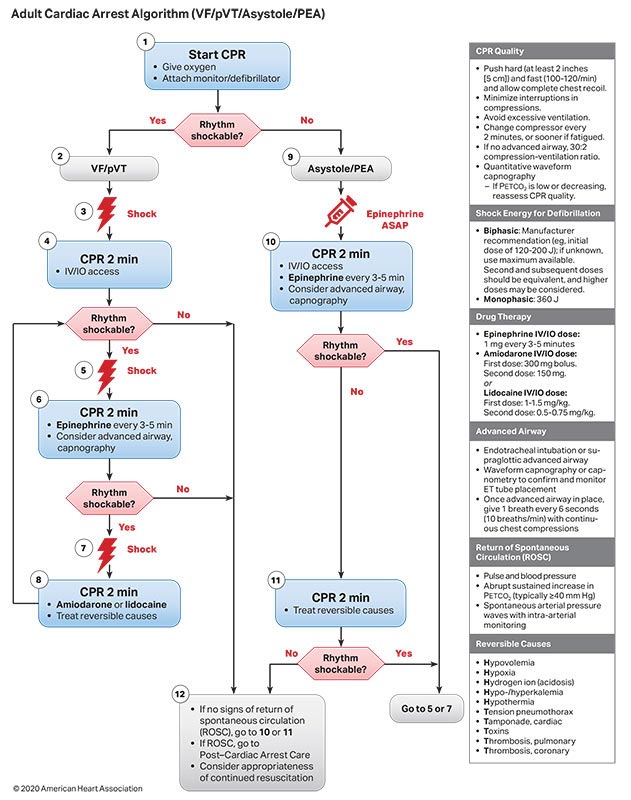
-
This question is part of the following fields:
- Cardiovascular
- Pharmacology
-
-
Question 9
Incorrect
-
A 60-year-old man comes to your department with complaints of epigastric pain. There is a history of rheumatoid arthritis and he has been taking ibuprofen 200 mg TDS for the last 2 weeks.
The following scenarios would prompt you to consider the co-prescription of a PPI for gastroprotection with NSAIDs EXCEPT?
Your Answer: Co-prescription of fluoxetine
Correct Answer: Long-term use for chronic back pain in a patient aged 30
Explanation:The current recommendations by NICE suggest that gastro-protection should be considered if patients have ≥1 of the following:
Aged 65 or older
– Using maximum recommended dose of an NSAID
– History of peptic ulcer or GI bleeding
– Concomitant use of: antidepressants like SSRIs and SNRIs, Corticosteroids, anticoagulants and low dose aspirin
– Long-term NSAID usage for: long-term back pain if older than 45 and patients with OA or RA at any ageThe maximum recommended dose of ibuprofen is 2.4 g daily and this patient is on 400 mg of ibuprofen TDS.
-
This question is part of the following fields:
- Musculoskeletal Pharmacology
- Pharmacology
-
-
Question 10
Incorrect
-
A trauma victim who has been intubated is tachycardic, hypotensive, and has a poor urine output. You feel she is dehydrated and decide to use a central venous catheter to help you manage her. As part of this, you keep an eye on the waveform of central venous pressure (CVP).
Which of the following cardiac cycle phases corresponds to the CVP waveform's 'a wave'?Your Answer: Early diastole
Correct Answer: End diastole
Explanation:The pressure measured in the right atrium or superior vena cava is known as central venous pressure (CVP). In a spontaneously breathing subject, the usual CVP value is 0-8 cmH2O (0-6 mmHg).
The structure of the CVP waveform is as follows:
The CVP’s components are listed in the table below:
Component of the waveform
The cardiac cycle phase.
mechanical event
mechanical event Diastole
Atrial contraction
a wave
C wave
v wave
Early systole
The tricuspid valve closes and bulges
Late Systole
Filling of the atrium with systolic blood
x descent
y descent
Mid systole
Relaxation of the atrium
Early diastole
Filling of the ventricles at an early stage -
This question is part of the following fields:
- Cardiovascular Physiology
- Physiology
-
-
Question 11
Correct
-
The hypothalamus produces antidiuretic hormone (ADH), also known as vasopressin, which is a peptide hormone. It is important for maintaining water and electrolyte balance, as well helping control arterial pressure.
To have an effect on blood arteries, ADH binds to which of the following receptors?Your Answer: V 1 receptor
Explanation:ADH, or antidiuretic hormone, is a hormone that regulates water and electrolyte balance. It is released in response to a variety of events, the most important of which are higher plasma osmolality or lower blood pressure. ADH increases plasma volume and blood pressure via acting on the kidneys and peripheral vasculature.
It causes vasoconstriction by binding to peripheral V1 Receptors on vascular smooth muscle via the IP3 signal transduction and Rho-kinase pathways. The systemic vascular resistance and arterial pressure rise as a result. High levels of ADH appear to be required for this to have a major impact on arterial pressure, such as in hypovolaemic shock.
-
This question is part of the following fields:
- Physiology
- Renal Physiology
-
-
Question 12
Incorrect
-
A 28-year-old patient who has been in a car accident needs to be intubated using a rapid sequence induction. As an induction agent, you intend to use etomidate.
Etomidate works by interacting with which type of receptor?Your Answer: N-methyl-D-aspartate (NMDA)
Correct Answer: Gamma-aminobutyric acid (GABA)
Explanation:Etomidate is a carboxylated imidazole derivative with a short half-life that is primarily used to induce anaesthesia.
It is thought to modulate fast inhibitory synaptic transmission in the central nervous system by acting on GABA type A receptors.
The dose for anaesthesia induction is 0.3 mg/kg. Etomidate takes 10-65 seconds to take effect after an intravenous injection, and it lasts 6-8 minutes. With repeated administration, the effects are non-cumulative.The relative cardiovascular stability of etomidate is noteworthy. During induction, it causes less hypotension than thiopental sodium and propofol. It’s also linked to a quick recovery without the hangover.
Etomidate is a strong steroidogenesis inhibitor. The drug inhibits the enzymes responsible for adrenal 11 beta-hydroxylase and cholesterol cleavage, resulting in a decrease in cortisol and aldosterone synthesis for up to 24 hours after administration. It should not be used to maintain anaesthesia because of the adrenocortical suppression.
Other side effects associated with etomidate use include:
Vomiting and nausea
The injection causes pain (in up to 50 percent )
Phlebitis and thrombosis of the veins
Heart block and arrhythmias
Hyperventilation
Apnoea and respiratory depression
It has the potential to cause both hypo- and hypertension.
Critically ill patients have a higher mortality rate. -
This question is part of the following fields:
- Anaesthesia
- Pharmacology
-
-
Question 13
Correct
-
Which of these is NOT a naturally occurring anticoagulant:
Your Answer: Factor V Leiden
Explanation:It’s crucial that thrombin’s impact is restricted to the injured site. Tissue factor pathway inhibitor (TFPI), which is produced by endothelial cells and found in plasma and platelets, is the first inhibitor to function. It accumulates near the site of harm induced by local platelet activation. Xa and VIIa, as well as tissue factor, are inhibited by TFPI. Other circulating inhibitors, the most potent of which is antithrombin, can also inactivate thrombin and other protease factors directly. Coagulation cofactors V and VIII are inhibited by protein C and protein S. Tissue plasminogen activator (TPA) from endothelial cells facilitates fibrinolysis by promoting the conversion of plasminogen to plasmin.
-
This question is part of the following fields:
- Basic Cellular
- Physiology
-
-
Question 14
Correct
-
Regarding antimuscarinic antispasmodics, which of the following statements is CORRECT:
Your Answer: They are contraindicated in paralytic ileus.
Explanation:Antimuscarinics are contraindicated in paralytic ileus. Antimuscarinics reduce intestinal motility by blocking muscarinic acetylcholine receptors and relaxing smooth muscle. Hyoscine butylbromide is advocated as a gastrointestinal antispasmodic, but it is poorly absorbed and thus has limited clinical utility. Antimuscarinics cause a reduction in bronchial secretions (they can be used to this effect in palliative patients). Antispasmodics are occasionally of value in treating abdominal cramp associated with diarrhoea but they should not be used for primary treatment. Antispasmodics should be avoided in young children with gastroenteritis because they are rarely effective and have troublesome side effects.
-
This question is part of the following fields:
- Gastrointestinal
- Pharmacology
-
-
Question 15
Correct
-
Which of the following is NOT an adverse effect of amitriptyline:
Your Answer: Hypokalaemia
Explanation:Adverse effects include:
Antimuscarinic effects: Dry mouth, Blurred vision, Constipation, Urinary retention, Sedation, Confusion
Cardiovascular effects: Heart block, Arrhythmias, Tachycardia, Postural hypotension, QT-interval prolongation, Hepatic impairment, Narrow-angle glaucoma -
This question is part of the following fields:
- Central Nervous System
- Pharmacology
-
-
Question 16
Correct
-
A 55-year-old woman with a known history of bronchiectasis has lung function testing carried out and is found to have significant airways obstruction.
Which of the following lung volumes or capacities is LEAST likely to be decreased in this case? Select ONE answer only.Your Answer: Functional residual capacity
Explanation:Obstructive lung disorders are characterised by airway obstruction. Many obstructive diseases of the lung result from narrowing of the smaller bronchi and larger bronchioles, often because of excessive contraction of the smooth muscle itself.
In obstructive lung disease, FEV1is reduced to <80% of normal and FVC is usually reduced but to a lesser extent than FEV1. The FEV1/FVC ratio is reduced to <0.7.
Types of obstructive lung disorders include:
Chronic obstructive pulmonary disease (COPD)
Asthma
Bronchiectasis
The following table outlines the effects of obstructive lung disease on the various lung volumes and capacities:
Increased by obstructive lung disease
Decreased in obstructive lung disease
Total lung capacity (TLC)
Residual volume (RV)
Functional residual capacity (FRC) Residual volume/total lung capacity (RV/TLC) ratio
Vital capacity (VC)
Inspiratory capacity (IC)
Inspiratory reserve volume (IRV) Expiratory reserve volume (ERV)
According to the latestNICE guidelines(link is external), airflow obstruction is defined as follows:
Mild airflow obstruction = an FEV1of >80% in the presence of symptoms
Moderate airflow obstruction = FEV1of 50-79%
Severe airflow obstruction = FEV1of 30-49%
Very severe airflow obstruction = FEV1<30%. -
This question is part of the following fields:
- Physiology
- Respiratory Physiology
-
-
Question 17
Incorrect
-
Regarding drug interactions with erythromycin, which of the following statements is INCORRECT:
Your Answer: Erythromycin increases plasma levels of carbamazepine.
Correct Answer: Erythromycin decreases plasma levels of warfarin.
Explanation:Erythromycin and clarithromycin inhibit cytochrome P450-mediated metabolism of warfarin, phenytoin and carbamazepine and may lead to accumulation of these drugs. There is an increased risk of myopathy (due to cytochrome P450 enzyme CYP3A4 inhibition) if erythromycin or clarithromycin is taken with atorvastatin or simvastatin. Erythromycin increases plasma concentrations of theophylline, and theophylline may also reduce absorption of oral erythromycin. All macrolides can prolong the QT-interval and concomitant use of drugs that prolong the QT interval is not recommended.
-
This question is part of the following fields:
- Infections
- Pharmacology
-
-
Question 18
Incorrect
-
Polyuria and polydipsia develop in a patient with a history of affective disorder, who has been on long-term lithium treatment. She has a fluid deprivation test done because she is suspected of having nephrogenic diabetic insipidus. Which of the following urine osmolality findings would be the most reliable in confirming the diagnosis?
Your Answer:
Correct Answer: After fluid deprivation <300 mosmol/kg, after IM desmopressin >800 mosmol/kg
Explanation:The inability to produce concentrated urine is a symptom of diabetes insipidus. Excessive thirst, polyuria, and polydipsia are all symptoms of this condition. There are two forms of diabetes insipidus: Nephrogenic diabetes insipidus and cranial (central) diabetes insipidus.
A lack of ADH causes cranial diabetic insipidus. Patients with cranial diabetes insipidus can have a urine output of up to 10-15 litres per 24 hours, however most patients can maintain normonatraemia with proper fluid consumption. Thirty percent of cases are idiopathic, while another thirty percent are caused by head injuries. Neurosurgery, brain tumours, meningitis, granulomatous disease (e.g. sarcoidosis), and medicines like naloxone and phenytoin are among the other reasons. There is also a very rare hereditary type that is linked to diabetes, optic atrophy, nerve deafness, and bladder atonia.
Renal resistance to the action of ADH causes nephrogenic diabetes insipidus. Urine output is significantly increased, as it is in cranial diabetes insipidus. Secondary polydipsia can keep serum sodium levels stable or raise them. Chronic renal dysfunction, metabolic diseases (e.g., hypercalcaemia and hypokalaemia), and medications, such as long-term lithium use and demeclocycline, are all causes of nephrogenic diabetes insipidus.
The best test to establish if a patient has diabetes insipidus vs another cause of polydipsia is the water deprivation test, commonly known as the fluid deprivation test. It also aids in the distinction between cranial and nephrogenic diabetes insipidus. Weight, urine volume, urine osmolality, and serum osmolality are all measured after patients are denied water for up to 8 hours. At the end of the 8-hour period, 2 micrograms of IM desmopressin is given, and measures are taken again at 16 hours.
The following are the way results are interpreted:
Urine osmolality after fluid deprivation : Urine osmolality after IM desmopressin
Cranial diabetes insipidus: <300 mosmol/kg : >800 mosmol/kg
Nephrogenic diabetes insipidus: <300 mosmol/kg : <300 mosmol/kg
Primary polydipsia: >800 mosmol/kg : >800 mosmol/kg -
This question is part of the following fields:
- Physiology
- Renal Physiology
-
-
Question 19
Incorrect
-
The sensory innervation of the oropharynx is provided by which of the following nerves:
Your Answer:
Correct Answer: Glossopharyngeal nerve
Explanation:Each subdivision of the pharynx has a different sensory innervation:the nasopharynx is innervated by the maxillary nervethe oropharynx is innervated by the glossopharyngeal nervethe laryngopharynx is innervated by the vagus nerve.
-
This question is part of the following fields:
- Anatomy
- Head And Neck
-
-
Question 20
Incorrect
-
Which of the following features of cell damage tends to be reversible:
Your Answer:
Correct Answer: Swelling of endoplasmic reticulum and some mitochondria
Explanation:Features of cell damage that tend to be reversible include: swelling of endoplasmic reticulum and some mitochondrialoss of ribosomescell stress response
Features of cell damage that tend to be irreversible include: loss of nucleolus, no ribosomes, swelling of all mitochondria, nuclear condensation, membrane blebs and holes, lysosome rupture, fragmentation of all inner membranes, nuclear breakup -
This question is part of the following fields:
- Inflammatory Responses
- Pathology
-
-
Question 21
Incorrect
-
A patient presents with a history of renal problems, generalised weakness and palpitations. Her serum potassium levels are measured and come back at 6.2 mmol/L. An ECG is performed, and it shows some changes that are consistent with hyperkalaemia.
Which of the following ECG changes is usually the earliest sign of hyperkalaemia? Select ONE answer only.Your Answer:
Correct Answer: Peaked T waves
Explanation:Hyperkalaemia causes a rapid reduction in resting membrane potential leading to increased cardiac depolarisation and muscle excitability. This in turn results in ECG changes which can rapidly progress to ventricular fibrillation or asystole. Very distinctive ECG changes that progressively change as the K+level increases:
K+>5.5 mmol/l – peaked T waves (usually earliest sign of hyperkalaemia), repolarisation abnormalities
K+>6.5 mmol/l – P waves widen and flatten, PR segment lengthens, P waves eventually disappear
K+>7.0 mmol/l – Prolonged QRS interval and bizarre QRS morphology, conduction blocks (bundle branch blocks, fascicular blocks), sinus bradycardia or slow AF, development of a sine wave appearance (a pre-terminal rhythm)
K+>9.0 mmol/l – Cardiac arrest due to asystole, VF or PEA with a bizarre, wide complex rhythm. -
This question is part of the following fields:
- Physiology
- Renal Physiology
-
-
Question 22
Incorrect
-
A 66-year-old female presents to the Emergency Department with a nose bleed. She says that she has been having frequent episodes of nose bleeds over the past four months, along with increasing fatigue and some weight loss. On examination, she has a diffuse petechial rash and hypertrophy of the gingiva.
Which one of the following conditions is this patient most likely to have?Your Answer:
Correct Answer: Acute myeloid leukaemia (AML)
Explanation:The history of nosebleeds and fatigue, and gingival hyperplasia presents a typical picture of acute myeloid leukaemia. Leukemic infiltrates within the gingiva cause hypertrophy and distinguish this condition from other types of leukaemia. The fatigue is secondary to anaemia, while the nosebleeds are caused by thrombocytopenia secondary to leukemic infiltration of bone marrow. Patients may also report frequent infections secondary to neutropenia and hepatosplenomegaly.
-
This question is part of the following fields:
- Haematology
- Pathology
-
-
Question 23
Incorrect
-
An elderly female has a bacterial infection and you are asked to prescribe an antibiotic to her. This antibiotic is a nucleic acid synthesis inhibitor.
Which of the following antimicrobial drugs will be prescribed to this patient?Your Answer:
Correct Answer: Metronidazole
Explanation:Metronidazole and the other 5-nitroimidazole agents inhibit nucleic acid synthesis by forming toxic free radical metabolites in the bacterial cell that damage DNA.
Vancomycin inhibits cell wall peptidoglycan formation by binding the D-Ala-D-Ala portion of cell wall precursors.
Erythromycin inhibits protein synthesis and blocks translocation by binding to the 23S rRNA of the 50S ribosomal subunit.
Chloramphenicol blocks peptidyl transferase at 50S ribosomal subunit.
Gentamicin, an aminoglycoside antibiotic, acts by binding to the 30S subunit of the bacterial ribosome inhibiting the binding of aminoacyl-tRNA and thus preventing initiation of protein synthesis.
An overview of the different mechanisms of action of the various types of antimicrobial agents is shown below:
1. Inhibition of cell wall synthesis
– Penicillins
– Cephalosporins
– Vancomycin
2. Disruption of cell membrane function
– Polymyxins
– Nystatin
– Amphotericin B
3. Inhibition of protein synthesis
– Macrolides
– Aminoglycosides
– Tetracyclines
– Chloramphenicol
4. Inhibition of nucleic acid synthesis
– Quinolones
– Trimethoprim
– 5-nitroimidazoles
– Rifampicin
5. Anti-metabolic activity
– Sulphonamides
– Isoniazid -
This question is part of the following fields:
- Infections
- Pharmacology
-
-
Question 24
Incorrect
-
A 18 year old male presents to the GP with painless asymmetrical cervical lymphadenopathy. Histological examination of a biopsied lymph node demonstrates Reed-Sternberg cells. What is the most likely diagnosis:
Your Answer:
Correct Answer: Hodgkin lymphoma
Explanation:Hodgkin’s lymphoma is a malignant tumour of the lymphatic system that is characterised histologically by the presence of Reed-Sternberg cells (multinucleated giant cells). The peak incidence is in young adults aged 20-35, and there is a slight male predominance.
The following are recognised risk factors for Hodgkin’s lymphoma:
Male gender
Age 20-35
Positive family history
Epstein-Barr virus infection
Immunosuppression including HIV infection
Prolonged use of human growth hormone
Most patients present with an enlarged, but otherwise asymptomatic lymph node. The most commonly affected lymph nodes are in the supraclavicular and lower cervical areas. Other common clinical features include shortness of breath and chest discomfort secondary to mediastinal mass. Mediastinal masses are sometimes discovered as incidental findings on routine chest X-rays. Approximately 30% of patients with Hodgkin’s lymphoma develop splenomegaly.
‘B’ symptoms occur in approximately 25% of patients. The ‘B’ symptoms of Hodgkin’s lymphoma are:
Fever (>38ºC)
Night sweats
Weight loss (>10% over 6 months)
Pain after alcohol consumption is a pathognomonic sign of Hodgkin’s lymphoma, it is, however, not a ‘B’ symptom. It is rare though, only occurring in 2-3% of patients with Hodgkin’s lymphoma.The Ann Arbour clinical staging is as follows:
Stage I: one involved lymph node group
Stage II two involved lymph node groups on one side of the diaphragm
Stage III: lymph node groups involved on both sides of the diaphragm
Stage IV: Involvement of extra-nodal tissues, such as the liver or bone marrow
Diagnosis is made by lymph node biopsy, which should be taken from a sufficiently large specimen or excisional biopsy, as opposed to a fine needle biopsy. The Reed-Sternberg cell is the most useful diagnostic feature. This is a giant cell with twin mirror-image nuclei and prominent ‘owl’s eye’ nucleoli.
The Reed-Sternberg cell of Hodgkin’s Lymphoma
Histological typing depends upon the other cells within the diseased tissue. Nodular sclerosing is the most common type of Hodgkin’s lymphoma. Lymphocyte-depleted and lymphocyte-predominant are rare subtypes.
The majority of cases can be successfully treated, and unlike many other malignancies even if the first-line treatment fails, a cure can often be achieved with second-line therapies. Stage 1 Hodgkin’s lymphoma is usually treated with radiotherapy alone, but more advanced stages require combination chemotherapy. In localised disease treated with irradiation, there is a 5-year survival rate of greater than 80%. In disseminated disease treated with chemotherapy, the 5-year survival falls to around 50%. Overall, a 5-year survival of >70% should be achieved. -
This question is part of the following fields:
- Haematology
- Pathology
-
-
Question 25
Incorrect
-
A 34-year-old woman was diagnosed with multiple sclerosis two years ago. Her symptoms have been steadily deteriorating, with no intervals of remission in sight.
Which of the following aspects of nerve conduction is disrupted by multiple sclerosis?
Your Answer:
Correct Answer: Saltatory conduction
Explanation:Local currents propagate action potentials down the axons of neurons. This local current flow following depolarisation results in the depolarisation of the neighbouring axonal membrane, and when this region approaches the threshold, more action potentials are generated and so forth. Due to the refractory period, portions of the membrane that have recently depolarized will not depolarize again, resulting in the action potential only being able to go in one direction.
The square root of axonal diameter determines the velocity of the action potential; the axons with the biggest diameter have the quickest conduction velocities. When a neuron is myelinated, the speed of the action potential rises as well.
The myelin sheath is an insulating coating that surrounds certain neural axons. By increasing membrane resistance and decreasing membrane capacitance, the myelin sheath improves conduction. This enables faster electrical signal transmission via a neuron, making them more energy-efficient than non-myelinated neuronal axons.
Electrical impulses are quickly transmitted from one node to the next, causing depolarization of the membrane above the threshold and triggering another action potential, which is then transmitted to the next node. An action potential is rapidly conducted down a neuron in this manner. Saltatory conduction is the term for this.
Multiple sclerosis is an example of a clinical disorder in which the myelin sheath is affected. It is an immune-mediated disorder in which certain nerve cells in the brain and spinal cord become demyelinated. The ability of some areas of the nervous system to properly transmit action potentials is disrupted by demyelination, resulting in a variety of neurological symptoms and indications. -
This question is part of the following fields:
- Basic Cellular Physiology
- Physiology
-
-
Question 26
Incorrect
-
A 26-year-old female cuts her hand on a knife while preparing dinner but the bleeding stops within a few minutes.
Which one of the following cells will be among the first to be present at the wound site to be involved in haemostasis?Your Answer:
Correct Answer: Platelets
Explanation:Platelets are the first cells to be attracted to the wound site due to the release of the Von Willebrand factor from the damaged endothelium. Platelets, in turn, release cytokines such as platelet-derived growth factor, which will attract other inflammatory cells to the wound site.
-
This question is part of the following fields:
- General Pathology
- Pathology
-
-
Question 27
Incorrect
-
Which of these statements about experimental studies is true?
Your Answer:
Correct Answer: Randomisation serves to remove potential bias
Explanation:In experimental studies, the researcher introduces an intervention and studies the effect. The study subjects are allocated into different groups by the investigator through the use of randomisation. Randomisation serves to remove any potential bias.
A cohort study is a form of longitudinal, observational study that follows a group of patients (the cohort) over a period of time to monitor the effects of exposure to a proposed aetiological factor upon them.
A case-control study is a type observational study. Here, patients who have developed a disease are identified and compared on the basis of proposed causative factors that occurred in the past, to a control group.
Clinical trials are experimental studies. Examples include: double blind, single blind, and unblinded studies(both patient and researcher are aware of the treatment they receive)
-
This question is part of the following fields:
- Evidence Based Medicine
-
-
Question 28
Incorrect
-
A 28-year-old medical student ate a reheated Chinese takeaway and developed severe vomiting a few hours after.
What is the SINGLE MOST likely causative organism?
Your Answer:
Correct Answer: Bacillus cereus
Explanation:Bacillus cereusis is the correct answer. It is a Gram-positive, rod-shaped, beta-haemolytic bacterium that causes ‘fried rice syndrome’.
Hardy spores in rice can survive boiling. When left at room temperature for long periods prior to frying these spores germinate. The emetic enterotoxin-producing strains cause nausea and vomiting between 1 and 6 hours after consumption while the diarrheagenic enterotoxin-producing strains (commonly associated with ingestion of meat, vegetables and dairy products) causes abdominal pain and vomiting, which starts 8-12 hours after ingestion.
-
This question is part of the following fields:
- Microbiology
- Specific Pathogen Groups
-
-
Question 29
Incorrect
-
A tumour compresses the jugular foramen of a 50-year-old patient. Compression of several nerves in the jugular foramen will result in which of the following complications?
Your Answer:
Correct Answer: Loss of gag reflex
Explanation:The glossopharyngeal nerve, which is responsible for the afferent pathway of the gag reflex, the vagus nerve, which is responsible for the efferent pathway of the gag reflex, and the spinal accessory nerve all exit the skull through the jugular foramen. These nerves are most frequently affected if the jugular foramen is compressed. As a result, the patient’s gag reflex is impaired.
The vestibulocochlear nerve is primarily responsible for hearing. The trigeminal nerve provides sensation in the face. The facial nerve innervates the muscles of face expression (including those responsible for closing the eye). Tongue motions are controlled mostly by the hypoglossal nerve.
-
This question is part of the following fields:
- Anatomy
- Cranial Nerve Lesions
-
-
Question 30
Incorrect
-
Which of the following occurs primarily to produce passive expiration:
Your Answer:
Correct Answer: Relaxation of diaphragm and external intercostal muscles
Explanation:Passive expiration is produced primarily by relaxation of the inspiratory muscles (diaphragm and external intercostal muscles) and the elastic recoil of the lungs. In expiration, depression of the sternal ends of the ribs (‘pump handle’ movement), depression of the lateral shafts of the ribs (‘bucket handle’ movement) and elevation of the diaphragm result in a reduction of the thorax in an anteroposterior, transverse and vertical direction respectively. This results in a decreased intrathoracic volume and increased intrathoracic pressure and thus air is forced out of the lungs.
-
This question is part of the following fields:
- Anatomy
- Thorax
-
-
Question 31
Incorrect
-
A 27 year old woman presents to ED having sustained a deep laceration to the dorsum of her ring finger whilst cooking. Her proximal interphalangeal joint is fixed in flexion and the distal interphalangeal joint is hyperextended. Which of the following structures in the digit has most likely been injured:
Your Answer:
Correct Answer: Insertion of the central slip of the extensor tendon
Explanation:Damage to the central slip of the extensor digitorum tendon would result in loss of extension at the proximal interphalangeal joint resulting in a fixed flexion deformity of this joint, and hyperextension of the distal interphalangeal joint due to a loss of balancing forces. This is called the Boutonniere deformity.
-
This question is part of the following fields:
- Anatomy
- Upper Limb
-
-
Question 32
Incorrect
-
A 28-year-old asthmatic patient is seen in the Emergency Department following an acute exacerbation. His symptoms start to improve when your consultant gives him a high dose of IV aminophylline.
Which of the following is correct mechanism of action of aminophylline ?Your Answer:
Correct Answer: Inhibition of phosphodiesterase
Explanation:Aminophylline has the following properties:
Phosphodiesterase inhibitor that increases intracellular cAMP and relaxes smooth muscle in the bronchial airways and pulmonary blood vessels.
Mast cell stabilization is achieved by using a non-selective adenosine receptor antagonist. -
This question is part of the following fields:
- Pharmacology
- Respiratory Pharmacology
-
-
Question 33
Incorrect
-
Following a bee sting, a 8-year old boy was transported to resus with symptoms and signs of an anaphylactic reaction. You decide to administer adrenaline IM stat. What is the recommended dose of intramuscular adrenaline?
Your Answer:
Correct Answer: 0.3 mL of 1:1000
Explanation:Anaphylaxis is a type I hypersensitivity reaction that is severe and life-threatening. It is marked by the fast onset of life-threatening airway and/or circulatory issues, which are generally accompanied by skin and mucosal abnormalities. When an antigen attaches to specific IgE immunoglobulins on mast cells, degranulation and the release of inflammatory mediators takes place (e.g. histamine, prostaglandins, and leukotrienes).
The most important medicine for treating anaphylactic responses is adrenaline. It decreases oedema and reverses peripheral vasodilation as an alpha-adrenergic receptor agonist. Its beta-adrenergic effects widen the bronchial airways, enhance the force of cardiac contraction, and inhibit the release of histamine and leukotriene. The first medicine to be given is adrenaline, and the IM route is optimal for most people.
In anaphylaxis, age-related dosages of IM adrenaline are:
150 mcg (0.15 mL of 1:1000) for a child under 6 years
300 mcg (0.3 mL of 1:1000) for a child aged 6 to 12 years
500 mcg (0.5 mL of 1:1000) for children aged 12 and above
500 mcg for adults (0.5 mL of 1:1000) -
This question is part of the following fields:
- Pharmacology
- Respiratory Pharmacology
-
-
Question 34
Incorrect
-
A 72 year old man is brought to ED by ambulance with sudden onset chest pain, palpitations and shortness of breath. His HR is 160 bpm and BP 90/65. ECG demonstrates new-onset fast atrial fibrillation. Which of the following is the first-line treatment option in this case:
Your Answer:
Correct Answer: Synchronised DC cardioversion
Explanation:All patients with adverse features suggesting life-threatening haemodynamic instability (shock, syncope, heart failure, myocardial ischaemia) caused by new onset atrial fibrillation should undergo emergency electrical cardioversion with synchronised DC shock without delaying to achieve anticoagulation.
-
This question is part of the following fields:
- Cardiovascular
- Pharmacology
-
-
Question 35
Incorrect
-
A 31-year-old man with sickle-cell disease receives a blood transfusion for symptomatic anaemia. He presents to the Emergency Department three weeks later with a rash, fever, and diarrhoea. He has pancytopenia and abnormal liver function results on blood tests.
Which of the transfusion reactions is most likely to have happened?Your Answer:
Correct Answer: Graft-vs-host disease
Explanation:Blood transfusion can be a life-saving treatment with significant clinical benefits, but it also comes with a number of risks and potential complications, including:
Immunological side effects
Errors in administration (episodes of ‘wrong blood’)
Viruses and Infections (bacterial, viral, possibly prion)
ImmunodilutionA culture of better safety procedures as well as steps to reduce the use of transfusion has emerged as a result of growing awareness of avoidable risk and improved reporting systems. Transfusion errors, on the other hand, continue to occur, and some serious adverse reactions go unreported.
Transfusion-associated graft-vs-host disease (TA-GVHD) is a rare blood transfusion complication that causes fever, rash, and diarrhoea 1-4 weeks after the transfusion. Pancytopenia and liver function abnormalities are common laboratory findings.
TA-GVHD, unlike GVHD following allogeneic marrow transplantation, causes profound marrow aplasia with a mortality rate of >90%. Survival is uncommon, with death occurring within 1-3 weeks of the onset of symptoms.
Because of immunodeficiency, severe immunosuppression, or shared HLA antigens, viable T lymphocytes in blood components are transfused, engraft, and react against the recipient’s tissues, and the recipient is unable to reject the donor lymphocytes.
The following is a list of the most common transfusion reactions and complications:1) Reaction to a febrile transfusion
The temperature rises by one degree from the baseline. Chills and malaise are also possible symptoms.
The most common response (1 in 8 transfusions).
Cytokines from leukocytes in transfused red cell or platelet components are usually to blame.
Only supportive. The use of paracetamol is beneficial.2) Acute haemolytic reaction is a type of haemolytic reaction that occurs when the
Fever, chills, pain at the transfusion site, nausea, vomiting, and dark urine are all symptoms of a transfusion reaction.
Early on, many people report a sense of ‘impending doom.’
The most serious reaction. ABO incompatibility is frequently caused by a clerical error.
STOP THE TRANSFUSION OF INFORMATION. IV fluids should be given. It’s possible that diuretics will be required.3) Haemolytic reaction that is delayed
It usually happens 4 to 8 days after a blood transfusion.
Fever, anaemia, jaundice, and haemoglobinuria are all symptoms that the patient has.
Positive Coombs test for direct antiglobulin.
Because of the low titre antibody, it is difficult to detect in a cross-match, and it is unable to cause lysis at the time of transfusion.
The majority of delayed haemolytic reactions are harmless and do not require treatment.
Anaemia and renal function should be monitored and treated as needed.4) Reaction to allergens
Foreign plasma proteins are usually to blame, but anti-IgA could also be to blame.
Urticaria, pruritus, and hives are typical allergic reactions. It’s possible that it’s linked to laryngeal oedema or bronchospasm.
Anaphylaxis is a rare occurrence.
Antihistamines can be used to treat allergic reactions symptomatically. It is not necessary to stop transfusions.
If the patient develops anaphylaxis, the transfusion should be stopped and the patient should be given adrenaline and treated according to the ALS protocol.5) TRALI (Transfusion Related Acute Lung Injury)
Within 6 hours of transfusion, there was a sudden onset of non-cardiogenic pulmonary oedema.
It’s linked to the presence of antibodies to recipient leukocyte antigens in the donor blood.
The most common cause of death from transfusion reactions is this.
STOP THE TRANSFUSION OF INFORMATION. Oxygen should be given to the patient. Around 75% of patients will require aggressive respiratory support.
The use of diuretics should be avoided.6) TACO (Transfusion Associated Circulatory Overload)
Acute or worsening respiratory distress within 6 hours of a large blood transfusion. Fluid overload and pulmonary and peripheral oedema can be seen. Rapid blood pressure rises are common. BNP is usually 1.5 times higher than it was before the transfusion. It is most common in the elderly and those who have chronic anaemia.Blood transfusions should be given slowly, over the course of 3-4 hours.
-
This question is part of the following fields:
- Haematology
- Pathology
-
-
Question 36
Incorrect
-
All of the statements regarding vascular tone are correct except:
Your Answer:
Correct Answer: Most endogenous vasodilators act by decreasing levels of cAMP or cGMP.
Explanation:Most vasoconstrictors bind to G-protein coupled receptors. These mediate elevation in intracellular [Ca2+] which leads to vascular smooth muscle contraction. Important vasoconstrictors include noradrenaline, endothelin-1 and angiotensin II.
Increased intracellular Ca2+ is as a result of the release of Ca2+from the sarcoplasmic reticulum and depolarisation and entry of Ca2+via L-type voltage-gated Ca2+channels. Most types of vascular smooth muscle do not generate action potentials – instead, the depolarisation is graded, which allows graded entry of Ca2+.
sequestration by the sarcoplasmic reticulum Ca2+ATPase, removal from the cell by a plasma membrane Ca2+ATPase and Na+/Ca2+exchange decreases intracellular Ca2+, resulting in vasodilation. Relaxation is a result of most endogenous vasodilators when there is an increase in cyclic guanosine monophosphate (cGMP) like nitric oxide) or cyclic adenosine monophosphate (cAMP) like prostacyclin and beta-adrenergic receptor agonists. These activate protein kinases causing substrate level phosphorylation.
Clinically effective vasodilators are L-type Ca2+channel blocker drugs. -
This question is part of the following fields:
- Cardiovascular
- Physiology
-
-
Question 37
Incorrect
-
A patient suffers an injury to the nerve that innervates gluteus medius.
The gluteus medius muscle is innervated by which of the following nerves? Select ONE answer only.Your Answer:
Correct Answer: Superior gluteal nerve
Explanation:Gluteus minimus is innervated by the superior gluteal nerve.
Gluteus medius is innervated by the superior gluteal nerve.
Gluteus maximus is innervated by the inferior gluteal nerve. -
This question is part of the following fields:
- Anatomy
- Lower Limb
-
-
Question 38
Incorrect
-
Damage to this nerve affects the flexor digitorum longus.
Your Answer:
Correct Answer: Tibial nerve
Explanation:Like all muscles in the deep posterior compartment of the leg, flexor digitorum longus muscle is innervated by branches of the tibial nerve (root value L5, S1 and S2) which is a branch of sciatic nerve.
-
This question is part of the following fields:
- Anatomy
- Lower Limb
-
-
Question 39
Incorrect
-
An ambulance transports a 23-year-old woman who has taken a witnessed overdose of her mother's diazepam tablets. She has no significant medical history and does not take any medications on a regular basis.
In this case, what is the SINGLE MOST APPROPRIATE FIRST DRUG TREATMENT?Your Answer:
Correct Answer: Flumazenil IV 200 μg
Explanation:Flumazenil is a benzodiazepine antagonist that can be helpful in some overdose situations. It works quickly (in less than a minute), but the effects are fleeting, lasting less than an hour. The dose is 200 micrograms every 1-2 minutes with a maximum dose of 3 milligrams per hour.
Flumazenil should be avoided by patients who are addicted to benzodiazepines or who take tricyclic antidepressants because it can cause withdrawal symptoms. It can cause seizures or cardiac arrest in these situations.
-
This question is part of the following fields:
- CNS Pharmacology
- Pharmacology
-
-
Question 40
Incorrect
-
All of the following statement are correct regarding endothelium derived nitric oxide except:
Your Answer:
Correct Answer: Nitric oxide production is inhibited by local mediators such as bradykinin, histamine and serotonin.
Explanation:Factors that elevate intracellular Ca2+ increase nitric oxide (NO) production by the endothelium included local mediators such as histamine and serotonin, bradykinin, and some neurotransmitters like substance P. NO production is also stimulated by increased flow (shear stress) and additionally activates prostacyclin synthesis. As a result of basal production of NO, there is continuous modulation of vascular resistance and as a result, there is increased production of nitric oxide acts which causes vasodilation. Platelet activation and thrombosis are inhibited by nitric oxide.
-
This question is part of the following fields:
- Cardiovascular
- Physiology
-
-
Question 41
Incorrect
-
You've been asked to visit a 20-year-old patient who has been complaining of stomach pain, diarrhoea, and bloating. The GP recently saw the patient and is now looking into numerous possible reasons for stomach hypermotility.
Which of the following factors contributes to increased stomach motility?Your Answer:
Correct Answer: Gastrin
Explanation:Gastrin is a peptide hormone that aids in gastric motility by stimulating the generation of gastric acid by the parietal cells of the stomach. G-cells in the stomach’s pyloric antrum, the duodenum, and the pancreas release it.
The following stimuli cause the release of gastrin:
Stimulation of the vagus nerve
Hypercalcaemia
stomach bloating
Proteins that have been partially digested, particularly amino acids.
The presence of acid and somatostatin inhibits the release of gastrin.
Gastrin’s main actions are as follows:
Gastric parietal cells are stimulated to release hydrochloric acid.
ECL cells are stimulated to produce histamine.
Gastric parietal cell maturation and fundal growth stimulation
Causes the secretion of pepsinogen by the gastric chief cells.
Improves antral muscle mobility
stimulates gastric contractions
Increases gastric emptying rate and stimulates pancreatic secretion
Gallbladder emptying is induced. -
This question is part of the following fields:
- Gastrointestinal Physiology
- Physiology
-
-
Question 42
Incorrect
-
Regarding skeletal muscle contraction, which of the following statements is CORRECT:
Your Answer:
Correct Answer: The force of contraction of a muscle can be controlled by increasing recruitment of motor units.
Explanation:Each motor unit contracts in an all or nothing fashion, i.e. if a motor unit is excited, it will stimulate all of its muscle fibres to contract. The force of contraction of a muscle is controlled by varying the motor unit recruitment (spatial summation), and by varying the firing rate of the motor units (temporal summation). During a gradual increase in contraction of a muscle, the first units start to discharge and increase their firing rate, and, as the force needs to increase, new units are recruited and, in turn, also increase their firing rate. For most motor units, the firing rate for a steady contraction is between 5 and 8 Hz. Because the unitary firing rates for each motor unit are different and not synchronised, the overall effect is a smooth force profile from the muscle. Increasing the firing rate of motor units is temporal summation where the tension developed by the first action potential has not completely decayed when the second action potential and twitch is grafted onto the first and so on. If the muscle fibres are stimulated repeatedly at a faster frequency, a sustained contraction results where it is not possible to detect individual twitches. This is called tetanus.
-
This question is part of the following fields:
- Basic Cellular
- Physiology
-
-
Question 43
Incorrect
-
Aldin is a 24-year-old male patient who arrives at the emergency department diagnosed with psittacosis based on his symptoms and history of being a pigeon enthusiast. Which of the following is the causative bacteria of psittacosis?
Your Answer:
Correct Answer: Chlamydia psittaci
Explanation:Chlamydia psittaci is a microorganism that is commonly found in birds.
These bacteria can infect people and cause psittacosis. Psittacosis is an infectious disease that may cause high fever and pneumonia associated with headaches, altered mental state, and hepatosplenomegaly.
-
This question is part of the following fields:
- Infections
- Microbiology
-
-
Question 44
Incorrect
-
A 32-year-old woman with a history of bipolar disorder exhibits lithium toxicity symptoms.
Which of the following is the MOST LIKELY feature to be present?Your Answer:
Correct Answer: Clonus
Explanation:Lithium toxicity manifests itself in the following ways:
Ataxia
Clonus
Coma
Confusion
Convulsions
Diarrhoea
Increased muscle tone
Nausea and vomiting
Nephrogenic diabetes insipidus
Renal failure
Tremor -
This question is part of the following fields:
- CNS Pharmacology
- Pharmacology
-
-
Question 45
Incorrect
-
A patient complains of stomach ache. You see a midline scar in the epigastric area when you examine the abdomen. Upon further interrogation, the patient reveals that she had a subtotal gastrectomy for recurring stomach ulcers several years ago. The stomach mucosa secretes a variety of vital compounds, and her ability to secrete some of these molecules has been harmed as a result of his surgery.
The gastric ECL cells secrete which of the following substances?
Your Answer:
Correct Answer: Histamine
Explanation:Enterochromaffin-like cells (ECL cells) are a type of neuroendocrine cell located beneath the epithelium in the stomach glands. They’re most typically located near the parietal cells of the stomach. The ECL cells’ primary role is to produce histamine, which stimulates the formation of stomach acid by the parietal cells.
The table below summarizes the many cell types found in the stomach, as well as the substances secreted by each cell type and the function of the secretion:
Cell type/ Substance secreted/ Function of secretion
Parietal cells/ Hydrochloric acid/ Kills microbes and activates pepsinogen
Parietal cells/ Intrinsic factor/Binds to vitamin B12 and facilitates its absorption
Chief cells/ Pepsinogen/ Protein digestion
Chief cells/ Gastric lipase/ Fat digestion
G-cells/ Gastrin/ Stimulates gastric acid secretion
Enterochromaffin-like cells (ECL cells) /Histamine/ Stimulates gastric acid secretion
Mucous-neck cells/ Mucous and bicarbonate/ Protects stomach epithelium from acid
D-cells/ Somatostatin/ Inhibits gastric acid secretion -
This question is part of the following fields:
- Gastrointestinal Physiology
- Physiology
-
-
Question 46
Incorrect
-
A 30-year-old male farmer presents to the Emergency Department due to a wound on his right forearm sustained two days ago while working on the farm. He cleaned the wound under a tap, but there was still some dirt and debris on examination.
Past medical history reveals that he never received a tetanus vaccine.
After cleaning the wound and prescribing antibiotics, which ONE of the following actions should be taken to manage his tetanus risk?Your Answer:
Correct Answer: Tetanus vaccination and 500 IU tetanus immunoglobulin
Explanation:If a patient presents with one of the following types of wounds, they are at risk of contracting tetanus and should be vaccinated immediately:
1) Contaminated puncture-type wounds from gardening and farming (as they may contain tetanus spores)
2) Wounds containing foreign bodies
3) Open (compound) fractures
4) Wounds or burns with sepsis
5) Animal bites and scratches (animal saliva does not contain tetanus spores unless the animal was routing in soil or lives in an agriculture setting)Extremely high-risk tetanus-prone wounds are any of the above wounds with one of the following:
1) Any wound contaminated by materials containing tetanus spores, e.g., soil, manure
2) Burns or wounds with extensive devitalised tissue
3) Wounds or burns with surgical intervention delayed for more than six hours even if the initial injury was not heavily contaminatedThe CDC recommends that adults who have never been vaccinated for tetanus receive a quick shot of the tetanus vaccine along with a booster dose ten years later. A tetanus-prone wound in an unvaccinated individual should also receive a high dose of tetanus immunoglobulin. The injected antibodies will prevent tetanus infection as the patient does not have any pre-existing antibodies against the disease.
In this case, the patient has a high risk, contaminated wound. He should receive a high dose of tetanus immunoglobulin along with the tetanus vaccine. (The preventative dose of tetanus immunoglobulin is 250 IU in most cases unless over 24 hours have passed since the injury or the wound is heavily contaminated, then 500 IU should be given.) His physician also needs to be contacted to arrange the remainder of the course as indicated in this case.
-
This question is part of the following fields:
- Microbiology
- Specific Pathogen Groups
-
-
Question 47
Incorrect
-
A 78-year-old man complains of lumps in his neck. Several large, non-tender cervical lymph nodes are discovered during your examination.
You arrange for some blood tests, and the results reveal that he has lymphocytosis with a count of 16 x 10 9 /l.
In this case, what is the most likely diagnosis?Your Answer:
Correct Answer: Chronic lymphocytic leukaemia
Explanation:The most common type of adult leukaemia is chronic lymphocytic leukaemia (CLL). It develops as a result of relatively mature lymphocytes clonally proliferating. The B-cell lineage accounts for approximately 95% of cases. CLL is primarily a disease of adult men, with men over the age of 50 accounting for more than 75% of CLL patients.
It is the most indolent form of chronic leukaemia, and it is frequently discovered by chance when blood counts are taken for other reasons, such as ‘well man’ screening tests. The patient may develop lymphadenopathy, hepatosplenomegaly, anaemia, and infections as the disease progresses.
The following are examples of CLL laboratory findings:
Clonal B cell lymphocytosis (diagnosed at greater than 5 x 10⁹/l, but can reach 300 x 109/l)
In advanced disease, normocytic, normochromic anaemia is present.Patients with autoimmune-related haemolytic anaemias have a positive direct antiglobulin test (DAT).
Although bone marrow aspiration is not always required, it can aid in the diagnosis of CLL. If there has been rapid lymph node enlargement, a lymph node biopsy is required to rule out Richter’s syndrome. This is the transition from low-grade lymphoma to high-grade lymphoma, which is characterised by fever, weight loss, and pain.
Although there is no cure for CLL, it can be managed with chemotherapy regimens that help patients live longer. Early treatment has no benefit, and the standard treatment for early disease is to watch and wait, with examinations and blood counts every 3 to 12 months. Chemotherapy is usually reserved for patients who have a disease that is active and causing symptoms.
The following is the overall prognosis for CLL:
1/3 will not require treatment and will live a long time.
1/3 will go through an indolent phase before the disease progresses.
1/3 of patients will have an aggressive disease that requires immediate treatment. -
This question is part of the following fields:
- Haematology
- Pathology
-
-
Question 48
Incorrect
-
A 21-year-old student presents with fever, headache, malaise, fatigue, and muscle aches after returning from a trip to India. A diagnosis of malaria was suspected.
Which of the following statements is considered correct regarding malaria?Your Answer:
Correct Answer: Haemoglobinuria and renal failure following treatment is suggestive of Plasmodium falciparum
Explanation:Malaria results from infection with single-celled parasites belonging to the Plasmodium genus. Five species of Plasmodium are known to cause disease in humans: P. falciparum, P. vivax, P. ovale, P. malariae, and P. knowlesi.
Chloroquine remains the mainstay of treatment for uncomplicated vivax malaria.
The female Anopheles mosquito serves as the biologic vector and definitive host.
A complication of infection with P. falciparum is blackwater fever, a condition characterized by haemoglobinuria.
Plasmodium ovale has the longest incubation period, which can be up to 40 days. Plasmodium falciparum has a shorter incubation period of 7-14 days.
-
This question is part of the following fields:
- Microbiology
- Specific Pathogen Groups
-
-
Question 49
Incorrect
-
All of the following statements are correct regarding the management of acute asthma in adults except:
Your Answer:
Correct Answer: Intravenous aminophylline has been shown to result in significant additional bronchodilation compared to standard care.
Explanation:There usually isn’t any additional bronchodilation with intravenous (IV) aminophylline compared to standard care with inhaled bronchodilators and steroids. IV aminophylline may cause side effects such as arrhythmias and vomiting. However, some additional benefit may be gained in patients with near-fatal asthma or life-threatening asthma with a poor response to initial therapy (5 mg/kg loading dose over 20 minutes unless on maintenance oral therapy, then continuous infusion of 0.5 – 0.7 mg/kg/hr).
-
This question is part of the following fields:
- Pharmacology
- Respiratory
-
-
Question 50
Incorrect
-
The following are all examples of type I hypersensitivity EXCEPT for:
Your Answer:
Correct Answer: Contact dermatitis
Explanation:Examples of type I reactions include:
Allergic rhinitis
Allergic conjunctivitis
Allergic asthma
Systemic anaphylaxis
Angioedema
Urticaria
Penicillin allergy -
This question is part of the following fields:
- Immune Responses
- Pathology
-
-
Question 51
Incorrect
-
Which of the following statements is correct regarding hyponatraemia?
Your Answer:
Correct Answer: Correction of serum sodium that is too rapid can precipitate central pontine myelinolysis.
Explanation:Hyponatraemia refers to a serum sodium concentration < 135 mmol/L.
It is safer to quickly correct acute hyponatremia than chronic hyponatremia but correction should not be too fast, especially in chronic hyponatraemia, because of the risk of central pontine myelinolysis. Hyponatraemia is usually associated with a low plasma osmolality.
Under normal circumstances, if serum osmolality is low, then urine osmolality should also be low because the kidneys should be trying to retain solute.
In SIADH, excess ADH causes water retention, but not the retention of solute. Therefore, urine that is concentrated and relatively high in sodium is produced, even though the serum sodium is low (urine osmolality > 100 mosmol/kg). -
This question is part of the following fields:
- Endocrine
- Physiology
-
-
Question 52
Incorrect
-
A 33 year old female patient presents to emergency room with some symptoms that she thinks might be due to a drug that she has recently started. She was started on hyoscine butyl bromide for symptomatic relief of irritable bowel syndrome. The least likely expected side effect of this drug in this patient is:
Your Answer:
Correct Answer: Diarrhoea
Explanation:One of the commonest antispasmodic medications that is used is hyoscine butylbromide. It is an antimuscarinic and typical side effects of this class of drugs include:
– dilation of pupils with loss of accommodation (cycloplegia)
-photophobia resulting in blurred vision (Blind as a bat)
-dry mouth, eyes and skin (Dry as a bone),
-elevated temperature (Hot as a hare)
-skin flushing (Red as a beet)
-confusion or agitation particularly in the elderly (Mad as a hatter)
-reduced bronchial secretions
-transient bradycardia followed by tachycardia, palpitation and arrhythmias
-urinary retention and/or constipation -
This question is part of the following fields:
- Gastrointestinal
- Pharmacology
-
-
Question 53
Incorrect
-
Which of the following is NOT an advantage of a cohort study used to investigate the relationship between exposure to a risk factor and a future outcome:
Your Answer:
Correct Answer: Particularly suitable for rare diseases
Explanation:Advantages: ideal for studying associations between an exposure and an outcome when the exposure is uncommon, the time sequence of events can be assessed, they can provide information on a wide range of disease outcomes, the absolute and relative risk of disease can be measured directly, they can give a direct estimation of disease incidence rates
Disadvantages: costly and can take long periods of time if the outcome is delayed, subject to subject-selection and loss to follow-up bias, large sample size required for rare outcome of interest so it is not useful for rare diseases, prone to confounding -
This question is part of the following fields:
- Evidence Based Medicine
- Study Methodology
-
-
Question 54
Incorrect
-
The neurotransmitter in the synaptic cleft is either eliminated or deactivated after the postsynaptic cell responds to the neurotransmitter.
Which of the following enzymes catalyses the breakdown of noradrenaline?Your Answer:
Correct Answer: Catechol-O-methyltransferase (COMT)
Explanation:The neurotransmitter in the synaptic cleft is either eliminated or deactivated after the post-synaptic cell responds to the neurotransmitter.
This can be accomplished in a variety of ways:
Re-uptake
Breakdown
DiffusionSerotonin is an example of a neurotransmitter that is uptake. Serotonin is absorbed back into the presynaptic neuron via the serotonin transporter (SERT), which is found in the presynaptic membrane. Re-uptake neurotransmitters are either recycled by repackaging into vesicles or broken down by enzymes.
Specific enzymes found in the synaptic cleft can also break down neurotransmitters. The following enzymes are examples of these enzymes:
Acetylcholinesterase (AChE) catalyses the acetylcholine breakdown (ACh)
The enzyme catechol-O-methyltransferase (COMT) catalyses the breakdown of catecholamines like adrenaline , dopamine and noradrenaline.The breakdown of catecholamines, as well as other monoamines like serotonin, tyramine, and tryptamine, is catalysed by monoamine oxidases (MOA).
Diffusion of neurotransmitters into nearby locations can also be used to eliminate them. -
This question is part of the following fields:
- Basic Cellular Physiology
- Physiology
-
-
Question 55
Incorrect
-
Your consultant decides to use ketamine for a patient requiring procedural sedation in the Emergency Department. At what receptor does ketamine primarily act:
Your Answer:
Correct Answer: NMDA receptor
Explanation:In contrast to most other anaesthetic agents, ketamine is a NMDA (N-methyl-D-aspartate) receptor antagonist. It is a non-competitive antagonist of the calcium-ion channel in the NMDA receptor. It further inhibits the NMDA-receptor by binding to its phencyclidine binding site. Ketamine also acts at other receptors as an opioid receptor agonist (analgesic effects), as an muscarinic anticholinergic receptor antagonist (antimuscarinic effects) and by blocking fast sodium channels (local anaesthetic effect).
-
This question is part of the following fields:
- Anaesthesia
- Pharmacology
-
-
Question 56
Incorrect
-
Which of the following statements is correct with regards to immunoglobulin?
Your Answer:
Correct Answer: The isotype of immunoglobulin is determined by the heavy chain.
Explanation:The composition of immunoglobulin molecules is two identical heavy and two identical light chains. These chains are linked by disulphide bridges and are each have highly variable regions which give the immunoglobulin its specificity. In addition, they have constant regions and there is virtual complete correspondence in amino acid sequence in all antibodies of a given isotype.
Five isotypes of immunoglobulin exist – these are IgG, IgA, IgM, IgE and IgD. They are determined by the heavy chain (gamma, alpha, mu, epsilon or delta respectively). The light chains are either kappa or lambda. -
This question is part of the following fields:
- Immune Responses
- Pathology
-
-
Question 57
Incorrect
-
All of the following are physiological effects of thyroid hormones except:
Your Answer:
Correct Answer: Increased glycogenesis
Explanation:Thyroid hormones have multiple physiological effects on the body. These include:
1. Heat production (thermogenesis)
2. Increased basal metabolic rate
3. Metabolic effects:
(a) Increase in protein turnover (both synthesis and degradation are increased, although overall effect is catabolic)
(b) Increase in lipolysis
(c)Increase in glycogenolysis and gluconeogenesis
4. Enhanced catecholamine effect – Increase in heart rate, stroke volume and thus cardiac output
5. Important role in growth and development -
This question is part of the following fields:
- Endocrine
- Physiology
-
-
Question 58
Incorrect
-
A 18 year old with known asthma presents himself to ED with acute breathlessness and wheeze for the past 20 minutes. On examination he is tachypneic and tachycardic. His oxygen saturations are 96% on air. What is the first line treatment for acute asthma:
Your Answer:
Correct Answer: Salbutamol
Explanation:High-dose inhaled short-acting beta2-agonists are the first line treatment for acute asthma(salbutamol or terbutaline). Oxygen should only been given to hypoxaemic patients (to maintain oxygen saturations of 94 – 98%). A pressurised metered dose inhaler with spacer device is preferred in patients with moderate to severe asthma (4 puffs initially, followed by 2 puffs every 2 minutes according to response, up to 10 puffs, whole process repeated every 10 – 20 minutes if necessary). The oxygen-driven nebuliser route is recommended for patients with life-threatening features or poorly responsive severe asthma (salbutamol 5 mg at 15 – 30 minute intervals). Continuous nebulisation should be considered in patients with severe acute asthma that is poorly responsive to initial bolus dose (salbutamol at 5 – 10 mg/hour) The intravenous route should be reserved for those in whom inhaled therapy cannot be used reliably.
-
This question is part of the following fields:
- Pharmacology
- Respiratory
-
-
Question 59
Incorrect
-
Angiotensin II is part of the RAAS system. One of its effects is the constriction of efferent arterioles. Which of the following best describes the effect of angiotensin II- mediated constriction of efferent arterioles?
Your Answer:
Correct Answer: Decreased renal plasma flow, increased filtration fraction, increased GFR
Explanation:The Renin-Angiotensin-Aldosterone System (RAAS) is a hormone system composed of renin, angiotensin, and aldosterone. Those hormones are essential for the regulation of blood pressure and fluid balance.
Cases of hypotension, sympathetic stimulation, or hyponatremia can activate the Renin-angiotensin-aldosterone system (RAAS). The following process will then increase the blood volume and blood pressure as a response.
When renin is released it will convert the circulating angiotensinogen to angiotensin I. The ACE or angiotensin-converting enzyme will then catalyst its conversion to angiotensin II, which is a potent vasoconstrictor. Angiotensin II can constrict the vascular smooth muscles and the efferent arteriole of the glomerulus.
The efferent arteriole is a blood vessel that delivers blood away from the capillaries of the kidney. The angiotensin II-mediated constriction of efferent arterioles increases GFR, reduces renal blood flow and peritubular capillary hydrostatic pressure, and increases peritubular colloid osmotic pressure, as a response to its action of increasing the filtration fraction.
-
This question is part of the following fields:
- Physiology
- Renal Physiology
-
-
Question 60
Incorrect
-
Which of the following laboratory findings is NOT typical of von Willebrand disease (VWD):
Your Answer:
Correct Answer: Thrombocytopaenia
Explanation:Laboratory findings typically show (although this varies depending on VWD type):
Abnormal PFA-100 test
Low factor VIII levels (if low a factor VIII/VWF binding assay is performed)
Prolonged APTT (or normal)
Normal PT
Low VWF levels
Defective platelet aggregation
Normal platelet count -
This question is part of the following fields:
- Haematology
- Pathology
-
-
Question 61
Incorrect
-
A patient presents with an acute severe asthma attack. Following a poor response to his initial salbutamol nebuliser, you administer a further nebuliser that this time also contains ipratropium bromide.
After what time period would you expect the maximum effect of the ipratropium bromide to occur? Select ONE answer only.Your Answer:
Correct Answer: 30 -60 minutes
Explanation:Ipratropium bromide is an antimuscarinic drug used in the management of acute asthma and COPD. It can provide short-term relief in chronic asthma, but short-acting β2agonists act more quickly and are preferred.
The BTS guidelines recommend that nebulised ipratropium bromide (0.5 mg 4-6 hourly) can be added to β2agonist treatment for patients with acute severe or life-threatening asthma or those with a poor initial response to β2 agonist therapy.
The aerosol inhalation of ipratropium can be used for short-term relief in mild chronic obstructive pulmonary disease in patients who are not already using a long-acting antimuscarinic drug (e.g. tiotropium).Its maximum effect occurs 30-60 minutes after use; its duration of action is 3-6 hours, and bronchodilation can usually be maintained with treatment three times per day.
The commonest side effect of ipratropium bromide is dry mouth. It can also trigger acute closed-angle glaucoma in susceptible patients. Tremor is commonly seen with β2agonists but not with antimuscarinics. Ipratropium bromide should be used with caution in: Men with prostatic hyperplasia and bladder-outflow obstruction (worsened urinary retention has been reported in elderly men), People with chronic kidney disease (CKD) stages 3 and above (because of the risk of drug toxicity), People with angle-closure glaucoma (nebulised mist of antimuscarinic drugs can precipitate or worsen acute angle-closure glaucoma) -
This question is part of the following fields:
- Pharmacology
- Respiratory Pharmacology
-
-
Question 62
Incorrect
-
Regarding antacids, which of the following statements is CORRECT:
Your Answer:
Correct Answer: Antacids are contraindicated in hypophosphataemia.
Explanation:Antacids are contraindicated in hypophosphataemia. Liquid preparations are more effective than tablet preparations. Magnesium-containing antacids tend to be laxative whereas aluminium-containing antacids tend to be constipating. Antacids are best taken when symptoms occur or are expected, usually between meals and at bedtime. Antacids should preferably not be taken at the same time as other drugs since they may impair absorption.
-
This question is part of the following fields:
- Gastrointestinal
- Pharmacology
-
-
Question 63
Incorrect
-
A 64-year-old man presents with an acute episode of gout. He has a history of chronic heart failure and hypertension. His current medications include ramipril and furosemide.
Which of the following statements regarding the treatment of gout is true? Select ONE answer only.Your Answer:
Correct Answer: Colchicine has a role in prophylactic treatment
Explanation:In the absence of any contra-indications, high-dose NSAIDs are the first-line treatment for acute gout. Naproxen 750 mg as a stat dose followed by 250 mg TDS is a commonly used and effective regime.
Aspirin should not be used in gout as it reduces the urinary clearance of urate and interferes with the action of uricosuric agents. Naproxen, Diclofenac or Indomethacin are more appropriate choices.
Allopurinol is used prophylactically, preventing future attacks by reducing serum uric acid levels. It should not be started in the acute phase as it increases the severity and duration of symptoms.
Colchicine acts on the neutrophils, binding to tubulin to prevent neutrophil migration into the joint. It is as effective as NSAIDs in relieving acute attacks. It also has a role in prophylactic treatment if Allopurinol is not tolerated.
NSAIDs are contra-indicated in heart failure as they can cause fluid retention and congestive cardiac failure. Colchicine is the preferred treatment in patients with heart failure or those who are intolerant of NSAIDs. -
This question is part of the following fields:
- Musculoskeletal Pharmacology
- Pharmacology
-
-
Question 64
Incorrect
-
All of the following statements are considered true regarding likelihood ratios, except:
Your Answer:
Correct Answer: A likelihood ratio less than 1 indicates that the result is associated with the presence of the disease
Explanation:The Likelihood Ratio (LR) is the likelihood that a given test result would be expected in a patient with the target disorder compared to the likelihood that that same result would be expected in a patient without the target disorder.
The LR is used to assess how good a diagnostic test is and to help in selecting an appropriate diagnostic tests or sequence of tests. They have advantages over sensitivity and specificity because they are less likely to change with the prevalence of the disorder, they can be calculated for several levels of the symptom/sign or test, they can be used to combine the results of multiple diagnostic test and they can be used to calculate post-test probability for a target disorder.
A LR greater than 1 produces a post-test probability which is higher than the pre-test probability. An LR less than 1 produces a post-test probability which is lower than the pre-test probability. When the pre-test probability lies between 30 and 70 per cent, test results with a very high LR (say, above 10) rule in disease. An LR below 1 produces a post-test probability les than the pre-test probability. A very low LR (say, below 0.1) virtually rules out the chance that the patient has the disease.
-
This question is part of the following fields:
- Evidence Based Medicine
-
-
Question 65
Incorrect
-
A 55-year-old woman was complaining of headaches. On examination, the patient is found to have weakness on the left side of her body and her eyes are deviated towards the right hand side. These are signs of damage to which of the following areas?
Your Answer:
Correct Answer: Frontal lobe
Explanation:Some potential symptoms of frontal lobe damage can include loss of movement, either partial or complete, on the opposite side of the body.
In the patient’s case, it is a result of motor cortex damage on the right side since her left side of the body is affected. The conjugate eye deviation symptom towards the side of the lesion is a result of damage to the frontal eye field.
-
This question is part of the following fields:
- Anatomy
- Central Nervous System
-
-
Question 66
Incorrect
-
You plan to use plain 1% lidocaine for a ring block on a finger that needs suturing.
Which SINGLE statement regarding the use of 1% lidocaine, in this case, is true?Your Answer:
Correct Answer: Lidocaine works by blocking fast voltage-gated sodium channels
Explanation:Lidocaine is a tertiary amine that is primarily used as a local anaesthetic but can also be used intravenously in the treatment of ventricular dysrhythmias.
Lidocaine works as a local anaesthetic by diffusing in its uncharged base form through neural sheaths and the axonal membrane to the internal surface of the cell membrane sodium channels. Here it alters signal conduction by blocking the fast voltage-gated sodium channels. With sufficient blockage, the membrane of the postsynaptic neuron will not depolarise and will be unable to transmit an action potential, thereby preventing the transmission of pain signals.
Each 1 ml of plain 1% lidocaine solution contains 10 mg of lidocaine hydrochloride. The maximum safe dose of plain lidocaine is 3 mg/kg. When administered with adrenaline 1:200,000, the maximum safe dose is 7 mg/kg. Because of the risk of vasoconstriction and tissue necrosis, lidocaine should not be used in combination with adrenaline in extremities such as fingers, toes, and the nose.
The half-life of lidocaine is 1.5-2 hours. Its onset of action is rapid within a few minutes, and it has a duration of action of 30-60 minutes when used alone. Its duration of action is prolonged by co-administration with adrenaline (about 90 minutes).
Lidocaine tends to cause vasodilatation when used locally. This is believed to be due mainly to the inhibition of action potentials via sodium channel blocking in vasoconstrictor sympathetic nerves. -
This question is part of the following fields:
- Anaesthesia
- Pharmacology
-
-
Question 67
Incorrect
-
The common bile duct drains into the duodenum in which of the following regions:
Your Answer:
Correct Answer: Second part of the duodenum
Explanation:As the common bile duct descends, it passes posterior to the first part of the duodenum before joining with the pancreatic duct from the pancreas, forming the hepatopancreatic ampulla (ampulla of Vater) at the major duodenal papilla, located in the second part of the duodenum. Surrounding the ampulla is the sphincter of Oddi, a collection of smooth muscle which can open to allow bile and pancreatic fluid to empty into the duodenum.
-
This question is part of the following fields:
- Abdomen
- Anatomy
-
-
Question 68
Incorrect
-
How does dipyridamole mediate its antiplatelet effect:
Your Answer:
Correct Answer: It is a phosphodiesterase inhibitor.
Explanation:Dipyridamole inhibits both the reuptake of adenosine and phosphodiesterase, preventing the degradation of cAMP and thus blocking the platelet aggregation response to ADP.
-
This question is part of the following fields:
- Haematology
- Pathology
-
-
Question 69
Incorrect
-
Myocardial contractility is best correlated with the intracellular concentration of:
Your Answer:
Correct Answer: Ca2+
Explanation:Contractility of myocardial cells depends on the intracellular [Ca2+], which is regulated by Ca2+entry across the cell membrane during the plateau of the action potential and by Ca2+uptake into and release from the sarcoplasmic reticulum (SR).
-
This question is part of the following fields:
- Cardiovascular
- Physiology
-
-
Question 70
Incorrect
-
Flucloxacillin is used first line for all of the following infections EXCEPT for:
Your Answer:
Correct Answer: Otitis media
Explanation:Flucloxacillin is used first line for treatment of widespread impetigo infection, cellulitis, mastitis, osteomyelitis, septic arthritis, severe erysipelas, severe/spreading otitis externa and infective endocarditis caused by staphylococci. Amoxicillin is first line for acute otitis media.
-
This question is part of the following fields:
- Infections
- Pharmacology
-
-
Question 71
Incorrect
-
Which of the following is NOT a typical complication associated with mumps:
Your Answer:
Correct Answer: Subacute sclerosing panencephalitis
Explanation:Complications of mumps include meningitis, post meningitis deafness, encephalitis, pancreatitis, orchitis and oophoritis. Subacute sclerosing panencephalitis is a complication typically associated with measles infection.
-
This question is part of the following fields:
- Microbiology
- Pathogens
-
-
Question 72
Incorrect
-
All of the muscles of the tongue (other than the palatoglossus) are innervated by which of the following nerves:
Your Answer:
Correct Answer: Hypoglossal nerve
Explanation:All of the muscles of the tongue are innervated by the hypoglossal nerve, except for the palatoglossus, which is innervated by the vagus nerve.
-
This question is part of the following fields:
- Anatomy
- Head And Neck
-
-
Question 73
Incorrect
-
A 45-year-old African American male presents to your clinic complaining of swelling of his feet for the past six months. On examination, there is periorbital and pedal oedema. A 24-hour urine collection is ordered, which shows 8 g of protein. The serum cholesterol is ten mmol/L. You order a renal biopsy to confirm the diagnosis.
Which one of the following findings are you most likely to see in this patient's biopsy?Your Answer:
Correct Answer: Focal segmental glomerulosclerosis
Explanation:This patient has Nephrotic Syndrome confirmed by the presence of 1. Heavy proteinuria (greater than 3-3.5 g/24 hours)
2. Hypoalbuminemia (serum albumin < 25 g/L)
3. Generalised oedema (often with periorbital involvement)
4. Severe hyperlipidaemia (total cholesterol is often > 10 mmol/L).Focal Segmental Glomerulosclerosis will be the most likely answer as it is the most common cause of Nephrotic Syndrome in African American adults.
Minimal change disease is the most common cause of nephrotic syndrome in children.
Membranous glomerulonephritis is the most common cause of Nephrotic Syndrome in Caucasian adults.
In IgA nephropathy, patients will complain of cola-coloured urine.
Mesangiocapillary glomerulonephritis presents with features of Nephritic Syndrome.
-
This question is part of the following fields:
- General Pathology
- Pathology
-
-
Question 74
Incorrect
-
A 34-year-old man presents with loss of vision in his left eye due to an episode of optic neuritis. Upon history taking, it was noted that he has a history of multiple sclerosis.
Which of the following anatomical points in the visual pathway has the lesion occurred?Your Answer:
Correct Answer: Optic nerve
Explanation:A lesion in the optic nerve causes ipsilateral monocular visual loss.
Optic neuritis is an inflammatory demyelination of the optic nerve that is highly associated with multiple sclerosis. The two most common symptoms of optic neuritis are vision loss and eye pain. -
This question is part of the following fields:
- Anatomy
- Central Nervous System
-
-
Question 75
Incorrect
-
What is the main mechanism of action of dobutamine as an inotropic sympathomimetic:
Your Answer:
Correct Answer: Beta1-receptor agonist
Explanation:Dobutamine directly stimulates the beta1-adrenergic receptors in the heart and increases contractility and cardiac output with little effect on the rate. In addition action on beta2-receptors causes vasodilation.
-
This question is part of the following fields:
- Cardiovascular
- Pharmacology
-
-
Question 76
Incorrect
-
When an elderly dehydrated patient is moved from a supine to a standing position, her heart rate increases. Which of the following accounts for the increase in heart rate upon standing:
Your Answer:
Correct Answer: Decreased venous return
Explanation:On standing from a prone position, gravity causes blood to pool in veins in the legs. Central venous pressure (CVP) falls, causing a fall in stroke volume and cardiac output (due to Starling’s law) and thus a fall in blood pressure. Normally this fall in BP is rapidly corrected by the baroreceptor reflex which causes venoconstriction (partially restoring CVP), and an increase in heart rate and contractility, so restoring cardiac output and blood pressure. Impaired autonomic nervous activity in the elderly accounts for the greater likelihood of postural hypotension. Any symptoms of dizziness, blurred vision or syncope is due to a transient fall in cerebral perfusion that occurs before cardiac output and mean arterial pressure (MAP) can be corrected.
-
This question is part of the following fields:
- Cardiovascular
- Physiology
-
-
Question 77
Incorrect
-
After collapsing in his nursing home, a 70-year-old man is brought into the ER. He is a known case of diabetes mellitus and is on medication for it. An RBS of 2.5 mmol/L (3.9-5.5 mmol/L) is recorded in the ER.
Out of the following, which medication for diabetes mellitus is MOST likely responsible for his hypoglycaemic episode?Your Answer:
Correct Answer: Pioglitazone
Explanation:Pioglitazone is used to treat type 2 diabetes mellitus. It selectively stimulates the nuclear receptor peroxisome proliferator-activated receptor gamma (PPAR-γ) and to a lesser extent PPAR-α.
Of the medications mentioned in this question, only pioglitazone is a recognized cause of hypoglycaemia.
-
This question is part of the following fields:
- Endocrine Pharmacology
- Pharmacology
-
-
Question 78
Incorrect
-
Which of the following diseases is caused by a build-up of lymphoblasts in the bone marrow?
Your Answer:
Correct Answer: Acute lymphoblastic leukaemia
Explanation:Acute lymphoblastic leukaemia (ALL) is a clonal (malignant) bone marrow disorder in which early lymphoid precursors multiply and replace the marrow’s normal hematopoietic cells. ALL is most common between the ages of 3 and 7, with 75 percent of cases occurring before the age of 6.
-
This question is part of the following fields:
- Haematology
- Pathology
-
-
Question 79
Incorrect
-
A newborn baby is rushed to the neonatal ICU 4 hours after birth due to sudden onset severe jaundice and generalised oedema. Family history reveals that this is the second baby, while blood testing shows that the mother has an Rh-negative blood group while the baby is Rh-positive. A diagnosis of haemolytic disease of the newborn is established.
Which one of the following hypersensitivity reactions have occurred in this case?Your Answer:
Correct Answer: Type II hypersensitivity reaction
Explanation:Hepatitis A usually doesn’t pose a special risk to a pregnant woman or her baby. Maternal infection doesn’t result in birth defects, and a mother typically doesn’t transmit the infection to her baby. HAV is almost always transmitted by the faecal-oral route and is usually acquired through close personal contact or via contaminated food.
When a woman has chickenpox in the first 20 weeks of pregnancy, there is a 1 in 50 chance for the baby to develop a set of birth defects. This is called the congenital varicella syndrome. It includes scars, defects of muscle and bone, malformed and paralyzed limbs, small head size, blindness, seizures, and intellectual disability.
TORCH Syndrome refers to infection of a developing foetus or newborn by any of a group of infectious agents. “TORCH” is an acronym meaning (T)oxoplasmosis, (O)ther Agents, (R)ubella (also known as German Measles), (C)ytomegalovirus, and (H)erpes Simplex.
Infection with any of these agents may cause a constellation of similar symptoms in affected newborns. These may include fever; difficulties feeding; small areas of bleeding under the skin, causing the appearance of small reddish or purplish spots; enlargement of the liver and spleen (hepatosplenomegaly); yellowish discoloration of the skin, whites of the eyes, and mucous membranes (jaundice); hearing impairment; abnormalities of the eyes; and other symptoms and findings. -
This question is part of the following fields:
- General Pathology
- Pathology
-
-
Question 80
Incorrect
-
Gastrin release from antral G-cells is stimulated by all but which one of the following:
Your Answer:
Correct Answer: Secretin
Explanation:Gastrin secretion is stimulated by:
The presence of small peptides and amino acids in chyme
Gastric distension
Vagal stimulation directly via acetylcholine and indirectly via gastrin-releasing peptide (GRP)
Raised gastric pH -
This question is part of the following fields:
- Gastrointestinal
- Physiology
-
-
Question 81
Incorrect
-
At the start of the cardiac cycle, towards the end of diastole, all of the following statements are true EXCEPT for:
Your Answer:
Correct Answer: The semilunar valves are open.
Explanation:At the start of the cardiac cycle, towards the end of diastole, the whole of the heart is relaxed. The atrioventricular (AV) valves are open because the atrial pressure is still slightly greater than the ventricular pressure. The semilunar valves are closed, as the pressure in the pulmonary artery and aorta is greater than the ventricular pressures. The cycle starts when the sinoatrial node (SAN) initiates atrial systole.
-
This question is part of the following fields:
- Cardiovascular
- Physiology
-
-
Question 82
Incorrect
-
You received a patient with a 2-day history of diarrhoea and vomiting. Later, after examination, the patient was found to have progressive symmetric descending flaccid paralysis, initial development of blurred vision, dysphagia, and weakness of the upper limbs. The patient is apyrexial and his observations are all normal. Which of the following pathogens is responsible for the said symptoms?
Your Answer:
Correct Answer: Clostridium botulinum
Explanation:A botulism infection results in neuroparalysis caused by the neurotoxin generated by Clostridium botulinum.
Food-borne botulism symptoms often appear 12-36 hours after ingestion of the toxin-containing food and may include nausea, vomiting, stomach discomfort, and diarrhoea at first. The most common neurological pattern is an acute onset of bilateral cranial neuropathies with symmetric declining weakening.
Other distinguishing characteristics include the absence of fever, the absence of cognitive abnormalities, the presence of a normal heart rate and blood pressure, and the absence of sensory defects.
-
This question is part of the following fields:
- Microbiology
- Pathogens
-
-
Question 83
Incorrect
-
Approximately what proportion of lymphocytes are B-cells:
Your Answer:
Correct Answer: 0.2
Explanation:B-cells (20% of lymphocytes) mature in the bone marrow and circulate in the peripheral blood until they undergo recognition of antigen. B-cell immunoglobulin molecules synthesised in the cell are exported and bound to the surface membrane to become the B-cell receptor (BCR) which can recognise and bind to a specific antigen (either free or presented by APCs). The BCR is also important for antigen internalisation, processing and presentation to T helper cells. Most antibody responses require help from antigen-specific T helper cells (although some antigens such as polysaccharide can lead to T-cell independent B-cell antibody production). When the B-cell is activated, the receptor itself is secreted as free soluble immunoglobulin and the B-cell matures into a memory B-cell or a plasma cell (a B-cell in its high-rate immunoglobulin secreting state). Plasma cells are non-motile and are found predominantly in the bone marrow or spleen. Most plasma cells are short-lived (1 – 2 weeks) but some may survive much longer. A proportion of B-cells persist as memory cells, whose increased number and rapid response underlies the augmented secondary response of the adaptive immune system.
-
This question is part of the following fields:
- Immune Responses
- Pathology
-
-
Question 84
Incorrect
-
Pancreatic ductal alkaline fluid secretion is mainly stimulated by which of the following hormones:
Your Answer:
Correct Answer: Secretin
Explanation:Pancreatic exocrine secretion is controlled by:
Parasympathetic stimulation which enhances secretion of both the enzyme and aqueous components
Sympathetic stimulation which inhibits pancreatic secretion
Secretin which stimulates secretion of the alkaline-rich fluid from ductal cells
Cholecystokinin which stimulates secretion of the enzyme-rich fluid from acinar cellsSomatostatin which inhibits secretion from both acinar and ductal cells
Gastrin which stimulates pancreatic acinar cells to secrete digestive enzymes -
This question is part of the following fields:
- Gastrointestinal
- Physiology
-
-
Question 85
Incorrect
-
A 55-year-old female is urgently rushed into the Emergency Department as she complains of chest pain that is worse on breathing, shortness of breath, palpitations, and haemoptysis.
She undergoes a CT pulmonary angiogram, which reveals a large pulmonary embolus. She is immediately started on heparin and shifted to the acute medical ward.
Which of the following does heparin activate?Your Answer:
Correct Answer: Antithrombin III
Explanation:Heparin works by binding to and activating the enzyme inhibitor antithrombin III.
Antithrombin III inactivates thrombin (factor IIa) by forming a 1:1 complex with thrombin. The heparin-antithrombin III complex also inhibits factor Xa and some other proteases involved with clotting. The heparin-ATIII complex can also inactivate IX, XI, XII, and plasmin.
Heparin is a polymer of glycosaminoglycan. It occurs naturally and is found in mast cells. Clinically, it is used in two forms:
1. Unfractionated: widely varying polymer chain lengths
2. Low molecular weight: Smaller polymers onlyHeparin is not thrombolytic or fibrinolytic. It prevents the progression of existing clots by inhibiting further clotting. The lysis of existing clots relies on endogenous thrombolytics.
Heparin is used for:
1. Prevention and treatment of venous thromboembolism
2. Treatment of disseminated intravascular coagulation
3. Treatment of fat embolism
4. Priming of haemodialysis and cardiopulmonary bypass machines -
This question is part of the following fields:
- Cardiovascular Pharmacology
- Pharmacology
-
-
Question 86
Incorrect
-
Which of the following muscles laterally rotates the hip?
Your Answer:
Correct Answer: Gluteus maximus
Explanation:External (lateral) rotation at the hip joint is produced by the gluteus maximus together with a group of 6 small muscles (lateral rotators): piriformis, obturator internus, superior and inferior gemelli, quadratus femoris and obturator externus.
-
This question is part of the following fields:
- Anatomy
- Lower Limb
-
-
Question 87
Incorrect
-
Which of the following nerves supplies the abductor pollicis brevis?
Your Answer:
Correct Answer: The recurrent branch of the median nerve
Explanation:Abductor pollicis brevis is innervated by the recurrent (thenar) branch of median nerve (root value C8 and T1).
-
This question is part of the following fields:
- Anatomy
- Upper Limb
-
-
Question 88
Incorrect
-
Question 89
Incorrect
-
Which of the following problems is associated with Helicobacter pylori infection?
Your Answer:
Correct Answer: Gastric malignancy
Explanation:Helicobacter pylori is a ubiquitous organism that is present in about 50% of the global population. Chronic infection with H pylori causes atrophic and even metaplastic changes in the stomach, and it has a known association with peptic ulcer disease. The most common route of H pylori infection is either oral-to-oral or faecal-to-oral contact.
-
This question is part of the following fields:
- Microbiology
- Pathogens
-
-
Question 90
Incorrect
-
Which patients are particularly susceptible to infection with herpes simplex, those with:
Your Answer:
Correct Answer: T-cell deficiency
Explanation:Cell-mediated immunity, especially the action of cytotoxic T-cells, is essential in the control of herpesvirus infections and patients with T-cell deficiency are at particular risk of reactivation and severe infection. T-cell deficiency may follow HIV infection, chemotherapy, corticosteroid therapy or organ transplantation.
-
This question is part of the following fields:
- Microbiology
- Pathogens
-
-
Question 91
Incorrect
-
Which of the following statements is true regarding the extensor pollicis longus?
Your Answer:
Correct Answer: It is innervated by the posterior interosseous nerve
Explanation:Extensor pollicis longus is part of the deep extensors of the forearm together with extensor pollicis brevis, abductor pollicis longus, extensor indicis and supinator muscles. It is located on the posterior aspect of forearm, extending from the middle third of the ulna, and adjacent interosseous membrane, to the distal phalanx of the thumb.
Extensor digitorum is innervated by posterior interosseous nerve which is a continuation of a deep branch of radial nerve (root value C7 and C8).
Extensor pollicis brevis receives its blood supply from the posterior interosseous artery and perforating branches of the anterior interosseous artery.
The main action of extensor pollicis longus is extension of the thumb at the metacarpophalangeal and interphalangeal joints. Extension at the metacarpophalangeal joint occurs in synergy with extensor pollicis brevis muscle. When the thumb reaches the full extension or abduction, extensor pollicis longus can also assist in adduction of the thumb.
-
This question is part of the following fields:
- Anatomy
- Upper Limb
-
-
Question 92
Incorrect
-
Adrenocorticotropic hormone release from the anterior pituitary is stimulated by which of the following:
Your Answer:
Correct Answer: Corticotropin-releasing hormone
Explanation:ACTH secretion is stimulated by corticotropin-releasing hormone (CRH) from the hypothalamus.
-
This question is part of the following fields:
- Endocrine
- Physiology
-
-
Question 93
Incorrect
-
Funnel plots are typically used to display:
Your Answer:
Correct Answer: The existence of publication bias in meta-analysis
Explanation:Funnel plots are used to demonstrate the existence of publication bias in meta-analysis. Funnel plots are scatter plots of treatment effects estimated from individual studies on the x axis and some measure of study size on the y axis. Each point on the graph represents one of the studies. A symmetrical inverted funnel shape indicates an absence of publication bias. If there is publication bias, there will be asymmetry of the open wide end due to the absence of small negative results.
-
This question is part of the following fields:
- Evidence Based Medicine
- Study Methodology
-
-
Question 94
Incorrect
-
Regarding amoxicillin, which of the following statements is INCORRECT:
Your Answer:
Correct Answer: It is used first line for bacterial tonsillitis.
Explanation:Amoxicillin is a derivative of ampicillin and has a similar antibacterial spectrum. It is better absorbed than ampicillin when given orally, producing higher plasma and tissue concentrations; unlike ampicillin, absorption is not affected by the presence of food in the stomach.
The adverse effects of amoxicillin are mainly gastrointestinal and mild and include nausea, vomiting and diarrhoea. Amoxicillin is used first line for low to moderate severity community acquired pneumonia, exacerbations of chronic bronchitis, for acute otitis media, for acute sinusitis, for oral infections/dental abscess, for Listeria meningitis (in combination with another antibiotic), for infective endocarditis (in combination with another antibiotic) and for H. Pylori eradication (in combination with metronidazole/clarithromycin and a PPI).
Penicillin V is used first line for bacterial tonsillitis; amoxicillin should be avoided in blind treatment of a sore throat as there is a high risk of a rash if glandular fever is present.
-
This question is part of the following fields:
- Infections
- Pharmacology
-
-
Question 95
Incorrect
-
What is the partial pressure of oxygen if it makes up 20.9 percent of the ambient air composition and the atmospheric pressure of ambient air is 760 mmHg?
Your Answer:
Correct Answer: 159 mmHg
Explanation:Ambient air is atmospheric air in its natural state. Ambient air is typically 78.6% nitrogen and 20.9% oxygen. The extra 1% is made up of carbon, helium, methane, argon and hydrogen.
The partial pressure of any gas can be calculated using this formula: P = atmospheric pressure (760 mmHg) x percent content in the mixture.
Atmospheric pressure is the sum of all of the partial pressures of the atmospheric gases added together: The formula for atmospheric pressure is: Patm = PN2 + PO2 + PH2O + PCO2. The atmospheric pressure is known to be 760 mmHg.
The partial pressures of the various gases can be estimated to have partial pressures of approximately 597.4 mmHg for nitrogen, 158.8 mm Hg for oxygen, and 7.6 mmHg for argon.
-
This question is part of the following fields:
- Physiology
- Respiratory Physiology
-
-
Question 96
Incorrect
-
When a child has mumps, how long should he or she be off from school?
Your Answer:
Correct Answer: 5 days from onset of swelling
Explanation:To avoid the spread of infection, infected patients should be isolated. Patients should avoid going to school, childcare, or job for five days after the swelling has occurred.
-
This question is part of the following fields:
- Microbiology
- Pathogens
-
-
Question 97
Incorrect
-
A 64-year-old woman had a humerus midshaft fracture due to tripping on a curb and falling on her left arm. She might also have damaged which of the following structures?
Your Answer:
Correct Answer: Radial nerve and deep brachial artery
Explanation:The radial nerve and brachial artery are most likely to be damaged in humerus fractures. They are tethered together to the bone and cannot withstand the forces applied to it as a result of the displacement.
-
This question is part of the following fields:
- Anatomy
- Upper Limb
-
-
Question 98
Incorrect
-
A 19-year-old with a longstanding history of asthma presents to the ED with worsening symptoms of cough and wheeze and a peak expiratory flow rate (PEFR) measurement is taken.
Which statement concerning PEFR is true?Your Answer:
Correct Answer: PEFR is dependent upon the patient's height
Explanation:The maximum flow rate generated during a forceful exhalation, after maximal inspiration is the peak expiratory flow rate (PEFR).
PEFR is dependent upon initial lung volume. It is, therefore, dependant on patient’s age, sex and height.
PEFR is dependent on voluntary effort and muscular strength of the patient.
PEFR is decreased with increasing airway resistance, e.g. in asthma, and it correlates well with the forced expiratory volume in one second (FEV1) value measured in spirometry. This correlation decreases in patients with asthma as airflow decreases.
-
This question is part of the following fields:
- Physiology
- Respiratory Physiology
-
-
Question 99
Incorrect
-
On which of the following types of receptors does loperamide act?
Your Answer:
Correct Answer: Opioid receptors
Explanation:Loperamide inhibits acetylcholine release from the myenteric plexus acts by action on opioid mu-receptors, and this then reduces bowel motility. The intestinal transit time is increased, thereby facilitating water reabsorption.
-
This question is part of the following fields:
- Gastrointestinal
- Pharmacology
-
-
Question 100
Incorrect
-
A 22-year-old with a history of brittle asthma is brought to the ED by her partner. She is wheezing and very short of breath and her condition is deteriorating rapidly. Following a series of nebulisations, hydrocortisone and IV magnesium sulphate, she is taken to resus and the intensive care team is called to review her. She is severely hypoxic and confused and a decision is made to intubate her.
Which of these drugs is ideal as an induction agent in this patient?Your Answer:
Correct Answer: Ketamine
Explanation:Only about 2% of asthma attacks requires intubation and most severe cases are managed with non-invasive ventilation techniques.
Though life-saving in the crashing asthmatic, intubation in asthmatic patients is associated with significant morbidity and mortality and is risky. Indications for intubation in asthmatic patients include:
Severe hypoxia
Altered mental state
Respiratory or cardiac arrest
Failure to respond to medicationsKetamine (1-2 mg/kg) is the preferred induction agent. It has bronchodilatory properties and does not cause hypotension.
Propofol poses a risk of hypotension but can also be used.
-
This question is part of the following fields:
- Pharmacology
- Respiratory Pharmacology
-
-
Question 101
Incorrect
-
A 41-year-old female patient presents with jaundice. She tells you that she is known to have a chronic hepatitis B infection.
Which of the following hepatitis B serology results is consistent with a patient that is chronically infected? Select ONE answer only.Your Answer:
Correct Answer: HBsAg positive, anti-HBc positive, IgM anti-HBc negative
Explanation:Hepatitis B surface antigen (HBsAg) is a protein on the surface of the hepatitis B virus, that is the first serologic marker to appear in a new acute infection.It can be detected as early as 1 week and as late as 9 weeks. It can be detected in high levels in serum during acute or chronic hepatitis B virus infection. The presence of HBsAg indicates that the person is infectious. The body normally produces antibodies to HBsAg as part of the normal immune response to infection. HBsAg is the antigen used to make hepatitis B vaccine.
Hepatitis B surface antibody (anti-HBs) indicates recovery and immunity from the hepatitis B virus infection. Anti-HBs also develops in a person who has been successfully vaccinated against hepatitis B.
Total hepatitis B core antibody (anti-HBc): Appears at the onset of symptoms in acute hepatitis B and persists for life. The presence of anti-HBc indicates previous or ongoing infection with hepatitis B virus in an undefined time frame. It is not present following hepatitis B vaccination.
IgM antibody to hepatitis B core antigen (IgM anti-HBc) indicates recent infection with hepatitis B virus (<6 months). Its presence indicates acute infection.
The following table summarises the presence of hepatitis B markers according to each situation:
Susceptible to infection:
HBsAg = Negative
Anti-HBc = Negative
Anti-HBs = NegativeImmune due to natural infection:
HBsAg = Negative
Anti-HBc = Positive
Anti-HBs = PositiveImmune due to vaccination:
HBsAg = Negative
Anti-HBc = Negative
Anti-HBs = PositiveAcute infection:
HBsAg = Positive
Anti-HBc = Positive
Anti-HBs = Negative
IgM anti-HBc = PositiveChronic infection:
HBsAg = Positive
Anti-HBc = Positive
Anti-HBs = Negative
IgM anti-HBc = Negative -
This question is part of the following fields:
- Microbiology
- Specific Pathogen Groups
-
-
Question 102
Incorrect
-
A patient sustains an injury to the proximal median nerve after falling through a glass door. Which of the following muscles would you not expect to be affected:
Your Answer:
Correct Answer: Flexor carpi ulnaris
Explanation:All of the muscles in the anterior forearm are innervated by the median nerve, except for the flexor carpi ulnaris and the medial half of the flexor digitorum profundus which are innervated by the ulnar nerve.
-
This question is part of the following fields:
- Anatomy
- Upper Limb
-
-
Question 103
Incorrect
-
A 22-year-old woman is brought in by ambulance from her GP surgery with suspected meningitis. She has been given a dose of benzylpenicillin already.
What is the mechanism of action of benzylpenicillin? Select ONE answer only.Your Answer:
Correct Answer: Inhibition of cell wall synthesis
Explanation:Penicillins and the other ß-lactam antibiotics are bactericidal. They produce their antimicrobial action by preventing cross-linkage between the linear peptidoglycan polymer chains that make up the bacterial cell wall. They, therefore, inhibit cell wall synthesis.
An overview of the different mechanisms of action of the various types of antimicrobial agents is shown below:
Mechanism of action
Examples
Inhibition of cell wall synthesis
Penicillins
Cephalosporins
Vancomycin
Disruption of cell membrane function
Polymyxins
Nystatin
Amphotericin B
Inhibition of protein synthesis
Macrolides
Aminoglycosides
Tetracyclines
Chloramphenicol
Inhibition of nucleic acid synthesis
Quinolones
Trimethoprim
5-nitroimidazoles
Rifampicin
Anti-metabolic activity
Sulfonamides
Isoniazid -
This question is part of the following fields:
- Infections
- Pharmacology
-
-
Question 104
Incorrect
-
A 24-year-old man goes to the emergency department with a fever, headache, and swollen parotid glands that are excruciating. You have a suspicion that it is mumps. Which of the following nerves is causing the discomfort the patient is experiencing:
Your Answer:
Correct Answer: Auriculotemporal nerve
Explanation:The auriculotemporal nerve is irritated by mumps, which results in significant discomfort due to inflammation and swelling of the parotid gland, as well as the stretching of its capsule. Compression caused by swallowing or chewing exacerbates pain.
-
This question is part of the following fields:
- Anatomy
- Head And Neck
-
-
Question 105
Incorrect
-
Regarding Clostridium difficile, which of the following statements is CORRECT:
Your Answer:
Correct Answer: It is normally found in gut flora.
Explanation:C. difficile is normally found in the gut flora but its growth is normally suppressed by more dominant anaerobes. It has exotoxin-mediated effects causing profuse diarrhoea. Oral clindamycin (a broad spectrum antibiotic) is commonly implicated in precipitating C. difficile colitis; first line treatment is with oral metronidazole. Tetanolysin is a toxin produced by Clostridium tetani bacteria.
-
This question is part of the following fields:
- Microbiology
- Pathogens
-
-
Question 106
Incorrect
-
Which of the following hormones is dysfunctional in diabetes insipidus:
Your Answer:
Correct Answer: Antidiuretic hormone
Explanation:Diabetes insipidus (DI) may result from a deficiency of ADH secretion (cranial DI) or from an inappropriate renal response to ADH (nephrogenic DI). As a result, fluid reabsorption at the kidneys is impaired, resulting in large amounts of hypotonic, dilute urine being passed with a profound unquenchable polydipsia.
The biochemical hallmarks of DI are:
High plasma osmolality (> 295 mOsm/kg)
Low urine osmolality (< 300 mOsm/kg)
Hypernatraemia (> 145 mmol/L)
High urine volume -
This question is part of the following fields:
- Endocrine
- Physiology
-
-
Question 107
Incorrect
-
You see a patient in the Emergency Department with features consistent with a diagnosis of type I diabetes mellitus.
Which of these is MOST suggestive of type I diabetes mellitus?
Your Answer:
Correct Answer: History of recent weight loss
Explanation:A history of recent weight loss is very suggestive of an absolute deficiency of insulin seen in type I diabetes mellitus.
An age of onset of less than 20 years makes a diagnosis of type I diabetes mellitus more likely. However, an increasing number of obese children and young people are being diagnosed with type II diabetes.
Microalbuminuria, peripheral neuropathy, and retinopathy all occur in both type I and type II diabetes mellitus. They are not more suggestive of type I DM.
-
This question is part of the following fields:
- Endocrine Physiology
- Physiology
-
-
Question 108
Incorrect
-
What is the main mechanism of action of cyclizine:
Your Answer:
Correct Answer: Histamine-H1 antagonist
Explanation:Antihistamines e.g. cyclizine, are effective against nausea and vomiting caused by many different conditions, including motion sickness and vertigo. These agents act by inhibiting histamine pathways, and cholinergic pathways involved in transmission from the vestibular apparatus to the vomiting centre. There is no evidence that any one antihistamine is superior to another but their duration of action and incidence of adverse effects differ. Adverse effects include drowsiness and antimuscarinic effects such as blurred vision, dry mouth, urinary retention, constipation and confusion.
-
This question is part of the following fields:
- Central Nervous System
- Pharmacology
-
-
Question 109
Incorrect
-
A 45-year-old man had a painless superficial inguinal lymphadenopathy. It was later found to be malignant. Which of the following parts of the body is most likely the origin of this cancerous lymph node?
Your Answer:
Correct Answer: Anal canal
Explanation:A cancer of the anal canal below the pectinate line would spread to the superficial inguinal lymph nodes.
Anal cancer often spreads through lymphatic drainage to the internal iliac lymph nodes in lesions above the pectinate line and to the superficial inguinal lymph nodes in lesions below the pectinate line.
-
This question is part of the following fields:
- Abdomen
- Anatomy
-
-
Question 110
Incorrect
-
A 59-year-old man presents to the emergency room with chest pain. The cardiology team recently discharged him. He underwent a procedure and was given several medications, including abciximab, during his stay. Which of the following statements about abciximab is correct?
Your Answer:
Correct Answer: It is a glycoprotein IIa/IIIb receptor antagonist
Explanation:Abciximab (ReoPro) is a glycoprotein IIb/IIIa receptor antagonist that is a chimeric monoclonal antibody. It is primarily used during and after coronary artery procedures such as angioplasty to inhibit platelet aggregation.
It’s approved for use as a supplement to heparin and aspirin in high-risk patients undergoing percutaneous transluminal coronary intervention to prevent ischaemic complications. Only one dose of abciximab should be given (to avoid additional risk of thrombocytopenia).
Before using, it is recommended that baseline prothrombin time, activated clotting time, activated partial thromboplastin time, platelet count, haemoglobin, and haematocrit be measured. 12 and 24 hours after starting treatment, haemoglobin and haematocrit should be measured again, as should platelet count 2-4 hours and 24 hours after starting treatment.
When used for high-risk patients undergoing angioplasty, the EPIC trial(link is external)found that abciximab reduced the risk of death, myocardial infarction, repeat angioplasty, bypass surgery, and balloon pump insertion.The use of abciximab is contraindicated in the following situations:
Internal bleeding is present.
Within the last two months, you’ve had major surgery, intracranial surgery, or trauma.
Stroke in the previous two years
Intracranial tumour
Aneurysm or arteriovenous malformation
Haemorrhagic diathesis is a type of haemorrhagic diathesis.
Vasculitis
Retinopathy caused by hypertensionThe following are some of the most common abciximab side effects:
Manifestations of bleeding
Bradycardia
Back ache
Pain in the chest
Vomiting and nausea
Pain at the puncture site
Thrombocytopenia -
This question is part of the following fields:
- Cardiovascular Pharmacology
- Pharmacology
-
-
Question 111
Incorrect
-
Which of the following is diagnostic for acute hepatitis B infection:
Your Answer:
Correct Answer: anti-HBc IgM
Explanation:Anti-HBc IgM antibodies are diagnostic for acute hepatitis B infection. Anti-HBc IgG antibodies indicate previous exposure, either chronic state or cleared infection. HBsAg is also positive in acute infection but is not diagnostic as this remains positive in chronic infection.
-
This question is part of the following fields:
- Microbiology
- Pathogens
-
-
Question 112
Incorrect
-
Which of the following nerves innervates the gastrocnemius muscle?
Your Answer:
Correct Answer: Tibial nerve
Explanation:The gastrocnemius is innervated by the anterior rami of S1 and S2 spinal nerves, carried by the tibial nerve into the posterior compartment of the leg.
-
This question is part of the following fields:
- Anatomy
- Lower Limb
-
-
Question 113
Incorrect
-
A 58-year-old man with a traumatic brain injury is brought into the ER. A medical student asks you about the processes that occur in the brain following a traumatic injury.
One of these best describes the central nervous systems response to injury.Your Answer:
Correct Answer: Degeneration of the axon occurs proximally before it occurs distally
Explanation:Following neuronal injury, as seen in traumatic brain injury, the axon undergoes anterograde degeneration. Degradation starts from the cell body (proximally) and progresses distally. The axon becomes fragmented and degenerates.
The brain shows no reactive changes to injury is incorrect. Following major injury such as stroke, the brain undergoes a process of liquefactive degeneration, which leaves cystic spaces within the brain.
Axonal regeneration does not occur to any significant extent within the central nervous system unlike what is seen in the peripheral nervous system.
Astrocytes undergo reactive gliosis, leaving behind a firm translucent tissue around sites of damage.
-
This question is part of the following fields:
- General Pathology
- Pathology
-
-
Question 114
Incorrect
-
A 23 year old student presents to ED with a widespread maculopapular rash. She recently had a sore throat and was started on a course of antibiotics. The most likely antibiotic that she was prescribed is:
Your Answer:
Correct Answer: Amoxicillin
Explanation:Maculopapular rashes are commonly seen with ampicillin and amoxicillin. However they are not usually related to true penicillin allergy. Very often, they occur in patients with glandular fever and so, broad-spectrum penicillins should not be used blindly, for management and treatment of a sore throat. There is also an increased risk of rash in patients with acute or chronic lymphocytic leukaemia or in cytomegalovirus infection.
-
This question is part of the following fields:
- Infections
- Pharmacology
-
-
Question 115
Incorrect
-
You've been summoned to a young man in the resus area who has an SVT. You decide to use adenosine after trying several vagal manoeuvres without success.
The use of adenosine is not contraindicated in which of the following situations?Your Answer:
Correct Answer: Concurrent use of a beta-blocker
Explanation:The use of a beta-blocker at the same time increases the risk of myocardial depression, but it is not a contraindication.
The use of adenosine is contraindicated in the following situations:
Asthma
COPD (chronic obstructive pulmonary disease)
Decompensated heart failure
Long QT syndrome
AV block in the second or third degree
Sinusitis is a condition in which the sinuses become (unless pacemaker fitted)
Hypotension that is severe -
This question is part of the following fields:
- Cardiovascular Pharmacology
- Pharmacology
-
-
Question 116
Incorrect
-
A 78-year-old male presents to the Orthopaedic clinic with lower back pain for the past month. His past medical history reveals a history of cancer. After examination, you diagnose Metastatic Spinal Cord Compression (MSCC).
Which one of the following cancers is this patient most likely to have had?Your Answer:
Correct Answer: Prostate cancer
Explanation:Compression of the thecal sac causes metastatic Spinal Cord Compression (MSCC) due to a Metastatic tumour and its components. It can cause symptoms of limb weakness, sensory disturbances and back pain depending on the extent and level of Compression.
The most common source of a tumour causing MSCC is a prostate carcinoma that metastasized to the spinal cord via the vertebral venous plexus.
-
This question is part of the following fields:
- General Pathology
- Pathology
-
-
Question 117
Incorrect
-
A newborn baby girl is delivered vaginally to a 19-year old female, however with complications due to cephalopelvic disproportion. Upon examination by the attending paediatrician, there is a notable 'claw hand' deformity of the left, and sensory loss of the ulnar aspect of the left distal upper extremity.
What is the most probable diagnosis of the case above?Your Answer:
Correct Answer: Klumpke’s palsy
Explanation:Klumpke palsy, named after Augusta Dejerine-Klumpke, is a neuropathy involving the lower brachial plexus. In contrast, the more common Erb–Duchenne palsy involves the more cephalic portion of the brachial plexus C5 to C6. The brachial plexus is a bundle of individual nerves that exit between the anterior and middle scalene muscles in the anterior lateral and basal portion of the neck. Although the most common anatomical presentation of the brachial plexus is between the anterior and middle scalene, there are variations, with the most common being penetration of the anterior scalene. The main mechanism of injury to the lower brachial plexus is hyper-abduction traction, and depending on the intensity, it will lead to signs and symptoms consistent with a neurological insult.
The most common aetiology resulting in Klumpke palsy is a hyper-abduction trauma to the arm that has enough intensity to traction the lower brachial plexus. Trauma during birth can cause brachial plexus injuries, but again hyper-abduction and traction forces to the upper extremity are usually present.
The history presented by the patient usually depicts a long axis hyper-abduction traction injury with high amplitude and velocity. The typical patient presentation is a decrease of sensation along the medial aspect of the distal upper extremity along the C8 and T1 dermatome. The patient might also present myotome findings that can range from decreasing muscular strength to muscular atrophy and positional deformity. For example, if the neurological damage has led to muscular atrophy and tightening, the patient may present with a claw hand. This deformity presents a finger and wrist flexion. The patient may also describe the severe pain that starts at the neck and travels down the medial portion of the arm. One other sign of a lower brachial plexus injury is Horner syndrome; because of its approximation to the T1 nerve root, it may damage the cephalic sympathetic chain. If this happens, the patient will develop ipsilateral ptosis, anhidrosis, and miosis.
-
This question is part of the following fields:
- Anatomy
- Upper Limb
-
-
Question 118
Incorrect
-
As a result of a cardiovascular drug she was prescribed, a 67-year-old woman develops corneal microdeposits.
Which of the following drugs is the MOST LIKELY cause?Your Answer:
Correct Answer: Amiodarone
Explanation:Corneal microdeposits are almost universally present (over 90%) in people who have been taking amiodarone for more than six months, especially at doses above 400 mg/day. Although these deposits usually cause no symptoms, about 10% of patients report seeing a ‘bluish halo.’ This goes away once the treatment is stopped, and it rarely causes vision problems.
Other effects of amiodarone on the eye are much rarer, occurring in only 1-2 percent of patients:
Optic neuropathy is a condition that affects the eyes.
Non-arteritic anterior ischaemic optic neuropathy (N-AION)
Swelling of the optic disc -
This question is part of the following fields:
- Cardiovascular Pharmacology
- Pharmacology
-
-
Question 119
Incorrect
-
What is the primary route of transmission of Neisseria Gonorrhoeae?
Your Answer:
Correct Answer: Sexually transmitted
Explanation:Neisseria gonorrhoeae is primarily spread by sexual contact or through transmission during childbirth. It causes gonorrhoea which is a purulent infection of the mucous membrane surfaces.
-
This question is part of the following fields:
- Microbiology
- Pathogens
-
-
Question 120
Incorrect
-
Regarding non-Hodgkin lymphoma (NHL), which of the following statements is CORRECT:
Your Answer:
Correct Answer: There is a much greater predilection to disseminate to extranodal sites than in Hodgkin lymphoma.
Explanation:Non-Hodgkin’s lymphoma (NHL) refers to a group of lymphoproliferative malignancies (about 85% of B-cell and 15% of T or NK (natural killer) cell origin) with different behavioural patterns and treatment responses. This group of malignancies encompasses all types of lymphoma without Reed-Sternberg cells being present. The Reed-Sternberg cell is classically seen in Hodgkin’s lymphoma.
NHL is five times as common as Hodgkin’s lymphoma. The peak incidence of NHL is in the 50-70 years age group, it affects men and women equally, but affects the Caucasian population more commonly than black and Asian ethnic groups.
The following are recognised risk factors for NHL:
Chromosomal translocations and molecular rearrangements
Epstein-Barr virus infection
Human T-cell leukaemia virus type-1 (HTLV-1)
Hepatitis C
Congenital and acquired immunodeficiency states
Autoimmune disorders, e.g. Sjogren’s syndrome and Hashimoto’s thyroiditis
The most common clinical features at presentation are:
Lymphadenopathy (typically asymmetrical and painless)
Weight loss
Fatigue
Night sweats
Hepatosplenomegaly
For clinical purposes, NHL is divided into three groups: indolent, high-grade, and lymphoblastic.
Indolent (low-grade) NHL:
The cells are relatively mature
Disease follows an indolent course without treatment
Often acceptable to follow a ‘watch and wait’ strategy
Local radiotherapy often effective
Relatively good prognosis with median survival of 10 years
High-grade NHL:
Cells are immature
Disease progresses rapidly without treatment
Significant number of patients can be cured with intensive combination chemotherapy regimens
Approximately 40% cure rate
Lymphoblastic NHL:
Cells are very immature and have a propensity to involve the CNS
Treatment and progression are similar to that of acute lymphoblastic leukaemia (ALL) -
This question is part of the following fields:
- Haematology
- Pathology
-
-
Question 121
Incorrect
-
In which part of the gastrointestinal tract is Meckel's diverticulum commonly located?
Your Answer:
Correct Answer: Ileum
Explanation:Meckel’s diverticulum is the most prevalent congenital anomaly of the gastrointestinal tract, affecting approximately 2% of the general population. Meckel’s diverticulum are designated true diverticula because their walls contain all the layers found in normal small intestine. Their location varies among individual patients, but they are usually found in the ileum within 100 cm of the ileocecal valve.
Approximately 60% of Meckel’s diverticulum contain heterotopic mucosa, of which over 60% consist of gastric mucosa. Pancreatic acini are the next most common; others include Brunner’s glands, pancreatic islets, colonic mucosa, endometriosis, and hepatobiliary tissues.
A useful, although crude, mnemonic describing Meckel’s diverticulum is the “rule of twos”: 2% prevalence, 2:1 male predominance, location 2 feet proximal to the ileocecal valve in adults, and half of those who are symptomatic are under 2 years of age.
-
This question is part of the following fields:
- Abdomen And Pelvis
- Anatomy
-
-
Question 122
Incorrect
-
Depression of the eyeball is primarily produced by which of the following muscles:
Your Answer:
Correct Answer: Inferior rectus and superior oblique
Explanation:Depression of the eyeball is produced by the inferior rectus and the superior oblique muscles.
-
This question is part of the following fields:
- Anatomy
- Head And Neck
-
-
Question 123
Incorrect
-
Which of these cell types in the stomach releases pepsinogen?
Your Answer:
Correct Answer: Chief cells
Explanation:The gastric chief cells in the stomach wall releases pepsinogen. Pepsinogen is a proenzyme. It mixes with hydrochloric acid in the stomach and is converted to pepsin. Pepsin breaks down proteins into peptides aiding protein digestion.
-
This question is part of the following fields:
- Gastrointestinal Physiology
- Physiology
-
-
Question 124
Incorrect
-
A 70-year-old man has severe diarrhoea one week after taking co-amoxiclav for a chest infection. The diarrhoea is yellow in colour and smell is offensive.
What is the SINGLE MOST likely causative organism?
Your Answer:
Correct Answer: Clostridium difficile
Explanation:Clostridium difficile, a Gram-positive, anaerobic, spore forming bacteria is present in the gut of approximately 3% of healthy adults (2012 UK HPA estimates). Following use of broad spectrum antibiotics, which alter normal gut flora, Clostridium difficile associated diarrhoea (CDAD) occurs.
About 80% of Clostridium difficile infections are seen in people over the age of 65 and its main clinical features are:
Abdominal cramps, severe bloody and/or watery diarrhoea, offensive smelling diarrhoea, and fever. -
This question is part of the following fields:
- Microbiology
- Specific Pathogen Groups
-
-
Question 125
Incorrect
-
A 66-year-old female who is a known case of atrial fibrillation comes to the Emergency Department with the complaint of fever and vomiting for the past two days. When her medical chart is reviewed, you see that she takes Warfarin for her arrhythmia.
Which ONE of the following medications cannot be prescribed to this patient?Your Answer:
Correct Answer: Ibuprofen
Explanation:Like other non-steroidal anti-inflammatory drugs, Ibuprofen cannot be given with Warfarin as it would increase the bleeding risk of this patient.
-
This question is part of the following fields:
- Cardiovascular Pharmacology
- Pharmacology
-
-
Question 126
Incorrect
-
Which of the following drugs used in the management of hyperkalaemia does not affect serum potassium levels:
Your Answer:
Correct Answer: Calcium gluconate
Explanation:Calcium gluconate is given to antagonise cardiac cell membrane excitability to reduce the risk of arrhythmias. It has no effect on serum potassium levels unlike the alternative drugs listed above.
-
This question is part of the following fields:
- Fluids And Electrolytes
- Pharmacology
-
-
Question 127
Incorrect
-
A 32-year-old asthmatic patient on theophylline as part of her asthma management presents to the Emergency Department with an unrelated medical condition.
Which of these drugs should be avoided?Your Answer:
Correct Answer: Clarithromycin
Explanation:Macrolide antibiotics (e.g. clarithromycin and erythromycin) are cytochrome P450 enzyme inhibitors. They increase blood levels of theophylline leading to hypokalaemia, and potentially increasing the risk of Torsades de pointes when they are prescribed together.
Co-prescription with theophylline should be avoided.
Factors that enhance theophylline clearance include cigarette smoking, carbamazepine, phenobarbital, phenytoin, primidone, and rifampin.
Medications that inhibit clearance include ethanol, ciprofloxacin, erythromycin, verapamil, propranolol, ticlopidine, tacrine, allopurinol, and cimetidine. -
This question is part of the following fields:
- Pharmacology
- Respiratory Pharmacology
-
-
Question 128
Incorrect
-
Which of the following immunoglobulins is most important for mast cell degranulation:
Your Answer:
Correct Answer: IgE
Explanation:IgA is the major Ig in secretions, particularly from the gastrointestinal tract (but also in saliva, tears, sweat and breast milk).
IgE is important for mast cell degranulation in allergic and antiparasitic response. In the allergic response, the plasma cell produces IgE-antibodies, which, like antibodies of other immunoglobulin isotypes, are capable of binding a specific allergen via its Fab portion.
IgG is the most abundant in plasma (comprising 80% of normal serum immunoglobulin) and the main circulatory Ig for the secondary immune response. -
This question is part of the following fields:
- Immune Responses
- Pathology
-
-
Question 129
Incorrect
-
A 32 year old man is brought to ED having been thrown off his motorbike. Following initial resuscitation and ruling out life-threatening injuries, you establish the patient has weakness of hip flexion. Which of the following nerves has most likely been injured:
Your Answer:
Correct Answer: Femoral nerve
Explanation:Flexion of the hip is produced by the iliacus, the psoas major, the sartorius, rectus femoris and the pectineus muscles. The femoral nerve innervates the iliacus, pectineus, sartorius and quadriceps femoris muscles, and supplies skin on the anterior thigh, anteromedial knee and medial leg.
-
This question is part of the following fields:
- Anatomy
- Lower Limb
-
-
Question 130
Incorrect
-
A blood transfusion is given to a 52-year-old woman. She develops chills and rigours shortly after the transfusion begins.
The following are her observations: Temperature 40°C, HR 116 bpm, BP 80/48, SaO 2 97 percent on air.
Which of the following treatments is the most appropriate?Your Answer:
Correct Answer: Stop the transfusion and administer antibiotics
Explanation:Bacterial infections are common in the following situations:
Platelet transfusions are associated with a higher risk of bacterial infection (as platelets are stored at room temperature)
Immersion in a water bath thawed previously frozen components.
Components of red blood cells that have been stored for several weeks
Gram-positive and Gram-negative bacteria have both been linked to transfusion-transmitted bacterial infection, but Gram-negative bacteria are linked to a higher rate of morbidity and mortality.
Yersinia enterocolitica is the most common bacterial organism linked to transfusion-transmitted bacterial infection. This organism can multiply at low temperatures while also utilising iron as a nutrient. As a result, it’s well-suited to proliferating in blood banks.The following are some of the most common clinical signs and symptoms of a bacterial infection transmitted through a blood transfusion. These symptoms usually appear shortly after the transfusion begins:
Fever is very high.
Rigours and chills
Vomiting and nausea
Tachycardia
Hypotension
Collapse of the circulatory systemIf a bacterial infection from a transfusion is suspected, the transfusion should be stopped right away. Blood cultures and a Gram stain should be requested, as well as broad-spectrum antibiotics. In addition, the blood pack should be returned to the blood bank for an urgent culture and Gram-stain.
-
This question is part of the following fields:
- Haematology
- Pathology
-
-
Question 131
Incorrect
-
Which of the following is NOT a typical effect caused by adrenaline:
Your Answer:
Correct Answer: Bronchoconstriction
Explanation:Actions of adrenaline:
Cardiovascular system
– Increased rate and force of cardiac contraction
– Vasoconstriction of vessels in skin, mucous membranes and splanchnic bed
– Vasodilation of skeletal muscle vessels
– Increased cardiac output and blood pressure
Respiratory system
– Bronchodilation
– Increased ventilation rate
Gastrointestinal system
– Smooth muscle relaxation
– Contraction of sphincters
– Metabolism
– Decreased insulin release
– Increased glucagon release
– Increased thermogenesis
– Increased glycolysis
– Increased lipolysis
Eye
– Pupillary dilation -
This question is part of the following fields:
- Endocrine
- Physiology
-
-
Question 132
Incorrect
-
Most of the lymph from vessels that drain the breast is collected in which of the following lymph nodes?
Your Answer:
Correct Answer: Axillary nodes
Explanation:Lymph is the fluid that flows through the lymphatic system.
Axillary lymph nodes are near the breasts. They are often the first location to which breast cancer spreads if it moves beyond the breast tissue. They receive approximately 75% of lymph drainage from the breast via lymphatic vessels, laterally and superiorly.
The lymph usually first drains to the anterior axillary nodes, and from here, through the central axillary, apical, and supraclavicular nodes in sequence.
-
This question is part of the following fields:
- Anatomy
- Upper Limb
-
-
Question 133
Incorrect
-
A 60-year-old female is referred to the Oncology clinic due to the presence of lumps in her neck. There is a non-tender enlargement of several groups of cervical lymph nodes on examination. She is sent for a lymph node biopsy. The results show the presence of lymphoma cells, but there are no Reed-Sternberg cells.
Which one is most appropriate for this case out of the following diagnoses?Your Answer:
Correct Answer: Non-Hodgkin’s lymphoma
Explanation:Non-Hodgkin’s Lymphoma (NHL) causes neoplastic transformation of both B cell (85%) and T cell (15%) lines.
The most common presentation is with enlarged, rubbery, painless lymph nodes. The patient may also have B symptoms which consist of night sweats, weight loss and fevers. Multiple myeloma most commonly presents with bone pain, especially in the back and ribs.
The presence of Reed-Sternberg cells characterises Hodgkin’s lymphoma. Acute lymphoblastic leukaemia will present with features of anaemia, thrombocytopenia and leukopenia. The most common symptoms of chronic lymphocytic leukaemia are fatigue, night sweats and low-grade fever.
The peak incidence of NHL is in the 50-70 years age group, it affects men and women equally, but affects the Caucasian population more commonly than black and Asian ethnic groups.
The following are recognised risk factors for NHL:
Chromosomal translocations and molecular rearrangements
Epstein-Barr virus infection
Human T-cell leukaemia virus type-1 (HTLV-1)
Hepatitis C
Congenital and acquired immunodeficiency states
Autoimmune disorders, e.g. Sjogren’s syndrome and Hashimoto’s thyroiditis -
This question is part of the following fields:
- Haematology
- Pathology
-
-
Question 134
Incorrect
-
A 22-year-old student presents with a painful, red and itchy right eye. On examination, there is mild erythema of palpebral conjunctiva, and follicles are visible on eversion of the eyelid. Lid oedema is evident, and you can also see a few petechial subconjunctival haemorrhages. The eye appears watery, and there is no purulent discharge. He has recently recovered from a mild upper respiratory tract infection.
Which of these is the most likely causative organism?
Your Answer:
Correct Answer: Adenovirus
Explanation:The most frequent cause of red eye is conjunctivitis. It is caused by inflammation of the conjunctiva which can be infective or allergic and accounts for about 35% of all eye problems presenting to general practice.
Viral conjunctivitis is commonly caused by adenoviruses and it is the most common infectious conjunctivitis.
The common bacterial causes of conjunctivitis are Haemophilus influenzae, Streptococcus pneumoniae, and Staphylococcus aureus.
The clinical features of infective conjunctivitis include:
Acute onset of conjunctival erythema
Feeling ‘grittiness’, ‘foreign body’ or ‘burning’ sensation in the eye.
Watering and discharge which may cause transient blurring of visionFeatures of viral conjunctivitis include: watery and non-purulent eye discharge, lid oedema, follicles present on eyelid eversion, petechial subconjunctival haemorrhages and pseudomembranes may be seen on the tarsal conjunctival surfaces.
This patients features are consistent with a viral aetiology, and the most likely causative organism is adenovirus,
-
This question is part of the following fields:
- Microbiology
- Specific Pathogen Groups
-
-
Question 135
Incorrect
-
An analytical study is conducted to compare the risk of stroke between Ticagrelor therapy and Warfarin therapy among patients with atrial fibrillation. The following is obtained from the study:
No. of patients who took Ticagrelor: 300
No. of patients who took Ticagrelor and suffered a stroke: 30
No. of patients who took Warfarin: 500
No. of patients who took Warfarin and suffered a stroke: 20
Compute for the absolute risk in the Ticagrelor group.Your Answer:
Correct Answer: 0.1
Explanation:The absolute risk (AR) is the probability or chance of an event. It is computed as the number of events in treated or control groups, divided by the number of people in that group.
AR = 30/300 = 0.1
-
This question is part of the following fields:
- Evidence Based Medicine
-
-
Question 136
Incorrect
-
Stimulation of J receptors located on alveolar and bronchial walls results in all of the following EXCEPT for:
Your Answer:
Correct Answer: Tachycardia
Explanation:Juxtapulmonary or ‘J’ receptors are located on alveolar and bronchial walls close to the capillaries. Their afferents are small unmyelinated C-fibres or myelinated nerves in the vagus nerve. Activation causes depression of somatic and visceral activity by producing apnoea or rapid shallow breathing, a fall in heart rate and blood pressure, laryngeal constriction and relaxation of skeletal muscles via spinal neurones. J receptors are stimulated by increased alveolar wall fluid, pulmonary congestion and oedema, microembolism and inflammatory mediators. J receptors are thought to be involved in the sensation of dyspnoea in lung disease.
-
This question is part of the following fields:
- Physiology
- Respiratory
-
-
Question 137
Incorrect
-
All of the following typically occurs as part of normal passive expiration except:
Your Answer:
Correct Answer: Contraction of the internal intercostal muscles
Explanation:Passive expiration is produced primarily by relaxation of the inspiratory muscles (diaphragm and external intercostal muscles) in addition to the elastic recoil of the lungs.
In expiration, several movements occur. There are:
1. depression of the sternal ends of the ribs (‘pump handle’ movement),
2. depression of the lateral shafts of the ribs (‘bucket handle’ movement) and
3. elevation of the diaphragm.
These result in a reduction of the thorax in an anteroposterior, transverse and vertical direction respectively. There is then a decreased intrathoracic volume and increased intrathoracic pressure and air is forced out of the lungs. -
This question is part of the following fields:
- Anatomy
- Thorax
-
-
Question 138
Incorrect
-
After a work-related accident, a 33-year old male is taken to the emergency room with difficulty in adduction and flexion of his left arm at the glenohumeral joint. The attending physician is suspects involvement of the coracobrachialis muscle.
The nerve injured in the case above is?Your Answer:
Correct Answer: The musculocutaneous nerve
Explanation:The coracobrachialis muscle is innervated by the musculocutaneous nerve (C5-C7) a branch of the lateral cord of the brachial plexus.
-
This question is part of the following fields:
- Anatomy
- Upper Limb
-
-
Question 139
Incorrect
-
An infection causes an Addisonian crisis in a male patient with a known history of Addison's disease.
Which of the following is NOT a well-known symptom of an Addisonian crisis?
Your Answer:
Correct Answer: Hyperglycaemia
Explanation:Although Addisonian crisis is a rare illness, it can be fatal if it is misdiagnosed. Hypoglycaemia and shock are the most common symptoms of an Addisonian crisis (tachycardia, peripheral vasoconstriction, hypotension, altered conscious level, and coma).
Other clinical characteristics that may be present are:
Fever
Psychosis
Leg and abdominal pain
Dehydration and vomiting
Convulsions -
This question is part of the following fields:
- Endocrine Physiology
- Physiology
-
-
Question 140
Incorrect
-
Regarding T helper cells, which of the following statements is CORRECT:
Your Answer:
Correct Answer: They form the vast majority (about 75%) of the total circulating T-cell population.
Explanation:CD4+ T-cells (Helper T cells)Recognise antigen only in association with HLA class II molecules (found on antigen presenting cells (APCs) e.g. dendritic cells, B-cells; present exogenous antigens that have been phagocytosed/endocytosed into intracellular vesicles)Form most of the circulating T-cell population (about 75%)Secrete cytokines (e.g. IFN-gamma) which are required for recruitment and activation of other immune cells such as macrophages, T cytotoxic cells and NK cells and for the activation of and production of immunoglobulin from B-cells
-
This question is part of the following fields:
- Immune Responses
- Pathology
-
-
Question 141
Incorrect
-
All of the following statements regarding metronidazole are correct except:
Your Answer:
Correct Answer: Metronidazole reduces the anticoagulant effect of warfarin.
Explanation:The anticoagulant effect of warfarin is enhanced by metronidazole. If use of both cannot be avoided, one must consider appropriately reducing the warfarin dosage. With alcohol, metronidazole can cause a disulfiram-like reaction, with symptoms like flushing, headaches, dizziness, tachypnoea and tachycardia, nausea and vomiting. The common side effects of metronidazole include a metallic taste and gastrointestinal irritation, in particular nausea and vomiting. These side effects are more common at higher doses. This drug has high activity against anaerobic bacteria and protozoa, and is well absorbed orally. For severe infections, the intravenous route is normally reserved.
-
This question is part of the following fields:
- Infections
- Pharmacology
-
-
Question 142
Incorrect
-
Which of the following neurotransmitter and receptor combinations is present at the neuromuscular junction:
Your Answer:
Correct Answer: Acetylcholine acting at nicotinic receptors
Explanation:At the neuromuscular junction, acetylcholine is released from the prejunctional membrane which acts on cholinergic nicotinic receptors on the postjunctional membrane.
-
This question is part of the following fields:
- Basic Cellular
- Physiology
-
-
Question 143
Incorrect
-
In the treatment of bradyarrhythmias with adverse characteristics or risk of asystole, what is the initial suggested dose of atropine?
Your Answer:
Correct Answer: 500 micrograms
Explanation:Atropine 500 mcg IV bolus should be administered if there are any adverse features or risk of asystole. If the reaction is not adequate, repeat the steps every 3 to 5 minutes up to a maximum dose of 3 mg. In the case of acute myocardial ischemia or myocardial infarction, atropine should be taken with caution since the increased heart rate may aggravate the ischemia or increase the size of the infarct.
-
This question is part of the following fields:
- Cardiovascular
- Pharmacology
-
-
Question 144
Incorrect
-
Common causes of exudates are infection, pericarditis, and malignancy.
Which one statement about exudates is true?Your Answer:
Correct Answer: LDH levels are usually high
Explanation:An exudate is an inflammatory fluid emanating from the intravascular space due to changes in the permeability of the surrounding microcirculation.
Exudates are cloudy. It has high LDH levels, serum protein ratio >0.5, protein content >2.9g/dl, specific gravity of >1.020 and a serum-ascites albumin gradient (SAAG) of <1.2g/dl.
-
This question is part of the following fields:
- General Pathology
- Pathology
-
-
Question 145
Incorrect
-
On review of a patient's serum and urine osmolality test result, you note that both osmolarities are decreased. There urine osmolality does not increase with fluid ingestion.
What is the most likely cause?Your Answer:
Correct Answer: Hyponatraemia
Explanation:As part of the investigation of hyponatraemia, serum osmolality is commonly requested in combination with urine osmolality to aid diagnosis.
When:
Serum osmolality is decreased and urine osmolality is decreased with no intake of fluid, the causes are
Hyponatraemia
Overhydration
Adrenocortical insufficiency
Sodium loss (diuretic or a low-salt diet)Serum osmolality is normal or increased and urine osmolality is increased the causes include:
Dehydration
Hyperkalaemia
Hyperglycaemia
Hyponatremia
Mannitol therapy
Diabetes mellitus
Alcohol ingestion
Congestive heart failure
Renal disease and uraemiaSerum osmolality is normal or increased and urine osmolality is decreased the usual cause is diabetes insipidus
Serum osmolality is decreased and urine osmolality is increased the usual cause is syndrome of inappropriate antidiuresis (SIAD)
-
This question is part of the following fields:
- Basic Cellular Physiology
- Physiology
-
-
Question 146
Incorrect
-
A patient complains of stomach ache. You see a midline scar in the epigastric area when you examine the abdomen. Upon further interrogation, the patient reveals that she had a subtotal gastrectomy for recurring stomach ulcers several years ago. The stomach mucosa secretes a variety of vital compounds, and her ability to secrete some of these molecules has been harmed as a result of his surgery.
The stomach mucous neck cells secrete which of the following substances?
Your Answer:
Correct Answer: Bicarbonate
Explanation:Foveolar cells, also known as gastric mucous-neck cells, are cells that line the stomach mucosa and are found in the necks of the gastric pits. Mucus and bicarbonate are produced by these cells, which prevent the stomach from digesting itself. At pH 4, the mucous allows the acid to penetrate the lining, while below pH 4, the acid is unable to do so. Viscous fingering is the term for this procedure.
The table below summarizes the many cell types found in the stomach, as well as the substances secreted by each cell type and the function of the secretion:
Cell type/ Substance secreted/ Function of secretion
Parietal cells/ Hydrochloric acid/ Kills microbes and activates pepsinogen
Parietal cells/ Intrinsic factor/Binds to vitamin B12 and facilitates its absorption
Chief cells/ Pepsinogen/ Protein digestion
Chief cells/ Gastric lipase/ Fat digestion
G-cells/ Gastrin/ Stimulates gastric acid secretion
Enterochromaffin-like cells (ECL cells) /Histamine/ Stimulates gastric acid secretion
Mucous-neck cells/ Mucous and bicarbonate/ Protects stomach epithelium from acid
D-cells/ Somatostatin/ Inhibits gastric acid secretion -
This question is part of the following fields:
- Gastrointestinal Physiology
- Physiology
-
-
Question 147
Incorrect
-
Regarding pressures and airflow during the normal breathing cycle, which of the following statements is INCORRECT:
Your Answer:
Correct Answer: Negative intrapleural pressure causes dynamic compression of the airways.
Explanation:Dynamic compression occurs during forced expiration, when as the expiratory muscles contract, all the structures within the lungs, including the airways, are compressed by the positive intrapleural pressure. Consequently the smaller airways collapse before the alveoli empty completely and some air remains within the lungs (the residual volume).
-
This question is part of the following fields:
- Physiology
- Respiratory
-
-
Question 148
Incorrect
-
Regarding Clostridium tetani, which of the following statements is CORRECT:
Your Answer:
Correct Answer: Metronidazole is usually the antibiotic of choice for tetanus infection.
Explanation:Clostridium tetani infection is predominantly derived from animal faeces and soil. Clostridium tetani has exotoxin-mediated effects, predominantly by tetanospasmin which inhibits the release of GABA at the presynaptic membrane throughout the central and peripheral nervous system. Metronidazole has overtaken penicillin as the antibiotic of choice for treatment of tetanus (together with surgical debridement, tetanus toxoid immunisation, and human tetanus immunoglobulin).
-
This question is part of the following fields:
- Microbiology
- Pathogens
-
-
Question 149
Incorrect
-
You review a sick patient in resus who has been prescribed mannitol as part of his treatment protocol.
Which SINGLE statement regarding mannitol is true?Your Answer:
Correct Answer: It is irritant to veins and causes phlebitis
Explanation:Mannitol is a low molecular weight compound and is therefore freely filtered at the glomerulus and is not reabsorbed. It, therefore, increases the osmolality of the glomerular filtrate and tubular fluid, increasing urinary volume by an osmotic effect. It also does not cross the blood-brain barrier (BBB).
Mannitol is primarily used to reduce the pressure and volume of cerebrospinal fluid (CSF). It decreases the volume of CSF by:
Decreasing the rate of CSF formation,and;
Withdrawing extracellular fluid from the brain across the BBB
Other uses of mannitol include:
Short-term management of glaucoma
Treatment of rhabdomyolysis
Preserve renal function in peri-operative jaundiced patients
To initiate diuresis in transplanted kidneys
Bowel preparation prior to colorectal procedures
The recommended dose of mannitol for the reduction of CSF pressure/cerebral oedema is 0.25-2g/kg as an intravenous infusion over 30-60 minutes. This can be repeated 1-2 times after 4-8 hours if needed.
Circulatory overload and rebound increases in intracranial pressure may occur following the use of mannitol. It is irritant to tissues and veins and can cause inflammation and phlebitis.
Mannitol causes an expansion of the extracellular fluid space, which may worsen congestive cardiac failure. Contraindications to the use of mannitol include:
Anuria
Intracranial bleeding (except during craniotomy)
Severe cardiac failure
Severe dehydration
Severe pulmonary oedema -
This question is part of the following fields:
- Cardiovascular Pharmacology
- Pharmacology
-
-
Question 150
Incorrect
-
Which of the following is NOT typically present in the nasopharyngeal flora:
Your Answer:
Correct Answer: Bacteroides spp.
Explanation:Bacteroides spp. are typically found in the normal flora of the lower gastrointestinal tract. Species commonly found in the flora of the nasopharynx include: Staphylococcus aureus, Staphylococcus epidermidis, Streptococcus pneumoniae, Neisseria meningitidis, Haemophilus influenzae, Corynebacterium spp., Moraxella spp. and Candida spp.
-
This question is part of the following fields:
- Microbiology
- Principles
-
-
Question 151
Incorrect
-
A 57-year-old woman receives vitamin B12 injections following a gastrectomy.
Which of the following cell types, if absent, is responsible for her vitamin B12 deficiency?Your Answer:
Correct Answer: Parietal cells
Explanation:Intrinsic factor, produced by the parietal cells of the stomach, is essential for the absorption of vitamin B12 from the terminal ileum.
After a gastrectomy, the absorption of vitamin B12 is markedly reduced, and a deficiency will occur. -
This question is part of the following fields:
- Gastrointestinal Physiology
- Physiology
-
-
Question 152
Incorrect
-
The fluid in contact with a tube is dragged by frictional forces to the tube's sidewalls. This creates a velocity gradient in which the fluid flow is greatest in the tube's centre.
Which of the following terms most accurately characterizes this flow pattern?Your Answer:
Correct Answer: Laminar flow
Explanation:The fluid in contact with a tube is dragged by frictional forces at the tube’s sidewalls. This creates a velocity gradient in which the fluid flow is greatest in the tube’s centre.
This is known as laminar flow, and it characterizes the flow in most circulatory and respiratory systems when they are at rest.The velocity of the fluid flow can fluctuate erratically at high velocities, particularly within big arteries and airways, disrupting laminar flow. As a result, resistance increases significantly.
This is known as turbulent flow, and symptoms include heart murmurs and asthmatic wheeze. -
This question is part of the following fields:
- Basic Cellular Physiology
- Physiology
-
-
Question 153
Incorrect
-
A 17-year-old student presents with a headache and petechial rash. A diagnosis of meningitis was suspected, with a causative agent of Neisseria meningitidis.
Which of the following statements is considered correct regarding Neisseria meningitidis?Your Answer:
Correct Answer: The antiphagocytic polysaccharide capsule is the main determinant of its pathogenicity
Explanation:N. meningitidis is a Gram-negative cocci and can be found as a commensal as well as an invasive pathogen. It is an important etiologic agent of endemic and epidemic meningitis and meningococcaemia and rarely pneumonia, purulent arthritis, or endophthalmitis. N. meningitidis has also been recovered from urogenital and rectal sites as a result of oral-genital contact. Meningococcal carriage, usually involving nonencapsulated strains, may cause an increase in protective antibody against the pathogenic strains. Of the 12 meningococcal encapsulated serogroups, A, B, C, Y, and W-135 account for most cases of disease in the world. N. meningitidis possesses a polysaccharide capsule that is antiphagocytic and serves as an important virulence factor.
It can be found on the mucosal surfaces of the nasopharynx and oropharynx in 30% of the human population. The organism is transmitted by close contact with respiratory droplet secretions from a carrier to a new host. Only a few newly colonized hosts develop meningococcal disease, with the highest incidence being found in infants and adolescents.
The quadrivalent vaccine Menactra is a polysaccharide-protein conjugated vaccine with antigens to serogroups A, C, Y, and W-135. This conjugate vaccine is licensed for people 2 to 55 years old. This vaccine does not protect against meningitis caused by serogroup B because group B polysaccharide is a very poor immunogen in humans.
-
This question is part of the following fields:
- Microbiology
- Specific Pathogen Groups
-
-
Question 154
Incorrect
-
The most important nerves for inversion of the foot are:
Your Answer:
Correct Answer: Tibial and deep fibular nerve
Explanation:Inversion of the foot is achieved by the tibialis anterior which is innervated by the deep fibular nerves, and the tibialis posterior muscles which is innervated by the tibial nerve respectively.
-
This question is part of the following fields:
- Anatomy
- Lower Limb
-
-
Question 155
Incorrect
-
The movement of molecules across the cell membrane relies greatly on active transport.
Which of the following statements about active transport is correct?Your Answer:
Correct Answer: Active transport occurs in glucose absorption from the gut
Explanation:The movement of a material against a concentration gradient, i.e. from a low to a high concentration, is known as active transport. Primary active transport is defined as active transport that involves the use of chemical energy, such as adenosine triphosphate (ATP). Secondary active transport occurs when an electrochemical gradient is used.
The sodium-potassium pump, calcium ATPase pump, and proton pump are all key active transport systems that use ATP. An electrochemical gradient is used by the sodium-calcium co-transporter, which is an example of secondary active transport.
The sodium-dependent hexose transporter SGLUT-1 transports glucose and galactose into enterocytes. Secondary active transport is exemplified here.
-
This question is part of the following fields:
- Basic Cellular Physiology
- Physiology
-
-
Question 156
Incorrect
-
Which of the following is NOT typically associated with eosinophilia:
Your Answer:
Correct Answer: Whooping cough
Explanation:An eosinophil leucocytosis is defined as an increase in blood eosinophils above 0.4 x 10⁹/L.It is most frequently due to:
Allergic diseases (e.g. bronchial asthma, hay fever, atopic dermatitis, urticaria)
Parasites (e.g. hookworm, ascariasis, tapeworm, schistosomiasis)
Skin diseases (e.g. psoriasis, pemphigus, urticaria, angioedema)
Drug sensitivity -
This question is part of the following fields:
- Immune Responses
- Pathology
-
-
Question 157
Incorrect
-
The patient is a 61-year-old man with severe central chest pain. An acute myocardial infarction is revealed by his ECG. Clopidogrel is one of the medications he takes as part of his treatment.
Clopidogrel's direct mechanism of action is which of the following?Your Answer:
Correct Answer: Inhibition of platelet ADP receptors
Explanation:Clopidogrel, a thienopyridine derivative, prevents platelet aggregation and cross-linking by the protein fibrin by inhibiting the ADP receptor on platelet cell membranes (inhibits binding of ADP to its platelet receptor (P2Y12 ADP-receptor).
-
This question is part of the following fields:
- Cardiovascular Pharmacology
- Pharmacology
-
-
Question 158
Incorrect
-
Gastrin release from antral G-cells is inhibited by all but which one of the following:
Your Answer:
Correct Answer: Vagal stimulation
Explanation:Gastrin secretion is inhibited by:
Low gastric pH (negative feedback mechanism)
Somatostatin
Secretin
Gastric inhibitory polypeptide (GIP)
Cholecystokinin -
This question is part of the following fields:
- Gastrointestinal
- Physiology
-
-
Question 159
Incorrect
-
Which of the following statements is correct regarding the neuronal action potential?
Your Answer:
Correct Answer: Initial depolarisation occurs as a result of a Na + influx.
Explanation:The resting potential in most neurons has a value of approximately -70 mV.
The threshold potential is generally around -55 mV.
Initial depolarisation when there is Na+influx through ligand-gated Na+channels.
Action potential is an all or nothing response. The size of the action potential is constant and so, the intensity of the stimulus is coded by the frequency of firing of a neuron.
K+efflux is responsible for repolarisation. -
This question is part of the following fields:
- Basic Cellular
- Physiology
-
-
Question 160
Incorrect
-
Regarding Cryptococcus neoformans, which of the following statements is INCORRECT:
Your Answer:
Correct Answer: Patients with complement deficiency are at particular risk of infection.
Explanation:Cryptococcus neoformans typically causes infection in patients with lymphoma, those taking steroid or cytotoxic therapy, those with T-cell deficiency e.g. AIDS and those with intense exposure, such as pigeon fanciers.
-
This question is part of the following fields:
- Microbiology
- Pathogens
-
-
Question 161
Incorrect
-
The ECG of a patient presenting with a history of intermittent palpitations has a prolonged QT interval.
Which of these can cause prolongation of the QT interval on the ECG?Your Answer:
Correct Answer: Hypomagnesaemia
Explanation:The causes of a prolonged QT interval include:
Hypomagnesaemia
Hypothermia
Hypokalaemia
Hypocalcaemia
Hypothyroidism
Jervell-Lange-Nielsen syndrome (autosomal dominant)
Romano Ward syndrome (autosomal recessive)
Ischaemic heart disease
Mitral valve prolapse
Rheumatic carditis
Erythromycin
Amiodarone
Quinidine
Tricyclic antidepressants
Terfenadine
Methadone
Procainamide
Sotalol -
This question is part of the following fields:
- Cardiovascular Physiology
- Physiology
-
-
Question 162
Incorrect
-
A patient suffers a stab wound to the neck. The entry point of the blade is situated within the anterior triangle of the neck.
Which of the following muscles is most likely to be involved? Select ONE answer only.Your Answer:
Correct Answer: Sternohyoid
Explanation:The anterior triangle is the triangular area of the neck found anteriorly to the sternocleidomastoid muscle. It is formed by the anterior border of sternocleidomastoid laterally, the median line of the neck medially and by the inferior border of the mandible superiorly. The apex of the anterior triangle extends towards the manubrium sterni. The anterior triangle contains:
Muscles: thyrohyoid, sternothyroid, sternohyoid muscles
Organs: thyroid gland, parathyroid glands, larynx, trachea, esophagus, submandibular gland, caudal part of the parotid gland
Arteries: superior and inferior thyroid, common carotid, external carotid, internal carotid artery (and sinus), facial, submental, lingual arteries
Veins: anterior jugular veins, internal jugular, common facial, lingual, superior thyroid, middle thyroid veins, facial vein, submental vein, lingual veins
Nerves: vagus nerve (CN X), hypoglossal nerve (CN XII), part of sympathetic trunk, mylohyoid nerveThe posterior triangle is a triangular area found posteriorly to the sternocleidomastoid muscle. It has three borders; anterior, posterior and inferior borders. The anterior border is the posterior margin of the sternocleidomastoid muscle. The posterior border is the anterior margin of the trapezius muscle, while the inferior border is the middle one-third of the clavicle. The investing layer of deep cervical fascia and integument forms the roof of the space, while the floor is covered with the prevertebral fascia along with levator scapulae, splenius capitis and the scalene muscles. The inferior belly of omohyoid subdivides the posterior triangle into a small supraclavicular, and a large occipital, triangle.
Contents:
Vessels: the third part of the subclavian artery, suprascapular and transverse cervical branches of the thyrocervical trunk, external jugular vein, lymph nodes
Nerves: accessory nerve (CN XI), the trunks of the brachial plexus, fibers of the cervical plexus -
This question is part of the following fields:
- Anatomy
- Head And Neck
-
-
Question 163
Incorrect
-
A 16-year old boy is brought to the emergency room after suffering a traffic accident. Upon examination, there is noted ipsilateral loss of proprioception and vibration, ipsilateral motor loss, and contralateral loss of pain and temperature sensation. A spinal cord injury is given as a diagnosis.
Which of the following is the most probable cause of this manifestation?Your Answer:
Correct Answer: Brown-Séquard syndrome
Explanation:Brown-Sequard Hemicord Syndrome consists of ipsilateral weakness (corticospinal tract) and loss of joint position and vibratory sense (posterior column), with contralateral loss of pain and temperature sense (spinothalamic tract) one or two levels below the lesion. Segmental signs, such as radicular pain, muscle atrophy, or loss of a deep tendon reflex, are unilateral. Partial forms are more common than the fully developed syndrome.
-
This question is part of the following fields:
- Anatomy
- Central Nervous System
-
-
Question 164
Incorrect
-
Regarding co-amoxiclav, which of the following statements is INCORRECT:
Your Answer:
Correct Answer: Clavulanic acid acts to inhibit cross-linking of bacterial peptidoglycan polymers.
Explanation:Co-amoxiclav consists of amoxicillin with the beta-lactamase inhibitor clavulanic acid. Clavulanic acid itself has no significant antibacterial activity but, by inactivating beta-lactamases, it makes the combination active against beta-lactamase-producing bacteria that are resistant to amoxicillin.The most common adverse effects of co-amoxiclav include nausea, vomiting, skin rash and diarrhoea. Pseudomembranous colitis should be considered if a person develops severe diarrhoea during or after treatment with co-amoxiclav. Cholestatic jaundice can occur either during or shortly after the use of co-amoxiclav. An epidemiological study has shown that the risk of acute liver toxicity was about 6 times greater with co-amoxiclav than with amoxicillin. Cholestatic jaundice is more common in patients above the age of 65 years and in men; these reactions have only rarely been reported in children. Jaundice is usually self-limiting and very rarely fatal.
-
This question is part of the following fields:
- Infections
- Pharmacology
-
-
Question 165
Incorrect
-
A 64-year-old woman with a history of chronic breathlessness is referred for lung function testing.
Which of the following statements regarding lung function testing is FALSE? Select ONE answer only.Your Answer:
Correct Answer: In restrictive lung disease, the FVC is increased
Explanation:In restrictive lung disorders there is a reduction in the forced vital capacity (FVC) and the forced expiratory volume in one second (FEV1). The decline in the FVC is greater than that of the FEV1, resulting in preservation of the FEV1/FVC ratio (>0.7%).
In obstructive lung disease, FEV1is reduced to <80% of normal and FVC is usually reduced but to a lesser extent than FEV1. The FEV1/FVC ratio is reduced to <0.7.
According to the latestNICE guidelines(link is external), airflow obstruction is defined as follows:
Mild airflow obstruction = an FEV1 of >80% in the presence of symptoms
Moderate airflow obstruction = FEV1 of 50-79%
Severe airflow obstruction = FEV1 of 30-49%
Very severe airflow obstruction = FEV1<30%.
Spirometry is a poor predictor of durability and quality of life in COPD but can be used as part of the assessment of severity.
COPD can only be diagnosed on spirometry if the FEV1 is <80% and FEV1/FVC ratio is < 0.7. -
This question is part of the following fields:
- Physiology
- Respiratory Physiology
-
-
Question 166
Incorrect
-
Excessive gastric acid output is detected in a patient with a history of recurrent stomach ulcers. It's possible that the patient has Zollinger-Ellison syndrome.
Which of the following statements about stomach acid is correct?Your Answer:
Correct Answer: The proton pump located in the canalicular membrane is vital to its secretion
Explanation:The stomach produces gastric acid, which is a digesting fluid. The stomach secretes about 2-3 litres every day. It is involved in tissue breakdown, the conversion of pepsinogen to active pepsin, and the creation of soluble salts with calcium and iron, and has a pH range of 1.5-3.5. It also serves as an immune system by destroying microbes.
The following substances are found in gastric acid:
Water
Acid hydrochloride
Pepsinogen
mucous
Intrinsic factorThe parietal cells in the proximal 2/3 (body) of the stomach release gastric acid. The concentration of hydrogen ions in parietal cell secretions is 1-2 million times that of blood. Chloride is released against both a concentration and an electric gradient, and active transport is required for the parietal cell to produce acid.
The following is how stomach acid is secreted:
1. Gastric acid secretion is dependent on the H+/K+ ATPase (proton pump) situated in the canalicular membrane. The breakdown of water produces hydrogen ions within the parietal cell. The hydroxyl ions produced in this reaction mix quickly with carbon dioxide to generate bicarbonate ions. Carbonic anhydrase is the enzyme that catalyses this process.
2. In return for chloride, bicarbonate is carried out of the basolateral membrane. The ‘alkaline tide’ occurs when bicarbonate is released into the bloodstream, resulting in a modest rise in blood pH. The parietal cell’s intracellular pH is maintained by this procedure. Conductance channels carry chloride and potassium ions into the lumen of canaliculi.
3. Through the action of the proton pump, hydrogen ions are pushed out of the cell and into the lumen in exchange for potassium; potassium is thus efficiently recycled.
4. The canaliculi accumulate osmotically active hydrogen ions, which creates an osmotic gradient across the membrane, allowing water to diffuse outward.
-
This question is part of the following fields:
- Gastrointestinal Physiology
- Physiology
-
-
Question 167
Incorrect
-
Innate, or non-specific, immunity is the immune system we are born with.
Which of the following is NOT an example of innate immunity? Select ONE answer only.Your Answer:
Correct Answer: T-lymphocytes
Explanation:Innate, or non-specific, immunity is the immune system we are born with.
There are three aspects of innate immunity:
1. Anatomical barriers, such as:
The cough reflex
Enzymes in tears and skin oils
Mucus – which traps bacteria and small particles
Skin
Stomach acid
2. Humoral barriers, such as:
The complement system
Interleukin-1
3. Cellular barriers, such as:
Neutrophils
Macrophages
Dendritic cells
Natural killer cells
Antibody production is part of the specific, or inducible immune response. T-lymphocytesare responsible for the cell mediated immune response which is part of specific, or inducible immunity. -
This question is part of the following fields:
- General Pathology
- Pathology
-
-
Question 168
Incorrect
-
Regarding airway resistance, which of the following statements is CORRECT:
Your Answer:
Correct Answer: Airway resistance is predominantly determined by the radius of the airway as described by Poiseuille's law.
Explanation:Flow through airways is described by Darcy’s law which states that flow is directly proportional to the mouth-alveolar pressure gradient and inversely proportional to airway resistance. Airway resistance is primarily determined by the airway radius according to Poiseuille’s law, and whether the flow is laminar or turbulent. Parasympathetic stimulation causes bronchoconstriction and sympathetic stimulation causes bronchodilation, but mediated by beta2-adrenoceptors. Muscarinic antagonists e.g. ipratropium bromide cause bronchodilation.
-
This question is part of the following fields:
- Physiology
- Respiratory
-
-
Question 169
Incorrect
-
A 20-year-old asthmatic patient's symptoms is deteriorating and patient is moved to the resuscitation area of the Emergency Department. A loading dose of IV aminophylline is administered and her symptoms begin to improve. You are asked to check her theophylline levels after an appropriate time period.
How long should you wait before taking her blood sample be taken?
Your Answer:
Correct Answer: 4-6 hours
Explanation:Plasma theophylline concentration is usually measured five days after starting oral treatment and three days after each dose adjustment.
A blood sample to check theophylline concentration should usually be taken after 4-6 hours if an IV dose of aminophylline was given.
-
This question is part of the following fields:
- Pharmacology
- Respiratory Pharmacology
-
-
Question 170
Incorrect
-
A patient complains of stomach ache. You see a midline scar in the epigastric area when you examine the abdomen. Upon further interrogation, the patient reveals that she had a subtotal gastrectomy for recurring stomach ulcers several years ago. The stomach mucosa secretes a variety of vital compounds, and her ability to secrete some of these molecules has been harmed as a result of his surgery.
The stomach G-cells are responsible for which of the following?Your Answer:
Correct Answer: Secretion of gastrin
Explanation:G-cells are a type of cell found in the stomach’s pyloric antrum, duodenum, and pancreas. The secretion of the peptide hormone gastrin is their major function.
The table below summarizes the many cell types found in the stomach, as well as the substances secreted by each cell type and the function of the secretion:
Cell type/ Substance secreted/ Function of secretion
Parietal cells/ Hydrochloric acid/ Kills microbes and activates pepsinogen
Parietal cells/ Intrinsic factor/Binds to vitamin B12 and facilitates its absorption
Chief cells/ Pepsinogen/ Protein digestion
Chief cells/ Gastric lipase/ Fat digestion
G-cells/ Gastrin/ Stimulates gastric acid secretion
Enterochromaffin-like cells (ECL cells) /Histamine/ Stimulates gastric acid secretion
Mucous-neck cells/ Mucous and bicarbonate/ Protects stomach epithelium from acid
D-cells/ Somatostatin/ Inhibits gastric acid secretion -
This question is part of the following fields:
- Gastrointestinal Physiology
- Physiology
-
-
Question 171
Incorrect
-
A 35-year-old man presents with haemoptysis, night sweats, and weight loss. Further examinations were done and a diagnosis of tuberculosis is suspected.
Which of the following statements is considered correct regarding Mycobacterium tuberculosis?Your Answer:
Correct Answer: It is impervious to decolourisation with acid
Explanation:Mycobacterium tuberculosis are part of the Mycobacteriaceae family. They are described to have the characteristics of a Gram-positive cell wall but they are not easily stained with Gram stain. This is because their cell wall contains a high lipid content, and this lipid allows the Mycobacteria to bind to alkaline stains with the application and help of heat. Once stained, they are able to resist decolorization even with the use of acid alcohol as the decolourizer, making them very difficult to decolorize, that is why they are known to be acid-fast.
The Ghon complex is a non-pathognomonic radiographic finding on a chest x-ray that is significant for pulmonary infection of tuberculosis. The location of the Ghon’s focus is usually subpleural and predominantly in the upper part of the lower lobe and lower part of the middle or upper lobe.
Skeletal tuberculosis of the spine is referred to as Pott disease.
The risk of reactivation TB is about 3.3% during the first year after a positive PPD skin test and a total of 5% to 15% thereafter in the person’s lifetime. Progression from infection to active disease varies with age and the intensity and duration of exposure. Reactivation TB occurs when there is an alteration or suppression of the cellular immune system in the infected host that favours
replication of the bacilli and progression to disease. -
This question is part of the following fields:
- Microbiology
- Specific Pathogen Groups
-
-
Question 172
Incorrect
-
Regarding the tongue, which of the following statements is CORRECT:
Your Answer:
Correct Answer: The lymphatic supply of the tongue drains to the jugulo-omohyoid node of the deep cervical chain.
Explanation:All lymphatics from the tongue ultimately drain into the deep cervical chain of nodes along the internal jugular vein, particularly the jugulo-omohyoid lymph node.
-
This question is part of the following fields:
- Anatomy
- Head And Neck
-
-
Question 173
Incorrect
-
All of the following statements are considered true regarding randomized control trials, except:
Your Answer:
Correct Answer: They can eliminate the need for further studies
Explanation:Meta-analysis is a quantitative, formal, epidemiological study design used to systematically assess previous research studies to derive conclusions about that body of research. Outcomes from a meta-analysis may include a more precise estimate of the effect of treatment or risk factor for disease, or other outcomes, than any individual study contributing to the pooled analysis. The examination of variability or heterogeneity in study results is also a critical outcome.
The benefits of meta-analysis include a consolidated and quantitative review of a large, and often complex, sometimes apparently conflicting, body of literature. The specification of the outcome and hypotheses that are tested is critical to the conduct of meta-analyses, as is a sensitive literature search.Important medical questions are typically studied more than once, often by different research teams in different locations. In many instances, the results of these multiple small studies of an issue are diverse and conflicting, which makes the clinical decision-making difficult. The need to arrive at decisions affecting clinical practise fostered the momentum toward evidence-based medicine. Evidence-based medicine may be defined as the systematic, quantitative, preferentially experimental approach to obtaining and using medical information. Therefore, meta-analysis, a statistical procedure that integrates the results of several independent studies, plays a central role in evidence-based medicine.
-
This question is part of the following fields:
- Evidence Based Medicine
-
-
Question 174
Incorrect
-
A patient presents to ED with heartburn for which they already take regular antacids. Which of the following drugs can be affected if taken with antacids:
Your Answer:
Correct Answer: Digoxin
Explanation:Antacids should preferably not be taken at the same time as other drugs since they may affect absorption. When antacids are taken with acidic drugs (e.g. digoxin, phenytoin, chlorpromazine, isoniazid) they cause the absorption of the acidic drugs to be decreased, which causes low blood concentrations of the drugs, which ultimately results in reduced effects of the drugs. Antacids taken with drugs such as pseudoephedrine and levodopa increase absorption of the drugs and can cause toxicity/adverse events due to increased blood levels of the drugs. Antacids that contain magnesium trisilicate and magnesium hydroxide when taken with some other medications (such as tetracycline) will bind to the drugs, and reduce their absorption and effects.
-
This question is part of the following fields:
- Gastrointestinal
- Pharmacology
-
-
Question 175
Incorrect
-
Which of the following cytokines is important for the maintenance of granulomatous inflammation:
Your Answer:
Correct Answer: TNF-alpha
Explanation:Granulomatous inflammation is a distinctive pattern of chronic inflammation that is encountered in a limited number of infectious and some non-infectious conditions. Briefly, a granuloma is a cellular attempt to contain an offending agent that is difficult to eradicate. In this attempt, there is often strong activation of T lymphocytes leading to macrophage activation, which can cause injury to normal tissues. IL-1 is important in initiating granuloma formation, IL-2 can cause them to enlarge and TNF-α maintains them.
-
This question is part of the following fields:
- Inflammatory Responses
- Pathology
-
-
Question 176
Incorrect
-
Which of the following is a physiological function that is mediated by a hormone released by the posterior pituitary:
Your Answer:
Correct Answer: Water retention
Explanation:Antidiuretic hormone (ADH), released by the posterior pituitary, acts on the kidneys to increase water permeability in the distal nephron allowing greater water reabsorption and concentration of urine. Prolactin, from the anterior pituitary, is responsible for milk production. The thyroid hormones, from the thyroid gland, are responsible for an increase in basal metabolic rate (stimulated by TSH from the anterior pituitary). FSH/LH, from the anterior pituitary, are responsible for maturation of egg and sperm. Calcitonin, from the thyroid gland, is responsible for decreasing calcium levels.
-
This question is part of the following fields:
- Endocrine
- Physiology
-
-
Question 177
Incorrect
-
Which of the following is a well recognised adverse effect of prochlorperazine:
Your Answer:
Correct Answer: Acute dystonic reaction
Explanation:Adverse actions include anticholinergic effects such as drowsiness, dry mouth, and blurred vision, extrapyramidal effects, and postural hypotension. Phenothiazines can all induce acute dystonic reactions such as facial and skeletal muscle spasms and oculogyric crises; children (especially girls, young women, and those under 10 kg) are particularly susceptible.
-
This question is part of the following fields:
- Central Nervous System
- Pharmacology
-
-
Question 178
Incorrect
-
A 46-year-old male who is suffering from a chest infection. You decide to start giving the patient antibiotics, however he is allergic to penicillin. You consult with one of your co-workers about the best choice of antibiotic to give.
From the following choices, which is considered an example of bacteriostatic antibiotic?
Your Answer:
Correct Answer: Trimethoprim
Explanation:Antibiotics that are bactericidal kill bacteria, while antibiotics that are bacteriostatic limit their growth or reproduction. The antibiotics grouped into these two classes are summarized in the table below:
Bactericidal antibiotics
Bacteriostatic antibioticsVancomycin
Metronidazole
Fluoroquinolone, such as ciprofloxacin
Penicillins, such as benzylpenicillin
Cephalosporin, such as ceftriaxone
Co-trimoxazole
Tetracyclines, such as doxycycline
Macrolides, such as erythromycin
Sulphonamides, such as sulfamethoxazole
Clindamycin
Trimethoprim
Chloramphenicol -
This question is part of the following fields:
- Infections
- Pharmacology
-
-
Question 179
Incorrect
-
A 58-year-old man showing symptoms of increase in weight, proximal muscular weakening and withering, easy bruising, and acne. You notice that he has a full, plethoric aspect to his face, as well as significant supraclavicular fat pads, when you examine him. His blood pressure is 158/942 mmHg, and his glucose tolerance has lately been impaired. His potassium level is 3.2 mmol/L.
What is the MOST LIKELY diagnosis?Your Answer:
Correct Answer: Cushing’s syndrome
Explanation:Cushing’s syndrome is a group of symptoms and signs brought on by long-term exposure to high amounts of endogenous or exogenous glucocorticoids. Cushing’s syndrome affects about 10-15 persons per million, and it is more common in those who have had a history of obesity, hypertension, or diabetes.
Cushing’s syndrome has a wide range of clinical manifestations that are dependent on the degree of cortisol overproduction. The appearance might be vague and the diagnosis difficult to detect when cortisol levels are just somewhat elevated. On the other hand, in long-term cases of severely increased cortisol levels, the presentation might be colourful and the diagnosis simple.
Cushing’s syndrome has the following clinical features:
Obesity and weight growth in the true sense
Supraclavicular fat pads are fat pads that are located above the clavicle.
Buffalo hump
Fullness and plethora of the face (‘moon facies’)
Muscle atrophy and weakening at the proximal level
Diabetes mellitus, also known as impaired glucose tolerance
Hypertension
Skin thinning and bruising
Depression
Hirsutism
Acne
Osteoporosis
Amenorrhoea or oligomenorrhoeaCortisol levels fluctuate throughout the day, with the greatest levels occurring around 0900 hours and the lowest occurring at 2400 hrs during sleep. The diurnal swing of cortisol levels is lost in Cushing’s syndrome, and levels are greater during the whole 24-hour period. In the morning, levels may be normal, but they may be high at night-time, when they are generally repressed. As a result, random cortisol testing is not an effective screening technique and is not advised.
The following are the two most common first-line screening tests:
Cortisol levels in the urine are measured every 24 hours.
A diagnosis of Cushing’s syndrome can be made if more than two collections measure cortisol excretion more than three times the upper limit of normal.
Physical stress (e.g., excessive exercise, trauma), mental stress (e.g., sadness), alcohol or drug misuse, complex diabetes, and pregnancy can all cause false positives.
Renal dysfunction, inadequate collection, and cyclical Cushing’s disease can all cause false negatives.
The overnight low-dose dexamethasone suppression test (LDDST) involves giving 1 mg of dexamethasone at 11 p.m. and measuring blood cortisol levels at 8 a.m. the next day.
Cushing’s syndrome is diagnosed when cortisol is not suppressed to less than 50 nmol/L.
It might be difficult to tell the difference between mild Cushing’s disease and normal cortisol production.
False positives can occur as a result of depression, severe systemic sickness, renal failure, prolonged alcohol misuse, old age, and the use of hepatic enzyme-inducing medicines, among other things.
False negatives are extremely uncommon in Cushing’s disease patients.A characteristic biochemical picture might also be helpful in confirming the diagnosis of Cushing’s syndrome. The following are the primary characteristics:
Hypokalaemia
Alkalosis metabolique -
This question is part of the following fields:
- Endocrine Physiology
- Physiology
-
-
Question 180
Incorrect
-
A 34-year-old male is brought into the Emergency Department by the paramedics after a road traffic accident. After a quick triage, you establish that he will need to be intubated, and you ask for some ketamine to be prepared.
Which one of the following options regarding this drug is true?Your Answer:
Correct Answer: It is the only anaesthetic agent available that has analgesic, hypnotic, and amnesic properties
Explanation:Ketamine is a dissociative anaesthetic with analgesic, amnesic, and hypnotic effects. It is the only anaesthetic agent which causes all three of these effects.
Ketamine exerts its action by non-competitive antagonism at the NMDA (N-methyl-D-aspartate) receptor. Due to its analgesic property, Ketamine is given so that patients do not retain memories of short term procedures. Ketamine is used for the induction and maintenance of anaesthesia in general surgery and for treating burn wounds, battlefield injuries, and children who cannot tolerate other anaesthetic or analgesic agents.
It can be given by both intravenous and intramuscular routes. Ketamine causes cardiac stimulation by increasing the sympathetic tone. The major side effect is increased intracranial pressure as an increase in the sympathetic tone causes vasoconstriction and an increase in the MAP.
-
This question is part of the following fields:
- Anaesthesia
- Pharmacology
-
-
Question 181
Incorrect
-
Ipratropium bromide should be used with caution in patients with which of the following conditions:
Your Answer:
Correct Answer: Prostatic hyperplasia
Explanation:Ipratropium bromide is an antimuscarinic drug used in the management of acute asthma and COPD. It can provide short-term relief in chronic asthma, but short-acting β2agonists act more quickly and are preferred.
The BTS guidelines recommend that nebulised ipratropium bromide (0.5 mg 4-6 hourly) can be added to β2agonist treatment for patients with acute severe or life-threatening asthma or those with a poor initial response to β2 agonist therapy.
The aerosol inhalation of ipratropium can be used for short-term relief in mild chronic obstructive pulmonary disease in patients who are not already using a long-acting antimuscarinic drug (e.g. tiotropium).Its maximum effect occurs 30-60 minutes after use; its duration of action is 3-6 hours, and bronchodilation can usually be maintained with treatment three times per day.
The commonest side effect of ipratropium bromide is dry mouth. It can also trigger acute closed-angle glaucoma in susceptible patients. Tremor is commonly seen with β2agonists but not with antimuscarinics. Ipratropium bromide should be used with caution in: Men with prostatic hyperplasia and bladder-outflow obstruction (worsened urinary retention has been reported in elderly men), People with chronic kidney disease (CKD) stages 3 and above (because of the risk of drug toxicity), People with angle-closure glaucoma (nebulised mist of antimuscarinic drugs can precipitate or worsen acute angle-closure glaucoma) -
This question is part of the following fields:
- Pharmacology
- Respiratory
-
-
Question 182
Incorrect
-
Due to a traffic accident, a male patient was unable to lift his arm, indicating an injury at the glenohumeral joint. Based on the patient’s current condition, which nerve or nerves are may likely damaged?
Your Answer:
Correct Answer: Axillary and suprascapular nerve
Explanation:A suprascapular nerve injury causes numbness in the shoulder, as well as weakness in abduction and external rotation.
Damage to the axillary nerve can result in shoulder or arm muscle weakness, as well as difficulty lifting the arm. This is because the deltoid and supraspinatus muscles, which are innervated by the axillary and suprascapular nerves, are responsible for abduction of the arm at the shoulder joint.
-
This question is part of the following fields:
- Anatomy
- Upper Limb
-
-
Question 183
Incorrect
-
Red cell protein expression is induced by which of the following pathogens:
Your Answer:
Correct Answer: Plasmodium falciparum
Explanation:Plasmodium falciparum induces the expression of red cell protein, making cerebral malaria more severe. Bacteria may invade a host passively through micro traumata or macro traumata in the skin or mucosa. On the other hand, bacteria that invade
through intact mucosa first, adhere to this anatomical barrier, then actively
breach it. -
This question is part of the following fields:
- Microbiology
- Principles
-
-
Question 184
Incorrect
-
An increased anion gap metabolic acidosis is typically caused by which of the following?
Your Answer:
Correct Answer: Propylene glycol overdose
Explanation:Causes of a raised anion gap acidosis can be remember using the mnemonic MUDPILES:
-Methanol
-Uraemia (in renal failure)
-Diabetic ketoacidosis
-Propylene glycol overdose
-Infection/Iron overdose/Isoniazid/Inborn errors of metabolism
-Lactic acidosis
-Ethylene glycol overdose
-Salicylate overdose -
This question is part of the following fields:
- Physiology
- Renal
-
-
Question 185
Incorrect
-
The ventilation over perfusion ratio is highest at the apex of the lung. What is the approximate V/Q ratio at this area?
Your Answer:
Correct Answer: 3.3
Explanation:The ventilation/perfusion ratio (V/Q ratio) is a ratio used to assess the efficiency and adequacy of the matching ventilation and perfusion. The ideal V/Q ratio is 1.
Any mismatch between ventilation and perfusion will be evident in the V/Q ratio. If perfusion is normal but ventilation is reduced, the V/Q ratio will be less than 1, whereas if ventilation is normal, but perfusion is reduced, the V/Q ratio will be greater than 1.
If the alveoli were ventilated but not perfused at all, then the V/Q ratio would be infinity. The V/Q ratio is also affected by location. The various areas of the lungs have a different V/Q ratio since ventilation and perfusion increase from the apex to the base of the lungs. The apex of the lungs has a V/Q ratio of approximately 3.3.
-
This question is part of the following fields:
- Physiology
- Respiratory Physiology
-
-
Question 186
Incorrect
-
A 4-year-old girl is rushed to the Emergency Department by her grandparents after swallowing some of her grandfather's Warfarin tablets. On further questioning, it turns out that she took 5 of his 3 mg tablets which he needs to take due to a history of atrial fibrillation. The child appears healthy well-oriented in time, place and person, and has normal vitals.
What is the threshold dose of Warfarin that needs to be ingested for there to be a risk of anticoagulation?Your Answer:
Correct Answer: 0.5 mg/kg
Explanation:The clinical effects of Warfarin occur after a dose of greater than 0.5 mg/kg, and they will be observable 8-10 hours after consumption of the drug. The antidote used for Warfarin is Vitamin K.
1. In low-risk cases with no apparent bleeding:
an oral dose of 10 mg vitamin K2. If there is clinically significant bleeding
an intravenous dose of 250-300 mcg/kgActivated charcoal:
in cases of warfarin ingestion
binds to it and reduces the absorption of warfarin
the ingestion must have occurred within the last hour
There is, however, rarely a need for the use of activated charcoal because vitamin K is such as safe and effective antidote.Clotting studies, including an INR, can be performed, but small children who have ingested warfarin do not require INRs or follow up if they have been treated with 10 mg vitamin K. This dose of vitamin will completely reverse the anticoagulative effects of warfarin.
Perform INR if any of the following are present:
1. Delayed presentation (>6 hours)
2. Patients with symptoms or signs of anticoagulation
3. Possible massive ingestion -
This question is part of the following fields:
- Cardiovascular Pharmacology
- Pharmacology
-
-
Question 187
Incorrect
-
Regarding gas exchange at the alveolar-capillary membrane, which of the following statements is CORRECT:
Your Answer:
Correct Answer: Transfer of oxygen is usually perfusion-limited.
Explanation:Gas exchange between alveolar air and blood in the pulmonary capillaries takes place by diffusion across the alveolar-capillary membrane. Diffusion occurs from an area of high partial pressure to an area of low partial pressure, thus the driving force for diffusion is the alveolar-capillary partial pressure gradient. Diffusion occurs until equilibrium is reached, but random movement of particles continues to occur and this is known as dynamic equilibrium. The diffusing capacity for oxygen (DLO2) cannot be measured directly but the rate of diffusion in the lungs can be estimated by measuring the diffusing capacity of the lungs for carbon monoxide (DLCO), not by measuring total lung capacity. The rate of transfer of a gas may be diffusion or perfusion limited; carbon monoxide transfer is diffusion-limited, oxygen transfer is usually perfusion-limited.
-
This question is part of the following fields:
- Physiology
- Respiratory
-
-
Question 188
Incorrect
-
The Frank-Starling curve is shifted downhill in heart failure due to which of the following?
Your Answer:
Correct Answer: Decrease in contractility
Explanation:The Frank–Starling mechanism states that the left ventricle can increase its force of contraction and hence stroke volume in response to increases in venous return and thus preload.
Changes in afterload or inotropy cause the Frank–Starling curve to rise or fall. In heart failure, the Frank–Starling curve is shifted downward (flattened), requiring higher venous return and filling pressure to enhance contractility and stroke volume.
-
This question is part of the following fields:
- Cardiovascular
- Physiology
-
-
Question 189
Incorrect
-
The tetanus vaccination contains inactivated tetanus toxoid, which induces the body to produce protective antibodies. How do these antibodies protect the body from tetanus?
Your Answer:
Correct Answer: Neutralise the protein exotoxin of C. tetani
Explanation:C. Tetanospasmin, an exotoxin produced by tetani, is responsible for the neurotoxic consequences of tetanus.
The tetanus vaccination contains inactivated tetanus toxoid, which induces the body to produce protective antibodies that neutralize the tetanus toxin.
It induces active immunization against Clostridium tetani exotoxin via toxoid-induced Ab generation.
-
This question is part of the following fields:
- Microbiology
- Pathogens
-
-
Question 190
Incorrect
-
Which of the following clotting factors is NOT vitamin K-dependent:
Your Answer:
Correct Answer: V
Explanation:Fat-soluble vitamin K is obtained from green vegetables and bacterial synthesis in the gut. Deficiency may present in the newborn (haemorrhagic disease of the newborn) or in later life. Deficiency may be caused by an inadequate diet, malabsorption or inhibition of vitamin K by drugs such as warfarin. The activity of factors II, VII, IX and X are vitamin K dependent as well as that of protein C and protein S. Both PT and APTT are prolonged.
-
This question is part of the following fields:
- Haematology
- Pathology
-
-
Question 191
Incorrect
-
A patient suffered from a chest injury while working out in the gym. As a consequence of his injury, his pectoralis minor muscle was damaged.
Which of the following statements regarding the pectoralis minor muscle is considered correct?Your Answer:
Correct Answer: It stabilises the scapula
Explanation:The pectoralis minor, in comparison to the pectoralis major, is much thinner and triangular in shape and resides below the major. It originates from the margins of the third to fifth ribs adjacent to the costochondral junction. The fibres consequently pass upward and laterally to insert into the medial border and superior surface of the coracoid process. It is crucial in the stabilization of the scapula by pulling it downward and anteriorly against the thoracic wall.
Arterial supply to the pectoralis minor also derives from the pectoral branch of the thoracoacromial trunk. Nerve supply of the pectoralis minor is a function of the lateral pectoral nerve and the medial pectoral nerve.
-
This question is part of the following fields:
- Anatomy
- Upper Limb
-
-
Question 192
Incorrect
-
A 34-year-old male presents to the Emergency Department with the complaint of palpitations and difficulty breathing, which started suddenly half an hour ago. His ECG shows findings of supraventricular tachycardia. You attempt vagal manoeuvres but cannot convert them back to sinus rhythm. Therefore, drug therapy is necessary to terminate the arrhythmia. Adenosine cannot be used in this patient because of a contra-indication listed in his medical record.
Which one of the conditions listed below would be a contraindication in this case?Your Answer:
Correct Answer: Asthma
Explanation:Entonox is a mixture of 50% Oxygen and 50% nitrous oxide and is given in an inhaled form as a quick form of analgesia. Entonox causes non-competitive inhibition of NMDA (N-methyl-D-aspartate) receptors, which are a subtype of the glutamate receptor.
It is stored in blue and white cylinders and administered via a pressure regulator and demand valve. The administration of this medicine reduces pain and anxiety in paediatric and dental procedures ands during labour.
Effects are apparent after 20 seconds, and peak action occurs after 3 to 5 minutes as it is a drug with a rapid onset and the patient will also recover rapidly from its effects. Entonox is widely used as it does not accumulate in the body and does not cause many side effects. However, a notable side effect is the inhibition of Vitamin B12 synthesis.
-
This question is part of the following fields:
- Cardiovascular Pharmacology
- Pharmacology
-
-
Question 193
Incorrect
-
A 43 year old lady who has a previous medical history of hyperthyroidism presents to the emergency room with sweating, palpitations and agitation. On examination, she is tachycardic, hypertensive and hyperpyrexic. She recently had a stomach bug and has not been able to take her medication regularly. The best medication to immediately treat her symptoms is which of the following?
Your Answer:
Correct Answer: Propranolol
Explanation:There is a high suspicion of a thyroid crisis in this patient and emergent treatment should be initiated even before the results of TFT’s have returned. Antiadrenergic drugs like IV propranolol should be administered immediately to minimise sympathomimetic symptoms. Antithyroid medications like propylthiouracil or carbimazole should be administered to block further synthesis of thyroid hormones. After thionamide therapy has been started to prevent stimulation of new hormone synthesis, there should then be delayed administration of oral iodine solution. Hydrocortisone administration is also recommended as it treats possible relative adrenal insufficiency while also decreases peripheral conversion of T4 to T3.
-
This question is part of the following fields:
- Endocrine
- Pharmacology
-
-
Question 194
Incorrect
-
Despite taking the oral contraceptive pill, a 29-year-old woman becomes pregnant. During a medication review, you discover that she is epileptic and that her antiepileptic therapy has recently been changed.
Which of the following antiepileptics is most likely to impair the oral contraceptive pill's effectiveness?Your Answer:
Correct Answer: Carbamazepine
Explanation:The metabolism of ethinyl oestradiol and progestogens has been shown to be increased by enzyme-inducing antiepileptics. The oral contraceptive pill (OCP) is less effective in preventing pregnancy as a result of this increased breakdown.
Antiepileptic drugs that induce enzymes include:
Carbamazepine
Phenytoin
Phenobarbital
TopiramateAntiepileptics that do not induce enzymes are unlikely to affect contraception. Non-enzyme-inducing anticonvulsants include the following:
Clonazepam
Gabapentin
Levetiracetam
Piracetam
Sodium valproate is a type of valproate that is used toLamotrigine is an antiepileptic drug that does not cause the production of enzymes. It does, however, require special consideration, unlike other non-enzyme-inducing antiepileptics. The OCP does not appear to affect epilepsy directly, but it does appear to lower lamotrigine levels in the blood. This could result in a loss of seizure control and the occurrence of seizures.
-
This question is part of the following fields:
- CNS Pharmacology
- Pharmacology
-
-
Question 195
Incorrect
-
Among the following infectious diseases, which is typically considered to have an incubation period of less than 3 weeks?
Your Answer:
Correct Answer: Diphtheria
Explanation:C. diphtheriae, which is the causative agent of diphtheria, is carried in the upper respiratory tract and spread by droplet infection or hand-to-mouth contact. The incubation period averages 2 to 5 days.
Infectious mononucleosis is caused by Epstein-Barr virus (EBV). The incubation period for EBV varies from 2 weeks to 2 months.
The incubation for Hepatitis A virus is approximately 1 month.
The incubation period for Hepatitis C ranges from 2 weeks to 6 months.
The period from infection to development of anti-HIV antibodies is usually less than 1 month but may be up to 3 months.
-
This question is part of the following fields:
- Microbiology
- Specific Pathogen Groups
-
-
Question 196
Incorrect
-
Regarding a cohort study, which of the following statements is INCORRECT:
Your Answer:
Correct Answer: It is useful for rare diseases.
Explanation:A cohort study is a longitudinal, prospective, observational study that follows a defined group (cohort) matched to unexposed controls for a set period of time and investigates the effect of exposure to a risk factor on a particular future outcome. The usual outcome measure is the relative risk (risk ratio). A large sample size is required for a rare outcome of interest so it is not useful for rare diseases.
-
This question is part of the following fields:
- Evidence Based Medicine
- Study Methodology
-
-
Question 197
Incorrect
-
Regarding anaemia, which of the following statements is INCORRECT:
Your Answer:
Correct Answer: Anaemia is usually associated with a decrease in red cell 2,3 - DPG.
Explanation:Anaemia is defined as a reduction in haemoglobin concentration below the normal range for the age and sex of the individual. Children tend to have lower haemoglobin than adults, and women tend to have lower haemoglobin than men. Anaemia may occur from an actual reduction in total circulating haemoglobin mass, or with an increase in plasma volume e.g. in pregnancy, causing a dilutional anaemia. After acute major blood loss, anaemia is not immediately apparent because total blood volume is reduced and it takes up to a day for plasma volume to be replaced and hence the degree of anaemia to become apparent. The initial clinical features in acute haemorrhage are therefore a result of reduction in blood volume rather than that of anaemia. When anaemia develops slowly, the associated symptoms are often very mild as the body has time to adapt to the fall in haemoglobin. This involves mechanisms such as an increase in red cell 2,3 -diphosphoglycerate (2,3 – DPG), which shifts the oxygen dissociation curve to the right, allowing enhanced delivery of O2 to the tissues, and an increase in stroke volume and heart rate.
-
This question is part of the following fields:
- Haematology
- Pathology
-
-
Question 198
Incorrect
-
The patients listed below have been diagnosed with a variety of ailments.
In which of the following situations would aspirin be an effective treatment option?Your Answer:
Correct Answer: A 36-year-old with an acute migraine (dose of 900-1000 mg)
Explanation:A study published in the Cochrane Database of Systematic Reviews in 2010 found that a single 1000-mg dose of aspirin is effective in treating acute migraine. It was discovered that 24 percent of aspirin users were pain-free after two hours, compared to 11 percent of placebo users. Because the BNF recommends a maximum dose of 900 mg for analgesia and most non-proprietary aspirin comes in a dose of 300 mg, a dose of 900 mg is frequently prescribed in the UK.
Because aspirin is not recommended for children under the age of 16 due to the risk of Reye’s syndrome, it would be inappropriate to give it to the 12-year-old with the viral URTI.
For uncomplicated dental pain, aspirin is an acceptable option, but not for patients who are taking warfarin. The combination of aspirin’s antiplatelet action and warfarin’s anticoagulation properties puts the patient at high risk of bleeding. Furthermore, aspirin can deplete the therapeutic levels of warfarin by displacing it from plasma proteins. It would be better to use another NSAID or analgesic.
In gout, aspirin should be avoided because it reduces urate clearance in the urine and interferes with the action of uricosuric agents. Naproxen, diclofenac, and indomethacin are better options.
Although aspirin is useful for inflammatory pains, the dose of aspirin required for an adequate analgesic effect in severe pain is associated with significant side effects. Naproxen would be a better first-line treatment option.
-
This question is part of the following fields:
- Cardiovascular Pharmacology
- Pharmacology
-
-
Question 199
Incorrect
-
Amoxicillin is used first line for all of the following infections EXCEPT for:
Your Answer:
Correct Answer: Cellulitis
Explanation:Amoxicillin is used first line for low to moderate severity community acquired pneumonia, exacerbations of chronic bronchitis, for acute otitis media, for acute sinusitis, for oral infections/dental abscess, for Listeria meningitis (in combination with another antibiotic), for infective endocarditis (in combination with another antibiotic) and for H. Pylori eradication (in combination with metronidazole/clarithromycin and a PPI). Flucloxacillin is used first line for acute cellulitis.
-
This question is part of the following fields:
- Infections
- Pharmacology
-
-
Question 200
Incorrect
-
Antidiuretic hormone (ADH) levels are found to be increased in a young lady with unexplained hyponatraemia.
In a healthy patient under normal circumstances, in which of the following conditions would ADH not be released?Your Answer:
Correct Answer: Increased alcohol intake
Explanation:Antidiuretic hormone (ADH) is produced in the hypothalamus’s supraoptic nucleus and then released into the blood via axonal projections from the hypothalamus to the posterior pituitary.
It is carried down axonal extensions from the hypothalamus (the neurohypophysial capillaries) to the posterior pituitary, where it is kept until it is released, after being synthesized in the hypothalamus.
The secretion of ADH from the posterior pituitary is regulated by numerous mechanisms:
Increased plasma osmolality: Osmoreceptors in the hypothalamus detect an increase in osmolality and trigger ADH release.Hypovolaemia causes a drop in atrial pressure, which stretch receptors in the atrial walls and big veins detect (cardiopulmonary baroreceptors). ADH release is generally inhibited by atrial receptor firing, but when the atrial receptors are stretched, the firing reduces and ADH release is promoted.
Hypotension causes baroreceptor firing to diminish, resulting in increased sympathetic activity and ADH release.
An increase in angiotensin II stimulates angiotensin II receptors in the hypothalamus, causing ADH production to increase.Nicotine, Sleep, Fright, and Exercise are some of the other elements that might cause ADH to be released.
Alcohol (which partly explains the diuretic impact of alcohol) and elevated levels of ANP/BNP limit ADH release. -
This question is part of the following fields:
- Physiology
- Renal Physiology
-
SESSION STATS - PERFORMANCE PER SPECIALTY
