-
Question 1
Correct
-
A 35-year-old lady with a 4-year history of hypertension is planning to conceive. She has never been pregnant before and has stopped using contraception recently. She has a past medical history of asthma and the only medication she is on is ramipril 10 mg daily.
On examination her blood pressure is found to be 130/85 mm/Hg.
From the following which is the most appropriate initial management of her hypertension?Your Answer: Cease ramipril and start methyldopa
Explanation:In the given case pre-pregnancy counselling and management of chronic hypertension is very much essential.
Some commonly prescribed antihypertensive drugs like ACE inhibitors, angiotensin receptor antagonists, diuretics and most beta blockers are contraindicated or is best to be avoided before conception and during pregnancy.
Methyldopa is considered as the first line drug for the management of mild to moderate hypertension in pregnancy and is the most commonly prescribed antihypertensive for this indication.
Hydralazine can be used during any hypertensive emergencies in pregnancy.
Intake of Angiotensin receptor blockers and ACE inhibitors during the first trimester can lead to complications as they are both teratogenic; use of these drugs during second and third trimesters can result in foetal renal dysfunction, oligohydramnios and skull hypoplasia.
Diuretics can cause foetal electrolyte disturbances and significant reduction in maternal blood volume.
All beta blockers, except labetalol, can result in foetal bradycardia, and growth restriction in case its long-term use.
Calcium channel antagonists, except nifedipine, are avoided during pregnancy due to its high risk for maternal hypotension and foetal hypoxia. -
This question is part of the following fields:
- Obstetrics
-
-
Question 2
Incorrect
-
A 23-year-old primigravida who is at 41 weeks has been pushing for the past 2 and a half ours. The fetal head is at the introitus and is beginning to crown already. An episiotomy was seen to be necessary. The tear was observed to extend through the sphincter of the rectum but her rectal mucosa remains intact.
Which of the following is the most appropriate type of episiotomy to be performed?Your Answer: Mediolateral episiotomy
Correct Answer: Third-degree
Explanation:The episiotomy is a technique originally designed to reduce the incidence of severe perineal tears (third and fourth-degree) during labour. The general idea is to make a controlled incision in the perineum, for enlargement of the vaginal orifice, to facilitate difficult deliveries.
Below is the classification scale for the definitions of vaginal tears:
First degree involves the vaginal mucosa and perineal skin with no underlying tissue involvement.
Second degree includes underlying subcutaneous tissue and perineal muscles.
Third degree is where the anal sphincter musculature is involved in the tear. The third-degree tear can be further broken down based on the total area of anal sphincter involvement.
Fourth degree is where the tear extends through the rectal muscle into rectal mucosa. -
This question is part of the following fields:
- Obstetrics
-
-
Question 3
Incorrect
-
A 25 year old pregnant woman presents with constant abdominal pain, which has been present for the last few hours. Before the pain started she admits experiencing vaginal blood loss. She's a primigravida in her 30th week of gestation. Upon abdominal examination the uterus seems irritable. CTG is, however, reactive. What is the most probable diagnosis?
Your Answer: Placenta previa
Correct Answer: Antepartum haemorrhage
Explanation:Antepartum haemorrhage presents with bleeding, which may or may not be accompanied by pain. Uterine irritability would suggest abruptio, however contractions are present which may be confused with uterine irritability and in this case, there are no signs of pre-eclampsia present.
-
This question is part of the following fields:
- Obstetrics
-
-
Question 4
Correct
-
Aromatase is key to Oestradiol production in the ovaries. Which of the following statements is true?
Your Answer: FSH induces the granulosa cells to make aromatase
Explanation:The two main cell types of the ovaries:
1. The theca cells produce androgen in the form of androstenedione. The theca cells are not able to convert androgen to oestradiol themselves. The produced androgen is therefore taken up by granulosa cells.
2. The neighbouring granulosa cells then convert the androgen into oestradiol under the enzymatic action of aromatase FSH induces the granulosa cells to produce aromatase for this purpose -
This question is part of the following fields:
- Endocrinology
-
-
Question 5
Incorrect
-
When consenting someone for laparoscopy you discuss the risk of vascular injury. The incidence of vascular injury during laparoscopy according to the BSGE guidelines is?
Your Answer: 2/1000
Correct Answer: 0.2/1000
Explanation:Major vessel injury is the most important potential complication when undertaking laparoscopy. It’s incidence is 0.2/1000. Bowel Injury is more common at 0.4/1000
-
This question is part of the following fields:
- Clinical Management
-
-
Question 6
Correct
-
During normal pregnancy, a weight gain is anticipated. The average weight gain is approximately:
Your Answer: 10-15 kg
Explanation:Institute of Medicine Weight Gain Recommendations for Pregnancy: Recommends a gestational weight gain of 16.8–24.5 kg (37–54 lb) for women of normal weight, 14.1–22.7 kg (31–50 lb) for overweight women, and 11.3–19.1 kg (25–42 lb) for obese women.
-
This question is part of the following fields:
- Physiology
-
-
Question 7
Correct
-
Which is not a risk factor for endometrial cancer?
Your Answer: Norethisterone
Explanation:Multiple epidemiological risk factors have been identified in patients who have adenocarcinoma of the endometrium.
– Endogenous factors
– Obesity
– Nulliparity
– An individual who has had a late menopause (aged >52 y)
– Unopposed oestrogen
– Tamoxifen
– Family history
– Individuals with a family history of endometrial cancer appear to be at increased risk. -
This question is part of the following fields:
- Gynaecology
-
-
Question 8
Correct
-
The maternal blood volume in normal pregnancy:
Your Answer: Increases up to 40%
Explanation:Changes in the cardiovascular system in pregnancy are profound and begin early in pregnancy, such that by eight weeks’ gestation, the cardiac output has already increased by 20%. The primary event is probably peripheral vasodilatation. This is mediated by endothelium-dependent factors, including nitric oxide synthesis, upregulated by oestradiol and possibly vasodilatory prostaglandins (PGI2). Peripheral vasodilation leads to a 25–30% fall in systemic vascular resistance, and to compensate for this, cardiac output increases by around 40% during pregnancy.
-
This question is part of the following fields:
- Physiology
-
-
Question 9
Correct
-
A 22-year-old woman who is 28 weeks pregnant presented to the emergency department due to premature uterine contractions. Upon interview, it was noted the she has history of untreated mitral valve stenosis. Tocolysis was then planned after a necessary evaluation was performed and revealed that there is absence of contraindications.
Which of the following would be considered the drug of choice for tocolysis?Your Answer: Oxytocin antagonists
Explanation:Tocolysis is an obstetrical procedure to prolong gestation in patients, some of which are experiencing preterm labour. This is achieved through various medications that work to inhibit contractions of uterine smooth muscle.
There is no definitive first-line tocolytic agent by the American College of Obstetrics and Gynecology (ACOG) but nifedipine is most commonly used. However, in severe aortic stenosis, nifedipine can cause ventricular collapse and dysfunction.
The therapeutic target in the treatment of preterm labour is currently the pharmacological inhibition of uterine contractions with the use of various tocolytic agents. Tocolytic agents are used to maintain pregnancy for 24–48 hours to allow corticosteroids administration to act and to permit the transfer of the mother to a centre with a neonatal intensive care unit.
Oxytocin inhibitors work by competitively acting at the oxytocin receptor site. Oxytocin acts to increase the intracellular levels of inositol triphosphate. The medications currently in this class are atosiban and retosiban. Maternal nor fetal side effects have not been described for this tocolytic.
-
This question is part of the following fields:
- Obstetrics
-
-
Question 10
Correct
-
Regarding the biophysical profile:
Your Answer: Includes fetal movement, fetal tone, fetal breathing, fetal heart rate & amniotic fluid
Explanation:The biophysical profile is a composite test that collects 5 indicators of fetal well-being, including fetal heart rate reactivity, breathing movements, gross body movements, muscular tone, and quantitative estimation of amniotic fluid volume. The assessment of fetal heart rate is accomplished by performing a non-stress test, whereas the latter 4 variables are observed using real-time ultra-sonography.
-
This question is part of the following fields:
- Biophysics
-
-
Question 11
Correct
-
A patient attends the maternity unit as her waters have broken but she hasn't had contractions. She is 39+6 weeks gestation. Speculum examination confirms prelabour rupture of membranes (PROM). According to NICE guidelines after what time period should induction be offered?
Your Answer: 24 hours
Explanation:Induction of labour is appropriate approximately 24 hours after rupture of the membranes.
-
This question is part of the following fields:
- Clinical Management
-
-
Question 12
Incorrect
-
In which part of the body does clomiphene trigger ovulation by antagonising oestrogen receptors?
Your Answer: Ovaries
Correct Answer: Hypothalamus
Explanation:Clomiphene citrate is widely used in the induction of ovulation, especially in the treatment of anovulatory infertility and in conditions such as PCOS. The drug functions as a selective oestrogen receptor modulator, which acts in the hypothalamus to indicate low serum oestrogen levels. Reduced levels of negative feedback stimulate the secretion of GnRH from the hypothalamus, which in turn stimulate the production of gonadotropins (FSH and LH) from the anterior pituitary. These work to increase ovarian follicular activity.
-
This question is part of the following fields:
- Pharmacology
-
-
Question 13
Correct
-
When is the highest risk of maternal-fetal transmission of Toxoplasma Gondii during pregnancy?
Your Answer: 26-40 weeks
Explanation:The risk of transplacental transmission from mother to foetus is greater in later pregnancy i.e. 26-40 weeks. Although the risk of transmission is lower in early pregnancy, if infection does occur earlier, particularly before 10 weeks, then complications are typically more severe.
-
This question is part of the following fields:
- Microbiology
-
-
Question 14
Incorrect
-
A 14-year-old female presents with complaints of intermittent lower abdominal pain episodes that last for about three days each month.
These symptoms have been ongoing for the past 12 months.
She reports that pubertal breast changes started about four years ago, however she has not yet had her first period.
On examination of her abdomen there is no evidence of any suprapubic mass or tenderness when she is not in pain.
Blood tests indicate that she is ovulating.
From the following developmental abnormalities, identify the one that is most likely to be the cause of her abdominal pain.Your Answer: A uterus obstructed at the level of the cervix.
Correct Answer: Mullerian (paramesonephric) agenesis.
Explanation:The clinical evaluation indicates that the patient is ovulating but has not started menstruating. These observations suggest that the pain she is experiencing on a monthly basis could be related to ovulation or there could be an obstruction preventing the flow of menstrual blood from the uterus.
Uterine or vaginal anomalies that can obstruct menstrual flow include imperforate hymen, absent vagina, a transverse vaginal septum, or cervical obstruction.
If the cause was an obstruction to the flow, the retained menstrual products would have developed into a suprapubic mass (hematometra/ haematocolpos). However, no palpable mass was detected on abdominal examination.
Mullerian (paramesonephric) agenesis (correct answer) is the only condition that would result in no endometrial development; consequently there was no palpable mass observed and no menstrual loss that could be shed was present. A pelvic (lower abdominal) ultrasound examination can confirm the diagnosis.
-
This question is part of the following fields:
- Gynaecology
-
-
Question 15
Incorrect
-
A 29 year old obese woman presents complaining of difficult or painful sexual intercourse and dysmenorrhea. She is requesting a reversible contraceptive method. Which of the following would be most suitable?
Your Answer: Combined Oral Contraceptive Pill (COCP)
Correct Answer: Mirena
Explanation:Mirena is a form of contraception also indicated for the treatment of heavy menstrual bleeding and the management of dysmenorrhea, being able to reduce the latter considerably.
-
This question is part of the following fields:
- Gynaecology
-
-
Question 16
Incorrect
-
A 29-year-old lady comes to your clinic for a refill on her oral contraceptive tablets (Microgynon 30®). You discover she has a blood pressure of 160/100mmHg during your examination, which is confirmed by a second reading 20 minutes later. Her husband and she are expecting a child in six months.
Which of the following recommendations is the best for her?Your Answer: She should stop the OCP and be started on a diuretic or ACE inhibitor for hypertension
Correct Answer: She should stop OCP, use condoms for contraception and reassess her blood pressure in 3 months
Explanation:Overt hypertension, developing in about 5% of Pill users, and increases in blood pressure (but within normal limits) in many more is believed to be the result of changes in the renin-angiotensin-aldosterone system, particularly a consistent and marked increase in the plasma renin substrate concentrations. The mechanisms for the hypertensive response are unclear since normal women may demonstrate marked changes in the renin system. A failure of the kidneys to fully suppress renal renin secretion could thus be an important predisposing factor.
These observations provide guidelines for the prescription of oral contraceptives. A baseline blood pressure measurement should be obtained, and blood pressure and weight should be followed at 2- or 3-month intervals during treatment. Oral contraceptive therapy should be contraindicated for individuals with a history of hypertension, renal disease, toxaemia, or fluid retention. A positive family history of hypertension, women for whom long-term therapy is indicated, and groups such as blacks, especially prone to hypertensive phenomena, are all relative contraindications for the Pill.
All other options are incorrect.
-
This question is part of the following fields:
- Gynaecology
-
-
Question 17
Correct
-
A 35-year-old woman presented to the emergency department with complaints of abdominal pain and nausea. She noted that her symptoms began 2 days ago but has severely increased over the last 3 hours. It was also noted that the patient has passed several vaginal blood clots in the last hour.
Upon history taking, it was noted that she has a history of irregular menstrual cycles and is not sure of the date of her last period. Two years ago, she was diagnosed with a bicornuate uterus during an infertility evaluation. Aside from these, the patient has no other medical conditions and has no past surgeries.
Further examination was done and the following are her results:
BMI is 28 kg/m2
Blood pressure is 90/56mmHg
Pulse is 120/min
An abdominal examination was performed and revealed guarding with decreased bowel sounds. Speculum examination also revealed moderate bleeding with clots from the cervix. Her urine pregnancy test result turned out positive. A transvaginal ultrasound was performed and revealed a gestational sac at the upper left uterine cornu and free fluid in the posterior cul-de-sac of the pelvis.
Which of the following is considered the next step in best managing the patient's condition?Your Answer: Surgical exploration
Explanation:Ectopic pregnancy is a known complication of pregnancy that can carry a high rate of morbidity and mortality when not recognized and treated promptly. It is essential that providers maintain a high index of suspicion for an ectopic in their pregnant patients as they may present with pain, vaginal bleeding, or more vague complaints such as nausea and vomiting. Ectopic pregnancy, in essence, is the implantation of an embryo outside of the uterine cavity most commonly in the fallopian tube.
Providers should identify any known risk factors for ectopic pregnancy in their patient’s history, such as if a patient has had a prior confirmed ectopic pregnancy, known fallopian tube damage (history of pelvic inflammatory disease, tubal surgery, known obstruction), or achieved pregnancy through infertility treatment.
Performance of laparoscopic surgery is safe and effective treatment modalities in hemodynamically stable women with a non-ruptured ectopic pregnancy.
Patients with relatively low hCG levels would benefit from the single-dose methotrexate protocol. Patients with higher hCG levels may necessitate two-dose regimens. There is literature suggestive that methotrexate treatment does not have adverse effects on ovarian reserve or fertility. hCG levels should be trended until a non-pregnancy level exists post-methotrexate administration.
Surgical management is necessary when the patients demonstrate any of the following: an indication of intraperitoneal bleeding, symptoms suggestive of ongoing ruptured ectopic mass, or hemodynamically instability. Women who present early in pregnancy and have testing suggestive of an ectopic pregnancy would jeopardize the viability of an intrauterine pregnancy if given Methotrexate. The patient may have a cervical ectopic pregnancy and would thus run the risk of haemorrhage and potential hemodynamic instability if a dilation and curettage are performed.
-
This question is part of the following fields:
- Obstetrics
-
-
Question 18
Correct
-
What is the anatomical landmark used for gauging the station of the fetal head during labour?
Your Answer: Ischial Spine
Explanation:The ischial spine is the anatomical landmark for assessing the station of the fetal head and also placing pudendal nerve blocks. (the pudendal nerve runs posterior to the ischial spine). The ischial spine can be palpated approximately 8cm into the vagina, at 4 and 8 o’clock.
-
This question is part of the following fields:
- Anatomy
-
-
Question 19
Incorrect
-
A patient undergoes medical abortion at 9 weeks gestation. What is the advice regarding Rhesus Anti-D Immunoglobulin?
Your Answer: Not required
Correct Answer: All RhD-negative women who are not alloimmunized should receive Anti-D IgG
Explanation:All non-sensitised RhD negative women should receive Anti-D IgG within 72 hours following abortion
-
This question is part of the following fields:
- Clinical Management
-
-
Question 20
Correct
-
At a family clinic, you're seeing a young lady. She came to talk about the many contraceptive alternatives available to her. She wants to begin using combined oral contraception tablets. She is concerned, however, about the risk of cancer associated with long-term usage of pills.
Which of the following is the most likely side effect of oral contraceptive pills?Your Answer: Cervical cancer
Explanation:Women who have used oral contraceptives for 5 years or more are more likely to get cervical cancer than women who have never used them. The longer a woman uses oral contraceptives, the higher her chances of developing cervical cancer become. According to one study, using marijuana for less than 5 years increases the risk by 10%, using it for 5–9 years increases the risk by 60%, and using it for 10 years or more increases the risk by double. After women cease using oral contraceptives, their risk of cervical cancer appears to decrease over time. Endometrial, ovarian, and colorectal cancer risks, on the other hand, are lowered.
Compared to women who had never used oral contraceptives, women who were taking or had just discontinued using oral combination hormone contraceptives had a slight (approximately 20%) increase in the relative risk of breast cancer. Depending on the type of oral combination hormone contraception used, the risk increased anywhere from 0% to 60%. The longer oral contraceptives were used, the higher the risk of breast cancer. -
This question is part of the following fields:
- Gynaecology
-
-
Question 21
Incorrect
-
A 27-year-old female G1P1 presents with her husband because she has not been breastfeeding her baby 24 hours though she had previously stated she intended exclusive breastfeeding for the first 3 months. She feels sad most of the time and her mood has been very low for the past 2 weeks, she has trouble sleeping at night and feels tired all day. She complains that her husband doesn’t seem to know how to help. For the past 24 hours she feels like she is not fit to be a mother and doesn’t want to feed the baby anymore. She has been frightened by thoughts to harm herself and the baby. Her baby is 7 weeks old.
In addition to antidepressant medication, which of the following treatment is most appropriate for this patient?Your Answer: Cognitive behavioural therapy
Correct Answer: Electroconvulsive therapy
Explanation:This patient presents because of significant mood changes since she gave birth to her child: she is sad most of times and she is having guilt feelings about her adequacy for motherhood- She is also complaining of insomnia, tiredness, and even some suicidal ideation. These symptoms are highly suggestive postpartum depression. This should be differentiated from postpartum blues, which usually present within the first 2 weeks and last for few days. This patient’s symptoms started 5 weeks postpartum. Postpartum depression usually presents within the first 6 weeks to the first year postpartum.
Postpartum depression is the most common complication of childbearing and affects the mother, the child, and relationship with the partner. It is diagnosed the same way as major depressive disorder in other patients. Since untreated postpartum depression can have long-term effects on the mother and the child, appropriate therapy should be undertaken as soon as possible- Antidepressant medications such as sertraline can be used to treat postpartum depression. In a patient who has suicidal ideation, electroconvulsive therapy has a more rapid and effective action than medication and should be considered in these patients.
→ Cognitive behavioural therapy is effective in women with mild to moderate postpartum depression; it would not be a good choice in this patient with suicidal ideation and at risk of harming the baby.
→ Estrogen therapy used alone or in combination with antidepressant, has been shown to significantly reduce the symptoms of postpartum depression; however, it would not be the most appropriate choice in a patient with suicidal ideation.
→ Peer support has shown equivocal results in various studies even though most postpartum patients report that lacking an intimate friend or confidant or facing social isolation are factors leading to depression.
→ Non-directive counselling also known as ”listening visits“ has been found to be effective in postpartum patients, though the studies that were conducted are deemed to be of small sample and larger studies still need to be done to validate these findings. It would not be an appropriate choice for this patient with suicidal ideation. -
This question is part of the following fields:
- Obstetrics
-
-
Question 22
Correct
-
A 40 year old women has a transvaginal ultrasound reported as showing a 6cm x 5cm cystic mass of the right ovary with multiple septa noted and varying degrees of echogenicity within locules. What is the likely diagnosis?
Your Answer: Mucinous cystadenoma
Explanation:The characteristics of the mucinous cystic adenoma of the ovaries is the presence of a large tumour which is multicystic and the penetration of the peritoneum into the cavities forming septas. The serous tumours can only be differentiated on the bases of the contents.
-
This question is part of the following fields:
- Data Interpretation
-
-
Question 23
Correct
-
What is the anatomical landmark used for gauging the station of the fetal head during labour?
Your Answer: Ischial Spine
Explanation:The ischial spines and palpable through the vagina and are used as landmarks to assess the decent of the fetal head from the cervix. It also serves as a landmark for giving the pudendal block.
-
This question is part of the following fields:
- Anatomy
-
-
Question 24
Correct
-
What kind of biochemical changes occur during the luteal phase of menstrual cycle?
Your Answer: High progesterone levels
Explanation:Menstrual cycle can be divided into the follicular phase and luteal phase. In the luteal phase, there is an increase in progesterone secretion and LH levels are low. If the ova is fertilized, it is implanted in the endometrium. In case of failure in fertilization, there is gradual decrease in progesterone and LH levels.
-
This question is part of the following fields:
- Physiology
-
-
Question 25
Correct
-
What is the typical volume increase of a non-pregnant uterus to term uterus?
Your Answer: 10ml to 5000ml
Explanation:Uterine blood flow increases 40-fold to approximately 700 mL/min at term. The uterus is 50–60 g with a volume of approximately 10ml prior to pregnancy and 1000 – 1200 g with a volume of 5000ml by term.
-
This question is part of the following fields:
- Physiology
-
-
Question 26
Incorrect
-
Regarding gestational diabetes which of the following statements is TRUE?
Your Answer: it occurs in 5-10% of pregnancies
Correct Answer: it occurs in 2-5% of pregnancies
Explanation:Gestational Diabetes occurs in 2-9% of all the pregnancies.
-
This question is part of the following fields:
- Clinical Management
-
-
Question 27
Correct
-
The juxtaglomerular apparatus (JGA) lies within which part of the kidney?
Your Answer: Renal Cortex
Explanation:The juxtaglomerular apparatus is the main site for the production of renin. It plays an important role in the regulation of the blood pressure. These structures are mainly located in the cortex of the kidneys.
-
This question is part of the following fields:
- Anatomy
-
-
Question 28
Correct
-
Regarding the ECG, what does the P wave represent?
Your Answer: Atrial depolarisation
Explanation:P wave = Atrial depolarisation
QRS complex = Ventricular depolarisation
T wave = Ventricular repolarisation
U wave = repolarisation of the interventricular septum -
This question is part of the following fields:
- Biophysics
-
-
Question 29
Correct
-
Prognathism and macroglossia are features of which of the following?
Your Answer: Acromegaly
Explanation:These are features of excess growth hormone i.e. Acromegaly. Down’s and Cri du chat typically cause Micrognathia (small jaw)
-
This question is part of the following fields:
- Endocrinology
-
-
Question 30
Correct
-
A 33 year old lady presented with complaints of heavy menstrual bleeding. She is otherwise well and her US abdomen is normal. What is the best treatment option?
Your Answer: Mirena coil
Explanation:Mirena coil is used for contraception and for long term birth control. It causes stoppage of menstrual bleeding however, in a few cases there may be inter-menstrual spotting.
-
This question is part of the following fields:
- Gynaecology
-
-
Question 31
Correct
-
The external anal sphincter is innervated by which nerves?
Your Answer: Inferior rectal
Explanation:The external anal sphincter is innervated by the inferior rectal branch of the pudendal nerve (S2-4) while the internal anal sphincter is innervated by autonomic nerves.
-
This question is part of the following fields:
- Anatomy
-
-
Question 32
Correct
-
A pregnant patient with a chest infection is worried about the radiation risk of a chest X Ray. How many days of natural background radiation is equivalent to a chest X Ray?
Your Answer: 2.5
Explanation:X-rays carry low levels of risk during pregnancy and are not a significant cause for concern if the total exposure to ionising radiation is less than 5 rads throughout the pregnancy; a chest X-ray is about 0.00007 rads. The amount of radiation generated from a chest X-ray is equivalent to 2.4 days of natural background radiation. Non-urgent radiological tests should, however, be avoided between 10-17 weeks gestation as there is a higher risk of central nervous system teratogenesis during this time.
-
This question is part of the following fields:
- Biophysics
-
-
Question 33
Correct
-
A 35-year-old African female presents with a history of heavy menstrual bleeding and dysmenorrhoea for 4 months. Which of the following could be the most likely cause for this presentation?
Your Answer: Fibroid
Explanation:History of heavy menstrual bleeding and amenorrhoea favour the diagnosis of a fibroid uterus. All the given responses are causes for subfertility. Ectopic pregnancy presents with abdominal pain has an acute presentation. Endometriosis and adenomyosis usually don’t present with amenorrhoea or heavy bleeding respectively. PID presents with chronic pelvic pain and is not related to menstruation.
-
This question is part of the following fields:
- Gynaecology
-
-
Question 34
Correct
-
A 23-year-old woman, G1PO comes to your clinic at 12 week of pregnancy. She is complaining of mild vaginal bleeding for the past 12 hours, along with bouts of mild cramping lower abdominal pain.
On vaginal examination, the cervical os is closed with mild discharge containing blood clots and an ultrasonography confirms the presence of a live fetus with normal heart rate.
Which among of the following is the most likely diagnosis?Your Answer: Threatened abortion
Explanation:Uterine bleeding in the presence of a closed cervix along with sonographic visualization of an intrauterine pregnancy with detectable fetal cardiac activity are diagnostic of threatened abortion.
Abortion does not always follow a uterine bleeding in early pregnancy, sometimes not even after repeated episodes or large amounts of bleeding, that is why the term “threatened” is used in this case. In about 90 to 96% cases, the pregnancy continues after vaginal bleeding if occured in the presence of a closed os and a detectable fetal heart rate. Also as the gestational age advances its less likely the condition will end in miscarriage.
In cases of inevitable abortion, there will be dilatation of cervix along with progressive uterine bleeding and painful uterine contractions. The gestational tissue can be either felt or seen through the cervical os and the passage of this tissue occurs within a short time.
In case were the membranes have ruptured, partly expelling the products of conception with a significant amounts of placental tissue left in the uterus is called as incomplete abortion. During the late first and early second trimesters this will be the most common presentation of an abortion. Examination findings of this includes an open cervical os with gestational tissues observed in the cervix and a uterine size smaller than expected for gestational age and a partially contracted uterus. The amount of bleeding will vary but can be severe enough to cause hypovolemic shock, with painful contractions and an ultrasound revealing tissues in the uterus.
An in utero death of the embryo or fetus prior to 20 weeks of gestation is called as a missed abortion. In this case the women may notice that the symptoms associated with early pregnancy like nausea, breast tenderness, etc have disappeared and they don’t ‘feel pregnant’ anymore. Vaginal bleeding may occur but the cervix remains closed and the ultrasound done reveals an intrauterine gestational sac with or without an embryonic/fetal pole, but no embryonic/fetal cardiac activity will be noticed.
In case of complete abortion, miscarriage occurs before the 12th week and the entire contents of conception will be expelled out of uterus. If this case, the physical examination will show a small and well contracted uterus with an open or closed cervix. There is scant vaginal bleeding with only mild cramping and ultrasound will reveal an empty uterus without any extra-uterine pregnancy.
-
This question is part of the following fields:
- Obstetrics
-
-
Question 35
Correct
-
Which of the following statements regarding the vaginal artery is typically TRUE?
Your Answer: It arises from the Internal iliac artery
Explanation:The vaginal artery is the homolog to the inferior vesical artery in males. In most of the cases it arises from the internal iliac artery.
-
This question is part of the following fields:
- Anatomy
-
-
Question 36
Correct
-
A 35-year-old woman, gravida 2 para 1, at 14 weeks of gestation comes to the office for a routine prenatal visit. She is feeling well and has no concerns. The patient had daily episodes of nausea and vomiting for the first few weeks of her pregnancy and those symptoms resolved 2 weeks ago. She has had no pelvic pain or vaginal bleeding, and is yet to feel any fetal movements.
Her first pregnancy ended in a cesarean delivery at 30 weeks of gestation due to breech presentation, complicated with severe features of preeclampsia. Patient has no other significant chronic medical conditions and her only medication is a daily dose of prenatal vitamin and have not reported of any medication allergies. The patient does not use tobacco, alcohol or other illicit drugs.
On examination her blood pressure is 112/74 mm of Hg and BMI is 24 kg/m2. Fetal heart rate is found to be 155/min. The uterus is gravid and nontender and the remainder of the examination is unremarkable.
Which of the following is considered to be the next best step in management of this patient?Your Answer: Low-dose aspirin
Explanation:Preeclampsia prevention
Preeclampsia is defined as a new-onset hypertension along with other features like proteinuria &/or end-organ damage at >20 weeks of gestation.
Patients with the following histories are at high risk for preeclampsia:
– Those with prior history of preeclampsia
– Those with chronic kidney disease
– Those with chronic hypertension
– Those with diabetes mellitus
– Multiple gestation
– Autoimmune disease
Patients belonging in the following criteria are at moderate risk for preeclampsia:
– Obesity
– Advanced maternal age
– NulliparityPreeclampsia is considered as the leading cause for maternal and fetal morbidity and mortality. This is due to its increased risk for complications such as stroke, placental abruption and disseminated intravascular coagulation. It is most likely caused due to abnormal vasoconstriction and increased platelet aggregation, which thereby results in placental infarction and ischemia. The condition can be effectively prevented by the administration of low-doses of aspirin at 12 weeks of gestation.
Patients with predisposing factors, such as chronic kidney disease, chronic hypertension and a history of preeclampsia, particularly with severe features or at <37 weeks gestation as in this patient, are at higher risk for developing preeclampsia.
In high risk patients, the only therapy proven to decrease the risk of preeclampsia is a daily administration of low-dose aspirin, as it inhibits platelet aggregation and helps in preventing placental ischemia. Treatment is initiated at 12 – 28 weeks of gestation, optimally before 16 weeks and is continued till delivery.Betamethasone is a drug used to accelerate fetal lung maturity in patients who are prone to imminent risk of preterm delivery before 37 weeks of gestation. In this case, if the patient develops pre-eclampsia requiring an urgent preterm delivery betamethasone will be indicated.
High-doses (4 mg) of folic acid is indicated in patients with high risk for a fetus with neural tube defects, as in those who have a history of any prior pregnancies affected or those patients who use any folate antagonist medications. In the given case patient is at average risk and requires only a regular dose of 0.4 mg which is found in most prenatal vitamins.
Intramuscular hydroxyprogesterone is indicated in pregnant patients with prior spontaneous preterm delivery due to preterm prelabor rupture of membranes, preterm labor, etc to decrease the possible risk for any recurrence. In patients who underwent preterm delivery due to other indications like preeclampsia with severe features, fetal growth restriction, etc it is not indicated.
Vaginal progesterone is administered to decrease the risk of preterm delivery in patients diagnosed with a shortened cervix, which is usually identified incidentally on anatomy ultrasound scan done between 16 and 24 weeks of gestation. This patient is currently at her 14 weeks, so this is not advisable.
Patients at high risk for pre-eclampsia, like those with preeclampsia in a prior pregnancy, are advised to start taking a daily low-dose aspirin as prophylaxis for prevention of pre-eclampsia during pregnancy.
-
This question is part of the following fields:
- Obstetrics
-
-
Question 37
Incorrect
-
A 65-year-old woman comes to your office for routine well-woman exam. Her last menstrual period was 15 years ago. She has not been on oestrogen replacement therapy and now desires to start due to concerns about osteoporosis. On routine pelvic exam, you palpate a small uterus and cervix along with palpable ovaries bilaterally. Of the following, your next step in the management of this patient should be:
Your Answer: Start continuous hormone replacement therapy, Premarin 0.625 mg and Provera 2.5 mg day
Correct Answer: Pelvic ultrasound
Explanation:In a postmenopausal woman, the ovaries should not be palpable; if they are, it should raise the concern that an ovarian malignancy is present. Before one would perform an operative evaluation, radiologic assessment should be done.
– Although this is an accepted regimen for oestrogen replacement therapy, the palpable ovaries need to be evaluated to rule out malignancy.
– Dual photon densitometry will give a reliable measure of bone density. Again, however, the palpable ovary is the first thing that needs to be worked up.
– Although surgical exploration may be warranted, initial workup of the adnexal mass should include an ultrasound along with tumour markers. A CT scan may also be warranted. -
This question is part of the following fields:
- Gynaecology
-
-
Question 38
Correct
-
During vertex presentation, the position is determined by relationship of which part of the fetal vertex to the mother's pelvis?
Your Answer: Occiput
Explanation:A cephalic presentation is the one where head of the foetus enters the pelvic cavity at the time of delivery. The commonest form of cephalic presentation is the vertex presentation in which the occiput of the foetus enters the birth canal.
-
This question is part of the following fields:
- Anatomy
-
-
Question 39
Incorrect
-
Regarding fertilization & implantation:
Your Answer: The trophoblast invades the endometrium & differentiate into an outer cytotrophoblast & an inner cyncytiotrophoblast
Correct Answer: The sperm head penetrates through the corona radiata & zona pellucida while the tail remains outside
Explanation:During fertilization, a sperm must first fuse with the plasma membrane and then penetrate the female egg cell to fertilize it. Fusing to the egg cell usually causes little problem, whereas penetrating through the egg’s hard shell or extracellular matrix can be more difficult. Therefore, sperm cells go through a process known as the acrosome reaction, which is the reaction that occurs in the acrosome of the sperm as it approaches the egg. The acrosome is a cap-like structure over the anterior half of the sperm’s head. Upon penetration, if all is normally occurring, the process of egg-activation occurs, and the oocyte is said to have become activated. This is thought to be induced by a specific protein phospholipase c zeta. It undergoes its secondary meiotic division, and the two haploid nuclei (paternal and maternal) fuse to form a zygote. To prevent polyspermy and minimize the possibility of producing a triploid zygote, several changes to the egg’s cell membranes render them impenetrable shortly after the first sperm enters the egg.
-
This question is part of the following fields:
- Embryology
-
-
Question 40
Correct
-
Lowered haemoglobin during normal pregnancy is a physiological finding which is mainly due to:
Your Answer: Increased plasma volume
Explanation:During pregnancy, anaemia increases more than fourfold from the first to third trimester. It is a well established fact that there is a physiological drop in haemoglobin (Hb) in the mid trimester. This physiological drop is attributed to increase of plasma volume and hence decrease of blood viscosity lead to better circulation in placenta.
-
This question is part of the following fields:
- Physiology
-
-
Question 41
Correct
-
Question 42
Correct
-
The normal lining of the fallopian tube is:
Your Answer: Columnar epithelium with cilia
Explanation:The Fallopian tubes, also known as, uterine tubes, and salpinges, are two very fine tubes lined with ciliated columnar epithelia, leading from the ovaries of female mammals into the uterus, via the uterotubal junction.
-
This question is part of the following fields:
- Anatomy
-
-
Question 43
Incorrect
-
As a locum GP at a rural hospital, you are serving female patients at the OBGYN department. You have become an expert in diagnosing endometriosis early.
Which would you say is the most common symptom of endometriosis?Your Answer: Infertility
Correct Answer: Dysmenorrhoea
Explanation:The following are the most common symptoms for endometriosis, but each woman may experience symptoms differently or some may not exhibit any symptoms at all. Symptoms of endometriosis may include:
Pain, especially excessive menstrual cramps that may be felt in the abdomen or lower back
Pain during intercourse
Abnormal or heavy menstrual flow
Infertility
Painful urination during menstrual periods
Painful bowel movements during menstrual periods
Other gastrointestinal problems, such as diarrhoea, constipation and/or nauseaAll options can be symptoms of endometriosis but the commonest one is dysmenorrhea.
-
This question is part of the following fields:
- Gynaecology
-
-
Question 44
Correct
-
A 46 year old women with a BMI of 34 is seen in clinic following hysteroscopy and biopsy for irregular menstrual bleeding. Histology shows atypical hyperplasia. Which of the following is the most appropriate 1st line management?
Your Answer: Laparoscopic hysterectomy
Explanation:There is an increase risk of developing carcinoma of the uterus, if the endometrium shows hyperplasia with atypia. The standard surgery is total hysterectomy with bilateral salpingectomy which can be performed abdominally or laparoscopically If the disease is grade 1-2 and less than 1B i.e. less than 50% invasion of the uterine body.
-
This question is part of the following fields:
- Clinical Management
-
-
Question 45
Correct
-
Human Chorionic Gonadotrophin (HCG) is structurally similar to which of the following hormones?
Your Answer: Thyroid Stimulating Hormone (TSH)
Explanation:TSH, FSH, LH and HCG are all similar glycoproteins. These hormones consist of a common α-subunit and specific β-subunit. All are glycosylated, which determines their bioactivity and half-life.
-
This question is part of the following fields:
- Endocrinology
-
-
Question 46
Incorrect
-
A 53 year old female presents with hot flushes and night sweats. Her last menstrual period was last year. She had MI recently. Choose the most appropriate management for this patient.
Your Answer: Evening primrose
Correct Answer: Clonidine
Explanation:With a history of MI, oestrogen and COCP should be avoided. Evening primrose is also not suitable for post-menopausal symptoms. Raloxifene is a SERM – these make hot flushes worse. Clonidine will help improve the hot flushes and the vasomotor symptoms.
-
This question is part of the following fields:
- Gynaecology
-
-
Question 47
Incorrect
-
Regarding feto-maternal blood circulation, which of the following statements is false?
Your Answer: There is no direct mixing of fetal and maternal blood at the placenta
Correct Answer: At term the placenta receives 70% of uterine blood flow
Explanation:The placenta is important for regulating feto-maternal blood circulation, ensuring that the two circulatory systems do not come into direct contact. The placenta receives 70-80% of the uterine blood flow into the decidual spiral arteries where nutrient, waste and gaseous exchange with fetal blood takes place via the villous core fetal vessels. Deoxygenated blood arrives at the placenta via two uterine arteries while oxygenated, nutrient-rich blood is circulated back to the foetus via a single umbilical vein. The pressure in the umbilical vein is about 20 mmHg.
-
This question is part of the following fields:
- Embryology
-
-
Question 48
Correct
-
A 26-year-old woman came in with a two-year history of amenorrhea and excessive facial hair growth. She had previously given birth to two children. FSH, LH, Prolactin, and oestrogen levels in the blood are all normal. The amount of testosterone in the blood is somewhat higher.
More than 12 tiny cysts can be seen on a transvaginal pelvic ultrasonography.
Which of the following is the most likely diagnosis?Your Answer: Polycystic ovarian syndrome
Explanation:This patient has experienced polycystic ovarian syndrome-like symptoms.
At least two out of three of the following criteria must be met to diagnose polycystic ovarian syndrome:
1- Hyperandrogenism suggesting an excess of androgens e.g. excess hair growth, acne etc.
2- Menstrual irregularities e.g. dysmenorrhea, oligomenorrhea, and amenorrhea.
3-The ovaries are polycystic if one ovary has 12 or more follicles or if the size of one or both ovaries has risen.Low FSH, LH, and pituitary hormones are typically associated with hypothalamic dysfunction, however this is not the case here.
Similarly, with premature ovarian failure, FSH/LH levels rise while oestrogen levels decrease.All of the other choices are incorrect.
-
This question is part of the following fields:
- Gynaecology
-
-
Question 49
Incorrect
-
Regarding ovarian cancer, which factors are thought to lower the risk?
Your Answer: Older age at menarche
Correct Answer: Taking statins
Explanation:Ovarian cancer is a gynaecological cancer that commonly affects women over 40 years. Risk factors for ovarian cancer include: infertility, a family history of ovarian, breast or colorectal cancer. There are some protective factors, which include: high parity and breastfeeding, early age at menarche and late age at menopause, and combined oral contraceptives, and statins.
-
This question is part of the following fields:
- Epidemiology
-
-
Question 50
Incorrect
-
A 23 year old female patient with DVT on anticoagulant came to your clinic for advice. She is on combined OCPs.
What would you advice her?Your Answer: Prescribe oestrogen patch
Correct Answer: Progesterone only pill
Explanation:Women with medical conditions associated with increased risk for thrombosis generally should not use oestrogen-containing contraceptives.
The majority of evidence identified does not suggest an increase in odds for venous or arterial events with use of most POCs. Limited evidence suggested increased odds of VTE with use of injectables (three studies) and use of POCs for therapeutic indications (two studies, one with POCs unspecified and the other with POPs).
Discontinuing anticoagulants increases her risk of recurrent DVT.
-
This question is part of the following fields:
- Gynaecology
-
-
Question 51
Correct
-
A 26 year old patient with a past medical history of 2 terminations of pregnancies over the past 2 years, presents to the emergency centre complaining of severe abdominal pain and some vaginal bleeding. She has a regular 28 day cycle, and is on an oral contraceptive pill, but missed last month's period. Her last termination was over 6 months ago. She smokes almost a pack of cigarettes a day.
Which of the following is the most likely diagnosis?Your Answer: Ectopic pregnancy
Explanation:The clinical picture demonstrated is most likely that of a ruptured ectopic pregnancy. The period of amenorrhea may point to pregnancy, while the past medical history of 2 recent terminations of pregnancy may indicate a failure of her current contraceptive method. Smoking cigarettes have been shown to not only decrease the efficacy of OCPs, but also serve as a known risk factor for ectopic pregnancy. The lady is unlikely to have endometritis as her last termination was over 6 months ago. The lack of fever helps to make appendicitis, PID and pyelonephritis less likely, though they are still possible.
-
This question is part of the following fields:
- Clinical Management
-
-
Question 52
Correct
-
Etiological factors in spontaneous abortion include:
Your Answer: All of the options given
Explanation:Spontaneous abortion is the loss of pregnancy naturally before twenty weeks of gestation. Colloquially, spontaneous abortion is referred to as a ‘miscarriage’ to avoid association with induced abortion. Early pregnancy loss refers only to spontaneous abortion in the first trimester. In 50% of cases, early pregnancy loss is believed to be due to fetal chromosomal abnormalities. Advanced maternal age and previous early pregnancy loss are the most common risk factors. For example, the incidence of early pregnancy loss in women 20-30 years of age is only 9 to 17%, while the incidence at 45 years of maternal age is 80%. Other risk factors include alcohol consumption, smoking, and cocaine use.
Several chronic diseases can precipitate spontaneous abortion, including diabetes, celiac disease, and autoimmune conditions, particularly anti-phospholipid antibody syndrome. Rapid conception after delivery and infections, such as cervicitis, vaginitis, HIV infection, syphilis, and malaria, are also common risk factors. Another important risk factor is exposure to environmental contaminants, including arsenic, lead, and organic solvents. Finally, structural uterine abnormalities, such as congenital anomalies, leiomyoma, and intrauterine adhesions, have been shown to increase the risk of spontaneous abortion.
-
This question is part of the following fields:
- Obstetrics
-
-
Question 53
Incorrect
-
A 29-year-old obese lady weighing 130 kilograms, is requesting for a prescription for the oral contraceptive pill (OCP). She has hirsutism and acne. She has also expressed that she occasionally suffers from migraines along with pins and needles in her left arm.
Which is the best contraceptive for her?Your Answer: An OCP containing ethinyl oestradiol and drospirenone.
Correct Answer: A barrier method of contraception.
Explanation:OCPs which contain oestrogen and progesterone are contraindicated in women who have migraines associated with a neurological deficit or aura (pins and needles in this case). In such cases, the alternative would be Implanon (etonogestrel), however, there are mixed reviews and opinions regarding whether or not there is a decreased efficacy in heavier women. The absolute contraindication for Implanon is active breast cancer. Therefore, the best advice for her case would be some form of barrier contraceptive.
When choosing a COCP (combined oral contraceptive pill), it is recommended that a formulation containing 20-30ug of ethinyl oestradiol is chosen. The progestogen part is responsible for prevention of conception and can be norgestrel or any other progestogens although the formulations containing norgestrel tend to be cheaper than more novel progestins such as cyproterone acetate as well as drospirenone. If the patient is known to have issues with excessive fluid retention, OCPs that has drospirenone would be the most suitable. However, if the patient is suspected to have PCOS, the best choice would be one that contains cyproterone acetate.
-
This question is part of the following fields:
- Gynaecology
-
-
Question 54
Correct
-
In the absence of any gross pelvic abnormality, cephalopelvic disproportion can be correctly diagnosed by?
Your Answer: Trial of labour
Explanation:Cephalo-pelvic disproportion exists when the capacity of the pelvis is inadequate to allow the foetus to negotiate the birth canal. This may be due to a small pelvis, a nongynecoid pelvic formation, a large foetus, an unfavourable orientation of the foetus, or a combination of these factors. Diagnosis of CPD may be made when there is failure to progress, but not all cases of prolonged labour are the result of CPD. Use of ultrasound to measure the size of the foetus in the womb is controversial, as these methods are often inaccurate and may lead to unnecessary caesarean section; a trial of labour is often recommended even if size of the foetus is estimated to be large.
-
This question is part of the following fields:
- Physiology
-
-
Question 55
Correct
-
During the inflammatory phase of wound healing what is the predominant cell type found in the wound during days 3-4?
Your Answer: Macrophages
Explanation:Wound healing is initiated when inflammation begins. Macrophages predominate after neutrophils and peak 3-4 days after inflammation begins. They destroy and phagocytose the organism and debris using enzymes. The next step is the resolution of inflammation and healing of the wound.
-
This question is part of the following fields:
- Physiology
-
-
Question 56
Correct
-
A 26-year-old woman developed nausea and vomiting since 5th week of gestation, her symptoms started getting worsening over the last two weeks.
On examination, she presents with signs of moderate degree of dehydration, along with a weight loss of approximately 10%.
Urine dipstick examination is negative for both leukocytes and nitrites but is positive for ketones. Serum ketone level is elevated and other electrolytes including blood glucose levels are within normal range.
Which of the below mentioned treatment options is not appropriate in this situation?Your Answer: Encourage oral intake and discharge home
Explanation:Patient mentioned in the case has developed severe nausea and vomiting at the initial weeks of pregnancy. If the following clinical features are present, it confirms the diagnosis of hyperemesis gravidarum:
– Weight loss of more than 5% of pre-pregnancy weight
– Moderate to severe dehydration.
– Ketosis
– Electrolyte abnormalities.Management of hyperemesis gravidarum include:
– Temporary suspension of oral intake, followed by gradual resumption.
– Intravenous fluid resuscitation, beginning with 2 L of Ringer’s lactate infused over 3 hours to maintain a urine output of more than 100 mL/h.
– Use of Antiemetics like metoclopramide, if needed.
– Oral administration of Vitamin B6.
– Replacement of electrolytes if required in the case.Encouraging oral intake and sending this patient home without any intravenous hydration, is not considered the correct treatment option in this case.
-
This question is part of the following fields:
- Obstetrics
-
-
Question 57
Correct
-
Urinary incontinence has brought a 69-year-old woman to your clinic. When she laughs, sneezes, or coughs, as well as during activity, she experiences minor quantities of urine incontinence.
Which of the following is the most appropriate management next step?Your Answer: Pelvic floor muscles exercise
Explanation:Pelvic floor muscle exercises are the mainstay of behavioural therapy for stress incontinence. Up to 38 percent of patients with stress incontinence alone who follow a pelvic floor muscle exercise regimen for at least three months experience a cure.
Weighted cones or topical steroids can be used as adjuvants but are not sufficient when used alone.
Tension free vaginal tape and Burch’s colposuspension are considered for patients who fail to respond to conservative management strategies.
-
This question is part of the following fields:
- Gynaecology
-
-
Question 58
Correct
-
Looking at the picture below what is the diagnosis:
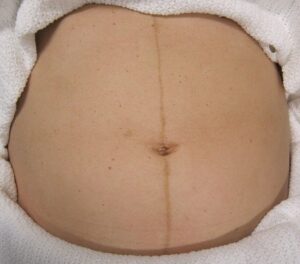
Your Answer: Linea Nigra
Explanation:This is Linea Nigra. It occurs in 3/4 of pregnancies and is due to increased melanocyte-stimulating hormone production by the placenta. This also causes melasma and darkening of the nipples.
-
This question is part of the following fields:
- Clinical Management
-
-
Question 59
Incorrect
-
Which one of the following statements best suits Androgen insensitivity syndrome?
Your Answer: The characteristic features include normal uterus and breast development, and ambiguous genitalia
Correct Answer: Gonadectomy must be performed after puberty because of the increased risk of malignancy
Explanation:Androgen insensitivity syndrome patients have 46XY chromosomes. They are males by genotype but appear as female because of insensitivity to male hormones. It is advisable to perform gonadectomy in these patients after puberty because these patients are at increased risk of developing malignancy.
-
This question is part of the following fields:
- Embryology
-
-
Question 60
Correct
-
A 28 year old patient is treated for hydatidiform mole with methotrexate. What is the mechanism of action of methotrexate?
Your Answer: Inhibits dihydrofolate reductase
Explanation:Methotrexate is a folic acid antagonist. It inhibits dihydrofolate reductase (DHFR). DHFR catalyses the conversion of dihydrofolate to the active tetrahydrofolate which is required for DNA synthesis. It is either administered as a single intramuscular injection or multiple fixed doses.
-
This question is part of the following fields:
- Clinical Management
-
-
Question 61
Incorrect
-
A 27-year-old woman G1P0 at 14 weeks of gestation came to you with presentation of chicken pox rashes which started 2 days ago. Varicella IgM came back positive with negative IgG.
What is the most appropriate management in this patient?Your Answer: Antiviral therapy
Correct Answer: Do nothing and arranged a detailed fetal ultrasound 5 weeks later
Explanation:Varicella or chickenpox, is a highly contagious disease caused by primary infection with varicella-zoster virus (VZV) which can result in maternal mortality or serious morbidity. The virus which remains dormant in the sensory nerve root ganglia following a primary infection can get reactivated to cause a vesicular erythematous skin rash along the dermatomal distribution known as herpes zoster, ‘zoster’ or ‘shingles’. Though rare the risk of acquiring infection from an immunocompetent individual with herpes zoster in non-exposed sites like thoracolumbar regions can also occur. As the viral shedding will be greater, a disseminated zoster or exposed zoster (e.g. ophthalmic) in an individual or localised zoster in an immunosuppressed patient should be considered very infectious.
In industrialised countries, over 85 % of women in childbearing age are immune to varicella zoster virus (VZV), however, women from tropical and subtropical areas are more susceptible to chickenpox in pregnancy as they are more likely to be seronegative for VZV IgG. Up to 10% cases of VZV in pregnancy are complicated with Varicella pneumonia, whereas perinatal varicella/ chickenpox carries a 20 to 30 % risk of transmitting infection to the neonate. Studies on maternal varicella infection from 12-28 weeks gestation suggests a 1.4% risk of fetal varicella syndrome (FVS) whose subsequent abnormalities include:
– Skin scarring (78%)
– Eye abnormalities (60%)
– Limb abnormalities (68%)
– Prematurity and low birthweight (50%)
– Cortical atrophy, intellectual disability (46%)
– Poor sphincter control (32%)
– Early death (29%)In the case mentioned above, patient had developed chickenpox rashes in her 2nd trimester and presented to you at day 2 of illness. Her varicella IgM came back positive along with a negative IgG indicating that she is not being immunized and that she is currently having active varicella infection. The best management in this case will be to reassured and allowed patient to be monitored at home. As there is no underlying lung disease, she is not immunocompromised and she is a non-smoker, so antiviral therapy is not required.
Generally, for pregnant women with chickenpox if they present within 24 hours of onset of rash and are in 20+0 weeks of gestation or beyond oral aciclovir should be prescribed. However, the use of acyclovir before 20+0 weeks should be considered carefully as Aciclovir is rated category B3 (Pregnancy and Breastfeeding, eTG, January 2003, ISSN 1447-1868) and should only be prescribed if its potential benefits outweigh the potential risks caused to the fetus, with informed consent in pregnant women who present within 24 hours of onset of varicella rash. If the patient is immunocompromised or if there are respiratory symptoms, a haemorrhagic rash or persistent fever for more than six days it is advisable to use intravenous acyclovir. On the other hand, to prevent secondary bacterial infection of the lesions, symptomatic treatment and hygiene should also be advised and unless there is significant superimposed bacterial infection antibiotics are not required.
If the pregnant woman has had a significant exposure to chickenpox or shingles, and is not immune to VZV , she should be offered VZIG as soon as possible or at the very latest within 10 days of the exposure. However, since Varicella zoster immunoglobulins (VZIG) has no therapeutic benefit in already developed cases of chickenpox, it should not be given to the context patient who have already developed active rashes of chickenpox with serology showing positive IgM positive and negative IgG indicating primary infection.
At least five weeks after primary infection a detailed fetal ultrasound must be done checking for any anomalies and ultrasounds should be repeated until delivery; and consider a fetal MRI if any abnormalities are found. In cases were if ultrasound is found to be normal, VZV fetal serology and amniocentesis are not useful and is not routinely advised.
-
This question is part of the following fields:
- Obstetrics
-
-
Question 62
Correct
-
Which of the following is the most appropriate for diagnosis of Bacterial Vaginosis (BV)?
Your Answer: Amsel's criteria
Explanation:Diagnosis can be made using the Amsel’s criteria:
1. Presence of clue cells on microscopic examination (these cells are epithelial cells covered with the bacteria).
2. Creamy greyish discharge.
3. Vaginal pH of more than 4.5.
5. Positive whiff test – release of fishy odour on addition of alkali solution. Other criteria include the nugent score and the Hay/Ison criteria. The Nugent score estimates the relative proportions of bacterial morphotypes to give a score between 0 and 10 (<4 = normal, 4-6 = intermediate, >6 = BV)
The Hay/Ison criteria
Grade 1 (Normal): Lactobacillus morphotypes predominate
Grade 2 (Intermediate): Mixed flora with some Lactobacilli present, but Gardnerella or Mobiluncus morphotypes also present
Grade 3 (BV): Predominantly Gardnerella and/or Mobiluncus morphotypes. Few or absent Lactobacilli. -
This question is part of the following fields:
- Clinical Management
-
-
Question 63
Incorrect
-
A 35-year-old woman presents to your gynaecologic clinic with complaints of abdominal bloating, headaches, insomnia, mood swings, and reduced sexual desire. These symptoms usually get worse a few days before the onset of menstruation and get better with menstruation.
The most appropriate treatment strategy for such a patient is?Your Answer: Relaxation therapy
Correct Answer: Sertraline
Explanation:Premenstrual dysphoric disorder (PMDD) is a more serious form of premenstrual syndrome (PMS). PMS causes bloating, headaches, and breast tenderness a week or two before your period.
With PMDD, you might have PMS symptoms along with extreme irritability, anxiety, or depression. These symptoms improve within a few days after your period starts, but they can be severe enough to interfere with your life.
PMDD symptoms appear a week or two before menstruation and go away within a few days after your period starts. In addition to PMS symptoms, you may have:
Anger or irritability.
Anxiety and panic attacks.
Depression and suicidal thoughts.
Difficulty concentrating.
Fatigue and low energy.
Food cravings or binge eating.
Headaches.
Insomnia.
Mood swings.The following treatments have been shown to relieve symptoms:
Sertraline, escitalopram, paroxetine, and fluoxetine are SSRIs (selective serotonin reuptake inhibitors). SSRIs are the first-line treatment and are extremely effective.
The second line of defence is alprazolam (a short course recommended due to its addictive potential).
The use of temazepam has little advantage because it only aids with sleep and is relatively short-acting.
Lifestyle modifications-weight loss, exercise, quitting smoking, and relaxation therapies for less severe PMS.
Danazol-suppresses the ovulation and helps with mastalgias associated with PMS. -
This question is part of the following fields:
- Gynaecology
-
-
Question 64
Correct
-
In the foetus, the most well oxygenated blood flows into which part of the heart:
Your Answer: Right atrium
Explanation:The placenta accepts the blue, unoxygenated blood from the foetus through blood vessels that leave the foetus through the umbilical cord (umbilical arteries, there are two of them). When blood goes through the placenta it picks up oxygen and becomes red. The red blood then returns to the foetus via the third vessel in the umbilical cord, the umbilical vein. The red blood that enters the foetus passes through the fetal liver and enters the right side of the heart.
-
This question is part of the following fields:
- Physiology
-
-
Question 65
Incorrect
-
A 24 year old woman presents to the clinic with foul smelling vaginal discharge. Which facultative anaerobic bacteria is most likely to be the cause?
Your Answer: Chlamydia trachomatis
Correct Answer: Gardnerella vaginalis
Explanation:Bacterial vaginosis is a common infection of the vagina caused by the overgrowth of atypical bacteria, most commonly Gardnerella vaginalis, a gram indeterminate bacteria, which is also a facultative anaerobe. Patients often complain of foul-smelling fishy discharge and dysuria. In diagnosing BV, a swab is taken for microscopy, often revealing clue cells. Of the other organisms listed in the options, Neisseria is an obligate anaerobe, while Chlamydia trachomatis is an obligate intracellular aerobe. Treponema Pallidum is an aerophilic bacteria and Mycoplasma hominis is a pleomorphic parasitic bacterium.
-
This question is part of the following fields:
- Microbiology
-
-
Question 66
Correct
-
Pregnant patients are at higher risk of thromboembolism due to a hypercoagulable state. Which of the following clotting factors reduces during pregnancy?
Your Answer: Factor XI
Explanation:Pregnancy is a hypercoagulable state, which means that risk of thromboembolism is increased. The main reason is an increase in clotting factors II, factor VII, fibrinogen, factor X and factor XII, whereas factors XI and factor XIII are reduced. Naturally occurring anticoagulants i.e. protein C and protein S are both decreased thus increasing the risk of thrombus formation.
-
This question is part of the following fields:
- Clinical Management
-
-
Question 67
Correct
-
A 22-year-old pregnant woman attends clinic for a fetal scan at 31 weeks. She complains of difficulty breathing and a distended belly. U/S scan was done showing polyhydramnios and an absent gastric bubble. What is the most likely diagnosis?
Your Answer: Oesophageal atresia
Explanation:Oesophageal atresia of the foetus interrupts the normal circulation of the amniotic fluid. This causes polyhydramnios and subsequent distension of the uterus impacting proper expansion of the lungs. This would explain the difficulty breathing.
-
This question is part of the following fields:
- Obstetrics
-
-
Question 68
Correct
-
During wound healing the clotting cascade is activated. Which of the following activates the extrinsic pathway?
Your Answer: Tissue Factor
Explanation:The extrinsic pathway is activated by the tissue factor, which converts factor VII to VIIa which later on converts factors X and II to their activated form finally leading to the conversion of fibrinogen to fibrin fibres.
-
This question is part of the following fields:
- Physiology
-
-
Question 69
Correct
-
A patient is seen in the gynaecology outpatient clinic and is noted to have large volume genital warts perianally and near the urethral meatus. You discuss treatment options and the patient opts for LASER therapy. Which of the following is the most appropriate type of LASER to use?
Your Answer: CO2
Explanation:Vulval intraepithelial neoplasia is a premalignant condition which is associated with HPV or lichen sclerosis. Biopsy is essential for diagnosis. Treatment depends of the patients choice and include surgical excision of the area or laser therapy with CO2. Other treatment modalities include immunomodulating creams.
-
This question is part of the following fields:
- Biophysics
-
-
Question 70
Incorrect
-
Which of the following Oestrogens (Oestrogens) becomes the predominant circulating oestrogen during pregnancy?
Your Answer: Estrone
Correct Answer: Estriol
Explanation:Oestradiol is the predominant form of oestrogen during the reproductive life of a female. The estrogenic potency of oestradiol is 12 times more than estrone and 80 times that of estriol.
-
This question is part of the following fields:
- Endocrinology
-
-
Question 71
Incorrect
-
Which of the following factors causes the greatest increase in risk of developing bladder cancer?
Your Answer: Working as a painter
Correct Answer: Smoking
Explanation:Transitional cell carcinoma of the bladder is most commonly caused by cigarette smoke. Other risk factors include naphthylamine, azodyes and long term cyclophosphamide use.
-
This question is part of the following fields:
- Clinical Management
-
-
Question 72
Correct
-
A 28-year-old woman (gravida 3, para 2) is admitted to hospital at 33 weeks of gestation for an antepartum haemorrhage of 300mL. The bleeding has now stopped. She had a Papanicolaou (Pap) smear done five years ago which was normal. Vital signs are as follows:
Pulse: 76 beats/min
Blood pressure: 120/80 mmHg
Temperature: 36.8°C
Fetal heart rate: 144/min
On physical exam, the uterus is lax and nontender. The fundal height is 34 cm above the pubic symphysis and the presenting part is high and mobile.
Other than fetal monitoring with a cardiotocograph (CTG), which one of the following should be the immediate next step?Your Answer: Ultrasound examination of the uterus.
Explanation:This is a case of a pregnant patient having vaginal bleeding. Given the patient’s presentation, the most likely cause of this patient’s antepartum haemorrhage is placenta praevia. The haemorrhage is unlikely to be due to a vasa praevia because a loss of 300mL would usually cause fetal distress or death, neither of which has occurred. Cervical malignancy is also unlikely as it typically would not have bleeding of this magnitude. A possible diagnosis would be a small placental abruption as it would fit with the lack of uterine tenderness and normal uterine size.
For the immediate management of this patient, induction of labour is contraindicated before the placental site has been confirmed. Also, induction should not be performed when the gestation is only at 33 weeks, especially after an episode of a small antepartum haemorrhage. An ultrasound examination of the uterus is appropriate as it would define whether a placenta praevia is present and its grade. It would also show whether there is any evidence of an intrauterine clot associated with placental abruption from a normally situated placenta.
If a placenta praevia is diagnosed by ultrasound, a pelvic examination under anaesthesia may be a part of the subsequent care, if it is felt that vaginal delivery might be possible. Usually it would be possible if the placenta praevia is grade 1 or grade 2 anterior in type. However, pelvic exam at this stage is certainly not the next step in care, and is rarely used in current clinical care.
A Papanicolaou (Pap) smear will be necessary at some time in the near future, but would not be helpful in the care of this patient currently.
Immediate Caesarean section is not needed as the bleeding has stopped, the foetus is not in distress, and the gestation is only 33 weeks.
-
This question is part of the following fields:
- Obstetrics
-
-
Question 73
Correct
-
Question 74
Correct
-
You are called to assist in an initially midwife led delivery. Upon delivering a female baby you notice the baby has partial fusion of the labioscrotal folds. You suspect congenital adrenal hyperplasia. Which of the following is the most common enzyme deficiency?
Your Answer: 21-hydroxylase
Explanation:Congenital Adrenal Hyperplasia leads to the virilization of the foetus. It occurs due to an enzyme deficiency in the corticosteroid production pathway i.e. 21-hydroxylase which converts progesterone to deoxycorticosterone. The reduced levels of corticosteroids results in the negative feedback loop that leads to adrenal hyperplasia.
-
This question is part of the following fields:
- Genetics
-
-
Question 75
Correct
-
A 32-year-old white female comes to your office complaining of dysuria. She denies fever, back pain, and urinary frequency. She appears to be well otherwise and has a normal abdominal examination. A clean-catch urinalysis shows 15-20 WBC/hpf and a dipstick test for leukocyte esterase is positive. You send a urine sample for culture and start the patient on nitrofurantoin (Macrodantin), as she is allergic to sulpha.
Three days later, the patient returns with persistent dysuria despite taking the medication as prescribed. Her urine culture has returned with no growth. A pelvic examination is normal and the rest of the physical examination is unchanged. A wet prep is normal and tests for sexually transmitted diseases are pending. Which one of the following antibiotics is most appropriate for this patient now?Your Answer: Doxycycline
Explanation:Urethral syndrome is characterized by dysuria and pyuria in the presence of a negative culture for uropathogens. Frequency and urgency are often absent. The infecting organism is typically Chlamydia trachomatis although other organisms such as Urea plasma urealyticum and Mycoplasma species may be involve- Effective medication choices include doxycycline, ofloxacin, levofloxacin, and macrolides such as erythromycin and azithromycin.
-Amoxicillin
lavulanate and cephalexin are incorrect. These would cover gram-positive bacteria but it would not cover gram-negative bacteria nor bacteria without a cell wall, which are the most common causes of this condition.
– Metronidazole is best for treating anaerobic infections and protozoa such as trichomonas vaginalis, it would not be the best for treating this condition, given the most likely causes.
-Pyridium is a phenazopyridine often used to alleviate the pain, irritation, discomfort, or urgency caused by urinary tract infections. While it would be beneficial for symptomatic relief, it is unlikely to completely resolve this patient’s condition, given her recent history. -
This question is part of the following fields:
- Gynaecology
-
-
Question 76
Correct
-
A 32-year-old woman, who is 18 weeks pregnant, is diagnosed with antiphospholipid syndrome and positive anticardiolipin antibodies. She has a history of three miscarriages, each one during the first trimester. What would be the next most appropriate step?
Your Answer: Aspirin & heparin
Explanation:The syndrome with which the woman was diagnosed is an autoimmune, hypercoagulable state which most possibly was the reason of her previous miscarriages. This is the reason why she should be on aspirin and heparin in order to prevent any future miscarriage.
-
This question is part of the following fields:
- Obstetrics
-
-
Question 77
Correct
-
The following are true for dizygotic twins EXCEPT:
Your Answer: Both twins are identical & of the same sex
Explanation:Dizygotic means two (di) fertilized eggs (zygotes). Dizygotic twins occur when two eggs are fertilized by two separate sperm. Dizygotic twins are also known as fraternal or non-identical twins. They are the most common type of twins.
Unlike monozygotic twins (also known as identical twins), dizygotic twins do not share the same genes. Monozygotic twins share 100 percent of each other genes. Dizygotic twins share only 50 percent. This is the same genetic similarity found between siblings conceived and born at different times.
-
This question is part of the following fields:
- Genetics
-
-
Question 78
Correct
-
What is the normal maximum endometrial thickness on ultrasound assessment of a post menopausal uterus?
Your Answer: 4mm
Explanation:In post menopausal women the thickness of the endometrium should be 4mm or less or women on tamoxifen is should be less than 5mm. If it is more than this the patient should be worked up for endometrial carcinoma.
-
This question is part of the following fields:
- Biophysics
-
-
Question 79
Correct
-
What is the main reason for the active management of the third stage of labour?
Your Answer: Prevent postpartum haemorrhage
Explanation:According to the WHO, active management of the third stage of labour has been shown to decrease the risk of postpartum haemorrhage in vaginal births worldwide. Per the guidelines from the International Federation of Gynaecologists and Obstetricians (FIGO), the active management of the third stage is summarised as follows:
1. The administration of a uterotonic (oxytocin, ergometrine or misoprostol), within one minute of fetal delivery,
2.Controlled cord traction with manual support to the uterus until placental delivery
3. Fundal massage immediately after placental delivery. -
This question is part of the following fields:
- Clinical Management
-
-
Question 80
Correct
-
What is the most common Type II congenital thrombophilia?
Your Answer: Factor V Leiden mutation
Explanation:Factor V Leiden is the most common congenital thrombophilia. Named after the Dutch city Leiden where it was first discovered. Protein C and S deficiencies are type 1 (Not type 2) thrombophilias Antiphospholipid syndrome is an acquired (NOT congenital) thrombophilia
-
This question is part of the following fields:
- Clinical Management
-
-
Question 81
Correct
-
Oxytocin causes increased myometrial contraction via which of the following messenger pathways?
Your Answer: Activates phospholipase-C which produces IP3 which triggers intracellular Calcium ion release
Explanation:Oxytocin acts via the G protein receptors and the calcium-calmodulin complex. It activates phospholipase C which produces IP3 to further trigger the calcium-calmodulin complex increasing intracellular Ca ion release.
-
This question is part of the following fields:
- Endocrinology
-
-
Question 82
Correct
-
A 21-year old female, gravida 1 para 0, term pregnancy, comes in due to labour for eight hours. Two hours prior to onset of contractions, her membranes have allegedly ruptured. Fetal heart rate is at 144/min. Contractions are of good quality, noted every 2-3 minutes, with a duration of 45 seconds. On examination, her cervix is fully dilated and the patient has been pushing all throughout. Vertex is palpated in the occipito-anterior (OA) position and has descended to station 2 cm below the ischial spines in the previous hour. Which of the following most likely depicts the current condition of the patient?
Your Answer: Normal progress.
Explanation:The patient’s condition can be described as a normal progress of labour. The scenario shows a normal descent of the head in the pelvic cavity, with a favourable position, and occurring within an hour of the second stage of labour. A normal second stage of labour in a nulliparous individual occurs at a maximum of two hours, which is consistent with this patient. Hence, there is no delay in the second stage.
There is evident progress of labour in this patient, hence, obstructed labour or cephalopelvic disproportion is ruled out.
No signs of maternal distress such as tachycardia or pyrexia is described in this patient.
-
This question is part of the following fields:
- Obstetrics
-
-
Question 83
Correct
-
A 19-year-old university student presents to the emergency department.
She complains of a fever and purulent vaginal discharge.
She add that's four days ago, she underwent a suction curettage for an unwanted pregnancy which occurred after a university party.
On examination, she has a temperature of 38.4°C.
Which organism is the most probable cause of her presentation?Your Answer: Mixed infection with Chlamydia trachoma and vaginal pathogens.
Explanation:The most probable cause of her presentation is a mixed infection with Chlamydia trachoma and vaginal pathogens.
Her most likely diagnosis is pelvic inflammatory disease (PID) as suggested by a purulent vaginal discharge alongside a fever which indicates a systemic infection.
The most common causative organisms in PID after sexual activity are chlamydia and gonorrhoea, of which chlamydia has a much higher prevalence.
Chlamydia has also been shown to be present in about 15% of subjects who underwent pregnancy termination with no constant sexual partner.
PID occurring after a gynaecologic surgical procedure is most commonly a result of mycoplasma or vaginal pathogens.
-
This question is part of the following fields:
- Gynaecology
-
-
Question 84
Correct
-
HPV genotypes 6 and 11 are associated with which of the following?
Your Answer: Low grade squamous intraepithelial lesions of the cervix (LSIL)
Explanation:HPV types 6 and 11 are associated with low risk, low grade squamous intraepithelial lesion. While types 16,18,31 and 33 are associated with high risk, high grade neoplasia.
-
This question is part of the following fields:
- Microbiology
-
-
Question 85
Correct
-
Question 86
Correct
-
A 30-year-old primigravida was admitted to the hospital in active labor. On admission, her cervix was 7 cm dilated and 100% effaced. She received epidural anesthesia and proceeded to complete cervical dilation with fetal head at +3 station within a few hours. Patient who has been pushing for 4 hours is exhausted now and says she cannot feel her contractions, nor knows when to push because of the epidural anesthesia. Patient had no complications during the pregnancy and has no chronic medical conditions.
Estimated fetal weight by Leopold maneuvers is 3.4 kg (7.5 lb), patient's vital signs are normal and fetal heart rate tracing is category 1. Tocodynamometer indicates contractions every 2-3 minutes and a repeat cervical examination shows complete cervical dilation with the fetal head at +3 station, in the left occiput anterior position with no molding or caput.
Among the following, which is considered the best next step in management of this patient?Your Answer: Perform vacuum-assisted vaginal delivery
Explanation:The period from attaining a complete cervical dilation of 10 cm to fetal delivery is considered as the second stage of labor. In the given case patient have achieved an excellent fetal descent to +3 due to her average-sized infant of 3.4 kg, suitable pelvis (no fetal molding or caput, suggesting no resistance against the bony maternal pelvis), and a favorable fetal position of left occiput anterior.
But with no further fetal descent the patient fulfills the following criterias suggestive of second-stage arrest like:
≥3 hours of pushing in a primigravida without an epidural or ≥4 hours pushing with an epidural, as in this patient
OR
≥2 hours of pushing in a multigravida without an epidural or ≥3 hours pushing with an epidural.As continued pushing without any effect will lead to complications like postpartum hemorrhage, limiting the chances of spontaneous vaginal delivery, it is better to manage this case by operative vaginal delivery procedures like vacuum-assisted delivery, to expedite delivery. maternal exhaustion, fetal distress, and maternal conditions like hypertrophic cardiomyopathy, in which the Valsalva maneuver is not recommended are the other indications for performing an operative vaginal delivery.
Fundal pressure is the technique were external pressure is applied to the most cephalad portion of the uterus, were the applied force is directed toward the maternal pelvis. The maneuver was not found to be useful in improving the rate of spontaneous vaginal deliveries.
Epidurals will not arrest or affect spontaneous vaginal delivery rates, instead they just lengthen the second stage of labor. Also an appropriate analgesia is a prerequisite to use in operative vaginal delivery.
Manual rotation of an infant to a breech presentation for breech vaginal delivery is called as internal podalic version. It is contraindicated in singleton deliveries due to the high risk associated with breech vaginal delivery in regards to neonatal mortality and morbidity.
The ideal fetal head position in vaginal delivery is occiput anterior (OA) as the flexed head in this provides a smaller diameter and facilitates the cardinal movements of labor. The occiput posterior (OP) position, in contrast to OA, presents with a larger-diameter head due to the deflexed position. So the chance for spontaneous vaginal delivery will be decreased if fetal head is rotated to OP position.
A lack of fetal descent after ≥4 hours of pushing in a primigravida with an epidural (≥3 hours without) or ≥3 hours in a multigravida with an epidural (≥2 hours without) is defined as second stage arrest of labor. The condition is effectively managed with operative vaginal delivery procedures like vacuum-assisted delivery. Other common indications for operative vaginal delivery are maternal exhaustion, fetal distress, and maternal conditions where the Valsalva maneuver is not recommended.
-
This question is part of the following fields:
- Obstetrics
-
-
Question 87
Correct
-
A 38 year old woman in early pregnancy is rushed to the emergency department complaining of vaginal bleeding and abdominal pain. What percentage of women her age have miscarriages?
Your Answer: 25%
Explanation:With increasing maternal age, the risk of miscarriage increases. For women between the ages of 40-44, the miscarriage rates sit at about 50% and increases to over 75% for women 45 years and over. The miscarriage rate for women between the ages of 35-39 is 25%.
-
This question is part of the following fields:
- Epidemiology
-
-
Question 88
Correct
-
During a speculum examination, a lady was found to have a firm, 12mm ulcerated, indurated lesion on her cervix. She was otherwise asymptomatic. Most likely cause would be?
Your Answer: Treponema pallidum
Explanation:This lady is most likely suffering from primary syphilis. Since the chancre is asymptomatic, it is often only found on deep examination of the vulvo-vaginal mucosa. The chief organism causing syphilis is Treponema Pallidum which is a spirochete and one of the most widely distributed sexually transmitted infections.
-
This question is part of the following fields:
- Microbiology
-
-
Question 89
Incorrect
-
You are asked to explain to a patient the results of her Rubella screen. They are as follows:
Your Answer: Past Rubella Infection
Correct Answer: Acute Rubella Infection
Explanation:IgM rise is typically seen with acute infection. IgG is produced in response to infection but is produced later than IgM. IgG is also produced in response to vaccination. If IgG and IgM are negative the patient is susceptible to Rubella infection. If IgG +ve and IgM -ve the patient should be considered immune. If IgM +ve this suggests acute infection or false positive IgM (not uncommon)
-
This question is part of the following fields:
- Microbiology
-
-
Question 90
Incorrect
-
A woman visited the OPD with complaints of severe abdominal pain and light-headedness. There is history of fainting three days prior to consultation. She also has vaginal bleeding. In this case, which of the following investigations should be ordered to reach the diagnosis?
Your Answer: Haemoglobin
Correct Answer:
Explanation:Testing for beta hCG should be the first test in this case. It will rule out any pregnancy that is strongly suspected based on the patient’s history and physical examination.
-
This question is part of the following fields:
- Gynaecology
-
-
Question 91
Correct
-
Which of the following hormones inhibits Galactopoiesis and Lactogenesis postpartum?
Your Answer: Dopamine
Explanation:Galactopoiesis and Lactogenesis are stimulated by Prolactin. Dopamine released under hypothalamic control inhibits Prolactin production. Note oestrogen and progesterone inhibit lactogenesis up until term.
-
This question is part of the following fields:
- Clinical Management
-
-
Question 92
Correct
-
A 24-year-old college student comes to your clinic for contraception guidance. For the past three months, she has had migraine-like headaches once or twice a month. For the past two years, she has been taking combined oral contraceptive pills.
Which of the following suggestions is the most appropriate?Your Answer: Stopping the combined oral contraceptive pills and starting progesterone only pills (POP)
Explanation:Combined oral contraceptives are a safe and highly effective method of birth control, but they can also raise problems of clinical tolerability and/or safety in migraine patients. It is now commonly accepted that, in migraine with aura, the use of combined oral contraceptives is always contraindicated, and that their intake must also be suspended by patients suffering from migraine without aura if aura symptoms appear.
Discontinuation of contraception could risk in pregnancy. Barrier methods can be used but aren’t as effective as pills.
-
This question is part of the following fields:
- Gynaecology
-
-
Question 93
Correct
-
In the foetus where is the principle site of alpha fetoprotein (AFP) production
Your Answer: Liver
Explanation:AFP is a glycoprotein that is synthesized in the fetal liver (primarily), umbilical vesicles and the gut. It is found in elevated quantities in the fetal serum and peaks at around 14 week of gestation.
-
This question is part of the following fields:
- Biochemistry
-
-
Question 94
Correct
-
Question 95
Correct
-
Which one of the following statements regarding the fetal head is true?
Your Answer: Considered to be engaged when the biparietal diameter passes the level of the pelvic inlet
Explanation:The fetal head is engaged when the head of the foetus or the presenting part enters the pelvic inlet or pelvic brim. It usually occurs at 38 weeks of gestation.
The Spalding sign refers to the overlapping of the fetal skull bones caused by collapse of the fetal brain. It appears usually a week or more after fetal death in utero.
In brow presentation the scalp is deflexed as the foetus is looking upward. Normally the head is inflexed such that the chin is touching the chest. -
This question is part of the following fields:
- Anatomy
-
-
Question 96
Incorrect
-
A 38-year-old woman presents to the gynaecologic clinic with a complaint of headache, irritability, insomnia, abdominal bloating, anxiety, and breast tenderness around 4 to 5 days before menstruation for the last 8 months. There's also a limitation on daily activities and she has to take a week off from work. The patient's symptoms are relieved with the onset of menstruation. She does not smoke or drink alcohol. There is no other significant past medical history.
Which of the following is the best treatment?Your Answer: Oral contraceptive pills
Correct Answer: Fluoxetine
Explanation:The signs and symptoms of premenstrual dysmorphic disorder are well-known in this patient. Fluoxetine is the greatest therapeutic option among the available options.
For severe symptoms, clomipramine and danazol can be used interchangeably.
Bromocriptine, like oral contraceptives and evening primrose, has no scientific evidence to support its use in this syndrome.
NSAIDs are helpful for painful symptoms, but they only address a limited number of them. -
This question is part of the following fields:
- Gynaecology
-
-
Question 97
Incorrect
-
A 27-year-old G2P1 visits the gynaecologist with complaints of increased hair growth on her face, breast, and belly, but hair loss in the temporal regions of her head. She has also struggled with acne.
On physical examination, the patient's face, chest, and belly are covered in coarse, dark hair. Her clitoris is swollen on pelvic examination. Her left adnexal mass is 7 cm in diameter.
What is the most likely ovarian tumour to be associated with this clinical picture?Your Answer: Gonadoblastoma
Correct Answer: Sertoli-Leydig cell tumour
Explanation:Sertoli-Leydig cell tumours constitute less than 0.5 percent of ovarian neoplasms. They may behave in a benign or malignant fashion, which correlates with the degree of differentiation in an individual case. Approximately 75 percent occur in women under the age of 40 years (mean age at diagnosis is 25), but they occur in all age groups. The neoplasms are characterized by the presence of testicular structures that produce androgens. This can result in virilization, although not all of these neoplasms are functionally active.
Pure Sertoli cell tumours are usually estrogenic and may also secrete renin, leading to refractory hypertension and hypokalaemia. In addition, these tumours may be associated with Peutz-Jeghers syndrome.
Pure Leydig cell tumours are androgen secreting; only a few cases have been reported. Virtually all of these rare tumours are unilateral and confined to the ovary at diagnosis.
Granulosa cell tumours typically present as large masses; the mean diameter is 12 cm. Women may present with an asymptomatic mass noted on abdominal or pelvic examination. Granulosa cell tumours often produce oestrogen and/or progesterone; consequently, symptoms related to hyperestrogenism are common at diagnosis.
Krukenberg tumour, also known as carcinoma mucocellulare, refers to the signet ring subtype of metastatic tumour to the ovary. The stomach followed by colon are the two most common primary tumours to result in ovarian metastases, pursued by the breast, lung, and contralateral ovary.
A rare tumour that is made up of more than one type of cell found in the gonads (testicles and ovaries), including germ cells, stromal cells, and granulosa cells. Gonadoblastomas are usually benign (not cancer), but they may sometimes become malignant (cancer) if not treated.
-
This question is part of the following fields:
- Gynaecology
-
-
Question 98
Correct
-
A 32-year-old woman at 37 weeks of gestation, who has been fine antenatally, presented with a history of sudden onset of severe abdominal pain with vaginal bleeding, and cessation of contractions after 18 hours of active pushing at home.
On examination, she is conscious and pale.
Her vital signs include blood pressure of 70/45 mm of Hg and a pulse rate of 115 beats per minute which is weak.
Her abdomen is irregularly distended, with both shifting dullness and fluid thrill present. Fetal heart sounds are not audible.
What will be the most likely diagnosis?Your Answer: Uterine rupture
Explanation:Patient’s presentation is classic for uterine rupture, were she developed sudden abdominal pain followed by cessation of contractions, termination of urge to push and vaginal bleeding.
Abdominal examination shows no fetal cardiac activity and signs of fluid collection like fluid thrill and shifting dullness. The fluid collected will be blood, which usually enters the peritoneum after the rupture of the uterus. In such patients vaginal examination will reveal a range of cervical dilatation with evidences of cephalopelvic disproportion.
Anterior lower transverse segment is the most common site for spontaneous uterine rupture. Patient in the case presenting with tachycardia and hypotension is in shock due to blood loss and will require urgent resuscitation.Placenta previa presents with painless bleeding from the vagina and Placental abruption will present with painful vaginal bleeding with tender and tense uterine wall, however, in contrary to that of uterine rupture, uterine contractions will continue in both these cases.
Shoulder dystocia is more likely to present in a prolonged labour with a significant delay in the progress of labour. However, in this case, there is no mention of shoulder dystocia.
Disseminated intravascular coagulation (DIC) is a condition which is causes due to abnormal and excessive generation of thrombin and fibrin in the circulating blood which results in bleeding from every skin puncture sites. It results in increased platelet aggregation and consumption of coagulation factors which results in bleeding at some sites and thromboembolism at other sites. Placental abruption, or retained products of conception in the uterine cavity are the causes for DIC.
-
This question is part of the following fields:
- Obstetrics
-
-
Question 99
Correct
-
A 29 year old women wants to speak to you regarding infections in pregnancy. Her two year old son has sensorineural deafness as a result of infection in her previous pregnancy. What was the most likely infection?
Your Answer: CMV
Explanation:TORCH infections are responsible for perinatal complications. CMV is the most common amongst them. Primary infection often produces no symptoms or mild non-specific flu-like symptoms in the mother. The diagnosis is often made after abnormalities are seen in the foetus on ultrasound scan. The main features seen in an affected foetus are FGR, microcephaly, ventriculomegaly, ascites or hydrops. Some foetuses which are infected may not show any features on ultrasound, but may later be found to have neurological damage such as blindness, deafness or developmental delay. The neonate can also be anaemic and thrombocytopenic, with hepatosplenomegaly, jaundice and a purpureal rash.
-
This question is part of the following fields:
- Microbiology
-
-
Question 100
Correct
-
A 36-year-old obese woman presents to your office for advice regarding pregnancy.
Her body mass index is 40, and she is normotensive and has a normal serum glucose level. On examination she was tested positive for glucose in urine.
What would be your advice to her?Your Answer: She will be checked for pre-existing diabetes in early pregnancy and, for gestational diabetes at 26 weeks
Explanation:Counselling her about the risks associated with obesity during pregnancy will be the best possible advice to give this patient. A combined follow up by an obstetrician and a diabetes specialist at a high-risk pregnancy clinic is required to formulate the best ways in management of gestation with obesity.
An oral glucose tolerance test should be done at 26 weeks of her pregnancy, along with advising her on controlling her weight by diet and lifestyle modifications. During the early weeks of their pregnancy all obese patients must be routinely tested for pre-existing diabetes.It is highly inappropriate to advice her not to get pregnant.
Without making a proper diagnosis of diabetes, it is wrong to ask her to start oral hypoglycemic agent and/or insulin.
Checking urinary proteins is not indicated at this stage, but can be considered as a part of antenatal check up.
-
This question is part of the following fields:
- Obstetrics
-
SESSION STATS - PERFORMANCE PER SPECIALTY
