-
Question 1
Correct
-
Question 2
Correct
-
Discontinuous capillaries are typically found where in the body:
Your Answer: Reticuloendothelial system
Explanation:Discontinuous capillaries, found in the reticuloendothelial system (bone marrow, liver and spleen), have large gaps between endothelial cells and are permeable to red blood cells.
-
This question is part of the following fields:
- Cardiovascular
- Physiology
-
-
Question 3
Incorrect
-
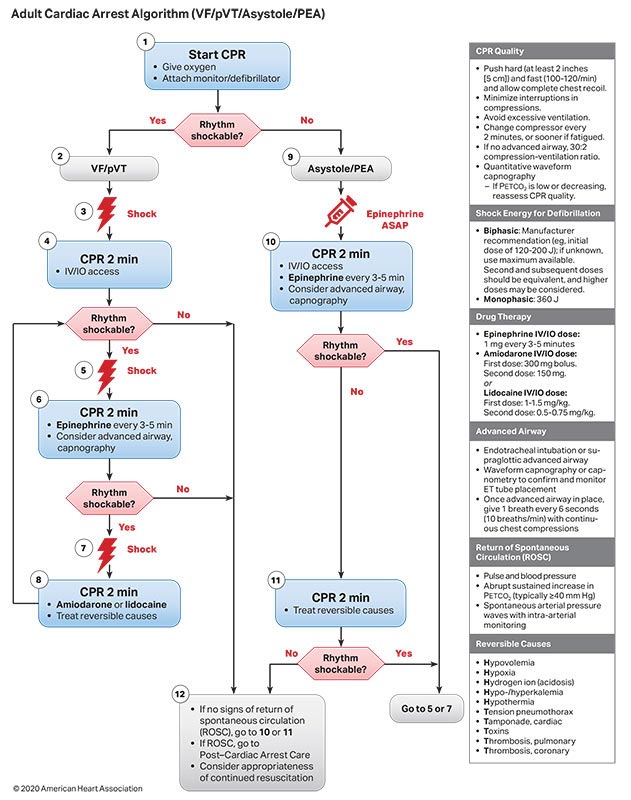
Which of the following best describes the correct administration of adrenaline for a shockable rhythm in adult advanced life support?
Your Answer: Give 1 mg of adrenaline as soon as intravenous access is achieved and every 3 - 5 minutes thereafter
Correct Answer: Give 1 mg of adrenaline after the second shock and every 3 - 5 minutes thereafter
Explanation:Give adrenaline 1 mg IV (IO) (10 mL of 1:10,000 solution) after the 2nd shock for adult patients in cardiac arrest with a shockable rhythm. Repeat adrenaline 1 mg IV (IO) every 3-5 minutes whilst ALS continues.
-
This question is part of the following fields:
- Cardiovascular
- Pharmacology
-
-
Question 4
Correct
-
An 82 year old man taking warfarin as a maintenance medication comes in to your clinic because of an infection. Which antibiotic is the safest choice for this patient?
Your Answer: Cefalexin
Explanation:Alterations in the international normalized ratio (INR) brought about by the concurrent use of antibiotics and warfarin may result in either excessive clotting or excessive bleeding if they are deemed to have a high risk for interaction. As such, there should be careful consideration of the class of antibiotic to be used.
Antibiotics from the following drug classes should generally be avoided as they have a high risk for interaction with warfarin, possible enhancing the anticoagulant effects of warfarin resulting in bleeding: Fluoroquinolones (e.g. ciprofloxacin, levofloxacin), Macrolides (e.g. clarithromycin, erythromycin, azithromycin), Nitroimidazoles (e.g. metronidazole), Sulphonamides (e.g. co-trimoxazole, a combination of trimethoprim and sulfamethoxazole), Trimethoprim, Tetracyclines (e.g. doxycycline).
Low risk antibiotics that have low risk for interaction with warfarin includes cephalexin, from the cephalosporin class, and clindamycin which is a lincomycin.
-
This question is part of the following fields:
- Cardiovascular
- Pharmacology
-
-
Question 5
Correct
-
Which of the following is NOT a pharmacological effect of beta-blockers:
Your Answer: Reduced AV conduction time
Explanation:Effects of beta-blockers:
Cardiovascular system:
Reduce blood pressure
Reduce heart rate, contractility and cardiac output
Increase AV conduction time, refractoriness and suppress automaticityEye:
Reduce intraocular pressureRespiratory system:
Cause bronchoconstriction -
This question is part of the following fields:
- Cardiovascular
- Pharmacology
-
-
Question 6
Correct
-
Adenosine has a half-life of approximately:
Your Answer: 8 - 10 seconds
Explanation:Adenosine stimulates A1-adenosine receptors and opens acetylcholine sensitive K+ channels, increasing K+ efflux. This hyperpolarises the cell membrane in the atrioventricular node and, by inhibiting the calcium channels, slows conduction in the AVN. As it has a very short duration of action (half-life only about 8 – 10 seconds), most side effects are short lived.
-
This question is part of the following fields:
- Cardiovascular
- Pharmacology
-
-
Question 7
Correct
-
All of the statements regarding vascular tone are correct except:
Your Answer: Most endogenous vasodilators act by decreasing levels of cAMP or cGMP.
Explanation:Most vasoconstrictors bind to G-protein coupled receptors. These mediate elevation in intracellular [Ca2+] which leads to vascular smooth muscle contraction. Important vasoconstrictors include noradrenaline, endothelin-1 and angiotensin II.
Increased intracellular Ca2+ is as a result of the release of Ca2+from the sarcoplasmic reticulum and depolarisation and entry of Ca2+via L-type voltage-gated Ca2+channels. Most types of vascular smooth muscle do not generate action potentials – instead, the depolarisation is graded, which allows graded entry of Ca2+.
sequestration by the sarcoplasmic reticulum Ca2+ATPase, removal from the cell by a plasma membrane Ca2+ATPase and Na+/Ca2+exchange decreases intracellular Ca2+, resulting in vasodilation. Relaxation is a result of most endogenous vasodilators when there is an increase in cyclic guanosine monophosphate (cGMP) like nitric oxide) or cyclic adenosine monophosphate (cAMP) like prostacyclin and beta-adrenergic receptor agonists. These activate protein kinases causing substrate level phosphorylation.
Clinically effective vasodilators are L-type Ca2+channel blocker drugs. -
This question is part of the following fields:
- Cardiovascular
- Physiology
-
-
Question 8
Correct
-
By which of the following is mean arterial pressure (MAP) primarily determined?
Your Answer: Total peripheral resistance and cardiac output
Explanation:Mean arterial pressure (MAP) = Cardiac output (CO) x Total peripheral resistance (TPR).
Cardiac output is dependent on the central venous pressure (CVP). CVP, in turn, is highly dependent on the blood volume.
Any alterations of any of these variables will likely change MAP. -
This question is part of the following fields:
- Cardiovascular
- Physiology
-
-
Question 9
Correct
-
Digoxin is predominantly used for which of the following:
Your Answer: Rate control in persistent and permanent atrial fibrillation
Explanation:Digoxin is most useful for controlling the ventricular response in persistent and permanent atrial fibrillation and atrial flutter. Digoxin is usually only effective for controlling the ventricular rate at rest, and should therefore only be used as monotherapy in predominantly sedentary patients with non-paroxysmal atrial fibrillation. It is now rarely used for rapid control of heart rate, as even with intravenous administration, response may take many hours. Digoxin is reserved for patients with worsening or severe heart failure due to left ventricular systolic dysfunction refractory to combination therapy with first-line agents. Digoxin is contraindicated in supraventricular arrhythmias associated with accessory conduction pathways e.g. Wolff-Parkinson-White syndrome.
-
This question is part of the following fields:
- Cardiovascular
- Pharmacology
-
-
Question 10
Correct
-
Bendoflumethiazide may cause all of the following electrolyte imbalances EXCEPT for:
Your Answer: Hypocalcaemia
Explanation:Common side effects of thiazide diuretics include:
Excessive diuresis, postural hypotension, dehydration, renal impairment
Acid-base and electrolyte imbalance
Hypokalaemia, hyponatraemia, hypomagnesaemia, hypercalcaemia, hypochloraemic alkalosis
Metabolic imbalance
Hyperuricaemia and gout
Impaired glucose tolerance and hyperglycaemia
Altered plasma-lipid concentrations
Mild gastrointestinal disturbances -
This question is part of the following fields:
- Cardiovascular
- Pharmacology
-
-
Question 11
Correct
-
A patient has a cardiac output of 4.8 L/min and a heart rate of 80 bpm, therefore their stroke volume is:
Your Answer: 60 mL
Explanation:Cardiac output (CO) = Stroke volume (SV) x Heart rate (HR).
Therefore SV = CO/HR
= 4.8/80
= 0.06 L = 60 mL. -
This question is part of the following fields:
- Cardiovascular
- Physiology
-
-
Question 12
Correct
-
Which JVP waveform correlates to atrial systole?
Your Answer: The a wave
Explanation:JVP Waveform in Cardiac Cycle Physiology: a wave Right atrial contraction causes atrial systole (end diastole). the c wave During right isovolumetric ventricular contraction, the tricuspid valve bulges into the right atrium, resulting in isovolumetric contraction (early systole). descent by x Rapid ventricular ejection (mid systole) is caused by a combination of right atrial relaxation, tricuspid valve downward movement during right ventricular contraction, and blood ejection from both ventricles. the v-wave Ventricular ejection and isovolumetric relaxation (late systole) occur as a result of venous return filling the right atrium. y lineage Ventricular filling occurs when the tricuspid valve opens, allowing blood to flow rapidly from the right atrium to the right ventricle.
-
This question is part of the following fields:
- Cardiovascular
- Physiology
-
-
Question 13
Incorrect
-
Regarding the heart sounds in the cardiac cycle, which of the following statements is INCORRECT:
Your Answer: The second heart sound is caused by closure of the semilunar valves.
Correct Answer: The third heart sound is caused by filling of an abnormally stiff ventricle in atrial systole.
Explanation:Heart Sound – Phase of Cardiac Cycle – Mechanical Event:
First heart sound – Start of systole – Caused by closure of the atrioventricular (mitral & tricuspid) valves
Second heart sound – End of systole – Caused by closure of the semilunar (aortic and pulmonary) valves
Third heart sound – Early diastole – Caused by rapid flow of blood from the atria into the ventricles during the ventricular filling phase
Fourth heart sound – Late diastole – Caused by filling of an abnormally stiff ventricle in atrial systole -
This question is part of the following fields:
- Cardiovascular
- Physiology
-
-
Question 14
Correct
-
Which of the following does NOT predispose to digoxin toxicity in a patient taking digoxin:
Your Answer: Hyponatraemia
Explanation:Hypoxia, hypercalcaemia, hypokalaemia and hypomagnesaemia predispose to digoxin toxicity. Care should also be taken in the elderly who are particularly susceptible to digoxin toxicity. Hypokalaemia may be precipitated by use of diuretics. Although hyponatremia can result in the development of other pathological disturbances, it does not potentiate digoxin toxicity.
-
This question is part of the following fields:
- Cardiovascular
- Pharmacology
-
-
Question 15
Correct
-
Regarding the cardiac cycle, which of the following statements is INCORRECT:
Your Answer: The second heart sound occurs in late diastole caused by closure of the atrioventricular valves.
Explanation:Diastole is usually twice the length of systole at rest, but decreases with increased heart rate. During systole, contraction of the ventricles compresses the coronary arteries and suppresses blood flow. This is particularly evident in the left ventricle, where during systole the ventricular pressure is the same as or greater than that in the arteries and as a result more than 85% of left ventricular perfusion occurs during diastole. This becomes a problem if the heart rate is increased as the diastolic interval is shorter and can result in ischaemia. The second heart sound, caused by closure of the semilunar valves, marks the end of systole.
-
This question is part of the following fields:
- Cardiovascular
- Physiology
-
-
Question 16
Correct
-
The risk of renal impairment in a patient on ACE inhibitor therapy is increased by concomitant treatment with which of the following drug classes:
Your Answer: NSAIDs
Explanation:Concomitant treatment with NSAIDs increases the risk of renal damage, and with potassium-sparing diuretics (or potassium-containing salt substitutes) increases the risk of hyperkalaemia. Hyperkalaemia and other side effects of ACE inhibitors are more common in the elderly and in those with impaired renal function and the dose may need to be reduced.
-
This question is part of the following fields:
- Cardiovascular
- Pharmacology
-
-
Question 17
Correct
-
Which of the following conditions require IV Lidocaine administration?
Your Answer: Refractory ventricular fibrillation in cardiac arrest
Explanation:IV Lidocaine is indicated in Ventricular Arrhythmias or Pulseless Ventricular Tachycardia (after defibrillation, attempted CPR, and vasopressor administration)
-
This question is part of the following fields:
- Cardiovascular
- Pharmacology
-
-
Question 18
Correct
-
What is the effect of a positive inotrope on the Starling curve:
Your Answer: Shifts the curve upwards
Explanation:Contractility (inotropy) is the intrinsic ability of cardiac muscle to develop force at a given muscle length. It is determined by the intracellular [Ca2+] and can be estimated by the ejection fraction. Increases in contractility cause an increase in stroke volume/cardiac output for any level of right atrial pressure or end-diastolic volume, and hence shift the Starling curve upwards. Decreases in contractility cause a decrease in stroke volume/cardiac output for any level of right atrial pressure or end-diastolic volume and hence shift the Starling curve downwards.
-
This question is part of the following fields:
- Cardiovascular
- Physiology
-
-
Question 19
Correct
-
What is nimodipine used predominantly in the treatment of?
Your Answer: Prevention and treatment of vascular spasm following subarachnoid haemorrhage
Explanation:Nimodipine is a smooth muscle relaxant that is related to nifedipine, but the effects preferentially act on cerebral arteries. It is exclusively used for the prevention and treatment of vascular spasm after an aneurysmal subarachnoid haemorrhage.
-
This question is part of the following fields:
- Cardiovascular
- Pharmacology
-
-
Question 20
Incorrect
-
Cardiac myocytes are connected to each other by which of the following:
Your Answer: Tight junctions
Correct Answer: Intercalated discs
Explanation:Adjacent cardiac myocytes are connected to each other by intercalated discs. The intercalated discs provide both a structural attachment by ‘glueing’ cells together at desmosomes and an electrical contact made up of proteins called connexons, called a gap junction, which essentially creates a low-resistance pathway between cells.
-
This question is part of the following fields:
- Cardiovascular
- Physiology
-
-
Question 21
Correct
-
Arterial baroreceptors are located primarily in which of the following:
Your Answer: Carotid sinus and aortic arch
Explanation:Arterial baroreceptors are located in the carotid sinus and aortic arch, and detect the mean arterial pressure (MAP). A decrease in MAP (such as in postural hypotension, or haemorrhage) reduces arterial stretch and decreases baroreceptor activity, resulting in decreased firing in afferent nerves travelling via the glossopharyngeal nerve (carotid sinus) and vagus nerve (aortic arch) to the medulla where the activity of the autonomic nervous system is coordinated. Sympathetic nerve activity consequently increases, causing an increase in heart rate and cardiac contractility, peripheral vasoconstriction with an increase in TPR, and venoconstriction with an increase in CVP and thus an increase in cardiac output and blood pressure. Parasympathetic activity (vagal tone) decreases, contributing to the rise in heart rate.
-
This question is part of the following fields:
- Cardiovascular
- Physiology
-
-
Question 22
Incorrect
-
Fenestrated capillaries are typically found where in the body:
Your Answer:
Correct Answer: Renal glomeruli
Explanation:Fenestrated capillaries, found in renal glomeruli, endocrine glands and intestinal villi, are more permeable than continuous capillaries with less tight junctions, and the endothelial cells are also punctured by pores which allow large amounts of fluids or metabolites to pass.
-
This question is part of the following fields:
- Cardiovascular
- Physiology
-
-
Question 23
Incorrect
-
Which of the following statements is correct with regards to heparin-induced thrombocytopaenia (HIT)?
Your Answer:
Correct Answer: HIT typically develops 5-10 days after starting heparin.
Explanation:Heparin-induced thrombocytopenia (HIT) is a prothrombotic disorder caused by antibodies that recognize complexes of platelet factor 4 (PF4) and heparin. HIT is frequently considered in the differential diagnosis of thrombocytopenia occurring in patients on heparin therapy. HIT is a challenging diagnosis because of routine heparin use in hospitalized patients, the common occurrence of thrombocytopenia. The process of heparin dependent IgG antibodies binding to heparin/platelet factor 4 complexes activates platelets and produces a hypercoagulable state. This syndrome typically develops 5-10 days (range 4-15 days) after heparin is commenced. It can occur with unfractionated heparin, low molecular weight heparin, or, rarely, fondaparinux. The diagnosis of HIT requires the combination of a compatible clinical picture and laboratory confirmation of the presence of heparin dependent platelet activating HIT antibodies. Discontinuation of heparin alone or initiation of a vitamin K antagonist alone like warfarin, is not sufficient to stop the development of thrombosis in patients with acute HIT. If there is moderate clinical suspicion for HIT, all sources of heparin must be discontinued and there must be consideration of anticoagulant treatment with a non-heparin drug.
-
This question is part of the following fields:
- Cardiovascular
- Pharmacology
-
-
Question 24
Incorrect
-
Continuous capillaries are typically found where in the body:
Your Answer:
Correct Answer: Blood-brain barrier
Explanation:Continuous capillaries, found in the skin, lungs, muscles and CNS, are the most selective with low permeability, as junctions between the endothelial cells are very tight, restricting the flow of molecules with MW > 10,000.
-
This question is part of the following fields:
- Cardiovascular
- Physiology
-
-
Question 25
Incorrect
-
All of the following statement about the microcirculation are correct except:
Your Answer:
Correct Answer: Over the capillary bed, there is a net absorption of fluid.
Explanation:The hydrostatic pressure along the length of the capillary is usually greater than plasma oncotic pressure. As a result, there is a small net filtration of fluid from the capillary into the interstitial space. The regulation of blood flow into the microcirculation is via the vasoconstriction of small arterioles, which is activated by the sympathetic nervous system through numerous nerve endings in their walls. Unlike proteins, most ions and small molecules diffuse easily across capillary walls and thus the crystalloid osmotic pressure they exert is roughly the same on either side of the capillary wall. Because the plasma colloid osmotic pressure is higher than interstitial colloid osmotic, fluid is drawn intravascularly. A reduction of hydrostatic capillary pressure and transient increase in absorption of fluid is a result of arteriolar constriction.
-
This question is part of the following fields:
- Cardiovascular
- Physiology
-
-
Question 26
Incorrect
-
Blood flows from the left atrium into the left ventricle via:
Your Answer:
Correct Answer: The mitral valve
Explanation:Blood flows from the right atrium into the right ventricle via the tricuspid atrioventricular valve and from the left atrium into the left ventricle via the mitral atrioventricular valve. Blood is ejected from the right ventricle through the pulmonary semilunar valve into the pulmonary artery and from the left ventricle via the aortic semilunar valve into the aorta.
-
This question is part of the following fields:
- Cardiovascular
- Physiology
-
-
Question 27
Incorrect
-
Nifedipine commonly causes which of the following adverse effects?
Your Answer:
Correct Answer: Ankle oedema
Explanation:Most common adverse effects of Nifedipine include:
Peripheral oedema (10-30%)
Dizziness (23-27%)
Flushing (23-27%)
Headache (10-23%)
Heartburn (11%)
Nausea (11%) -
This question is part of the following fields:
- Cardiovascular
- Pharmacology
-
-
Question 28
Incorrect
-
Which of the following is NOT a benefit of low molecular weight heparin (LMWH) over unfractionated heparin therapy:
Your Answer:
Correct Answer: Its effects can be rapidly and completely reversed with protamine sulfate.
Explanation:Advantages of LMWHGreater ability to inhibit factor Xa directly, interacting less with platelets and so may have a lesser tendency to cause bleedingGreater bioavailability and longer half-life in plasma making once daily subcutaneous administration possibleMore predictable dose response avoiding the need for routine anticoagulant monitoringLower associated risk of heparin-induced thrombocytopenia or of osteoporosis
-
This question is part of the following fields:
- Cardiovascular
- Pharmacology
-
-
Question 29
Incorrect
-
Regarding cardiac excitation-contraction coupling, which of the following statements is CORRECT:
Your Answer:
Correct Answer: In relaxation, Ca 2+ is transported out of the cell using energy from a Na + gradient.
Explanation:During the AP plateau, Ca2+enters the cell and activates Ca2+sensitive Ca2+release channels in the sarcoplasmic reticulum allowing stored Ca2+to flood into the cytosol; this is called Ca2+-induced Ca2+release. In relaxation, about 80% of Ca2+is rapidly pumped back into the SR (sequestered) by Ca2+ATPase pumps. The Ca2+that entered the cell during the AP is transported out of the cell primarily by the Na+/Ca2+exchanger in the membrane which pumps one Ca2+ion out in exchange for three Na+ions in, using the Na+electrochemical gradient as an energy source. Increased heart rate increases the force of contraction in a stepwise fashion as intracellular [Ca2+] increases cumulatively over several beats; this is the Treppe effect. Factors that affect intracellular [Ca2+] and hence cardiac contractility are called inotropes.
-
This question is part of the following fields:
- Cardiovascular
- Physiology
-
-
Question 30
Incorrect
-
On which of the following is preload primarily dependent?
Your Answer:
Correct Answer: End-diastolic volume
Explanation:Preload refers to the initial stretching of the cardiac myocytes before contraction. It is therefore related to muscle sarcomere length. The sarcomere length cannot be determined in the intact heart, and so, other indices of preload are used, like ventricular end-diastolic volume or pressure. The end-diastolic pressure and volume of the ventricles increase when venous return to the heart is increased, and this stretches the sarcomeres, which increase their preload.
-
This question is part of the following fields:
- Cardiovascular
- Physiology
-
SESSION STATS - PERFORMANCE PER SPECIALTY
