-
Question 1
Correct
-
A 34 year old patient who has just undergone a C-section delivery has lost almost 1 litre of blood. You suspect uterine atony as the likely cause, and have bimanually compressed the uterus. Which of the following pharmacological interventions should follow?
Your Answer: Syntocin 5u by slow intravenous injection
Explanation:In the management of postpartum haemorrhage, it is essential that the bleeding is first mechanically prevented, followed by the administration of oxytocic drugs, which cause the uterine smooth muscle to contract and clamping off bleeding sites in the endometrium. The drug of choice in the treatment protocol of PPH is 5 units of syntocin, a synthetic oxytocin uterotonic, by slow intravenous infusion. This is particularly suitable in the case of uterine atony. Other uterotonics, misoprostol, carboprost, ergometrine, can be used, but are not as effective in an emergency setting.
-
This question is part of the following fields:
- Clinical Management
-
-
Question 2
Correct
-
You are reviewing a patient with a scan suggestive of partial molar pregnancy. What is the typical genotype of a partial molar pregnancy?
Your Answer: 69 XXY
Explanation:The partial mole is produced when an egg is fertilized by two sperm producing genotype 69 XXY (triploid). It can also occur when one sperm reduplicates itself yielding the genotypes 92 XXXY (tetraploid) though this is less common The genotype of a complete mole is typically 46 XX (diploid) but can also be 46 XY (diploid)
-
This question is part of the following fields:
- Clinical Management
-
-
Question 3
Correct
-
What is the mode of action of Tranexamic acid?
Your Answer: Inhibits Plasminogen Activation
Explanation:Tranexamic acid is an antifibrinolytic drug which is one of the treatment options in menorrhagia i.e. heavy menstrual bleeding. It acts by binding to the receptor sites on plasminogen thus preventing plasmin from attaching to those receptors thus inhibiting plasminogen activation.
If pharmaceutical treatment is appropriate NICE advise treatments should be considered in the following order:
1. levonorgestrel-releasing intrauterine system (LNG-IUS) provided at least 12 months use is anticipated
2. tranexamic acid or NSAIDs* or combined oral contraceptives (COCs) or cyclical oral progestogens
3. Consider progesterone only contraception e.g. injected long-acting progestogens*When heavy menstrual bleeding (HMB) coexists with dysmenorrhoea NSAIDs should be preferred to tranexamic acid. Also note NSAIDs and tranexamic are appropriate to use if treatment needed pending investigations.
-
This question is part of the following fields:
- Clinical Management
-
-
Question 4
Correct
-
Question 5
Correct
-
An HIV positive woman who is 18 weeks pregnant complains of frothy yellow vaginal discharge and vaginal soreness. A wet mount and microscopy confirms a Trichomonas vaginalis infection. Which of the following is the most appropriate treatment regime?
Your Answer: Metronidazole 500mg BD 7 days
Explanation:Trichomoniasis is considered a sexually transmitted infection found both in men and women caused by the flagellate protozoan Trichomonas vaginalis. The organism is mainly found in the vagina and the urethra. Though many infected women can be asymptomatic, they can also present with yellow frothy vaginal discharge, itching and vaginitis, dysuria or an offensive odour. For the diagnosis of t. vaginalis in women, a swab is taken from the posterior fornix during speculum examination and the flagellates are detected under light-field microscopy. The recommended treatment for t. vaginalis for a HIV positive woman who is pregnant is 500mg of metronidazole twice daily for 7 days. High dose metronidazole as a 2g single dose tablet is not advised during pregnancy. All sexual partners should also be treated, and screening for other STIs should be carried out.
-
This question is part of the following fields:
- Clinical Management
-
-
Question 6
Correct
-
Which of the following are required for Oxytocin to bind to its receptor?
Your Answer: Magnesium and Cholesterol
Explanation:Oxytocin binds to G-protein-coupled receptors and requires Magnesium and cholesterol for this process to occur.
-
This question is part of the following fields:
- Clinical Management
-
-
Question 7
Correct
-
Question 8
Correct
-
When consenting someone for laparoscopy you discuss the risk of vascular injury. The incidence of vascular injury during laparoscopy according to the BSGE guidelines is?
Your Answer: 0.2/1000
Explanation:Major vessel injury is the most important potential complication when undertaking laparoscopy. It’s incidence is 0.2/1000. Bowel Injury is more common at 0.4/1000
-
This question is part of the following fields:
- Clinical Management
-
-
Question 9
Correct
-
A patient attends the maternity unit as her waters have broken but she hasn't had contractions. She is 39+6 weeks gestation. Speculum examination confirms prelabour rupture of membranes (PROM). What is the risk of serious neonatal infection with PROM?
Your Answer: 1 in 100
Explanation:Prelabour Rupture of Membranes:
– Risk of serious neonatal infection 1% (vs 0.5% for women with intact membranes)
– 60% of patients with PROM will go into labour within 24 hrs
– Induction appropriate if >34 weeks gestation and >24 hours post rupture and patients labour hasn’t started.
– If <34 weeks induction of labour should not be carried out unless there are additional obstetric indications e.g. infection -
This question is part of the following fields:
- Clinical Management
-
-
Question 10
Correct
-
A 26 year old patient with PCOS has been trying to conceive for 2 years. Her BMI is 26 kg/m2. She is a non-smoker. Which of the following is the most appropriate first line treatment?
Your Answer: Clomiphene
Explanation:Firstline medical management of PCOS is with clomiphene.
Ovulation Disorders
WHO Group I : Hypothalamic pituitary failure (Stress, anorexia, exercise induced)
Management:
Increase BMI if <19 kg/m2
Reduce exercise if high levels
Pulsatile GnRH or Gonadotrophins with LH activity to induce ovulationWHO Group II : Hypothalamic-pituitary-ovarian dysfunction (PCOS)
Management:
Weight reduction if BMI >30
Clomiphene/Clomiphene (1st line)
Metformin (1st line)
Clomiphene & Metformin (1st/2nd line)
Laparoscopic drilling (2nd line)
Gonadotrophins (2nd line)WHO Group III : Ovarian failure
Management:
Consider IVF with donor eggs -
This question is part of the following fields:
- Clinical Management
-
-
Question 11
Incorrect
-
A 24 year old lady is rushed to the emergency department complaining of vaginal spotting and abdominal cramping. Her 6 week pregnancy was confirmed by ultrasound scan last week. On speculum examination, the cervical os is open with blood noted around it.
Which of the following is the most likely diagnosis?Your Answer: Complete Miscarriage
Correct Answer: Inevitable Miscarriage
Explanation:A miscarriage is defined as the spontaneous loss of a pregnancy before the age of viability at 24 weeks in the UK. An inevitable miscarriage occurs with the usual symptoms of a miscarriage such as menstrual-like cramping, vaginal bleeding and a dilated cervix. The gestational sac has ruptured but products of conception have not been passed. The products of conception will eventually pass.
A missed miscarriage is described as a loss of pregnancy without vaginal bleeding, loss of tissue, cervical changes or abdominal pain. During a scan, a fetal heartbeat is not observed, and the gestational sac may be small.
A threatened miscarriage is when the cervix dilates and uterine bleeding is seen; the pregnancy could still be viable.
A complete miscarriage occurs when all the products of conception are expelled from the uterus, bleeding has stopped, and the cervix has closed up after dilation. Recurrent miscarriages are described as spontaneous pregnancy loss of more than 2 to 3 consecutive times.
-
This question is part of the following fields:
- Clinical Management
-
-
Question 12
Correct
-
You review a 28 year old patient in the fertility clinic. She has a diagnosis of PCOS. She has been trying to conceive for 2 years. Her BMI is 26 kg/m2. She is a non-smoker. She has been taking Clomiphene and metformin for the past 6 months. What is the next most appropriate treatment?
Your Answer: Gonadotrophins
Explanation:Clomiphene shouldn’t be continued for more than 6 months. The second line options are Gonadotrophins or ovarian drilling.
-
This question is part of the following fields:
- Clinical Management
-
-
Question 13
Correct
-
A patient is attending for medical abortion. She is 15 weeks gestation. She has no known drug allergies. Which of the following is the most appropriate regarding antibiotic prophylaxis?
Your Answer: Stat Azithromycin 1g and metronidazole 800 mg orally at time of abortion
Explanation:If the patient has a negative Chlamydia screen then a stat dose of metronidazole monotherapy is appropriate. You do not know this patients Chlamydia status and therefore dual therapy with metronidazole + doxycycline or azithromycin is appropriate.
-
This question is part of the following fields:
- Clinical Management
-
-
Question 14
Incorrect
-
Premature menopause is defined as cessation of menses before the age of:
Your Answer: 50
Correct Answer: 40
Explanation:Premature menopause occurs if menopause happens before the age of 40. It effects 1% of women under the age of 40 and 0.1% under 30.
-
This question is part of the following fields:
- Clinical Management
-
-
Question 15
Correct
-
Which of the following is the most accurate estimate of mature breast milk composition?
Your Answer: Fat 4%, Protein 1%, Sugar 7%
Explanation:Breast milk contains around 4% fat, 7% sugar and 1% proteins. The rest is water and minerals.
-
This question is part of the following fields:
- Clinical Management
-
-
Question 16
Correct
-
During pregnancy which hormone(s) inhibit lactogenesis?
Your Answer: Oestrogen and Progesterone
Explanation:Prolactin levels rise steadily during pregnancy during which time it promotes mammary growth (along with the other hormones mentioned below). Oestrogen and progesterone inhibit lactogenesis and it is only with the loss of these placental steroid hormones at term that Prolactin exhibits its lactogenic effect.
-
This question is part of the following fields:
- Clinical Management
-
-
Question 17
Correct
-
A 32 year old woman who is 14 weeks pregnant presents to the clinic with yellow, frothy vaginal discharge and vaginal soreness. Trichomoniasis is confirmed after microscopy on a wet smear. Which of the following is the most appropriate treatment?
Your Answer: Metronidazole 400mg TDS 7 days
Explanation:Trichomoniasis is considered a sexually transmitted infection found both in men and women caused by the flagellate protozoan Trichomonas vaginalis. The organism is mainly found in the vagina and the urethra. Though many infected women can be asymptomatic, they can also present with yellow frothy vaginal discharge, itching and vaginitis, dysuria or an offensive odour.
For the diagnosis of t. vaginalis in women, a swab is taken from the posterior fornix during speculum examination and the flagellates are detected under light-field microscopy.
The recommended treatment for t. vaginalis during pregnancy and breastfeeding is 400-500mg of metronidazole twice daily for 5 -7 days. High dose metronidazole as a 2g single dose tablet is not advised during pregnancy. All sexual partners should also be treated, and screening for other STIs should be carried out.
-
This question is part of the following fields:
- Clinical Management
-
-
Question 18
Incorrect
-
Regarding menstruation, which of the following is the maximum normal blood loss?
Your Answer: 60-65ml
Correct Answer: 80-85ml
Explanation:Most women lose about 35-40 ml of blood on average during each menstrual cycle. The maximum amount of blood loss is 80 ml after which blood loss of more than 80 ml is defined as heavy menstrual bleeding, formerly known as menorrhagia.
-
This question is part of the following fields:
- Clinical Management
-
-
Question 19
Incorrect
-
What is the most common Type II congenital thrombophilia?
Your Answer: Prothrombin G20210A mutation
Correct Answer: Factor V Leiden mutation
Explanation:The most common congenital thrombophilia is Factor V Leiden mutation. Other congenital causes are JAK-2 mutations and the Prothrombin G20210A mutation. Protein C and S deficiencies are type 1 and antiphospholipid syndrome is not congenital it is an acquired thrombophilia.
-
This question is part of the following fields:
- Clinical Management
-
-
Question 20
Incorrect
-
What is the main reason for the active management of the third stage of labour?
Your Answer: Reduce risk of perineal tearing
Correct Answer: Prevent postpartum haemorrhage
Explanation:According to the WHO, active management of the third stage of labour has been shown to decrease the risk of postpartum haemorrhage in vaginal births worldwide. Per the guidelines from the International Federation of Gynaecologists and Obstetricians (FIGO), the active management of the third stage is summarised as follows:
1. The administration of a uterotonic (oxytocin, ergometrine or misoprostol), within one minute of fetal delivery,
2.Controlled cord traction with manual support to the uterus until placental delivery
3. Fundal massage immediately after placental delivery. -
This question is part of the following fields:
- Clinical Management
-
-
Question 21
Incorrect
-
What percentage of pregnant women have asymptomatic vaginal colonisation with candida?
Your Answer: 5%
Correct Answer: 40%
Explanation:Vulvovaginal candidiasis is the most common genital infections and it is caused by candida albicans in 80-92% of the cases. It colonise the vaginal flora in 20% of non pregnant and 40% pregnant women.
-
This question is part of the following fields:
- Clinical Management
-
-
Question 22
Incorrect
-
Which one of the following aetiological factors causes a reduction in the risk of fibroids?
Your Answer: Taking the Combined Oral Contraceptive Pill
Correct Answer: Pregnancy
Explanation:Risk of fibroids is more common among African ethnicity and is also related to obesity and early puberty. The role of combined oral contraceptive pills is still debatable and its results are conflicting, whereas the risk of fibroids decreases with the increase in number of pregnancies. i.e. multiparous women have a lower risk of fibroids.
-
This question is part of the following fields:
- Clinical Management
-
-
Question 23
Incorrect
-
A 28 year old patient complains of vaginal soreness and discharge. Examination reveals vulval irritation and a 'strawberry' cervix. A wet smear is sent for microscopy which confirms trichomoniasis. What percentage of trichomoniasis cases would you expect to see a strawberry cervix?
Your Answer: 10-20%
Correct Answer: 2%
Explanation:Trichomoniasis is caused by trichomonas. It is sexually transmitted. It is diagnosed on microscopy of vaginal discharge and cultured in Finn-Berg Whittington medium. It is characterised by valval itching, foul smelling discharge and appearance of strawberry cervix due to presence of punctate haemorrhages which occur in 2% of the cases.
-
This question is part of the following fields:
- Clinical Management
-
-
Question 24
Incorrect
-
What is the most common causative organism in Fitzhugh Curtis syndrome and ophthalmic neonatorum?
Your Answer: Trichomoniasis vaginalis
Correct Answer: Chlamydia trachomatis
Explanation:A rare complication of pelvic inflammatory disease is Fitz Hugh Curtis syndrome which is perihepatitis leading to the formation of adhesions between the liver and the peritoneal surface. It is most commonly caused by chlamydia and gonorrhoea. Ophthalmia neonatorum is conjunctivitis which is also caused by these pathogens.
-
This question is part of the following fields:
- Clinical Management
-
-
Question 25
Incorrect
-
Which of the following hormones inhibits lactogenesis during pregnancy?
Your Answer: Prolactin
Correct Answer: Oestrogen and Progesterone
Explanation:Under the influence of prolactin, oestrogen and progesterone and human placental lactogen (hPL), the mammary epithelium proliferates but remains presecretory during mammogenesis. Lactogenesis is inhibited by high circulating levels of progesterone and oestrogen which block cortisol binding sites. Cortisol would have otherwise have worked synergistically with prolactin in milk production. A sharp decrease in progesterone levels after delivery allows prolactin and oxytocin to stimulate milk production and the milk ejection reflex in response to suckling. Prolactin continues to maintain milk production in galactopoiesis.
-
This question is part of the following fields:
- Clinical Management
-
-
Question 26
Incorrect
-
Regarding gestational diabetes which of the following is NOT a recognised risk factor
Your Answer: Hispanic/Latino ethnic origin
Correct Answer: High polyunsaturated fat intake
Explanation:Gestational diabetes (GDM) occurs in 2–9 per cent of all pregnancies. Screening for diabetes in pregnancy can be justify ed to diagnose previously unrecognized cases of pre-existing diabetes and to identify a group of women who are at risk of developing NIDDM later in life. No single screening test has been shown to be perfect in terms of high sensitivity and specific city for gestational diabetes. Urinary glucose is unreliable, and most screening tests now rely on blood glucose estimation, with an oral glucose tolerance test commonly used. The aim of glucose control is to keep fasting levels between 3.5 and 5.5 mmol/L and postprandial levels 7.1 mmol/L, with insulin treatment usually indicated outside these ranges. There are various risk factors for gestational diabetes including increasing age, ethnicity, previous still births etc.
-
This question is part of the following fields:
- Clinical Management
-
-
Question 27
Incorrect
-
The COCP (Combined Oral Contraceptive Pill) causes all of the following biochemical effects EXCEPT?
Your Answer: Reduction in adrenal androgen secretion
Correct Answer: Elevate FSH
Explanation:COCP’s act both centrally and peripherally. They inhibit ovulation. Both oestrogen and progestogen supress the release of FSH and LH hence preventing ovulation. Peripherally it acts by making the endometrium atrophic and hostile towards implantation. It also alters the cervical mucus and prevents the sperm from ascending the uterine cavity.
-
This question is part of the following fields:
- Clinical Management
-
-
Question 28
Incorrect
-
Regarding gestational diabetes which of the following is NOT a recognised risk factor
Your Answer: Previous unexplained stillbirth
Correct Answer: High polyunsaturated fat intake
Explanation:There are several risk factors for gestational diabetes:
Increasing age
– Certain ethnic groups (Asian, African Americans, Hispanic/Latino Americans and Pima Indians)
– High BMI before pregnancy (three-fold risk for obese women compared to non-obese women)
– Smoking doubles the risk of GDM
– Change in weight between pregnancies – an inter-pregnancy gain of more than three units (of BMI) doubles the risk of GDM
– Short interval between pregnancies
– Previous unexplained stillbirth
– Previous macrosomia
– Family history of type 2 diabetes or GDM – more relevant in nulliparous than parous womenHigh polyunsaturated fat intake has been shown in some studies to be protective against gestational diabetes. Physical activity is also thought to be effective.
-
This question is part of the following fields:
- Clinical Management
-
-
Question 29
Incorrect
-
A 34 weeks pregnant patient has a blood pressure of 149/98. Urine dipstick shows protein 3+. You send a for a protein:creatinine ratio. What level would be diagnostic of significant proteinuria?
Your Answer: >130 mg/mmol
Correct Answer: >30 mg/mmol
Explanation:Pre-eclampsia is defined as hypertension of at least 140/90 mmHg recorded on at least two separate occasions and at least 4 hours apart and in the presence of at least 300 mg protein in a 24 hour collection of urine, arising de novo after the 20th week of pregnancy in a previously normotensive woman and resolving completely by the sixth postpartum week. Significant proteinuria = urinary protein: creatinine ratio >30 mg/mmol or 24-hour urine collection result shows greater than 300 mg protein.
-
This question is part of the following fields:
- Clinical Management
-
-
Question 30
Incorrect
-
Which of the following conditions is associated with blunt trauma in a pregnant woman?
Your Answer: Fetal malformation
Correct Answer: Abruptio placentae
Explanation:Abruptio placentae, defined as a premature separation of the placenta from the uterine wall, is commonly seen with blunt abdominal trauma and can cause fetal distress. It occurs in 1% to 3% of pregnant women with minor trauma and in 40% to 50% with major life-threatening trauma.8,9 Abruption may present with vaginal bleeding, abdominal pain and tenderness, uterine contractions, or fetal distress; however, it may be occult with no vaginal bleeding in up to 20% of cases.
-
This question is part of the following fields:
- Clinical Management
-
-
Question 31
Incorrect
-
Regarding pelvic inflammatory disease, which of the following is the tubal factor infertility rate?
Your Answer: 25%
Correct Answer: 12.50%
Explanation:Pelvic inflammatory disease (PID) is a known risk factor in causing tubal infertility due to its role in tubal damage. The tubal infertility rate after one episode of PID is thought to be about 12.5%. After two episodes the risk increases to 25%, and 50% after three episodes. The usual causative agents are chlamydia and gonorrhoea.
-
This question is part of the following fields:
- Clinical Management
-
-
Question 32
Correct
-
Oxytocin binds to what receptor type?
Your Answer: G-protein-coupled receptors
Explanation:Oxytocin binds to the G protein coupled receptors that triggers the IP3 mechanism leading to an elevated intracellular calcium ion.
-
This question is part of the following fields:
- Clinical Management
-
-
Question 33
Correct
-
What is the RCOG advice regarding timing of Rhesus Anti-D Immunoglobulin following abortion?
Your Answer: Anti-D IgG within 72 hours following abortion
Explanation:All non-sensitised RhD negative women should receive Anti-D IgG within 72 hours following abortion
-
This question is part of the following fields:
- Clinical Management
-
-
Question 34
Correct
-
A patient attends the maternity unit as her waters have broken but she hasn't had contractions. She is 39+6 weeks gestation. Speculum examination confirms prelabour rupture of membranes. What is the likelihood of spontaneous labour starting within 24 hours?
Your Answer: 60%
Explanation:In pregnancy, term refers to the gestational period from 37 0 to 41 6 weeks. Preterm births occur between 24 0 and 36 6 weeks. 60% of the women will go into labour with in 24 hours in PPROM. After 24 hours have past without any contraction and the gestation age is more than 34 week than prostaglandins can be used to augment labour.
-
This question is part of the following fields:
- Clinical Management
-
-
Question 35
Correct
-
At what week in pregnancy is testing for gestational diabetes (GD) advised
Your Answer: As soon as possible after booking if past history of GD
Explanation:Gestational diabetes (GDM) occurs in 2–9 per cent of all pregnancies. Screening for diabetes in pregnancy can be justified to diagnose previously unrecognized cases of pre-existing diabetes and to identify a group of women who are at risk of developing NIDDM later in life. No single screening test has been shown to be perfect in terms of high sensitivity and specificity for gestational diabetes. Urinary glucose is unreliable, and most screening tests now rely on blood glucose estimation, with an oral glucose tolerance test commonly used. The aim of glucose control is to keep fasting levels between 3.5 and 5.5 mmol/L and postprandial levels 7.1 mmol/L, with insulin treatment usually indicated outside these ranges. The women should be tested as soon as possible after booking if there is a history of GD.
-
This question is part of the following fields:
- Clinical Management
-
-
Question 36
Incorrect
-
A patients MSU comes back showing heavy growth of E.coli that is resistant to trimethoprim, amoxicillin and nitrofurantoin. You decide to prescribe a course of Cephalexin. What is the mechanism of action of Cephalexin?
Your Answer: Dihydrofolate Reductase Inhibitor
Correct Answer: inhibit peptidoglycan cross-links in bacterial cell wall
Explanation:Cephalosporins are beta lactum drugs, like penicillin. They act by inhibiting the cross linkage of the peptidoglycan wall in bacteria.
-
This question is part of the following fields:
- Clinical Management
-
-
Question 37
Incorrect
-
What is the male infertility rate in CF patients?
Your Answer: 75%
Correct Answer: 98%
Explanation:Cystic fibrosis is the most common fetal genetic disease in Caucasians and has an autosomal recessive inheritance. It is caused by an abnormal chloride channel due to a defect in the CFTR gene. Complications range from haemoptysis, respiratory failure, biliary cirrhosis, diabetes and male infertility. Men with CF are infertile in 98% of the cases due to failure of development of the vas deference.
-
This question is part of the following fields:
- Clinical Management
-
-
Question 38
Correct
-
A 28 year old patient has a diagnosis of PCOS. She has been trying to conceive for 2 years. Her BMI is 26 kg/m2 and she is a non-smoker. She has been taking Clomiphene and metformin for the past 6 months. What is the next most appropriate treatment?
Your Answer: Gonadotrophins
Explanation:Management of PCOS includes OCP, cyclical oral progesterone, metformin, clomiphene (which is more effective in inducing ovulation than metformin) and life-style changes. In women who are tolerant to these therapies Gonadotrophins should be trialled. However lifestyle changes should be able to improve the condition significantly. Clomiphene shouldn’t be continued for more than 6 months.
-
This question is part of the following fields:
- Clinical Management
-
-
Question 39
Incorrect
-
A 45 year old women is seen in clinic following hysteroscopy and biopsy due to irregular menstrual bleeding. Her BMI is 34 kg/m2. This shows atypical hyperplasia. Which of the following is the most appropriate 1st line management?
Your Answer: Continuous oral progesterone
Correct Answer: Laparoscopic hysterectomy
Explanation:Endometrial hyperplasia with atypia is at high risk of progression to cancer and hysterectomy is indicated There is high risk of progression to cancer with endometrial hyperplasia with atypia and hysterectomy is indicated. Although weight loss would be beneficial this shouldn’t delay surgical management.
-
This question is part of the following fields:
- Clinical Management
-
-
Question 40
Incorrect
-
Question 41
Incorrect
-
Which hormone is responsible for contraction of myoepithelial cells in lactation?
Your Answer: Human placental lactogen
Correct Answer: Oxytocin
Explanation:Oxytocin is responsible for the let down mechanism that occurs during breast feeding in which the myothelial cells contract and push the milk into the ductules.
-
This question is part of the following fields:
- Clinical Management
-
-
Question 42
Incorrect
-
A 28 year old woman presents for a scan at 13 weeks. Though this is her second pregnancy, the first ended in a 1st trimester miscarriage. She has not reported any problems with the current pregnancy. The ultrasound scan showed a small gestational sac and no fetal cardiac activity.
Which of the following is the most likely diagnosis?Your Answer: Threatened Miscarriage
Correct Answer: Missed Miscarriage
Explanation:A miscarriage is defined as the spontaneous loss of a pregnancy before the age of viability at 24 weeks in the UK.
A missed miscarriage is described as a loss of pregnancy without vaginal bleeding, loss of tissue, cervical changes or abdominal pain. During a scan, a fetal heartbeat is not observed, and the gestational sac may be small.
A threatened miscarriage is when the cervix dilates and uterine bleeding is seen; the pregnancy could still be viable. A complete miscarriage occurs when all the products of conception are expelled from the uterus, bleeding has stopped, and the cervix has closed up after dilation.
An inevitable miscarriage occurs with the usual symptoms of a miscarriage and a dilated cervix, suggesting that the passage of the fetal tissue is inevitable.
Recurrent miscarriages are described as spontaneous pregnancy loss of more than 2 to 3 consecutive times.
-
This question is part of the following fields:
- Clinical Management
-
-
Question 43
Incorrect
-
A 28 year old primigravida carrying a twin pregnancy presents at 32 weeks gestation. She is lethargic, clinically jaundiced and complains of abdominal pain with frequent vomiting. A summary of her blood results are as follows: Elevated aspartate transaminase (AST) and alanine transaminase (ALT) levels · Decreased blood glucose levels · Elevated levels of blood ammonia. What is the likely diagnosis?
Your Answer: Budd-Chiari
Correct Answer: Acute fatty liver of pregnancy
Explanation:This patients bloods and symptoms suggest she has hepatic impairment. Acute fatty liver of pregnancy typically presents after the 30th week. The usual symptoms in the mother are non-specific including nausea, vomiting, anorexia (or lack of desire to eat) and abdominal pain; excessive thirst may be the earliest symptom without overlap with otherwise considered normal pregnancy symptoms; however, jaundice and fever may occur in as many as 70% of patients.
Many laboratory abnormalities are seen in acute fatty liver of pregnancy. Liver enzymes are elevated, with the AST and ALT enzymes ranging from minimal elevation to 1000 IU/L, but usually staying in the 300-500 range. Bilirubin is almost universally elevated. Alkaline phosphatase is often elevated in pregnancy due to production from the placenta, but may be additionally elevated. Other abnormalities may include an elevated white blood cell count, hypoglycemia, elevated coagulation parameters, including the international normalized ratio, and decreased fibrinogen. There may be increases of ammonia, uric acid aswell.
Recent studies have shown that being a primigravida, multiple pregnancies, carrying a male fetus, other liver diseases during pregnancy, previous history of AFLP, and pre-eclampsia are the potential risk factors for AFLP
-
This question is part of the following fields:
- Clinical Management
-
-
Question 44
Correct
-
Which of the following is regarded as the current Gold standard in the diagnosis of Polycystic Ovary Syndrome?
Your Answer: Rotterdam
Explanation:The Rotterdam criteria was developed and expanded by the European Society of Human Reproduction and Embryology/American Society for Reproductive Medicine Rotterdam consensus (ESHRE/ASRM) in 2003 and is now the Gold standard in the diagnosis of PCOS. The criteria requires two of three features: anovulation, hyperandrogenism, and polycystic ovaries seen on ultrasound.
The National Institute of Child Health and Human Development (NICHD) attempted to define PCOS in 1990 but omitted ultrasonographic evidence of polycystic ovaries which is considered to be diagnostic of PCOS.
The Androgen Excess Society (AES) served to confirm hyperandrogenism as the central event in the development of PCOS.
The ROME III criteria is used for Irritable Bowel Disease and is therefore not applicable to PCOS.
-
This question is part of the following fields:
- Clinical Management
-
-
Question 45
Incorrect
-
Which of the following regarding the use of tocolytics is true?
Your Answer: The purchase price of atosiban is approximately twice that of nifedipine
Correct Answer: Use of a tocolytic drug is not associated with a clear reduction in perinatal or neonatal mortality, or neonatal morbidity
Explanation:Tocolytics are used to suppress contractions. The Canadian preterm labour trial which remains a very influential tocolytic trial to date concluded that tocolytics such as a beta agonist have no significant benefit on perinatal mortality or morbidity or prolong pregnancy to term however it did reduce the number of women delivering within 2 days by 40%. This 48 hour window is the only reason for the use of tocolytics.
Choice of tocolytic (NICE)
1st line: Nifedipine
2nd line: Oxytocin receptor antagonists e.g. atosiban -
This question is part of the following fields:
- Clinical Management
-
-
Question 46
Incorrect
-
When is the earliest appropriate gestational age to perform amniocentesis?
Your Answer: 10+0 weeks
Correct Answer: 15+0 weeks
Explanation:The best time to perform amniocentesis is at the gestational age of 15 weeks or more. There is increased risk of abortion, respiratory problems and fetal talipes if amniocentesis is performed before the gestational age of 14 weeks.
-
This question is part of the following fields:
- Clinical Management
-
-
Question 47
Incorrect
-
A 30 year old women who is 24 weeks pregnant attends EPU due to suprapubic pain. Ultrasound shows a viable foetus and also a fibroid with a cystic fluid filled centre. What is the likely diagnosis?
Your Answer: Appendicitis
Correct Answer: Red degeneration of fibroid
Explanation:Red degeneration of fibroids is one of 4 methods of fibroid degeneration. Although uncommon outside pregnancy it is thought to be the most common form of fibroid degeneration during pregnancy and typically occurs in the 2nd trimester. It is thought to arise from the fibroid outgrowing its blood supply and haemorrhagic infarction occurs. Ultrasound will typically show a localised fluid collection (blood) within the fibroid.
-
This question is part of the following fields:
- Clinical Management
-
-
Question 48
Incorrect
-
A 32 year old lady with known stage III cervical cancer presents to A&E with lower abdominal and unilateral flank pain. From the following list what is the likely diagnosis?
Your Answer: UTI
Correct Answer: Ureteric Obstruction
Explanation:In stage III cervical cancer there is involvement of the pelvic wall and ureter which may result in abdominal pain and hydronephrosis.
2010 FIGO classification of cervical carcinoma
Stage
0 – Carcinoma in situ
1 – Confined to the cervix (diagnosed microscopy)
1A1 – Less than 3mm depth & 7mm lateral spread
1A2 – 3mm to 5mm depth & less than 7mm lateral spread
1B1 – Clinically visible lesion or greater than A2 & less than 4 cm in greatest dimension
1B2 – Clinically visible lesion, Greater than 4 cm in greatest dimension
2 – Invades beyond uterus but not to pelvic wall or lower 1/3 vagina
2A1 – Involvement of the upper two-thirds of the vagina, without parametrical invasion & Less than 4cm
2A2 – Greater than 4 cm in greatest dimension
2B – Parametrial involvement
3 – Extends to Pelvic side wall or lower 1/3 vagina or hydronephrosis
3A – No pelvic side wall involvement
3B – Pelvic side wall involved or hydronephrosis
4 – Extends beyond true pelvis
4A – Invades mucosa bladder and rectum
4B – Distant Metastasis -
This question is part of the following fields:
- Clinical Management
-
-
Question 49
Incorrect
-
Regarding Venous Thromboembolism (VTE) in pregnancy which of the following statements is TRUE?
Your Answer: Incidence of antenatal PE in the UK is 10/10,000 maternities
Correct Answer: Relative risk of VTE in pregnancy is 4 to 6 fold
Explanation:Venous thromboembolic disease (VTE) is the most common cause of direct maternal death in the UK. In the most recent triennium, there were 41 fatalities, giving a maternal mortality rate of 1.94 per 100 000 – more than twice that of the next most common cause, pre-eclampsia. As pregnancy is a hyper coagulable state. There are alterations in the fibrinolytics and thrombotic pathways. There is also an increased production of clotting factors during pregnancy.
-
This question is part of the following fields:
- Clinical Management
-
-
Question 50
Incorrect
-
A 77 year old woman undergoes staging investigations for endometrial carcinoma. This shows invasion of the inguinal lymph nodes. What is this patients 5-year survival?
Your Answer: 85-90%
Correct Answer: 15%
Explanation:Lymph node involvement means that the carcinoma is stage 4. The 5 year survival of stage 4 endometrial carcinoma is 16%.
-
This question is part of the following fields:
- Clinical Management
-
-
Question 51
Incorrect
-
A 24 year old who is 32 weeks pregnant presents with a rash to the abdomen. Looking at the picture below what is the diagnosis?
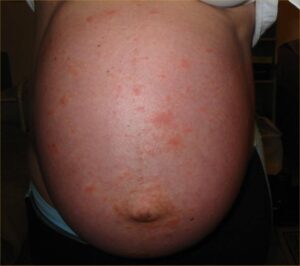
Your Answer: Guttate Psoriasis
Correct Answer: Polymorphic Eruption of Pregnancy
Explanation:This is Polymorphic Eruption of Pregnancy (PEP) also known as Pruritic Urticarial Papules and Plaques of Pregnancy (PUPPP). Papules and plaques form on the abdomen (commonly within striae). It is most common in women during their first pregnancy and typically occurs in the 3rd trimester.
-
This question is part of the following fields:
- Clinical Management
-
-
Question 52
Incorrect
-
What is the most common cause of sepsis in the puerperium?
Your Answer: Soft tissue infection
Correct Answer: Endometritis
Explanation:Significant puerperal pyrexia is defined as a temperature of 38ºC or higher on any two of the first 10 days postpartum, exclusive of the first 24 hours. A mixed flora normally colonizes the vagina with low virulence. Puerperal infection is usually polymicrobial and involves contaminants from the bowel that colonize the perineum and lower genital tract. Following delivery, natural barriers to infection are temporarily removed and therefore organisms with a pathogenic potential can ascend from the lower genital tract into the uterine cavity. Placental separation exposes a large raw area equivalent to an open wound, and retained products of conception and blood clots within the uterus can provide an excellent culture medium for infection.
-
This question is part of the following fields:
- Clinical Management
-
-
Question 53
Incorrect
-
A patient is diagnosed with cervical cancer and staging investigations show there is parametrial involvement but it is confined within the pelvic wall and does not involve the lower 1/3 vagina. There is no evidence of hydronephrosis. What FIGO stage is this?
Your Answer: 2A
Correct Answer: 2B
Explanation:This is stage 2B.
2010 FIGO classification of cervical carcinoma
0 – Carcinoma in situ
1 – Confined to the cervix (diagnosed microscopy)
1A1 – Less than 3mm depth & 7mm lateral spread
1A2 – 3mm to 5mm depth & less than 7mm lateral spread
1B1 – Clinically visible lesion or greater than A2 & less than 4 cm in greatest dimension
1B2 – Clinically visible lesion, Greater than 4 cm in greatest dimension 2 Invades beyond uterus but not to pelvic wall or lower 1/3 vagina
2A1 – Involvement of the upper two-thirds of the vagina, without parametrical invasion & Less than 4cm
2A2 – Greater than 4 cm in greatest dimension
2B – Parametrial involvement
3 – Extends to Pelvic side wall or lower 1/3 vagina or hydronephrosis
3A – No pelvic side wall involvement
3B – Pelvic side wall involved or hydronephrosis
4 – Extends beyond true pelvis
4A – Invades mucosa bladder and rectum
4B – Distant Metastasis -
This question is part of the following fields:
- Clinical Management
-
-
Question 54
Incorrect
-
A 55 year old patient with a who has tried unsuccessful conservative measures for her overactive bladder, would like to consider Oxybutynin. She wants to know how common dry mouth is as a side effect, as her sister suffered from it on while on the same drug.
Your Answer: approximately 5 in 1000 patients
Correct Answer: approximately 1 in 10 patients
Explanation:Urinary incontinence can be divided into two main aetiologies, stress incontinence, or overactive bladder. Conservative management include lifestyle interventions, controlling fluid intake, or bladder exercises. If conservative management is no longer efficient, then medications may be indicated. Oxybutynin is an anticholinergic drug used in the treatment of urinary incontinence. As with other anticholinergic drugs, side effects include dry mouth, dry eyes, blurry vision and constipation. About 1 in 10 patients taking Oxybutynin will experience some of these side effects.
-
This question is part of the following fields:
- Clinical Management
-
-
Question 55
Incorrect
-
Question 56
Incorrect
-
A 16 year old girl has been referred as she has amenorrhoea. She reports never having periods. Her mother and 2 sisters menarche was at age 12. On examination you note the patient is 152cm tall and BMI 29.0 and secondary sexual characteristics are not developed. Her FSH is elevated. Prolactin is normal. What is the suspected diagnosis?
Your Answer: Kallman Syndrome
Correct Answer: Turner Syndrome
Explanation:Turner syndrome is the most common chromosomal abnormality in females occurring in 1 in 2500 live births. It is characterised by short stature, webbed neck and wide carrying angle. It is also associated with renal, endocrine and CVS abnormalities. In this condition the ovaries do not completely develop and do not produce oestrogen or oocytes, thus no secondary sexual characteristic develop and neither does the girl starts menstruating.
-
This question is part of the following fields:
- Clinical Management
-
-
Question 57
Incorrect
-
What is the prevalence of antiphospholipid syndrome in patients with recurrent miscarriage?
Your Answer: 7.50%
Correct Answer: 15%
Explanation:Anti phospholipid syndrome is an autoimmune disorder in which abnormal antibodies are formed which increases the risk of blood clots to develop in vessels and leads to recurrent miscarriages to occurs. The changes of recurrent miscarriage in a previously known case of APL is 15%.
-
This question is part of the following fields:
- Clinical Management
-
-
Question 58
Incorrect
-
A 26 year old patient with a past medical history of 2 terminations of pregnancies over the past 2 years, presents to the emergency centre complaining of severe abdominal pain and some vaginal bleeding. She has a regular 28 day cycle, and is on an oral contraceptive pill, but missed last month's period. Her last termination was over 6 months ago. She smokes almost a pack of cigarettes a day.
Which of the following is the most likely diagnosis?Your Answer: Pyelonephritis
Correct Answer: Ectopic pregnancy
Explanation:The clinical picture demonstrated is most likely that of a ruptured ectopic pregnancy. The period of amenorrhea may point to pregnancy, while the past medical history of 2 recent terminations of pregnancy may indicate a failure of her current contraceptive method. Smoking cigarettes have been shown to not only decrease the efficacy of OCPs, but also serve as a known risk factor for ectopic pregnancy. The lady is unlikely to have endometritis as her last termination was over 6 months ago. The lack of fever helps to make appendicitis, PID and pyelonephritis less likely, though they are still possible.
-
This question is part of the following fields:
- Clinical Management
-
-
Question 59
Incorrect
-
Which of the following increases the risk of endometrial hyperplasia?
Your Answer: Microgynon
Correct Answer: Tamoxifen
Explanation:Tamoxifen increases risk of endometrial hyperplasia Aromatase inhibitors such as Letrozole and Anastrozole are not associated and have not been shown to increase the risk of endometrial pathology Whereas unopposed oestrogens increase endometrial cancer risk combined oral contraceptive decrease risk
-
This question is part of the following fields:
- Clinical Management
-
-
Question 60
Incorrect
-
A 24 year old patient decides to take a Chlamydia screening test whilst in the GP surgery. He is asymptomatic. The results are positive for chlamydia infection. His partner attends for testing and wants to know the risk of contracting Chlamydia. What is the risk of chlamydia infection following intercourse with an asymptomatic chlamydia positive partner?
Your Answer: >90%
Correct Answer: 65%
Explanation:The chances of transmitting chlamydia from an asymptomatic partner through sexual intercourse is 65%.
-
This question is part of the following fields:
- Clinical Management
-
-
Question 61
Incorrect
-
A 21 year old patient presents to the clinic with a 48 hour history of unprotected sexual intercourse. She is not on any form of contraception. After discussion you prescribe a dose of Ulipristal 30 mg stat. Which of the following would be the appropriate advice regarding vomiting?
Your Answer: If vomiting occurs within 4 hours a repeat dose should be taken
Correct Answer: If vomiting occurs within 3 hours a repeat dose should be taken
Explanation:Ulipristal acetate is a selective progesterone receptor modulator which regulates the luteinizing hormone (LH) surge, preventing ovulation. This emergency contraceptive can be used up to five days after unprotected sexual intercourse and is given as a 30mg oral dose. If vomiting occurs within three hours, then a second tablet is needed to ensure its effects.
-
This question is part of the following fields:
- Clinical Management
-
-
Question 62
Incorrect
-
A 26 year old primigravida woman attends A&E due to worsening vomiting. She is currently 10 weeks pregnant. For the past 4 weeks she has had morning sickness but for the last 4 days she has been unable to tolerate any oral fluids without vomiting and thinks she has lost weight. On questioning she has no significant past medical history prior to this pregnancy. She is currently taking the following medication:
Your Answer: Gastroenteritis
Correct Answer: Hyperemesis gravidarum
Explanation:This patient has severe nausea and vomiting with ketosis and evidence of dehydration (low BP and tachycardia) in the early part of pregnancy. There is no history of diabetes and the blood glucose doesn’t indicate hyperglycaemia. This is consistent with hyperemesis gravidarum (HG)
-
This question is part of the following fields:
- Clinical Management
-
-
Question 63
Incorrect
-
The COCP (Combined Oral Contraceptive Pill) causes all of the following biochemical effects EXCEPT which one?
Your Answer: Reduction in adrenal androgen secretion
Correct Answer: Elevate FSH
Explanation:Remember patients with PCOS have elevated LH. COCPs suppress synthesis and secretion of FSH and the mid-cycle surge of LH, thus inhibiting the development of ovarian follicles and ovulation COCPs reduce hyperandrogenism as reduced LH secretion results in decreased ovarian synthesis of androgens. Furthermore they stimulate the liver to produce Sex Hormone Binding Globulin which leads to decreased circulating free androgens. Other mechanisms include reduction in adrenal androgen secretion and inhibition of peripheral conversion of testosterone to dihydrotestosterone and binding of dihydrotestosterone to androgen receptors
-
This question is part of the following fields:
- Clinical Management
-
-
Question 64
Incorrect
-
You are discussing a planned Caesarean Section (CS) with a patient. Which of the following risks is reduced with CS?
Your Answer: Hysterectomy due to postpartum haemorrhage
Correct Answer: Early postpartum haemorrhage
Explanation:There are many different reasons for performing a delivery by Caesarean section. The four major indications accounting for greater than 70 per cent of operations are: 1. previous Caesarean section 2. dystocia 3. malpresentation 4. suspected acute fetal compromise. Other indications, such as multifetal pregnancy, abruptio placenta, placenta praevia, fetal disease and maternal disease are less common. The chances of early postpartum haemorrhage are greatly reduced in C-section deliveries.
-
This question is part of the following fields:
- Clinical Management
-
-
Question 65
Incorrect
-
A 34 week pregnant patient complains of itching over the past 6 weeks particularly to the hands and feet which is worse at night. You order some blood tests. Which of the following would you normally expect to increase in the 3rd trimester?
Your Answer: Albumin
Correct Answer: ALP
Explanation:Pruritus of pregnancy is a common disorder, which occurs in 1 in 300 pregnancies, and presents as excoriated papules on extensor limbs, abdomen
and shoulders. It is more common in women with a history of atopy. Prurigo usually starts at around 25–30 weeks of pregnancy and resolves after delivery,
with no effect on the mother or baby. Treatment is symptomatic with topical steroids and emollients. It occurs due to derangement in the LFTs. ALP can rise to up to 3 times the normal non-pregnant value in the 3rd trimester.
All of the other tests above typically decrease during pregnancy. -
This question is part of the following fields:
- Clinical Management
-
-
Question 66
Correct
-
You see a diabetic women in preconception clinic. Which of the following is appropriate advice regarding folic acid supplementation?
Your Answer: 5 mg daily until week 12
Explanation:The aim of pre-pregnancy counselling is to achieve the best possible glycaemic control before pregnancy and to educate diabetic women about the implications of pregnancy. Patient information leaflets about pregnancy should make clear the risks of pregnancy in diabetes, and include advice to take high dose (5 mg) folic acid pre-conception and for the first 12 weeks.
-
This question is part of the following fields:
- Clinical Management
-
-
Question 67
Incorrect
-
You review a patient in the fertility clinic. The ultrasound and biochemical profile are consistent with PCOS. She has been trying to conceive for 2 years. Her BMI is 26 kg/m2. She is a non-smoker. You plan to initiate Clomiphene. According to NICE guidance how long should treatment continue for (assuming patient remains non-pregnant)?
Your Answer: 1 month
Correct Answer: 6 months
Explanation:Treatment with Clomiphene should not exceed 6 months.
-
This question is part of the following fields:
- Clinical Management
-
-
Question 68
Incorrect
-
A 20 year old patient attends clinic for a medical abortion at 12 weeks gestation. She has no known drug allergies and her STI screen was negative. What drug should she be prescribed as antibiotic prophylaxis?
Your Answer: No antibiotics required if STI screen negative
Correct Answer: Metronidazole 1g PR stat dose
Explanation:According to the Royal College of Obstetrics and Gynaecology guidelines for abortion care it advises dual antibiotic regimes for antibiotic prophylaxis.
Metronidazole 1g per rectum or 800 mg orally can be given before or at the time of the abortion in women who have tested negative for Chlamydia trachomatis infection.Alternatively, Doxycycline (100mg oral, twice daily for 7 days) or Azithromycin 1g stat doses should be given in addition to metronidazole to be effective against Chlamydia trachomatis anaerobes.
-
This question is part of the following fields:
- Clinical Management
-
-
Question 69
Correct
-
A patient undergoes medical abortion at 9 weeks gestation. What is the advice regarding Rhesus Anti-D Immunoglobulin?
Your Answer: All RhD-negative women who are not alloimmunized should receive Anti-D IgG
Explanation:All non-sensitised RhD negative women should receive Anti-D IgG within 72 hours following abortion
-
This question is part of the following fields:
- Clinical Management
-
-
Question 70
Incorrect
-
Following parturition uterine contractions called Afterpains may typically continue for how long?
Your Answer: 21-28 days
Correct Answer: None of the above
Explanation:Afterpains may continue for 2-3 days (so none of the above). Breastfeeding may intensify pain due to stimulation of Oxytocin which causes uterine contractions
-
This question is part of the following fields:
- Clinical Management
-
-
Question 71
Correct
-
Your consultant agrees to supervise you performing a Caesarean Section (CS). When making a Joel Cohen incision where should this be placed?
Your Answer: 3 cm above the symphysis pubis
Explanation:The Joel Cohen incision is superior to the Pffannenstiel incision. It is a straight incision that is 3 cm below the line joining the anterior iliac spines.
-
This question is part of the following fields:
- Clinical Management
-
-
Question 72
Incorrect
-
Looking at the picture below what is the diagnosis:
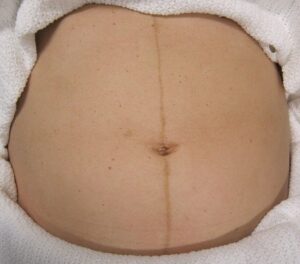
Your Answer: Polymorphic eruption of pregnancy
Correct Answer: Linea Nigra
Explanation:This is Linea Nigra. It occurs in 3/4 of pregnancies and is due to increased melanocyte-stimulating hormone production by the placenta. This also causes melasma and darkening of the nipples.
-
This question is part of the following fields:
- Clinical Management
-
-
Question 73
Incorrect
-
Which organism is the most common cause of puerperal sepsis?
Your Answer: Enterococcus
Correct Answer: Group A Streptococcus
Explanation:Puerperal sepsis is defined as sepsis occurring after birth until 6 weeks postnatal. The most common cause of puerperal sepsis is Group A streptococcus. Until 1937, puerperal sepsis was the major cause of maternal mortality. The discovery of sulphonamides in 1935 and the simultaneous reduction in the virulence of the haemolytic streptococcus resulted in a dramatic fall in maternal mortality.
-
This question is part of the following fields:
- Clinical Management
-
-
Question 74
Incorrect
-
Mifepristone when used for management of abortion works via what mechanism?
Your Answer: G-protein receptor agonist
Correct Answer: Anti-progestogen
Explanation:Mifepristone is a prostaglandin antagonist. It acts as a competitive inhibitor of the receptor.
-
This question is part of the following fields:
- Clinical Management
-
-
Question 75
Incorrect
-
Which of the following ultrasound findings form part of the Rotterdam criteria for diagnosis of PCOS (Polycystic Ovary Syndrome) ?
Your Answer: 5 or more peripheral ovarian follicles
Correct Answer: Increased ovarian volume >10cm3
Explanation:The Rotterdam criteria for the diagnosis of PCOS is based on a score of two out of the three criteria:
1) Oligo or anovulation
2) Hyperandrogenism – clinical (hirsutism or less commonly male pattern alopecia) or biochemical (raised FAI or free testosterone)
3) on ultrasound – contain 12 or more follicles measuring 2 to 9 mm in diameter and/or have an increased volume of 10 cm3 or greater. -
This question is part of the following fields:
- Clinical Management
-
-
Question 76
Incorrect
-
A 28 year old women presents at 30 weeks complaining of intense itching particularly on the hands and feet that is worse in the evenings. She has taken cetirizine but this hasn't settled her symptoms. Examination is unremarkable with no rash. What is the likely diagnosis
Your Answer: Dermatitis artefacta
Correct Answer: Intrahepatic Cholestasis of Pregnancy
Explanation:The history is typical of Intrahepatic Cholestasis of Pregnancy, also known as obstetric cholestasis and prurigo gravidarum. The features are: Intense itching typically of the hands and feet Itch gets worse at night Responds poorly to antihistamines There is no rash. The mechanism is poorly understood but tests may show deranged LFTs. It usually resolves quickly after delivery. The other diagnoses listed are possible though less likely. Scabies normally has a rash
-
This question is part of the following fields:
- Clinical Management
-
-
Question 77
Correct
-
You are consenting a patient for a diagnostic hysteroscopy. What is the approximate risk of uterine perforation in diagnostic hysteroscopy?
Your Answer: 0.10%
Explanation:The risk of uterine perforation is 0.1% during therapeutic hysteroscopy.
-
This question is part of the following fields:
- Clinical Management
-
-
Question 78
Correct
-
Stages of labour
Your Answer: The third stage ends with the delivery of the placenta and membranes
Explanation:First stage: The latent phase is generally defined as beginning at the point at which the woman perceives regular uterine contractions. A definition of active labour in a British journal was having contractions more frequent than every 5 minutes, in addition to either a cervical dilation of 3 cm or more or a cervical effacement of 80% or more.
Second stage: fetal expulsion begins when the cervix is fully dilated, and ends when the baby is born.
Third stage: placenta delivery – The period from just after the foetus is expelled until just after the placenta is expelled is called the third stage of labour or the involution stage.
-
This question is part of the following fields:
- Clinical Management
-
-
Question 79
Incorrect
-
A 56 year old lady presents with a vulval itch and discolouration. A biopsy conforms Lichen Sclerosis (LS). What is the risk of developing squamous cell carcinoma compared to patients with a normal vulval biopsy?
Your Answer: 0%
Correct Answer:
Explanation:Lichen Sclerosis is a destructive inflammatory condition that effects the anogenital region of women. It effects around 1 in 300 women. It destroys the subdermal layers of the skin resulting in hyalinization of the skin leading to parchment paper appearance of the skin. It is associated with vulval cancer and it is estimated that the risk of developing vulval cancer after lichen sclerosis is around 3-5%.
-
This question is part of the following fields:
- Clinical Management
-
-
Question 80
Correct
-
Regarding uterine fibroids, which of the following statements is false?
Your Answer: The risk of fibroids is increased by pregnancy
Explanation:Fibroids are a common gynaecological condition found in many women above the age of 35. They are however uncommon before puberty. They are most common in black women vs white women, and its prevalence increases from puberty to menopause. Risk factors for fibroids include increasing age, obesity and infertility. Protective factors, on the other hand, include pregnancy, as the risk of fibroids decreases with increasing numbers of pregnancies.
-
This question is part of the following fields:
- Clinical Management
-
-
Question 81
Correct
-
Which species of candida is the most common cause of genital candida infection in pregnancy?
Your Answer: Candida albicans
Explanation:Vulvovaginal candidiasis is the most common genital infection and it is caused by candida albicans in 80-92% of the cases. Other non albicans species include C.tropicalis, C.glabrata, C.krusei and C.parapsilosis. 20% of women of childbearing age are asymptotic colonisers of Candida species as part of their normal vaginal flora. This increases to 40% in pregnancy.
-
This question is part of the following fields:
- Clinical Management
-
-
Question 82
Incorrect
-
What type of drug is clavulanic acid?
Your Answer: DNA gyrase inhibitor
Correct Answer: Beta-lactamase inhibitor
Explanation:Clavulanic acid is a beta-lactamase inhibitor that is most often combined with a penicillin to form Augmentin or Co-amoxiclav for greater antibiotic efficacy. The drug works by irreversibly binding to enzymes present in bacteria which posses the Beta-lactamase enzyme. This enzyme is responsible for inactivating Beta-Lactam antibiotics such as penicillin.
-
This question is part of the following fields:
- Clinical Management
-
-
Question 83
Incorrect
-
Question 84
Incorrect
-
A fibroid is a type of
Your Answer: Myofibroma
Correct Answer: Leiomyoma
Explanation:A fibroid is a benign smooth muscle tumour or Leiomyoma. As such it is something of a misnomer. Leiomyosarcoma and Angioleiomyoma are malignant tumours of smooth muscle under the WHO sort tissue tumour classification Rhabdomyoma is a skeletal muscle tumour Myofibroma is seen in fibromatosis
-
This question is part of the following fields:
- Clinical Management
-
-
Question 85
Correct
-
The amniotic fluid volume progressively increases during pregnancy. At which of the following gestational ages will amniotic fluid volume reach a maximum?
Your Answer: 35 weeks
Explanation:Amniotic fluid volume begins to increase rapidly in the second and third trimester as the fetal kidneys continue to develop. By 35 weeks gestation the amniotic fluid volume reaches a maximum average of about 800 ml after which it decreases slightly to term.
-
This question is part of the following fields:
- Clinical Management
-
-
Question 86
Incorrect
-
What percentage of infants will have permanent neurological dysfunction as a result of brachial plexus injury secondary to shoulder dystocia?
Your Answer: 25%
Correct Answer:
Explanation:Shoulder dystocia occurs when the anterior or posterior fetal shoulder impacts on the maternal symphysis or sacrum and may require additional manevours to release the shoulders after gentle downward traction has failed. The most common injury that can occur, is to the brachial plexus due to lateral flexion of the head during traction. This may cause a neurological disability, Erb’s Palsy ( injury to C5 and C6 of the brachial plexus) in which there is a less than 10% chance that this injury would be permanent.
-
This question is part of the following fields:
- Clinical Management
-
-
Question 87
Incorrect
-
When deciding on entry method for laparoscopy a patients build is important. Which of the following entry methods is inappropriately matched to the patient?
Your Answer: Palmers point entry into obese patient (BMI 42)
Correct Answer: Varess needle entry in a very thin patient (BMI 16)
Explanation:In patients with normal BMI there is no preferential entry method. The Varess technique is not appropriate for morbidly obese or very thin patients for the reasons set out below: Morbid Obesity (BMI>40): Hasson technique or entry at Palmers point Reason: difficult penetration with Varess needle Very Thin Patients: Hasson technique or insertion at Palmers point Reason: higher risk of vascular injury
-
This question is part of the following fields:
- Clinical Management
-
-
Question 88
Incorrect
-
A baby with shoulder dystocia suffers a brachial plexus injury. The mother asks you if this will be permanent. What percentage of babies will have permanent neurological dysfunction as a result of brachial plexus injury secondary to shoulder dystocia?
Your Answer: 50%
Correct Answer:
Explanation:of cases there is no permanent neurological disability. Shoulder dystocia is the most common cause of Erb’s palsy (Erb-Duchenne palsy) where there is injury to C5 and C6 of the brachial plexus (C5 to T1)
-
This question is part of the following fields:
- Clinical Management
-
-
Question 89
Correct
-
During pregnancy which one of the following laboratory parameters is decreased?
Your Answer: Platelet count
Explanation:In pregnancy, although it is a hypercoagulable state with an increase in clotting factors, the platelet count is decreased. Fibrinogen and erythrocyte sedimentation rate (ESR) may be both increased.
-
This question is part of the following fields:
- Clinical Management
-
-
Question 90
Incorrect
-
A 36 year old women attends clinic following laparotomy and unilateral oophorectomy. The histology shows Psammoma bodies. What type of tumour would this be consistent with?
Your Answer: Clear cell
Correct Answer: Serous
Explanation:Serous tumours of the ovaries are large, cystic and spherical to ovoid in shape. They can be benign or malignant. Malignant tumours are usually nodular with irregularities in the surface where the tumour penetrates into the serosa. Psammoma bodies are a histological identification for these tumours which appear in the tips of the papillae.
-
This question is part of the following fields:
- Clinical Management
-
-
Question 91
Incorrect
-
Which of the following is the most appropriate for diagnosis of Bacterial Vaginosis (BV)?
Your Answer: SAPS III score
Correct Answer: Amsel's criteria
Explanation:Diagnosis can be made using the Amsel’s criteria:
1. Presence of clue cells on microscopic examination (these cells are epithelial cells covered with the bacteria).
2. Creamy greyish discharge.
3. Vaginal pH of more than 4.5.
5. Positive whiff test – release of fishy odour on addition of alkali solution. Other criteria include the nugent score and the Hay/Ison criteria. The Nugent score estimates the relative proportions of bacterial morphotypes to give a score between 0 and 10 (<4 = normal, 4-6 = intermediate, >6 = BV)
The Hay/Ison criteria
Grade 1 (Normal): Lactobacillus morphotypes predominate
Grade 2 (Intermediate): Mixed flora with some Lactobacilli present, but Gardnerella or Mobiluncus morphotypes also present
Grade 3 (BV): Predominantly Gardnerella and/or Mobiluncus morphotypes. Few or absent Lactobacilli. -
This question is part of the following fields:
- Clinical Management
-
-
Question 92
Incorrect
-
You receive a swab result from a patient who had complained of odorous vaginal discharge. It confirms bacterial vaginosis (BV). Which pathogen is most commonly associated with BV?
Your Answer: Treponema Pallidum
Correct Answer: Gardnerella vaginalis
Explanation:Bacterial vaginosis is characterised by a foul smelling vaginal discharge without inflammation. The most common spp to cause this is gardnerella vaginalis. Other spp include mycoplasma hominis and bacteroides. It occurs due to growth and increase in anaerobic spp with simultaneous reduction in lactobacilli in vaginal flora causing an increase in vaginal pH. It is the most common cause of abnormal vaginal discharge in women of childbearing age.
-
This question is part of the following fields:
- Clinical Management
-
-
Question 93
Correct
-
Question 94
Incorrect
-
A 32 year old women who is 25 weeks pregnant presents with vaginal bleeding and cramping lower abdominal pain. On examination the cervix is closed. Fetal cardiac activity is noted on ultrasound. What is the likely diagnosis?
Your Answer: Septic Miscarriage
Correct Answer: Antepartum Haemorrhage
Explanation:Antepartum haemorrhage is any bleeding that occurs from the female genital tract during the antenatal period after the 24+0 week of pregnancy and prior to the birth of the baby. The most common causes are placenta previa and placental abruption.
-
This question is part of the following fields:
- Clinical Management
-
-
Question 95
Incorrect
-
A 29 year old is diagnosed with stage 1A2 cervical cancer. Which of the following is the most appropriate treatment option?
Your Answer: Chemotherapy
Correct Answer: LLETZ
Explanation:The treatment of stage 1A cervical cancer is excision of the margins using the Loop electrical excision procedure (LLETZ). Hysterectomy is not necessary. This treatment enables fertility to be preserved.
2010 FIGO classification of cervical carcinoma
0 – Carcinoma in situ
1 – Confined to the cervix (diagnosed microscopy)
1A1 – Less than 3mm depth & 7mm lateral spread
1A2 – 3mm to 5mm depth & less than 7mm lateral spread
1B1 – Clinically visible lesion or greater than A2 & less than 4 cm in greatest dimension
1B2 – Clinically visible lesion, greater than 4 cm in greatest dimension
2 – Invades beyond uterus but not to pelvic wall or lower 1/3 vagina
2A1 – Involvement of the upper two-thirds of the vagina, without parametrical invasion & Less than 4cm
2A2 – Greater than 4 cm in greatest dimension
2B – Parametrial involvement
3 – Extends to Pelvic side wall or lower 1/3 vagina or hydronephrosis
3A – No pelvic side wall involvement
3B – Pelvic side wall involved or hydronephrosis
4 – Extends beyond true pelvis 4A Invades mucosa bladder and rectum
4B – Distant Metastasis -
This question is part of the following fields:
- Clinical Management
-
-
Question 96
Incorrect
-
A 25 year old prim gravida carrying a twin male pregnancy presents at 31 weeks gestation. She is lethargic, clinically jaundiced and complains of abdominal pain with frequent vomiting. You suspect acute fatty liver of pregnancy (AFLP). What is the maternal mortality rate with AFLP?
Your Answer: <0.5%
Correct Answer: 20%
Explanation:Acute fatty liver of pregnancy occurs in 1-10000 pregnancies and presents as jaundice with abdominal pain. The maternal mortality is around 20%
-
This question is part of the following fields:
- Clinical Management
-
-
Question 97
Incorrect
-
Syphilis is caused by which one of the following organisms?
Your Answer: Propionibacterium propionicus
Correct Answer: Treponema Pallidum
Explanation:Syphilis is a sexually transmitted disease which is caused by spirochete called treponema pallidum. It can be divided into three stages. i.e. primary, secondary and tertiary syphilis.
– Primary syphilis is characterized by chancre formation at the site of sexual contact.
– Secondary syphilis ranges from maculopapular lesions to scaly lesions, inguinal lymphadenopathy, condylomata lata and split papules at the corner of mouth.
– Tertiary syphilis is the late stage of syphilis which is characterized by gummas formation and general paresis along with signs and symptoms of visceral involvement. -
This question is part of the following fields:
- Clinical Management
-
-
Question 98
Incorrect
-
Amongst women with a diagnosis of Gonorrhoea, what percentage will develop pelvic inflammatory disease?
Your Answer: 50%
Correct Answer: 15%
Explanation:Gonorrhoea is a sexually transmitted diplococcus bacteria known to infect the female genital tract, which can cause an ascending infection in the uterus and fallopian tubes. About 15 percent of women with this infection may develop pelvic inflammatory disease (PID), which poses risks of long term consequences: ectopic pregnancy, infertility and chronic pelvic pain.
-
This question is part of the following fields:
- Clinical Management
-
-
Question 99
Incorrect
-
According to the RCOG Green-top guideline published in 2013 at what stage of gestation should pregnant patients with PCOS be offered screening for gestational diabetes
Your Answer: 8-12 weeks gestation
Correct Answer: 24-28 weeks gestation
Explanation:Screening for gestational diabetes should be offered and performed between 24-28 weeks. It should be noted PCOS alone does not make screening essential. It is advised for PCOS patients who are overweight or if not overweight but has other risk factors (age >40, personal history of gestational diabetes or family history of type II diabetes). Screening is via a 2-hour post 75 g oral glucose tolerance test.
-
This question is part of the following fields:
- Clinical Management
-
-
Question 100
Correct
-
Ulipristal is thought to prevent pregnancy by what primary mechanism?
Your Answer: Inhibition of ovulation
Explanation:Ulipristal is a progesterone receptor modulator that is used up to 120 hours following unprotected intercourse. It inhibits ovulation. The dose is 30 mg.
-
This question is part of the following fields:
- Clinical Management
-
-
Question 101
Incorrect
-
A 24 year old female patient undergoes an STI screen due to development of dysuria 5 days earlier. The results are positive for chlamydia infection. With regard to contact tracing what is the recommended action regarding tracing and informing sexual partners in this case?
Your Answer: All sexual partners past 4 weeks
Correct Answer: All sexual partners past 6 months
Explanation:In case a person tests positive for chlamydia, all sexual partners over the period of 6 months should to contacted and started on appropriate antibiotics.
-
This question is part of the following fields:
- Clinical Management
-
-
Question 102
Incorrect
-
Which of the following has been shown to improve pruritus and liver function in patients with obstetric cholestasis?
Your Answer: Cholestyramine
Correct Answer: Ursodeoxycholic acid
Explanation:Intrahepatic cholestasis characterized by reversible cholestasis typically occurring in the second or third trimester of pregnancy, elevated serum aminotransferases and bile acid level and resolution of symptoms by 2 to 3 weeks after delivery. Ursodeoxycholic acid has shown to reduce the symptoms of this condition.
-
This question is part of the following fields:
- Clinical Management
-
-
Question 103
Correct
-
Which of the following fasting plasma glucose (FPG) values for OGTT (Oral glucose tolerance test) is diagnostic of gestational diabetes according to the WHO criteria?
Your Answer: FPG 6.1mmol/L; 2 hour 7.8mmol/L
Explanation:There are several criteria that aid in the diagnosis of gestational diabetes in pregnancy including NICE, WHO and modified WHO:
GDM Diagnostic Criteria:
NICE: Immediate FBG >5.6, 2 hour glucose >7.8
WHO: Immediate FBG >6.1, 2 hour glucose >7.8
Modified WHO: Immediate FBG >7.1, 2 hour glucose >7.8Random glucose and OGTT 2 hour readings of >11.1 are diagnostic of diabetes in non-pregnant states but are not part of the gestational diabetes criteria.
-
This question is part of the following fields:
- Clinical Management
-
-
Question 104
Correct
-
Endometriosis is an example of which of the following?
Your Answer: Pathological hyperplasia
Explanation:Endometriosis is a condition in which the endometrial tissue lies outside the endometrial cavity. There are 4 theories which explain this. First is pathological hyperplasia resulting in menstrual regurgitation and implantation, second is the coelomic epithelium transformation, third is immunogical factors and the fourth is via the lymphatic or vascular spread.
-
This question is part of the following fields:
- Clinical Management
-
-
Question 105
Correct
-
You see a 28 year old woman who is 22 weeks pregnant. She complains of vaginal soreness and yellow frothy discharge. Microscopy confirms Trichomoniasis. What percentage of infected pregnant women present with yellow frothy discharge?
Your Answer: 20%
Explanation:Trichomoniasis is considered a sexually transmitted infection found both in men and women, and is caused by the flagellate protozoan Trichomonas vaginalis. The organism is mainly found in the vagina and the urethra. Though many infected women can be asymptomatic, they can also present with yellow frothy vaginal discharge, itching and vaginitis, dysuria or an offensive odour. About 20-30% of women with the infection however are asymptomatic. For the diagnosis of t. vaginalis in women, a swab is taken from the posterior fornix during speculum examination and the flagellates are detected under light-field microscopy. The recommended treatment for t. vaginalis during pregnancy and breastfeeding is 400-500mg of metronidazole twice daily for 5 -7 days. High dose metronidazole as a 2g single dose tablet is not advised during pregnancy. All sexual partners should also be treated and screened for other STIs.
-
This question is part of the following fields:
- Clinical Management
-
-
Question 106
Correct
-
Question 107
Incorrect
-
A 19 year old patient on Lamotrigine 125 mg twice a day for the past two years has recently been prescribed Microgynon 30 as a contraceptive before she leaves for Uni. What could the main concern be?
Your Answer: Combined contraceptive may increase Lamotrigine levels and increase risk of side effects/toxicity
Correct Answer: Combined contraceptive may reduce Lamotrigine levels and increase seizure risk
Explanation:Lamotrigine, a drug used to treat epilepsy, is less effective when taken with combined oral contraceptives. The oestrogen component of the pill decreases the circulating levels of Lamotrigine, increasing the risk of seizures. The combination is therefore classified as a UKMEC 3, as the risk of the drug combination may outweigh the benefit. As an alternative, the progesterone-only pill, depo progesterone, Mirena or the copper IUD may be considered as there is no restriction on concomitant use. Lamotrigine is not metabolised through cytochrome P450 like other antiepileptic drugs such as carbamazepine and phenytoin, neither is it an enzyme inhibitor.
-
This question is part of the following fields:
- Clinical Management
-
-
Question 108
Incorrect
-
A 27 year old women presents with a history of vaginal spotting and cramping abdominal pain. She has an 8 week history of amenorrhoea. On examination urine pregnancy test is positive and the cervix is closed. What is the likely diagnosis?
Your Answer: Antepartum Haemorrhage
Correct Answer: Threatened Miscarriage
Explanation:Miscarriage is a pregnancy that ends spontaneously before the foetus reaches the age of viability i.e. before 24 weeks of gestation. In a threatened miscarriage the USG findings are of a foetus present in the uterus and on speculum examination the cervical OS is closed, in an inevitable miscarriage the cervical OS is opened. In an incomplete miscarriage the uterus contains the retained products of conception and the cervical OS is open. complete miscarriage contains no retained products of conception and the cervix is closed as the bleeding as resolved.
-
This question is part of the following fields:
- Clinical Management
-
-
Question 109
Incorrect
-
You are asked to review a patient. They have attended for a scan at 13 weeks following a positive pregnancy test. The patient has had 2 previous pregnancies for which she opted for termination on both occasions. The scan shows a large irregular haemorrhagic mass that appears to be invading into the myometrium. What is the likely diagnosis?
Your Answer: Endometriosis
Correct Answer: Choriocarcinoma
Explanation:Choriocarcinoma may arise as a complication of gestation or as spontaneous germ cell tumours. As this scenario depicts that the women has previous abortion points to the fact that these may have been molar pregnancies. As choriocarcinoma can arise from a molar pregnancy it can be differentiated from it by the presence of invasion into the uterus and metastasis to the lungs primarily.
-
This question is part of the following fields:
- Clinical Management
-
-
Question 110
Incorrect
-
Regarding gestational diabetes which of the following statements is TRUE?
Your Answer: it occurs in 5-10% of pregnancies
Correct Answer: it occurs in 2-5% of pregnancies
Explanation:Gestational Diabetes occurs in 2-9% of all the pregnancies.
-
This question is part of the following fields:
- Clinical Management
-
-
Question 111
Incorrect
-
A patient asks you in clinic when she can start trying to conceive again. She has just completed chemotherapy for gestational trophoblastic disease (GTD)?
Your Answer: No restriction advised
Correct Answer: 1 year from completion of treatment
Explanation:According to the RCOG greentop guidelines, a women who have underdone chemotherapy for GTD are advised not to conceive for 1 years after completion of the chemotherapy.
-
This question is part of the following fields:
- Clinical Management
-
-
Question 112
Incorrect
-
A 26 year old patient attends the maternity unit as her waters have broken but she hasn't had contractions. She is at 39+5 weeks gestation. Speculum examination confirms prelabour rupture of membranes (PROM). What is the risk of serious neonatal infection with PROM?
Your Answer: 5 in 1000
Correct Answer: 1 in 100
Explanation:In pregnancy, term refers to the gestational period from 37 to 41+6 weeks. Preterm births occur between 24 and 36+6 weeks. Only 1% of women who go into PROM have risk of having serious neonatal infections.
Management of PROM:
60% of patients with PROM will go into labour within 24 hrs
Induction is appropriate if >34 weeks gestation and more than 24 hours post rupture when labour hasn’t started.
If < 34 weeks, induction of labour should not be carried out unless there are additional obstetric indications e.g. infection -
This question is part of the following fields:
- Clinical Management
-
-
Question 113
Incorrect
-
Which of the following statements regarding management of obstetric anal sphincter injuries (OASIS) is true?
Your Answer: Figure of eight sutures should be used during repair to improve haemostasis
Correct Answer: Broad-spectrum antibiotics should be given routinely following OASIS
Explanation:After perineal repair, lactulose and a bulking agent should ideally be given for 5-10 days as well as broad spectrum antibiotics should be given that will cover all possible anaerobic bacteria. At 6-12 months a full evaluation should be done regarding the progress of healing. 60 to 80% of women are asymptomatic 12 months post delivery and external anal sphincter repair.
-
This question is part of the following fields:
- Clinical Management
-
-
Question 114
Correct
-
Regarding anti-epileptic use in the 1st trimester of pregnancy, which of the following is closely associated with the development of congenital malformations?
Your Answer: Sodium valproate
Explanation:Sodium Valproate is known to be the most teratogenic when used in the first trimester of pregnancy. This antiepileptic increases the risk of congenital malformations including a 10-20 fold risk of neurodevelopmental defects. Though the use of antiepileptics should generally be avoided during pregnancy, carbamazepine, or newer drugs such as Lamotrigine are thought to carry less of a risk of teratogenicity.
-
This question is part of the following fields:
- Clinical Management
-
-
Question 115
Incorrect
-
A mother typically becomes aware of fetal movements at what gestation?
Your Answer: 24-28 weeks
Correct Answer: 18-20 weeks
Explanation:Foetal movements often become apparent at about 18-20 weeks gestation. This phenomenon is also called quickening. The Foetal movements continue to increase in frequency and force until 32 weeks where they plateau. Foetal movements can be used to monitor the wellbeing of the foetus, alerting the mother and healthcare providers to a problem.
-
This question is part of the following fields:
- Clinical Management
-
-
Question 116
Incorrect
-
You review a patient in the fertility clinic. The ultrasound and biochemical profile are consistent with PCOS. She has been trying to conceive for 2 years. Her BMI is 26 kg/m2. She is a non-smoker. Which of the following is the most appropriate first line treatment?
Your Answer: Laparoscopic drilling
Correct Answer: Clomiphene
Explanation:Clomiphene and/or Metformin are 1st line agents. Weight loss in the setting of subfertility is advised if BMI >30 kg/m2
-
This question is part of the following fields:
- Clinical Management
-
-
Question 117
Incorrect
-
What is the average volume of blood loss during the menstrual cycle?
Your Answer: 150-200ml
Correct Answer: 35-40ml
Explanation:Normal menstrual blood loss is about 40-45 ml. More than 80 ml per period is defined as heavy menstrual bleeding.
-
This question is part of the following fields:
- Clinical Management
-
-
Question 118
Correct
-
A 46 year old women with a BMI of 34 is seen in clinic following hysteroscopy and biopsy for irregular menstrual bleeding. Histology shows atypical hyperplasia. Which of the following is the most appropriate 1st line management?
Your Answer: Laparoscopic hysterectomy
Explanation:There is an increase risk of developing carcinoma of the uterus, if the endometrium shows hyperplasia with atypia. The standard surgery is total hysterectomy with bilateral salpingectomy which can be performed abdominally or laparoscopically If the disease is grade 1-2 and less than 1B i.e. less than 50% invasion of the uterine body.
-
This question is part of the following fields:
- Clinical Management
-
-
Question 119
Correct
-
Pregnant patients are at higher risk of thromboembolism due to a hypercoagulable state. Which of the following clotting factors reduces during pregnancy?
Your Answer: Factor XI
Explanation:Pregnancy is a hypercoagulable state, which means that risk of thromboembolism is increased. The main reason is an increase in clotting factors II, factor VII, fibrinogen, factor X and factor XII, whereas factors XI and factor XIII are reduced. Naturally occurring anticoagulants i.e. protein C and protein S are both decreased thus increasing the risk of thrombus formation.
-
This question is part of the following fields:
- Clinical Management
-
-
Question 120
Incorrect
-
You are asked to review a patient. They have attended for a scan at 13 weeks following a positive pregnancy test. The patient has had 2 previous pregnancies for which she opted for termination on both occasions. The scan shows no identifiable fetal tissue or gestational sac and you note the radiologist has reported a 'bunch of grapes sign'. What is the likely diagnosis?
Your Answer: Missed miscarriage
Correct Answer: Complete molar pregnancy
Explanation:Gestational trophoblastic disorder is abnormal conception that is characterised by swollen and oedematous villi with proliferation of the trophoblasts. In a complete mole there is absence of fetal tissue, there is diffuse proliferation of trophoblastic tissue around hydropic villi and on USG it appears as a bunch of grapes or snow storm appearance.
-
This question is part of the following fields:
- Clinical Management
-
-
Question 121
Incorrect
-
A 24 year old lady is 9 weeks pregnant with her first child. She attends clinic complaining of severe vomiting and is unable to keep fluids down. The most likely diagnosis is hyperemesis gravidarum. Which of the following is the underlying cause?
Your Answer: Increased circulating progesterone
Correct Answer: Increased circulating HCG
Explanation:Hyperemesis gravidarum (HG) is a severe form of nausea and vomiting in pregnancy, associated with weight loss of more than 5% of pre-pregnancy weight, dehydration and electrolyte imbalance. HG is usually most severe during the first 12 weeks of pregnancy and is thought to be caused by high circulating levels of HCG.
There is not yet any evidence that pregnancy itself increases the sensitivity of the area postrema, or that the hormones, oestradiol, or progesterone increase vomiting. Generally, higher concentrations of dopamine stimulates receptors in the chemoreceptor trigger zone leading to nausea and vomiting. Although this has not been demonstrated as the cause of hyperemesis gravidarum.
-
This question is part of the following fields:
- Clinical Management
-
-
Question 122
Correct
-
You are called to see a 24 year old patient in A&E. She is 34 weeks gestation and her blood pressure is 149/98. Urine dip shows protein 3+. You send a for a protein:creatinine ratio. What level would be diagnostic of significant proteinuria?
Your Answer: >30 mg/mmol
Explanation:Significant proteinuria = urinary protein:creatinine ratio >30 mg/mmol or 24-hour urine collection result shows greater than 300 mg protein
-
This question is part of the following fields:
- Clinical Management
-
-
Question 123
Incorrect
-
Question 124
Incorrect
-
What is the mechanism of action of Oxytetracycline?
Your Answer: DNA Gyrase Inhibitor
Correct Answer: Binds to 30S subunit of microbial ribosomes blocking attachment of aminoacyl-tRNA to the A site on the ribosome
Explanation:Tetracycline is classified as a broad spectrum antibiotic. It is a bacteriostatic inhibitor of protein synthesis acting at the ribosomal level. Tetracycline binds to the 30s ribosomal subunit preventing the binding of the aminoacidic charged T-RNA to the ribosome-mRNA complex.
-
This question is part of the following fields:
- Clinical Management
-
-
Question 125
Incorrect
-
A 67 year old patient with endometrial carcinoma is to undergo staging investigations. There is evidence of invasion into the vaginal wall, but the lymph nodes are spared, and there is no distant metastasis. According to FIGO, what stage is this?
Your Answer: 3A
Correct Answer: 3B
Explanation:Endometrial cancer is one of the most common gynaecological malignancies present in postmenopausal women, with a peak incidence between the ages of 60-89. Factors associated with endometrial cancer include obesity, hypertension and diabetes. Full staging for endometrial cancer is surgical, including several other radiologic investigations. According to FIGO staging classifications:
Stage 1 indicates a tumour confined to the uterine body
Stage 2 indicates the invasion of the cervical stroma
Stage 3 indicates local and regional spread, where the tumour invades the serosa in stage 3A, spreads to the vagina and parametrium in stage 3B, and metastasizes to the pelvic or para-aortic lymph nodes in stage 3C.
Stage 4 indicates tumour invasion on the bladder or bowel mucosa, or distant metastasis. -
This question is part of the following fields:
- Clinical Management
-
-
Question 126
Correct
-
Endometrial tissue found within the myometrium is classed as:
Your Answer: Adenomyosis
Explanation:Adenomyosis is a disorder characterised by the presence of endometrial glands deep within the myometrium. It presents with increasing severe secondary dysmenorrhoea and increased in the flow of menstrual blood.
-
This question is part of the following fields:
- Clinical Management
-
-
Question 127
Correct
-
You are attending the labour of a patient who has had a prolonged 1st stage of labour. You note the fetal head start to retract after being tightly applied to the vulva (turtle-neck sign). What is the next most appropriate management step?
Your Answer: McRoberts' manoeuvre
Explanation:Call for help.
• Ensure personnel are available to ‘scribe’.
Document the time the head delivered, which shoulder is anterior (this is the arm most vulnerable to injury) and the times at which each manoeuvre is employed.
• Drop the level of the delivery bed as low as it will go, and flatten the back of the bed so the woman is completely flat. Remove the foot of the bed to allow access.
• Assess for and perform an episiotomy, if needed.
• Using one assistant on each of the mother’s legs, flex and abduct the legs at the hip (thighs to abdomen, known as McRoberts manoeuvre). This flattens the lumbosacral spine and will facilitate delivery is around 90 per cent of cases.
• If this fails, suprapubic pressure should be
applied by another assistant. This should be
applied over the posterior aspect of the anterior fetal shoulder and will act to push the shoulders together. It can be used in a constant and then rocking motion.
• If both these fail, then internal manoeuvres are necessary. The order of these will depend on the skill and experience of the person conducting the delivery and the individual case. These manoeuvres have been named after famous obstetricians, but it is the process rather than the name that is important:
• An attempt can be made to rotate the baby, so that the shoulders enter the diagonal to allow delivery. The first procedure is usually to insert a hand behind the anterior shoulder, and push it towards the chest (Rubin II). This will adduct the shoulders then push them into the diagonal. This can be combined with pressure on the
anterior aspect of the posterior shoulder
to aid rotation (Woods’ screw). If this fails,
an attempt can be made to rotate the baby
in the opposite direction (reverse Woods’
screw). Delivery of the posterior arm can be
attempted passing a hand into the vagina, in
front of the posterior shoulder and deliver
the posterior arm by swinging it in front of
the fetal chest.
If these all fail, the patient can be moved on to all fours as this increases the anterior–posterior diameter of the inlet. In this position, the posterior arm can be delivered.
After this, manoeuvres of last resort include a symphysiotomy, in which the maternal symphysis is divided, Zavanelli’s, in which the head is reduced back into the vagina and a Caesarean section performed and intentional fracture of the fetal
clavicle. -
This question is part of the following fields:
- Clinical Management
-
-
Question 128
Correct
-
Question 129
Incorrect
-
Which of the following hormones is produced by the hypothalamus in response to breastfeeding?
Your Answer: ADH
Correct Answer: Oxytocin
Explanation:Nipple stimulation during breastfeeding triggers the production of oxytocin from the hypothalamus and its subsequent release from the posterior pituitary gland. The hormone causes the myoepithelial cells of the breast to contract causing milk to flow through the ducts.
Ergometrine and Prostaglandin E2 are used during labour to control uterine bleeding after delivery, or ripen the cervix, while Atosiban is an oxytocin antagonist.
Antidiuretic hormone is also released from the posterior pituitary, and acts on the kidneys to decrease fluid excretion.
-
This question is part of the following fields:
- Clinical Management
-
-
Question 130
Incorrect
-
Which of the following dugs is a strong inducer of cytochrome P450?
Your Answer: Levetiracetam
Correct Answer: Phenytoin
Explanation:It is important to be aware of which ant-epileptics induce cytochrome P450. Of the above Topiramate and Phenytoin are moderate and strong inducers respectively.
-
This question is part of the following fields:
- Clinical Management
-
-
Question 131
Correct
-
Completion of the 3rd stage of labour refers to:
Your Answer: Expulsion of the placenta and membranes
Explanation:The third stage of labours starts from the delivery of the foetus to the delivery of the placenta and the membranes.
-
This question is part of the following fields:
- Clinical Management
-
-
Question 132
Incorrect
-
Hyperemesis gravidarum occurs in what percentage of pregnancies?
Your Answer: 15%
Correct Answer: 1.50%
Explanation:Hyperemesis Gravidarum effects around 0.3-2% of Pregnancies. It causes imbalances of fluid and electrolytes, disturbs nutritional intake and metabolism, causes physical and psychological debilitation and is associated with adverse pregnancy outcome, including an increased risk of preterm birth
and low birthweight babies. The aetiology is unknown however various potential mechanisms have been proposed including an association with high levels of serum human chorionic gonadotrophin (hCG), oestrogen and thyroxine. -
This question is part of the following fields:
- Clinical Management
-
-
Question 133
Incorrect
-
Question 134
Incorrect
-
A 32 year old women who is 25 weeks pregnant presents with vaginal bleeding and cramping lower abdominal pain. On examination the cervix is closed. Fetal cardiac activity is noted on ultrasound. What is the likely diagnosis?
Your Answer: Inevitable Miscarriage
Correct Answer: Antepartum Haemorrhage
Explanation:Antepartum haemorrhage (APH) is defined as bleeding from or in to the genital tract, occurring from 24+0 weeks of pregnancy and prior to the birth of the baby.
-
This question is part of the following fields:
- Clinical Management
-
-
Question 135
Incorrect
-
A 37 year old lady attends clinic following laparotomy and unilateral oophorectomy. The histology shows mucin vacuoles. What type of tumour would this be consistent with?
Your Answer: Transitional
Correct Answer: Mucinous
Explanation:Mucinous tumours are cystic masses which are indistinguishable from the serous tumours on gross examination except by its contents. On histology it is lined with mucin producing epithelium – mucin vacuoles whereas serous tumours have psammoma bodies. Malignant tumours are characterised by the presence of architectural complexity, cellular stratification, stromal invasion and cytological atypia.
-
This question is part of the following fields:
- Clinical Management
-
-
Question 136
Incorrect
-
A 36 year old woman has a pelvic ultrasound scan showing multiple fibroids. What is the most common form of fibroid degeneration?
Your Answer: Carneous degeneration
Correct Answer: Hyaline degeneration
Explanation:Hyaline degeneration is the most common form of fibroid degeneration. Fibroids:
Risk Factors
– Black Ethnicity
– Obesity
– Early Puberty
– Increasing age (from puberty until menopause)
Protective Factors
– Pregnancy
– Multiparity -
This question is part of the following fields:
- Clinical Management
-
-
Question 137
Incorrect
-
A couple present to the fertility clinic after failing to conceive despite trying for 2.5 years. The semen analysis shows azoospermia. You perform a full examination of the male partner which reveals Height 192cm, BMI 20.5, small testes and scant facial hair. You decide to organise karyotyping. What is the result likely to show?
Your Answer: 46XY
Correct Answer: 47XXY
Explanation:Klinefelter syndrome is associated with testicular atrophy, eunuchoid body shape, tall, long extremities, female hair distribution and gynaecomastia. It is a common cause of hypogonadism seen during fertility workup.
-
This question is part of the following fields:
- Clinical Management
-
-
Question 138
Incorrect
-
A patient admitted to the medical ward complains of a mild fever and vaginal discharge. Clue cells are seen on microscopy from a vaginal swab. Which of the following infections feature clue cells?
Your Answer: Chlamydia trachomatis
Correct Answer: Bacterial Vaginosis
Explanation:Bacterial vaginosis (BV) is a common infection of the vagina caused by the overgrowth of atypical bacteria, most commonly Gardnerella vaginalis, a gram-negative rod. In diagnosing BV, a swab is taken for microscopy, often revealing clue cells. Clue cells are cells of the vaginal epithelium which are covered by adherent Gardnerella, giving them a distinctive look under the microscope. Though many are asymptomatic, some infected women complain of a greyish, foul-smelling vaginal discharge. Their vaginal fluid pH may also become more alkaline. BV does not however present with pyrexia, so the lady’s fever could be attributed to another cause as she is still a patient on the medical ward.
-
This question is part of the following fields:
- Clinical Management
-
-
Question 139
Incorrect
-
A 46 year old women with a BMI of 34 is seen in clinic following hysteroscopy and biopsy for irregular menstrual bleeding. Histology shows hyperplasia without atypia. Following a discussion the patient declines any treatment but agrees she will try and lose weight. What is the risk of progression to endometrial cancer over 20 years?
Your Answer: 10-15%
Correct Answer:
Explanation:The risk of developing endometrial carcinoma is less than 5% over 20 years if the endometrium shows hyperplasia without atypia.
There are 2 types of Endometrial Hyperplasia:
1. Hyperplasia without atypia*
2. Atypical hyperplasiaMajor Risk Factors:
Oestrogen (HRT)
Tamoxifen
PCOS
Obesity
Immunosuppression (transplant) -
This question is part of the following fields:
- Clinical Management
-
-
Question 140
Correct
-
What percentage of pregnant women have asymptomatic vaginal colonisation with candida?
Your Answer: 40%
Explanation:90% of genital candida infections are the result of Candida albicans. 20% of women of childbearing age are asymptotic colonisers of Candida species as part of their normal vaginal flora. This increases to 40% in pregnancy
-
This question is part of the following fields:
- Clinical Management
-
-
Question 141
Incorrect
-
What percentage of pregnancies will be uncomplicated following a single episode of reduced fetal movements?
Your Answer: 90%
Correct Answer: 70%
Explanation:Reduced fetal movements can be the first indication of possible fetal abnormalities. Movements are first perceived by the mother from about 18-20 weeks gestation, increase in size and frequency until 32 weeks gestation when they plateau at about 31 movements per hour. Investigations for reduced fetal heart rate include auscultation of the fetal heart rate using a handheld doppler device, and a cardiotocograph or ultrasound if the foetus is above 28 weeks gestation. About 70% of women who experience one episode of reduced fetal movement have uncomplicated pregnancies. They are advised to report to a maternal unit if another episode occurs.
-
This question is part of the following fields:
- Clinical Management
-
-
Question 142
Incorrect
-
What is the most common Type II congenital thrombophilia?
Your Answer: Antiphospholipid syndrome
Correct Answer: Factor V Leiden mutation
Explanation:Factor V Leiden is the most common congenital thrombophilia. Named after the Dutch city Leiden where it was first discovered. Protein C and S deficiencies are type 1 (Not type 2) thrombophilias Antiphospholipid syndrome is an acquired (NOT congenital) thrombophilia
-
This question is part of the following fields:
- Clinical Management
-
-
Question 143
Correct
-
A 36 year old patient is seen in clinic for follow up of a vaginal biopsy which confirms cancer. What is the most common type?
Your Answer: Squamous cell carcinoma
Explanation:Squamous cell carcinoma is the most common type of vaginal cancer.
-
This question is part of the following fields:
- Clinical Management
-
-
Question 144
Correct
-
A baby with shoulder dystocia suffers a brachial plexus injury. You diagnose Erb-Duchenne palsy. Which nerve roots are typically affected?
Your Answer: C5 and C6
Explanation:Erb’s or Erb-Duchenne palsy is a type of brachial plexus injury. The brachial plexus comprises C5 to T1 nerve roots. In Erb’s palsy C5 and C6 are the roots primarily affected. Shoulder Dystocia is the most common cause of Erb’s palsy.
-
This question is part of the following fields:
- Clinical Management
-
-
Question 145
Incorrect
-
A 31 year old patient undergoes an elective c-section delivery. You estimate blood loss has reached 1000ml and you suspect uterine atony is the likely cause. Following bimanual uterine compression what pharmacological intervention is advised?
Your Answer: Carboprost 0.25 mg by IM injection
Correct Answer: Syntocin 5u by slow intravenous injection
Explanation:Syntocin 5u by slow intravenous injection is the first line pharmacological measurement in this scenario
-
This question is part of the following fields:
- Clinical Management
-
-
Question 146
Incorrect
-
Which of the following is the most common cause of abnormal vaginal discharge in patients of childbearing age?
Your Answer: Neisseria gonorrhoeae
Correct Answer: Bacterial vaginosis
Explanation:Bacterial Vaginosis is a common condition which results in a foul smelling discharge from the vagina without any inflammation. It is the most common cause of abnormal PV discharge. Most of the women are asymptomatic carriers.
-
This question is part of the following fields:
- Clinical Management
-
-
Question 147
Correct
-
A 28 year old patient presents to clinic with a maculopapular rash to the hands and soles of the feet. Examination reveals wart like lesions on the vagina and a diagnosis of condyloma latum is made. What stage of syphilis infection is this?
Your Answer: Secondary
Explanation:Condylomas are warty neoplasms of the vulvar area. The most common type are condyloma acuminatum which occur due to HPV 6 or 11. Condyloma latum are also known as secondary syphilis are less common. Both of these are sexually transmitted.
Stages of Syphilis:
– Primary 3-90 days
Chancre and lymphadenopathy
– Secondary 4-10 weeks
Widespread rash typically affecting hands and soles of feet.
Wart lesions (condyloma latum) of mucus membranes
– Latent Early <1 yr. after secondary stage
– Late >2 yr. after secondary stage
Asymptomatic
– Tertiary 3+ years after primary infection
Gummas or
Neurosyphilis or
Cardiovascular syphilis -
This question is part of the following fields:
- Clinical Management
-
-
Question 148
Correct
-
Which of the following is associated with use of a tocolytic drug?
Your Answer: Prolongation of pregnancy for up to 7 days
Explanation:The WHO recommends that tocolytics can safely be used to prolong pregnancy for up to seven days. The tocolytic drugs are used to suppress contractions to allow for more favourable conditions in the case of preterm labour, such as transfer to a better-equipped health care facility with a neonatal intensive care unit, or for those who have not yet completed a full dose of corticosteroids. It is not however associated with better neonatal outcomes in the imminent delivery of preterms. Examples of tocolytics include calcium channel blockers, magnesium sulphate, and oxytocin antagonists.
-
This question is part of the following fields:
- Clinical Management
-
-
Question 149
Incorrect
-
Which of the following dugs is a strong inducer of cytochrome P450?
Your Answer: Topiramate
Correct Answer: Phenytoin
Explanation:Antiepileptic, phenytoin more so than topiramate are inducers of cytochrome P450. They should not be given with COCPs. The metabolism of oestrogen and progestogen is increased by anti-epileptic drugs that induce cytochrome P450 leading to a loss of contraceptive effect.
-
This question is part of the following fields:
- Clinical Management
-
-
Question 150
Correct
-
A patient is being discharged following a termination of pregnancy at 14 weeks. She had been taking a combined oral contraceptive pill in the past but stopped taking this 6 months prior to falling pregnant as she wasn't in a serious relationship. When should she start again?
Your Answer: Start immediately
Explanation:Following an abortion or miscarriage, combined oral contraceptive pills should be started immediately.
-
This question is part of the following fields:
- Clinical Management
-
-
Question 151
Incorrect
-
A 42 year old smoker attends clinic due to vulval soreness and shows you a number of vulval lumps. Biopsy is taken and reported as showing
Your Answer: Lichen Sclerosus
Correct Answer: Vulval intraepithelial neoplasia (VIN)
Explanation:This is VIN. Smoking is a risk factor. It is also more common in immunocompromised patients.
-
This question is part of the following fields:
- Clinical Management
-
-
Question 152
Incorrect
-
Regarding the diagnosis of Gestational Diabetes which of the following tests is recommended by the WHO for diagnosis?
Your Answer: 50g glucose challenge
Correct Answer: 75g OGTT with 2 hour glucose
Explanation:Gestational diabetes (GDM) occurs in 2–9 per cent of all pregnancies. Screening for diabetes in pregnancy can be justify ed to diagnose previously unrecognized cases of pre-existing diabetes and to identify a group of women who are at risk of developing NIDDM later in life. No single screening test has been shown to be perfect in terms of high sensitivity and specific city for gestational diabetes. Urinary glucose is unreliable, and most screening tests now rely on blood glucose estimation, with an oral 75g glucose tolerance test commonly used. The aim of glucose control is to keep fasting levels between 3.5 and 5.5 mmol/L and postprandial levels 7.1 mmol/L, with insulin treatment usually indicated outside these ranges.
-
This question is part of the following fields:
- Clinical Management
-
-
Question 153
Incorrect
-
A 24 week pregnant patient complains of itching over the past 6 weeks particularly to the hands and feet which is worse at night. She has taken cetirizine but this hasn't settled her symptoms. Examination is unremarkable with no rash. What is the likely diagnosis?
Your Answer: Scabies
Correct Answer: Intrahepatic Cholestasis of Pregnancy
Explanation:The history is typical of Intrahepatic Cholestasis of Pregnancy, also known as obstetric cholestasis and prurigo gravidarum. It is characterised by itching without rash and abnormal LFTs beyond normal pregnancy ranges. Itching affects around 23% of pregnancies and can occur before biochemical changes.
-
This question is part of the following fields:
- Clinical Management
-
-
Question 154
Incorrect
-
The amniotic fluid volume peaks at around 900ml. At what gestation does the amniotic fluid reach its maximum volume?
Your Answer: 28 weeks
Correct Answer: 35 weeks
Explanation:The amniotic fluid volume increases up to week 35 of gestation and then decreases from then to term.
-
This question is part of the following fields:
- Clinical Management
-
-
Question 155
Incorrect
-
The midwife asks for your advice about a 33 year old woman who she has just seen at her booking appointment. The patient had an uncomplicated pregnancy 10 years ago. This is her second pregnancy. There is no significant personal or family history. On examination the patients blood pressure is 120/75, BMI 32.5kg/m2. The midwife asks your advice on testing for gestational diabetes. What would you advise?
Your Answer: No testing required for this patient
Correct Answer: OGTT at 24-28 weeks
Explanation:Gestational diabetes (GDM) occurs in 2–9 per cent of all pregnancies. Screening for diabetes in pregnancy can be justify ed to diagnose previously unrecognized cases of pre-existing diabetes and to identify a group of women who are at risk of developing NIDDM later in life. No single screening test has been shown to be perfect in terms of high sensitivity and specific city for gestational diabetes. Urinary glucose is unreliable, and most screening tests now rely on blood glucose estimation, with an oral glucose tolerance test commonly used. The aim of glucose control is to keep fasting levels between 3.5 and 5.5 mmol/L and postprandial levels 7.1 mmol/L, with insulin treatment usually indicated outside these ranges.
-
This question is part of the following fields:
- Clinical Management
-
-
Question 156
Incorrect
-
At what week in pregnancy is testing for gestational diabetes (GD) advised
Your Answer: 24-28 weeks of pregnancy if past history of GD
Correct Answer: As soon as possible after booking if past history of GD
Explanation:Testing for GD should use the 2 hour 75g oral glucose tolerance test (OGTT) to test for GD in women. Testing women who have had GD in a previous pregnancy: early self monitoring of blood glucose OR a 75 g 2 hour OGTT as soon as possible after booking (whether in the first or second trimester) and a further 75 g 2hour OGTT at 24-28 weeks if the results of the first OGTT are normal. Testing women with risk factors for GD: 75g 2 hour OGTT at 24-28 weeks
-
This question is part of the following fields:
- Clinical Management
-
-
Question 157
Incorrect
-
A 28 year old patient is treated for hydatidiform mole with methotrexate. What is the mechanism of action of methotrexate?
Your Answer: Binds TNF-alpha
Correct Answer: Inhibits dihydrofolate reductase
Explanation:Methotrexate is a folic acid antagonist. It inhibits dihydrofolate reductase (DHFR). DHFR catalyses the conversion of dihydrofolate to the active tetrahydrofolate which is required for DNA synthesis. It is either administered as a single intramuscular injection or multiple fixed doses.
-
This question is part of the following fields:
- Clinical Management
-
-
Question 158
Incorrect
-
Which of the following drugs is most associated with coronary artery spasm?
Your Answer: Oxytocin
Correct Answer: Ergometrine
Explanation:Ergot alkaloids e.g. Ergometrine, produce marked and prolonged alpha receptor mediated vasoconstriction. Its overdose can cause ischemia and gangrene of the limbs and bowel. It also causes coronary artery spasm and has been used by cardiologist as a provocation test.
-
This question is part of the following fields:
- Clinical Management
-
-
Question 159
Correct
-
In reducing the risk of blood transfusion in pregnancy and labour which of the following strategies is recommended?
Your Answer: A Hb of less than 10.5g/l should prompt haematinics and exclusion of haemoglobinopathies
Explanation:Anaemia in pregnancy is most frequently caused by iron or folate deficiency, however, a wide variety of other causes may be considered, especially if the haemoglobin value is below 9.0 g/dL. A haemoglobin level of 11 g/dL or more is considered normal early in pregnancy, with the upper limit of the ‘normal range’ dropping to 10.5 g/dL by 28 weeks gestation. Haemoglobin < 10.5 g/dl in the antenatal period, one should exclude haemoglobinopathies and consider haematinic deficiency. Oral iron is 1st line treatment for iron deficiency. Anaemia not due to haematinic deficiency will not respond to any form of iron. This should be managed with transfusion
-
This question is part of the following fields:
- Clinical Management
-
-
Question 160
Incorrect
-
Which of the following uterotonic drugs is most strongly associated with a transient pyrexia occurring within 45 minutes of administration?
Your Answer: Ergometrine
Correct Answer: Dinoprostone
Explanation:Dinoprostone is associated with a transient pyrexia. This typically normalises within 4 hours of stopping treatment
-
This question is part of the following fields:
- Clinical Management
-
-
Question 161
Correct
-
You diagnose Erb-Duchenne palsy in a baby born with shoulder dystocia who suffered a brachial plexus injury. Which of the following nerve roots are likely to be affected?
Your Answer: C5 and C6
Explanation:Shoulder dystocia occurs when the fetal shoulder impacts on the maternal symphysis or sacrum during vaginal delivery. About 10% of babies with shoulder dystocia will suffer a brachial plexus injury, the most common one being Erb-Duchenne palsy. In Erb’s palsy, the upper nerve roots C5 and C6 are damaged due to excessive widening of the angle between the head and the shoulder. This causing temporary paralysis in the affected arm whereby the infant will present with its hand hanging limp by his side, internal rotation of the forearm, plus wrist and finger flexion. This sign is called the ‘waiter’s tip hand’. The palsy usually resolves spontaneously in a large proportion of cases.
-
This question is part of the following fields:
- Clinical Management
-
-
Question 162
Incorrect
-
Hypemesis gravidarum occurs in what percentage of pregnancies?
Your Answer: 15%
Correct Answer: 1.50%
Explanation:Nausea and vomiting experienced in 80% of pregnancies Hyperemesis gravidarum (HG) is an extreme form of nausea and vomiting which affects around 1.5% of women. Caused by high levels HCG. Definitions vary but most consider it to be defined by severe nausea and vomiting associated with weight loss greater than 5% of pre-pregnancy weight with metabolic disturbance (typically dehydration and/or ketosis).
-
This question is part of the following fields:
- Clinical Management
-
-
Question 163
Correct
-
You are called to see a patient in A&E who attended due to finger splinter that has been removed. The HCA took some routine obs that show her blood pressure to be 162/110. She is 32 weeks pregnant. According to the NICE guidelines which of the following is appropriate?
Your Answer: Admit and start oral labetalol
Explanation:BP over 159/109 is classed as Severe. NICE guidance advises admission and treatment with oral Labetalol as 1st Line. Patient should have BP checked QDS and shouldn’t be discharged until BP is below 159/109
-
This question is part of the following fields:
- Clinical Management
-
-
Question 164
Incorrect
-
A 36 year old patient is diagnosed with cervical cancer and staging investigations show there is parametrial involvement but it is confined within the pelvic wall and does not involve the lower 1/3 vagina. There is no evidence of hydronephrosis. What FIGO stage is this?
Your Answer: 2A
Correct Answer: 2B
Explanation:It is stage 2B. Stage I: is strictly confined to the cervix; extension to the uterine corpus should be disregarded. The diagnosis of both Stages IA1 and IA2 should be based on microscopic examination of removed tissue, preferably a cone, which must include the entire lesion.
2010 FIGO classification of cervical carcinoma:
Stage IA: Invasive cancer identified only microscopically. Invasion is limited to measured stromal invasion with a maximum depth of 5 mm and no wider than 7 mm.
Stage IA1: Measured invasion of the stroma no greater than 3 mm in depth and no wider than 7 mm diameter.
Stage IA2: Measured invasion of stroma greater than 3 mm but no greater than 5 mm in depth and no wider than 7 mm in diameter.Stage IB: Clinical lesions confined to the cervix or preclinical lesions greater than Stage IA. All gross lesions even with superficial invasion are Stage IB cancers.
Stage IB1: Clinical lesions no greater than 4 cm in size.
Stage IB2: Clinical lesions greater than 4 cm in size.Stage II: carcinoma that extends beyond the cervix, but does not extend into the pelvic wall. The carcinoma involves the vagina, but not as far as the lower third.
Stage IIA: No obvious parametrial involvement. Involvement of up to the upper two-thirds of the vagina.
Stage IIB: Obvious parametrial involvement, but not into the pelvic sidewall.Stage III: carcinoma that has extended into the pelvic sidewall. On rectal examination, there is no cancer-free space between the tumour and the pelvic sidewall. The tumour involves the lower third of the vagina. All cases with hydronephrosis or a non-functioning kidney are Stage III cancers.
Stage IIIA: No extension into the pelvic sidewall but involvement of the lower third of the vagina.
Stage IIIB: Extension into the pelvic sidewall or hydronephrosis or non-functioning kidney.Stage IV: carcinoma that has extended beyond the true pelvis or has clinically involved the mucosa of the bladder and/or rectum.
Stage IVA: Spread of the tumour into adjacent pelvic organs.
Stage IVB: Spread to distant organs. -
This question is part of the following fields:
- Clinical Management
-
-
Question 165
Incorrect
-
What is the half life of Oxytocin?
Your Answer: 45 minutes
Correct Answer: 5 minutes
Explanation:The half-life of Oxytocin is approximately 5 minutes
The half-life of Misoprostol is approximately 20-40 minutes
The half-life of Ergometrine is approximately 30-120 minutes -
This question is part of the following fields:
- Clinical Management
-
-
Question 166
Incorrect
-
Which of the following uterotonic drugs is most strongly associated with a transient pyrexia occurring within 45 minutes of administration?
Your Answer: Ergometrine
Correct Answer: Dinoprostone
Explanation:Induction of Labour is produced by the infusion of PGF-2 alpha or PGE2. Dinoprostone is a PGE2 and is associated with transient pyrexia that resolved within 4-5 hours of stopping the use of the drug.
-
This question is part of the following fields:
- Clinical Management
-
-
Question 167
Incorrect
-
When consenting a patient for abdominal hysterectomy what would you advise regarding the risk?
Your Answer: Injury to Bowel 1%
Correct Answer: Injury to ureter or bladder is approximately 1%
Explanation:Abdominal hysterectomy is performed through a Pfannenstiel incision. There are certain complications associated with hysterectomy including haemorrhage, injury to the ureter(1%) and less commonly bladder and bowel (0.04%).
-
This question is part of the following fields:
- Clinical Management
-
-
Question 168
Incorrect
-
Which of the following contraceptives primary mode of action is inhibition of ovulation?
Your Answer: Micronor®
Correct Answer: Cerazette®
Explanation:Desogestrel only POPs work mainly by inhibiting ovulation. Cerazette Is the only brand in this list which belongs to this group.
Types of Progesterone Only Pills
1. Traditional (e.g. Femulen®, Micronor®, Norgeston®)
Main mode of action: thickening cervical mucus preventing sperm entry at neck of womb and may also cause anovulation but this effect variable and unreliable
2. Desogestrel (e.g. Cerazette®)
Main mode of action: inhibition of ovulation and also cause thickening of cervical mucus
-
This question is part of the following fields:
- Clinical Management
-
-
Question 169
Incorrect
-
What is the mode of action of Mefenamic acid?
Your Answer: Inactivates factor Xa
Correct Answer: Inhibits Prostaglandin Synthesis
Explanation:Activation of Antithrombin III and inactivation of factor Xa is the primary mechanism of action of Heparin.
-
This question is part of the following fields:
- Clinical Management
-
-
Question 170
Incorrect
-
You are called to see a 24 year old patient in A&E. She is 34 weeks gestation and her blood pressure is 147/96. Automated reagent strip testing shows protein 2+. You send for a protein:creatinine ratio and this shows a ratio of 36 mg/mmol. What is the appropriate course of action?
Your Answer: Discharge with follow up in 1 week
Correct Answer: Admit for observation
Explanation:It is important to be aware of the difference between management of simple hypertension and pre-eclampsia in pregnancy. A BP of 140/90 to 149/99 mmHg is classed as mild hypertension. Without proteinuria this can be monitored once weekly and the patient can be discharged. If proteinuria is present with any degree of hypertension the patient requires admission and BP should be monitored at least 4 times daily according to NICE guidance.
-
This question is part of the following fields:
- Clinical Management
-
-
Question 171
Correct
-
A 53 year old lady presents to clinic due to vulval itch and discolouration. examination reveals pale white discoloured areas to the vulva. A biopsy shows epidermal atrophy with sub-epidermal hyalinization and deeper inflammatory infiltrate. What is this characteristic of?
Your Answer: Lichen Sclerosus
Explanation:Lichen sclerosus is characterized by hypopigmented atrophic plaque in the perineal region along with features of pruritis and dyspareunia.
It is more common in post menopausal women and on histology there is epidermal atrophy, inflammatory infiltrate in the dermis and basal layer degeneration.Vitiligo is characterised by hypopigmentation but without any other symptoms.
Extramammary Paget’s disease is characterized by erythematous plaque located mostly in the perianal region but its histology is different.
Lichen simplex chronicus is a chronic scaly pruritic condition characterized by itchy papules and plaques plus lichenification and it mostly results from chronic irritation and itching of the area. -
This question is part of the following fields:
- Clinical Management
-
-
Question 172
Incorrect
-
A 46 year old lady presents to the gynaecology clinic with a one month history of vulval soreness and lumps. She smokes several packs of tobacco cigarettes a day. A biopsy confirms vulvar intraepithelial neoplasia. What is her risk of developing squamous cell carcinoma?
Your Answer: 0.5-5%
Correct Answer: 15%
Explanation:Vulvar Intraepithelial Neoplasia (VIN) is a non-invasive squamous type lesion that carries a 15% chance of developing into squamous cell carcinoma of the vulva. Human Papillomavirus (HPV) infection, or chronic inflammatory conditions such as lichen sclerosis and lichen planus, can cause changes in the basal cells of the vulvar epithelium. Other risk factors of VIN include multiple sexual partners, cigarette smoking, and immunocompromised states. Diagnosis is by clinical examination and a biopsy confirms neoplasia.
-
This question is part of the following fields:
- Clinical Management
-
-
Question 173
Incorrect
-
Which of the following statements is true regarding management of caesarean section?
Your Answer: Diamorphine should be avoided for post-op analgesia if mother plans to breastfeed
Correct Answer: Uterine closure can be in 1 or 2 layers
Explanation:Closure of the uterus should be performed in either single or double layers with continuous or interrupted sutures. The initial suture should be placed just lateral to the incision angle, and the closure continued to a point just lateral to the angle on the opposite side. A running stitch is often employed and this may be locked to improve haemostasis. If a second layer is used, an inverting suture or horizontal suture should overlap the myometrium. Once repaired, the incision is assessed for haemostasis and ‘figure-of-eight’
sutures can be employed to control bleeding. Peritoneal closure is unnecessary. Abdominal closure is performed in the anatomical planes with high strength, low reactivity materials, such as polyglycolic acid or polyglactin. Diamorphine is advised for intra and post op analgesia and oxytocin is advised to reduce blood loss. -
This question is part of the following fields:
- Clinical Management
-
-
Question 174
Incorrect
-
According to the NICE guidelines on intrapartum care a multiparous women with intact membranes should be offered amniotomy if there is inadequate progress of the active second stage of labour (in terms of rotation and/or descent of the presenting part) after how long?
Your Answer: 1 hour
Correct Answer: 30 minutes
Explanation:Multiparous women active 2nd stage labour: Suspect delay if progress inadequate after 30 minutes Diagnose delay if progress inadequate after 1 hour If delay is suspected amniotomy should be offered if membranes are intact If delay diagnosed then preparations should be made for C-section Nulliparous women active 2nd stage labour: Suspect delay if progress inadequate after 1 hour Diagnose delay if progress inadequate after 2 hours If delay is suspected amniotomy should be offered if membranes are intact If delay diagnosed then preparations should be made for C-section
-
This question is part of the following fields:
- Clinical Management
-
-
Question 175
Incorrect
-
A patient has returned to your clinic. She presented with painful periods 18 months earlier and laparoscopy confirmed endometriosis. She now gets pain on opening her bowels as well as low back pain. What structure is likely to be involved?
Your Answer: Suspensory ligament
Correct Answer: Uterosacral ligament
Explanation:Lower abdominal pain during menstrual periods and lower back or leg pain are associated with endometriosis in the uterosacral ligaments. Endometriosis can cause diarrhoea and IBS type symptoms. Note Endometriosis on the uterosacral ligament can cause tender nodules to form. These can be palpated during pelvic exam. Tender nodules are specific to endometriosis of the uterosacral ligament so if the question mentions feeling a tender nodule during PV exam think endometriosis of the Uterosacral ligaments!
-
This question is part of the following fields:
- Clinical Management
-
-
Question 176
Incorrect
-
A 38 year old women attends clinic follow up. You note pelvic ultrasound shows a 36mm simple cyst. What is the most appropriate course of action regarding this cyst according to the RCOG green top guidelines?
Your Answer: Annual ultrasound follow up
Correct Answer: Discharge with no follow up
Explanation:As this is a simple cyst less than 50mm in diameter the patient does not require further investigation or routine follow up
-
This question is part of the following fields:
- Clinical Management
-
-
Question 177
Incorrect
-
At what gestational age does the luteo-placental shift occur?
Your Answer: 32-36 weeks
Correct Answer: 6-8 weeks
Explanation:Luteo-placental shifts occurs around 6-8 week when the placenta takes over from the corpus luteum as the main producer of oestrogen and progesterone.
-
This question is part of the following fields:
- Clinical Management
-
-
Question 178
Incorrect
-
Which of the following tests for the detection of chlamydia is considered the gold standard?
Your Answer: Microscopy
Correct Answer: Nucleic Acid Amplification Test
Explanation:Chlamydia is one of the most prevalent STIs in the UK. Many infected individuals can be asymptomatic making it difficult to detect. The gold standard in the diagnosis of Chlamydia is the nucleic acid amplification test (NAAT). A sample is taken from a vulvovaginal self swab, or a cervical swab on speculum examination in women.
-
This question is part of the following fields:
- Clinical Management
-
-
Question 179
Incorrect
-
What is the mode of action of Mefenamic acid?
Your Answer: Activates Antithrombin III
Correct Answer: Inhibits Prostaglandin Synthesis
Explanation:Mefenamic acids is a NSAID. It works by inhibiting prostaglandin synthesis – It inhibits COX-1 and COX-2 hence reducing the process of inflammation. Activation of antithrombin III and inactivation of factor Xa is the primary mechanism of action of Heparin.
-
This question is part of the following fields:
- Clinical Management
-
-
Question 180
Incorrect
-
You are called to see a 24 year old patient in A&E. She is 34 weeks gestation and her blood pressure is 149/98. Automated reagent strip testing shows protein 1+. What is the appropriate course of action regarding the urine result?
Your Answer: No action required
Correct Answer: Send urine for protein:creatinine ratio
Explanation:For a diagnosis of Preeclampsia to be established, hypertension of at least 140/90 mmHg recorded on at least two separate occasions and at least 4 hours apart and in the presence of at least 300 mg protein in a 24 hour collection of urine, arising de novo after the 20th week of pregnancy in a previously normotensive woman and resolving completely by the sixth postpartum week should be present.
-
This question is part of the following fields:
- Clinical Management
-
-
Question 181
Incorrect
-
What is the incidence of hyperthyroidism in complete molar pregnancy?
Your Answer: 50%
Correct Answer: 3%
Explanation:As B-HCG and TSH have similar structures, increased B-HCG can lead to hyperthyroidism, however there is only a 3% chance of this happening.
-
This question is part of the following fields:
- Clinical Management
-
-
Question 182
Incorrect
-
In the 3rd trimester anaemia is defined by?
Your Answer: Haemoglobin < 130 g/l
Correct Answer:
Explanation:Anaemia in pregnancy is defined by the British Committee for Standards in Haematology (BCSH) guidance: 1st trimester Hb < 110 g/l 2nd and 3rd trimester Hb < 105 g/l Postpartum Hb less than 100 g/l
-
This question is part of the following fields:
- Clinical Management
-
-
Question 183
Incorrect
-
A 70 year old patient is being reviewed in clinic for post menopausal bleeding. Examination reveals a lesion of the vaginal wall. Which is the most common type of primary vaginal cancer?
Your Answer: Adenocarcinoma
Correct Answer: Squamous cell carcinoma
Explanation:The vaginal epithelium is made of squamous cells. Hence the most common carcinoma that occurs in the Vagina is squamous cell carcinoma. Diagnosis is made with vaginal biopsy. Usually the pain only presents if the disease extends beyond the vagina involving the perineal nerves.
-
This question is part of the following fields:
- Clinical Management
-
-
Question 184
Incorrect
-
Regarding pelvic Gonorrhoea infection in women. What percentage of cases are asymptomatic?
Your Answer: 5%
Correct Answer: 50%
Explanation:Gonorrhoea is a sexually transmitted disease that is caused by Neisseria gonorrhoea. It infects the mucous membrane of the genital tract epithelium in the endocervical and the urethral mucosa. Around 50% of the women are asymptomatic. However it presents as increase vaginal discharge, dysuria, proctitis and pelvic tenderness.
-
This question is part of the following fields:
- Clinical Management
-
-
Question 185
Incorrect
-
A 30 year old women who is 24 weeks pregnant attends clinic due to suprapubic pain. Ultrasound shows a viable foetus and also a fibroid with a cystic fluid filled centre. What is the likely diagnosis?
Your Answer: Hyaline degeneration of fibroid
Correct Answer: Cystic degeneration of fibroid
Explanation:A fibroid is a benign tumour of the smooth muscles of the uterus also known as a leiomyoma. It has a typical whorled appearance and this may be altered following degeneration which occurs in four main types:
1. Red degeneration, also known as carneous degeneration, of degeneration that can involve a uterine leiomyoma. While it is an uncommon type of degeneration, it is thought to be the most common form of degeneration of a leiomyoma during pregnancy. Red degeneration follows an acute disruption of the blood supply to the fibroid during growth typically in a mid-second trimester presenting as sudden onset of pain with tenderness localizing to the area of the uterus along with pyrexia and leucocytosis. On ultrasound it can have peripheral (rim).2. Hyaline degeneration is the most common form of degeneration that can occur in a uterine leiomyoma. It is thought to occur in up to 60% of uterine leiomyomasoccurs when the fibroid outgrows its blood supply. this may progresses to central necrosis leaving a cystic space in the centre knowns as cystic degeneration.
3. Cystic degeneration is an uncommon type of degeneration that a uterine leiomyoma (fibroid) can undergo. This type of degeneration is thought to represent ,4% of all types of uterine leiomyoma degeneration. When the leiomyoma increases in size, the vascular supply to it becomes inadequate and leads to different types of degeneration: hyaline, cystic, myxoid, or red degeneration. Dystrophic calcification may also occur. Hyalinization is the commonest type of degeneration. Cystic degeneration is an extreme sequel of edema. Ultrasound may show a hypoechoic or heterogeneous uterine mass with cystic areas.
4. Myxoid degeneration of leiomyoma is one of the rarer types of degeneration that can occur in a uterine leiomyoma. While this type of degeneration is generally considered rare, the highest prevalence for this type of degeneration has been reported as up to 50% of all degenerations of leiomyomas. Fibroids (i.e. uterine leiomyomas) that have undergone myxoid degeneration are filled with a gelatinous material and can be difficult to differentiate from cystic degeneration; however, they typically appear as more complex cystic masses. They appear hypocellular with a myxoid matrix.
-
This question is part of the following fields:
- Clinical Management
-
-
Question 186
Incorrect
-
You are attending the labour of a patient who has had a prolonged 1st stage of labour. You note the fetal head start to retract after being tightly applied to the vulva (turtle-neck sign). What is the next most appropriate management step?
Your Answer: Zavanell manoeuvre
Correct Answer: McRoberts' manoeuvre
Explanation:Signs of shoulder dystocia:
– Difficulty with delivery of the face and chin
– The head remaining tightly applied to the vulva or even retracting (turtle-neck sign)
– Failure of restitution of the fetal head
– Failure of the shoulders to descend
Upon identifying shoulder dystocia additional help should be called and McRoberts manoeuvre (flexion and abduction of the maternal hips, positioning the maternal thighs on her abdomen) should be performed first. Fundal pressure is associated with uterine rupture and should not be used. -
This question is part of the following fields:
- Clinical Management
-
-
Question 187
Correct
-
Fetal urine production starts at what gestation?
Your Answer: 8-11 weeks
Explanation:Fetal urine contributes significantly to amniotic fluid production in the second trimester of pregnancy. As early as 8-11 weeks, urine production begins and can be observed in the fetal bladder on ultrasound scans. The urine creates a hypotonic fluid which contains increasing concentrations of urea and creatinine. By term, a foetus produces about 800 ml of urine a day, of which 250ml is eliminated through fetal swallowing.
-
This question is part of the following fields:
- Clinical Management
-
-
Question 188
Incorrect
-
In the 3rd trimester anaemia is defined by?
Your Answer: Haemoglobin < 110 g/l
Correct Answer:
Explanation:Haemoglobin decreases from 13.3 g/dL to 10.5 g/dL from the start of pregnancy i.e. First trimester till the 3rd trimester.
-
This question is part of the following fields:
- Clinical Management
-
-
Question 189
Incorrect
-
A 29 year old patient presents due to the sensation of reduced fetal movements (RFM). From what gestation is CTG assessment of RFM advised?
Your Answer: 24+0 weeks
Correct Answer: 28+0 weeks
Explanation:The cardiotocograph (CTG) is a continuous tracing of the fetal heart rate used to assess fetal wellbeing. The Doppler effect detects fetal heart motion and allows the interval between successive beats to be measured, thereby allowing a continuous assessment of fetal heart rate. The mother perceives the fetal movement by the 18-20 week of gestation and these increase until the 32 week. A mother should under go CTG if the fetal movements are reduced by the 28 week of gestation.
-
This question is part of the following fields:
- Clinical Management
-
-
Question 190
Incorrect
-
A 30 year old woman with a history of two previous C section deliveries, is rushed to the hospital for an emergency c-section at 36 weeks gestation due to antenatal haemorrhage. Upon examination of the uterus, the placenta has invaded the myometrium but the serosa is spared. Which of the following identifies this condition?
Your Answer: Hydatidiform Mole
Correct Answer: Placenta Increta
Explanation:Abnormal placental adherence to the uterus, generally termed Placenta Accreta, is divided into 3 conditions.
– Placenta accreta: refers to the invasion of the chorionic villi beyond the decidual surface of the myometrium.
– Placenta increta: the villi invade deep into the myometrium but spare the serosa;
– Placenta percreta: the chorionic villi invade through the myometrium, penetrate the uterine serosa, and may invade surrounding pelvic structures.These conditions can predispose patients to obstetric bleeding in the third trimester, often requiring emergency intervention.
Risk factors in the development of an abnormal placental adherence include previous c-sections. Placenta Previa, is also a cause of antepartum haemorrhage and serves as a risk factor in the development of abnormal placental adherence.
-
This question is part of the following fields:
- Clinical Management
-
-
Question 191
Correct
-
Which of the following hormones inhibits Galactopoiesis and Lactogenesis postpartum?
Your Answer: Dopamine
Explanation:Galactopoiesis and Lactogenesis are stimulated by Prolactin. Dopamine released under hypothalamic control inhibits Prolactin production. Note oestrogen and progesterone inhibit lactogenesis up until term.
-
This question is part of the following fields:
- Clinical Management
-
-
Question 192
Correct
-
Question 193
Correct
-
Which one of the following has the most significant effect on slowing drug metabolism in pregnancy?
Your Answer: Progesterone effect on gastric motility
Explanation:Progesterone down regulates gastric motility meaning drugs are absorbed and metabolised more slowly, thus drugs are absorbed, metabolised and cleared more slowly. Most of the drugs are transported after binding to the albumin.
Lower albumin levels mean a greater unbound drug fraction but as this may be thought to increase drug concentrations it actually leaves more available for hepatic clearance or renal excretion so overall drug concentrations are unchanged and metabolism increased.
Increase in hepatic flow will increase the metabolism of the drug as the drug will be transported faster.
Increased renal blood flow will result in the faster clearance of the drug from the body. -
This question is part of the following fields:
- Clinical Management
-
-
Question 194
Incorrect
-
A patient is being discharged following a termination of pregnancy at 14 weeks. She had been taking Microgynon in the past but stopped taking this 6 months prior to falling pregnant as she wasn't in a serious relationship.
Your Answer: Start in 6 weeks
Correct Answer: Start immediately
Explanation:Combined oral contraceptive pills (COCPs) can be started immediately following abortion or miscarriage. Note following childbirth COCPs should not be restarted for 3 weeks (assuming the patient is not breastfeeding).
-
This question is part of the following fields:
- Clinical Management
-
-
Question 195
Incorrect
-
A 24 year old, 16 week pregnant patient presents with vaginal discharge. There is heavy growth of N. gonorrhoea as shown on swabs taken. Which treatment course is most advisable?
Your Answer: Oral doxycycline 100mg twice daily plus metronidazole 400 mg twice daily for 14 days
Correct Answer: Ceftriaxone 1 mg intramuscularly as a single dose with azithromycin 2g oral as a single dose
Explanation:Gonorrhoea is a diplococcus bacteria known to infect the female genital tract. The bacteria is sexually transmitted and can cause an ascending infection in the uterus and fallopian tubes. According to the BASHH guidelines (British Association for Sexual Health and HIV), indication for therapy include confirmation of intracellular diplococci on microscopy or a confirmed positive NAAT. Treatment of gonorrhoea in pregnancy is as follows: Ceftriaxone 1g intramuscularly as a single dose with azithromycin 2g oral as a single dose. Pregnant individuals are not to be treated with quinolones or tetracyclines.
-
This question is part of the following fields:
- Clinical Management
-
-
Question 196
Incorrect
-
Galactopoiesis is maintained by which hormone?
Your Answer: Oxytocin
Correct Answer: Prolactin
Explanation:The production of milk is regulated by the hormone Prolactin. Oxytocin on the other hand is responsible for the let down reflex that occurs during breast feeding.
-
This question is part of the following fields:
- Clinical Management
-
-
Question 197
Incorrect
-
In a patient who undergoes a medical abortion at 10 weeks gestation, what advice would you give regarding Rhesus Anti-D Immunoglobulin?
Your Answer: All RhD Negative women should receive Anti-D IgG
Correct Answer: All RhD-negative women who are not alloimmunized should receive Anti-D IgG
Explanation:The Rhesus status of a mother is important in pregnancy and abortion. The exposure of an Rh-negative mother to Rh antigens from a positive foetus, will influence the development of anti-Rh antibodies. This may cause problems in subsequent pregnancies leading to haemolysis in the newborn. Rh Anti RhD- globulin is therefore given to non-sensitised Rh-negative mothers to prevent the formation of anti-Rh antibodies within 72 hours following abortion. Anti RhD globulin is not useful for already sensitized, or RhD positive mothers.
-
This question is part of the following fields:
- Clinical Management
-
-
Question 198
Correct
-
Breast feeding stimulates the hypothalamus to produce which of the following hormones?
Your Answer: Oxytocin
Explanation:Breast feeding facilitates the production of Oxytocin by the hypothalamus which is stored and secreted by the posterior pituitary.
Ergometrine is an ergoline derivative that can be used to increase uterine tone.
Atosiban is an antagonist of Oxytocin receptors
ADH is another posterior pituitary hormone.
Prostaglandin E2 plays an important role in cervical ripening. -
This question is part of the following fields:
- Clinical Management
-
-
Question 199
Incorrect
-
Question 200
Incorrect
-
Lactogenesis at term is stimulated by which hormone?
Your Answer:
Correct Answer: Prolactin
Explanation:Prolactin is the hormone that is responsible for the production of milk (Lactogenesis). Oxytocin is responsible for the let down reflex during suckling.
-
This question is part of the following fields:
- Clinical Management
-
SESSION STATS - PERFORMANCE PER SPECIALTY
