-
Question 1
Incorrect
-
A 27-year-old woman G1P0 at 14 weeks of gestation came to you with presentation of chicken pox rashes which started 2 days ago. Varicella IgM came back positive with negative IgG.
What is the most appropriate management in this patient?Your Answer: Varicella zoster immunoglobulins
Correct Answer: Do nothing and arranged a detailed fetal ultrasound 5 weeks later
Explanation:Varicella or chickenpox, is a highly contagious disease caused by primary infection with varicella-zoster virus (VZV) which can result in maternal mortality or serious morbidity. The virus which remains dormant in the sensory nerve root ganglia following a primary infection can get reactivated to cause a vesicular erythematous skin rash along the dermatomal distribution known as herpes zoster, ‘zoster’ or ‘shingles’. Though rare the risk of acquiring infection from an immunocompetent individual with herpes zoster in non-exposed sites like thoracolumbar regions can also occur. As the viral shedding will be greater, a disseminated zoster or exposed zoster (e.g. ophthalmic) in an individual or localised zoster in an immunosuppressed patient should be considered very infectious.
In industrialised countries, over 85 % of women in childbearing age are immune to varicella zoster virus (VZV), however, women from tropical and subtropical areas are more susceptible to chickenpox in pregnancy as they are more likely to be seronegative for VZV IgG. Up to 10% cases of VZV in pregnancy are complicated with Varicella pneumonia, whereas perinatal varicella/ chickenpox carries a 20 to 30 % risk of transmitting infection to the neonate. Studies on maternal varicella infection from 12-28 weeks gestation suggests a 1.4% risk of fetal varicella syndrome (FVS) whose subsequent abnormalities include:
– Skin scarring (78%)
– Eye abnormalities (60%)
– Limb abnormalities (68%)
– Prematurity and low birthweight (50%)
– Cortical atrophy, intellectual disability (46%)
– Poor sphincter control (32%)
– Early death (29%)In the case mentioned above, patient had developed chickenpox rashes in her 2nd trimester and presented to you at day 2 of illness. Her varicella IgM came back positive along with a negative IgG indicating that she is not being immunized and that she is currently having active varicella infection. The best management in this case will be to reassured and allowed patient to be monitored at home. As there is no underlying lung disease, she is not immunocompromised and she is a non-smoker, so antiviral therapy is not required.
Generally, for pregnant women with chickenpox if they present within 24 hours of onset of rash and are in 20+0 weeks of gestation or beyond oral aciclovir should be prescribed. However, the use of acyclovir before 20+0 weeks should be considered carefully as Aciclovir is rated category B3 (Pregnancy and Breastfeeding, eTG, January 2003, ISSN 1447-1868) and should only be prescribed if its potential benefits outweigh the potential risks caused to the fetus, with informed consent in pregnant women who present within 24 hours of onset of varicella rash. If the patient is immunocompromised or if there are respiratory symptoms, a haemorrhagic rash or persistent fever for more than six days it is advisable to use intravenous acyclovir. On the other hand, to prevent secondary bacterial infection of the lesions, symptomatic treatment and hygiene should also be advised and unless there is significant superimposed bacterial infection antibiotics are not required.
If the pregnant woman has had a significant exposure to chickenpox or shingles, and is not immune to VZV , she should be offered VZIG as soon as possible or at the very latest within 10 days of the exposure. However, since Varicella zoster immunoglobulins (VZIG) has no therapeutic benefit in already developed cases of chickenpox, it should not be given to the context patient who have already developed active rashes of chickenpox with serology showing positive IgM positive and negative IgG indicating primary infection.
At least five weeks after primary infection a detailed fetal ultrasound must be done checking for any anomalies and ultrasounds should be repeated until delivery; and consider a fetal MRI if any abnormalities are found. In cases were if ultrasound is found to be normal, VZV fetal serology and amniocentesis are not useful and is not routinely advised.
-
This question is part of the following fields:
- Obstetrics
-
-
Question 2
Correct
-
A 28-year-old woman presents in early labour. She is healthy and at full-term.
Her pregnancy has progressed well without any complications.
She indicates that she would like to have a cardiotocograph (CTG) to assess her baby as she has read about its use for foetal monitoring during labour.
What advice would you give her while counselling her regarding the use of CTG compared to intermittent auscultation during labour and delivery?Your Answer: There is no evidence to support admission CTG.
Explanation:In high-risk pregnancies, continuous monitoring of foetal heart rate is considered mandatory.
However, in low-risk pregnancies, cardiotocograph (CTG) monitoring provides no benefits over intermittent auscultation.
A significant issue with CTG monitoring is that apparent abnormalities are identified that usually have minimal clinical significance, but can prompt the use of several obstetric interventions such as instrumental deliveries and Caesarean section. In low risk patients, such interventions may not even be required.
CTG monitoring has not been shown to reduce the incidence of cerebral palsy or other neonatal developmental abnormalities, nor does it accurately predict previous foetal oxygenation status unless the CTG is significantly abnormal when it is first connected.
Similarly, CTG cannot accurately predict current foetal oxygenation unless the readings are severely abnormal.
Therefore, there is no evidence to support routine admission CTG (correct answer).
-
This question is part of the following fields:
- Obstetrics
-
-
Question 3
Correct
-
A 52-year-old lady comes to your office with vaginal bleeding 7 hours after sexual intercourse. She hasn't had a menstrual period in over a year. A year ago, she had a normal pap smear. She has no other symptoms and appears to be in good condition.
Which of the following is the most likely underlying cause of this woman's postcoital bleeding?Your Answer: Vaginal atrophy
Explanation:Vaginal atrophy (thinning of vaginal tissue): Oestrogen helps to keep this tissue healthy. After menopause, low oestrogen levels can cause your vaginal walls to become thin, dry, and inflamed. That often leads to bleeding after sex.
Vaginal atrophy is the most common cause of post menopausal vaginal bleeding.
With a normal pap smear a year ago, this patient is unlikely to develop cervical cancer.
Cervical ectropions are not common in post-menopausal women.
Endometrial cancer and cervical polyps are possible causes of postcoital bleeding, however, they are not as common as vaginal atrophy.
-
This question is part of the following fields:
- Gynaecology
-
-
Question 4
Correct
-
A 24 year old who is 32 weeks pregnant presents with a rash to the abdomen. Looking at the picture below what is the diagnosis?
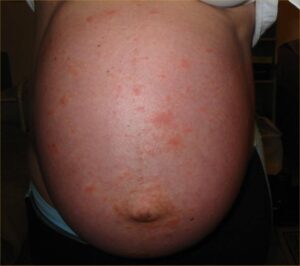
Your Answer: Polymorphic Eruption of Pregnancy
Explanation:This is Polymorphic Eruption of Pregnancy (PEP) also known as Pruritic Urticarial Papules and Plaques of Pregnancy (PUPPP). Papules and plaques form on the abdomen (commonly within striae). It is most common in women during their first pregnancy and typically occurs in the 3rd trimester.
-
This question is part of the following fields:
- Clinical Management
-
-
Question 5
Correct
-
A 32-year-old mother with a 9-year-old child is considering having a second child. Her first pregnancy was complicated by puerperal psychosis. Following electroconvulsive therapy (ECT), she promptly recovered and has been well until now. She is in excellent health and her husband has been very supportive. According to patient files, she was noted to be an excellent mother.
What would be the most appropriate advice?Your Answer: There is a 15-20% chance of recurrence of psychosis postpartum.
Explanation:Puerperal psychosis seems to be mainly hereditary and closely associated with bipolar disorder especially the manic type, rather than being a distinct condition with a group of classical symptoms or course. Postpartum psychoses typically have an abrupt onset within 2 weeks of delivery and may have rapid progression of symptoms. Fortunately, it is generally a brief condition and responds well to prompt management. If the condition is threatening the mother and/or baby’s safety, hospital admission is warranted. A patient can present with a wide variety of psychotic symptoms ranging from delusion, passivity phenomenon, catatonia, and hallucinations. While depression and mania may be the predominating features, it is not surprising to see symptoms such as confusion and stupor. Although the rate of incidence is about 1 in 1000 pregnancies, it is seen in about 20% of women who previously had bipolar episodes prior to pregnancy. It has not been shown to be linked with factors such as twin pregnancies, stillbirth, breastfeeding or being a single parent. However, it might be more commonly seen in women who are first-time mothers and pregnancy terminations.
The risk of recurrence is 20%. Unfortunately, there is no specific treatment guideline but organic causes should first be ruled out. First generation/typical anti-psychotics are often associated with extrapyramidal symptoms. Nowadays, atypical antipsychotics such as risperidone or olanzapine can be used along with lithium which is a mood stabiliser. As of now, there hasn’t been any significant side effects as a result of second generation antipsychotic use in pregnancy. While women are usually advised to stop breast-feeding, it might be unnecessary except if the mother is being treated with lithium which has been reported to cause side effects on the infants in a few instances. ECT is considered to be highly efficacious for all types of postpartum psychosis and may be necessary if the mother’s condition is life-threatening to herself or/and the baby. If untreated, puerperal psychosis might persist for 6 months or even longer.
The options of saying ‘in view of her age and previous problem, further pregnancies are out of the question’ and so is ‘By all means start another pregnancy and see how she feels about it. If she has misgivings, then have the pregnancy terminated.’ are inappropriate.
As mentioned earlier, considering there is a 20% chance of recurrence it is not correct to say that since she had good outcomes with her first pregnancy, the risk of recurrence is minimal.
Anti-psychotics are not recommended to be used routinely both during pregnancy and lactation due to the absence of long-term research on children with intrauterine and breastmilk exposure to the drugs. Hence it is not right to conclude that ‘if she gets pregnant then she should take prophylactic antipsychotics throughout the pregnancy’ as it contradicts current guidelines. Each case should be individualised and the risks compared with the benefits to decide whether anti-psychotics should be given during pregnancy. It is important to obtain informed consent from both the mother and partner with documentation.
Should the mother deteriorates during the pregnancy that she no longer is capable of making decisions about treatment, then an application for temporary guardianship should be carried out to ensure that she can be continued on the appropriate treatment.
-
This question is part of the following fields:
- Obstetrics
-
-
Question 6
Correct
-
A 22-year-old woman, G1P0, comes to your clinic at the 12th week of her pregnancy, complaining of a mild vaginal bleeding since last 12 hours along with mild but periodic pain.
On vaginal examination, cervical os is found to be closed with mild discharge which contains blood clots. Ultrasound performed confirms the presence of a live fetus with normal foetal heart sound.
What among the following will be the most likely diagnosis?Your Answer: Threatened miscarriage
Explanation:The case is most likely diagnosed a threatened miscarriage.
A diagnosis of threatened miscarriage is made when there is uterine bleeding in the presence of a closed cervix and is confirmed by the sonographic visualisation of an intrauterine pregnancy with detectable fetal cardiac activity. Miscarriages may not always follow even though there was multiple episodes or large amounts of bleeding, therefore the term “threatened” is used in these cases.
At 7 to 11 weeks of gestation, about 90 to 96 percent cases of pregnancies, will not usually miscarry if they have presented with an intact fetal cardiac activity along with vaginal bleeding and if bleeding occurs at the later weeks of gestational age chances of success rate is higher.Topic review:
– Inevitable miscarriages presents with a dilated cervix, increasing uterine bleeding and painful uterine contractions. The gestational tissues can often be felt or seen through the cervical os and its passage occurs within a short time.
– In Incomplete miscarriage, the membranes will rupture passing the fetus out, but significant amounts of placental tissue will be retained. This occurs most commonly in late first trimester or early second trimester. On examination, the cervical os will be opened and the gestational tissue can be observed in the cervix, with a uterine size smaller than expected for gestational age, but not well contracted. The amount of bleeding varies but can be severe enough to cause hypovolemic shock. There will be painful cramps
ontractions and ultrasound reveals tissue in the uterus.
– A missed miscarriage refers to the in-utero death of the embryo or fetus prior to 20th week of gestation, with retention of the pregnancy for a prolonged period of time. In this case, women may notice that symptoms associated with early pregnancy like nausea, breast tenderness, etc have abated and they don’t “feel pregnant” anymore.
Vaginal bleeding may occur but the cervix usually remains closed. Ultrasound reveals an intrauterine gestational sac with or without an embryonic/fetal pole, but no embryonic/fetal cardiac activity will be noticed.
– Complete miscarriage, usually occurs before 12 weeks of gestation and the entire contents of the uterus will be expelled resulting in a complete miscarriage. In this case, physical examination reveals a small, well contracted uterus with an open or closed cervix with scanty vaginal bleeding and mild cramping. Ultrasound will reveal an empty uterus with no extra-uterine gestation. -
This question is part of the following fields:
- Obstetrics
-
-
Question 7
Correct
-
A 32-year-old woman who is multigravida and with breech presentation presented to the emergency department for vaginal delivery. Upon spontaneous rupture of the membranes, bradycardia and variable deceleration was noted on the fetal heart rate monitoring.
Vaginal examination was performed and revealed cord prolapse that is still pulsating.
Which of the following is considered the most appropriate next step in managing the patient?Your Answer: Arrange for emergency caesarean delivery
Explanation:Umbilical cord prolapse (UCP) occurs when the umbilical cord exits the cervical opening before the fetal presenting part. It is a rare obstetric emergency that carries a high rate of potential fetal morbidity and mortality. Resultant compression of the cord by the descending foetus during delivery leads to fetal hypoxia and bradycardia, which can result in fetal death or permanent disability.
Certain features of pregnancy increase the risk for the development of umbilical cord prolapse by preventing appropriate engagement of the presenting part with the pelvis. These include fetal malpresentation, multiple gestations, polyhydramnios, preterm rupture of membranes, intrauterine growth restriction, preterm delivery, and fetal and cord abnormalities.
The occurrence of fetal bradycardia in the setting of ruptured membranes should prompt immediate evaluation for potential cord prolapse.
In overt prolapse, the cord is palpable as a pulsating structure in the vaginal vault. In occult prolapse, the cord is not visible or palpable ahead of the fetal presenting part. The definitive management of umbilical cord prolapse is expedient delivery; this is usually by caesarean section.
-
This question is part of the following fields:
- Obstetrics
-
-
Question 8
Correct
-
Which of the following factors shifts the oxygen dissociation curve to the right?
Your Answer: Increased [H+]
Explanation:The following shift the oxygen dissociation curve to the right: Increased temperature Increased H+ (i.e. acidosis) Increased 2,3 DPG Increased pCO2 The following shift the oxygen dissociation curve to the left: Increasing pCO shifts the curve to the left Decreased temperature Decreased [H+] (alkalosis) Decreased 2,3 DPG The Oxygen Dissociation Curve for fetal haemoglobin lies to the left of the normal adult Oxygen Dissociation Curve as it has a higher affinity for Oxygen.
-
This question is part of the following fields:
- Biochemistry
-
-
Question 9
Incorrect
-
A 58-year-old postmenopausal female sees you for an initial health maintenance visit. Her examination is normal and she has no complaints. You perform a Papanicolaou (Pap) test, which she has not had done in 15 years. The smear is read as “negative for intraepithelial lesion and malignancy, benign endometrial cells present.”
What would be the most appropriate follow-up for this finding?Your Answer: A repeat Pap test in 4–6 months
Correct Answer: An endometrial biopsy
Explanation:This patient should have an endometrial biopsy (SOR C). Approximately 7% of postmenopausal women with benign endometrial cells on a Papanicolaou smear will have significant endometrial pathology. None of the other options listed evaluate the endometrium for pathology. An asymptomatic premenopausal woman with benign endometrial cells would not need an endometrial evaluation because underlying endometrial pathology is rare in this group.
-
This question is part of the following fields:
- Gynaecology
-
-
Question 10
Correct
-
Lactogenesis at term is stimulated by which hormone?
Your Answer: Prolactin
Explanation:Prolactin is the hormone that is responsible for the production of milk (Lactogenesis). Oxytocin is responsible for the let down reflex during suckling.
-
This question is part of the following fields:
- Clinical Management
-
-
Question 11
Correct
-
What is the definition of premature menopause?
Your Answer: Menopause at or before 40 years of age
Explanation:Menopause is defined as the cessation of menstruation for a period of 12 months. Premature menopause is defined as cessation of menstruation before the age of 40.
-
This question is part of the following fields:
- Endocrinology
-
-
Question 12
Correct
-
Which period during pregnancy has the highest risk of maternal-fetal Toxoplasma Gondii transmission?
Your Answer: 26-40 weeks
Explanation:Toxoplasma Gondii is an intracellular parasite which is excreted in cat faeces and then transferred to humans through secondary hosts. During pregnancy, it can be transmitted to the neonate. The risk of transplacental transmission from mother to foetus is greater in later pregnancy i.e. 26-40 weeks but during this time period it is less dangerous as compare to the transmission during 0-10 weeks of gestation. It may lead to abortion, microcephaly, hydrocephalus, cerebral calcifications, cerebral palsy and seizures.
-
This question is part of the following fields:
- Microbiology
-
-
Question 13
Correct
-
APGAR's score includes all the following, EXCEPT:
Your Answer: Blood pH
Explanation:Elements of the Apgar score include colour, heart rate, reflexes, muscle tone, and respiration. Apgar scoring is designed to assess for signs of hemodynamic compromise such as cyanosis, hypoperfusion, bradycardia, hypotonia, respiratory depression or apnoea. Each element is scored 0 (zero), 1, or 2. The score is recorded at 1 minute and 5 minutes in all infants with expanded recording at 5-minute intervals for infants who score 7 or less at 5 minutes, and in those requiring resuscitation as a method for monitoring response. Scores of 7 to 10 are considered reassuring.
-
This question is part of the following fields:
- Obstetrics
-
-
Question 14
Correct
-
While evaluating a 33-year-old woman for infertility, you diagnose a bicornuate uterus. You explain that additional testing is necessary because of the woman's increased risk of congenital anomalies in which system?
Your Answer: Urinary
Explanation:Bicornuate uterus is associated with an increased chance of urinary tract anomalies. Urinary tract anomalies were present in about 23.6% of cases of bicornuate uterus patients.
-
This question is part of the following fields:
- Embryology
-
-
Question 15
Correct
-
A 25 year old primigravida with a regular cycle had her last menstrual period on June 30th. Therefore the expected date of delivery (EDD) is approximately when the following year:
Your Answer: 7-Apr
Explanation:Expected date of delivery (EDD) is a calculated from the first day of the woman’s last menstrual period. If her periods are regular i.e., 28-day menstrual cycle, Naegele’s rule may be used. Naegele’s rule involves a simple calculation: add seven days to the first day of your LMP and then subtract three months. e.g. 30 June + 7 days = 7 July, minus 3 months = 7 April.
-
This question is part of the following fields:
- Physiology
-
-
Question 16
Correct
-
The following ultrasonic measurements may be used to confirm or establish gestational age:
Your Answer: Crown rump length
Explanation:Fetal ultrasound scanning is considered an essential part of routine antenatal care with first trimester scans recommended for confirming viability, accurate estimation of gestational age and determining the number of foetuses. Fetal crown-rump length (CRL) is measured in early pregnancy primarily to determine the gestation age (GA) of a foetus and is most reliable between 9+0 to 13+6 weeks’ gestation, but not beyond.
-
This question is part of the following fields:
- Physiology
-
-
Question 17
Correct
-
Which structure is the primary mechanism for shunting blood away from the fetal pulmonary circulation?
Your Answer: Foramen Ovale
Explanation:Oxygenation of fetal blood occurs in the placenta before it returns in the umbilical vein which joins the left branch of the portal vein. It bypasses the capillaries of the liver by going through the ductus venosus, which is obliterated after birth and becomes the ligamentum venosum. The oxygenated blood enters the inferior vena cava and is transported to the right atrium and
then through the patent foramen ovale to the left atrium and on to the left ventricle. From the left ventricle, the blood flows into the aorta and through the fetal vascular network. Blood returning from the head of the foetus passes through the superior vena cava to the right atrium and straight on to the right ventricle and pulmonary artery. However, it does not enter the pulmonary
circulation, being short-circuited by the ductus arteriosus to the aorta. Aortic blood is carried via the umbilical arteries back to the placenta for reoxygenation. At birth, the three short circuits, the ductus venosus, foramen ovale and ductus arteriosus, close. -
This question is part of the following fields:
- Embryology
-
-
Question 18
Correct
-
Ootidogenesis refers to which process during Oogenesis?
Your Answer: 1st and 2nd Meiotic Divisions
Explanation:During the early fetal life, oogonia proliferate by mitosis. They enlarge to form primary oocyte before birth. No primary oocyte is form after birth. The primary oocyte is dormant is the ovarian follicles until puberty. As the follicle matures, the primary oocyte completes its first meiotic division and gives rise to secondary oocyte. During ovulation the secondary oocytes starts the second meiotic division but is only completed if a sperm penetrates it. This 1st and 2nd meiotic division is known as ootidogenesis.
-
This question is part of the following fields:
- Embryology
-
-
Question 19
Correct
-
All of the following complications can be found in a pregnant patient with a bicornuate uterus, except?
Your Answer: Polyhydramnios
Explanation:Women with a bicornuate uterus are at increased risk of recurrent abortions, premature birth, fetal malpositioning, placenta previa and retained products of placenta leading to post partum haemorrhage.
-
This question is part of the following fields:
- Embryology
-
-
Question 20
Correct
-
Immediate delivery of the foetus is recommended at which fetal scalp pH?
Your Answer: 7.18
Explanation:A pH value below than 7.18 indicates acidosis which can result in hypoxic brain injury. In order to prevent brain injury, immediate delivery of the foetus should be planned. The normal range for a term baby is pH: 7.18 – 7.38, preterm pH: 7.14 – 7.4.
-
This question is part of the following fields:
- Physiology
-
-
Question 21
Incorrect
-
What is the male infertility rate in CF patients?
Your Answer: 75%
Correct Answer: 98%
Explanation:Cystic fibrosis is the most common fetal genetic disease in Caucasians and has an autosomal recessive inheritance. It is caused by an abnormal chloride channel due to a defect in the CFTR gene. Complications range from haemoptysis, respiratory failure, biliary cirrhosis, diabetes and male infertility. Men with CF are infertile in 98% of the cases due to failure of development of the vas deference.
-
This question is part of the following fields:
- Clinical Management
-
-
Question 22
Correct
-
If a sample of cervical mucus is taken on the 12th day of the menstrual cycle and examined under the microscope, what kind of findings would be observed?
Your Answer: A fern pattern characteristic of oestrogen
Explanation:Fern test looks for a specific fern like pattern of cervical mucus when observed under light microscope after the sample is dried. It occurs due to the presence of sodium chloride under oestrogen influence whereas progesterone opposes it.
-
This question is part of the following fields:
- Physiology
-
-
Question 23
Incorrect
-
A 41-year-old lady visits your clinic to talk about the results of her cervical screening test. According to the study, she has a low-grade squamous intraepithelial lesion as well as HPV non-16 and 18 subtypes. She had never previously had a cervical screening.
What is the best course of action for her management?Your Answer: Referral for colposcopy
Correct Answer: Repeat HPV test in 12 months
Explanation:An LSIL Pap test shows mild cellular changes. The risk of a high-grade cervical precancer or cancer after an LSIL Pap test is as high as 19 percent.
As with an ASC-US Pap test, an LSIL Pap test is evaluated differently depending upon age. For women ages 25 or older, follow-up depends upon the results of human papillomavirus (HPV) testing:
– Women who test positive for HPV or who have not been tested for HPV should have colposcopy.
– Women who test negative for HPV can be followed up with a Pap test and HPV test in one year.All other options are not acceptable for the above mentioned reasons.
-
This question is part of the following fields:
- Gynaecology
-
-
Question 24
Correct
-
Which of the following pubertal events is NOT mediated by gonadal oestrogen production?
Your Answer: Pubic hair growth
Explanation:The role of androgens in the female includes acting as precursors for oestrogen production, anabolic effects, stimulation of axillary and pubic hair growth, sebum production, stimulation of bone formation, and stimulation of erythropoietin production in the kidneys.
-
This question is part of the following fields:
- Physiology
-
-
Question 25
Correct
-
A 61-year-old woman comes to the office for a breast cancer follow-up visit. She recently underwent right mastectomy for a node-negative, estrogen- and progesterone-receptor-positive tumor. She was on an aromatase inhibitor as adjuvant therapy, which was discontinued due to severe fatigue and poor sleep. At present, she is scheduled for a 5-year course of adjuvant therapy with tamoxifen. Patient has no other chronic medical conditions and her only medication is a daily multivitamin. Her last menstrual period was 8 years ago. Patient's father had a myocardial infarction at the age 64; otherwise her family history is noncontributory. She does not use tobacco, alcohol, or any other illicit drugs.
On examination her vital signs seems stable, with a BMI of 21 kg/m2.
Patient has many concerns about tamoxifen therapy and asks about potential side effects. Which among the following complications mentioned below is this patient at greatest risk of developing, due to tamoxifen therapy?Your Answer: Hyperplasia of the endometrium
Explanation:Tamoxifen and Raloxifene are drugs which acts as selective estrogen receptor modulators.
Their mechanisms of action are competitive inhibitor of estrogen binding and mixed agonist/antagonist action respectively.
Commonly indicated in prevention of breast cancer in high-risk patients. Tamoxifen as adjuvant treatment of breast cancer and Raloxifene in postmenopausal osteoporosis.
Adverse effects include:
– Hot flashes
– Venous thromboembolism
– Endometrial hyperplasia & carcinoma (tamoxifen only)
– Uterine sarcoma (tamoxifen only)
Adjuvant endocrine therapy is commonly used option for treatment of nonmetastatic, hormone-receptor-positive breast cancer; and the most commonly used endocrine agents include tamoxifen, aromatase inhibitors, and ovarian suppression via GnRH agonists or surgery.Tamoxifen is a selective estrogen receptor modulator which is an estrogen receptor antagonist in the breast. It is the most preferred adjuvant treatment for pre-menopausal women at low risk of breast cancer recurrence. Tamoxifen is also a second-line endocrine adjuvant agent for postmenopausal women who cannot use aromatase inhibitor therapy due to intolerable side effects.
Tamoxifen acts as an estrogen agonist in the uterus and stimulates excessive proliferation of endometrium. Therefore, tamoxifen use is associated with endometrial polyps in premenopausal women, and endometrial hyperplasia and cancer in postmenopausal women. These effects will continue throughout the duration of therapy and resolves once the treatment is discontinued. Even with all these possible complications, benefits of tamoxifen to improve the survival from breast cancer outweighs the risk of endometrial cancer.In postmenopausal women, tamoxifen has some estrogen-like activity on the bone, which can increase bone mineral density and thereby reduce the incidence of osteoporosis significantly. However, tamoxifen is generally not a first-line agent for osteoporosis in treatment due to the marked risk of endometrial cancer.
Dysplasia of the cervical transformation zone is typically caused due to chronic infection by human papillomavirus, and tamoxifen has no known effects on the cervix.
Tamoxifen is not associated with any increased risk for adenomyosis, which is characterised by ectopic endometrial tissue in the myometrium.
Intimal thickening of the coronary arteries is a precursor lesion for atherosclerosis. Tamoxifen helps to decrease blood cholesterol level and thereby protect against coronary artery disease.
Tamoxifen is an estrogen antagonist on breast tissue and is used in the treatment and prevention of breast cancer, but it also acts as an estrogen agonist in the uterus and increases the risk of development of endometrial polyps, hyperplasia, and cancer.
-
This question is part of the following fields:
- Obstetrics
-
-
Question 26
Correct
-
A patient who has been seen in fertility clinic phones regarding the timing of her progesterone blood test. She has regular 35 day menstrual cycles. When testing for ovulation what day of her cycle should she have the test on?
Your Answer: 28
Explanation:The mid-luteal progesterone sample should be taken 7 days before the expected period i.e. day 21 in a 28-day cycle or day 28 of a 35 day cycle
-
This question is part of the following fields:
- Data Interpretation
-
-
Question 27
Correct
-
A 32-year-old female presented with a lump in the upper outer quadrant of her left breast, which is 1.5cm in size and tender. What is the initial investigation to be done?
Your Answer: Ultrasound
Explanation:Tenderness is usually suggestive of a benign breast mass such as a breast abscess. Ultrasound is used to distinguish solid from cystic structures and to direct needle aspiration for abscess drainage.
-
This question is part of the following fields:
- Gynaecology
-
-
Question 28
Correct
-
Which of the following statements regarding progesterone production in the ovary is true?
Your Answer: Synthesised from cholesterol by Luteal cells
Explanation:After the release of the oocyte, the theca and the granulosa cells form the corpus luteum which undergoes extensive vascularization for continued steroidogenesis. Progesterone is secreted by the luteal cells and is synthesized from cholesterol.
-
This question is part of the following fields:
- Endocrinology
-
-
Question 29
Incorrect
-
The midwife asks for your advice about a 33 year old woman who she has just seen at her booking appointment. The patient had an uncomplicated pregnancy 10 years ago. This is her second pregnancy. There is no significant personal or family history. On examination the patients blood pressure is 120/75, BMI 32.5kg/m2. The midwife asks your advice on testing for gestational diabetes. What would you advise?
Your Answer: Offer OGTT as soon as possible after booking
Correct Answer: OGTT at 24-28 weeks
Explanation:Gestational diabetes (GDM) occurs in 2–9 per cent of all pregnancies. Screening for diabetes in pregnancy can be justify ed to diagnose previously unrecognized cases of pre-existing diabetes and to identify a group of women who are at risk of developing NIDDM later in life. No single screening test has been shown to be perfect in terms of high sensitivity and specific city for gestational diabetes. Urinary glucose is unreliable, and most screening tests now rely on blood glucose estimation, with an oral glucose tolerance test commonly used. The aim of glucose control is to keep fasting levels between 3.5 and 5.5 mmol/L and postprandial levels 7.1 mmol/L, with insulin treatment usually indicated outside these ranges.
-
This question is part of the following fields:
- Clinical Management
-
-
Question 30
Correct
-
An 8 week pregnant female presents to the ob-gyn with bleeding from the vagina for the last two days. Bimanual examination reveals the uterus to be 8 weeks in size. On speculum examination, the cervical os is closed. How would the fetal viability be confirmed?
Your Answer: Transvaginal ultrasound
Explanation:Indication for a transvaginal ultrasound during pregnancy include:
– to monitor the heartbeat of the foetus
– look at the cervix for any changes that could lead to complications such as miscarriage or premature delivery
– examine the placenta for abnormalities
– identify the source of any abnormal bleeding
– diagnose a possible miscarriage
– confirm an early pregnancyThis is an ultrasound examination that is usually carried out vaginally at 6-10 weeks of pregnancy.
The aims of this scan are to determine the number of embryos present and whether the pregnancy is progressing normally inside the uterus.
This scan is useful for women who are experiencing pain or bleeding in the pregnancy and those who have had previous miscarriages or ectopic pregnancies.
-
This question is part of the following fields:
- Obstetrics
-
-
Question 31
Correct
-
In a pregnant lady with polyhydramnios, the cause could be:
Your Answer: Foetus with oesophageal-atresia
Explanation:An underlying disease is only found in 17 % of cases in mild polyhydramnios. In contrast, an underlying disease is detected in 91 % of cases in moderate to severe polyhydramnios. The literature lists the following potential aetiologies: fetal malformations and genetic anomalies (8–45 %), maternal diabetes mellitus (5–26 %), multiple pregnancies (8–10 %), fetal anaemia (1–11 %), other causes, e.g. viral infections, Bartter syndrome, neuromuscular disorders, maternal hypercalcemia. Viral infections which can lead to polyhydramnios include parvovirus B19, rubella, and cytomegalovirus. Other infections, e.g. toxoplasmosis and syphilis, can also cause polyhydramnios.
-
This question is part of the following fields:
- Physiology
-
-
Question 32
Correct
-
A 32-year-old woman visited your clinic at her 30th week of gestation, complaining of left lower limb pain.
The doppler ultrasound findings had confirmed proximal deep vein thrombosis and she was treated with low molecular weight heparin.
Now she is at her 34 weeks of gestation, and is expecting delivery in next four weeks. What would be your advice for her today?Your Answer: Low molecular weight heparin should be switched to unfractionated heparin
Explanation:This patient has developed deep vein thrombosis during pregnancy and required anti-coagulation as part of treatment for up to 3-6 months. Enoxaparin, which is a low molecular weight heparin, is preferred over heparin due to the once or twice a day therapeutic dosing. Also monitoring of aPTT is not required in this case.
There is an association between Enoxaparin and an increased risk for epidural hematoma in women receiving epidural anaesthesia during labour. Considering that the patient mentioned is expected to go for delivery in 4 weeks and the possibility of her needing an epidural anaesthesia or general anaesthesia in case of undergoing a cesarean section, enoxaparin should be switched to unfractionated heparin, four weeks prior to the anticipated delivery. This is because of the fact that heparin can be antidoted with protamine sulphate.
-
This question is part of the following fields:
- Obstetrics
-
-
Question 33
Correct
-
A midwife is concerned regarding CTG changes and suggests a fetal blood sample (FBS). At what dilatation would you NOT perform FBS?
Your Answer: Less than 3cm
Explanation:Fetal Blood Sampling (FBS) should only be performed when the cervix is >3cm dilated.
Indications for FBS:
1. Pathological CTG in labour
2. Suspected acidosis in labourContraindications to FBS
– Maternal infection e.g. HIV, HSV and Hepatitis
– Known fetal coagulopathy
– Prematurity (< 34 weeks gestation)
– Acute fetal compromiseInterpretation of FBS results:
pH >7.25 = Normal -Repeat in 1 hour if CTG remains abnormal
7.21 to 7.24 = Borderline – Repeat in 30 minutes
<7.20 = Abnormal - Consider delivery -
This question is part of the following fields:
- Data Interpretation
-
-
Question 34
Correct
-
A cervical screening test for HPV non-16 and 18 types, as well as a low-grade squamous intraepithelial lesion on reflex liquid-based cytology, was positive for a young doctor from a nearby hospital.
What is the next step in management?Your Answer: Repeat cervical screening test in 12 months
Explanation:On reflex liquid-based cytology, this patient had a cervical screening test that revealed HPV non-16 and 18 kinds, as well as a low-grade squamous intraepithelial lesion. In a year, she should be provided a cervical screening test. If HPV non-16/18 kinds are discovered in 12 months, she will need a colposcopy.
-
This question is part of the following fields:
- Gynaecology
-
-
Question 35
Incorrect
-
Which of the following amniotic fluid indexes define oligohydramnios?
Your Answer: < 5 cm
Correct Answer:
Explanation:An assessment of amniotic fluid in pregnancy can be done by taking ultrasound measurements of the depth of amniotic fluid pockets. The combination of the measurements in four quadrants is called the amniotic fluid index (AFI), one of the major determinants of the biophysical profile which predicts pregnancy outcome. An AFI of less than 5 cm, or less than the 5th percentile is defined as oligohydramnios while an AFI of more than 25 cm is considered polyhydramnios.
-
This question is part of the following fields:
- Biophysics
-
-
Question 36
Correct
-
A 30-year-old female patient visits you for a cervical cancer screening. You inform her that while Pap smears are no longer performed, Cervical Screening tests are done five times a year.
She has a cervical screening test, which reveals that she has non-16/18 HPV and low-grade cytology alterations.
What's would you do next?Your Answer: Repeat cervical screening test in 12 months
Explanation:An LSIL Pap test shows mild cellular changes. The risk of a high-grade cervical precancer or cancer after an LSIL Pap test is as high as 19 percent.
As with an ASC-US Pap test, an LSIL Pap test is evaluated differently depending upon age. For women ages 25 or older, follow-up depends upon the results of human papillomavirus (HPV) testing:
– Women who test positive for HPV or who have not been tested for HPV should have colposcopy.
– Women who test negative for HPV can be followed up with a Pap test and HPV test in one year.Referral to an oncologist is not necessary since there is no established diagnosis of malignancy. All other options are unacceptable.
-
This question is part of the following fields:
- Gynaecology
-
-
Question 37
Correct
-
From which germ cell layer does the GI tract initially develop?
Your Answer: Endoderm
Explanation:The GI tract forms from the endoderm. The endoderm grows laterally and then ventrally finally folding on its self to form the gut tube.
-
This question is part of the following fields:
- Embryology
-
-
Question 38
Incorrect
-
A 25-year old woman presented to the medical clinic for her first prenatal check-up. Upon interview, the patient revealed that she has been smoking one pack of cigarettes per day for the past five years.
All of the following are considered correct regarding the disadvantages of smoking during pregnancy, except:Your Answer: Small for gestational age
Correct Answer: Increased risk of developing small teeth with faulty enamel
Explanation:Small teeth with faulty enamel is more associated with fetal alcohol syndrome (FAS).
In FAS, the most common orofacial changes are small eyelid fissures , flat facies, maxillary hypoplasia, short nose, long and hypoplastic nasal filter, and thin upper lip. The unique facial appearance of FAS patients is the result of changes in 4 areas: short palpebral fissures, flat nasal bridge with an upturned nasal tip, hypoplastic philtrum with a thin upper vermillion border, and a flat midface. Other facial anomalies include micrognathia, occasional cleft lip and/or palate and small teeth with defective enamel.
-
This question is part of the following fields:
- Obstetrics
-
-
Question 39
Correct
-
A 36-year-old woman is brought to the emergency department after she twisted her ankle, once initial management of her current problem is done, you realize that she is 10 weeks pregnant.
On further questioning, she admits to heroin addiction and says that Doc, I sometimes need to get high on meth, but my favorite wings to fly are cocaine though, since I cannot afford it, I take a bit when I manage to crash a party. She also drinks a bottle of whisky every day. During the past few weeks, she started worrying about not being a good mother, and for this she is taking diazepam at night which she managed to get illegally.
Considering everything this patient revealed, which is most likely to cause fetal malformations?Your Answer: Alcohol
Explanation:Woman in the given case is taking a full bottle of Whisky every day. As per standards, a small glass of Whisky (1.5 Oz) is equivalent of a standard drink and a bottle definitely exceeds 12 standard drinks. This makes her fetus at significant risk for fetal alcohol syndrome (FAS) which is associated with many congenital malformations. Low-set ears, midfacial hypoplasia, elongated philtrum, upturned nose and microcephaly along with skeletal and cardiac malformations are the congenital malformations commonly associated with fetal alcohol syndrome.
Health risks of benzodiazepines during pregnancy has not been clearly established, but there are inconsistent reports of teratogenic effects associated with fetal exposure to benzodiazepines. Neonatal abstinence syndrome of delayed onset can be associated with regular use of benzodiazepine in pregnancy.
Use of Amphetamine in controlled doses during pregnancy is unlikely to pose a substantial teratogenic risk, but a range of obstetric complications such as reduced birth weight and many these outcomes which are not specific to amphetamines but influenced by use of other drug and lifestyle factors in addition to amphetamine are found commonly among women who use it during pregnancy. Exposure to amphetamines in utero may influence prenatal brain development, but the nature of this influence and its potential clinical significance are not well established.
3,4- methylenedioxymetham phetamine(MOMA), which is an amphetamine derivative and commonly known as ecstasy, have existing evidences suggesting that its use during first trimester poses a potential teratogenic risk. So it is strongly recommended to avoided the use of ecstasy during 2-8 weeks post conception or between weeks four to ten after last menstrual period as these are the considered periods of organogenesis.
Role of cocaine in congenital malformations is controversial as cases reported of malformations caused by cocaine are extremely rare. However, it may lead to fetal intracranial haemorrhage leading to a devastating outcome.
Opiate addictions carry a significant risk for several perinatal complications, but it has no proven association with congenital malformation.
-
This question is part of the following fields:
- Obstetrics
-
-
Question 40
Incorrect
-
A 40-year-old nulligravid woman comes to the office due to persistent abnormal uterine bleeding. Patient’s menstrual periods previously occurred monthly, which lasts of 4 days with moderate bleeding and light cramping. However, for the past 8 months, she has had intermenstrual spotting and bleeding which have occurred at varying intervals and last for 3-7 days.
Patient had started combination oral contraceptives 4 months ago, which has not improved the bleeding pattern.
On examination her temperature is 37.2 C (99 F), blood pressure is 126/76 mm Hg, pulse is 86/min and BMI is 29 kg/m2.
Speculum examination shows dark red blood in the posterior vaginal vault but no cervical or vaginal lesions. Remainder of the pelvic examination was normal.
Her laboratory results are as follows:
- Hemoglobin: 12.2 g/dL
- Prolactin: 5 ng/mL
- TSH: 1.8 µU/mL
- Urine pregnancy test is negative.
Pelvic ultrasound shows an anteverted uterus without any adnexal masses.
Which of the following is considered the best next step in management of this patient?Your Answer: Hysterosalpingogram
Correct Answer: Endometrial biopsy
Explanation:Uncontrolled endometrial proliferation due to excess and unregulated estrogen is the reason for intermenstrual bleeding and irregular menses along with abnormal uterine bleeding (AUB) in this patient. The condition is mostly associated with an increased risk of endometrial hyperplasia
ancer.
The absolute risk of endometrial hyperplasia
ancer is very low in women aged <45, therefore they can be started on combination medication with estrogen/progestin contraception (ie, medical management) without the evaluation of endometrium. The estrogen component of medication regulates the menstrual cycle by build up the endometrium; whereas the progestin component helps in shedding of the endometrium.
However, patients who have continued irregular menstrual bleeding even while on combination contraceptives require further evaluation as they have failed to improve with medical management. In such patients, the endometrial lining will be too thick for the progestin to completely shed during menstruation and this unshed endometrium continues to undergo dysregulated proliferation, leading to an increased risk of endometrial hyperplasia
ancer. Therefore, patients age below 45 with AUB who have failed medical management require an endometrial biopsy.
AUB persistent above 6 months, obesity, and/or tamoxifen therapy are the other indications for endometrial biopsy in women age <45, as all of these will increase the amount of unopposed endometrial estrogen exposure. In patients with heavy menstrual bleeding and anemia, coagulation studies are performed to evaluate for bleeding disorders like von Willebrand disease. It is not necessary in this patient as she have a normal hemoglobin level. In patients with heavy, but regular (ovulatory) bleeding an endometrial ablation, which is a procedure used to remove the excess endometrium, can be considered as the treatment option. Endometrial ablation is contraindicated in undiagnosed cases of AUB as it prevents evaluation of the endometrium in patients with possible endometrial hyperplasia
ancer.To check for abnormalities of the uterus like didelphys or of the Fallopian tube like scarring, a hysterosalpingogram is used but it is not useful to evaluate AUB. In addition, as the procedure could spread cancerous endometrial cells into the abdominal cavity, hysterosalpingogram is contraindicated in cases of undiagnosed AUB.
To evaluate secondary amenorrhea, ie. absence of menses for >6 months in a patient with previously irregular menses, a progesterone withdrawal test is used to determine whether amenorrhea is from low estrogen level, in negative cases there will be no bleeding after progesterone. This test is not indicated or relevant in this case as patient had continued bleeding while on oral contraceptives suggestive of high estrogen levels.
Evaluation for endometrial hyperplasia
ancer with an endometrial biopsy is required for those women age <45 with abnormal uterine bleeding who have failed medical management with oral contraceptives. -
This question is part of the following fields:
- Obstetrics
-
-
Question 41
Incorrect
-
Among the following which is the most likely finding of placental abruption in a pregnant woman?
Your Answer:
Correct Answer: Vaginal bleeding
Explanation:Placental abruption is defined as the premature separation of placenta from uterus and the condition usually presents with bleeding, uterine contractions and fetal distress. It is one of the most significant cause of third-trimester bleeding and is often associated with fetal and maternal mortality and morbidity. In all pregnant women with vaginal bleeding in the second half of the pregnancy, this condition should be considered as a differential diagnoses.
Though vaginal bleeding is the most common presenting symptom reported by almost 80% of women with placental abruption, vaginal bleeding is concealed in 20% of women with placental abruption, therefore, absence of vaginal bleeding does not exclude placental abruption.Symptoms and complications of placental abruption varies according to patient, frequency of appearance of some common features is as follows:
- Vaginal bleeding is the common presentation in 80% of patients.
- Abdominal or lower back pain with uterine tenderness is found in 70%
- Fetal distress is seen in 60% of women.
- Abnormal uterine contractions like hypertonic, high frequency contractions are seen in 35% cases.
- Idiopathic premature labor in 25% of patients.
- Fetal death in about 15% of cases.Examination findings include vaginal bleeding, uterine contractions with or without tenderness, shock, absence of fetal heart sounds and increased fundal height due to an expanding hematoma. Shock is seen in class 3 placental abruption which represents almost 24% of all cases of placental abruption.
-
This question is part of the following fields:
- Obstetrics
-
-
Question 42
Incorrect
-
A 34 year old patient is being investigated in the infertility clinic and is offered Hysterosalpingography (HSG). She has 28 day cycles. Which of the following statements regarding HSG is correct?
Your Answer:
Correct Answer: Typically performed using iodine based water soluble contrast
Explanation:Hysterosalpingography is used to assess the patency of the fallopian tubes. It is performed by injection of a radio-opaque iodine based contrast. This test is contraindicated in pelvic inflammatory disease and during pregnancy. Should be performed in Follicular phase of menstrual cycle after cessation of menstrual bleeding and prior to ovulation (days 6-12).
-
This question is part of the following fields:
- Biophysics
-
-
Question 43
Incorrect
-
A 30-year-old woman at her 18th week of pregnancy has been diagnosed with deep vein thrombosis of iliofemoral veins.
Which of the following is considered the best management for the patient's condition?Your Answer:
Correct Answer: Therapeutic dose of low molecular weight heparin for 6 months
Explanation:Deep venous thrombosis (DVT) during pregnancy is associated with high mortality, morbidity, and costs. Pulmonary embolism (PE), its most feared complication, is the leading cause of maternal death in the developed world. DVT can also result in long-term complications that include post thrombotic syndrome (PTS) adding to its morbidity. Women are up to 5 times more likely to develop DVT when pregnant. The current standard of care for this condition is anticoagulation.
Low molecular weight heparin (LMWH) is the preferred agent for prophylaxis and treatment of DVT during pregnancy. A disadvantage of LMWH over unfractionated heparin (UFH) is its longer half-life, which may be a problem at the time of delivery.
-
This question is part of the following fields:
- Obstetrics
-
-
Question 44
Incorrect
-
Warfarin is contraindicated during pregnancy.
Which of the following complications are possible to develop if warfarin is used in second trimester of pregnancy?Your Answer:
Correct Answer: Fetal optic atrophy
Explanation:Administration of warfarin should be avoided throughout pregnancy and especially during the first and third trimesters as it have the ability to cross placenta. Intake of warfarin during 6-12 weeks of gestation can results in fetal warfarin syndrome which is characterized by the following features:
– A characteristic nasal hypoplasia
– Short fingers with hypoplastic nails
– Calcified epiphyses, namely chondrodysplasia punctata, which is evident on X-ray as stippling of the epiphyses.
– Intellectual disability
– Low birth weightAs these effects are usually dose dependent, recent estimates shows that the risk of fetal warfarin syndrome is around 5% in babies of women who requires warfarin throughout pregnancy.
Later exposure as after 12 weeks, is associated with symptoms like central nervous system anomalies, including microcephaly, hydrocephalus, agenesis of corpus callosum, Dandy-Walker malformation which is presented with complete absence cerebellar vermis and enlarged fourth ventricle, and mental retardation, as well as eye anomalies such as optic atrophy, microphthalmia and Peter anomaly (anterior segment dysgenesis).
Those newborns exposed to warfarin in all three trimesters there will be blindness and other complication of exposed to warfarin in neonates include perinatal intracranial and other major bleeding episodes. -
This question is part of the following fields:
- Obstetrics
-
-
Question 45
Incorrect
-
Bladder contraction during voiding (micturating) is mediated via innervation of which of the following pathways?
Your Answer:
Correct Answer: Parasympathetic fibres from S2,S3,S4 nerve roots
Explanation:Detrusor contraction is via Parasympathetic innervation of pelvic splanchnic nerves (S2-4). This also causes relaxation of the internal urethral sphincter Note contraction and relaxation of the external urethral sphincter is under somatic control.
-
This question is part of the following fields:
- Anatomy
-
-
Question 46
Incorrect
-
Normally, pregnancy in 2nd trimester is characterized by all of the following, EXCEPT:
Your Answer:
Correct Answer: Elevated fasting plasma glucose
Explanation:Elevated fasting plasma glucose means gestational diabetes mellitus and is not considered to be in the spectrum of a normal pregnancy. In normal pregnancy however, maternal tissues become progressively insensitive to insulin. This is believed to be caused partly by hormones from the placenta and partly by other obesity and pregnancy related factors that are not fully understood. Gestational diabetes mellitus (GDM) occurs in about 5% of pregnancies but figures vary considerably depending upon the criteria used and demographic characteristics of the population.
-
This question is part of the following fields:
- Physiology
-
-
Question 47
Incorrect
-
Which one of the following muscles is the most important muscle forming the pelvic floor?
Your Answer:
Correct Answer: Levator ani
Explanation:Levator ani muscle is composed of three different muscles i.e. iliococcygeus, pubococcygeus and the puborectalis muscle. It is the main muscle that supports the organs of the pelvic cavity.
Bulbocavernosus and Ischiocavernosus muscles are located in-between the anus and scrotum and play an important role in sexual response in males.
Superficial and deep transverse perineal muscles are located in the perinium and pass in front of the anus. -
This question is part of the following fields:
- Anatomy
-
-
Question 48
Incorrect
-
A 26-year-old pregnant female in her first trimester was brought to the labour room with complaints of painless vaginal bleeding. On examination, her abdomen was non-tender and os was closed. Which of the following is the most likely diagnosis?
Your Answer:
Correct Answer: Threatened miscarriage
Explanation:Threatened miscarriage is a term used to describe any abnormal vaginal bleeding that occurs in first trimester, sometime associated with abdominal cramps. The cervix remains closed and the pregnancy may continue as normal.
-
This question is part of the following fields:
- Obstetrics
-
-
Question 49
Incorrect
-
A 26 year old primigravida woman attends A&E due to worsening vomiting. She is currently 10 weeks pregnant. For the past 4 weeks she has had morning sickness but for the last 4 days she has been unable to tolerate any oral fluids without vomiting and thinks she has lost weight. On questioning she has no significant past medical history prior to this pregnancy. She is currently taking the following medication:
Your Answer:
Correct Answer: Hyperemesis gravidarum
Explanation:This patient has severe nausea and vomiting with ketosis and evidence of dehydration (low BP and tachycardia) in the early part of pregnancy. There is no history of diabetes and the blood glucose doesn’t indicate hyperglycaemia. This is consistent with hyperemesis gravidarum (HG)
-
This question is part of the following fields:
- Clinical Management
-
-
Question 50
Incorrect
-
A chronic alcoholic lady presented to the medical clinic with complaints of an increase in abdominal size. Ultrasound was performed and revealed a foetus in which parameters correspond to 32 weeks of gestation. Upon history taking, it was noted that she works in a pub and occasionally takes marijuana, cocaine, amphetamine and opioid.
Which of the following is considered to have the most teratogenic effect to the foetus?Your Answer:
Correct Answer: Alcohol
Explanation:All of the conditions that comprise fetal alcohol spectrum disorders stem from one common cause, which is prenatal exposure to alcohol. Alcohol is extremely teratogenic to a foetus. Its effects are wide-ranging and irreversible. Although higher amounts of prenatal alcohol exposure have been linked to increased incidence and severity of fetal alcohol spectrum disorders, there are no studies that demonstrate a safe amount of alcohol that can be consumed during pregnancy. There is also no safe time during pregnancy in which alcohol can be consumed without risk to the foetus. Alcohol is teratogenic during all three trimesters. In summary, any amount of alcohol consumed at any point during pregnancy has the potential cause of irreversible damage that can lead to a fetal alcohol spectrum disorder.
In general, diagnoses within fetal alcohol spectrum disorders have one or more of the following features: abnormal facies, central nervous system abnormalities, and growth retardation.
-
This question is part of the following fields:
- Obstetrics
-
-
Question 51
Incorrect
-
What is the prevalence of antiphospholipid syndrome in patients with recurrent miscarriage?
Your Answer:
Correct Answer: 15%
Explanation:Anti phospholipid syndrome is an autoimmune disorder in which abnormal antibodies are formed which increases the risk of blood clots to develop in vessels and leads to recurrent miscarriages to occurs. The changes of recurrent miscarriage in a previously known case of APL is 15%.
-
This question is part of the following fields:
- Clinical Management
-
-
Question 52
Incorrect
-
A 40-year-old woman presents to your clinic with symptoms suggestive of urge incontinence. She is otherwise healthy and there is a history of a large amount of fluid intake daily as she believes it lowers her risk of genitourinary infections.
Urinalysis and urine culture are performed which come back negative. The diagnosis of urge incontinence was suggested by physical examination and confirmed by cystometry.
What should be the appropriate next step of management for such a patient?Your Answer:
Correct Answer: Instruct her to eliminate excess water and caffeine from her daily fluid intake.
Explanation:Urge incontinence is involuntary pee loss accompanied by a strong desire to urinate. The most common cause of urge incontinence is detrusor or bladder dyssynergia, which is characterized by an involuntary contraction of the bladder during urine distension.
Bladder training, eliminating excess coffee and fluid intake, biofeedback, and pharmacological therapy are all options for treating urge incontinence. Treatment with anticholinergic medicines (oxybutynin chloride), -sympathomimetic agonists (metaproterenol sulphate), Valium, antidepressants (imipramine hydrochloride), and dopamine agonists (Parlodel) has proven successful if conservative approaches fail.
The detrusor muscle will be relaxed by these pharmacologic drugs. Oestrogen therapy may improve urine control in postmenopausal women who are not on oestrogen replacement therapy. Kegel exercises can help women with stress urinary incontinence strengthen their pelvic musculature and improve bladder control.
-
This question is part of the following fields:
- Gynaecology
-
-
Question 53
Incorrect
-
Polyhydramnios is associated with which one of the following conditions?
Your Answer:
Correct Answer: Tracheo-oesophageal fistula
Explanation:Oesophageal atresia/TE fistula may be suspected prenatally with ultrasound findings of polyhydramnios, absence of fluid in the stomach, small sized abdomen, or the presence of a dilated proximal oesophageal pouch. An underlying disease is only found in 17 % of cases in mild polyhydramnios. In contrast, an underlying disease is detected in 91 % of cases in moderate to severe polyhydramnios. The literature lists the following potential aetiologies: fetal malformations and genetic anomalies (8–45 %), maternal diabetes mellitus (5–26 %), multiple pregnancies (8–10 %), fetal anaemia (1–11 %), other causes, e.g. viral infections, Bartter syndrome, neuromuscular disorders, maternal hypercalcemia. Viral infections which can lead to polyhydramnios include parvovirus B19, rubella, and cytomegalovirus. Other infections, e.g. toxoplasmosis and syphilis, can also cause polyhydramnios.
-
This question is part of the following fields:
- Physiology
-
-
Question 54
Incorrect
-
How many seminiferous tubules would you typically expect to find in a testicular lobule?
Your Answer:
Correct Answer: 2
Explanation:There are between 250 and 400 lobules in each testis. The lobule is a structural unit of the testis with each lobule contained in one of the intervals between fibrous septa which extend between the mediastinum testis and the tunica albuginea. Each lobule contains 1 to 3 seminiferous tubules.
-
This question is part of the following fields:
- Anatomy
-
-
Question 55
Incorrect
-
During the filling phase of micturition. At what bladder volume is the first urge to void felt?
Your Answer:
Correct Answer: 150ml
Explanation:Micturition is defined as a process of expelling urine from the body. It is caused by the reflex contraction of detrusor muscle. Urinary bladder is a hollow muscular organ which can store 400-600ml of urine until it is expelled from the body. The first urge to urinate is felt when the bladder is filled with around 150ml of urine. The reflex action is initiated when the stretch receptors located in the bladder wall are stimulated. The afferent fibres pass to the pelvic splanchnic nerves to the 2nd, 3rd, and 4th sacral segments and some pass through the hypogastric plexus to the first and second lumbar segments of the spinal cord. Efferent pathways from the 2nd, 3rd, and 4th sacral segments leave the cords and through the splanchnic nerves and inferior hypogastric plexus supplies the smooth muscle of the bladder i.e. detrusor muscle. Detrusor muscle contracts and the sphincters are relaxed.
-
This question is part of the following fields:
- Anatomy
-
-
Question 56
Incorrect
-
A patient is about to undergo a pudendal nerve block after vaginal delivery to repair an episiotomy. Which spinal segments form the pudendal nerve?
Your Answer:
Correct Answer: S2, S3 and S4
Explanation:The pudendal nerve provides sensory innervation to regions of the anus, the perineum, the labia and the clitoris in women. The nerve is formed from the ventral rami of the S2-S4 sacral spinal nerves. The nerve is paired, each innervating the left and the right side of the body. Pudendal nerve blocks are indicated for analgesia of the second stage of labour, repair of an episiotomy or perineal laceration, and for minor surgeries of the lower vagina and perineum.
-
This question is part of the following fields:
- Anatomy
-
-
Question 57
Incorrect
-
Which spinal segment is the lumbar plexus derived from?
Your Answer:
Correct Answer: T12-L4
Explanation:The lumbar plexus is formed via contributions from the T12-L4 spinal cord segment. The plexus is responsible for the motor and sensory innervation of portions of the lower extremities and some parts of the lower abdomen and pelvis. Nerves arising from the plexus include the Iliohypogastric, ilioinguinal, genitofemoral, lateral femoral cutaneous, femoral nerve, obturator, and nerve to the lumbosacral trunk.
-
This question is part of the following fields:
- Anatomy
-
-
Question 58
Incorrect
-
When the presenting part of the foetus is at the level of ischial spines, this level is known as?
Your Answer:
Correct Answer: Station 0
Explanation:Station 0 – This is when the baby’s head is even with the ischial spines. The baby is said to be engaged when the largest part of the head has entered the pelvis.
If the presenting part lies above the ischial spines, the station is reported as a negative number from -1 to -5. -
This question is part of the following fields:
- Obstetrics
-
-
Question 59
Incorrect
-
What is the inferior border of the deep perineal pouch?
Your Answer:
Correct Answer: Perineal membrane
Explanation:The perineal membrane is a tough fascial sheet that attaches to the sides of the urogenital triangle. it forms the inferior border of the deep pouch which lies between this and the levator ani and the superior border of the superficial pouch.
-
This question is part of the following fields:
- Anatomy
-
-
Question 60
Incorrect
-
A 15 year old girl is being investigated for primary amenorrhoea. She has normal FSH,LH and E2 levels on hormone profiling and normal secondary sexual characteristics. An ultrasound shows no uterus. What is the likely diagnosis?
Your Answer:
Correct Answer: Rokitansky-Kuster-Hauser syndrome
Explanation:Mullerian agenesis occurs in 1 in 5000 to 1 in 40000 girls. The Mullerian system does not develop which results in an absent uterus and upper vagina. This condition is also known as Rokitansky-Kuster-Hauser syndrome, The ovarian function is normal and so the most common presentation is amenorrhea in the presence of an otherwise normal pubertal development.
-
This question is part of the following fields:
- Embryology
-
-
Question 61
Incorrect
-
With regard to the cell cycle. In what phase do chromatids get cleaved into chromosomes and pulled apart?
Your Answer:
Correct Answer: Anaphase
Explanation:G0 is a resting phase. Interphase (G1,S,G2) is where the cell grows and DNA replication occurs forming chromatids. Mitosis is where cell division occurs and this happens in a the following phases: Prophase Chromatin condenses to chromosomes (paired as chromatids). Mitotic spindle forms Metaphase Chromatids align at the equatorial plane AKA the metaphase plate Anaphase Chromatids pulled apart into 2 constituent daughter chromosomes Telophase New nuclear envelopes form around each daughter chromosome Cytokinesis Cells divide Diagram illustrating Mitosis Image sourced from Wikipedia
-
This question is part of the following fields:
- Biochemistry
-
-
Question 62
Incorrect
-
The risk of postpartum uterine atony is associated with:
Your Answer:
Correct Answer: Twin pregnancy
Explanation:Multiple studies have identified several risk factors for uterine atony such as polyhydramnios, fetal macrosomia, twin pregnancies, use of uterine inhibitors, history of uterine atony, multiparity, or prolonged labour.
-
This question is part of the following fields:
- Obstetrics
-
-
Question 63
Incorrect
-
An 18 year old girl presented with dysmenorrhea and irregular cycles. The most appropriate management in this case would be?
Your Answer:
Correct Answer: Combined pill
Explanation:Combined oral contraceptive pills have an anti ovulatory function and also reduce the pain of menstruation.
-
This question is part of the following fields:
- Gynaecology
-
-
Question 64
Incorrect
-
Excessive increased level of β-HCG is expected in:
Your Answer:
Correct Answer: Twin pregnancy
Explanation:Human chorionic gonadotropin levels dynamically increase during early gestation and the levels are significantly greater in viable pregnancies than in ectopic gestation, biochemical pregnancy, or spontaneous abortions. Similarly, the hCG concentrations are significantly higher in multiple pregnancy as compared with singleton.
-
This question is part of the following fields:
- Physiology
-
-
Question 65
Incorrect
-
Evidence from meta-analysis of RCTs is what level of evidence?
Your Answer:
Correct Answer: Ia
Explanation:The levels of evidence range from I-IV:
1a: Systematic reviews (with homogeneity) or metanalysis of randomized controlled trials: highest level of evidence.
1b: Individual randomized controlled trial (with narrow confidence interval)
1c: All or none randomized controlled trials
2a: Systematic reviews (with homogeneity) of cohort studies
2b: Individual cohort study or low quality randomized controlled trials (e.g. <80% follow-up)
2c: Outcomes Research; ecological studies
3a: Systematic review (with homogeneity) of case-control studies
3b: Individual case-control study
4: Case series (and poor quality cohort and case-control studies)
5: Expert opinion without explicit critical appraisal, or based on physiology, bench research or first principles. -
This question is part of the following fields:
- Epidemiology
-
-
Question 66
Incorrect
-
What is the anterior boundary of the pelvic outlet?
Your Answer:
Correct Answer: pubic arch
Explanation:The pelvic outlet is bounded anteriorly by the inferior border of the pubic arch, posteriorly by the sacrotuberous ligament and the tip of the coccyx and laterally by the ischial tuberosities.
-
This question is part of the following fields:
- Anatomy
-
-
Question 67
Incorrect
-
Galactopoiesis is maintained by which hormone?
Your Answer:
Correct Answer: Prolactin
Explanation:The production of milk is regulated by the hormone Prolactin. Oxytocin on the other hand is responsible for the let down reflex that occurs during breast feeding.
-
This question is part of the following fields:
- Clinical Management
-
-
Question 68
Incorrect
-
Question 69
Incorrect
-
A patient is seen in the gynaecology outpatient clinic and is noted to have large volume genital warts perianally and near the urethral meatus. You discuss treatment options and the patient opts for LASER therapy. Which of the following is the most appropriate type of LASER to use?
Your Answer:
Correct Answer: CO2
Explanation:Vulval intraepithelial neoplasia is a premalignant condition which is associated with HPV or lichen sclerosis. Biopsy is essential for diagnosis. Treatment depends of the patients choice and include surgical excision of the area or laser therapy with CO2. Other treatment modalities include immunomodulating creams.
-
This question is part of the following fields:
- Biophysics
-
-
Question 70
Incorrect
-
Regarding the uterine artery which of the following statements are TRUE?
Your Answer:
Correct Answer: It arises from the internal iliac artery
Explanation:The uterine artery arises from the internal iliac artery, in particular the anterior division of the internal iliac artery. Some older texts refer to the internal iliac as the hypogastric artery. The vaginal artery typically arises as its own branch of the internal iliac artery. The ovarian arteries are branches of the aorta
-
This question is part of the following fields:
- Anatomy
-
-
Question 71
Incorrect
-
A 53 year old female presents with hot flushes and night sweats. Her last menstrual period was last year. She had MI recently. Choose the most appropriate management for this patient.
Your Answer:
Correct Answer: Clonidine
Explanation:With a history of MI, oestrogen and COCP should be avoided. Evening primrose is also not suitable for post-menopausal symptoms. Raloxifene is a SERM – these make hot flushes worse. Clonidine will help improve the hot flushes and the vasomotor symptoms.
-
This question is part of the following fields:
- Gynaecology
-
-
Question 72
Incorrect
-
A 28-year-old G1P0 patient at 24 weeks of gestation visits your office complaining of some shortness of breath that is more intense with exertion and denies any chest pain. She is concerned as she has always been very athletic and is unable to maintain the same degree of exercise she was accustomed prior to becoming pregnant. Patient also informed she has no significant past medical history and is not on any medication.
On physical examination, her pulse is 72 beats per minute, with a blood pressure of 100/70 mm Hg. Cardiac examination is normal and her lungs are clear to auscultation and percussion.
Which among the following is considered the most appropriate next step to pursue in the workup of this patient?Your Answer:
Correct Answer: Reassure the patient
Explanation:Patient’s presentation and physical examination findings are most consistent with physiologic dyspnea, which is common during pregnancy. This breathing difficulty which is due to an increase in the tidal volume of lung will present itself as an increased awareness of breathing and can occur as early as the end of first trimester. Any minute increase in the ventilation occurs during pregnancy can make patients feel as if they are hyperventilating and contribute to the feeling of dyspnea.
Patient should be reassured and educated regarding these normal changes of pregnancy, also should be counselled to modify her exercise regimen accordingly to her changed tolerance.
Systolic ejection murmurs are due to increased blood flow across the aortic and pulmonic valves which is a normal finding in a pregnancy. So there is no need for this patient to be referred to a cardiologist or to order an ECG.
About 1 in 6400 pregnancies present with pulmonary embolism and there will be clinical evidence of DVT in many of these cases. Dyspnea, chest pain, apprehension, cough, hemoptysis, and tachycardia are the most common symptoms of PE and physical examination shows accentuated pulmonic closure sound, rales, or a friction rub. If there is a strong suspicion for PE, the patient should be followed up with a ventilation-perfusion scan, which will confirm PE if presented with large perfusion defects and ventilation mismatches. -
This question is part of the following fields:
- Obstetrics
-
-
Question 73
Incorrect
-
A couple has decided to practice the daily basal body temperature assessment (BBT) as a means of contraception. Over the past year, her cycles varied in length from 24 to 30 days with menses lasting 4 days. They do not have sexual intercourse when she is on her period.
Which regimen would be the most suitable to minimise the chances of getting pregnant?Your Answer:
Correct Answer: No intercourse in the follicular phase of the cycle, commence intercourse two days after temperature elevation of 0.3°C and continue thereafter.
Explanation:The best regimen would be to have no intercourse in the follicular phase of the cycle and then commence it two days after a temperature rise of 0.3C and continue then onwards. When deciding the best contraceptive method, one has to consider two factors-the duration of survival of sperm in the uterus and body temperature in relation to ovulation. For this case, since her cycle length varies from 24 to 30 days, the earliest time in which ovulation would occur would be 14 days before her shortest cycle i.e. day 10. Intercourse has to be avoided from day 4 of her cycle just in case the current cycle is short because sperm can survive up to 6 days in the uterus. Day 4 would be the day her menses would end and as this couple avoids intercourse during her menstruation, there would be no intercourse during the follicular phase of her cycle.
During ovulation, her serum progesterone levels would start to increase, causing a 0.3°C to 0.4°C increase in her body temperature within 2-3 days of ovulating. This elevation in temperature would remain until close to when her period starts. The ovum can only be fertilised for roughly 24 hours after ovulation has taken place. Resuming sexual intercourse once her temperature has risen for 2 days would suggest that ovulation had already taken place 3-4 days earlier and so it is unlikely for pregnancy to occur.
Options that include intercourse during any part of her follicular phase is not correct. Hence, the only option that satisfies the above criteria would be intercourse avoidance during her follicular phase and to resume 2 days following a rise of 0.03°C in body temperature.
-
This question is part of the following fields:
- Gynaecology
-
-
Question 74
Incorrect
-
You are reviewing a patient who is complaining of pain and numbness to the proximal medial thigh following abdominal hysterectomy. You suspect genitofemoral nerve injury. What spinal segment(s) is the genitofemoral nerve derived from?
Your Answer:
Correct Answer: L1,L2
Explanation:The genitofemoral nerves takes its origin from the L1 and L2 spinal segments.
-
This question is part of the following fields:
- Anatomy
-
-
Question 75
Incorrect
-
A 26-year-old lady (gravida 0, para-O) presents with occasional lower abdomen discomfort. She is not sexually active and her periods last between 32 and 35 days. Her most recent regular menstrual period began three weeks ago. A pelvic ultrasound was performed which shows a normal uterus, left ovary, and a thin unilocular cyst in the right ovary around 4 cm in size. The most likely cause of this ultrasound finding is?
Your Answer:
Correct Answer: A follicular cyst.
Explanation:If one believes that this cycle will last 35 days, the cyst in the left ovary was discovered at mid-cycle.
It’s too huge to be a ruptured pre-ovulatory follicle, and it doesn’t exhibit the characteristics of a corpus luteum, a benign cystic teratoma, or an endometrioma.As a result, a follicular cyst is the most likely diagnosis.
A benign cyst is almost always seen on ultrasound as a unilocular, thin-walled cystic formation.
The presence of solid materials in a multiloculated cystic structure strongly suggests the presence of a malignant mass.
In a 25-year-old woman, this would be unusual, but not unheard of. -
This question is part of the following fields:
- Gynaecology
-
-
Question 76
Incorrect
-
All of the following are features of Turner's syndrome except:
Your Answer:
Correct Answer: The ovaries are usually well developed
Explanation:Turner syndrome patients have malfunctioning or streak ovaries due to which they can never conceive. It affects females, who will have a short stature, widely spaced nipples, webbed neck and karyotyping shows 45XO.
-
This question is part of the following fields:
- Embryology
-
-
Question 77
Incorrect
-
The second meiotic division of the oocyte is normally completed:
Your Answer:
Correct Answer: After the sperm penetrates the secondary oocyte
Explanation:Upon penetration, if all is normally occurring, the process of egg-activation occurs, and the oocyte is said to have become activated. This is thought to be induced by a specific protein phospholipase c zeta. It undergoes its secondary meiotic division, and the two haploid nuclei (paternal and maternal) fuse to form a zygote.
-
This question is part of the following fields:
- Embryology
-
-
Question 78
Incorrect
-
A patient attends clinic with a vaginal prolapse. On examination the vaginal prolapse is visible 1.5cm above the plane of the hymen. According to the POPQ classification what grade is this prolapse?
Your Answer:
Correct Answer: Grade 1
Explanation:This is a grade 1 prolapse
-
This question is part of the following fields:
- Anatomy
-
-
Question 79
Incorrect
-
Which two nerves provide the primary cutaneous sensory innervation to the labia majora?
Your Answer:
Correct Answer: Ilioinguinal and pudendal
Explanation:The Pudendal provides cutaneous innervation to the posterior external genitalia via one of its terminal branches called the perineal nerve (this further branches into the posterior labial nerves or posterior scrotal nerve in men). The ilioinguinal nerve provides anterior sensation via the anterior labial nerves (anterior scrotal nerve in men). The genital branch of the genitofemoral nerve contributes some fibres to the skin of the mons pubis and labia majora in females. The posterior cutaneous nerve of thigh sometimes overlaps sensory areas.
-
This question is part of the following fields:
- Anatomy
-
-
Question 80
Incorrect
-
The vulva is mainly supplied by which one of the following vessels?
Your Answer:
Correct Answer: Pudendal artery
Explanation:Vulva is defined by the area which is located outside the female vagina and comprises of the labia majora, labia minora, clitoris, mons pubis and Bartholin glands. It is supplied by the vestibula branch of pudental artery.
Inferior hemorrhoidal artery supplies the lower part of the rectum.
Femoral artery is the continuation of external iliac artery and supplies most of the leg. -
This question is part of the following fields:
- Anatomy
-
-
Question 81
Incorrect
-
Which is not part of post natal urinary incontinence management?
Your Answer:
Correct Answer: Good control of blood pressure
Explanation:Thee good news in regard to incontinence after childbirth is that there are many treatment options. Some common treatment options are listed below.
Food and drinks such as coffee, citrus, spicy foods and soda can all irritate the bladder. Cutting back on or eliminating these foods may help improve incontinence symptoms. Keeping weight within a healthy BMI range, and/or focusing on losing pregnancy weight, can also help with bladder control.
Kegels strengthen the pelvic floor, giving more control over urinary urges. Pelvic floor physical therapy can also help build muscle memory and strength. The abdominal muscles, hip muscles and pelvic floor muscles work together when a woman performs strengthening exercises like Kegels. Physical therapists identify areas of weakness in those muscle groups to help a woman build a strong core and pelvic floor.
The bladder is a muscle that should be regularly strengthened. Scheduling urination times and then gradually increasing the amount of time in between urination can increase bladder strength.
Percutaneous tibial nerve stimulation is a nonsurgical treatment for overactive bladder and a form of neuromodulation therapy. During PTNS treatments, a doctor places a slim needle in the ankle where the tibial nerve is located. The needle delivers electrical impulses to the tibial nerve, which sends signals to the sacral nerves in the spine that control bladder and pelvic floor function. Over time, these pulses block nerve signals that are not working properly to lessen urinary incontinence symptoms.
Evaluating lifestyle factors. Excessive coughing due to smoking or being overweight can put unnecessary strain on the pelvic floor muscles. Certain drugs such as antidepressants and antihistamines can also have an impact on urinary incontinence.
Pessary. A pessary is a device inserted into the vagina to provide support for vaginal tissues, in turn, aiding in bladder incontinence.Surgical treatment options can help support the pelvic floor and may be recommended for women who have completed childbearing and have not had success with conservative therapy.
-
This question is part of the following fields:
- Gynaecology
-
-
Question 82
Incorrect
-
Among the following which is incorrect regarding hypothyroidism in pregnancy?
Your Answer:
Correct Answer: Thyroxine requirement does not increase in pregnancy and maintenance dose must be continued
Explanation:Thyroxine requirement during pregnancy will increases by 25 to 30 percent, which is seen as early as fifth week of pregnancy.
Children born to those women whose hypothyroidism was inadequately treated during pregnancy, are at higher risk for developing neuropsychiatric impairments.
When a woman who is on thyroxine is planning to conceive, they are advised to increase their thyroxine dose by 30 percent at the time of confirmation of pregnancy.
During pregnancy TSH also should be monitored at every 8 to 10 weeks, with necessary dose adjustments.
Dose requirements of thyroxine will return to pre-pregnancy level soon after delivery and it will not change according to whether the mother is breastfeeding or not.
-
This question is part of the following fields:
- Obstetrics
-
-
Question 83
Incorrect
-
Which of the following is correct in the treatment of a case of threatened abortion:
Your Answer:
Correct Answer: Bed rest
Explanation:Patients with a threatened abortion should be managed expectantly until their symptoms resolve. Patients should be monitored for progression to an inevitable, incomplete, or complete abortion. Analgesia will help relieve pain from cramping. Bed rest has not been shown to improve outcomes but commonly is recommended. Physical activity precautions and abstinence from sexual intercourse are also commonly advised. Repeat pelvic ultrasound weekly until a viable pregnancy is confirmed or excluded. A miscarriage cannot be avoided or prevented, and the patients should be educated as such. Intercourse and tampons should be avoided to decrease the chance of infection. A warning should be given to the patient to return to the emergency department if there is heavy bleeding or if the patient is experiencing light-headedness or dizziness. Heavy bleeding is defined as more than one pad per hour for six hours. The patient should also be given instructions to return if they experience increased pain or fever. All patients with vaginal bleeding who are Rh-negative should be treated with Rhogam. Because the total fetal blood volume in less than 4.2 mL at 12 weeks, the likelihood of fetal blood mixture is small in the first trimester. A smaller RhoGAM dose can be considered in the first trimester. A dose of 50 micrograms to 150 micrograms has been recommended. A full dose can also be used. Rhogam should ideally be administered before discharge. However, it can also be administered by the patient’s obstetrician within 72 hours if the vaginal bleeding has been present for several days or weeks.
-
This question is part of the following fields:
- Obstetrics
-
-
Question 84
Incorrect
-
A patient attends the maternity unit as her waters have broken but she hasn't had contractions. She is 39+6 weeks gestation. Speculum examination confirms prelabour rupture of membranes. What is the likelihood of spontaneous labour starting within 24 hours?
Your Answer:
Correct Answer: 60%
Explanation:In pregnancy, term refers to the gestational period from 37 0 to 41 6 weeks. Preterm births occur between 24 0 and 36 6 weeks. 60% of the women will go into labour with in 24 hours in PPROM. After 24 hours have past without any contraction and the gestation age is more than 34 week than prostaglandins can be used to augment labour.
-
This question is part of the following fields:
- Clinical Management
-
-
Question 85
Incorrect
-
What is the most common Type II congenital thrombophilia?
Your Answer:
Correct Answer: Factor V Leiden mutation
Explanation:Factor V Leiden is the most common congenital thrombophilia. Named after the Dutch city Leiden where it was first discovered. Protein C and S deficiencies are type 1 (Not type 2) thrombophilias Antiphospholipid syndrome is an acquired (NOT congenital) thrombophilia
-
This question is part of the following fields:
- Clinical Management
-
-
Question 86
Incorrect
-
Hysterosalpingogram (HSG) is contraindicated in the following EXCEPT:
Your Answer:
Correct Answer: Congenital malformations of the uterus
Explanation:Anomalies of the cervico-uterus are widely diagnosed by HSG. The diagnostic value of HSG in the detection of anomalies varies, depending on the type of malformation.
-
This question is part of the following fields:
- Obstetrics
-
-
Question 87
Incorrect
-
According to the UK food standards agency which of the following RDIs (recommended daily intake) is 3 times higher in pregnancy than the non-pregnant state?
Your Answer:
Correct Answer: Folic Acid
Explanation:Folic Acid should be increased in diet of a pregnant women. Deficiency will lead to neural tube defects i.e. spina bifida.
-
This question is part of the following fields:
- Physiology
-
-
Question 88
Incorrect
-
A 26 year old female patient comes to a GP asking to see a gynaecologist for cervical screening test. She has no history of sexual intercourse and is not a lesbian.
What would you do next?Your Answer:
Correct Answer: Reassure her there is no need for cervical screening test at this stage
Explanation:Women, who have never had sexual encounter, do not need cervical screening. However, any sort of sexual encounter (Lesbian or heterosexual) is considered a risk and the patient must be screened. Otherwise, routine cervical screening test can be performed every five years for woman 25-74 years who ever had sex with no evidence of cervical pathology. Perform a cervical screening test at the age of 25 or 2 years after first sexual intercourse-whichever is later in sexually active women. Perform cervical screening test in patients above 75 years if they request or if they never had any symptoms.
All other options are unacceptable.
-
This question is part of the following fields:
- Gynaecology
-
-
Question 89
Incorrect
-
During pregnancy which one of the following laboratory parameters is decreased?
Your Answer:
Correct Answer: Platelet count
Explanation:In pregnancy, although it is a hypercoagulable state with an increase in clotting factors, the platelet count is decreased. Fibrinogen and erythrocyte sedimentation rate (ESR) may be both increased.
-
This question is part of the following fields:
- Clinical Management
-
-
Question 90
Incorrect
-
A 39-year-old woman presents with a history of menorrhagia for 2 years. Her symptoms started after laparoscopic filshie clip sterilization was performed 3 years ago. She has three children aged eleven, seven, and six years. Her periods used to last 10 days before she was sterilized because she didn't use any form of contraception. Her periods lasted only four days when she was on the oral contraceptive pill (OCP), which was the case right before the sterilization. At the time of sterilization, a hysteroscopic check revealed a normal uterine cavity, and no abnormalities were found during the laparoscopic surgery. Which of the following would be the best next step in management?
Your Answer:
Correct Answer: A nonsteroidal anti-inflammatory drug (NSAID).
Explanation:Although a dilatation and curettage (D&C) is frequently recommended as part of a woman’s menorrhagia examination.
D&C is not indicated in a woman who had a normal hysteroscopy and laparoscopy only two years ago, and who experienced comparable symptoms when not taking the OCP in the past, especially after the age of 40.
The Filshie clips should not be removed because they will not improve the symptoms.Although an endometrial ablation or possibly a hysterectomy may be required in the future to address the symptoms, the first line of treatment should be a nonsteroidal anti-inflammatory drug (NSAID), which will reduce the loss in up to half of the women treated.
-
This question is part of the following fields:
- Gynaecology
-
-
Question 91
Incorrect
-
Question 92
Incorrect
-
A 21-year-old woman at 39 weeks of gestation in her second pregnancy is admitted in the hospital for severe abdominal pain. She notes that also has been having vaginal bleeding of about one litre and uterine contractions are present. Her previous pregnancy was a vaginal, without any complications. Her current blood pressure is 95/50 mmHg with a pulse rate of 120 beats/min.
On physical examination, the uterus is palpable at the level of the xiphisternum and is firm. It is acutely tender to palpation. Fetal heart sounds cannot be heard on auscultation or with Doppler assessment. The cervix is 4 cm dilated and fully effaced. Immediate resuscitative measures are taken.
Which of the following is the most appropriate next step in management for this patient?Your Answer:
Correct Answer: Amniotomy
Explanation:This patient is presenting with a severe placental abruption causing fetal death and shock in the mother. The most appropriate initial management for the patient is to treat her shock with blood transfusions and exclude or treat any coagulation disorder resulting from the abruption. Delivery also needs to be expedited to remove the dead foetus. An amniotomy is usually all that is required to induce spontaneous labour as the uterus is usually very irritable. Spontaneous labour is likely to occur in this case, where the cervix is already 4 cm dilated and fully effaced.
Caesarean section is rarely needed to be done when the foetus is already dead.
Vaginal prostaglandin and an oxytocin (Syntocin®) infusion are not needed and unlikely to be required.
Ultrasound examination to confirm the diagnosis and fetal death is also unnecessary given the clinical and Doppler findings.
-
This question is part of the following fields:
- Obstetrics
-
-
Question 93
Incorrect
-
Regarding amniotic fluid volume:
Your Answer:
Correct Answer: Maybe predicted by ultrasound
Explanation:Amniotic fluid can be measured with the help of ultrasound to gauge the amniotic fluid index. The normal value ranges between 8-18.
Amniocentesis is a procedure by which amniotic fluid is removed. In rhesus disease, it appears yellow due to raised bilirubin levels. -
This question is part of the following fields:
- Physiology
-
-
Question 94
Incorrect
-
A woman presents with pain and oedema of one leg, 3 days after an obstructed labour. Upon examination the leg is cold and pale. What is the most likely diagnosis?
Your Answer:
Correct Answer: Embolus
Explanation:Venous thromboembolism (VTE) during pregnancy and the postpartum window occurs at a 6-10-fold higher rate compared with age-matched peers and is a major cause of morbidity and mortality. Hypercoagulability persists for 6-8 weeks after delivery with the highest risk of PE being during the postpartum period. The lack of randomized trials in pregnant women leads to variability in practice, which are largely based on expert consensus or extrapolation from non-pregnant cohorts. The standard treatment of VTE in pregnancy is anticoagulation with low molecular weight heparin (LMWH), which like unfractionated heparin does not cross the placenta and is not teratogenic.
-
This question is part of the following fields:
- Gynaecology
-
-
Question 95
Incorrect
-
The first stage of labour:
Your Answer:
Correct Answer: Ends with fully dilation of the cervix
Explanation:First stage of the labour starts with the contractions of the uterus. With time, the no. of contractions, its duration and intensity increases. It ends once the cervix is fully dilated.
-
This question is part of the following fields:
- Obstetrics
-
-
Question 96
Incorrect
-
A 22 year old woman miscarries at 6 weeks gestation. At checkup, she shows no obvious signs of complication. What would you advise regarding further pregnancy testing?
Your Answer:
Correct Answer: Urine pregnancy test in 3 weeks
Explanation:In the management of a miscarriage, after the completion of 7-14 days of expectant management, the woman is advised to take a pregnancy test after 3 weeks. In case of a positive result she is to return for further care.
-
This question is part of the following fields:
- Biochemistry
-
-
Question 97
Incorrect
-
A 32 year old lady with known stage III cervical cancer presents to A&E with lower abdominal and unilateral flank pain. From the following list what is the likely diagnosis?
Your Answer:
Correct Answer: Ureteric Obstruction
Explanation:In stage III cervical cancer there is involvement of the pelvic wall and ureter which may result in abdominal pain and hydronephrosis.
2010 FIGO classification of cervical carcinoma
Stage
0 – Carcinoma in situ
1 – Confined to the cervix (diagnosed microscopy)
1A1 – Less than 3mm depth & 7mm lateral spread
1A2 – 3mm to 5mm depth & less than 7mm lateral spread
1B1 – Clinically visible lesion or greater than A2 & less than 4 cm in greatest dimension
1B2 – Clinically visible lesion, Greater than 4 cm in greatest dimension
2 – Invades beyond uterus but not to pelvic wall or lower 1/3 vagina
2A1 – Involvement of the upper two-thirds of the vagina, without parametrical invasion & Less than 4cm
2A2 – Greater than 4 cm in greatest dimension
2B – Parametrial involvement
3 – Extends to Pelvic side wall or lower 1/3 vagina or hydronephrosis
3A – No pelvic side wall involvement
3B – Pelvic side wall involved or hydronephrosis
4 – Extends beyond true pelvis
4A – Invades mucosa bladder and rectum
4B – Distant Metastasis -
This question is part of the following fields:
- Clinical Management
-
-
Question 98
Incorrect
-
A 18-year-old girl arrives at the ER with severe abdominal pain. When it started, she was in the school band. She says the pain began 30 minutes ago in the left lower region and didn't radiate. On a scale of 1 to 10, the discomfort is a 7 and is not accompanied by nausea, vomiting, or diarrhoea. Menarche began at the age of thirteen. Her menses were erratic at first, but she has had regular periods for the past six months.
Her vital signs are stable, and she has no fever. She uses combination oral contraceptives and is sexually active. She denies taking any other drugs. A flat abdomen with regular peristalsis is revealed on physical examination. Pelvic examination indicates a regular vagina with a normal-appearing cervix. There is no mucopurulent cervical discharge. Bimanual examination is remarkable with a tender 5-cm mass in the left adnexa.
A pregnancy test result is negative. A pelvic sonogram exhibits a normal intrauterine pregnancy and a 5 X 6 cm complex mass of the left ovary, with focal areas of calcification.
Which of the following is the most likely diagnosis?Your Answer:
Correct Answer: Cystic teratoma
Explanation:Mature cystic teratomas of the ovary are often discovered as incidental findings on physical examination, during radiographic studies, or during abdominal surgery performed for other indications.
Most mature cystic teratomas can be diagnosed at ultrasonography (US) but may have a variety of appearances, characterized by echogenic sebaceous material and calcification.
Follicular cysts are simple fluid-filled cysts and never have calcifications.
Mucinous cystadenoma usually develop in the third to fifth decades of life and typically cause vague symptoms, such as increasing abdominal girth, abdominal or pelvic pain, emesis, fatigue, indigestion, constipation, and urinary incontinence However, calcifications are not usually seen.
Brenner tumour is also a benign epithelial ovarian tumour but it is solid, occurring most often in women over 50 years of age.
Serous cystadenoma also does not show calcifications.
-
This question is part of the following fields:
- Gynaecology
-
-
Question 99
Incorrect
-
A 46-year-old woman with regular menstrual cycles presents with a history of menorrhagia for the last 6 years. Her menstrual cycles are normal, but she has bled excessively for eight days every month, and her haemoglobin level was 90g/L one month ago. She's already on iron supplementation. She has a history of cervical intraepithelial neoplasia grade 3 (CIN3) in addition to the anaemia, albeit her yearly smear test has been normal since the laser treatment six years ago. She is also undergoing hypertension treatment. Physical examination is unremarkable. She is not willing for endometrial ablation or hysterectomy until her menopause. Which of the following medical therapies would be the best for her to utilize between now and the time she is expected to hit menopause, which is around the age of 50?
Your Answer:
Correct Answer: HRT given from the time of menopause at the age of approximately 50 years, reduces the decline of cognitive function, often seen as an early manifestation of AD
Explanation:Adenomyosis or dysfunctional uterine haemorrhage are the most likely causes of heavy periods.
Because she refuses to have a hysterectomy or endometrial ablation, hormonal therapy must be administered in addition to the iron therapy she is already receiving.
Any of the choices could be employed, but using therapy only during the luteal phase of the cycle in someone who is virtually surely ovulating (based on her typical monthly cycles) is unlikely to work.Danazol is prone to cause serious adverse effects (virilization), especially when used for a long period of time.
GnRH agonists would cause amenorrhoea but are more likely to cause substantial menopausal symptoms, and the °fa contraceptive pill (OCP) is generally best avoided in someone using hypertension medication.Treatment with norethisterone throughout the cycle is likely to be the most successful of the treatments available.
If a levonorgestrel-releasing intrauterine device (Mirena®) had been offered as an alternative, it would have been acceptable. -
This question is part of the following fields:
- Gynaecology
-
-
Question 100
Incorrect
-
A 42 year old woman in early pregnancy is rushed to the emergency department complaining of vaginal bleeding and abdominal pain. What percentage of women her age have miscarriages?
Your Answer:
Correct Answer: 50%
Explanation:With increasing maternal age, the risk of miscarriage increases. For women between the ages of 40-44, the miscarriage rates sit at about 50% and increases to over 75% for women 45 years and over. The miscarriage rate for women between the ages of 35-39 is 25%.
-
This question is part of the following fields:
- Epidemiology
-
-
Question 101
Incorrect
-
A woman visited the OPD with complaints of severe abdominal pain and light-headedness. There is history of fainting three days prior to consultation. She also has vaginal bleeding. In this case, which of the following investigations should be ordered to reach the diagnosis?
Your Answer:
Correct Answer:
Explanation:Testing for beta hCG should be the first test in this case. It will rule out any pregnancy that is strongly suspected based on the patient’s history and physical examination.
-
This question is part of the following fields:
- Gynaecology
-
-
Question 102
Incorrect
-
Regarding oogenesis & ovulation:
Your Answer:
Correct Answer: The 1st meiotic division is arrested in the diplotene stage until just before ovulation
Explanation:The oocyte (eggs, ova, ovum) is arrested at an early stage of the first meiosis (first meiotic) division as a primary oocyte (primordial follicle) within the ovary. Following puberty, during each menstrual cycle, pituitary gonadotrophin stimulates completion of meiosis 1 the day before ovulation.
-
This question is part of the following fields:
- Cell Biology
-
-
Question 103
Incorrect
-
Normal physiological gut herniation occurs at how many weeks gestation?
Your Answer:
Correct Answer: 8 weeks
Explanation:At about 8-12 weeks gestation, normal physiological herniation of the fetal bowel occurs. The midgut protrudes into the base of the umbilicus, and undergoes a 90-degree anticlockwise rotation. When the abdominal cavity enlarges enough to fit the developing midgut, the intestines undergo another 180-degree rotation before returning to the abdominal cavity.
-
This question is part of the following fields:
- Embryology
-
-
Question 104
Incorrect
-
A 36-year-old woman presents to the gynaecology clinic with a complaint of headache, irritability, abdominal bloating, anxiety, and breast tenderness around 4 to 5 days before menstruation for the last 8 months. There's also a limitation on daily activities and she has to take a week off from work. The patient's symptoms are relieved completely with the onset of menstruation.
Which of the following suggests an appropriate diagnosis?Your Answer:
Correct Answer: Premenstrual syndrome
Explanation:This patient meets the diagnostic criteria for premenstrual syndrome.
Affective and somatic symptoms over the five days before menses in each of the three previous menstrual cycles are diagnostic criteria for premenstrual syndrome.
Affective symptoms include:
– Depression.
– Anger outbursts.
– Irritability.
– Anxiety.
– Confusion.
– social withdrawal.
Somatic symptoms include:
– breast tenderness
– abdominal bloating
– headache and swelling of extremities.
Symptoms normally disappear within four days of menstruation and are present even when no medical therapy, drugs, or alcohol are used.Premenstrual dysphoric disorder is a severe form of premenstrual syndrome marked by intense melancholy, emotional lability with frequent crying, loss of interest in daily activities, reduced focus, exhaustion, sleeplessness, and a sense of being overwhelmed or out of control.
Symptoms must have been present for the majority of the previous 12 months, interfering with daily activities.The diagnoses of generalised anxiety disorder and depression alone are doubtful.
-
This question is part of the following fields:
- Gynaecology
-
-
Question 105
Incorrect
-
The following are true for dizygotic twins EXCEPT:
Your Answer:
Correct Answer: Both twins are identical & of the same sex
Explanation:Dizygotic means two (di) fertilized eggs (zygotes). Dizygotic twins occur when two eggs are fertilized by two separate sperm. Dizygotic twins are also known as fraternal or non-identical twins. They are the most common type of twins.
Unlike monozygotic twins (also known as identical twins), dizygotic twins do not share the same genes. Monozygotic twins share 100 percent of each other genes. Dizygotic twins share only 50 percent. This is the same genetic similarity found between siblings conceived and born at different times.
-
This question is part of the following fields:
- Genetics
-
-
Question 106
Incorrect
-
A 26 year old patient with a past medical history of 2 terminations of pregnancies over the past 2 years, presents to the emergency centre complaining of severe abdominal pain and some vaginal bleeding. She has a regular 28 day cycle, and is on an oral contraceptive pill, but missed last month's period. Her last termination was over 6 months ago. She smokes almost a pack of cigarettes a day.
Which of the following is the most likely diagnosis?Your Answer:
Correct Answer: Ectopic pregnancy
Explanation:The clinical picture demonstrated is most likely that of a ruptured ectopic pregnancy. The period of amenorrhea may point to pregnancy, while the past medical history of 2 recent terminations of pregnancy may indicate a failure of her current contraceptive method. Smoking cigarettes have been shown to not only decrease the efficacy of OCPs, but also serve as a known risk factor for ectopic pregnancy. The lady is unlikely to have endometritis as her last termination was over 6 months ago. The lack of fever helps to make appendicitis, PID and pyelonephritis less likely, though they are still possible.
-
This question is part of the following fields:
- Clinical Management
-
-
Question 107
Incorrect
-
A 30-year-old woman living in England had a cervical smear test one month ago. There were no cervical abnormalities visualised at the time of the smear. She has no symptoms of unusual vaginal bleeding and her previous smear results have always been negative. She received the following report: 'Your recent smear was negative with no evidence of nuclear abnormalities.' When will she be routinely recalled for her next smear?
Your Answer:
Correct Answer:
Explanation:Women aged 25-49 years living in England are routinely recalled for screening every three years. Women receive their first invitation for cervical screening at 25 years of age. They are not invited earlier as changes in the young cervix can be normal and result in unnecessary treatment. Provided the smears remain negative and there are no symptoms to suggest cervical cancer, the routine recall is three years for women aged 25-49 years. Women aged 50-64 years old are routinely recalled for a smear every five years. After the age of 65 years, women are only screened if they have not had a smear since the age of 50 years (including those who have never had a smear) or those who have had recent abnormal smears. This is because due to the natural history and progression of cervical cancer, it is highly unlikely that women over 65 years old will go on to develop the disease.
-
This question is part of the following fields:
- Gynaecology
-
-
Question 108
Incorrect
-
Question 109
Incorrect
-
A patient admitted to the medical ward complains of a mild fever and vaginal discharge. Clue cells are seen on microscopy from a vaginal swab. Which of the following infections feature clue cells?
Your Answer:
Correct Answer: Bacterial Vaginosis
Explanation:Bacterial vaginosis (BV) is a common infection of the vagina caused by the overgrowth of atypical bacteria, most commonly Gardnerella vaginalis, a gram-negative rod. In diagnosing BV, a swab is taken for microscopy, often revealing clue cells. Clue cells are cells of the vaginal epithelium which are covered by adherent Gardnerella, giving them a distinctive look under the microscope. Though many are asymptomatic, some infected women complain of a greyish, foul-smelling vaginal discharge. Their vaginal fluid pH may also become more alkaline. BV does not however present with pyrexia, so the lady’s fever could be attributed to another cause as she is still a patient on the medical ward.
-
This question is part of the following fields:
- Clinical Management
-
-
Question 110
Incorrect
-
Anna, a 39-year-old medical receptionist presents to your gynaecologic clinic for a refill of her Microgynin 30 (combined oral contraceptive pill). Her history is significant for smoking around 1 pack per day. Her BMI is 37.
What should be the next management step?Your Answer:
Correct Answer: Offer her progestogen-only contraceptive options
Explanation:This patient is above 35 and smokes more than 15 cigarettes per day, which is an absolute contraindication to using a combined oral contraceptive pill. A BMI of greater than 35 is a relative contraindication to the usage of the combined oral contraceptive pill.
Progestogen-only contraception, such as etonogestrel implant, levonorgestrel intrauterine device, and depot medroxyprogesterone, should be offered to her.
Without initially attempting lifestyle changes, a referral for weight loss surgery is not required. Also, nicotine replacement therapy may aid in quitting smoking, but it may take time. -
This question is part of the following fields:
- Gynaecology
-
-
Question 111
Incorrect
-
Which of the following would normally be expected to increase during pregnancy:
Your Answer:
Correct Answer: Thyroxin-binding globulin
Explanation:Thyroid function in pregnancy is altered in two ways; the circulating levels of the thyroid binding proteins are increased, resulting in an increase in the total circulating levels of thyroid hormones (but a slight fall in the free component).
-
This question is part of the following fields:
- Physiology
-
-
Question 112
Incorrect
-
Which of the following tests for the detection of chlamydia is considered the gold standard?
Your Answer:
Correct Answer: Nucleic Acid Amplification Test
Explanation:Chlamydia is one of the most prevalent STIs in the UK. Many infected individuals can be asymptomatic making it difficult to detect. The gold standard in the diagnosis of Chlamydia is the nucleic acid amplification test (NAAT). A sample is taken from a vulvovaginal self swab, or a cervical swab on speculum examination in women.
-
This question is part of the following fields:
- Clinical Management
-
-
Question 113
Incorrect
-
You are reviewing a patient who is complaining of pain and numbness to the right anterior aspect of her labia following abdominal hysterectomy. You suspect ilioinguinal nerve injury. What spinal segment is the ilioinguinal nerve derived from?
Your Answer:
Correct Answer: L1
Explanation:Ilioinguinal nerve injury is one of the most common nerve injuries associated with pelvic surgery.
-
This question is part of the following fields:
- Anatomy
-
-
Question 114
Incorrect
-
A 27-year-old woman presents to the clinic.
She explains she has had 2 episodes of postcoital bleeding.
Her previous medical history reveals she is currently taking the oral contraceptive pill (OCP) and has never had an abnormal pap smear, including one that was performed a year ago.
What is the most probable cause of her postcoital bleeding?Your Answer:
Correct Answer: A cervical ectropion
Explanation:The most likely cause of her postcoital bleeding is cervical ectropion as suggested by her postcoital bleeding, normal pap smears and use of oral contraceptive pills.
Cervical ectropion is a benign condition that occurs as a result of overexposure to oestrogen. Here, glandular cells (the columnar epithelium) lining the endocervix, begin to grow on the ectocervix, leading to exposure of the columnar cells to the vaginal environment.
These columnar cells are prone to trauma and bleeding during coitus.
-
This question is part of the following fields:
- Gynaecology
-
-
Question 115
Incorrect
-
Which one of the following statements best suits Androgen insensitivity syndrome?
Your Answer:
Correct Answer: Gonadectomy must be performed after puberty because of the increased risk of malignancy
Explanation:Androgen insensitivity syndrome patients have 46XY chromosomes. They are males by genotype but appear as female because of insensitivity to male hormones. It is advisable to perform gonadectomy in these patients after puberty because these patients are at increased risk of developing malignancy.
-
This question is part of the following fields:
- Embryology
-
-
Question 116
Incorrect
-
A patient present to the clinic with a 1 day history of vaginal prolapse. Upon examination, the vagina is 1.5 cm below the vaginal plane. What grade is the prolapse according to the POP-Q classification?
Your Answer:
Correct Answer: Grade 3
Explanation:Pelvic organ prolapse is a common condition amongst ageing women where a weakness in the pelvic support structures of the pelvic floor allows pelvic viscera to descend.
The Pelvic Organ Prolapse Quantification system (POP-Q) is useful for describing and staging the severity of the pelvic organ prolapse.
Grade 1: the most distal portion of the prolapse is more than 1 cm above the level of the hymen
Grade 2: the most distal portion of the prolapse is 1 cm or less proximal or distal to the hymenal plane
Grade 3: the most distal portion of the prolapse protrudes more than 1 cm below the hymen but protrudes no farther than 2 cm less than the total vaginal length (for example, not all of the vagina has prolapsed)
Grade 4: vaginal eversion complete -
This question is part of the following fields:
- Anatomy
-
-
Question 117
Incorrect
-
Which one of the following factors will most likely increase the chances of ovulation in female?
Your Answer:
Correct Answer: LH surge
Explanation:Different changes can occur during the menstrual cycle including an increased body temperature at the time of ovulation, thinning of the cervical mucus and few other changes, but it is the LH surge which is the most important factor necessary for ovulation.
Mittelschmerz is characterised by recurrent midcycle pain which occurs around the time of ovulation. -
This question is part of the following fields:
- Physiology
-
-
Question 118
Incorrect
-
Question 119
Incorrect
-
Question 120
Incorrect
-
Question 121
Incorrect
-
What percentage of pregnant women have asymptomatic vaginal colonisation with candida?
Your Answer:
Correct Answer: 40%
Explanation:90% of genital candida infections are the result of Candida albicans. 20% of women of childbearing age are asymptotic colonisers of Candida species as part of their normal vaginal flora. This increases to 40% in pregnancy
-
This question is part of the following fields:
- Clinical Management
-
-
Question 122
Incorrect
-
You are asked to infiltrate a patients perineum with local anaesthetic prior to episiotomy. What is the maximum dose of lidocaine (without adrenaline)?
Your Answer:
Correct Answer: 3 mg/kg
Explanation:The half-life of lidocaine is approximately 1.5 hours. It is a local anaesthetic and the maximum dose that can be given is 3mg/kg.
-
This question is part of the following fields:
- Pharmacology
-
-
Question 123
Incorrect
-
A 25-year-old woman presents to your clinic for her routine annual check-up and Pap smear. She has a single partner who uses condoms during contraception. Her menstrual cycle is regular and around four weeks long. Her last menstrual period was 2 weeks ago. She is otherwise healthy with no symptoms suggesting a problem with her genital tract. Per vaginal examination is performed revealing a 4 cm cystic swelling in the right ovary. What would be the best next step of management?
Your Answer:
Correct Answer: See her again in six weeks and arrange an ultrasound examination if the cyst is still present.
Explanation:Because of the high possibility of spontaneous resolution and the fact that if the cystic mass was verified ultrasonically, a conservative policy would almost probably be proposed for at least another six weeks, an ultrasound examination is not necessary at this time. If the cyst is still present at the six-week check, an ultrasound examination is required, as it is likely that the cyst is a benign tumour or possibly endometriosis. It’s quite improbable that it’s cancer.
Additional tests, such as computed tomography (CT) examination and potentially surgical removal or drainage, may be required in the future, although not at this time.
This cyst in a young lady is almost probably of physiological origin, especially given its size. The woman should be informed, but a follow-up examination is required. The most suitable next action is to return in six weeks, as the cyst is most likely physiologic and will most likely dissipate naturally by then. The following appointment should not take place during the same menstrual cycle. -
This question is part of the following fields:
- Gynaecology
-
-
Question 124
Incorrect
-
Pregnancy is associated with all of the following, EXCEPT:
Your Answer:
Correct Answer: Increased peripheral resistance
Explanation:A variety of changes in the cardiovascular system occur during normal pregnancy, including increases in cardiac output, arterial compliance, extracellular fluid volume and decreases in blood pressure (BP) and total peripheral resistance.
-
This question is part of the following fields:
- Physiology
-
-
Question 125
Incorrect
-
Relationship of the long axis of the mother to the long axis of foetus is known as:
Your Answer:
Correct Answer: Lie
Explanation:Fetal lie refers to the relationship between the long axis of the foetus relative to the long axis of the mother. If the foetus and maternal column are parallel (on the same long axis), the lie is termed vertical or longitudinal lie.
Fetal presentation means, the part of the foetus which is overlying the maternal pelvic inlet.
Position is the positioning of the body of a prenatal foetus in the uterus. It will change as the foetus develops. This is a description of the relation of the presenting part of the foetus to the maternal pelvis. In the case of a longitudinal lie with a vertex presentation, the occiput of the fetal calvarium is the landmark used to describe the position. When the occiput is facing the maternal pubic symphysis, the position is termed direct occiput anterior.
Fetal attitude is defined as the relation of the various parts of the foetus to each other. In the normal attitude, the foetus is in universal flexion. The anatomic explanation for this posture is that it enables the foetus to occupy the least amount of space in the intrauterine cavity. The fetal attitude is extremely difficult, if not impossible, to assess without the help of an ultrasound examination.
-
This question is part of the following fields:
- Obstetrics
-
-
Question 126
Incorrect
-
Question 127
Incorrect
-
When does Oocytogenesis complete?
Your Answer:
Correct Answer: Birth
Explanation:During the early fetal life, oogonia proliferate by mitosis. They enlarge to form primary oocyte before birth. No primary oocyte is form after birth. The primary oocyte is dormant is the ovarian follicles until puberty. As the follicle matures, the primary oocyte completes its first meiotic division and gives rise to secondary oocyte. During ovulation the secondary oocytes starts the second meiotic division but is only completed if a sperm penetrates it. This 1st and 2nd meiotic division is known as ootidogenesis.
-
This question is part of the following fields:
- Embryology
-
-
Question 128
Incorrect
-
A 23-year-old woman, G1PO comes to your clinic at 12 week of pregnancy. She is complaining of mild vaginal bleeding for the past 12 hours, along with bouts of mild cramping lower abdominal pain.
On vaginal examination, the cervical os is closed with mild discharge containing blood clots and an ultrasonography confirms the presence of a live fetus with normal heart rate.
Which among of the following is the most likely diagnosis?Your Answer:
Correct Answer: Threatened abortion
Explanation:Uterine bleeding in the presence of a closed cervix along with sonographic visualization of an intrauterine pregnancy with detectable fetal cardiac activity are diagnostic of threatened abortion.
Abortion does not always follow a uterine bleeding in early pregnancy, sometimes not even after repeated episodes or large amounts of bleeding, that is why the term “threatened” is used in this case. In about 90 to 96% cases, the pregnancy continues after vaginal bleeding if occured in the presence of a closed os and a detectable fetal heart rate. Also as the gestational age advances its less likely the condition will end in miscarriage.
In cases of inevitable abortion, there will be dilatation of cervix along with progressive uterine bleeding and painful uterine contractions. The gestational tissue can be either felt or seen through the cervical os and the passage of this tissue occurs within a short time.
In case were the membranes have ruptured, partly expelling the products of conception with a significant amounts of placental tissue left in the uterus is called as incomplete abortion. During the late first and early second trimesters this will be the most common presentation of an abortion. Examination findings of this includes an open cervical os with gestational tissues observed in the cervix and a uterine size smaller than expected for gestational age and a partially contracted uterus. The amount of bleeding will vary but can be severe enough to cause hypovolemic shock, with painful contractions and an ultrasound revealing tissues in the uterus.
An in utero death of the embryo or fetus prior to 20 weeks of gestation is called as a missed abortion. In this case the women may notice that the symptoms associated with early pregnancy like nausea, breast tenderness, etc have disappeared and they don’t ‘feel pregnant’ anymore. Vaginal bleeding may occur but the cervix remains closed and the ultrasound done reveals an intrauterine gestational sac with or without an embryonic/fetal pole, but no embryonic/fetal cardiac activity will be noticed.
In case of complete abortion, miscarriage occurs before the 12th week and the entire contents of conception will be expelled out of uterus. If this case, the physical examination will show a small and well contracted uterus with an open or closed cervix. There is scant vaginal bleeding with only mild cramping and ultrasound will reveal an empty uterus without any extra-uterine pregnancy.
-
This question is part of the following fields:
- Obstetrics
-
-
Question 129
Incorrect
-
Regarding menstruation, which of the following is the maximum normal blood loss?
Your Answer:
Correct Answer: 80-85ml
Explanation:Most women lose about 35-40 ml of blood on average during each menstrual cycle. The maximum amount of blood loss is 80 ml after which blood loss of more than 80 ml is defined as heavy menstrual bleeding, formerly known as menorrhagia.
-
This question is part of the following fields:
- Clinical Management
-
-
Question 130
Incorrect
-
A baby with shoulder dystocia suffers a brachial plexus injury. You diagnose Erb-Duchenne palsy. Which nerve roots are typically affected?
Your Answer:
Correct Answer: C5 and C6
Explanation:Erb’s or Erb-Duchenne palsy is a type of brachial plexus injury. The brachial plexus comprises C5 to T1 nerve roots. In Erb’s palsy C5 and C6 are the roots primarily affected. Shoulder Dystocia is the most common cause of Erb’s palsy.
-
This question is part of the following fields:
- Clinical Management
-
-
Question 131
Incorrect
-
All of the following are characteristic features of normal labour, except:
Your Answer:
Correct Answer: Moderate bleeding
Explanation:Normal labour is characterized by spontaneous onset, rhythmical uterine contractions along with vertex presentation. Cervical dilatation starts from the 1st stage of labour and intensity of the uterine contractions increases with passing time. Bleeding occurs after the child is expelled and the average loss is about 250-500 ml in a normal vaginal delivery.
-
This question is part of the following fields:
- Obstetrics
-
-
Question 132
Incorrect
-
A 31-year-old woman's blood results after having secondary amenorrhoea that lasted for 6 months are: Testosterone = 3.4 nmol/L (<1.6), Oestradiol = 144 pmol/L (100-500), LH = 12 U/L and FSH = 4 U/L. What sign or symptom is she likely to have?
Your Answer:
Correct Answer:
Explanation:Biochemical features suggest that this patient has polycystic ovary syndrome (PCOS). It is associated with signs and symptoms of hyperandrogenism (oligomenorrhea, irregular menstruation, hirsutism, hair loss, and acne) and elevated testosterone. PCOS patients are often overweight or obese, have insulin resistance (treated with Metformin) and an adverse risk profile for cardiovascular disease.
-
This question is part of the following fields:
- Gynaecology
-
-
Question 133
Incorrect
-
A 23-year-old primigravida who is at 41 weeks has been pushing for the past 2 and a half ours. The fetal head is at the introitus and is beginning to crown already. An episiotomy was seen to be necessary. The tear was observed to extend through the sphincter of the rectum but her rectal mucosa remains intact.
Which of the following is the most appropriate type of episiotomy to be performed?Your Answer:
Correct Answer: Third-degree
Explanation:The episiotomy is a technique originally designed to reduce the incidence of severe perineal tears (third and fourth-degree) during labour. The general idea is to make a controlled incision in the perineum, for enlargement of the vaginal orifice, to facilitate difficult deliveries.
Below is the classification scale for the definitions of vaginal tears:
First degree involves the vaginal mucosa and perineal skin with no underlying tissue involvement.
Second degree includes underlying subcutaneous tissue and perineal muscles.
Third degree is where the anal sphincter musculature is involved in the tear. The third-degree tear can be further broken down based on the total area of anal sphincter involvement.
Fourth degree is where the tear extends through the rectal muscle into rectal mucosa. -
This question is part of the following fields:
- Obstetrics
-
-
Question 134
Incorrect
-
Tamoxifen is associated with an increased risk of which of the following?
Your Answer:
Correct Answer: Endometrial cancer
Explanation:Tamoxifen is an oestrogen antagonist in breast tissue but it acts as a partial oestrogen agonist on the endometrium increasing the risk of hyperplasia and has been linked to endometrial cancer. Tamoxifen improves bone density in post-menopausal women. It is an off license treatment for gynaecomastia. Reduced lactation is a potential side effect of Tamoxifen.
-
This question is part of the following fields:
- Pharmacology
-
-
Question 135
Incorrect
-
A 42 years old woman presents to a gynaecologic clinic with mid-cycle, moderate-intensity abdominal pain. There is also a similar episode of pain around a month ago, which remained for about 3 days and resolved spontaneously. She is otherwise healthy with a normal regular cycle of about 28 days duration.
Examination reveals normal vitals, soft and non-tender abdomen without any guarding or rebound tenderness.
The most likely cause of the patient's problem is?Your Answer:
Correct Answer: Ovulation pain
Explanation:This patient has developed symptoms of ovulation discomfort, which is also known as Mittelschmerz syndrome. Lower abdominal and pelvic pain that arises around the middle of a woman’s menstrual cycle characterises this condition.
The discomfort usually appears suddenly and disappears within hours, though it can continue up to three days.The symptoms of ovulation pain can include:
– Lower abdomen pain.
– The pain typically occurs about two weeks before the menstrual period is due.
– The pain is felt on the right or left side, depending on which ovary is releasing an egg.
– The pain may switch from one side to the other from one cycle to the next, or remain on one side for a few cycles.
The duration of pain ranges anywhere from minutes to 48 hours. -
This question is part of the following fields:
- Gynaecology
-
-
Question 136
Incorrect
-
A 36-year-old obese woman presents to your office for advice regarding pregnancy.
Her body mass index is 40, and she is normotensive and has a normal serum glucose level. On examination she was tested positive for glucose in urine.
What would be your advice to her?Your Answer:
Correct Answer: She will be checked for pre-existing diabetes in early pregnancy and, for gestational diabetes at 26 weeks
Explanation:Counselling her about the risks associated with obesity during pregnancy will be the best possible advice to give this patient. A combined follow up by an obstetrician and a diabetes specialist at a high-risk pregnancy clinic is required to formulate the best ways in management of gestation with obesity.
An oral glucose tolerance test should be done at 26 weeks of her pregnancy, along with advising her on controlling her weight by diet and lifestyle modifications. During the early weeks of their pregnancy all obese patients must be routinely tested for pre-existing diabetes.It is highly inappropriate to advice her not to get pregnant.
Without making a proper diagnosis of diabetes, it is wrong to ask her to start oral hypoglycemic agent and/or insulin.
Checking urinary proteins is not indicated at this stage, but can be considered as a part of antenatal check up.
-
This question is part of the following fields:
- Obstetrics
-
-
Question 137
Incorrect
-
In which situation would you prescribe COCs?
Your Answer:
Correct Answer: A 20 year old woman with blood pressure 135/80mmHg
Explanation:Absolute contraindications to OCs include breast cancer, history of deep venous thrombosis or pulmonary embolism, active liver disease, use of rifampicin, familial hyperlipidaemia, previous arterial thrombosis, and pregnancy, while relative contraindications include smoking, age over 35, hypertension, breastfeeding, and irregular spontaneous menstruation.
-
This question is part of the following fields:
- Gynaecology
-
-
Question 138
Incorrect
-
Aromatase is key to Oestradiol production in the ovaries. Which of the following statements is true?
Your Answer:
Correct Answer: FSH induces the granulosa cells to make aromatase
Explanation:The two main cell types of the ovaries:
1. The theca cells produce androgen in the form of androstenedione. The theca cells are not able to convert androgen to oestradiol themselves. The produced androgen is therefore taken up by granulosa cells.
2. The neighbouring granulosa cells then convert the androgen into oestradiol under the enzymatic action of aromatase FSH induces the granulosa cells to produce aromatase for this purpose -
This question is part of the following fields:
- Endocrinology
-
-
Question 139
Incorrect
-
Chief role of the mid-cycle LH surge is:
Your Answer:
Correct Answer: All are correct
Explanation:LH surge occurs around ovulation and it is this LH surge which results in completion of the 1st meiotic division and ovulation occurs. It enhances the production of androgens and also luteinizes the granulosa cells.
-
This question is part of the following fields:
- Physiology
-
-
Question 140
Incorrect
-
A 34 year old white primigravida in her first trimester had established moderate hypertension before becoming pregnant. She currently has a blood pressure of 168/108 mm Hg. You are considering how to best manage her hypertension during the pregnancy. Which one of the following is associated with the greatest risk of fetal growth retardation if used for hypertension throughout pregnancy?
Your Answer:
Correct Answer: Atenolol (Tenormin)
Explanation:Atenolol and propranolol are associated with intrauterine growth retardation when used for prolonged periods during pregnancy. They are class D agents during pregnancy. Other beta-blockers may not share this risk.
Methyldopa, hydralazine, and calcium channel blockers have not been associated with intrauterine growth retardation. They are generally acceptable agents to use for established, significant hypertension during pregnancy.
-
This question is part of the following fields:
- Obstetrics
-
-
Question 141
Incorrect
-
A pregnant patient who is needle phobic has her nuchal translucency (NT) scan but refuses serum markers. You advise her the False Positive Rate of the scan is 5%. What would you advise the mother regarding the detection rate of Down Syndrome using NT alone?
Your Answer:
Correct Answer: 70%
Explanation:The nuchal lucency measurement is the measure of the nuchal pad thickness. Children with down syndrome have an increased thickness of the nuchal pad. The risk of down’s syndrome increases with maternal age. The nuchal lucency test has an accuracy rate of 70%.
-
This question is part of the following fields:
- Genetics
-
-
Question 142
Incorrect
-
A couple comes to your clinic because they haven't been able to conceive despite having had frequent sexual activity in the previous 12 months. The female partner is 35 years old and has regular menstrual cycles. The male partner is 38 years old and otherwise normal.
Which of the following studies would you do next to forecast ovulation?Your Answer:
Correct Answer: Serum progesterone
Explanation:This patient has a regular and long menstrual period. The most crucial thing in this case is to rule out anovulation.
Serum progesterone concentration is the best test for detecting ovulation.
Ovulation has occurred if the level is greater than 20nmol/L.
This test should be performed 3 to 10 days prior to the start of the next anticipated period. -
This question is part of the following fields:
- Gynaecology
-
-
Question 143
Incorrect
-
Regarding the pubic symphysis, what type of joint is it
Your Answer:
Correct Answer: Secondary Cartilaginous
Explanation:The pubic symphysis is a cartilaginous joint. The cartilaginous joints are divided further into primary and secondary joints. The primary joint is called the synchondrosis. It articulates with the pubis of the other side.
-
This question is part of the following fields:
- Anatomy
-
-
Question 144
Incorrect
-
As a locum GP at a rural hospital, you are serving female patients at the OBGYN department. You have become an expert in diagnosing endometriosis early.
Which would you say is the most common symptom of endometriosis?Your Answer:
Correct Answer: Dysmenorrhoea
Explanation:The following are the most common symptoms for endometriosis, but each woman may experience symptoms differently or some may not exhibit any symptoms at all. Symptoms of endometriosis may include:
Pain, especially excessive menstrual cramps that may be felt in the abdomen or lower back
Pain during intercourse
Abnormal or heavy menstrual flow
Infertility
Painful urination during menstrual periods
Painful bowel movements during menstrual periods
Other gastrointestinal problems, such as diarrhoea, constipation and/or nauseaAll options can be symptoms of endometriosis but the commonest one is dysmenorrhea.
-
This question is part of the following fields:
- Gynaecology
-
-
Question 145
Incorrect
-
Gonadotropin-releasing hormone (GnRH) stimulates the release of:
Your Answer:
Correct Answer: Luteinizing hormone
Explanation:Gonadotropin-releasing hormone (GnRH) is the hormone responsible for the release of follicle-stimulating hormone (FSH) and luteinizing hormone (LH) from the anterior pituitary gland.
-
This question is part of the following fields:
- Endocrinology
-
-
Question 146
Incorrect
-
What is the incidence of listeriosis in pregnancy?
Your Answer:
Correct Answer: 1 in 10,000
Explanation:The incidence of listeria infection in pregnant women is estimated at 12 per 100 000 compared to 0.7 per 100 000 in the general population.
-
This question is part of the following fields:
- Microbiology
-
-
Question 147
Incorrect
-
A woman has undergone genetic testing due to her family history and has the BRCA 1 gene. What would you advise her lifetime risk of ovarian cancer is?
Your Answer:
Correct Answer: 40%
Explanation:The most common hereditary cancer in the breast ovarian cancer syndrome accounts for 90% of the hereditary cancers. It is due to mutations in the BRCA 1 and BRCA 2 genes, most commonly the BRCA 1 gene accounting for 70% life time risk of breast cancer and 40% life time risk of ovarian cancer.
-
This question is part of the following fields:
- Genetics
-
-
Question 148
Incorrect
-
Question 149
Incorrect
-
High levels of alpha feto protein are found in all, EXCEPT?
Your Answer:
Correct Answer: Trisomy 21
Explanation:Pregnant maternal serum AFP levels elevated: Neural tube defects (e.g., spina bifida, anencephaly); Omphalocele; Gastroschisis.
Pregnant maternal serum AFP low levels: Down syndrome
-
This question is part of the following fields:
- Endocrinology
-
-
Question 150
Incorrect
-
Which of the following causes of polyhydramnios is more common?
Your Answer:
Correct Answer: Idiopathic
Explanation:Maternal disorders, such as diabetes, in-utero infections, drug usage, placental abnormalities and fetal conditions as congenital and chromosomal abnormalities, Rh iso-immunization, and multiple gestations, are generally associated with polyhydramnios. Congenital abnormalities such as duodenal, oesophageal, or intestinal atresia of the foetus are the most common malformations that typically cause gastro-intestinal obstruction and interfere with fetal swallowing and/or absorption resulting with polyhydramnios. However, in about 70% of cases, none of the aforementioned aetiologies are causes of polyhydramnios, and it is referred to as idiopathic or isolated.
-
This question is part of the following fields:
- Physiology
-
SESSION STATS - PERFORMANCE PER SPECIALTY
