-
Question 1
Incorrect
-
A tumour compresses the jugular foramen of a 50-year-old patient. Compression of several nerves in the jugular foramen will result in which of the following complications?
Your Answer: Loss of tongue movements
Correct Answer: Loss of gag reflex
Explanation:The glossopharyngeal nerve, which is responsible for the afferent pathway of the gag reflex, the vagus nerve, which is responsible for the efferent pathway of the gag reflex, and the spinal accessory nerve all exit the skull through the jugular foramen. These nerves are most frequently affected if the jugular foramen is compressed. As a result, the patient’s gag reflex is impaired.
The vestibulocochlear nerve is primarily responsible for hearing. The trigeminal nerve provides sensation in the face. The facial nerve innervates the muscles of face expression (including those responsible for closing the eye). Tongue motions are controlled mostly by the hypoglossal nerve.
-
This question is part of the following fields:
- Anatomy
- Cranial Nerve Lesions
-
-
Question 2
Incorrect
-
After returning from Thailand two days ago, a 61-year-old man presents to the department with severe diarrhoea and vomiting. He has a history of hypertension and takes an ACE inhibitor to treat it.
Which of the following statements about angiotensin-converting enzyme inhibitors is correct?Your Answer: They are used in the management of renal artery stenosis
Correct Answer: They have been shown to reduce mortality in heart failure
Explanation:Angiotensin-converting enzyme (ACE) inhibitors prevent angiotensin I from being converted to angiotensin II. Angiotensin II has a variety of effects:
Sympathetic activity has increased.
Vasoconstriction in the arteries
Secretion of Vasopressin
Secretion of aldosteroneThe increase in systemic blood pressure is caused by arteriolar vasoconstriction. Vasopressin stimulates water reabsorption in the kidneys as well as the thirst sensation. In the distal convoluted tubules and collecting ducts, aldosterone causes the reabsorption of sodium and water from the urine in exchange for potassium secretion. As a result, ACE inhibitors lower systemic blood pressure while also causing hyperkalaemia.
Angiotensin-converting enzyme inhibitors (ACE inhibitors) are used in a variety of clinical settings, including heart failure. According to a meta-analysis, ACE inhibitors reduce death, MI, and overall admission in patients with heart failure by 28%.
ACE inhibitors are also used in the following clinical settings:
Hypertension
Chronic kidney disease
Diabetic nephropathy
Following a myocardial infarctionIn the presence of renal artery stenosis, ACE inhibitors are contraindicated because they can cause or exacerbate renal failure.
The most common side effect of ACE inhibitors is a dry cough caused by increased bradykinin production. There is, however, no known link to fibrosis of the lungs. -
This question is part of the following fields:
- Cardiovascular Pharmacology
- Pharmacology
-
-
Question 3
Incorrect
-
Which of the following problems is associated with Helicobacter pylori infection?
Your Answer: Haemolytic uraemic syndrome
Correct Answer: Gastric malignancy
Explanation:Helicobacter pylori is a ubiquitous organism that is present in about 50% of the global population. Chronic infection with H pylori causes atrophic and even metaplastic changes in the stomach, and it has a known association with peptic ulcer disease. The most common route of H pylori infection is either oral-to-oral or faecal-to-oral contact.
-
This question is part of the following fields:
- Microbiology
- Pathogens
-
-
Question 4
Incorrect
-
A 60-year-old patient had a sudden onset of palpitations and shortness of breath. He had a history of poorly controlled hypertension and ischemic heart disease. His ECG also shows atrial fibrillation. Based on the patient’s condition, which pharmacologic cardioversion would be best to use?
Your Answer: Adenosine
Correct Answer: Amiodarone
Explanation:Chemical cardioversion, or pharmacologic cardioversion, is the treatment of abnormal heart rhythms using drugs.
Flecainide and propafenone are examples of drugs used as chemical cardioverters.
However, given the situation of the patient, these drugs are contraindicated for his ischaemic heart disease. Amiodarone is also an antiarrhythmic drug and is the best choice for this situation.
-
This question is part of the following fields:
- Cardiovascular
- Pharmacology
-
-
Question 5
Incorrect
-
Question 6
Incorrect
-
Renin is produced by which of the following:
Your Answer: Extraglomerular mesangial cells
Correct Answer: Granular cells in the wall of the afferent arteriole
Explanation:Juxtaglomerular cells are specialised smooth muscle cells mainly in the walls of the afferent arterioles (and some in the efferent arterioles) which synthesise renin.
-
This question is part of the following fields:
- Physiology
- Renal
-
-
Question 7
Correct
-
You review a patient with urinary sepsis and decide to start her on gentamicin.
Which statement about gentamicin is true?
Your Answer: Ototoxicity is a dose-related effect
Explanation:Gentamicin, an aminoglycoside antibiotic, acts by binding to the 30S subunit of the bacterial ribosome inhibiting the binding of aminoacyl-tRNA, and thus prevents initiation of protein synthesis.
Gentamicin is given by injection because it is NOT absorbed orally.
It is excreted in the kidneys by glomerular filtration
Gentamicin is not to be used for the treatment of Neisseria meningitidis, Neisseria gonorrhoea, or Legionella pneumophila.There is a risk of patient going into shock from lipid A endotoxin release.
Two of its most notable side effects are hearing loss reversible nephrotoxicity and which are both dose-related and levels should be monitored in patients.
-
This question is part of the following fields:
- Infections
- Pharmacology
-
-
Question 8
Correct
-
Which of the following is NOT a typical clinical feature of diabetic ketoacidosis:
Your Answer: Cheyne–Stokes respiration
Explanation:Clinical features of DKA:
Symptoms: Polyuria, polydipsia, thirst, lethargy, weight loss, nausea, vomiting, anorexia, abdominal pain, dehydration, headache, altered mental state
Signs: Dry mucous membranes, ketotic breath, tachycardia, hypotension, Kussmaul breathing, focal signs of precipitant e.g. infection -
This question is part of the following fields:
- Endocrine
- Physiology
-
-
Question 9
Incorrect
-
Which of the following drug classes may cause bronchoconstriction:
Your Answer: Beta-agonists
Correct Answer: Beta-blockers
Explanation:Beta-blockers, including those considered to be cardioselective, should usually be avoided in patients with a history of asthma, bronchospasm or a history of obstructive airways disease. However, when there is no alternative, a cardioselective beta-blocker can be given to these patients with caution and under specialist supervision. In such cases the risk of inducing bronchospasm should be appreciated and appropriate precautions taken.
-
This question is part of the following fields:
- Cardiovascular
- Pharmacology
-
-
Question 10
Correct
-
A 68-year-old man with multiple myeloma presents with complaints of abdominal pain and malaise. A series of blood tests is done and his calcium level is 2.96 mmol/l.
What effect will this blood test result have on gastric secretions?
Your Answer: Stimulate the release of gastrin
Explanation:Hypercalcaemia stimulates the release of gastrin from the G-cells in the pyloric antrum of the stomach, the duodenum and the pancreas.
Gastrin is also released in response to:
Stomach distension
Vagal stimulation
The presence of amino acids.Gastrin release is inhibited by the presence of acid and somatostatin.
-
This question is part of the following fields:
- Gastrointestinal Physiology
- Physiology
-
-
Question 11
Correct
-
Regarding cardiac excitation-contraction coupling, which of the following statements is CORRECT:
Your Answer: In relaxation, Ca 2+ is transported out of the cell using energy from a Na + gradient.
Explanation:During the AP plateau, Ca2+enters the cell and activates Ca2+sensitive Ca2+release channels in the sarcoplasmic reticulum allowing stored Ca2+to flood into the cytosol; this is called Ca2+-induced Ca2+release. In relaxation, about 80% of Ca2+is rapidly pumped back into the SR (sequestered) by Ca2+ATPase pumps. The Ca2+that entered the cell during the AP is transported out of the cell primarily by the Na+/Ca2+exchanger in the membrane which pumps one Ca2+ion out in exchange for three Na+ions in, using the Na+electrochemical gradient as an energy source. Increased heart rate increases the force of contraction in a stepwise fashion as intracellular [Ca2+] increases cumulatively over several beats; this is the Treppe effect. Factors that affect intracellular [Ca2+] and hence cardiac contractility are called inotropes.
-
This question is part of the following fields:
- Cardiovascular
- Physiology
-
-
Question 12
Incorrect
-
In the resus area of your Emergency Department, you are called to a VF cardiac arrest.
During an adult VF arrest, which of the following points should be treated with adrenaline?Your Answer: As soon as circulatory access is obtained
Correct Answer: After the 3 rd shock, once chest compressions have been resumed
Explanation:In non-shockable (PEA/asystole) cardiac arrests, adrenaline should be given as soon as circulatory access is gained. The dose is 1 mg via IV or IO (10 mL of 1:10,000 or 1 mL of 1:1000).
Once chest compressions have been resumed after the third shock in a shockable (Vf/pVT) cardiac arrest, adrenaline should be administered. The dosage is one milligram (10 mL of 1:10,000 or 1 mL of 1:1000)
It should be given every 3-5 minutes after that (i.e. alternate loops) and without interrupting chest compressions.
Systemic vasoconstriction is caused by the alpha-adrenergic effects of adrenaline, which raises coronary and cerebral perfusion pressures.Adrenaline’s beta-adrenergic effects are inotropic (increased myocardial contractility) and chronotropic (increased heart rate), and they can increase coronary and cerebral blood flow. However, concomitant increases in myocardial oxygen consumption and ectopic ventricular arrhythmias (especially in the absence of acidaemia), transient hypoxemia due to pulmonary arteriovenous shunting, impaired microcirculation, and increased post-cardiac arrest myocardial dysfunction may offset these benefits.
Although there is no evidence of long-term benefit from its use in cardiac arrest, the improved short-term survival reported in some studies justifies its use.
-
This question is part of the following fields:
- Cardiovascular Pharmacology
- Pharmacology
-
-
Question 13
Incorrect
-
You review a 37-year-old man with a history of intravenous drug abuse who admits to sharing needles in the past. He has a flu-like illness and a rash. Concerned he may be experiencing an HIV seroconversion illness, you order a test.
Which of these tests is most reliably used to diagnose HIV at this stage?
Your Answer: ELISA antibody test
Correct Answer: p24 antigen test
Explanation:Serum concentrations of the p24 antigen are usually high in the first few weeks after human immunodeficiency virus (HIV) infection and testing for p24 antigen is therefore a useful way of diagnosing very early infection. P24 is the viral protein that makes up most of the core of the HIV.
ELISA and other antibody tests, though a very sensitive way of detecting the presence of HIV, cannot be used in the early stages of the disease. This is because of the window period of 6-12 weeks before antibodies are produced. These tests will be negative during a seroconversion illness.
The ‘rapid HIV test’ is an HIV antibody test. It will also be negative during the ‘window period’ since it takes time for antibodies to be produced. It is called the ‘rapid test’ as it can detect antibodies in blood or saliva much quicker than the other antibody tests and results are often back within 20 minutes.
CD4 and CD8 counts are usually normal in the early stages of the HIV infection and cannot be used in this case.
-
This question is part of the following fields:
- Microbiology
- Specific Pathogen Groups
-
-
Question 14
Incorrect
-
Which of the following corticosteroids has the most potent mineralocorticoid effect:
Your Answer: Dexamethasone
Correct Answer: Fludrocortisone
Explanation:Fludrocortisone has the most potent mineralocorticosteroid activity, making it ideal for mineralocorticoid replacement in adrenal insufficiency.
-
This question is part of the following fields:
- Endocrine
- Pharmacology
-
-
Question 15
Correct
-
A dermatological examination of a patient who has presented with a lump shows a collection of boils clustered together.
Which one of these best describes the lump you have found on examination?Your Answer: Carbuncle
Explanation:A furuncle, or boil, is a pyogenic infection of the hair follicle commonly caused by infection with Staphylococcus aureus.
A carbuncle is a collection of individual boils clustered together.
A bulla is a visible collection of clear fluid measuring greater than 0.5 cm in diameter.
A vesicle is a visible collection of clear fluid measuring less than 0.5 cm in diameter.
A pustule is a small visible skin elevation containing an accumulation of pus.
-
This question is part of the following fields:
- General Pathology
- Pathology
-
-
Question 16
Incorrect
-
The monospot test for infectious mononucleosis uses which of the following types of red blood cell?
Your Answer: Sheep red blood cells
Correct Answer: Horse red blood cells
Explanation:Infectious mononucleosis can be diagnosed using specific EBV antibodies and a variety if unrelated non-EBV heterophile antibodies. These antibodies can be detected by two main screening tests:
The monospot test uses horse red blood cells. It agglutinates in the presence of heterophile antibodies.
Sheep red blood cells is used in Paul-Bunnell test. The blood agglutinates in the presence of heterophile antibodies.
-
This question is part of the following fields:
- Microbiology
- Specific Pathogen Groups
-
-
Question 17
Correct
-
A 1-year-old male is brought to the paediatrician by his mother due to swelling of the right knee after a minor fall. On examination, the right knee is swollen, fluctuant and tender. Ultrasound-guided aspiration reveals a massive hemarthrosis. Family history shows that his older brother also has a bleeding disorder.
Which one of the following conditions does the patient most likely have?Your Answer: Haemophilia A
Explanation:A diagnosis of Haemophilia is supported in this patient by the family history and the presence of hemarthrosis-both characteristics of Haemophilia. Haemophilia A is caused by Factor VIII deficiency, leading to impaired coagulation. This disease typically presents after six months when the child starts crawling.
Von Willebrand disease presents with nosebleeds and hematomas. Idiopathic thrombocytopenic purpura presents with bruises that resemble a rash.
Glucose-6-phosphate dehydrogenase (G6PD) deficiency presents with haemolytic anaemia induced by specific drugs or foods.
Factor V Leiden mutation causes blood clotting rather than bleeding.
-
This question is part of the following fields:
- Haematology
- Pathology
-
-
Question 18
Correct
-
You review a 34-year-old man with lower back pain and plan to prescribe him ibuprofen and codeine phosphate. His only past medical history of note is depression, for which he takes fluoxetine.
Which of the following scenarios would prompt you to consider the co-prescription of a PPI for gastro-protection? Select ONE answer only.Your Answer: Co-prescription of fluoxetine
Explanation:Patients at risk of gastro-intestinal ulceration (including the elderly) who need NSAID treatment should receive gastroprotective treatment. The current recommendations by NICE suggest that gastro-protection should be considered if patients have ≥1 of the following:
Using maximum recommended dose of an NSAID
Aged 65 or older
History of peptic ulcer or GI bleeding
Concomitant use of medications that increase risk:
Low dose aspirin
Anticoagulants
Corticosteroids
Anti-depressants including SSRIs and SNRIs
Requirements for prolonged NSAID usage:
Patients with OA or RA at any age
Long-term back pain if older than 45
It is suggested that if required, either omeprazole 20 mg daily or lansoprazole 15-30 mg daily should be the PPIs of choice.
This patient is on 400 mg of ibuprofen TDS, but the maximum recommended dose of ibuprofen is 2.4 g daily. Co-prescription of codeine, raised BMI, and a family history of peptic ulceration would also not prompt gastro-protection. -
This question is part of the following fields:
- Musculoskeletal Pharmacology
- Pharmacology
-
-
Question 19
Correct
-
Flucloxacillin is used first line for all of the following infections EXCEPT for:
Your Answer: Otitis media
Explanation:Flucloxacillin is used first line for treatment of widespread impetigo infection, cellulitis, mastitis, osteomyelitis, septic arthritis, severe erysipelas, severe/spreading otitis externa and infective endocarditis caused by staphylococci. Amoxicillin is first line for acute otitis media.
-
This question is part of the following fields:
- Infections
- Pharmacology
-
-
Question 20
Incorrect
-
An 82 year old man has fever, left sided abdominal and back pain and presents to the emergency room. Imaging reveals a large perinephric abscess. Which of the following most likely describes the fluid location:
Your Answer: Within the paranephric fat
Correct Answer: Between the renal capsule and the renal fascia
Explanation:The perinephric fat is immediately external to the renal capsule and completely surrounds the kidney. The renal fascia surrounds the perinephric fat and the paranephric fat is external to the renal fascia. The location of a perinephric abscess is in the perinephric fat between the renal capsule and the renal fascia.
-
This question is part of the following fields:
- Abdomen
- Anatomy
-
-
Question 21
Correct
-
A 68-year-old man with BPH presents to the emergency department in significant pain secondary to urinary retention. What is the location of the neuronal cell bodies that are responsible for urinary bladder discomfort sensation?
Your Answer: Dorsal root ganglia of spinal cord levels S2, S3 and S4
Explanation:The activation of stretch receptors with visceral afferents relayed through the pelvic nerve plexus and into the pelvic splanchnic nerves causes bladder pain. The sensory fibres of spinal nerves S2 – S4 enter the dorsal root ganglia.
-
This question is part of the following fields:
- Abdomen
- Anatomy
-
-
Question 22
Correct
-
You see a patient in the ED with photophobia, petechial rash, headache and neck stiffness, and suspect a diagnosis of meningococcal meningitis.
What is the most appropriate initial management?
Your Answer: Give ceftriaxone 2 g IV
Explanation:Treatment should be commenced with antibiotics immediately before laboratory confirmation due to the potentially life-threatening nature of the disease.
In a hospital setting, 2g of IV ceftriaxone (80 mg/kg for a child) or IV cefotaxime (2 g adult; 80 mg/kg child) are the drugs of choice.
In the prehospital setting, IM benzylpenicillin can be given as an alternative. -
This question is part of the following fields:
- Microbiology
- Specific Pathogen Groups
-
-
Question 23
Incorrect
-
A 60 -year-old man is tested to have low calcium levels . After additional questioning, it becomes clear that he has a calcium-deficient diet.
What is the daily calcium intake recommendation for a healthy adult?Your Answer: 2000 mg
Correct Answer: 1300 mg
Explanation:A daily calcium intake of 1,000 to 1,300 mg is advised for adults. Women have a slightly higher calcium need than men and are at a higher risk of developing osteoporosis as they age.
Calcium-rich foods include the following:
Milk, cheese, and butter as dairy products.
Broccoli, spinach, and green beans as green veggies.
Bread, rice, and cereals as whole grain foods.
Sardines, salmon, and other bony fish
Eggs
Nuts
The following foods have the least calcium:
Carrot
Fruits such as kiwis, raspberries, oranges, and papaya
Chicken and pork in meats. -
This question is part of the following fields:
- Endocrine Physiology
- Physiology
-
-
Question 24
Correct
-
Regarding linear relationships between two variables, what does a positive correlation coefficient indicate:
Your Answer: The two variables are directly proportional
Explanation:A positive correlation coefficient means that the two variables are directly proportional e.g. height and weight in healthy growing children.
-
This question is part of the following fields:
- Evidence Based Medicine
- Statistics
-
-
Question 25
Correct
-
Which extraocular muscle is entrapped in a patient with a blowout fracture?
Your Answer: Inferior rectus
Explanation:A blowout fracture is an isolated fracture of the orbital walls without compromise of the orbital rims. The common mechanisms are falls, high-velocity ball-related sports, traffic accidents, and interpersonal violence.
The frontal, ethmoidal, sphenoid, zygomatic, and lacrimal bones form the bony structures of the orbit. Medially, the maxillary and the lacrimal bone form the lacrimal fossa. Together with the lamina papyracea of the ethmoid bone, they form the medial wall. The sphenoid bone forms the posterior wall and houses the orbital canal. Lateral to the orbital canal lies the superior orbital fissure housing cranial nerves III, IV, V, and VI. The zygomatic bone forms the lateral wall. Superior and inferior borders are the frontal and maxillary bones. Located around the globe of the eye and attached to it are 6 extraocular muscles; the 4 rectus muscles and the superior and inferior oblique muscles. The fat and connective tissue around the globe help to reduce the pressure exerted by the extraocular muscles.
The goal of treatment is to restore aesthetics and physiological function. The problem with orbital blowout fractures is that the volume of the orbit can be increased, resulting in enophthalmos and hypoglobus. In addition, the orbital tissue and inferior rectus muscle can become trapped by the bony fragments leading to diplopia, limitation of gaze, and tethering. Finally, the orbital injury can lead to retinal oedema, hyphema, and significant loss of vision.
While some cases may be managed with conservative care, others may require some type of surgical intervention.
-
This question is part of the following fields:
- Anatomy
- Head And Neck
-
-
Question 26
Incorrect
-
Approximately how long is the duration of a lidocaine block (when given with adrenaline):
Your Answer: 3 hours
Correct Answer: 90 minutes
Explanation:Lidocaine is a tertiary amine that is primarily used as a local anaesthetic but can also be used intravenously in the treatment of ventricular dysrhythmias.
Lidocaine works as a local anaesthetic by diffusing in its uncharged base form through neural sheaths and the axonal membrane to the internal surface of the cell membrane sodium channels. Here it alters signal conduction by blocking the fast voltage-gated sodium channels. With sufficient blockage, the membrane of the postsynaptic neuron will not depolarise and will be unable to transmit an action potential, thereby preventing the transmission of pain signals.
Each 1 ml of plain 1% lidocaine solution contains 10 mg of lidocaine hydrochloride. The maximum safe dose of plain lidocaine is 3 mg/kg. When administered with adrenaline 1:200,000, the maximum safe dose is 7 mg/kg. Because of the risk of vasoconstriction and tissue necrosis, lidocaine should not be used in combination with adrenaline in extremities such as fingers, toes, and the nose.
The half-life of lidocaine is 1.5-2 hours. Its onset of action is rapid within a few minutes, and it has a duration of action of 30-60 minutes when used alone. Its duration of action is prolonged by co-administration with adrenaline (about 90 minutes).
Lidocaine tends to cause vasodilatation when used locally. This is believed to be due mainly to the inhibition of action potentials via sodium channel blocking in vasoconstrictor sympathetic nerves. -
This question is part of the following fields:
- Anaesthesia
- Pharmacology
-
-
Question 27
Incorrect
-
Regarding the glomerular filtration barrier, which of the following statements is CORRECT:
Your Answer: The solution that is filtered into the Bowman's capsule is called ultraplasma.
Correct Answer: The main factor determining whether a substance is filtered or not is molecular weight.
Explanation:Molecular weight is the main factor in determining whether a substance is filtered or not – molecules < 7 kDa in molecular weight are filtered freely e.g. glucose, amino acids, urea, ions but larger molecules are increasingly restricted up to 70 kDa, above which filtration is insignificant. Negatively charged molecules are further restricted, as they are repelled by negative charges, particularly in the basement membrane. Albumin has a molecular weight of 69 kDa and is negatively charged, thus only very small amounts are filtered (and all of the filtered albumin is reabsorbed in the proximal tubule), whereas small molecules such as ions, glucose, amino acids and urea pass the filter without hindrance. This means that ultrafiltrate is virtually protein free, but otherwise has an identical composition of that of plasma. The epithelial lining of the Bowman's capsule consists of a single layer of cells called podocytes. The glomerular capillary endothelium is perforated by pores (fenestrations) which allow plasma components with a molecular weight of < 70 kDa to pass freely.
-
This question is part of the following fields:
- Physiology
- Renal
-
-
Question 28
Incorrect
-
What is the approximate lifespan of the mature erythrocyte:
Your Answer: 90 days
Correct Answer: 120 days
Explanation:Erythrocytes have a normal lifespan of about 120 days. Mature erythrocytes are biconcave discs with no nucleus, ribosomes or mitochondria but with the ability to generate energy as ATP by the anaerobic glycolytic pathway. The red cell membrane consists of a bipolar lipid layer with a membrane skeleton of penetrating and integral proteins anchoring carbohydrate surface antigens. The shape and flexibility of red cells allows them to deform easily and pass through capillaries.
-
This question is part of the following fields:
- Basic Cellular
- Physiology
-
-
Question 29
Incorrect
-
After collapsing in his nursing home, a 70-year-old man is brought into the ER. He has diabetes mellitus and is on medication for it. An RBS of 2.0 mmol/L (3.9-5.5 mmol/L) is recorded in the ER.
Out of the following, which medication for diabetes mellitus is LEAST likely responsible for his hypoglycaemic episode?Your Answer: Actrapid
Correct Answer: Metformin
Explanation:Metformin is a biguanide used as the first-line to treat type 2 diabetes mellitus. It has a good reputation as it has an extremely low risk of causing hypoglycaemia compared to the other agents for diabetes. It does not affect the insulin secreted by the pancreas or increase insulin levels. Toxicity with metformin can, however, cause lactic acidosis with associated hypoglycaemia.
-
This question is part of the following fields:
- Endocrine Pharmacology
- Pharmacology
-
-
Question 30
Correct
-
The only statement that is correct regarding diffusion is which of the following?
Your Answer: The permeability of a membrane is related to the membrane thickness and composition.
Explanation:Passive diffusion is a process that describes the movement down a concentration gradient. This process accounts for movement across small distances like within the cytosol or across membranes. Factors that affect the diffusion of a substance across a membrane are the permeability (p) of the membrane, a difference in concentration across the membrane and the membrane area over which diffusion occurs. The membrane thickness and composition, and the diffusion coefficient of the substance also affects the permeability. Fick’s law describes the rate of diffusion of a substance within a solution, which can be modified to describe the rate of diffusion across a membrane.
-
This question is part of the following fields:
- Basic Cellular
- Physiology
-
-
Question 31
Incorrect
-
An ambulance transports a 37-year-old woman who is having a seizure. She is moved to resuscitation and given a benzodiazepine dose, which quickly ends the seizure. You later learn that she has epilepsy and is usually treated with carbamazepine to control her seizures.
What is carbamazepine's main mechanism of action?Your Answer: GABA reuptake inhibitor
Correct Answer: Sodium channel blocker
Explanation:Carbamazepine is primarily used to treat epilepsy, and it is effective for both focal and generalised seizures. It is not, however, effective in the treatment of absence or myoclonic seizures. It’s also commonly used to treat neuropathic pain, as well as a second-line treatment for bipolar disorder and as a supplement for acute alcohol withdrawal.
Carbamazepine works as a sodium channel blocker that preferentially binds to voltage-gated sodium channels in their inactive state. This prevents an action potential from firing repeatedly and continuously.
-
This question is part of the following fields:
- CNS Pharmacology
- Pharmacology
-
-
Question 32
Incorrect
-
Which segment of the colon is most likely to be affected in diverticulitis?
Your Answer: Ascending colon
Correct Answer: Sigmoid colon
Explanation:Diverticulitis refers to inflammation and infection associated with a diverticulum and is estimated to occur in 10% to 25% of people with diverticulosis. Peridiverticular and pericolic infection results from a perforation (either macroscopic or microscopic) of a diverticulum, which leads to contamination, inflammation, and infection. The spectrum of disease ranges from mild, uncomplicated diverticulitis that can be treated in the outpatient setting, to free perforation and diffuse peritonitis that requires emergency laparotomy. Most patients present with left sided abdominal pain, with or without fever, and leucocytosis. The most common location for diverticulitis is the sigmoid colon.
-
This question is part of the following fields:
- Abdomen And Pelvis
- Anatomy
-
-
Question 33
Incorrect
-
A patient suffers a lower limb fracture that causes damage to the nerve that innervates peroneus longus.
Peroneus longus receives its innervation from which of the following nerves? Select ONE answer only.Your Answer: Deep peroneal nerve
Correct Answer: Superficial peroneal nerve
Explanation:Peroneus brevis is innervated by the superficial peroneal nerve.
Peroneus longus is innervated by the superficial peroneal nerve.
Peroneus tertius is innervated by the deep peroneal nerve. -
This question is part of the following fields:
- Anatomy
- Lower Limb
-
-
Question 34
Correct
-
An 11-year-old presented to a GP with a history of headache, neck stiffness and photophobia. On examination, HR is 122, BP is 87/42, RR is 28, SaO 2 is 95%, temperature is 39.4 o C. There is a recent petechial rash on legs and arms. The GP administered a dose of antibiotics in the prehospital setting before transferring to the Emergency Department. Which of these would the GP have administered?
Your Answer: IM benzylpenicillin 1.2 g
Explanation:General Practitioners are advised to give a single injection of benzylpenicillin by intravenous or intramuscular injection before transferring the patient urgently to the ED when bacterial meningitis is suspected.
The recommended doses are:
Infants under 1 year: 300 mg
Children ages 1 to 9 years: 600 mg
Children aged 10 years and over: 1.2g
Adults: 1.2g -
This question is part of the following fields:
- Infections
- Pharmacology
-
-
Question 35
Incorrect
-
In patients who are not at risk of hypercapnic respiratory failure but are requiring oxygen, the oxygen saturations should be maintained at which of the following?
Your Answer: 92 - 96%
Correct Answer: 94 - 98%
Explanation:Oxygen saturation should be 94 – 98% in most acutely ill patients with a normal or low arterial carbon dioxide (PaCO2). In some clinical situations, however, like cardiac arrest and carbon monoxide poisoning, it is more appropriate to aim for the highest possible oxygen saturation until the patient is stable.
-
This question is part of the following fields:
- Pharmacology
- Respiratory
-
-
Question 36
Incorrect
-
Regarding cortical areas, which one is found in the posterior part of the inferior frontal gyrus?
Your Answer: Wernicke’s area
Correct Answer: Broca’s area
Explanation:Broca’s area is involved in the expressive aspects of spoken and written language (production of sentences constrained by the rules of grammar and syntax). It corresponds to the opercular and triangular parts of the inferior frontal gyrus (BA 44 and 45). These areas are defined by two rami (branches) of the lateral sulcus (one ascending, one horizontal) which ‘slice into’ the inferior frontal gyrus. In keeping with its role in speech and language, Broca’s area is immediately anterior to the motor and premotor representations of the face, tongue and larynx. A homologous area in the opposite hemisphere is involved in non-verbal communication such as facial expression, gesticulation and modulation of the rate, rhythm and intonation of speech.
-
This question is part of the following fields:
- Anatomy
- Central Nervous System
-
-
Question 37
Incorrect
-
Depolarisation of a neuron begins with which of the following:
Your Answer: Opening of voltage-gated Na + channels
Correct Answer: Opening of ligand-gated Na + channels
Explanation:Action potentials are initiated in nerves by activation of ligand-gated Na+channels by neurotransmitters. Opening of these Na+channels results in a small influx of sodium and depolarisation of the negative resting membrane potential (-70 mV). If the stimulus is sufficiently strong, the resting membrane depolarises enough to reach threshold potential (generally around -55 mV), at which point an action potential can occur. Voltage-gated Na+channels open, causing further depolarisation and activating more voltage-gated Na+channels and there is a sudden and massive sodium influx, driving the cell membrane potential to about +40 mV.
-
This question is part of the following fields:
- Basic Cellular
- Physiology
-
-
Question 38
Incorrect
-
Which of the following is a contraindication for aspirin?
Your Answer: Thrombophilia
Correct Answer: Children under 16 years
Explanation:Aspirin contraindications include: hypersensitivity to NSAIDs; asthma, rhinitis, and nasal polyps; and usage in children or teens.
There is little evidence of allergic cross-reactivity for salicylates. However, due to similarities in chemical structure and/or pharmacologic activities, the possibility of cross-sensitivity cannot be completely ruled out. -
This question is part of the following fields:
- Central Nervous System
- Pharmacology
-
-
Question 39
Incorrect
-
Following the administration of a medication for a heart condition, a 69-year-old man develops hypothyroidism.
Which of the following drugs is most likely to be the cause?Your Answer: Propranolol
Correct Answer: Amiodarone
Explanation:Amiodarone has a chemical structure that is similar to that of thyroxine and can bind to the nuclear thyroid receptor. It can cause both hypothyroidism and hyperthyroidism, though hypothyroidism is far more common, with 5-10% of patients suffering from it.
-
This question is part of the following fields:
- Cardiovascular Pharmacology
- Pharmacology
-
-
Question 40
Correct
-
Regarding gas gangrene, which of the following statements is CORRECT:
Your Answer: Infection is characterised by rapidly spreading tissue myonecrosis with crepitus.
Explanation:Gas gangrene usually occurs within 3 days of injury, and is characterised by pain, rapidly spreading oedema, myositis, necrosis, palpable crepitus and systemic toxicity. Diagnosis is clinical and laboratory confirmation should not delay urgent surgical intervention. Hyperbaric oxygen therapy can be considered in addition to surgery and antibiotic therapy, to stop toxin production and inhibit bacteria from replicating and spreading (as Clostridium spp. are obligate anaerobes).
-
This question is part of the following fields:
- Microbiology
- Pathogens
-
-
Question 41
Correct
-
A 29-year-old female with chronic anaemia secondary to sickle cell disease is being transfused. A few minutes after starting the blood transfusion, she develops widespread itching with urticarial rash, wheezing, nausea and chest pain. Her BP reduces to 60/40 mmHg.
What is the most appropriate treatment?Your Answer: Stop the transfusion and administer adrenaline
Explanation:Anaphylaxis transfusion reaction occurs when an individual has previously been sensitized to an allergen present in the blood and, on re-exposure, releases IgE or IgG antibodies. Patients with anaphylaxis usually develop laryngospasm, bronchospasm, abdominal pain, nausea, vomiting, hypotension, shock, and loss of consciousness. The transfusion should be stopped immediately and the patient should be treated with adrenaline, oxygen, corticosteroids, and antihistamines.
-
This question is part of the following fields:
- Haematology
- Pathology
-
-
Question 42
Correct
-
A 10-year-old girl presents with polyuria, polydipsia, and stomach pain. She has a history of type I diabetes mellitus. On blood gas analysis, she has metabolic acidosis. Diabetic ketoacidosis (DKA) is diagnosed, and therapy is initiated. She becomes increasingly confused when intravenous fluids and insulin are administered.
Which electrolyte imbalance is the MOST likely reason of the increased confusion
Your Answer: Hyponatraemia
Explanation:Because of the shift of water from the intracellular to the extracellular compartment as a result of hyperglycaemia and increased plasma osmolality, dilutional hyponatraemia is common in diabetic ketoacidosis (DKA).
If intravenous fluids are not delivered with caution, hyponatraemia might worsen, which can lead to increased degrees of disorientation. Hyponatraemia has also been linked to an increased risk of cerebral oedema, especially if blood glucose levels drop too quickly following treatment.
Headache, recurrence of vomiting, irritability, Glasgow Coma Scale score, inappropriate heart rate slowing, and rising blood pressure are the most common causes of death in paediatric DKA, and children should be monitored for the symptoms mentioned above. To prevent this from developing, s low osmolarity normalization, attention to glucose and salt levels, as well as hydration over 48 hours, is necessary.
-
This question is part of the following fields:
- Musculoskeletal Pharmacology
- Pharmacology
-
-
Question 43
Incorrect
-
Regarding drug interactions with erythromycin, which of the following statements is INCORRECT:
Your Answer: Erythromycin increases the risk of QT-interval prolongation in patients taking drugs that increase the QT interval.
Correct Answer: Erythromycin decreases plasma levels of warfarin.
Explanation:Erythromycin and clarithromycin inhibit cytochrome P450-mediated metabolism of warfarin, phenytoin and carbamazepine and may lead to accumulation of these drugs. There is an increased risk of myopathy (due to cytochrome P450 enzyme CYP3A4 inhibition) if erythromycin or clarithromycin is taken with atorvastatin or simvastatin. Erythromycin increases plasma concentrations of theophylline, and theophylline may also reduce absorption of oral erythromycin. All macrolides can prolong the QT-interval and concomitant use of drugs that prolong the QT interval is not recommended.
-
This question is part of the following fields:
- Infections
- Pharmacology
-
-
Question 44
Incorrect
-
A pheochromocytoma is diagnosed in a 38-year-old female who has had episodes of acute sweating, palpitations, and paroxysmal hypertension.
Which of the following is the MOST SUITABLE INITIAL TREATMENT?Your Answer: Beta-blocker
Correct Answer: Alpha-blocker
Explanation:A phaeochromocytoma is a rare functional tumour that develops in the adrenal medulla from chromaffin cells. Extra-adrenal paragangliomas (extra-adrenal pheochromocytomas) are tumours that arise in the sympathetic nervous system’s ganglia and are closely connected to extra-adrenal paragangliomas (extra-adrenal pheochromocytomas). Catecholamines are secreted by these tumours, which generate a variety of symptoms and indications associated with sympathetic nervous system hyperactivity.
Hypertension is the most prevalent presenting symptom, which can be continuous or intermittent.Symptoms are usually intermittent, occurring anywhere from many times a day to occasionally. The symptoms of the condition tend to grow more severe and frequent as the disease progresses.
The ultimate therapy of choice is surgical resection, and if full resection is done without metastases, hypertension is typically cured.Preoperative medical treatment is critical because it lowers the risk of hypertensive crises during surgery. This is commonly accomplished by combining non-competitive alpha-blockers (such as phenoxybenzamine) with beta-blockers. To allow for blood volume expansion, alpha-blockade should be started at least 7-10 days before surgery. Beta-blockade, which helps to regulate tachycardia and some arrhythmias, can be started after this is accomplished. Hypertensive crises can be triggered if beta-blockade is started too soon.
There should also be genetic counselling, as well as a search for and management of any linked illnesses. -
This question is part of the following fields:
- Endocrine Physiology
- Physiology
-
-
Question 45
Correct
-
A 62-year-old female complains of pain in her right upper quadrant. An abdominal ultrasound is conducted, and a big gallstone is discovered. The radiologist who performs the scan speaks with you about the physiology of the gallbladder and biliary tract.
During a 24-hour period, how much bile does the gallbladder produce?
Your Answer: 400-800 ml
Explanation:The gallbladder stores and concentrates bile, which is produced by the liver. In a 24-hour period, around 400 to 800 mL of bile is generated. The breakdown of fats into fatty acids, the removal of waste materials, and cholesterol homeostasis are all crucial functions of bile.
Bile is created on a constant basis, however it is only necessary after a meal has been consumed. The elimination of water and ions concentrates bile in the gallbladder, which is subsequently stored for later use. Food induces the release of the hormone cholecystokinin from the duodenum, the contraction of the gallbladder, and the relaxation of the sphincter of Oddi. The bile then enters the duodenum.
Bile acids have a hydrophobic and hydrophilic area, making them amphipathic. Bile acids’ amphipathic nature allows them to perform the following crucial functions:
Emulsification of lipid aggregates increases the surface area of fat and makes it easier for lipases to digest it.
Lipid solubilization and transport: solubilizes lipids by creating micelles, which are lipid clumps that float in water.
-
This question is part of the following fields:
- Gastrointestinal Physiology
- Physiology
-
-
Question 46
Correct
-
Which of the following is NOT a common effect of etomidate:
Your Answer: Significant hypotension
Explanation:Etomidate causes less hypotension than thiopental sodium and propofol during induction. However, it is associated with a high incidence of extraneous muscle movements, which can be minimised by an opioid analgesic or a short-acting benzodiazepine given prior to induction. Pain on injection is common and there is a high rate of thrombophlebitis in the postoperative period. Postoperative nausea and vomiting commonly occur. Etomidate suppresses adrenocortical function, particularly during continuous administration, and it should not be used for maintenance of anaesthesia. It should be used with caution in patients with underlying adrenal insufficiency, for example, those with sepsis.
-
This question is part of the following fields:
- Anaesthesia
- Pharmacology
-
-
Question 47
Correct
-
A 70-year-old patient diagnosed with Cushing's syndrome, has a history of weight gain, hypertension, and easy bruising.
Which of the following statements about Cushing's syndrome is NOT true?Your Answer: Menorrhagia is a common feature
Explanation:Cushing’s syndrome is a group of symptoms and signs brought on by long-term exposure to high amounts of endogenous or exogenous glucocorticoids.
Iatrogenic corticosteroid injection is the most prevalent cause of Cushing’s syndrome.
Cortisol levels fluctuate throughout the day, with the greatest levels occurring around 0900 hours and the lowest occurring at 2400 hrs during sleep. The diurnal swing of cortisol levels is lost in Cushing’s syndrome, and levels are greater throughout the 24-hour period. In the morning, levels may be normal, but they may be high at night-time, when they are generally repressed.Insulin resistance causes hyperglycaemia, which is a frequent symptom. Insulin resistance can produce acanthosis nigricans in the axilla and around the neck, as well as other skin abnormalities.
In contrast to menorrhagia, elevated testosterone levels are more likely to produce amenorrhoea or oligomenorrhoea. Infertility in women of reproductive age can also be caused by high androgen levels.
A dexamethasone suppression test or a 24-hour urine free cortisol collection can both be used to establish the existence of Cushing’s syndrome.
-
This question is part of the following fields:
- Endocrine Physiology
- Physiology
-
-
Question 48
Incorrect
-
At which vertebral level does the spinal cord normally end in adults?
Your Answer:
Correct Answer: L1/L2
Explanation:The spinal cord starts at the foramen magnum, where it is continuous with the medulla oblongata, which is the most caudal portion of the brainstem.
It then extends inferiorly through the vertebral canal. In adults, it usually ends at the level of the first or second lumbar vertebra.
-
This question is part of the following fields:
- Anatomy
- Head And Neck
-
-
Question 49
Incorrect
-
A 67-year-old woman arrives at the Emergency Department with chest pain. Flecainide is one of the medications she is taking.
Which of the following statements about flecainide mechanism of action is correct?Your Answer:
Correct Answer: Blocks Na+ channels in the heart
Explanation:Flecainide is an antiarrhythmic drug of class Ic that works by blocking the Nav1.5 sodium channel in the heart, prolonging the cardiac action potential and slowing cardiac impulse conduction. It has a significant impact on accessory pathway conduction, particularly retrograde conduction, and significantly reduces ventricular ectopic foci.
Many different arrhythmias can be treated with flecainide, including:
Pre-excitation syndromes (e.g. Wolff-Parkinson-White)
Acute atrial arrhythmias
Ventricular arrhythmias
Chronic neuropathic painThe use of flecainide is contraindicated in the following situations:
Abnormal left ventricular function
Atrial conduction defects (unless pacing rescue available)
Bundle branch block (unless pacing rescue available)
Distal block (unless pacing rescue available)
Haemodynamically significant valvular heart disease
Heart failure
History of myocardial infarction
Long-standing atrial fibrillation where conversion to sinus rhythm not attempted
Second-degree or greater AV block (unless pacing rescue available)
Sinus node dysfunction (unless pacing rescue available)Flecainide should only be used in people who don’t have a structural heart problem. The CAST trial found a significant increase in sudden cardiac death and all-cause mortality in patients with an ejection fraction of less than 40% after a myocardial infarction, where it tended to be pro-arrhythmic.
Anti-arrhythmic drugs have a limited and ineffective role in the treatment of atrial flutter. It’s important to keep in mind that flecainide shouldn’t be used by itself to treat atrial flutter. When used alone, there is a risk of inducing 1:1 atrioventricular conduction, which results in an increase in ventricular rate that is paradoxical. As a result, it should be used in conjunction with a beta-blocker or a calcium channel blocker with a rate-limiting effect.
-
This question is part of the following fields:
- Cardiovascular Pharmacology
- Pharmacology
-
-
Question 50
Incorrect
-
A patient presents with a gastrointestinal infection. Which of the following microbes attaches to gut mucosa via a specialised sucking disc:
Your Answer:
Correct Answer: Giardia lamblia
Explanation:Giardia lambliainfection occurs through the ingestion of dormant microbial cysts in contaminated water, food or via faceo-oral transmission via poor hygiene.
Following ingestion of the cysts, the trophozoite emerges to an active state of feeding and motility. After the feeding stage they undergo asexual replication through longitudinal binary fission.
They attach to the intestinal wall via a specialised sucking disc. The mechanism for diarrhoea in giardiasis remains unknown but could possibly be due to direct cytotoxicity.
Giardial trophozoites and cysts pass through the digestive system in the faeces and are excreted. While the trophozoites may be found in the faeces, only the cysts are adapted for long-term survival outside the host. -
This question is part of the following fields:
- Microbiology
- Principles
-
-
Question 51
Incorrect
-
A 5 day old, full term neonate is with a unilateral purulent eye discharge noticed earlier that day is brought in. On gram stain of the exudate, no bacteria are seen.
What is the most likely causative pathogen?
Your Answer:
Correct Answer: Chlamydia trachomatis
Explanation:Conjunctivitis occurring in the first 28 days of life (Ophthalmia neonatorum) is most commonly caused by Chlamydia trachomatis in the UK.
-
This question is part of the following fields:
- Microbiology
- Pathogens
-
-
Question 52
Incorrect
-
Regarding hypernatraemia, which of the following statements is INCORRECT:
Your Answer:
Correct Answer: In acute severe hypernatraemia, seizures and intracranial vascular haemorrhage can occur as a result of brain cell lysis.
Explanation:Acute severe hypernatraemia is a medical emergency and requires inpatient management in a high dependency setting. Seizures and intracranial vascular haemorrhage as a result of brain cell crenation can occur. The cause is most commonly excessive water loss and the key aspect of treatment is aggressive fluid replacement (typically with normal saline as this is relatively hypotonic). If urine osmolality is low, diabetes insipidus (DI )should be considered and a trial of synthetic ADH given. In patients with known DI, it is essential to ensure synthetic ADH is given parenterally and that close fluid balance is observed.
-
This question is part of the following fields:
- Endocrine
- Physiology
-
-
Question 53
Incorrect
-
Regarding benzodiazepines, which of the following statements is INCORRECT:
Your Answer:
Correct Answer: Diazepam is a short-acting benzodiazepine.
Explanation:Diazepam is used to produce mild sedation with amnesia. It is a long-acting drug with active metabolites and a second period of drowsiness can occur several hours after its administration. Midazolam is a water-soluble benzodiazepine that is often used in preference to intravenous diazepam; recovery is faster than from diazepam, but may be significantly longer in the elderly, in patients with a low cardiac output, or after repeated dosing. Midazolam is associated with profound sedation when high doses are given intravenously or when it is used with certain other drugs.
-
This question is part of the following fields:
- Anaesthesia
- Pharmacology
-
-
Question 54
Incorrect
-
Regarding aciclovir, which of the following statements is INCORRECT:
Your Answer:
Correct Answer: Aciclovir eradicates herpes simplex virus from the body.
Explanation:Aciclovir is active against herpesviruses but does not eradicate latent virus.
-
This question is part of the following fields:
- Infections
- Pharmacology
-
-
Question 55
Incorrect
-
The Meissner’s plexus acts as the main control for gastrointestinal secretion and local blood flow within the gut.
The Meissner’s plexus lies in which layer of the gut wall?Your Answer:
Correct Answer: Submucosa
Explanation:The Meissner’s plexus (submucosal plexus), an enteric nervous plexus, acts as the main control for gastrointestinal secretion and local blood flow within the gut.
It is located in the submucosal layer on the inner surface of the muscularis externa.
-
This question is part of the following fields:
- Gastrointestinal Physiology
- Physiology
-
-
Question 56
Incorrect
-
Which of the following infections is vancomycin most likely prescribed for?
Your Answer:
Correct Answer: Clostridium difficile colitis
Explanation:125 mg PO q6hr for 10 days is indicated for treatment of Clostridium difficile (C. difficile)-associated diarrhoea
-
This question is part of the following fields:
- Infections
- Pharmacology
-
-
Question 57
Incorrect
-
Which of the following is the most abundant immunoglobulin in plasma:
Your Answer:
Correct Answer: IgG
Explanation:IgA is the major Ig in secretions, particularly from the gastrointestinal tract (but also in saliva, tears, sweat and breast milk).
IgE is important for mast cell degranulation in allergic and antiparasitic response. In the allergic response, the plasma cell produces IgE-antibodies, which, like antibodies of other immunoglobulin isotypes, are capable of binding a specific allergen via its Fab portion.
IgG is the most abundant in plasma (comprising 80% of normal serum immunoglobulin) and the main circulatory Ig for the secondary immune response. -
This question is part of the following fields:
- Immune Responses
- Pathology
-
-
Question 58
Incorrect
-
All of the following statements are considered true regarding nominal variables, except:
Your Answer:
Correct Answer: The central tendency of a nominal variable is given by its median
Explanation:A nominal variable is a type of variable that is used to name, label or categorize particular attributes that are being measured. It takes qualitative values representing different categories, and there is no intrinsic ordering of these categories.
A nominal variable is one of the 2 types of categorical variables and is the simplest among all the measurement variables. Some examples of nominal variables include gender, name, phone, etc.A nominal variable is qualitative, which means numbers are used here only to categorize or identify objects. They can also take quantitative values. However, these quantitative values do not have numeric properties. That is, arithmetic operations cannot be performed on them. If the variable is nominal, the mode is the only measure of central tendency to use.
-
This question is part of the following fields:
- Evidence Based Medicine
-
-
Question 59
Incorrect
-
A patient presents with a history of renal problems, generalised weakness and palpitations. Her serum potassium levels are measured and come back at 6.2 mmol/L. An ECG is performed, and it shows some changes that are consistent with hyperkalaemia.
Which of the following ECG changes is usually the earliest sign of hyperkalaemia? Select ONE answer only.Your Answer:
Correct Answer: Peaked T waves
Explanation:Hyperkalaemia causes a rapid reduction in resting membrane potential leading to increased cardiac depolarisation and muscle excitability. This in turn results in ECG changes which can rapidly progress to ventricular fibrillation or asystole. Very distinctive ECG changes that progressively change as the K+level increases:
K+>5.5 mmol/l – peaked T waves (usually earliest sign of hyperkalaemia), repolarisation abnormalities
K+>6.5 mmol/l – P waves widen and flatten, PR segment lengthens, P waves eventually disappear
K+>7.0 mmol/l – Prolonged QRS interval and bizarre QRS morphology, conduction blocks (bundle branch blocks, fascicular blocks), sinus bradycardia or slow AF, development of a sine wave appearance (a pre-terminal rhythm)
K+>9.0 mmol/l – Cardiac arrest due to asystole, VF or PEA with a bizarre, wide complex rhythm. -
This question is part of the following fields:
- Physiology
- Renal Physiology
-
-
Question 60
Incorrect
-
Which of the following side effects has limited the use of etomidate as an intravenous induction agent:
Your Answer:
Correct Answer: Adrenocortical suppression
Explanation:Etomidate causes the least cardiovascular depression of the intravenous induction agents, with only a small reduction in the cardiac output and blood pressure. In the past, etomidate was widely used to induce anaesthesia in the shocked, elderly or cardiovascularly unstable patient. However, more recently it has become less popular as a single induction dose blocks the normal stress-induced increase in adrenal cortisol production for 4 – 8 hours, and up to 24 hours in elderly and debilitated patients. Although no increase in mortality has been identified following a single dose during induction of anaesthesia, the use of etomidate has declined due to a perceived potential morbidity.
-
This question is part of the following fields:
- Anaesthesia
- Pharmacology
-
-
Question 61
Incorrect
-
What does the correlation coefficient r = 0 indicate with regards to linear relationships between two variables?
Your Answer:
Correct Answer: There is no correlation between two variables
Explanation:r = 0 if there is no correlation between two variables.
The closer that r is to 0, the weaker the correlation. -
This question is part of the following fields:
- Evidence Based Medicine
- Statistics
-
-
Question 62
Incorrect
-
Which of the following is NOT a typical side effect of digoxin:
Your Answer:
Correct Answer: Hypokalaemia
Explanation:Digoxin does not cause hypokalaemia, but hypokalaemia does potentiate digoxin toxicity. The adverse effects of digoxin are frequently due to its narrow therapeutic window and include:
Cardiac adverse effects – Sinoatrial and atrioventricular block, Premature ventricular contractions, PR prolongation and ST-segment depression
Nausea, vomiting and diarrhoea
Blurred or yellow vision
CNS effects – weakness, dizziness, confusion, apathy, malaise, headache, depression, psychosis
Thrombocytopenia and agranulocytosis (rare)
Gynaecomastia in men in prolonged administration -
This question is part of the following fields:
- Cardiovascular
- Pharmacology
-
-
Question 63
Incorrect
-
You are about to perform a blood test on a patient suspected of having systemic lupus erythematosus. Which antibodies will indicate a positive result of systemic lupus erythematosus?
Your Answer:
Correct Answer: Anti-nuclear antibodies
Explanation:Antinuclear antibodies (ANA) are autoantibodies to the cells’ nucleus.
The ANA test is the most sensitive diagnostic test for verifying the disease’s diagnosis.
Other autoantibodies that may be found in SLE patients include rheumatoid factor, antiphospholipid antibodies, and antimitochondrial antibodies.
-
This question is part of the following fields:
- Inflammatory Responses
- Pathology
-
-
Question 64
Incorrect
-
A 29-year-old woman with a skin infection not responding to first-line antibiotics return for a review clinic appointment. The result of her culture shows growth of methicillin-resistant Staphylococcus aureus (MRSA).
Which among the following antibiotics is methicillin-resistant Staphylococcus aureus usually sensitive to?Your Answer:
Correct Answer: Linezolid
Explanation:Historically, MRSA has been treated successfully with outpatient oral sulphonamides, clindamycin, rifampin, doxycycline, or a combination of these agents. With the development of increasing drug resistance of MRSA to these traditional antimicrobials, there has been a search for more effective antibiotics. One recent study demonstrated that vancomycin, linezolid, and quinupristin-dalfopristin were the most effective antibiotics against multiple strains of MRSA.
-
This question is part of the following fields:
- Microbiology
- Specific Pathogen Groups
-
-
Question 65
Incorrect
-
Antinuclear antibodies (ANAs) also referred to as anti-nuclear factors (ANFs) are autoantibodies that bind to contents of the cell nucleus.
Which ONE of these statements about ANAs is true?Your Answer:
Correct Answer: They can be of any immunoglobulin class
Explanation:Anti-nuclear antibodies(ANAs) also referred to as anti-nuclear factors (ANFs) are autoantibodies that bind to contents of the cell nucleus. They can be of any immunoglobulin class.
CREST syndrome is usually associated with anti-centromere antibodies.
ELISA testing is cheaper but not the most accurate means of testing for ANAs. Indirect immunofluorescence testing is the most reliable.
Nucleolar staining is suggestive of scleroderma, while homogenous staining is suggestive of lupus.
Anti-dsDNA antibodies are found in 80 – 90% of patients with SLE
-
This question is part of the following fields:
- General Pathology
- Pathology
-
-
Question 66
Incorrect
-
Which of the following is NOT a side effect of phenytoin:
Your Answer:
Correct Answer: Ototoxicity
Explanation:Adverse effects of phenytoin include:
Nausea and vomiting
Drowsiness, lethargy, and loss of concentration
Headache, dizziness, tremor, nystagmus and ataxia
Gum enlargement or overgrowth
Coarsening of facial features, acne and hirsutism
Skin rashes
Blood disorders -
This question is part of the following fields:
- Central Nervous System
- Pharmacology
-
-
Question 67
Incorrect
-
Digoxin exhibits its positive inotropic effect by which of the following mechanisms:
Your Answer:
Correct Answer: Inhibits the Na+/K+ pump on the myocyte membrane
Explanation:Cardiac glycosides (e.g. digoxin) slow the removal of Ca2+from the cell by inhibiting the membrane Na+pump (Na+/K+ATPase) which generates the Na+gradient required for driving the export of Ca2+by Na+/Ca2+exchange; consequently the removal of Ca2+from the myocyte is slowed and more Ca2+is available for the next contraction.
-
This question is part of the following fields:
- Cardiovascular
- Physiology
-
-
Question 68
Incorrect
-
You suspect that your patient with polycystic kidney disease has developed a berry aneurysm as a complication of his disease. The patient complains of a sudden, severe headache. You are guessing subarachnoid haemorrhage secondary to a ruptured berry aneurysm as the cause of his severe headaches. What is the most likely location of his aneurysm?
Your Answer:
Correct Answer: Anterior communicating artery
Explanation:One of the complications that polycystic kidney disease may cause is the development of a brain aneurysm.
A berry aneurysm is the most common type of brain aneurysm.
The Circle of Willis, where the major blood vessels meet at the base of the brain, is where it usually appears. The most common junctions of the Circle of Willis where an aneurysm may occur include the anterior communicating artery (35%), internal carotid artery (30%), the posterior communicating artery and the middle cerebral artery (22%), and finally, the posterior circulation sites, most commonly the basilar artery tip.
-
This question is part of the following fields:
- Anatomy
- Central Nervous System
-
-
Question 69
Incorrect
-
Which of the following medications can block the effect of adrenaline?
Your Answer:
Correct Answer: Beta-blockers
Explanation:Beta-blockers may reduce the response to adrenaline in the treatment of anaphylactic reactions.
Noncardioselective beta-blockers in particular can antagonize the broncho dilating and cardio stimulatory effects of adrenaline by blocking beta-2 adrenergic receptors in the smooth muscles of the bronchial tree and in the heart muscles.
-
This question is part of the following fields:
- Pharmacology
- Respiratory
-
-
Question 70
Incorrect
-
An analytical cohort study aimed to determine a relationship between intake of dietary calcium and incidence of hip fractures among post-menopausal women. The following are the data obtained from the study:
No. of post-menopausal women who took Calcium: 500
No. of post-menopausal women who took Calcium and suffered a hip fracture: 10
No. of post-menopausal women who took placebo: 500
No. of post-menopausal women who took placebo and suffered a hip fracture: 25
Compute for the risk ratio of a hip fracture.Your Answer:
Correct Answer: 0.4
Explanation:Relative risk (RR) is a ratio of the probability of an event occurring in the exposed group versus the probability of the event occurring in the non-exposed group.
RR can be computed as the absolute risk of events in the treatment group (ART), divided by the absolute risk of events in the control group (ARC).
RR = ART/ARC
RR = (10/500) / (25/500)
RR = 0.4Recall that:
If RR < 1, then the intervention reduces the risk of the outcome.
If RR = 1, then the treatment has no effect on the outcome.
If RR > 1, then the intervention increases the risk of the outcome. -
This question is part of the following fields:
- Evidence Based Medicine
-
-
Question 71
Incorrect
-
Which coronary artery is mostly likely affected if an ECG shows ST segment elevation in leads II, III and aVF, and ST segment depression in V1-V3?
Your Answer:
Correct Answer: Right coronary artery
Explanation:A posterior wall MI occurs when posterior myocardial tissue (now termed inferobasilar), usually supplied by the posterior descending artery — a branch of the right coronary artery in 80% of individuals — acutely loses blood supply due to intracoronary thrombosis in that vessel. This frequently coincides with an inferior wall MI due to the shared blood supply.
The ECG findings of an acute posterior wall MI include the following:
1. ST segment depression (not elevation) in the septal and anterior precordial leads (V1-V4). This occurs because these ECG leads will see the MI backwards; the leads are placed anteriorly, but the myocardial injury is posterior.
2. A R/S wave ratio greater than 1 in leads V1 or V2.
3. ST elevation in the posterior leads of a posterior ECG (leads V7-V9). Suspicion for a posterior MI must remain high, especially if inferior ST segment elevation is also present.
4. ST segment elevation in the inferior leads (II, III and aVF) if an inferior MI is also present.The following ECG leads determine the location and vessels involved in myocardial infarction:
ECG Leads Location Vessel involved
V1-V2 Septal wall Left anterior descending
V3-V4 Anterior wall Left anterior descending
V5-V6 Lateral wall Left circumflex artery
II, III, aVF Inferior wall Right coronary artery (80%) or Left circumflex artery (20%)
I, aVL High lateral wall Left circumflex artery
V1, V4R Right ventricle Right coronary artery
V7-V9 Posterior wall Right coronary artery -
This question is part of the following fields:
- Anatomy
- Thorax
-
-
Question 72
Incorrect
-
Regarding Clostridium difficile, which of the following statements is CORRECT:
Your Answer:
Correct Answer: It is normally found in gut flora.
Explanation:C. difficile is normally found in the gut flora but its growth is normally suppressed by more dominant anaerobes. It has exotoxin-mediated effects causing profuse diarrhoea. Oral clindamycin (a broad spectrum antibiotic) is commonly implicated in precipitating C. difficile colitis; first line treatment is with oral metronidazole. Tetanolysin is a toxin produced by Clostridium tetani bacteria.
-
This question is part of the following fields:
- Microbiology
- Pathogens
-
-
Question 73
Incorrect
-
All of the following statements is considered true regarding Streptococcus pneumoniae, except:
Your Answer:
Correct Answer: It is the commonest cause of erysipelas
Explanation:Erysipelas is a rare infection of the skin and subcutaneous tissues observed frequently in elderly patients. It is characterized by an acute spreading skin lesion that is intensely erythematous with a plainly demarcated but irregular edge. It is most commonly caused by Streptococcus pyogenes or Group A Streptococcus (GAS).
GAS are susceptible to penicillin, which remains the drug of choice for treatment. For patients allergic to penicillin, erythromycin can be used.
S. pyogenes colonizes the throat and skin on humans, making these sites the primary sources of transmission. Infections resulting from S. pyogenes include pharyngitis, scarlet fever, skin or pyodermal infections, and other septic infections. In addition, the sequelae rheumatic fever and acute glomerulonephritis can occur as a result of infection with S. pyogenes.
Agammaglobulinemia is mostly associated with S. pneumoniae.
The M protein is attached to the peptidoglycan of the cell wall and extends to
the cell surface. The M protein is essential for virulence. The polysaccharide capsule is characteristic of S. pneumoniae. -
This question is part of the following fields:
- Microbiology
- Specific Pathogen Groups
-
-
Question 74
Incorrect
-
Which of the following clinical features is a feature of a chronic extravascular haemolytic anaemia:
Your Answer:
Correct Answer: Gallstones
Explanation:Clinical features of haemolytic anaemia include:
Anaemia
Jaundice (caused by unconjugated bilirubin in plasma, bilirubin is absent from urine)
Pigment gallstones
Splenomegaly
Ankle ulcers
Expansion of marrow with, in children, bone expansion e.g. frontal bossing in beta-thalassaemia major
Aplastic crisis caused by parvovirus -
This question is part of the following fields:
- Haematology
- Pathology
-
-
Question 75
Incorrect
-
The most common source of healthcare-associated bacteraemia is:
Your Answer:
Correct Answer: Intravenous cannula
Explanation:Healthcare-associated bacteraemia is most commonly caused by intravenous access. Any intravenous device that is left in place for a long time increases the risk of infection. It allows bacteria like Staphylococcus aureus and Staphylococcus epidermidis to enter the body.
-
This question is part of the following fields:
- Microbiology
- Principles
-
-
Question 76
Incorrect
-
Which statement concerning aerosol transmission is true?
Your Answer:
Correct Answer: They can be spread via ventilation systems in hospitals
Explanation:Aerosols are airborne particles less than 5 µm in size containing infective organisms.
They usually cause infection of both the upper and/or lower respiratory tract.
The organisms can remain suspended in the air for long periods and also survive outside the body.
They can be transmitted through the ventilation systems and can spread over great distances.
Some examples of organisms transmitted by the aerosol route include: Varicella zoster virus, Mycobacterium tuberculosis and measles virus
-
This question is part of the following fields:
- Microbiology
- Principles Of Microbiology
-
-
Question 77
Incorrect
-
A 25-year-old girl just got back from a trip to Northern India. She complains of headaches and intermittent fever. The fever starts with intense chills, then feels very hot, followed by profuse sweating. She is drowsy and is running a fever of 39.0°C. On examination, there are no palpable lymph nodes or rash seen. She has hepatosplenomegaly.
Which one of the following is the most likely diagnosis?Your Answer:
Correct Answer: Malaria
Explanation:Malaria is a protozoal infection of red blood cells and the liver. It is caused by the parasite belonging to the genus Plasmodium. It is transmitted by the female mosquito Anopheles.
Several species with distinct features:
P. vivax/P. ovale
P. malariae
P. falciparumThe common symptoms of malaria are:
Paroxysms of fever – a cyclical occurrence of:
1) a cold phase – the patient experiences intense chills
2) a hot stage – the patient feels extremely hot
3) a sweating stage – the fever declines and the patient sweats profusely
– Fever recurs at regular intervals (48hrs, 72hrs): Variable by species of PlasmodiumAnaemia (RBC infection)
– Severity varies by species of Plasmodium
– Haemolytic: sometimes jaundiceSplenomegaly
Also nonspecific symptoms:
– Sweating
– fatigue
– malaise
– arthralgias
– headache
– Sometimes cough, vomiting, diarrhoea -
This question is part of the following fields:
- Microbiology
- Specific Pathogen Groups
-
-
Question 78
Incorrect
-
A 52-year-old man presents to the emergency room with chest pain. He was recently released from the hospital after receiving abciximab during coronary angioplasty.
Which of the following is NOT a contraindication to abciximab (ReoPro) treatment?Your Answer:
Correct Answer: Major surgery within the last 6 months
Explanation:Abciximab (ReoPro) is a glycoprotein IIb/IIIa receptor antagonist that is a chimeric monoclonal antibody. It is primarily used during and after coronary artery procedures such as angioplasty to inhibit platelet aggregation.
The use of abciximab is contraindicated in the following situations:
Internal bleeding is present.
Within the last two months, you’ve had major surgery, intracranial surgery, or trauma.
Stroke in the previous two years
Intracranial tumour
Aneurysm or arteriovenous malformation
Haemorrhagic diathesis is a type of haemorrhagic diathesis.
Vasculitis
Retinopathy caused by hypertension -
This question is part of the following fields:
- Cardiovascular Pharmacology
- Pharmacology
-
-
Question 79
Incorrect
-
Before a patient is discharged, you are asked to review them. He is a 59-year-old man who was seen with epigastric pain that has since subsided, and he will be seen by his GP in the coming days. He's been hearing a lot about aspirin lately and wants to learn more about it.
Which of the following statements about aspirin's mechanism of action is correct?Your Answer:
Correct Answer: Inhibition of cyclo-oxygenase
Explanation:Aspirin works by inhibiting cyclo-oxygenase in an irreversible manner, resulting in a decrease in prostaglandin and thromboxane production. As a result, platelet activation and aggregation are reduced.
-
This question is part of the following fields:
- Cardiovascular Pharmacology
- Pharmacology
-
-
Question 80
Incorrect
-
A p value < 0.05 obtained from a study with a significance level (α) of 0.05, means all of the following, EXCEPT:
Your Answer:
Correct Answer: the result is clinically significant.
Explanation:A p value < 0.05:is statistically significantmeans that the probability of obtaining a given result by chance is less than 1 in 20means the null hypothesis is rejectedmeans there is evidence of an association between a variable and an outcomeNote that this does not tell us whether the result is clinically significant.
-
This question is part of the following fields:
- Evidence Based Medicine
- Statistics
-
-
Question 81
Incorrect
-
Regarding carbon dioxide transport in the blood, which of the following statements is CORRECT:
Your Answer:
Correct Answer: Deoxygenated haemoglobin acts as a buffer for H+ ions.
Explanation:CO2generated in the tissues and water combine to form carbonic acid which readily dissociates to form HCO3-and H+. The first part of this reaction is very slow in plasma, but is accelerated dramatically by the enzyme carbonic anhydrase present in red blood cells. Bicarbonate is therefore formed preferentially in red cells, from which it freely diffuses down its concentration gradient into plasma where it is transported to the lungs. The red cell membrane is impermeable to H+ions which remain in the cell. To maintain electroneutrality, Cl-ions diffuse into the cell to replace HCO3-, an effect known as the chloride shift. Deoxygenated haemoglobin acts as a buffer for H+, allowing the reaction to continue.
-
This question is part of the following fields:
- Physiology
- Respiratory
-
-
Question 82
Incorrect
-
Which of the following is NOT a typical clinical feature of osteomalacia:
Your Answer:
Correct Answer: Hypercalcaemia
Explanation:Features of osteomalacia include:
Bone pain (particularly bone, pelvis, ribs)
Neuromuscular dysfunction (particularly in the gluteal muscles, leading to waddling gait
Pseudofractures on x-ray (looser zones)
Elevated alkaline phosphatase, hypocalcaemia and low phosphate due to secondary hyperparathyroidism -
This question is part of the following fields:
- Endocrine
- Physiology
-
-
Question 83
Incorrect
-
Coagulative necrosis is typically seen in which of the following:
Your Answer:
Correct Answer: Myocardial infarction
Explanation:Coagulative necrosis is the most common form of necrosis characterised by the loss of cell nuclei, but with general preservation of the underlying architecture. Dead tissue is macroscopically pale and firm. This is the classic pattern seen in myocardial infarction.Liquefactive necrosis leads to complete loss of cellular structure and conversion into a soft, semi-solid mass. This is typically seen in the brain following cerebral infarction.Caseous necrosis is most commonly seen in tuberculosis. Histologically, the complete loss of normal tissue architecture is replaced by amorphous, granular and eosinophilic tissue with a variable amount of fat and an appearance reminiscent of cottage cheese.Gangrenous necrosis is necrosis with putrefaction of tissues due to exposure to air (dry gangrene) or infection (wet gangrene).
-
This question is part of the following fields:
- Inflammatory Responses
- Pathology
-
-
Question 84
Incorrect
-
A patient is diagnosed with a Klebsiella infection.
Which SINGLE statement regarding Klebsiella infections is true?Your Answer:
Correct Answer: Klebsiella spp are an important cause of ventilator-associated pneumonia
Explanation:Klebsiellais a genus of non-motile,Gram-negative, rod-shaped bacteriawith a prominent polysaccharide-based capsule. They are routinely found in the nose, mouth and gastrointestinal tract as normal flora, however, they can also behave as opportunistic pathogens.
Infections with Klebsiella spp. areusually nosocomial. They are an important cause of ventilator-associated pneumonia (VAP), urinary tract infection, wound infection and bacteraemia. Outbreaks of infections with Klebsiellaspp. in high-dependency units have been described and are associated with septicaemia and high mortality rates. Length of hospital stay and performance of invasive procedures are risk factors forKlebsiellainfections.
Primary pneumonia withKlebsiella pneumoniaeis a rare,severe, community-acquired infection associated with a poor outcome.
Klebsiella rhinoscleromatis causes a progressive granulomatous infection of the nasal passages and surrounding mucous membranes. This infection is mainly seen in the tropics.
Klebsiella ozanae is a recognised cause of chronic bronchiectasis.
Klebsiella organisms are resistant to multiple antibiotics including penicillins. This is thought to be a plasmid-mediated property. Agents with high intrinsic activity againstKlebsiellapneumoniaeshould be selected for severely ill patients. Examples of such agents include third-generation cephalosporins (e.g cefotaxime), carbapenems (e.g. imipenem), aminoglycosides (e.g. gentamicin), and quinolones (e.g. ciprofloxacin). These agents may be used as monotherapy or combination therapy. Aztreonam may be used in patients who are allergic to beta-lactam antibiotics.
Species with ESBLs (Extended spectrum beta-lactamase) are resistant to penicillins and also cephalosporins such as cefotaxime and ceftriaxone
. -
This question is part of the following fields:
- Microbiology
- Specific Pathogen Groups
-
-
Question 85
Incorrect
-
The cutaneous circulation's principal role is thermoregulation. This process is aided by the existence of arteriovenous anastomoses.
Which of the following anatomical areas has the greatest number of arteriovenous anastomoses?Your Answer:
Correct Answer: Pinna of the ear
Explanation:Short vessels called arteriovenous anastomoses (AVAs) link tiny arteries and veins. They have a large lumen diameter. The strong and muscular walls allow AVAs to completely clog the vascular lumen, preventing blood flow from artery to vein (acting like a sphincter). When the AVAs open, they create a low-resistance connection between arteries and veins, allowing blood to flow into the limbs’ superficial venous plexuses. There is no diffusion of solutes or fluid into the interstitium due to their strong muscle walls.
AVAs are densely innervated by adrenergic fibres from the hypothalamic temperature-regulation centre. High sympathetic output occurs at normal core temperatures, inducing vasoconstriction of the AVAs and blood flow through the capillary networks and deep plexuses. When the temperature rises, sympathetic output decreases, producing AVA vasodilation and blood shunting from the artery to the superficial venous plexus. Heat is lost to the environment as hot blood rushes near to the skin’s surface.
AVAs are a specialized anatomical adaptation that can only be found in large quantities in the fingers, palms, soles, lips, and pinna of the ear. -
This question is part of the following fields:
- Cardiovascular Physiology
- Physiology
-
-
Question 86
Incorrect
-
Regarding folate requirements, which of the following statements is CORRECT:
Your Answer:
Correct Answer: Dietary folate is found particularly in leafy green vegetables and liver.
Explanation:Megaloblastic anemia results from inhibition of DNA synthesis during red blood cell production. When DNA synthesis is impaired, the cell cycle cannot progress from the growth stage to the mitosis stage. This leads to continuing cell growth without division, which presents as macrocytosis, with an increase in mean corpuscular volume (MCV). The defect in red cell DNA synthesis is most often due to hypovitaminosis, specifically vitamin B12 deficiency or folate deficiency.
Folate is an essential vitamin found in most foods, especially liver, green vegetables and yeast. The normal daily diet contains 200 – 250 μg, of which about 50% is absorbed. Daily adult requirements are about 100 μg. Absorption of folate is principally from the duodenum and jejunum. Stores of folate are normally only adequate for 4 months and so features of deficiency may be apparent after this time. -
This question is part of the following fields:
- Haematology
- Pathology
-
-
Question 87
Incorrect
-
A 53-year-old man arrives at the emergency department complaining of visual impairment in his right eye. On examination, you notice that neither his right nor left pupil constricts when you shine a light in his right eye. When you flash a light in his left eye, the pupils of both his left and right eyes constrict. Which of the following nerves is the most likely to be affected:
Your Answer:
Correct Answer: Optic nerve
Explanation:In full optic nerve palsy, the afferent pupillary light reflex is lost. Because the afferent optic nerve does not sense light flashed in the afflicted eye, the ipsilateral direct and contralateral consensual reflexes are gone. However, the contralateral direct and ipsilateral consensual reflexes are intact because the efferent oculomotor nerve is normal.
-
This question is part of the following fields:
- Anatomy
- Cranial Nerve Lesions
-
-
Question 88
Incorrect
-
You are reviewing a patient with hypocalcaemia secondary to hypoparathyroidism. Parathyroid hormone (PTH) acts to increased calcium reabsorption at which of the following sites in the nephron:
Your Answer:
Correct Answer: Distal convoluted tubule
Explanation:Parathyroid hormone (PTH) is a peptide hormone synthesised by the chief cells of the parathyroid glands, located immediately behind the thyroid gland. PTH is primarily released in response to decreasing plasma [Ca2+] concentration. PTH acts to increase plasma calcium levels and decrease plasma phosphate levels.
Parathyroid hormone (PTH) acts to increase calcium reabsorption in the distal tubule of the nephron (by activating Ca2+entry channels in the apical membrane and the Ca2+ATPase pump in the basolateral membrane) and increase phosphate excretion by inhibiting reabsorption in the proximal tubule of the nephron. -
This question is part of the following fields:
- Endocrine
- Physiology
-
-
Question 89
Incorrect
-
A young female was diagnosed with a urinary tract infection and was sent home with medications. However, after 48 hours of discharge, she returned to the hospital because there had been no relief from her symptoms. The urine sensitivity test report is still unavailable. Fresh blood tests were sent, and her estimated GFR is calculated to be >60 ml/minute.
She was prescribed nitrofurantoin 100 mg modified-release orally twice a day for two days.
Out of the following, which antibiotic is most appropriate to be prescribed to this patient?Your Answer:
Correct Answer: Fosfomycin
Explanation:The NICE guidelines for women with lower UTIs who are not pregnant are:
1. Consider prescribing a different antibiotic if symptoms do not improve within 48 hours or worsen at any time
2. If the urine culture and susceptibility test results are available, review the choice of antibiotic according to the results and change the antibiotic accordingly if symptoms are not improving or bacteria is resistant to the prescribed antibioticThe first choice of antibiotics for non-pregnant women aged 16 years and over is:
1. Nitrofurantoin
100 mg modified-release PO BD for 3 days – if eGFR >45 ml/minute
2. Trimethoprim
200 mg PO BD for three daysThe second-choice (no improvement in lower UTI symptoms on first-choice for at least 48 hours, or when first-choice is not suitable) are:
1. Nitrofurantoin
100 mg modified-release PO BD for three days – if eGFR >45 ml/minute
2. Pivmecillinam
400 mg PO initial dose, then 200 mg PO TDS for three days
3. Fosfomycin 3 g single sachet dose -
This question is part of the following fields:
- Infections
- Pharmacology
-
-
Question 90
Incorrect
-
What type of visual field defect are you likely to see in a lesion of the visual cortex:
Your Answer:
Correct Answer: Contralateral homonymous hemianopia with macular sparing
Explanation:A lesion of the visual cortex will result in a contralateral homonymous hemianopia with macular sparing.
-
This question is part of the following fields:
- Anatomy
- Central Nervous System
-
-
Question 91
Incorrect
-
Which of the following microbes attaches to host cells by its haemagglutinin antigen:
Your Answer:
Correct Answer: Influenza virus
Explanation:Hemagglutinin (HA) or Haemagglutinin (BE) is an antigenic glycoprotein found on the surface of the influenza viruses. It is responsible for binding the virus to the cell that is being infected. The name hemagglutinin comes from the protein’s ability to cause red blood cells (erythrocytes) to clump together (agglutinate) in vitro.
-
This question is part of the following fields:
- Microbiology
- Principles
-
-
Question 92
Incorrect
-
Regarding propofol, which of the following statements is INCORRECT:
Your Answer:
Correct Answer: A lower induction dose of propofol is required in children.
Explanation:Elderly patients have a reduced volume of distribution and slower clearance of the drug. They are therefore more sensitive to the effects of propofol and the drug wears off more slowly. They need less of the drug, which should be injected slowly, monitoring its effect on the patient. The opposite is true in children, who need larger doses of propofol. This is particularly so in children under three years of age. Propofol is not recommended for induction of anaesthesia in children under one month of age or for maintenance of anaesthesia in children under three years old.
-
This question is part of the following fields:
- Anaesthesia
- Pharmacology
-
-
Question 93
Incorrect
-
A 75-year-old man with rheumatoid arthritis had gained weight, developed resistant hypertension, muscle weakness, and ankle oedema. This patient is most likely suffering from what condition?
Your Answer:
Correct Answer: Cushing's syndrome
Explanation:Overuse of cortisol medication, as seen in the treatment of patients with chronic asthma or rheumatoid arthritis, can cause Cushing’s syndrome.
Weight gain, thin arms and legs, a round face, increased fat around the base of the neck, a fatty hump between the shoulders, easy bruising, wide purple stretch marks primarily on the abdomen, breasts, hips, and under the arms, weak muscles, hirsutism, hypertension, erectile dysfunction, osteoporosis, frontal alopecia, acne, depression, poor wound healing, and polycythaemia are all clinical features of Cushing’s syndrome.
-
This question is part of the following fields:
- Endocrine
- Physiology
-
-
Question 94
Incorrect
-
Which of the following is NOT a common clinical manifestation of sickle cell disease?
Your Answer:
Correct Answer: Iron deficiency
Explanation:Signs and symptoms of Sickle cell disease(SCD):
Acute and chronic pain: The most common clinical manifestation of SCD is vaso-occlusive crisis; pain crises are the most distinguishing clinical feature of SCD
Bone pain: Often seen in long bones of extremities, primarily due to bone marrow infarction
Anaemia: Universally present, chronic, and haemolytic in nature
Aplastic crisis: Serious complication due to infection with parvovirus B19 (B19V)
Splenic sequestration: Characterized by the onset of life-threatening anaemia with rapid enlargement of the spleen and high reticulocyte count
Infection: Organisms that pose the greatest danger include encapsulated respiratory bacteria, particularly Streptococcus pneumoniae; adult infections are predominantly with gram-negative organisms, especially Salmonella
Growth retardation, delayed sexual maturation, being underweight
Hand-foot syndrome: This is a dactylitis presenting as bilateral painful and swollen hands and/or feet in children
Acute chest syndrome: Young children present with chest pain, fever, cough, tachypnoea, leucocytosis, and pulmonary infiltrates in the upper lobes; adults are usually afebrile, dyspnoeic with severe chest pain, with multilobar/lower lobe disease
Pulmonary hypertension: Increasingly recognized as a serious complication of SCD
Avascular necrosis of the femoral or humeral head: Due to vascular occlusion
Central nervous system (CNS) involvement: Most severe manifestation is stroke
Ophthalmologic involvement: Ptosis, retinal vascular changes, proliferative retinitis
Cardiac involvement: Dilation of both ventricles and the left atrium
Gastrointestinal involvement: Cholelithiasis is common in children; liver may become involved
Genitourinary involvement: Kidneys lose concentrating capacity; priapism is a well-recognized complication of SCD
Dermatologic involvement: Leg ulcers are a chronic painful problem -
This question is part of the following fields:
- Haematology
- Pathology
-
-
Question 95
Incorrect
-
Regarding antacids, which of the following statements is CORRECT:
Your Answer:
Correct Answer: Antacids should not be taken at the same time as other drugs as they impair absorption.
Explanation:Antacids should preferably not be taken at the same time as other drugs since they may impair absorption. Antacids act by neutralising stomach acid. They are used for symptomatic relief in dyspepsia, but are not first line for proven peptic ulcer disease where antisecretory drugs have a better healing effect. Magnesium-containing antacids tend to be laxative whereas aluminium-containing antacids tend to be constipating. Antacids are contraindicated in hypophosphataemia.
-
This question is part of the following fields:
- Gastrointestinal
- Pharmacology
-
-
Question 96
Incorrect
-
A patient suffers a stab wound to the neck. The entry point of the blade is situated within the posterior triangle of the neck.
Which of the following muscles is most likely to be involved? Select ONE answer only.Your Answer:
Correct Answer: Anterior scalene
Explanation:The anterior triangle is the triangular area of the neck found anteriorly to the sternocleidomastoid muscle. It is formed by the anterior border of sternocleidomastoid laterally, the median line of the neck medially and by the inferior border of the mandible superiorly. The apex of the anterior triangle extends towards the manubrium sterni. The anterior triangle contains:
Muscles: thyrohyoid, sternothyroid, sternohyoid muscles
Organs: thyroid gland, parathyroid glands, larynx, trachea, esophagus, submandibular gland, caudal part of the parotid gland
Arteries: superior and inferior thyroid, common carotid, external carotid, internal carotid artery (and sinus), facial, submental, lingual arteries
Veins: anterior jugular veins, internal jugular, common facial, lingual, superior thyroid, middle thyroid veins, facial vein, submental vein, lingual veins
Nerves: vagus nerve (CN X), hypoglossal nerve (CN XII), part of sympathetic trunk, mylohyoid nerveThe posterior triangle is a triangular area found posteriorly to the sternocleidomastoid muscle. It has three borders; anterior, posterior and inferior borders. The anterior border is the posterior margin of the sternocleidomastoid muscle. The posterior border is the anterior margin of the trapezius muscle, while the inferior border is the middle one-third of the clavicle. The investing layer of deep cervical fascia and integument forms the roof of the space, while the floor is covered with the prevertebral fascia along with levator scapulae, splenius capitis and the scalene muscles. The inferior belly of omohyoid subdivides the posterior triangle into a small supraclavicular, and a large occipital, triangle.
Contents:
Vessels: the third part of the subclavian artery, suprascapular and transverse cervical branches of the thyrocervical trunk, external jugular vein, lymph nodes
Nerves: accessory nerve (CN XI), the trunks of the brachial plexus, fibers of the cervical plexus
Of the muscles listed in the options, only the anterior scalene is situated within the posterior triangle of the neck. -
This question is part of the following fields:
- Anatomy
- Head And Neck
-
-
Question 97
Incorrect
-
Angiotensin II is part of the RAAS system. One of its effects is the constriction of efferent arterioles. Which of the following best describes the effect of angiotensin II- mediated constriction of efferent arterioles?
Your Answer:
Correct Answer: Decreased renal plasma flow, increased filtration fraction, increased GFR
Explanation:The Renin-Angiotensin-Aldosterone System (RAAS) is a hormone system composed of renin, angiotensin, and aldosterone. Those hormones are essential for the regulation of blood pressure and fluid balance.
Cases of hypotension, sympathetic stimulation, or hyponatremia can activate the Renin-angiotensin-aldosterone system (RAAS). The following process will then increase the blood volume and blood pressure as a response.
When renin is released it will convert the circulating angiotensinogen to angiotensin I. The ACE or angiotensin-converting enzyme will then catalyst its conversion to angiotensin II, which is a potent vasoconstrictor. Angiotensin II can constrict the vascular smooth muscles and the efferent arteriole of the glomerulus.
The efferent arteriole is a blood vessel that delivers blood away from the capillaries of the kidney. The angiotensin II-mediated constriction of efferent arterioles increases GFR, reduces renal blood flow and peritubular capillary hydrostatic pressure, and increases peritubular colloid osmotic pressure, as a response to its action of increasing the filtration fraction.
-
This question is part of the following fields:
- Physiology
- Renal Physiology
-
-
Question 98
Incorrect
-
You're evaluating a male patient who's having a lung function test done. In calculating the patient’s functional residual capacity, what parameters should you add to derive the functional residual capacity volume?
Your Answer:
Correct Answer: Expiratory reserve volume + residual volume
Explanation:The volume of air that remains in the lungs after a single breath is known as functional residual capacity (FRC). It is calculated by combining the expiratory reserve volume and residual volume.
-
This question is part of the following fields:
- Physiology
- Respiratory Physiology
-
-
Question 99
Incorrect
-
What is the main mechanism of action of dopamine as an inotropic sympathomimetic:
Your Answer:
Correct Answer: Beta1-receptor agonist
Explanation:Dopamine is a neurotransmitter and a metabolic precursor of the catecholamines. It acts on beta1-receptors in cardiac muscle increasing cardiac contractility, and increases renal perfusion by stimulating dopamine receptors in the renal vasculature. This is of benefit in cardiogenic shock where deterioration of renal function is common.
-
This question is part of the following fields:
- Cardiovascular
- Pharmacology
-
-
Question 100
Incorrect
-
Elevation of the eyeball is primarily produced by which of the following muscles:
Your Answer:
Correct Answer: Superior rectus and inferior oblique
Explanation:Elevation of the eyeball is produced by the superior rectus and the inferior oblique muscles.
-
This question is part of the following fields:
- Anatomy
- Head And Neck
-
-
Question 101
Incorrect
-
Swelling of the lips, tongue, and face is observed in a 59-year-old African-American woman. In the emergency room, she is given intramuscular adrenaline, but her symptoms do not improve. Her GP recently started her on a new medication.
Which of the following drugs is most likely to have caused her symptoms?Your Answer:
Correct Answer: Ramipril
Explanation:Angiotensin-converting enzyme (ACE) inhibitors are the most common cause of drug-induced angioedema in the United Kingdom and the United States, owing to their widespread use.
Angioedema is caused by ACE inhibitors in 0.1 to 0.7 percent of patients, with data indicating a persistent and relatively constant risk year after year. People of African descent have a five-fold higher chance of contracting the disease.
Swelling of the lips, tongue, or face is the most common symptom, but another symptom is episodic abdominal pain due to intestinal angioedema. Itching and urticaria are noticeably absent.
The mechanism appears to be activated complement or other pro-inflammatory cytokines like prostaglandins and histamine, which cause rapid vasodilation and oedema.
Other medications that are less frequently linked to angioedema include:
Angiotensin-receptor blockers (ARBs)
Nonsteroidal anti-inflammatory drugs (NSAIDs)
Bupropion (e.g. Zyban and Wellbutrin)
Beta-lactam antibiotics
Statins
Proton pump inhibitorsThe majority of these reactions are minor and can be treated by stopping the drug and prescribing antihistamines.
-
This question is part of the following fields:
- Cardiovascular Pharmacology
- Pharmacology
-
-
Question 102
Incorrect
-
A lung function test is being performed on a male patient. For this patient, which of the following volumes for functional residual capacity is considered a normal result?
Your Answer:
Correct Answer: 2.0 L
Explanation:The volume of air that remains in the lungs after a single breath is known as functional residual capacity (FRC). It is calculated by combining the expiratory reserve volume and residual volume. In a 70 kg, average-sized male, a normal functional residual capacity is approximately 2100 mL.
-
This question is part of the following fields:
- Physiology
- Respiratory Physiology
-
-
Question 103
Incorrect
-
A 61-year-old woman returns to get the results of recent blood tests she had done for non-specific malaise, lethargy, and weight loss.
The only abnormality discovered during the blood tests was a 580 x 10 9 /l increase in platelets. Her platelets were also elevated on a blood test taken 6 months earlier, according to her previous results. You're aware of the recent emergence of elevated platelet levels as a cancer risk marker and decide to look into it.
Which of the following cancers is most likely to cause isolated thrombocytosis?Your Answer:
Correct Answer: Colorectal cancer
Explanation:Raised platelet levels have emerged as a cancer risk marker, according to a large population-based study published in 2017(link is external). According to the study, 12 percent of men and 6% of women with thrombocytosis were diagnosed with cancer within a year. These figures increased to 18% in men and 10% in women if a second platelet count was taken within 6 months of the first and showed an increased or stable elevated platelet count.
The researchers discovered that thrombocytosis linked to cancer is most common in colorectal and lung cancers, and it is linked to a worse prognosis. Furthermore, one-third of the cancer patients in the study had no other symptoms that would have prompted an immediate cancer referral.
The exact mechanism by which these cancers cause thrombocytosis is unknown, but one theory proposes the existence of pathogenic feedback loops between malignant cells and platelets, with a reciprocal interaction between tumour growth and metastasis, as well as thrombocytosis and platelet activation. Another hypothesis is that thrombocytosis occurs independently of cancer but aids in its spread and progression.
The findings show that routinely testing for thrombocytosis could cut the time it takes to diagnose colorectal and lung cancer by at least two months. In the UK, this could result in around 5500 earlier cancer diagnoses per year.
Because the positive predictive value of thrombocytosis in middle age for cancer (10%) is higher than the positive predictive value for a woman in her 50s presenting with a new breast lump (8.5%), this is clearly an important research paper that should be used to adjust future clinical practise. The current NICE guidelines predate these new research findings, so we’ll have to wait and see how they affect cancer referral guidelines in the UK.
Because there are so many possible cancers associated with thrombocytosis, the treating clinician should take a thorough history and perform a thorough clinical examination if a patient is diagnosed with it. Further investigation and the most appropriate referral route should be aided by this information.
It’s worth noting that the patients in the study had their blood tests done for a medical reason rather than as a random screening test.
If there are no other symptoms to guide investigation and referral (one-third of the patients in the study had no other symptoms), keep in mind that the two most common cancers encountered were colorectal and lung cancer, so a chest X-ray and a faecal immunochemical test (FIT) for faecal blood may be reasonable initial investigations.
-
This question is part of the following fields:
- Haematology
- Pathology
-
-
Question 104
Incorrect
-
Doxycycline is indicated first line for treatment of which of the following infections:
Your Answer:
Correct Answer: Chlamydia
Explanation:Doxycycline may be used first line for chlamydia, pelvic inflammatory disease (with metronidazole and ceftriaxone), acute bacterial sinusitis, exacerbation of chronic bronchitis, moderate-severity community acquired pneumonia and high-severity community acquired pneumonia (with benzylpenicillin).
-
This question is part of the following fields:
- Infections
- Pharmacology
-
-
Question 105
Incorrect
-
All of the following statements are considered true regarding likelihood ratios, except:
Your Answer:
Correct Answer: A likelihood ratio less than 1 indicates that the result is associated with the presence of the disease
Explanation:The Likelihood Ratio (LR) is the likelihood that a given test result would be expected in a patient with the target disorder compared to the likelihood that that same result would be expected in a patient without the target disorder.
The LR is used to assess how good a diagnostic test is and to help in selecting an appropriate diagnostic tests or sequence of tests. They have advantages over sensitivity and specificity because they are less likely to change with the prevalence of the disorder, they can be calculated for several levels of the symptom/sign or test, they can be used to combine the results of multiple diagnostic test and they can be used to calculate post-test probability for a target disorder.
A LR greater than 1 produces a post-test probability which is higher than the pre-test probability. An LR less than 1 produces a post-test probability which is lower than the pre-test probability. When the pre-test probability lies between 30 and 70 per cent, test results with a very high LR (say, above 10) rule in disease. An LR below 1 produces a post-test probability les than the pre-test probability. A very low LR (say, below 0.1) virtually rules out the chance that the patient has the disease.
-
This question is part of the following fields:
- Evidence Based Medicine
-
-
Question 106
Incorrect
-
Which of the following is NOT a typical effect caused by adrenaline:
Your Answer:
Correct Answer: Bronchoconstriction
Explanation:Actions of adrenaline:
Cardiovascular system
– Increased rate and force of cardiac contraction
– Vasoconstriction of vessels in skin, mucous membranes and splanchnic bed
– Vasodilation of skeletal muscle vessels
– Increased cardiac output and blood pressure
Respiratory system
– Bronchodilation
– Increased ventilation rate
Gastrointestinal system
– Smooth muscle relaxation
– Contraction of sphincters
– Metabolism
– Decreased insulin release
– Increased glucagon release
– Increased thermogenesis
– Increased glycolysis
– Increased lipolysis
Eye
– Pupillary dilation -
This question is part of the following fields:
- Endocrine
- Physiology
-
-
Question 107
Incorrect
-
Question 108
Incorrect
-
A 53-year-old male has presented to your clinic with the complaint of a rash on his right forearm. On examination, you discover small reddish-purple spots on the skin measuring less than 2-3 mm. They do not blanch on applying pressure.
Which one of the following best fits the description given above?Your Answer:
Correct Answer: Petechiae
Explanation:Petechiae are small red or purple spots on the skin measuring less than 3 mm, caused by minor haemorrhages which do not blanch on applying pressure.
Purpura measures between 3mm and 1 cm in diameter, while ecchymoses are greater than 1 cm in diameter. Both are caused due to haemorrhage.Erythema is the generalised redness of the skin.
A macule is a flat, discoloured area of the skin measuring less than 1 cm in diameter.
-
This question is part of the following fields:
- General Pathology
- Pathology
-
-
Question 109
Incorrect
-
Regarding chemical control of respiration, which of the following statements is INCORRECT:
Your Answer:
Correct Answer: The blood-brain barrier is freely permeable to HCO3 - ions.
Explanation:CSF is separated from the blood by the blood-brain barrier. This barrier is impermeable to polar molecules such as H+and HCO3-but CO2can diffuse across it easily. The pH of CSF is therefore determined by the arterial PCO2and the CSF HCO3-and is not affected by blood pH.
-
This question is part of the following fields:
- Physiology
- Respiratory
-
-
Question 110
Incorrect
-
A patient presents to ED with heartburn for which they already take regular antacids. Which of the following drugs can be affected if taken with antacids:
Your Answer:
Correct Answer: Digoxin
Explanation:Antacids should preferably not be taken at the same time as other drugs since they may affect absorption. When antacids are taken with acidic drugs (e.g. digoxin, phenytoin, chlorpromazine, isoniazid) they cause the absorption of the acidic drugs to be decreased, which causes low blood concentrations of the drugs, which ultimately results in reduced effects of the drugs. Antacids taken with drugs such as pseudoephedrine and levodopa increase absorption of the drugs and can cause toxicity/adverse events due to increased blood levels of the drugs. Antacids that contain magnesium trisilicate and magnesium hydroxide when taken with some other medications (such as tetracycline) will bind to the drugs, and reduce their absorption and effects.
-
This question is part of the following fields:
- Gastrointestinal
- Pharmacology
-
-
Question 111
Incorrect
-
A tumour is discovered behind the pectinate line during an examination of a 72-year-old patient with rectal bleeding. Which of the following is the lymphatic drainage of the pectinate line?
Your Answer:
Correct Answer: Superficial inguinal nodes
Explanation:The pectinate line is known as the watershed line because it divides the anal canal into two sections. Below the pectinate line, lymphatic drainage drains to the superficial inguinal lymph nodes.
-
This question is part of the following fields:
- Abdomen
- Anatomy
-
-
Question 112
Incorrect
-
A 40-year-old male visits his family physician with the complaint of a high-grade fever for the past five days. A complete blood count report shows the presence of neutrophilia.
Which one of the following facts regarding neutrophilia is accurate?Your Answer:
Correct Answer: It can be caused by eclampsia
Explanation:A total neutrophil count of greater than 7.5 x 10⁹/L is called neutrophilia. Typhoid fever usually causes leukopenia or neutropenia. Both localised and generalised bacterial infections can cause neutrophilia.
Metabolic disorders such as
– gout
– eclampsia
– uraemia
can also cause neutrophilia.Acute neutrophilia, in which immature neutrophils can be seen, is referred to as a left shift and can be seen in conditions such as appendicitis.
-
This question is part of the following fields:
- Haematology
- Pathology
-
-
Question 113
Incorrect
-
Antidiuretic hormone (ADH) is synthesised by which of the following:
Your Answer:
Correct Answer: Hypothalamus
Explanation:Antidiuretic hormone is synthesised in the hypothalamus and transported to the posterior pituitary within nerve fibres where it is stored in secretory granules. ADH binds V2 receptors on renal principal cells in the late distal tubule and collecting ducts, raising cAMP levels and causing intracellular vesicles to fuse with the apical membrane. In their membrane these vesicles have water channels called aquaporins, which increase the water permeability allowing greater water reabsorption and concentration of urine. Excess levels of ADH results in syndrome of inappropriate ADH secretion (SIADH) characterised by hyponatremia with concomitant hypo-osmolality and high urine osmolality.
-
This question is part of the following fields:
- Endocrine
- Physiology
-
-
Question 114
Incorrect
-
A 70-year-old patient diagnosed with Cushing's syndrome and has a history of weight gain, hypertension, and easy bruising.
Which of these assertions about Cushing's syndrome is correct?Your Answer:
Correct Answer: Diagnosis can be confirmed by a dexamethasone suppression test
Explanation:Cushing’s syndrome is a group of symptoms and signs brought on by long-term exposure to high amounts of endogenous or exogenous glucocorticoids.
Iatrogenic corticosteroid injection is the most prevalent cause of Cushing’s syndrome. Cushing’s illness is the second most prevalent cause of Cushing’s syndrome. Cushing’s disease is distinct from Cushing’s syndrome in that it refers to a single cause of the illness, a pituitary adenoma that secretes high quantities of ACTH, which raises cortisol levels.
Because cortisol enhances the vasoconstrictive impact of endogenous adrenaline, patients with Cushing’s syndrome are usually hypertensive.
Hyperglycaemia (due to insulin resistance) rather than hypoglycaemia is a common symptom.
Cortisol levels fluctuate throughout the day, with the greatest levels occurring around 0900 hours and the lowest occurring at 2400 hrs during sleep. The diurnal swing of cortisol levels is lost in Cushing’s syndrome, and levels are greater throughout the 24-hour period. In the morning, levels may be normal, but they may be high at night-time, when they are generally repressed.A dexamethasone suppression test or a 24-hour urine free cortisol collection can both be used to establish the existence of Cushing’s syndrome.
-
This question is part of the following fields:
- Endocrine Physiology
- Physiology
-
-
Question 115
Incorrect
-
A 72-year-old man presents with chest pain that is characteristic of angina. You administer a dose of glyceryl trinitrate (GTN), which rapidly resolved his symptoms. Unfortunately, he also develops an unpleasant side effect.
Which of the following side effects is he most likely to have developed? Select ONE answer only.Your Answer:
Correct Answer: Headache
Explanation:Nitrates are used in the treatment of angina pectoris and the prevention of myocardial ischaemia. Commonly used examples of nitrates are glyceryl trinitrate and isosorbide dinitrate. Unwanted effects, however, are common and can limit therapy, particularly when angina is severe or when patients are unusually sensitive to the effects of nitrates.
The following are common or very common side effects of nitrates
Arrhythmias
Asthenia
Cerebral ischaemia
Dizziness
Drowsiness
Flushing
Headache
Hypotension
Nausea and vomiting
Diarrhoea, syncope and cyanosis can occur, but these are rare side effects. Dry eyes, bradycardia and metabolic acidosis have not been reported. -
This question is part of the following fields:
- Cardiovascular Pharmacology
- Pharmacology
-
-
Question 116
Incorrect
-
Osteoclasts are a type of bone cell that are critical in the maintenance, repair and remodelling of bones.
Which of the following inhibits osteoclast activity? Select ONE answer only.Your Answer:
Correct Answer: Calcitonin
Explanation:Osteoclasts are a type of bone cell that breaks down bone tissue. This is a critical function in the maintenance, repair and remodelling of bones. The osteoclast disassembles and digests the composite of hydrated protein and minerals at a molecular level by secreting acid and collagenase. This process is known as bone resorption and also helps to regulate the plasma calcium concentration.
Osteoclastic activity is controlled by a number of hormones:
1,25-dihydroxycholecalciferol increases osteoclastic activity
Parathyroid hormone increases osteoclastic activity
Calcitonin inhibits osteoclastic activity
Bisphosphonates are a class of drug that slow down and prevent bone damage. They are osteoclast inhibitors. -
This question is part of the following fields:
- Endocrine Physiology
- Physiology
-
-
Question 117
Incorrect
-
By the third day of wound healing, which sort of inflammatory cell has predominated:
Your Answer:
Correct Answer: Macrophages
Explanation:The inflammatory phase of healing is sometimes called the lag phase because wound strength does not begin to return immediately. The inflammatory phase is completed within three days except in the presence of infection or other factors associated with impaired wound healing. Mononuclear leukocytes accumulate and are transformed into macrophages. The maturation of blood-derived monocytes into macrophages is heralded by several events, including secretion of vimentin, which is a structural filament protein involved in wound healing.
-
This question is part of the following fields:
- Pathology
- Wound Healing
-
-
Question 118
Incorrect
-
A 12-year-old boy presents to you with a history of fever. A rash began as small red dots on the face, scalp, torso, upper arms and legs shortly afterwards and has now progressed to small blisters and pustules. You make a diagnosis of chickenpox.
The following complications of chickenpox is the LEAST likely.
Your Answer:
Correct Answer: Bronchospasm
Explanation:Chickenpox (varicella zoster) is a highly contagious airborne disease and has an incubation period of between 7-21 days. It often has a prodromal phase when there is a fever, aches and headaches, dry cough, and sore throat before onset of rash.
Some recognized complications of chickenpox are:
Orchitis
Hepatitis
Pneumonia
Encephalitis
Infected spots
Otitis media
Myocarditis
Glomerulonephritis
Appendicitis
Pancreatitis -
This question is part of the following fields:
- Microbiology
- Specific Pathogen Groups
-
-
Question 119
Incorrect
-
Which of the following is typically used in diabetes mellitus as the cut-off to define hypoglycaemia?
Your Answer:
Correct Answer: < 4.0 mmol/L
Explanation:Hypoglycaemia is defined as plasma glucose of less than 4 mmol/L.
-
This question is part of the following fields:
- Endocrine
- Physiology
-
-
Question 120
Incorrect
-
Which of the following movements does the iliacus muscle produce?
Your Answer:
Correct Answer: Flexion of the thigh at the hip joint
Explanation:The iliacus flexes the thigh at the hip joint when the trunk is stabilised. It flexes the trunk against gravity when the body is supine.
-
This question is part of the following fields:
- Abdomen
- Anatomy
-
-
Question 121
Incorrect
-
Which of the following risk ratios indicates no difference in risk between two groups:
Your Answer:
Correct Answer: 1
Explanation:A risk ratio of 1 indicates no difference in risk between groups.If the risk ratio of an event is > 1, the rate of that event is increased in the exposed group compared to the control group.If the risk ratio is < 1, the rate of that event is reduced in the exposed group compared to the control group.
-
This question is part of the following fields:
- Evidence Based Medicine
- Statistics
-
-
Question 122
Incorrect
-
Regarding the partial pressure of gases, which of the following statements is INCORRECT:
Your Answer:
Correct Answer: At high altitude, the oxygen fraction is reduced.
Explanation:At altitude, the oxygen fraction is unaltered but the barometric pressure and thus partial pressure of oxygen is reduced.
-
This question is part of the following fields:
- Physiology
- Respiratory
-
-
Question 123
Incorrect
-
A 26-year-old man is involved in a motorcycle accident that results in an open fracture of his tibia and fibula. The nerve that innervates peroneus tertius is damaged as a consequence of his injuries.
Peroneus tertius receives its innervation from which of the following nerves? Select ONE answer only.Your Answer:
Correct Answer: Deep peroneal nerve
Explanation:Peroneus brevis is innervated by the superficial peroneal nerve.
Peroneus longus is innervated by the superficial peroneal nerve.
Peroneus tertius is innervated by the deep peroneal nerve. -
This question is part of the following fields:
- Anatomy
- Lower Limb
-
-
Question 124
Incorrect
-
You examine a resuscitated patient who has been diagnosed with ventricular tachycardia. The patient's hemodynamics are normal. You intended to prescribe amiodarone to him, but you can't because he has a contraindication.
In these circumstances, which of the following is a contraindication to using amiodarone?Your Answer:
Correct Answer: Sinus node disease
Explanation:Amiodarone is an anti-arrhythmic medication that can be used to treat both ventricular and atrial arrhythmias.
The use of amiodarone is contraindicated in the following situations:
Conduction disturbances that are severe (unless pacemaker fitted)
Sinus node disease is a condition that affects the lymph nodes in (unless pacemaker fitted)
Sensitivity to iodine
Blockage of the Sino-atrial heart valve (except in cardiac arrest)
Bradycardia in the sinuses (except in cardiac arrest)
Thyroid disorders -
This question is part of the following fields:
- Cardiovascular Pharmacology
- Pharmacology
-
-
Question 125
Incorrect
-
Thyroid cancer has spread to the regional lymph nodes of a patient as seen in a staging CT scan.
The lymph from the thyroid gland will drain directly to which of the following nodes?Your Answer:
Correct Answer: Deep lateral cervical lymph nodes
Explanation:Lymphatic drainage of the thyroid gland involves the lower deep cervical, prelaryngeal, pretracheal, and paratracheal nodes. The paratracheal and lower deep cervical nodes, specifically, receive lymphatic drainage from the isthmus and the inferior lateral lobes. The superior portions of the thyroid gland drain into the superior pretracheal and cervical nodes.
-
This question is part of the following fields:
- Anatomy
- Head And Neck
-
-
Question 126
Incorrect
-
A 67-year-old woman complains of general malaise, nausea, and vomiting. She is perplexed and declares that everything 'looks yellow.' Her potassium level is 6.8 mmol/l, according to a blood test.
Which of the drugs listed below is most likely to be the cause of her symptoms?Your Answer:
Correct Answer: Digoxin
Explanation:Because digoxin has a narrow therapeutic index, it can cause toxicity both during long-term therapy and after an overdose. Even when the serum digoxin concentration is within the therapeutic range, it can happen.
Acute digoxin toxicity usually manifests itself within 2-4 hours of an overdose, with serum levels peaking around 6 hours after ingestion and life-threatening cardiovascular complications following 8-12 hours.
Chronic digoxin toxicity is most common in the elderly or those with impaired renal function, and it is often caused by a coexisting illness. The clinical signs and symptoms usually appear gradually over days to weeks.
The following are characteristics of digoxin toxicity:
Nausea and vomiting
Diarrhoea
Abdominal pain
Confusion
Tachyarrhythmias or bradyarrhythmias
Xanthopsia (yellow-green vision)
Hyperkalaemia (early sign of significant toxicity)Some precipitating factors are as follows:
Elderly patients
Renal failure
Myocardial ischaemia
Hypokalaemia
Hypomagnesaemia
Hypercalcaemia
Hypernatraemia
Acidosis
Hypothyroidism
Spironolactone
Amiodarone
Quinidine
Verapamil
Diltiazem -
This question is part of the following fields:
- Cardiovascular Pharmacology
- Pharmacology
-
-
Question 127
Incorrect
-
Which of the following is most true of the sinoatrial node:
Your Answer:
Correct Answer: Frequency of depolarisation is increased by sympathetic stimulation.
Explanation:Cardiac myocyte contraction is not dependent on an external nerve supply but instead the heart generates its own rhythm, demonstrating inherent rhythmicity. The heartbeat is initiated by spontaneous depolarisation of the sinoatrial node (SAN), a region of specialised myocytes in the right atrium close to the coronary sinus, at a rate of 100-110 beats/min. This intrinsic rhythm is primarily influenced by autonomic nerves, with vagal influences being dominant over sympathetic influences at rest. This vagal tone reduces the resting heart rate down to 60-80 beats/min. To increase heart rate, the autonomic nervous system increases sympathetic outflow to the SAN, with concurrent inhibition of vagal tone. These changes mean the pacemaker potential more rapidly reaches the threshold for action potential generation.
-
This question is part of the following fields:
- Cardiovascular
- Physiology
-
-
Question 128
Incorrect
-
A 57-year-old woman has presented with cough and shortness of breath. Her GP had done some blood tests recently and told her that she had a positive ANA result.
Which of these statements is true about anti-nuclear antibodies (ANAs)? Select only ONE answer.
Your Answer:
Correct Answer: The presence of ANAs in rheumatoid arthritis is suggestive of Felty’s syndrome
Explanation:Anti-nuclear antibodies are auto-antibodies directed against a variety of nuclear antigens. There are different staining patterns and each pattern is suggestive of a different disorder.
Speckled staining is suggestive of mixed connective tissue disease.
Nucleolar staining is suggestive of scleroderma, while homogenous staining is suggestive of lupus.
Anti-double stranded DNA is suggestive of SLE while anti-histone antibodies are suggestive of drug-induced lupus.
ELISA testing is cheaper but not the most accurate means of testing for ANAs. Indirect immunofluorescence testing is the most accurate.
The presence of ANAs in rheumatoid arthritis is suggestive of Felty’s syndrome. Felty’s syndrome is characterized by a combination of rheumatoid arthritis, splenomegaly and neutropenia.
-
This question is part of the following fields:
- General Pathology
- Pathology
-
-
Question 129
Incorrect
-
Gastric emptying is increased by all of the following EXCEPT for:
Your Answer:
Correct Answer: Secretin
Explanation:Gastric emptying is increased by:
Distension of the pyloric antrum
A fall in the pH of chyme in the stomach
Parasympathetic stimulation (via vagus)
Gastrin
The hormones secretin, cholecystokinin and gastric inhibitory polypeptide (GIP) inhibit gastric emptying. -
This question is part of the following fields:
- Gastrointestinal
- Physiology
-
-
Question 130
Incorrect
-
Continuous capillaries are typically found where in the body:
Your Answer:
Correct Answer: Blood-brain barrier
Explanation:Continuous capillaries, found in the skin, lungs, muscles and CNS, are the most selective with low permeability, as junctions between the endothelial cells are very tight, restricting the flow of molecules with MW > 10,000.
-
This question is part of the following fields:
- Cardiovascular
- Physiology
-
-
Question 131
Incorrect
-
Which of the following statements concerning hepatitis D is TRUE:
Your Answer:
Correct Answer: It can only be transmitted with, or to somebody who is infected with, Hepatitis B.
Explanation:Hepatitis D virus (HDV) is an RNA virus that was discovered in 1977 and is structurally unrelated to the hepatitis A (HAV), hepatitis B (HBV), and hepatitis C (HCV) viruses. HDV causes a unique infection that requires the assistance of HBV viral particles to replicate and infect hepatocytes. Its clinical course is varied and ranges from acute, self-limited infection to acute, fulminant liver failure. Chronic liver infection can lead to end-stage liver disease and associated complications (including accelerated fibrosis, liver decompensation, and hepatocellular carcinoma).
-
This question is part of the following fields:
- Microbiology
- Pathogens
-
-
Question 132
Incorrect
-
Which of the following comprises a negative feedback mechanism?
Your Answer:
Correct Answer: Detectors, comparators, a variable set point and effectors
Explanation:Negative feedback loops, also known as inhibitory loops, play a crucial role in controlling human health. It is a self-regulating mechanism of some sort.
A negative feedback system is made up of three main components: a detector (often neural receptor cells) that measures the variable in question and provides input to the comparator; a comparator (usually a neural assembly in the central nervous system) that receives input from the detector, compares the variable to the variable set point, and determines whether or not a response is required.
The comparator activates an effector (typically muscular or glandular tissue) to conduct the appropriate reaction to return the variable to its set point.
-
This question is part of the following fields:
- Basic Cellular
- Physiology
-
-
Question 133
Incorrect
-
A 24 year old male sustained an insect bite and presents with a red hot arm and acute cellulitis has been diagnosed. The predominant white cells in this type of acute inflammation are:
Your Answer:
Correct Answer: Neutrophils
Explanation:Neutrophil polymorphs are the predominant type of white cells in an acute reaction. They pass between endothelial cell junctions to invade damaged tissue so that the effects of injury can be combated. Extravasation occurs with the movement of leukocytes out of the vessel lumen, and is achieved in five phases which are margination, ‘rolling’, adhesion, transmigration and chemotaxis.
-
This question is part of the following fields:
- Inflammatory Responses
- Pathology
-
-
Question 134
Incorrect
-
On his stool culture, a patient with a diarrhoeal illness grows Escherichia coli.
What SINGLE statement about Escherichia coli is true?
Your Answer:
Correct Answer: Most serotypes are harmless
Explanation:Escherichia coli is a Gram-negative, non-spore forming, facultative anaerobic, rod-shaped bacterium.
Although some can cause serious food poisoning, most serotypes are harmless.
Escherichia coli is transmitted via the faeco-oral route.
-
This question is part of the following fields:
- Microbiology
- Specific Pathogen Groups
-
-
Question 135
Incorrect
-
Mast cells play a significant part in which of the following?
Your Answer:
Correct Answer: Allergic disease
Explanation:Mast cells play a central role in the response to allergen challenges. The activation of mast cells results in both an early and a delayed phase of inflammation. Mast cells have been implicated in both physiologic and pathogenic processes. Mast cells are important in defence against some bacteria and viruses and contribute to defence against parasites. They are key effector cells in both innate and acquired immunity and are capable of inducing and amplifying both types of responses. Specifically, mast cells are capable of detecting microbial products through surface pattern recognition receptors, and they are involved in the recruitment of other leukocytes, containment of bacterial infections, and tissue repair.
-
This question is part of the following fields:
- Immune Responses
- Pathology
-
-
Question 136
Incorrect
-
Which of the following statements is true about anterior cord syndrome?
Your Answer:
Correct Answer: There is preservation of proprioception
Explanation:Anterior cord syndrome is an incomplete cord syndrome that predominantly affects the anterior 2/3 of the spinal cord, characteristically resulting in motor paralysis below the level of the lesion as well as the loss of pain and temperature at and below the level of the lesion. The patient presentation typically includes these two findings; however, there is variability depending on the portion of the spinal cord affected. Other findings include back pain, or autonomic dysfunction such as hypotension, neurogenic bowel or bladder, and sexual dysfunction. The severity of motor dysfunction can vary, typically resulting in paraplegia or quadriplegia.
Proprioception, vibratory sense, two-point discrimination, and fine touch are not affected in anterior cord syndrome. These sensations are under the control of the dorsal column of the spinal cord, which is supplied by two posterior spinal arteries running in the posterior lateral sulci.
-
This question is part of the following fields:
- Anatomy
- Central Nervous System
-
-
Question 137
Incorrect
-
A patient presents with severe vomiting. They take a maintenance dose of 12.5 mg of prednisolone daily for their COPD. They are unable to swallow or keep down tablets at present, and you plan on converting them to IV hydrocortisone.
What dose of hydrocortisone is equivalent to this dose of prednisolone? Select ONE answer only.Your Answer:
Correct Answer: 50 mg
Explanation:Prednisolone is four times more potent than hydrocortisone, and therefore, a dose of 12.5 mg would be equivalent to 50 mg of hydrocortisone.
The following table summarises the relative potency of the main corticosteroids compared with hydrocortisone:
Corticosteroid
Potency relative to hydrocortisone
Prednisolone
4 times more potent
Triamcinolone
5 times more potent
Methylprednisolone
5 times more potent
Dexamethasone
25 times more potent -
This question is part of the following fields:
- Endocrine Pharmacology
- Pharmacology
-
-
Question 138
Incorrect
-
Question 139
Incorrect
-
A patient presents with a cough, productive of green sputum and fever. He was commenced on antibiotics 4 days earlier, but his condition has worsened. There is a documented history of penicillin allergy, and the GP prescribed erythromycin.
Erythromycin exert its pharmacological effect by binding to?
Your Answer:
Correct Answer: The 50S subunit of the bacterial ribosome
Explanation:Macrolides are bacteriostatic antibiotics. They act by binding to the 50S subunit of the bacterial ribosome and inhibit translocation, therefore, inhibiting protein synthesis.
-
This question is part of the following fields:
- Infections
- Pharmacology
-
-
Question 140
Incorrect
-
A patient presents complaining of visual loss. On examination you note a contralateral homonymous hemianopia. Where is the most likely site of the lesion:
Your Answer:
Correct Answer: Optic tract
Explanation:At the optic chiasm, fibres from the medial (nasal) half of each retina crossover, forming the right and left optic tracts.
The left optic tract contains fibres from the left lateral (temporal) retina and the right medial retina.
The right optic tract contains fibres from the right lateral retina and the left medial retina.
Each optic tract travels to its corresponding cerebral hemisphere to reach its lateral geniculate nucleus (LGN) located in the thalamus where the fibres synapse.
A lesion of the optic tract will cause a contralateral homonymous hemianopia. -
This question is part of the following fields:
- Anatomy
- Central Nervous System
-
-
Question 141
Incorrect
-
A 44 year old woman sustains an injury to the median nerve at the elbow after falling awkwardly. Which of the following clinical features are you LEAST likely to see on examination:
Your Answer:
Correct Answer: Loss of flexion of the medial two digits
Explanation:Flexion of the index and middle fingers at the IPJs is lost due to paralysis of the flexor digitorum superficialis and the lateral half of the flexor digitorum profundus. Flexion of the MCPJs of the index and middle fingers are lost due to paralysis of the lateral two lumbrical muscles. Flexion of the ring and little fingers are preserved as these are supported by the medial half of the flexor digitorum profundus and the medial two lumbrical muscles, innervated by the ulnar nerve.
-
This question is part of the following fields:
- Anatomy
- Upper Limb
-
-
Question 142
Incorrect
-
The correct statement regarding the parasympathetic nervous system is which of the following?
Your Answer:
Correct Answer: Parasympathetic preganglionic neurones run in cranial nerves III, VII, IX and X.
Explanation:The electron transfer system is responsible for most of the energy produced during respiration. The is a system of hydrogen carriers located in the inner mitochondrial membrane. Hydrogen is transferred to the electron transfer system via the NADH2 molecules produced during glycolysis and the Krebs cycle. As a result, a H+ion gradient is generated across the inner membrane which drives ATP synthase. The final hydrogen acceptor is oxygen and the H+ions and O2 combine to form water.
-
This question is part of the following fields:
- Basic Cellular
- Physiology
-
-
Question 143
Incorrect
-
Regarding Cryptococcus neoformans, which of the following statements is INCORRECT:
Your Answer:
Correct Answer: Patients with complement deficiency are at particular risk of infection.
Explanation:Cryptococcus neoformans typically causes infection in patients with lymphoma, those taking steroid or cytotoxic therapy, those with T-cell deficiency e.g. AIDS and those with intense exposure, such as pigeon fanciers.
-
This question is part of the following fields:
- Microbiology
- Pathogens
-
-
Question 144
Incorrect
-
Identify the type of graph described below:
This graph is a useful tool for evaluating the performance of diagnostic tests and more generally for evaluating the accuracy of a statistical model (e.g., logistic regression, linear discriminant analysis) that classifies subjects into 1 of 2 categories, diseased or non diseased. The closer the graph is to the upper left corner, which represents 100% sensitivity and 100% specificity, the more accurate the diagnostic test.Your Answer:
Correct Answer: ROC curve
Explanation:Receiver-operating characteristic (ROC) analysis was originally developed during World War II to analyse classification accuracy in differentiating signal from noise in radar detection. Recently, the methodology has been adapted to several clinical areas heavily dependent on screening and diagnostic tests, in particular, laboratory testing, epidemiology, radiology, and bioinformatics. ROC analysis is a useful tool for evaluating the performance of diagnostic tests and more generally for evaluating the accuracy of a statistical model (e.g., logistic regression, linear discriminant analysis) that classifies subjects into 1 of 2 categories, diseased or non diseased. Its function as a simple graphical tool for displaying the accuracy of a medical diagnostic test is one of the most well-known applications of ROC curve analysis.
The closer the ROC curve is to the upper left corner, which has 100% sensitivity and 100% specificity, the higher the overall accuracy of the diagnostic test.
-
This question is part of the following fields:
- Evidence Based Medicine
-
-
Question 145
Incorrect
-
The most common type of adult leukaemia is chronic lymphocytic leukaemia (CLL). It develops as a result of lymphocyte clonal proliferation. Which of the following statements about CLL is CORRECT?
Your Answer:
Correct Answer: It is most commonly discovered as an incidental finding
Explanation:CLL (chronic lymphocytic leukaemia) is the most common type of chronic lymphoid leukaemia, with a peak incidence between the ages of 60 and 80. It is the most common type of leukaemia in Europe and the United States, but it is less common elsewhere.
The CLL tumour cell is a mature B-cell with low immunoglobulin surface expression (IgM or IgD). The average age at diagnosis is 72 years, with only 15% of cases occurring before the age of 50.
The male-to-female ratio is about 2:1. Over 80% of cases are identified by the results of a routine blood test, which is usually performed for another reason.
Lymphocytic anaemia, thrombocytopenia, and normochromic normocytic anaemia are common laboratory findings. Aspiration of bone marrow reveals up to 95% lymphocytic replacement of normal marrow elements.
-
This question is part of the following fields:
- Haematology
- Pathology
-
-
Question 146
Incorrect
-
Antidiuretic hormone (ADH) levels are found to be increased in a young lady with unexplained hyponatraemia.
In a healthy patient under normal circumstances, in which of the following conditions would ADH not be released?Your Answer:
Correct Answer: Increased alcohol intake
Explanation:Antidiuretic hormone (ADH) is produced in the hypothalamus’s supraoptic nucleus and then released into the blood via axonal projections from the hypothalamus to the posterior pituitary.
It is carried down axonal extensions from the hypothalamus (the neurohypophysial capillaries) to the posterior pituitary, where it is kept until it is released, after being synthesized in the hypothalamus.
The secretion of ADH from the posterior pituitary is regulated by numerous mechanisms:
Increased plasma osmolality: Osmoreceptors in the hypothalamus detect an increase in osmolality and trigger ADH release.Hypovolaemia causes a drop in atrial pressure, which stretch receptors in the atrial walls and big veins detect (cardiopulmonary baroreceptors). ADH release is generally inhibited by atrial receptor firing, but when the atrial receptors are stretched, the firing reduces and ADH release is promoted.
Hypotension causes baroreceptor firing to diminish, resulting in increased sympathetic activity and ADH release.
An increase in angiotensin II stimulates angiotensin II receptors in the hypothalamus, causing ADH production to increase.Nicotine, Sleep, Fright, and Exercise are some of the other elements that might cause ADH to be released.
Alcohol (which partly explains the diuretic impact of alcohol) and elevated levels of ANP/BNP limit ADH release. -
This question is part of the following fields:
- Physiology
- Renal Physiology
-
-
Question 147
Incorrect
-
Which of the following is where the rectovesical fascia is located:
Your Answer:
Correct Answer: Between the fundus of the bladder and the ampulla of the rectum
Explanation:In a triangular area between the vasa deferentia, the bladder and rectum are separated only by rectovesical fascia, commonly known as Denonvillier’s fascia.
-
This question is part of the following fields:
- Abdomen
- Anatomy
-
-
Question 148
Incorrect
-
A 18 year old student presents to ED with a headache, fever and photophobia. You suspect meningitis and agree to observe your junior performing a lumbar puncture. What is the highest safest vertebral level to perform lumbar puncture in adults:
Your Answer:
Correct Answer: L3/L4
Explanation:In adults, the spinal cord typically ends between L1/L2 whereas the subarachnoid space extends to approximately the lower border of vertebra S2. Lumbar puncture is performed in the intervertebral space L4/L5 or L3/L4.
-
This question is part of the following fields:
- Anatomy
- Head And Neck
-
-
Question 149
Incorrect
-
Regarding beta-thalassaemia, which of the following statements is CORRECT:
Your Answer:
Correct Answer: Beta-thalassaemia trait is associated with a raised HbA2.
Explanation:Beta-thalassaemia major is caused by a complete or almost complete failure of β-globin chain synthesis, severe imbalance of α:β-chains with deposition of α-chains in erythroblasts, ineffective erythropoiesis and extramedullary haemopoiesis. The severe anaemia becomes apparent at 3 – 6 months when the switch from γ-chain to β-chain synthesis normally occurs. Beta-thalassaemia minor is a variable syndrome, milder than thalassaemia major, with later onset and characterised by moderate hypochromic microcytic anaemia with raised haemoglobin A2. Beta-thalassaemia trait is characterised by mild hypochromic, microcytic anaemia with raised red cell count and raised haemoglobin A2.
-
This question is part of the following fields:
- Haematology
- Pathology
-
-
Question 150
Incorrect
-
Which of the following best describes the correct administration of adrenaline for a shockable rhythm in adult advanced life support?
Your Answer:
Correct Answer: Give 1 mg of adrenaline after the second shock and every 3 - 5 minutes thereafter
Explanation:Give adrenaline 1 mg IV (IO) (10 mL of 1:10,000 solution) after the 2nd shock for adult patients in cardiac arrest with a shockable rhythm. Repeat adrenaline 1 mg IV (IO) every 3-5 minutes whilst ALS continues.
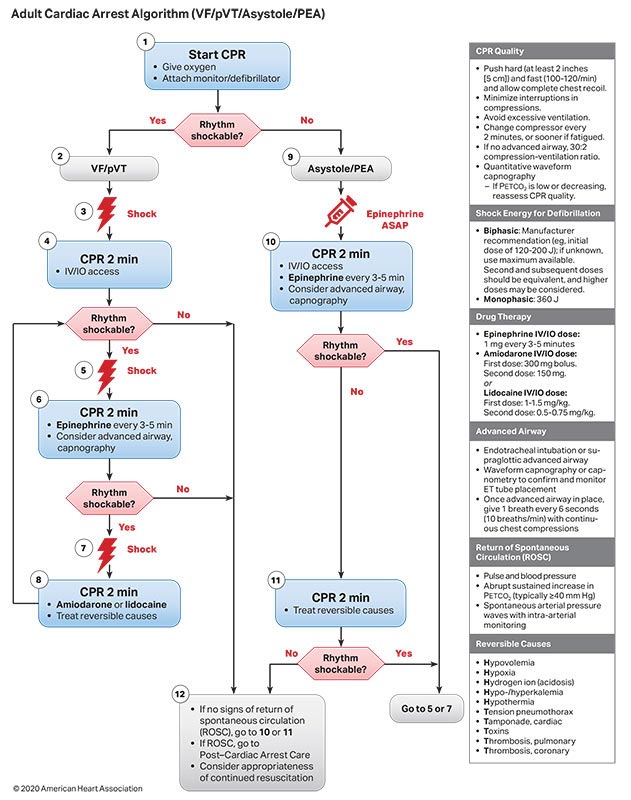
-
This question is part of the following fields:
- Cardiovascular
- Pharmacology
-
-
Question 151
Incorrect
-
Which of the following laboratory findings is NOT typical of von Willebrand disease (VWD):
Your Answer:
Correct Answer: Thrombocytopaenia
Explanation:Laboratory findings typically show (although this varies depending on VWD type):
Abnormal PFA-100 test
Low factor VIII levels (if low a factor VIII/VWF binding assay is performed)
Prolonged APTT (or normal)
Normal PT
Low VWF levels
Defective platelet aggregation
Normal platelet count -
This question is part of the following fields:
- Haematology
- Pathology
-
-
Question 152
Incorrect
-
A young male has presented to the Emergency Department with a sudden onset of severe palpitations, shortness of breath, and chest pain. A 12-lead ECG is recorded, and it shows a narrow complex tachycardia that points to a diagnosis of supraventricular tachycardia.
Vagal manoeuvres are attempted but are unsuccessful in eliminating the arrhythmia. The next action plan is to use a drug to revert to sinus rhythm.
Out of the following, which is the first-line treatment for supraventricular tachycardia?Your Answer:
Correct Answer: Adenosine
Explanation:Paroxysmal supraventricular tachycardia is an intermittent tachycardia (HR > 100 bpm) and has the following characteristics:
1. Sudden onset/offset (Contrast with sinus tachycardia)
2. Electrical activity originates above the ventricle (Contrast with ventricular tachycardia)
3. Produces narrow QRS complex (<120ms) The most common cause of PSVT is Atrioventricular nodal re-entrant tachycardia (AVNRT), most common in young women with a mean age onset of 32 years old. There are recurrent episodes of palpitations, and most of the episodes spontaneously. Sometimes, some vagal manoeuvres are required:
1. Valsalva manoeuvre
2. immersing the face in ice-cold water
3. carotid sinus massage.If PSVT keeps persisting or is causing severe symptoms, the treatment of choice is intravenous adenosine. The patient’s ECG should be continuously monitored throughout the treatment.
The recommended doses in adults are as follows:
– Initial dose of adenosine is 6 mg by rapid IV bolus
– If unsuccessful, give another dose of adenosine 12 mg by rapid IV bolus
– If unsuccessful, give a further dose of adenosine 12 mg by rapid IV bolus
The latest ALS guidelines advocate 18 mg for the third dose, whereas the BNF/NICE guidelines advocate 12 mg.If adenosine fails or is contraindicated, intravenous verapamil can be used as an alternative, but it should be avoided in patients recently treated with beta-blockers.
Synchronized electrical cardioversion will be necessary with signs of hemodynamic instability or if drug treatment has failed to restore sinus rhythm.
Recurrent episodes of paroxysmal supraventricular tachycardia can be treated by catheter ablation or prevented with drugs such as flecainide, sotalol, diltiazem, or verapamil. -
This question is part of the following fields:
- Cardiovascular Pharmacology
- Pharmacology
-
-
Question 153
Incorrect
-
You're currently treating an infection in a patient and trying to figure out which antibiotic would be best.
Which of the following antimicrobial drugs inhibits the formation of cell walls?Your Answer:
Correct Answer: Cefuroxime
Explanation:Cefuroxime and other cephalosporin antibiotics are bactericidal ß-lactam antibiotics. They work similarly to penicillins in that they prevent cross-linking between the linear peptidoglycan polymer chains that make up the bacterial cell wall. As a result, they prevent the formation of cell walls.
The following is a summary of the various mechanisms of action of various types of antimicrobial agents:1) Inhibition of cell wall synthesis
Penicillins
Cephalosporins
Vancomycin2) Disruption of cell membrane function
Polymyxins
Nystatin
Amphotericin B3) Inhibition of protein synthesis
Macrolides
Aminoglycosides
Tetracyclines
Chloramphenicol4) Inhibition of nucleic acid synthesis
Quinolones
Trimethoprim
5-nitroimidazoles
Rifampicin5) Anti-metabolic activity
Sulphonamides
Isoniazid -
This question is part of the following fields:
- Infections
- Pharmacology
-
-
Question 154
Incorrect
-
Captopril should not be used if you have any of the following conditions:
Your Answer:
Correct Answer: Renal artery stenosis
Explanation:Contraindications indications of Captopril include:
– Bilateral renal artery stenosis
– Hypersensitivity to ACE inhibitors
– Anuria
– History of ACEI-induced angioedema
– Hereditary or idiopathic angioedema
– Co-administration of Neprilysin inhibitors (e.g., sacubitril) with ACE inhibitors may increase angioedema risk; do not administer ACE inhibitors within 36 hours of switching to or from sacubitril/valsartan.
If ACE inhibitors are used, they should be initiated only under specialist supervision and renal function should be monitored regularly. ACE inhibitors should also be used with particular caution in patients who may have undiagnosed and clinically silent renovascular disease. This includes patients with peripheral vascular disease or those with severe generalised atherosclerosis. -
This question is part of the following fields:
- Cardiovascular
- Pharmacology
-
-
Question 155
Incorrect
-
A 77 year old lady presents to ED with her left leg shortened and externally rotated following slipping and falling on a wet bathroom floor. There is an intracapsular fracture of the neck of femur seen on imaging studies. She is at risk of avascular necrosis of the head of femur.
This is caused by lack of blood supply from which of these arteries?
Your Answer:
Correct Answer: Medial circumflex artery
Explanation:The primary blood supply to the head of the femur is from branches of the medial femoral circumflex artery.
The superior and inferior gluteal arteries supply the hip joint but not the head of femur.
The lateral circumflex artery anastomoses with the medial femoral circumflex artery and assists in supplying the head of femur.
The obturator artery is an important source of blood supply in children up to about 8 years. It gives rise to the artery of the head of femur which runs in the ligamentum teres and is insufficient to supply the head of femur in adults.
-
This question is part of the following fields:
- Anatomy
- Lower Limb
-
-
Question 156
Incorrect
-
Regarding conduction of nerve impulses, which of the following statements is CORRECT:
Your Answer:
Correct Answer: The action potential in myelinated axons is propagated only at the nodes of Ranvier.
Explanation:An action potential is a self-propagating response, successive depolarisation moving along each segment of an unmyelinated nerve until it reaches the end. It is all-or-nothing and does not decrease in size. Conduction in myelinated fibres is much faster, up to 50 times that of the fastest unmyelinated nerve. Myelinated fibres are insulated except at areas devoid of myelin called nodes of Ranvier. The depolarisation jumps from one node of Ranvier to another by a process called saltatory conduction. Saltatory conduction not only increases the velocity of impulse transmission but also conserves energy for the axon because depolarisation only occurs at the nodes and not along the whole length of the nerve fibre. Larger diameter myelinated nerve fibres conduct nerve impulses faster than small unmyelinated nerve fibres.
-
This question is part of the following fields:
- Basic Cellular
- Physiology
-
-
Question 157
Incorrect
-
The extensor digitorum longus is supplied by which nerve?
Your Answer:
Correct Answer: Deep peroneal nerve
Explanation:The extensor digitorum longus is innervated by the deep fibular nerve (L5, S1), a branch of the common fibular nerve.
-
This question is part of the following fields:
- Anatomy
- Lower Limb
-
-
Question 158
Incorrect
-
Regarding aspirin at analgesic doses, which of the following statements is CORRECT:
Your Answer:
Correct Answer: It is contraindicated in patients with severe heart failure.
Explanation:Aspirin (at analgesic doses) is contraindicated in severe heart failure. Aspirin irreversibly inhibits cyclooxygenase (COX) enzymes resulting in decreased production of prostaglandins (which can lead to irritation of the gastric mucosa). The analgesic dose is greater than the antiplatelet dose, and taken orally it has a duration of action of about 4 hours. Clinical features of salicylate toxicity in overdose include hyperventilation, tinnitus, deafness, vasodilatation, and sweating.
-
This question is part of the following fields:
- Central Nervous System
- Pharmacology
-
-
Question 159
Incorrect
-
After collapsing in his nursing home, a 70-year-old man is brought into the ER. He is a known case of diabetes mellitus and is on medication for it. An RBS of 2.5 mmol/L (3.9-5.5 mmol/L) is recorded in the ER.
Out of the following, which medication for diabetes mellitus is MOST likely responsible for his hypoglycaemic episode?Your Answer:
Correct Answer: Pioglitazone
Explanation:Pioglitazone is used to treat type 2 diabetes mellitus. It selectively stimulates the nuclear receptor peroxisome proliferator-activated receptor gamma (PPAR-γ) and to a lesser extent PPAR-α.
Of the medications mentioned in this question, only pioglitazone is a recognized cause of hypoglycaemia.
-
This question is part of the following fields:
- Endocrine Pharmacology
- Pharmacology
-
-
Question 160
Incorrect
-
A 34-year-old man arrives at the department befuddled. He has a history of schizophrenia and is on an antipsychotic medication, but he can't recall what it's called.
Which of the following statements about antipsychotic drug side effects is correct?Your Answer:
Correct Answer: Haloperidol is the most common causative antipsychotic drug
Explanation:Extrapyramidal side effects are most common with piperazine phenothiazines (fluphenazine, prochlorperazine, and trifluoperazine) and butyrophenones (fluphenazine, prochlorperazine, and trifluoperazine) (benperidol and haloperidol). The most common causative antipsychotic drug is haloperidol.
Tardive dyskinesia (rhythmic, involuntary movements of the tongue, face, and jaw) is most commonly associated with long-term or high-dose treatment. It is the most serious form of extrapyramidal symptoms because withdrawal of the causative drug may make it irreversible, and treatment is usually ineffective.
Dystonia (abnormal facial and body movements) is more common in children and young adults, and it usually shows up after only a few doses. Procyclidine 5 mg IV or benzatropine 2 mg IV as a bolus can be used to treat acute dystonia.
An unpleasant feeling of restlessness characterises akathisia. The inability to initiate movement is known as akinesia.
Renal impairment causes increased cerebral sensitivity, so lower doses should be used.
In elderly patients with dementia-related psychosis who are treated with haloperidol, there is an increased risk of death. This appears to be due to a higher risk of heart attacks and infections like pneumonia.
The following are some of the antipsychotic drugs’ contraindications:
Reduced level of consciousness/coma
Depression of the central nervous system
Phaeochromocytoma -
This question is part of the following fields:
- CNS Pharmacology
- Pharmacology
-
-
Question 161
Incorrect
-
A 62-year-old woman presents with cold sensitivity, tiredness, and weight gain. A series of blood tests done shows a grossly elevated TSH level and a diagnosis of hypothyroidism is made.
What is the commonest cause of hypothyroidism worldwide?Your Answer:
Correct Answer: Iodine deficiency
Explanation:Hypothyroidism occurs when there is a deficiency of circulating thyroid hormones. It is commoner in women and is most frequently seen in the age over 60.
Iodine deficiency is the commonest cause of hypothyroidism worldwide.
In developed countries, iodine deficiency is not a problem and autoimmune thyroiditis is the commonest cause.
-
This question is part of the following fields:
- Endocrine Physiology
- Physiology
-
-
Question 162
Incorrect
-
Fatigue, dizziness upon standing, muscle weakness, weight loss, nausea, and sweating are all symptoms that a patient may experience in Addison's disease.
Which of the following claims about Addison's disease is correct?Your Answer:
Correct Answer: ACTH levels are elevated in primary insufficiency
Explanation:The adrenal glands produce too little steroid hormones, which causes Addison’s disease. The production of glucocorticoids, mineralocorticoids, and sex steroids are all altered. The most prevalent cause is autoimmune adrenalitis, which accounts for 70-80 percent of cases.
It affects more women than males and occurs most frequently between the ages of 30 and 50.
The following are some of the clinical signs and symptoms of Addison’s disease:
Weakness and sluggishness
Hypotension is a condition in which the blood pressure (notably orthostatic hypotension)
Vomiting and nausea
Loss of weight
Axillary and pubic hair loss
Depression
Hyperpigmentation is a condition in which a person’s (palmar creases, buccal mucosa and exposed areas more commonly affected)
The following are the classic biochemical hallmarks of Addison’s disease:
Hyponatraemia
Hyperkalaemia
Hypercalcaemia
Hypoglycaemia
Acidosis metabolica
When ACTH levels are combined with cortisol levels, it is possible to distinguish between primary and secondary adrenal insufficiency:
In primary insufficiency, levels rise.
In secondary insufficiency, levels are low or low normal. -
This question is part of the following fields:
- Endocrine Physiology
- Physiology
-
-
Question 163
Incorrect
-
Which of the following anatomical structures is most likely the cause of oedema and erythema of the arm in a patient who underwent modified radical mastectomy and radiotherapy?
Your Answer:
Correct Answer: Axillary lymph nodes
Explanation:Arm oedema is one of the sequelae after breast cancer surgery and radiation therapy. Arm oedema in the breast cancer patient is caused by interruption of the axillary lymphatic system by surgery or radiation therapy, which results in the accumulation of fluid in subcutaneous tissue in the arm, with decreased distensibility of tissue around the joints and increased weight of the extremity. Chronic inflammatory changes result in both subcutaneous and lymph vessel fibrosis.
-
This question is part of the following fields:
- Anatomy
- Thorax
-
-
Question 164
Incorrect
-
Gallstones are commonly found lodged in which of the following parts of the gallbladder?
Your Answer:
Correct Answer: Neck
Explanation:There is a significant association between the presence of Hartmann’s pouch and gallbladder stones. It is the most common location for gallstones to become lodged and cause cholestasis.
-
This question is part of the following fields:
- Abdomen And Pelvis
- Anatomy
-
-
Question 165
Incorrect
-
A patient is diagnosed with a Klebsiella pneumoniae infection.
Which SINGLE statement regarding Klebsiella pneumoniae is FALSE?Your Answer:
Correct Answer: Species with ESBLs are sensitive to cefotaxime
Explanation:Klebsiellais a genus of non-motile,Gram-negative, rod-shaped bacteriawith a prominent polysaccharide-based capsule. They are routinely found in the nose, mouth and gastrointestinal tract as normal flora, however, they can also behave as opportunistic pathogens.
Infections with Klebsiella spp. areusually nosocomial. They are an important cause of ventilator-associated pneumonia (VAP), urinary tract infection, wound infection and bacteraemia. Outbreaks of infections with Klebsiellaspp. in high-dependency units have been described and are associated with septicaemia and high mortality rates. Length of hospital stay and performance of invasive procedures are risk factors forKlebsiellainfections.
Primary pneumonia withKlebsiella pneumoniaeis a rare,severe, community-acquired infection associated with a poor outcome.
Klebsiella rhinoscleromatis causes a progressive granulomatous infection of the nasal passages and surrounding mucous membranes. This infection is mainly seen in the tropics.
Klebsiella ozanae is a recognised cause of chronic bronchiectasis.
Klebsiella organisms are resistant to multiple antibiotics including penicillins. This is thought to be a plasmid-mediated property. Agents with high intrinsic activity againstKlebsiellapneumoniaeshould be selected for severely ill patients. Examples of such agents include third-generation cephalosporins (e.g cefotaxime), carbapenems (e.g. imipenem), aminoglycosides (e.g. gentamicin), and quinolones (e.g. ciprofloxacin). These agents may be used as monotherapy or combination therapy. Aztreonam may be used in patients who are allergic to beta-lactam antibiotics.
Species with ESBLs (Extended spectrum beta-lactamase) are resistant to penicillins and also cephalosporins such as cefotaxime and ceftriaxone
. -
This question is part of the following fields:
- Microbiology
- Specific Pathogen Groups
-
-
Question 166
Incorrect
-
A patient has a diagnosis of acute osteomyelitis. They have no joint prosthesis on indwelling metal work and no known drug allergies. He has had a recent skin swab that has cultured MRSA and MRSA infection is suspected.
Which of the following antibacterial agents would be most appropriate to prescribe in this case? Select ONE answer only.Your Answer:
Correct Answer: Vancomycin
Explanation:In the majority of patients the commonest causative organism for osteomyelitis isStaphylococcus aureus.Salmonella spp. are the commonest cause in patients with sickle cell disease.
Other bacteria that can cause osteomyelitis include:
Enterobacter spp.
Group A and B streptococcus
Haemophilus influenzae
The current recommendations by NICE and the BNF on the treatment of osteomyelitis are:
Flucloxacillin first-line
Consider adding fusidic acid or rifampicin for initial 2 weeks
If penicillin allergic use clindamycin
If MRSA is suspected use vancomycin
Suggested duration of treatment is 6 weeks for acute infection -
This question is part of the following fields:
- Microbiology
- Specific Pathogen Groups
-
-
Question 167
Incorrect
-
Regarding forest plots, which of the following is the purpose of this graph?
Your Answer:
Correct Answer: To graphically display the relative strength of multiple studies attempting to answer the same question
Explanation:The results of meta-analysis are often displayed graphically in a forest plot. A properly constructed forest plot is the most effective way to graphically display the relative strength of multiple studies attempting to answer the same question. A typical meta-analysis consists of three main objectives that include estimation of effect sizes from individual studies and a pooled summary estimate with their confidence intervals (CIs), heterogeneity among the studies, and any publication bias. The forest plot illustrates the first two of these objectives. Forest plots visualize the effect measure and CI of individual studies, which provide the raw data for the meta-analysis, as well the pooled-effect measure and CI. The individual studies also can be grouped in the forest plot by some of their characteristics for ease of interpretation such as by study size or year of publication. When comparing the outcomes between an intervention and a control group, dichotomous outcome variables are expressed as ratios (i.e. odds ratios, ORs or risk ratios, RRs), while for continuous outcomes, a weighted mean difference is reported.
-
This question is part of the following fields:
- Evidence Based Medicine
-
-
Question 168
Incorrect
-
A 30-year-old patient has a mild exacerbation of his asthma. His steroid inhaler ran out a couple of weeks ago, and he has not replaced it.
Which of these statements describes the mechanism of action of corticosteroids in asthma?
Your Answer:
Correct Answer: Reduction of bronchial inflammation
Explanation:Inhaled corticosteroids suppresses airway inflammation seen in asthma by downregulating pro-inflammatory proteins.
They also appear to reverse components of asthma-induced structural changes (airway remodelling), including increased vascularity of the bronchial wall.
Corticosteroids reduces the number of inflammatory cells (eosinophils, T lymphocytes, mast cells, and dendritic cells) in the airways. -
This question is part of the following fields:
- Pharmacology
- Respiratory Pharmacology
-
-
Question 169
Incorrect
-
One of your patients is undergoing resuscitation and is in septic shock. The intensive care outreach team arrives to assess them and determines that a dobutamine infusion should be started.
Which of the following receptors does dobutamine primarily affect?Your Answer:
Correct Answer: Beta-1 receptors
Explanation:Dobutamine is a synthetic isoprenaline derivative that is used to provide inotropic support to patients with low cardiac output caused by septic shock, myocardial infarction, or other cardiac conditions.
Dobutamine is a sympathomimetic drug that stimulates beta-1 adrenergic receptors in the heart to produce its primary effect. As a result, it has inotropic properties that increase cardiac contractility and output. It also has a small amount of alpha1- and beta-2-adrenergic activity.
A summary of the mechanism and effects of different inotropic agents is shown below:
Inotrope
Mechanism
Effects
Adrenaline (epinephrine)
Beta-1 and -2 agonist at increasing doses;
Alpha-agonist at high doses
Increased cardiac output;
Vasoconstriction at higher doses
Noradrenaline (norepinephrine)
Mainly alpha-agonist;
Beta-1 and -2 agonist at increasing doses
Vasoconstriction;
Some increased cardiac output
Dopamine
Dopamine agonist at low doses;
Beta-1 and -2 agonist at increasing doses;
Alpha-agonist at high doses
Increased cardiac output;
Vasoconstriction at higher doses
Dobutamine
Mainly beta-1 agonist
Increased cardiac output -
This question is part of the following fields:
- Cardiovascular Pharmacology
- Pharmacology
-
-
Question 170
Incorrect
-
Regarding platelets, which of the following statements is CORRECT:
Your Answer:
Correct Answer: Platelets are produced in the bone marrow by fragmentation of the cytoplasm of megakaryocytes.
Explanation:Platelets are produced in the bone marrow by fragmentation of the cytoplasm of megakaryocytes, derived from the common myeloid progenitor cell. The time interval from differentiation of the human stem cell to the production of platelets averages 10 days. Thrombopoietin is the major regulator of platelet formation and 95% of this is produced by the liver. The normal platelet count is approximately 150 – 450 x 109/L and the normal platelet lifespan is 10 days. Under normal circumstances, about one-third of the marrow output of platelets may be trapped at any one time in the normal spleen.
-
This question is part of the following fields:
- Basic Cellular
- Physiology
-
-
Question 171
Incorrect
-
A 22-year-old presents with acute severe asthma. He takes a drug prescribed by her GP but cannot recall the name and is receiving regular salbutamol nebulisers. His current potassium level is 2.8 mmol/l.
Which drug is least likely to have caused his hypokalaemia?
Your Answer:
Correct Answer: Spironolactone
Explanation:Serious hypokalaemia can occur in severe asthma and the effect can be potentiated by concomitant treatment with theophyllines like aminophylline, corticosteroids, thiazide and loop diuretics, and hypoxia. Plasma-potassium concentration should be monitored in severe asthma.
Spironolactone, a potassium-sparing diuretic, is not likely to have contributed to patients hypokalaemia.
-
This question is part of the following fields:
- Pharmacology
- Respiratory Pharmacology
-
-
Question 172
Incorrect
-
Which of the following causes increased aldosterone secretion:
Your Answer:
Correct Answer: Decreased blood volume
Explanation:Decreased blood volume stimulates the secretion of renin (because of decreased renal perfusion pressure) and initiates the renin-angiotensin-aldosterone cascade. Angiotensin-converting enzyme (ACE) inhibitors block the cascade by decreasing the production of angiotensin. Hyperosmolarity stimulates antidiuretic hormone (ADH) [not aldosterone] secretion. Hyperkalaemia, not hypokalaemia, directly stimulates aldosterone secretion by the adrenal cortex. ANP inhibits renin secretion, thereby inhibiting the production of angiotensin and aldosterone.
-
This question is part of the following fields:
- Physiology
- Renal
-
-
Question 173
Incorrect
-
A medical student is reviewing the chart of a patient who has recently been diagnosed with leukaemia. The chief resident asks him to identify ONE feature that will most support acute leukaemia diagnosis in contrast to chronic leukaemia.
Which one of the following options will he pick?Your Answer:
Correct Answer: The patient is a child
Explanation:Acute lymphocytic leukaemia (ALL) is more common in children than chronic leukaemias, which generally occur in adults. Bone marrow failure occurs early on in the course of the disease in acute leukaemias, and there is the massive proliferation of undifferentiated cells with functioning cells being crowded out. Hepatosplenomegaly occurs in both acute and chronic forms of leukaemia and is not a differentiating feature.
-
This question is part of the following fields:
- Haematology
- Pathology
-
-
Question 174
Incorrect
-
Cardiac myocytes contract by excitation-contraction coupling, very much like skeletal myocytes. On the other hand, calcium-induced calcium release (CICR) is a mechanism that is unique to Cardiac myocytes. The influx of calcium ions (Ca 2+) into the cell causes a 'calcium spark,' which causes more ions to be released into the cytoplasm.
In CICR, which membrane protein in the sarcoplasmic reticulum is involved?Your Answer:
Correct Answer: Ryanodine receptor
Explanation:Cardiac myocytes contract by excitation-contraction coupling, just like skeletal myocytes. Heart myocytes, on the other hand, utilise a calcium-induced calcium release mechanism that is unique to cardiac muscle (CICR). The influx of calcium ions (Ca2+) into the cell causes a ‘calcium spark,’ which causes more ions to be released into the cytoplasm.
An influx of sodium ions induces an initial depolarisation, much as it does in skeletal muscle; however, in cardiac muscle, the inflow of Ca2+ sustains the depolarisation, allowing it to remain longer. Due to potassium ion (K+) inflow, CICR causes a plateau phase in which the cells remain depolarized for a short time before repolarizing. Skeletal muscle, on the other hand, repolarizes almost instantly.
The release of Ca2+ from the sarcoplasmic reticulum is required for calcium-induced calcium release (CICR). This is mostly accomplished by ryanodine receptors (RyR) on the sarcoplasmic reticulum membrane; Ca2+ binds to RyR, causing additional Ca2+ to be released.
-
This question is part of the following fields:
- Basic Cellular Physiology
- Physiology
-
-
Question 175
Incorrect
-
A 46-year-old male who is suffering from a chest infection. You decide to start giving the patient antibiotics, however he is allergic to penicillin. You consult with one of your co-workers about the best choice of antibiotic to give.
From the following choices, which is considered an example of bacteriostatic antibiotic?
Your Answer:
Correct Answer: Trimethoprim
Explanation:Antibiotics that are bactericidal kill bacteria, while antibiotics that are bacteriostatic limit their growth or reproduction. The antibiotics grouped into these two classes are summarized in the table below:
Bactericidal antibiotics
Bacteriostatic antibioticsVancomycin
Metronidazole
Fluoroquinolone, such as ciprofloxacin
Penicillins, such as benzylpenicillin
Cephalosporin, such as ceftriaxone
Co-trimoxazole
Tetracyclines, such as doxycycline
Macrolides, such as erythromycin
Sulphonamides, such as sulfamethoxazole
Clindamycin
Trimethoprim
Chloramphenicol -
This question is part of the following fields:
- Infections
- Pharmacology
-
-
Question 176
Incorrect
-
Which of the following best describes a natural killer cell:
Your Answer:
Correct Answer: A large granular lymphocyte that kills by inducing target cell apoptosis.
Explanation:Natural killer (NK) cells are cytotoxic CD8 positive cells that lack the T-cell receptor. They are large cells with cytoplasmic granules. NK cells are designed to kill target cells that have a low level of expression of HLA class I molecules, such as may occur during viral infection or on a malignant cell. NK cells do this by displaying several receptors for HLA molecules on their surface. When HLA is expressed on the target cell these deliver an inhibitory signal into the NK cell. When HLA molecules are absent on the target cell this inhibitory signal is lost and the NK cell can then kill its target. In addition, NK cells display antibody-dependent cell-mediated cytotoxicity. In this, antibody binds to antigen on the surface of the target cell and then NK cells bind to the Fc portion of the bound antibody and kill the target cell.
-
This question is part of the following fields:
- Immune Responses
- Pathology
-
-
Question 177
Incorrect
-
The cutaneous circulation is responsible for the skin's blood supply. Because the skin is not a highly metabolically active tissue with low energy requirements, its blood supply differs from that of other tissues. Instead of capillaries, some of the circulating blood volume in the skin passes through arteriovenous anastomoses (AVAs).
Which of the following statements regarding arteriovenous anastomoses is correct?
Your Answer:
Correct Answer: AVAs are innervated by sympathetic fibres originating from the hypothalamus
Explanation:Short vessels called arteriovenous anastomoses (AVAs) link tiny arteries and veins. They have a large lumen diameter. The strong and muscular walls allow AVAs to completely clog the vascular lumen, preventing blood flow from artery to vein (acting like a sphincter). When the AVAs open, they create a low-resistance connection between arteries and veins, allowing blood to flow into the limbs’ superficial venous plexuses. There is no diffusion of solutes or fluid into the interstitium due to their strong muscle walls.
AVAs are densely innervated by adrenergic fibres from the hypothalamic temperature-regulation centre. High sympathetic output occurs at normal core temperatures, inducing vasoconstriction of the AVAs and blood flow through the capillary networks and deep plexuses. When the temperature rises, sympathetic output decreases, producing AVA vasodilation and blood shunting from the artery to the superficial venous plexus. Heat is lost to the environment as hot blood rushes near to the skin’s surface.
AVAs are a specialized anatomical adaptation that can only be found in large quantities in the fingers, palms, soles, lips, and pinna of the ear. -
This question is part of the following fields:
- Cardiovascular Physiology
- Physiology
-
-
Question 178
Incorrect
-
You are calculating the anion gap on a patient with an acid-base disturbance and you find the anion gap to be low. Which of the following is the most likely cause for the low anion gap:
Your Answer:
Correct Answer: Hypoalbuminaemia
Explanation:A low anion gap is frequently caused by hypoalbuminemia. Albumin is a negatively charged protein and its loss from the serum results in the retention of other negatively charged ions such as chloride and bicarbonate. As bicarbonate and chloride anions are used to calculate the anion gap, there is a subsequent decrease in the gap. The anion gap is sometimes reduced in multiple myeloma, where there is an increase in plasma IgG (paraproteinaemia).
-
This question is part of the following fields:
- Physiology
- Renal
-
-
Question 179
Incorrect
-
In a VF arrest, a 6-year-old child is brought to your Emergency Department resuscitation area. He weighs 16 kilogrammes. He's had three DC shocks, but he's still in VF and doesn't have an output.
What amiodarone dose should he get now, according to the most recent APLS guidelines?Your Answer:
Correct Answer: 80 mg
Explanation:In a shockable (Vf/pVT) paediatric cardiac arrest, amiodarone should be administered after the third and fifth shocks. The dose is 5 mg/kg (maximum 300 mg) and should be administered over a three-minute period. If at all possible, administration via a central line is recommended.
-
This question is part of the following fields:
- Cardiovascular Pharmacology
- Pharmacology
-
-
Question 180
Incorrect
-
One of these statements about cohort studies is true:
Your Answer:
Correct Answer: They are longitudinal in nature
Explanation:A cohort study is a longitudinal, observational study. It follows a group of patients (the cohort) forward in time and monitors the effects of the aetiological factor under study upon them.
Cohort studies are usually of longer duration and are more expensive than case-control studies. They, however, provide more useful and reliable information.
Cohort studies follow a cohort of patients who don’t have a disease and evaluate the absolute and relative risk of contracting the disease after exposure to the aetiological agent.
Cross-sectional studies are the best way to determine the prevalence of a disease. while Cohort studies are better at determining the incidence of a disease.
-
This question is part of the following fields:
- Evidence Based Medicine
-
-
Question 181
Incorrect
-
A 24-year-old man goes to the emergency department with a fever, headache, and swollen parotid glands that are excruciating. You have a suspicion that it is mumps. Which of the following nerves is causing the discomfort the patient is experiencing:
Your Answer:
Correct Answer: Auriculotemporal nerve
Explanation:The auriculotemporal nerve is irritated by mumps, which results in significant discomfort due to inflammation and swelling of the parotid gland, as well as the stretching of its capsule. Compression caused by swallowing or chewing exacerbates pain.
-
This question is part of the following fields:
- Anatomy
- Head And Neck
-
-
Question 182
Incorrect
-
Which of the following best characterizes the correct administration of amiodarone for a shockable rhythm in adults on advanced life support:
Your Answer:
Correct Answer: Give 300 mg IV amiodarone after 3 shocks
Explanation:After three shocks, 300 mg IV amiodarone should be administered. After five defibrillation attempts, a further dose of 150 mg IV amiodarone may be considered. If amiodarone is not available, lidocaine may be used as a substitute, but it should not be given if amiodarone has previously been administered.
-
This question is part of the following fields:
- Cardiovascular
- Pharmacology
-
-
Question 183
Incorrect
-
Bordetella pertussis causes which of the following infectious diseases:
Your Answer:
Correct Answer: Whooping cough
Explanation:Bordetella pertussis causes whooping cough. Acute bronchiolitis is typically caused by respiratory syncytial virus. Parainfluenza virus is the most common cause of croup. Acute epiglottitis is usually caused by an infection with Haemophilus influenzae type b (Hib) bacteria. The common cold may be caused by a number of viruses including rhinovirus and coronavirus.
-
This question is part of the following fields:
- Microbiology
- Pathogens
-
-
Question 184
Incorrect
-
Which of the following is NOT a typical clinical feature of beta-thalassaemia major:
Your Answer:
Correct Answer: Increased bleeding tendency
Explanation:Features include:
– severe anaemia (becoming apparent at 3 – 6 months when the switch from gamma-chain to beta-chain production takes place)
– failure to thrive
– hepatosplenomegaly (due to excessive red cell destruction, extramedullary haemopoiesis and later due to transfusion related iron overload)
– expansion of bones (due to marrow hyperplasia, resulting in bossing of the skull and cortical thinning with tendency to fracture)
– increased susceptibility to infections (due to anaemia, iron overload, transfusion and splenectomy)
– osteoporosis
– hyperbilirubinaemia and gallstones
– hyperuricaemia and gout
– other features of haemolytic anaemia
– liver damage and other features of iron overload -
This question is part of the following fields:
- Haematology
- Pathology
-
-
Question 185
Incorrect
-
What is the mechanism of action of captopril:
Your Answer:
Correct Answer: Angiotensin-converting enzyme inhibitor
Explanation:Captopril is an angiotensin-converting enzyme (ACE) inhibitor, which inhibits the conversion of angiotensin I to angiotensin II.
-
This question is part of the following fields:
- Cardiovascular
- Pharmacology
-
-
Question 186
Incorrect
-
A 2-day-old male is referred to a tertiary care hospital by the community midwife after a home visit due to jaundice and dyspnoea. After history and examination, the relevant blood work is performed, and the baby is found to have conjugated hyperbilirubinemia. The paediatric team suspects a hepatic origin for jaundice based on the findings.
Which one of the following aetiologies is the most likely cause of jaundice in this case?Your Answer:
Correct Answer: Alpha 1-antitrypsin deficiency
Explanation:The presence of dyspnoea makes alpha-1 antitrypsin deficiency the more likely diagnosis as biliary atresia does not cause respiratory symptoms. Deficiency of the enzyme alpha-1 antitrypsin causes uninhibited elastase activity and a decrease in elastic tissue. This causes liver cirrhosis leading to an elevation of conjugated bilirubin and emphysema in the lungs.
Rhesus disease, hereditary spherocytosis and breast milk jaundice cause an elevation of unconjugated bilirubin thus ruling it out in this case. Breast milk jaundice occurs due to an inability of the newborn to metabolize the proteins in breast milk.
Rhesus disease occurs when an Rh negative mother gives birth to an Rh positive baby. The jaundice would have been accompanied by anaemia and oedema.
Hereditary spherocytosis occurs due to extravascular haemolysis as defective RBCs are removed by the spleen. The patient would present with jaundice, splenomegaly and possibly an aplastic crisis (if Parvovirus B19 infection).
-
This question is part of the following fields:
- General Pathology
- Pathology
-
-
Question 187
Incorrect
-
After what time period should intravenous phenytoin be used as second-line treatment of status epilepticus?
Your Answer:
Correct Answer: 25 minutes
Explanation:If seizures recur or fail to respond after initial treatment with benzodiazepines within 25 minutes of onset, phenytoin sodium, fosphenytoin sodium, or phenobarbital sodium should be used.
-
This question is part of the following fields:
- Central Nervous System
- Pharmacology
-
-
Question 188
Incorrect
-
Vitamin D is a group of secosteroids that play a role in calcium and phosphate control. Vitamin D's hormonally active metabolite is 1,25-dihydroxycholecalciferol.
Which of the following actions of 1,25-dihydroxycholecalciferol is a direct action?Your Answer:
Correct Answer: Increases renal phosphate reabsorption
Explanation:The hormone-active metabolite of vitamin D is 1,25-dihydroxycholecalciferol (commonly known as calcitriol). Its activities raise calcium and phosphate levels in the bloodstream.
The following are the primary effects of 1,25-dihydroxycholecalciferol:
Calcium and phosphate absorption in the small intestine is increased.
Calcium reabsorption in the kidneys is increased.
Increases phosphate reabsorption in the kidneys.
Increases the action of osteoclastic bacteria (increasing calcium and phosphate resorption from bone)
Inhibits the action of 1-alpha-hydroxylase in the kidneys (negative feedback)
Thyroid hormone (parathyroid hormone) Calcium reabsorption in the tubules of the kidneys is increased, but renal phosphate reabsorption is decreased. -
This question is part of the following fields:
- Endocrine Physiology
- Physiology
-
-
Question 189
Incorrect
-
A 32-year-old man is dehydrated as he presents with severe vomiting and diarrhoea. He urgently requires resuscitation with intravenous fluid administration. He is also administered metoclopramide.
Which of the following is the true mechanism of action of metoclopramide?Your Answer:
Correct Answer: Dopamine receptor antagonism
Explanation:Metoclopramide is used to treat nausea and vomiting. It works by blocking the central and peripheral D2 (dopamine 2) receptors in the medullary chemoreceptor trigger zone in the vomiting centre (area postrema). It decreases the sensitivity of the visceral sensory nerves that transmit from the GI system to the vomiting centre. Blockade of inhibitory dopamine receptors in the GI tract may allow stimulatory actions of ACh at muscarinic synapses to predominate.
At high doses, metoclopramide also blocks type-2 serotonin receptors though the effect is much weaker.
-
This question is part of the following fields:
- CNS Pharmacology
- Pharmacology
-
-
Question 190
Incorrect
-
Which of the following is NOT a function of antibodies:
Your Answer:
Correct Answer: Act as antigen receptors on T lymphocytes
Explanation:Antibodies:
Neutralise toxins and prevent attachment of pathogens
Target, opsonise or agglutinate (clump together) antigens for phagocytosis
Activate the complement cascade (leading to lysis or opsonisation of the pathogen)
Act as antigen receptors on B lymphocytes
Activate antibody-dependent cell-mediated cytotoxicity by natural killer (NK) cells or T cytotoxic cells
Provide mucosal immunity (IgA-mediated)
Stimulate degranulation of mast cells (IgE and IgG mediated)
Provide passive immunity to the newborn (through transplacental passage of IgG and secretion of IgA in breast milk) -
This question is part of the following fields:
- Immune Responses
- Pathology
-
-
Question 191
Incorrect
-
You're evaluating a 37-year-old woman who is 12 weeks pregnant. She has experienced vaginal bleeding.
Which of the following anti-D statements is correct?Your Answer:
Correct Answer: Routine antenatal prophylaxis is recommended for RhD negative women at 28 and 34 weeks
Explanation:Anti-D is an IgG antibody that targets the antigen Rhesus D (RhD). Plasma from rhesus-negative donors who have been immunised against the anti-D-antigen is used to make anti-D immunoglobulin.
Only RhD negative women are given Anti-D Ig. Women who are RhD negative do not have the RhD antigen on their RBC. If a foetus has the RhD antigen (i.e. is RhD positive) and the mother is exposed to foetal blood, she may develop antibodies to RhD that pass through the placenta and attack foetal red cells (resulting in newborn haemolytic disease). Anti-D is given to bind and neutralise foetal red cells in the maternal circulation before an immune response is triggered. In the event of a sensitising event, 500 IU Anti-D Ig should be administered intramuscularly.
The following are examples of potentially sensitising events:
Birth
Haemorrhage during pregnancy
Miscarriage
Ectopic pregnancy
Death within the womb
Amniocentesis
Chorionic villus sampling
Trauma to the abdomenThe sooner anti-D is given in the event of a sensitising event, the better; however, it is most effective within 72 hours, and the BNF states that it is still likely to have some benefit if given outside of this time frame.
At 28 and 34 weeks, RhD negative women should receive routine antenatal prophylaxis. This is regardless of whether they have previously received Anti-D for a sensitising event during the same pregnancy.
Prophylactic anti-D is not necessary before 12 weeks gestation, as confirmed by scan, in uncomplicated miscarriage (where the uterus is not instrumented), or mild, painless vaginal bleeding, as the risk of foeto-maternal haemorrhage (FMH) is negligible. In cases of therapeutic termination of pregnancy, whether by surgical or medical means, 250 IU of prophylactic anti-D immunoglobulin should be given to confirmed RhD negative women who are not known to be RhD sensitised.
-
This question is part of the following fields:
- Immunological Products & Vaccines
- Pharmacology
-
-
Question 192
Incorrect
-
After an accidental fall, a 75-year-old patient complains of neck pain and weakness in his upper limbs. Select the condition that most likely caused the neck pain and weakness of the upper limbs of the patient.
Your Answer:
Correct Answer: Central cord syndrome
Explanation:The cervical spinal cord is the section of the spinal cord that goes through the bones of the neck.
It is injured incompletely in the central cord syndrome (CCS). This will result in arm weakness more than leg weakness.
-
This question is part of the following fields:
- Anatomy
- Central Nervous System
-
-
Question 193
Incorrect
-
You've been asked to give a discussion to a group of medical students about skeletal muscle physiology and its use in clinical medicine. They pose a series of difficult questions to you.
Which of the following definitions for the A-band of the sarcomere is correct?
Your Answer:
Correct Answer: A band that contains the entire length of a single thick filament (myosin)
Explanation:Myofibrils, which are around 1 m in diameter, make up each myofiber. The cytoplasm separates them and arranges them in a parallel pattern along the cell’s long axis. These myofibrils are made up of actin and myosin filaments that are repeated in sarcomeres, which are the myofiber’s basic functional units.
Myofilaments are the filaments that make up myofibrils, and they’re made mostly of proteins. Myofilaments are divided into three categories:
Myosin filaments are thick filaments made up mostly of the protein myosin.
Actin filaments are thin filaments made up mostly of the protein actin.
Elastic filaments are mostly made up of the protein titin.
The sarcomere is a Z-line segment that connects two adjacent Z-lines.
The I-bands are thin filament zones that run from either side of the Z-lines to the thick filament’s beginning.
Between the I-bands is the A-band, which spans the length of a single thick filament.
The H-zone is a zone of thick filaments that is not overlaid by thin filaments in the sarcomere’s centre. The H-zone keeps the myosin filaments in place by surrounding them with six actin filaments each.
The M-band (or M-line) is a disc of cross-connecting cytoskeleton elements in the centre of the H-zone.
The thick filament is primarily made up of myosin. The thin filament is primarily made up of actin. Actin, tropomyosin, and troponin are found in a 7:1:1 ratio in thin filaments. -
This question is part of the following fields:
- Basic Cellular Physiology
- Physiology
-
-
Question 194
Incorrect
-
A 43-year-old woman presented to the emergency room after an incident of slipping and falling onto her back and left hip. Upon physical examination, it was noted that she has pain on hip abduction, but normal hip extension.
Which of the following muscles was most likely injured in this case?Your Answer:
Correct Answer: Gluteus medius
Explanation:The primary hip extensors are the gluteus maximus and the hamstrings such as the long head of the biceps femoris, the semitendinosus, and the semimembranosus. The extensor head of the adductor magnus is also considered a primary hip extensor.
The hip abductor muscle group is located on the lateral thigh. The primary hip abductor muscles include the gluteus medius, gluteus minimus, and tensor fasciae latae.
The secondary hip abductors include the piriformis, sartorius, and superior fibres of the gluteus maximus. -
This question is part of the following fields:
- Anatomy
- Lower Limb
-
-
Question 195
Incorrect
-
Regarding Campylobacter gastroenteritis, which of the following statements is INCORRECT:
Your Answer:
Correct Answer: Infection usually requires antibiotic treatment.
Explanation:Campylobacter jejuni is the primary human pathogen, typically causing dysentery (bloody diarrhoea illness) following ingestion of contaminated meat, especially poultry. Infection is typically self-limiting and does not require antibiotic therapy. Campylobacter gastroenteritis is associated with the immune-mediated complications of Guillain-Barre syndrome, reactive arthritis and Reiter’s syndrome.
-
This question is part of the following fields:
- Microbiology
- Pathogens
-
-
Question 196
Incorrect
-
A patient had a left Colles' fracture, which you were able to repair. It was their second fragility fracture this year, and you'd like to provide them some tips on how to keep their bones healthy.
What percentage of the calcium in the body is kept in the bones? Only ONE response is acceptable.Your Answer:
Correct Answer: 99%
Explanation:Calcium is stored in bones for nearly all of the body’s calcium, but it is also found in some cells (most notably muscle cells) and the blood. The average adult diet comprises roughly 25 mmol of calcium per day, of which the body absorbs only about 5 mmol.
-
This question is part of the following fields:
- Endocrine Physiology
- Physiology
-
-
Question 197
Incorrect
-
For the treatment of his atrial fibrillation, a 59-year-old man is about to begin taking warfarin. He also takes a number of other medications.
Which of the following medications will enhance warfarin's effects?Your Answer:
Correct Answer: Erythromycin
Explanation:Many medications, including warfarin, require cytochrome P450 enzymes for their metabolism. When co-prescribing cytochrome p450 enzyme inducers and inhibitors with warfarin, it’s critical to be cautious.
Inhibitors of the cytochrome p450 enzyme potentiate the effects of warfarin, resulting in a higher INR. To remember the most commonly encountered cytochrome p450 enzyme inhibitors, use the mnemonic O DEVICES:
O– Omeprazole
D– Disulfiram
E– Erythromycin (And other macrolide antibiotics)
V– Valproate (sodium valproate)
I– Isoniazid
C– Ciprofloxacin
E– Ethanol (acute ingestion)
S- Sulphonamides -
This question is part of the following fields:
- Cardiovascular Pharmacology
- Pharmacology
-
-
Question 198
Incorrect
-
Regarding relationships between two variables, what does a negative correlation coefficient indicate:
Your Answer:
Correct Answer: The two variables are inversely related
Explanation:A negative correlation coefficient means that the two variables are inversely related e.g. socio-economic class and mortality.
-
This question is part of the following fields:
- Evidence Based Medicine
- Statistics
-
-
Question 199
Incorrect
-
A 4-year old boy is taken to the emergency room after a sudden onset of coughing and wheezing. Further investigation reveals that he was drawing quietly in his room, when suddenly, he became anxious and started coughing. The parents also noted that the eraser on top of the pencil was missing.
A plain radiographic chest imaging is conducted, and confirmed foreign body aspiration.
Which of the following areas in the tracheobronchial tree is the most probable location of the aspirated eraser?Your Answer:
Correct Answer: Right main bronchus
Explanation:In foreign body aspiration, the foreign body is more likely to enter the right main bronchus because it is shorter, wider and more vertical than the left main bronchus. In a patient who is standing or sitting, the foreign body tends to become lodged in the posterobasal segment of the inferior lobe of the right lung.
-
This question is part of the following fields:
- Anatomy
- Thorax
-
-
Question 200
Incorrect
-
Which of the following muscles laterally rotates the hip?
Your Answer:
Correct Answer: Gluteus maximus
Explanation:External (lateral) rotation at the hip joint is produced by the gluteus maximus together with a group of 6 small muscles (lateral rotators): piriformis, obturator internus, superior and inferior gemelli, quadratus femoris and obturator externus.
-
This question is part of the following fields:
- Anatomy
- Lower Limb
-
SESSION STATS - PERFORMANCE PER SPECIALTY
