-
Question 1
Incorrect
-
What is the main mechanism of action of dopamine as an inotropic sympathomimetic:
Your Answer: Beta2-receptor agonist
Correct Answer: Beta1-receptor agonist
Explanation:Dopamine is a neurotransmitter and a metabolic precursor of the catecholamines. It acts on beta1-receptors in cardiac muscle increasing cardiac contractility, and increases renal perfusion by stimulating dopamine receptors in the renal vasculature. This is of benefit in cardiogenic shock where deterioration of renal function is common.
-
This question is part of the following fields:
- Cardiovascular
- Pharmacology
-
-
Question 2
Correct
-
Digoxin is contraindicated in all of the following EXCEPT for:
Your Answer: Asthma
Explanation:Digoxin is contraindicated in:Supraventricular arrhythmias associated with accessory conduction pathways e.g. Wolff-Parkinson-White syndromeVentricular tachycardia or fibrillationHeart conduction problems e.g. second degree or intermittent complete heart blockHypertrophic cardiomyopathy (unless concomitant atrial fibrillation and heart failure but should be used with caution)
-
This question is part of the following fields:
- Cardiovascular
- Pharmacology
-
-
Question 3
Correct
-
Arterial baroreceptors are located primarily in which of the following:
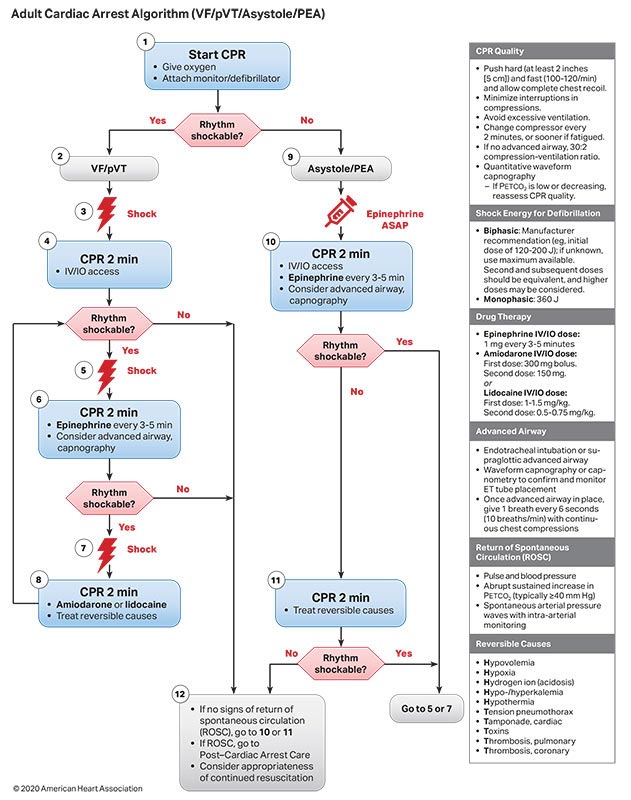
Your Answer: Carotid sinus and aortic arch
Explanation:Arterial baroreceptors are located in the carotid sinus and aortic arch, and detect the mean arterial pressure (MAP). A decrease in MAP (such as in postural hypotension, or haemorrhage) reduces arterial stretch and decreases baroreceptor activity, resulting in decreased firing in afferent nerves travelling via the glossopharyngeal nerve (carotid sinus) and vagus nerve (aortic arch) to the medulla where the activity of the autonomic nervous system is coordinated. Sympathetic nerve activity consequently increases, causing an increase in heart rate and cardiac contractility, peripheral vasoconstriction with an increase in TPR, and venoconstriction with an increase in CVP and thus an increase in cardiac output and blood pressure. Parasympathetic activity (vagal tone) decreases, contributing to the rise in heart rate.
-
This question is part of the following fields:
- Cardiovascular
- Physiology
-
-
Question 4
Incorrect
-
A patient who is taking ramipril for high blood pressure complains of a dry persistent cough. What is the mechanism of cough in ACE inhibitor therapy:
Your Answer: Increased histamine release
Correct Answer: Decreased bradykinin breakdown
Explanation:Blocking ACE also diminishes the breakdown of the potent vasodilator bradykinin which is the cause of the persistent dry cough. Angiotensin-II receptor blockers do not have this effect, therefore they are useful alternative for patients who have to discontinue an ACE inhibitor because of persistent cough.
-
This question is part of the following fields:
- Cardiovascular
- Pharmacology
-
-
Question 5
Incorrect
-
What is the mechanism of action of captopril:
Your Answer: Inhibition of the breakdown of angiotensin II
Correct Answer: Inhibition of the conversion of angiotensin I to angiotensin II
Explanation:Angiotensin-converting enzyme inhibitors (ACE inhibitors) e.g. captopril inhibit the conversion of angiotensin I to angiotensin II, and thus have a vasodilatory effect, lowering both arterial and venous resistance. The cardiac output increases and, because the renovascular resistance falls, there is an increase in renal blood flow. This latter effect, together with reduced aldosterone release, increases Na+ and H2O excretion, contracting the blood volume and reducing venous return to the heart.
-
This question is part of the following fields:
- Cardiovascular
- Pharmacology
-
-
Question 6
Incorrect
-
In the treatment of bradyarrhythmias with adverse characteristics or risk of asystole, what is the initial suggested dose of atropine?
Your Answer: 6 mg
Correct Answer: 500 micrograms
Explanation:Atropine 500 mcg IV bolus should be administered if there are any adverse features or risk of asystole. If the reaction is not adequate, repeat the steps every 3 to 5 minutes up to a maximum dose of 3 mg. In the case of acute myocardial ischemia or myocardial infarction, atropine should be taken with caution since the increased heart rate may aggravate the ischemia or increase the size of the infarct.
-
This question is part of the following fields:
- Cardiovascular
- Pharmacology
-
-
Question 7
Incorrect
-
Regarding ACE inhibitors, which of the following statements is CORRECT:
Your Answer: ACE inhibitors are used first line for hypertension in pregnancy.
Correct Answer: Angiotensin-II receptor blockers are a useful alternative in patients who cannot tolerate ACE-inhibitors due a persistent cough.
Explanation:ACE inhibitors should be used with caution in patients of Afro-Caribbean descent who may respond less well; calcium channel blockers are first line for hypertension in these patients. ACE inhibitors have a role in the management of diabetic nephropathy. ACE inhibitors are contraindicated in pregnant women. ACE inhibitors inhibit the breakdown of bradykinin; this is the cause of the persistent dry cough. Blocking ACE also diminishes the breakdown of the potent vasodilator bradykinin which is the cause of the persistent dry cough. Angiotensin-II receptor blockers do not have this effect, therefore they are useful alternative for patients who have to discontinue an ACE inhibitor because of persistent cough.
-
This question is part of the following fields:
- Cardiovascular
- Pharmacology
-
-
Question 8
Correct
-
An 82 year old man taking warfarin as a maintenance medication comes in to your clinic because of an infection. Which antibiotic is the safest choice for this patient?
Your Answer: Cefalexin
Explanation:Alterations in the international normalized ratio (INR) brought about by the concurrent use of antibiotics and warfarin may result in either excessive clotting or excessive bleeding if they are deemed to have a high risk for interaction. As such, there should be careful consideration of the class of antibiotic to be used.
Antibiotics from the following drug classes should generally be avoided as they have a high risk for interaction with warfarin, possible enhancing the anticoagulant effects of warfarin resulting in bleeding: Fluoroquinolones (e.g. ciprofloxacin, levofloxacin), Macrolides (e.g. clarithromycin, erythromycin, azithromycin), Nitroimidazoles (e.g. metronidazole), Sulphonamides (e.g. co-trimoxazole, a combination of trimethoprim and sulfamethoxazole), Trimethoprim, Tetracyclines (e.g. doxycycline).
Low risk antibiotics that have low risk for interaction with warfarin includes cephalexin, from the cephalosporin class, and clindamycin which is a lincomycin.
-
This question is part of the following fields:
- Cardiovascular
- Pharmacology
-
-
Question 9
Incorrect
-
Which of the following best describes digoxin:
Your Answer: A positive inotrope and positive chronotrope
Correct Answer: A positive inotrope and negative chronotrope
Explanation:Digoxin is a cardiac glycoside used in the treatment of atrial fibrillation and flutter, and congestive cardiac failure. It acts by inhibiting the membrane Na/K ATPase in cardiac myocytes. This raises intracellular sodium concentration and increases intracellular calcium availability indirectly via Na/Ca exchange. The increase in intracellular calcium levels causes an increases the force of myocardial contraction (positive inotrope), and slows the heart rate (negative chronotrope).
-
This question is part of the following fields:
- Cardiovascular
- Pharmacology
-
-
Question 10
Correct
-
Which of the following drug classes may cause bronchoconstriction:
Your Answer: Beta-blockers
Explanation:Beta-blockers, including those considered to be cardioselective, should usually be avoided in patients with a history of asthma, bronchospasm or a history of obstructive airways disease. However, when there is no alternative, a cardioselective beta-blocker can be given to these patients with caution and under specialist supervision. In such cases the risk of inducing bronchospasm should be appreciated and appropriate precautions taken.
-
This question is part of the following fields:
- Cardiovascular
- Pharmacology
-
-
Question 11
Incorrect
-
A 40-year-old man who has a history of asthma arrives at the emergency department complaining of palpitations that have been going on for 5 days. Which of the following beta-blockers is the safest for an asthmatic patient?
Your Answer: Carvedilol
Correct Answer: Atenolol
Explanation:Atenolol is a beta blocker, which is a type of medication that works by preventing certain natural substances in the body, such as epinephrine, from acting on the heart and blood vessels.
This effect reduces heart rate, blood pressure, and cardiac strain. Atenolol, bisoprolol fumarate, metoprolol tartrate, nebivolol, and (to a lesser extent) acebutolol have a lower action on beta2 (bronchial) receptors and are thus cardio selective but not cardiac specific.
They have a lower effect on airway resistance, although they are not without this adverse effect.
-
This question is part of the following fields:
- Cardiovascular
- Pharmacology
-
-
Question 12
Incorrect
-
Discontinuous capillaries are typically found where in the body:
Your Answer: Renal glomeruli
Correct Answer: Reticuloendothelial system
Explanation:Discontinuous capillaries, found in the reticuloendothelial system (bone marrow, liver and spleen), have large gaps between endothelial cells and are permeable to red blood cells.
-
This question is part of the following fields:
- Cardiovascular
- Physiology
-
-
Question 13
Incorrect
-
In the ventricular myocyte action potential, depolarisation occurs through the opening of:
Your Answer: Voltage-gated Ca 2+ channels
Correct Answer: Voltage-gated Na + channels
Explanation:An action potential (AP) is initiated when the myocyte is depolarised to a threshold potential of about -65 mV, as a result of transmission from an adjacent myocyte via gap junctions. Fast voltage-gated Na+channels are activated and a Na+influx depolarises the membrane rapidly to about +30 mV. This initial depolarisation is similar to that in nerve and skeletal muscle, and assists the transmission to the next myocyte.
-
This question is part of the following fields:
- Cardiovascular
- Physiology
-
-
Question 14
Incorrect
-
Bendoflumethiazide may cause all of the following electrolyte imbalances EXCEPT for:
Your Answer: Hypochloraemic alkalosis
Correct Answer: Hypocalcaemia
Explanation:Common side effects of thiazide diuretics include:
Excessive diuresis, postural hypotension, dehydration, renal impairment
Acid-base and electrolyte imbalance
Hypokalaemia, hyponatraemia, hypomagnesaemia, hypercalcaemia, hypochloraemic alkalosis
Metabolic imbalance
Hyperuricaemia and gout
Impaired glucose tolerance and hyperglycaemia
Altered plasma-lipid concentrations
Mild gastrointestinal disturbances -
This question is part of the following fields:
- Cardiovascular
- Pharmacology
-
-
Question 15
Incorrect
-
ACE inhibitors are indicated for all of the following EXCEPT for:
Your Answer: Heart failure
Correct Answer: Angina
Explanation:ACE inhibitors have many uses and are generally well tolerated. They are indicated for:
- Heart failure
- Hypertension
- Diabetic nephropathy
- Secondary prevention of cardiovascular events
-
This question is part of the following fields:
- Cardiovascular
- Pharmacology
-
-
Question 16
Incorrect
-
Which of the following is the primary indication for loop diuretics?
Your Answer: Ascites secondary to liver cirrhosis
Correct Answer: Acute pulmonary oedema
Explanation:Loop diuretics have long been the cornerstone of pulmonary oedema treatment, with furosemide being the most commonly used of these drugs. Premedication with drugs that decrease preload (e.g., nitro-glycerine [NTG]) and afterload (e.g., angiotensin-converting enzyme [ACE] inhibitors) before the administration of loop diuretics can prevent adverse hemodynamic changes.
-
This question is part of the following fields:
- Cardiovascular
- Pharmacology
-
-
Question 17
Incorrect
-
Regarding hypertensive crises, which of the following statements is CORRECT:
Your Answer: Blood pressure should always be reduced as quickly as possible.
Correct Answer: In a hypertensive emergency, blood pressure should be reduced by 20 - 25% within 2 hours.
Explanation:A hypertensive emergency is defined as severe hypertension (blood pressure ≥ 180/110 mmHg) with acute damage to the target organs. Prompt treatment with intravenous antihypertensive therapy is generally required; over the first few minutes or within 2 hours, blood pressure should be reduced by 20 – 25%. Severe hypertension without acute target organ damage is defined as hypertensive urgency.; blood pressure should be reduced gradually over 24 – 48 hours with oral antihypertensive therapy. If blood pressure is reduced too quickly in the management of hypertensive crises, there is a risk of reduced organ perfusion leading to cerebral infarction, blindness, deterioration in renal function, and myocardial ischaemia.
-
This question is part of the following fields:
- Cardiovascular
- Pharmacology
-
-
Question 18
Incorrect
-
Nitric oxide release from endothelium is stimulated by all of the following EXCEPT for:
Your Answer: Shear stress
Correct Answer: Noradrenaline
Explanation:Nitric oxide (NO) production by the endothelium is increased by factors that elevate intracellular Ca2+, including local mediators such as bradykinin, histamine and serotonin, and some neurotransmitters (e.g. substance P). Increased flow (shear stress) also stimulates NO production and additionally activates prostacyclin synthesis. The basal production of NO continuously modulates vascular resistance; increased production of nitric oxide acts to cause vasodilation. Nitric oxide also inhibits platelet activation and thrombosis.
-
This question is part of the following fields:
- Cardiovascular
- Physiology
-
-
Question 19
Incorrect
-
All of the following statement are correct regarding endothelium derived nitric oxide except:
Your Answer: Increased blood flow stimulates NO production.
Correct Answer: Nitric oxide production is inhibited by local mediators such as bradykinin, histamine and serotonin.
Explanation:Factors that elevate intracellular Ca2+ increase nitric oxide (NO) production by the endothelium included local mediators such as histamine and serotonin, bradykinin, and some neurotransmitters like substance P. NO production is also stimulated by increased flow (shear stress) and additionally activates prostacyclin synthesis. As a result of basal production of NO, there is continuous modulation of vascular resistance and as a result, there is increased production of nitric oxide acts which causes vasodilation. Platelet activation and thrombosis are inhibited by nitric oxide.
-
This question is part of the following fields:
- Cardiovascular
- Physiology
-
-
Question 20
Incorrect
-
Regarding the heart sounds in the cardiac cycle, which of the following statements is INCORRECT:
Your Answer: The second heart sound is caused by closure of the semilunar valves.
Correct Answer: The third heart sound is caused by filling of an abnormally stiff ventricle in atrial systole.
Explanation:Heart Sound – Phase of Cardiac Cycle – Mechanical Event:
First heart sound – Start of systole – Caused by closure of the atrioventricular (mitral & tricuspid) valves
Second heart sound – End of systole – Caused by closure of the semilunar (aortic and pulmonary) valves
Third heart sound – Early diastole – Caused by rapid flow of blood from the atria into the ventricles during the ventricular filling phase
Fourth heart sound – Late diastole – Caused by filling of an abnormally stiff ventricle in atrial systole -
This question is part of the following fields:
- Cardiovascular
- Physiology
-
-
Question 21
Incorrect
-
Regarding calcium channel blockers, which of the following statements is CORRECT:
Your Answer: Nifedipine is a useful antiarrhythmic calcium channel blocker.
Correct Answer: Calcium channel blockers inhibit L-type voltage-sensitive calcium channels in arterial smooth muscle causing vasodilation.
Explanation:Calcium channel blockers inhibit L-type voltage-sensitive calcium channels in arterial smooth muscle, causing relaxation and vasodilation (reduction in peripheral vascular resistance). They also block calcium channels within the myocardium and conducting tissues of the heart which produces a negative inotropic effect by reducing calcium influx during the plateau phase of the action potential.
They have a variety of uses, including:
Hypertension
Angina
Atrial fibrillation
Migraine
Calcium channel blockers have been found to be moderately useful in the prevention of migraines. The best evidence is for this is with verapamil. This may be due to the prevention of the arteriolar constriction that is associated with migraine. They are commonly used for this elsewhere in the world but are not currently licensed for this use in the UK.
The following are common side effects of all calcium-channel blockers:
Abdominal pain
Dizziness
Drowsiness
Flushing
Headache
Nausea and vomiting
Palpitations
Peripheral oedema
Skin reactions
Tachycardia
Verapamil is highly negatively inotropic and reduces cardiac output, slows the heart rate and may impair atrioventricular conduction. It may precipitate heart failure, exacerbate conduction disorders, and cause hypotension at high doses and should not be used with beta-blockers. Nifedipine has less myocardial effects than verapamil and has no antiarrhythmic properties but has more influence on the vessels. Nimodipine is used solely for the prevention and treatment of vascular spasm following aneurysmal subarachnoid haemorrhage. -
This question is part of the following fields:
- Cardiovascular
- Pharmacology
-
-
Question 22
Incorrect
-
Continuous capillaries are typically found where in the body:
Your Answer: Reticuloendothelial system
Correct Answer: Blood-brain barrier
Explanation:Continuous capillaries, found in the skin, lungs, muscles and CNS, are the most selective with low permeability, as junctions between the endothelial cells are very tight, restricting the flow of molecules with MW > 10,000.
-
This question is part of the following fields:
- Cardiovascular
- Physiology
-
-
Question 23
Incorrect
-
Which of the following is NOT an adverse effect associated with statin therapy:
Your Answer: Hepatotoxicity
Correct Answer: Aplastic anaemia
Explanation:Adverse effects of statins include:, Headache, Epistaxis, Gastrointestinal disorders (such as constipation, flatulence, dyspepsia, nausea, and diarrhoea), Musculoskeletal and connective tissue disorders (such as myalgia, arthralgia, pain in the extremity, muscle spasms, joint swelling, and back pain), Hyperglycaemia and diabetes, Myopathy and rhabdomyolysis, Interstitial lung disease and Hepatotoxicity
-
This question is part of the following fields:
- Cardiovascular
- Pharmacology
-
-
Question 24
Incorrect
-
What is the main mechanism of action of dobutamine as an inotropic sympathomimetic:
Your Answer: Alpha2-receptor agonist
Correct Answer: Beta1-receptor agonist
Explanation:Dobutamine directly stimulates the beta1-adrenergic receptors in the heart and increases contractility and cardiac output with little effect on the rate. In addition action on beta2-receptors causes vasodilation.
-
This question is part of the following fields:
- Cardiovascular
- Pharmacology
-
-
Question 25
Incorrect
-
Which of the following is NOT a typical side effect of digoxin:
Your Answer: Gynaecomastia
Correct Answer: Hypokalaemia
Explanation:Digoxin does not cause hypokalaemia, but hypokalaemia does potentiate digoxin toxicity. The adverse effects of digoxin are frequently due to its narrow therapeutic window and include:
Cardiac adverse effects – Sinoatrial and atrioventricular block, Premature ventricular contractions, PR prolongation and ST-segment depression
Nausea, vomiting and diarrhoea
Blurred or yellow vision
CNS effects – weakness, dizziness, confusion, apathy, malaise, headache, depression, psychosis
Thrombocytopenia and agranulocytosis (rare)
Gynaecomastia in men in prolonged administration -
This question is part of the following fields:
- Cardiovascular
- Pharmacology
-
-
Question 26
Incorrect
-
Which of the following does NOT predispose to digoxin toxicity in a patient taking digoxin:
Your Answer: Hypoxia
Correct Answer: Hyponatraemia
Explanation:Hypoxia, hypercalcaemia, hypokalaemia and hypomagnesaemia predispose to digoxin toxicity. Care should also be taken in the elderly who are particularly susceptible to digoxin toxicity. Hypokalaemia may be precipitated by use of diuretics. Although hyponatremia can result in the development of other pathological disturbances, it does not potentiate digoxin toxicity.
-
This question is part of the following fields:
- Cardiovascular
- Pharmacology
-
-
Question 27
Incorrect
-
Blood flows from the left atrium into the left ventricle via:
Your Answer: Annulus fibrosus
Correct Answer: The mitral valve
Explanation:Blood flows from the right atrium into the right ventricle via the tricuspid atrioventricular valve and from the left atrium into the left ventricle via the mitral atrioventricular valve. Blood is ejected from the right ventricle through the pulmonary semilunar valve into the pulmonary artery and from the left ventricle via the aortic semilunar valve into the aorta.
-
This question is part of the following fields:
- Cardiovascular
- Physiology
-
-
Question 28
Correct
-
Regarding cardiac excitation-contraction coupling, which of the following statements is CORRECT:
Your Answer: The Treppe effect refers to an increase in contractility secondary to an increase in heart rate.
Explanation:Although Ca2+entry during the action potential (AP) is essential for contraction, it only accounts for about 25% of the rise in intracellular Ca2+. The rest is released from Ca2+stores in the sarcoplasmic reticulum (SR). In relaxation, about 80% of Ca2+is rapidly pumped back into the SR (sequestered) by Ca2+ATPase pumps. The Ca2+that entered the cell during the AP is transported out of the cell primarily by the Na+/Ca2+exchanger in the membrane. When more action potentials occur per unit time, more Ca2+enters the cell during the AP plateau, more Ca2+is stored in the SR, more Ca2+is released from the SR and thus more Ca2+is left inside the cell and greater tension is produced during contraction. Increased heart rate increases the force of contraction in a stepwise fashion as intracellular [Ca2+] increases cumulatively over several beats; this is the Treppe effect. Cardiac glycosides such as digoxin have a positive inotropic effect.
-
This question is part of the following fields:
- Cardiovascular
- Physiology
-
-
Question 29
Incorrect
-
What is the direct mechanism of action of digoxin as a positive inotrope:
Your Answer: Stimulation of Na+/Ca2+ exchanger
Correct Answer: Inhibition of Na+/K+ ATPase pump
Explanation:Digoxin directly inhibits membrane Na+/K+ ATPase, which is responsible for Na+/K+ exchange across the myocyte cell membrane. This increases intracellular Na+ and produces a secondary increase in intracellular Ca2+ that increases the force of myocardial contraction. The increase in intracellular Ca2+ occurs because the decreased Na+ gradient across the membrane reduces the extrusion of Ca2+ by the Na+/Ca2+ exchanger that normally occurs during diastole. Digoxin and K+ ions compete for the receptor on the outside of the muscle cell membrane, and so the effects of digoxin may be dangerously increased in hypokalaemia.
-
This question is part of the following fields:
- Cardiovascular
- Pharmacology
-
-
Question 30
Incorrect
-
Which of the following best describes the correct administration of adrenaline for a shockable rhythm in adult advanced life support?
Your Answer: Give 1 mg of adrenaline as soon as intravenous access is achieved and every 3 - 5 minutes thereafter
Correct Answer: Give 1 mg of adrenaline after the second shock and every 3 - 5 minutes thereafter
Explanation:Give adrenaline 1 mg IV (IO) (10 mL of 1:10,000 solution) after the 2nd shock for adult patients in cardiac arrest with a shockable rhythm. Repeat adrenaline 1 mg IV (IO) every 3-5 minutes whilst ALS continues.
-
This question is part of the following fields:
- Cardiovascular
- Pharmacology
-
SESSION STATS - PERFORMANCE PER SPECIALTY
