-
Question 1
Incorrect
-
An HIV positive woman who is 18 weeks pregnant complains of frothy yellow vaginal discharge and vaginal soreness. A wet mount and microscopy confirms a Trichomonas vaginalis infection. Which of the following is the most appropriate treatment regime?
Your Answer: Metronidazole 2g orally single dose
Correct Answer: Metronidazole 500mg BD 7 days
Explanation:Trichomoniasis is considered a sexually transmitted infection found both in men and women caused by the flagellate protozoan Trichomonas vaginalis. The organism is mainly found in the vagina and the urethra. Though many infected women can be asymptomatic, they can also present with yellow frothy vaginal discharge, itching and vaginitis, dysuria or an offensive odour. For the diagnosis of t. vaginalis in women, a swab is taken from the posterior fornix during speculum examination and the flagellates are detected under light-field microscopy. The recommended treatment for t. vaginalis for a HIV positive woman who is pregnant is 500mg of metronidazole twice daily for 7 days. High dose metronidazole as a 2g single dose tablet is not advised during pregnancy. All sexual partners should also be treated, and screening for other STIs should be carried out.
-
This question is part of the following fields:
- Clinical Management
-
-
Question 2
Correct
-
Question 3
Correct
-
A patient asks you in clinic when she can start trying to conceive again. She has just completed chemotherapy for gestational trophoblastic disease (GTD)?
Your Answer: 1 year from completion of treatment
Explanation:According to the RCOG greentop guidelines, a women who have underdone chemotherapy for GTD are advised not to conceive for 1 years after completion of the chemotherapy.
-
This question is part of the following fields:
- Clinical Management
-
-
Question 4
Incorrect
-
A patient attends the maternity unit as her waters have broken but she hasn't had contractions. She is 39+6 weeks gestation. Speculum examination confirms prelabour rupture of membranes (PROM). According to NICE guidelines after what time period should induction be offered?
Your Answer: 48 hours
Correct Answer: 24 hours
Explanation:Induction of labour is appropriate approximately 24 hours after rupture of the membranes.
-
This question is part of the following fields:
- Clinical Management
-
-
Question 5
Correct
-
A patient is attending for medical abortion. She is 15 weeks gestation. She has no known drug allergies. Which of the following is the most appropriate regarding antibiotic prophylaxis?
Your Answer: Stat Azithromycin 1g and metronidazole 800 mg orally at time of abortion
Explanation:If the patient has a negative Chlamydia screen then a stat dose of metronidazole monotherapy is appropriate. You do not know this patients Chlamydia status and therefore dual therapy with metronidazole + doxycycline or azithromycin is appropriate.
-
This question is part of the following fields:
- Clinical Management
-
-
Question 6
Correct
-
A 70 year old patient is being reviewed in clinic for post menopausal bleeding. Examination reveals a lesion of the vaginal wall. Which is the most common type of primary vaginal cancer?
Your Answer: Squamous cell carcinoma
Explanation:The vaginal epithelium is made of squamous cells. Hence the most common carcinoma that occurs in the Vagina is squamous cell carcinoma. Diagnosis is made with vaginal biopsy. Usually the pain only presents if the disease extends beyond the vagina involving the perineal nerves.
-
This question is part of the following fields:
- Clinical Management
-
-
Question 7
Correct
-
A 26 year old patient with a past medical history of 2 terminations of pregnancies over the past 2 years, presents to the emergency centre complaining of severe abdominal pain and some vaginal bleeding. She has a regular 28 day cycle, and is on an oral contraceptive pill, but missed last month's period. Her last termination was over 6 months ago. She smokes almost a pack of cigarettes a day.
Which of the following is the most likely diagnosis?Your Answer: Ectopic pregnancy
Explanation:The clinical picture demonstrated is most likely that of a ruptured ectopic pregnancy. The period of amenorrhea may point to pregnancy, while the past medical history of 2 recent terminations of pregnancy may indicate a failure of her current contraceptive method. Smoking cigarettes have been shown to not only decrease the efficacy of OCPs, but also serve as a known risk factor for ectopic pregnancy. The lady is unlikely to have endometritis as her last termination was over 6 months ago. The lack of fever helps to make appendicitis, PID and pyelonephritis less likely, though they are still possible.
-
This question is part of the following fields:
- Clinical Management
-
-
Question 8
Incorrect
-
At what week in pregnancy is testing for gestational diabetes (GD) advised
Your Answer: 24-28 weeks of pregnancy if past history of GD
Correct Answer: As soon as possible after booking if past history of GD
Explanation:Gestational diabetes (GDM) occurs in 2–9 per cent of all pregnancies. Screening for diabetes in pregnancy can be justified to diagnose previously unrecognized cases of pre-existing diabetes and to identify a group of women who are at risk of developing NIDDM later in life. No single screening test has been shown to be perfect in terms of high sensitivity and specificity for gestational diabetes. Urinary glucose is unreliable, and most screening tests now rely on blood glucose estimation, with an oral glucose tolerance test commonly used. The aim of glucose control is to keep fasting levels between 3.5 and 5.5 mmol/L and postprandial levels 7.1 mmol/L, with insulin treatment usually indicated outside these ranges. The women should be tested as soon as possible after booking if there is a history of GD.
-
This question is part of the following fields:
- Clinical Management
-
-
Question 9
Correct
-
A 23 year old patient presents to the emergency department with sudden onset of severe lower abdominal and pelvic pain. History reveals she normally has regular 28 day cycles but she missed her last period. Past medical history reveals 2 termination of pregnancy procedures in the past 3 years. The most recent one 6 months ago. She smokes 5 cigarettes per day.
Your Answer: Ectopic pregnancy
Explanation:This patient is most likely to have a ruptured ectopic pregnancy. The history of multiple TOPs suggests her contraceptive methods are not reliable and her missed period is suggestive she may currently be pregnant. There is no temperature or vaginal discharge to suggest PID though this is of course possible as is appendicitis. The last termination was 6 months ago so endometritis is unlikely.
-
This question is part of the following fields:
- Clinical Management
-
-
Question 10
Incorrect
-
Which of the following tests for the detection of chlamydia is considered the gold standard?
Your Answer: Microscopy
Correct Answer: Nucleic Acid Amplification Test
Explanation:Chlamydia is one of the most prevalent STIs in the UK. Many infected individuals can be asymptomatic making it difficult to detect. The gold standard in the diagnosis of Chlamydia is the nucleic acid amplification test (NAAT). A sample is taken from a vulvovaginal self swab, or a cervical swab on speculum examination in women.
-
This question is part of the following fields:
- Clinical Management
-
-
Question 11
Incorrect
-
The amniotic fluid volume peaks at around 900ml. At what gestation does the amniotic fluid reach its maximum volume?
Your Answer: 38 weeks
Correct Answer: 35 weeks
Explanation:The amniotic fluid volume increases up to week 35 of gestation and then decreases from then to term.
-
This question is part of the following fields:
- Clinical Management
-
-
Question 12
Incorrect
-
Following parturition uterine contractions called Afterpains may typically continue for how long?
Your Answer: 7-14 days
Correct Answer: None of the above
Explanation:Afterpains may continue for 2-3 days (so none of the above). Breastfeeding may intensify pain due to stimulation of Oxytocin which causes uterine contractions
-
This question is part of the following fields:
- Clinical Management
-
-
Question 13
Correct
-
You are called to see a patient in A&E who attended due to finger splinter that has been removed. The HCA took some routine obs that show her blood pressure to be 162/110. She is 32 weeks pregnant. According to the NICE guidelines which of the following is appropriate?
Your Answer: Admit and start oral labetalol
Explanation:BP over 159/109 is classed as Severe. NICE guidance advises admission and treatment with oral Labetalol as 1st Line. Patient should have BP checked QDS and shouldn’t be discharged until BP is below 159/109
-
This question is part of the following fields:
- Clinical Management
-
-
Question 14
Correct
-
A patient admitted to the medical ward complains of a mild fever and vaginal discharge. Clue cells are seen on microscopy from a vaginal swab. Which of the following infections feature clue cells?
Your Answer: Bacterial Vaginosis
Explanation:Bacterial vaginosis (BV) is a common infection of the vagina caused by the overgrowth of atypical bacteria, most commonly Gardnerella vaginalis, a gram-negative rod. In diagnosing BV, a swab is taken for microscopy, often revealing clue cells. Clue cells are cells of the vaginal epithelium which are covered by adherent Gardnerella, giving them a distinctive look under the microscope. Though many are asymptomatic, some infected women complain of a greyish, foul-smelling vaginal discharge. Their vaginal fluid pH may also become more alkaline. BV does not however present with pyrexia, so the lady’s fever could be attributed to another cause as she is still a patient on the medical ward.
-
This question is part of the following fields:
- Clinical Management
-
-
Question 15
Correct
-
A 28 year old woman presents for a scan at 13 weeks. Though this is her second pregnancy, the first ended in a 1st trimester miscarriage. She has not reported any problems with the current pregnancy. The ultrasound scan showed a small gestational sac and no fetal cardiac activity.
Which of the following is the most likely diagnosis?Your Answer: Missed Miscarriage
Explanation:A miscarriage is defined as the spontaneous loss of a pregnancy before the age of viability at 24 weeks in the UK.
A missed miscarriage is described as a loss of pregnancy without vaginal bleeding, loss of tissue, cervical changes or abdominal pain. During a scan, a fetal heartbeat is not observed, and the gestational sac may be small.
A threatened miscarriage is when the cervix dilates and uterine bleeding is seen; the pregnancy could still be viable. A complete miscarriage occurs when all the products of conception are expelled from the uterus, bleeding has stopped, and the cervix has closed up after dilation.
An inevitable miscarriage occurs with the usual symptoms of a miscarriage and a dilated cervix, suggesting that the passage of the fetal tissue is inevitable.
Recurrent miscarriages are described as spontaneous pregnancy loss of more than 2 to 3 consecutive times.
-
This question is part of the following fields:
- Clinical Management
-
-
Question 16
Correct
-
The midwife asks for your advice about a 33 year old woman who she has just seen at her booking appointment. The patient had an uncomplicated pregnancy 10 years ago. This is her second pregnancy. There is no significant personal or family history. On examination the patients blood pressure is 120/75, BMI 32.5kg/m2. The midwife asks your advice on testing for gestational diabetes. What would you advise?
Your Answer: OGTT at 24-28 weeks
Explanation:Gestational diabetes (GDM) occurs in 2–9 per cent of all pregnancies. Screening for diabetes in pregnancy can be justify ed to diagnose previously unrecognized cases of pre-existing diabetes and to identify a group of women who are at risk of developing NIDDM later in life. No single screening test has been shown to be perfect in terms of high sensitivity and specific city for gestational diabetes. Urinary glucose is unreliable, and most screening tests now rely on blood glucose estimation, with an oral glucose tolerance test commonly used. The aim of glucose control is to keep fasting levels between 3.5 and 5.5 mmol/L and postprandial levels 7.1 mmol/L, with insulin treatment usually indicated outside these ranges.
-
This question is part of the following fields:
- Clinical Management
-
-
Question 17
Correct
-
A 28 year old primigravida carrying a twin pregnancy presents at 32 weeks gestation. She is lethargic, clinically jaundiced and complains of abdominal pain with frequent vomiting. A summary of her blood results are as follows: Elevated aspartate transaminase (AST) and alanine transaminase (ALT) levels · Decreased blood glucose levels · Elevated levels of blood ammonia. What is the likely diagnosis?
Your Answer: Acute fatty liver of pregnancy
Explanation:This patients bloods and symptoms suggest she has hepatic impairment. Acute fatty liver of pregnancy typically presents after the 30th week. The usual symptoms in the mother are non-specific including nausea, vomiting, anorexia (or lack of desire to eat) and abdominal pain; excessive thirst may be the earliest symptom without overlap with otherwise considered normal pregnancy symptoms; however, jaundice and fever may occur in as many as 70% of patients.
Many laboratory abnormalities are seen in acute fatty liver of pregnancy. Liver enzymes are elevated, with the AST and ALT enzymes ranging from minimal elevation to 1000 IU/L, but usually staying in the 300-500 range. Bilirubin is almost universally elevated. Alkaline phosphatase is often elevated in pregnancy due to production from the placenta, but may be additionally elevated. Other abnormalities may include an elevated white blood cell count, hypoglycemia, elevated coagulation parameters, including the international normalized ratio, and decreased fibrinogen. There may be increases of ammonia, uric acid aswell.
Recent studies have shown that being a primigravida, multiple pregnancies, carrying a male fetus, other liver diseases during pregnancy, previous history of AFLP, and pre-eclampsia are the potential risk factors for AFLP
-
This question is part of the following fields:
- Clinical Management
-
-
Question 18
Incorrect
-
Which of the following uterotonic drugs is most strongly associated with a transient pyrexia occurring within 45 minutes of administration?
Your Answer: Ergometrine
Correct Answer: Dinoprostone
Explanation:Dinoprostone is associated with a transient pyrexia. This typically normalises within 4 hours of stopping treatment
-
This question is part of the following fields:
- Clinical Management
-
-
Question 19
Correct
-
The amniotic fluid volume progressively increases during pregnancy. At which of the following gestational ages will amniotic fluid volume reach a maximum?
Your Answer: 35 weeks
Explanation:Amniotic fluid volume begins to increase rapidly in the second and third trimester as the fetal kidneys continue to develop. By 35 weeks gestation the amniotic fluid volume reaches a maximum average of about 800 ml after which it decreases slightly to term.
-
This question is part of the following fields:
- Clinical Management
-
-
Question 20
Incorrect
-
Which of the following has been shown to improve pruritus and liver function in patients with obstetric cholestasis?
Your Answer: Dexamethasone
Correct Answer: Ursodeoxycholic acid
Explanation:Intrahepatic cholestasis characterized by reversible cholestasis typically occurring in the second or third trimester of pregnancy, elevated serum aminotransferases and bile acid level and resolution of symptoms by 2 to 3 weeks after delivery. Ursodeoxycholic acid has shown to reduce the symptoms of this condition.
-
This question is part of the following fields:
- Clinical Management
-
-
Question 21
Correct
-
A 36 year old patient is seen in clinic for follow up of a vaginal biopsy which confirms cancer. What is the most common type?
Your Answer: Squamous cell carcinoma
Explanation:Squamous cell carcinoma is the most common type of vaginal cancer.
-
This question is part of the following fields:
- Clinical Management
-
-
Question 22
Correct
-
A 24 week pregnant patient complains of itching over the past 6 weeks particularly to the hands and feet which is worse at night. She has taken cetirizine but this hasn't settled her symptoms. Examination is unremarkable with no rash. What is the likely diagnosis?
Your Answer: Intrahepatic Cholestasis of Pregnancy
Explanation:The history is typical of Intrahepatic Cholestasis of Pregnancy, also known as obstetric cholestasis and prurigo gravidarum. It is characterised by itching without rash and abnormal LFTs beyond normal pregnancy ranges. Itching affects around 23% of pregnancies and can occur before biochemical changes.
-
This question is part of the following fields:
- Clinical Management
-
-
Question 23
Correct
-
Renal cell carcinoma is associated with which type of metastasis?
Your Answer: Haematogenous
Explanation:Most carcinomas spread primarily via lymphatic invasion. Renal cell is the exception spreading via the bloodstream.
-
This question is part of the following fields:
- Clinical Management
-
-
Question 24
Correct
-
Stages of labour
Your Answer: The third stage ends with the delivery of the placenta and membranes
Explanation:First stage: The latent phase is generally defined as beginning at the point at which the woman perceives regular uterine contractions. A definition of active labour in a British journal was having contractions more frequent than every 5 minutes, in addition to either a cervical dilation of 3 cm or more or a cervical effacement of 80% or more.
Second stage: fetal expulsion begins when the cervix is fully dilated, and ends when the baby is born.
Third stage: placenta delivery – The period from just after the foetus is expelled until just after the placenta is expelled is called the third stage of labour or the involution stage.
-
This question is part of the following fields:
- Clinical Management
-
-
Question 25
Correct
-
Question 26
Correct
-
A 26 year old primigravida woman attends A&E due to worsening vomiting. She is currently 10 weeks pregnant. For the past 4 weeks she has had morning sickness but for the last 4 days she has been unable to tolerate any oral fluids without vomiting and thinks she has lost weight. On questioning she has no significant past medical history prior to this pregnancy. She is currently taking the following medication:
Your Answer: Hyperemesis gravidarum
Explanation:This patient has severe nausea and vomiting with ketosis and evidence of dehydration (low BP and tachycardia) in the early part of pregnancy. There is no history of diabetes and the blood glucose doesn’t indicate hyperglycaemia. This is consistent with hyperemesis gravidarum (HG)
-
This question is part of the following fields:
- Clinical Management
-
-
Question 27
Correct
-
A 26 year old patient who is currently 24 weeks pregnant presents with vaginal discharge. Swabs show Chlamydia Trachomatis detected. Which of the following is the most appropriate treatment regime?
Your Answer: Erythromycin 500 mg twice a day for 14 days
Explanation:The following treatment regimes are recommended for the treatment of Chlamydia in Pregnancy: Erythromycin 500mg four times a day for 7 days or Erythromycin 500 mg twice a day for 14 days or Amoxicillin 500 mg three times a day for 7 days or Azithromycin 1 gm stat (only if no alternative, safety in pregnancy not fully assessed) The following treatment regimes are recommended for the treatment of Chlamydia in NON-PREGNANT patients: Doxycycline 100mg bd for 7 days OR Azithromycin 1gm orally in a single dose NOTE: Doxycycline and Ofloxacin are contraindicated in pregnancy
-
This question is part of the following fields:
- Clinical Management
-
-
Question 28
Correct
-
Looking at the picture below what is the diagnosis:
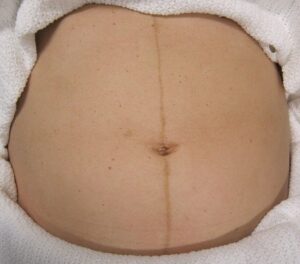
Your Answer: Linea Nigra
Explanation:This is Linea Nigra. It occurs in 3/4 of pregnancies and is due to increased melanocyte-stimulating hormone production by the placenta. This also causes melasma and darkening of the nipples.
-
This question is part of the following fields:
- Clinical Management
-
-
Question 29
Correct
-
Ulipristal is thought to prevent pregnancy by what primary mechanism?
Your Answer: Inhibition of ovulation
Explanation:Ulipristal is a progesterone receptor modulator that is used up to 120 hours following unprotected intercourse. It inhibits ovulation. The dose is 30 mg.
-
This question is part of the following fields:
- Clinical Management
-
-
Question 30
Correct
-
Which of the following dugs is a strong inducer of cytochrome P450?
Your Answer: Phenytoin
Explanation:It is important to be aware of which ant-epileptics induce cytochrome P450. Of the above Topiramate and Phenytoin are moderate and strong inducers respectively.
-
This question is part of the following fields:
- Clinical Management
-
-
Question 31
Correct
-
Which one of the following has the most significant effect on slowing drug metabolism in pregnancy?
Your Answer: Progesterone effect on gastric motility
Explanation:Progesterone down regulates gastric motility meaning drugs are absorbed and metabolised more slowly, thus drugs are absorbed, metabolised and cleared more slowly. Most of the drugs are transported after binding to the albumin.
Lower albumin levels mean a greater unbound drug fraction but as this may be thought to increase drug concentrations it actually leaves more available for hepatic clearance or renal excretion so overall drug concentrations are unchanged and metabolism increased.
Increase in hepatic flow will increase the metabolism of the drug as the drug will be transported faster.
Increased renal blood flow will result in the faster clearance of the drug from the body. -
This question is part of the following fields:
- Clinical Management
-
-
Question 32
Correct
-
Regarding Venous Thromboembolism (VTE) in pregnancy which of the following statements is TRUE?
Your Answer: Relative risk of VTE in pregnancy is 4 to 6 fold
Explanation:Venous thromboembolic disease (VTE) is the most common cause of direct maternal death in the UK. In the most recent triennium, there were 41 fatalities, giving a maternal mortality rate of 1.94 per 100 000 – more than twice that of the next most common cause, pre-eclampsia. As pregnancy is a hyper coagulable state. There are alterations in the fibrinolytics and thrombotic pathways. There is also an increased production of clotting factors during pregnancy.
-
This question is part of the following fields:
- Clinical Management
-
-
Question 33
Correct
-
A 75 year old woman has a lesion biopsied from the cervix that is histologically confirmed as endometrial carcinoma. Further staging investigations shows no spread to the serosa or adnexa, no spread to the para-aortic, pelvic or inguinal lymph nodes and no evidence of distant metastasis. What FIGO stage is this?
Your Answer: 2
Explanation:It is stage 2 of the disease.
Staging:
1 Confined to uterus
1A < 50% myometrial invasion
1B > 50% myometrial invasion
2 Cervical stromal invasion but not beyond uterus
3 Extension beyond the uterus
3A Tumour invades the serosa or adnexa
3B Vaginal and/or parametrial invasion
3C1 Pelvic nodal involvement
3C2 Para aortic nodal involvement
4 Distant Metastasis
4A Tumour invasion of the bladder and/or bowel mucosa
4B Distant metastases including abdominal metastases and/or inguinal lymph nodes -
This question is part of the following fields:
- Clinical Management
-
-
Question 34
Correct
-
A 21 year old patient presents to the clinic with a 48 hour history of unprotected sexual intercourse. She is not on any form of contraception. After discussion you prescribe a dose of Ulipristal 30 mg stat. Which of the following would be the appropriate advice regarding vomiting?
Your Answer: If vomiting occurs within 3 hours a repeat dose should be taken
Explanation:Ulipristal acetate is a selective progesterone receptor modulator which regulates the luteinizing hormone (LH) surge, preventing ovulation. This emergency contraceptive can be used up to five days after unprotected sexual intercourse and is given as a 30mg oral dose. If vomiting occurs within three hours, then a second tablet is needed to ensure its effects.
-
This question is part of the following fields:
- Clinical Management
-
-
Question 35
Correct
-
In a patient who undergoes a medical abortion at 10 weeks gestation, what advice would you give regarding Rhesus Anti-D Immunoglobulin?
Your Answer: All RhD-negative women who are not alloimmunized should receive Anti-D IgG
Explanation:The Rhesus status of a mother is important in pregnancy and abortion. The exposure of an Rh-negative mother to Rh antigens from a positive foetus, will influence the development of anti-Rh antibodies. This may cause problems in subsequent pregnancies leading to haemolysis in the newborn. Rh Anti RhD- globulin is therefore given to non-sensitised Rh-negative mothers to prevent the formation of anti-Rh antibodies within 72 hours following abortion. Anti RhD globulin is not useful for already sensitized, or RhD positive mothers.
-
This question is part of the following fields:
- Clinical Management
-
-
Question 36
Correct
-
You are reviewing a patient with a scan suggestive of partial molar pregnancy. What is the typical genotype of a partial molar pregnancy?
Your Answer: 69 XXY
Explanation:The partial mole is produced when an egg is fertilized by two sperm producing genotype 69 XXY (triploid). It can also occur when one sperm reduplicates itself yielding the genotypes 92 XXXY (tetraploid) though this is less common The genotype of a complete mole is typically 46 XX (diploid) but can also be 46 XY (diploid)
-
This question is part of the following fields:
- Clinical Management
-
-
Question 37
Correct
-
Question 38
Correct
-
Which hormone is responsible for contraction of myoepithelial cells in lactation?
Your Answer: Oxytocin
Explanation:Oxytocin is responsible for the let down mechanism that occurs during breast feeding in which the myothelial cells contract and push the milk into the ductules.
-
This question is part of the following fields:
- Clinical Management
-
-
Question 39
Correct
-
A 28 year old patient has a diagnosis of PCOS. She has been trying to conceive for 2 years. Her BMI is 26 kg/m2 and she is a non-smoker. She has been taking Clomiphene and metformin for the past 6 months. What is the next most appropriate treatment?
Your Answer: Gonadotrophins
Explanation:Management of PCOS includes OCP, cyclical oral progesterone, metformin, clomiphene (which is more effective in inducing ovulation than metformin) and life-style changes. In women who are tolerant to these therapies Gonadotrophins should be trialled. However lifestyle changes should be able to improve the condition significantly. Clomiphene shouldn’t be continued for more than 6 months.
-
This question is part of the following fields:
- Clinical Management
-
-
Question 40
Incorrect
-
What percentage of pregnant women have asymptomatic vaginal colonisation with candida?
Your Answer: 75%
Correct Answer: 40%
Explanation:Vulvovaginal candidiasis is the most common genital infections and it is caused by candida albicans in 80-92% of the cases. It colonise the vaginal flora in 20% of non pregnant and 40% pregnant women.
-
This question is part of the following fields:
- Clinical Management
-
-
Question 41
Incorrect
-
Which of the following is the most common cause of abnormal vaginal discharge in patients of childbearing age?
Your Answer: Chlamydia trachomatis
Correct Answer: Bacterial vaginosis
Explanation:Bacterial Vaginosis is a common condition which results in a foul smelling discharge from the vagina without any inflammation. It is the most common cause of abnormal PV discharge. Most of the women are asymptomatic carriers.
-
This question is part of the following fields:
- Clinical Management
-
-
Question 42
Correct
-
Which of the following statements regarding management of obstetric anal sphincter injuries (OASIS) is true?
Your Answer: Broad-spectrum antibiotics should be given routinely following OASIS
Explanation:After perineal repair, lactulose and a bulking agent should ideally be given for 5-10 days as well as broad spectrum antibiotics should be given that will cover all possible anaerobic bacteria. At 6-12 months a full evaluation should be done regarding the progress of healing. 60 to 80% of women are asymptomatic 12 months post delivery and external anal sphincter repair.
-
This question is part of the following fields:
- Clinical Management
-
-
Question 43
Correct
-
You are asked to review a patient. They have attended for a scan at 13 weeks following a positive pregnancy test. The patient has had 2 previous pregnancies for which she opted for termination on both occasions. The scan shows no identifiable fetal tissue or gestational sac and you note the radiologist has reported a 'bunch of grapes sign'. What is the likely diagnosis?
Your Answer: Complete molar pregnancy
Explanation:Gestational trophoblastic disorder is abnormal conception that is characterised by swollen and oedematous villi with proliferation of the trophoblasts. In a complete mole there is absence of fetal tissue, there is diffuse proliferation of trophoblastic tissue around hydropic villi and on USG it appears as a bunch of grapes or snow storm appearance.
-
This question is part of the following fields:
- Clinical Management
-
-
Question 44
Correct
-
A 24 year old lady is 9 weeks pregnant with her first child. She attends clinic complaining of severe vomiting and is unable to keep fluids down. The most likely diagnosis is hyperemesis gravidarum. Which of the following is the underlying cause?
Your Answer: Increased circulating HCG
Explanation:Hyperemesis gravidarum (HG) is a severe form of nausea and vomiting in pregnancy, associated with weight loss of more than 5% of pre-pregnancy weight, dehydration and electrolyte imbalance. HG is usually most severe during the first 12 weeks of pregnancy and is thought to be caused by high circulating levels of HCG.
There is not yet any evidence that pregnancy itself increases the sensitivity of the area postrema, or that the hormones, oestradiol, or progesterone increase vomiting. Generally, higher concentrations of dopamine stimulates receptors in the chemoreceptor trigger zone leading to nausea and vomiting. Although this has not been demonstrated as the cause of hyperemesis gravidarum.
-
This question is part of the following fields:
- Clinical Management
-
-
Question 45
Correct
-
You diagnose Erb-Duchenne palsy in a baby born with shoulder dystocia who suffered a brachial plexus injury. Which of the following nerve roots are likely to be affected?
Your Answer: C5 and C6
Explanation:Shoulder dystocia occurs when the fetal shoulder impacts on the maternal symphysis or sacrum during vaginal delivery. About 10% of babies with shoulder dystocia will suffer a brachial plexus injury, the most common one being Erb-Duchenne palsy. In Erb’s palsy, the upper nerve roots C5 and C6 are damaged due to excessive widening of the angle between the head and the shoulder. This causing temporary paralysis in the affected arm whereby the infant will present with its hand hanging limp by his side, internal rotation of the forearm, plus wrist and finger flexion. This sign is called the ‘waiter’s tip hand’. The palsy usually resolves spontaneously in a large proportion of cases.
-
This question is part of the following fields:
- Clinical Management
-
-
Question 46
Correct
-
What is the most common Type II congenital thrombophilia?
Your Answer: Factor V Leiden mutation
Explanation:Factor V Leiden is the most common congenital thrombophilia. Named after the Dutch city Leiden where it was first discovered. Protein C and S deficiencies are type 1 (Not type 2) thrombophilias Antiphospholipid syndrome is an acquired (NOT congenital) thrombophilia
-
This question is part of the following fields:
- Clinical Management
-
-
Question 47
Incorrect
-
A 16 year old girl has been referred as she has amenorrhoea. She reports never having periods. Her mother and 2 sisters menarche was at age 12. On examination you note the patient is 152cm tall and BMI 29.0 and secondary sexual characteristics are not developed. Her FSH is elevated. Prolactin is normal. What is the suspected diagnosis?
Your Answer: Hypogonadotropic Hypogonadism
Correct Answer: Turner Syndrome
Explanation:Turner syndrome is the most common chromosomal abnormality in females occurring in 1 in 2500 live births. It is characterised by short stature, webbed neck and wide carrying angle. It is also associated with renal, endocrine and CVS abnormalities. In this condition the ovaries do not completely develop and do not produce oestrogen or oocytes, thus no secondary sexual characteristic develop and neither does the girl starts menstruating.
-
This question is part of the following fields:
- Clinical Management
-
-
Question 48
Incorrect
-
You are attending the labour of a patient who has had a prolonged 1st stage of labour. You note the fetal head start to retract after being tightly applied to the vulva (turtle-neck sign). What is the next most appropriate management step?
Your Answer: All fours manoeuvre
Correct Answer: McRoberts' manoeuvre
Explanation:Signs of shoulder dystocia:
– Difficulty with delivery of the face and chin
– The head remaining tightly applied to the vulva or even retracting (turtle-neck sign)
– Failure of restitution of the fetal head
– Failure of the shoulders to descend
Upon identifying shoulder dystocia additional help should be called and McRoberts manoeuvre (flexion and abduction of the maternal hips, positioning the maternal thighs on her abdomen) should be performed first. Fundal pressure is associated with uterine rupture and should not be used. -
This question is part of the following fields:
- Clinical Management
-
-
Question 49
Incorrect
-
When consenting someone for laparoscopy you discuss the risk of vascular injury. The incidence of vascular injury during laparoscopy according to the BSGE guidelines is?
Your Answer: 2/1000
Correct Answer: 0.2/1000
Explanation:Major vessel injury is the most important potential complication when undertaking laparoscopy. It’s incidence is 0.2/1000. Bowel Injury is more common at 0.4/1000
-
This question is part of the following fields:
- Clinical Management
-
-
Question 50
Incorrect
-
Hyperemesis gravidarum occurs in what percentage of pregnancies?
Your Answer: 15%
Correct Answer: 1.50%
Explanation:Hyperemesis Gravidarum effects around 0.3-2% of Pregnancies. It causes imbalances of fluid and electrolytes, disturbs nutritional intake and metabolism, causes physical and psychological debilitation and is associated with adverse pregnancy outcome, including an increased risk of preterm birth
and low birthweight babies. The aetiology is unknown however various potential mechanisms have been proposed including an association with high levels of serum human chorionic gonadotrophin (hCG), oestrogen and thyroxine. -
This question is part of the following fields:
- Clinical Management
-
SESSION STATS - PERFORMANCE PER SPECIALTY
