-
Question 1
Correct
-
A 43-year-old woman, with a history of bilateral tubal ligation, presents with regular but excessively heavy periods. She has a history of multiple uterine leiomyoma and her uterus is the size of a 12-week pregnancy.
Pap smear is normal; haemoglobin level is 93 g/L. She underwent dilatation and curettage 8 months ago but it did not result in symptom improvement nor was it able to find the underlying cause of her symptoms.
Which is the best next step in her management?Your Answer: Total abdominal hysterectomy
Explanation:Oral progestogen therapy for 21 days (day 5-26) is considered effective but is only a short-term therapy for menorrhagia. Myomectomy should only be considered if the woman would like to conceive later on. Due to the recurrent nature of fibroids, it is likely that the woman would need more surgeries in the future, which is not ideal. Furthermore, if there is a large number of fibroids or the size of the fibroids are large, myomectomy would not be an option for reasons such as the feasibility. If myomectomy for multiple fibroids prove to be unsuccessful, the ultimate outcome would still have to be a hysterectomy.
In cases where there is significant enlargement of the uterus, endometrial ablation would be difficult and the long-term cure rate of symptoms would be considerably low. The best next step would be a total abdominal hysterectomy since it would solve her menorrhagia and within a few years’ time, she would be expected to attain menopause anyway. Ponstan or mefenamic acid has been found to be superior to tranexamic acid for menorrhagia. However, it can still prove to be ineffective in some cases and also not a long term solution.
-
This question is part of the following fields:
- Gynaecology
-
-
Question 2
Correct
-
A 27-year-old woman at her 37 weeks of gestation is diagnosed with primary genital herpetic lesions at multiple sites in the genital area.
What is the most appropriate management in this case?Your Answer: Prophylactic antiviral before 4 days before delivery
Explanation:This woman at her 37 weeks of gestation, has developed multiple herpetic lesions over her genitals. In every case were the mother develops herpes simplex infection after 28 weeks of pregnancy, chances for intrapartum and vertical transmission of the infection to the neonate is considered to be very high.
Risk factors of intrapartum herpes simplex infection of the child includes premature labour, premature rupture of membrane, primary herpes simplex infection and multiple lesion in the genital area.
The most appropriate methods for managing this case includes:
– checking for herpes simplex infection using PCR testing of a cervical swab.
– starting prophylactic antiviral therapy for the mother from 38 weeks of gestation until delivery.
– preferring a cesarean section delivery if there are active lesions present in the cervix and/or vulva.Cesarean delivery is advised in this case along with maternal antiviral therapy before delivery to minimise the risk of vertical transmission.
-
This question is part of the following fields:
- Obstetrics
-
-
Question 3
Correct
-
A 27-year-old primigravida female presents to the emergency department at full term.
6 hours ago, she spontaneously began labour. The membranes ruptured two hours ago and the liquor was stained with meconium.
On cardiotocography (CTG) was conducted and it showed some intermittent late decelerations, from 140 to 110 beats/min.
On vaginal examination, her cervix id 5 cm dilated. The foetus is in cephalic presentation, in the left occipitotransverse (LOT) position, with the bony head at the level of the ischial spines (IS).
Due to the deceleration pattern, a fetal scalp pH estimation was performed and the pH was measured at 7.32.
An hour later, the CTG showed the following pattern over a period of 30 minutes:
Baseline 140/min
Baseline variability 1/min
Accelerations None evident
Decelerations Two decelerations were evident, with the heart rate falling to 80/min, and with each lasting 4 minutes
Another vaginal examination is conducted and her cervix is now 8cm dilated, but otherwise unchanged from one hour previously.
What would be the next best line management?Your Answer: Immediate delivery by Caesarean section.
Explanation:The next best line of management is immediate delivery via Caesarean section ( C section).
This is because of the change in cardiotocography (CTG). The pattern became much more severe with a virtual lack of short-term variability and prolonged decelerations. These changes indicate the necessity for an immediate C section as the cervix is not fully dilated.
As immediate delivery is indicated, another pH assessment is unnecessary as it would delay delivery and increase the likelihood of fetal hypoxia.
Delivery by ventose, in a primigravida where the cervix is only 8cm dilated is not indicated as it would allow the labour to proceed or augmenting with Syntocinon.
-
This question is part of the following fields:
- Obstetrics
-
-
Question 4
Incorrect
-
A 22 year old woman had a C-section two hours ago. However, she has not urinated since then and claims she had no urinary complaints before the operation. Upon inspection she appears unwell and her abdomen is distended and tender suprapubically and in the left flank. Auscultation reveals no bowel sounds. Further examination reveals the following: Temp=37.5C, BP=94/73mmHg, Pulse=116bpm, Sat=97%. What's the most likely complication?
Your Answer:
Correct Answer: Urinary tract injury
Explanation:Urologic injury is the most common injury at the time of either obstetric or gynaecologic surgery, with the bladder being the most frequent organ damaged. Risk factors for bladder injury during caesarean section include previous caesarean delivery, adhesions, emergency caesarean delivery, and caesarean section performed during the second stage of labour.
-
This question is part of the following fields:
- Obstetrics
-
-
Question 5
Incorrect
-
The arcuate line forms part of the border of the pelvic brim. Where is it located?
Your Answer:
Correct Answer: Ilium
Explanation:Arcuate means ‘bow shaped’ and there are different arcuate lines in anatomical terms. Regarding the pelvic brim this is composed of the arcuate line of the ilium, pectineal line and prominences of sacrum and pubic symphysis (as demonstrated in the images below). As can be seen the arcuate line is a smooth rounded border on the internal surface of the ilium inferior to the iliac fossa and Iliacus. Image sourced from Wikipedia Note: The pelvic outlet is also called the inferior aperture. The pelvic brim is the superior aperture
-
This question is part of the following fields:
- Anatomy
-
-
Question 6
Incorrect
-
Endometrial tissue found within the myometrium is classed as
Your Answer:
Correct Answer: Adenomyosis
Explanation:Endometrial tissue found within the myometrium is Adenomyosis. If endometrial tissue is found at a distant site to the uterus it is termed endometriosis. Fibroids are smooth muscle tumours (Leiomyoma’s) sometimes called myoma’s.
-
This question is part of the following fields:
- Clinical Management
-
-
Question 7
Incorrect
-
A 35-year-old woman presented to the emergency department with complaints of abdominal pain and nausea. She noted that her symptoms began 2 days ago but has severely increased over the last 3 hours. It was also noted that the patient has passed several vaginal blood clots in the last hour.
Upon history taking, it was noted that she has a history of irregular menstrual cycles and is not sure of the date of her last period. Two years ago, she was diagnosed with a bicornuate uterus during an infertility evaluation. Aside from these, the patient has no other medical conditions and has no past surgeries.
Further examination was done and the following are her results:
BMI is 28 kg/m2
Blood pressure is 90/56mmHg
Pulse is 120/min
An abdominal examination was performed and revealed guarding with decreased bowel sounds. Speculum examination also revealed moderate bleeding with clots from the cervix. Her urine pregnancy test result turned out positive. A transvaginal ultrasound was performed and revealed a gestational sac at the upper left uterine cornu and free fluid in the posterior cul-de-sac of the pelvis.
Which of the following is considered the next step in best managing the patient's condition?Your Answer:
Correct Answer: Surgical exploration
Explanation:Ectopic pregnancy is a known complication of pregnancy that can carry a high rate of morbidity and mortality when not recognized and treated promptly. It is essential that providers maintain a high index of suspicion for an ectopic in their pregnant patients as they may present with pain, vaginal bleeding, or more vague complaints such as nausea and vomiting. Ectopic pregnancy, in essence, is the implantation of an embryo outside of the uterine cavity most commonly in the fallopian tube.
Providers should identify any known risk factors for ectopic pregnancy in their patient’s history, such as if a patient has had a prior confirmed ectopic pregnancy, known fallopian tube damage (history of pelvic inflammatory disease, tubal surgery, known obstruction), or achieved pregnancy through infertility treatment.
Performance of laparoscopic surgery is safe and effective treatment modalities in hemodynamically stable women with a non-ruptured ectopic pregnancy.
Patients with relatively low hCG levels would benefit from the single-dose methotrexate protocol. Patients with higher hCG levels may necessitate two-dose regimens. There is literature suggestive that methotrexate treatment does not have adverse effects on ovarian reserve or fertility. hCG levels should be trended until a non-pregnancy level exists post-methotrexate administration.
Surgical management is necessary when the patients demonstrate any of the following: an indication of intraperitoneal bleeding, symptoms suggestive of ongoing ruptured ectopic mass, or hemodynamically instability. Women who present early in pregnancy and have testing suggestive of an ectopic pregnancy would jeopardize the viability of an intrauterine pregnancy if given Methotrexate. The patient may have a cervical ectopic pregnancy and would thus run the risk of haemorrhage and potential hemodynamic instability if a dilation and curettage are performed.
-
This question is part of the following fields:
- Obstetrics
-
-
Question 8
Incorrect
-
A 33 year old lady presented with complaints of heavy menstrual bleeding. She is otherwise well and her US abdomen is normal. What is the best treatment option?
Your Answer:
Correct Answer: Mirena coil
Explanation:Mirena coil is used for contraception and for long term birth control. It causes stoppage of menstrual bleeding however, in a few cases there may be inter-menstrual spotting.
-
This question is part of the following fields:
- Gynaecology
-
-
Question 9
Incorrect
-
Regarding ovarian cancer, which factors are thought to lower the risk?
Your Answer:
Correct Answer: Taking statins
Explanation:Ovarian cancer is a gynaecological cancer that commonly affects women over 40 years. Risk factors for ovarian cancer include: infertility, a family history of ovarian, breast or colorectal cancer. There are some protective factors, which include: high parity and breastfeeding, early age at menarche and late age at menopause, and combined oral contraceptives, and statins.
-
This question is part of the following fields:
- Epidemiology
-
-
Question 10
Incorrect
-
A 42 year old woman in early pregnancy is rushed to the emergency department complaining of vaginal bleeding and abdominal pain. What percentage of women her age have miscarriages?
Your Answer:
Correct Answer: 50%
Explanation:With increasing maternal age, the risk of miscarriage increases. For women between the ages of 40-44, the miscarriage rates sit at about 50% and increases to over 75% for women 45 years and over. The miscarriage rate for women between the ages of 35-39 is 25%.
-
This question is part of the following fields:
- Epidemiology
-
-
Question 11
Incorrect
-
A 35 year old known hypertensive female patient comes with a complaint of irritability around her period. Her breasts are tender, swollen and painful around the time which also contributes to her irritability. She is not active sexually and doesn't plan on having any relationships in the future.
What is the next step in management?Your Answer:
Correct Answer: Primrose oil
Explanation:PMS is a condition, which is associated with somatic, emotional and behavioural symptoms during the women menstruation. Oenothera biennis with the common name of “evening primrose” is containing a valuable fixed oil with commercial name of EPO. Evening primrose oil has two types of omega-6-fatty acid including linoleic acid (60%–80%) and γ-linoleic acid (8%–14%). Essential fatty acids are considered as essential compounds for body health, especially among women. Evening primrose oil’s is effective in women health, but the immediate response should not be expected from it, therefore, it should be regularly used up to 4 or 6 months.
Oral contraceptive pills are only used when other treatments fail.
SSRI are only indicated in cases of persistent mood changes like depression.
Local anaesthetics have no role in the management of PMS. -
This question is part of the following fields:
- Gynaecology
-
-
Question 12
Incorrect
-
Regarding Venous Thromboembolism (VTE) in pregnancy which of the following statements is TRUE?
Your Answer:
Correct Answer: Relative risk of VTE in pregnancy is 4 to 6 fold
Explanation:Venous thromboembolic disease (VTE) is the most common cause of direct maternal death in the UK. In the most recent triennium, there were 41 fatalities, giving a maternal mortality rate of 1.94 per 100 000 – more than twice that of the next most common cause, pre-eclampsia. As pregnancy is a hyper coagulable state. There are alterations in the fibrinolytics and thrombotic pathways. There is also an increased production of clotting factors during pregnancy.
-
This question is part of the following fields:
- Clinical Management
-
-
Question 13
Incorrect
-
What is the typical weight of a non-pregnant premenopausal uterus?
Your Answer:
Correct Answer: 40g
Explanation:Uterine blood flow increases 40-fold to approximately 700 mL/min at term, with 80 per cent of the blood. The uterus is 50–60 g prior to pregnancy and 1000 g by term. The volume increases from 10 ml to 5000ml approx. It is around 40g at menopause.
-
This question is part of the following fields:
- Physiology
-
-
Question 14
Incorrect
-
Regarding the female breast how many lobes does the typical breast contain?
Your Answer:
Correct Answer: 15-20
Explanation:The basic components of the mammary gland are the alveoli. These are lined with milk-secreting cuboidal cells surrounded by myoepithelial cells. The alveoli join to form groups known as lobules. The lobules form lobes. Each lobe has a lactiferous duct that drains into openings in the nipple. Each breast typically contains 15-20 lobes.
-
This question is part of the following fields:
- Anatomy
-
-
Question 15
Incorrect
-
Regarding heart rate in pregnancy which of the following statements is true?
Your Answer:
Correct Answer: Heart rate increases by 15 beats per minute
Explanation:The following cardiovascular changes occur during pregnancy:
– Blood volume slowly increases by 40-50%
– Heart rate rises by 15 beats/min above baseline
– Stroke volume increases by 25-30%
– Cardiac output increases by approximately 30-50%
– Systemic vascular resistance (SVR) decreases by 20-30%
– Diastolic blood pressure consequently decreases between 12 and 26 weeks but increases again to pre-pregnancy levels by 36 weeks.
As most of the changes occur in the first 12 weeks of gestation cardiac problems are likely to present in early pregnancy -
This question is part of the following fields:
- Physiology
-
-
Question 16
Incorrect
-
The typical female breast contains how many lobes?
Your Answer:
Correct Answer: 15-20
Explanation:The female breast is made of about 15 to 20 individual lobes. The lobules each consists of alveoli which drain into a single lactiferous duct. The ductal system leads to lactiferous sinuses and collecting ducts which expel milk from openings in the nipple.
-
This question is part of the following fields:
- Anatomy
-
-
Question 17
Incorrect
-
A couple both in their late 20s come to you for a review as they have been trying to fall pregnant for the past 3 years.
She has a history of fallopian tube surgery following tubal obstruction which was diagnosed laparoscopically. During the surgery, there was evidence of mild endometriosis with uterosacral ligaments involvement. She has amenorrhea and galactorrhoea. On the other hand, his semen specimens have been persistently severely abnormal.
Which is the most appropriate management?Your Answer:
Correct Answer: They should use intracytoplasmic sperm injection (ICSI) in IVF,
Explanation:The most suitable treatment would be to use intracytoplasmic sperm injection (ICSI) in IVF. If hyperprolactinemia was the isolated underlying cause for the infertility, then treatment with a dopamine agonist would be suitable. However, since it is not the sole contributing factor, it is unlikely to be effective in this case. The same reasoning can be applied to the use of danazol to treat any remaining endometriosis.
Unfortunately, there is no treatment (including gonadotrophin injections) that would improve the severely abnormal semen specimen. The most appropriate option would be to use intracytoplasmic sperm injection (ICSI) with IVF. Through this method, any remaining tubal issues would be bypassed. Furthermore, it would be useful in mild endometriosis cases and would also treat the amenorrhea resulting from hyperprolactinemia. There is no justification to perform another laparoscopy to either check or treat endometriosis or any remaining tubal obstruction.
-
This question is part of the following fields:
- Gynaecology
-
-
Question 18
Incorrect
-
Regarding congenital CMV infection, what percentage of infants are symptomatic?
Your Answer:
Correct Answer: 10-15%
Explanation:Congenital cytomegalovirus infections are the most common cause of sensorineural hearing loss in babies. Cytomegalovirus infection during the perinatal period can be transferred to the foetus especially if the primary infection is during pregnancy. In babies born with congenital CMV about 10-15% are symptomatic, while 10-15% of those who are asymptomatic will develop symptoms in life. Some of the features of CMV infection include sensorineural hearing loss, visual impairment, cerebral palsy, microcephaly and seizures. Other causes of infective congenital sensorineural hearing loss include: Rubella, HIV, Herpes Simplex Virus, Measles, Varicella Zoster virus, Mumps and West Nile Virus.
-
This question is part of the following fields:
- Microbiology
-
-
Question 19
Incorrect
-
Polyhydramnios is associated with which one of the following conditions?
Your Answer:
Correct Answer: Tracheo-oesophageal fistula
Explanation:Oesophageal atresia/TE fistula may be suspected prenatally with ultrasound findings of polyhydramnios, absence of fluid in the stomach, small sized abdomen, or the presence of a dilated proximal oesophageal pouch. An underlying disease is only found in 17 % of cases in mild polyhydramnios. In contrast, an underlying disease is detected in 91 % of cases in moderate to severe polyhydramnios. The literature lists the following potential aetiologies: fetal malformations and genetic anomalies (8–45 %), maternal diabetes mellitus (5–26 %), multiple pregnancies (8–10 %), fetal anaemia (1–11 %), other causes, e.g. viral infections, Bartter syndrome, neuromuscular disorders, maternal hypercalcemia. Viral infections which can lead to polyhydramnios include parvovirus B19, rubella, and cytomegalovirus. Other infections, e.g. toxoplasmosis and syphilis, can also cause polyhydramnios.
-
This question is part of the following fields:
- Physiology
-
-
Question 20
Incorrect
-
Which of the following dugs is a strong inducer of cytochrome P450?
Your Answer:
Correct Answer: Phenytoin
Explanation:It is important to be aware of which ant-epileptics induce cytochrome P450. Of the above Topiramate and Phenytoin are moderate and strong inducers respectively.
-
This question is part of the following fields:
- Clinical Management
-
-
Question 21
Incorrect
-
An ultrasound in the 1st trimester of pregnancy is done for?
Your Answer:
Correct Answer: Dating of the pregnancy
Explanation:Early ultrasound improves the early detection of multiple pregnancies and improved gestational dating may result in fewer inductions for post maturity.
-
This question is part of the following fields:
- Obstetrics
-
-
Question 22
Incorrect
-
Looking at the picture below what is the diagnosis:
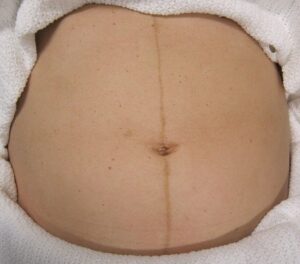
Your Answer:
Correct Answer: Linea Nigra
Explanation:This is Linea Nigra. It occurs in 3/4 of pregnancies and is due to increased melanocyte-stimulating hormone production by the placenta. This also causes melasma and darkening of the nipples.
-
This question is part of the following fields:
- Clinical Management
-
-
Question 23
Incorrect
-
A pregnant woman who is a heavy smoker, observed some thick white patches on the inside of her mouth. Her oral cavity appears inflamed on examination. Which diagnosis is most likely correct?
Your Answer:
Correct Answer: Candidiasis
Explanation:During pregnancy, the chances for a woman to develop oral candidiasis double. An aphthous ulcer has a yellowish floor which is surrounded by an erythematous halo while in lichen planus, the lesions do not have the appearance of a thick white mark but are more or less lace-like. The lesions in leucoplakia have raised edges and they appear as bright white patches which are sharply defined and cannot be rubbed out. Smoking may affect the tongue, producing tongue coating. In this case the tongue is just inflamed which is a sign of infection.
-
This question is part of the following fields:
- Obstetrics
-
-
Question 24
Incorrect
-
A 25 year old primigravida with a regular cycle had her last menstrual period on June 30th. Therefore the expected date of delivery (EDD) is approximately when the following year:
Your Answer:
Correct Answer: 7-Apr
Explanation:Expected date of delivery (EDD) is a calculated from the first day of the woman’s last menstrual period. If her periods are regular i.e., 28-day menstrual cycle, Naegele’s rule may be used. Naegele’s rule involves a simple calculation: add seven days to the first day of your LMP and then subtract three months. e.g. 30 June + 7 days = 7 July, minus 3 months = 7 April.
-
This question is part of the following fields:
- Physiology
-
-
Question 25
Incorrect
-
A 24 year old woman presents to the clinic with foul smelling vaginal discharge. Which facultative anaerobic bacteria is most likely to be the cause?
Your Answer:
Correct Answer: Gardnerella vaginalis
Explanation:Bacterial vaginosis is a common infection of the vagina caused by the overgrowth of atypical bacteria, most commonly Gardnerella vaginalis, a gram indeterminate bacteria, which is also a facultative anaerobe. Patients often complain of foul-smelling fishy discharge and dysuria. In diagnosing BV, a swab is taken for microscopy, often revealing clue cells. Of the other organisms listed in the options, Neisseria is an obligate anaerobe, while Chlamydia trachomatis is an obligate intracellular aerobe. Treponema Pallidum is an aerophilic bacteria and Mycoplasma hominis is a pleomorphic parasitic bacterium.
-
This question is part of the following fields:
- Microbiology
-
-
Question 26
Incorrect
-
a 24 year old female patient comes to your office with a chief complaint of painless vaginal bleeding of 1 week duration. She had 3 episodes of bleeding and is on contraceptive pills. Her Pap smear screening is up to date with normal findings.
Which is the cause for her bleeding?Your Answer:
Correct Answer: A cervical ectropion
Explanation:Cervical ectropion occurs when glandular cells develop on the outside of the cervix. Many individuals with cervical ectropion do not experience symptoms.
However, the primary symptom of cervical ectropion is a red, inflamed patch at the neck of the cervix.
The transformation zone appears this way because the glandular cells are delicate and irritate easily.
Other symptoms a woman may experience include:
pain and bleeding during or after sex
pain during or after cervical screening
light discharge of mucus
spotting between periods
Symptoms may range from mild to severe when they appear.This patient has normal pap smear and is unlikely to have cervical cancer. She has no fever and vaginal discharge which would be the presentation of Chlamydia infection.
Endometrial cancer affects mainly post menopausal women and presents with vaginal bleeding, weight loss, dysuria and dyspareunia.
-
This question is part of the following fields:
- Gynaecology
-
-
Question 27
Incorrect
-
Question 28
Incorrect
-
Which structure reinforces the inguinal canal anterolaterally?
Your Answer:
Correct Answer: Internal oblique
Explanation:The anatomy of the inguinal canal is of surgical importance. In the male, the inguinal canal carries the spermatic cord, ilioinguinal nerve and important blood vessels, while in females the inguinal canal holds the round ligament, ilioinguinal nerve and blood vessels. The floor of the inguinal canal is made of the inguinal ligament (a thickened portion of the inguinal ligament), while the posterior wall is made of the transversalis muscle. The anterior wall is made of the external oblique aponeurosis, and the roof is made up of fibres of the internal oblique, transversus abdominis and its aponeurosis, and the conjoint tendon. This means that the anterolateral support structure of the inguinal canal would be the fibres of the internal oblique.
-
This question is part of the following fields:
- Anatomy
-
-
Question 29
Incorrect
-
A patient who is 12 weeks pregnant is being seen in the antenatal clinic. Urinalysis shows protein ++. A 24 hour urine collection is organised. Greater than what level would indicate significant proteinuria?
Your Answer:
Correct Answer: 300 mg over 24 hours
Explanation:pre-eclampsia is defined as hypertension of at least 140/90 mmHg recorded on at least two separate occasions and at least 4 hours apart and in the presence of at least 300 mg protein in a 24 hour collection of urine, arising de novo after the 20th week of pregnancy in a previously normotensive woman and resolving completely by the sixth postpartum week.
-
This question is part of the following fields:
- Data Interpretation
-
-
Question 30
Incorrect
-
A 36-year-old woman presents to the gynaecology clinic with a complaint of headache, irritability, abdominal bloating, anxiety, and breast tenderness around 4 to 5 days before menstruation for the last 8 months. There's also a limitation on daily activities and she has to take a week off from work. The patient's symptoms are relieved completely with the onset of menstruation.
Which of the following suggests an appropriate diagnosis?Your Answer:
Correct Answer: Premenstrual syndrome
Explanation:This patient meets the diagnostic criteria for premenstrual syndrome.
Affective and somatic symptoms over the five days before menses in each of the three previous menstrual cycles are diagnostic criteria for premenstrual syndrome.
Affective symptoms include:
– Depression.
– Anger outbursts.
– Irritability.
– Anxiety.
– Confusion.
– social withdrawal.
Somatic symptoms include:
– breast tenderness
– abdominal bloating
– headache and swelling of extremities.
Symptoms normally disappear within four days of menstruation and are present even when no medical therapy, drugs, or alcohol are used.Premenstrual dysphoric disorder is a severe form of premenstrual syndrome marked by intense melancholy, emotional lability with frequent crying, loss of interest in daily activities, reduced focus, exhaustion, sleeplessness, and a sense of being overwhelmed or out of control.
Symptoms must have been present for the majority of the previous 12 months, interfering with daily activities.The diagnoses of generalised anxiety disorder and depression alone are doubtful.
-
This question is part of the following fields:
- Gynaecology
-
SESSION STATS - PERFORMANCE PER SPECIALTY
