-
Question 1
Correct
-
You see a 23 year old women in clinic complaining of vaginal discharge. The lab phone to tell you microscopy and staining shows a gram negative diplococcus. Which organism is most likely to be responsible?
Your Answer: Neisseria gonorrhoeae
Explanation:The most common gram negative diplococci include Neisseria, haemophilus and Moraxella.
-
This question is part of the following fields:
- Microbiology
-
-
Question 2
Correct
-
A 26-year-old woman developed nausea and vomiting since 5th week of gestation, her symptoms started getting worsening over the last two weeks.
On examination, she presents with signs of moderate degree of dehydration, along with a weight loss of approximately 10%.
Urine dipstick examination is negative for both leukocytes and nitrites but is positive for ketones. Serum ketone level is elevated and other electrolytes including blood glucose levels are within normal range.
Which of the below mentioned treatment options is not appropriate in this situation?Your Answer: Encourage oral intake and discharge home
Explanation:Patient mentioned in the case has developed severe nausea and vomiting at the initial weeks of pregnancy. If the following clinical features are present, it confirms the diagnosis of hyperemesis gravidarum:
– Weight loss of more than 5% of pre-pregnancy weight
– Moderate to severe dehydration.
– Ketosis
– Electrolyte abnormalities.Management of hyperemesis gravidarum include:
– Temporary suspension of oral intake, followed by gradual resumption.
– Intravenous fluid resuscitation, beginning with 2 L of Ringer’s lactate infused over 3 hours to maintain a urine output of more than 100 mL/h.
– Use of Antiemetics like metoclopramide, if needed.
– Oral administration of Vitamin B6.
– Replacement of electrolytes if required in the case.Encouraging oral intake and sending this patient home without any intravenous hydration, is not considered the correct treatment option in this case.
-
This question is part of the following fields:
- Obstetrics
-
-
Question 3
Incorrect
-
Bladder contraction during voiding (micturating) is mediated via innervation of which of the following pathways?
Your Answer: Parasympathetic fibres from T11,L1,L2 nerve roots
Correct Answer: Parasympathetic fibres from S2,S3,S4 nerve roots
Explanation:Detrusor contraction is via Parasympathetic innervation of pelvic splanchnic nerves (S2-4). This also causes relaxation of the internal urethral sphincter Note contraction and relaxation of the external urethral sphincter is under somatic control.
-
This question is part of the following fields:
- Anatomy
-
-
Question 4
Correct
-
A 26-year-old pregnant female in her first trimester was brought to the labour room with complaints of painless vaginal bleeding. On examination, her abdomen was non-tender and os was closed. Which of the following is the most likely diagnosis?
Your Answer: Threatened miscarriage
Explanation:Threatened miscarriage is a term used to describe any abnormal vaginal bleeding that occurs in first trimester, sometime associated with abdominal cramps. The cervix remains closed and the pregnancy may continue as normal.
-
This question is part of the following fields:
- Obstetrics
-
-
Question 5
Incorrect
-
The posterior scrotal artery is a branch of which artery?
Your Answer: Inferior Rectal
Correct Answer: Internal Pudendal
Explanation:The posterior scrotal artery is a terminal branch of the perineal artery which is a branch of the internal pudendal artery.
-
This question is part of the following fields:
- Anatomy
-
-
Question 6
Incorrect
-
A 32 year old lady with known stage III cervical cancer presents to A&E with lower abdominal and unilateral flank pain. From the following list what is the likely diagnosis?
Your Answer: Ischaemia secondary to Uterine artery obstruction
Correct Answer: Ureteric Obstruction
Explanation:In stage III cervical cancer there is involvement of the pelvic wall and ureter which may result in abdominal pain and hydronephrosis.
2010 FIGO classification of cervical carcinoma
Stage
0 – Carcinoma in situ
1 – Confined to the cervix (diagnosed microscopy)
1A1 – Less than 3mm depth & 7mm lateral spread
1A2 – 3mm to 5mm depth & less than 7mm lateral spread
1B1 – Clinically visible lesion or greater than A2 & less than 4 cm in greatest dimension
1B2 – Clinically visible lesion, Greater than 4 cm in greatest dimension
2 – Invades beyond uterus but not to pelvic wall or lower 1/3 vagina
2A1 – Involvement of the upper two-thirds of the vagina, without parametrical invasion & Less than 4cm
2A2 – Greater than 4 cm in greatest dimension
2B – Parametrial involvement
3 – Extends to Pelvic side wall or lower 1/3 vagina or hydronephrosis
3A – No pelvic side wall involvement
3B – Pelvic side wall involved or hydronephrosis
4 – Extends beyond true pelvis
4A – Invades mucosa bladder and rectum
4B – Distant Metastasis -
This question is part of the following fields:
- Clinical Management
-
-
Question 7
Correct
-
Regarding lymph drainage of the lower vagina where does the majority of lymph drain to?
Your Answer: Inguinal nodes
Explanation:The lower vagina drains to the inguinal nodes where as the upper vagina drains to the internal and external iliacs
-
This question is part of the following fields:
- Anatomy
-
-
Question 8
Incorrect
-
Regarding pelvic inflammatory disease, which of the following is the tubal factor infertility rate?
Your Answer: 50%
Correct Answer: 12.50%
Explanation:Pelvic inflammatory disease (PID) is a known risk factor in causing tubal infertility due to its role in tubal damage. The tubal infertility rate after one episode of PID is thought to be about 12.5%. After two episodes the risk increases to 25%, and 50% after three episodes. The usual causative agents are chlamydia and gonorrhoea.
-
This question is part of the following fields:
- Clinical Management
-
-
Question 9
Incorrect
-
During the filling phase of micturition. At what bladder volume is the first urge to void felt?
Your Answer: 300ml
Correct Answer: 150ml
Explanation:Micturition is defined as a process of expelling urine from the body. It is caused by the reflex contraction of detrusor muscle. Urinary bladder is a hollow muscular organ which can store 400-600ml of urine until it is expelled from the body. The first urge to urinate is felt when the bladder is filled with around 150ml of urine. The reflex action is initiated when the stretch receptors located in the bladder wall are stimulated. The afferent fibres pass to the pelvic splanchnic nerves to the 2nd, 3rd, and 4th sacral segments and some pass through the hypogastric plexus to the first and second lumbar segments of the spinal cord. Efferent pathways from the 2nd, 3rd, and 4th sacral segments leave the cords and through the splanchnic nerves and inferior hypogastric plexus supplies the smooth muscle of the bladder i.e. detrusor muscle. Detrusor muscle contracts and the sphincters are relaxed.
-
This question is part of the following fields:
- Anatomy
-
-
Question 10
Correct
-
Regarding blood volume in pregnancy which of the following statements is TRUE?
Your Answer: Blood volume slowly increases by 40-50%
Explanation:Maternal blood volume expands during pregnancy to allow adequate perfusion of vital organs, including the placenta and foetus, and to anticipate blood loss associated with delivery. The rapid expansion of blood volume begins at 6–8 weeks gestation and plateaus at 32–34 weeks gestation. While there is some increase in intracellular water, the most marked expansion occurs in extracellular fluid volume, especially circulating plasma volume. This expanded extracellular fluid volume accounts for between 8 and 10 kg of the average maternal weight gain during pregnancy. Overall, total body water increases from 6.5 to 8.5 L by the end of pregnancy.
-
This question is part of the following fields:
- Physiology
-
-
Question 11
Correct
-
What is the male infertility rate in CF patients?
Your Answer: 98%
Explanation:Cystic fibrosis is the most common fetal genetic disease in Caucasians and has an autosomal recessive inheritance. It is caused by an abnormal chloride channel due to a defect in the CFTR gene. Complications range from haemoptysis, respiratory failure, biliary cirrhosis, diabetes and male infertility. Men with CF are infertile in 98% of the cases due to failure of development of the vas deference.
-
This question is part of the following fields:
- Clinical Management
-
-
Question 12
Correct
-
Human papilloma virus (HPV) infection is associated with which of the following onco-proteins?
Your Answer: E6 and E7
Explanation:There are over 100 genotypes of HPV including several other high risk HPV types. HPV 16 and 18 are responsible for 70% of cases of HPV related cancers. HPV is thought to induce cancer via onco-proteins. The primary onco-proteins are E6 and E7 which inactivate two tumour suppressor proteins, p53 (inactivated by E6) and pRb (inactivated by E7)
-
This question is part of the following fields:
- Microbiology
-
-
Question 13
Correct
-
Which Immunoglobulin (or antibody) is secreted in large amounts in breast milk?
Your Answer: IgA
Explanation:The major constituents of breast milk are lactose, protein, fat and water. However, the composition of breast milk is not constant; early lactation differs from late lactation, one feed differs from the next, and the composition can even change
during a feed. Artificial infant formulas cannot therefore be identical to breast milk. In addition to IgA, breast milk contains small amounts of IgM and IgG and other factors such as lactoferrin, macrophages, complement and lysozymes -
This question is part of the following fields:
- Immunology
-
-
Question 14
Incorrect
-
A 29-year-old G1P0 presents to your office at her 18 weeks gestational age for an unscheduled visit due to right-sided groin pain. She describes the pain as sharp in nature, which is occurring with movement and exercise and that the pain will be alleviated with application of a heating pad. She denies any change in urinary or bowel habits and there is no fever or chills.
What would be the most likely etiology of pain in this patient?Your Answer: Appendicitis
Correct Answer: Round ligament pain
Explanation:The patient is presenting with classic symptoms of round ligament pain.
Round ligaments are structures which extends from the lateral portion of the uterus below to the oviduct and will travel downward in a fold of peritoneum to the inguinal canal to get inserted in the upper portion of the labium majus. As the gravid uterus grows out of pelvis during pregnancy, these ligaments will stretch, mostly during sudden movements, resulting in a sharp pain. Due to dextrorotation of uterus, which occurs commonly in pregnancy, the round ligament pain is experienced more frequently over the right side. Usually this pain improves by avoiding sudden movements, by rising and sitting down gradually, by the application of local heat and by using analgesics.As the patient is not experiencing any symptoms like fever or anorexia a diagnosis of appendicitis is not likely. Also in pregnant women appendicitis often presents as pain located much higher than the groin area as the growing gravid uterus pushes the appendix out of pelvis.
As the pain is localized to only one side of groin and is alleviated with a heating pad the diagnosis of preterm labor is unlikely. In addition, the pain would persist even at rest and not with just movement in case of labor.
As the patient has not reported of any urinary symptoms diagnosis of urinary tract infection is unlikely.
Kidney stones usually presents with pain in the back and not lower in the groin. In addition, with a kidney stone the pain would occur not only with movement, but would persist at rest as well. So a diagnosis of kidney stone is unlikely in this case.
-
This question is part of the following fields:
- Obstetrics
-
-
Question 15
Correct
-
Menstrual irregularities and hirsutism affect a 15-year-old girl. All of the syndromes listed below have been linked to obesity in children.
Select the syndrome with which the other clinical symptoms in this patient are most likely to be linked.Your Answer: Polycystic ovary syndrome
Explanation:Polycystic ovary syndrome (PCOS) is a condition in which the ovaries produce an abnormal amount of androgens, male sex hormones that are usually present in women in small amounts. The name polycystic ovary syndrome describes the numerous small cysts (fluid-filled sacs) that form in the ovaries. However, some women with this disorder do not have cysts, while some women without the disorder do develop cysts.
The symptoms of PCOS may include:
– Missed periods, irregular periods, or very light periods
– Ovaries that are large or have many cysts
– Excess body hair, including the chest, stomach, and back (hirsutism)
– Weight gain, especially around the belly (abdomen)
– Acne or oily skin
– Male-pattern baldness or thinning hair
– Infertility
– Small pieces of excess skin on the neck or armpits (skin tags)
– Dark or thick skin patches on the back of the neck, in the armpits, and under the breastsThe so-called Laurence-Moon-Biedl syndrome is a fairly rare condition characterized by six cardinal signs, namely obesity, atypical retinitis pigmentosa, mental deficiency, genital dystrophy, polydactylism and familial occurrence.
Froehlich syndrome is characterized by increased or excessive eating that leads to obesity, small testes, and a delay in the onset of puberty. It is also common for children with Froehlich syndrome to experience the delay in physical growth and the development of secondary sexual characteristics.
Cushing’s syndrome is a disorder that occurs when your body makes too much of the hormone cortisol over a long period of time. Cortisol is sometimes called the “stress hormone” because it helps your body respond to stress. Cortisol also helps. maintain blood pressure. regulate blood glucose, also called blood sugar.
Pseudohypoparathyroidism is characterized by short stature, a round face, short neck, and shortened bones in the hands and feet. Intelligence usually ranges from low normal to mentally retarded. Headaches, weakness, tiring easily, lethargy, cataracts and blurred vision or hypersensitivity to light may also be present.
This patient’s condition can only be explained by PCOS. -
This question is part of the following fields:
- Gynaecology
-
-
Question 16
Correct
-
A 26-year-old G2P0+1 comes to the emergency department with vaginal spotting. She experienced periodic stomach pain related with the bleeding, but no fetal product passing, about 6 hours before presentation. She is now in the first trimester of her pregnancy and claims that her previous pregnancy was uneventful. She takes her prenatal vitamins regularly and does not use any other prescriptions or drugs.
Her vital signs are normal, and her physical examination reveals that she has a closed cervical os. Which of the following diagnoses is the most likely?Your Answer: Threatened abortion
Explanation:Threatened abortion consists of any vaginal bleeding during early pregnancy without cervical dilatation or change in cervical consistency. Usually, no significant pain exists, although mild cramps may occur. More severe cramps may lead to an inevitable abortion.
Threatened abortion is very common in the first trimester; about 25-30% of all pregnancies have some bleeding during the pregnancy. Less than one half proceed to a complete abortion. On examination, blood or brownish discharge may be present in the vagina. The cervix is not tender, and the cervical os is closed. No fetal tissue or membranes have passed. The ultrasound shows a continuing intrauterine pregnancy. If an ultrasound was not performed previously, it is required at this time to rule out an ectopic pregnancy, which could present similarly. If the uterine cavity is empty on ultrasound, obtaining a human chorionic gonadotropin (hCG) level is necessary to determine if the discriminatory zone has been passed.
Placenta previa is an antenatal complication occurring around the third trimester of pregnancy. The cervix is closed in this condition which rules out inevitable abortion and the patient has no history of passage of tissue, this rules out complete abortion. The patient has no history of fever or offensive vaginal discharge which makes septic abortion unlikely.
-
This question is part of the following fields:
- Gynaecology
-
-
Question 17
Correct
-
A 45 year old women has a transvaginal ultrasound that is reported as showing a partially echogenic mass with posterior sound attenuation owing to sebaceous material and hair within the cyst cavity. What is the likely diagnosis?
Your Answer: Mature teratoma
Explanation:Dermoid cysts and teratomas contain elements from multiple germ cell layers. They are often considered the same entity (even in medical texts) however a dermoid is composed only of dermal and epidermal elements. A teratoma has mesodermal and endodermal elements Mature teratomas are composed of well-differentiated derivations from at least 2/3 germ cell layers (i.e. ectoderm, mesoderm, and endoderm). They contain developmentally mature skin complete with hair follicles, sweat glands, sometimes hair, and sometimes sebum, blood, fat, bone, nails, teeth, eyes, cartilage, and thyroid tissue.
-
This question is part of the following fields:
- Data Interpretation
-
-
Question 18
Correct
-
A 33 year old lady presented with complaints of heavy menstrual bleeding. She is otherwise well and her US abdomen is normal. What is the best treatment option?
Your Answer: Mirena coil
Explanation:Mirena coil is used for contraception and for long term birth control. It causes stoppage of menstrual bleeding however, in a few cases there may be inter-menstrual spotting.
-
This question is part of the following fields:
- Gynaecology
-
-
Question 19
Incorrect
-
Question 20
Correct
-
In which situation would you prescribe COCs?
Your Answer: A 20 year old woman with blood pressure 135/80mmHg
Explanation:Absolute contraindications to OCs include breast cancer, history of deep venous thrombosis or pulmonary embolism, active liver disease, use of rifampicin, familial hyperlipidaemia, previous arterial thrombosis, and pregnancy, while relative contraindications include smoking, age over 35, hypertension, breastfeeding, and irregular spontaneous menstruation.
-
This question is part of the following fields:
- Gynaecology
-
-
Question 21
Correct
-
What is the typical weight of a term uterus?
Your Answer: 1200g
Explanation:Uterine blood flow increases 40-fold to approximately 700 mL/min at term, with 80 per cent of the blood distributed to the intervillous spaces of the placentae, and 20 per cent to the uterine myometrium. Weight of the uterus increases from 50–60 g prior to pregnancy to 1000 g by term.
-
This question is part of the following fields:
- Physiology
-
-
Question 22
Incorrect
-
Which of the following would normally be expected to increase during pregnancy:
Your Answer: Core temperature
Correct Answer: Thyroxin-binding globulin
Explanation:Thyroid function in pregnancy is altered in two ways; the circulating levels of the thyroid binding proteins are increased, resulting in an increase in the total circulating levels of thyroid hormones (but a slight fall in the free component).
-
This question is part of the following fields:
- Physiology
-
-
Question 23
Incorrect
-
Haemolytic Disease of the New-born falls into what type of hypersensitivity reaction?
Your Answer: Type IV
Correct Answer: Type II
Explanation:It is classified under type II hypersensitivity reaction. Antibodies are formed against the rhesus antigen i.e. D antigen. Hence when the Antibody reacts with the antigen on the RBC it results in activation of the complement cascade leading to lysis.
-
This question is part of the following fields:
- Immunology
-
-
Question 24
Incorrect
-
Which stage of the menstrual cycle in best suited for the insertion of IUD?
Your Answer: Any time during menstrual period
Correct Answer: During the first 7 days of your menstrual cycle, which starts with the first day of bleeding
Explanation:it is imperative to elucidate the patient’s risk for current pregnancy and time within her current menstrual cycle prior to IUD insertion. A negative urine pregnancy test is a prerequisite to placement of an IUD. Pregnancies occurring with IUDs in place have an increased incidence of complications, including spontaneous abortion and septic abortion.
For this reason, many providers prefer to time IUD insertion within the first 5-7 days of the menstrual cycle, further assuring that the patient is not newly pregnant.
All other options take risk of the patient being pregnant.
-
This question is part of the following fields:
- Gynaecology
-
-
Question 25
Incorrect
-
A baby with shoulder dystocia suffers a brachial plexus injury. The mother asks you if this will be permanent. What percentage of babies will have permanent neurological dysfunction as a result of brachial plexus injury secondary to shoulder dystocia?
Your Answer: 15%
Correct Answer:
Explanation:of cases there is no permanent neurological disability. Shoulder dystocia is the most common cause of Erb’s palsy (Erb-Duchenne palsy) where there is injury to C5 and C6 of the brachial plexus (C5 to T1)
-
This question is part of the following fields:
- Clinical Management
-
-
Question 26
Correct
-
WHO defines the perinatal mortality rate as
Your Answer: The number of stillbirths and deaths in the first week of life per 1000 births
Explanation:The number of stillbirths and deaths in the first week of life per 1000 births.
According to WHO the perinatal period commences at 22 completed weeks (154 days) of gestation and ends seven completed days after birth. -
This question is part of the following fields:
- Epidemiology
-
-
Question 27
Incorrect
-
The lower part of the rectum is supplied by the middle rectal artery. What is the middle rectal artery a branch of?
Your Answer: Superior mesenteric artery
Correct Answer: Internal iliac artery
Explanation:The middle rectal artery arises from the anterior division of the internal iliac artery.
-
This question is part of the following fields:
- Anatomy
-
-
Question 28
Correct
-
The UK childhood vaccination schedule includes vaccination against HPV for girls aged 12 to 13. What HPV subtypes are vaccinated against with the vaccine Gardasil®?
Your Answer: 6, 11, 16, and 18
Explanation:HPV Gardasil® is a quadrivalent vaccine against HPV Types 6, 11, 16, and 18. HPV types16 and 18 are responsible for 70% of cases of HPV related cancers. They are considered the most important high risk genotypes of HPV.
-
This question is part of the following fields:
- Microbiology
-
-
Question 29
Correct
-
Which of the following is regarded as the current Gold standard in the diagnosis of Polycystic Ovary Syndrome?
Your Answer: Rotterdam
Explanation:The Rotterdam criteria was developed and expanded by the European Society of Human Reproduction and Embryology/American Society for Reproductive Medicine Rotterdam consensus (ESHRE/ASRM) in 2003 and is now the Gold standard in the diagnosis of PCOS. The criteria requires two of three features: anovulation, hyperandrogenism, and polycystic ovaries seen on ultrasound.
The National Institute of Child Health and Human Development (NICHD) attempted to define PCOS in 1990 but omitted ultrasonographic evidence of polycystic ovaries which is considered to be diagnostic of PCOS.
The Androgen Excess Society (AES) served to confirm hyperandrogenism as the central event in the development of PCOS.
The ROME III criteria is used for Irritable Bowel Disease and is therefore not applicable to PCOS.
-
This question is part of the following fields:
- Clinical Management
-
-
Question 30
Correct
-
According to the WHO, maternal death is defined as which of the following?
Your Answer: The death of a women whilst pregnant or within 42 days of termination of pregnancy
Explanation:The WHO defines maternal death as female death from any cause related to pregnancy or its management, including childbirth or within 42 days of termination of pregnancy. This is irrespective of the duration or site of the pregnancy.
-
This question is part of the following fields:
- Epidemiology
-
-
Question 31
Correct
-
Question 32
Correct
-
A 35 year old primigravida was in labour for 24 hours and delivered after an induction. She developed postpartum haemorrhage. Which of the following is the most likely cause for PPH?
Your Answer: Atonic uterus
Explanation:Uterine atony and failure of contraction and retraction of myometrial muscle fibres can lead to rapid and severe haemorrhage and hypovolemic shock. Poor myometrial contraction can result from fatigue due to prolonged labour or rapid forceful labour, especially if stimulated.
-
This question is part of the following fields:
- Obstetrics
-
-
Question 33
Incorrect
-
What is the normal pH value of an umbilical arterial sample of a new born term baby?
Your Answer: 7.1
Correct Answer: 7.2
Explanation:The normal range for a term baby is pH: 7.18 – 7.38, and preterm pH: 7.14 – 7.4. A pH below 7.1 therefore indicates acidosis.
-
This question is part of the following fields:
- Physiology
-
-
Question 34
Correct
-
Which of the following Oestrogens (Oestrogens) becomes the predominant circulating oestrogen during pregnancy?
Your Answer: Estriol
Explanation:The 3 main oestrogens are Estrone (E1) Oestradiol (E2) and Estriol (E3). Oestradiol is the predominant oestrogen during female reproductive years except during the early follicular phase when Estrone predominates. During pregnancy Estriol levels rise significantly and this becomes the dominant oestrogen during pregnancy. Ethinylestradiol and Mestranol are oestrogen found in COCP’s
-
This question is part of the following fields:
- Endocrinology
-
-
Question 35
Incorrect
-
A 27-year-old woman admitted with per vaginal bleeding and left sided pelvic pain for 2 days. There was no history of fever. She gave a history of absent periods for past 8 weeks. Abdominal examination revealed guarding and rebound tenderness in left iliac region. There was left sided cervical excitation on vaginal examination. What is the most probable diagnosis?
Your Answer: Ovarian Torsion
Correct Answer: Ectopic Pregnancy
Explanation:History of amenorrhoea, abdominal and vaginal examination are more favour of ectopic pregnancy. Endometriosis usually has a chronic cause and dysmenorrhoea. Salpingitis usually presents with fever. Ovarian torsion and ovarian tumours have different clinical presentations.
-
This question is part of the following fields:
- Gynaecology
-
-
Question 36
Correct
-
Which of the following organisms causes toxoplasmosis?
Your Answer: Toxoplasma Gondii
Explanation:Toxoplasma gondii, an intracellular protozoan, is the main causative agent for Toxoplasmosis. Though the primary host for the organism is the domestic cat, humans can become infected by eating undercooked meat of animals harbouring cysts, consuming water or food contaminated with cat faeces, or through maternal-fetal transmission. Toxoplasmosis can cause complications in pregnancy such as miscarriages and congenital infection which can lead to hydrocephalus, microcephaly, mental disability and vision loss.
-
This question is part of the following fields:
- Microbiology
-
-
Question 37
Incorrect
-
Fetal blood is returned to the umbilical arteries & the placenta via the:
Your Answer: Portal vein
Correct Answer: Hypogastric arteries
Explanation:In the foetus, the hypogastric artery ascends along the side of the bladder, and runs upward on the back of the anterior wall of the abdomen to the umbilicus, converging toward its fellow of the opposite side. Having passed through the umbilical opening, the two arteries, now termed umbilical, enter the umbilical cord, where they are coiled around the umbilical vein, and ultimately ramify in the placenta.
-
This question is part of the following fields:
- Physiology
-
-
Question 38
Correct
-
A 32-year-old woman, who is 18 weeks pregnant, is diagnosed with antiphospholipid syndrome and positive anticardiolipin antibodies. She has a history of three miscarriages, each one during the first trimester. What would be the next most appropriate step?
Your Answer: Aspirin & heparin
Explanation:The syndrome with which the woman was diagnosed is an autoimmune, hypercoagulable state which most possibly was the reason of her previous miscarriages. This is the reason why she should be on aspirin and heparin in order to prevent any future miscarriage.
-
This question is part of the following fields:
- Obstetrics
-
-
Question 39
Correct
-
A 28-year-old woman who is at the 18th week of gestation presented to the medical clinic due to a vaginal discharge. Upon history taking, it was revealed that she had a history of preterm labour at 24 weeks of gestation during her last pregnancy. Upon examination, the presence of a clear fluid coming out of the vagina was noted.
Which of the following is considered to be the best in predicting pre-term labour?Your Answer: Cervical length of 15mm
Explanation:Preterm birth is the leading cause of neonatal morbidity and mortality not attributable to congenital anomalies or aneuploidy. It has been shown that a shortened cervix is a powerful indicator of preterm births in women with singleton and twin gestations – the shorter the cervical length, the higher the risk of spontaneous preterm birth. Ultrasound measurements of the cervix are a more accurate way of determining cervical length (CL) than using a digital method.
25 mm has been chosen as the ‘cut off’ at above which a cervix can be regarded as normal, and below which can be called short. A cervix that is less than 25 mm may be indicative of preterm birth.
-
This question is part of the following fields:
- Obstetrics
-
-
Question 40
Correct
-
A 36 year old women attends clinic following laparotomy and unilateral oophorectomy. The histology shows Psammoma bodies. What type of tumour would this be consistent with?
Your Answer: Serous
Explanation:Serous tumours of the ovaries are large, cystic and spherical to ovoid in shape. They can be benign or malignant. Malignant tumours are usually nodular with irregularities in the surface where the tumour penetrates into the serosa. Psammoma bodies are a histological identification for these tumours which appear in the tips of the papillae.
-
This question is part of the following fields:
- Clinical Management
-
-
Question 41
Correct
-
Which group of beta haemolytic streptococci is associated with chorioamnionitis?
Your Answer: B
Explanation:Chorioamnionitis is a complication of pregnancy caused by bacterial infection of the fetal amnion and chorion membranes. Group B Streptococcus is associated with chorioamnionitis
-
This question is part of the following fields:
- Microbiology
-
-
Question 42
Correct
-
Which one of the following changes are in the correct sequence regarding female puberty?
Your Answer: Thelarche, maximal growth velocity, menarche
Explanation:Thelarche means appearance of the breast tissue under the influence of oestrogen from the ovaries. It heralds the onset of puberty among girls. It is followed by an increase in growth velocity followed by menarche which is the time of first menstrual bleeding.
-
This question is part of the following fields:
- Embryology
-
-
Question 43
Incorrect
-
Which of the following drugs is associated with reduced milk production whilst breastfeeding?
Your Answer: Domperidone
Correct Answer: Cabergoline
Explanation:Domperidone and metoclopramide are D2 dopamine receptor antagonists. They are primarily used to promote gastric motility. They are also known as galactagogues and they promote the production of milk. Cabergoline and bromocriptine are prolactin inhibitors and they reduce milk production.
-
This question is part of the following fields:
- Endocrinology
-
-
Question 44
Correct
-
Looking at the picture below what is the diagnosis:
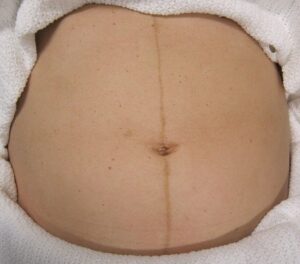
Your Answer: Linea Nigra
Explanation:This is Linea Nigra. It occurs in 3/4 of pregnancies and is due to increased melanocyte-stimulating hormone production by the placenta. This also causes melasma and darkening of the nipples.
-
This question is part of the following fields:
- Clinical Management
-
-
Question 45
Correct
-
From which of the following spinal segments do both the internal and external anal sphincters receive their innervation?
Your Answer: S4
Explanation:The anal sphincters are responsible for closing the anal canal to the passage of faeces and flatus. The smooth muscle of the involuntary internal sphincter sustains contraction to prevent the leakage of faeces between bowel movements and is innervated by the pelvic splanchnic nerves, which are a branch of the spinal segment 4. The external sphincter is made up of skeletal muscle and can therefore contract and relax voluntarily. Its innervation comes from the inferior rectal branch of the pudendal nerve, and the perineal branch of S4 nerve roots.
-
This question is part of the following fields:
- Anatomy
-
-
Question 46
Incorrect
-
The rectus sheath is formed by which of the following?
Your Answer: aponeuroses of internal and external oblique
Correct Answer: aponeuroses of transversus abdominis, external and internal oblique
Explanation:The rectus sheath is formed by the decussation and interweaving of the aponeuroses of the fl at abdominal muscles. The external oblique aponeurosis contributes to the anterior wall of the sheath throughout its length. The superior two thirds of the internal oblique aponeurosis splits into two layers (laminae) at the lateral border of the rectus abdominis; one lamina passing anterior to the muscle and the other passing posterior to it. The anterior lamina joins the aponeurosis of the external oblique to form the anterior layer of the rectus sheath. The posterior lamina joins the aponeurosis of the transversus abdominis to form the posterior layer of the rectus sheath.
-
This question is part of the following fields:
- Anatomy
-
-
Question 47
Correct
-
Oxytocin binds to what receptor type?
Your Answer: G-protein-coupled receptors
Explanation:Oxytocin binds to the G protein coupled receptors that triggers the IP3 mechanism leading to an elevated intracellular calcium ion.
-
This question is part of the following fields:
- Clinical Management
-
-
Question 48
Incorrect
-
Where are ADH (vasopressin) and Oxytocin synthesised?
Your Answer: Posterior Pituitary
Correct Answer: Hypothalamus
Explanation:ADH and vasopressin are synthesized in the supraoptic and periventricular nuclei of the hypothalamus, they are eventually transported to the posterior pituitary where they are stored to be released later.
-
This question is part of the following fields:
- Endocrinology
-
-
Question 49
Correct
-
A 47 year old women has a transvaginal ultrasound that shows a partially echogenic mass with posterior sound attenuation owing to sebaceous material and hair within the cyst cavity. What is the likely diagnosis?
Your Answer: Mature teratoma
Explanation:These are the most common ovarian tumours in young women. The most common form is the mature dermoid cyst (cystic teratoma). It can consist of a combination of all the type of tissues (mesenchymal, stromal and epithelial). Any mature tissue type can be present such as muscle, cartilage, bone, teeth and often hair. Treatment is cystectomy.
-
This question is part of the following fields:
- Data Interpretation
-
-
Question 50
Correct
-
Etiological factors in spontaneous abortion include:
Your Answer: All of the options given
Explanation:Spontaneous abortion is the loss of pregnancy naturally before twenty weeks of gestation. Colloquially, spontaneous abortion is referred to as a ‘miscarriage’ to avoid association with induced abortion. Early pregnancy loss refers only to spontaneous abortion in the first trimester. In 50% of cases, early pregnancy loss is believed to be due to fetal chromosomal abnormalities. Advanced maternal age and previous early pregnancy loss are the most common risk factors. For example, the incidence of early pregnancy loss in women 20-30 years of age is only 9 to 17%, while the incidence at 45 years of maternal age is 80%. Other risk factors include alcohol consumption, smoking, and cocaine use.
Several chronic diseases can precipitate spontaneous abortion, including diabetes, celiac disease, and autoimmune conditions, particularly anti-phospholipid antibody syndrome. Rapid conception after delivery and infections, such as cervicitis, vaginitis, HIV infection, syphilis, and malaria, are also common risk factors. Another important risk factor is exposure to environmental contaminants, including arsenic, lead, and organic solvents. Finally, structural uterine abnormalities, such as congenital anomalies, leiomyoma, and intrauterine adhesions, have been shown to increase the risk of spontaneous abortion.
-
This question is part of the following fields:
- Obstetrics
-
-
Question 51
Correct
-
What is the normal range for variability in cardiotocography (CTG) analysis?
Your Answer: 5-25 bpm
Explanation:Cardiotocography, also known as the non-stress test is used to monitor fetal heartbeat and uterine contractions of the uterus. An abnormal CTG may indicate fetal distress and prompt an early intervention. Variability refers to the variation in the fetal heartbeat form one beat to another. Normal variability is between 5-25 beats per minute while an abnormal variability is less than 5 bpm for more than 50 minutes, or more than 25 bpm for more than 25 minutes.
-
This question is part of the following fields:
- Data Interpretation
-
-
Question 52
Correct
-
A 23 year old patient presents to the emergency department with sudden onset of severe lower abdominal and pelvic pain. History reveals she normally has regular 28 day cycles but she missed her last period. Past medical history reveals 2 termination of pregnancy procedures in the past 3 years. The most recent one 6 months ago. She smokes 5 cigarettes per day.
Your Answer: Ectopic pregnancy
Explanation:This patient is most likely to have a ruptured ectopic pregnancy. The history of multiple TOPs suggests her contraceptive methods are not reliable and her missed period is suggestive she may currently be pregnant. There is no temperature or vaginal discharge to suggest PID though this is of course possible as is appendicitis. The last termination was 6 months ago so endometritis is unlikely.
-
This question is part of the following fields:
- Clinical Management
-
-
Question 53
Correct
-
You're assessing a 34-year-old lady who suffers from chronic pelvic pain. She experiences cyclic pain, mostly throughout her premenstrual and menstrual periods. She has been trying for 15 months to conceive without luck. Her pelvic check-up comes out normal.
Which of the following tests would be most useful in diagnosing the source of her pain and planning preoperative disease staging?Your Answer: MRI
Explanation:Endometriosis is a chronic gynaecological condition affecting women of reproductive age and may cause pelvic pain and infertility. It is characterized by the growth of functional ectopic endometrial glands and stroma outside the uterus and includes three different manifestations: ovarian endometriomas, peritoneal implants, deep pelvic endometriosis. The primary locations are in the pelvis; extra pelvic endometriosis may rarely occur.
Diagnosis requires a combination of clinical history, invasive and non-invasive techniques. The definitive diagnosis is based on laparoscopy with histological confirmation. Diagnostic imaging is necessary for treatment planning. MRI is as a second-line technique after ultrasound. The MRI appearance of endometriotic lesions is variable and depends on the quantity and age of haemorrhage, the amount of endometrial cells, stroma, smooth muscle proliferation and fibrosis. The purpose of surgery is to achieve complete resection of all endometriotic lesions in the same operation.
Owing to the possibility to perform a complete assessment of all pelvic compartments at one time, MRI represents the best imaging technique for preoperative staging of endometriosis, in order to choose the more appropriate surgical approach and to plan a multidisciplinary team work.
Though ESR maybe elevated due to the presence of inflammation, it is not specific for endometriosis and has no role in preoperative staging. The same holds true for any possible CBC finding.
Transvaginal ultrasound is preferred for diagnosis but doesn’t aid in preoperative staging of endometriosis.
CA125 values are elevated in severe infiltrative endometriosis but unchanged in mild disease. Relaying on CA125 cause a high rate of false negatives.
-
This question is part of the following fields:
- Gynaecology
-
-
Question 54
Correct
-
A 24-year-old woman comes to your office at 38 weeks of gestation with a urinary dipstick result positive for leukocyte and nitrite. She is otherwise asymptomatic so you send her urine for culture and sensitivity test.
From the options below mentioned, which is the next best management for her?Your Answer: Prescribe her with Oral Cephalexin
Explanation:There is an association between 20 to 30% increase in the risk for developing pyelonephritis during later pregnancy and untreated cases of bacteriuria in pregnancy. This is due to the physiological changes occurring to urinary tract during pregnancy, it is also found that untreated bacteriuria can be associated with even preterm birth and low birth weight. Risk of symptomatic urinary tract infection (UTI) during pregnancy can be reduced by antibiotic treatment of asymptomatic bacteriuria
The most common pathogen associated with asymptomatic bacteriuria is Escherichia coli, which accounts to more than 80% of isolates and the second most frequently cultured uropathogen is Staphylococcus saprophyticus. Other Gram-positive cocci, like group B streptococci, are less common. Gram-negative bacteria such as Klebsiella, Proteus or other Enterobacteriaceae are the other organisms involved in asymptomatic bacteriuria.
Although the context patient is asymptomatic, her urine dipstick shows positive nitrite and leukocyte, suggestive of urinary tract infection, so oral antibiotics like cephalexin or nitrofurantoin are advisable. Normally a five day course of oral antibiotic will be sufficient for the treatment of uncomplicated UTI or asymptomatic bacteraemia in pregnant women. As the patient is currently at her 38 weeks of gestation nitrofurantoin is contraindicated so it is best to prescribe her with Oral Cephalexin. This is because nitrofurantoin is associated with an increased risk of neonatal jaundice and haemolytic anaemia, so should not be used close to delivery, that is after 37 weeks of gestation or sooner if early delivery is planned.
Acute pyelonephritis should be treated with Intravenous antibiotic treatment, guided by urine culture and sensitivity reports as soon a available. A course of minimum of 10-14 days with IV + oral antibiotics is recommended as treatment for pyelonephritis, along with an increased fluid intake as intravenous fluids in clinically dehydrated patients. Even though urinary alkalisers are safe in pregnancy, prescription of urinary alkalisers alone is not recommended due to its low effectiveness compared to antibiotics, also as it can result in a loss of treatment efficacy urinary alkalisers should never be used in combination with nitrofurantoin.
At any stage of pregnancy, if Streptococcus agalactiae, a group B streptococcus [GBS], is detected in urine the intrapartum prophylaxis for GBS is usually indicated.
-
This question is part of the following fields:
- Obstetrics
-
-
Question 55
Incorrect
-
A patient undergoes medical abortion at 9 weeks gestation. What is the advice regarding Rhesus Anti-D Immunoglobulin?
Your Answer: All RhD Negative women should receive Anti-D IgG
Correct Answer: All RhD-negative women who are not alloimmunized should receive Anti-D IgG
Explanation:All non-sensitised RhD negative women should receive Anti-D IgG within 72 hours following abortion
-
This question is part of the following fields:
- Clinical Management
-
-
Question 56
Incorrect
-
In early pregnancy at what gestation does the Gestational sac become visible on transvaginal ultrasound?
Your Answer: 5 weeks
Correct Answer: 4 weeks + 3 days
Explanation:The gestational sac is typically visible from 31 days gestation by transvaginal ultrasound and a week later (38 days) on transabdominal ultrasound.
-
This question is part of the following fields:
- Biophysics
-
-
Question 57
Correct
-
Immediate delivery of the foetus is recommended at which fetal scalp pH?
Your Answer: 7.18
Explanation:A pH value below than 7.18 indicates acidosis which can result in hypoxic brain injury. In order to prevent brain injury, immediate delivery of the foetus should be planned. The normal range for a term baby is pH: 7.18 – 7.38, preterm pH: 7.14 – 7.4.
-
This question is part of the following fields:
- Physiology
-
-
Question 58
Correct
-
You see a patient who is 32 weeks pregnant. She complains of tingling to the right buttock and shooting pain down the leg. You suspect Piriformis syndrome. Regarding Piriformis which of the following statements are true?
Your Answer: Insertion is onto the greater trochanter
Explanation:The proximal attachment of the piriformis muscles is from the anterior surface of sacrum and it attaches distally to the superior border of the greater trochanter of the femur. It is innervated by the anterior rami of S1 and S2.
-
This question is part of the following fields:
- Anatomy
-
-
Question 59
Correct
-
A 28-year-old female patient comes in for a prenatal appointment. She eats only vegetables.
Which of the following is the most appropriate suggestion for folic acid supplementation?Your Answer: She should be started on folic acid 0.5 mg per day
Explanation:Folate has been in the news because of its connection with a type of birth defect called neural tube defect. Studies have shown that women who have infants with neural tube defects have lower intakes of folate and lower blood folate levels than other women. Folate is needed early in pregnancy (before many women know they are pregnant) for normal neural tube development.
Many vegan foods including enriched bread, pasta, and cold cereal; dried beans; green leafy vegetables; and orange juice are good sources of folate. Vegan diets tend to be high in folate, however, to be on the safe side, women capable of becoming pregnant should take a supplement or use fortified foods that provide 400 micrograms of folate daily.
For the above mentioned reasons, all other options are incorrect.
-
This question is part of the following fields:
- Gynaecology
-
-
Question 60
Incorrect
-
Regarding the Pituitary gland which of the following statements is true?
Your Answer: Is primarily an exocrine gland
Correct Answer: It is surrounded by the sella turcica
Explanation:The Sella turcica is composed of three parts:
1. The tuberculum sellae (horn of saddle): a variable slight to prominent median elevation forming the posterior
boundary of the prechiasmatic sulcus and the anterior boundary of the hypophysial fossa.
2. The hypophysial fossa (pituitary fossa): a median depression (seat of saddle) in the body of the sphenoid that accommodates the pituitary gland (L. hypophysis).
3. The dorsum sellae (back of saddle): a square plate of bone projecting superiorly from the body of the sphenoid.
It forms the posterior boundary of the Sella turcica, and its prominent superolateral angles make up the posterior clinoid processes. -
This question is part of the following fields:
- Anatomy
-
-
Question 61
Correct
-
Stages of labour
Your Answer: The third stage ends with the delivery of the placenta and membranes
Explanation:First stage: The latent phase is generally defined as beginning at the point at which the woman perceives regular uterine contractions. A definition of active labour in a British journal was having contractions more frequent than every 5 minutes, in addition to either a cervical dilation of 3 cm or more or a cervical effacement of 80% or more.
Second stage: fetal expulsion begins when the cervix is fully dilated, and ends when the baby is born.
Third stage: placenta delivery – The period from just after the foetus is expelled until just after the placenta is expelled is called the third stage of labour or the involution stage.
-
This question is part of the following fields:
- Clinical Management
-
-
Question 62
Incorrect
-
A 28-year-old, currently at 26 weeks’ gestation of her third pregnancy, presents with irregular uterine contractions for the past 24 hours and has concerns about premature delivery. She delivered her first child at 38 weeks of gestation and her second at 39 weeks gestation. On examination, BP and urinalysis have come back normal. Her symphysis-fundal height measures 27cm, the uterus is lax and non-tender. Fetal heart rate is 148/min. She also undergoes a pelvic examination along with other investigations.
Which findings would suggest that delivery is most likely going to happen before 30 weeks’ of gestation?
Your Answer: The external cervical os admits the finger-tip, but the internal os is closed.
Correct Answer: The cervix is closed, but the fetal fibronectin test on cervical secretions is positive.
Explanation:Predisposing factors of preterm delivery include a short cervix (or if it shortens earlier than in the third trimester), urinary tract or sexually transmitted infections, open cervical os, and history of a previous premature delivery. Increased uterine size can also contribute to preterm delivery and is seen with cases of polyhydramnios, macrosomia and multiple pregnancies. The shorter the cervical length, the greater the risk of a premature birth.
In this case, the risk of bacterial vaginosis and candidiasis contributing to preterm delivery would be lower than if in the context of an open cervical os. However, the risk of premature delivery is significantly increased if it is found that the fetal fibronectin test is positive, even if the os is closed. -
This question is part of the following fields:
- Obstetrics
-
-
Question 63
Incorrect
-
A 46 year old women with a BMI of 34 is seen in clinic following hysteroscopy and biopsy for irregular menstrual bleeding. Histology shows hyperplasia without atypia. Following a discussion the patient declines any treatment but agrees she will try and lose weight. What is the risk of progression to endometrial cancer over 20 years?
Your Answer: 20-30%
Correct Answer:
Explanation:The risk of developing endometrial carcinoma is less than 5% over 20 years if the endometrium shows hyperplasia without atypia.
There are 2 types of Endometrial Hyperplasia:
1. Hyperplasia without atypia*
2. Atypical hyperplasiaMajor Risk Factors:
Oestrogen (HRT)
Tamoxifen
PCOS
Obesity
Immunosuppression (transplant) -
This question is part of the following fields:
- Clinical Management
-
-
Question 64
Incorrect
-
Question 65
Incorrect
-
According to the UK food standards agency which of the following RDIs (recommended daily intake) is 3 times higher in pregnancy than the non-pregnant state?
Your Answer: Iron
Correct Answer: Folic Acid
Explanation:Folic Acid should be increased in diet of a pregnant women. Deficiency will lead to neural tube defects i.e. spina bifida.
-
This question is part of the following fields:
- Physiology
-
-
Question 66
Correct
-
You are asked to see a 26 year old patient following her first visit to antenatal clinic. She is 9 weeks pregnant and bloods have shown her to be non-immune to Rubella. She is concerned about congenital rubella syndrome (CRS). What is the most appropriate advice to give?
Your Answer: Advise vaccination after birth regardless of breast feeding status
Explanation:Congenital rubella infection that occurs after 16 weeks gestation does not typically cause fetal abnormalities. This however plays no part in vaccination advice. Rubella vaccine is live and should not be given during pregnancy. The mother should be offered vaccination after giving birth. It is safe for the vaccine (typically given as combined MMR) to be administered if the mother is breastfeeding.
-
This question is part of the following fields:
- Microbiology
-
-
Question 67
Correct
-
Regarding female urinary tract infections, which organism is the most common causative agent?
Your Answer: Escherichia Coli
Explanation:The most common causative agent found in female urinary tract infections is Escherichia Coli. E. Coli is a bacteria found in the environment and the human gastrointestinal system. Other common causes of UTI include Klebsiella sp, Proteus sp and various Enterococci.
-
This question is part of the following fields:
- Microbiology
-
-
Question 68
Correct
-
A 53 year old lady presents to clinic due to vulval itch and discolouration. examination reveals pale white discoloured areas to the vulva. A biopsy shows epidermal atrophy with sub-epidermal hyalinization and deeper inflammatory infiltrate. What is this characteristic of?
Your Answer: Lichen Sclerosus
Explanation:Lichen sclerosus is characterized by hypopigmented atrophic plaque in the perineal region along with features of pruritis and dyspareunia.
It is more common in post menopausal women and on histology there is epidermal atrophy, inflammatory infiltrate in the dermis and basal layer degeneration.Vitiligo is characterised by hypopigmentation but without any other symptoms.
Extramammary Paget’s disease is characterized by erythematous plaque located mostly in the perianal region but its histology is different.
Lichen simplex chronicus is a chronic scaly pruritic condition characterized by itchy papules and plaques plus lichenification and it mostly results from chronic irritation and itching of the area. -
This question is part of the following fields:
- Clinical Management
-
-
Question 69
Correct
-
A 29 year old is diagnosed with stage 1A2 cervical cancer. Which of the following is the most appropriate treatment option?
Your Answer: LLETZ
Explanation:The treatment of stage 1A cervical cancer is excision of the margins using the Loop electrical excision procedure (LLETZ). Hysterectomy is not necessary. This treatment enables fertility to be preserved.
2010 FIGO classification of cervical carcinoma
0 – Carcinoma in situ
1 – Confined to the cervix (diagnosed microscopy)
1A1 – Less than 3mm depth & 7mm lateral spread
1A2 – 3mm to 5mm depth & less than 7mm lateral spread
1B1 – Clinically visible lesion or greater than A2 & less than 4 cm in greatest dimension
1B2 – Clinically visible lesion, greater than 4 cm in greatest dimension
2 – Invades beyond uterus but not to pelvic wall or lower 1/3 vagina
2A1 – Involvement of the upper two-thirds of the vagina, without parametrical invasion & Less than 4cm
2A2 – Greater than 4 cm in greatest dimension
2B – Parametrial involvement
3 – Extends to Pelvic side wall or lower 1/3 vagina or hydronephrosis
3A – No pelvic side wall involvement
3B – Pelvic side wall involved or hydronephrosis
4 – Extends beyond true pelvis 4A Invades mucosa bladder and rectum
4B – Distant Metastasis -
This question is part of the following fields:
- Clinical Management
-
-
Question 70
Incorrect
-
The most common cause of abnormal vaginal discharge in a sexually active 19-year-old female is:
Your Answer: Trichomonas vaginalis
Correct Answer: Mixed vaginal flora
Explanation:Bacterial vaginosis is the most common cause of acute vaginitis, accounting for up to 50% of cases in some populations. It is usually caused by a shift in normal vaginal flora- Mixed vaginal flora is considerably more common as a cause of vaginal discharge than – albicans and T. vaginalis.
-
This question is part of the following fields:
- Gynaecology
-
-
Question 71
Correct
-
What kind of biochemical changes occur during the luteal phase of menstrual cycle?
Your Answer: High progesterone levels
Explanation:Menstrual cycle can be divided into the follicular phase and luteal phase. In the luteal phase, there is an increase in progesterone secretion and LH levels are low. If the ova is fertilized, it is implanted in the endometrium. In case of failure in fertilization, there is gradual decrease in progesterone and LH levels.
-
This question is part of the following fields:
- Physiology
-
-
Question 72
Incorrect
-
A woman visited the OPD with complaints of severe abdominal pain and light-headedness. There is history of fainting three days prior to consultation. She also has vaginal bleeding. In this case, which of the following investigations should be ordered to reach the diagnosis?
Your Answer: Haemoglobin
Correct Answer:
Explanation:Testing for beta hCG should be the first test in this case. It will rule out any pregnancy that is strongly suspected based on the patient’s history and physical examination.
-
This question is part of the following fields:
- Gynaecology
-
-
Question 73
Correct
-
Question 74
Incorrect
-
A 30-year-old woman who is at 38 weeks gestation presented to the emergency department due to complaints of not feeling fetal movements since yesterday. Upon investigations, fetal demise was confirmed. Induced delivery was done and she gave birth to a dead foetus.
Which of the following is least likely to reveal the cause of the fetal death?Your Answer: Autopsy of the foetus
Correct Answer: Chromosomal analysis of the mother
Explanation:Stillbirth has many causes: intrapartum complications, hypertension, diabetes, infection, congenital and genetic abnormalities, placental dysfunction, and pregnancy continuing beyond forty weeks.
In 5% of normal-appearing stillborns, a chromosomal abnormality will be detectable. With an autopsy and a chromosomal study, up to 35% of stillborns are found to have a major structural pathology, and 8% have abnormal chromosomes. After a complete evaluation, term stillbirth remains unexplained about 30% of the time. The chance of finding a cause is impacted by the age of the foetus, the experience of the caregiver, and the thoroughness of the exam. Chromosome testing for aneuploidy should be offered for all stillbirths to confirm or to seek a cause of the stillbirth. Genetic amniocentesis or chorionic villus sampling before delivery offers the highest yield.
-
This question is part of the following fields:
- Obstetrics
-
-
Question 75
Incorrect
-
The transvaginal ultrasound of a 37 year old woman reveals a left ovarian mass. The mass is a unilocular cyst with diffuse homogenous ground glass echoes as a result of hemorrhagic debris. Which of the following is the most likely diagnosis?
Your Answer: Functional cyst
Correct Answer: Endometrioma
Explanation:An endometrioma, also known as a chocolate cyst is a benign ovarian cyst that occurs as a result of the trapping of endometriosis tissue inside the ovary. The findings on transvaginal ultrasound are often a unilocular cyst, with ground glass echogenicity due to haemorrhage. Other benign masses that can be evaluated using transvaginal ultrasound are functional cysts, serous and mucinous cystadenomas and mature teratomas.
-
This question is part of the following fields:
- Data Interpretation
-
-
Question 76
Correct
-
A 23-year-old woman, G1PO comes to your clinic at 12 week of pregnancy. She is complaining of mild vaginal bleeding for the past 12 hours, along with bouts of mild cramping lower abdominal pain.
On vaginal examination, the cervical os is closed with mild discharge containing blood clots and an ultrasonography confirms the presence of a live fetus with normal heart rate.
Which among of the following is the most likely diagnosis?Your Answer: Threatened abortion
Explanation:Uterine bleeding in the presence of a closed cervix along with sonographic visualization of an intrauterine pregnancy with detectable fetal cardiac activity are diagnostic of threatened abortion.
Abortion does not always follow a uterine bleeding in early pregnancy, sometimes not even after repeated episodes or large amounts of bleeding, that is why the term “threatened” is used in this case. In about 90 to 96% cases, the pregnancy continues after vaginal bleeding if occured in the presence of a closed os and a detectable fetal heart rate. Also as the gestational age advances its less likely the condition will end in miscarriage.
In cases of inevitable abortion, there will be dilatation of cervix along with progressive uterine bleeding and painful uterine contractions. The gestational tissue can be either felt or seen through the cervical os and the passage of this tissue occurs within a short time.
In case were the membranes have ruptured, partly expelling the products of conception with a significant amounts of placental tissue left in the uterus is called as incomplete abortion. During the late first and early second trimesters this will be the most common presentation of an abortion. Examination findings of this includes an open cervical os with gestational tissues observed in the cervix and a uterine size smaller than expected for gestational age and a partially contracted uterus. The amount of bleeding will vary but can be severe enough to cause hypovolemic shock, with painful contractions and an ultrasound revealing tissues in the uterus.
An in utero death of the embryo or fetus prior to 20 weeks of gestation is called as a missed abortion. In this case the women may notice that the symptoms associated with early pregnancy like nausea, breast tenderness, etc have disappeared and they don’t ‘feel pregnant’ anymore. Vaginal bleeding may occur but the cervix remains closed and the ultrasound done reveals an intrauterine gestational sac with or without an embryonic/fetal pole, but no embryonic/fetal cardiac activity will be noticed.
In case of complete abortion, miscarriage occurs before the 12th week and the entire contents of conception will be expelled out of uterus. If this case, the physical examination will show a small and well contracted uterus with an open or closed cervix. There is scant vaginal bleeding with only mild cramping and ultrasound will reveal an empty uterus without any extra-uterine pregnancy.
-
This question is part of the following fields:
- Obstetrics
-
-
Question 77
Correct
-
During early pregnancy, a pelvic examination may reveal that one adnexa is slightly enlarged. This is most likely due to:
Your Answer: Corpus luteal cyst
Explanation:Adnexa refer to the anatomical area adjacent to the uterus, and contains the fallopian tube, ovary, and associated vessels, ligaments, and connective tissue. The reported incidence of adnexal masses in pregnancy ranges from 1 in 81 to 1 in 8000 pregnancies. Most of these adnexal masses are diagnosed incidentally at the time of dating or first trimester screening ultrasound (USS). Functional cyst is the most common adnexal mass in pregnancy, similar to the nonpregnant state. A corpus luteum persisting into the second trimester accounts for 13-17% of all cystic adnexal masses. Pain due to rupture, haemorrhage into the cyst, infection, venous congestion, or torsion may be of sudden onset or of a more chronic nature.
-
This question is part of the following fields:
- Obstetrics
-
-
Question 78
Incorrect
-
A 23-year-old primigravida who is at 41 weeks has been pushing for the past 2 and a half ours. The fetal head is at the introitus and is beginning to crown already. An episiotomy was seen to be necessary. The tear was observed to extend through the sphincter of the rectum but her rectal mucosa remains intact.
Which of the following is the most appropriate type of episiotomy to be performed?Your Answer: Mediolateral episiotomy
Correct Answer: Third-degree
Explanation:The episiotomy is a technique originally designed to reduce the incidence of severe perineal tears (third and fourth-degree) during labour. The general idea is to make a controlled incision in the perineum, for enlargement of the vaginal orifice, to facilitate difficult deliveries.
Below is the classification scale for the definitions of vaginal tears:
First degree involves the vaginal mucosa and perineal skin with no underlying tissue involvement.
Second degree includes underlying subcutaneous tissue and perineal muscles.
Third degree is where the anal sphincter musculature is involved in the tear. The third-degree tear can be further broken down based on the total area of anal sphincter involvement.
Fourth degree is where the tear extends through the rectal muscle into rectal mucosa. -
This question is part of the following fields:
- Obstetrics
-
-
Question 79
Correct
-
Sensory supply to the clitoris is via branches of which nerve?
Your Answer: Pudendal nerve
Explanation:The pudenal nerves has three branches, namely the inferior rectal, perineal and the dorsal nerve of the clitoris. The perineal nerve has two branches: The superficial perineal nerve gives rise to posterior scrotal or labial (cutaneous) branches, and the deep perineal nerve supplies the muscles of the deep and superficial perineal pouches, the skin of the vestibule, and the mucosa of the inferior most part of the vagina. The inferior rectal nerve communicates with the posterior scrotal or labial and perineal nerves. The dorsal nerve of the penis or clitoris is the primary sensory nerve serving the male or female organ, especially the sensitive glans at the distal end.
-
This question is part of the following fields:
- Anatomy
-
-
Question 80
Incorrect
-
A 46 year old women with a BMI of 34 is seen in clinic following hysteroscopy and biopsy for irregular menstrual bleeding. Histology shows atypical hyperplasia. Which of the following is the most appropriate 1st line management?
Your Answer: Weight loss
Correct Answer: Laparoscopic hysterectomy
Explanation:There is an increase risk of developing carcinoma of the uterus, if the endometrium shows hyperplasia with atypia. The standard surgery is total hysterectomy with bilateral salpingectomy which can be performed abdominally or laparoscopically If the disease is grade 1-2 and less than 1B i.e. less than 50% invasion of the uterine body.
-
This question is part of the following fields:
- Clinical Management
-
-
Question 81
Correct
-
Among the following presentations during pregnancy, which is not associated with maternal vitamin D deficiency?
Your Answer: Large for gestational age
Explanation:Retarded skeletal growth resulting in small for gestational age babies are the usual outcomes of an untreated vitamin D deficiency in pregnancy.
Symptoms associated with maternal vitamin D deficiency during pregnancy are:
– Hypocalcemia in newborn.
– Development of Rickets later in life.
– Defective tooth enamel.
– Small for gestational age due to its effect on skeletal growth
– Fetal convulsions or seizures due to hypocalcemia. -
This question is part of the following fields:
- Obstetrics
-
-
Question 82
Correct
-
Aromatase is key to Oestradiol production in the ovaries. Which of the following statements is true?
Your Answer: FSH induces the granulosa cells to make aromatase
Explanation:The two main cell types of the ovaries:
1. The theca cells produce androgen in the form of androstenedione. The theca cells are not able to convert androgen to oestradiol themselves. The produced androgen is therefore taken up by granulosa cells.
2. The neighbouring granulosa cells then convert the androgen into oestradiol under the enzymatic action of aromatase FSH induces the granulosa cells to produce aromatase for this purpose -
This question is part of the following fields:
- Endocrinology
-
-
Question 83
Correct
-
Which of the following hormones is produced by the hypothalamus in response to breastfeeding?
Your Answer: Oxytocin
Explanation:Nipple stimulation during breastfeeding triggers the production of oxytocin from the hypothalamus and its subsequent release from the posterior pituitary gland. The hormone causes the myoepithelial cells of the breast to contract causing milk to flow through the ducts.
Ergometrine and Prostaglandin E2 are used during labour to control uterine bleeding after delivery, or ripen the cervix, while Atosiban is an oxytocin antagonist.
Antidiuretic hormone is also released from the posterior pituitary, and acts on the kidneys to decrease fluid excretion.
-
This question is part of the following fields:
- Clinical Management
-
-
Question 84
Correct
-
The following ultrasonic measurements may be used to confirm or establish gestational age:
Your Answer: Crown rump length
Explanation:Fetal ultrasound scanning is considered an essential part of routine antenatal care with first trimester scans recommended for confirming viability, accurate estimation of gestational age and determining the number of foetuses. Fetal crown-rump length (CRL) is measured in early pregnancy primarily to determine the gestation age (GA) of a foetus and is most reliable between 9+0 to 13+6 weeks’ gestation, but not beyond.
-
This question is part of the following fields:
- Physiology
-
-
Question 85
Correct
-
Tamoxifen is associated with an increased risk of which of the following?
Your Answer: Endometrial cancer
Explanation:Tamoxifen is a SERM that is effective in treating hormone-responsive breast cancer, it acts as an antagonist to prevent receptor activation by endogenous oestrogen. As agonist of the endometrial receptors it promotes endometrial hyperplasia and hence increases the risk of endometrial cancer.
-
This question is part of the following fields:
- Pharmacology
-
-
Question 86
Correct
-
A 29-year-old woman had just delivered a stillborn vaginally, following a major placental abruption. Choose the single most likely predisposing factor for developing PPH in this woman?
Your Answer: DIC
Explanation:Disseminated intravascular coagulation (DIC) in pregnancy is the most common cause of an abnormal haemorrhage tendency during pregnancy and the puerperium. Although pregnancy itself can cause DIC, its presence is invariably evidence of an underlying obstetric disorder such as abruptio placentae, eclampsia, retention of a dead foetus, amniotic fluid embolism, placental retention or bacterial sepsis.
-
This question is part of the following fields:
- Obstetrics
-
-
Question 87
Incorrect
-
A 27-year-old woman presents for difficulty and pain in attempting sexual intercourse. She states that she never had such symptoms prior. The pain is not felt at the time of penetration, but appears to hurt deeper in the vagina.
She was recently pregnant with her first child and delivery was three months ago. She did not have an episiotomy or sustain any vaginal lacerations during delivery. She denies any vaginal bleeding since her lochia had stopped two months ago. She is still breastfeeding her child.
Which of the following is the most likely cause of her dyspareunia?Your Answer: Monilial vaginitis.
Correct Answer: Atrophic vaginal epithelium.
Explanation:This is a patient that recently gave birth and is still breastfeeding presenting with dyspareunia. The most likely cause would be a thin atrophic vaginal epithelium. This is very common presentation and is due to the low oestrogen levels due to the prolactin elevation from breastfeeding.
An unrecognised and unsutured vaginal tear should have healed by this time and should not be causing issues.
Endometriosis tends to resolve during a pregnancy, but if this was the issue, it would have caused dyspareunia prior to pregnancy.
Vaginal infective causes of dyspareunia, such as monilial or trichomonal infections, are rare in amenorrhoeic women.
-
This question is part of the following fields:
- Obstetrics
-
-
Question 88
Correct
-
A 34 year old patient who has just undergone a C-section delivery has lost almost 1 litre of blood. You suspect uterine atony as the likely cause, and have bimanually compressed the uterus. Which of the following pharmacological interventions should follow?
Your Answer: Syntocin 5u by slow intravenous injection
Explanation:In the management of postpartum haemorrhage, it is essential that the bleeding is first mechanically prevented, followed by the administration of oxytocic drugs, which cause the uterine smooth muscle to contract and clamping off bleeding sites in the endometrium. The drug of choice in the treatment protocol of PPH is 5 units of syntocin, a synthetic oxytocin uterotonic, by slow intravenous infusion. This is particularly suitable in the case of uterine atony. Other uterotonics, misoprostol, carboprost, ergometrine, can be used, but are not as effective in an emergency setting.
-
This question is part of the following fields:
- Clinical Management
-
-
Question 89
Incorrect
-
A 73-year-old woman presents with a complaint of blood-stained vaginal discharge.
On speculum examination, her ectocervix and vagina show signs of atrophy.
No evidence of malignant cells is seen on cervical cytology, although no endocervical cells were visualised.
Choose the most suitable next step for management of this patient.
Your Answer: Ultrasound assessment of endometrial thickness.
Correct Answer: Hysteroscopy and dilatation and curettage
Explanation:Diagnostic hysteroscopy with dilatation and curettage (D&C) is the most suitable step for immediate management of this patient (correct answer). This would aid in determining if an endometrial lesion exists and enable histologic examination of any endometrium that may be present.
Assessment of endometrial thickness via ultrasound examination is commonly used to decide if a patient requires D&C. In postmenopausal women, an endometrial thickness of more than 4mm indicates need for D&C.However, this method is more beneficial in younger postmenopausal women. In women who are 70 years or older, postmenopausal bleeding should be considered to be due to a malignancy until confirmed otherwise.
In this patient, a vaginal swab for culture or a colposcopy would not be appropriate.
Similarly, laparoscopy is not indicated unless the bleeding continued despite a normal hysteroscopy and D&C.
If the endometrial thickness is less than 4mm, a malignancy is less likely to be present; however, the risk cannot be completely excluded.
-
This question is part of the following fields:
- Gynaecology
-
-
Question 90
Correct
-
A patient undergoes oophorectomy and the ovarian veins are ligated. Which vein does the left ovary drain into?
Your Answer: Left renal
Explanation:When it comes to questions on venous drainage the ovarian vein is likely to be a common question given its varied drainage depending on laterality. The right ovarian vein travels through the suspensory ligament of the ovary and generally joins the inferior vena cava whereas the left ovarian vein drains into the left renal vein.
-
This question is part of the following fields:
- Anatomy
-
-
Question 91
Incorrect
-
A 10 day old infant present with signs of disseminated Herpes Simplex Virus (HSV) infection. Her mother had her first episode of HSV three weeks prior to delivery. The infant was treated with antivirals upon clinical suspicion. What is the case fatality rate of infants who develop disseminated HSV despite treatment?
Your Answer: 50%
Correct Answer: 30%
Explanation:Congenital Herpes Simplex Virus infection may cause high levels of morbidity and mortality in neonates. Risk of infection with HSV 1 and 2 is highest within 6 weeks of delivery and is transferred to the neonate via maternal secretions at birth. Affected babies can present as skin manifestations, CNS infection, or disseminated infection, which carries an 85% risk of mortality if left untreated. Treatment with high dose antivirals such as acyclovir can help decrease the case mortality rate to 30% in cases of disseminated infection.
-
This question is part of the following fields:
- Microbiology
-
-
Question 92
Incorrect
-
Under which one of the following conditions is the pelvic inlet felt to be contracted?
Your Answer: The transverse diameter is only 10 cm
Correct Answer:
Explanation:Contracted pelvis occurs when one or more of its diameters is reduced so that it interferes with the normal mechanism of labour. A transverse diameter below 11 cm will result in difficult delivery of the foetus and C-section will be the better option in that case
-
This question is part of the following fields:
- Anatomy
-
-
Question 93
Correct
-
Regarding threatened abortion:
Your Answer: Ultrasound should be done to confirm the diagnosis
Explanation:Patients with a threatened abortion should be managed expectantly until their symptoms resolve. Patients should be monitored for progression to an inevitable, incomplete, or complete abortion. Analgesia will help relieve pain from cramping. Bed rest has not been shown to improve outcomes but commonly is recommended. Physical activity precautions and abstinence from sexual intercourse are also commonly advised. Repeat pelvic ultrasound weekly until a viable pregnancy is confirmed or excluded. A miscarriage cannot be avoided or prevented, and the patients should be educated as such. Intercourse and tampons should be avoided to decrease the chance of infection. A warning should be given to the patient to return to the emergency department if there is heavy bleeding or if the patient is experiencing light-headedness or dizziness. Heavy bleeding is defined as more than one pad per hour for six hours. The patient should also be given instructions to return if they experience increased pain or fever. All patients with vaginal bleeding who are Rh-negative should be treated with Rhogam. Because the total fetal blood volume in less than 4.2 mL at 12 weeks, the likelihood of fetal blood mixture is small in the first trimester. A smaller RhoGAM dose can be considered in the first trimester. A dose of 50 micrograms to 150 micrograms has been recommended. A full dose can also be used. Rhogam should ideally be administered before discharge. However, it can also be administered by the patient’s obstetrician within 72 hours if the vaginal bleeding has been present for several days or weeks.
-
This question is part of the following fields:
- Obstetrics
-
-
Question 94
Incorrect
-
A 41 year old woman is referred to EPAU with spotting in early pregnancy. What is the risk of miscarriage in women in this age group?
Your Answer: 25%
Correct Answer: 50%
Explanation:Miscarriage rates:
20-24 – 9%
25-29 – 11%
30-34 – 15%
35-39 – 25%
40-44 – 51%
>45 – 75% -
This question is part of the following fields:
- Epidemiology
-
-
Question 95
Incorrect
-
HPV genotypes 6 and 11 are associated with which of the following?
Your Answer: Cervical intraepithelial neoplasia (CIN) 2
Correct Answer: Low grade squamous intraepithelial lesions of the cervix (LSIL)
Explanation:6 and 11 are considered low risk and are commonly associated with genital warts and low-grade squamous intraepithelial lesions of the cervix (can correspond cytologically to CIN 1)
-
This question is part of the following fields:
- Microbiology
-
-
Question 96
Incorrect
-
How many days after fertilisation does the blastocyst hatch from the zone pellucida?
Your Answer: 3-Apr
Correct Answer: 5-Jul
Explanation:Shortly after the morula enters the uterus, around the 4th day after fertilization, a clear cystic cavity starts forming inside the morula. The fluid passes through the zona pellucida from the uterine cavity and hence forms the blastocyst.
-
This question is part of the following fields:
- Embryology
-
-
Question 97
Incorrect
-
A 55 year old patient with a who has tried unsuccessful conservative measures for her overactive bladder, would like to consider Oxybutynin. She wants to know how common dry mouth is as a side effect, as her sister suffered from it on while on the same drug.
Your Answer: approximately 1 in 1000 patients
Correct Answer: approximately 1 in 10 patients
Explanation:Urinary incontinence can be divided into two main aetiologies, stress incontinence, or overactive bladder. Conservative management include lifestyle interventions, controlling fluid intake, or bladder exercises. If conservative management is no longer efficient, then medications may be indicated. Oxybutynin is an anticholinergic drug used in the treatment of urinary incontinence. As with other anticholinergic drugs, side effects include dry mouth, dry eyes, blurry vision and constipation. About 1 in 10 patients taking Oxybutynin will experience some of these side effects.
-
This question is part of the following fields:
- Clinical Management
-
-
Question 98
Incorrect
-
Regarding ovarian cancer, which factors are thought to lower the risk?
Your Answer: Older age at menarche
Correct Answer: Taking statins
Explanation:Ovarian cancer is a gynaecological cancer that commonly affects women over 40 years. Risk factors for ovarian cancer include: infertility, a family history of ovarian, breast or colorectal cancer. There are some protective factors, which include: high parity and breastfeeding, early age at menarche and late age at menopause, and combined oral contraceptives, and statins.
-
This question is part of the following fields:
- Epidemiology
-
-
Question 99
Incorrect
-
What frequency is used for trans-abdominal ultrasound?
Your Answer: 6.0 MHz
Correct Answer: 3.0 MHz
Explanation:The transabdominal ultrasound uses a frequency of 3.5-7 MHz emitted from a transducer. Transvaginal 5-7.5 MHz (post bladder void.
-
This question is part of the following fields:
- Data Interpretation
-
-
Question 100
Correct
-
A 25-year old woman presented to the medical clinic for her first prenatal check-up. Upon interview, the patient revealed that she has been smoking one pack of cigarettes per day for the past five years.
All of the following are considered correct regarding the disadvantages of smoking during pregnancy, except:Your Answer: Increased risk of developing small teeth with faulty enamel
Explanation:Small teeth with faulty enamel is more associated with fetal alcohol syndrome (FAS).
In FAS, the most common orofacial changes are small eyelid fissures , flat facies, maxillary hypoplasia, short nose, long and hypoplastic nasal filter, and thin upper lip. The unique facial appearance of FAS patients is the result of changes in 4 areas: short palpebral fissures, flat nasal bridge with an upturned nasal tip, hypoplastic philtrum with a thin upper vermillion border, and a flat midface. Other facial anomalies include micrognathia, occasional cleft lip and/or palate and small teeth with defective enamel.
-
This question is part of the following fields:
- Obstetrics
-
SESSION STATS - PERFORMANCE PER SPECIALTY
