-
Question 1
Incorrect
-
Regarding amoxicillin, which of the following statements is INCORRECT:
Your Answer: It has a similar antibacterial spectrum to ampicillin.
Correct Answer: It is used first line for bacterial tonsillitis.
Explanation:Amoxicillin is a derivative of ampicillin and has a similar antibacterial spectrum. It is better absorbed than ampicillin when given orally, producing higher plasma and tissue concentrations; unlike ampicillin, absorption is not affected by the presence of food in the stomach.
The adverse effects of amoxicillin are mainly gastrointestinal and mild and include nausea, vomiting and diarrhoea. Amoxicillin is used first line for low to moderate severity community acquired pneumonia, exacerbations of chronic bronchitis, for acute otitis media, for acute sinusitis, for oral infections/dental abscess, for Listeria meningitis (in combination with another antibiotic), for infective endocarditis (in combination with another antibiotic) and for H. Pylori eradication (in combination with metronidazole/clarithromycin and a PPI).
Penicillin V is used first line for bacterial tonsillitis; amoxicillin should be avoided in blind treatment of a sore throat as there is a high risk of a rash if glandular fever is present.
-
This question is part of the following fields:
- Infections
- Pharmacology
-
-
Question 2
Incorrect
-
A 50-year-old woman has an anaphylactic reaction following accidental ingestion peanuts at a restaurant. She is a known hypertensive on atenolol 50 mg daily and BP is well controlled. She is also on amlodipine 5 mg daily. Two doses of IM adrenaline has been given without improvement.
Which medication may prove helpful in this patient?
Your Answer: Fresh frozen plasma
Correct Answer: IM Glucagon
Explanation:Resistant to the effects of adrenaline in anaphylaxis is seen in patients taking beta-blockers.
Glucagon can be used to overcome the effects of the beta-blockade if initial doses of adrenaline are unsuccessful in patients taking beta-blockers.
-
This question is part of the following fields:
- Pharmacology
- Respiratory Pharmacology
-
-
Question 3
Correct
-
A 67-year-old man complains of chest pain and goes to the emergency room. He takes several medications, including amiodarone.
Which of the following is amiodarone mechanism of action?Your Answer: Blocks Na + and K + channels and beta-adrenoreceptors in the heart
Explanation:Amiodarone is an anti-arrhythmic medication that can be used to treat both ventricular and atrial arrhythmias. It’s a class III anti-arrhythmic that works by blocking a variety of channels, including Na+ and K+ channels, as well as beta-adrenoreceptors. As a result, it slows conduction through the SA and AV nodes and prolongs phase 3 of the cardiac action potential (slowing repolarisation).
-
This question is part of the following fields:
- Cardiovascular Pharmacology
- Pharmacology
-
-
Question 4
Incorrect
-
Funnel plots are typically used to display:
Your Answer: Correlation between two variables
Correct Answer: The existence of publication bias in meta-analysis
Explanation:Funnel plots are used to demonstrate the existence of publication bias in meta-analysis. Funnel plots are scatter plots of treatment effects estimated from individual studies on the x axis and some measure of study size on the y axis. Each point on the graph represents one of the studies. A symmetrical inverted funnel shape indicates an absence of publication bias. If there is publication bias, there will be asymmetry of the open wide end due to the absence of small negative results.
-
This question is part of the following fields:
- Evidence Based Medicine
- Study Methodology
-
-
Question 5
Correct
-
A 66-year-old patient attends the Emergency Department with chest pain. His ECG and troponin are suggestive of a new myocardial infarction. You have explained the condition and the prognosis. He asks you about how the damaged area of his heart will heal following this.
Which answer best describes the process of myocardial healing following myocardial infarction? Select ONE answer only.Your Answer: The damaged myocardium will form non-contractile scar tissue
Explanation:Myocardial cells are unable to regenerate, they are unable to divide in response to tissue injury. The remain permanently in G0 and cannot progress to G1. If a segment of muscle dies, for example in myocardial infarction, this tissue will be replaced by scar tissue if the patient recovers. This scar tissue is non-contractile and therefore the remaining myocardium must work harder to maintain cardiac output. As a consequence the remaining undamaged myocardium undergoes compensatory hypertrophy without cell division.
-
This question is part of the following fields:
- General Pathology
- Pathology
-
-
Question 6
Correct
-
A blood test of a 7-year-old child with a 6-day history of bloody diarrhoea reveals a low platelet count, anaemia, and impaired kidney function. What bacteria is suspected of causing such a condition?
Your Answer: Escherichia coli
Explanation:Escherichia coli produces shiga toxin that causes diarrhoea, hemorrhagic colitis, and haemolytic uremic syndrome.
Haemolytic uremic syndrome is characterized by anaemia, thrombocytopenia, and acute renal failure. Transmission of E. coli is possible after consuming contaminated, undercooked drinks and foods. E. coli enters the body via the faecal-oral pathway.
-
This question is part of the following fields:
- Microbiology
- Pathogens
-
-
Question 7
Incorrect
-
Atrial natriuretic peptide (ANP) acts to cause all of the following effects EXCEPT for:
Your Answer: Inhibits Na + reabsorption in the distal nephron
Correct Answer: Vasoconstricts the afferent arteriole
Explanation:ANP acts to:
Inhibit Na+ reabsorption in the distal nephron (through inhibition of ENaC in principal cells)
Suppress the production of renin
Suppress the production of aldosterone
Suppress the production of ADH
Cause renal vasodilation, increasing the glomerular filtration rate -
This question is part of the following fields:
- Physiology
- Renal
-
-
Question 8
Correct
-
Which of the following best describes the mechanism of action of aspirin:
Your Answer: Cyclo-oxygenase (COX) inhibitor
Explanation:Aspirin is a non-steroidal anti-inflammatory drug (NSAID). Aspirin irreversibly inhibits cyclooxygenase (COX) enzymes and the resulting inhibition of prostaglandin synthesis results in analgesic, antipyretic and to a lesser extent anti-inflammatory actions.
-
This question is part of the following fields:
- Central Nervous System
- Pharmacology
-
-
Question 9
Correct
-
Which of the following is a clinical effect of hyperkalaemia:
Your Answer: Muscle weakness
Explanation:Clinical features of hyperkalaemia may include:
paraesthesia, muscle weakness or paralysis, cardiac conduction abnormalities and dysrhythmias.Clinical features of hypokalaemia may include:
muscle weakness, muscle cramps, rhabdomyolysis and myoglobinuria, ascending paralysis resulting in respiratory failure, constipation, gut ileus with distension, anorexia, nausea and vomiting, impaired ADH action with polyuria and polydipsia, ECG changes and cardiac arrhythmias. -
This question is part of the following fields:
- Physiology
- Renal
-
-
Question 10
Correct
-
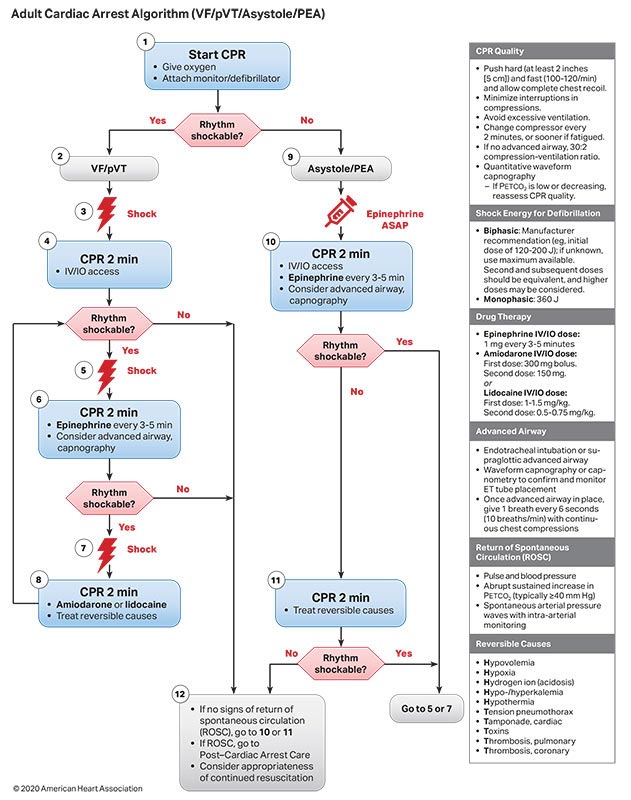
Which of the following best describes the correct administration of adrenaline for a shockable rhythm in adult advanced life support?
Your Answer: Give 1 mg of adrenaline after the second shock and every 3 - 5 minutes thereafter
Explanation:Give adrenaline 1 mg IV (IO) (10 mL of 1:10,000 solution) after the 2nd shock for adult patients in cardiac arrest with a shockable rhythm. Repeat adrenaline 1 mg IV (IO) every 3-5 minutes whilst ALS continues.
-
This question is part of the following fields:
- Cardiovascular
- Pharmacology
-
-
Question 11
Correct
-
Which of the following infections is vancomycin most likely prescribed for?
Your Answer: Clostridium difficile colitis
Explanation:125 mg PO q6hr for 10 days is indicated for treatment of Clostridium difficile (C. difficile)-associated diarrhoea
-
This question is part of the following fields:
- Infections
- Pharmacology
-
-
Question 12
Correct
-
An 11-year-old presented to a GP with a history of headache, neck stiffness and photophobia. On examination, HR is 122, BP is 87/42, RR is 28, SaO 2 is 95%, temperature is 39.4 o C. There is a recent petechial rash on legs and arms. The GP administered a dose of antibiotics in the prehospital setting before transferring to the Emergency Department. Which of these would the GP have administered?
Your Answer: IM benzylpenicillin 1.2 g
Explanation:General Practitioners are advised to give a single injection of benzylpenicillin by intravenous or intramuscular injection before transferring the patient urgently to the ED when bacterial meningitis is suspected.
The recommended doses are:
Infants under 1 year: 300 mg
Children ages 1 to 9 years: 600 mg
Children aged 10 years and over: 1.2g
Adults: 1.2g -
This question is part of the following fields:
- Infections
- Pharmacology
-
-
Question 13
Incorrect
-
The sensory innervation of the oropharynx is provided by which of the following nerves:
Your Answer: Vagus nerve
Correct Answer: Glossopharyngeal nerve
Explanation:Each subdivision of the pharynx has a different sensory innervation:the nasopharynx is innervated by the maxillary nervethe oropharynx is innervated by the glossopharyngeal nervethe laryngopharynx is innervated by the vagus nerve.
-
This question is part of the following fields:
- Anatomy
- Head And Neck
-
-
Question 14
Incorrect
-
An elderly man with chronic heart and lung disease develops Legionnaires' disease. Which of the following clinical features is NOT typical of Legionnaires' disease:
Your Answer: Haemoptysis
Correct Answer: Confusion
Explanation:Legionella pneumophilais a Gram negative bacterium that is found in natural water supplies and in the soil, transmitted predominantly via inhalation of aerosols generated from contaminated water (direct person-to-person spread of infected patients does not occur). It is the cause of Legionnaires’ disease. Outbreaks of Legionnaires’ disease have been linked to poorly maintained air conditioning systems, whirlpool spas and hot tubs.
The clinical features of the pneumonic form of Legionnaires’ disease include:
Mild flu-like prodrome for 1-3 days
Cough (usually non-productive and occurs in approximately 90%)
Pleuritic chest pain
Haemoptysis
Headache
Nausea, vomiting and diarrhoea
AnorexiaLegionella pneumophilainfections can be successfully treated with macrolide antibiotics, such as erythromycin, or quinolones, such as ciprofloxacin. Tetracyclines, such as doxycycline, can also be used.
The syndrome of inappropriate antidiuretic hormone secretion (SIADH) can occur with Legionnaires’ disease and will result in hyponatraemia as is seen in this case.
Legionella pneumophilainfections are resistant to amoxicillin but can be successfully treated with macrolide antibiotics, such as erythromycin, or quinolones, such as ciprofloxacin. Tetracyclines, such as doxycycline, can also be used. The majority of cases of Legionnaires’ disease are caused by Legionella pneumophila, however many other species of Legionella have been identified.
Legionella longbeachae is another less commonly encountered species that has also been implicated in outbreaks. It is predominantly found in soil and potting compost, and has caused outbreaks of Pontiac fever, the non-respiratory and less severe variant of Legionnaires’ disease. -
This question is part of the following fields:
- Microbiology
- Pathogens
-
-
Question 15
Incorrect
-
A p value < 0.05 obtained from a study with a significance level (α) of 0.05, means all of the following, EXCEPT:
Your Answer: the probability of obtaining the result by chance is less than 1 in 20.
Correct Answer: the result is clinically significant.
Explanation:A p value < 0.05:is statistically significantmeans that the probability of obtaining a given result by chance is less than 1 in 20means the null hypothesis is rejectedmeans there is evidence of an association between a variable and an outcomeNote that this does not tell us whether the result is clinically significant.
-
This question is part of the following fields:
- Evidence Based Medicine
- Statistics
-
-
Question 16
Incorrect
-
Which of the following is NOT a common clinical manifestation of sickle cell disease?
Your Answer: Hand-foot syndrome
Correct Answer: Iron deficiency
Explanation:Signs and symptoms of Sickle cell disease(SCD):
Acute and chronic pain: The most common clinical manifestation of SCD is vaso-occlusive crisis; pain crises are the most distinguishing clinical feature of SCD
Bone pain: Often seen in long bones of extremities, primarily due to bone marrow infarction
Anaemia: Universally present, chronic, and haemolytic in nature
Aplastic crisis: Serious complication due to infection with parvovirus B19 (B19V)
Splenic sequestration: Characterized by the onset of life-threatening anaemia with rapid enlargement of the spleen and high reticulocyte count
Infection: Organisms that pose the greatest danger include encapsulated respiratory bacteria, particularly Streptococcus pneumoniae; adult infections are predominantly with gram-negative organisms, especially Salmonella
Growth retardation, delayed sexual maturation, being underweight
Hand-foot syndrome: This is a dactylitis presenting as bilateral painful and swollen hands and/or feet in children
Acute chest syndrome: Young children present with chest pain, fever, cough, tachypnoea, leucocytosis, and pulmonary infiltrates in the upper lobes; adults are usually afebrile, dyspnoeic with severe chest pain, with multilobar/lower lobe disease
Pulmonary hypertension: Increasingly recognized as a serious complication of SCD
Avascular necrosis of the femoral or humeral head: Due to vascular occlusion
Central nervous system (CNS) involvement: Most severe manifestation is stroke
Ophthalmologic involvement: Ptosis, retinal vascular changes, proliferative retinitis
Cardiac involvement: Dilation of both ventricles and the left atrium
Gastrointestinal involvement: Cholelithiasis is common in children; liver may become involved
Genitourinary involvement: Kidneys lose concentrating capacity; priapism is a well-recognized complication of SCD
Dermatologic involvement: Leg ulcers are a chronic painful problem -
This question is part of the following fields:
- Haematology
- Pathology
-
-
Question 17
Correct
-
Fat necrosis is typically seen in which of the following:
Your Answer: Acute pancreatitis
Explanation:Fat necrosis typically occurs following either direct trauma or from enzymatic lipolysis in acute pancreatitis, where release of triglyceride elicits a rapid inflammatory response and fat is phagocytosed by neutrophils and macrophages with subsequent fibrosis.
-
This question is part of the following fields:
- Inflammatory Responses
- Pathology
-
-
Question 18
Incorrect
-
During anaerobic respiration, what is the net generation of ATP molecules:
Your Answer: 8
Correct Answer: 2
Explanation:In anaerobic respiration, two ATP molecules are produced for every glucose molecule, as opposed to the 38 molecules of ATP produced in aerobic respiration.
-
This question is part of the following fields:
- Basic Cellular
- Physiology
-
-
Question 19
Correct
-
All of the following statement are correct regarding endothelium derived nitric oxide except:
Your Answer: Nitric oxide production is inhibited by local mediators such as bradykinin, histamine and serotonin.
Explanation:Factors that elevate intracellular Ca2+ increase nitric oxide (NO) production by the endothelium included local mediators such as histamine and serotonin, bradykinin, and some neurotransmitters like substance P. NO production is also stimulated by increased flow (shear stress) and additionally activates prostacyclin synthesis. As a result of basal production of NO, there is continuous modulation of vascular resistance and as a result, there is increased production of nitric oxide acts which causes vasodilation. Platelet activation and thrombosis are inhibited by nitric oxide.
-
This question is part of the following fields:
- Cardiovascular
- Physiology
-
-
Question 20
Incorrect
-
In the Paediatric Emergency Department, you saw a 6-year-old girl with severe bilateral conjunctivitis. You give her mother some general eye hygiene advice and prescribe chloramphenicol eye drops.
What is the chloramphenicol's mechanism of action?
Your Answer: Inhibition of nucleic acid synthesis
Correct Answer: Inhibition of protein synthesis
Explanation:Chloramphenicol is a broad-spectrum antibiotic that inhibits bacterial protein synthesis by blocking the 50S subunit of the bacterial ribosome’s peptidyl transferase activity. When administered systemically, it has limited usage due to the potential of significant side effects such as aplastic anaemia, peripheral neuropathy, and optic neuritis. It’s only used to treat typhoid fever and Haemophilus influenzae meningitis, but it’s usually better to use a broad-spectrum cephalosporin.
-
This question is part of the following fields:
- Infections
- Pharmacology
-
-
Question 21
Correct
-
Which of the following decreases activation of vitamin D:
Your Answer: Chronic renal failure
Explanation:Calcium deficiency (low Ca2+ diet or hypocalcemia) activates 1-alpha-hydroxylase in the cells of the renal proximal tubule which catalyses the conversion of vitamin D to its active form, 1,25-dihydroxycholecalciferol. Increased parathyroid hormone (PTH) and hypophosphatemia also stimulate the enzyme. Chronic renal failure is associated with a constellation of bone diseases, including osteomalacia caused by failure of the diseased renal tissue to produce the active form of vitamin D.
-
This question is part of the following fields:
- Endocrine
- Physiology
-
-
Question 22
Correct
-
Coagulative necrosis is typically seen in which of the following:
Your Answer: Myocardial infarction
Explanation:Coagulative necrosis is the most common form of necrosis characterised by the loss of cell nuclei, but with general preservation of the underlying architecture. Dead tissue is macroscopically pale and firm. This is the classic pattern seen in myocardial infarction.Liquefactive necrosis leads to complete loss of cellular structure and conversion into a soft, semi-solid mass. This is typically seen in the brain following cerebral infarction.Caseous necrosis is most commonly seen in tuberculosis. Histologically, the complete loss of normal tissue architecture is replaced by amorphous, granular and eosinophilic tissue with a variable amount of fat and an appearance reminiscent of cottage cheese.Gangrenous necrosis is necrosis with putrefaction of tissues due to exposure to air (dry gangrene) or infection (wet gangrene).
-
This question is part of the following fields:
- Inflammatory Responses
- Pathology
-
-
Question 23
Correct
-
A 29 year old man presents to ED followed an alleged assault whilst out drinking. He received blunt trauma to his right axilla. He is complaining of difficulty abducting his right arm above the level of his shoulder, and on inspection, the inferior angle of his right scapula protrudes more than that of his left scapula. Which of the following nerves has most likely been affected:
Your Answer: Long thoracic nerve
Explanation:Damage to the long thoracic nerve results in weakness/paralysis of the serratus anterior muscle causing difficulty abducting the upper limb above 90 degrees and giving a ‘winged ‘ scapula appearance where the medial border, particularly the inferior angle, of the scapula moves laterally and posteriorly away from the thoracic wall (this becomes more pronounced if the patient presses the upper limb against a wall).
-
This question is part of the following fields:
- Anatomy
- Upper Limb
-
-
Question 24
Incorrect
-
During bedside rounds, an 82-year old female in the Medicine Ward complains of pain and tingling of all fingers of the right hand. The attending physician is considering carpal tunnel syndrome.
Which of the following is expected to undergo atrophy in carpal tunnel syndrome?
Your Answer:
Correct Answer: The thenar eminence
Explanation:Carpal tunnel syndrome (CTS) is an entrapment neuropathy caused by compression of the median nerve as it travels through the wrist’s carpal tunnel. It is the most common nerve entrapment neuropathy, accounting for 90% of all neuropathies. Early symptoms of carpal tunnel syndrome include pain, numbness, and paraesthesia’s. These symptoms typically present, with some variability, in the thumb, index finger, middle finger, and the radial half (thumb side) of the ring finger. Pain also can radiate up the affected arm. With further progression, hand weakness, decreased fine motor coordination, clumsiness, and thenar atrophy can occur.
The muscles innervated by the median nerve can be remembered using the mnemonic ‘LOAF’:
L– lateral two lumbricals
O– Opponens pollicis
A– Abductor pollicis
F– Flexor pollicis brevisIn the early presentation of the disease, symptoms most often present at night when lying down and are relieved during the day. With further progression of the disease, symptoms will also be present during the day, especially with certain repetitive activities, such as when drawing, typing, or playing video games. In more advanced disease, symptoms can be constant.
Typical occupations of patients with carpal tunnel syndrome include those who use computers for extended periods of time, those who use equipment that has vibration such as construction workers, and any other occupation requiring frequent, repetitive movement.
-
This question is part of the following fields:
- Anatomy
- Upper Limb
-
-
Question 25
Incorrect
-
What is the earliest physiological effect that causes postural hypotension:
Your Answer:
Correct Answer: A fall in central venous pressure
Explanation:When autonomic reflexes are impaired or intravascular volume is markedly depleted, a significant reduction in blood pressure occurs upon standing, a phenomenon termed Postural Hypotension (orthostatic hypotension). Orthostatic hypotension can cause dizziness, syncope, and even angina or stroke. When autonomic reflexes are impaired, blood pressure falls progressively after standing because the gravitational pooling of blood in the legs cannot be compensated by sympathetic vasoconstriction.
-
This question is part of the following fields:
- Cardiovascular
- Physiology
-
-
Question 26
Incorrect
-
Regarding the phases of gastric secretion, which of the following statements is INCORRECT:
Your Answer:
Correct Answer: A high pH in the stomach inhibits gastrin secretion.
Explanation:A low pH in the stomach inhibits gastrin secretion, therefore when the stomach is empty or when acid has been secreted for some time after food has entered it, there is inhibition of acid secretion. However, when food first enters the stomach, the pH rises, and this leads to release of the inhibition and causes a maximum secretion of gastrin. Thus gastric acid secretion is self-regulating.
-
This question is part of the following fields:
- Gastrointestinal
- Physiology
-
-
Question 27
Incorrect
-
The transport of oxygen from maternal to fetal circulation is made possible by fetal haemoglobin. Which of the statements about fetal haemoglobin (HbF) is also correct?
Your Answer:
Correct Answer: The oxygen dissociation curve for foetal haemoglobin is shifted to the left of that of adult haemoglobin
Explanation:Fetal haemoglobin is the most common type of haemoglobin found in the foetus during pregnancy. It transports oxygen from the maternal circulation to the fetal circulation. It can easily bind to oxygen from the maternal circulation because it has a high affinity for oxygen. From 10 to 12 weeks of pregnancy to the first six months after birth, the erythroid precursor cells produce fetal haemoglobin. In comparison to adult haemoglobin, fetal haemoglobin has two alpha and two gamma subunits, whereas adult haemoglobin has two alpha and two beta subunits in its major form.
And, unlike adult haemoglobin, the oxygen dissociation curve of fetal haemoglobin is left-shifted. Myoglobin is an oxygen storage molecule with a very high affinity for oxygen. Only when the partial pressure of oxygen is exceeded does it release oxygen.
-
This question is part of the following fields:
- Physiology
- Respiratory Physiology
-
-
Question 28
Incorrect
-
A 68-year-old man has a very fast heartbeat' and is out of breath. He has had a heart transplant in the past. His electrocardiogram reveals supraventricular tachycardia.
Which of the following is the most appropriate adenosine dose for him to receive as a first dose?Your Answer:
Correct Answer: Adenosine 3 mg IV
Explanation:A rapid IV bolus of adenosine is given, followed by a saline flush. The standard adult dose is 6 mg, followed by 12 mg if necessary, and then another 12 mg bolus every 1-2 minutes until an effect is seen.
Patients who have had a heart transplant, on the other hand, are extremely sensitive to the effects of adenosine and should start with a lower dose of 3 mg, then 6 mg, and finally 12 mg.
-
This question is part of the following fields:
- Cardiovascular Pharmacology
- Pharmacology
-
-
Question 29
Incorrect
-
A patient presents with acute severe asthma. Her initial salbutamol nebulization produced a poor response and you administer another nebuliser with ipratropium bromide added on.
Which statement about ipratropium bromide is true?Your Answer:
Correct Answer: It can trigger acute closed-angle glaucoma
Explanation:Ipratropium bromide is an antimuscarinic drug. It is used in the management of acute asthma and COPD.
It provides short-term relief in chronic asthma. Short-acting β2agonists are preferred and act more quickly.
The commonest side effect of ipratropium bromide is dry mouth. Tremor is commonly seen with β2agonists.
It can trigger acute closed-angle glaucoma in patients that are susceptible.
First-line treatment for moderate asthma attacks is short-acting β2agonists.
The BTS guidelines recommend that nebulised ipratropium bromide (0.5 mg 4-6 hourly) be added to β2agonist treatment in patients with a poor initial response to β2agonist therapy or with acute severe or life-threatening asthma.
Its duration of action is 3-6 hours, maximum effect occurs 30-60 minutes after use, and bronchodilation can be maintained with three times per day dosing.
-
This question is part of the following fields:
- Pharmacology
- Respiratory Pharmacology
-
-
Question 30
Incorrect
-
All of the following predisposes to lithium toxicity in patients taking long-term therapy EXCEPT:
Your Answer:
Correct Answer: Hypernatraemia
Explanation:A common complication of long term lithium therapy results in most cases of lithium intoxication. It is caused by reduced excretion of the drug which can be due to several factors including deterioration of renal function, dehydration, hyponatraemia, infections, and co-administration of diuretics or NSAIDs or other drugs that may interact.
-
This question is part of the following fields:
- Central Nervous System
- Pharmacology
-
SESSION STATS - PERFORMANCE PER SPECIALTY
