-
Question 1
Correct
-
Fenestrated capillaries are typically found where in the body:
Your Answer: Renal glomeruli
Explanation:Fenestrated capillaries, found in renal glomeruli, endocrine glands and intestinal villi, are more permeable than continuous capillaries with less tight junctions, and the endothelial cells are also punctured by pores which allow large amounts of fluids or metabolites to pass.
-
This question is part of the following fields:
- Cardiovascular
- Physiology
-
-
Question 2
Incorrect
-
Regarding the cardiac cycle, which of the following statements is INCORRECT:
Your Answer:
Correct Answer: The second heart sound occurs in late diastole caused by closure of the atrioventricular valves.
Explanation:Diastole is usually twice the length of systole at rest, but decreases with increased heart rate. During systole, contraction of the ventricles compresses the coronary arteries and suppresses blood flow. This is particularly evident in the left ventricle, where during systole the ventricular pressure is the same as or greater than that in the arteries and as a result more than 85% of left ventricular perfusion occurs during diastole. This becomes a problem if the heart rate is increased as the diastolic interval is shorter and can result in ischaemia. The second heart sound, caused by closure of the semilunar valves, marks the end of systole.
-
This question is part of the following fields:
- Cardiovascular
- Physiology
-
-
Question 3
Incorrect
-
Which of the following drug classes may cause bronchoconstriction:
Your Answer:
Correct Answer: Beta-blockers
Explanation:Beta-blockers, including those considered to be cardioselective, should usually be avoided in patients with a history of asthma, bronchospasm or a history of obstructive airways disease. However, when there is no alternative, a cardioselective beta-blocker can be given to these patients with caution and under specialist supervision. In such cases the risk of inducing bronchospasm should be appreciated and appropriate precautions taken.
-
This question is part of the following fields:
- Cardiovascular
- Pharmacology
-
-
Question 4
Incorrect
-
Question 5
Incorrect
-
Which of the following is NOT one of the cardinal features of acute inflammation:
Your Answer:
Correct Answer: Discharge
Explanation:Classic signs:
Rubor (redness)
Calor (heat)
Dolour (pain)
Tumour (swelling)
Functio laesa (loss of function)
These classic signs are produced by a rapid vascular response and cellular events. The main function of these events is to bring elements of the immune system to the site of injury and prevent further tissue damage. -
This question is part of the following fields:
- Inflammatory Responses
- Pathology
-
-
Question 6
Incorrect
-
Which of the following clinical features is most suggestive of a lesion of the temporal lobe:
Your Answer:
Correct Answer: Receptive dysphasia
Explanation:Damage to the Wernicke’s speech area in the temporal lobe can result in a receptive dysphasia. Hemispatial neglect is most likely to occur in a lesion of the parietal lobe. Homonymous hemianopia is most likely to occur in a lesion of the occipital lobe. Expressive dysphasia is most likely to occur in a lesion of the Broca speech area in the frontal lobe. Conjugate eye deviation towards the side of the lesion is most likely to occur in a lesion of the frontal lobe.
-
This question is part of the following fields:
- Anatomy
- Central Nervous System
-
-
Question 7
Incorrect
-
A patient presents to your Emergency Department with a laceration on their buttocks requiring closure with sutures.
What stage of wound healing is the first to reach completion?Your Answer:
Correct Answer: Haemostasis
Explanation:The stages of wound healing are: haemostasis, inflammatory, proliferative and remodelling (maturation) phases in that order. The first stage in the healing process of a laceration is haemostasis. Haemostasis is the process of the wound being closed by clotting.
The inflammatory phase occurs just after and up to 48 hours after injury– Blood vessels dilate to allow white blood cells, antibodies, growth factors, enzymes and nutrients to reach the wounded area leading to the characteristic signs of inflammation seen.
Epithelialisation and angiogenesis are not phases of wound healing but occur during the proliferative phase. This ia after haemolysis and inflammation phases have occurred.
The maturation phase is the final phase and occurs when the wound has closed. It involves remodelling of collagen from type III to type I. Apoptosis remove unwanted cells, cellular activity reduces and the number of blood vessels in the wounded area regresses and decreases. This can continues for up to 1 year after injury.
-
This question is part of the following fields:
- General Pathology
- Pathology
-
-
Question 8
Incorrect
-
The syndrome of inappropriate antidiuresis due to excessive antidiuretic hormone (ADH) secretion is diagnosed in a male patient with a history of recurrent hyponatraemia.
Which of the following produces ADH?Your Answer:
Correct Answer: Hypothalamus
Explanation:Antidiuretic hormone (ADH), commonly known as vasopressin, is a peptide hormone that controls how much water the body retains.
It is produced in the magnocellular and parvocellular neurosecretory cells of the paraventricular nucleus and supraoptic nucleus in the hypothalamus from a prohormone precursor. It is subsequently carried to the posterior pituitary via axons and stored in vesicles.
The secretion of ADH from the posterior pituitary is regulated by numerous mechanisms:
Increased plasma osmolality: Osmoreceptors in the hypothalamus detect an increase in osmolality and trigger ADH release.Stretch receptors in the atrial walls and big veins detect a decrease in atrial pressure as a result of this (cardiopulmonary baroreceptors). ADH release is generally inhibited by atrial receptor firing, but when the atrial receptors are stretched, the firing reduces and ADH release is promoted.
Hypotension causes baroreceptor firing to diminish, resulting in increased sympathetic activity and ADH release.
An increase in angiotensin II stimulates angiotensin II receptors in the hypothalamus, causing ADH production to increase.The main sites of action for ADH are:
The kidney is made up of two parts. ADH’s main job is to keep the extracellular fluid volume under control. It increases permeability to water by acting on the renal collecting ducts via V2 Receptors (via a camp-dependent mechanism). This leads to a decrease in urine production, an increase in blood volume, and an increase in arterial pressure as a result.Vascular system: Vasoconstriction is a secondary function of ADH. ADH causes vasoconstriction via binding to V1 Receptors on vascular smooth muscle (via the IP3 signal transduction pathway). An increase in arterial pressure occurs as a result of this.
-
This question is part of the following fields:
- Physiology
- Renal Physiology
-
-
Question 9
Incorrect
-
Which of the following is NOT a typical complication associated with mumps:
Your Answer:
Correct Answer: Subacute sclerosing panencephalitis
Explanation:Complications of mumps include meningitis, post meningitis deafness, encephalitis, pancreatitis, orchitis and oophoritis. Subacute sclerosing panencephalitis is a complication typically associated with measles infection.
-
This question is part of the following fields:
- Microbiology
- Pathogens
-
-
Question 10
Incorrect
-
Mannitol is primarily indicated for which of the following:
Your Answer:
Correct Answer: Cerebral oedema
Explanation:Mannitol is an osmotic diuretic that can be used to treat cerebral oedema and raised intraocular pressure. Mannitol is a low molecular weight compound and is, therefore, freely filtered at the glomerulus and is not reabsorbed. It, therefore, increases the osmolality of the glomerular filtrate and tubular fluid, increasing urinary volume by an osmotic effect. It also does not cross the blood-brain-barrier (BBB).
-
This question is part of the following fields:
- Cardiovascular
- Pharmacology
-
-
Question 11
Incorrect
-
A 54-year-old man returns from a recently holiday on a cruise ship with a dry cough and a fever. Today he has also had several episodes of diarrhoea and has developed bilateral pleuritic chest pain. He states that he is short of breath, most notably on exertion. He had been prescribed amoxicillin by the cruise ship doctor a few days earlier but has not seen any improvement.
Which of the following is the most likely causative organism? Select ONE answer only.Your Answer:
Correct Answer: Legionella pneumophila
Explanation:Legionella pneumophilais a Gram negative bacterium that is found in natural water supplies and in the soil, transmitted predominantly via inhalation of aerosols generated from contaminated water (direct person-to-person spread of infected patients does not occur). It is the cause of Legionnaires’ disease. Outbreaks of Legionnaires’ disease have been linked to poorly maintained air conditioning systems, whirlpool spas and hot tubs.
The clinical features of the pneumonic form of Legionnaires’ disease include:
Mild flu-like prodrome for 1-3 days
Cough (usually non-productive and occurs in approximately 90%)
Pleuritic chest pain
Haemoptysis
Headache
Nausea, vomiting and diarrhoea
Anorexia
Legionella pneumophilainfections can be successfully treated with macrolide antibiotics, such as erythromycin, or quinolones, such as ciprofloxacin. Tetracyclines, such as doxycycline, can also be used.
The syndrome of inappropriate antidiuretic hormone secretion (SIADH) can occur with Legionnaires’ disease and will result in hyponatraemia as is seen in this case.
Legionella pneumophilainfections are resistant to amoxicillin but can be successfully treated with macrolide antibiotics, such as erythromycin, or quinolones, such as ciprofloxacin. Tetracyclines, such as doxycycline, can also be used. The majority of cases of Legionnaires’ disease are caused by Legionella pneumophila, however many other species of Legionella have been identified.
Legionella longbeachae is another less commonly encountered species that has also been implicated in outbreaks. It is predominantly found in soil and potting compost, and has caused outbreaks of Pontiac fever, the non-respiratory and less severe variant of Legionnaires’ disease. -
This question is part of the following fields:
- Microbiology
- Specific Pathogen Groups
-
-
Question 12
Incorrect
-
All of the following statements are incorrect about insulin except:
Your Answer:
Correct Answer: Proinsulin is cleaved into insulin and C peptide.
Explanation:Proinsulin is synthesised as a single-chain peptide. A connecting peptide (C peptide) within storage granules is removed by proteases to yield insulin.
Insulin:
1. is a polypeptide hormone consisting of two short chains (A and B) linked by disulphide bonds.
2. is produced by beta cells, located centrally within the islets of Langerhans, in the endocrine tissues of the pancreas.
3. release is stimulated initially during eating by the parasympathetic nervous system and gut hormones such as secretin. However, most output is driven by the rise in plasma glucose concentration that occurs after a meal.
4. effects are mediated by the receptor tyrosine kinase. -
This question is part of the following fields:
- Endocrine
- Physiology
-
-
Question 13
Incorrect
-
A 28 year old man presents with abdominal pain and constipation, and bloods show hypocalcaemia. Which of the following hormones is increased as a result of hypocalcaemia?
Your Answer:
Correct Answer: Parathyroid hormone
Explanation:Parathyroid hormone (PTH), also called parathormone or parathyrin, is a peptide hormone that is secreted by the parathyroid glands, which lie immediately behind the thyroid gland. In particular, this hormone is made by chief cells. It regulates the serum calcium concentration through its effects on bone, kidney, and intestine. This hormone is primarily released in response to decreasing plasma Ca2+ concentration and it serves to increase plasma calcium levels and decrease plasma phosphate levels.
PTH activates Ca2+entry channels in the apical membrane and the Ca2+ATPase pump in the basolateral membrane and as a result, increases calcium reabsorption in the distal tubule of the nephron. It inhibits reabsorption of phosphate and this increases its excretion by in the proximal tubule of the nephron. -
This question is part of the following fields:
- Endocrine
- Physiology
-
-
Question 14
Incorrect
-
A 56-year-old male with a 10-year history of Diabetes Mellitus and Hypertension was rushed to the Emergency Department due to sudden onset crushing chest pain. ECG showed an ST-elevation myocardial infarct in the left anterior descending artery territory. The patient's condition was stabilised and managed with angioplasty, but he sustained significant myocardial damage.
Which one of the following statements best agrees with the myocardial healing process?Your Answer:
Correct Answer: The left ventricle will likely hypertrophy first to maintain cardiac output
Explanation:Following a myocardial infarction scar tissue formation will take place at the site of the damaged muscle. This places increased load on the rest of the myocardium causing it to hypertrophy. The left ventricle will hypertrophy first as it is pumping blood against a greater afterload as compared to the right ventricle.
There are three types of cells in the body with regards to the cell cycle: 1. permanent
2. labile
3. stable cellsPermanent cells do not re-enter the cell cycle and remain in G0. If there is a pool of stem cells the stem cells will enter the cell cycle to form more cells. Myocardial cells are a type of permanent cell and there is no pool of stem cells in the heart muscle. The anterior wall will not hypertrophy as it is formed by the right atrium and ventricle and both of these hypertrophy after the left ventricle.
-
This question is part of the following fields:
- General Pathology
- Pathology
-
-
Question 15
Incorrect
-
Osteoclasts are a type of bone cell that are critical in the maintenance, repair and remodelling of bones.
Which of the following inhibits osteoclast activity? Select ONE answer only.Your Answer:
Correct Answer: Calcitonin
Explanation:Osteoclasts are a type of bone cell that breaks down bone tissue. This is a critical function in the maintenance, repair and remodelling of bones. The osteoclast disassembles and digests the composite of hydrated protein and minerals at a molecular level by secreting acid and collagenase. This process is known as bone resorption and also helps to regulate the plasma calcium concentration.
Osteoclastic activity is controlled by a number of hormones:
1,25-dihydroxycholecalciferol increases osteoclastic activity
Parathyroid hormone increases osteoclastic activity
Calcitonin inhibits osteoclastic activity
Bisphosphonates are a class of drug that slow down and prevent bone damage. They are osteoclast inhibitors. -
This question is part of the following fields:
- Endocrine Physiology
- Physiology
-
-
Question 16
Incorrect
-
A 17-year-old male presenting in the department has a history of C3 deficiency.
C3 deficiency is associated with all of the following EXCEPT?Your Answer:
Correct Answer: Hereditary angioedema
Explanation:C1-inhibitor deficiency is the cause of hereditary angioedema not C3 deficiency,
All the other statements are correct
-
This question is part of the following fields:
- General Pathology
- Pathology
-
-
Question 17
Incorrect
-
Which of the following terms describes the proportion of individuals with a negative test result who actually do not have a disease:
Your Answer:
Correct Answer: Negative predictive value
Explanation:Negative predictive value (NPV) is the proportion of individuals with a negative test result who do not have the disease.
NPV = d/(c+d) -
This question is part of the following fields:
- Evidence Based Medicine
- Statistics
-
-
Question 18
Incorrect
-
Which of the following nerves is responsible for the symptoms of a patient with history of recurrent herpes simplex outbreaks on his face and presents with ophthalmic herpes zoster and a painful vesicle on the tip of his nose?
Your Answer:
Correct Answer: Nasociliary nerve
Explanation:Hutchinson sign relates to involvement of the tip of the nose from facial herpes zoster. It implies involvement of the external nasal branch of the nasociliary nerve which is a branch of the ophthalmic division of the trigeminal nerve.
The nasociliary branch of the trigeminal nerve innervates the apex and lateral aspect of the nose, as well as the cornea. Therefore, lesions on the side or tip of the nose should raise suspicion of ocular involvement.
-
This question is part of the following fields:
- Microbiology
- Specific Pathogen Groups
-
-
Question 19
Incorrect
-
You're called to a cardiac arrest in your Emergency Department resuscitation area. The rhythm strip is shown in the diagram below. Defibrillation has already been attempted three times on the patient. You intended to administer amiodarone, but your department has informed you that it is not available. In these circumstances, if amiodarone is not available, which of the following drugs is recommended by the ALS guidelines?

Your Answer:
Correct Answer: Lidocaine
Explanation:If amiodarone is unavailable in VF/pVT arrests, lidocaine at a dose of 1 mg/kg can be used instead, according to the latest ALS guidelines. If amiodarone has already been given, no lidocaine should be given.
-
This question is part of the following fields:
- Cardiovascular Pharmacology
- Pharmacology
-
-
Question 20
Incorrect
-
Regarding the penis, which of the following statements is CORRECT:
Your Answer:
Correct Answer: The corpus spongiosum is ventral in the erect penis.
Explanation:Because the anatomical position of the penis is erect, the paired corpora cavernosa are defined as dorsal in the body of the penis and the single corpus spongiosum as ventral. The nerves and vessels lie superficial to the corpus cavernosum. The urethra lies within the corpus spongiosum.
-
This question is part of the following fields:
- Abdomen
- Anatomy
-
-
Question 21
Incorrect
-
A critically ill 48-year-old individual appears with symptoms and signs of an anaphylactic reaction.
In an allergic reaction, which of the following is an absolute contraindication to the injection of adrenaline?Your Answer:
Correct Answer: None of the other options
Explanation:Even if the following relevant contraindications exist, adrenaline can be given in life-threatening anaphylactic reactions:
Coronary artery disease (CAD)
Coronary artery disease (CAD) Second stage of labour
Hypertension that is uncontrolled
Severe Ventricular arrhythmias -
This question is part of the following fields:
- Pharmacology
- Respiratory Pharmacology
-
-
Question 22
Incorrect
-
A 67-year-old man complains of chest pain and goes to the emergency room. He takes several medications, including amiodarone.
Which of the following is amiodarone mechanism of action?Your Answer:
Correct Answer: Blocks Na + and K + channels and beta-adrenoreceptors in the heart
Explanation:Amiodarone is an anti-arrhythmic medication that can be used to treat both ventricular and atrial arrhythmias. It’s a class III anti-arrhythmic that works by blocking a variety of channels, including Na+ and K+ channels, as well as beta-adrenoreceptors. As a result, it slows conduction through the SA and AV nodes and prolongs phase 3 of the cardiac action potential (slowing repolarisation).
-
This question is part of the following fields:
- Cardiovascular Pharmacology
- Pharmacology
-
-
Question 23
Incorrect
-
Which of the following is an adverse effect of carbamazepine:
Your Answer:
Correct Answer: Aplastic anaemia
Explanation:Common adverse effects include nausea and vomiting, sedation, dizziness, headache, blurred vision and ataxia. These adverse effects are dose related and are most common at the start of treatment.
Other adverse effects include:
Allergic skin reactions (and rarely, more serious dermatological conditions)
Hyponatraemia (avoid concomitant use with diuretics)
Leucopenia, thrombocytopenia and other blood disorders including aplastic anaemia
Hepatic impairment -
This question is part of the following fields:
- Central Nervous System
- Pharmacology
-
-
Question 24
Incorrect
-
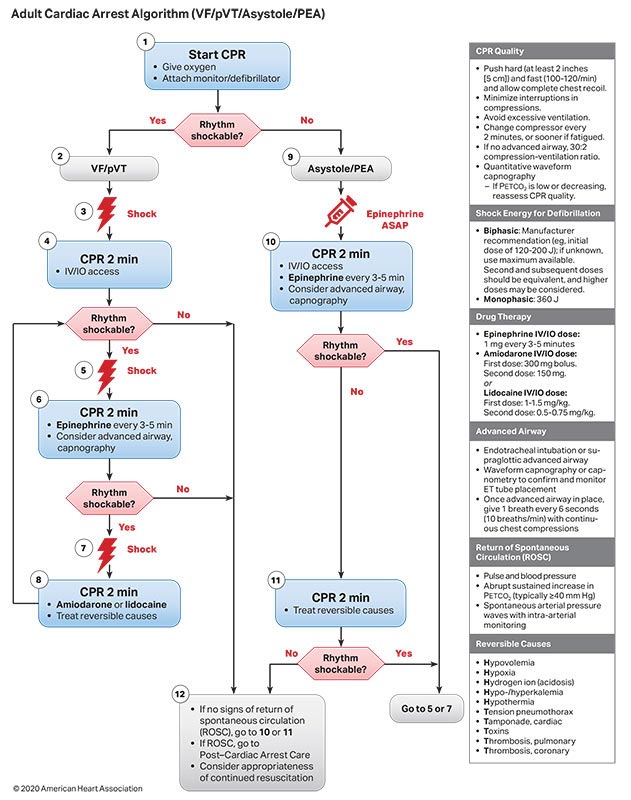
Which of the following best describes the correct administration of adrenaline for a shockable rhythm in adult advanced life support?
Your Answer:
Correct Answer: Give 1 mg of adrenaline after the second shock and every 3 - 5 minutes thereafter
Explanation:Give adrenaline 1 mg IV (IO) (10 mL of 1:10,000 solution) after the 2nd shock for adult patients in cardiac arrest with a shockable rhythm. Repeat adrenaline 1 mg IV (IO) every 3-5 minutes whilst ALS continues.
-
This question is part of the following fields:
- Cardiovascular
- Pharmacology
-
-
Question 25
Incorrect
-
A patient with a diagnosis of HIV presents with a fever, sore throat, and general malaise and you are concerned the patient may have an AIDS defining illness.
Which one of these, according to the CDC definition, would mean a patient infected with HIV has AIDS?
Your Answer:
Correct Answer: CD4 T-cell percentage of total lymphocytes of less than 15%
Explanation:According to the CDC definition, a patient co-infected with HIV can be diagnosed with AIDS if he or she has:
A CD4 T-cell count of less than 200 cells/mm3 or;
A CD4 T-cell percentage of total lymphocytes of less than 15% or;
An AIDS defining infectionA Streptococcal throat infection is not an AIDS defining infection.
A normal CD4 count ranges from 500-1000 cells/mm3. A CD4 (not CD8) count of less than 200 cells/mm3 is AIDS defining.
The CD4 count can vary from day to day and depending upon the time that the blood test is taken. It can also be affected by the presence of other infections or illnesses. Treatment with anti-retroviral therapy should be considered at CD4 count of less than 350 cells/mm3.
Serum concentrations of the p24 antigen (the viral protein that makes up most of the core of the HIV) are usually high in the first few weeks after human immunodeficiency virus (HIV) infection and testing for p24 antigen is therefore a useful way of diagnosing very early infection.
-
This question is part of the following fields:
- Microbiology
- Specific Pathogen Groups
-
-
Question 26
Incorrect
-
You've been asked to visit a 20-year-old patient who has been complaining of stomach pain, diarrhoea, and bloating. The GP recently saw the patient and is now looking into numerous possible reasons for stomach hypermotility.
Which of the following factors contributes to increased stomach motility?Your Answer:
Correct Answer: Gastrin
Explanation:Gastrin is a peptide hormone that aids in gastric motility by stimulating the generation of gastric acid by the parietal cells of the stomach. G-cells in the stomach’s pyloric antrum, the duodenum, and the pancreas release it.
The following stimuli cause the release of gastrin:
Stimulation of the vagus nerve
Hypercalcaemia
stomach bloating
Proteins that have been partially digested, particularly amino acids.
The presence of acid and somatostatin inhibits the release of gastrin.
Gastrin’s main actions are as follows:
Gastric parietal cells are stimulated to release hydrochloric acid.
ECL cells are stimulated to produce histamine.
Gastric parietal cell maturation and fundal growth stimulation
Causes the secretion of pepsinogen by the gastric chief cells.
Improves antral muscle mobility
stimulates gastric contractions
Increases gastric emptying rate and stimulates pancreatic secretion
Gallbladder emptying is induced. -
This question is part of the following fields:
- Gastrointestinal Physiology
- Physiology
-
-
Question 27
Incorrect
-
In a 7-year-old child with chickenpox, which of the following would you advise the mother NOT to do?
Your Answer:
Correct Answer: Give ibuprofen for the fever
Explanation:Chickenpox (varicella zoster) is a highly contagious airborne disease and has an incubation period of between 7-21 days. It often has a prodromal phase when there is a fever, aches and headaches, dry cough, and sore throat before onset of rash.
Some recognized complications of chickenpox are:
Orchitis
Hepatitis
Pneumonia
Encephalitis
Infected spots
Otitis media
Myocarditis
Glomerulonephritis
Appendicitis
PancreatitisTreatment is symptomatic and includes using paracetamol to manage fever. There is a link between use of ibuprofen in patients with chicken-pox and necrotizing fasciitis so Ibuprofen should NOT be used.
An emollient and antihistamine can be used to ease the itchy rash and oral hydration is encouraged.
-
This question is part of the following fields:
- Microbiology
- Specific Pathogen Groups
-
-
Question 28
Incorrect
-
A 15-year-old girl took 20 tablets of paracetamol almost 4 hours ago after her mother for refused to provide her permission for her to go on a girl's trip. The girl is healthy and has no known comorbidities or drug history. Which one of the following is TRUE regarding paracetamol?
Your Answer:
Correct Answer: It is excreted renally
Explanation:Acetaminophen is an acetanilide derivative and is a widely used non-prescription analgesic and antipyretic medication for mild-to-moderate pain and fever.
The route of elimination: Paracetamol is metabolised extensively in the liver and excreted in the urine mainly as inactive glucuronide and sulfate conjugates, <5% is excreted as free (unconjugated) acetaminophen, and >90% of the dose administered is excreted within 24 hours.
It is thought to work by selectively inhibiting COX-1 receptors in the brain and spinal cord: It is categorized by the FDA as an NSAID as it is believed to selectively inhibit cyclo-oxygenase 3 (COX-3) receptors in the brain and spinal cord.
COX-3 is a unique variant of the more known COX-1 and COX-2. It is responsible for the production of prostaglandins in central areas, which sensitizes free nerve endings to the chemical mediators of pain. Therefore, by selectively inhibiting COX-3, paracetamol effectively reduces pain sensation by increasing the pain threshold.
Toxicity is primarily due to glutathione production: Acetaminophen metabolism by the CYP2E1 pathway releases a toxic metabolite known as N-acetyl-p-benzoquinoneimine (NAPQI). NAPQI primarily contributes to the toxic effects of acetaminophen. NAPQI is an intermediate metabolite that is further metabolized by fast conjugation with glutathione. The conjugated metabolite is then excreted in the urine as mercapturic acid. High doses of acetaminophen (overdoses) can lead to hepatic necrosis due to depleting glutathione and high binding levels of reactive metabolite (NAPQI) to important parts of liver cells.
Acetaminophen can be administered orally, rectally, or intravenously. It is predominantly metabolized in the liver, and the elimination half-life is 1-3 hours after a therapeutic dose. But maybe greater than 12 hours after an overdose.
It is primarily metabolized via the cytochrome p450 enzyme system: It is predominantly metabolized in the liver by three main metabolic pathways:
1. Glucuronidation (45-55%)
2. Sulphate conjugation (30-35%)
3. N-hydroxylation via the hepatic cytochrome p450 enzyme system (10-15%) -
This question is part of the following fields:
- CNS Pharmacology
- Pharmacology
-
-
Question 29
Incorrect
-
A 16-year-old male with a known case of Haemophilia A is referred to your orthopaedic clinic for evaluation and aspiration of a hemarthrosis of the left knee joint.
Out of the modes of inheritance listed below, which one is present in this disease?Your Answer:
Correct Answer: X-linked recessive
Explanation:All the Haemophilia’s have an X-linked recessive inheritance pattern, so they only manifest in male patients. Diseases with a mitochondrial inheritance pattern include MELAS syndrome, Leigh syndrome, LHON and MERRF syndrome. Autosomal dominant disorders include Huntingdon disease and Marfan syndrome. X-linked dominant diseases include Fragile X syndrome. Autosomal recessive diseases include cystic fibrosis and sickle cell disease.
-
This question is part of the following fields:
- Haematology
- Pathology
-
-
Question 30
Incorrect
-
The patient is a 61-year-old man with severe central chest pain. An acute myocardial infarction is revealed by his ECG. Clopidogrel is one of the medications he takes as part of his treatment.
Clopidogrel's direct mechanism of action is which of the following?Your Answer:
Correct Answer: Inhibition of platelet ADP receptors
Explanation:Clopidogrel, a thienopyridine derivative, prevents platelet aggregation and cross-linking by the protein fibrin by inhibiting the ADP receptor on platelet cell membranes (inhibits binding of ADP to its platelet receptor (P2Y12 ADP-receptor).
-
This question is part of the following fields:
- Cardiovascular Pharmacology
- Pharmacology
-
SESSION STATS - PERFORMANCE PER SPECIALTY
