-
Question 1
Correct
-
Low levels of which of the following arterial blood gas parameters stimulate the peripheral chemoreceptors?
Your Answer: Arterial pO 2
Explanation:Chemoreceptors are activated when the chemical composition of their immediate surroundings changes.
Peripheral chemoreceptors, together with central chemoreceptors, regulate respiratory functions. They detect changes in arterial blood oxygen levels. Decreased arterial Po2 (partial pressure of oxygen) reflexly stimulates peripheral chemoreceptors.
When peripheral chemoreceptors detect changes in arterial blood oxygen, they will trigger cardiorespiratory changes such as an increase in breathing and blood pressure. These reflexes are important for maintaining homeostasis during hypoxemia.
-
This question is part of the following fields:
- Physiology
- Respiratory Physiology
-
-
Question 2
Correct
-
Regarding renal clearance, which of the following statements is CORRECT:
Your Answer: The MDRD equation uses plasma creatinine to estimate the GFR making an adjustment for age, sex and race.
Explanation:Clearance is defined as the volume of plasma that is cleared of a substance per unit time. Inulin clearance is the gold standard for measurement of GFR but creatinine clearance is typically used instead. Creatinine is freely filtered and not reabsorbed, but there is a little creatinine tubular secretion. In practice, GFR is usually estimated from the plasma creatinine using a formula e.g. the MDRD equation making an adjustment for age, sex and race.
-
This question is part of the following fields:
- Physiology
- Renal
-
-
Question 3
Incorrect
-
A 32-year-old woman diagnosed with hyperthyroidism has her T 4 levels grossly elevated and she is started on carbimazole.
A release of which of the following from the hypothalamus is inhibited by increase in T4 levels?Your Answer: Thyroid-stimulating hormone
Correct Answer: Thyrotropin-releasing hormone
Explanation:A negative feedback mechanism involving the hypothalamic-pituitary-thyroid axis controls the release of T3 and T4 into the bloodstream.
When metabolic rate is low or serum T3 and/or T4 levels are decrease, this triggers the secretion of thyrotropin-releasing hormone (TRH) from the hypothalamus.
TRH goes to the anterior pituitary gland and stimulates secretion of thyroid-stimulating hormone (TSH).
An increased serum level of T3 and T4 inhibits the release of TRH.
-
This question is part of the following fields:
- Endocrine Physiology
- Physiology
-
-
Question 4
Correct
-
A 30-year-old carpenter presented to the emergency room with a laceration of his upper volar forearm. Upon further exploration and observation, it was revealed that the nerve that innervates the pronator teres muscle has been damaged.
Which of the following nerves is most likely damaged in the case?Your Answer: The median nerve
Explanation:Pronator teres syndrome (PTS) is caused by a compression of the median nerve (MN) by the pronator teres (PT) muscle in the forearm.
The median nerve, C6 and C7, innervates the pronator teres.
-
This question is part of the following fields:
- Anatomy
- Upper Limb
-
-
Question 5
Correct
-
One of these statements about significance tests is true.
Your Answer: A p value of less than 1 in 20 is considered ‘statistically significant’
Explanation:The p value is statistically significant when it is less than 0.05 (5% or 1 in 20).
Statistical significance is not the same as clinical significance.
The null hypothesis states that there is no difference between the groups.
The power of a study is the probability of correctly rejecting the null hypothesis when it is false.
A type I error occurs when the null hypothesis has been rejected when it is true. A type II error occurs when the null hypothesis has been accepted when it is actually false.
-
This question is part of the following fields:
- Evidence Based Medicine
-
-
Question 6
Correct
-
Cystic fibrosis patients have a weakened lung surfactant system. Which of the following cell types is in charge of surfactant secretion?
Your Answer: Type II pneumocytes
Explanation:Alveolar type II cells are responsible for four primary functions: surfactant synthesis and secretion, xenobiotic metabolism, water transepithelial transport, and alveolar epithelium regeneration following lung injury.
-
This question is part of the following fields:
- Physiology
- Respiratory
-
-
Question 7
Correct
-
Regarding cortical areas, which one is found in the posterior part of the inferior frontal gyrus?
Your Answer: Broca’s area
Explanation:Broca’s area is involved in the expressive aspects of spoken and written language (production of sentences constrained by the rules of grammar and syntax). It corresponds to the opercular and triangular parts of the inferior frontal gyrus (BA 44 and 45). These areas are defined by two rami (branches) of the lateral sulcus (one ascending, one horizontal) which ‘slice into’ the inferior frontal gyrus. In keeping with its role in speech and language, Broca’s area is immediately anterior to the motor and premotor representations of the face, tongue and larynx. A homologous area in the opposite hemisphere is involved in non-verbal communication such as facial expression, gesticulation and modulation of the rate, rhythm and intonation of speech.
-
This question is part of the following fields:
- Anatomy
- Central Nervous System
-
-
Question 8
Correct
-
A 17-year-old male presenting in the department has a history of C3 deficiency.
C3 deficiency is associated with all of the following EXCEPT?Your Answer: Hereditary angioedema
Explanation:C1-inhibitor deficiency is the cause of hereditary angioedema not C3 deficiency,
All the other statements are correct
-
This question is part of the following fields:
- General Pathology
- Pathology
-
-
Question 9
Incorrect
-
Which of the following nerves supplies innervation to the extensor hallucis longus?
Your Answer: Tibial nerve
Correct Answer: Deep peroneal nerve
Explanation:Extensor hallucis longus is innervated by the deep fibular nerve (root value L5 and S1).
-
This question is part of the following fields:
- Anatomy
- Lower Limb
-
-
Question 10
Correct
-
Which of the following nerves innervates the gastrocnemius muscle?
Your Answer: Tibial nerve
Explanation:The gastrocnemius is innervated by the anterior rami of S1 and S2 spinal nerves, carried by the tibial nerve into the posterior compartment of the leg.
-
This question is part of the following fields:
- Anatomy
- Lower Limb
-
-
Question 11
Incorrect
-
Which of the following terms describes the proportion of individuals with a negative test result who actually do not have a disease:
Your Answer: Sensitivity
Correct Answer: Negative predictive value
Explanation:Negative predictive value (NPV) is the proportion of individuals with a negative test result who do not have the disease.
NPV = d/(c+d) -
This question is part of the following fields:
- Evidence Based Medicine
- Statistics
-
-
Question 12
Correct
-
Which of the following statements is incorrect regarding potassium replacement?
Your Answer: Oral potassium supplements are often required for patients taking spironolactone.
Explanation:It is very seldom that potassium supplements are required with the small doses of diuretics given to treat hypertension. Potassium-sparing diuretics like spironolactone (rather than potassium supplements), are recommended for hypokalaemia prevention when diuretics are given to eliminate oedema, such as furosemide or the thiazides.
-
This question is part of the following fields:
- Fluids And Electrolytes
- Pharmacology
-
-
Question 13
Correct
-
Which of the following vitamins is not paired correctly with its deficiency syndrome:
Your Answer: Vitamin B12 - Wernicke-Korsakoff syndrome
Explanation:Clinical Effects of vitamin deficiency include:
Vitamin C – Scurvy
Thiamine (Vitamin B1) – Beriberi/Wernicke-Korsakoff syndrome
Vitamin B12 – Megaloblastic anaemia/Subacute combined degeneration of spinal cord
Folate – Megaloblastic anaemia
Vitamin D – Osteomalacia/Rickets
Vitamin K – Defective clotting
Vitamin A – Blindness -
This question is part of the following fields:
- Gastrointestinal
- Physiology
-
-
Question 14
Correct
-
A 47-year old male comes to the out-patient department for a painful, right-sided groin mass. Medical history reveals a previous appendectomy 10 years prior. On physical examination, the mass can be reduced superiorly. Also, the mass extends to the scrotum. The initial diagnosis is a hernia.
Among the types of hernia, which is the most likely diagnosis of the case above?Your Answer: Indirect inguinal hernia
Explanation:Inguinal hernias can present with an array of different symptoms. Most patients present with a bulge in the groin area, or pain in the groin. Some will describe the pain or bulge that gets worse with physical activity or coughing. Symptoms may include a burning or pinching sensation in the groin. These sensations can radiate into the scrotum or down the leg. It is important to perform a thorough physical and history to rule out other causes of groin pain. At times an inguinal hernia can present with severe pain or obstructive symptoms caused by incarceration or strangulation of the hernia sac contents. A proper physical exam is essential in the diagnosis of an inguinal hernia. Physical examination is the best way to diagnose a hernia. The exam is best performed with the patient standing. Visual inspection of the inguinal area is conducted first to rule out obvious bulges or asymmetry in groin or scrotum. Next, the examiner palpates over the groin and scrotum to detect the presence of a hernia. The palpation of the inguinal canal is completed last. The examiner palpates through the scrotum and towards the external inguinal ring. The patient is then instructed to cough or perform a Valsalva manoeuvre. If a hernia is present, the examiner will be able to palpate a bulge that moves in and out as the patient increases intra abdominal pressure through coughing or Valsalva.
Groin hernias are categorized into 2 main categories: inguinal and femoral.
Inguinal hernias are further subdivided into direct and indirect. An indirect hernia occurs when abdominal contents protrude through the internal inguinal ring and into the inguinal canal. This occurs lateral to the inferior epigastric vessels. The hernia contents may extend into the scrotum, and can be reduced superiorly then superolaterally. A direct inguinal hernia is protrusion of abdominal contents through the transversalis fascia within Hesselbach’s triangle. The borders of Hesselbach’s triangle are the inferior epigastric vessels superolaterally, the rectus sheath medially, and inguinal ligament inferiorly.
A femoral hernia is a protrusion into the femoral ring. The borders of the femoral ring are the femoral vein laterally, Cooper’s ligament posteriorly, the iliopubic tract/inguinal ligament anteriorly and lacunar ligament medially.
-
This question is part of the following fields:
- Abdomen And Pelvis
- Anatomy
-
-
Question 15
Correct
-
Which of the following is an example of a vaccine produced by recombinant DNA technology:
Your Answer: Hepatitis B
Explanation:Hepatitis B vaccines are prepared from the viral surface antigen. The recombinant vaccine is now the most widely used vaccine and induces a sufficient antibody response in 90% of individuals.
Indications for hepatitis B vaccination include:
All health care professional’s
Other professions with occupational risks (foster carers, staff of custodial institutions, morticians etc)
Babies of mothers with hepatitis B during pregnancy
Close family contacts of a case or carrier
IV drug abusers
Individuals with haemophilia
Individuals with chronic renal failure
Sex workers and individuals with frequently changing sexual partners
The vaccine should be stored between 2 and 8 degrees C as freezing destroys its efficacy. The vaccine is administered intramuscularly, either into the deltoid region (preferred) or anterolateral thigh. The buttock should be avoided as it reduces the efficacy of the vaccine.
The standard regime is to give 3 doses of the vaccine, the 1stand 2ndone month apart and the 2ndand 3rdsix months apart. Antibody titres should be tested 2 to 4 months after the primary course.
A peak titre above 100 mIU/ml is regarded as a good response and implies long-term immunity. A peak titre between 10-100 mIU/ml is regarded as a low response and a peak titre of less than 10mIU/ml is regarded as a poor response.
There is no substantiated association between hepatitis B vaccination and Guillain-Barre syndrome. -
This question is part of the following fields:
- Immunoglobulins And Vaccines
- Pharmacology
-
-
Question 16
Correct
-
Which of the following hormones is dysfunctional in diabetes insipidus:
Your Answer: Antidiuretic hormone
Explanation:Diabetes insipidus (DI) may result from a deficiency of ADH secretion (cranial DI) or from an inappropriate renal response to ADH (nephrogenic DI). As a result, fluid reabsorption at the kidneys is impaired, resulting in large amounts of hypotonic, dilute urine being passed with a profound unquenchable polydipsia.
The biochemical hallmarks of DI are:
High plasma osmolality (> 295 mOsm/kg)
Low urine osmolality (< 300 mOsm/kg)
Hypernatraemia (> 145 mmol/L)
High urine volume -
This question is part of the following fields:
- Endocrine
- Physiology
-
-
Question 17
Incorrect
-
Which of the following statements is not true regarding ion channels?
Your Answer: Neurotransmitters can act as external triggers to open ligand-gated ion channels.
Correct Answer: Ion channels provide a charged, hydrophobic pore through which ions can diffuse across the lipid bilayer.
Explanation:Ion channels are pore-forming protein complexes that facilitate the flow of ions across the hydrophobic core of cell membranes. They are present in the plasma membrane and membranes of intracellular organelles of all cells, and perform essential physiological functions. They provide a charged, hydrophilic pore through which ions can move across the lipid bilayer. They are selective for particular ions and their pores may be opened or closed. Because of this ability to open and close, ion channels allow the cell to have the ability to closely control the movement of ions across the membrane. Gating refers to the transition between an open and closed ion channel state, and is brought about by a conformationational change in the protein subunits that open or close the ion-permeable pore.
Ion channels can be:
1. voltage-gated these are regulated according to the potential difference across the cell membrane or
2. ligand-gated – these are regulated by the presence of a specific signal molecule. -
This question is part of the following fields:
- Basic Cellular
- Physiology
-
-
Question 18
Correct
-
Which of the following drug classes may cause bronchoconstriction:
Your Answer: Beta-blockers
Explanation:Beta-blockers, including those considered to be cardioselective, should usually be avoided in patients with a history of asthma, bronchospasm or a history of obstructive airways disease. However, when there is no alternative, a cardioselective beta-blocker can be given to these patients with caution and under specialist supervision. In such cases the risk of inducing bronchospasm should be appreciated and appropriate precautions taken.
-
This question is part of the following fields:
- Cardiovascular
- Pharmacology
-
-
Question 19
Incorrect
-
A 64-year-old woman with a history of chronic breathlessness is referred for lung function testing.
Which of the following statements regarding lung function testing is FALSE? Select ONE answer only.Your Answer: Severe airflow obstruction is defined as an FEV 1 of 30-49%
Correct Answer: In restrictive lung disease, the FVC is increased
Explanation:In restrictive lung disorders there is a reduction in the forced vital capacity (FVC) and the forced expiratory volume in one second (FEV1). The decline in the FVC is greater than that of the FEV1, resulting in preservation of the FEV1/FVC ratio (>0.7%).
In obstructive lung disease, FEV1is reduced to <80% of normal and FVC is usually reduced but to a lesser extent than FEV1. The FEV1/FVC ratio is reduced to <0.7.
According to the latestNICE guidelines(link is external), airflow obstruction is defined as follows:
Mild airflow obstruction = an FEV1 of >80% in the presence of symptoms
Moderate airflow obstruction = FEV1 of 50-79%
Severe airflow obstruction = FEV1 of 30-49%
Very severe airflow obstruction = FEV1<30%.
Spirometry is a poor predictor of durability and quality of life in COPD but can be used as part of the assessment of severity.
COPD can only be diagnosed on spirometry if the FEV1 is <80% and FEV1/FVC ratio is < 0.7. -
This question is part of the following fields:
- Physiology
- Respiratory Physiology
-
-
Question 20
Correct
-
A 55-year-old woman with history of gastritis and reflux esophagitis tested positive for Helicobacter pylori infection.
Which of the following statements regarding Helicobacter pylori is considered true?Your Answer: It is helix shaped
Explanation:Helicobacter pylori is a curved or helix-shaped, non-spore forming, Gram-negative, microaerophilic bacteria. It is motile, having multiple flagella at one pole. It has a lipopolysaccharide component in its outer membrane.
-
This question is part of the following fields:
- Microbiology
- Specific Pathogen Groups
-
-
Question 21
Correct
-
Intracellular [Ca2+] rise in cardiac excitation-contraction coupling is mainly as a result of:
Your Answer: Ca 2+ release from sarcoplasmic reticulum
Explanation:Although Ca2+entry during the action potential (AP) is essential for contraction, it only accounts for about 25% of the rise in intracellular Ca2+. The rest is released from Ca2+stores in the sarcoplasmic reticulum (SR). APs travel down invaginations of the sarcolemma called T-tubules, which are close to, but do not touch, the terminal cisternae of the SR. During the AP plateau, Ca2+enters the cell and activates Ca2+sensitive Ca2+release channels in the sarcoplasmic reticulum allowing stored Ca2+to flood into the cytosol; this is called Ca2+-induced Ca2+release. The amount of Ca2+released is dependent on how much is stored, and on the size of the initial Ca2+influx during the AP.
-
This question is part of the following fields:
- Cardiovascular
- Physiology
-
-
Question 22
Incorrect
-
A 40-year-old man with episodes of blood in urine and flank pain that are recurrent presents for management. He has a history of hypertension that is difficult to control and recurrent urinary tract infections. Other findings are: bilateral masses in his flanks and haematuria (3+ on dipstick).
What is the most likely diagnosis?Your Answer: Nephronophthisis
Correct Answer: Polycystic kidney disease
Explanation:Autosomal dominant polycystic kidney disease (ADPKD) presents with abdominal or loin discomfort due to the increasing size of the kidneys, acute loin pain with or without haematuria, hypertension, and male infertility. It is the most common cause of serious renal disease and the most common inherited cause of renal failure in adults.
Alport syndrome has hearing loss and eye abnormalities in addition to symptoms of kidney disease.
Renal cell carcinoma presents with additional features of unexplained weight loss, loss of appetite, fever of unknown origin and anaemia.
-
This question is part of the following fields:
- General Pathology
- Pathology
-
-
Question 23
Correct
-
In adults, there are normally how many teeth:
Your Answer: 32
Explanation:In adults, there are 32 teeth, 16 in the upper jaw and 16 in the lower jaw. On each side in both upper and lower arches, there are two incisors, one canine, two premolars and three molar teeth.
-
This question is part of the following fields:
- Anatomy
- Head And Neck
-
-
Question 24
Correct
-
Which of the following immunoglobulin molecules is the most abundant in secretions (such as saliva and breast milk):
Your Answer: IgA
Explanation:IgA is the predominant antibody class in secretions and tremendous quantities are secreted into various body spaces and onto mucosal surfaces (the gut lumen, the pharynx and sinuses, the larger airways, although not the alveoli).
Because of its size, the majority of IgM is found in the circulation.Along with IgM, IgD is predominant among the surface receptors of mature B cells, where it plays a key role in B cells activation.
IgE has the lowest concentration in normal human serum. It plays a prominent role in immune responses to helminth parasites, and in allergic reactions.
IgG is the most abundant immunoglobulin and constitutes 75 percent of serum immunoglobulin in an adult human -
This question is part of the following fields:
- Immune Responses
- Pathology
-
-
Question 25
Correct
-
Which of the following clinical features is most suggestive of a lesion of the occipital lobe:
Your Answer: Homonymous hemianopia
Explanation:Homonymous hemianopia is a visual field defect involving either the two right or the two left halves of the visual fields of both eyes. It is caused by lesions of the retrochiasmal visual pathways, ie, lesions of the optic tract, the lateral geniculate nucleus, the optic radiations, and the cerebral visual (occipital) cortex
-
This question is part of the following fields:
- Anatomy
- Central Nervous System
-
-
Question 26
Correct
-
During anaerobic respiration, what is the net generation of ATP molecules:
Your Answer: 2
Explanation:In anaerobic respiration, two ATP molecules are produced for every glucose molecule, as opposed to the 38 molecules of ATP produced in aerobic respiration.
-
This question is part of the following fields:
- Basic Cellular
- Physiology
-
-
Question 27
Correct
-
A 43-year old male is taken to the Emergency Room for a lacerated wound on the abdomen, situated above the umbilicus. A short segment of the small bowel has herniated through the wound.
Which of these anatomic structures is the most superficial structure injured in the case above?Your Answer: Camper’s fascia
Explanation:The following structures are the layers of the anterior abdominal wall from the most superficial to the deepest layer:
Skin
Fatty layer of the superficial fascia (Camper’s fascia)
Membranous layer of the superficial fascia (Scarpa’s fascia)
Aponeurosis of the external and internal oblique muscles
Rectus abdominis muscle
Aponeurosis of the internal oblique and transversus abdominis
Fascia transversalis
Extraperitoneal fat
Parietal peritoneum -
This question is part of the following fields:
- Abdomen And Pelvis
- Anatomy
-
-
Question 28
Correct
-
A 30-year old male is taken to the emergency room after suffering a blunt trauma to the abdomen. He is complaining of severe abdominal pain, however all his other vital signs remain stable. A FAST scan is performed to assess for hemoperitoneum.
If hemoperitoneum is present, it is most likely to be observed in which of the following areas?Your Answer: Liver
Explanation:The Focused Assessment with Sonography in Trauma (FAST) is an ultrasound protocol developed to assess for hemoperitoneum and hemopericardium. Numerous studies have demonstrated sensitivities between 85% to 96% and specificities exceeding 98%.
The FAST exam evaluates four regions for pathologic fluid: (1) the right upper quadrant, (2) the subxiphoid (or subcostal) view, (3) the left upper quadrant, and (4) the suprapubic region.
The right upper quadrant (RUQ) visualizes the hepatorenal recess, also known as Morrison’s pouch, the right paracolic gutter, the hepato-diaphragmatic area, and the caudal edge of the left liver lobe. The probe is positioned in the sagittal orientation along the patient’s flank at the level of the 8 to 11 rib spaces. The hand is placed against the bed to ensure visualization of the retroperitoneal kidney. The RUQ view is the most likely to detect free fluid with an overall sensitivity of 66%. Recent retrospective evidence suggests the area along the caudal edge of the left lobe of the liver has the highest sensitivity, exceeding 93%.
-
This question is part of the following fields:
- Abdomen And Pelvis
- Anatomy
-
-
Question 29
Incorrect
-
You examine a 78-year-old man who has been diagnosed with chronic lymphocytic leukaemia (CLL).
What is the MAIN contributory factor in this condition's immunodeficiency?Your Answer: Neutropenia
Correct Answer: Hypogammaglobulinemia
Explanation:Immunodeficiency is present in all patients with chronic lymphocytic leukaemia (CLL), though it is often mild and not clinically significant. Infections are the leading cause of death in 25-50 percent of CLL patients, with respiratory tract, skin, and urinary tract infections being the most common.
Hypogammaglobulinemia is the most common cause of immunodeficiency in CLL patients, accounting for about 85 percent of all cases.
-
This question is part of the following fields:
- Haematology
- Pathology
-
-
Question 30
Correct
-
Question 31
Correct
-
An elderly patient presents to ED following a fall after feeling light headed when standing up. You are reviewing his medication and note that he is taking a high dose of furosemide. Loop diuretics act primarily at which of the following sites in the nephron:
Your Answer: Thick ascending limb
Explanation:Loop diuretics inhibit the Na+/K+/2Cl- symporter on the luminal membrane in the thick ascending limb of the loop of Henle, thus preventing reabsorption of NaCl and water. These agents reduce reabsorption of Cl- and Na+ and increase Ca2+ excretion and loss of K+ and Mg2+.
-
This question is part of the following fields:
- Cardiovascular
- Pharmacology
-
-
Question 32
Correct
-
A 45-year-old obese patient goes to the emergency department with a fever and significant right upper quadrant pain. The pain radiates to her right shoulder tip. Murphy's sign is positive and acute cholecystitis is diagnosed. The pain referred to the shoulder tip is caused by one of the following nerves:
Your Answer: Phrenic nerve
Explanation:Gallbladder inflammation can cause pain in the right upper quadrant and right shoulder, which is caused by irritation of the diaphragmatic peritoneum. Pain from areas supplied by the phrenic nerve is often referred to other somatic regions served by spinal nerves C3-C5.
-
This question is part of the following fields:
- Abdomen
- Anatomy
-
-
Question 33
Incorrect
-
Where in the nephron is most K+reabsorbed:
Your Answer: Distal convoluted tubule
Correct Answer: Proximal tubule
Explanation:Approximately 65 – 70% of filtered K+is reabsorbed in the proximal tubule. Potassium reabsorption is tightly linked to that of sodium and water. The reabsorption of sodium drives that of water, which may carry some potassium with it. The potassium gradient resulting from the reabsorption of water from the tubular lumen drives the paracellular reabsorption of potassium and may be enhanced by the removal of potassium from the paracellular space via the Na+/K+ATPase pump. In the later proximal tubule, the positive potential in the lumen also drives the potassium reabsorption through the paracellular route.
-
This question is part of the following fields:
- Physiology
- Renal
-
-
Question 34
Correct
-
A 59-year-old man is complaining of pain in his perineal area, a recent onset of urinary frequency and urgency, fever, chills, and muscle aches. He has a long history of nocturia and terminal dribbling. On rectal examination you find an exquisitely tender prostate.
Which of these antibacterial agents would be most appropriate in this case?
Your Answer: Ciprofloxacin for 14 days
Explanation:An acute focal or diffuse suppurative inflammation of the prostate gland is called acute bacterial prostatitis.
According to the National Institute for Health and Care Excellence (NICE), acute prostatitis should be suspected in a man presenting with:
A feverish illness of sudden onset which may be associated with rigors, arthralgia, or myalgia; Irritative urinary voiding symptoms; acute urinary retention; perineal or suprapubic pain and an exquisitely tender prostate on rectal examination.Treatment of acute prostatitis as recommended by NICE and the BNFare:
Ciprofloxacin or ofloxacin for 14 days
Alternatively, trimethoprim can be used. Duration of treatment is still 14 days -
This question is part of the following fields:
- Microbiology
- Specific Pathogen Groups
-
-
Question 35
Correct
-
A patient is referred for lung function tests on account of a history of breathlessness and cough.
Which statement about lung volumes is correct?
Your Answer: The tidal volume is the volume of air drawn in and out of the lungs during normal breathing
Explanation:The tidal volume(TV) is the amount of air that moves in and out of the lungs with each respiratory cycle. In a healthy male, the usual volume is 0.5 L (,7 ml/kg body mass).
The vital capacity(VC) is the maximum amount of air that can be exhaled following maximal inspiration. The usual volume in a healthy male is 4.5 L.
The residual volume(RV) is the amount of air remaining in the lungs after maximum expiration. The usual volume in a healthy male is 1.0 L.
The inspiratory reserve volume(IRV) is the maximum amount of air that can be breathed in forcibly after normal inspiration. The usual volume in a healthy male is 3.0 L.
The expiratory reserve volume(ERV) is the volume of air that can be breathed out forcibly after normal expiration. The usual volume in a healthy male is 1.0 L.
Total lung capacity(TLC) is the volume of air the lungs can accommodate. TLC = RV+VC. The usual volume in a healthy male is 5.5 L.
-
This question is part of the following fields:
- Physiology
- Respiratory Physiology
-
-
Question 36
Correct
-
You are about to perform an emergency pericardiocentesis on a 26-year-old male who was involved in a car accident and is suspected of having cardiac tamponade due to signs of hypotension, muffled heart sounds, and distended neck veins. Where should you insert the needle to relieve tamponade?
Your Answer: Inferior and to the left of the xiphochondral junction
Explanation:Pericardiocentesis is a procedure that removes excess fluid from the pericardium. As a result, it’s used in cases of cardiac tamponade, which occurs when there’s too much fluid in the space around the heart.
During the procedure, a needle and a small catheter are inserted 1 to 2 cm inferior and to the left of the xiphochondral junction into the pericardial cavity.
-
This question is part of the following fields:
- Anatomy
- Thorax
-
-
Question 37
Incorrect
-
A 65-year-old man presents with cough and shortness of breath. His sputum is rusty in colour and is suffering from a fever. Upon examination, it was noted that he has crackles in the right upper lobe. A chest X-ray showed the presence of a right upper lobe cavitation.
Among the following microorganisms, which is considered to be mostly associated with a cavitating upper lobe pneumonia?Your Answer: Staphylococcus aureus
Correct Answer: Klebsiella pneumoniae
Explanation:Klebsiella pneumoniae is among the most common Gram-negative bacteria encountered by physicians worldwide and accounts for 0.5-5.0% of all cases of pneumonia. This organism can cause extensive pulmonary necrosis and frequent cavitation.
It is one of the causes that could be suspected when there is cavitatory pneumonia with or without a bulging fissure sign. Often, there can be extensive lobar opacification with air bronchograms.
A helpful feature which may help to distinguish from pneumococcal pneumonia is that Klebsiella pneumoniae develops cavitation in 30-50% of cases (in comparison, cavitation is rare in pneumococcal pneumonia). This occurs early and progresses quickly.
-
This question is part of the following fields:
- Microbiology
- Specific Pathogen Groups
-
-
Question 38
Correct
-
The causative organism for an infection in a patient you are reviewing is a facultative anaerobe.
Which of these is a facultative anaerobic organism?Your Answer: Staphylococcus aureus
Explanation:Facultative anaerobic bacteria make energy in the form of ATP by aerobic respiration in an oxygen rich environment and can switch to fermentation in an oxygen poor environment.
Examples of facultative anaerobes are:
Staphylococcus spp.
Listeria spp.
Streptococcus spp.
Escherichia coliMycobacterium tuberculosis, and Pseudomonas aeruginosa are obligate aerobe. They require oxygen to grow
Campylobacter jejuni and Clostridium spp are obligate anaerobes.
They live and grow in the absence of oxygen. -
This question is part of the following fields:
- Microbiology
- Principles Of Microbiology
-
-
Question 39
Incorrect
-
All of the following predisposes to lithium toxicity in patients taking long-term therapy EXCEPT:
Your Answer: Co-administration of diuretics
Correct Answer: Hypernatraemia
Explanation:A common complication of long term lithium therapy results in most cases of lithium intoxication. It is caused by reduced excretion of the drug which can be due to several factors including deterioration of renal function, dehydration, hyponatraemia, infections, and co-administration of diuretics or NSAIDs or other drugs that may interact.
-
This question is part of the following fields:
- Central Nervous System
- Pharmacology
-
-
Question 40
Correct
-
Question 41
Correct
-
You are teaching a group of medical students about cardiovascular examination. You are discussing heart sounds and the cardiac cycle. Which of the following stages of the cardiac cycle occurs immediately after the aortic valve closes:
Your Answer: Isovolumetric relaxation
Explanation:Immediately after the closure of the semilunar valves, the ventricles rapidly relax and ventricular pressure decreases rapidly but the AV valves remain closed as initially the ventricular pressure is still greater than atrial pressure. This is isovolumetric relaxation. Atrial pressure continues to rise because of venous return, with the v wave of the JVP waveform peaking during this phase. Rapid flow of blood from the atria into the ventricles during the ventricular filling phase causes thethird heart sound, which is normal in children but, in adults, is associated with disease such as ventricular dilation.
-
This question is part of the following fields:
- Cardiovascular
- Physiology
-
-
Question 42
Incorrect
-
Regarding ciprofloxacin, which of the following statements is INCORRECT:
Your Answer: Ciprofloxacin is eliminated mainly by the kidneys.
Correct Answer: Ciprofloxacin decreases plasma concentrations of theophylline.
Explanation:Ciprofloxacin increases plasma concentrations of theophylline. There is an increased risk of convulsions when quinolones are given with NSAIDs or theophylline. There is an increased risk of tendon damage when quinolones are given with corticosteroids. Quinolones are known to increase the QT-interval and should not be taken with concomitantly with other drugs that are known to cause QT-interval prolongation. There is an increased risk of myopathy when erythromycin or clarithromycin are taken with simvastatin or atorvastatin.
-
This question is part of the following fields:
- Infections
- Pharmacology
-
-
Question 43
Correct
-
A 28-year-old known intravenous drug user has a history of persistent high-fever. On examination you hear a harsh systolic murmur and the patient says a murmur has never been heard before in previous hospital visits. A diagnosis of endocarditis is suspect.
Which of these antibacterial agents would be most appropriate to prescribe in this case?Your Answer: Flucloxacillin and gentamicin
Explanation:Endocarditis is infective or non infective inflammation (marantic endocarditis) of the inner layer of the heart and it often involves the heart valves.
Risk factors include:
Prosthetic heart valves
Congenital heart defects
Prior history of endocarditis
Rheumatic fever
Illicit intravenous drug useIn the presentation of endocarditis, the following triad is often quoted:
Persistent fever
Embolic phenomena
New or changing murmurFlucloxacillin and gentamicin are current recommended by NICE and the BNF for the initial ‘blind’ therapy in endocarditis.
-
This question is part of the following fields:
- Microbiology
- Specific Pathogen Groups
-
-
Question 44
Incorrect
-
What is the average healing time for a femoral shaft fracture under normal circumstances? Choose ONE answer.
Your Answer: 6-8 weeks
Correct Answer: 12 weeks
Explanation:The process of fracture healing occurs naturally after traumatic bone disruption and begins with haemorrhage, then progresses through Inflammatory, reparative, and remodelling stages
Average healing times of common fractures are:
Femoral shaft: 12 weeks
Tibia: 10 weeks
Phalanges: 3 weeks
Metacarpals: 4-6 weeks
Distal radius: 4-6 weeks
Humerus: 6-8 weeks -
This question is part of the following fields:
- General Pathology
- Pathology
-
-
Question 45
Correct
-
The patient is a 78-year-old woman who has recently developed left-sided hemiplegia. A CT head scan is performed, and the diagnosis of an ischaemic stroke is confirmed. Her blood pressure is currently very high, with the most recent measurement being 196/124 mmHg, according to the nurse in charge. While you wait for the stroke team to review her, she asks you to prescribe something to help lower the patient's blood pressure.
Which of the following is the best drug treatment for this patient's BP reduction?Your Answer: Labetalol
Explanation:End-organ damage (e.g. encephalopathy, intracranial haemorrhage, acute myocardial infarction or ischaemia, dissection, pulmonary oedema, nephropathy, eclampsia, papilledema, and/or angiopathic haemolytic anaemia) characterises a hypertensive emergency (also known as ‘accelerated hypertension’ or malignant hypertension’ It’s a life-threatening condition that necessitates rapid blood pressure reduction to avoid end-organ damage and a negative outcome.
In the setting of a stroke syndrome (i.e., in the presence of focal neurological deficits), hypertensive emergencies usually necessitate a slower and more controlled blood pressure reduction than in other situations. Rapid reduction of MAP in the presence of an ischaemic stroke can compromise blood flow, leading to further ischaemia and worsening of the neurological deficit. In this situation, intravenous labetalol is the drug of choice for lowering blood pressure.
Significantly elevated blood pressure (>185/110 mmHg) is a contraindication to thrombolysis, but there is some evidence for controlling blood pressure before thrombolysis in exceptional circumstances, when it is only slightly above this threshold.
-
This question is part of the following fields:
- Cardiovascular Pharmacology
- Pharmacology
-
-
Question 46
Correct
-
A 23-year-old student presents to the emergency department with a terrible headache, photophobia, and a fever. On her lower limbs, you see a non-blanching purpuric rash. In the department, a lumbar puncture is conducted. What do you think you'll notice on Gram stain:
Your Answer: Gram negative diplococci
Explanation:Bacterial meningitis and septicaemia are most commonly caused by meningococcal bacteria. The Gram-negative diplococci Neisseria Meningitidis causes meningitis. Gram stain and culture of CSF identify the etiologic organism, N meningitidis. In bacterial meningitis, Gram stain is positive in 70-90% of untreated cases, and culture results are positive in as many as 80% of cases.
-
This question is part of the following fields:
- Infections
- Microbiology
-
-
Question 47
Correct
-
Regarding forest plots, which of the following is the purpose of this graph?
Your Answer: To graphically display the relative strength of multiple studies attempting to answer the same question
Explanation:The results of meta-analysis are often displayed graphically in a forest plot. A properly constructed forest plot is the most effective way to graphically display the relative strength of multiple studies attempting to answer the same question. A typical meta-analysis consists of three main objectives that include estimation of effect sizes from individual studies and a pooled summary estimate with their confidence intervals (CIs), heterogeneity among the studies, and any publication bias. The forest plot illustrates the first two of these objectives. Forest plots visualize the effect measure and CI of individual studies, which provide the raw data for the meta-analysis, as well the pooled-effect measure and CI. The individual studies also can be grouped in the forest plot by some of their characteristics for ease of interpretation such as by study size or year of publication. When comparing the outcomes between an intervention and a control group, dichotomous outcome variables are expressed as ratios (i.e. odds ratios, ORs or risk ratios, RRs), while for continuous outcomes, a weighted mean difference is reported.
-
This question is part of the following fields:
- Evidence Based Medicine
-
-
Question 48
Correct
-
During her pregnancy, a 28-year-old lady was given an antibiotic. The neonate is born with bilateral deafness as a result of this.
From the following antibiotics, which one is most likely to cause this side effect?Your Answer: Gentamicin
Explanation:Aminoglycosides cross the placenta and are linked to poisoning of the 8th cranial nerve in the foetus, as well as permanent bilateral deafness.
-
This question is part of the following fields:
- Infections
- Pharmacology
-
-
Question 49
Correct
-
CSF is reabsorbed from subarachnoid space via which of the following structures:
Your Answer: Arachnoid granulations
Explanation:From the subarachnoid cisterns in the subarachnoid space, CSF is reabsorbed via arachnoid granulations which protrude into the dura mater, into the dural venous sinuses and from here back into the circulation.
-
This question is part of the following fields:
- Anatomy
- Central Nervous System
-
-
Question 50
Correct
-
During quiet respiration, position of the right oblique fissure can be marked by a line drawn on the thoracic wall that:
Your Answer: Begins at the spinous process of T4, crosses the fifth intercostal space laterally and follows the contour of rib 6 anteriorly.
Explanation:During quiet respiration, the approximate position of the right oblique fissure can be marked by a line on the thoracic wall that begins at the spinous process of vertebra T4, crosses the fifth intercostal space laterally and then follows the contour of rib 6 anteriorly.
-
This question is part of the following fields:
- Anatomy
- Thorax
-
-
Question 51
Correct
-
Regarding skeletal muscle, which of the following best describes the Z-line:
Your Answer: A line dividing muscle fibres into sarcomeres
Explanation:Each muscle fibre is divided at regular intervals along its length into sarcomeres separated by Z-lines. The sarcomere is the functional unit of the muscle.
-
This question is part of the following fields:
- Basic Cellular
- Physiology
-
-
Question 52
Incorrect
-
A 70-year-old woman presents with right-sided loss of pain and temperature sense on the body as well as left-sided loss of pain and temperature sense on the face. She also has complaints of vertigo, nausea, and tinnitus. Further examination of her cranial nerves suggest the presence of Horner's Syndrome. An MRI and CT scan was ordered and results showed that she is suffering from a left-sided stroke.
Branches of which of the following arteries are most likely implicated in the case?Your Answer: Vertebral artery
Correct Answer: Posterior inferior cerebellar artery
Explanation:Wallenberg syndrome is also known as lateral medullary syndrome and posterior inferior cerebellar artery syndrome. It is the most common posterior circulation ischemic stroke syndrome. The primary pathology of Wallenberg syndrome is occlusion of the posterior inferior cerebellar artery (PICA) or one of its branches.
It is characterized by vertigo with nystagmus, nausea and vomiting, and sometimes hiccups, dysphonia, dysarthria, and dysphagia often present with ipsilateral loss of gag reflex, ipsilateral ataxia with a tendency to fall to the ipsilateral side, pain and numbness with impaired facial sensation on the face, impaired taste sensation, and impaired pain and temperature sensation in the arms and legs.
-
This question is part of the following fields:
- Anatomy
- Central Nervous System
-
-
Question 53
Correct
-
A 21-year-old student presents to the minors area of your Emergency Department with a laceration on his external nose that occurred during sparring in a kickboxing class. The area is bleeding profusely and will require suturing. Pressure is being applied. The laceration extends through some of the nasal muscles.
Motor innervation of the nasal muscles of facial expression is provided by which of the following ? Select ONE answer only.Your Answer: Facial nerve
Explanation:The facial nerve (the labyrinthine segment) is the seventh cranial nerve, or simply CN VII. It emerges from the pons of the brainstem, controls the muscles of facial expression, and functions in the conveyance of taste sensations from the anterior two-thirds of the tongue.
Motor innervation of the nasal muscles of facial expression is provided by the facial nerve (CN VII). -
This question is part of the following fields:
- Anatomy
- Head And Neck
-
-
Question 54
Incorrect
-
Excessive gastric acid output is detected in a patient with a history of recurrent stomach ulcers. It's possible that the patient has Zollinger-Ellison syndrome.
Which of the following statements about stomach acid is correct?Your Answer: The hydrogen ion concentration is roughly 1000 times higher than in blood
Correct Answer: The proton pump located in the canalicular membrane is vital to its secretion
Explanation:The stomach produces gastric acid, which is a digesting fluid. The stomach secretes about 2-3 litres every day. It is involved in tissue breakdown, the conversion of pepsinogen to active pepsin, and the creation of soluble salts with calcium and iron, and has a pH range of 1.5-3.5. It also serves as an immune system by destroying microbes.
The following substances are found in gastric acid:
Water
Acid hydrochloride
Pepsinogen
mucous
Intrinsic factorThe parietal cells in the proximal 2/3 (body) of the stomach release gastric acid. The concentration of hydrogen ions in parietal cell secretions is 1-2 million times that of blood. Chloride is released against both a concentration and an electric gradient, and active transport is required for the parietal cell to produce acid.
The following is how stomach acid is secreted:
1. Gastric acid secretion is dependent on the H+/K+ ATPase (proton pump) situated in the canalicular membrane. The breakdown of water produces hydrogen ions within the parietal cell. The hydroxyl ions produced in this reaction mix quickly with carbon dioxide to generate bicarbonate ions. Carbonic anhydrase is the enzyme that catalyses this process.
2. In return for chloride, bicarbonate is carried out of the basolateral membrane. The ‘alkaline tide’ occurs when bicarbonate is released into the bloodstream, resulting in a modest rise in blood pH. The parietal cell’s intracellular pH is maintained by this procedure. Conductance channels carry chloride and potassium ions into the lumen of canaliculi.
3. Through the action of the proton pump, hydrogen ions are pushed out of the cell and into the lumen in exchange for potassium; potassium is thus efficiently recycled.
4. The canaliculi accumulate osmotically active hydrogen ions, which creates an osmotic gradient across the membrane, allowing water to diffuse outward.
-
This question is part of the following fields:
- Gastrointestinal Physiology
- Physiology
-
-
Question 55
Correct
-
Regarding bile, which of the following statements is INCORRECT:
Your Answer: The sphincter of Oddi contracts to force bile from the gallbladder into the duodenum.
Explanation:Bile is secreted by hepatocytes. It is isotonic and resembles plasma ionically. This fraction of bile is called the bile acid-dependent fraction. As it passes along the bile duct, the bile is modified by epithelial cells lining the duct by the addition of water and bicarbonate ions; this fraction is called the bile acid-independent fraction. Overall, the liver can produce 500 – 1000 mL of bile per day. The bile is either discharged directly into the duodenum or stored in the gallbladder. The bile acid-independent fraction is made at the time it is required i.e. during digestion of chyme. The bile acid-dependent fraction is made when the bile salts are returned from the GI tract to the liver, and is then stored in the gallbladder until needed. The gallbladder not only stores bile but concentrates it by removing non-essential solutes and water, leaving bile acids and pigments, mainly by active transport of Na+into the intercellular spaces of the lining cells which, in turn, draws in water, HCO3-and Cl-from the bile and into the extracellular fluid. Within a few minutes of a meal, particularly when fatty foods have been consumed, the gallbladder contracts and releases bile into the bile duct. The sphincter of Oddi is relaxed, allowing the bile to pass into the duodenum through the ampulla of Vater.
-
This question is part of the following fields:
- Gastrointestinal
- Physiology
-
-
Question 56
Correct
-
Intrinsic factor is secreted by which of the following cell types in the stomach:
Your Answer: Parietal cells
Explanation:Intrinsic factor is essential for the absorption of the small amounts of vitamin B12 normally present in the diet from the terminal ileum. The parietal cells of the stomach produce intrinsic factor, and following a gastrectomy, the absorption of vitamin B12 will be markedly reduced, and a deficiency state will exist.
-
This question is part of the following fields:
- Gastrointestinal
- Physiology
-
-
Question 57
Correct
-
Regarding hypertensive crises, which of the following statements is CORRECT:
Your Answer: In a hypertensive emergency, blood pressure should be reduced by 20 - 25% within 2 hours.
Explanation:A hypertensive emergency is defined as severe hypertension (blood pressure ≥ 180/110 mmHg) with acute damage to the target organs. Prompt treatment with intravenous antihypertensive therapy is generally required; over the first few minutes or within 2 hours, blood pressure should be reduced by 20 – 25%. Severe hypertension without acute target organ damage is defined as hypertensive urgency.; blood pressure should be reduced gradually over 24 – 48 hours with oral antihypertensive therapy. If blood pressure is reduced too quickly in the management of hypertensive crises, there is a risk of reduced organ perfusion leading to cerebral infarction, blindness, deterioration in renal function, and myocardial ischaemia.
-
This question is part of the following fields:
- Cardiovascular
- Pharmacology
-
-
Question 58
Incorrect
-
Compliance is greater in all but which one of the following:
Your Answer: Elderly
Correct Answer: Pulmonary oedema
Explanation:Compliance changes at different lung volumes. Initially at lower lung volumes the compliance of the lung is poor and greater pressure change is required to cause a change in volume. This occurs if the lungs become collapsed for a period of time. At functional residual capacity (FRC) compliance is optimal since the elastic recoil of the lung tending towards collapse is balanced by the tendency of the chest wall to spring outwards. At higher lung volumes the compliance of the lung again becomes less as the lung becomes stiffer. At all volumes, the base of the lung has a greater compliance than the apex. Patients with emphysema have increased compliance. Compliance is affected by a person’s age, sex and height.
-
This question is part of the following fields:
- Physiology
- Respiratory
-
-
Question 59
Incorrect
-
You review a 37-year-old man with a history of intravenous drug abuse who admits to sharing needles in the past. He has a flu-like illness and a rash. Concerned he may be experiencing an HIV seroconversion illness, you order a test.
Which of these tests is most reliably used to diagnose HIV at this stage?
Your Answer: ELISA antibody test
Correct Answer: p24 antigen test
Explanation:Serum concentrations of the p24 antigen are usually high in the first few weeks after human immunodeficiency virus (HIV) infection and testing for p24 antigen is therefore a useful way of diagnosing very early infection. P24 is the viral protein that makes up most of the core of the HIV.
ELISA and other antibody tests, though a very sensitive way of detecting the presence of HIV, cannot be used in the early stages of the disease. This is because of the window period of 6-12 weeks before antibodies are produced. These tests will be negative during a seroconversion illness.
The ‘rapid HIV test’ is an HIV antibody test. It will also be negative during the ‘window period’ since it takes time for antibodies to be produced. It is called the ‘rapid test’ as it can detect antibodies in blood or saliva much quicker than the other antibody tests and results are often back within 20 minutes.
CD4 and CD8 counts are usually normal in the early stages of the HIV infection and cannot be used in this case.
-
This question is part of the following fields:
- Microbiology
- Specific Pathogen Groups
-
-
Question 60
Correct
-
A 27-year-old man was sent to the emergency department by ambulance with suspected anaphylaxis. What is the best first-line treatment for this patient?
Your Answer: 500 micrograms of adrenaline intramuscularly
Explanation:Anaphylaxis is the sudden onset of systemic hypersensitivity due to IgE-mediated chemical release from mast cells and basophils.
If anaphylaxis is suspected, 500 micrograms of adrenaline should be administered promptly (0.5 ml of 1:1000 solution).
In anaphylaxis, the intramuscular route is the most immediate approach; the optimal site is the anterolateral aspect of the middle part of the thigh.
Intravenous adrenaline should only be given by people who are well-versed in the use and titration of vasopressors in their routine clinical practice.
-
This question is part of the following fields:
- Pharmacology
- Respiratory
-
-
Question 61
Correct
-
The triage nurse asks if you will prescribe a dose of codeine phosphate for a patient who is in a lot of pain. You discover that you are unable to prescribe it due to a contra-indication after evaluating the patient.
The use of codeine phosphate is contraindicated in which of the following situations?Your Answer: Age under 12 years
Explanation:Codeine phosphate is a mild opiate that can be used to treat mild to moderate pain when other pain relievers like paracetamol or ibuprofen have failed. It can also be used to treat diarrhoea and coughs that are dry or painful.
The use of all opioids is contraindicated for the following reasons:
Respiratory depression (acute)
Patients who are comatose
Head injury (opioid analgesics impair pupillary responses, which are crucial for neurological evaluation)
Intracranial pressure has risen (opioid analgesics interfere with pupillary responses vital for neurological assessment)
There’s a chance you’ll get paralytic ileus.The use of codeine phosphate is contraindicated in the following situations:
Because of the significant risk of respiratory side effects in children under the age of 12, it is not recommended for children under the age of 12.Patients of any age who have been identified as ultra-rapid codeine metabolizers (CYP2D6 ultra-rapid metabolizers)
Because codeine can pass through breast milk to the baby and because mothers’ ability to metabolise codeine varies greatly, it is especially dangerous in breastfeeding mothers.
If other painkillers, such as paracetamol or ibuprofen, fail to relieve acute moderate pain in children over the age of 12, codeine should be used. In children with obstructive sleep apnoea who received codeine after tonsillectomy or adenoidectomy, a significant risk of serious and life-threatening adverse reactions has been identified.
-
This question is part of the following fields:
- CNS Pharmacology
- Pharmacology
-
-
Question 62
Incorrect
-
The QRS duration of a broad-complex tachyarrhythmia is:
Your Answer: Greater than 0.12 s
Correct Answer: Greater than or equal to 0.12 s
Explanation:It’s a broad-complex tachycardia if the QRS duration is 0.12 seconds or more. It’s a narrow-complex tachycardia if the QRS complex is shorter than 0.12 seconds. The QRS duration should be examined if the patient with tachyarrhythmia is stable.
-
This question is part of the following fields:
- Cardiovascular
- Pharmacology
-
-
Question 63
Correct
-
A 12-year-old boy presents to you with a history of fever. A rash began as small red dots on the face, scalp, torso, upper arms and legs shortly afterwards and has now progressed to small blisters and pustules. You make a diagnosis of chickenpox.
The following complications of chickenpox is the LEAST likely.
Your Answer: Bronchospasm
Explanation:Chickenpox (varicella zoster) is a highly contagious airborne disease and has an incubation period of between 7-21 days. It often has a prodromal phase when there is a fever, aches and headaches, dry cough, and sore throat before onset of rash.
Some recognized complications of chickenpox are:
Orchitis
Hepatitis
Pneumonia
Encephalitis
Infected spots
Otitis media
Myocarditis
Glomerulonephritis
Appendicitis
Pancreatitis -
This question is part of the following fields:
- Microbiology
- Specific Pathogen Groups
-
-
Question 64
Correct
-
A patient with a central line in situ for the past 10 days now has erythema surrounding the catheter insertion site and shows signs of sepsis. You suspect line sepsis.
Which of these antibacterial agents would be most appropriate to prescribe for this patient?Your Answer: Vancomycin
Explanation:The current recommendation by NICE and the BNF is to use vancomycin as first-line in treatment of septicaemia related to vascular catheter. A broad-spectrum antipseudomonal beta-lactam antibiotic should be added to vancomycin if a Gram-negative sepsis is suspected especially in an immunocompromised patient.
In any patient that has had a central venous catheter in situ for a period longer than a week, it should be suspected as the source of sepsis.
The features suggesting the vascular catheter as the source of infection include:
Presence of the catheter before onset of fever.
The absence of another identifiable source of infection.
Presence of inflammation or purulent material at the insertion site or along the tunnel.
An immunocompetent patient without any underlying disease developing bacteraemia (or fungaemia). -
This question is part of the following fields:
- Microbiology
- Principles Of Microbiology
-
-
Question 65
Correct
-
A 70-year-old man has a resting tremor, rigidity, bradykinesia, and a shuffling gait. Parkinson's disease is caused by one of the following mechanisms:
Your Answer: Loss of dopaminergic neurons in the substantia nigra
Explanation:Parkinson’s disease (PD) is one of the most common neurologic disorders, affecting approximately 1% of individuals older than 60 years and causing progressive disability that can be slowed but not halted, by treatment. The 2 major neuropathologic findings in Parkinson’s disease are loss of pigmented dopaminergic neurons of the substantia nigra pars compacta and the presence of Lewy bodies and Lewy neurites. See the images below.
-
This question is part of the following fields:
- Anatomy
- Central Nervous System
-
-
Question 66
Incorrect
-
At rest, skeletal muscle accounts for between 15-20% of cardiac output and accounts for around 50% of body weight. This can increase to nearly 80% of cardiac output during exercise. Skeletal muscle circulation is highly controlled and has a number of specialized adaptations as a result of this high degree of disparity during exercise, in combination with the diversity in the size of skeletal muscle around the body.
What is the primary mechanism for boosting skeletal muscle blood flow during exercise?
Your Answer: Sympathetic stimulation
Correct Answer: Metabolic hyperaemia
Explanation:In skeletal muscle, blood flow is closely related to metabolic rate. Due to the contraction of precapillary sphincters, most capillaries are blocked off from the rest of the circulation at rest and are not perfused. This causes an increase in vascular tone and vessel constriction. As metabolic activity rises, this develops redundancy in the system, allowing it to cope with greater demand. During exercise, metabolic hyperaemia, which is induced by the release of K+, CO2, and adenosine, recruits capillaries. Sympathetic vasoconstriction in the active muscles is overridden by this. Simultaneously, blood flow in non-working muscles is restricted, preserving cardiac output. During exercise, muscle contractions pump blood through the venous system, raising the pressure differential between arterioles and venules and boosting blood flow via capillaries.
Capillary angiogenesis is evident when muscles are used repeatedly (e.g. endurance training). It is a long-term effect, not a quick fix for increased blood flow.
The local partial pressure of alveolar oxygen is the primary intrinsic control of pulmonary blood flow (pAO2). Low pAO2 promotes arteriole vasoconstriction and vice versa. The hypoxic pulmonary vasoconstriction (HPV) reflex allows blood flow to be diverted away from poorly ventilated alveoli and towards well-ventilated alveoli in order to maximize gaseous exchange.
-
This question is part of the following fields:
- Cardiovascular Physiology
- Physiology
-
-
Question 67
Correct
-
Which of the following neurotransmitter and receptor combinations is present at the neuromuscular junction:
Your Answer: Acetylcholine acting at nicotinic receptors
Explanation:At the neuromuscular junction, acetylcholine is released from the prejunctional membrane which acts on cholinergic nicotinic receptors on the postjunctional membrane.
-
This question is part of the following fields:
- Basic Cellular
- Physiology
-
-
Question 68
Correct
-
Glucagon is the main catabolic hormone of the body and raises the concentration of glucose and fat in the bloodstream.
Which pancreatic islet cells secretes glucagon?Your Answer: Alpha
Explanation:Glucagon, secreted from the pancreatic islet alpha cells, is considered to be the main catabolic hormone of the body. It raises the concentration of glucose and fat in the bloodstream
There are five different pancreatic islet cells:
Alpha cells (20%) – produce glucagon
Beta cells (70%) – produce insulin and amylin
Delta cells (<10%) – produce somatostatin
Gamma cells (<5%) – produce pancreatic polypeptide
Epsilon cells (<1%) – produce ghrelin -
This question is part of the following fields:
- Endocrine Physiology
- Physiology
-
-
Question 69
Incorrect
-
An 11-year-old girl presents with a 5-day history of persistent fever despite regular paracetamol, throbbing left ear pain, ear discharge and deafness. Her parents have observed that she is not her usual self, not eating well, and has been lethargic. On examination there is a tender swelling in the post auricular region on the left hand side.
What is the most likely causative organism?
Your Answer: Streptococcus pyogenes
Correct Answer: Streptococcus pneumonia
Explanation:Acute mastoiditis is a complication (rare) of acute otitis media (AOM) and the commonest causative organism is Streptococcus pneumoniae.
Generally, acute mastoiditis presents with:
Pyrexia
Recent history of AOM
Mastoid swelling and erythema
Otalgia
Otorrhoea and perforation of tympanic membrane
Post-auricular pain
Protrusion of the ears -
This question is part of the following fields:
- Microbiology
- Specific Pathogen Groups
-
-
Question 70
Correct
-
Which of the following conditions require IV Lidocaine administration?
Your Answer: Refractory ventricular fibrillation in cardiac arrest
Explanation:IV Lidocaine is indicated in Ventricular Arrhythmias or Pulseless Ventricular Tachycardia (after defibrillation, attempted CPR, and vasopressor administration)
-
This question is part of the following fields:
- Cardiovascular
- Pharmacology
-
-
Question 71
Incorrect
-
After collapsing at home, a 62-year-old man is transported in an ambulance. He is now awake, but he is experiencing palpitations and chest pain. He is rushed to resuscitation and placed on a cardiac monitor, which reveals ventricular tachycardia. An amiodarone infusion is set up.
Which of these statements about amiodarone is correct?Your Answer: It prolongs phase 1 of the cardiac action potential
Correct Answer: It is expressed in breast milk
Explanation:Antiarrhythmic drug amiodarone is used to treat both ventricular and atrial arrhythmias. It’s a class III antiarrhythmic that works by prolonging the repolarization phase of the cardiac action potential, where potassium permeability is normally high and calcium permeability is low.
Dronedarone is sometimes used instead of amiodarone in certain situations. Although amiodarone is more effective than dronedarone, dronedarone has fewer side effects.
Grapefruit juice inhibits the metabolism of amiodarone.
The plasma half-life of amiodarone is very long, ranging from 2 weeks to 5 months. The half-life is about 2 months on average.
Because amiodarone is excreted in breast milk, it should be avoided by breastfeeding mothers. -
This question is part of the following fields:
- Cardiovascular Pharmacology
- Pharmacology
-
-
Question 72
Correct
-
A 23-year-old female has been prescribed a medication in the first trimester of pregnancy due to a life-threatening medical problem. After delivery, the foetus is found to have nasal hypoplasia, stippling of his bones and atrophy of bilateral optic discs along with growth retardation.
Which ONE of the following drugs has this woman most likely received?Your Answer: Warfarin
Explanation:Warfarin is teratogenic and can cause a host of abnormalities in the growing foetus. These include hypoplasia of the nasal bridge, stippling of the epiphyses, multiple ophthalmic complications, growth retardation, pectus carinatum, atrial septal defect, ventriculomegaly and a patent ductus arteriosus.
-
This question is part of the following fields:
- Cardiovascular Pharmacology
- Pharmacology
-
-
Question 73
Incorrect
-
A 15-year-old male is admitted to a rehabilitation centre with a history of multiple strokes, myopathy and learning disabilities since childhood. He is under the care of a multidisciplinary team, and his genetic testing reports show the presence of a mitochondrial disorder.
Which one of the following diseases does this patient most likely have?Your Answer: Tay-Sachs disease
Correct Answer: MELAS
Explanation:Mitochondrial diseases are a group of disorders caused by dysfunctional mitochondria. Most cases are maternally inherited, as we inherit our mitochondrial DNA from our mothers only, although mutations in nuclear DNA cause some cases.
Examples of Mitochondrial Diseases include:
1. Mitochondrial encephalomyopathy, lactic acidosis and stroke-like episodes (MELAS)
2. Mitochondrial epilepsy with ragged red fibres (MERRF)
3. Leber’s hereditary optic neuropathy (LHON)
4. Diabetes mellitus and deafness (DAD)
5. Neuropathy, ataxia, retinitis pigmentosa, and ptosis (NARP)
6. Leigh syndrome (subacute sclerosing encephalopathy).Red-green colour blindness and G6PD deficiency have an X-linked recessive pattern of inheritance.
Tay-Sachs Disease and spinal muscular atrophy have an autosomal recessive pattern of inheritance.
-
This question is part of the following fields:
- General Pathology
- Pathology
-
-
Question 74
Correct
-
A 60-year-old man diagnosed with chronic kidney disease has an elevated creatinine level and a reduced glomerular filtration rate (GFR).
Which statement concerning glomerular filtration is true?Your Answer: Creatinine is freely filtered at the glomerulus
Explanation:Glomerular filtration is a passive process. It depends on the net hydrostatic pressure across the glomerular capillaries, the oncotic pressure, and the intrinsic permeability of the glomerulus.
The mean values for glomerular filtration rate (GFR) in young adults are 130 ml/min/1.73m2 in males and 120 ml/min/1.73m2in females.
The GFR declines with age after the age of 40 at a rate of approximately 1 ml/min/year.
The Cockcroft and Gault formula overestimates creatinine in obese patients. This is because their endogenous creatinine production is less than that predicted by overall body weight.
Creatinine is used in the estimation of GFR because it is naturally produced by muscle breakdown, not toxic, not produced by the kidney, freely filtered at the glomerulus, not reabsorbed from the nephron, and does not alter GFR.
-
This question is part of the following fields:
- Physiology
- Renal Physiology
-
-
Question 75
Correct
-
A 10-year-old girl presents with polyuria, polydipsia, and stomach pain. She has a history of type I diabetes mellitus. On blood gas analysis, she has metabolic acidosis. Diabetic ketoacidosis (DKA) is diagnosed, and therapy is initiated. She becomes increasingly confused when intravenous fluids and insulin are administered.
Which electrolyte imbalance is the MOST likely reason of the increased confusion
Your Answer: Hyponatraemia
Explanation:Because of the shift of water from the intracellular to the extracellular compartment as a result of hyperglycaemia and increased plasma osmolality, dilutional hyponatraemia is common in diabetic ketoacidosis (DKA).
If intravenous fluids are not delivered with caution, hyponatraemia might worsen, which can lead to increased degrees of disorientation. Hyponatraemia has also been linked to an increased risk of cerebral oedema, especially if blood glucose levels drop too quickly following treatment.
Headache, recurrence of vomiting, irritability, Glasgow Coma Scale score, inappropriate heart rate slowing, and rising blood pressure are the most common causes of death in paediatric DKA, and children should be monitored for the symptoms mentioned above. To prevent this from developing, s low osmolarity normalization, attention to glucose and salt levels, as well as hydration over 48 hours, is necessary.
-
This question is part of the following fields:
- Musculoskeletal Pharmacology
- Pharmacology
-
-
Question 76
Correct
-
Campylobacter jejuni is primarily spread via which of the following routes:
Your Answer: Faecal-oral route
Explanation:Campylobacter spp. are a common cause of acute infective gastroenteritis, particularly in children, with Campylobacter jejuni responsible for 90% of Campylobacter gastroenteritis. Infection typically follows ingestion of contaminated meat (most frequently undercooked poultry), unpasteurised milk or contaminated water, following which the microorganism invades and colonises the mucosa of the small intestine.
-
This question is part of the following fields:
- Microbiology
- Pathogens
-
-
Question 77
Correct
-
A patient presents with a necrolytic migratory rash. Her blood serum glucagon concentration is 1246 pg/mL. Following further investigations, she is diagnosed with glucagonoma.
Which SINGLE statement regarding glucagon is true?Your Answer: It makes fatty acids available for oxidation
Explanation:Glucagon is a peptide hormone that is produced and secreted by alpha cells of the islets of Langerhans, which are located in the endocrine portion of the pancreas. The main physiological role of glucagon is to stimulate hepatic glucose output, thereby leading to increases in glycaemia. It provides the major counter-regulatory mechanism to insulin in maintaining glucose homeostasis.
Hypoglycaemia is the principal stimulus for the secretion of glucagon but may also be used as an antidote in beta-blocker overdose and in anaphylaxis in patients on beta-blockers that fail to respond to adrenaline.
Glucagon then causes:
Glycogenolysis
Gluconeogenesis
Lipolysis in adipose tissue
The secretion of glucagon is also stimulated by:
Adrenaline
Cholecystokinin
Arginine
Alanine
Acetylcholine
The secretion of glucagon is inhibited by:
Insulin
Somatostatin
Increased free fatty acids
Increased urea productionGlycolysis is the metabolic pathway that converts glucose into pyruvate. The free energy released by this process is used to form ATP and NADH. Glycolysis is inhibited by glucagon, and glycolysis and gluconeogenesis are reciprocally regulated so that when one cell pathway is activated, the other is inactive and vice versa.
Glucagon has a minor effect of enhancing lipolysis in adipose tissue. Lipolysis is the breakdown of lipids and involves the hydrolysis of triglycerides into glycerol and free fatty acids. It makes fatty acids available for oxidation.
-
This question is part of the following fields:
- Endocrine Physiology
- Physiology
-
-
Question 78
Incorrect
-
A 7-year-old boy is brought to the emergency room with complaints of a red and painful left eye. Upon physical examination, it was noted that there is the presence of conjunctival erythema. A mucopurulent discharge and crusting of the lid was also evident. A diagnosis of bacterial conjunctivitis was made.
According to the latest NICE guidelines, which of the following should NOT be a part of the management of this patient?Your Answer: Advise that no school exclusion is necessary
Correct Answer: Topical antibiotics should be prescribed routinely
Explanation:The following are the NICE guidelines on the management of bacterial conjunctivitis:
– Infective conjunctivitis is a self-limiting illness that usually settles without treatment within 1-2 weeks. If symptoms persist for longer than two weeks they should return for review.
– Seek medical attention urgently if marked eye pain or photophobia, loss of visual acuity, or marked redness of the eye develop.
– Remove contact lenses, if worn, until all symptoms and signs of infection have completely resolved and any treatment has been completed for 24 hours.
– Lubricant eye drops may reduce eye discomfort; these are available over the counter, as well as on prescription.
– Clean away infected secretions from eyelids and lashes with cotton wool soaked in water.
– Wash hands regularly, particularly after touching the eyes.
– Avoid sharing pillows and towels.
– It is not necessary to exclude a child from school or childcare if they have infective conjunctivitis, as mild infectious illnesses should not interrupt school attendance. An exception would be if there is an outbreak of infective conjunctivitis, when advice should be sought from the Health Protection Agency by the school.
– Adults who work in close contact with others, or with vulnerable patients, should avoid such contact until the discharge has settled. -
This question is part of the following fields:
- Microbiology
- Specific Pathogen Groups
-
-
Question 79
Correct
-
A 22-year-old woman is brought in by ambulance from her GP surgery with suspected meningitis. She has been given a dose of benzylpenicillin already.
What is the mechanism of action of benzylpenicillin? Select ONE answer only.Your Answer: Inhibition of cell wall synthesis
Explanation:Penicillins and the other ß-lactam antibiotics are bactericidal. They produce their antimicrobial action by preventing cross-linkage between the linear peptidoglycan polymer chains that make up the bacterial cell wall. They, therefore, inhibit cell wall synthesis.
An overview of the different mechanisms of action of the various types of antimicrobial agents is shown below:
Mechanism of action
Examples
Inhibition of cell wall synthesis
Penicillins
Cephalosporins
Vancomycin
Disruption of cell membrane function
Polymyxins
Nystatin
Amphotericin B
Inhibition of protein synthesis
Macrolides
Aminoglycosides
Tetracyclines
Chloramphenicol
Inhibition of nucleic acid synthesis
Quinolones
Trimethoprim
5-nitroimidazoles
Rifampicin
Anti-metabolic activity
Sulfonamides
Isoniazid -
This question is part of the following fields:
- Infections
- Pharmacology
-
-
Question 80
Incorrect
-
Regarding the trachea, which of the following statements is INCORRECT:
Your Answer: The trachea begins at vertebral level C6.
Correct Answer: A cricothyrotomy involves making an opening in the neck inferior to the cricoid cartilage.
Explanation:A cricothyrotomy involves making an opening in the median cricothyroid ligament (the medial part of the cricothyroid membrane), between the cricoid cartilage below and the thyroid cartilage above.
-
This question is part of the following fields:
- Anatomy
- Head And Neck
-
-
Question 81
Incorrect
-
Digoxin is contraindicated in all of the following EXCEPT for:
Your Answer: Wolff-Parkinson-White syndrome
Correct Answer: Asthma
Explanation:Digoxin is contraindicated in:Supraventricular arrhythmias associated with accessory conduction pathways e.g. Wolff-Parkinson-White syndromeVentricular tachycardia or fibrillationHeart conduction problems e.g. second degree or intermittent complete heart blockHypertrophic cardiomyopathy (unless concomitant atrial fibrillation and heart failure but should be used with caution)
-
This question is part of the following fields:
- Cardiovascular
- Pharmacology
-
-
Question 82
Correct
-
Regarding chronic idiopathic thrombocytopaenic purpura (ITP), which of the following statements is INCORRECT:
Your Answer: ITP is classically associated with massive splenomegaly.
Explanation:Chronic ITP is a relatively common disorder. The highest incidence is in women aged 15 – 50 years. It is the most common cause of thrombocytopaenia without anaemia or neutropaenia. It is usually idiopathic but it may been seen in association with other conditions. Platelet autoantibodies (usually IgG) result in the premature removal of platelets from the circulation by macrophages of the reticuloendothelial system. In many causes the antibody is directed against the glycoprotein IIb/IIIa or Ib complex. The normal platelet lifespan of 10 days is reduced to a few hours. Total megakaryocyte mass and platelet turnover are increased to approximately five times normal. Despite the destruction of platelets by splenic macrophages, the spleen is normally not enlarged. In fact, an enlarged spleen should lead to a search for other possible causes for the thrombocytopenia.
-
This question is part of the following fields:
- Haematology
- Pathology
-
-
Question 83
Correct
-
A 6-year-old child with a few itchy honey crusted sores on her left cheek is brought in by her mother. Following a thorough examination of the child, you diagnose impetigo and recommend a course of topical fusidic acid.
Fusidic acid's mode of action is which of the following?Your Answer: Inhibition of protein synthesis
Explanation:By binding EF-G-GDP, fusidic acid prevents both peptide translocation and ribosome disassembly, which slows protein synthesis. Because it has a novel structure and mechanism of action, it is unlikely to cause cross-resistance with existing antibiotics.
-
This question is part of the following fields:
- Infections
- Pharmacology
-
-
Question 84
Correct
-
A 42-year-old man presented to the emergency room after an incident of slipping and falling onto his back and left hip. Upon physical examination, it was noted that he has pain on hip adduction, but normal hip flexion.
Which of the following muscles was most likely injured in this case?Your Answer: Pectineus
Explanation:The hip adductors are a group of five muscles located in the medial compartment of the thigh. These muscles are the adductor longus, adductor brevis, adductor magnus, gracilis, and pectineus.
The hip flexors consist of 5 key muscles that contribute to hip flexion: iliacus, psoas, pectineus, rectus femoris, and sartorius.
-
This question is part of the following fields:
- Anatomy
- Lower Limb
-
-
Question 85
Incorrect
-
A man presents to the emergency department with an injury that has damaged the opponens pollicis muscle.
Which of the following statements regarding the opponens pollicis muscle is considered correct?Your Answer: It assists with the abduction of the thumb
Correct Answer: It flexes the first metacarpal bone at the carpometacarpal joint
Explanation:Opponens pollicis is a muscle of thenar eminence, it is triangular in shape and lies deep to flexor pollicis brevis and abductor pollicis brevis. It originates from the flexor retinaculum, tubercles of scaphoid and trapezium, abductor pollicis longus tendon.
Its insertion is in the radial side of the base of proximal phalanx of thumb. It is supplied by the median nerve (C8, T1). It receives blood supply from superficial arch.
It flexes the metacarpal bone medially across the palm, also rotating it medially, causing opposition, the palmar aspect of the terminal segment of thumb contacts the flexor aspects of any other digit.
-
This question is part of the following fields:
- Anatomy
- Upper Limb
-
-
Question 86
Incorrect
-
Which of the following is an example of discrete data:
Your Answer: Height
Correct Answer: Number of children
Explanation:Discrete data is quantitative data that can only take whole numerical values e.g. number of children, number of days missed from work.
-
This question is part of the following fields:
- Evidence Based Medicine
- Statistics
-
-
Question 87
Incorrect
-
A 75-year-old man with rheumatoid arthritis had gained weight, developed resistant hypertension, muscle weakness, and ankle oedema. This patient is most likely suffering from what condition?
Your Answer: Conn's syndrome
Correct Answer: Cushing's syndrome
Explanation:Overuse of cortisol medication, as seen in the treatment of patients with chronic asthma or rheumatoid arthritis, can cause Cushing’s syndrome.
Weight gain, thin arms and legs, a round face, increased fat around the base of the neck, a fatty hump between the shoulders, easy bruising, wide purple stretch marks primarily on the abdomen, breasts, hips, and under the arms, weak muscles, hirsutism, hypertension, erectile dysfunction, osteoporosis, frontal alopecia, acne, depression, poor wound healing, and polycythaemia are all clinical features of Cushing’s syndrome.
-
This question is part of the following fields:
- Endocrine
- Physiology
-
-
Question 88
Incorrect
-
You intend to suture a hand wound with plain 1 percent lidocaine.
In 1 mL of plain 1 percent lidocaine solution, how much lidocaine hydrochloride is there?Your Answer: 1 mg lidocaine hydrochloride
Correct Answer: 10 mg lidocaine hydrochloride
Explanation:10 mg of lidocaine hydrochloride is contained in each 1 mL of plain 1 percent lidocaine solution.
-
This question is part of the following fields:
- Anaesthesia
- Pharmacology
-
-
Question 89
Incorrect
-
In ventricular myocytes, the plateau phase of the action potential comes about through which of the following:
Your Answer: Closing of voltage-gated Na + channels
Correct Answer: Opening of voltage-gated Ca 2+ channels
Explanation:After the intial upstroke of the action potential, Na+channels and currents rapidly inactivate, but in cardiac myocytes, the initial depolarisation activates voltage-gated Ca2+channels (slow L-type channels, threshold approximately – 45 mV) through which Ca2+floods into the cell. The resulting influx of Ca2+prevents the cell from repolarising and causes a plateau phase, that is maintained for about 250 ms until the L-type channels inactivate. The cardiac AP is thus much longer than that in nerve or skeletal muscle.
-
This question is part of the following fields:
- Cardiovascular
- Physiology
-
-
Question 90
Incorrect
-
What is the earliest physiological effect that causes postural hypotension:
Your Answer: A fall in stroke volume
Correct Answer: A fall in central venous pressure
Explanation:When autonomic reflexes are impaired or intravascular volume is markedly depleted, a significant reduction in blood pressure occurs upon standing, a phenomenon termed Postural Hypotension (orthostatic hypotension). Orthostatic hypotension can cause dizziness, syncope, and even angina or stroke. When autonomic reflexes are impaired, blood pressure falls progressively after standing because the gravitational pooling of blood in the legs cannot be compensated by sympathetic vasoconstriction.
-
This question is part of the following fields:
- Cardiovascular
- Physiology
-
-
Question 91
Correct
-
A 30-year-old woman presents with a history of fever and sore throat. On examination, there is tonsillar exudate and cervical lymphadenopathy and a diagnosis of tonsillitis is made. A course of penicillin is prescribed.
What is the mechanism of action of penicillin?
Your Answer: Inhibition of cell wall synthesis
Explanation:Penicillin is bactericidal and produces its antimicrobial action by preventing cross-linkage between the linear peptidoglycan polymer chains that make up the bacterial cell wall. This action inhibits cell wall synthesis.
-
This question is part of the following fields:
- Infections
- Pharmacology
-
-
Question 92
Correct
-
You're a member of the cardiac arrest team, and you're helping to resuscitate an elderly gentleman who had collapsed at home. The team leader requests that you administer an adrenaline shot.
Which of the following statements about adrenaline is FALSE?Your Answer: The IM dose in anaphylaxis is 1 ml of 1:1000
Explanation:Adrenaline (epinephrine) is a sympathomimetic amine that binds to alpha- and beta-adrenergic receptors and acts as an agonist. It is active at both alpha and beta receptors in roughly equal amounts.
When taken orally, it becomes inactive. Subcutaneous absorption is slower than intramuscular absorption. In cardiac arrest, it is well absorbed from the tracheal mucosa and can be given through an endotracheal tube.
At the adrenergic synapse, catechol-O-methyltransferase (COMT) and monoamine oxidase (MAO) metabolise it primarily. The inactive products are then passed through the kidneys and excreted in the urine.
In adult cardiac arrest, the IV dose is 1 mg, which is equal to 10 ml of 1:10000 or 1 ml of 1:1000. In anaphylaxis, the IM dose is 0.5 ml of 1:1000. (500 mcg).
In open-angle glaucoma, adrenaline causes mydriasis and lowers pressure.
Adrenaline is used in cardiopulmonary resuscitation, the treatment of severe croup, and the emergency management of acute allergic and anaphylactic reactions (as a nebuliser solution).
-
This question is part of the following fields:
- Cardiovascular Pharmacology
- Pharmacology
-
-
Question 93
Incorrect
-
Which of the following statements regarding forest plots is true? Select ONE answer only.
Which of the following statements regarding forest plots is true? Select ONE answer only.Your Answer: The meta-analysed measure of effect is plotted as a square
Correct Answer: Larger studies are associated with smaller horizontal lines
Explanation:Forest plots are graphical displays designed to illustrate the relative strength of treatment effects in multiple individual studies addressing the same question.
-
This question is part of the following fields:
- Evidence Based Medicine
-
-
Question 94
Correct
-
Which of the following is an action of glucagon:
Your Answer: Stimulates glycogenolysis
Explanation:Glucagon is a peptide hormone that is produced and secreted by alpha cells of the islets of Langerhans, which are located in the endocrine portion of the pancreas. The main physiological role of glucagon is to stimulate hepatic glucose output, thereby leading to increases in glycaemia. It provides the major counter-regulatory mechanism to insulin in maintaining glucose homeostasis.
Hypoglycaemia is the principal stimulus for the secretion of glucagon but may also be used as an antidote in beta-blocker overdose and in anaphylaxis in patients on beta-blockers that fail to respond to adrenaline.
Glucagon then causes:
Glycogenolysis
Gluconeogenesis
Lipolysis in adipose tissue
The secretion of glucagon is also stimulated by:
Adrenaline
Cholecystokinin
Arginine
Alanine
Acetylcholine
The secretion of glucagon is inhibited by:
Insulin
Somatostatin
Increased free fatty acids
Increased urea productionGlycolysis is the metabolic pathway that converts glucose into pyruvate. The free energy released by this process is used to form ATP and NADH. Glycolysis is inhibited by glucagon, and glycolysis and gluconeogenesis are reciprocally regulated so that when one cell pathway is activated, the other is inactive and vice versa.
Glucagon has a minor effect of enhancing lipolysis in adipose tissue. Lipolysis is the breakdown of lipids and involves the hydrolysis of triglycerides into glycerol and free fatty acids. It makes fatty acids available for oxidation.
-
This question is part of the following fields:
- Endocrine
- Pharmacology
-
-
Question 95
Correct
-
Regarding shingles, which of the following statements is CORRECT:
Your Answer: You can catch chickenpox from a patient with shingles.
Explanation:After primary infection, VZV remains latent in sensory ganglia and in about 20% of patients will reactivate resulting in shingles, a painful vesicular rash in the related dermatome. Shingles usually affects older people and the immunocompromised. Shingles lesions are infectious to non-immune individuals who are at risk of developing chickenpox. Shingles can not be contracted directly from chickenpox, or from other cases of shingles. Shingles is treated with systemic antiviral treatment to reduce the severity and duration of pain, reduce complications, and reduce viral shedding.
-
This question is part of the following fields:
- Microbiology
- Pathogens
-
-
Question 96
Correct
-
Regarding Hodgkin lymphoma, which of the following statements is CORRECT:
Your Answer: Some patients may complain alcohol-induced nodal pain and pruritus
Explanation:Lymphomas are a group of diseases caused by malignant lymphocytes that accumulate in lymph nodes and other lymphoid tissue and cause the characteristic clinical feature of lymphadenopathy. The major subdivision of lymphomas is into Hodgkin lymphoma (HL) and non-Hodgkin lymphoma (NHL) and this is based on the histological presence of Reed-Sternberg cells present in HL. Hodgkin lymphoma can present at any age but is rare in children and has a peak incidence in young adults. There is an almost 2 : 1 male predominance. Most patients present with painless, asymmetrical, firm and discrete enlargement of superficial lymph nodes. Cervical nodes are involved in 60-70% of cases, axillary nodes in 10-15% and inguinal nodes in 6-12%. Modest splenomegaly occurs during the course of the disease in 50% of patients; the liver may also be enlarged. Bone marrow failure involvement is unusual in early disease. The prognosis depends on age, stage and histology, but overall approximately 85% of patients are cured. Alcohol‐induced pain and pruritus are two well‐known but rare symptoms in HL.
-
This question is part of the following fields:
- Haematology
- Pathology
-
-
Question 97
Correct
-
While studying fluid homeostasis in the body, you encounter the term exudate. Exudate is a fluid that leaks out of the intravascular space due to changes in the permeability of the microcirculation secondary to inflammation.
Which ONE of the following conditions would not be listed among the causes of an exudate?Your Answer: Myxoedema
Explanation:An exudate is an inflammatory fluid that leaks out of the intravascular space due to increased vascular permeability and intravascular pressure. It is mostly caused by local processes and can occur in the following conditions:
1) Infection (e.g. pneumonia)
2) Malignancy
3) Pericarditis
4) Collagen vascular diseases, e.g., Rheumatoid ArthritisMyxoedema is a state of severe hypothyroidism in which deposition of mucopolysaccharides occurs in the dermis. This causes a transudative effusion, typically in the pretibial region.
-
This question is part of the following fields:
- General Pathology
- Pathology
-
-
Question 98
Incorrect
-
A 45-year-old African American male presents to your clinic complaining of swelling of his feet for the past six months. On examination, there is periorbital and pedal oedema. A 24-hour urine collection is ordered, which shows 8 g of protein. The serum cholesterol is ten mmol/L. You order a renal biopsy to confirm the diagnosis.
Which one of the following findings are you most likely to see in this patient's biopsy?Your Answer: Membranous glomerulonephritis
Correct Answer: Focal segmental glomerulosclerosis
Explanation:This patient has Nephrotic Syndrome confirmed by the presence of 1. Heavy proteinuria (greater than 3-3.5 g/24 hours)
2. Hypoalbuminemia (serum albumin < 25 g/L)
3. Generalised oedema (often with periorbital involvement)
4. Severe hyperlipidaemia (total cholesterol is often > 10 mmol/L).Focal Segmental Glomerulosclerosis will be the most likely answer as it is the most common cause of Nephrotic Syndrome in African American adults.
Minimal change disease is the most common cause of nephrotic syndrome in children.
Membranous glomerulonephritis is the most common cause of Nephrotic Syndrome in Caucasian adults.
In IgA nephropathy, patients will complain of cola-coloured urine.
Mesangiocapillary glomerulonephritis presents with features of Nephritic Syndrome.
-
This question is part of the following fields:
- General Pathology
- Pathology
-
-
Question 99
Correct
-
Regarding bias, which of the following statements is CORRECT:
Your Answer: Bias leads to the systematic difference between the results from a study and the true states of affair.
Explanation:Bias is the term used to describe an error at any stage of the study that was not due to chance. Bias leads to the systematic difference between the results from a study and the true states of affair. Bias may be introduced at all stages of the research process, from study design, through to analysis and publication. Bias can create a spurious association or mask a real association.Good research design can reduce the effect of bias (e.g. blinding, randomisation) but they cannot eliminate it completely. Increasing the sample size does not reduce bias.
-
This question is part of the following fields:
- Evidence Based Medicine
- Study Methodology
-
-
Question 100
Incorrect
-
Regarding the lung roots, which of the following statements is CORRECT:
Your Answer: The vagus nerves pass immediately anterior to the lung roots.
Correct Answer: Generally the pulmonary arteries lie superior to the pulmonary veins in the lung root.
Explanation:Each lung root contains a pulmonary artery, two pulmonary veins, a main bronchus, bronchial vessels, nerves and lymphatics. Generally the pulmonary artery is superior in the lung root, the pulmonary veins are inferior and the bronchi are somewhat posterior in position. The vagus nerves pass posterior to the lung roots while the phrenic nerves pass anterior to them.
-
This question is part of the following fields:
- Anatomy
- Thorax
-
-
Question 101
Correct
-
A patient presents with severe vomiting. They take a maintenance dose of 12.5 mg of prednisolone daily for their COPD. They are unable to swallow or keep down tablets at present, and you plan on converting them to IV hydrocortisone.
What dose of hydrocortisone is equivalent to this dose of prednisolone? Select ONE answer only.Your Answer: 50 mg
Explanation:Prednisolone is four times more potent than hydrocortisone, and therefore, a dose of 12.5 mg would be equivalent to 50 mg of hydrocortisone.
The following table summarises the relative potency of the main corticosteroids compared with hydrocortisone:
Corticosteroid
Potency relative to hydrocortisone
Prednisolone
4 times more potent
Triamcinolone
5 times more potent
Methylprednisolone
5 times more potent
Dexamethasone
25 times more potent -
This question is part of the following fields:
- Endocrine Pharmacology
- Pharmacology
-
-
Question 102
Correct
-
A 24-year-old athlete drinks a 500 ml hypertonic sports drink before an endurance event he participates in.
Which of the following effects will this cause?Your Answer: The interstitial fluid becomes more concentrated
Explanation:Osmosis is the passive movement of water across a semipermeable membrane from a region of low solute concentration to a region of higher solute concentration.
When hypertonic fluid is ingested:
The plasma becomes CONCENTRATED.The cells lose water and shrink
The intracellular fluid becomes more concentrated.
Water and ions move freely from the plasma into the interstitial fluid and the interstitial fluid becomes more concentrated.
The increased osmotic potential draws water out of the cells. -
This question is part of the following fields:
- Basic Cellular Physiology
- Physiology
-
-
Question 103
Correct
-
A 63-year-old man complains of chest pain and syncope on occasion. His heart rate is 37 beats per minute, and he has a second-degree heart block, according to his rhythm strip.
Which of the following would be the most appropriate next step in his management, according to the ALS bradycardia algorithm?Your Answer: Give atropine 500 mcg
Explanation:Atropine is used to treat bradycardia (sinus, atrial, or nodal) or AV block when the patient’s haemodynamic condition is compromised by the bradycardia.
If any of the following adverse features are present, the ALS bradycardia algorithm recommends a dose of atropine 500 mcg IV:
Shock
Syncope
Myocardial ischemia
Insufficiency of the heartIf this does not work, give additional 500 mcg doses at 3-5 minute intervals until a maximum dose of 3 mg is reached. The heart rate can be slowed paradoxically if the dose is higher than 3 mg.
The ALS bradycardia algorithm also suggests the following interim measures:
Transcutaneous pacing
Isoprenaline infusion 5 mcg/min
Adrenaline infusion 2-10 mcg/minutes
Alternative drugs (aminophylline, dopamine, glucagon, glycopyrrolate) -
This question is part of the following fields:
- Cardiovascular Pharmacology
- Pharmacology
-
-
Question 104
Incorrect
-
Regarding a cohort study, which of the following statements is INCORRECT:
Your Answer: It is prospective.
Correct Answer: It is useful for rare diseases.
Explanation:A cohort study is a longitudinal, prospective, observational study that follows a defined group (cohort) matched to unexposed controls for a set period of time and investigates the effect of exposure to a risk factor on a particular future outcome. The usual outcome measure is the relative risk (risk ratio). A large sample size is required for a rare outcome of interest so it is not useful for rare diseases.
-
This question is part of the following fields:
- Evidence Based Medicine
- Study Methodology
-
-
Question 105
Incorrect
-
A patient suffers from an injury and as a consequence, is unable to externally rotate his femur when his hip is extended. You suspect a nerve injury to the obturator internus muscle. Which of the following nerves innervate the obturator internus muscle?
Your Answer: Obturator nerve
Correct Answer: Obturator internus nerve
Explanation:The obturator internus is innervated by the obturator internus nerve (L5–S2), a branch of sacral plexus.
-
This question is part of the following fields:
- Anatomy
- Lower Limb
-
-
Question 106
Incorrect
-
A possible diagnosis of Cushing's illness is being investigated in an overweight patient with resistant hypertension. A CRH (corticotropin-releasing hormone) test is scheduled.
Which of the following statements about corticotropin-releasing hormone is correct?Your Answer: It is secreted from the anterior pituitary
Correct Answer: It is produced by cells within the paraventricular nucleus of the hypothalamus
Explanation:Corticotropin-releasing hormone (CRH) is a neurotransmitter and peptide hormone. It is generated by cells in the hypothalamic paraventricular nucleus (PVN) and released into the hypothalamo-hypophyseal portal system at the median eminence through neurosecretory terminals of these neurons. Stress causes the release of CRH.
The CRH is carried to the anterior pituitary through the hypothalamo-hypophyseal portal system, where it activates corticotrophs to release adrenocorticotropic hormone (ACTH). Cortisol, glucocorticoids, mineralocorticoids, and DHEA are all produced in response to ACTH.
Excessive CRH production causes the size and quantity of corticotrophs in the anterior pituitary to expand, which can lead to the creation of a corticotrope tumour that generates too much ACTH.
-
This question is part of the following fields:
- Endocrine Physiology
- Physiology
-
-
Question 107
Correct
-
A 25-year-old female arrives at the emergency room with a severe case of asthma. When she doesn't seem to be improving after initial treatment, you decide to start an aminophylline infusion.
From the options below, which is Aminophylline's main mechanism of action?Your Answer: Phosphodiesterase inhibition
Explanation:Theophylline and Ethylenediamine are combined in a 2:1 ratio to form Aminophylline. Its solubility is improved by the addition of Ethylenediamine. It has a lower potency and a shorter duration of action than Theophylline.
It is used to treat the following conditions:
Heart failure
It is used to treat the following conditions:
COPD
BradycardiasAminophylline has the following properties:
Phosphodiesterase inhibitor that increases intracellular cAMP and relaxes smooth muscle in the bronchial airways and pulmonary blood vessels.
Mast cell stabilization is achieved by using a non-selective adenosine receptor antagonist.
It has slight positive inotropic and chronotropic effects, increasing cardiac output and decreasing systemic vascular resistance, lowering arterial blood pressure. It has been used historically in the treatment of refractory heart failure and is indicated by the current ALS guidelines as a substitute treatment for bradycardia.The daily oral dose for adults is 900 mg, divided into 2-3 doses. For severe asthma or COPD, a loading dosage of 5 mg/kg over 10-20 minutes is given, followed by a continuous infusion of 0.5 mg/kg/hour. The therapeutic range is small (10-20 microgram/ml), hence assessments of aminophylline plasma concentrations are useful during long-term treatment.
-
This question is part of the following fields:
- Pharmacology
- Respiratory Pharmacology
-
-
Question 108
Incorrect
-
You evaluate a 80-year-old man who has a history of persistent heart failure and discover that he has generalised oedema.
Which of the following claims regarding capillary hydrostatic pressure (P c) is false?Your Answer: P c is the most variable of the four Starling factors affecting filtration at capillary beds
Correct Answer: P c increases along the length of the capillary, from arteriole to venule
Explanation:The capillary hydrostatic pressure (Pc) is normally between 15 and 30 millimetres of mercury. Pc Decreases along the capillary’s length, mirroring the arteriolar and venule pressures proximally and distally.
Pc is determined by the ratio of arteriolar resistance (RA) to venular resistance (RV).When the RA/RV ratio is high, the pressure drop across the capillary is modest, and Pcis is close to venule pressure.
When the ratio of RA/RV is low, the pressure drop across the capillary is considerable, and Pcis is close to arteriolar pressure.
Pcis closer to the venule pressure and thus more responsive to changes in venous pressure than arteriolar pressure when RA/RV is high.
Pcis the major force behind fluid pushing out of the capillary bed and into the interstitium.
It is also the most variable of the forces affecting fluid transport at the capillary, partly because sympathetic-mediated arteriolar vasoconstriction varies. -
This question is part of the following fields:
- Cardiovascular Physiology
- Physiology
-
-
Question 109
Correct
-
Which of the following is typically a cause of a normal anion gap metabolic acidosis:
Your Answer: Diarrhoea
Explanation:FUSEDCARS can be used to remember some of the causes of a normal anion gap acidosis:
Fistula (pancreaticoduodenal)
Ureteroenteric conduit
Saline administration
Endocrine (hyperparathyroidism)
Diarrhoea
Carbonic anhydrase inhibitors (e.g. acetazolamide)
Ammonium chloride
Renal tubular acidosis
Spironolactone -
This question is part of the following fields:
- Physiology
- Renal
-
-
Question 110
Correct
-
A 79-year-old male had a humeral shaft fracture during a road traffic accident and is being followed up in a fracture clinic. He complains of inability to use the limb 6 months after the injury. X-rays of that arm shows non union of his fracture.
All the following are responsible for this non-union EXCEPT?Your Answer: Osteoporosis
Explanation:An imbalance between bone resorption and formation is Osteoporosis. In normal bone, formation and resorption are roughly equal, and the density of bone matrix remains constant but there is more resorption in osteoporosis and the matrix density reduces and bones become weaker. Fractures are more likely to occur but healing is unaffected.
Non-union of a fracture occurs when the two sides of a fracture fail to unite after 6 months. Causes include: infection, movement at the fracture site, avascular necrosis, tissue interposed between the fracture and gross misalignment.
-
This question is part of the following fields:
- General Pathology
- Pathology
-
-
Question 111
Correct
-
A 61-year-old woman returns to get the results of recent blood tests she had done for non-specific malaise, lethargy, and weight loss.
The only abnormality discovered during the blood tests was a 580 x 10 9 /l increase in platelets. Her platelets were also elevated on a blood test taken 6 months earlier, according to her previous results. You're aware of the recent emergence of elevated platelet levels as a cancer risk marker and decide to look into it.
Which of the following cancers is most likely to cause isolated thrombocytosis?Your Answer: Colorectal cancer
Explanation:Raised platelet levels have emerged as a cancer risk marker, according to a large population-based study published in 2017(link is external). According to the study, 12 percent of men and 6% of women with thrombocytosis were diagnosed with cancer within a year. These figures increased to 18% in men and 10% in women if a second platelet count was taken within 6 months of the first and showed an increased or stable elevated platelet count.
The researchers discovered that thrombocytosis linked to cancer is most common in colorectal and lung cancers, and it is linked to a worse prognosis. Furthermore, one-third of the cancer patients in the study had no other symptoms that would have prompted an immediate cancer referral.
The exact mechanism by which these cancers cause thrombocytosis is unknown, but one theory proposes the existence of pathogenic feedback loops between malignant cells and platelets, with a reciprocal interaction between tumour growth and metastasis, as well as thrombocytosis and platelet activation. Another hypothesis is that thrombocytosis occurs independently of cancer but aids in its spread and progression.
The findings show that routinely testing for thrombocytosis could cut the time it takes to diagnose colorectal and lung cancer by at least two months. In the UK, this could result in around 5500 earlier cancer diagnoses per year.
Because the positive predictive value of thrombocytosis in middle age for cancer (10%) is higher than the positive predictive value for a woman in her 50s presenting with a new breast lump (8.5%), this is clearly an important research paper that should be used to adjust future clinical practise. The current NICE guidelines predate these new research findings, so we’ll have to wait and see how they affect cancer referral guidelines in the UK.
Because there are so many possible cancers associated with thrombocytosis, the treating clinician should take a thorough history and perform a thorough clinical examination if a patient is diagnosed with it. Further investigation and the most appropriate referral route should be aided by this information.
It’s worth noting that the patients in the study had their blood tests done for a medical reason rather than as a random screening test.
If there are no other symptoms to guide investigation and referral (one-third of the patients in the study had no other symptoms), keep in mind that the two most common cancers encountered were colorectal and lung cancer, so a chest X-ray and a faecal immunochemical test (FIT) for faecal blood may be reasonable initial investigations.
-
This question is part of the following fields:
- Haematology
- Pathology
-
-
Question 112
Correct
-
A newborn baby is born by vaginal delivery to a mother who has a Chlamydia infection and who is started on treatment after the delivery. The neonate subsequently develops an infection also.
Which one of these is the most common neonatal manifestation of Chlamydia trachomatis infection?Your Answer: Conjunctivitis
Explanation:Conjunctivitis is the most common neonatal manifestation of Chlamydia trachomatis infection. The second commonest neonatal manifestation is pneumonia
Ophthalmia neonatorum refers to any conjunctivitis in the newborn period, irrespective of causative organism. Presently, chlamydia is the single most common cause, accounting for up to 40% of cases. Ophthalmia neonatorum caused by chlamydia typically presents 5 to 14 days after birth with unilateral or bilateral watery discharge that progressively becomes more copious and purulent. There is no associated risk of ulceration and perforation, and the eyes are less inflamed.
-
This question is part of the following fields:
- Microbiology
- Specific Pathogen Groups
-
-
Question 113
Correct
-
A 30-year-old male with a known allergy to natural latex rubber presents with an allergic reaction to a food he has just eaten.
Which ONE of these foods is most likely to cause an associated hypersensitivity in him?Your Answer: Banana
Explanation:About one third of patients with allergy to natural latex rubber (NRL) have an associated allergy to some plant-derived foods. It is known as the latex-fruit syndrome and occurs commonly with consumption of fresh fruits. Banana and avocado are the most implicated fruits but it can also be seen with tomato, kiwi and chestnut.
-
This question is part of the following fields:
- General Pathology
- Pathology
-
-
Question 114
Correct
-
A patient with history of weight loss and diarrhoea was found out to have Giardia lamblia in her stool since returning from a holiday to Nepal.
Which of the following statements is considered true regarding the life cycle of Giardia lamblia?Your Answer: Trophozoites attach to the intestinal wall via a specialised sucking disc
Explanation:Cysts are resistant forms and are responsible for transmission of giardiasis. Both cysts and trophozoites can be found in the faeces (diagnostic stages). The cysts are hardy and can survive several months in cold water. Infection occurs by the ingestion of cysts in contaminated water, food, or by the faecal-oral route (hands or fomites).
In the small intestine, excystation releases trophozoites (each cyst produces two trophozoites).
Trophozoites multiply by longitudinal binary fission, remaining in the lumen of the proximal small bowel where they can be free or attached to the mucosa by a ventral sucking disk.
Encystation occurs as the parasites transit toward the colon. The cyst is the stage found most commonly in non diarrheal faeces.
Because the cysts are infectious when passed in the stool or shortly afterward, person-to-person transmission is possible. While animals are infected with Giardia, their importance as a reservoir is unclear. -
This question is part of the following fields:
- Microbiology
- Principles Of Microbiology
-
-
Question 115
Incorrect
-
An elderly female with a diagnosed psychiatric illness was prescribed prochlorperazine for her complaints of dizziness and nausea. Two days later, she returned to the clinic with no improvement in the symptoms.
Which one of the following is the mechanism of action of prochlorperazine?Your Answer: Antihistamine action
Correct Answer: Dopamine receptor antagonism
Explanation:Prochlorperazine is a phenothiazine drug as it is categorized as a first-generation antipsychotic. It mainly blocks the D2 (dopamine 2) receptors in the brain. Along with dopamine, it also blocks histaminergic, cholinergic, and noradrenergic receptors.
It exerts its antiemetic effect via dopamine (D2) receptor antagonist. It is used to treat nausea and vomiting of various causes, including labyrinthine disorders.
-
This question is part of the following fields:
- CNS Pharmacology
- Pharmacology
-
-
Question 116
Incorrect
-
You suspect an anaphylactic reaction in a patient who is hypotensive, with trouble breathing after eating peanuts. Which of the following diagnostic tests will confirm this?
Your Answer: Specific IgE (RAST) test
Correct Answer: Mast cell tryptase
Explanation:The concentration of serum tryptase rises in anaphylaxis and anaphylactoid responses.
Because tryptase is a significant component of mast cell granules, mast cell degranulation causes elevated tryptase levels in the blood.
Although tryptase levels are not always high during anaphylaxis, it is considered a particular marker.
-
This question is part of the following fields:
- Pharmacology
- Respiratory
-
-
Question 117
Incorrect
-
A patient with diplopia is found to have eye deviation downwards and outwards. The likely nerves that are affected are:
Your Answer: Abducens nerve
Correct Answer: Oculomotor nerve
Explanation:The results of an oculomotor (CN III) nerve palsy are a depressed and abducted (down and out) eye, ptosis, diplopia, and a fixed and dilated pupil.
-
This question is part of the following fields:
- Anatomy
- Cranial Nerve Lesions
-
-
Question 118
Correct
-
Which of these cell types in the stomach releases pepsinogen?
Your Answer: Chief cells
Explanation:The gastric chief cells in the stomach wall releases pepsinogen. Pepsinogen is a proenzyme. It mixes with hydrochloric acid in the stomach and is converted to pepsin. Pepsin breaks down proteins into peptides aiding protein digestion.
-
This question is part of the following fields:
- Gastrointestinal Physiology
- Physiology
-
-
Question 119
Correct
-
A 34-year-old man presented to the emergency room after being involved in a road traffic accident. Upon observation and examination, it was noted that he was hypotensive and has muffled heart sounds. It was suspected that he has pericardial effusion, so an emergency pericardiocentesis was to be performed.
In performing pericardiocentesis for suspected pericardial effusion, which of the following anatomical sites are at risk of being punctured?Your Answer: 1 cm below the left xiphocostal angle
Explanation:Pericardiocentesis is a procedure done to remove fluid build-up in the sac around the heart known as the pericardium. The pericardium can be tapped from almost any reasonable location on the chest wall. However, for the usual blind pericardiocentesis, the subxiphoid approach is preferred. Ideally, 2-D echocardiography is used to guide needle insertion and the subsequent path of the needle/catheter.
In the subxiphoid approach, the needle is inserted 1 cm inferior to the left xiphocostal angle with an angle of 30 degrees from the patient’s chest with a direction towards the left mid-clavicle.
The fingers may sense a distinct give when the needle penetrates the parietal pericardium. Successful removal of fluid confirms the needle’s position.
-
This question is part of the following fields:
- Abdomen And Pelvis
- Anatomy
-
-
Question 120
Correct
-
Hepatitis A is transmitted by which of the following routes:
Your Answer: Faecal-oral route
Explanation:Hepatitis A transmission is by the faecal-oral route; the virus is excreted in bile and shed in the faeces of infected people.
-
This question is part of the following fields:
- Microbiology
- Pathogens
-
-
Question 121
Correct
-
In the United Kingdom, which of the following is the most often used intravenous aesthetic:
Your Answer: Propofol
Explanation:In the United Kingdom, propofol is the most widely used intravenous anaesthetic. In adults and children, it can be used to induce or maintain anaesthesia, although it is not commonly used in newborns. It can also be used to sedate individuals in intensive care and for sedation during operations.
-
This question is part of the following fields:
- Anaesthesia
- Pharmacology
-
-
Question 122
Incorrect
-
Regarding flow through a tube, which of the following statements is CORRECT:
Your Answer: Poiseuille's law states that flow is dependent on the pressure difference across the ends of a tube and the resistance provided by the tube.
Correct Answer: Polycythaemia will decrease the rate of blood flow through a vessel.
Explanation:Darcy’s law states that flow through a tube is dependent on the pressure differences across the ends of the tube (P1 – P2) and the resistance to flow provided by the tube (R). Resistance is due to frictional forces and is determined by the length of the tube (L), the radius of the tube (r) and the viscosity of the fluid flowing down that tube (V). The radius of the tube has the largest effect on resistance and therefore flow – this explains why smaller gauge cannulas with larger diameters have a faster rate of flow. Increased viscosity, as seen in polycythemia, will slow the rate of blood flow through a vessel.
-
This question is part of the following fields:
- Basic Cellular
- Physiology
-
-
Question 123
Correct
-
Digoxin is predominantly used for which of the following:
Your Answer: Rate control in persistent and permanent atrial fibrillation
Explanation:Digoxin is most useful for controlling the ventricular response in persistent and permanent atrial fibrillation and atrial flutter. Digoxin is usually only effective for controlling the ventricular rate at rest, and should therefore only be used as monotherapy in predominantly sedentary patients with non-paroxysmal atrial fibrillation. It is now rarely used for rapid control of heart rate, as even with intravenous administration, response may take many hours. Digoxin is reserved for patients with worsening or severe heart failure due to left ventricular systolic dysfunction refractory to combination therapy with first-line agents. Digoxin is contraindicated in supraventricular arrhythmias associated with accessory conduction pathways e.g. Wolff-Parkinson-White syndrome.
-
This question is part of the following fields:
- Cardiovascular
- Pharmacology
-
-
Question 124
Correct
-
A 54-year-old woman has been visiting her GP with symptoms of tiredness, muscle weakness and headaches. She is known to be hypertensive and takes amlodipine to control this. Her blood results today show that her potassium level is low at 3.0 mmol/L, and her sodium level is slightly elevated at 146 mmol/L.
Which of the following is the SINGLE most appropriate INITIAL investigation?Your Answer: Plasma renin and aldosterone levels
Explanation:Primary hyperaldosteronism occurs when there are excessive levels of aldosterone independent of the renin-angiotensin axis. Secondary hyperaldosteronism occurs due to high renin levels.
The causes of primary hyperaldosteronism include:
Adrenal adenoma (Conn’s syndrome) – the most common cause of hyperaldosteronism (,80% of all cases). These are usually unilateral and solitary and are more common in women.
Adrenal hyperplasia – this accounts for ,15% of all cases. Usually, bilateral adrenal hyperplasia (BAH) but can be unilateral rarely. More common in men than women.
Adrenal cancer – a rare diagnosis but essential not to miss
Familial aldosteronism – a rare group of inherited conditions affecting the adrenal glands
The causes of secondary hyperaldosteronism include:
Drugs – diuretics
Obstructive renal artery disease – renal artery stenosis and atheroma
Renal vasoconstriction – occurs in accelerated hypertension
Oedematous disorders – heart failure, cirrhosis and nephrotic syndrome
Patients are often asymptomatic. When clinical features are present, the classically described presentation of hyperaldosteronism is with:
Hypertension
Hypokalaemia
Metabolic alkalosis
Sodium levels can be normal or slightly raised
Other, less common, clinical features include:
Lethargy
Headaches
Muscle weakness (from persistent hypokalaemia)
Polyuria and polydipsia
Intermittent paraesthesia
Tetany and paralysis (rare)
Often the earliest sign of hyperaldosteronism is from aberrant urea and electrolytes showing hypokalaemia and mild hypernatraemia. If the patient is taking diuretics, and the diagnosis is suspected, these should be repeated after the patient has taken off diuretics.
If the diagnosis is suspected, plasma renin and aldosterone levels should be checked. Low renin and high aldosterone levels (with a raised aldosterone: renin ratio) is suggestive of primary aldosteronism.
If the renin: aldosterone ratio is high, then the effect of posture on renin, aldosterone and cortisol can be investigated to provide further information about the underlying cause of primary hyperaldosteronism. Levels should be measured lying at 9 am and standing at noon:
If aldosterone and cortisol levels fall on standing, this is suggestive of an ACTH dependent cause, e.g. adrenal adenoma (Conn’s syndrome)
If aldosterone levels rise and cortisol levels fall on standing, this is suggestive of an angiotensin-II dependent cause, e.g. BAH
Other investigations that can help to distinguish between an adrenal adenoma and adrenal hyperplasia include:
CT scan
MRI scan
Selective adrenal venous sampling -
This question is part of the following fields:
- Endocrine Physiology
- Physiology
-
-
Question 125
Correct
-
A migrant from Eastern Europe needs to have screening performed for tuberculosis (TB) because he is a high-risk patient.
Which statement concerning TB screening in the UK is true?
Your Answer: Vaccination with the BCG can result in a false positive test
Explanation:Vaccination with the BCG can result in a false positive test.
The Mantoux test replaced the Heaf test as the TB screening test in the UK in 2005.
The ‘Sterneedle’ gun is used to inject 100,000 units/ml of tuberculin purified protein derivative into the skin for the Heaf testThe Mantoux test involves the injection of 5 Tuberculin units (0.1mL) intradermally and the result read 2-3 days later.
The interferon gamma release assay (IGRA) should NOT be used for neonates
-
This question is part of the following fields:
- Microbiology
- Specific Pathogen Groups
-
-
Question 126
Correct
-
Clostridium tetani causes which of the following infectious diseases:
Your Answer: Tetanus
Explanation:Clostridium tetani causes tetanus.
Scarlet fever is caused by Streptococcus pyogenes.
Toxic shock syndrome is caused by Staphylococcus aureus or Streptococcus pyogenes.
Gas gangrene is primarily caused by Clostridium perfringens.
Pseudomembranous colitis is commonly caused by Clostridium difficile. -
This question is part of the following fields:
- Microbiology
- Pathogens
-
-
Question 127
Incorrect
-
A 30-year-old man presents with diarrhoea, fever, vomiting, and abdominal cramps. A stool culture was ordered and showed growth of Salmonella spp.
Among the following serotypes of Salmonella spp., which is considered to be the most common cause of salmonella gastroenteritis?Your Answer: Serotype E
Correct Answer: Serotype D
Explanation:A common cause of gastroenteritis, Salmonella enteritidis, and Salmonella typhi, which causes enteric fever, are both group D. Therefore, serotype D Salmonella species are most commonly associated with gastroenteritis.
-
This question is part of the following fields:
- Microbiology
- Specific Pathogen Groups
-
-
Question 128
Correct
-
A 29-year-old woman presents with night sweats, fever, and haemoptysis. A diagnosis of tuberculosis was suspected.
Which of the following statements regarding the diagnosis of tuberculosis is considered correct?Your Answer: Mycobacteria tuberculosis can be typed using a RFLP method
Explanation:Although a variety of clinical specimens may be submitted to the
laboratory to recover MTB and NTM, respiratory secretions such
as sputum and bronchial aspirates are the most common. An
early-morning specimen should be collected on three consecutive
days, although recent studies have suggested that the addition of
a third specimen does not significantly increase the sensitivity
of detecting Mycobacteria.Mycobacterium tuberculosis appear red on acid-fast staining because they take up the primary stain, which is carbolfuchsin, and is not decolorized by the acid alcohol anymore.
Culture on Lowenstein-Jensen medium should be read within 5 to 7 days after inoculation and once a week thereafter for up to 8 weeks.
Nucleic acid amplification assays designed to detect M. tuberculosis complex
bacilli directly from patient specimens can be performed in as little as 6 to 8 hours on processed specimens. -
This question is part of the following fields:
- Microbiology
- Specific Pathogen Groups
-
-
Question 129
Incorrect
-
A patient complains of headache and visual loss. CT scan demonstrates a lesion of the temporal lobe. What type of visual field defect would you most expect to see in this patient:
Your Answer: Contralateral homonymous hemianopia
Correct Answer: Contralateral homonymous superior quadrantanopia
Explanation:Axons from the lateral geniculate nucleus (LGN) carry visual information, via the upper and lower optic radiations, to the visual cortex in the occipital lobe:
The upper optic radiation carries fibres from the superior retinal quadrants (corresponding to the inferior visual field quadrants) and travels through the parietal lobe to reach the visual cortex.
The lower optic radiation carries fibres from the inferior retinal quadrants (corresponding to the superior visual field quadrants) and travels through the temporal lobe to reach the visual cortex of the occipital lobe. -
This question is part of the following fields:
- Anatomy
- Central Nervous System
-
-
Question 130
Incorrect
-
A 56-year-old female presents at the hospital with a diabetic foot ulcer that has become infected. She has a longstanding history of type 2 diabetes mellitus and diabetic polyneuropathy. She has trouble controlling her blood sugar levels, and recently, she was converted to a new insulin regimen that includes intermediate-acting insulin.
Out of the following, which one is the intermediate-acting insulin?Your Answer: Insulin aspart
Correct Answer: Isophane insulin
Explanation:Insulin is used mainly in type 1 diabetes, where the pancreas makes no insulin and can sometimes be prescribed in type 1 diabetes. There are different types of insulin categorized by their onset of action:
1. Intermediate-acting insulins (isophane insulin NPH):
– intermediate duration of action, designed to mimic the effect of endogenous basal insulin
– starts their action in 1 to 4 hours
– peaks in 4 to 8 hours
– dosing is usually twice a day and helps maintain blood sugar throughout the day
– Isophane insulin is a suspension of insulin with protamine2. Short-acting insulins (regular insulin)
– starts the action in 30 to 40 minutes
– peaks in 90 to 120 minutes
– duration of action is 6 to 8 hours
– taken before meals, and food is necessary within 30 minutes after its administration to avoid hypoglycaemia3. Long-acting insulins (glargine, detemir, degludec)
– start action in 1 to 2 hours
– plateau effect over 12 to 24 hours
– Dosing is usually during the night-time after meals. Their long duration of action helps in reducing the frequency of dosing throughout the day.4. Rapid-acting insulins (lispro, aspart, glulisine)
– start their action in 5 to 15 minutes
– peak in 30 minutes
– The duration of action is 3 to 5 hours
– generally used before meals and always used along with short-acting or long-acting insulins to control sugar levels throughout the day. -
This question is part of the following fields:
- Endocrine Pharmacology
- Pharmacology
-
-
Question 131
Correct
-
Which of the following bacteria is a rod-shaped, oxidase-positive, opportunistic gram-negative bacteria that can cause a catheter-related urinary tract infection (UTI)?
Your Answer: Pseudomonas aeruginosa
Explanation:Listeria monocytogenes is a gram-positive bacteria that does not produce spores.
Staphylococcus aureus is a gram-positive bacteria, while Candida albicans is a gram-positive yeast with a single bud.
Among the choices, gram-negative bacteria include only Klebsiella pneumoniae and Pseudomonas aeruginosa.
Pseudomonas aeruginosa is an oxidase-positive bacterium, while Klebsiella pneumoniae is an oxidase-negative bacterium.
P. aeruginosa can cause urinary tract infections (UTIs) and is spread through poor hygiene or contaminated medical equipment or devices, such as catheters that haven’t been fully sterilized.
-
This question is part of the following fields:
- Infections
- Microbiology
-
-
Question 132
Incorrect
-
In the small intestine, there is a deep gap between each villus that leads to the crypt of Lieberkühn, a tubular intestinal gland.
What is the primary function of these glands?
Your Answer: Secretion of gastric-inhibitory peptide
Correct Answer: Production of an alkaline intestinal juice
Explanation:In the small intestine, there is a deep gap between each villus that leads to the crypt of Lieberkühn, a tubular intestinal gland. These glands create an alkaline intestinal juice that is a mixture of water and mucus with a pH of 7.4-7.8. Intestinal juice is released in a volume of 1-2 litres per day in response to distention of the small intestine or the irritating effects of chyme on the intestinal mucosa.
-
This question is part of the following fields:
- Gastrointestinal Physiology
- Physiology
-
-
Question 133
Correct
-
Regarding an avulsion fracture, a sudden contraction of which muscle may lead to fracture of the head of the fibula?
Your Answer: Biceps femoris
Explanation:Avulsion fractures of the fibular head are rare and are so-called the arcuate signal. The “arcuate signal” is used to describe an avulsed bone fragment related to the insertion site of the tendon of the biceps femoris associated with the arcuate complex, which consists of the fabellofibular, popliteofibular, and arcuate ligaments. Such lesions are typically observed in direct trauma to the knee with excessive varus and internal rotation forces or indirect trauma with the same direction of the force.
-
This question is part of the following fields:
- Anatomy
- Lower Limb
-
-
Question 134
Incorrect
-
A 30 year old man stabbed in the upper arm presents to the Emergency Department and you perform a vascular examination.
The brachial pulse can be best palpated at ?Your Answer: In the anterior arm, medial to the brachialis muscle
Correct Answer: In the antecubital fossa, medial to the tendon of the biceps brachii
Explanation:The brachial artery can be palpated in the antecubital fossa, medial to the tendon of the biceps brachii muscle.
-
This question is part of the following fields:
- Anatomy
- Upper Limb
-
-
Question 135
Incorrect
-
Metabolic hyperaemia harmonizes local blood flow with local O2 demand. If there is an increase in metabolic rate, the production of vasoactive metabolites increases. These metabolites act locally on the surrounding arterioles, causes vasodilation and an increase blood supply.
Which of these metabolites is the most potent vasodilator in skeletal muscle?Your Answer: CO 2
Correct Answer: K +
Explanation:Hyperaemia is the process where the body adjusts blood flow to meet the metabolic needs of different tissues in health and disease. Vasoactive mediators that take part in this process include K+, adenosine, CO2, H+, phosphates and H2O2. Although the mechanism is not clear, all these mediators likely contribute to some extent at different points.
Specific organs are more sensitive to specific metabolites:
K+ and adenosine are the most potent vasodilators in skeletal musclesCO2 and K+ are the most potent vasodilators in cerebral circulation.
-
This question is part of the following fields:
- Cardiovascular Physiology
- Physiology
-
-
Question 136
Incorrect
-
A foot drop is a sign of damage to which of the following nerves?
Your Answer: Common fibular nerve
Correct Answer: Deep fibular nerve
Explanation:The deep fibular nerve was previously referred to as the anterior tibial nerve.
It starts at the common fibular nerve bifurcation, between the fibula and the proximal part of the fibularis longus. Damage to this nerve can cause foot drop or loss of dorsiflexion since this nerve controls the anterior leg muscles.
-
This question is part of the following fields:
- Anatomy
- Lower Limb
-
-
Question 137
Correct
-
A 26-year-old female cuts her hand on a knife while preparing dinner but the bleeding stops within a few minutes.
Which one of the following cells will be among the first to be present at the wound site to be involved in haemostasis?Your Answer: Platelets
Explanation:Platelets are the first cells to be attracted to the wound site due to the release of the Von Willebrand factor from the damaged endothelium. Platelets, in turn, release cytokines such as platelet-derived growth factor, which will attract other inflammatory cells to the wound site.
-
This question is part of the following fields:
- General Pathology
- Pathology
-
-
Question 138
Incorrect
-
A 72-year-old man presents with chest pain that is characteristic of angina. You administer a dose of glyceryl trinitrate (GTN), which rapidly resolved his symptoms. Unfortunately, he also develops an unpleasant side effect.
Which of the following side effects is he most likely to have developed? Select ONE answer only.Your Answer: Syncope
Correct Answer: Headache
Explanation:Nitrates are used in the treatment of angina pectoris and the prevention of myocardial ischaemia. Commonly used examples of nitrates are glyceryl trinitrate and isosorbide dinitrate. Unwanted effects, however, are common and can limit therapy, particularly when angina is severe or when patients are unusually sensitive to the effects of nitrates.
The following are common or very common side effects of nitrates
Arrhythmias
Asthenia
Cerebral ischaemia
Dizziness
Drowsiness
Flushing
Headache
Hypotension
Nausea and vomiting
Diarrhoea, syncope and cyanosis can occur, but these are rare side effects. Dry eyes, bradycardia and metabolic acidosis have not been reported. -
This question is part of the following fields:
- Cardiovascular Pharmacology
- Pharmacology
-
-
Question 139
Incorrect
-
A 72 year old man is brought to ED by ambulance with sudden onset chest pain, palpitations and shortness of breath. His HR is 160 bpm and BP 90/65. ECG demonstrates new-onset fast atrial fibrillation. Which of the following is the first-line treatment option in this case:
Your Answer: Diltiazem
Correct Answer: Synchronised DC cardioversion
Explanation:All patients with adverse features suggesting life-threatening haemodynamic instability (shock, syncope, heart failure, myocardial ischaemia) caused by new onset atrial fibrillation should undergo emergency electrical cardioversion with synchronised DC shock without delaying to achieve anticoagulation.
-
This question is part of the following fields:
- Cardiovascular
- Pharmacology
-
-
Question 140
Correct
-
Which of the following best describes the correct administration of adrenaline for a shockable rhythm in adult advanced life support?
Your Answer: Give 1 mg of adrenaline after the second shock and every 3 - 5 minutes thereafter
Explanation:Give adrenaline 1 mg IV (IO) (10 mL of 1:10,000 solution) after the 2nd shock for adult patients in cardiac arrest with a shockable rhythm. Repeat adrenaline 1 mg IV (IO) every 3-5 minutes whilst ALS continues.
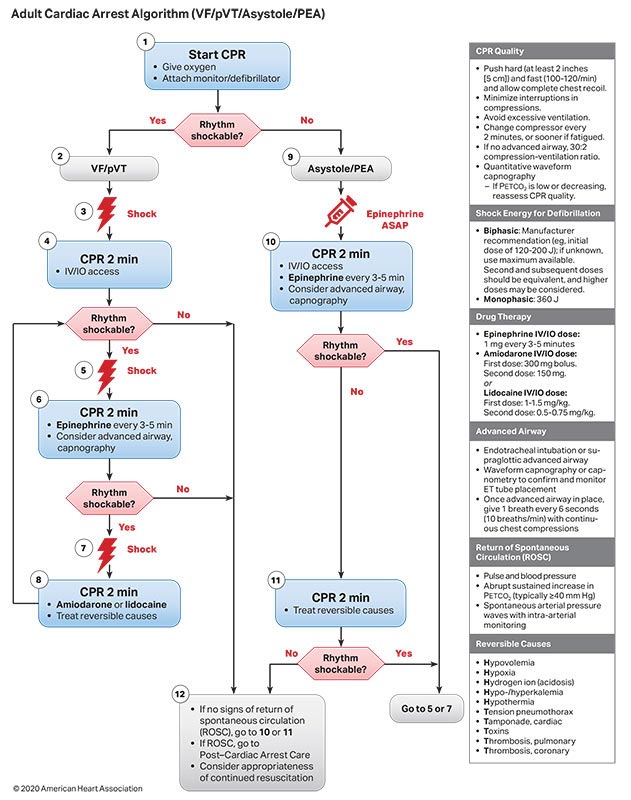
-
This question is part of the following fields:
- Cardiovascular
- Pharmacology
-
-
Question 141
Correct
-
A 64-year-old lady attends the emergency department with a known brain tumour. Her left eye is directed outwards and downwards, she can't open it, and her pupil is fixed and dilated. The tumour is most likely compressing which of the following structures:
Your Answer: Oculomotor nerve
Explanation:The oculomotor nerve is the third cranial nerve. It is the main source of innervation to the extraocular muscles and also contains parasympathetic fibres which relay in the ciliary ganglion. Damage to the third cranial nerve may cause diplopia, pupil mydriasis, and/or upper eyelid ptosis. The clinical manifestations of third cranial nerve dysfunction reflect its constituent parts.
-
This question is part of the following fields:
- Anatomy
- Cranial Nerve Lesions
-
-
Question 142
Correct
-
Which of the following is NOT a typical feature of lithium toxicity:
Your Answer: Miosis
Explanation:Features of toxicity include:
Increasing gastrointestinal disturbances (vomiting, diarrhoea, anorexia)
Visual disturbances
Polyuria and incontinence
Muscle weakness and tremor
Tinnitus
CNS disturbances (dizziness, confusion and drowsiness increasing to lack of coordination, restlessness, stupor)
Abnormal reflexes and myoclonus
Hypernatraemia
With severe overdosage (serum-lithium concentration > 2 mmol/L) seizures, cardiac arrhythmias (including sinoatrial block, bradycardia and first-degree heart block), blood pressure changes, electrolyte imbalance, circulatory failure, renal failure, coma and sudden death may occur. -
This question is part of the following fields:
- Central Nervous System
- Pharmacology
-
-
Question 143
Correct
-
A patient noticed ankle swelling and has passed very little urine over the past 24 hours. He also has nausea and vomiting, reduced urine output and his blood results reveal a sudden rise in his creatinine levels over the past 48 hours. You make a diagnosis of acute kidney injury (AKI).
Which one of these is a prerenal cause of AKI?
Your Answer: Cardiac failure
Explanation:The causes of AKI can be divided into pre-renal, intrinsic renal and post-renal causes. Majority of AKI developing in the community is due to a pre-renal causes (90% of cases).
Pre-renal causes: Haemorrhage, severe vomiting or diarrhoea, burns, cardiac failure, liver cirrhosis, nephrotic syndrome, hypotension, severe cardiac failure, NSAIDs, COX-2 inhibitors, ACE inhibitors or ARBs, Abdominal aortic aneurysm, renal artery stenosis, hepatorenal syndrome,
Intrinsic (renal) causes:
Eclampsia, glomerulonephritis, thrombosis, haemolytic-uraemic syndrome, acute tubular necrosis (ATN), acute interstitial nephritis, drugs ( NSAIDs), infection or autoimmune diseases, vasculitis, polyarteritis nodosa, thrombotic microangiopathy, cholesterol emboli, renal vein thrombosis, malignant hypertensionPost-renal causes: Renal stones, Blood clot, Papillary necrosis, Urethral stricture, Prostatic hypertrophy or malignancy, Bladder tumour, Radiation fibrosis, Pelvic malignancy, Retroperitoneal fibrosis
-
This question is part of the following fields:
- General Pathology
- Pathology
-
-
Question 144
Incorrect
-
While on morning rounds in the medical ward, the attending physician asks a medical student about the differences between transudates and exudates and their causes. The student explains that a transudate is an excess fluid that leaks out of an intravascular compartment due to an imbalance between oncotic and hydrostatic pressures.
Which ONE of the following conditions will he mention as the cause of a transudate?Your Answer: Pericarditis
Correct Answer: Meig’s syndrome
Explanation:Transudative effusions are caused due to systemic causes leading to increased hydrostatic pressure or decreased oncotic pressure. These include:
1) Meig’s Syndrome (Ovarian tumour causing ascites and pleural effusion)
2) Congestive heart failure
3) Nephrotic Syndrome
4) Myxoedema
5) Cirrhosis
6) SarcoidosisAn exudate is caused by local inflammation and results from increased vascular permeability. Causes include:
1) Rheumatoid arthritis
2) Pneumonia leading to empyema
3) Malignancies
4) Pericarditis -
This question is part of the following fields:
- General Pathology
- Pathology
-
-
Question 145
Correct
-
Which of the following could denote a diagnosis of acquired immunodeficiency syndrome (AIDS) in a patient infected with HIV:
Your Answer: CD4 count < 200 cells/uL
Explanation:A diagnosis of AIDS can be made in a patient infected with HIV if the patient has a CD4 count < 200 cells/uL, or an AIDS-defining illness. Antiretroviral treatment should be considered in patients with CD4 counts < 350 cells/uL.
Oral candidiasis is not an AIDS defining illness – candidiasis of the bronchi, trachea, lungs or of the oesophagus is an AIDS defining illness.
A positive p24 antigen test seen in early HIV infection and does not indicate the development of AIDS.
-
This question is part of the following fields:
- Microbiology
- Pathogens
-
-
Question 146
Correct
-
Fenestrated capillaries are typically found where in the body:
Your Answer: Renal glomeruli
Explanation:Fenestrated capillaries, found in renal glomeruli, endocrine glands and intestinal villi, are more permeable than continuous capillaries with less tight junctions, and the endothelial cells are also punctured by pores which allow large amounts of fluids or metabolites to pass.
-
This question is part of the following fields:
- Cardiovascular
- Physiology
-
-
Question 147
Correct
-
A 40-year-old female presents to the orthopaedic clinic complaining of pain and limited range of motion in the right elbow for the past two days. On examination, the right elbow is extremely tender with erythema and warmth of the overlying skin due to acute inflammation.
Which ONE of the following statements is true with regards to acute inflammation?Your Answer: Neutrophils are activated and adhere to the endothelium as a result of interaction with endothelial cell adhesion molecules
Explanation:Acute inflammation is defined as inflammation occurring within minutes to hours in response to an injury lasting for less than two weeks.
Acute inflammation
Rapid onset (minutes to hours)
Quick resolution (usually days)Chronic inflammation
May last weeks, months, or yearsThere are five cardinal signs of inflammation:
1) Pain
2) Redness
3) Warmth
4) Oedema
5) Loss of functionDuring acute inflammation, neutrophils are activated and attracted to the site of inflammation in response to various interleukins and cytokines. This process takes place via the following mechanism:
1) Margination
Neutrophils flow nearer the vessel wall rather than in the axial stream, which is referred to as margination
2) Rolling along the surface of vascular endothelium
3) Adhesion to the endothelium by interaction with adhesion molecules (ICAMS and VCAMS)
4) Diapedesis is the movement of neutrophils from the endothelial cells into the interstitial space by squeezing through the gaps between adjacent endothelial cellsBradykinin and histamine are both responsible for vasodilation which causes oedema and decreases intravascular osmotic pressure.
Neutrophils dominate early (<2 days)
– Many in the bloodstream
– Attach firmly to adhesion molecules
– Apoptosis after 24-48hrs
Monocytes/macrophages dominate late (>2 days)
– Live longer
– Replicate in tissues -
This question is part of the following fields:
- General Pathology
- Pathology
-
-
Question 148
Correct
-
The following statements concerning lung compliance is true EXCEPT?
Your Answer: Lung compliance is described by the equation: C = ∆ P/ ∆V, where C = compliance, P = pressure, and V = volume
Explanation:Lung compliance is the change in volume per unit change in distending pressure.
It is calculated using the equation:
Lung compliance = ΔV / ΔP
Where:
ΔV is the change in volume
ΔP is the change in pleural pressure.Lung compliance is inversely proportional to stiffness and elastance.
It comprises static (no airflow) and dynamic (during continuous breathing) components.
It is the slope of the pressure-volume curve.
Lung compliance describes the distensibility of the lungs and the chest wall.
-
This question is part of the following fields:
- Physiology
- Respiratory Physiology
-
-
Question 149
Correct
-
A 35-year-old man, who was feeling unwell after his return from a business trip, was diagnosed with a disease that is known to be transmitted by a vector.
Among the following microorganisms, which of the following has a mode of transmission of being vector-borne?Your Answer: Plasmodium falciparum
Explanation:Plasmodium falciparum is a parasite that is vector-borne which is transmitted by the female Anopheles mosquito.
Bordetella pertussis is transmitted through the respiratory tract, via respiratory droplets or direct contact with infectious secretions.
Mycobacterium tuberculosis is transmitted via inhalation of infected respiratory droplets.
HIV may be transmitted via sexual contact, vertical transmission from mothers to infants, and among injection drug users sharing infected needles, as well as through transfusion of infected blood products.
Treponema pallidum transmission normally occurs during direct sexual contact with an individual who has an active primary or secondary syphilitic lesion.
-
This question is part of the following fields:
- Microbiology
- Principles Of Microbiology
-
-
Question 150
Incorrect
-
On his stool culture, a patient with a diarrhoeal illness grows Escherichia coli.
What SINGLE statement about Escherichia coli is true?
Your Answer: It is a coccus
Correct Answer: Most serotypes are harmless
Explanation:Escherichia coli is a Gram-negative, non-spore forming, facultative anaerobic, rod-shaped bacterium.
Although some can cause serious food poisoning, most serotypes are harmless.
Escherichia coli is transmitted via the faeco-oral route.
-
This question is part of the following fields:
- Microbiology
- Specific Pathogen Groups
-
-
Question 151
Incorrect
-
On review of a patient's serum and urine osmolality test result, you note that both osmolarities are decreased. There urine osmolality does not increase with fluid ingestion.
What is the most likely cause?Your Answer: Diabetes insipidus
Correct Answer: Hyponatraemia
Explanation:As part of the investigation of hyponatraemia, serum osmolality is commonly requested in combination with urine osmolality to aid diagnosis.
When:
Serum osmolality is decreased and urine osmolality is decreased with no intake of fluid, the causes are
Hyponatraemia
Overhydration
Adrenocortical insufficiency
Sodium loss (diuretic or a low-salt diet)Serum osmolality is normal or increased and urine osmolality is increased the causes include:
Dehydration
Hyperkalaemia
Hyperglycaemia
Hyponatremia
Mannitol therapy
Diabetes mellitus
Alcohol ingestion
Congestive heart failure
Renal disease and uraemiaSerum osmolality is normal or increased and urine osmolality is decreased the usual cause is diabetes insipidus
Serum osmolality is decreased and urine osmolality is increased the usual cause is syndrome of inappropriate antidiuresis (SIAD)
-
This question is part of the following fields:
- Basic Cellular Physiology
- Physiology
-
-
Question 152
Correct
-
A patient presents with a gastrointestinal infection. Which of the following microbes attaches to gut mucosa via a specialised sucking disc:
Your Answer: Giardia lamblia
Explanation:Giardia lambliainfection occurs through the ingestion of dormant microbial cysts in contaminated water, food or via faceo-oral transmission via poor hygiene.
Following ingestion of the cysts, the trophozoite emerges to an active state of feeding and motility. After the feeding stage they undergo asexual replication through longitudinal binary fission.
They attach to the intestinal wall via a specialised sucking disc. The mechanism for diarrhoea in giardiasis remains unknown but could possibly be due to direct cytotoxicity.
Giardial trophozoites and cysts pass through the digestive system in the faeces and are excreted. While the trophozoites may be found in the faeces, only the cysts are adapted for long-term survival outside the host. -
This question is part of the following fields:
- Microbiology
- Principles
-
-
Question 153
Correct
-
Which of the following microbes is spread by a vector:
Your Answer: Plasmodium falciparum
Explanation:The female Anopheles mosquito is the vector for Plasmodium falciparum transmission. Treponema pallidum is transmitted through sexual transmission or direct skin contact. Clostridium perfringens is spread by direct skin contact or through oral-faecal route. The oral-faecal pathway is how Vibrio cholerae spreads. Mycoplasma tuberculosis is spread via the airborne route.
-
This question is part of the following fields:
- Microbiology
- Principles
-
-
Question 154
Correct
-
A 29-year-old volunteer returns from a recent trip to the middle east with profuse watery diarrhoea. You make a diagnosis of cholera and organize a hospital admission for rehydration with intravenous fluids.
What is the mechanism of action of cholera toxin?
Your Answer: ADP-ribosylation of the G regulatory protein
Explanation:Cholera is caused by Vibrio cholerae, a motile, Gram-negative, curved bacillus. It is transmitted through water and food (especially seafood) and is primarily a disease seen in developing countries where there is poor sanitation and lack of safe water supplies.
The cholera toxin leads to stimulation of adenyl cyclase, ADP-ribosylation of the G regulatory protein, inactivation of GTPase leading to active outpouring of NaCl.
The cholera toxin consists of an A (the toxin) and B subunit. The B subunit attaches to the gut mucosa and presents the A subunit to the cell. The toxin stimulates adenyl cyclase by irreversible ADP-ribosylation of the GTP binding domain of adenyl cyclase leading to the opening of chloride channels resulting in an outpouring of NaCl and water into the lumen of the gut and causing secretory diarrhoea.
Incubation period is between 2 and 5 days, but can be as short as just a few hours.
-
This question is part of the following fields:
- Microbiology
- Principles Of Microbiology
-
-
Question 155
Incorrect
-
The transport of oxygen from maternal to fetal circulation is made possible by fetal haemoglobin. Which of the statements about fetal haemoglobin (HbF) is also correct?
Your Answer: It has a higher affinity for oxygen than myoglobin
Correct Answer: The oxygen dissociation curve for foetal haemoglobin is shifted to the left of that of adult haemoglobin
Explanation:Fetal haemoglobin is the most common type of haemoglobin found in the foetus during pregnancy. It transports oxygen from the maternal circulation to the fetal circulation. It can easily bind to oxygen from the maternal circulation because it has a high affinity for oxygen. From 10 to 12 weeks of pregnancy to the first six months after birth, the erythroid precursor cells produce fetal haemoglobin. In comparison to adult haemoglobin, fetal haemoglobin has two alpha and two gamma subunits, whereas adult haemoglobin has two alpha and two beta subunits in its major form.
And, unlike adult haemoglobin, the oxygen dissociation curve of fetal haemoglobin is left-shifted. Myoglobin is an oxygen storage molecule with a very high affinity for oxygen. Only when the partial pressure of oxygen is exceeded does it release oxygen.
-
This question is part of the following fields:
- Physiology
- Respiratory Physiology
-
-
Question 156
Correct
-
Gastrin primarily acts to perform which of the following functions:
Your Answer: Stimulate gastric acid secretion
Explanation:Gastrin primarily acts to stimulate acid secretion from parietal cells (both directly and indirectly by stimulating release of histamine from ECL cells).
-
This question is part of the following fields:
- Gastrointestinal
- Physiology
-
-
Question 157
Correct
-
One of the benefits of wound healing through first intention is:
Your Answer: Minimisation of scar tissue formation
Explanation:Primary wound healing, or healing by first intention, occurs within hours of repairing a full-thickness surgical incision. This surgical insult results in the mortality of a minimal number of cellular constituents. Healing by first intention can occur when the wound edges are opposed, the wound is clean and uninfected and there is minimal loss of cells and tissue i.e. surgical incision wound. The wound margins are joined by fibrin deposition, which is subsequently replaced by collagen and covered by epidermal growth.
-
This question is part of the following fields:
- Pathology
- Wound Healing
-
-
Question 158
Correct
-
Which of the following is NOT a contraindication to the use of diazepam:
Your Answer: Acute alcohol withdrawal
Explanation:Benzodiazepines are used to treat symptoms in patients with acute alcohol withdrawal syndrome.
Benzodiazepines are contraindicated in:
Respiratory depression
Marked neuromuscular respiratory weakness, such as unstable myasthenia gravis
Obstructive sleep apnoea syndrome (symptoms may be aggravated)
Severe hepatic impairment (the elimination half-life of diazepam may be prolonged; increased risk of coma)
Phobic or obsessional states, chronic psychosis or hyperkinesis (paradoxical reactions may occur). -
This question is part of the following fields:
- Anaesthesia
- Pharmacology
-
-
Question 159
Correct
-
An 18-year-old student presents with a 1-week history of sore throat, low grade fever, and malaise. Upon history taking, she noted that she had a fine rash over her body a week ago that quickly fades. Further examination and observation was done and the presence of mild splenomegaly was noted. Her test shows positive for heterophile antibody test, suspecting a diagnosis of infectious mononucleosis.
Which of the following characteristics is mostly associated with the diagnosis of infectious mononucleosis?Your Answer: Atypical lymphocytes
Explanation:Epstein-Barr virus causes infectious mononucleosis which is a clinical entity characterized by sore throat, cervical lymph node enlargement, fatigue and fever.
It is accompanied by atypical large peripheral blood lymphocytes. These atypical lymphocytes, also known as Downey cells, are actually activated CD8 T lymphocytes, most of which are responding to EBV-infected cells.
-
This question is part of the following fields:
- Microbiology
- Specific Pathogen Groups
-
-
Question 160
Incorrect
-
Which of the following statements is considered correct regarding Klebsiella infections?
Your Answer: Klebsiella pneumoniae is most commonly associated with chronic bronchiectasis
Correct Answer: Klebsiella spp. are non-motile
Explanation:Klebsiella is a Gram-negative, rod-shaped, non-motile bacteria. The absence of motility distinguishes Klebsiella spp. from most other members of the family Enterobacteriaceae.
K. pneumoniae is the most commonly isolated species and has the distinct feature of possessing a large polysaccharide capsule. The capsule offers the organism protection against phagocytosis and antimicrobial absorption,
contributing to its virulence.Colonization of gram-negative bacilli in the respiratory tracts of hospitalized patients, particularly by K. pneumoniae, increases with the length of hospital stay. It is a frequent cause of lower respiratory tract infections among hospitalized patients and in immunocompromised hosts such as newborns,
elderly patients, and seriously ill patients on respirators. -
This question is part of the following fields:
- Microbiology
- Specific Pathogen Groups
-
-
Question 161
Correct
-
A 69-year-old man with a history of chronic anaemia is transfused. He takes bisoprolol and furosemide for his cardiac failure, and his most recent BNP was 123 pmol/l. He developed shortness of breath and his pre-existing peripheral oedema became worse 5 hours after transfusion was commenced. His BP rises to 170/105 mmHg and a repeat measurement of his BNP is 192 pmol/l.
What is the most likely transfusion reaction to have occurred?Your Answer: TACO
Explanation:Transfusion-associated circulatory overload (TACO) presents as acute or worsening respiratory distress within 6 hours of transfusion of a large volume of blood. It is common in patients with diminished cardiac reserve or chronic anaemia. Elderly patients, infants and severely anaemic patients are particularly susceptible. Typical clinical features of TACO include: Acute respiratory distress, Tachycardia, Hypertension, Acute/worsening pulmonary oedema on chest X-ray. The BNP is usually raised to at least 1.5 times the pre-transfusion baseline.
Febrile transfusion reaction presents with a 1 degree rise in temperature from baseline during transfusion. Patient may have chills and malaise. It is the most common transfusion reaction (1 in 8 transfusions) and is usually caused by cytokines released from leukocytes in transfused red cell or platelet components.
TRALI (Transfusion Related Acute Lung Injury) is a clinical syndrome with abrupt onset of non-cardiogenic pulmonary oedema within 6 hours of transfusion not explained by another risk factor. Associated with the presence of antibodies in the donor blood to recipient leukocyte antigens. patients present with dyspnoea, hypertension, hypotension, acute leukopenia.
Graft versus host disease(GVHD) is an immune mediated condition that arises from a complex interaction between donor and recipients adaptive immunity. It presents as dermatitis, hepatitis and enteritis developing within 100 days after stem cell or bone marrow transplant.
Acute haemolytic reaction aka immediate haemolytic transfusion reaction presents with fever, chills, pain at transfusion site, nausea, vomiting, dark urine and feeling of ‘impending doom’. Often, it occurs due to ABO incompatibility.
-
This question is part of the following fields:
- Haematology
- Pathology
-
-
Question 162
Correct
-
A young farmer who is caught under farm machinery and suffering from a major crush injury is taken to the emergency department and requires a quick induction sequence. In this type of injury, which of the following anaesthetic medicines should be avoided?
Your Answer: Suxamethonium
Explanation:Suxamethonium is a neuromuscular blocker. It is contraindicated in patients who have experienced massive trauma, hyperkalemic, or burn injuries.
-
This question is part of the following fields:
- Anaesthesia
- Pharmacology
-
-
Question 163
Correct
-
Following an injury sustained during a rugby match, a 16-year-old boy is brought to the Emergency Department by his mother. His forearm appears to be deformed, and you believe he has a distal radius fracture. A numerical rating scale is used to assess his pain, and the triage nurse informs you that he is in moderate pain.'
The RCEM guidance recommends which of the following analgesics for the treatment of moderate pain in a child of this age?Your Answer: Oral codeine phosphate 1 mg/kg
Explanation:According to a 2018 audit conducted by the Royal College of Emergency Medicine (RCEM), the standard of care for children presenting to EDs with fractured limbs has deteriorated, with most patients waiting longer than ever before for pain relief. More than one-tenth of the children who came in with significant pain from a limb fracture received no pain relief at all.
For all patients, including children, the Agency for Health Care Policy and Research (AHCPR) in the United States recommends using the ABCs of pain management:
A – Ask about pain regularly. Assess pain systematically.
B – Believe the patient and family in their reports of pain and what relieves it.
C – Choose pain control options appropriate for the patient, family, and setting.
D – Deliver interventions in a timely, logical, coordinated fashion.
E – Empower patients and their families. Enable patients to control their course to the greatest extent possible.The RCEM guidelines recommend assessing a child’s pain within 15 minutes of arrival. This is a fundamental requirement. For the assessment of pain in children, a variety of rating scales are available; which one is used depends on the child’s age and ability to use the scale. These are some of them:
Faces of Wong-Baker Scale for assessing pain
Scale of numerical evaluation
The behavioural scale is a scale that measures how people behave.The RCEM has provided the following visual guide:
The RCEM has established the following guidelines for when patients in severe pain should receive appropriate analgesia:
100% within 60 minutes of arrival or triage, whichever is earliest
75% within 30 minutes of arrival or triage, whichever is earliest
50% within 20 minutes of arrival or triage, whichever is earliest -
This question is part of the following fields:
- CNS Pharmacology
- Pharmacology
-
-
Question 164
Incorrect
-
A 40-year-old male presents to your clinic complaining of a cough with bloody sputum for the past three months. He has also had fever, night sweats, and has noticed some weight loss over the past three months.
Which ONE of the following statements regarding this disease is correct?Your Answer: A Ghon focus typically appears at the apex of a lung
Correct Answer: It can be diagnosed using the Ziehl-Neelson stain
Explanation:Tuberculosis is an infection caused by the microorganism Mycobacterium tuberculosis. TB can affect any organ system in the body, but it most commonly affects the lungs, followed by the lymph nodes.
Option Tuberculosis is spread by the faecal-oral route: It is spread by inhalation of droplet nuclei.
There are different methods to diagnose a tuberculosis infection.
1) Direct Microscopy: The organisms are visualised using Ziehl-Neelsen or Auramine staining. This is the quickest method to establish a diagnosis and start treatment.
2) Culture: M. tuberculosis can be grown on Lowenstein-Jensen or Ogawa mediums, but it can take up to 8 weeks; therefore, ZN staining is also performed to start treatment immediately.Option There are several types of vaccine currently available: The BCG vaccine is the only vaccine approved to prevent TB and is administered at birth.
Option Miliary tuberculosis refers to tuberculosis that affects the spine: Miliary tuberculosis refers to a tuberculosis infection disseminated throughout the body’s organ systems via the blood or lymphatics. Pott’s disease is extrapulmonary TB that affects the spine. It usually affects the lower thoracic and upper lumbar regions.
Option A Ghon focus typically appears at the apex of a lung: The Ghon focus is a primary sign of TB that forms in the lung of previously unaffected patients. It typically occurs in the mid or lower zones of the lung.
-
This question is part of the following fields:
- Microbiology
- Specific Pathogen Groups
-
-
Question 165
Correct
-
Renin is produced by which of the following:
Your Answer: Granular cells in the wall of the afferent arteriole
Explanation:Juxtaglomerular cells are specialised smooth muscle cells mainly in the walls of the afferent arterioles (and some in the efferent arterioles) which synthesise renin.
-
This question is part of the following fields:
- Physiology
- Renal
-
-
Question 166
Incorrect
-
A patient presents with a rash for a dermatological examination. A flat circumscribed area of discoloured skin measuring 0.7 cm in diameter is seen on examination.
What is the best description of this rash that you have found on examination?
Your Answer: Plaque
Correct Answer: Macule
Explanation:A macule is a flat, well circumscribed area of discoloured skin less than 1 cm in diameter with no changes in the thickness or texture of the skin.
A vesicle is a visible collection of clear fluid measuring less than 0.5 cm in diameter.
A papule is a solid, well circumscribed, skin elevation measuring less than 0.5 cm in diameter.
A nodule is a solid, well circumscribed, raised area that lies in or under the skin and measures greater than 0.5 cm in diameter. They are usually painless.
A plaque is a palpable skin lesion that is elevated and measures >1cm in diameter.
-
This question is part of the following fields:
- General Pathology
- Pathology
-
-
Question 167
Incorrect
-
A 18 year old student presents to ED with a headache, fever and photophobia. You suspect meningitis and agree to observe your junior performing a lumbar puncture. What is the highest safest vertebral level to perform lumbar puncture in adults:
Your Answer: L4/L5
Correct Answer: L3/L4
Explanation:In adults, the spinal cord typically ends between L1/L2 whereas the subarachnoid space extends to approximately the lower border of vertebra S2. Lumbar puncture is performed in the intervertebral space L4/L5 or L3/L4.
-
This question is part of the following fields:
- Anatomy
- Head And Neck
-
-
Question 168
Correct
-
Most of the lymph from vessels that drain the breast is collected in which of the following lymph nodes?
Your Answer: Axillary nodes
Explanation:Lymph is the fluid that flows through the lymphatic system.
Axillary lymph nodes are near the breasts. They are often the first location to which breast cancer spreads if it moves beyond the breast tissue. They receive approximately 75% of lymph drainage from the breast via lymphatic vessels, laterally and superiorly.
The lymph usually first drains to the anterior axillary nodes, and from here, through the central axillary, apical, and supraclavicular nodes in sequence.
-
This question is part of the following fields:
- Anatomy
- Upper Limb
-
-
Question 169
Correct
-
Which of the following infections is vancomycin most likely prescribed for?
Your Answer: Clostridium difficile colitis
Explanation:125 mg PO q6hr for 10 days is indicated for treatment of Clostridium difficile (C. difficile)-associated diarrhoea
-
This question is part of the following fields:
- Infections
- Pharmacology
-
-
Question 170
Correct
-
A patient is diagnosed as having a glucagonoma. Her blood serum glucagon concentration is 1246 pg/mL.
Glucagon is produced in which of the following cells? Select ONE answer only.Your Answer: Alpha-cells in the pancreas
Explanation:Glucagon is a peptide hormone that is produced and secreted by alpha cells of the islets of Langerhans, which are located in the endocrine portion of the pancreas. The main physiological role of glucagon is to stimulate hepatic glucose output, thereby leading to increases in glycaemia. It provides the major counter-regulatory mechanism to insulin in maintaining glucose homeostasis.
Hypoglycaemia is the principal stimulus for the secretion of glucagon but may also be used as an antidote in beta-blocker overdose and in anaphylaxis in patients on beta-blockers that fail to respond to adrenaline.
Glucagon then causes:
Glycogenolysis
Gluconeogenesis
Lipolysis in adipose tissue
The secretion of glucagon is also stimulated by:
Adrenaline
Cholecystokinin
Arginine
Alanine
Acetylcholine
The secretion of glucagon is inhibited by:
Insulin
Somatostatin
Increased free fatty acids
Increased urea productionGlycolysis is the metabolic pathway that converts glucose into pyruvate. The free energy released by this process is used to form ATP and NADH. Glycolysis is inhibited by glucagon, and glycolysis and gluconeogenesis are reciprocally regulated so that when one cell pathway is activated, the other is inactive and vice versa.
Glucagon has a minor effect of enhancing lipolysis in adipose tissue. Lipolysis is the breakdown of lipids and involves the hydrolysis of triglycerides into glycerol and free fatty acids. It makes fatty acids available for oxidation.
-
This question is part of the following fields:
- Endocrine Physiology
- Physiology
-
-
Question 171
Correct
-
Which of the following is a primary action of aldosterone:
Your Answer: Renal sodium reabsorption
Explanation:Aldosterone acts mainly at the renal distal convoluted tubule (DCT) to cause sodium retention and potassium loss. It increases the synthesis of transport mechanisms in the distal nephron including the Na+pump, Na+/H+symporter, and Na+and K+channels in principal cells, and H+ATPase in intercalated cells. Na+(and thus water) reabsorption and K+and H+secretion are thereby enhanced.
-
This question is part of the following fields:
- Endocrine
- Physiology
-
-
Question 172
Correct
-
A 62-year-old man complains of chest pain and goes to the emergency room. You diagnose him with an acute coronary syndrome and prescribe enoxaparin as part of his treatment plan.
Enoxaparin inactivates which of the following?Your Answer: Thrombin
Explanation:Enoxaparin is a low molecular weight heparin (LMWH) that works in the same way as heparin by binding to and activating the enzyme inhibitor antithrombin III. Antithrombin III inactivates thrombin by forming a 1:1 complex with it. Factor Xa and a few other clotting proteases are also inhibited by the heparin-antithrombin III complex.
-
This question is part of the following fields:
- Cardiovascular Pharmacology
- Pharmacology
-
-
Question 173
Incorrect
-
An ambulance transports a 37-year-old woman who is having a seizure. She is moved to resuscitation and given a benzodiazepine dose, which quickly ends the seizure. You later learn that she has epilepsy and is usually treated with carbamazepine to control her seizures.
What is carbamazepine's main mechanism of action?Your Answer: Glutamate blocker
Correct Answer: Sodium channel blocker
Explanation:Carbamazepine is primarily used to treat epilepsy, and it is effective for both focal and generalised seizures. It is not, however, effective in the treatment of absence or myoclonic seizures. It’s also commonly used to treat neuropathic pain, as well as a second-line treatment for bipolar disorder and as a supplement for acute alcohol withdrawal.
Carbamazepine works as a sodium channel blocker that preferentially binds to voltage-gated sodium channels in their inactive state. This prevents an action potential from firing repeatedly and continuously.
-
This question is part of the following fields:
- CNS Pharmacology
- Pharmacology
-
-
Question 174
Correct
-
What is the most common application of Nitrates?
Your Answer: Angina
Explanation:In patients with exertional stable angina, nitrates improve exercise tolerance, time to onset of angina, and ST-segment depression during exercise testing. In combination with beta-blockers or calcium channel blockers, nitrates produce greater anti-anginal and anti-ischemic effects.
While they act as vasodilators, coronary vasodilators, and modest arteriolar dilators, the primary anti ischemic effect of nitrates is to decrease myocardial oxygen demand by producing systemic vasodilation more than coronary vasodilation. This systemic vasodilation reduces left ventricular systolic wall stress. -
This question is part of the following fields:
- Cardiovascular
- Pharmacology
-
-
Question 175
Correct
-
The juxtacapillary receptors, or J receptors, are sensory cells that play an important role in the control of respiration.
At which of the following anatomical sites are the J receptors located? Select ONE answer only.Your Answer: The alveolar walls
Explanation:Juxtacapillary receptors (J receptors) are sensory cells that are located within the alveolar walls in juxtaposition to the pulmonary capillaries of the lung.
The J receptors are innervated by the vagus nerve and are activated by physical engorgement of the pulmonary capillaries or increased pulmonary interstitial volume, for example, in the presence of pulmonary oedema, pulmonary embolus, pneumonia and barotraumas. They may also be stimulated by hyperinflation of the lung.
Stimulation of the J receptors causes a reflex increase in breathing rate and is also thought to be involved in the sensation of dyspnoea. The reflex response that is produced is apnoea, followed by rapid breathing, bradycardia, and hypotension. -
This question is part of the following fields:
- Physiology
- Respiratory Physiology
-
-
Question 176
Correct
-
Which of the following is NOT an effect of benzodiazepines:
Your Answer: Analgesic effect
Explanation:Benzodiazepines are gamma-aminobutyric acid (GABA) receptor agonists which enhance inhibitory synaptic transmission throughout the central nervous system, with sedative, hypnotic, anxiolytic, anticonvulsant, amnesic and muscle relaxant properties.
-
This question is part of the following fields:
- Anaesthesia
- Pharmacology
-
-
Question 177
Correct
-
A patient with a diagnosis of HIV presents with a fever, sore throat, and general malaise and you are concerned the patient may have an AIDS defining illness.
Which one of these, according to the CDC definition, would mean a patient infected with HIV has AIDS?
Your Answer: CD4 T-cell percentage of total lymphocytes of less than 15%
Explanation:According to the CDC definition, a patient co-infected with HIV can be diagnosed with AIDS if he or she has:
A CD4 T-cell count of less than 200 cells/mm3 or;
A CD4 T-cell percentage of total lymphocytes of less than 15% or;
An AIDS defining infectionA Streptococcal throat infection is not an AIDS defining infection.
A normal CD4 count ranges from 500-1000 cells/mm3. A CD4 (not CD8) count of less than 200 cells/mm3 is AIDS defining.
The CD4 count can vary from day to day and depending upon the time that the blood test is taken. It can also be affected by the presence of other infections or illnesses. Treatment with anti-retroviral therapy should be considered at CD4 count of less than 350 cells/mm3.
Serum concentrations of the p24 antigen (the viral protein that makes up most of the core of the HIV) are usually high in the first few weeks after human immunodeficiency virus (HIV) infection and testing for p24 antigen is therefore a useful way of diagnosing very early infection.
-
This question is part of the following fields:
- Microbiology
- Specific Pathogen Groups
-
-
Question 178
Incorrect
-
A 37-year-old man presents with breathlessness on exertion and dry cough, fever for the past 2 days and bilateral pleuritic chest pain.
He had been diagnosed with HIV and commenced on HAART but due to side effects, his compliance has been poor over the last few months.
On examination you note scattered crackles and wheeze bilaterally, cervical and inguinal lymphadenopathy, and oral thrush. At rest his oxygen saturation is 97% but this drops to 87% on walking. There is perihilar fluffy shadowing seen on his chest X-ray.
Which of these organisms is the most likely causative organism?
Your Answer: Legionella pneumophila
Correct Answer: Pneumocystis jirovecii
Explanation:All of the organisms listed above can cause pneumonia in immunocompromised individuals but the most likely cause in this patient is Pneumocystis jirovecii.
It is a leading AIDS-defining infection in HIV-infected individuals and causes opportunistic infection in immunocompromised individuals. HIV patients with a CD4 count less than 200 cells/mm3 are more prone.
The clinical features of pneumonia caused by Pneumocystis jirovecii are:
Fever, chest pain, cough (usually non-productive), exertional dyspnoea, tachypnoea, crackles and wheeze.
Desaturation on exertion is a very sensitive sign of Pneumocystis jirovecii pneumonia.Chest X-ray can show perihilar fluffy shadowing (as is seen in this case) but can also be normal.
-
This question is part of the following fields:
- Microbiology
- Specific Pathogen Groups
-
-
Question 179
Incorrect
-
About what percentage of patients with hepatitis A develop chronic infection:
Your Answer: 10 - 20%
Correct Answer: None
Explanation:Chronic hepatitis and carrier state does not occur in hepatitis A infection and complete immunity is attained after infection.
-
This question is part of the following fields:
- Microbiology
- Pathogens
-
-
Question 180
Incorrect
-
Which of the following statements is correct with regards to insulin receptors?
Your Answer: Insulin receptors are G-protein coupled receptors.
Correct Answer: Insulin has its intracellular effects via activation of tyrosine kinase.
Explanation:Most cells have insulin receptors present on them which can be sequestered into the cell to inactivate them. These receptors consist of two extracellular alpha subunits which contain the insulin-binding site and two transmembrane beta subunits. Because insulin is a polypeptide hormone, it must act via cell surface receptors as it is unable to readily cross the cell membrane. On binding to the receptor, the beta subunit of insulin autophosphorylation, which activates tyrosine kinase. As a result, there is an intracellular cascade of phosphorylation, causing a translocation of the glucose transporter GLUT4 and GLUT-1 to the plasma membrane of the affected cell. This facilitates glucose entry.
-
This question is part of the following fields:
- Endocrine
- Physiology
-
-
Question 181
Correct
-
A patient suffers an injury to his thigh that damages the nerve that innervates pectineus.
Which of the following nerves has been damaged in this case? Select ONE answer only.Your Answer: Femoral nerve
Explanation:Pectineus is innervated by the femoral nerve. It may also receive a branch from the obturator nerve.
-
This question is part of the following fields:
- Anatomy
- Lower Limb
-
-
Question 182
Incorrect
-
The most important nerve for plantar flexion of the foot at the ankle joint is:
Your Answer: Common fibular nerve
Correct Answer: Tibial nerve
Explanation:Muscles of the posterior compartment of the leg, innervated by the tibial nerve, perform plantar flexion of the foot at the ankle joint. The fibularis longus (innervated by the superficial fibular nerve) assists in plantar flexion but is not the most important.
-
This question is part of the following fields:
- Anatomy
- Lower Limb
-
-
Question 183
Correct
-
Identify the type of graph described below:
A graph wherein the frequency distribution is represented by adjoining vertical bars and cases are stacked in adjoining columns. It can be used for continuous quantitative data, such as to analyse outbreak data to show an epidemic curve.Your Answer: Histogram
Explanation:A histogram is used to demonstrate the distribution of continuous quantitative data. It is a very familiar graphical display device for representing the distribution of a single batch of data. The range of the data is divided into class intervals or bins, and the number of values falling into each interval is counted. The histogram then consists of a series of rectangles whose widths are defined by the class limits implied by the binwidths, and whose heights depend on the number of values in each bin. Histograms quickly reveal such attributes of the data distribution as location, spread, and symmetry. If the data are multimodal (i.e., more than one “hump” in the distribution of the data), this is quickly evident as well.
-
This question is part of the following fields:
- Evidence Based Medicine
-
-
Question 184
Correct
-
Fusidic acid is primarily indicated for infections caused by which of the following microorganisms:
Your Answer: Staphylococcal infections
Explanation:Fusidic acid is a narrow spectrum antibiotic used for staphylococcal infections, primarily topically for minor staphylococcal skin (impetigo) or eye infection. It is sometimes used orally for penicillin-resistant staphylococcal infection, including osteomyelitis or endocarditis, in combination with other antibacterials.
-
This question is part of the following fields:
- Infections
- Pharmacology
-
-
Question 185
Incorrect
-
A 28-year-old female patient with a history of hypothyroidism arrives at the Emergency Department after taking 30 of her 200 mcg levothyroxine tablets. She tells you she's 'tired of life' and 'can't take it any longer.' She is currently asymptomatic, and her findings are all within normal limits.
What is the minimum amount of levothyroxine that must be taken before thyrotoxicosis symptoms appear?Your Answer: >1 mg
Correct Answer: >10 mg
Explanation:An overdose of levothyroxine can happen by accident or on purpose. Intentional overdosing is sometimes done to lose weight, but it can also happen in patients who are suicidal. The development of thyrotoxicosis, which can lead to excited sympathetic activity and high metabolism syndrome, is the main source of concern. The time between ingestion and the emergence of clinical features associated with an overdose is often quite long.
After a levothyroxine overdose, the majority of patients are asymptomatic. Symptoms and signs are usually only seen in patients who have taken more than 10 mg of levothyroxine in total.
The following are the most commonly seen clinical features in patients developing clinical features:
Tremor
Agitation
Sweating
Insomnia
Headache
Increased body temperature
Increased blood pressure
Diarrhoea and vomiting
Less common clinical features associated with levothyroxine overdose include:
Seizures
Acute psychosis
Thyroid storm
Tachycardia
Arrhythmias
ComaThe continued absorption of the ingested levothyroxine causes a progressive rise in both total serum T4 and total serum T3 levels in the first 24 hours after an overdose. However, in some cases, the biochemical picture is completely normal. Thyroid function tests are not always recommended after a thyroxine overdose. Although elevated thyroxine levels are common, they have little clinical significance and have no impact on treatment. Following a levothyroxine overdose, the following biochemical features are common:
T4 and T3 levels in the blood are elevated.
Free T4 and Free T3 levels are higher.
TSH levels in the blood are low.
If the patient is cooperative and more than 10 mg of levothyroxine has been consumed, activated charcoal can be given (i.e., likely to become symptomatic)
Within an hour of ingestion, the patient presents.The treatment is mostly supportive and aimed at managing the sympathomimetic symptoms that come with levothyroxine overdose. If beta blockers aren’t an option, try propranolol 10-40 mg PO 6 hours or diltiazem 60-180 mg 8 hours.
-
This question is part of the following fields:
- Endocrine Pharmacology
- Pharmacology
-
-
Question 186
Correct
-
Reed-Sternberg cells are characteristic of which of the following malignancies:
Your Answer: Hodgkin lymphoma
Explanation:Lymphomas are a group of diseases caused by malignant lymphocytes that accumulate in lymph nodes and other lymphoid tissue and cause the characteristic clinical feature of lymphadenopathy. The major subdivision of lymphomas is into Hodgkin lymphoma (HL) and non-Hodgkin lymphoma (NHL) and this is based on the histological presence of Reed-Sternberg cells present in HL. Hodgkin lymphoma can present at any age but is rare in children and has a peak incidence in young adults. There is an almost 2 : 1 male predominance. Most patients present with painless, asymmetrical, firm and discrete enlargement of superficial lymph nodes. Cervical nodes are involved in 60-70% of cases, axillary nodes in 10-15% and inguinal nodes in 6-12%. Modest splenomegaly occurs during the course of the disease in 50% of patients; the liver may also be enlarged. Bone marrow failure involvement is unusual in early disease. The prognosis depends on age, stage and histology, but overall approximately 85% of patients are cured. Alcohol‐induced pain and pruritus are two well‐known but rare symptoms in HL.
-
This question is part of the following fields:
- Haematology
- Pathology
-
-
Question 187
Incorrect
-
You have been asked to give a tutorial on common upper limb neurology to a group of medical students. You use the example of a man falling from a balcony onto spiked fencing, sustaining a puncture wound to the axilla. This results in an injury to the musculocutaneous nerve. Which of the following clinical features would you LEAST expect to see in this patient:
Your Answer: Weakness of arm flexion
Correct Answer: Weakness of forearm pronation
Explanation:Flexion of the arm and flexion and supination of the forearm are weakened but not lost entirely due to the actions of the pectoralis major and deltoid, the brachioradialis and the supinator muscles respectively. There is loss of sensation over the lateral aspect of the forearm. Forearm pronation would not be affected as this is primarily produced by the pronator quadratus and pronator teres muscles, innervated by the median nerve.
-
This question is part of the following fields:
- Anatomy
- Upper Limb
-
-
Question 188
Correct
-
Which of these is NOT a lithium side effect:
Your Answer: Peptic ulcer disease
Explanation:Adverse Effects of lithium Include
Leucocytosis (most patients)
Polyuria/polydipsia (30-50%)
Dry mouth (20-50%)
Hand tremor (45% initially, 10% after 1 year of treatment)
Confusion (40%)
Decreased memory (40%)
Headache (40%)
Muscle weakness (30% initially, 1% after 1 year of treatment)
Electrocardiographic (ECG) changes (20-30%)
Nausea, vomiting, diarrhoea (10-30% initially, 1-10% after 1-2 years of treatment)
Hyperreflexia (15%)
Muscle twitch (15%)
Vertigo (15%)
Extrapyramidal symptoms, goitre (5%)
Hypothyroidism (1-4%)
Acne (1%)
Hair thinning (1%) -
This question is part of the following fields:
- Central Nervous System
- Pharmacology
-
-
Question 189
Incorrect
-
An 80-year-old female complains of chest pain characteristic of angina. A dose of glyceryl trinitrate (GTN) is administered that resolves the chest pain rapidly.
Which ONE of the following is released on the initial metabolism of GTN?Your Answer: Cyclic AMP
Correct Answer: Nitrite ions
Explanation:Angina pectoris is the most common symptom of ischemic heart disease and presents with chest pain relieved by rest and nitro-glycerine.
Nitrates are the first-line treatment to relieve chest pain caused by angina. The commonly used nitrates are:
1. Glyceryl trinitrate
2. Isosorbide dinitrateThe nitrate drugs are metabolized in the following steps:
1. Release Nitrite ions (NO2-), which are then converted to nitric oxide (NO) within cells.
2. NO activates guanylyl cyclase, which causes an increase in the intracellular concentration of cyclic guanosine-monophosphate (cGMP) in vascular smooth muscle cells.
3. Relaxation of vascular smooth muscle.Although nitrates are potent coronary vasodilators, their principal benefit in the management of angina results from a predominant mechanism of venous dilation:
– Bigger veins hold more blood
– Takes blood away from the left ventricle
– Lowers LVEDV (preload), LA pressure
– Less pulmonary oedema → improved dyspnoea -
This question is part of the following fields:
- Cardiovascular Pharmacology
- Pharmacology
-
-
Question 190
Correct
-
A 28-year-old woman in her second trimester is diagnosed with a psychiatric illness. She is started on treatment with a drug. The treatment results in her baby being born with poor tone, feeding problems, hypothyroidism, and a goitre
Out of the following, which drug is most likely responsible for the baby's condition?Your Answer: Lithium
Explanation:In pregnancy and postpartum, lithium is an effective treatment for relapse prevention in bipolar disorder. However, lithium has also been associated with risks during pregnancy for both the mother and the unborn child. Recent large studies have confirmed the association between first-trimester lithium exposure and an increased risk of congenital malformations.
Lithium levels need to be monitored more frequently throughout pregnancy and the postnatal period.
If given in the 1st-trimester, lithium is associated with a risk of fetal cardiac malformations, such as Ebstein’s anomaly.
If given in the 2nd and 3rd-trimesters, there is a risk of the following:
1. hypotonia
2. lethargy
3. feeding problems
4. hypothyroidism
5. goitre
6. nephrogenic diabetes insipidus in the neonate -
This question is part of the following fields:
- CNS Pharmacology
- Pharmacology
-
-
Question 191
Correct
-
Continuous capillaries are typically found where in the body:
Your Answer: Blood-brain barrier
Explanation:Continuous capillaries, found in the skin, lungs, muscles and CNS, are the most selective with low permeability, as junctions between the endothelial cells are very tight, restricting the flow of molecules with MW > 10,000.
-
This question is part of the following fields:
- Cardiovascular
- Physiology
-
-
Question 192
Incorrect
-
A 68-year-old man has a very fast heartbeat' and is out of breath. He has had a heart transplant in the past. His electrocardiogram reveals supraventricular tachycardia.
Which of the following is the most appropriate adenosine dose for him to receive as a first dose?Your Answer: Adenosine 6 mg IV
Correct Answer: Adenosine 3 mg IV
Explanation:A rapid IV bolus of adenosine is given, followed by a saline flush. The standard adult dose is 6 mg, followed by 12 mg if necessary, and then another 12 mg bolus every 1-2 minutes until an effect is seen.
Patients who have had a heart transplant, on the other hand, are extremely sensitive to the effects of adenosine and should start with a lower dose of 3 mg, then 6 mg, and finally 12 mg.
-
This question is part of the following fields:
- Cardiovascular Pharmacology
- Pharmacology
-
-
Question 193
Correct
-
A 17-year-old patient with a headache, fever, and a non-blanching rash is brought to the emergency room. Meningococcal infection is confirmed by a lumbar puncture. Neisseria meningitidis uses one of the following immune evasion mechanisms:
Your Answer: Secretes IgA protease
Explanation:Meningococci have 3 important virulence factors, as follows:
Polysaccharide capsule – Individuals with immunity against meningococcal infections have bactericidal antibodies against cell wall antigens and capsular polysaccharides; a deficiency of circulating anti meningococcal antibodies is associated with the disease.
Lipo-oligosaccharide endotoxin (LOS)
Immunoglobulin A1 (IgA1) -
This question is part of the following fields:
- Microbiology
- Principles
-
-
Question 194
Correct
-
Which of these statements about experimental studies is true?
Your Answer: Randomisation serves to remove potential bias
Explanation:In experimental studies, the researcher introduces an intervention and studies the effect. The study subjects are allocated into different groups by the investigator through the use of randomisation. Randomisation serves to remove any potential bias.
A cohort study is a form of longitudinal, observational study that follows a group of patients (the cohort) over a period of time to monitor the effects of exposure to a proposed aetiological factor upon them.
A case-control study is a type observational study. Here, patients who have developed a disease are identified and compared on the basis of proposed causative factors that occurred in the past, to a control group.
Clinical trials are experimental studies. Examples include: double blind, single blind, and unblinded studies(both patient and researcher are aware of the treatment they receive)
-
This question is part of the following fields:
- Evidence Based Medicine
-
-
Question 195
Correct
-
You examine a 48-year-old patient who has had proximal weakness, hypertension, and easy bruising in the past. She exhibits considerable face fullness and truncal obesity on examination. You diagnose her�with Cushing's syndrome.
When would her random cortisol level likely be abnormal?Your Answer: 2400 hrs
Explanation:Cortisol levels fluctuate throughout the day, with the greatest levels occurring around 0900 hours and the lowest occurring at 2400 hrs during sleep.
The diurnal swing of cortisol levels is lost in Cushing’s syndrome, and levels are greater throughout the 24-hour period. In the morning, levels may be normal, but they may be high at night-time, when they are generally repressed.
-
This question is part of the following fields:
- Endocrine Physiology
- Physiology
-
-
Question 196
Incorrect
-
A 66-year-old female presents to the Emergency Department with a nose bleed. She says that she has been having frequent episodes of nose bleeds over the past four months, along with increasing fatigue and some weight loss. On examination, she has a diffuse petechial rash and hypertrophy of the gingiva.
Which one of the following conditions is this patient most likely to have?Your Answer: Acute lymphocytic leukaemia (ALL)
Correct Answer: Acute myeloid leukaemia (AML)
Explanation:The history of nosebleeds and fatigue, and gingival hyperplasia presents a typical picture of acute myeloid leukaemia. Leukemic infiltrates within the gingiva cause hypertrophy and distinguish this condition from other types of leukaemia. The fatigue is secondary to anaemia, while the nosebleeds are caused by thrombocytopenia secondary to leukemic infiltration of bone marrow. Patients may also report frequent infections secondary to neutropenia and hepatosplenomegaly.
-
This question is part of the following fields:
- Haematology
- Pathology
-
-
Question 197
Incorrect
-
Regarding the cardiac cycle, which of the following statements is INCORRECT:
Your Answer: Diastole is usually twice the length of systole.
Correct Answer: The second heart sound occurs in late diastole caused by closure of the atrioventricular valves.
Explanation:Diastole is usually twice the length of systole at rest, but decreases with increased heart rate. During systole, contraction of the ventricles compresses the coronary arteries and suppresses blood flow. This is particularly evident in the left ventricle, where during systole the ventricular pressure is the same as or greater than that in the arteries and as a result more than 85% of left ventricular perfusion occurs during diastole. This becomes a problem if the heart rate is increased as the diastolic interval is shorter and can result in ischaemia. The second heart sound, caused by closure of the semilunar valves, marks the end of systole.
-
This question is part of the following fields:
- Cardiovascular
- Physiology
-
-
Question 198
Incorrect
-
A tumour compresses the jugular foramen of a 50-year-old patient. Compression of several nerves in the jugular foramen will result in which of the following complications?
Your Answer: Loss of sensation over the face
Correct Answer: Loss of gag reflex
Explanation:The glossopharyngeal nerve, which is responsible for the afferent pathway of the gag reflex, the vagus nerve, which is responsible for the efferent pathway of the gag reflex, and the spinal accessory nerve all exit the skull through the jugular foramen. These nerves are most frequently affected if the jugular foramen is compressed. As a result, the patient’s gag reflex is impaired.
The vestibulocochlear nerve is primarily responsible for hearing. The trigeminal nerve provides sensation in the face. The facial nerve innervates the muscles of face expression (including those responsible for closing the eye). Tongue motions are controlled mostly by the hypoglossal nerve.
-
This question is part of the following fields:
- Anatomy
- Cranial Nerve Lesions
-
-
Question 199
Incorrect
-
A 35-year-old man suffers an open fracture of his forearm. The nerve that innervates the pronator quadratus muscle is damaged as a consequence of this injury.
Which of the following nerves has been damaged in this case? Select ONE answer only.Your Answer: The median nerve
Correct Answer: The anterior interosseous nerve
Explanation:Pronator quadratus is a small, square-shaped muscle that lies in the anterior compartment of the forearm. It arises from the distal fourth of the anterior surface of the ulna and inserts into the distal fourth of the anterior surface of the radius.
Pronator quadratus is innervated by the anterior interosseous nerve. It receives its blood supply from the anterior interosseous artery, which is a branch of the common interosseous artery, which in turn is a branch of the ulnar artery.
The main action of pronator quadratus is to assist pronator teres with pronation of the forearm. The deep fibres bind the radius and ulna together.
The pronator quadratus muscle highlighted in blue (adapted from Gray’s Anatomy) -
This question is part of the following fields:
- Anatomy
- Upper Limb
-
-
Question 200
Incorrect
-
Dexamethasone would be most useful for which of the following conditions:
Your Answer: Emergency management of anaphylaxis
Correct Answer: Raised intracranial pressure secondary to malignancy
Explanation:Dexamethasone has a very high glucocorticoid activity in conjunction with insignificant mineralocorticoid activity. This makes it particularly suitable for high-dose therapy in conditions where fluid retention would be a disadvantage such as in the management of raised intracranial pressure or cerebral oedema secondary to malignancy. Dexamethasone also has a long duration of action and this, coupled with its lack of mineralocorticoid action makes it particularly suitable for suppression of corticotropin secretion in congenital adrenal hyperplasia. In most individuals a single dose of dexamethasone at night, is sufficient to inhibit corticotropin secretion for 24 hours. This is the basis of the ‘overnight dexamethasone suppression test’ for diagnosing Cushing’s syndrome.
-
This question is part of the following fields:
- Endocrine
- Pharmacology
-
SESSION STATS - PERFORMANCE PER SPECIALTY
