-
Question 1
Incorrect
-
The mechanism of action of abciximab is by:
Your Answer: Inhibition of platelet thromboxane A2 synthesis
Correct Answer: Blocking the binding of fibrinogen to GPIIb/IIIa receptor sites
Explanation:Abciximab is a glycoprotein IIb/IIIa inhibitors and prevents platelet aggregation by blocking the binding of fibrinogen to receptors on platelets.
-
This question is part of the following fields:
- Cardiovascular
- Pharmacology
-
-
Question 2
Incorrect
-
Giemsa-stained blood film microscopy is typically used for the diagnosis of which of the following:
Your Answer: Syphilis
Correct Answer: Malaria
Explanation:Giemsa-stained blood film microscopy can be used to identify malarial parasites.
-
This question is part of the following fields:
- Microbiology
- Principles
-
-
Question 3
Incorrect
-
Which of the following is NOT a typical cerebellar sign:
Your Answer: Slurred speech
Correct Answer: Resting tremor
Explanation:An intention tremor is characteristic of cerebellar dysfunction. Resting tremor may be seen in Parkinsonism.
-
This question is part of the following fields:
- Anatomy
- Central Nervous System
-
-
Question 4
Incorrect
-
A patient suffers a lower limb fracture that causes damage to the nerve that innervates peroneus brevis.
Peroneus brevis receives its innervation from which of the following nerves? Select ONE answer only.Your Answer: Deep peroneal nerve
Correct Answer: Superficial peroneal nerve
Explanation:Peroneus brevis is innervated by the superficial peroneal nerve.
Peroneus longus is innervated by the superficial peroneal nerve.
Peroneus tertius is innervated by the deep peroneal nerve. -
This question is part of the following fields:
- Anatomy
- Lower Limb
-
-
Question 5
Incorrect
-
A 44 year old woman sustains an injury to the median nerve at the elbow after falling awkwardly. Which of the following clinical features are you LEAST likely to see on examination:
Your Answer: Weakness of pronation
Correct Answer: Loss of flexion of the medial two digits
Explanation:Flexion of the index and middle fingers at the IPJs is lost due to paralysis of the flexor digitorum superficialis and the lateral half of the flexor digitorum profundus. Flexion of the MCPJs of the index and middle fingers are lost due to paralysis of the lateral two lumbrical muscles. Flexion of the ring and little fingers are preserved as these are supported by the medial half of the flexor digitorum profundus and the medial two lumbrical muscles, innervated by the ulnar nerve.
-
This question is part of the following fields:
- Anatomy
- Upper Limb
-
-
Question 6
Incorrect
-
A 32-year-old female is diagnosed case of bipolar disorder and is on medication. She presents to her psychiatric team with symptoms of severe depression. She is currently taking Lithium.
Out of the following, which is TRUE regarding lithium?Your Answer: The normal therapeutic range is 2.0-2.5 mmol/l
Correct Answer: It commonly causes a tremor
Explanation:Lithium is the drug of choice for bipolar disorders but is commonly associated with side effects and toxicity.
Fine hand tremor is very commonly seen and reported in as many as 50% of patients during the first week of therapy with Lithium. The tremor tends to reduce with time and is only present in around 5% of patients taking the medication two years or longer. Lithium tremors are more common with older age, presumably due to the additive effects of age-related essential tremors.
Option The normal therapeutic range is 2.0-2.5 mmol/l: Lithium should be carefully monitored as it has a very low therapeutic index. The normal therapeutic range is 0.4-0.8 mmol/l. Levels should be checked one week after starting therapy and one week after every change in dosage. (Option Levels should be checked one month after starting therapy)
Option It can induce hyperthyroidism: Lithium has a known effect on thyroid function. Lithium decreases the production of T4 and T3 and commonly causes hypothyroidism. More rarely, lithium causes hyperthyroidism due to thyroiditis.
Option It can induce diabetes mellitus: Lithium can induce nephrogenic diabetes insipidus but not diabetes mellitus.
-
This question is part of the following fields:
- CNS Pharmacology
- Pharmacology
-
-
Question 7
Correct
-
Regarding the varicella zoster virus, which of the following statements is CORRECT:
Your Answer: Contracting chickenpox infection while pregnant is associated with a higher risk of developing varicella pneumonitis.
Explanation:Chickenpox infection in neonates, adults/adolescents and pregnant women is associated with more severe disease. Varicella zoster pneumonitis typically occurs in pregnant women or immunocompromised individuals and is associated with a high mortality. A live attenuated-virus vaccine is available and recommended for non-immune healthcare workers but is not part of the routine childhood immunisation schedule. Antiviral treatment is not typically recommended in childhood chickenpox but is indicated for shingles.
-
This question is part of the following fields:
- Microbiology
- Pathogens
-
-
Question 8
Correct
-
A suspicious growth on the posterior tongue of a 40-year-old man was discovered by his dentist and was immediately referred for possible oral cancer.
The lymph from the posterior tongue will drain to which of the following nodes?Your Answer: Deep cervical nodes
Explanation:Lymph from the medial anterior two thirds of the tongue travels to the deep cervical lymph nodes.
Lymph from the lateral anterior tongue goes to the submandibular nodes. -
This question is part of the following fields:
- Anatomy
- Head And Neck
-
-
Question 9
Incorrect
-
A patient is diagnosed with a Klebsiella pneumoniae infection.
Which SINGLE statement regarding Klebsiella pneumoniae is FALSE?Your Answer: It is routinely found in the nose, mouth and gastrointestinal tract as normal flora
Correct Answer: Species with ESBLs are sensitive to cefotaxime
Explanation:Klebsiellais a genus of non-motile,Gram-negative, rod-shaped bacteriawith a prominent polysaccharide-based capsule. They are routinely found in the nose, mouth and gastrointestinal tract as normal flora, however, they can also behave as opportunistic pathogens.
Infections with Klebsiella spp. areusually nosocomial. They are an important cause of ventilator-associated pneumonia (VAP), urinary tract infection, wound infection and bacteraemia. Outbreaks of infections with Klebsiellaspp. in high-dependency units have been described and are associated with septicaemia and high mortality rates. Length of hospital stay and performance of invasive procedures are risk factors forKlebsiellainfections.
Primary pneumonia withKlebsiella pneumoniaeis a rare,severe, community-acquired infection associated with a poor outcome.
Klebsiella rhinoscleromatis causes a progressive granulomatous infection of the nasal passages and surrounding mucous membranes. This infection is mainly seen in the tropics.
Klebsiella ozanae is a recognised cause of chronic bronchiectasis.
Klebsiella organisms are resistant to multiple antibiotics including penicillins. This is thought to be a plasmid-mediated property. Agents with high intrinsic activity againstKlebsiellapneumoniaeshould be selected for severely ill patients. Examples of such agents include third-generation cephalosporins (e.g cefotaxime), carbapenems (e.g. imipenem), aminoglycosides (e.g. gentamicin), and quinolones (e.g. ciprofloxacin). These agents may be used as monotherapy or combination therapy. Aztreonam may be used in patients who are allergic to beta-lactam antibiotics.
Species with ESBLs (Extended spectrum beta-lactamase) are resistant to penicillins and also cephalosporins such as cefotaxime and ceftriaxone
. -
This question is part of the following fields:
- Microbiology
- Specific Pathogen Groups
-
-
Question 10
Correct
-
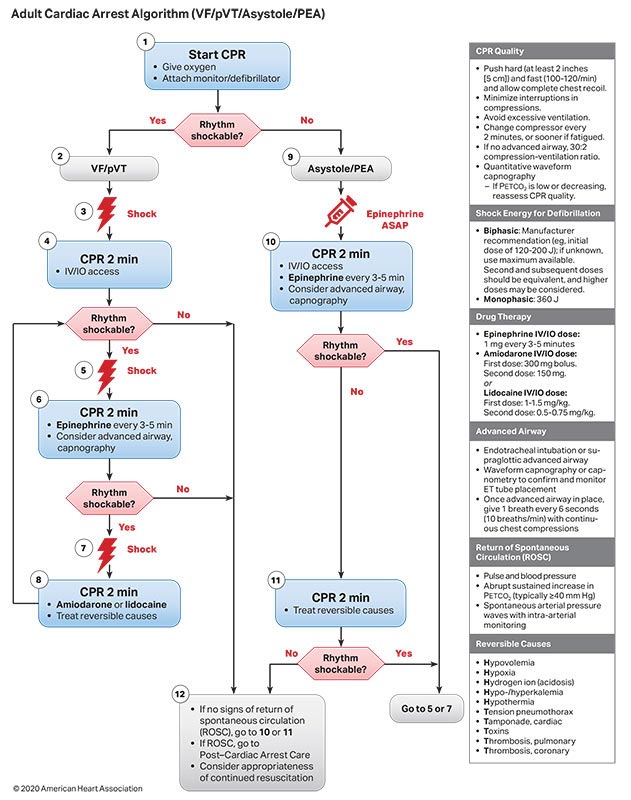
Which of the following best describes the correct administration of adrenaline for a shockable rhythm in adult advanced life support?
Your Answer: Give 1 mg of adrenaline after the second shock and every 3 - 5 minutes thereafter
Explanation:Give adrenaline 1 mg IV (IO) (10 mL of 1:10,000 solution) after the 2nd shock for adult patients in cardiac arrest with a shockable rhythm. Repeat adrenaline 1 mg IV (IO) every 3-5 minutes whilst ALS continues.
-
This question is part of the following fields:
- Cardiovascular
- Pharmacology
-
-
Question 11
Correct
-
A migrant from Eastern Europe needs to have screening performed for tuberculosis (TB) because he is a high-risk patient.
Which statement concerning TB screening in the UK is true?
Your Answer: Vaccination with the BCG can result in a false positive test
Explanation:Vaccination with the BCG can result in a false positive test.
The Mantoux test replaced the Heaf test as the TB screening test in the UK in 2005.
The ‘Sterneedle’ gun is used to inject 100,000 units/ml of tuberculin purified protein derivative into the skin for the Heaf testThe Mantoux test involves the injection of 5 Tuberculin units (0.1mL) intradermally and the result read 2-3 days later.
The interferon gamma release assay (IGRA) should NOT be used for neonates
-
This question is part of the following fields:
- Microbiology
- Specific Pathogen Groups
-
-
Question 12
Incorrect
-
A patient is referred to the Medicine Department for complaints of unilateral hearing loss, tinnitus and facial numbness. Upon further investigation, an acoustic neuroma is given as the final diagnosis.
Which of the following nerves is least likely to be affected in acoustic neuroma?Your Answer: Vestibulocochlear nerve
Correct Answer: Trochlear nerve
Explanation:Acoustic neuroma is also called vestibular schwannoma (VS), acoustic neuroma, vestibular neuroma or acoustic neurofibroma. These are tumours that evolve from the Schwann cell sheath and can be either intracranial or extra-axial. They usually occur adjacent to the cochlear and vestibular nerves and most often arise from the inferior division of the latter. Anatomically, acoustic neuroma tends to occupy the cerebellopontine angle. About 5-10% of cerebellopontine angle (CPA) tumours are meningiomas and may occur elsewhere in the brain. Bilateral acoustic neuromas tend to be exclusively found in individuals with type 2 neurofibromatosis.
The following nerves may be affected due to nerve compression:
Facial nerve: usually minimal with late presentation except for very large tumours. Depending on the degree of engagement of the nerve, the symptoms may include twitching, increased lacrimation and facial weakness.
Trigeminal Nerve: paraesthesia in the trigeminal distribution, tingling of the tongue, impairment of the corneal reflex, and less commonly pain which may mimic typical trigeminal neuralgia.
Glossopharyngeal and Vagus nerves: palatal paresis, hoarseness of voice and dysphagia
-
This question is part of the following fields:
- Anatomy
- Central Nervous System
-
-
Question 13
Incorrect
-
A 68-year-old man is being treated with digoxin for atrial fibrillation. When serum digoxin levels are above the therapeutic range, he is at highest risk for developing digoxin toxicity if he also develops which of the following?
Your Answer: Hypophosphataemia
Correct Answer: Hypokalaemia
Explanation:Predisposing factors for digoxin toxicity include hypoxia, hypercalcaemia, hypokalaemia and hypomagnesaemia There should also be care taken in the elderly who are particularly susceptible to digoxin toxicity. Hypokalaemia may be precipitated by use of diuretics. Hyponatremia can result in the development of other pathological disturbances, but it does not make digoxin toxicity worse.
-
This question is part of the following fields:
- Cardiovascular
- Pharmacology
-
-
Question 14
Incorrect
-
The patients listed below have been diagnosed with a variety of ailments.
In which of the following situations would aspirin be an effective treatment option?Your Answer: A 67-year-old on warfarin with dental pain
Correct Answer: A 36-year-old with an acute migraine (dose of 900-1000 mg)
Explanation:A study published in the Cochrane Database of Systematic Reviews in 2010 found that a single 1000-mg dose of aspirin is effective in treating acute migraine. It was discovered that 24 percent of aspirin users were pain-free after two hours, compared to 11 percent of placebo users. Because the BNF recommends a maximum dose of 900 mg for analgesia and most non-proprietary aspirin comes in a dose of 300 mg, a dose of 900 mg is frequently prescribed in the UK.
Because aspirin is not recommended for children under the age of 16 due to the risk of Reye’s syndrome, it would be inappropriate to give it to the 12-year-old with the viral URTI.
For uncomplicated dental pain, aspirin is an acceptable option, but not for patients who are taking warfarin. The combination of aspirin’s antiplatelet action and warfarin’s anticoagulation properties puts the patient at high risk of bleeding. Furthermore, aspirin can deplete the therapeutic levels of warfarin by displacing it from plasma proteins. It would be better to use another NSAID or analgesic.
In gout, aspirin should be avoided because it reduces urate clearance in the urine and interferes with the action of uricosuric agents. Naproxen, diclofenac, and indomethacin are better options.
Although aspirin is useful for inflammatory pains, the dose of aspirin required for an adequate analgesic effect in severe pain is associated with significant side effects. Naproxen would be a better first-line treatment option.
-
This question is part of the following fields:
- Cardiovascular Pharmacology
- Pharmacology
-
-
Question 15
Incorrect
-
What is the main mechanism of action of dopamine as an inotropic sympathomimetic:
Your Answer: Beta2-receptor agonist
Correct Answer: Beta1-receptor agonist
Explanation:Dopamine is a neurotransmitter and a metabolic precursor of the catecholamines. It acts on beta1-receptors in cardiac muscle increasing cardiac contractility, and increases renal perfusion by stimulating dopamine receptors in the renal vasculature. This is of benefit in cardiogenic shock where deterioration of renal function is common.
-
This question is part of the following fields:
- Cardiovascular
- Pharmacology
-
-
Question 16
Correct
-
Which of the following statements is correct with regards to heparin-induced thrombocytopaenia (HIT)?
Your Answer: HIT typically develops 5-10 days after starting heparin.
Explanation:Heparin-induced thrombocytopenia (HIT) is a prothrombotic disorder caused by antibodies that recognize complexes of platelet factor 4 (PF4) and heparin. HIT is frequently considered in the differential diagnosis of thrombocytopenia occurring in patients on heparin therapy. HIT is a challenging diagnosis because of routine heparin use in hospitalized patients, the common occurrence of thrombocytopenia. The process of heparin dependent IgG antibodies binding to heparin/platelet factor 4 complexes activates platelets and produces a hypercoagulable state. This syndrome typically develops 5-10 days (range 4-15 days) after heparin is commenced. It can occur with unfractionated heparin, low molecular weight heparin, or, rarely, fondaparinux. The diagnosis of HIT requires the combination of a compatible clinical picture and laboratory confirmation of the presence of heparin dependent platelet activating HIT antibodies. Discontinuation of heparin alone or initiation of a vitamin K antagonist alone like warfarin, is not sufficient to stop the development of thrombosis in patients with acute HIT. If there is moderate clinical suspicion for HIT, all sources of heparin must be discontinued and there must be consideration of anticoagulant treatment with a non-heparin drug.
-
This question is part of the following fields:
- Cardiovascular
- Pharmacology
-
-
Question 17
Incorrect
-
What is nimodipine used predominantly in the treatment of?
Your Answer: Hypertensive emergencies
Correct Answer: Prevention and treatment of vascular spasm following subarachnoid haemorrhage
Explanation:Nimodipine is a smooth muscle relaxant that is related to nifedipine, but the effects preferentially act on cerebral arteries. It is exclusively used for the prevention and treatment of vascular spasm after an aneurysmal subarachnoid haemorrhage.
-
This question is part of the following fields:
- Cardiovascular
- Pharmacology
-
-
Question 18
Incorrect
-
A 27 year old woman presents to ED having sustained a deep laceration to the dorsum of her ring finger whilst cooking. Her proximal interphalangeal joint is fixed in flexion and the distal interphalangeal joint is hyperextended. Which of the following structures in the digit has most likely been injured:
Your Answer: Superficial branch of the radial nerve
Correct Answer: Insertion of the central slip of the extensor tendon
Explanation:Damage to the central slip of the extensor digitorum tendon would result in loss of extension at the proximal interphalangeal joint resulting in a fixed flexion deformity of this joint, and hyperextension of the distal interphalangeal joint due to a loss of balancing forces. This is called the Boutonniere deformity.
-
This question is part of the following fields:
- Anatomy
- Upper Limb
-
-
Question 19
Correct
-
Streptococcus viridans has developed subacute bacterial endocarditis in your patient. Which of the following locations is most likely to be the organism's origin?
Your Answer: Oral cavity
Explanation:Streptococci that are alpha-haemolytic, such as Streptococcus viridans, are major components of the flora in the oral cavity.
-
This question is part of the following fields:
- Infections
- Microbiology
-
-
Question 20
Correct
-
Superficial fibular nerve palsy results in which of the following clinical features:
Your Answer: Loss of eversion of the foot
Explanation:Damage to the superficial fibular nerve results in loss of eversion of the foot and loss of sensation over the lower anterolateral leg and the dorsum of the foot.
-
This question is part of the following fields:
- Anatomy
- Lower Limb
-
-
Question 21
Correct
-
Detection of urinary Bence-Jones protein would be most suggestive of which of the following malignancies:
Your Answer: Multiple myeloma
Explanation:Bence Jones proteins are monoclonal immunoglobulin light chains found in urine (and plasma) of some patients with myeloma. Because of their relatively small size, light chains are readily excreted into the urine. The presence of significant amounts of Bence Jones proteins in urine is indicative of malignant B cell proliferation.
-
This question is part of the following fields:
- Haematology
- Pathology
-
-
Question 22
Incorrect
-
During bedside rounds, an 82-year old female in the Medicine Ward complains of pain and tingling of all fingers of the right hand. The attending physician is considering carpal tunnel syndrome.
Which of the following is expected to undergo atrophy in carpal tunnel syndrome?
Your Answer: The hypothenar eminence
Correct Answer: The thenar eminence
Explanation:Carpal tunnel syndrome (CTS) is an entrapment neuropathy caused by compression of the median nerve as it travels through the wrist’s carpal tunnel. It is the most common nerve entrapment neuropathy, accounting for 90% of all neuropathies. Early symptoms of carpal tunnel syndrome include pain, numbness, and paraesthesia’s. These symptoms typically present, with some variability, in the thumb, index finger, middle finger, and the radial half (thumb side) of the ring finger. Pain also can radiate up the affected arm. With further progression, hand weakness, decreased fine motor coordination, clumsiness, and thenar atrophy can occur.
The muscles innervated by the median nerve can be remembered using the mnemonic ‘LOAF’:
L– lateral two lumbricals
O– Opponens pollicis
A– Abductor pollicis
F– Flexor pollicis brevisIn the early presentation of the disease, symptoms most often present at night when lying down and are relieved during the day. With further progression of the disease, symptoms will also be present during the day, especially with certain repetitive activities, such as when drawing, typing, or playing video games. In more advanced disease, symptoms can be constant.
Typical occupations of patients with carpal tunnel syndrome include those who use computers for extended periods of time, those who use equipment that has vibration such as construction workers, and any other occupation requiring frequent, repetitive movement.
-
This question is part of the following fields:
- Anatomy
- Upper Limb
-
-
Question 23
Correct
-
A patient presents with a rash for a dermatological examination. A flat circumscribed area of discoloured skin measuring 0.7 cm in diameter is seen on examination.
What is the best description of this rash that you have found on examination?
Your Answer: Macule
Explanation:A macule is a flat, well circumscribed area of discoloured skin less than 1 cm in diameter with no changes in the thickness or texture of the skin.
A vesicle is a visible collection of clear fluid measuring less than 0.5 cm in diameter.
A papule is a solid, well circumscribed, skin elevation measuring less than 0.5 cm in diameter.
A nodule is a solid, well circumscribed, raised area that lies in or under the skin and measures greater than 0.5 cm in diameter. They are usually painless.
A plaque is a palpable skin lesion that is elevated and measures >1cm in diameter.
-
This question is part of the following fields:
- General Pathology
- Pathology
-
-
Question 24
Correct
-
Typically, granulomatous inflammation is associated with one of the following infections:
Your Answer: Tuberculosis
Explanation:Granulomatous inflammation is typically seen when an infective agent with a digestion-resistance capsule (e.g. Mycobacterium tuberculosis) or a piece of inert foreign material (such as suture or glass) is introduced into the tissue. A transient acute inflammatory response occurs and when this is ineffective in eradicating the stimulus, chronic inflammation occurs.
Tuberculosis is the prototype of the granulomatous diseases, but sarcoidosis, cat-scratch disease, lymphogranuloma inguinale, leprosy, brucellosis, syphilis, some mycotic infections, berylliosis, reactions of irritant lipids, and some autoimmune diseases are also included
-
This question is part of the following fields:
- Inflammatory Responses
- Pathology
-
-
Question 25
Correct
-
A 35-year-old man suffered a severe road traffic accident and has been brought to the hospital. As part of his treatment, he requires a blood transfusion and experiences a transfusion reaction.
The most common type of transfusion reaction is which of the following?Your Answer: Febrile transfusion reaction
Explanation:During or shortly after transfusion, febrile transfusion reactions, also known as non-haemolytic transfusion reactions, present with an unexpected temperature rise (38oC or 1oC above baseline, if baseline is 37oC). This is usually a one-off occurrence. The fever is sometimes accompanied by chills.
The most common type of transfusion reaction is febrile transfusion reactions, which occur in about 1 in every 8 transfusions.
The most common event leading to symptoms of febrile transfusion reactions is cytokine accumulation during storage of cellular components (especially platelet units). White cells secrete cytokines, and pre-storage leucodepletion has reduced this risk.
Recipient antibodies (raised as a result of previous transfusions or pregnancies) reacting to donor human leukocyte antigen (HLA) or other antigens can also cause febrile transfusion reactions. Donor lymphocytes, granulocytes, and platelets all contain these antigens.
Treatment is reassuring. Other causes should be ruled out, and antipyretics like paracetamol can help with fever relief. If another cause of fever is suspected, the transfusion should be stopped; however, if other causes of fever have been ruled out, it can be restarted at a slower rate.
-
This question is part of the following fields:
- Haematology
- Pathology
-
-
Question 26
Incorrect
-
A patient with pronounced tremor, muscle contractions, muscle spasms, and slowness of movement is brought in by his family. He has a long history of mental health issues for which he is currently treated with a variety of medications.
Which of the medications listed below is most likely to be the cause of these side effects?Your Answer: Olanzapine
Correct Answer: Haloperidol
Explanation:Acute dyskinesias and dystonic reactions, tardive dyskinesia (rhythmic, involuntary movements of the tongue, face, and jaw), Parkinsonism (tremor, bradykinesia, and rigidity), akinesia, akathisia, and neuroleptic malignant syndrome are all examples of extrapyramidal side effects. They are caused by dopamine depletion or blockade in the basal ganglia; this lack of dopamine frequently mimics idiopathic extrapyramidal pathologies.
The first-generation antipsychotics, which are strong dopamine D2 receptor antagonists, are the drugs most commonly associated with extrapyramidal side effects. Haloperidol and fluphenazine are the two drugs in this class that are most commonly associated with extrapyramidal side effects. Extrapyramidal adverse effects are less common in second-generation antipsychotics (e.g., olanzapine) than in first-generation antipsychotics.
Other drugs are linked to extrapyramidal symptoms as well, but at a lower rate. Some antidepressants, lithium, various anticonvulsants, antiemetics, and, in rare cases, oral contraceptive agents are among them.
-
This question is part of the following fields:
- CNS Pharmacology
- Pharmacology
-
-
Question 27
Correct
-
The term cardiac output refers to the amount of blood pumped by the heart in one minute. The rate in women is around 5 L/min, whereas in men is somewhat higher, around 5.5 L/min.
Which of the equations below best describes cardiac output?
Your Answer: Stroke volume x heart rate
Explanation:Cardiac output (CO) is calculated by multiplying stroke volume (SV) by heart rate (HR):
CO = HR x SVAs a result, both stroke volume and heart rate are exactly proportional to cardiac output. There will be an increase in cardiac output if the stroke volume or heart rate increases, and a reduction in cardiac output if the stroke volume or heart rate lowers.
-
This question is part of the following fields:
- Cardiovascular Physiology
- Physiology
-
-
Question 28
Correct
-
Which of the following does NOT affect the rate of flow of a liquid through a tube:
Your Answer: Surface tension
Explanation:Flow through a tube is dependent upon:
The pressure difference across the ends of the tube (P1– P2)
The resistance to flow provided by the tube (R)
This is Darcy’s law, which is analogous to Ohm’s law in electronics:
Flow = (P1– P2) / R
Resistance in the tube is defined by Poiseuille’s law, which is determined by the diameter of the tube and the viscosity of the fluid. Poiseuille’s law is as follows:
Resistance = (8VL) / (πR4)
Where:
V = The viscosity of the fluid
L = The length of the tube
R = The radius of the tube
Therefore, in simple terms, resistance is directly proportional to the viscosity of the fluid and the length of the tube and inversely proportional to the radius of the tube. Of these three factors, the most important quantitatively and physiologically is vessel radius.
It can be seen that small changes in the radius can have a dramatic effect on the flow of the fluid. For example, the constriction of an artery by 20% will decrease the flow by approximately 60%.
Another important and frequently quoted example of this inverse relationship is that of the radius of an intravenous cannula. Doubling the diameter of a cannula increases the flow rate by 16-fold (r4). This is the reason the diameter of an intravenous cannula in resuscitation scenarios is so important.
*Please note that knowledge of the detail of Poiseuille’s law is not a requirement of the RCEM Basic Sciences Curriculum. -
This question is part of the following fields:
- Basic Cellular
- Physiology
-
-
Question 29
Incorrect
-
During the second and third trimesters of her pregnancy, a 36-year-old woman is given a drug to treat a medical condition. The foetus has developed hypoperfusion and the oligohydramnios sequence as a result of this.
Which of the following drugs is most likely to be the cause of these side effects?Your Answer: Chloramphenicol
Correct Answer: Ramipril
Explanation:Hypoperfusion, renal failure, and the oligohydramnios sequence are all linked to ACE inhibitor use in the second and third trimesters.
The oligohydramnios sequence refers to a foetus’ or neonate’s atypical physical appearance as a result of oligohydramnios in the uterus. It’s also linked to aortic arch obstructive malformations and patent ductus arteriosus.
The inhibitory effects on the renin-angiotensin-aldosterone system appear to be the cause of these defects. To avoid these risks, ACE inhibitors should be stopped before the second trimester.
-
This question is part of the following fields:
- Cardiovascular Pharmacology
- Pharmacology
-
-
Question 30
Incorrect
-
Regarding haemoglobin, which of the following statements is INCORRECT:
Your Answer: Haemoglobin is composed of four polypeptide globin chains each with its own haem molecule.
Correct Answer: Haemoglobin synthesis occurs in mature erythrocytes.
Explanation:Haemoglobin is composed of four polypeptide globin chains each with its own iron containing haem molecule. Haem synthesis occurs largely in the mitochondria by a series of biochemical reactions commencing with the condensation of glycine and succinyl coenzyme A under the action of the key rate-limiting enzyme delta-aminolevulinic acid (ALA) synthase. The globin chains are synthesised by ribosomes in the cytosol. Haemoglobin synthesis only occurs in immature red blood cells.
There are three types of haemoglobin in normal adult blood: haemoglobin A, A2 and F:
– Normal adult haemoglobin (HbA) makes up about 96 – 98 % of total adult haemoglobin, and consists of two alpha (α) and two beta (β) globin chains.
– Haemoglobin A2 (HbA2), a normal variant of adult haemoglobin, makes up about 1.5 – 3.5 % of total adult haemoglobin and consists of two α and two delta (δ) globin chains.
– Foetal haemoglobin is the main Hb in the later two-thirds of foetal life and in the newborn until approximately 12 weeks of age. Foetal haemoglobin has a higher affinity for oxygen than adult haemoglobin.
Red cells are destroyed by macrophages in the liver and spleen after , 120 days. The haem group is split from the haemoglobin and converted to biliverdin and then bilirubin. The iron is conserved and recycled to plasma via transferrin or stored in macrophages as ferritin and haemosiderin. An increased rate of haemoglobin breakdown results in excess bilirubin and jaundice. -
This question is part of the following fields:
- Basic Cellular
- Physiology
-
SESSION STATS - PERFORMANCE PER SPECIALTY
