-
Question 1
Correct
-
Which structure is the primary mechanism for shunting blood away from the fetal pulmonary circulation?
Your Answer: Foramen Ovale
Explanation:Oxygenation of fetal blood occurs in the placenta before it returns in the umbilical vein which joins the left branch of the portal vein. It bypasses the capillaries of the liver by going through the ductus venosus, which is obliterated after birth and becomes the ligamentum venosum. The oxygenated blood enters the inferior vena cava and is transported to the right atrium and
then through the patent foramen ovale to the left atrium and on to the left ventricle. From the left ventricle, the blood flows into the aorta and through the fetal vascular network. Blood returning from the head of the foetus passes through the superior vena cava to the right atrium and straight on to the right ventricle and pulmonary artery. However, it does not enter the pulmonary
circulation, being short-circuited by the ductus arteriosus to the aorta. Aortic blood is carried via the umbilical arteries back to the placenta for reoxygenation. At birth, the three short circuits, the ductus venosus, foramen ovale and ductus arteriosus, close. -
This question is part of the following fields:
- Embryology
-
-
Question 2
Correct
-
A 27-year-old female G1P1 presents with her husband because she has not been breastfeeding her baby 24 hours though she had previously stated she intended exclusive breastfeeding for the first 3 months. She feels sad most of the time and her mood has been very low for the past 2 weeks, she has trouble sleeping at night and feels tired all day. She complains that her husband doesn’t seem to know how to help. For the past 24 hours she feels like she is not fit to be a mother and doesn’t want to feed the baby anymore. She has been frightened by thoughts to harm herself and the baby. Her baby is 7 weeks old.
In addition to antidepressant medication, which of the following treatment is most appropriate for this patient?Your Answer: Electroconvulsive therapy
Explanation:This patient presents because of significant mood changes since she gave birth to her child: she is sad most of times and she is having guilt feelings about her adequacy for motherhood- She is also complaining of insomnia, tiredness, and even some suicidal ideation. These symptoms are highly suggestive postpartum depression. This should be differentiated from postpartum blues, which usually present within the first 2 weeks and last for few days. This patient’s symptoms started 5 weeks postpartum. Postpartum depression usually presents within the first 6 weeks to the first year postpartum.
Postpartum depression is the most common complication of childbearing and affects the mother, the child, and relationship with the partner. It is diagnosed the same way as major depressive disorder in other patients. Since untreated postpartum depression can have long-term effects on the mother and the child, appropriate therapy should be undertaken as soon as possible- Antidepressant medications such as sertraline can be used to treat postpartum depression. In a patient who has suicidal ideation, electroconvulsive therapy has a more rapid and effective action than medication and should be considered in these patients.
→ Cognitive behavioural therapy is effective in women with mild to moderate postpartum depression; it would not be a good choice in this patient with suicidal ideation and at risk of harming the baby.
→ Estrogen therapy used alone or in combination with antidepressant, has been shown to significantly reduce the symptoms of postpartum depression; however, it would not be the most appropriate choice in a patient with suicidal ideation.
→ Peer support has shown equivocal results in various studies even though most postpartum patients report that lacking an intimate friend or confidant or facing social isolation are factors leading to depression.
→ Non-directive counselling also known as ”listening visits“ has been found to be effective in postpartum patients, though the studies that were conducted are deemed to be of small sample and larger studies still need to be done to validate these findings. It would not be an appropriate choice for this patient with suicidal ideation. -
This question is part of the following fields:
- Obstetrics
-
-
Question 3
Incorrect
-
In which of the following situations are mini-pills unsafe to use?
Your Answer: Biliary tract disease
Correct Answer: Ovarian cysts
Explanation:Progestin only pills increase the risk of developing follicular cysts. Sonographic studies have observed that follicular cysts are more common in POP users than women not using hormones. The follicular changes tend to increase and regress over time. No intervention is required in asymptomatic women, other than reassurance. POP users who have persistent concerns about ovarian follicular changes should be offered another method of contraception.
All other options are not contraindications to the use of mini-pills.
-
This question is part of the following fields:
- Gynaecology
-
-
Question 4
Correct
-
The source of progesterone that maintains the pregnancy during early 1st trimester:
Your Answer: Corpus luteum
Explanation:In early pregnancy Progesterone is produced by the corpus luteum.. This organ is fundamental for pregnancy maintenance until the placenta (syncytiotrophoblast) takes over its function at the 7-9th week of gestation, just after the expression of major histocompatibility complex antigens is suppressed in extra-embryonic fetal tissue.
-
This question is part of the following fields:
- Endocrinology
-
-
Question 5
Correct
-
Which one of the following dimensions relates to the greatest diameter of the fetal head?
Your Answer: Occipitomental
Explanation:Occipitomental diameter is the greatest diameter of the fetal scalp and runs from chin to the prominent portion on the occiput. It measure about 12.5cm in diameter.
-
This question is part of the following fields:
- Anatomy
-
-
Question 6
Incorrect
-
Which of the following is the most likely anaesthetic or analgesic causing reduced variability on cardiotocograph?
Your Answer: Epidural anaesthetic
Correct Answer: Intramuscular pethidine
Explanation:Opiates and spinal anaesthetics reduce the variability of a CTG. Including some antihypertensives like labetalol and alpha methyl dopa.
-
This question is part of the following fields:
- Obstetrics
-
-
Question 7
Incorrect
-
A 32-year-old G3P2 female presents to your department for prenatal check up. She is in the 26th week of gestation and her pregnancy has been uneventful so far. Her past medical history is unremarkable. Her second child was born macrosomic with shoulder dystocia, which was a very difficult labour.
Which of the following is the most appropriate management of this patient?Your Answer: Schedule elective Caesarean delivery
Correct Answer: Watchful waiting till she goes in labour
Explanation:Shoulder dystocia is a complication associated with fetal macrosomia and may result in neurological dysfunction. Fetal macrosomia is generally defined as birth weight – 4,000 g. It occurs in about 10% of pregnancies and one of the most important predictors of fetal macrosomia is previous macrosomic infant(s). The recurrence rate of fetal macrosomia is above 30%. Other risk factors are maternal diabetes, multiparity, prolonged gestation, maternal obesity, excessive weight gain, male foetus, and parental stature- Not all cases of fetal macrosomia lead to shoulder dystocia and the occurrence of this complication is only 0.5%-1% of all pregnancies.
To make clinical decision regarding management of the patient, it is important to understand that there are other factors that lead to shoulder dystocia, such as the mother’s anatomy. While statistics suggest that there’s a tendency to choose elective Caesarean delivery for suspected macrosomia, it is believed that most of procedures are unnecessary, as evidence has shown the number of complications are not reduce- Also while it is logical to consider induction of labour at the 37th week of pregnancy, it is associated with increased Caesarean deliveries because of failed inductions. The recommended course of action is watchful waiting till the patient goes in labour.
→ Induce labour at the 37th week of gestation is not the best course of action, as it is associated with high failure rate, which often leads to Caesarean delivery.
→ Schedule elective Caesarean delivery is considered unnecessary in patients who do not have diabetes. Statistics have shown no evidence that Caesarean delivery reduces the rate of complications.
→ Serial ultrasound for fetal weight estimation is incorrect. The strategies used to predict fetal macrosomia are risk factors, Leopold’s manoeuvres, and ultrasonography. Even when they are combined, they are considered inaccurate; much less ultrasonography alone.
→ At this point, blood glucose control in pregnancies associated with diabetes seems to have desired results in preventing macrosomia- A weight loss program is usually not recommended- Instead, expectant management should be considered. -
This question is part of the following fields:
- Obstetrics
-
-
Question 8
Correct
-
Which immunoglobulin provides passive immunity to the neonate?
Your Answer: IgG
Explanation:Passive immunity to the neonate is provided by immunoglobulin G (IgG) since it can be transferred through the placenta from mother to the foetus.
IgA is transferred from mothers to offspring through breast milk.
IgM molecular structure is too big to be filtered through the placental vasculature to the foetus. IgM is the first Ig to be synthesised by the neonate -
This question is part of the following fields:
- Immunology
-
-
Question 9
Correct
-
Question 10
Correct
-
A 24-year-woman, gravida 2 para 1, 37 weeks of gestation, was admitted due to spontaneous rupture of membranes. Her previous pregnancy was uncomplicated and delivered at term via vaginal delivery. 24 hours since rupture of her membranes, no spontaneous labour was noted, hence a syntocinon/oxytocin infusion (10 units in 1L of Hartmann solution) was started at 3DmL/hour and increased to 120 mL over 9 hours. After 10 hours of infusion, during which Syntocinon dosage was increased to 30 units per litre, contractions were noted. Which is the most common complication of Syntocinon infusion?
Your Answer: Fetal distress.
Explanation:In this case, induction of labour at 37 weeks of gestation was necessary due to the absence of spontaneous of labour 24 hours after rupture of membranes. High doses of Syntocin and large volume of fluids may be required particularly when induction is done before term.
Syntocin infusion can lead to uterine hypertonus and tetany which can result in fetal distress at any dosage. This is a common reason to decrease or stop the infusion and an indication for Caesarean delivery due to fetal distress
Uterine rupture can occur as a result of Syntocin infusion especially when the accompanying fluids do not contain electrolytes, which puts the patient at risk for water intoxication.
Maternal hypotension results from Syntocin infusion, not hypertension.
-
This question is part of the following fields:
- Obstetrics
-
-
Question 11
Incorrect
-
Among the statements given below which one is correct regarding shoulder dystocia?
Your Answer: Most cases can be resolved by hyper-extension of the mother thighs
Correct Answer: Erb palsy is common fetal injury
Explanation:Shoulder dystocia occurs when the bisacromial diameter, which is the breadth of the shoulders, exceed the diameter of pelvic inlet. This typically results in a bony impaction of the anterior shoulder against the maternal symphysis pubis, instead of an arrest at the pelvic inlet. Brachial plexus palsies including Erb’s palsy is the most common foetal injury associated with shoulder dystocia.
It is not hyper-extension but the hyper-flexion of maternal legs tightly on her abdomen, called as McRoberts manoeuvre, which facilitates delivery during shoulder dystocia. This technique is effective as it increases the mobility of sacroiliac joint during pregnancy, which allows the rotation of pelvis and thereby facilitating the release of fetal shoulder.
If this manoeuvre does not succeed, another technique called suprapubic pressure is done where an assistant applies pressure on the lower abdomen and gently pulls the delivered head. This technique is useful in about 42% of cases with shoulder dystocia.Maternal diabetes mellitus and foetal macrosomia both are a risk factor for shoulder dystocia.
Administration of epidural anaesthesia during labour increases the possibility of shoulder dystocia.
Risk of shoulder dystocia may increase with Oxytocin augmentation also.
-
This question is part of the following fields:
- Obstetrics
-
-
Question 12
Correct
-
The juxtaglomerular apparatus (JGA) lies within which part of the kidney?
Your Answer: Renal Cortex
Explanation:The juxtaglomerular apparatus is the main site for the production of renin. It plays an important role in the regulation of the blood pressure. These structures are mainly located in the cortex of the kidneys.
-
This question is part of the following fields:
- Anatomy
-
-
Question 13
Incorrect
-
The following are true for dizygotic twins EXCEPT:
Your Answer: Fertilization of more than one egg by more than one sperm
Correct Answer: Both twins are identical & of the same sex
Explanation:Dizygotic means two (di) fertilized eggs (zygotes). Dizygotic twins occur when two eggs are fertilized by two separate sperm. Dizygotic twins are also known as fraternal or non-identical twins. They are the most common type of twins.
Unlike monozygotic twins (also known as identical twins), dizygotic twins do not share the same genes. Monozygotic twins share 100 percent of each other genes. Dizygotic twins share only 50 percent. This is the same genetic similarity found between siblings conceived and born at different times.
-
This question is part of the following fields:
- Genetics
-
-
Question 14
Correct
-
Which of the following is an appropriate treatment for Diazepam overdose?
Your Answer: Flumazenil
Explanation:Flumazenil is used for benzodiazepine overdose.
Naloxone is used for opioid overdose.
Parvolex (N-acetyl cysteine) is used for paracetamol overdose.
Protamine can be used for Heparin reversal.
Beriplex can be used for Warfarin reversal. -
This question is part of the following fields:
- Pharmacology
-
-
Question 15
Correct
-
A 33-year-old primigravida at 33 weeks of gestation comes to the emergency department complaining of having headache for the past two week. On examination her blood pressure is 148/100 and heart rate is 90/min.There is swelling over both her ankles, hands and eyes. The rest of the examination is normal. CTG tracing is reassuring and urine dipstick showed proteinuria. Which of the following is considered as the best next step in managing this patient?
Your Answer: Observation, steroids and antihypertensives
Explanation:Patient in the given case has developed clinical features of mild preeclampsia presented as hypertension, ankle and facial oedema along with proteinuria.
As the fetal lungs are not yet matured, best management in this case would be observing the patient frequently, starting her on steroids and antihypertensive drugs like methyldopa, or labetalol. 31 to 34 weeks of gestation is the optimal gestational age for starting dexamethasone therapy which will help in controlling blood pressure, helps in the maturation of lungs and will also gives time to organise delivery when the lungs are matured.
Immediate C-section is not required at this stage of pregnancy, however a plan for cesarean section must be made to carry it out if the patient develops eclampsia during her stay in the hospital. Immediate vaginal delivery is also not indicated as the pregnancy is far from term. Induced labour will result in fetal demise soon after birth due to the fetal lung immaturity, but immediate delivery has to be considered once the fetal lung attains maturity.
Magnesium Sulphate is indicated only in women with severe pre-eclampsia and even in such cases primary importance is given to blood pressure controlling. Magnesium sulphate is not indicated on this case as the patient is in mild eclampsia.
Even though Paracetamol and deep vein thrombosis prophylaxis are indicated in this case, anticoagulants should be avoided considering the emergency need for surgery.
-
This question is part of the following fields:
- Obstetrics
-
-
Question 16
Correct
-
What is the inferior border of the deep perineal pouch?
Your Answer: Perineal membrane
Explanation:The perineal membrane is a tough fascial sheet that attaches to the sides of the urogenital triangle. it forms the inferior border of the deep pouch which lies between this and the levator ani and the superior border of the superficial pouch.
-
This question is part of the following fields:
- Anatomy
-
-
Question 17
Correct
-
A 25 year old unmarried female presented with dizziness, nausea and vomiting for 1 week. According to her, she has been stressed recently and her usual menstrual period has been delayed by 4 weeks. Examination findings were normal. Which of the following is the most appropriate next step?
Your Answer: Dipstick for B-hCG
Explanation:There is high possibility of her being pregnant. Urine B-hCG has to be checked to exclude pregnancy.
-
This question is part of the following fields:
- Gynaecology
-
-
Question 18
Incorrect
-
Which of the following causes of polyhydramnios is more common?
Your Answer: Anencephaly
Correct Answer: Idiopathic
Explanation:Maternal disorders, such as diabetes, in-utero infections, drug usage, placental abnormalities and fetal conditions as congenital and chromosomal abnormalities, Rh iso-immunization, and multiple gestations, are generally associated with polyhydramnios. Congenital abnormalities such as duodenal, oesophageal, or intestinal atresia of the foetus are the most common malformations that typically cause gastro-intestinal obstruction and interfere with fetal swallowing and/or absorption resulting with polyhydramnios. However, in about 70% of cases, none of the aforementioned aetiologies are causes of polyhydramnios, and it is referred to as idiopathic or isolated.
-
This question is part of the following fields:
- Physiology
-
-
Question 19
Incorrect
-
A 56 year old lady presents with a vulval itch and discolouration. A biopsy conforms Lichen Sclerosis (LS). What is the risk of developing squamous cell carcinoma compared to patients with a normal vulval biopsy?
Your Answer: 5-15%
Correct Answer:
Explanation:Lichen Sclerosis is a destructive inflammatory condition that effects the anogenital region of women. It effects around 1 in 300 women. It destroys the subdermal layers of the skin resulting in hyalinization of the skin leading to parchment paper appearance of the skin. It is associated with vulval cancer and it is estimated that the risk of developing vulval cancer after lichen sclerosis is around 3-5%.
-
This question is part of the following fields:
- Clinical Management
-
-
Question 20
Correct
-
You are asked to review a patient. They have attended for a scan at 13 weeks following a positive pregnancy test. The patient has had 2 previous pregnancies for which she opted for termination on both occasions. The scan shows a large irregular haemorrhagic mass that appears to be invading into the myometrium. What is the likely diagnosis?
Your Answer: Choriocarcinoma
Explanation:Choriocarcinoma may arise as a complication of gestation or as spontaneous germ cell tumours. As this scenario depicts that the women has previous abortion points to the fact that these may have been molar pregnancies. As choriocarcinoma can arise from a molar pregnancy it can be differentiated from it by the presence of invasion into the uterus and metastasis to the lungs primarily.
-
This question is part of the following fields:
- Clinical Management
-
-
Question 21
Correct
-
A patient who is 12 weeks pregnant is being seen in the antenatal clinic. Urinalysis shows protein ++. A 24 hour urine collection is organised. Greater than what level would indicate significant proteinuria?
Your Answer: 300 mg over 24 hours
Explanation:pre-eclampsia is defined as hypertension of at least 140/90 mmHg recorded on at least two separate occasions and at least 4 hours apart and in the presence of at least 300 mg protein in a 24 hour collection of urine, arising de novo after the 20th week of pregnancy in a previously normotensive woman and resolving completely by the sixth postpartum week.
-
This question is part of the following fields:
- Data Interpretation
-
-
Question 22
Correct
-
We can detect the fetal heart beat by Sonography (transvaginal) at:
Your Answer: 6 weeks
Explanation:The earliest fetal heart rate detected transvaginally was at 6 weeks 0 days of gestation compared with 7 weeks 0 days transabdominally. The transvaginal Doppler method was also more successful in detecting the fetal heart rate in women with a retroverted uterus (p < or = 0.01).
-
This question is part of the following fields:
- Physiology
-
-
Question 23
Incorrect
-
Yasmin®, which contains 3 mg of drospirenone and 30 mcg of ethinyl oestradiol, has been approved for usage in South Africa.
Which of the following factors has contributed to it becoming the most popular oral contraceptive pill among South African women?Your Answer: It h as a good effect on acne
Correct Answer: It has not weight gain as an adverse effect and may be associated with weight loss
Explanation:Yasmin has been linked to decreased fluid retention and weight gain as a side effect of COCs, which is why most women who experience this side effect prefer Yasmin®.
Due to its anti-mineralocorticoid properties, drospirenone, unlike earlier progestogens, is associated with no weight gain or even moderate weight loss.
Yasmin has a similar failure rate to other COCs. No evidence using Yasmin is linked to a lower risk of cervical cancer as a long-term side effect of COCs. Yasmin, like all COCs, can cause spotting and irregular bleeding in the first few months of use.
Drospirenone, a progesterone component, has antiandrogenic properties and is slightly more successful in treating acne, but the difference is not big enough to make it preferable in terms of acne therapy or prevention when compared to other COCs. -
This question is part of the following fields:
- Gynaecology
-
-
Question 24
Incorrect
-
The first stage of labour:
Your Answer:
Correct Answer: Ends with fully dilation of the cervix
Explanation:First stage of the labour starts with the contractions of the uterus. With time, the no. of contractions, its duration and intensity increases. It ends once the cervix is fully dilated.
-
This question is part of the following fields:
- Obstetrics
-
-
Question 25
Incorrect
-
Which of the following procedures allow the earliest retrieval of DNA for prenatal diagnosis in pregnancy:
Your Answer:
Correct Answer: Chorionic Villi Sampling (CVS)
Explanation:CVS has decreased in frequency with the recent increased uptake of cell-free DNA screening. It remains the only diagnostic test available in the first trimester and allows for diagnostic analyses, including fluorescence in situ hybridization (FISH), karyotype, microarray, molecular testing, and gene sequencing. CVS is performed between 10 and 14 weeks’ gestation. CVS has been performed before 9 weeks in the past, though this has shown to increase the risk of limb deformities and, therefore, is no longer recommended.
-
This question is part of the following fields:
- Obstetrics
-
-
Question 26
Incorrect
-
An 18 year old and has yet to begin her period. She stands at 4'10. She shows no signs of breast development. She has no pubic hair on pelvic examination. The patient has a cervix and uterus, according to digital inspection. The ovaries cannot be felt. Serum FSH and LH levels are drawn as part of the workup, and both are elevated. Which of the following is the most likely cause of this patient's delayed puberty and sexual infantilism?
Your Answer:
Correct Answer: Gonadal dysgenesis
Explanation:In girls, delayed puberty and primary amenorrhea may be subdivided according to associated changes in stature. If the affected girl is short, the likely causes are gonadal dysgenesis (Turner syndrome) or hypopituitarism (with both gonadotropin and growth hormone deficiency). Gonadal dysgenesis results from the absence of a sex chromosome or other abnormality of a sex chromosome. In affected girls the gonads are streaks of fibrous tissue and contain no follicles, and these girls may have a variety of congenital anomalies, including a webbed neck, a shieldlike chest, or a small jaw.
Kallmann syndrome presents with amenorrhea, infantile sexual development, low gonadotropins, normal female karyotype, and anosmia (the inability to perceive odours).
In Müllerian agenesis, the Müllerian ducts either fail to develop or regress early in fetal life. These patients have normal ovarian development and normal secondary sexual characteristics. They present with a blind vaginal pouch and no upper vagina, cervix, or uterus, and primary amenorrhea.
The McCune-Albright syndrome rather presents with precocious puberty.
-
This question is part of the following fields:
- Gynaecology
-
-
Question 27
Incorrect
-
Which of the following increases during pregnancy?
Your Answer:
Correct Answer: Tidal Volume
Explanation:Ventilation begins to increase significantly at around 8 weeks of gestation, most likely in response to progesterone-related sensitization of the respiratory centre to carbon dioxide and the increased metabolic rate. Significant alterations occur in the mechanical aspects of ventilation during pregnancy. Minute ventilation (or the amount of air moved in and out of the lungs in 1 minute) is the product of tidal volume and respiratory rate and increases by approximately 30–50 per cent with pregnancy. The increase is primarily a result of tidal volume, which increases by 40 per cent (from 500 to 700 mL), because the respiratory rate remains unchanged. The increase in minute ventilation is perceived by the pregnant woman as shortness of breath, which affects 60–70 per cent of women. This physiological dyspnoea is usually mild and affects 50 per cent of women before 20 weeks gestation, but resolves immediately postpartum.
-
This question is part of the following fields:
- Physiology
-
-
Question 28
Incorrect
-
A 37-year-old woman is planning to conceive this year. Upon history-taking and interview, it was noted that she was a regular alcohol drinker and has been using contraceptive pills for the past 3 years.
Which of the following is considered to be the most appropriate advice for the patient?Your Answer:
Correct Answer: Stop alcohol now
Explanation:Alcohol exposure during pregnancy results in impaired growth, stillbirth, and fetal alcohol spectrum disorder. Fetal alcohol deficits are lifelong issues with no current treatment or established diagnostic or therapeutic tools to prevent and/or ameliorate some of these adverse outcomes.
Alcohol readily crosses the placenta with fetal blood alcohol levels approaching maternal levels within 2 hours of maternal intake. As there is known safe level of alcohol consumption during pregnancy, and alcohol is a known teratogen that can impact fetal growth and development during all stages of pregnancy, the current recommendation from the American College of Obstetricians and Gynaecologists, Centre for Disease Control (CDC), Surgeon General, and medical societies from other countries including the Society of Obstetricians and Gynaecologists of Canada all recommend complete abstinence during pregnancy.
-
This question is part of the following fields:
- Obstetrics
-
-
Question 29
Incorrect
-
With sneezing, a 45-year-old mother of two reported leaking a small bit of urine. It started to happen with exercising recently. She denies having experienced recent life pressures.
Which of the following best characterizes the incontinence she's dealing with?Your Answer:
Correct Answer: Stress incontinence
Explanation:Overflow incontinence typically presents with continuous urinary leakage or dribbling in the setting of incomplete bladder emptying. Associated symptoms can include weak or intermittent urinary stream, hesitancy, frequency, and nocturia. When the bladder is very full, stress leakage can occur or low-amplitude bladder contractions can be triggered resulting in symptoms similar to stress or urgency incontinence.
Women with urgency incontinence experience the urge to void immediately preceding or accompanied by involuntary leakage of urine
Individuals with stress incontinence have involuntary leakage of urine that occurs with increases in intraabdominal pressure (e.g., with exertion, sneezing, coughing, laughing) in the absence of a bladder contraction.
-
This question is part of the following fields:
- Gynaecology
-
-
Question 30
Incorrect
-
Regarding the ECG, what does the P wave represent?
Your Answer:
Correct Answer: Atrial depolarisation
Explanation:In an ECG the P wave represents atrial depolarization. The QRS complex represents the ventricular depolarization, T waves represent ventricular repolarization and the U wave represents repolarization of the interventricular septum.
-
This question is part of the following fields:
- Biophysics
-
-
Question 31
Incorrect
-
A 26 year old patient with PCOS has been trying to conceive for 2 years. Her BMI is 26 kg/m2. She is a non-smoker. Which of the following is the most appropriate first line treatment?
Your Answer:
Correct Answer: Clomiphene
Explanation:Firstline medical management of PCOS is with clomiphene.
Ovulation Disorders
WHO Group I : Hypothalamic pituitary failure (Stress, anorexia, exercise induced)
Management:
Increase BMI if <19 kg/m2
Reduce exercise if high levels
Pulsatile GnRH or Gonadotrophins with LH activity to induce ovulationWHO Group II : Hypothalamic-pituitary-ovarian dysfunction (PCOS)
Management:
Weight reduction if BMI >30
Clomiphene/Clomiphene (1st line)
Metformin (1st line)
Clomiphene & Metformin (1st/2nd line)
Laparoscopic drilling (2nd line)
Gonadotrophins (2nd line)WHO Group III : Ovarian failure
Management:
Consider IVF with donor eggs -
This question is part of the following fields:
- Clinical Management
-
-
Question 32
Incorrect
-
You see a patient on the ward who is acutely short of breath and perform an ABG. The results are as follows
Your Answer:
Correct Answer: Respiratory Acidosis
Explanation:This patient has acidosis as the pH is low <7.35 The pO2 is irrelevant. The pCO2 is raised i.e. the respiratory system is causing acidosis. The patient is acidotic so this is a respiratory acidosis The Base Excess is normal. You would typically expect the base excess to rise but metabolic compensation is slower than respiratory compensation so this picture may be seen acutely.
-
This question is part of the following fields:
- Biochemistry
-
-
Question 33
Incorrect
-
You see a patient who is 32 weeks pregnant. She complains of tingling to the right buttock and shooting pain down the leg. You suspect Piriformis syndrome. Regarding Piriformis which of the following statements are true?
Your Answer:
Correct Answer: Insertion is onto the greater trochanter
Explanation:Nerve Supply: L5 to S2 via Nerve to Piriformis
Origin: Sacrum
Insertion: Greater trochanter
Action: External rotation of hip
Blood Supply: Superior and Inferior gluteal arteries and lateral sacral arteries -
This question is part of the following fields:
- Anatomy
-
-
Question 34
Incorrect
-
A 22 year old woman miscarries at 6 weeks gestation. At checkup, she shows no obvious signs of complication. What would you advise regarding further pregnancy testing?
Your Answer:
Correct Answer: Urine pregnancy test in 3 weeks
Explanation:In the management of a miscarriage, after the completion of 7-14 days of expectant management, the woman is advised to take a pregnancy test after 3 weeks. In case of a positive result she is to return for further care.
-
This question is part of the following fields:
- Biochemistry
-
-
Question 35
Incorrect
-
A 46-year-old woman complains of ulceration with bloody discharge around her right nipple accompanied by redness, excoriations, and severe itchiness. What is the most likely diagnosis?
Your Answer:
Correct Answer: Paget’s disease of the breast
Explanation:Paget’s disease of the breast is a type of cancer that outwardly may have the appearance of eczema, with skin changes involving the nipple of the breast. Symptoms may include redness of the nipple skin and crusting may occur around the area. In more advance cases, symptoms may include itching or a burning pain in the nipple.
-
This question is part of the following fields:
- Gynaecology
-
-
Question 36
Incorrect
-
Your 64-year-old patient has come to you with a uterine prolapse complaint.
Which of the following ligaments plays the most critical role in uterine prolapse pathophysiology?Your Answer:
Correct Answer: Uterosacral ligament
Explanation:The uterus needs support in order to remain centered inside the pelvic cavity. The support it receives comes in two forms: dynamic and passive. The ligaments of the uterus have an important role in both.
Dynamic support is provided by the pelvic diaphragm through tonic contractions while standing and sitting and active contractions during moments of increased abdominal pressure, such as coughing or sneezing. During these moments, the ligaments of the uterus transmit the force of the diaphragm towards the organ itself, maintaining its position.
The ligaments are also crucial in providing passive support. By minimizing movement of the body and the cervix, they maintain the uterus in the typical anteverted and anteflexed position directly on top of the bladder. This provides a support for the uterus when the abdominal pressure increases.
Hence, even though the broad ligament, round ligament and ovarian ligament have some role in the suspension of the uterus, the uterosacral ligament plays the most significant role. It is also the ligament used for surgical suspension of POP.
-
This question is part of the following fields:
- Gynaecology
-
-
Question 37
Incorrect
-
Which of the following statements regarding progesterone production in the ovary is true?
Your Answer:
Correct Answer: Synthesised from cholesterol by Luteal cells
Explanation:After the release of the oocyte, the theca and the granulosa cells form the corpus luteum which undergoes extensive vascularization for continued steroidogenesis. Progesterone is secreted by the luteal cells and is synthesized from cholesterol.
-
This question is part of the following fields:
- Endocrinology
-
-
Question 38
Incorrect
-
Which one of the following factors commonly indicate repetitive late decelerations on cardiography (CTG)?
Your Answer:
Correct Answer: Fetal hypoxia
Explanation:Repetitive late decelerations can be caused by fetal hypoxia which results in constriction of the vessels to circulate blood from the peripheries to more important organs of the body like the brain and heart etc.
-
This question is part of the following fields:
- Obstetrics
-
-
Question 39
Incorrect
-
Question 40
Incorrect
-
A 29 year old female presented at her 38th week of gestation to the ER with severe hypertension (210/100) and proteinuria (+++). Soon after admission, she developed generalized tonic clonic fits. What is the first line of management in this case?
Your Answer:
Correct Answer: Magnesium sulphate IV
Explanation:Magnesium Sulphate is the drug of choice in eclamptic patients. A loading dose of 4g magnesium sulphate in 100mL 0.9% saline IVI over 5min followed by maintenance IVI of 1g/h for 24h. Signs of toxicity include respiratory depression and jerky tendon reflexes. In recurrent fits additional 2g can be given. Magnesium should be stopped when the respiratory rate is <14/min, absent tendon reflexes, or urine output is <20mL/h.
-
This question is part of the following fields:
- Obstetrics
-
-
Question 41
Incorrect
-
Which of the following is/are needed by women in increased amounts during pregnancy?
Your Answer:
Correct Answer: All of the options given
Explanation:The nutritional status of a woman before and during pregnancy is important for a healthy pregnancy outcome. Pregnancy is a state of increased requirement of macro and micronutrients, and malnourishment or inadequate dietary intake before and during pregnancy, can lead to adverse perinatal outcomes. Many nutritional interventions have been proposed for pregnant mothers. These include multiple micronutrients (MMN), iron/folate, balanced protein energy, calcium, zinc and folic acid supplementation.
-
This question is part of the following fields:
- Physiology
-
-
Question 42
Incorrect
-
A patient at 15 weeks gestation undergoes an abortion. She has no known drug allergies. Which of the following is the most appropriate regarding antibiotic prophylaxis?
Your Answer:
Correct Answer: Stat Azithromycin 1g and metronidazole 800 mg orally at time of abortion
Explanation:First trimester abortions are performed using mifepristone 600 mg followed by insertion of 1 mg gemeprost vaginal pessary. The patients stays in the hospital for about 4-6 hours. At the time of abortion azithromycin 1 g and metronidazole 800 mg should be given to cover the gram positive and negative bacteria.
-
This question is part of the following fields:
- Clinical Management
-
-
Question 43
Incorrect
-
A 35-year-old woman presents to your gynaecologic clinic with complaints of abdominal bloating, headaches, insomnia, mood swings, and reduced sexual desire. These symptoms usually get worse a few days before the onset of menstruation and get better with menstruation.
The most appropriate treatment strategy for such a patient is?Your Answer:
Correct Answer: Sertraline
Explanation:Premenstrual dysphoric disorder (PMDD) is a more serious form of premenstrual syndrome (PMS). PMS causes bloating, headaches, and breast tenderness a week or two before your period.
With PMDD, you might have PMS symptoms along with extreme irritability, anxiety, or depression. These symptoms improve within a few days after your period starts, but they can be severe enough to interfere with your life.
PMDD symptoms appear a week or two before menstruation and go away within a few days after your period starts. In addition to PMS symptoms, you may have:
Anger or irritability.
Anxiety and panic attacks.
Depression and suicidal thoughts.
Difficulty concentrating.
Fatigue and low energy.
Food cravings or binge eating.
Headaches.
Insomnia.
Mood swings.The following treatments have been shown to relieve symptoms:
Sertraline, escitalopram, paroxetine, and fluoxetine are SSRIs (selective serotonin reuptake inhibitors). SSRIs are the first-line treatment and are extremely effective.
The second line of defence is alprazolam (a short course recommended due to its addictive potential).
The use of temazepam has little advantage because it only aids with sleep and is relatively short-acting.
Lifestyle modifications-weight loss, exercise, quitting smoking, and relaxation therapies for less severe PMS.
Danazol-suppresses the ovulation and helps with mastalgias associated with PMS. -
This question is part of the following fields:
- Gynaecology
-
-
Question 44
Incorrect
-
Warfarin embryopathy is typically the result of the mother taking warfarin during which stage of pregnancy?
Your Answer:
Correct Answer: 6-12 weeks
Explanation:Warfarin is teratogenic if it is used in the first trimester. It causes bone defects and haemorrhages in the developing foetus.
-
This question is part of the following fields:
- Pharmacology
-
-
Question 45
Incorrect
-
Regarding the uterine artery which of the following statements are TRUE?
Your Answer:
Correct Answer: It arises from the internal iliac artery
Explanation:The uterine artery arises from the internal iliac artery, in particular the anterior division of the internal iliac artery. Some older texts refer to the internal iliac as the hypogastric artery. The vaginal artery typically arises as its own branch of the internal iliac artery. The ovarian arteries are branches of the aorta
-
This question is part of the following fields:
- Anatomy
-
-
Question 46
Incorrect
-
The posterior scrotal artery is a branch of which artery?
Your Answer:
Correct Answer: Internal Pudendal
Explanation:The posterior scrotal artery is a terminal branch of the perineal artery which is a branch of the internal pudendal artery.
-
This question is part of the following fields:
- Anatomy
-
-
Question 47
Incorrect
-
A 32 year old mother is in her first trimester of pregnancy with her second child. She is worried about infections in this pregnancy as her daughter was born with a 'blueberry muffin rash' and was soon found to have sensorineural deafness due to an infection. Which of the following infections is most likely?
Your Answer:
Correct Answer: Rubella
Explanation:Congenital infections can be the cause of various congenital abnormalities. Infection with the Rubella virus, part of the TORCH infections (toxoplasmosis, other organisms, rubella, cytomegalovirus, and herpes simplex), can lead to cardiac abnormalities, ophthalmic defects, sensorineural deafness and neurodevelopmental delays. At birth congenital rubella syndrome presents with a petechial rash characteristically dubbed a blueberry muffin rash, and hepatosplenomegaly with jaundice. Immunization of the mother against measles is an effective way of reducing the occurrence of congenital rubella syndrome.
-
This question is part of the following fields:
- Microbiology
-
-
Question 48
Incorrect
-
With regard to the cell cycle. In what phase do chromatids get cleaved into chromosomes and pulled apart?
Your Answer:
Correct Answer: Anaphase
Explanation:Mitosis is the process during which cell division occurs. It is divided into 4 stages:
– The first stage is the prophase during which the chromosomes condense, mitotic spindles form and the chromosomes pair which each other.
– The second stage is the metaphase during which the chromatids align at the equatorial plane.
– The third stage is the anaphase during which the chromatids are separated into 2 daughter chromosomes.
– The fourth phase is the telophase during which the chromatids decondense and a new nuclear envelop forms around the each of the daughter chromosomes. Cytokinesis is the process during which the cell cytoplasm divides. -
This question is part of the following fields:
- Biochemistry
-
-
Question 49
Incorrect
-
You diagnose Erb-Duchenne palsy in a baby born with shoulder dystocia who suffered a brachial plexus injury. Which of the following nerve roots are likely to be affected?
Your Answer:
Correct Answer: C5 and C6
Explanation:Shoulder dystocia occurs when the fetal shoulder impacts on the maternal symphysis or sacrum during vaginal delivery. About 10% of babies with shoulder dystocia will suffer a brachial plexus injury, the most common one being Erb-Duchenne palsy. In Erb’s palsy, the upper nerve roots C5 and C6 are damaged due to excessive widening of the angle between the head and the shoulder. This causing temporary paralysis in the affected arm whereby the infant will present with its hand hanging limp by his side, internal rotation of the forearm, plus wrist and finger flexion. This sign is called the ‘waiter’s tip hand’. The palsy usually resolves spontaneously in a large proportion of cases.
-
This question is part of the following fields:
- Clinical Management
-
-
Question 50
Incorrect
-
Katherine, 28 years old at her 37 weeks of pregnancy, presents at your office with soreness down below.
Physical exam is highly suggestive of genital herpes, and patient says she never had such lesions before and this is the first time she is experiencing such a problem. Laboratory investigations like PCR and culture results confirm the diagnosis of primary herpes simplex infection.
Which of the following would be the most appropriate next step in management of the case?Your Answer:
Correct Answer: Prophylactic antiviral therapy
Explanation:If a pregnant woman develops primary herpes simplex infection after 30 weeks gestation, her risk for transmission of herpes simplex virus to the neonate leading to neonatal infection increases significantly.
Below mentioned are the most common risk factors resulting in intrapartum herpes simplex infection of the baby:
– Premature labor
– Premature rupture of membrane
-Primary herpes simplex infection near the time of delivery
– Multiple lesions in the genital area
The most appropriate management for such case includes:
– Checking for herpes simplex infection with PCR testing (cervical swab)
– Prophylactic antiviral therapy of the mother from 36th week until delivery
– Cesarean section deliveryIn the case above mentioned, it is better to start antiviral therapy immediately and consider cesarean section to minimize the risk of vertical transmission of infection to the neonate.
-
This question is part of the following fields:
- Obstetrics
-
-
Question 51
Incorrect
-
A 30 year old woman with a history of two previous C section deliveries, is rushed to the hospital for an emergency c-section at 36 weeks gestation due to antenatal haemorrhage. Upon examination of the uterus, the placenta has invaded the myometrium but the serosa is spared. Which of the following identifies this condition?
Your Answer:
Correct Answer: Placenta Increta
Explanation:Abnormal placental adherence to the uterus, generally termed Placenta Accreta, is divided into 3 conditions.
– Placenta accreta: refers to the invasion of the chorionic villi beyond the decidual surface of the myometrium.
– Placenta increta: the villi invade deep into the myometrium but spare the serosa;
– Placenta percreta: the chorionic villi invade through the myometrium, penetrate the uterine serosa, and may invade surrounding pelvic structures.These conditions can predispose patients to obstetric bleeding in the third trimester, often requiring emergency intervention.
Risk factors in the development of an abnormal placental adherence include previous c-sections. Placenta Previa, is also a cause of antepartum haemorrhage and serves as a risk factor in the development of abnormal placental adherence.
-
This question is part of the following fields:
- Clinical Management
-
-
Question 52
Incorrect
-
A 30-year-old woman, gravida 2 para 1, at 10 weeks of gestation comes to your office for an initial prenatal visit. Patient has had no vaginal bleeding or cramping and her first pregnancy was uncomplicated which ended with a spontaneous term vaginal delivery. She has no chronic medical conditions and has had no previous surgeries. Patient takes a daily dose of prenatal vitamin and does not use tobacco, alcohol, or any other illicit drugs.
On examination her blood pressure is 122/80 mm of Hg and pulse is 70/min and BMI is 24 kg/m2. The uterine fundus is palpated above the pubic symphysis.
Pelvic ultrasound shows 2 viable intrauterine gestations, a single fundal placenta, and a thin intertwin membrane that meets the placenta at a 90-degree angle.
Among the below mentioned complications, this patient is at highest risk for which one to occur?Your Answer:
Correct Answer: Twin-twin transfusion syndrome
Explanation:Twin gestations are generally at increased risk of complications and this risk is further stratified based on the chorionicity ie. number of placentas and amnionicity, the number of amniotic sacs of the gestation. In the given case patient has monochorionic diamniotic twins, which means 1 placenta and 2 amniotic sacs, based on the presence of 2 embryos, a single placenta and a thin intertwin membrane composed of 2 amniotic sacs that meets the placenta at a 90-degree angle (“T sign”). In patients who appear to have a single placenta, the base shape of the intertwin membrane distinguishes between a monochorionic (“T sign”) and fused dichorionic (“lambda sign”) gestation.
Monochorionic twins are at high risk for twin-twin transfusion syndrome (TTTS), which is a complication that can result in heart failure and fetal
eonatal mortality in both twins. In TTTS, unbalanced arteriovenous anastomoses are present between the shared placental vessels that supply the twins, because of these anastomoses, blood from the placental arteries from one twin (donor), which is of high resistance/pressure, is shunted into the placental veins of the other twin (recipient) with low resistance/pressure. This shunting of blood away from the donor twin causes anemia that leads to renal failure, oligohydramnios, low-output heart failure, and fetal growth restriction. In contrast, the shunting of blood toward the recipient twin causes polycythemia, which leads to polyhydramnios, cardiomegaly, high-output heart failure and hydrops fetalis. This in turn makes both twins at high risk for intrauterine and neonatal death.
Mild TTTS is expectantly managed with serial ultrasounds to evaluate for worsening clinical features, whereas moderate-to-severe cases are treated with laser coagulation of the placental anastomoses.In monozygotic twins, placentation type is determined by timing of the twinning. Twinning that occurs shortly after fertilization yields a dichorionic diamniotic gestation. In contrast, the incomplete division (ie, fission) that can lead to conjoined twins occurs later in development and yields a monochorionic monoamniotic gestation. As the twins are in the same sac, monochorionic monoamniotic gestations can be complicated by cord entanglement but not possible in the given case as this patient has diamniotic twins.
Risk factors for placenta accreta, implantation of the placenta directly into the myometrium, include placenta previa and prior uterine surgeries like cesarean delivery, myomectomy, etc
Twin pregnancies are at increased risk of placenta previa (placental tissue that covers the internal cervical os); however, this patient has a fundal placenta, making this complication unlikely.
Monochorionic twin gestations can be complicated by twin-twin transfusion syndrome, which is potentially a fatal condition that results from unbalanced vascular anastomoses between the vessels supplying umbilical cords of each twin.
-
This question is part of the following fields:
- Obstetrics
-
-
Question 53
Incorrect
-
Question 54
Incorrect
-
A 32-year-old gravida 3 para 2 presents for routine prenatal care. The patient is at 14 weeks estimated gestational age by last menstrual period, and ultrasonography at 8 weeks gestation was consistent with these dates. Fetal heart tones are not heard by handheld Doppler. Transvaginal ultrasonography reveals an intrauterine foetus without evidence of fetal cardiac activity. The patient has not had any bleeding or cramping, and otherwise feels fine. A pelvic examination reveals a closed cervix without any signs of bleeding or products of conception.
Which one of the following is the most likely cause of this presentation?Your Answer:
Correct Answer: A missed abortion
Explanation:In this case, the patient has a missed abortion, which is defined as a dead foetus or embryo without passage of tissue and with a closed cervix. This condition often presents with failure to detect fetal heart tones or a lack of growth in uterine size.
– By 14 weeks estimated gestational age, fetal heart tones should be detected by both handheld Doppler and ultrasonography.
– An inevitable abortion presents with a dilated cervix, but no passage of fetal tissue.
– A blighted ovum involves failure of the embryo to develop, despite the presence of a gestational sac and placental tissue. -
This question is part of the following fields:
- Obstetrics
-
-
Question 55
Incorrect
-
A 45 year old women has a transvaginal ultrasound that is reported as showing a partially echogenic mass with posterior sound attenuation owing to sebaceous material and hair within the cyst cavity. What is the likely diagnosis?
Your Answer:
Correct Answer: Mature teratoma
Explanation:Dermoid cysts and teratomas contain elements from multiple germ cell layers. They are often considered the same entity (even in medical texts) however a dermoid is composed only of dermal and epidermal elements. A teratoma has mesodermal and endodermal elements Mature teratomas are composed of well-differentiated derivations from at least 2/3 germ cell layers (i.e. ectoderm, mesoderm, and endoderm). They contain developmentally mature skin complete with hair follicles, sweat glands, sometimes hair, and sometimes sebum, blood, fat, bone, nails, teeth, eyes, cartilage, and thyroid tissue.
-
This question is part of the following fields:
- Data Interpretation
-
-
Question 56
Incorrect
-
A 25-year-old female, expecting twins, complains of decreased fetal movements in her 40th week of gestation. An hour ago, she experienced constant abdominal pain for an hour and passed blood in her urine. What is the next best investigation in this case?
Your Answer:
Correct Answer: Cardiotocograph
Explanation:Cardiotocography (CTG) helps to record the heartbeat of the foetus in parallel to measuring the contractions of the mother’s uterus, this is the most appropriate tool to assess this patient’s condition.
-
This question is part of the following fields:
- Gynaecology
-
-
Question 57
Incorrect
-
Question 58
Incorrect
-
Among the following mentioned drugs, which one has reported the highest rate of congenital malformations if used in pregnancy?
Your Answer:
Correct Answer: Sodium valproate
Explanation:Among all the antiepileptic drugs sodium valproate carries the highest teratogenicity rate. The potential congenital defects caused by sodium valproate are as below:
– Neural tube defects like spina bifida, anencephaly
– Cardiac complications like congenital ventricular septal defect, aortic stenosis, patent ductus arteriosus, aberrant pulmonary artery
– Limb defects like polydactyly were more than 5 fingers are present, oligodactyly were less than 5 fingers are present, absent fingers, overlapping toes, camptodactyly which is presented as a fixed flexion deformity of one or more proximal interphalangeal joints,split hand, ulnar or tibial hypoplasia.
– Genitourinary defects like hypospadias, renal hypoplasia, hydronephrosis, duplication of calyceal system.
– Brain anomalies like hydranencephaly, porencephaly, arachnoid cysts, cerebral atrophy, partial agenesis of corpus callosum, agenesis of septum pellucidum, lissencephaly of medial sides of occipital lobes, Dandy-Walker anomaly
– Eye anomalies like bilateral congenital cataract, optic nerve hypoplasia, tear duct anomalies, microphthalmia, bilateral iris defects, corneal opacities.
– Respiratory tract defects like tracheomalacia, lung hypoplasia,severe laryngeal hypoplasia, abnormal lobulation of the right lung, right oligemic lung which is presented with less blood flow.
– Abdominal wall defects like omphalocele
– Skin abnormalities capillary hemangioma, aplasia cutis congenital of the scalp. -
This question is part of the following fields:
- Obstetrics
-
-
Question 59
Incorrect
-
A 25-year-old gravida 1 para 0 woman, at her 36 weeks of gestation, is brought to the emergency department by her mother due to a seizure. Patient was sitting outside when she suddenly had a 2-minute seizure with loss of urinary continence and is still confused when she arrived at the emergency department. Her mother reports that the patient had severe anxiety and had been acting out for the past several days. Her only surgery was a splenectomy after a motor vehicle collision last year.
On physical examination patient's temperature is 37.7 C (99.9 F), blood pressure is 158/98 mm Hg, and pulse is 120/min. Patient seems agitated and diaphoretic with bilaterally dilated pupils.
On systemic examination:
Cranial nerves are intact, neck is supple and nontender.
Cardiopulmonary examination is normal.
The abdomen is gravid without any rebound or guarding and the uterus is nontender.
There is 2+ pitting pedal edema bilaterally. Sensations and strength are normal in the bilateral upper and lower extremities.
Laboratory results are as follows:
a) Complete blood count shows
- Hematocrit: 33%
- Platelets: 140,000/mm3
- Leukocytes: 13,000/mm3
b) Serum chemistry
- Sodium: 124 mmol/L
- Potassium: 3.4 mmol/L
- Chloride: 96 mmol/L
- Bicarbonate: 21 mmol/L
- Blood urea nitrogen: 6.43 umol/L
- Creatinine: 70.7 umol/L
- Glucose: 4.4 mmol/L
c) Urinalysis
- Protein: none
- Ketones: present
CT scan of the head is normal.
Which of the following is most likely the diagnosis in this patient?Your Answer:
Correct Answer: Amphetamine intoxication
Explanation:This patient at 36 weeks of gestation likely had a generalized tonic-clonic seizure. A new-onset seizures in pregnancy can be due to either due to eclampsia which is pregnancy-specific or due to other non-obstetric causes like meningitis, intracranial bleeding etc.
In pregnant and postpartum women eclampsia is the most common cause for seizures which is classically associated with preeclampsia, a new-onset hypertension at ≥20 weeks gestation, with proteinuria and/or signs of end-organ damage. Although this patient has hypertension, absence of proteinuria and the additional findings like agitation, dilated pupils, hyponatremia and normal head CT scan are suggestive of another etiology. Patients with eclampsia will show white matter edema in head CT scan.
Amphetamine intoxication, which causes overstimulation of the alpha-adrenergic receptors resulting in tachycardia, hypertension and occasional hyperthermia, might be the cause for this patient’s seizures. Some patients will also have diaphoresis and minimally reactive, dilated pupils and severe intoxication can lead to electrolyte abnormalities, including significant hyponatremia (possibly serotonin-mediated) and resultant seizure activity.
Confirmation of Amphetamine intoxication can be done by a urine drug testing. it is essential to distinguishing between eclampsia and other causes of seizure in this case, as it will help to determine whether or not there is need for an emergency delivery.Altered mental status and electrolyte abnormalities can be due to heat stroke, however, patients affected this way will have an elevated temperature of >40 C /104 F associated with hemodynamic instabilities like hypotension.
Hemolysis, elevated liver enzymes, and low platelet count (HELLP) syndrome is a hypertensive disorder of pregnancy which can result in seizures (ie, eclampsia), but this patient’s hematocrit level is normal without any hemolysis, also patients with HELLP syndrome typically presents with a platelet count <100,000/mm3. Seizures and altered mental status in patients with prior splenectomy can be due to pneumococcal meningitis however, such patients will present with high fever and nuchal rigidity, making this diagnosis less likely in the given case. Amphetamine intoxication can present with hypertension, agitation, diaphoresis, dilated pupils, and a generalized tonic-clonic seizure due to hyponatremia, which is most likely to be the case here.
-
This question is part of the following fields:
- Obstetrics
-
-
Question 60
Incorrect
-
Examination of endometrial tissue obtained from a biopsy reveals simple columnar epithelium with no sub-nuclear vacuoles. The stroma is oedematous, & a tortuous gland contains secretions. These findings are consistent with which stage of the menstrual cycle?
Your Answer:
Correct Answer: Mid-secretory
Explanation:During mid secretory phase, the endometrium cells undergo distension, become more tortuous and are lined by columnar cells.
In the early proliferative phase, the glandular epithelium is cubo-columnar, while in the late proliferative phase, the glands increase in size, becoming tortuous and there is pseudostratification of the epithelium. -
This question is part of the following fields:
- Physiology
-
-
Question 61
Incorrect
-
The superficial inguinal ring is an aperture in which structure?
Your Answer:
Correct Answer: Aponeurosis external oblique
Explanation:The superficial ring is the exit to the inguinal canal. It is a triangular aperture in the aponeurosis of external oblique. The conjoint tendon reinforces the ring posteriorly
-
This question is part of the following fields:
- Anatomy
-
-
Question 62
Incorrect
-
At a family clinic, you're seeing a young lady. She came to talk about the many contraceptive alternatives available to her. She wants to begin using combined oral contraception tablets. She is concerned, however, about the risk of cancer associated with long-term usage of pills.
Which of the following is the most likely side effect of oral contraceptive pills?Your Answer:
Correct Answer: Cervical cancer
Explanation:Women who have used oral contraceptives for 5 years or more are more likely to get cervical cancer than women who have never used them. The longer a woman uses oral contraceptives, the higher her chances of developing cervical cancer become. According to one study, using marijuana for less than 5 years increases the risk by 10%, using it for 5–9 years increases the risk by 60%, and using it for 10 years or more increases the risk by double. After women cease using oral contraceptives, their risk of cervical cancer appears to decrease over time. Endometrial, ovarian, and colorectal cancer risks, on the other hand, are lowered.
Compared to women who had never used oral contraceptives, women who were taking or had just discontinued using oral combination hormone contraceptives had a slight (approximately 20%) increase in the relative risk of breast cancer. Depending on the type of oral combination hormone contraception used, the risk increased anywhere from 0% to 60%. The longer oral contraceptives were used, the higher the risk of breast cancer. -
This question is part of the following fields:
- Gynaecology
-
-
Question 63
Incorrect
-
Congenital Cytomegalovirus (CMV) infection effects how many pregnancies?
Your Answer:
Correct Answer: 1 in 150
Explanation:CMV effects 1 in 200 pregnancies of which 30% will transmit the virus to the foetus and of which 30% foetus will be effected.
-
This question is part of the following fields:
- Microbiology
-
-
Question 64
Incorrect
-
Looking at the picture below what is the diagnosis:
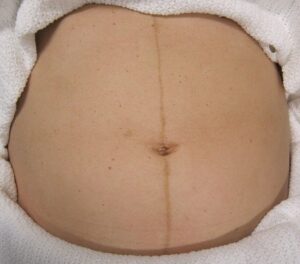
Your Answer:
Correct Answer: Linea Nigra
Explanation:This is Linea Nigra. It occurs in 3/4 of pregnancies and is due to increased melanocyte-stimulating hormone production by the placenta. This also causes melasma and darkening of the nipples.
-
This question is part of the following fields:
- Clinical Management
-
-
Question 65
Incorrect
-
A 33-year-old female presents with 3 months of irregular vaginal bleeding. Prior to this her menstrual periods were normal.
Which one of the following is the most appropriate initial laboratory test for this patient?Your Answer:
Correct Answer: hCG
Explanation:In women of childbearing age, the most likely cause of abnormal vaginal bleeding is pregnancy; thus, the most appropriate initial test would be an hCG level. Once pregnancy has been excluded, patient history would guide further testing. Iatrogenic causes, usually resulting from certain medicines or supplements, are the next most common cause in this age group, followed by systemic disorders. Haemoglobin and haematocrit would be appropriate only if the patient seemed acutely anaemic due to the abnormal bleeding.
-
This question is part of the following fields:
- Gynaecology
-
-
Question 66
Incorrect
-
What percentage of children does delayed puberty occur in?
Your Answer:
Correct Answer: 3%
Explanation:Delayed puberty is defined as the absence of breast development in girls beyond the age of 13, and the absence of testicular development in boys beyond the age of 14. The incidence of delayed puberty is 3%, with the condition being more common in boys.
-
This question is part of the following fields:
- Endocrinology
-
-
Question 67
Incorrect
-
Question 68
Incorrect
-
Following parturition uterine contractions called Afterpains may typically continue for how long?
Your Answer:
Correct Answer: 2-3 days
Explanation:Oxytocin can also stimulate after pains that occur 2-3 following delivery.
-
This question is part of the following fields:
- Clinical Management
-
-
Question 69
Incorrect
-
A 22 year old woman is being followed up 6 weeks after a surgical procedure to evacuate the uterus following a miscarriage. The histology has shown changes consistent with a hydatidiform mole. What is the single most appropriate investigation in this case?
Your Answer:
Correct Answer: Serum B-HCG
Explanation:The most appropriate test for a hydatiform mole is serum beta hCG levels, which are consistently raised in these patients. The levels return to normal when the pregnancy is terminated.
-
This question is part of the following fields:
- Gynaecology
-
-
Question 70
Incorrect
-
Which one of the following statements regarding oestrogen is correct?
Your Answer:
Correct Answer: It is produced in the corpus luteum
Explanation:Oestrogen is secreted by the corpus luteum and is responsible for the proliferation of the endometrium to prepare it for the implantation of the zygote.
-
This question is part of the following fields:
- Physiology
-
-
Question 71
Incorrect
-
Hirsutism can be found in all of the following conditions, EXCEPT:
Your Answer:
Correct Answer: Patient on oral contraceptive pills
Explanation:Classically, hirsutism has been considered a marker of increased androgen levels in females from increased production of androgens (i.e. testosterone) either by the adrenals or due to an ovarian disease. The ovarian causes for hyperandrogenism are polycystic ovarian syndrome (PCOS) and ovarian tumours. Adrenal causes include Cushing’s syndrome, androgen-producing tumours, and congenital adrenal hyperplasia (CAH), most commonly due to 21-hydroxylase deficiency. Less common causes include the hyperandrogenic-insulin resistant-acanthosis nigricans syndrome (HAIRAN). Hyperprolactinemia by increasing adrenal dehydroepiandrosterone sulphate (DHEA-S) production may cause hirsutism. Androgenic drugs are also an important cause of hirsutism. About 20% of the patients may present with idiopathic hirsutism (IH) with normal androgen levels and ovarian function. The cause of increased hair in these women is thought to be related to disorders in peripheral androgen activity. Onset of IH occurs shortly after puberty with slow progression. PCOS and IH account for 90% of the hirsutism in women. Hirsutism can also occur in some premenopausal women and continue for a few years after menopause. This is due to decrease in ovarian oestrogen secretion with continuous androgen production.
-
This question is part of the following fields:
- Endocrinology
-
-
Question 72
Incorrect
-
An ultrasound in the 1st trimester of pregnancy is done for?
Your Answer:
Correct Answer: Dating of the pregnancy
Explanation:Early ultrasound improves the early detection of multiple pregnancies and improved gestational dating may result in fewer inductions for post maturity.
-
This question is part of the following fields:
- Obstetrics
-
-
Question 73
Incorrect
-
A patient attends the maternity unit as her waters have broken but she hasn't had contractions. She is 39+6 weeks gestation. Speculum examination confirms prelabour rupture of membranes. What is the likelihood of spontaneous labour starting within 24 hours?
Your Answer:
Correct Answer: 60%
Explanation:In pregnancy, term refers to the gestational period from 37 0 to 41 6 weeks. Preterm births occur between 24 0 and 36 6 weeks. 60% of the women will go into labour with in 24 hours in PPROM. After 24 hours have past without any contraction and the gestation age is more than 34 week than prostaglandins can be used to augment labour.
-
This question is part of the following fields:
- Clinical Management
-
-
Question 74
Incorrect
-
Regarding Turner syndrome which of the following statements is true?
Your Answer:
Correct Answer: Only 1% of affected foetuses will survive to term
Explanation:The incidence of 45,XO turner syndrome is around 1 in 8000 live births. Approximately 1% of monosomy X female embryos survive. Phenotypically they are females and 90% do not develop secondary sexual characteristics and hormone replacement is required.
-
This question is part of the following fields:
- Genetics
-
-
Question 75
Incorrect
-
A 25-year-old woman presents to your clinic for her routine annual check-up and Pap smear. She has a single partner who uses condoms during contraception. Her menstrual cycle is regular and around four weeks long. Her last menstrual period was 2 weeks ago. She is otherwise healthy with no symptoms suggesting a problem with her genital tract. Per vaginal examination is performed revealing a 4 cm cystic swelling in the right ovary. What would be the best next step of management?
Your Answer:
Correct Answer: See her again in six weeks and arrange an ultrasound examination if the cyst is still present.
Explanation:Because of the high possibility of spontaneous resolution and the fact that if the cystic mass was verified ultrasonically, a conservative policy would almost probably be proposed for at least another six weeks, an ultrasound examination is not necessary at this time. If the cyst is still present at the six-week check, an ultrasound examination is required, as it is likely that the cyst is a benign tumour or possibly endometriosis. It’s quite improbable that it’s cancer.
Additional tests, such as computed tomography (CT) examination and potentially surgical removal or drainage, may be required in the future, although not at this time.
This cyst in a young lady is almost probably of physiological origin, especially given its size. The woman should be informed, but a follow-up examination is required. The most suitable next action is to return in six weeks, as the cyst is most likely physiologic and will most likely dissipate naturally by then. The following appointment should not take place during the same menstrual cycle. -
This question is part of the following fields:
- Gynaecology
-
-
Question 76
Incorrect
-
A 42 year old smoker attends clinic due to vulval soreness and shows you a number of vulval lumps. Biopsy is taken and reported as showing
Your Answer:
Correct Answer: Vulval intraepithelial neoplasia (VIN)
Explanation:This is VIN. Smoking is a risk factor. It is also more common in immunocompromised patients.
-
This question is part of the following fields:
- Clinical Management
-
-
Question 77
Incorrect
-
A 25-year-old female presents to a gynaecologist with a complaint of abnormal vaginal bleeding, usually postcoital. On pelvic examination, the cervix of was found to be of an unusually bright red colour and its texture was rougher than normal. Which of the following will you choose as the next step in the management of this condition?
Your Answer:
Correct Answer: Cervical smear (2nd line)
Explanation:Before considering invasive procedures, a cervical smear must first be performed. Antibiotics can only be given when inflammation has been confirmed and culture results have identified the organism causing the inflammation. Endometrial ablation, colposcopy and vaginal US are all invasive procedures that are not relevant in the immediate management of this patient.
-
This question is part of the following fields:
- Gynaecology
-
-
Question 78
Incorrect
-
A patient undergoes oophorectomy and the ovarian veins are ligated. Which vein does the left ovary drain into?
Your Answer:
Correct Answer: Left renal
Explanation:When it comes to questions on venous drainage the ovarian vein is likely to be a common question given its varied drainage depending on laterality. The right ovarian vein travels through the suspensory ligament of the ovary and generally joins the inferior vena cava whereas the left ovarian vein drains into the left renal vein.
-
This question is part of the following fields:
- Anatomy
-
-
Question 79
Incorrect
-
Which of the following statements regarding the Vaginal artery is typically TRUE?
Your Answer:
Correct Answer: It arises from the Internal iliac artery
Explanation:The Vaginal artery, like the Uterine artery is typically a branch of the Internal Iliac artery. It can sometimes arise as a branch of the Uterine artery so it is important to read the question (if the stem stated it CAN arise from the Uterine artery then that would be true)
-
This question is part of the following fields:
- Anatomy
-
-
Question 80
Incorrect
-
All of the following statements are true regarding Turner's syndrome except?
Your Answer:
Correct Answer: The streak ovaries should be removed surgically due to 25% tendency to be malignant
Explanation:Girls with Turner’s syndrome (45,X) are not at risk for malignancy. Patients with feminizing testicular syndrome with XY chromosome composition and patients with mixed gonadal dysgenesis are at risk for malignancy, and bilateral gonadectomy is performed.
-
This question is part of the following fields:
- Embryology
-
-
Question 81
Incorrect
-
A 28 year old patient complains of vaginal soreness and discharge. Examination reveals vulval irritation and a 'strawberry' cervix. A wet smear is sent for microscopy which confirms trichomoniasis. What percentage of trichomoniasis cases would you expect to see a strawberry cervix?
Your Answer:
Correct Answer: 2%
Explanation:Trichomoniasis is caused by trichomonas. It is sexually transmitted. It is diagnosed on microscopy of vaginal discharge and cultured in Finn-Berg Whittington medium. It is characterised by valval itching, foul smelling discharge and appearance of strawberry cervix due to presence of punctate haemorrhages which occur in 2% of the cases.
-
This question is part of the following fields:
- Clinical Management
-
-
Question 82
Incorrect
-
A 31-year-old female patient seeks your opinion on an abnormal Pap smear performed by a nurse practitioner at a family planning facility. A high-grade squamous intraepithelial lesion is visible on the Pap smear (HGSIL).
Colposcopy was performed in the office. The impression is of acetowhite alterations, which could indicate infection by HPV. Chronic cervicitis is present in your biopsies, but there is no indication of dysplasia.
Which of the following is the most suitable next step in this patient's care?Your Answer:
Correct Answer: Conization of the cervix
Explanation:When cervical biopsy or colposcopy doesn’t explain the severity of the pap smear results cone biopsy is done. In 10% of biopsies, results will be different from that of the pap smear as in this patient with pap smear showing HSIL and colposcopy showing chronic cervicitis.
In such cases conization is indicated. Repeating the pap smear could risk prompt management of a serious problem. No destructive procedure, ablation or cryotherapy, should be done before diagnosis is certain.
-
This question is part of the following fields:
- Gynaecology
-
-
Question 83
Incorrect
-
A 28-year-old woman who is at the 18th week of gestation presented to the medical clinic due to a vaginal discharge. Upon history taking, it was revealed that she had a history of preterm labour at 24 weeks of gestation during her last pregnancy. Upon examination, the presence of a clear fluid coming out of the vagina was noted.
Which of the following is considered to be the best in predicting pre-term labour?Your Answer:
Correct Answer: Cervical length of 15mm
Explanation:Preterm birth is the leading cause of neonatal morbidity and mortality not attributable to congenital anomalies or aneuploidy. It has been shown that a shortened cervix is a powerful indicator of preterm births in women with singleton and twin gestations – the shorter the cervical length, the higher the risk of spontaneous preterm birth. Ultrasound measurements of the cervix are a more accurate way of determining cervical length (CL) than using a digital method.
25 mm has been chosen as the ‘cut off’ at above which a cervix can be regarded as normal, and below which can be called short. A cervix that is less than 25 mm may be indicative of preterm birth.
-
This question is part of the following fields:
- Obstetrics
-
-
Question 84
Incorrect
-
What is the typical weight of a term uterus?
Your Answer:
Correct Answer: 1200g
Explanation:Uterine blood flow increases 40-fold to approximately 700 mL/min at term, with 80 per cent of the blood distributed to the intervillous spaces of the placentae, and 20 per cent to the uterine myometrium. Weight of the uterus increases from 50–60 g prior to pregnancy to 1000 g by term.
-
This question is part of the following fields:
- Physiology
-
-
Question 85
Incorrect
-
Question 86
Incorrect
-
A 32 year old woman with a 6 month history of fatigue and some weight gain reports to clinic for a review. Her medical records show evidence of hypothyroidism. On examination, a non tender, hard goitre is palpated. Further tests reveal elevated anti TPO (anti thyroid peroxidase) and anti -Tg (anti thyroglobulin). Which of the following conditions is most likely to present like this?
Your Answer:
Correct Answer: Hashimoto's
Explanation:The case presented points to a diagnosis of an autoimmune thyroiditis leading to hypothyroidism. The most common form of autoimmune hypothyroidism, Hashimoto’s, often presents with a goitre, positive for antibody tests against thyroid components i.e. anti-TPO and anti-thyroglobulin. Graves disease and toxic diffuse goitre are more likely to cause hyperthyroidism. While De-Quervain’s and endemic goitre may cause hypothyroidism, they don’t result in positive antibody tests.
-
This question is part of the following fields:
- Endocrinology
-
-
Question 87
Incorrect
-
A 34 weeks pregnant patient has a blood pressure of 149/98. Urine dipstick shows protein 3+. You send a for a protein:creatinine ratio. What level would be diagnostic of significant proteinuria?
Your Answer:
Correct Answer: >30 mg/mmol
Explanation:Pre-eclampsia is defined as hypertension of at least 140/90 mmHg recorded on at least two separate occasions and at least 4 hours apart and in the presence of at least 300 mg protein in a 24 hour collection of urine, arising de novo after the 20th week of pregnancy in a previously normotensive woman and resolving completely by the sixth postpartum week. Significant proteinuria = urinary protein: creatinine ratio >30 mg/mmol or 24-hour urine collection result shows greater than 300 mg protein.
-
This question is part of the following fields:
- Clinical Management
-
-
Question 88
Incorrect
-
Polyhydramnios is associated with which one of the following conditions?
Your Answer:
Correct Answer: Tracheo-oesophageal fistula
Explanation:Oesophageal atresia/TE fistula may be suspected prenatally with ultrasound findings of polyhydramnios, absence of fluid in the stomach, small sized abdomen, or the presence of a dilated proximal oesophageal pouch. An underlying disease is only found in 17 % of cases in mild polyhydramnios. In contrast, an underlying disease is detected in 91 % of cases in moderate to severe polyhydramnios. The literature lists the following potential aetiologies: fetal malformations and genetic anomalies (8–45 %), maternal diabetes mellitus (5–26 %), multiple pregnancies (8–10 %), fetal anaemia (1–11 %), other causes, e.g. viral infections, Bartter syndrome, neuromuscular disorders, maternal hypercalcemia. Viral infections which can lead to polyhydramnios include parvovirus B19, rubella, and cytomegalovirus. Other infections, e.g. toxoplasmosis and syphilis, can also cause polyhydramnios.
-
This question is part of the following fields:
- Physiology
-
-
Question 89
Incorrect
-
A 34-year-old woman presents with pelvic pain and complains of dysmenorrhea and menorrhagia. She has been using an IUCD for one year now and wants to know the cause of her current condition. What is the most likely cause?
Your Answer:
Correct Answer: PID
Explanation:IUCD is a risk factor for PID and PID has the clinical picture already described. However, fibroids should also be excluded since they may present in the same way.
-
This question is part of the following fields:
- Gynaecology
-
-
Question 90
Incorrect
-
Among the following presentations during pregnancy, which is not associated with maternal vitamin D deficiency?
Your Answer:
Correct Answer: Large for gestational age
Explanation:Retarded skeletal growth resulting in small for gestational age babies are the usual outcomes of an untreated vitamin D deficiency in pregnancy.
Symptoms associated with maternal vitamin D deficiency during pregnancy are:
– Hypocalcemia in newborn.
– Development of Rickets later in life.
– Defective tooth enamel.
– Small for gestational age due to its effect on skeletal growth
– Fetal convulsions or seizures due to hypocalcemia. -
This question is part of the following fields:
- Obstetrics
-
-
Question 91
Incorrect
-
A 35-year-old African female presents with a history of heavy menstrual bleeding and dysmenorrhoea for 4 months. Which of the following could be the most likely cause for this presentation?
Your Answer:
Correct Answer: Fibroid
Explanation:History of heavy menstrual bleeding and amenorrhoea favour the diagnosis of a fibroid uterus. All the given responses are causes for subfertility. Ectopic pregnancy presents with abdominal pain has an acute presentation. Endometriosis and adenomyosis usually don’t present with amenorrhoea or heavy bleeding respectively. PID presents with chronic pelvic pain and is not related to menstruation.
-
This question is part of the following fields:
- Gynaecology
-
-
Question 92
Incorrect
-
A 19-year-old primigravid woman, 34 weeks of gestation, came in for a routine blood test. Her platelet count is noted at 75x109/L (normal range is 150-400) . Which of the following can best explain the thrombocytopenia of this patient?
Your Answer:
Correct Answer: Incidental thrombocytopaenia of pregnancy.
Explanation:Incidental thrombocytopenia of pregnancy is the most common cause of thrombocytopenia in an otherwise uncomplicated pregnancy. The platelet count finding in this case is of little concern unless it falls below 50×109/L.
Immune thrombocytopenia is a less common cause of thrombocytopenia in pregnancy. The anti-platelet antibodies cam cross the placenta and pose a problem both to the mother and the foetus. Profound thrombocytopenia in the baby is a common finding of this condition.
Thrombocytopenia can occur in patients with severe pre-eclampsia. However, it is usually seen concurrent with other signs of severe disease.
Maternal antibodies that target the baby’s platelets can rarely cause thrombocytopenia in the mother. Instead, it can lead to severe coagulation and bleeding complications in the baby as a result of profound thrombocytopenia.
Systemic lupus erythematosus is unlikely to explain the thrombocytopenia in this patient.
-
This question is part of the following fields:
- Obstetrics
-
-
Question 93
Incorrect
-
A 30-year-old primigravida woman presented to the clinic for her first antenatal check-up. Upon interview, it was noted that she was taking folic acid along with some other nutritional supplements as medication.
All of the following are considered correct regarding neural tube defects and folate before and during pregnancy, except:Your Answer:
Correct Answer: Prevalence of neural tube defects among non-indigenous population is almost double than that in Aboriginal and Torres Strait Islander babies
Explanation:Neural tube defects (NTDs) are common complex congenital malformations resulting from failure of the neural tube closure during embryogenesis. It is established that folic acid supplementation decreases the prevalence of NTDs, which has led to national public health policies regarding folic acid.
Neural tube defects (NTD) were 43% more common in Indigenous than in non-Indigenous infants in Western Australia in the 1980s, and there has been a fall in NTD overall in Western Australia since promotion of folate and voluntary fortification of food has occurred.
Women should take 5 mg/d of folic acid for the 2 months before conception and during the first trimester.
Women planning pregnancy might be exposed to medications with known antifolate activities affecting different parts of the folic acid metabolic cascade. A relatively large number of epidemiologic studies have shown an increased risk of NTDs among babies exposed in early gestation to antiepileptic drugs (carbamazepine, valproate, barbiturates), sulphonamides, or methotrexate. Hence, whenever women use these medications, or have used them near conception, they should take 5 mg/d of folic acid until the end of the first trimester of pregnancy.
-
This question is part of the following fields:
- Obstetrics
-
-
Question 94
Incorrect
-
A 32-year-old mother with a 9-year-old child is considering having a second child. Her first pregnancy was complicated by puerperal psychosis. Following electroconvulsive therapy (ECT), she promptly recovered and has been well until now. She is in excellent health and her husband has been very supportive. According to patient files, she was noted to be an excellent mother.
What would be the most appropriate advice?Your Answer:
Correct Answer: There is a 15-20% chance of recurrence of psychosis postpartum.
Explanation:Puerperal psychosis seems to be mainly hereditary and closely associated with bipolar disorder especially the manic type, rather than being a distinct condition with a group of classical symptoms or course. Postpartum psychoses typically have an abrupt onset within 2 weeks of delivery and may have rapid progression of symptoms. Fortunately, it is generally a brief condition and responds well to prompt management. If the condition is threatening the mother and/or baby’s safety, hospital admission is warranted. A patient can present with a wide variety of psychotic symptoms ranging from delusion, passivity phenomenon, catatonia, and hallucinations. While depression and mania may be the predominating features, it is not surprising to see symptoms such as confusion and stupor. Although the rate of incidence is about 1 in 1000 pregnancies, it is seen in about 20% of women who previously had bipolar episodes prior to pregnancy. It has not been shown to be linked with factors such as twin pregnancies, stillbirth, breastfeeding or being a single parent. However, it might be more commonly seen in women who are first-time mothers and pregnancy terminations.
The risk of recurrence is 20%. Unfortunately, there is no specific treatment guideline but organic causes should first be ruled out. First generation/typical anti-psychotics are often associated with extrapyramidal symptoms. Nowadays, atypical antipsychotics such as risperidone or olanzapine can be used along with lithium which is a mood stabiliser. As of now, there hasn’t been any significant side effects as a result of second generation antipsychotic use in pregnancy. While women are usually advised to stop breast-feeding, it might be unnecessary except if the mother is being treated with lithium which has been reported to cause side effects on the infants in a few instances. ECT is considered to be highly efficacious for all types of postpartum psychosis and may be necessary if the mother’s condition is life-threatening to herself or/and the baby. If untreated, puerperal psychosis might persist for 6 months or even longer.
The options of saying ‘in view of her age and previous problem, further pregnancies are out of the question’ and so is ‘By all means start another pregnancy and see how she feels about it. If she has misgivings, then have the pregnancy terminated.’ are inappropriate.
As mentioned earlier, considering there is a 20% chance of recurrence it is not correct to say that since she had good outcomes with her first pregnancy, the risk of recurrence is minimal.
Anti-psychotics are not recommended to be used routinely both during pregnancy and lactation due to the absence of long-term research on children with intrauterine and breastmilk exposure to the drugs. Hence it is not right to conclude that ‘if she gets pregnant then she should take prophylactic antipsychotics throughout the pregnancy’ as it contradicts current guidelines. Each case should be individualised and the risks compared with the benefits to decide whether anti-psychotics should be given during pregnancy. It is important to obtain informed consent from both the mother and partner with documentation.
Should the mother deteriorates during the pregnancy that she no longer is capable of making decisions about treatment, then an application for temporary guardianship should be carried out to ensure that she can be continued on the appropriate treatment.
-
This question is part of the following fields:
- Obstetrics
-
-
Question 95
Incorrect
-
Ootidogenesis refers to which process during Oogenesis?
Your Answer:
Correct Answer: 1st and 2nd Meiotic Divisions
Explanation:Oogonium become Primary Oocyte via Growth/Maturation. This process is called oocytogenesis Primary Oocyte undergoes 2 meiotic divisions to become Ootids. This process is called Ootidogenesis Ootids differentiate into Ovum
-
This question is part of the following fields:
- Embryology
-
-
Question 96
Incorrect
-
A 36 year old patient is diagnosed with cervical cancer and staging investigations show there is parametrial involvement but it is confined within the pelvic wall and does not involve the lower 1/3 vagina. There is no evidence of hydronephrosis. What FIGO stage is this?
Your Answer:
Correct Answer: 2B
Explanation:It is stage 2B. Stage I: is strictly confined to the cervix; extension to the uterine corpus should be disregarded. The diagnosis of both Stages IA1 and IA2 should be based on microscopic examination of removed tissue, preferably a cone, which must include the entire lesion.
2010 FIGO classification of cervical carcinoma:
Stage IA: Invasive cancer identified only microscopically. Invasion is limited to measured stromal invasion with a maximum depth of 5 mm and no wider than 7 mm.
Stage IA1: Measured invasion of the stroma no greater than 3 mm in depth and no wider than 7 mm diameter.
Stage IA2: Measured invasion of stroma greater than 3 mm but no greater than 5 mm in depth and no wider than 7 mm in diameter.Stage IB: Clinical lesions confined to the cervix or preclinical lesions greater than Stage IA. All gross lesions even with superficial invasion are Stage IB cancers.
Stage IB1: Clinical lesions no greater than 4 cm in size.
Stage IB2: Clinical lesions greater than 4 cm in size.Stage II: carcinoma that extends beyond the cervix, but does not extend into the pelvic wall. The carcinoma involves the vagina, but not as far as the lower third.
Stage IIA: No obvious parametrial involvement. Involvement of up to the upper two-thirds of the vagina.
Stage IIB: Obvious parametrial involvement, but not into the pelvic sidewall.Stage III: carcinoma that has extended into the pelvic sidewall. On rectal examination, there is no cancer-free space between the tumour and the pelvic sidewall. The tumour involves the lower third of the vagina. All cases with hydronephrosis or a non-functioning kidney are Stage III cancers.
Stage IIIA: No extension into the pelvic sidewall but involvement of the lower third of the vagina.
Stage IIIB: Extension into the pelvic sidewall or hydronephrosis or non-functioning kidney.Stage IV: carcinoma that has extended beyond the true pelvis or has clinically involved the mucosa of the bladder and/or rectum.
Stage IVA: Spread of the tumour into adjacent pelvic organs.
Stage IVB: Spread to distant organs. -
This question is part of the following fields:
- Clinical Management
-
-
Question 97
Incorrect
-
You receive a swab result from a patient who had complained of odorous vaginal discharge. It confirms bacterial vaginosis (BV). Which pathogen is most commonly associated with BV?
Your Answer:
Correct Answer: Gardnerella vaginalis
Explanation:BV typically presents as an increase in vaginal discharge and vaginal malodour caused by a change in vaginal bacterial flora. PV discharge due to BV is typically grey fluid that adheres to the vaginal mucosa. BV is a polymicrobial infection. Gardnerella is the most commonly associated pathogen. Other associated bacteria include Lactobacillus species, Prevotella, Mobiluncus, Bacteroides, Peptostreptococcus, Fusobacterium, Veillonella, Eubacterium species, Mycoplasma hominis, Urea plasma urealyticum and Streptococcus viridans.
-
This question is part of the following fields:
- Clinical Management
-
-
Question 98
Incorrect
-
What kind of biochemical changes occur during the luteal phase of menstrual cycle?
Your Answer:
Correct Answer: High progesterone levels
Explanation:Menstrual cycle can be divided into the follicular phase and luteal phase. In the luteal phase, there is an increase in progesterone secretion and LH levels are low. If the ova is fertilized, it is implanted in the endometrium. In case of failure in fertilization, there is gradual decrease in progesterone and LH levels.
-
This question is part of the following fields:
- Physiology
-
-
Question 99
Incorrect
-
Question 100
Incorrect
-
The most common cause of perinatal death in mono-amniotic twin is:
Your Answer:
Correct Answer: Cord entrapment
Explanation:Cord entanglement, a condition unique to MoMo pregnancies, occurs in 42 to 80% of the cases and it has been traditionally related to high perinatal mortality. Umbilical cord entanglement is present in all monoamniotic twins when it is systematically evaluated by ultrasound and colour Doppler. Perinatal mortality in monoamniotic twins is mainly a consequence of conjoined twins, twin reversed arterial perfusion (TRAP), discordant anomaly and spontaneous miscarriage before 20 weeks’ gestation. Expectantly managed monoamniotic twins after 20 weeks have a very good prognosis despite the finding of cord entanglement. The practice of elective very preterm delivery or other interventions to prevent cord accidents in monoamniotic twins should be re-evaluated.
-
This question is part of the following fields:
- Obstetrics
-
SESSION STATS - PERFORMANCE PER SPECIALTY
