-
Question 1
Correct
-
You see a patient who is 32 weeks pregnant. She complains of tingling to the right buttock and shooting pain down the leg. You suspect Piriformis syndrome. Regarding Piriformis which of the following statements are true?
Your Answer: Insertion is onto the greater trochanter
Explanation:The proximal attachment of the piriformis muscles is from the anterior surface of sacrum and it attaches distally to the superior border of the greater trochanter of the femur. It is innervated by the anterior rami of S1 and S2.
-
This question is part of the following fields:
- Anatomy
-
-
Question 2
Correct
-
A 66-year-old lady comes to your clinic complaining of a brownish vaginal discharge that has been bothering her for the previous three months. Atrophic vagina is seen on inspection.
Which of the following diagnoses is the most likely?Your Answer: Vaginal atrophy
Explanation:Endometrial cancer should always be the first diagnosis to rule out in a 65-year-old lady with brownish vaginal discharge. The inquiry focuses on the most likely source of the symptoms, rather than the most significant diagnosis to explore.
Blood typically causes the dark hue of vaginal discharge. The uterine cavity or the vagina can both be the source of bleeding. Only 5-10% of postmenopausal women with vaginal bleeding were found to have endometrial cancer. Around 60% of the women had atrophic vaginitis.Urogenital atrophy is caused by oestrogen insufficiency in postmenopausal women. Urogenital atrophy can cause the following symptoms:
– Dry vaginal skin
– Vaginal inflammation or burning
– Vaginal lubrication is reduced during sexual activity.
– Vulvar or vaginal pain, as well as dyspareunia (at the introitus or within the vagina)
– Vaginal or vulvar bleeding (e.g. postcoital bleeding. fissures)
– Vaginal discharge from the cervix (leukorrhea or yellow and malodorous)
– A vaginal bulge or pelvic pressure
– Symptoms of the urinary tract (e.g. urinary frequency, dysuria, urethral discomfort, haematuria). -
This question is part of the following fields:
- Gynaecology
-
-
Question 3
Incorrect
-
What is the prevalence of antiphospholipid syndrome in patients with recurrent miscarriage?
Your Answer:
Correct Answer: 15%
Explanation:Anti phospholipid syndrome is an autoimmune disorder in which abnormal antibodies are formed which increases the risk of blood clots to develop in vessels and leads to recurrent miscarriages to occurs. The changes of recurrent miscarriage in a previously known case of APL is 15%.
-
This question is part of the following fields:
- Clinical Management
-
-
Question 4
Incorrect
-
What is the typical weight of a term uterus?
Your Answer:
Correct Answer: 1200g
Explanation:Uterine blood flow increases 40-fold to approximately 700 mL/min at term, with 80 per cent of the blood distributed to the intervillous spaces of the placentae, and 20 per cent to the uterine myometrium. Weight of the uterus increases from 50–60 g prior to pregnancy to 1000 g by term.
-
This question is part of the following fields:
- Physiology
-
-
Question 5
Incorrect
-
Due to her inability to conceive, a 28-year-old nulligravid lady comes to the office with her husband. The patient and her spouse had been having intercourse every other day since they stopped using barrier contraception a year ago. Every 28 days, the patient experiences a 5-day period with two days of high flow. She has transient pelvic pain 14 days after her menstruation begins, but intercourse is painless.
The patient was admitted to the hospital in her late teens for a pelvic infection, and she had discomfort with intercourse, discharge, and fever during her stay. She hasn't had any previous medical or surgical procedures. Her younger sibling suffers from polycystic ovarian syndrome. The patient's husband is 32 years old, has no children, and a normal semen analysis. The patient has a blood pressure of 130/80 mm Hg and a pulse rate of 86 beats per minute. There are no anomalies on physical examination.
Which of the following is the most appropriate next step in this patient's care?Your Answer:
Correct Answer: Hysterosalpingogram
Explanation:Primary infertility is defined as the inability to conceive after a year of unprotected, timed sexual intercourse in a nulliparous patient under the age of 35. (After 35 years of age, infertility testing can begin after 6 months.) Because the patient’s partner’s sperm analysis is normal, female factor infertility is the most likely explanation. This patient’s adolescent hospitalizations are likely due to pelvic inflammatory disease (PID), a common cause of infertility caused by tubal scarring and blockage.
A hysterosalpingogram, which includes infusing radiocontrast into the cervix under fluoroscopy, is the first-line imaging technique for determining fallopian tube patency. A hysterosalpingogram is a non-invasive procedure that can detect uterine cavity irregularities (e.g., bicornuate uterus).
Peritoneal adhesions and endometriosis can be seen and treated directly using laparoscopy.
PID-related scarring inside the fallopian tubes can be assessed by laparoscopy with chromotubation; however, it is invasive, expensive, and not utilized first-line.
Ovulation is detected using a mid-cycle LH level. The LH surge can be detected in urine and serum 36 hours before ovulation. Regular menstrual periods are characterized by mittelschmerz (mid-cycle pelvic pain), which indicates ovulation. As a result, an LH level would be useless.
Ovarian reserve begins to deteriorate around the age of 35, and serum FSH levels rise in women who are losing their ability to ovulate. Because this patient is much younger and has regular periods, a drop in ovum quantity is unlikely to be the reason for infertility.
Increased serum androgen levels can prevent ovulation by inhibiting the release of GnRH and FSH through feedback inhibition. The patient has regular cycles and no hyperandrogenic symptoms, despite her sister having polycystic ovarian syndrome (e.g., hirsutism, irregular menses).
In a nulliparous patient under the age of 35, primary infertility is defined as the inability to conceive after a year of unprotected sexual intercourse. A hysterosalpingogram is used to determine the cause of infertility, such as tubal blockage caused by a previous pelvic infection.
-
This question is part of the following fields:
- Gynaecology
-
-
Question 6
Incorrect
-
A 60-year-old lady complains of a mild discomfort in her lower abdomen. She attained menopause 6 years ago whereas her last vaginal examination 2 years prior, was normal. She now has a palpable mass measuring 8cm in diameter in the left ovarian area.
Which is the best next step in her management?Your Answer:
Correct Answer: Admission to hospital for early surgical exploration.
Explanation:This lady should be admitted to hospital for early surgical exploration. Taking into account her age, mild abdominal discomfort and a palpable lower abdominal mass, it is imperative that ovarian malignancy be ruled out as soon as possible. Patients with ovarian malignancy often present in advanced stages of cancer as the symptoms tend to be occult and non-specific. Other things to include in her workup would be her CA125 level. Any form of hormonal therapy is contraindicated until ovarian malignancy has been ruled out. A pap smear is not relevant here since we are suspecting an ovarian malignancy rather than cervical. Evaluation of her mass takes priority over an assessment for osteoporosis.
-
This question is part of the following fields:
- Gynaecology
-
-
Question 7
Incorrect
-
You see a 28 year old woman who is 22 weeks pregnant. She complains of vaginal soreness and yellow frothy discharge. Microscopy confirms Trichomoniasis. What percentage of infected pregnant women present with yellow frothy discharge?
Your Answer:
Correct Answer: 20%
Explanation:Trichomoniasis is considered a sexually transmitted infection found both in men and women, and is caused by the flagellate protozoan Trichomonas vaginalis. The organism is mainly found in the vagina and the urethra. Though many infected women can be asymptomatic, they can also present with yellow frothy vaginal discharge, itching and vaginitis, dysuria or an offensive odour. About 20-30% of women with the infection however are asymptomatic. For the diagnosis of t. vaginalis in women, a swab is taken from the posterior fornix during speculum examination and the flagellates are detected under light-field microscopy. The recommended treatment for t. vaginalis during pregnancy and breastfeeding is 400-500mg of metronidazole twice daily for 5 -7 days. High dose metronidazole as a 2g single dose tablet is not advised during pregnancy. All sexual partners should also be treated and screened for other STIs.
-
This question is part of the following fields:
- Clinical Management
-
-
Question 8
Incorrect
-
A 34 year old female presents to the ob-gyn for a regular antenatal visit. Her previous pregnancy was complicated by pre-eclampsia and later eclampsia. What are the chances of her pre-eclampsia recurring in a later pregnancy?
Your Answer:
Correct Answer:
Explanation:Research suggests the risk of having preeclampsia again is approximately 20%, however experts cite a range from 5% to 80% depending on when you had it in a prior pregnancy, how severe it was, and additional risk factors you may have. If you had preeclampsia during your first pregnancy, you may get it again. HELLP is related to preeclampsia and about 4 to 12 percent of women diagnosed with preeclampsia develop HELLP. HELLP syndrome can also cause complications in pregnancy, and if you had HELLP in a previous pregnancy, regardless of the time of onset, you have a greater risk for developing it in future pregnancies.
-
This question is part of the following fields:
- Obstetrics
-
-
Question 9
Incorrect
-
There are increasing rates of pregnancies among teenagers especially in low socioeconomic rural areas.
What is the contraception method of choice for teenagers with high risk of unplanned pregnancy?Your Answer:
Correct Answer: Intrauterine Contraceptive Device
Explanation:The use of long-acting reversible contraceptives (LARCs) is globally accepted as a strategy that is successful in decreasing rates of unintended pregnancy, especially in very young women.
Long-acting reversible contraceptives (LARCs) are defined as any contraceptive that requires administration less than once per cycle (i.e. per month). This includes copper and progestogen-only intrauterine devices (IUDs), and progestogen subdermal implants and injections. However, subdermal implants and IUDs, which have a life of at least three years, have superior efficacy over injections, which require administration every three months. Implants and IUDs are highly cost-effective when compared with other contraceptive methods.LARCs are widely recommended by professional bodies and the World Health Organization (WHO) as first-line contraception for young women as they are safe, effective and reversible. Young women should be offered the choice of a LARC as part of a fully informed decision for their first form of contraception.
LARCs surpass barrier methods and contraceptive pills in effectiveness and safety therefore all other options are incorrect.
-
This question is part of the following fields:
- Gynaecology
-
-
Question 10
Incorrect
-
Which of the following pubertal events is NOT mediated by gonadal oestrogen production?
Your Answer:
Correct Answer: Pubic hair growth
Explanation:The role of androgens in the female includes acting as precursors for oestrogen production, anabolic effects, stimulation of axillary and pubic hair growth, sebum production, stimulation of bone formation, and stimulation of erythropoietin production in the kidneys.
-
This question is part of the following fields:
- Physiology
-
-
Question 11
Incorrect
-
In normal pregnancy, the value of β-hCG doubles every:
Your Answer:
Correct Answer: 2 days
Explanation:During early pregnancy, hCG can be detected in the maternal serum as early as 6 to 8 days after fertilization. hCG levels are dynamically increased and doubled every 48 h in most normal pregnancies, and this pattern is similar in both in vivo or in vitro (IVF) conceptions.
-
This question is part of the following fields:
- Physiology
-
-
Question 12
Incorrect
-
Which of the following is regarded as the current Gold standard in the diagnosis of Polycystic Ovary Syndrome?
Your Answer:
Correct Answer: Rotterdam
Explanation:The Rotterdam criteria was developed and expanded by the European Society of Human Reproduction and Embryology/American Society for Reproductive Medicine Rotterdam consensus (ESHRE/ASRM) in 2003 and is now the Gold standard in the diagnosis of PCOS. The criteria requires two of three features: anovulation, hyperandrogenism, and polycystic ovaries seen on ultrasound.
The National Institute of Child Health and Human Development (NICHD) attempted to define PCOS in 1990 but omitted ultrasonographic evidence of polycystic ovaries which is considered to be diagnostic of PCOS.
The Androgen Excess Society (AES) served to confirm hyperandrogenism as the central event in the development of PCOS.
The ROME III criteria is used for Irritable Bowel Disease and is therefore not applicable to PCOS.
-
This question is part of the following fields:
- Clinical Management
-
-
Question 13
Incorrect
-
A Bicornuate uterus is due to which of the following?
Your Answer:
Correct Answer: Abnormal fusion and reabsorption of the paramesonephric ducts
Explanation:A Bicornuate uterus (heart shaped) is the result of abnormal fusion and reabsorption of the paramesonephric ducts during embryogenesis. Mullerian agenesis typically results in failure to form a uterus. Mullerian duct fusion abnormalities can cause a bicornuate malformation. PKD-1 gene abnormalities are associated with PCOS. Crossed fused ectopia result in Horseshoe kidney.
-
This question is part of the following fields:
- Embryology
-
-
Question 14
Incorrect
-
According to the RCOG Green-top guideline published in 2013 at what stage of gestation should pregnant patients with PCOS be offered screening for gestational diabetes
Your Answer:
Correct Answer: 24-28 weeks gestation
Explanation:Screening for gestational diabetes should be offered and performed between 24-28 weeks. It should be noted PCOS alone does not make screening essential. It is advised for PCOS patients who are overweight or if not overweight but has other risk factors (age >40, personal history of gestational diabetes or family history of type II diabetes). Screening is via a 2-hour post 75 g oral glucose tolerance test.
-
This question is part of the following fields:
- Clinical Management
-
-
Question 15
Incorrect
-
You review a patient in the fertility clinic. The ultrasound and biochemical profile are consistent with PCOS. She has been trying to conceive for 2 years. Her BMI is 26 kg/m2. She is a non-smoker. Which of the following is the most appropriate first line treatment?
Your Answer:
Correct Answer: Clomiphene
Explanation:Clomiphene and/or Metformin are 1st line agents. Weight loss in the setting of subfertility is advised if BMI >30 kg/m2
-
This question is part of the following fields:
- Clinical Management
-
-
Question 16
Incorrect
-
What is the life span of the corpus luteum in days?
Your Answer:
Correct Answer: 14-16
Explanation:After the release of the oocyte, the theca and the granulosa cells form the corpus luteum which undergoes extensive vascularization for continued steroidogenesis. Progesterone is secreted by the luteal cells and is synthesized from cholesterol. The luteal phase lasts for 14 days and if implantation does not occurs the corpus luteum starts to degenerate. As B-HCG produced by the implanted embryo maintains it and without it luteolysis occurs.
-
This question is part of the following fields:
- Embryology
-
-
Question 17
Incorrect
-
A patient undergoes oophorectomy and the ovarian veins are ligated. Which vein does the left ovary drain into?
Your Answer:
Correct Answer: Left renal
Explanation:The right ovarian vein ascends and enters the inferior vena cava and the left ovarian vein drains into the longer left renal vein.
-
This question is part of the following fields:
- Anatomy
-
-
Question 18
Incorrect
-
Which of the following is an acute complication of radiotherapy?
Your Answer:
Correct Answer: Moist skin desquamation
Explanation:Tissues with actively dividing cells, such as bone marrow and gastrointestinal mucosa, are particularly sensitive to ionising radiation. Lymphocyte depletion is the most sensitive marker of bone marrow injury, and after exposure to
a fatal dose, marrow aplasia is a common cause of death. The gonads are highly radiosensitive and radiation may result in temporary or permanent sterility. Stochastic (chance) effects occur with increasing probability
as the dose of radiation increases. Carcinogenesis represents a stochastic effect. With acute exposures, leukaemias may arise after an interval of around 2–5 years and solid tumours after an interval of about 10–20 years. Moist skin desquamation can be an acute reaction to both radio and chemotherapy whereas fibrosis and lymphoedema are late complications. -
This question is part of the following fields:
- Biophysics
-
-
Question 19
Incorrect
-
A 22-year-old female in her 18th week of pregnancy presented with right iliac fossa pain while getting up from a chair and has been coughing and sneezing.
On examination, there is no palpable mass or rebound tenderness.
What will be the most likely cause for patient's complaint?Your Answer:
Correct Answer: Round ligament strain
Explanation:Patient’s symptoms and signs are suggestive of round ligament strain, which is a normal finding during pregnancy, especially in the 2nd trimester, and it does not require any medical intervention.
Round ligament is a rope-like fibromuscular band which extends from the anterolateral aspect of uterus anteriorly between the layers of the broad ligament, and passing through the deep inguinal ring into the inguinal canal.
A sharp, sudden spasm in the right iliac fossa which lasts for a few seconds which is usually triggered by sneezing, coughing, laughing and rolling over in bed are the common presentations of a round ligament pain.Ectopic pregnancy and rupture of ectopic pregnancy are two unlikely diagnosis in this patient as she is in the second trimester of her pregnancy, whereas both the mentioned conditions occur during the first trimester.
Although appendicitis presents with pain in right iliac fossa, the pain is not causes by coughing or sneezing. Also, there will be other symptoms like tenderness and rebound tenderness in right iliac fossa in case of appendicitis.
-
This question is part of the following fields:
- Obstetrics
-
-
Question 20
Incorrect
-
A 58-year-old postmenopausal female sees you for an initial health maintenance visit. Her examination is normal and she has no complaints. You perform a Papanicolaou (Pap) test, which she has not had done in 15 years. The smear is read as “negative for intraepithelial lesion and malignancy, benign endometrial cells present.”
What would be the most appropriate follow-up for this finding?Your Answer:
Correct Answer: An endometrial biopsy
Explanation:This patient should have an endometrial biopsy (SOR C). Approximately 7% of postmenopausal women with benign endometrial cells on a Papanicolaou smear will have significant endometrial pathology. None of the other options listed evaluate the endometrium for pathology. An asymptomatic premenopausal woman with benign endometrial cells would not need an endometrial evaluation because underlying endometrial pathology is rare in this group.
-
This question is part of the following fields:
- Gynaecology
-
-
Question 21
Incorrect
-
Which of the following statements regarding the vaginal artery is typically TRUE?
Your Answer:
Correct Answer: It arises from the Internal iliac artery
Explanation:The vaginal artery is the homolog to the inferior vesical artery in males. In most of the cases it arises from the internal iliac artery.
-
This question is part of the following fields:
- Anatomy
-
-
Question 22
Incorrect
-
A 30 year old patient attends for non-invasive pre-natal screening for Down's syndrome. You advise her that the result will take the form of a risk score and higher risk results will be offered CVS or amniocentesis. What is the cut-off figure between low and high risk?
Your Answer:
Correct Answer: 1 in 150
Explanation:1 in 150 is the cut off. Where pre-natal screening shows a risk of 1 in 150 or greater invasive testing is typically offered.
-
This question is part of the following fields:
- Clinical Management
-
-
Question 23
Incorrect
-
Ootidogenesis refers to which process during Oogenesis?
Your Answer:
Correct Answer: 1st and 2nd Meiotic Divisions
Explanation:Oogonium become Primary Oocyte via Growth/Maturation. This process is called oocytogenesis Primary Oocyte undergoes 2 meiotic divisions to become Ootids. This process is called Ootidogenesis Ootids differentiate into Ovum
-
This question is part of the following fields:
- Embryology
-
-
Question 24
Incorrect
-
Question 25
Incorrect
-
With regard to the cell cycle. In which part of the cycle does DNA replication occur?
Your Answer:
Correct Answer: Interphase
Explanation:DNA replication occurs during S phase but that isn’t one of the options. Remember Interphase comprises G1,S and G2 phases!
-
This question is part of the following fields:
- Biochemistry
-
-
Question 26
Incorrect
-
A 28-year-old woman (gravida 3, para 2) is admitted to hospital at 33 weeks of gestation for an antepartum haemorrhage of 300mL. The bleeding has now stopped. She had a Papanicolaou (Pap) smear done five years ago which was normal. Vital signs are as follows:
Pulse: 76 beats/min
Blood pressure: 120/80 mmHg
Temperature: 36.8°C
Fetal heart rate: 144/min
On physical exam, the uterus is lax and nontender. The fundal height is 34 cm above the pubic symphysis and the presenting part is high and mobile.
Other than fetal monitoring with a cardiotocograph (CTG), which one of the following should be the immediate next step?Your Answer:
Correct Answer: Ultrasound examination of the uterus.
Explanation:This is a case of a pregnant patient having vaginal bleeding. Given the patient’s presentation, the most likely cause of this patient’s antepartum haemorrhage is placenta praevia. The haemorrhage is unlikely to be due to a vasa praevia because a loss of 300mL would usually cause fetal distress or death, neither of which has occurred. Cervical malignancy is also unlikely as it typically would not have bleeding of this magnitude. A possible diagnosis would be a small placental abruption as it would fit with the lack of uterine tenderness and normal uterine size.
For the immediate management of this patient, induction of labour is contraindicated before the placental site has been confirmed. Also, induction should not be performed when the gestation is only at 33 weeks, especially after an episode of a small antepartum haemorrhage. An ultrasound examination of the uterus is appropriate as it would define whether a placenta praevia is present and its grade. It would also show whether there is any evidence of an intrauterine clot associated with placental abruption from a normally situated placenta.
If a placenta praevia is diagnosed by ultrasound, a pelvic examination under anaesthesia may be a part of the subsequent care, if it is felt that vaginal delivery might be possible. Usually it would be possible if the placenta praevia is grade 1 or grade 2 anterior in type. However, pelvic exam at this stage is certainly not the next step in care, and is rarely used in current clinical care.
A Papanicolaou (Pap) smear will be necessary at some time in the near future, but would not be helpful in the care of this patient currently.
Immediate Caesarean section is not needed as the bleeding has stopped, the foetus is not in distress, and the gestation is only 33 weeks.
-
This question is part of the following fields:
- Obstetrics
-
-
Question 27
Incorrect
-
A 30-year-old woman with histories of obesity and type 2 diabetes Mellitus comes to you for advice as she is planning to conceive in next three months. Her blood sugar levels are under control with a HBA1C value of 6%.
Among the following which is an essential supplement for her?Your Answer:
Correct Answer: Folic acid
Explanation:Patient mentioned above is a known case of type 2 diabetes which makes her at high risk of having neural tube defects. She should be advised to start taking a high dose of (5mg) folic acid supplement daily for at least 1-month prior to conception and it should be continued upto 12 weeks of her pregnancy.
Folate, which is a water-soluble B vitamin, is usually obtained from diet or through supplementation. For those patients with a history of type 2 diabetes mellitus, who are planning for pregnancy, high doses are recommended to prevent any possible neural tube defects.
Vitamin A is not safe and should be avoided in pregnancy due to chances for toxicity.
Vitamin C and iron are not considered as essential vitamins to be taken during pregnancy.
-
This question is part of the following fields:
- Obstetrics
-
-
Question 28
Incorrect
-
Androgen insensitivity syndrome is characterised by which one of the following karyotypes?
Your Answer:
Correct Answer: 46XY
Explanation:Genetically, patients suffering from androgen insensitivity syndrome are 46XY. They are males but insensitive to male hormones i.e. androgens.
-
This question is part of the following fields:
- Embryology
-
-
Question 29
Incorrect
-
DEXA scans measure bone density by
Your Answer:
Correct Answer: Measuring absorption from two different XRAY beams with different energy peaks at the same site
Explanation:DEXA works by passing two low dose XRAY beams with different energy peaks at the patient’s bone. Some of the XRAY radiation will be absorbed (the greater the density the greater the absorption) whilst some will pass through to a detector. Soft tissue absorption is subtracted out and the BMD can be determined from the absorption of each beam. It is important to realise that two beams are used at each site when measuring bone density (hence ‘dual’). Although two sites are typically used (spine and femoral neck) when measuring bone density this is not why the term dual is used Computer analysis of multiple X-ray beams taken from different angles and geographical digital processing are features of CT scanning
-
This question is part of the following fields:
- Biophysics
-
-
Question 30
Incorrect
-
A 43-year-old multigravida woman (gravida 4, para 3) presents with severe varicose veins in her legs and vulva.
She is 28 weeks pregnant and reports that she feels quite uncomfortable due to the varicose veins.
She has never had a similar problem in her previous pregnancies.
What is the best method to provide symptomatic relief to this woman?
Your Answer:
Correct Answer: Surgical ligation and stripping of the affected veins.
Explanation:The best method to provide symptomatic relief to this woman is to use pressure stockings and a vulval pad (correct answer). This will provide relief without causing any adverse effects.
In order to prevent ulceration, care is required to avoid trauma.
Since the patient is pregnant, surgical ligation or injecting of sclerosing solutions cannot be considered and are contraindicated.
Development of varices is often exacerbated in subsequent pregnancies; and therefore surgery should be eschewed until child-bearing is complete,
Bed rest in hospital would reduce the symptoms of the varicose veins; however this should be avoided as it can increase the risk of developing deep vein thrombosis.
Anticoagulant therapy has not been shown to be beneficial for treatment of varicosities that only affect the superficial venous system and should therefore not be used.
-
This question is part of the following fields:
- Obstetrics
-
-
Question 31
Incorrect
-
Branches V2 and V3 of the Trigeminal nerve develop from which pharyngeal arch?
Your Answer:
Correct Answer: 1st
Explanation:1st Arch = Trigeminal V2 & V3 (CN V) 2nd Arch = Facial (CN VII) 3rd Arch = Glossopharyngeal (CN IX) 4th and 6th Arches = Vagus (CN X)
-
This question is part of the following fields:
- Embryology
-
-
Question 32
Incorrect
-
The roof of the femoral triangle is formed by which structure?
Your Answer:
Correct Answer: Fascia lata
Explanation:The femoral triangle is bounded:
– Superiorly by the inguinal ligament that forms the base of the femoral triangle.
– Medially by the lateral border of the adductor longus.
– Laterally by the sartorius; the apex of the femoral triangle is formed where the borders of the sartorius and the adductor muscles meet.
– The floor of the femoral triangle is formed by the iliopsoas laterally and the pectineus muscle medially.
– The roof of the femoral triangle is formed by the fascia lata and cribriform
fascia, subcutaneous tissue, and skin. -
This question is part of the following fields:
- Anatomy
-
-
Question 33
Incorrect
-
Which of the following hormones are required for alveolar morphogenesis during pregnancy?
Your Answer:
Correct Answer: Progesterone, Prolactin and hPL
Explanation:The changes seen in breast tissue with the menstrual cycle are accentuated during pregnancy. Deposition of fat around glandular tissue occurs, and the number of glandular ducts is increased by oestrogen, while progesterone and human placental lactogen (hPL) increase the number of gland alveoli. Prolactin is essential for the stimulation of milk secretion and during pregnancy prepares the alveoli for milk production. Although prolactin concentration increases throughout pregnancy, it does not then result in lactation since it is antagonized at an alveolar receptor level by oestrogen.
-
This question is part of the following fields:
- Endocrinology
-
-
Question 34
Incorrect
-
A 23 year old patient presents to the emergency department with sudden onset of severe lower abdominal and pelvic pain. History reveals she normally has regular 28 day cycles but she missed her last period. Past medical history reveals 2 termination of pregnancy procedures in the past 3 years. The most recent one 6 months ago. She smokes 5 cigarettes per day.
Your Answer:
Correct Answer: Ectopic pregnancy
Explanation:This patient is most likely to have a ruptured ectopic pregnancy. The history of multiple TOPs suggests her contraceptive methods are not reliable and her missed period is suggestive she may currently be pregnant. There is no temperature or vaginal discharge to suggest PID though this is of course possible as is appendicitis. The last termination was 6 months ago so endometritis is unlikely.
-
This question is part of the following fields:
- Clinical Management
-
-
Question 35
Incorrect
-
In a patient who undergoes a medical abortion at 10 weeks gestation, what advice would you give regarding Rhesus Anti-D Immunoglobulin?
Your Answer:
Correct Answer: All RhD-negative women who are not alloimmunized should receive Anti-D IgG
Explanation:The Rhesus status of a mother is important in pregnancy and abortion. The exposure of an Rh-negative mother to Rh antigens from a positive foetus, will influence the development of anti-Rh antibodies. This may cause problems in subsequent pregnancies leading to haemolysis in the newborn. Rh Anti RhD- globulin is therefore given to non-sensitised Rh-negative mothers to prevent the formation of anti-Rh antibodies within 72 hours following abortion. Anti RhD globulin is not useful for already sensitized, or RhD positive mothers.
-
This question is part of the following fields:
- Clinical Management
-
-
Question 36
Incorrect
-
What is the anatomical landmark used for gauging the station of the fetal head during labour?
Your Answer:
Correct Answer: Ischial Spine
Explanation:The ischial spine is the anatomical landmark for assessing the station of the fetal head and also placing pudendal nerve blocks. (the pudendal nerve runs posterior to the ischial spine). The ischial spine can be palpated approximately 8cm into the vagina, at 4 and 8 o’clock.
-
This question is part of the following fields:
- Anatomy
-
-
Question 37
Incorrect
-
A low APGAR score at one minute:
Your Answer:
Correct Answer: Indicates the need for immediate resuscitation
Explanation:The treatment of asphyxia starts with the correct perinatal management of high-risk pregnancies. The management of the hypoxic-ischemic new-borns in the delivery room is the second fundamental step of the treatment. Low Apgar scores and need for cardiopulmonary resuscitation at birth are common but nonspecific findings. Most new-borns respond rapidly to resuscitation and make a full recovery. The outcomes for new-borns who do not respond to resuscitation by 10 minutes of age are very poor, with a very low probability of surviving without severe disability. Resuscitation in room air is advised for term new-borns, since the use of 100% oxygen is associated with worse outcomes compared to the use of room air.
-
This question is part of the following fields:
- Obstetrics
-
-
Question 38
Incorrect
-
Which one of the following combination hormonal contraceptives is most effective in obese women?
Your Answer:
Correct Answer: The etonogestrel/ethinyl oestradiol vaginal ring (NuvaRing)
Explanation:Depot medroxyprogesterone acetate and the combination contraceptive vaginal ring are the most effective hormonal contraceptives for obese women because they do not appear to be affected by body weight. Women using the combination contraceptive patch who weight 90 kg may experience decreased contraceptive efficacy. Obese women using oral contraceptives may also have an increased risk of pregnancy.
-
This question is part of the following fields:
- Gynaecology
-
-
Question 39
Incorrect
-
A 24-year-old lady, who has not been able to conceive even after 2 years of unprotected intercourse, has come with concerns that she might have endometriosis. She is concerned because she has a friend who recently was diagnosed with it.
Which symptom profile would be expected if this woman actually has endometriosis?Your Answer:
Correct Answer: No abnormal bleeding or pain.
Explanation:The clinical features of endometriosis include dyspareunia, dysmenorrhea, dysuria, dyschezia as well as infertility. Pain is characteristically long-term, cyclic (often occurring the same time as menses) and can get progressively worse over time. Laparoscopy remains the standard for diagnosis. There are many cases in which endometriosis is only discovered at the time of the workup for infertility.
-
This question is part of the following fields:
- Gynaecology
-
-
Question 40
Incorrect
-
A 30 year old women who is 24 weeks pregnant attends clinic due to suprapubic pain. Ultrasound shows a viable foetus and also a fibroid with a cystic fluid filled centre. What is the likely diagnosis?
Your Answer:
Correct Answer: Cystic degeneration of fibroid
Explanation:A fibroid is a benign tumour of the smooth muscles of the uterus also known as a leiomyoma. It has a typical whorled appearance and this may be altered following degeneration which occurs in four main types:
1. Red degeneration, also known as carneous degeneration, of degeneration that can involve a uterine leiomyoma. While it is an uncommon type of degeneration, it is thought to be the most common form of degeneration of a leiomyoma during pregnancy. Red degeneration follows an acute disruption of the blood supply to the fibroid during growth typically in a mid-second trimester presenting as sudden onset of pain with tenderness localizing to the area of the uterus along with pyrexia and leucocytosis. On ultrasound it can have peripheral (rim).2. Hyaline degeneration is the most common form of degeneration that can occur in a uterine leiomyoma. It is thought to occur in up to 60% of uterine leiomyomasoccurs when the fibroid outgrows its blood supply. this may progresses to central necrosis leaving a cystic space in the centre knowns as cystic degeneration.
3. Cystic degeneration is an uncommon type of degeneration that a uterine leiomyoma (fibroid) can undergo. This type of degeneration is thought to represent ,4% of all types of uterine leiomyoma degeneration. When the leiomyoma increases in size, the vascular supply to it becomes inadequate and leads to different types of degeneration: hyaline, cystic, myxoid, or red degeneration. Dystrophic calcification may also occur. Hyalinization is the commonest type of degeneration. Cystic degeneration is an extreme sequel of edema. Ultrasound may show a hypoechoic or heterogeneous uterine mass with cystic areas.
4. Myxoid degeneration of leiomyoma is one of the rarer types of degeneration that can occur in a uterine leiomyoma. While this type of degeneration is generally considered rare, the highest prevalence for this type of degeneration has been reported as up to 50% of all degenerations of leiomyomas. Fibroids (i.e. uterine leiomyomas) that have undergone myxoid degeneration are filled with a gelatinous material and can be difficult to differentiate from cystic degeneration; however, they typically appear as more complex cystic masses. They appear hypocellular with a myxoid matrix.
-
This question is part of the following fields:
- Clinical Management
-
-
Question 41
Incorrect
-
Question 42
Incorrect
-
Hyperemesis gravidarum occurs in what percentage of pregnancies?
Your Answer:
Correct Answer: 1.50%
Explanation:Hyperemesis Gravidarum effects around 0.3-2% of Pregnancies. It causes imbalances of fluid and electrolytes, disturbs nutritional intake and metabolism, causes physical and psychological debilitation and is associated with adverse pregnancy outcome, including an increased risk of preterm birth
and low birthweight babies. The aetiology is unknown however various potential mechanisms have been proposed including an association with high levels of serum human chorionic gonadotrophin (hCG), oestrogen and thyroxine. -
This question is part of the following fields:
- Clinical Management
-
-
Question 43
Incorrect
-
Under which one of the following conditions is the pelvic inlet felt to be contracted?
Your Answer:
Correct Answer:
Explanation:Contracted pelvis occurs when one or more of its diameters is reduced so that it interferes with the normal mechanism of labour. A transverse diameter below 11 cm will result in difficult delivery of the foetus and C-section will be the better option in that case
-
This question is part of the following fields:
- Anatomy
-
-
Question 44
Incorrect
-
A 25-year old Asian woman comes to your clinic at 36 weeks of gestation. She was diagnosed with breech at 32 weeks. She is not in labor and a manual examination of the uterus is suggestive of breech position.
Which one of the following would be the next best step in management of this patient?Your Answer:
Correct Answer: Pelvic ultrasound
Explanation:An ultrasonography is performed for confirmation, as well as for the evaluation of maternal pelvis, fetal size and viability in cases were breech presentation is suspected on manual examination. As there is a chance for spontaneous correction of breech presentation into cephalic during 36 to 37 weeks, this should be considered in every future visit. The chances for spontaneous version reduces to 25% if breech position persists beyond this period of time.
It an external cephalic version should be offered to all women with breech presentation, provided there are no contraindications or indication for cesarean delivery due to other reasons.
-
This question is part of the following fields:
- Obstetrics
-
-
Question 45
Incorrect
-
You are asked to assess a patients perineal tear following labour by vaginal delivery. You note a laceration that extends through the vaginal mucosa into the perineal muscle and fascia. The external anal sphincter appears to be in tact. How would you classify this tear?
Your Answer:
Correct Answer: 2nd
Explanation:If the external anal sphincter is in tact then this is a 1st or 2nd degree tear. As the perineal muscles are involved this is 2nd degree tear.
-
This question is part of the following fields:
- Anatomy
-
-
Question 46
Incorrect
-
A 30 year old women comes to see you and advises she has felt a little unwell with diarrhoea and flu like symptoms. She is 28 weeks pregnant. Upon questioning she discloses she ate a soft cheese and deli meats platter 5 days earlier. A blood culture confirms listeria infection. What is the appropriate treatment (she has no known drug allergies)?
Your Answer:
Correct Answer: Amoxicillin
Explanation:The diagnosis of listeria depends on clinical suspicion and isolation of the organism from blood, vaginal swabs or the placenta. Meconium staining of the amniotic fluid in a preterm foetus may increase clinical suspicion for listeriosis. For women with listeriosis during pregnancy, intravenous antibiotic treatment (ampicillin 2 g given every 6 hours) is indicated.
-
This question is part of the following fields:
- Microbiology
-
-
Question 47
Incorrect
-
A 43-year-old woman complains of a greenish foul smelling discharge from her left nipple. She has experienced the same case before. What is the most likely diagnosis?
Your Answer:
Correct Answer: Duct ectasia
Explanation:Mammary duct ectasia occurs when the lactiferous duct becomes blocked or clogged. This is the most common cause of greenish discharge. Mammary duct ectasia can mimic breast cancer. It is a disorder of peri- or post-menopausal age.
-
This question is part of the following fields:
- Gynaecology
-
-
Question 48
Incorrect
-
A 23-year-old woman complains of a tender lump that is smooth and mobile in her left breast measuring 1-2 cm. What is the most likely diagnosis?
Your Answer:
Correct Answer:
Explanation:Fibroadenoma usually occurs in younger women. These non-tender masses can be removed for aesthetic purposes. Breast cysts are common shifting masses inside the breast tissue more common in women over the age of 35.
-
This question is part of the following fields:
- Gynaecology
-
-
Question 49
Incorrect
-
Question 50
Incorrect
-
A 31-year-old woman who is pregnant has a blood pressure reading of 160/87 mmHg. You considered Pre-eclampsia. What symptom might be expected in a patient with uncomplicated pre-eclampsia?
Your Answer:
Correct Answer: Headache
Explanation:Extreme headache, vision defects, such as blurring of the eyes, rib pain, sudden swelling of the face, hands or feet are all consistent with pre-eclampsia. Women with the mentioned symptoms should have their blood pressure checked immediately. They should also be checked for proteinuria.
Diarrhoea is not related to pre-eclampsia. Pruritus would be more related to pregnancy cholestasis. Meanwhile, bruising and abnormal LFTs are common in complicated pre-eclampsia but not in an uncomplicated one.
-
This question is part of the following fields:
- Obstetrics
-
-
Question 51
Incorrect
-
Warfarin is contraindicated during pregnancy.
Which of the following complications are possible to develop if warfarin is used in second trimester of pregnancy?Your Answer:
Correct Answer: Fetal optic atrophy
Explanation:Administration of warfarin should be avoided throughout pregnancy and especially during the first and third trimesters as it have the ability to cross placenta. Intake of warfarin during 6-12 weeks of gestation can results in fetal warfarin syndrome which is characterized by the following features:
– A characteristic nasal hypoplasia
– Short fingers with hypoplastic nails
– Calcified epiphyses, namely chondrodysplasia punctata, which is evident on X-ray as stippling of the epiphyses.
– Intellectual disability
– Low birth weightAs these effects are usually dose dependent, recent estimates shows that the risk of fetal warfarin syndrome is around 5% in babies of women who requires warfarin throughout pregnancy.
Later exposure as after 12 weeks, is associated with symptoms like central nervous system anomalies, including microcephaly, hydrocephalus, agenesis of corpus callosum, Dandy-Walker malformation which is presented with complete absence cerebellar vermis and enlarged fourth ventricle, and mental retardation, as well as eye anomalies such as optic atrophy, microphthalmia and Peter anomaly (anterior segment dysgenesis).
Those newborns exposed to warfarin in all three trimesters there will be blindness and other complication of exposed to warfarin in neonates include perinatal intracranial and other major bleeding episodes. -
This question is part of the following fields:
- Obstetrics
-
-
Question 52
Incorrect
-
An ultrasound in the 1st trimester of pregnancy is done for?
Your Answer:
Correct Answer: Dating of the pregnancy
Explanation:Early ultrasound improves the early detection of multiple pregnancies and improved gestational dating may result in fewer inductions for post maturity.
-
This question is part of the following fields:
- Obstetrics
-
-
Question 53
Incorrect
-
A women has undergone genetic testing due to her family history and has the BRCA 2 gene. What would you advise her lifetime risk of breast cancer is?
Your Answer:
Correct Answer: 45%
Explanation:The life time risk of breast cancer in BRCA 2 gene is 45% and of ovarian cancer is 15%.
-
This question is part of the following fields:
- Genetics
-
-
Question 54
Incorrect
-
A 26-year-old nulliparous woman admitted for term pregnancy with spontaneous labour shows no changes after a six-hour observation period despite membrane rupture, syntocinon infusion, and epidural anaesthesia. Pelvic examination shows failure of the cervix to dilate beyond 4cm and fetal head palpated at level of ischial spine (IS). The patient is diagnosed with obstructed labour.
Which of the following clinical features is mostly associated with this condition?
Your Answer:
Correct Answer: There is 4crn of head palpable abdominally.
Explanation:The most consistent finding in obstructed labour is a 4cm head that is palpable on the abdomen. The bony part is usually palpated at the level of the ischial spine on pelvic examination.
When prolonged labour is suspected, a pelvic vaginal examination helps to differentiate obstructed labour from inefficient/incoordinate labour.Findings in a pelvic examination:
Obstructed labour
moulding of fetal head ++
caput formation on the fetal head ++
cervical oedema – anterior lip oedema
fetal tachycardia ++
station of the head (relation to lowest part of ischial spines) – just at or above the IS
amount of head palpable above the pelvic brim when the lowest point of the head is at the IS – > 2 finger breadths (FB)Inefficient or incoordinate labour
moulding of fetal head usually none
caput formation on fetal head +
absent cervical oedema
fetal tachycardia +
station of the head (relation to lowest part of ischial spines) – can be above or below IS
amount of head palpable above the pelvic brim when the lowest point of the head is at the IS – < 1 finger breadth (FB). -
This question is part of the following fields:
- Obstetrics
-
-
Question 55
Incorrect
-
Adult Polycystic Kidney Disease (PKD) typically follows which pattern of inheritance
Your Answer:
Correct Answer: Autosomal Dominant
Explanation:PKD can follow either Autosomal dominant or recessive inheritance. Autosomal dominant is however the most common inheritance pattern and is seen in adult PKD. Infantile PKD is recessive
-
This question is part of the following fields:
- Endocrinology
-
-
Question 56
Incorrect
-
Question 57
Incorrect
-
A 18-year-old girl arrives at the ER with severe abdominal pain. When it started, she was in the school band. She says the pain began 30 minutes ago in the left lower region and didn't radiate. On a scale of 1 to 10, the discomfort is a 7 and is not accompanied by nausea, vomiting, or diarrhoea. Menarche began at the age of thirteen. Her menses were erratic at first, but she has had regular periods for the past six months.
Her vital signs are stable, and she has no fever. She uses combination oral contraceptives and is sexually active. She denies taking any other drugs. A flat abdomen with regular peristalsis is revealed on physical examination. Pelvic examination indicates a regular vagina with a normal-appearing cervix. There is no mucopurulent cervical discharge. Bimanual examination is remarkable with a tender 5-cm mass in the left adnexa.
A pregnancy test result is negative. A pelvic sonogram exhibits a normal intrauterine pregnancy and a 5 X 6 cm complex mass of the left ovary, with focal areas of calcification.
Which of the following is the most likely diagnosis?Your Answer:
Correct Answer: Cystic teratoma
Explanation:Mature cystic teratomas of the ovary are often discovered as incidental findings on physical examination, during radiographic studies, or during abdominal surgery performed for other indications.
Most mature cystic teratomas can be diagnosed at ultrasonography (US) but may have a variety of appearances, characterized by echogenic sebaceous material and calcification.
Follicular cysts are simple fluid-filled cysts and never have calcifications.
Mucinous cystadenoma usually develop in the third to fifth decades of life and typically cause vague symptoms, such as increasing abdominal girth, abdominal or pelvic pain, emesis, fatigue, indigestion, constipation, and urinary incontinence However, calcifications are not usually seen.
Brenner tumour is also a benign epithelial ovarian tumour but it is solid, occurring most often in women over 50 years of age.
Serous cystadenoma also does not show calcifications.
-
This question is part of the following fields:
- Gynaecology
-
-
Question 58
Incorrect
-
Looking at the picture below what is the diagnosis:
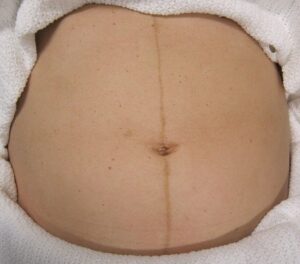
Your Answer:
Correct Answer: Linea Nigra
Explanation:This is Linea Nigra. It occurs in 3/4 of pregnancies and is due to increased melanocyte-stimulating hormone production by the placenta. This also causes melasma and darkening of the nipples.
-
This question is part of the following fields:
- Clinical Management
-
-
Question 59
Incorrect
-
A 52-year-old female patient on HRT for the past two years wonders how often she should have breast cancer screenings.
Which of the following responses is the most appropriate?Your Answer:
Correct Answer: Mammogram every two years until the age of 70
Explanation:Some confusion regarding breast cancer screening arose in 2009 when the U.S. Preventive Services Task Force (USPSTF) issued new mammogram guidelines. The task force recommended that screening mammograms be conducted every two years, beginning at age 50, for women with an average risk of breast cancer. For women aged 40 to 49, the decision of whether to have annual mammograms should be based on a patient’s consideration of risks vs. benefits, according to the task force.
There is no evidence that frequent screening for women on HRT helps with early detection of malignancy.
-
This question is part of the following fields:
- Gynaecology
-
-
Question 60
Incorrect
-
In early pregnancy at what gestation does the Embryonic pole become visible on transvaginal ultrasound?
Your Answer:
Correct Answer: 5 weeks + 3 days
Explanation:The embryonic pole becomes visible on transvaginal ultrasound at around 5 and a half to 6 weeks gestation when it measures around 3mm.
-
This question is part of the following fields:
- Biophysics
-
-
Question 61
Incorrect
-
Maternal mortality rate is lowest in which age group?
Your Answer:
Correct Answer: 20 - 30
Explanation:The maternal mortality rate starts low and raises steeply after the age of 30 years. The lowest mortality rate recorded among women is between 19-30 years of age group.
-
This question is part of the following fields:
- Physiology
-
-
Question 62
Incorrect
-
When is the highest risk of maternal-fetal transmission of Toxoplasma Gondii during pregnancy?
Your Answer:
Correct Answer: 26-40 weeks
Explanation:The risk of transplacental transmission from mother to foetus is greater in later pregnancy i.e. 26-40 weeks. Although the risk of transmission is lower in early pregnancy, if infection does occur earlier, particularly before 10 weeks, then complications are typically more severe.
-
This question is part of the following fields:
- Microbiology
-
-
Question 63
Incorrect
-
A 61-year-old woman comes to the office for a breast cancer follow-up visit. She recently underwent right mastectomy for a node-negative, estrogen- and progesterone-receptor-positive tumor. She was on an aromatase inhibitor as adjuvant therapy, which was discontinued due to severe fatigue and poor sleep. At present, she is scheduled for a 5-year course of adjuvant therapy with tamoxifen. Patient has no other chronic medical conditions and her only medication is a daily multivitamin. Her last menstrual period was 8 years ago. Patient's father had a myocardial infarction at the age 64; otherwise her family history is noncontributory. She does not use tobacco, alcohol, or any other illicit drugs.
On examination her vital signs seems stable, with a BMI of 21 kg/m2.
Patient has many concerns about tamoxifen therapy and asks about potential side effects. Which among the following complications mentioned below is this patient at greatest risk of developing, due to tamoxifen therapy?Your Answer:
Correct Answer: Hyperplasia of the endometrium
Explanation:Tamoxifen and Raloxifene are drugs which acts as selective estrogen receptor modulators.
Their mechanisms of action are competitive inhibitor of estrogen binding and mixed agonist/antagonist action respectively.
Commonly indicated in prevention of breast cancer in high-risk patients. Tamoxifen as adjuvant treatment of breast cancer and Raloxifene in postmenopausal osteoporosis.
Adverse effects include:
– Hot flashes
– Venous thromboembolism
– Endometrial hyperplasia & carcinoma (tamoxifen only)
– Uterine sarcoma (tamoxifen only)
Adjuvant endocrine therapy is commonly used option for treatment of nonmetastatic, hormone-receptor-positive breast cancer; and the most commonly used endocrine agents include tamoxifen, aromatase inhibitors, and ovarian suppression via GnRH agonists or surgery.Tamoxifen is a selective estrogen receptor modulator which is an estrogen receptor antagonist in the breast. It is the most preferred adjuvant treatment for pre-menopausal women at low risk of breast cancer recurrence. Tamoxifen is also a second-line endocrine adjuvant agent for postmenopausal women who cannot use aromatase inhibitor therapy due to intolerable side effects.
Tamoxifen acts as an estrogen agonist in the uterus and stimulates excessive proliferation of endometrium. Therefore, tamoxifen use is associated with endometrial polyps in premenopausal women, and endometrial hyperplasia and cancer in postmenopausal women. These effects will continue throughout the duration of therapy and resolves once the treatment is discontinued. Even with all these possible complications, benefits of tamoxifen to improve the survival from breast cancer outweighs the risk of endometrial cancer.In postmenopausal women, tamoxifen has some estrogen-like activity on the bone, which can increase bone mineral density and thereby reduce the incidence of osteoporosis significantly. However, tamoxifen is generally not a first-line agent for osteoporosis in treatment due to the marked risk of endometrial cancer.
Dysplasia of the cervical transformation zone is typically caused due to chronic infection by human papillomavirus, and tamoxifen has no known effects on the cervix.
Tamoxifen is not associated with any increased risk for adenomyosis, which is characterised by ectopic endometrial tissue in the myometrium.
Intimal thickening of the coronary arteries is a precursor lesion for atherosclerosis. Tamoxifen helps to decrease blood cholesterol level and thereby protect against coronary artery disease.
Tamoxifen is an estrogen antagonist on breast tissue and is used in the treatment and prevention of breast cancer, but it also acts as an estrogen agonist in the uterus and increases the risk of development of endometrial polyps, hyperplasia, and cancer.
-
This question is part of the following fields:
- Obstetrics
-
-
Question 64
Incorrect
-
All of the following are features of the female bony pelvis, except?
Your Answer:
Correct Answer: It is funnel shaped
Explanation:The female bony pelvis is larger, broader and more of a funnel shape. The inlet is larger and oval in shape and the sides of the female pelvis are wider apart.
-
This question is part of the following fields:
- Anatomy
-
-
Question 65
Incorrect
-
A 29-year-old pregnant woman in her first trimester of pregnancy presented to the medical clinic for routine antenatal care. Upon interview and history taking, it revealed that she is positive for Hepatitis C virus antibody (HCVAb). She is now concerned about transmitting the virus to her baby.
Which of the following is considered correct about the patient's condition?Your Answer:
Correct Answer: Fetal scalp blood sampling should be avoided
Explanation:Invasive procedures as fetal scalp blood sampling or internal electrode and episiotomy increase vertical transmission of HCV, especially in patients with positive HCV RNA virus load at delivery that is why it should be avoided.
-
This question is part of the following fields:
- Obstetrics
-
-
Question 66
Incorrect
-
Question 67
Incorrect
-
Regarding the uterine artery which of the following statements are TRUE?
Your Answer:
Correct Answer: It arises from the internal iliac artery
Explanation:The uterine artery arises from the internal iliac artery, in particular the anterior division of the internal iliac artery. Some older texts refer to the internal iliac as the hypogastric artery. The vaginal artery typically arises as its own branch of the internal iliac artery. The ovarian arteries are branches of the aorta
-
This question is part of the following fields:
- Anatomy
-
-
Question 68
Incorrect
-
All of the following are considered complications related to cigarette smoking affecting mothers during pregnancy, except:
Your Answer:
Correct Answer: Less likely to die of sudden infant death syndrome
Explanation:The effects of smoking on the outcomes of pregnancy are well documented and include an increased risk of preterm premature rupture of the membranes (PPROM), preterm birth, low birth weight, placenta previa, and placental abruption. Many studies have shown that the risk of Sudden Infant Death Syndrome (SIDS) is increased by maternal smoking during pregnancy.
-
This question is part of the following fields:
- Obstetrics
-
-
Question 69
Incorrect
-
Which structure is the primary mechanism for shunting blood away from the fetal pulmonary circulation?
Your Answer:
Correct Answer: Foramen Ovale
Explanation:Oxygenation of fetal blood occurs in the placenta before it returns in the umbilical vein which joins the left branch of the portal vein. It bypasses the capillaries of the liver by going through the ductus venosus, which is obliterated after birth and becomes the ligamentum venosum. The oxygenated blood enters the inferior vena cava and is transported to the right atrium and
then through the patent foramen ovale to the left atrium and on to the left ventricle. From the left ventricle, the blood flows into the aorta and through the fetal vascular network. Blood returning from the head of the foetus passes through the superior vena cava to the right atrium and straight on to the right ventricle and pulmonary artery. However, it does not enter the pulmonary
circulation, being short-circuited by the ductus arteriosus to the aorta. Aortic blood is carried via the umbilical arteries back to the placenta for reoxygenation. At birth, the three short circuits, the ductus venosus, foramen ovale and ductus arteriosus, close. -
This question is part of the following fields:
- Embryology
-
-
Question 70
Incorrect
-
A 31-year-old woman at her 18th week of pregnancy presented to the emergency department with complaints of fishy, thin, white homogeneous vaginal discharge accompanied with an offensive odour. The presence of clue cells was noted during a microscopic test on the discharge.
All of the following statements are considered false regarding her condition, except:Your Answer:
Correct Answer: Relapse rate > 50 percent within 3 months
Explanation:Bacterial vaginosis (BV) affects women of reproductive age and can either be symptomatic or asymptomatic. Bacterial vaginosis is a condition caused by an overgrowth of normal vaginal flora. Most commonly, this presents clinically with increased vaginal discharge that has a fish-like odour. The discharge itself is typically thin and either grey or white.
Although bacterial vaginosis is not considered a sexually transmitted infection, women have an increased risk of acquiring other sexually transmitted infections (STI), and pregnant women have an increased risk of early delivery.
Though effective treatment options do exist, metronidazole or clindamycin, these methods have proven not to be effective long term.
BV recurrence rates are high, approximately 80% three months after effective treatment.
-
This question is part of the following fields:
- Obstetrics
-
-
Question 71
Incorrect
-
A 22-year-old nulliparous otherwise healthy woman presents with lower abdominal pain at 16 weeks of gestation. Her body temperature is 37.8 degrees Celsius. She appears to be in good health and is eating properly. Her uterus had been discovered to be retroverted but of normal size at her prior antenatal check at 11 weeks of pregnancy. Which of the following diagnoses is the most likely?
Your Answer:
Correct Answer: Urinary tract infection.
Explanation:Lower abdominal pain can be caused by any of the conditions listed in the answers.
A urinary tract infection is the most likely cause.
Unless it was an abdominal ectopic or an interstitial pregnancy, an ectopic pregnancy.
will almost definitely have shown up before the 15th week of pregnancy.
A retroverted gravid uterus may impinge at 15 weeks of pregnancy, however, this is unlikely to be linked to a temperature of 37.8°C.
It’s also possible that it’s the source of acute urine retention.
Complications of the corpus luteum cyst normally manifest themselves considerably earlier in pregnancy, and severe appendicitis is far less likely to be the source of discomfort than a urinary tract infection. -
This question is part of the following fields:
- Obstetrics
-
-
Question 72
Incorrect
-
A 27-year-old woman comes to you during her first trimester seeking antenatal advice as she have a history of pre-eclampsia and obesity.
On examination her blood pressure is 130/80 mmHg and BMI is 38.
Administration of which among the following can reduce her risk of pre-eclampsia during this pregnancy?Your Answer:
Correct Answer: Calcium 1000mg daily
Explanation:This patient with a previous history of pre-eclampsia and obesity is at high risk for developing pre-eclampsia.
A daily intake of 1000mg of calcium is observed to be helpful in reducing the incidence of any hypertensive disorders and preterm labour.
Vitamin A should always be avoided during pregnancy as it is fetotoxic.
All other options are incorrect.
-
This question is part of the following fields:
- Obstetrics
-
-
Question 73
Incorrect
-
A 37-year-old woman visits a gynaecological clinic for a check-up. A cervical screening test is performed by the doctor. HPV Type Non-16/18 is detected in her cervical cytology. Squamous cells and other abnormalities were found to be absent in the reflex liquid-based cytology.
Which of the following is the most appropriate next step in this patient's care?Your Answer:
Correct Answer: Repeat Cervical screening test in 12 months
Explanation:A cervical screening test was performed on this patient, and the result revealed the presence of the Human Papilloma Virus Type non-16/18. Reflex liquid base cytology was conducted, but no further abnormalities were seen. In this case, the patient should be offered a 12-month repeat cervical screening cytology. If the patient’s repeated cervical screening cytology after 12 months revealed LSIL, she should be referred for a colposcopy.
If HPV is discovered at 12 months, regardless of the LBC result, some women may be at higher risk of having high-grade abnormalities and should be referred to colposcopy. These include:
– women 2 or more years overdue for screening at the time of the initial screen
– women who identify as being of Aboriginal or Torres Strait Islander
– women aged 50 years or older.Summary of recommended actions based on the level of risk
Intermediate danger:
– HPV non-16/18 positive, intermediate risk (with negative or low-grade cytology)
If feasible, repeat the HPV test after 12 months.
A three-to-six-month delay would be acceptable. Delays of longer than six months are discouraged.
Follow up HPV test – HPV non 16/18 (possible high grade cytology or high-grade squamous lesion (HSIL) – Treated as Higher risk.High-risk:
HPV non-16/18 positive on follow-up HPV test (with negative or low-grade cytology)
Refer to an expert right away for further investigation.If your patient is: 2 years or more past due for screening at the time of the initial screening, and identifies as Aboriginal or Torres Strait Islander aged 50 or older, they may be at higher risk and should be referred to a professional at once for additional evaluation.
HPV 16/18 positive with any of the following non–16/18 positive: a glandular anomaly in high-grade cytology high-grade squamous lesion (HSIL) cancer. Refer to an expert right away for further investigation.
Currently, several colposcopy facilities are experiencing strong demand and extended wait times. If you are concerned that your patient will be delayed, you should call the specialist or clinic to which your patient has been referred.
On the Cure Test Pathway, wherever possible, continue testing as planned. A woman who has been treated for HSIL (CIN2/3) should have a 12-month follow-up co-test and annual tests after that. She can resume standard 5-yearly screening after receiving two consecutive negative co-tests. -
This question is part of the following fields:
- Gynaecology
-
-
Question 74
Incorrect
-
A 28-year-old woman presented to the emergency department after developing a fever, lower abdominal pain, and uterine tenderness following a vaginal delivery. Upon observation, it was noted that she remains alert, and her blood pressure and urine output are good.
A cervical smear was ordered and results revealed the presence of large, Gram-positive rods suggestive of Clostridia.
Which of the following is to be considered before proceeding with hysterectomy?Your Answer:
Correct Answer: Gas gangrene
Explanation:Gas gangrene is synonymous with myonecrosis and is a highly lethal infection of deep soft tissue, caused by Clostridium species, with Clostridium perfringens being the most common. This organism has also had increased incidence as the cause of deep tissue infections associated with childbirth and infections after gynaecologic procedures including septic abortions, which can cause gas gangrene of the uterus.
Health care workers should suspect gas gangrene if anaerobic gram-positive bacilli are present in a wound with necrosis of soft tissue and muscle. The organisms produce a gas identifiable on x-ray or CT scans.
Patients with gas gangrene (myonecrosis) present with signs of infection such as fever, chills, pain, and less superficial inflammation at the site of infection than one would expect given the deep penetrating nature of these infections. The condition of the patient can rapidly progress to sepsis and death if not treated aggressively. The wound discharge is often dishwater looking with a musty order. -
This question is part of the following fields:
- Obstetrics
-
-
Question 75
Incorrect
-
Regarding oogenesis & ovulation:
Your Answer:
Correct Answer: The 1st meiotic division is arrested in the diplotene stage until just before ovulation
Explanation:The oocyte (eggs, ova, ovum) is arrested at an early stage of the first meiosis (first meiotic) division as a primary oocyte (primordial follicle) within the ovary. Following puberty, during each menstrual cycle, pituitary gonadotrophin stimulates completion of meiosis 1 the day before ovulation.
-
This question is part of the following fields:
- Cell Biology
-
-
Question 76
Incorrect
-
A 39-year-old woman comes to your clinic for assessment and advice as she is planning to conceive over past three months with no success.
She has a history of obesity with BMI 40 and type 2 diabetes mellitus with latest HbA1c value of 11%. She had her last eye check six months ago which shows no evidence of retinopathy, and she does not have diabetic nephropathy.
Among the following which is a contraindication to pregnancy in this case?Your Answer:
Correct Answer: History of type 2 diabetes mellitus with HBA1C above 10
Explanation:In patients who have an HbA1C value above 10%, it is better to postpone pregnancy until diabetes is under control. Also in those patients with type 2 diabetes mellitus, who are suffering from severe gastroparesis, those with advanced retinopathy, with severe diabetic renal disease and severe ischemic heart disease with uncontrolled hypertension pregnancy is contraindicated.
All the other options mentioned are incorrect.
-
This question is part of the following fields:
- Obstetrics
-
-
Question 77
Incorrect
-
Which of the following cell types act as professional antigen presenter cells (APCs)
Your Answer:
Correct Answer: Macrophages
Explanation:Macrophages are the antigen presenting cells, they phagocytose the pathogen and after breaking them down present their protein structure to the B and T cells for a specific immune reaction to take place.
-
This question is part of the following fields:
- Immunology
-
-
Question 78
Incorrect
-
A 62-year-old woman complains of urinary incontinence for the past 12 months after having four pregnancies before the age of 30. She has to wear a 'pad' inside her pants all of the time because of this condition. She isn't on any hormone replacement therapy at the moment. Which of the following signs indicates that the incontinence is most likely true stress incontinence?
Your Answer:
Correct Answer: Only small quantities of urine ore lost each time she is incontinent.
Explanation:Only little volumes of urine are lost when her intra-abdominal pressure is elevated during coughing, laughing, jumping, and straining, which is the only symptom associated with real stress incontinence.
The other reactions are significantly more compatible with a detrusor instability diagnosis (also called urge incontinence).
If she had incontinence throughout pregnancy, it would have been stress in nature, which is what her current incontinence is. -
This question is part of the following fields:
- Gynaecology
-
-
Question 79
Incorrect
-
A 28 year old patient presents to clinic with a maculopapular rash to the hands and soles of the feet. Examination reveals wart like lesions on the vagina and a diagnosis of condyloma latum is made. What stage of syphilis infection is this?
Your Answer:
Correct Answer: Secondary
Explanation:Condylomas are warty neoplasms of the vulvar area. The most common type are condyloma acuminatum which occur due to HPV 6 or 11. Condyloma latum are also known as secondary syphilis are less common. Both of these are sexually transmitted.
Stages of Syphilis:
– Primary 3-90 days
Chancre and lymphadenopathy
– Secondary 4-10 weeks
Widespread rash typically affecting hands and soles of feet.
Wart lesions (condyloma latum) of mucus membranes
– Latent Early <1 yr. after secondary stage
– Late >2 yr. after secondary stage
Asymptomatic
– Tertiary 3+ years after primary infection
Gummas or
Neurosyphilis or
Cardiovascular syphilis -
This question is part of the following fields:
- Clinical Management
-
-
Question 80
Incorrect
-
Among the below given options, which is NOT associated with an increased risk for preeclampsia?
Your Answer:
Correct Answer: Age between 18 and 40 years
Explanation:Any new onset of hypertension associated with proteinuria after 20 weeks of gestation in a previously normotensive woman is referred to as Preeclampsia.
Most commonly found risk factors for pre-eclampsia are:
– Preeclampsia in a previous pregnancy
– Family history of preeclampsia
– a prior pregnancy with poor outcome like placental abruption, IUGR, fetal death in utero, etc
– An interdelivery interval greater than 10 years
– Nulliparity, increases risk by 8 times
– Pre-existing chronic medical conditions or chronic hypertension
– pre-existing or gestational Diabetes
– chronic Renal disease
– Thrombophilias g. protein C and S deficiency, antithrombin Ill deficiency, or Factor V Leiden mutation
– Antiphospholipid syndrome
– Systemic lupus erythematous
– Maternal age greater than or equal to 40 years
– Body Mass Index (BMI) greater than 30 kg/m2
– Multiple pregnancy
– Raised blood pressure at booking
– Gestational trophoblastic disease
– Fetal triploidyMaternal age between 18 and 40 years is found to be associated with a decreased risk for developing preeclampsia, and not an increased risk.
NOTE– Previously, age 16 years or younger was thought to be a risk factor for developing preeclampsia; however, recent studies conducted had failed to establish any meaningful relationship between the two. -
This question is part of the following fields:
- Obstetrics
-
-
Question 81
Incorrect
-
In the non-pregnant state which of the following hormones is secreted by the corpus luteum?
Your Answer:
Correct Answer: Progesterone
Explanation:The Corpus Luteum is a temporary endocrine structure that secretes two steroid hormones: 1. Progesterone (17a Hydroxyprogesterone) and 2. Oestradiol. The corpus luteum also secretes Inhibin A. In the menstrual cycle if fertilisation doesn’t occur the corpus luteum stops secreting progesterone and degenerates into a corpus albicans. If fertilisation occurs hCG signals the corpus to continue progesterone production and it is then termed the corpus luteum graviditatis
-
This question is part of the following fields:
- Embryology
-
-
Question 82
Incorrect
-
A 29 year old is diagnosed with stage 1A2 cervical cancer. Which of the following is the most appropriate treatment option?
Your Answer:
Correct Answer: LLETZ
Explanation:The treatment of stage 1A cervical cancer is excision of the margins using the Loop electrical excision procedure (LLETZ). Hysterectomy is not necessary. This treatment enables fertility to be preserved.
2010 FIGO classification of cervical carcinoma
0 – Carcinoma in situ
1 – Confined to the cervix (diagnosed microscopy)
1A1 – Less than 3mm depth & 7mm lateral spread
1A2 – 3mm to 5mm depth & less than 7mm lateral spread
1B1 – Clinically visible lesion or greater than A2 & less than 4 cm in greatest dimension
1B2 – Clinically visible lesion, greater than 4 cm in greatest dimension
2 – Invades beyond uterus but not to pelvic wall or lower 1/3 vagina
2A1 – Involvement of the upper two-thirds of the vagina, without parametrical invasion & Less than 4cm
2A2 – Greater than 4 cm in greatest dimension
2B – Parametrial involvement
3 – Extends to Pelvic side wall or lower 1/3 vagina or hydronephrosis
3A – No pelvic side wall involvement
3B – Pelvic side wall involved or hydronephrosis
4 – Extends beyond true pelvis 4A Invades mucosa bladder and rectum
4B – Distant Metastasis -
This question is part of the following fields:
- Clinical Management
-
-
Question 83
Incorrect
-
Question 84
Incorrect
-
Regarding Venous Thromboembolism (VTE) in pregnancy which of the following statements is TRUE?
Your Answer:
Correct Answer: Relative risk of VTE in pregnancy is 4 to 6 fold
Explanation:Venous thromboembolic disease (VTE) is the most common cause of direct maternal death in the UK. In the most recent triennium, there were 41 fatalities, giving a maternal mortality rate of 1.94 per 100 000 – more than twice that of the next most common cause, pre-eclampsia. As pregnancy is a hyper coagulable state. There are alterations in the fibrinolytics and thrombotic pathways. There is also an increased production of clotting factors during pregnancy.
-
This question is part of the following fields:
- Clinical Management
-
-
Question 85
Incorrect
-
Question 86
Incorrect
-
Where are ADH (vasopressin) and Oxytocin synthesised?
Your Answer:
Correct Answer: Hypothalamus
Explanation:ADH and vasopressin are synthesized in the supraoptic and periventricular nuclei of the hypothalamus, they are eventually transported to the posterior pituitary where they are stored to be released later.
-
This question is part of the following fields:
- Endocrinology
-
-
Question 87
Incorrect
-
What is the most common Type II congenital thrombophilia?
Your Answer:
Correct Answer: Factor V Leiden mutation
Explanation:The most common congenital thrombophilia is Factor V Leiden mutation. Other congenital causes are JAK-2 mutations and the Prothrombin G20210A mutation. Protein C and S deficiencies are type 1 and antiphospholipid syndrome is not congenital it is an acquired thrombophilia.
-
This question is part of the following fields:
- Clinical Management
-
-
Question 88
Incorrect
-
The COCP (Combined Oral Contraceptive Pill) causes all of the following biochemical effects EXCEPT which one?
Your Answer:
Correct Answer: Elevate FSH
Explanation:Remember patients with PCOS have elevated LH. COCPs suppress synthesis and secretion of FSH and the mid-cycle surge of LH, thus inhibiting the development of ovarian follicles and ovulation COCPs reduce hyperandrogenism as reduced LH secretion results in decreased ovarian synthesis of androgens. Furthermore they stimulate the liver to produce Sex Hormone Binding Globulin which leads to decreased circulating free androgens. Other mechanisms include reduction in adrenal androgen secretion and inhibition of peripheral conversion of testosterone to dihydrotestosterone and binding of dihydrotestosterone to androgen receptors
-
This question is part of the following fields:
- Clinical Management
-
-
Question 89
Incorrect
-
A 35-year-old woman, gravida 2 para 1, at 14 weeks of gestation comes to the office for a routine prenatal visit. She is feeling well and has no concerns. The patient had daily episodes of nausea and vomiting for the first few weeks of her pregnancy and those symptoms resolved 2 weeks ago. She has had no pelvic pain or vaginal bleeding, and is yet to feel any fetal movements.
Her first pregnancy ended in a cesarean delivery at 30 weeks of gestation due to breech presentation, complicated with severe features of preeclampsia. Patient has no other significant chronic medical conditions and her only medication is a daily dose of prenatal vitamin and have not reported of any medication allergies. The patient does not use tobacco, alcohol or other illicit drugs.
On examination her blood pressure is 112/74 mm of Hg and BMI is 24 kg/m2. Fetal heart rate is found to be 155/min. The uterus is gravid and nontender and the remainder of the examination is unremarkable.
Which of the following is considered to be the next best step in management of this patient?Your Answer:
Correct Answer: Low-dose aspirin
Explanation:Preeclampsia prevention
Preeclampsia is defined as a new-onset hypertension along with other features like proteinuria &/or end-organ damage at >20 weeks of gestation.
Patients with the following histories are at high risk for preeclampsia:
– Those with prior history of preeclampsia
– Those with chronic kidney disease
– Those with chronic hypertension
– Those with diabetes mellitus
– Multiple gestation
– Autoimmune disease
Patients belonging in the following criteria are at moderate risk for preeclampsia:
– Obesity
– Advanced maternal age
– NulliparityPreeclampsia is considered as the leading cause for maternal and fetal morbidity and mortality. This is due to its increased risk for complications such as stroke, placental abruption and disseminated intravascular coagulation. It is most likely caused due to abnormal vasoconstriction and increased platelet aggregation, which thereby results in placental infarction and ischemia. The condition can be effectively prevented by the administration of low-doses of aspirin at 12 weeks of gestation.
Patients with predisposing factors, such as chronic kidney disease, chronic hypertension and a history of preeclampsia, particularly with severe features or at <37 weeks gestation as in this patient, are at higher risk for developing preeclampsia.
In high risk patients, the only therapy proven to decrease the risk of preeclampsia is a daily administration of low-dose aspirin, as it inhibits platelet aggregation and helps in preventing placental ischemia. Treatment is initiated at 12 – 28 weeks of gestation, optimally before 16 weeks and is continued till delivery.Betamethasone is a drug used to accelerate fetal lung maturity in patients who are prone to imminent risk of preterm delivery before 37 weeks of gestation. In this case, if the patient develops pre-eclampsia requiring an urgent preterm delivery betamethasone will be indicated.
High-doses (4 mg) of folic acid is indicated in patients with high risk for a fetus with neural tube defects, as in those who have a history of any prior pregnancies affected or those patients who use any folate antagonist medications. In the given case patient is at average risk and requires only a regular dose of 0.4 mg which is found in most prenatal vitamins.
Intramuscular hydroxyprogesterone is indicated in pregnant patients with prior spontaneous preterm delivery due to preterm prelabor rupture of membranes, preterm labor, etc to decrease the possible risk for any recurrence. In patients who underwent preterm delivery due to other indications like preeclampsia with severe features, fetal growth restriction, etc it is not indicated.
Vaginal progesterone is administered to decrease the risk of preterm delivery in patients diagnosed with a shortened cervix, which is usually identified incidentally on anatomy ultrasound scan done between 16 and 24 weeks of gestation. This patient is currently at her 14 weeks, so this is not advisable.
Patients at high risk for pre-eclampsia, like those with preeclampsia in a prior pregnancy, are advised to start taking a daily low-dose aspirin as prophylaxis for prevention of pre-eclampsia during pregnancy.
-
This question is part of the following fields:
- Obstetrics
-
-
Question 90
Incorrect
-
The joint between the two pubic bones is called the:
Your Answer:
Correct Answer: Pubis symphysis
Explanation:The pubic symphysis or symphysis pubis is the midline cartilaginous joint (secondary cartilaginous) uniting the superior rami of the left and right pubic bones. It is located anterior to the urinary bladder and superior to it.
-
This question is part of the following fields:
- Anatomy
-
-
Question 91
Incorrect
-
A 32-year-old woman at 33 weeks of gestation presents with vaginal bleeding.
A pelvic ultrasound was done, which confirms the diagnosis of placenta praevia and you are planning a cesarean section as it is the most appropriate mode of delivery.
Which among the following is considered a possible outcome of cesarean section delivery?Your Answer:
Correct Answer: Increase risk of adhesions
Explanation:Obstetric complications during or following a cesarean section delivery include:
-Increased risk of maternal mortality.
-Increased need for cesarean sections in the subsequent pregnancies.
-Increased risk for damage to adjacent visceral organs especially bowels and bladder.
-Increased risk of infections.Increased risk for formation of adhesions is a complication after cesarean section and this is the correct response for the given question.
-
This question is part of the following fields:
- Obstetrics
-
-
Question 92
Incorrect
-
Study Z gets funding to increase the population size from 1000 to 2000 patients. What effect is this likely to have on the results?
Your Answer:
Correct Answer: Decrease type 2 errors
Explanation:Increasing sample size decreases type 2 errors and increases power of the results. Sensitivity and specificity of the test should remain constant regardless of sample size. Confidence intervals are applied by a statistician and are dependent on the mean.
-
This question is part of the following fields:
- Epidemiology
-
-
Question 93
Incorrect
-
Hysterosalpingogram (HSG) is contraindicated in the following EXCEPT:
Your Answer:
Correct Answer: Congenital malformations of the uterus
Explanation:Anomalies of the cervico-uterus are widely diagnosed by HSG. The diagnostic value of HSG in the detection of anomalies varies, depending on the type of malformation.
-
This question is part of the following fields:
- Obstetrics
-
-
Question 94
Incorrect
-
A 35-year-old woman presents to your gynaecologic clinic with complaints of abdominal bloating, headaches, insomnia, mood swings, and reduced sexual desire. These symptoms usually get worse a few days before the onset of menstruation and get better with menstruation.
The most appropriate treatment strategy for such a patient is?Your Answer:
Correct Answer: Sertraline
Explanation:Premenstrual dysphoric disorder (PMDD) is a more serious form of premenstrual syndrome (PMS). PMS causes bloating, headaches, and breast tenderness a week or two before your period.
With PMDD, you might have PMS symptoms along with extreme irritability, anxiety, or depression. These symptoms improve within a few days after your period starts, but they can be severe enough to interfere with your life.
PMDD symptoms appear a week or two before menstruation and go away within a few days after your period starts. In addition to PMS symptoms, you may have:
Anger or irritability.
Anxiety and panic attacks.
Depression and suicidal thoughts.
Difficulty concentrating.
Fatigue and low energy.
Food cravings or binge eating.
Headaches.
Insomnia.
Mood swings.The following treatments have been shown to relieve symptoms:
Sertraline, escitalopram, paroxetine, and fluoxetine are SSRIs (selective serotonin reuptake inhibitors). SSRIs are the first-line treatment and are extremely effective.
The second line of defence is alprazolam (a short course recommended due to its addictive potential).
The use of temazepam has little advantage because it only aids with sleep and is relatively short-acting.
Lifestyle modifications-weight loss, exercise, quitting smoking, and relaxation therapies for less severe PMS.
Danazol-suppresses the ovulation and helps with mastalgias associated with PMS. -
This question is part of the following fields:
- Gynaecology
-
-
Question 95
Incorrect
-
After eating a burger at a local restaurant, a 27-year-old lady comes to your office with nausea, vomiting, and diarrhoea. She's taking oral contraceptives. Even when she was quite unwell, she did not miss her pills.
Which of the following would be the best piece of contraceptive and pill advise you could give her?Your Answer:
Correct Answer: She should continue the pills and use condom for 7 days
Explanation:If diarrhoea occurs within 24 hours of taking oral birth control or continues for 24 to 48 hours after taking a pill, an additional dose is not needed.
If diarrhoea lasts more than 48 hours the patient should use backup birth control, such as condoms, or avoid sexual intercourse until pills have been taken for seven diarrhoea-free days.
Options to stop pills are incorrect as it increases risk of pregnancy.
-
This question is part of the following fields:
- Gynaecology
-
-
Question 96
Incorrect
-
A 32-year-old woman gave birth to a baby of normal weight through vaginal delivery, which was complicated by a small perianal tear that was taken care of without stitching. On the fifth day of postpartum patient presents with heavy bright red vaginal bleeding and mentions that lochia was in scant amounts compared to her previous pregnancy.
On examination, her temperature was 38.8°C and uterus is mildly tender to palpation.
Which one of the following would most likely be her diagnosis?Your Answer:
Correct Answer: Retained products of conception
Explanation:Secondary postpartum hemorrhage of bright red character accompanied with fever, between 24 hours to 12 weeks of postpartum is suggestive of retained products of conception (RPOC).
The basal portion of the decidua may remain after separation of placenta in many cases. This decidua will then divides into two layers, the superficial layer which will be shed spontaneously and the deep layer which will regenerates and covers the entire endometrial cavity with in 16 days of postpartum.
Normal shedding of blood and decidua is referred to as lochia rubra, which is red / reddish brown in colour and it lasts for few days following delivery. This vaginal discharge gradually becomes watery and pinkish brown in colour, lasting for 2 to 3 weeks and is called as lochia serosa. Ultimately, this discharge becomes yellowish-white called as lochia alba.Scanty lochia in the first few days after delivery is suggestive of the placental site not undergoing involution, which occurs mostly due to RPOC. Later these retained products will undergo necrosis resulting in fibrin deposition which will eventually form a placental polyp. Detachment of this scar of polyp will result in brisk hemorrhage and the remaining necrotic products will get infected resulting in uterine infection which will present with fever, lower abdominal pain and uterine tenderness.
Endometritis can lead to fever, offensive lochia and abdominal pain with tenderness. It is the most common cause of postpartum fever, but occurs within the first 5 days of postpartum with the peak incidence between days 2 and 3. Though vaginal bleeding is a presenting feature, bright red bleeding is unlikely of endometritis.
Another cause of postpartum fever is genital lacerations which have a peak incidence of wound infection between 4th and 5th days. Although fever as a temporal symptom favours wound infection, this diagnosis is less likely in the given case as wound infection will not affect the normal course of lochia, also it does not present as heavy bright red bleeding. Moreover, there are no symptoms like erythema, tenderness or discharge in history suggestive of wound infection.
Another cause of bleeding and fever can be cervical tear but this tends to present as primary postpartum hemorrhage rather than secondary, which occurs after 24 hours of postpartum. An overlooked and infected minor cervical laceration can cause fever but ii will not result in bright red bleeding, also genital tract lacerations do not affect lochia.
It is very unlikely for uterine rupture to occur 24 hours after delivery.
-
This question is part of the following fields:
- Obstetrics
-
-
Question 97
Incorrect
-
A 26 year old patient known to have Group B Streptococcus (GBS) on vaginal swab is going into labour. A normal vaginal delivery is planned. She is penicillin allergic with a history of anaphylaxis. What intrapartum antibiotic treatment is advised?
Your Answer:
Correct Answer: IV Vancomycin 1g 12 hourly
Explanation:In a person who is infected by streptococcus (Group B) should be started on benzylpenicillin as soon as possible. In case of allergy vancomycin should be started at 1g every 12 hours. Tetracyclines should be avoided in pregnancy.
-
This question is part of the following fields:
- Microbiology
-
-
Question 98
Incorrect
-
Where is Glucagon produced?
Your Answer:
Correct Answer: Islet alpha cells
Explanation:The alpha cells in the islets of Langerhans are responsible for the production and secretion of glucagon. The B cells secrete insulin, the D cells secrete somatostatin, and the F cells secrete pancreatic polypeptide. The B cells, which are the most common and account for 60–75% of the cells in the islets, are generally located in the centre of each islet.
-
This question is part of the following fields:
- Endocrinology
-
-
Question 99
Incorrect
-
Which of the following is probably responsible for physiologic hyperventilation during pregnancy?
Your Answer:
Correct Answer: Increased progesterone production
Explanation:Progesterone gradually increases during the course of pregnancy, from 25 ng⋅mL−1 at 6 weeks’ to 150 ng⋅mL−1 at 37 weeks’ gestation. Progesterone acts as trigger of the primary respiratory centre by increasing the sensitivity of the respiratory centre to carbon dioxide, as indicated by the steeper slope of the ventilation curve in response to alveolar carbon dioxide changes. Progesterone alters the smooth muscle tone of the airways resulting in a bronchodilator effect. It also mediates hyperaemia and oedema of mucosal surfaces, causing nasal congestion.
-
This question is part of the following fields:
- Physiology
-
-
Question 100
Incorrect
-
A 27-year-old nulliparous woman presents with the complaint of malodorous vaginal discharge for the past one month. Patient has tried various over-the-counter vaginal douche products without any improvement. Her last menstrual period was 2 weeks ago, during which she noticed no change in her symptoms. In addition to the discharge, patient also experiences intermittent, crampy abdominal pain along with a feeling of gas passing through her vagina. Patient has had no history of surgeries in the past.
On examination her vital signs seems to be normal. Speculum examination shows a malodorous, tan vaginal discharge with an erythematous patch over the posterior vaginal wall. The cervix is nulliparous and has no visible lesions or areas of friability. A sinus with purulent drainage is found in the perianal skin.
Which among the following conditions will be the most likely underlying cause for this patient’s presentation?Your Answer:
Correct Answer: Transmural inflammation of the bowel
Explanation:Common risk factors for Rectovaginal fistula are Pelvic radiation, Obstetric trauma, Pelvic surgery, Colon cancer, Diverticulitis and Crohn disease. Uncontrollable passage of gas &/or feces from the vagina is considered the common clinical feature of Rectovaginal fistula.
Diagnosis is done with the help of physical examination, fistulography, Magnetic resonance imaging and Endosonography.This patient, mentioned in the case, presents with malodorous vaginal discharge (ie, stool), gas passing through the vagina, and a posterior vaginal lesion most likely has a rectovaginal fistula, which is an aberrant connection between bowel and vagina. Although development of rectovaginal fistula is commonly associated with obstetric trauma or pelvic surgery, patients without these risk factors are recommended to be evaluated for other additional causes like gastrointestinal conditions.
This patient’s intermittent, crampy abdominal pain and perianal sinus in the setting of a rectovaginal fistula is most likely due to an underlying Crohn disease. Crohn disease, is a transmural inflammation of the gastrointestinal tract, which predisposes patients to bowel abscess, fissure, and fistula formation. Although the rectum is typically spared in Crohn disease, a non-healing, transmural ulcer present in the anal canal can progress to form a rectovaginal fistula.
In addition to standard Crohn disease management like anti-TNF inhibitors, glucocorticoids, etc patients with a rectovaginal fistula may require surgical correction.Bartholin gland cysts or abscesses can present with malodorous vaginal discharge; however, patients typically have a posterior vulvar mass located at the 4 or 8 o’clock position. In addition, Bartholin gland cysts will not present with crampy abdominal pain or passage of flatus or stool through the vagina.
Hidradenitis which is the chronic occlusion and inflammation of hair follicles, can cause groin abscesses with sinus tracts and associated purulent drainage. However, it is not associated with abdominal pain or malodorous vaginal discharge. In addition, this condition is typically multifocal and located in more than one intertriginous areas like axillary, inguinal or gluteal regions.
Cervical cancer or a retained foreign body in the vagina can cause malodorous vaginal discharge and abdominal pain. However, patients will typically have visible findings like cervical lesion, foreign body etc on speculum examination, and these neither are associated with the passage of flatus through the vagina.
Complications of Crohn disease include perianal disease like abscess, fissure and fistula like rectovaginal fistula, due to transmural inflammation of the gastrointestinal tract. Patients with a rectovaginal fistula typically presents with malodorous, tan vaginal discharge, passage of flatus through the vagina and a posterior vaginal lesion.
-
This question is part of the following fields:
- Obstetrics
-
SESSION STATS - PERFORMANCE PER SPECIALTY
