-
Question 1
Correct
-
A sexually active young woman comes in with frothy, foul-smelling vaginal discharge. Dysuria and dyspareunia are also present. The genital region seems to be quite reddish.
What is the potential danger associated with this presentation?Your Answer: Increased risk of cervical cancer
Explanation:TV infection is associated with both LR and HR-HPV infection of the cervix, as well as with ASC-US and HSIL. The signs and symptoms of trichomoniasis are present in this patient. Trichomonas vaginalis is the reason.
Increased vaginal discharge that is frothy, yellowish, and has an unpleasant odour are among the symptoms. It’s frequently linked to dyspareunia and dysuria. Normally, the genital area is red and painful.In both men and women, trichomoniasis can cause preterm labour and raise the risk of infertility. Both the patient and the partner must be treated at the same time.
The active infection can be treated with a single oral dose of metronidazole 2 g taken with food.
To avoid disulfiram-like symptoms, alcohol should be avoided during the first 24-48 hours after treatment. -
This question is part of the following fields:
- Gynaecology
-
-
Question 2
Correct
-
Pregnancy is associated with all of the following, EXCEPT:
Your Answer: Increased peripheral resistance
Explanation:A variety of changes in the cardiovascular system occur during normal pregnancy, including increases in cardiac output, arterial compliance, extracellular fluid volume and decreases in blood pressure (BP) and total peripheral resistance.
-
This question is part of the following fields:
- Physiology
-
-
Question 3
Correct
-
A 23-year-old woman, G1PO comes to your clinic at 12 week of pregnancy. She is complaining of mild vaginal bleeding for the past 12 hours, along with bouts of mild cramping lower abdominal pain.
On vaginal examination, the cervical os is closed with mild discharge containing blood clots and an ultrasonography confirms the presence of a live fetus with normal heart rate.
Which among of the following is the most likely diagnosis?Your Answer: Threatened abortion
Explanation:Uterine bleeding in the presence of a closed cervix along with sonographic visualization of an intrauterine pregnancy with detectable fetal cardiac activity are diagnostic of threatened abortion.
Abortion does not always follow a uterine bleeding in early pregnancy, sometimes not even after repeated episodes or large amounts of bleeding, that is why the term “threatened” is used in this case. In about 90 to 96% cases, the pregnancy continues after vaginal bleeding if occured in the presence of a closed os and a detectable fetal heart rate. Also as the gestational age advances its less likely the condition will end in miscarriage.
In cases of inevitable abortion, there will be dilatation of cervix along with progressive uterine bleeding and painful uterine contractions. The gestational tissue can be either felt or seen through the cervical os and the passage of this tissue occurs within a short time.
In case were the membranes have ruptured, partly expelling the products of conception with a significant amounts of placental tissue left in the uterus is called as incomplete abortion. During the late first and early second trimesters this will be the most common presentation of an abortion. Examination findings of this includes an open cervical os with gestational tissues observed in the cervix and a uterine size smaller than expected for gestational age and a partially contracted uterus. The amount of bleeding will vary but can be severe enough to cause hypovolemic shock, with painful contractions and an ultrasound revealing tissues in the uterus.
An in utero death of the embryo or fetus prior to 20 weeks of gestation is called as a missed abortion. In this case the women may notice that the symptoms associated with early pregnancy like nausea, breast tenderness, etc have disappeared and they don’t ‘feel pregnant’ anymore. Vaginal bleeding may occur but the cervix remains closed and the ultrasound done reveals an intrauterine gestational sac with or without an embryonic/fetal pole, but no embryonic/fetal cardiac activity will be noticed.
In case of complete abortion, miscarriage occurs before the 12th week and the entire contents of conception will be expelled out of uterus. If this case, the physical examination will show a small and well contracted uterus with an open or closed cervix. There is scant vaginal bleeding with only mild cramping and ultrasound will reveal an empty uterus without any extra-uterine pregnancy.
-
This question is part of the following fields:
- Obstetrics
-
-
Question 4
Correct
-
In the non-pregnant state which of the following hormones is secreted by the corpus luteum?
Your Answer: Progesterone
Explanation:The Corpus Luteum is a temporary endocrine structure that secretes two steroid hormones: 1. Progesterone (17a Hydroxyprogesterone) and 2. Oestradiol. The corpus luteum also secretes Inhibin A. In the menstrual cycle if fertilisation doesn’t occur the corpus luteum stops secreting progesterone and degenerates into a corpus albicans. If fertilisation occurs hCG signals the corpus to continue progesterone production and it is then termed the corpus luteum graviditatis
-
This question is part of the following fields:
- Embryology
-
-
Question 5
Correct
-
A 32 year old woman who is 14 weeks pregnant presents to the clinic with yellow, frothy vaginal discharge and vaginal soreness. Trichomoniasis is confirmed after microscopy on a wet smear. Which of the following is the most appropriate treatment?
Your Answer: Metronidazole 400mg TDS 7 days
Explanation:Trichomoniasis is considered a sexually transmitted infection found both in men and women caused by the flagellate protozoan Trichomonas vaginalis. The organism is mainly found in the vagina and the urethra. Though many infected women can be asymptomatic, they can also present with yellow frothy vaginal discharge, itching and vaginitis, dysuria or an offensive odour.
For the diagnosis of t. vaginalis in women, a swab is taken from the posterior fornix during speculum examination and the flagellates are detected under light-field microscopy.
The recommended treatment for t. vaginalis during pregnancy and breastfeeding is 400-500mg of metronidazole twice daily for 5 -7 days. High dose metronidazole as a 2g single dose tablet is not advised during pregnancy. All sexual partners should also be treated, and screening for other STIs should be carried out.
-
This question is part of the following fields:
- Clinical Management
-
-
Question 6
Correct
-
In a pregnant lady with polyhydramnios, the cause could be:
Your Answer: Foetus with oesophageal-atresia
Explanation:An underlying disease is only found in 17 % of cases in mild polyhydramnios. In contrast, an underlying disease is detected in 91 % of cases in moderate to severe polyhydramnios. The literature lists the following potential aetiologies: fetal malformations and genetic anomalies (8–45 %), maternal diabetes mellitus (5–26 %), multiple pregnancies (8–10 %), fetal anaemia (1–11 %), other causes, e.g. viral infections, Bartter syndrome, neuromuscular disorders, maternal hypercalcemia. Viral infections which can lead to polyhydramnios include parvovirus B19, rubella, and cytomegalovirus. Other infections, e.g. toxoplasmosis and syphilis, can also cause polyhydramnios.
-
This question is part of the following fields:
- Physiology
-
-
Question 7
Correct
-
We can detect the fetal heart beat by Sonography (transvaginal) at:
Your Answer: 6 weeks
Explanation:The earliest fetal heart rate detected transvaginally was at 6 weeks 0 days of gestation compared with 7 weeks 0 days transabdominally. The transvaginal Doppler method was also more successful in detecting the fetal heart rate in women with a retroverted uterus (p < or = 0.01).
-
This question is part of the following fields:
- Physiology
-
-
Question 8
Correct
-
A 13-year-old woman is complaining of a lot of acne in her face. Her BMI is 37. She does not have her period yet. She has high insulin levels in her labs. What is the most likely diagnosis?
Your Answer: Polycystic Ovarian Syndrome (PCOS)
Explanation:The best answer is Polycystic Ovarian Syndrome (PCOS), supported by amenorrhea, obesity and acne. High insulin levels are indicative of PCOS and exclude Cushing syndrome (as this is associated with low insulin levels).
-
This question is part of the following fields:
- Gynaecology
-
-
Question 9
Incorrect
-
A 30 year old patient is due for delivery in about two weeks. She has some concerns after a family member recently gave birth to a baby with profound hearing loss due to an infection. Which of the following would you describe to her as the most common infective cause of congenital hearing loss?
Your Answer: Rubella
Correct Answer: Cytomegalovirus
Explanation:Congenital cytomegalovirus infections are the most common cause of sensorineural hearing loss in babies. Cytomegalovirus infection during the perinatal period can be transferred to the foetus especially if the primary infection is during pregnancy. Babies born with congenital CMV are either symptomatic or develop symptoms later in life. Some of the features of CMV infection include sensorineural hearing loss, visual impairment, cerebral palsy, microcephaly and seizures. Other causes of infective congenital sensorineural hearing loss include: Rubella, HIV, Herpes Simplex Virus, Measles, Varicella Zoster virus, Mumps and West Nile Virus.
-
This question is part of the following fields:
- Microbiology
-
-
Question 10
Correct
-
Which species of candida is the most common cause of genital candida infection in pregnancy?
Your Answer: Candida albicans
Explanation:Vulvovaginal candidiasis is the most common genital infection and it is caused by candida albicans in 80-92% of the cases. Other non albicans species include C.tropicalis, C.glabrata, C.krusei and C.parapsilosis. 20% of women of childbearing age are asymptotic colonisers of Candida species as part of their normal vaginal flora. This increases to 40% in pregnancy.
-
This question is part of the following fields:
- Clinical Management
-
-
Question 11
Correct
-
A 27 year old women presents with a history of vaginal spotting and cramping abdominal pain. She has an 8 week history of amenorrhoea. On examination urine pregnancy test is positive and the cervix is closed. What is the likely diagnosis?
Your Answer: Threatened Miscarriage
Explanation:Miscarriage is a pregnancy that ends spontaneously before the foetus reaches the age of viability i.e. before 24 weeks of gestation. In a threatened miscarriage the USG findings are of a foetus present in the uterus and on speculum examination the cervical OS is closed, in an inevitable miscarriage the cervical OS is opened. In an incomplete miscarriage the uterus contains the retained products of conception and the cervical OS is open. complete miscarriage contains no retained products of conception and the cervix is closed as the bleeding as resolved.
-
This question is part of the following fields:
- Clinical Management
-
-
Question 12
Correct
-
Evidence from a panel of experts is what level of evidence
Your Answer: IV
Explanation:Level I: Evidence obtained from at least one properly designed randomized controlled trial. Level II-1: Evidence obtained from well-designed controlled trials without randomization. Level II-2: Evidence obtained from well-designed cohort or case-control analytic studies, preferably from more than one centre or research group. Level II-3: Evidence obtained from multiple time series designs with or without the intervention. Dramatic results in uncontrolled trials might also be regarded as this type of evidence. Level III: Opinions of respected authorities, based on clinical experience, descriptive studies, or reports of expert committees.
-
This question is part of the following fields:
- Epidemiology
-
-
Question 13
Correct
-
A 24 week pregnant patient complains of itching over the past 6 weeks particularly to the hands and feet which is worse at night. She has taken cetirizine but this hasn't settled her symptoms. Examination is unremarkable with no rash. What is the likely diagnosis?
Your Answer: Intrahepatic Cholestasis of Pregnancy
Explanation:The history is typical of Intrahepatic Cholestasis of Pregnancy, also known as obstetric cholestasis and prurigo gravidarum. It is characterised by itching without rash and abnormal LFTs beyond normal pregnancy ranges. Itching affects around 23% of pregnancies and can occur before biochemical changes.
-
This question is part of the following fields:
- Clinical Management
-
-
Question 14
Incorrect
-
A 29 year old woman is in her 32nd week of gestation and is diagnosed with placental abruption. This is her 3rd pregnancy and despite all effective measures taken, bleeding is still present. What is the most likely cause?
Your Answer: Villamentous insertion of placenta
Correct Answer: Clotting factor problem
Explanation:Clotting factor problem. Some of the more common disorders of coagulation that occur during pregnancy are von Willebrand disease, common factor deficiencies, platelet disorders and as a result of anticoagulants.
-
This question is part of the following fields:
- Obstetrics
-
-
Question 15
Correct
-
A patient undergoes surgery for a vaginal vault prolapse. After surgery she complains of numbness of the anterior aspect of the labia. Which nerve has likely been damaged during surgery?
Your Answer: Ilioinguinal
Explanation:The anterior aspect of the vulva (mons pubis, anterior labia) is supplied by derivatives of the lumbar plexus: the anterior labial nerves, derived from the
ilio-inguinal nerve, and the genital branch of the genitofemoral nerve.
The posterior aspect of the vulva is supplied by derivatives of the sacral plexus: the perineal branch of the posterior cutaneous nerve of the thigh laterally, and the pudendal nerve centrally. -
This question is part of the following fields:
- Anatomy
-
-
Question 16
Correct
-
A 27-year-old female reports to the emergency department due to severe right lower quadrant pain. Complaints started yesterday, as the patient noticed intermittent right lower abdominal pain associated with increased activity. She rested for remainder of the day, but the pain still continued to increase. An hour ago, the pain suddenly became constant and severe, associated with nausea and vomiting. The patient does not complaint of any radiation of pain.
On examination patient's temperature is noted to be 37.2 C (99 F), blood pressure is 130/80 mm Hg, and pulse rate is 98/min. On palpation of the right lower quadrant there is tenderness without rebounding or guarding. Urine pregnancy test conducted came to be negative.
Considering the following additional informations, which would be most appropriate in establishing the diagnosis of this patient?Your Answer: History of ovarian cysts
Explanation:Common Risk factors for Ovarian torsion are presence of an ovarian mass, women who are in their reproductive age and history of infertility treatment with ovulation induction.
Common clinical presentations include sudden onset of unilateral pelvic pain along with nausea & vomiting and presence of a palpable adnexal mass. An adnexal mass with absent Doppler flow to ovary can be noted in ultrasound.
Laparoscopy with detorsion, ovarian cystectomy and oophorectomy if necrosis or malignancy is found are the common treatment options.Acute lower abdominal pain in a nonpregnant women can have various causes including pathologies of the gastrointestinal, gynecologic, or urologic systems due to the close proximity of these structures. All of these cases have classic presentations which help to characterize the disease process and thereby to differentiate the diagnosis.
In the given case, patient presents with right lower quadrant pain which is classic for ovarian torsion, occurring due to rotation of the ovary around the infundibulopelvic ligament, causing ovarian vessel occlusion. Although ovarian torsion can occur in any women in their reproductive-age, is seen more commonly in those with a history of ovarian cysts (eg, hemorrhagic cyst) or masses (eg, mature cystic teratoma) because of the greater size and density of the ovary which makes it prone to rotation and subsequent torsion. Patients will initially have intermittent pain associated with activity, as in this patient, due to partial ovarian torsion, this initial pain resolves when the adnexa spontaneously untwists and blood flow returns. When this progresses to complete ovarian torsion, patients typically develop sudden-onset, severe, nonradiating pain due to persistent ischemia, which is often associated with nausea and vomiting.
Ovarian torsion can be clinically diagnosed, but a Doppler ultrasound is performed to evaluate ovarian blood flow and also to confirm the diagnosis. Surgical detorsion to prevent ovarian necrosis and cystectomy/oophorectomy are the usual treatment options.
Any association of urinary symptoms will help to establish a urologic cause of acute right lower quadrant pain like pyelonephritis, nephrolithiasis, etc. However, patients with urologic conditions typically presents with suprapubic or flank pain which radiates to the right lower quadrant, making this diagnosis less likely in the given case.
A family history of malignancy usually does not aid in the diagnosis of acute lower abdominal pain. Although some ovarian cancers are inherited, patients with ovarian cancer typically have a chronic, indolent course with associated weight loss, early satiety, and abdominal distension.
Having multiple sexual partners is considered a risk factor for sexually transmitted infections and pelvic inflammatory disease, which can be a cause for lower abdominal pain. However, patients will typically have fever, constant and diffused pelvic pain along with rebound and guarding.
Recent sick contacts are a risk factor for gastroenteritis, which can present with nausea, vomiting and abdominal pain. However, in this case patient will typically have diffuse, cramping abdominal pain which will worsen gradually; along with persistent vomiting and diarrhea.
Ovarian torsion typically causes intermittent lower abdominal pain followed by sudden-onset of severe, nonradiating unilateral pain with associated nausea and vomiting. Ovarian torsion can occur in women in their reproductive-age, particularly those with a history of ovarian cysts.
-
This question is part of the following fields:
- Obstetrics
-
-
Question 17
Incorrect
-
Which of the following statements regarding prolactin is true?
Your Answer: Prolactin levels decrease shortly after sleep
Correct Answer: Prolactin levels increase during stress
Explanation:Causes of Hyperprolactinemia: Prolactinomas, Medication (phenothiazines, metoclopramide, risperidone, selective serotonin reuptake inhibitors, oestrogens, verapamil), Stress, Pregnancy, Hypothyroidism, Kidney disease, Chest trauma
-
This question is part of the following fields:
- Endocrinology
-
-
Question 18
Incorrect
-
The yolk sac reaches its maximum diameter at what week of gestation?
Your Answer: 6 weeks
Correct Answer: 10 weeks
Explanation:The yolk sac increases in size up until the 10th week reaching a maximum diameter of 6mm in normal pregnancy. After the 10th week the yolk sac will gradually disappear. It is usually sonographically undetectable by 20 weeks. A yolk sac greater than 6mm diameter is suspicious of failed pregnancy.
-
This question is part of the following fields:
- Biophysics
-
-
Question 19
Correct
-
A 28-year-old, currently at 26 weeks’ gestation of her third pregnancy, presents with irregular uterine contractions for the past 24 hours and has concerns about premature delivery. She delivered her first child at 38 weeks of gestation and her second at 39 weeks gestation. On examination, BP and urinalysis have come back normal. Her symphysis-fundal height measures 27cm, the uterus is lax and non-tender. Fetal heart rate is 148/min. She also undergoes a pelvic examination along with other investigations.
Which findings would suggest that delivery is most likely going to happen before 30 weeks’ of gestation?
Your Answer: The cervix is closed, but the fetal fibronectin test on cervical secretions is positive.
Explanation:Predisposing factors of preterm delivery include a short cervix (or if it shortens earlier than in the third trimester), urinary tract or sexually transmitted infections, open cervical os, and history of a previous premature delivery. Increased uterine size can also contribute to preterm delivery and is seen with cases of polyhydramnios, macrosomia and multiple pregnancies. The shorter the cervical length, the greater the risk of a premature birth.
In this case, the risk of bacterial vaginosis and candidiasis contributing to preterm delivery would be lower than if in the context of an open cervical os. However, the risk of premature delivery is significantly increased if it is found that the fetal fibronectin test is positive, even if the os is closed. -
This question is part of the following fields:
- Obstetrics
-
-
Question 20
Correct
-
A 26 year old lady comes to see you in the antenatal clinic. She is 8 weeks pregnant and is concerned as she has a new cat and her friend told her she shouldn't be changing cat litter when pregnant. You send bloods which show high IgM for toxoplasmosis gondii. Which of the following is an appropriate treatment option?
Your Answer: Spiramycin
Explanation:There are 2 treatment options: Spiramycin ASAP if foetus not infected or status of the foetus not known. This reduces risk of transplacental infection. This is continued until term, or until fetal infection is documented. Pyrimethamine, sulfadiazine and folic acid where fetal infection is known e.g. positive amniotic fluid PCR. Monitoring for haemotoxicity required. Pyrimethamine should be avoided in the 1st trimester as teratogenic
-
This question is part of the following fields:
- Microbiology
-
-
Question 21
Correct
-
Polyhydramnios is associated with which one of the following conditions?
Your Answer: Tracheo-oesophageal fistula
Explanation:Oesophageal atresia/TE fistula may be suspected prenatally with ultrasound findings of polyhydramnios, absence of fluid in the stomach, small sized abdomen, or the presence of a dilated proximal oesophageal pouch. An underlying disease is only found in 17 % of cases in mild polyhydramnios. In contrast, an underlying disease is detected in 91 % of cases in moderate to severe polyhydramnios. The literature lists the following potential aetiologies: fetal malformations and genetic anomalies (8–45 %), maternal diabetes mellitus (5–26 %), multiple pregnancies (8–10 %), fetal anaemia (1–11 %), other causes, e.g. viral infections, Bartter syndrome, neuromuscular disorders, maternal hypercalcemia. Viral infections which can lead to polyhydramnios include parvovirus B19, rubella, and cytomegalovirus. Other infections, e.g. toxoplasmosis and syphilis, can also cause polyhydramnios.
-
This question is part of the following fields:
- Physiology
-
-
Question 22
Correct
-
Renal cell carcinoma is associated with which type of metastasis?
Your Answer: Haematogenous
Explanation:Most carcinomas spread primarily via lymphatic invasion. Renal cell is the exception spreading via the bloodstream.
-
This question is part of the following fields:
- Clinical Management
-
-
Question 23
Correct
-
Among the following presentations during pregnancy, which is not associated with maternal vitamin D deficiency?
Your Answer: Large for gestational age
Explanation:Retarded skeletal growth resulting in small for gestational age babies are the usual outcomes of an untreated vitamin D deficiency in pregnancy.
Symptoms associated with maternal vitamin D deficiency during pregnancy are:
– Hypocalcemia in newborn.
– Development of Rickets later in life.
– Defective tooth enamel.
– Small for gestational age due to its effect on skeletal growth
– Fetal convulsions or seizures due to hypocalcemia. -
This question is part of the following fields:
- Obstetrics
-
-
Question 24
Incorrect
-
Question 25
Incorrect
-
Which of the following would normally be expected to increase during pregnancy:
Your Answer: Haematocrit
Correct Answer: Thyroxin-binding globulin
Explanation:Thyroid function in pregnancy is altered in two ways; the circulating levels of the thyroid binding proteins are increased, resulting in an increase in the total circulating levels of thyroid hormones (but a slight fall in the free component).
-
This question is part of the following fields:
- Physiology
-
-
Question 26
Correct
-
Question 27
Correct
-
Which of the following pathology terms refers to programmed cell death?
Your Answer: Apoptosis
Explanation:Apoptosis is described as programmed cell death. The cell release certain proapoptotic mediators that regulate this cell death.
-
This question is part of the following fields:
- Biochemistry
-
-
Question 28
Correct
-
Question 29
Correct
-
A 40 year old women who is 13 weeks pregnant is found to have be high risk for Downs following the combined screening test. What is the most appropriate further test to see if the foetus is affected?
Your Answer: Chorionic Villous Sampling
Explanation:Chorion villus sampling is an invasive procedure which aims to collect the rapidly dividing cells in the placenta. It is used for numerous reasons including detection of early pregnancy, viability of the foetus, singleton pregnancy, confirm gestation age and for prenatal diagnosis of the fetal chromosomal abnormalities including diagnosis of Down’s syndrome. However it hold a 2% chance of miscarriage during the procedure. Nuchal thickness and imaging are part of the combined test that must have been performed before.
-
This question is part of the following fields:
- Genetics
-
-
Question 30
Correct
-
Regarding threatened abortion:
Your Answer: Ultrasound should be done to confirm the diagnosis
Explanation:Patients with a threatened abortion should be managed expectantly until their symptoms resolve. Patients should be monitored for progression to an inevitable, incomplete, or complete abortion. Analgesia will help relieve pain from cramping. Bed rest has not been shown to improve outcomes but commonly is recommended. Physical activity precautions and abstinence from sexual intercourse are also commonly advised. Repeat pelvic ultrasound weekly until a viable pregnancy is confirmed or excluded. A miscarriage cannot be avoided or prevented, and the patients should be educated as such. Intercourse and tampons should be avoided to decrease the chance of infection. A warning should be given to the patient to return to the emergency department if there is heavy bleeding or if the patient is experiencing light-headedness or dizziness. Heavy bleeding is defined as more than one pad per hour for six hours. The patient should also be given instructions to return if they experience increased pain or fever. All patients with vaginal bleeding who are Rh-negative should be treated with Rhogam. Because the total fetal blood volume in less than 4.2 mL at 12 weeks, the likelihood of fetal blood mixture is small in the first trimester. A smaller RhoGAM dose can be considered in the first trimester. A dose of 50 micrograms to 150 micrograms has been recommended. A full dose can also be used. Rhogam should ideally be administered before discharge. However, it can also be administered by the patient’s obstetrician within 72 hours if the vaginal bleeding has been present for several days or weeks.
-
This question is part of the following fields:
- Obstetrics
-
-
Question 31
Incorrect
-
Sertoli cells contain receptors to which hormone?
Your Answer: LH
Correct Answer: FSH
Explanation:Sertoli cells contain receptors for FSH. In response to this Sertoli cells synthesize inhibin, androgen binding proteins and anti Mullerian hormone all which are connected to the reproduction cycle.
-
This question is part of the following fields:
- Anatomy
-
-
Question 32
Correct
-
Which of the following studies is most appropriate to assess the efficacy of a new medication to reduce pain caused by endometriosis?
Your Answer: Randomised Control Trial
Explanation:Randomized control trials are the gold standard when it comes to assessing the treatment options or interventions in medicine. Since its introduction, RCT has questioned the validity of treatments such as oral hypoglycaemic agents, myocardial infarction hospitalization, varicose veins, toxicity and applicability of many preventive and therapeutic procedures. The basic steps include drawing up the protocol, selecting a study population, randomization, intervention, follow up and assessment of the outcome. Note if assessing prognosis or diagnostic tests Cohort and Cross Sectional Analysis are best.
-
This question is part of the following fields:
- Epidemiology
-
-
Question 33
Incorrect
-
A 38 year old woman in early pregnancy is rushed to the emergency department complaining of vaginal bleeding and abdominal pain. What percentage of women her age have miscarriages?
Your Answer: 50%
Correct Answer: 25%
Explanation:With increasing maternal age, the risk of miscarriage increases. For women between the ages of 40-44, the miscarriage rates sit at about 50% and increases to over 75% for women 45 years and over. The miscarriage rate for women between the ages of 35-39 is 25%.
-
This question is part of the following fields:
- Epidemiology
-
-
Question 34
Correct
-
Rubella belongs to which of the following family of viruses?
Your Answer: Togaviruses
Explanation:The Rubella virus, also known as German measles, is found in the Togavirus family and is a single-stranded RNA virus. The virus, which is acquired through contact with respiratory secretions, primarily replicates in the nasopharynx and lymph nodes, and produces a mild and self-limiting illness. Congenital infection, however, is associated with several anomalies including sensorineural deafness, cataracts and cardiac abnormalities.
-
This question is part of the following fields:
- Microbiology
-
-
Question 35
Correct
-
Which of the following hormones inhibits Galactopoiesis and Lactogenesis postpartum?
Your Answer: Dopamine
Explanation:Galactopoiesis and Lactogenesis are stimulated by Prolactin. Dopamine released under hypothalamic control inhibits Prolactin production. Note oestrogen and progesterone inhibit lactogenesis up until term.
-
This question is part of the following fields:
- Clinical Management
-
-
Question 36
Correct
-
An otherwise healthy 21 year old primigravida comes to your office for a routine visit at 16 weeks gestation. She has had a normal pregnancy to date, and her only medication is a multivitamin with 0.4 mg folic acid. You order a maternal serum alpha-fetoprotein level. Adjusted for gestational age, maternal weight, and race, the results are significantly elevated. Which one of the following would you now recommend?
Your Answer: Fetal ultrasonography
Explanation:A 16-week visit is advised for all pregnant women to offer an alpha-fetoprotein (AFP) screening for neural tube defects and Down syndrome- An AFP level 2-5 times the median value for normal controls at the same gestational age is considered elevate- Approximately 5%-10% of patients who undergo AFP screening will have an elevated level, and most of these women will have normal foetuses. Fetal ultrasonography should be performed to detect multiple gestation, fetal demise, or fetal anomalies (neural tube defects, ventral abdominal wall defects, and urinary tract anomalies) as well as to confirm gestational age, as all of these factors are associated with elevated AFP levels. Amniocentesis is offered if the ultrasonography does not indicate the reason for the elevated AFP. Chorionic villus sampling is offered in the evaluation of suspected chromosomal anomalies as an adjunct to amniocentesis. Serum hCG would be indicated in the workup of suspected Down syndrome, where the AFP would be low, not elevate- The hCG level would be expected to be over 2-5 multiples of the mean (MoM) with Down syndrome.
-
This question is part of the following fields:
- Obstetrics
-
-
Question 37
Incorrect
-
A 65-year-old woman comes to your office for routine well-woman exam. Her last menstrual period was 15 years ago. She has not been on oestrogen replacement therapy and now desires to start due to concerns about osteoporosis. On routine pelvic exam, you palpate a small uterus and cervix along with palpable ovaries bilaterally. Of the following, your next step in the management of this patient should be:
Your Answer: Dual photon densitometry for evaluation of bone density
Correct Answer: Pelvic ultrasound
Explanation:In a postmenopausal woman, the ovaries should not be palpable; if they are, it should raise the concern that an ovarian malignancy is present. Before one would perform an operative evaluation, radiologic assessment should be done.
– Although this is an accepted regimen for oestrogen replacement therapy, the palpable ovaries need to be evaluated to rule out malignancy.
– Dual photon densitometry will give a reliable measure of bone density. Again, however, the palpable ovary is the first thing that needs to be worked up.
– Although surgical exploration may be warranted, initial workup of the adnexal mass should include an ultrasound along with tumour markers. A CT scan may also be warranted. -
This question is part of the following fields:
- Gynaecology
-
-
Question 38
Correct
-
A patients MSU comes back showing heavy growth of E.coli that is resistant to trimethoprim, amoxicillin and nitrofurantoin. You decide to prescribe a course of Cephalexin. What is the mechanism of action of Cephalexin?
Your Answer: inhibit peptidoglycan cross-links in bacterial cell wall
Explanation:Cephalosporins are beta lactum drugs, like penicillin. They act by inhibiting the cross linkage of the peptidoglycan wall in bacteria.
-
This question is part of the following fields:
- Clinical Management
-
-
Question 39
Incorrect
-
A 27-year-old woman presents for difficulty and pain in attempting sexual intercourse. She states that she never had such symptoms prior. The pain is not felt at the time of penetration, but appears to hurt deeper in the vagina.
She was recently pregnant with her first child and delivery was three months ago. She did not have an episiotomy or sustain any vaginal lacerations during delivery. She denies any vaginal bleeding since her lochia had stopped two months ago. She is still breastfeeding her child.
Which of the following is the most likely cause of her dyspareunia?Your Answer: Trichomonas vaginitis.
Correct Answer: Atrophic vaginal epithelium.
Explanation:This is a patient that recently gave birth and is still breastfeeding presenting with dyspareunia. The most likely cause would be a thin atrophic vaginal epithelium. This is very common presentation and is due to the low oestrogen levels due to the prolactin elevation from breastfeeding.
An unrecognised and unsutured vaginal tear should have healed by this time and should not be causing issues.
Endometriosis tends to resolve during a pregnancy, but if this was the issue, it would have caused dyspareunia prior to pregnancy.
Vaginal infective causes of dyspareunia, such as monilial or trichomonal infections, are rare in amenorrhoeic women.
-
This question is part of the following fields:
- Obstetrics
-
-
Question 40
Incorrect
-
A 30-year-old woman has a vaginal discharge with pH <4.5 and a very foul smell. What is the single most likely diagnosis?
Your Answer: Bacterial vaginosis
Correct Answer: Trichomoniasis
Explanation:Trichomoniasis is a common sexually transmitted infection caused by a parasite. In women, trichomoniasis can cause a foul-smelling vaginal discharge which might be white, grey, yellow or green, genital itching and painful urination.
-
This question is part of the following fields:
- Gynaecology
-
-
Question 41
Incorrect
-
A 33-year-old female, who is 14 weeks pregnant, presented to your office for antenatal follow-up.
On examination, the fundal height is found to be18 cm.
which among the following would be the best next step in the management of this patient?Your Answer: Refer to a gynecologist
Correct Answer: Perform an ultrasound scan
Explanation:At 12 weeks gestation the fundus is expected to be palpable above the pubis symphysis and it is expected to be felt at the level of umbilicus by 20 weeks. Though the uterine fundus stands in between from 12 and 20 weeks, the height of the fundus in centimeters is equivalent to the weeks of pregnancy after 20 weeks.
For 14-week pregnant uterus a fundal height of 18cm is definitely large and dating errors is considered as the most common cause for such a discrepancy. Hence, it is better to perform an ultrasound scan for more accurately estimating the gestational age. Also if the case is not a simple dating error, ultrasonography can provide definitive additional information about other possible conditions such as polyhydramnios, multiple gestation, etc that might have led to a large-for-date uterus.
A large-for-gestational-age uterus are most commonly found in conditions like:
– Dating errors which is the most common cause
– Twin pregnancy
– Gestational diabetes
– Polyhydramnios
– Gestational trophoblastic disease, also known as molar pregnancy -
This question is part of the following fields:
- Obstetrics
-
-
Question 42
Incorrect
-
Which of the following is associated with use of a tocolytic drug?
Your Answer: Prolongation of pregnancy for up to 12 hours
Correct Answer: Prolongation of pregnancy for up to 7 days
Explanation:The WHO recommends that tocolytics can safely be used to prolong pregnancy for up to seven days. The tocolytic drugs are used to suppress contractions to allow for more favourable conditions in the case of preterm labour, such as transfer to a better-equipped health care facility with a neonatal intensive care unit, or for those who have not yet completed a full dose of corticosteroids. It is not however associated with better neonatal outcomes in the imminent delivery of preterms. Examples of tocolytics include calcium channel blockers, magnesium sulphate, and oxytocin antagonists.
-
This question is part of the following fields:
- Clinical Management
-
-
Question 43
Correct
-
With sneezing, a 45-year-old mother of two reported leaking a small bit of urine. It started to happen with exercising recently. She denies having experienced recent life pressures.
Which of the following best characterizes the incontinence she's dealing with?Your Answer: Stress incontinence
Explanation:Overflow incontinence typically presents with continuous urinary leakage or dribbling in the setting of incomplete bladder emptying. Associated symptoms can include weak or intermittent urinary stream, hesitancy, frequency, and nocturia. When the bladder is very full, stress leakage can occur or low-amplitude bladder contractions can be triggered resulting in symptoms similar to stress or urgency incontinence.
Women with urgency incontinence experience the urge to void immediately preceding or accompanied by involuntary leakage of urine
Individuals with stress incontinence have involuntary leakage of urine that occurs with increases in intraabdominal pressure (e.g., with exertion, sneezing, coughing, laughing) in the absence of a bladder contraction.
-
This question is part of the following fields:
- Gynaecology
-
-
Question 44
Correct
-
What is the male infertility rate in CF patients?
Your Answer: 98%
Explanation:Cystic fibrosis is the most common fetal genetic disease in Caucasians and has an autosomal recessive inheritance. It is caused by an abnormal chloride channel due to a defect in the CFTR gene. Complications range from haemoptysis, respiratory failure, biliary cirrhosis, diabetes and male infertility. Men with CF are infertile in 98% of the cases due to failure of development of the vas deference.
-
This question is part of the following fields:
- Clinical Management
-
-
Question 45
Incorrect
-
A 27-year-old woman would usually take her oral contraceptive pill (ethinyl oestradiol 30µg, levonorgestrel 150 µg) each night at around 11 pm. One day, she presents at 7pm and says that she had forgotten to take her pill the evening before and would like some advice as to what she should do. Last sexual intercourse was last night and she is now on day-27 of her cycle. She is due to take her last pill tonight and then start the first of seven lactose tablets tomorrow night.
What would be the best advice to give her?
Your Answer: Take the missed pill now, and then continue the original course, taking the next tablet in four hours’ time.
Correct Answer: Stop the current course of contraceptive pills, and start the next course of hormone tab lets in five days’ time.
Explanation:Taking into consideration that she had only missed one pill and that they were going to be stopped the next day anyway, the rate of pregnancy would be low; hence all of the responses would be acceptable and effective. However, the most appropriate step would be to initiate her hormone-free interval starting from the time she missed her pill i.e. 11pm the night before. This would make tonight the 2nd lactose pill day and hence she should commence the next course of hormone pills on the 5 nights from tonight. In doing this, her hormone-free period would be the usual length of 7 days. Although the risk of pregnancy is low after missing only one pill, this opposite occurs when the missed pill causes a longer than normal hormone-free duration between the end of the current cycle and the starting of the subsequent one.
-
This question is part of the following fields:
- Gynaecology
-
-
Question 46
Incorrect
-
A 24-year-old gravida 3 para 1 is admitted to the hospital at 29 weeks gestation with a high fever, flank pain, and an abnormal urinalysis. You order blood and urine cultures, a CBC, electrolyte levels, and a serum creatinine level. You also start her on intravenous fluids and intravenous cefazolin. After 24 hours of antibiotic treatment she is clinically improved but continues to have fever spikes. What would be the most appropriate management at this time?
Your Answer: Order renal ultrasonography to rule out a perinephric abscess
Correct Answer: Continue current management
Explanation:Pyelonephritis is the most common serious medical problem that complicates pregnancy. Infection is more common after midpregnancy, and is usually caused by bacteria ascending from the lower tract. Escheria coli is the offending bacteria in approximately 75% of cases. About 15% of women with acute pyelonephritis are bacteraemia- A common finding is thermoregulatory instability, with very high spiking fevers sometimes followed by hypothermia- Almost 95% of women will be afebrile by 72 hours. However, it is common to see continued fever spikes up until that time- Thus, further evaluation is not indicated unless clinical improvement at 48-71 hours is lacking. If this is the case, the patient should be evaluated for urinary tract obstruction, urinary calculi and an intrarenal or perinephric abscess. Ultrasonography, plain radiography, and modified intravenous pyelography are all acceptable methods, depending on the clinical setting.
-
This question is part of the following fields:
- Obstetrics
-
-
Question 47
Correct
-
Which of the following hormones are required for alveolar morphogenesis during pregnancy?
Your Answer: Progesterone, Prolactin and hPL
Explanation:The changes seen in breast tissue with the menstrual cycle are accentuated during pregnancy. Deposition of fat around glandular tissue occurs, and the number of glandular ducts is increased by oestrogen, while progesterone and human placental lactogen (hPL) increase the number of gland alveoli. Prolactin is essential for the stimulation of milk secretion and during pregnancy prepares the alveoli for milk production. Although prolactin concentration increases throughout pregnancy, it does not then result in lactation since it is antagonized at an alveolar receptor level by oestrogen.
-
This question is part of the following fields:
- Endocrinology
-
-
Question 48
Incorrect
-
In a patient who undergoes a medical abortion at 10 weeks gestation, what advice would you give regarding Rhesus Anti-D Immunoglobulin?
Your Answer: Not required
Correct Answer: All RhD-negative women who are not alloimmunized should receive Anti-D IgG
Explanation:The Rhesus status of a mother is important in pregnancy and abortion. The exposure of an Rh-negative mother to Rh antigens from a positive foetus, will influence the development of anti-Rh antibodies. This may cause problems in subsequent pregnancies leading to haemolysis in the newborn. Rh Anti RhD- globulin is therefore given to non-sensitised Rh-negative mothers to prevent the formation of anti-Rh antibodies within 72 hours following abortion. Anti RhD globulin is not useful for already sensitized, or RhD positive mothers.
-
This question is part of the following fields:
- Clinical Management
-
-
Question 49
Correct
-
The following ultrasonic measurements may be used to confirm or establish gestational age:
Your Answer: Crown rump length
Explanation:Fetal ultrasound scanning is considered an essential part of routine antenatal care with first trimester scans recommended for confirming viability, accurate estimation of gestational age and determining the number of foetuses. Fetal crown-rump length (CRL) is measured in early pregnancy primarily to determine the gestation age (GA) of a foetus and is most reliable between 9+0 to 13+6 weeks’ gestation, but not beyond.
-
This question is part of the following fields:
- Physiology
-
-
Question 50
Correct
-
A 23-year-old primigravida who is at 41 weeks has been pushing for the past 2 and a half ours. The fetal head is at the introitus and is beginning to crown already. An episiotomy was seen to be necessary. The tear was observed to extend through the sphincter of the rectum but her rectal mucosa remains intact.
Which of the following is the most appropriate type of episiotomy to be performed?Your Answer: Third-degree
Explanation:The episiotomy is a technique originally designed to reduce the incidence of severe perineal tears (third and fourth-degree) during labour. The general idea is to make a controlled incision in the perineum, for enlargement of the vaginal orifice, to facilitate difficult deliveries.
Below is the classification scale for the definitions of vaginal tears:
First degree involves the vaginal mucosa and perineal skin with no underlying tissue involvement.
Second degree includes underlying subcutaneous tissue and perineal muscles.
Third degree is where the anal sphincter musculature is involved in the tear. The third-degree tear can be further broken down based on the total area of anal sphincter involvement.
Fourth degree is where the tear extends through the rectal muscle into rectal mucosa. -
This question is part of the following fields:
- Obstetrics
-
-
Question 51
Correct
-
A 26-year -old woman, who underwent an episiotomy during labour, presented with severe vaginal pain 4 days after the procedure.
At the site of the episiotomy, an 8-cm hematoma is noted on examination. Also the woman is found to be hemodynamically stable.
Among the following, which is considered the most appropriate next step in management?Your Answer: Explore the hematoma
Explanation:In most cases reported, puerperal hematomas arise due to bleeding lacerations related to operative deliveries or episiotomy, and in rare cases from spontaneous injury to a blood vessel in the absence of any laceration/incision of the surrounding tissue. Vulval, vaginal/paravaginal area and retroperitoneum are considered the most common locations for puerperal hematomas.
Most puerperal hematomas are diagnosed based on the presence of characteristic symptoms and physical examination findings:
VuIvar hematoma usually presents as a rapidly developing, severely painful, tense and compressible mass which is covered by skin of purplish discoloration. A vulvar hematoma can also be an extension of a vaginal hematoma which was dissected through a loose subcutaneous tissue into the vulva.
Vaginal hematomas often present with rectal pressure, were hemodynamic instability caused due to bleeding into the ischiorectal fossa and paravaginal space are the first signs and can result in hypovolemic shock. In these cases a large mass protruding into the vagina is often found on physical examination.
Retroperitoneal hematomas are asymptomatic initially and extend between the folds of broad ligament. Patients suffering will often present with tachycardia, hypotension or shock due to the significant accumulated of blood in the retroperitoneal space. Unless the hematoma is associated with trauma, patients will not present with pain, only signs will be a palpable abdominal mass or fever.Treatment of hematoma depends mostly on the size and location:
Non-expanding hematomas which are <3cm in size can be managed conservatively with analgesics and application of ice packs. An expanding hematoma or those greater than 3cm is managed effectively with surgical exploration under anesthesia, were an incision is made to evacuate the hematoma. The surgical site should not be sutured and vagina is often packed for 12-24 hours, an indwelling urinary catheter also may be indicated. In the given case, patient presents with a large haematoma (>3cm) which needs surgical excision and evacuation.Aspiration of the hematoma is not an appropriate treatment. If surgical intervention is indicated excision and evacuation is the preferred option, followed by vaginal packing for 12-24 hours.
-
This question is part of the following fields:
- Obstetrics
-
-
Question 52
Incorrect
-
What is the contraception of choice for epileptics on enzyme inducing antiepileptic drugs?
Your Answer: Barrier methods
Correct Answer: Levonorgestrel-releasing intrauterine contraceptive device.
Explanation:Clinical decision making which contraceptive regimen is optimal for an individual woman with epilepsy is one of the most challenging tasks when taking care of women with epilepsy. The bidirectional interactive potential of antiepileptic drugs (AEDs) and hormonal contraceptives needs to be taken into account. Enzyme inducing (EI)-AEDs may reduce the contraceptive efficacy of hormonal contraceptives.
If combined oral contraceptives (COCs) are used in combination with EI-AEDs, it is recommended to choose a COC containing a high progestin dose, well above the dose needed to inhibit ovulation, and to take the COC pill continuously (“long cycle therapy”). But even with the continuous intake of a COC containing a higher progestin dose contraceptive safety cannot be guaranteed, thus additional contraceptive protection may be recommended.
Progestin-only pills (POPs) are likely to be ineffective, if used in combination with EI-AEDs.
Subdermal progestogen implants are not recommended in patients on EI-AEDs, because of published high failure rates.
Depot medroxyprogesterone-acetate (MPA) injections appear to be effective, however they may not be first choice due to serious side effects (delayed return to fertility, impaired bone health).
The use of intrauterine devices is an alternative method of contraception in the majority of women, with the advantage of no relevant drug–drug interactions. The levonorgestrel intrauterine system (IUS) appears to be effective, even in women taking EI-AEDs. Likelihood of serious side effects is low in the IUS users.
-
This question is part of the following fields:
- Gynaecology
-
-
Question 53
Incorrect
-
A 26 year old patient known to have Group B Streptococcus (GBS) on vaginal swab is going into labour. A normal vaginal delivery is planned. She is penicillin allergic with a history of anaphylaxis. What intrapartum antibiotic treatment is advised?
Your Answer: No treatment
Correct Answer: IV Vancomycin 1g 12 hourly
Explanation:In a person who is infected by streptococcus (Group B) should be started on benzylpenicillin as soon as possible. In case of allergy vancomycin should be started at 1g every 12 hours. Tetracyclines should be avoided in pregnancy.
-
This question is part of the following fields:
- Microbiology
-
-
Question 54
Correct
-
Regarding lymph drainage of the lower vagina where does the majority of lymph drain to?
Your Answer: Inguinal nodes
Explanation:The lower vagina drains to the inguinal nodes where as the upper vagina drains to the internal and external iliacs
-
This question is part of the following fields:
- Anatomy
-
-
Question 55
Correct
-
Question 56
Correct
-
A 70 year old patient is being reviewed in clinic for post menopausal bleeding. Examination reveals a lesion of the vaginal wall. Which is the most common type of primary vaginal cancer?
Your Answer: Squamous cell carcinoma
Explanation:The vaginal epithelium is made of squamous cells. Hence the most common carcinoma that occurs in the Vagina is squamous cell carcinoma. Diagnosis is made with vaginal biopsy. Usually the pain only presents if the disease extends beyond the vagina involving the perineal nerves.
-
This question is part of the following fields:
- Clinical Management
-
-
Question 57
Correct
-
A 43-year-old woman complains of a greenish foul smelling discharge from her left nipple. She has experienced the same case before. What is the most likely diagnosis?
Your Answer: Duct ectasia
Explanation:Mammary duct ectasia occurs when the lactiferous duct becomes blocked or clogged. This is the most common cause of greenish discharge. Mammary duct ectasia can mimic breast cancer. It is a disorder of peri- or post-menopausal age.
-
This question is part of the following fields:
- Gynaecology
-
-
Question 58
Correct
-
A 25 year old female patient comes in the first trimester of her pregnancy. Pap smear reveals that she has HSIL. What is the next best step in management?
Your Answer: Colposcopy
Explanation:Pregnant women with high-grade squamous intraepithelial lesions (HSIL) on cervical cytology should be evaluated with colposcopy. Principles of management of pregnant women include the following:
– An immediate diagnostic excisional procedure should NOT be performed.
– When colposcopy is performed during pregnancy:
– Endocervical sampling with a curette and endometrial sampling should NOT be performed, as there is a risk of disturbing the pregnancy; however, the endocervical canal may be sampled gently with a cytobrush.
– Cervical biopsy should be performed only if a lesion is present that appears to be high grade or suspicious for cancer.
– If the examination is unsatisfactory, repeating the colposcopy after 6 to 12 weeks should allow visualization of the entire squamocolumnar junction.There is no indication for inducing abortion or performing a hysterectomy.
-
This question is part of the following fields:
- Gynaecology
-
-
Question 59
Correct
-
During vertex presentation, the position is determined by relationship of which part of the fetal vertex to the mother's pelvis?
Your Answer: Occiput
Explanation:A cephalic presentation is the one where head of the foetus enters the pelvic cavity at the time of delivery. The commonest form of cephalic presentation is the vertex presentation in which the occiput of the foetus enters the birth canal.
-
This question is part of the following fields:
- Anatomy
-
-
Question 60
Incorrect
-
A 55 year old patient with a who has tried unsuccessful conservative measures for her overactive bladder, would like to consider Oxybutynin. She wants to know how common dry mouth is as a side effect, as her sister suffered from it on while on the same drug.
Your Answer: approximately 5 in 1000 patients
Correct Answer: approximately 1 in 10 patients
Explanation:Urinary incontinence can be divided into two main aetiologies, stress incontinence, or overactive bladder. Conservative management include lifestyle interventions, controlling fluid intake, or bladder exercises. If conservative management is no longer efficient, then medications may be indicated. Oxybutynin is an anticholinergic drug used in the treatment of urinary incontinence. As with other anticholinergic drugs, side effects include dry mouth, dry eyes, blurry vision and constipation. About 1 in 10 patients taking Oxybutynin will experience some of these side effects.
-
This question is part of the following fields:
- Clinical Management
-
-
Question 61
Correct
-
Oxytocin binds to what receptor type?
Your Answer: G-protein-coupled receptors
Explanation:Oxytocin binds to the G protein coupled receptors that triggers the IP3 mechanism leading to an elevated intracellular calcium ion.
-
This question is part of the following fields:
- Clinical Management
-
-
Question 62
Correct
-
The maternal blood volume in normal pregnancy:
Your Answer: Increases up to 40%
Explanation:Changes in the cardiovascular system in pregnancy are profound and begin early in pregnancy, such that by eight weeks’ gestation, the cardiac output has already increased by 20%. The primary event is probably peripheral vasodilatation. This is mediated by endothelium-dependent factors, including nitric oxide synthesis, upregulated by oestradiol and possibly vasodilatory prostaglandins (PGI2). Peripheral vasodilation leads to a 25–30% fall in systemic vascular resistance, and to compensate for this, cardiac output increases by around 40% during pregnancy.
-
This question is part of the following fields:
- Physiology
-
-
Question 63
Incorrect
-
A 29 year old patient who is 15 weeks pregnant comes to see you. She currently has chickenpox. She is concerned her baby may get congenital fetal varicella syndrome (FVS). What would you advise her the risk of this is?
Your Answer: 20.00%
Correct Answer: 2.00%
Explanation:FVS has been reported to complicate maternal chickenpox that occurs as early as 3 weeks and up to 28 weeks of gestation. The risk appears to be lower in the first trimester (0.55 per cent). No case of FVS has been reported when maternal infection has occurred after 28 weeks.
-
This question is part of the following fields:
- Microbiology
-
-
Question 64
Correct
-
A 30-year-old woman in her 36 weeks of gestation, presents for her planned antenatal appointment.
On examination her blood pressure is 150/90 mmHg, in two consecutive readings 5 minutes apart.
Which among the following statements is true regarding gestational hypertension and pre-eclampsia?Your Answer: Pre-eclampsia involves other features in addition to the presence of hypertension
Explanation:Pre-eclampsia presents with other features in addition to the presence of hypertension, also it’s diagnosis cannot be made considered peripheral edema as the only presenting symptom. Proteinuria occurs more commonly in pre-eclampsia than in gestational hypertension and the latter is mostly asymptomatic.
Hypertensive disorders are found to complicate about 10% of all pregnancies. Common one among them is Gestational hypertension, which is defined as the new onset of hypertension after 20 weeks of gestation without any maternal or fetal features of pre-eclampsia, in this case BP will return to normal within three months of postpartum.
Types of hypertensive disorders during pregnancy:
1. Pregnancy-induced hypertension:
a. Systolic blood pressure (SBP) above 140 mm of Hg and diastolic hypertension above 90 mmHg occurring for the first time after the 20th week of pregnancy, which regresses postpartum.
b. The rise in systolic blood pressure above 25 mm of Hg or diastolic blood pressure above 15 mm of Hg from readings before pregnancy or in the first trimester.
2. Mild pre-eclampsia:
BP up to 170/110 mm of Hg in the absence of associated features.
3. Severe pre-eclampsia:
BP above 170/110 mm of Hg and along with features such as kidney impairment, thrombocytopenia, abnormal liver transaminase levels, persistent headache, epigastric tenderness or fetal compromise.
4. Essential (coincidental) hypertension:
Chronic underlying hypertension occurring before the onset of pregnancy or persisting after postpartum.
5. Pregnancy-aggravated hypertension:
Underlying hypertension which is worsened by pregnancy.To diagnose pre-eclampsia clinically, presence of one or more of the following symptoms are required along with a history of onset of hypertension after 20 weeks of gestation.
– Proteinuria: Above 300 mg/24 h or urine protein
reatinine ratio more than 30 mg/mmol.
– Renal insufficiency: serum/plasma creatinine above 0.09 mmol/L or oliguria.
– Liver disease: raised serum transaminases and severe epigastric or right upper quadrant pain.
– Neurological problems: convulsions (eclampsia); hyperreflexia with clonus; severe headaches with hyperreflexia; persistent visual disturbances (scotomata).
– Haematological disturbances like thrombocytopenia; disseminated intravascular coagulation; hemolysis. -
This question is part of the following fields:
- Obstetrics
-
-
Question 65
Correct
-
All the following are possible causes of polyhydramnios, EXCEPT:
Your Answer: IUGR
Explanation:An underlying disease is only found in 17 % of cases in mild polyhydramnios. In contrast, an underlying disease is detected in 91 % of cases in moderate to severe polyhydramnios. The literature lists the following potential aetiologies: fetal malformations and genetic anomalies (8–45 %), maternal diabetes mellitus (5–26 %), multiple pregnancies (8–10 %), fetal anaemia (1–11 %), other causes, e.g. viral infections, Bartter syndrome, neuromuscular disorders, maternal hypercalcemia. Viral infections which can lead to polyhydramnios include parvovirus B19, rubella, and cytomegalovirus. Other infections, e.g. toxoplasmosis and syphilis, can also cause polyhydramnios.
-
This question is part of the following fields:
- Physiology
-
-
Question 66
Incorrect
-
You are consenting a patient for a diagnostic hysteroscopy. What is the approximate risk of uterine perforation in diagnostic hysteroscopy?
Your Answer: 0.50%
Correct Answer: 0.10%
Explanation:The risk of uterine perforation is 0.1% during therapeutic hysteroscopy.
-
This question is part of the following fields:
- Clinical Management
-
-
Question 67
Incorrect
-
Question 68
Correct
-
Question 69
Correct
-
The source of progesterone that maintains the pregnancy during early 1st trimester:
Your Answer: Corpus luteum
Explanation:In early pregnancy Progesterone is produced by the corpus luteum.. This organ is fundamental for pregnancy maintenance until the placenta (syncytiotrophoblast) takes over its function at the 7-9th week of gestation, just after the expression of major histocompatibility complex antigens is suppressed in extra-embryonic fetal tissue.
-
This question is part of the following fields:
- Endocrinology
-
-
Question 70
Correct
-
Gonadotropin-releasing hormone (GnRH) stimulates the release of:
Your Answer: Luteinizing hormone
Explanation:Gonadotropin-releasing hormone (GnRH) is the hormone responsible for the release of follicle-stimulating hormone (FSH) and luteinizing hormone (LH) from the anterior pituitary gland.
-
This question is part of the following fields:
- Endocrinology
-
-
Question 71
Correct
-
Tamoxifen is associated with an increased risk of which of the following?
Your Answer: Endometrial cancer
Explanation:Tamoxifen is a SERM that is effective in treating hormone-responsive breast cancer, it acts as an antagonist to prevent receptor activation by endogenous oestrogen. As agonist of the endometrial receptors it promotes endometrial hyperplasia and hence increases the risk of endometrial cancer.
-
This question is part of the following fields:
- Pharmacology
-
-
Question 72
Correct
-
Which of the following factors shifts the oxygen dissociation curve to the right?
Your Answer: Increased [H+]
Explanation:The following shift the oxygen dissociation curve to the right: Increased temperature Increased H+ (i.e. acidosis) Increased 2,3 DPG Increased pCO2 The following shift the oxygen dissociation curve to the left: Increasing pCO shifts the curve to the left Decreased temperature Decreased [H+] (alkalosis) Decreased 2,3 DPG The Oxygen Dissociation Curve for fetal haemoglobin lies to the left of the normal adult Oxygen Dissociation Curve as it has a higher affinity for Oxygen.
-
This question is part of the following fields:
- Biochemistry
-
-
Question 73
Incorrect
-
Which of the following does not cause an increased risk of cervical cancer?
Your Answer: Human Papilloma Virus infection
Correct Answer: Alcohol
Explanation:Consuming alcohol and risk of cervical cancer are not associated. Not even drinking often and in large amounts are risk factors for developing cervical cancer.
So drinking alcohol and risk of cervical cancer aren’t associated. Based on their analyses of the scientific research evidence, that is the conclusion of, among many others, the:
American Cancer Society.
Centres for Disease Control and Prevention (CDC).
National Cancer Institute.
UK’s National Health Service.
Canadian Cancer Society.
Cancer Council Australia.
World Health Organization (WHO).All other options can increase the risk of acquiring cervical cancer.
-
This question is part of the following fields:
- Gynaecology
-
-
Question 74
Correct
-
A 27-year-old woman, at 27 weeks of gestation, who lives 40 kilometres from the nearest tertiary obstetric hospital, is referred due to premature rupture of membranes (PROM) which occurred 2 days ago. This is her first pregnancy, which had been progressing normally until the rupture of membranes. Over the last 48 hours, she did not have any contractions. Transfer was made to the tertiary referral obstetric hospital where she was started on glucocorticoid therapy. Cervical swabs were taken and she underwent ultrasound and cardiotocography assessments. She was also started on prophylactic antibiotics. Cervical swabs only showed growth of normal vaginal flora whereas the abdominal ultrasound found almost no liquor. CTG was normal and reactive.
Which is the most appropriate next step in her management?
Your Answer: The white cell count (WCC) and C-reactive protein (CRP) levels should be assessed every 2-3 days.
Explanation:If a patient presents with PROM at 27 weeks of gestation, her management plan would have to include:
1) Cervical swabs to rule out infection
2) Commencement of prophylactic antibiotics such as erythromycin until results from the swabs are available
-If only normal vaginal flora are seen, prophylactic antibiotics can be stopped.
3) Administration of glucocorticoid- usually for 48 hours to promote maturity of the fetal lung and lower the chance of intracranial bleeding if the foetus has to be delivered prematurely
4) Transfer to a healthcare centre that has neonatal intensive care facilities to ensure if intensive care is needed post-delivery, the healthcare staff are prepared
5) Blood profile (particularly white cell count) and inflammatory markers (CRP) to look for any signs of chorioamnionitis
6) CTG assessment every 2-3 days. Abnormalities found on the CTG tracing are often the first evidence of problems such as a subclinical chorioamnionitis
7) Tocolysis with tocolytics such as IV salbutamol or nifedipine if contractions start before the course of glucocorticoid therapy is finished. Post-glucocorticoid therapy, tocolysis would not be often employed since there is a risk of masking contractions that occur due to an infection. In those cases, it is better to deliver the baby rather than to prolong the pregnancy. If there is no infection, the management plan should aim to prolong the pregnancy and delay delivery of a very premature baby. -
This question is part of the following fields:
- Obstetrics
-
-
Question 75
Correct
-
A 60-year-old lady complains of a mild discomfort in her lower abdomen. She attained menopause 6 years ago whereas her last vaginal examination 2 years prior, was normal. She now has a palpable mass measuring 8cm in diameter in the left ovarian area.
Which is the best next step in her management?Your Answer: Admission to hospital for early surgical exploration.
Explanation:This lady should be admitted to hospital for early surgical exploration. Taking into account her age, mild abdominal discomfort and a palpable lower abdominal mass, it is imperative that ovarian malignancy be ruled out as soon as possible. Patients with ovarian malignancy often present in advanced stages of cancer as the symptoms tend to be occult and non-specific. Other things to include in her workup would be her CA125 level. Any form of hormonal therapy is contraindicated until ovarian malignancy has been ruled out. A pap smear is not relevant here since we are suspecting an ovarian malignancy rather than cervical. Evaluation of her mass takes priority over an assessment for osteoporosis.
-
This question is part of the following fields:
- Gynaecology
-
-
Question 76
Correct
-
What is the mode of action of Mefenamic acid?
Your Answer: Inhibits Prostaglandin Synthesis
Explanation:Mefenamic acids is a NSAID. It works by inhibiting prostaglandin synthesis – It inhibits COX-1 and COX-2 hence reducing the process of inflammation. Activation of antithrombin III and inactivation of factor Xa is the primary mechanism of action of Heparin.
-
This question is part of the following fields:
- Clinical Management
-
-
Question 77
Incorrect
-
A 39-year-woman visits a gynaecological clinic for fertility advice. She is unable to conceive for the last 2 years. Pelvic ultrasound shows 3-4 follicles in both ovaries. An endocrinological profile is ordered showing low oestrogen, elevated FSH, and LH.
What is the most suitable advice for her?Your Answer: Oral oestrogen
Correct Answer: In-vitro fertilization
Explanation:Premature menopause has been diagnosed biochemically in this patient. Menopause is considered premature when it happens without warning in a woman under the age of 40.
Follicular development is common in ultrasonography investigations of women with primary ovarian failure, but ovulation is rare. So this woman isn’t ovulating.Exogenous oestrogen treatment in physiologic amounts does not appear to improve the rate of spontaneous ovulation.
Women with primary ovarian failure from any cause may be candidates for donor oocyte in vitro fertilisation (IVF).Oestrogens, clomiphene citrate, and danazol are examples of treatment approaches that have been shown to be ineffective in patients with premature ovarian failure.
-
This question is part of the following fields:
- Gynaecology
-
-
Question 78
Correct
-
A pregnant female who is a known diabetic presents to the clinic for a consultation and enquires about the harmful effects of vitamin deficiencies. A deficiency of which vitamin can lead to teratogenic effects in the child?
Your Answer: Folic acid
Explanation:Pregnant women need to get enough folic acid. The vitamin is important to the growth of the foetus’s spinal cord and brain. Folic acid deficiency can cause severe birth defects known as neural tube defects. The Recommended Dietary Allowance (RDA) for folate during pregnancy is 600 micrograms (µg)/day.
-
This question is part of the following fields:
- Obstetrics
-
-
Question 79
Correct
-
A 21-year-old woman, 9 weeks of gestation, has been admitted due to intractable vomiting with concurrent ketonuria. Past medical is unremarkable except for an appendectomy at the age of 12 years. Which of the following is the next best step in this investigation?
Your Answer: Serum electrolytes, urea and creatinine.
Explanation:The finding of ketonuria in this patient indicates profound dehydration and electrolyte loss. Immediate investigation with baseline serum electrolytes, urea, and creatinine is recommended for aid In intravenous resuscitation and rehydration.
All other assessments listed are appropriate, however, baseline electrolyte concentration is important before initiating intravenous resuscitation.
Other causes that can lead to vomiting in early pregnancy include normal pregnancy, multiple pregnancies, molar pregnancies, or urinary tract infection. Urine culture is necessary to exclude urinary tract infection, pelvic ultrasound to confirm singleton or multiple pregnancy and rule out a molar pregnancy.
An erect abdominal Xray may help to rule out an organic intestinal obstruction in this patient. Her history of an appendectomy predisposes this patient to adhesions leading to small bowel obstruction. However, it is not the immediate assessment in this case.
Before the advent of ultrasound, a quantitative hCG analysis was indicated to assess the presence of molar pregnancy. However, ultrasound is now preferred to confirm this diagnosis.
-
This question is part of the following fields:
- Obstetrics
-
-
Question 80
Correct
-
HPV genotypes 6 and 11 are associated with which of the following?
Your Answer: Low grade squamous intraepithelial lesions of the cervix (LSIL)
Explanation:HPV types 6 and 11 are associated with low risk, low grade squamous intraepithelial lesion. While types 16,18,31 and 33 are associated with high risk, high grade neoplasia.
-
This question is part of the following fields:
- Microbiology
-
-
Question 81
Incorrect
-
Your 64-year-old patient has come to you with a uterine prolapse complaint.
Which of the following ligaments plays the most critical role in uterine prolapse pathophysiology?Your Answer: Levatorani muscle
Correct Answer: Uterosacral ligament
Explanation:The uterus needs support in order to remain centered inside the pelvic cavity. The support it receives comes in two forms: dynamic and passive. The ligaments of the uterus have an important role in both.
Dynamic support is provided by the pelvic diaphragm through tonic contractions while standing and sitting and active contractions during moments of increased abdominal pressure, such as coughing or sneezing. During these moments, the ligaments of the uterus transmit the force of the diaphragm towards the organ itself, maintaining its position.
The ligaments are also crucial in providing passive support. By minimizing movement of the body and the cervix, they maintain the uterus in the typical anteverted and anteflexed position directly on top of the bladder. This provides a support for the uterus when the abdominal pressure increases.
Hence, even though the broad ligament, round ligament and ovarian ligament have some role in the suspension of the uterus, the uterosacral ligament plays the most significant role. It is also the ligament used for surgical suspension of POP.
-
This question is part of the following fields:
- Gynaecology
-
-
Question 82
Incorrect
-
An HIV positive woman who is 18 weeks pregnant complains of frothy yellow vaginal discharge and vaginal soreness. A wet mount and microscopy confirms a Trichomonas vaginalis infection. Which of the following is the most appropriate treatment regime?
Your Answer: Metronidazole 400mg BD 5 days
Correct Answer: Metronidazole 500mg BD 7 days
Explanation:Trichomoniasis is considered a sexually transmitted infection found both in men and women caused by the flagellate protozoan Trichomonas vaginalis. The organism is mainly found in the vagina and the urethra. Though many infected women can be asymptomatic, they can also present with yellow frothy vaginal discharge, itching and vaginitis, dysuria or an offensive odour. For the diagnosis of t. vaginalis in women, a swab is taken from the posterior fornix during speculum examination and the flagellates are detected under light-field microscopy. The recommended treatment for t. vaginalis for a HIV positive woman who is pregnant is 500mg of metronidazole twice daily for 7 days. High dose metronidazole as a 2g single dose tablet is not advised during pregnancy. All sexual partners should also be treated, and screening for other STIs should be carried out.
-
This question is part of the following fields:
- Clinical Management
-
-
Question 83
Correct
-
Question 84
Correct
-
A 21-year-old woman has been stable on medicating with lamotrigine after developing epilepsy 2 years ago. She is planning to conceive but is concerned about what her medications may do to her baby.
Which of the following is considered to reduce the incidence of neural tube defects?Your Answer: High dose folic acid for one month before conception and during first trimester
Explanation:CDC urges all women of reproductive age to take 400 micrograms (mcg) of folic acid each day, in addition to consuming food with folate from a varied diet, to help prevent some major birth defects of the baby’s brain (anencephaly) and spine (spina bifida).
The use of lamotrigine during pregnancy has not been associated with an increased risk of neural tube defects; however, the recommendation regarding higher doses of folic acid supplementation is often, but not always, broadened to include women taking any anticonvulsant, including lamotrigine.
-
This question is part of the following fields:
- Obstetrics
-
-
Question 85
Correct
-
In normal pregnancy, the value of β-hCG doubles every:
Your Answer: 2 days
Explanation:During early pregnancy, hCG can be detected in the maternal serum as early as 6 to 8 days after fertilization. hCG levels are dynamically increased and doubled every 48 h in most normal pregnancies, and this pattern is similar in both in vivo or in vitro (IVF) conceptions.
-
This question is part of the following fields:
- Physiology
-
-
Question 86
Correct
-
Which one of the following features indicates fetal asphyxia?
Your Answer: Type II (late) decelerations with tachycardia
Explanation:A type II deceleration is due to placental insufficiency which can result in fetal distress and asphyxia. The fetal heart rate is lowest at the start of the contraction and returns to normal after the contraction is complete.
-
This question is part of the following fields:
- Physiology
-
-
Question 87
Correct
-
What is the normal maximum endometrial thickness on ultrasound assessment of a post menopausal uterus?
Your Answer: 4mm
Explanation:In post menopausal women the thickness of the endometrium should be 4mm or less or women on tamoxifen is should be less than 5mm. If it is more than this the patient should be worked up for endometrial carcinoma.
-
This question is part of the following fields:
- Biophysics
-
-
Question 88
Incorrect
-
A 28-year-old woman who is at the 18th week of gestation presented to the medical clinic due to a vaginal discharge. Upon history taking, it was revealed that she had a history of preterm labour at 24 weeks of gestation during her last pregnancy. Upon examination, the presence of a clear fluid coming out of the vagina was noted.
Which of the following is considered to be the best in predicting pre-term labour?Your Answer: Fibronectin test
Correct Answer: Cervical length of 15mm
Explanation:Preterm birth is the leading cause of neonatal morbidity and mortality not attributable to congenital anomalies or aneuploidy. It has been shown that a shortened cervix is a powerful indicator of preterm births in women with singleton and twin gestations – the shorter the cervical length, the higher the risk of spontaneous preterm birth. Ultrasound measurements of the cervix are a more accurate way of determining cervical length (CL) than using a digital method.
25 mm has been chosen as the ‘cut off’ at above which a cervix can be regarded as normal, and below which can be called short. A cervix that is less than 25 mm may be indicative of preterm birth.
-
This question is part of the following fields:
- Obstetrics
-
-
Question 89
Correct
-
Which of the following structures does the broad ligament contain?
Your Answer: Uterine artery
Explanation:The broad ligament is one of the secondary supporting structures of the uterus which attaches the lateral portion of the uterus to the pelvic sidewall. The broad ligament primarily serves a protective layer for important structures including the fallopian tubes, the ovaries, the ovarian arteries, and the uterine arteries, the round and ovarian ligaments, and the infundibulopelvic ligaments.
-
This question is part of the following fields:
- Anatomy
-
-
Question 90
Incorrect
-
Which of the following inhibit Glucagon?
Your Answer: Epinephrine (adrenaline)
Correct Answer: Uraemia
Explanation:Glucagon release is inhibited by increased blood glucose, ketones, free fatty
acids, insulin, raised urea levels and somatostatin. Glucagon is produced by alpha cells of the pancreas and increases the plasma glucose level by stimulating glycogenolysis and gluconeogenesis. -
This question is part of the following fields:
- Endocrinology
-
-
Question 91
Incorrect
-
A 26-year-old woman presents with vulvar soreness and oedema. For the past three days, she has been suffering from dyspareunia and difficulty walking. She claims she has never had any sexually transmitted illnesses before. Her companion has no symptoms. She is afebrile and in good health.
On pelvic examination, a red, heated swelling measuring 4cm in diameter is discovered in the posterior end of the right labia majora. A speculum examination reveals normal-looking mucosa with no obvious discharge. There is no lymphadenopathy in the region.
Which of the following is the best initial treatment option?Your Answer: Gland excision
Correct Answer: Word catheter
Explanation:The patient is suffering from Bartholin cyst abscess.
Insertion of an inflatable balloon is a non-surgical procedure that can be performed as an outpatient using a local anaesthetic (LA) injection to numb the area. It involves making a passage from the cyst or abscess through which the pus can drain over 4 weeks. After the LA injection, a small skin cut is made into the cyst or abscess, which allows drainage. A fluid/ pus swab sample may be taken to check for an infection at this stage. A cotton bud is used to break the pockets of abscess/ cyst fluid. A flexible tube (called a Word catheter) with a small, specially designed balloon at its tip is then inserted into the cyst or abscess to create a passage. The balloon is inflated with 3–4mls of sterile fluid to keep the catheter in place. Rarely, a stitch may be used to partly close the cut and hold the balloon in position. It is then left in place for up to 4 weeks; new skin to forms around the passage and the wound heals.Marsupialization can be done for drainage but is inferior or word catheter because of the technical challenges and complications. Hot compressions and analgesics alone do not suffice in the presence of an abscess. Antibiotics are given after drainage but are not effective alone when there is a large collection of pus.
-
This question is part of the following fields:
- Gynaecology
-
-
Question 92
Incorrect
-
There are increasing rates of pregnancies among teenagers especially in low socioeconomic rural areas.
What is the contraception method of choice for teenagers with high risk of unplanned pregnancy?Your Answer: None of the listed answers
Correct Answer: Intrauterine Contraceptive Device
Explanation:The use of long-acting reversible contraceptives (LARCs) is globally accepted as a strategy that is successful in decreasing rates of unintended pregnancy, especially in very young women.
Long-acting reversible contraceptives (LARCs) are defined as any contraceptive that requires administration less than once per cycle (i.e. per month). This includes copper and progestogen-only intrauterine devices (IUDs), and progestogen subdermal implants and injections. However, subdermal implants and IUDs, which have a life of at least three years, have superior efficacy over injections, which require administration every three months. Implants and IUDs are highly cost-effective when compared with other contraceptive methods.LARCs are widely recommended by professional bodies and the World Health Organization (WHO) as first-line contraception for young women as they are safe, effective and reversible. Young women should be offered the choice of a LARC as part of a fully informed decision for their first form of contraception.
LARCs surpass barrier methods and contraceptive pills in effectiveness and safety therefore all other options are incorrect.
-
This question is part of the following fields:
- Gynaecology
-
-
Question 93
Correct
-
The uterine vein drains where?
Your Answer: Internal iliac vein
Explanation:The venous drainage of the uterus is via the uterine veins which form a plexus passing below the artery within the base of the broad ligament communicating with the rectal and the vesical venous plexus before draining into the internal iliac veins.
-
This question is part of the following fields:
- Anatomy
-
-
Question 94
Incorrect
-
A 35-year-old lady complained of pelvic pain for three months. A tumour in her right iliac fossa was discovered during an examination. An ovarian cyst measuring 8 cm x 12 cm is visible on ultrasonography.
What is the next management step?Your Answer: Reassurance
Correct Answer: Refer to a gynaecologist
Explanation:Many patients with simple ovarian cysts based on ultrasonographic findings do not require treatment.
In a postmenopausal patient, a persistent simple cyst smaller than 10cm in dimension in the presence of a normal CA125 value may be monitored with serial ultrasonographic examinations.Premenopausal women with asymptomatic simple cysts smaller than 8cm on sonograms in whom the CA125 value is within the reference range may be monitored, with a repeat ultrasonographic examination in 8-12 weeks.
Persistent simple ovarian cysts larger than 5-10 cm, especially if symptomatic, and complex ovarian cysts should be considered for surgical removal.
For this patient, a premenopausal woman, with an ovarian cyst size 8 cm x 12cm. Surgical management is indicated, hence referral to gynaecologist is appropriate.
Laparotomy or laparoscopic excision of cyst should be considered and performed by the gynaecologist not general practitioner.
-
This question is part of the following fields:
- Gynaecology
-
-
Question 95
Correct
-
A young couple, both 26 years of age, presents to you with 11 months’ duration of infertility. On investigation, she is found to be ovulating, and her hysterosalpingogram is normal. On semen analysis, the following results were found:
Semen volume 5mL (2-6 mL)
Sperm count 1 million/mL * (>20 million)
Motility 15% (>40%)
Abnormal forms 95% (<60%)
A second specimen three months later confirms the above results.
Which would be the most suitable next step in management?
Your Answer: Carry out in vitro fertilisation (IVF) using intracytoplasmic sperm injection (ICSI).
Explanation:Achieving spontaneous pregnancy is rare in cases where a couple have been infertile with abnormal semen analysis (count <5million/mL and reduced motility), hence there is generally an indication for treatment. FSH injection usually would not be expected to improve the semen specimen. Rate of pregnancy would be much lower if at the time of intrauterine insemination, the total motile count is less 5 million. In this case, his count is 1 million. Pregnancy is likely to be achieved with donor sperm but as it would not contain the husband’s genetic material, it would be only considered later on once all other methods involving his own sperm have failed. Out of all the options, IVF would most likely result in a pregnancy, in which it allows the husband’s sperm to spontaneously fertilise the oocyte. Rate of pregnancy would roughly be 2% per treatment cycle. This rate would increase to roughly 20% if ISCI is also used.
-
This question is part of the following fields:
- Gynaecology
-
-
Question 96
Correct
-
A 37-year-old woman is planning to conceive this year. Upon history-taking and interview, it was noted that she was a regular alcohol drinker and has been using contraceptive pills for the past 3 years.
Which of the following is considered to be the most appropriate advice for the patient?Your Answer: Stop alcohol now
Explanation:Alcohol exposure during pregnancy results in impaired growth, stillbirth, and fetal alcohol spectrum disorder. Fetal alcohol deficits are lifelong issues with no current treatment or established diagnostic or therapeutic tools to prevent and/or ameliorate some of these adverse outcomes.
Alcohol readily crosses the placenta with fetal blood alcohol levels approaching maternal levels within 2 hours of maternal intake. As there is known safe level of alcohol consumption during pregnancy, and alcohol is a known teratogen that can impact fetal growth and development during all stages of pregnancy, the current recommendation from the American College of Obstetricians and Gynaecologists, Centre for Disease Control (CDC), Surgeon General, and medical societies from other countries including the Society of Obstetricians and Gynaecologists of Canada all recommend complete abstinence during pregnancy.
-
This question is part of the following fields:
- Obstetrics
-
-
Question 97
Correct
-
A midwife is concerned regarding CTG changes and suggests a fetal blood sample (FBS). At what dilatation would you NOT perform FBS?
Your Answer: Less than 3cm
Explanation:Fetal Blood Sampling (FBS) should only be performed when the cervix is >3cm dilated.
Indications for FBS:
1. Pathological CTG in labour
2. Suspected acidosis in labourContraindications to FBS
– Maternal infection e.g. HIV, HSV and Hepatitis
– Known fetal coagulopathy
– Prematurity (< 34 weeks gestation)
– Acute fetal compromiseInterpretation of FBS results:
pH >7.25 = Normal -Repeat in 1 hour if CTG remains abnormal
7.21 to 7.24 = Borderline – Repeat in 30 minutes
<7.20 = Abnormal - Consider delivery -
This question is part of the following fields:
- Data Interpretation
-
-
Question 98
Correct
-
A 46-year-old mother of three teenagers has been using the combination oestrogen/progestogen contraceptive pill for ten years and has had regular light menstrual cycles during that time. She stopped taking it three months ago. She hasn't had a period since then, except the one she had right after she stopped. She is quite worried and believes she is pregnant, even though she has no additional symptoms that point to this conclusion. A large retroverted uterus is discovered during a vaginal examination. Which of the following is the most appropriate piece of advice?
Your Answer: A pregnancy test should be performed.
Explanation:Despite the fact that pregnancy at her age is uncommon, the best advise you can give her is to take a pregnancy test.
If the test results show she is not pregnant, she can next decide whether to restart the oral contraceptive pill (0CP) or simply weep until the post-pill amenorrhoea goes away.
Although an increased follicle-stimulating hormone (FSH) level may indicate ovarian failure, it does not guarantee that no more periods will occur and does not rule out the possibility of a future pregnancy.
Obviously, she should be recommended to use a contraceptive method like condoms until the cause of her amenorrhoea is determined.
Other hormonal tests, such as luteinizing hormone and prolactin testing, may be required. -
This question is part of the following fields:
- Gynaecology
-
-
Question 99
Incorrect
-
A 24 year old who is 32 weeks pregnant presents with a rash to the abdomen. Looking at the picture below what is the diagnosis?
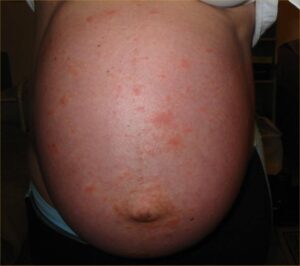
Your Answer: Herpes Zoster
Correct Answer: Polymorphic Eruption of Pregnancy
Explanation:This is Polymorphic Eruption of Pregnancy (PEP) also known as Pruritic Urticarial Papules and Plaques of Pregnancy (PUPPP). Papules and plaques form on the abdomen (commonly within striae). It is most common in women during their first pregnancy and typically occurs in the 3rd trimester.
-
This question is part of the following fields:
- Clinical Management
-
-
Question 100
Correct
-
A woman has undergone genetic testing due to her family history and has the BRCA 1 gene. What would you advise her lifetime risk of ovarian cancer is?
Your Answer: 40%
Explanation:The most common hereditary cancer in the breast ovarian cancer syndrome accounts for 90% of the hereditary cancers. It is due to mutations in the BRCA 1 and BRCA 2 genes, most commonly the BRCA 1 gene accounting for 70% life time risk of breast cancer and 40% life time risk of ovarian cancer.
-
This question is part of the following fields:
- Genetics
-
SESSION STATS - PERFORMANCE PER SPECIALTY
